Словари

Словарь английского языка | Значения слов, определения и примеры

noun
/draɪ ˈtʃɪl.i/
сушеный чили (suschenyy chili)

dried chili peppers used as spice for adding heat to food

"The recipe calls for two dry chillies to make it spicy."

"Рецепт требует два сушеных чили для придания остроты." (Retsept trebuyet dva sushenykh chili dlya pridanija ostroty.)
noun
/draɪ fɪʃ/
вяленая рыба (vyalenaya ryba)

fish that has been preserved by drying in the sun or by other dehydration methods

"Dry fish is a popular preserved food in many coastal regions."

"Вяленая рыба — это популярный консервированный продукт во многих прибрежных регионах." (vyalenaya ryba eto populyarnyy konservirovannyy produkt vo mnogikh pribrezhnukh regionakh)
noun
/draɪ ɡuːs ˈbɛri/
сушеная амла (sushenaya amla)

dehydrated amla fruit, rich in vitamin C and used for medicinal and culinary purposes

"Dry goose berry powder is excellent for hair growth."

"Порошок из сушеной амлы отлично подходит для роста волос." (Poroshok iz sushenoy amly otlichno podkhodit dlya rosta volos.)
noun
/draɪ ˈmæŋgoʊ ˈpaʊdər/
амчур (amchur)

a tangy powder made from dried raw mangoes, used as a spice in Indian cuisine

"The chef sprinkled dry mango powder over the chaat for extra tanginess."

"Шеф-повар посыпал сухим порошком манго чат, чтобы добавить кислоты." (Shef-povar posypal sukhim poroshkom mango chat, chtoby dobavit' kisloty.)
adjective
/ˈdjuːəl/
двойной (dvoynoy)

having two parts or elements; two in one

"The dual nature of the problem required careful consideration."

"Двойная природа проблемы требовала внимательного рассмотрения." (Dvoynaya priroda problemy trebovala vnimatel'nogo rassmotreniya.)
verb
/dʌb/
дублировать (dublírovat')

to give a name or label to something; to add a soundtrack to a film or recording

"The movie was dubbed into several languages for international release."

"Фильм был дубляжирован на несколько языков для международного релиза." (Film byl dublyazhirovan na neskol'ko yazyikov dlya mezhdunarodnogo releaza.)
adjective
/ˈdjuːbiəs/
сомнительный (somnitel'nyy)

Hesitating or doubting; not to be relied upon.

"She gave him a dubious look after hearing his excuse."

"Она посмотрела на него сомнительным взглядом после того, как услышала его оправдание." (Ona posmotrela na nego somnitel'nym vzglyadom posle togo, kak uslyshala ego opravdanie.)
noun, verb
/dʌk/
счастье (schastye)

a waterbird with a broad bill and webbed feet; to lower the head or body quickly to avoid something

"He ducked to avoid the flying ball."

"Она не смогла скрыть свое счастье, когда получила награду." (Ona ne smogla skryt' svoe schast'ye, kogda poluchila nagradu.)
noun
/ˈdʌklɪŋ/

a young duck

"The mother duck led her ducklings to the pond."

adjective
/ˈdʌktaɪl/
ковкий (kovkiy)

capable of being stretched into a thin wire without breaking; easily influenced

"Gold is a very ductile metal."

"Золото - очень ковкий металл." (Zoloto - ochen' kovkiy metal.)
adjective
/djuː/
должен / ожидаемый (dolzhen / ozhidayemyy)

expected at a certain time or required by a certain date

"The rent is due on the first of every month."

"Аренда должна быть оплачена первого числа каждого месяца." (Arenda dolzhna byt' oplachena pervogo chisla kazhdogo mesyatsa.)
noun
/djuːˈɛnə/
губернантка (gubernantka)

an older woman acting as a governess or chaperone, especially in Spanish families

"The young lady was accompanied by a duenna during the festival."

"Молодая дама была сопровождена дуэнной во время фестиваля." (Molodaya dama byla soprovozhdena duennoy vo vremya festivala.)
noun
/djuːˈɛt/
дуэт (duet)

a musical performance by two singers or instrumentalists

"They sang a beautiful duet together on stage."

"Они спели прекрасный дуэт вместе на сцене." (Oni speli prekrasnyy duet vmeste na scene.)
adjective
/ˈdʌlsɪt/
сладкий (sladkiy)

sweet and soothing (often used ironically)

"She was enchanted by his dulcet voice."

"Она была очарована его сладким голосом." (Ona byla ocharovana yego sladkim golosom.)
adjective
/dʌl/
скучный (skuchnyy)

lacking brightness, vividness, or interest; boring or not sharp

"The lecture was so dull that many students fell asleep."

"Лекция была такой скучной, что многие студенты заснули." (Lektsiya byla takoy skuchnoy, chto mnogiye studenty zasnuli.)
noun
/ˈdʌlərd/
тупой человек (tupoy chelovek)

a slow or stupid person

"He was considered a dullard by his classmates."

"Он был воспринят как тупица его одноклассниками." (On byl vosprinyat kak tupitsa ego odnoklassnikami.)
adverb
/ˈduːli/
должным образом, своевременно (dolzhnym obrazom, svoevremenno)

in accordance with what is required or appropriate; at the proper time

"The documents were duly signed and submitted."

"Документы были должным образом подписаны и поданы." (Dokumenty byli dolzhnym obrazom podpisany i podany.)
adjective
/dʌm/
тупой / немой (tupoy / nemoy)

lacking intelligence or unable to speak

"He made a dumb mistake during the exam."

"Он сделал глупую ошибку на экзамене." (On sdelal glupuyu oshibku na ekzamenie.)
verb
/ˈdʌmfaʊnd/
ошеломить (oshelomit)

to greatly astonish or shock someone so they are temporarily speechless

"The magician's trick dumbfounded the audience."

"Фокус мага ошеломил зрителей." (Fokus maga oshelomil zriteley.)
noun
/ˈdʌmi/
манекен / глупый человек (maneken / glupy chelovek)

a model or replica of a human used for practice, display, or testing; also a term for a foolish person

"The tailor used a dummy to display the dress."

"Портной использовал манекен, чтобы показать платье." (Portnoy ispol'zoval maneken, chtoby pokazat' plat'ye.)
verb
/dʌmp/
выбросить или избавиться от чего-то небрежно (vybrosit' ili izbavitsya ot chego-to nebrezhno)

to drop or dispose of something carelessly; to end a relationship suddenly

"He dumped all the trash into the bin."

"Он выбросил весь мусор в ведро." (On vybrosil ves' musor v vedro.)
verb
/dʌn/
требовать возврата долга (trebovat' vozvrata dolga)

to demand payment of a debt persistently

"The landlord dunned the tenant for unpaid rent."

"Арендодатель несколько раз потребовал оплаты задолженности по аренде." (Arendodatel' neskol'ko raz potreboval oplaty zadolzhennosti po arende.)
noun
/djuːn/
песчаная дюна (peschanaya duna)

A hill or ridge of sand formed by the wind, usually found in deserts or near beaches.

"The children played on the sand dune by the beach."

"Дети играли на песчаной дюне у пляжа." (Deti igrali na peschanoy dune u plyazha.)
noun
/ˈdjuːəʊ/
дуэт (duet)

a pair of people or things, especially in music or entertainment

"The musical duo performed their latest hit at the concert."

"Музыкальный дуэт исполнил свой последний хит на концерте." (Muzykal'nyy duet ispolnil svoy posledniy khit na koncerte.)
dupe definition card — visual illustration of the meaning
verb
/djuːp/
обманывать (obmanyvat)

To deceive or trick someone into believing or doing something.

"He was duped into buying a fake watch."

"Его обманули, чтобы он купил поддельные часы." (Ego obmanuli, chtoby on kupil poddel'nye chasy.)
noun
/ˈdjuːplɛks/
дуплексный дом (dupleksnyy dom)

A house or apartment divided into two separate residences.

"They live in a duplex near the city center."

"Они живут в дуплексе рядом с центром города." (Oni zhivut v duplekse ryadom s tsentrom goroda.)
adjective
/djuːˈplɪsɪtəs/
лицемерный (litsemernui)

Deceitful; deliberately deceptive or dishonest.

"The politician was criticized for his duplicitous statements."

"Политика критикуют за его лицемерные заявления." (Politika kritikuut za ego litsemernye zayavleniya.)
noun
/djuːˈplɪsɪti/
двуличие (dvúlichie)

Deceitfulness or double-dealing; dishonesty.

"Her duplicity was revealed during the investigation."

"Её двуличие было раскрыто в ходе расследования." (Eyo dvúlichie bylo raskryto v khode rassledovaniya.)
durability definition card — visual illustration of the meaning
noun
/ˌdʊr.əˈbɪl.ə.ti/
прочность (prochnost)

the ability to withstand wear, pressure, or damage; lasting quality

"The durability of the new smartphone impressed customers with its resistance."

"Прочность нового смартфона впечатлила клиентов своей стойкостью." (Prochnost' novogo smartfona vpechatlila klientov svoey stoykost'yu.)
adjective
/ˈdjʊərəbəl/
долговечный; прочный; устойчивый (dolgovyechny; prochnyy; ustoychivyy)

able to withstand wear, pressure, or damage; lasting; strong

"This durable fabric will last for many years."

"Эта прочная ткань будет служить много лет." (Eta prochnaya tkan' budet sluzhit' mnogo let)
noun
/ˈdjʊərəns/
тюремное заключение (turemennoe zaklyucheniye)

imprisonment or confinement

"The prisoner spent years in durance before his release."

"Заключённый провёл годы в тюрьме до своего освобождения." (Zaklyuchyonnyy provyol gody v tyur'me do svoego osvobozhdeniya.)
noun
/djʊˈreɪʃən/
продолжительность (prodolzhitel'nost')

the length of time that something continues

"The meeting lasted for the duration of two hours."

"Совещание длилось два часа." (Soveshchaniye dlilos' dva chasa.)
noun
/djʊˈrɛs/
принуждение (prinuzhdenie)

threats, violence, or pressure used to force someone to do something

"She signed the contract under duress."

"Она подписала контракт под принуждением." (Ona podpisala kontrakt pod prinuzhdeniem.)
noun
/ˈdʊr.i.ən/
дуриан (durian)

a large spiky tropical fruit known for its strong smell and creamy custard-like flesh

"Durian is known as the king of fruits in Southeast Asia despite its pungent odor."

"Дуриан известен как король фруктов Юго-Восточной Азии, несмотря на свой резкий запах." (Durian izvesten kak korol fruktov Yugo-Vostochnoy Azii, nesmotrya na svoy rezkii zapakh.)
preposition
/ˈdjʊərɪŋ/
во время (vo vremya)

throughout the course of a period of time

"I fell asleep during the movie."

"Я заснул во время фильма." (Ya zasnul vo vremya fil'ma.)
noun
/dʌsk/
сумерки; вечерняя тьма (sumyerki, vechernyaya t'ma)

the period of the day when daylight is fading; twilight

"They walked along the beach during dusk, watching the sunset."
"Они шли по пляжу во время сумерек, наблюдая за закатом." (Oni shli po plyazhu vo vremya sumerek, nablyudaya za zakatom.)
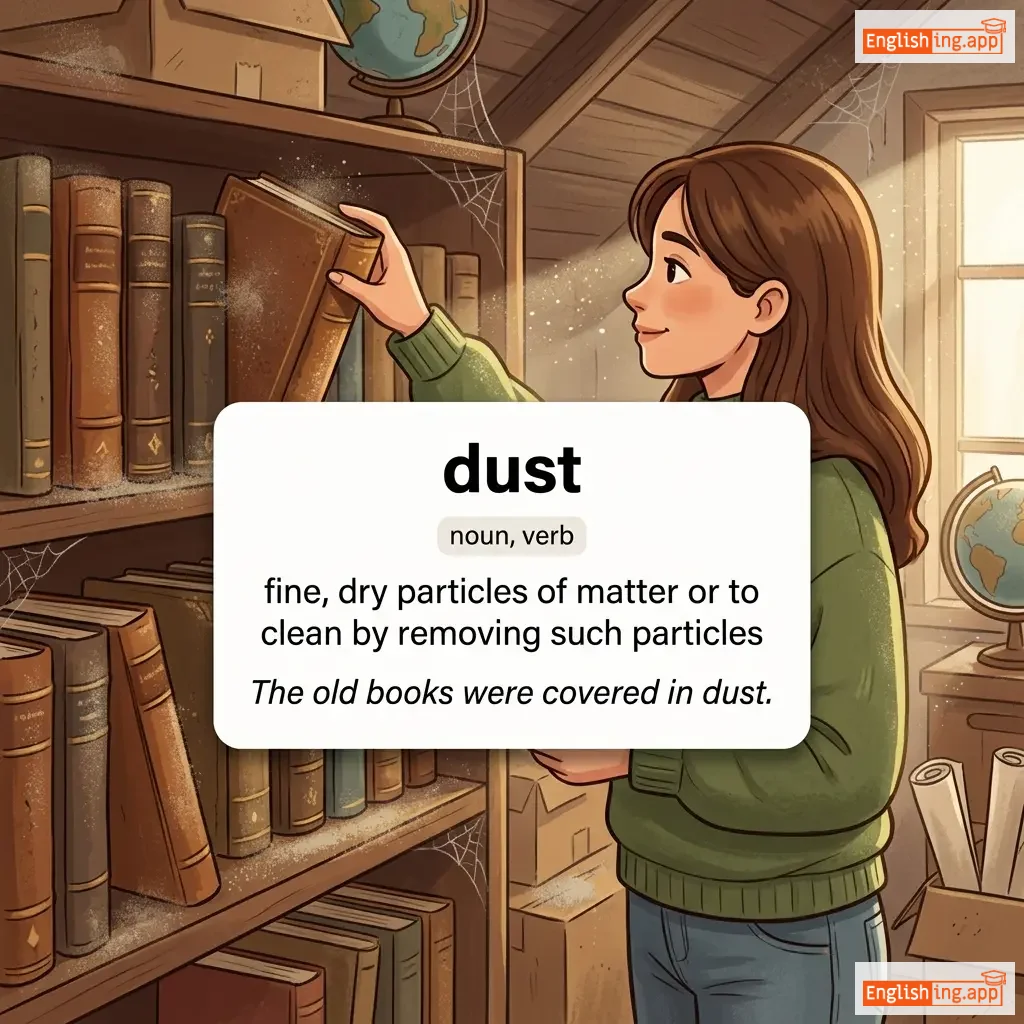
dust definition card — visual illustration of the meaning
noun, verb
/dʌst/
пыль (pyl')

fine, dry particles of matter or to clean by removing such particles

"The old books were covered in dust."

"Старые книги были покрыты пылью." (Starye knigi byli pokryty pyl'yu.)
noun
/ˈdʌst.bɪn/
мусорное ведро (musornoe vedro)

a container for holding waste or garbage before disposal

"Please throw the paper into the dustbin after use."

"Пожалуйста, выбросьте бумагу в мусорное ведро после использования." (Pozhaluysta, vybros'te bumagu v musornoe vedro posle ispol'zovaniya.)
adjective
/ˈdʌsti/
пыльный (pylnyy)

covered with or full of dust; dry and dull from lack of moisture or use

"The old bookshelf was dusty after years of neglect."

"Старая книжная полка была пыльной после многих лет запустения." (staraya knizhnaya polka byla pylnoy posle mnogikh let zapusteniya)
adjective
/dʌtʃ/
голландский (gollandskiy)

relating to the Netherlands, its people, or their language

"She enjoys Dutch paintings from the 17th century."

"Она наслаждается голландскими картинами 17-го века." (Ona naslazhdayetsya gollandskimi kartinami 17-go veka.)
adjective
/ˈdjuːtiəs/
послушный (poslushnyy)

dutiful; obedient and respectful

"The duteous child always followed her parents’ instructions."

"Послушный ребенок всегда следовал указаниям своих родителей." (Poslushnyy rebenok vsegda sleduval ukazaniyam svoikh roditeley.)
adjective
/ˈdjuːtiəbl/
облагаемый пошлиной (oblagayemyy poshlinoy)

subject to customs duty or tax

"Imported electronics are often dutiable at the border."

"Импортированные электроника часто подлежат пошлине на границе." (Importirovannye elektronika chasto podlezhat poshline na granitse.)
adjective
/ˈdjuːtɪfəl/
добросовестный (dobrosovestny)

Willingly obedient and responsible in performing one's duty.

"She is a dutiful daughter who always takes care of her parents."

"Она добросовестная дочь, которая всегда заботится о своих родителях." (Ona dobrosovestnaya doch', kotoraya vsegda zabotitsya o svoikh rodityalykh.)
noun
/ˈdjuːti/
обязанность (obyazannost')

a moral or legal obligation; a responsibility

"It is our duty to protect the environment."

"Наш долг защищать окружающую среду." (Nash dolg zashchishchat' okruzhayushchuyu sredu.)
noun
/dwɔːrf/
карлик (karlik)

a person, animal, or plant much smaller than average

"Snow White lived with seven dwarfs."
"Белоснежка жила с семью карликами." (Belosnezhka zhila s sem'yu karlikami.)
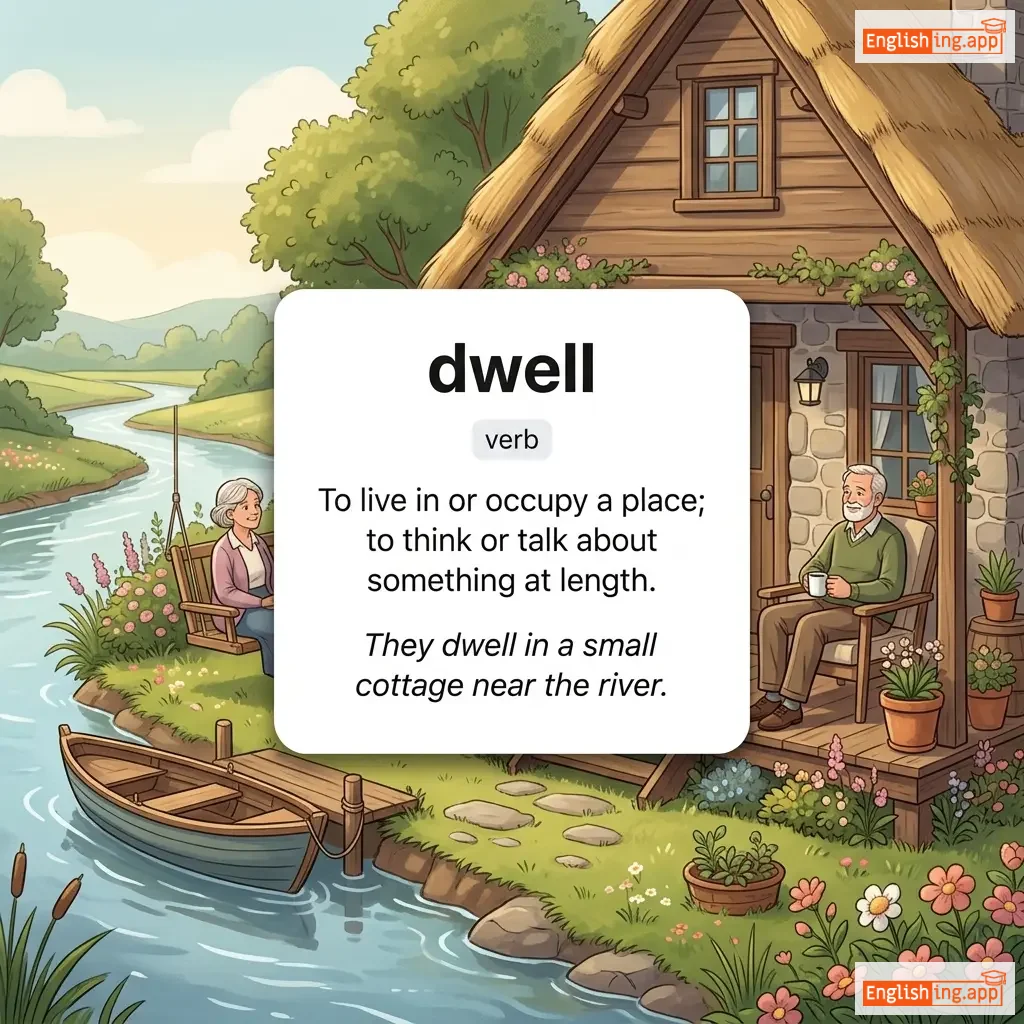
dwell definition card — visual illustration of the meaning
verb
/dwɛl/
жить (zhit)

To live in or occupy a place; to think or talk about something at length.

"They dwell in a small cottage near the river."
"Они живут в маленьком домике рядом с рекой." (Oni zhivut v malen'kom domike ryadom s rekoy.)
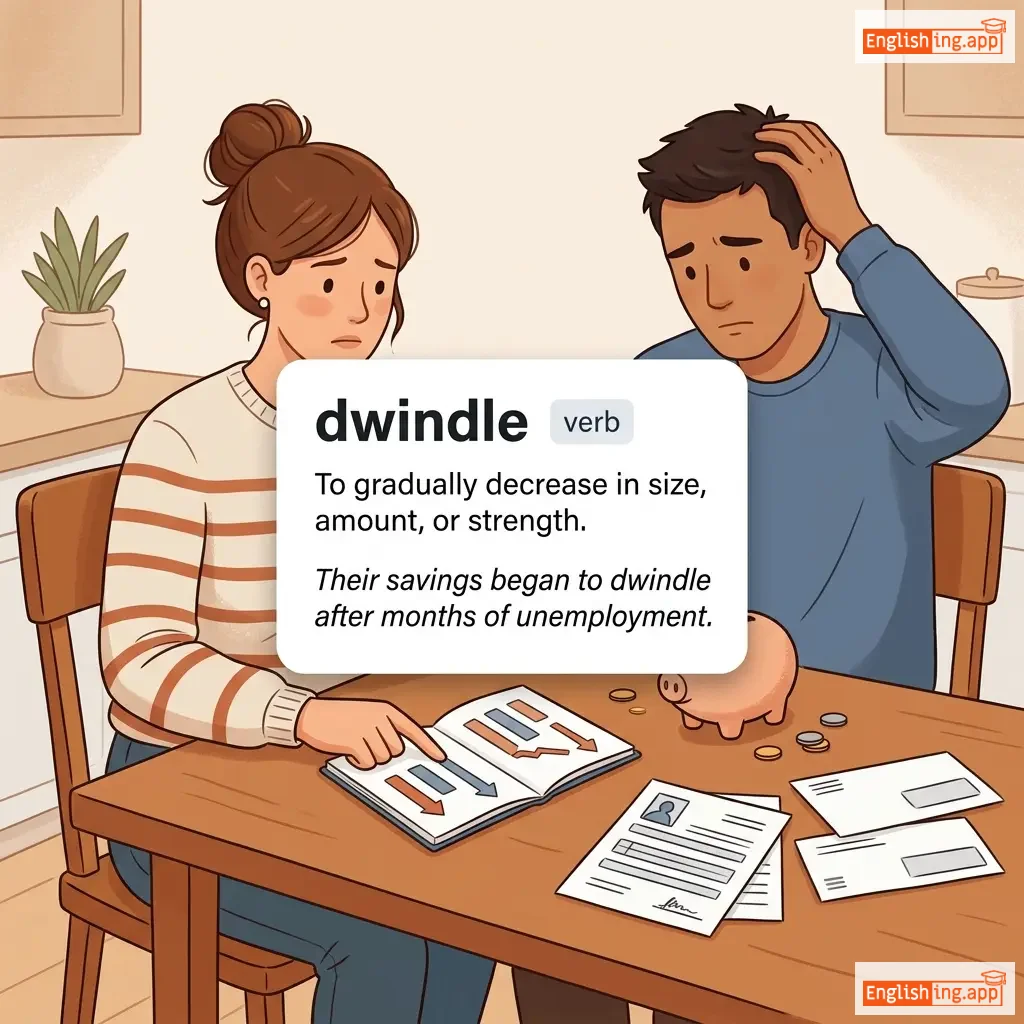
dwindle definition card — visual illustration of the meaning
verb
/ˈdwɪndl/
уменьшаться (umenshatsya)

To gradually decrease in size, amount, or strength.

"Their savings began to dwindle after months of unemployment."

"Их сбережения начали уменьшаться после месяцев безработицы." (Ih sberegeniya nachali umenshatsya posle mesecev bezrabotitsy.)
adjective
/ˈdwɪndlɪŋ/
убывающий (ubyvayushchiy)

Gradually reducing in number, size, or strength.

"The villagers relied on dwindling water supplies."
"Жители деревни зависели от убывающих водных ресурсов." (Zhiteli derevni zaviseli ot ubyvayushchikh vodnykh resursov.)
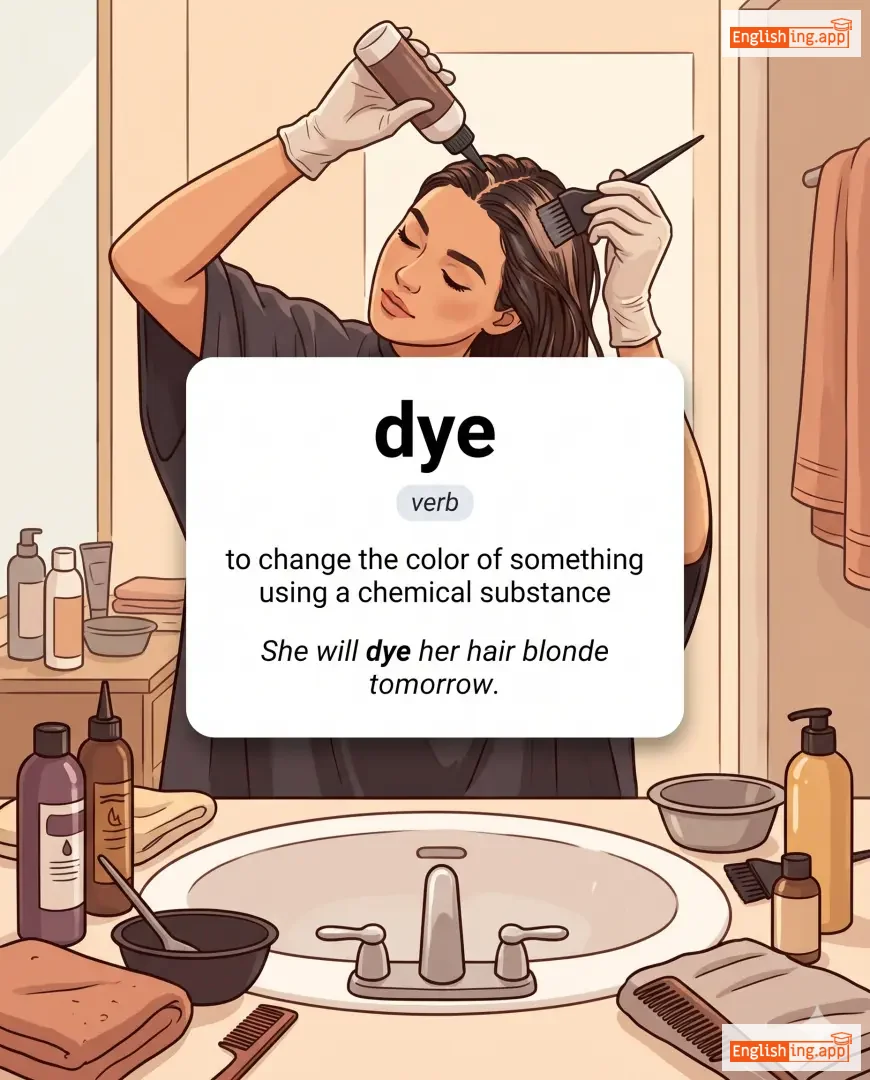
dye definition card — visual illustration of the meaning
verb
/daɪ/
красить (krasit)

to change the color of something using a chemical substance

"She will dye her hair blonde tomorrow."

"Она покрасит свои волосы в блонд завтра." (Ona pokrasit svoi volosy v blond zavtra)
verb
/ˈdaɪɪŋ/
умирающий (umirayushchiy)

to stop living; approaching death

"The old man was dying peacefully in his sleep."

"Старик умирал мирно во сне." (Starik umiral mirno vo sne.)