Словари

Словарь английского языка | Значения слов, определения и примеры

noun
/ˌdɪsbɪˈliːvər/
неверующий (neveruyushchiy)

a person who does not believe in something, especially a religion or idea

"He was called a disbeliever for rejecting the traditional faith."

"Его назвали неверующим за отказ от традиционной веры." (Ego nazvali neveruyushchim za otkaz ot traditsionnoy very.)
verb
/dɪsˈbɜːrdən/
освобождать (osvobozhdat)

to relieve someone of a burden or load

"She disburdened herself of worries by sharing them with her friend."

"Она освободила себя от переживаний, поделившись ими с подругой." (Ona osvobodila sebya ot perezhivaniy, podelivshis' imi s podrugoy.)
verb
/dɪsˈbɜːrs/
выплачивать (vyplachivat')

to pay out money, especially from a fund

"The organization will disburse the funds to the affected families."
"Организация выплатит средства пострадавшим семьям." (Organizatsiya vyplatit sredstva postradavshim sem'yam.)
disbursement definition card — visual illustration of the meaning
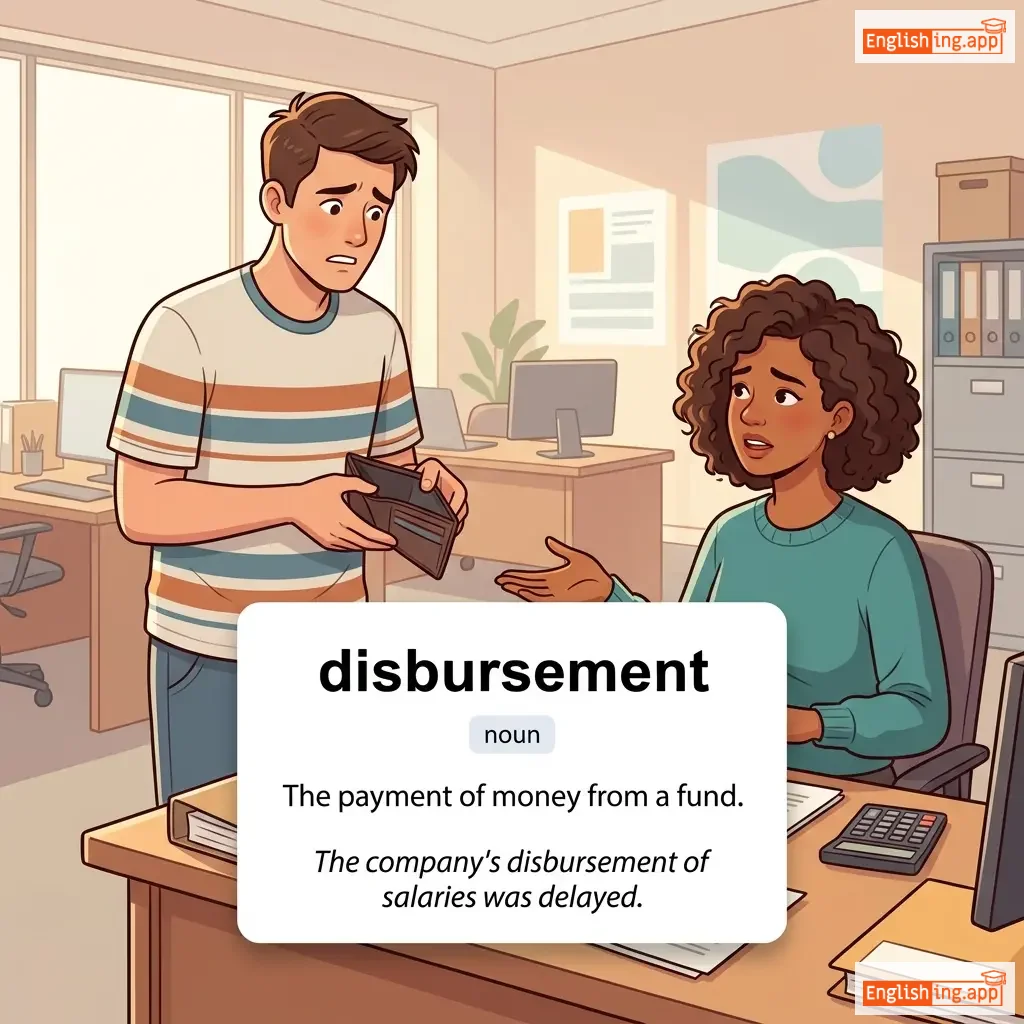
noun
dɪsˈbɜːs.mənt
выплата (vyplata)

The payment of money from a fund.

"The company's disbursement of salaries was delayed."

"Выплата заработной платы компании была задержана." (Vyplata zarabotnoy platy kompanii byla zaderzhana.)
noun
/dɪsk/
плоский, тонкий и круглый объект (ploskiy, tonkiy i krugliy ob'yekt)

a flat, thin, round object or surface

"He inserted the music disc into the player."

"Он вставил музыкальный диск в плеер." (On vstalil muzykal'nyy disk v pleyer.)
verb
/dɪsˈkɑːrd/
выбросить (vybrosit)

to throw away something that is no longer needed

"She decided to discard the old clothes."
"Она решила избавиться от старой одежды." (Ona reshilа izbavit’sya ot staroy odezhdy.)
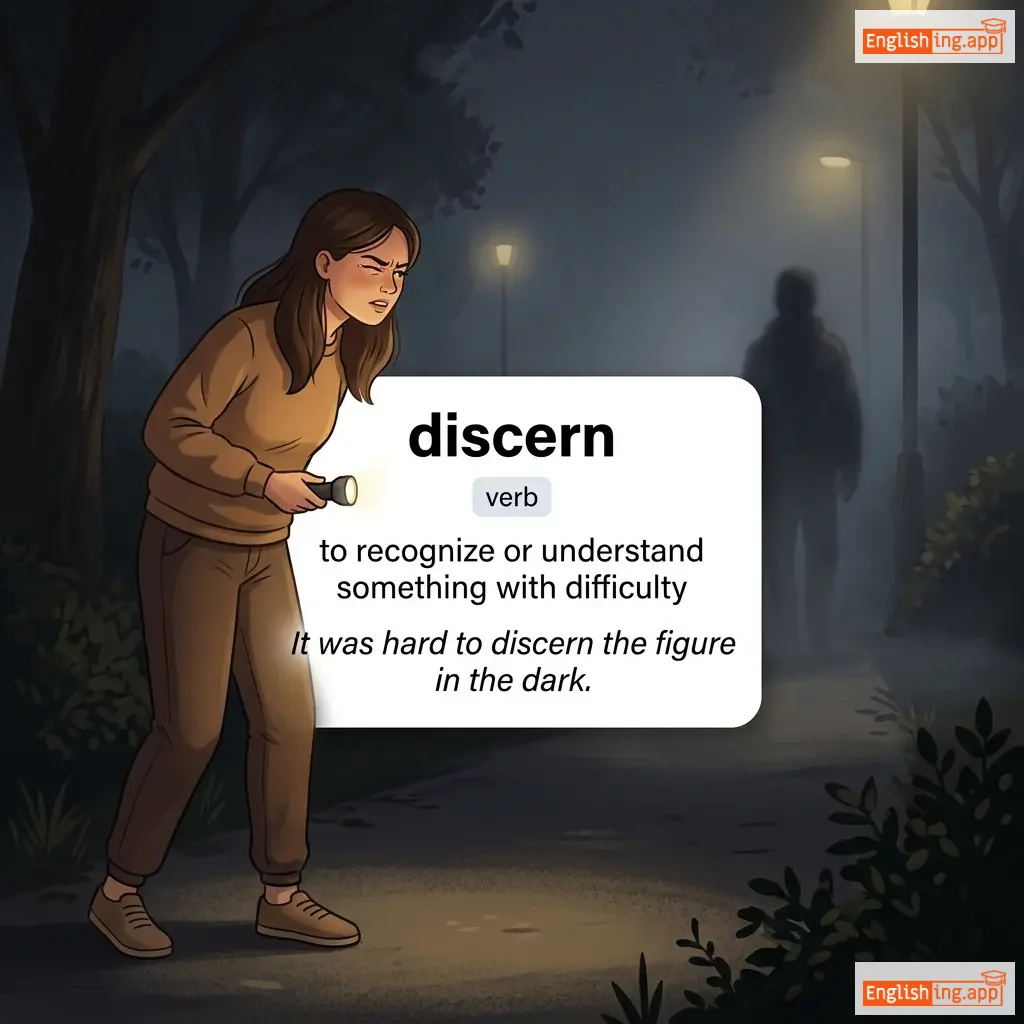
discern definition card — visual illustration of the meaning
verb
/dɪˈsɜːrn/
распознавать (raspoznavat)

to recognize or understand something with difficulty

"It was hard to discern the figure in the dark."

"Было трудно различить фигуру в темноте." (Bylo trudno razlichit figur v temnote.)
adjective
/dɪˈsɜːrnəbl/
заметный (zametny)

able to be seen, recognized, or understood

"There was a discernible change in his behavior."
"Было заметное изменение в его поведении." (Bylo zametnoe izmenenie v ego povedenii.)
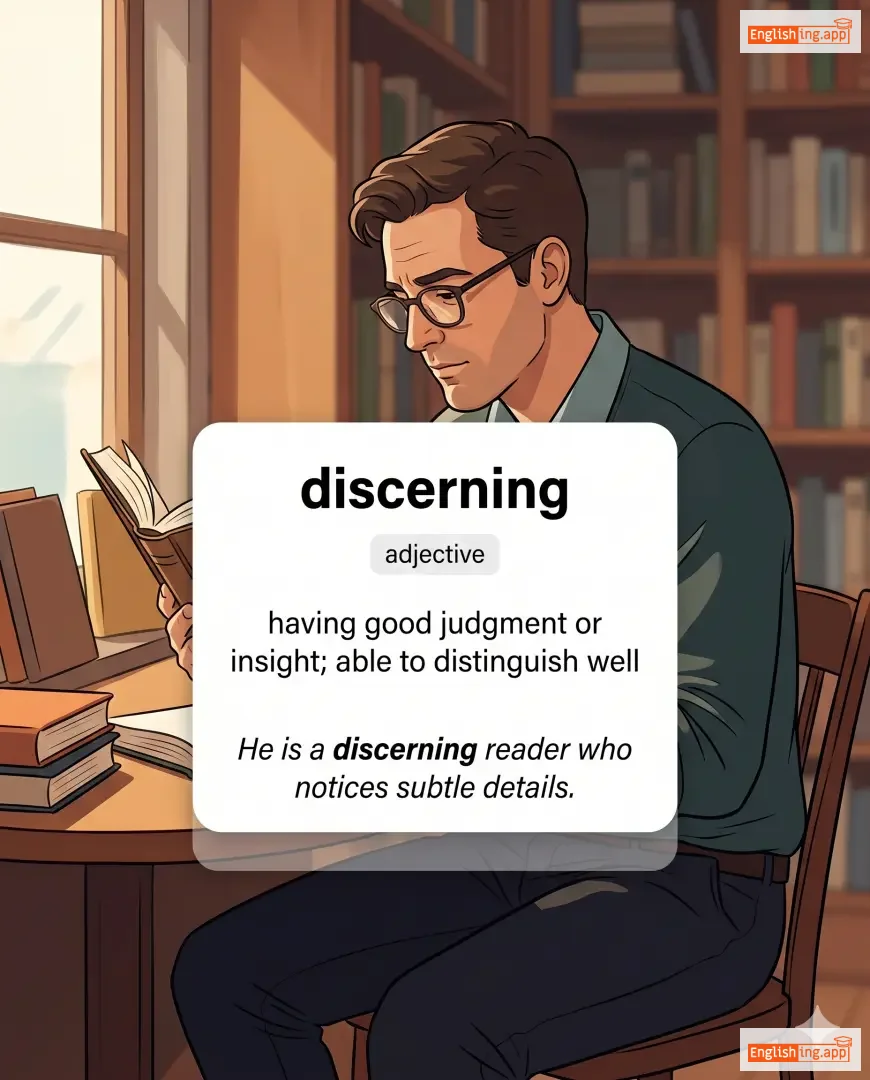
discerning definition card — visual illustration of the meaning
adjective
/dɪˈsɜːrnɪŋ/
проницательный (pronitsatel'nyy)

having good judgment or insight; able to distinguish well

"He is a discerning reader who notices subtle details."
"Он проницательный читатель, который замечает тонкие детали." (On pronitsatel'nyy chitatel', kotoryy zamechayet tonkie detali.)
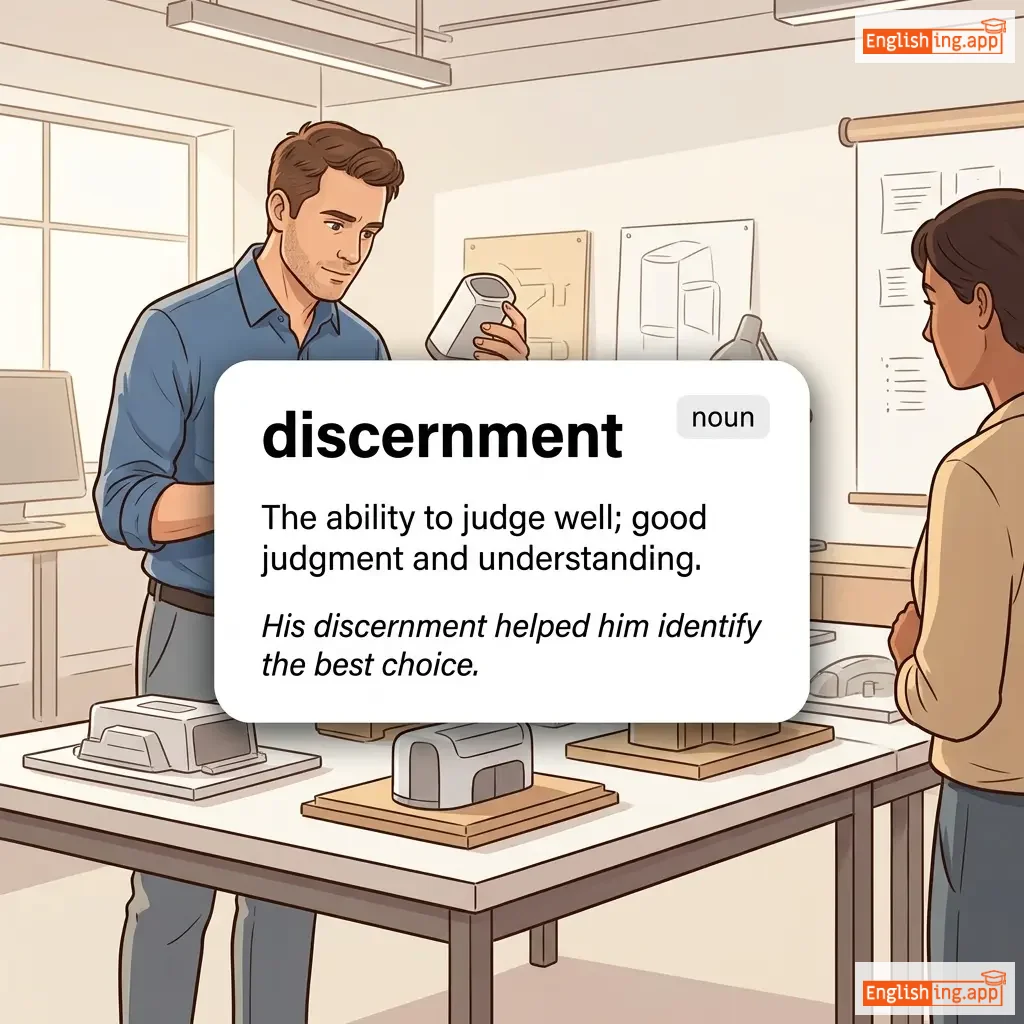
discernment definition card — visual illustration of the meaning
noun
dɪˈsɜːn.mənt
проницательность (pronitsatel'nost')

The ability to judge well; good judgment and understanding.

"His discernment helped him identify the best choice."
"Его проницательность помогла ему выбрать лучший вариант." (Yego pronitsatel'nost' pomogla emu vybrat' luchshij variant.)
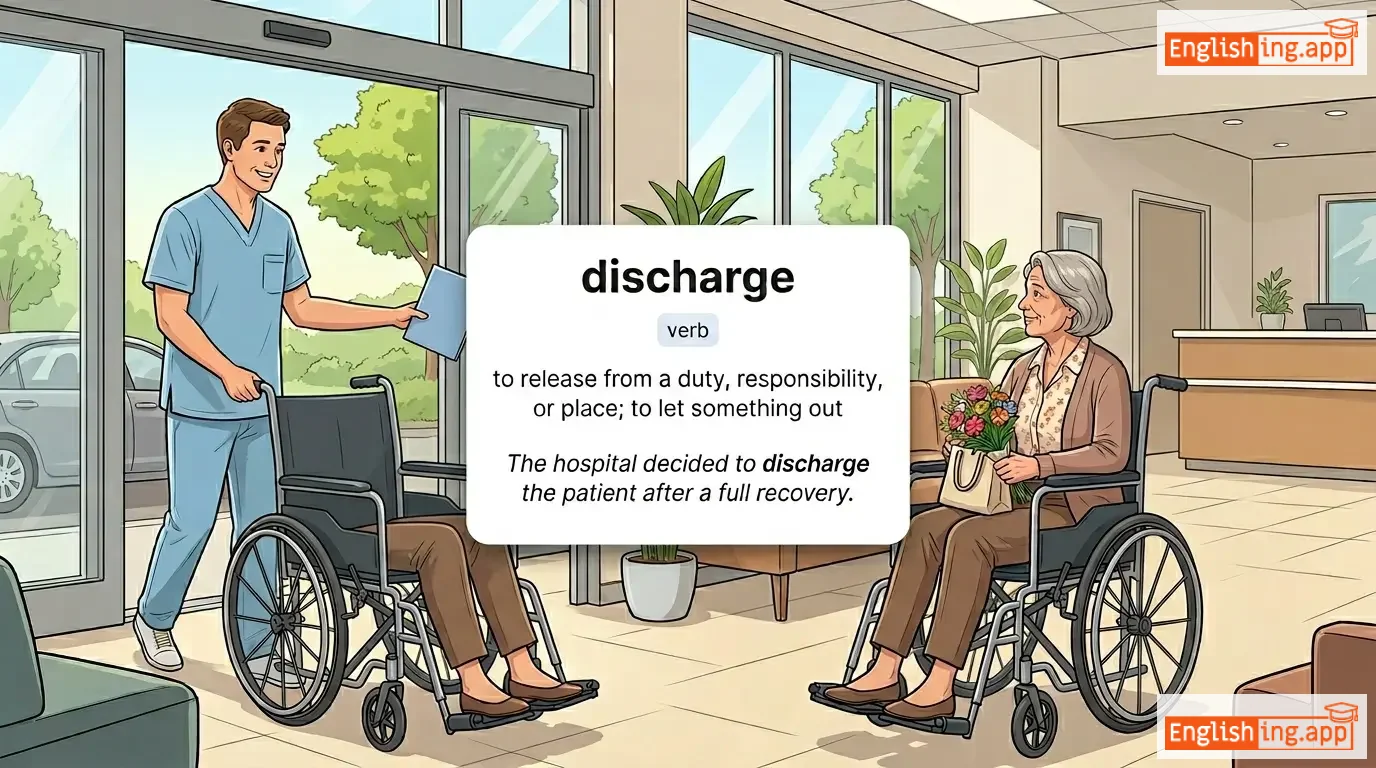
discharge definition card — visual illustration of the meaning
verb
/dɪsˈtʃɑːrdʒ/
освободить (osvobodit)

to release from a duty, responsibility, or place; to let something out

"The hospital decided to discharge the patient after a full recovery."

"Больница решила выписать пациента после полного выздоровления." (Bol'nitsa reshila vypisat' patsiyenta posle polnogo vyzdorovleniya.)
noun
/dɪˈsaɪpəl/
ученик (uchenik)

a follower or student of a teacher, leader, or philosophy

"He was a devoted disciple of the famous philosopher."

"Он был преданным учеником знаменитого философа." (On byl predannym uchenikom znamenitogo filosofa.)
adjective
/ˈdɪsəplɪˌnɛri/
дисциплинарный (distsiplinarnyy)

relating to the enforcement of rules and correction of behavior

"The employee was warned after a disciplinary hearing."

"Сотрудник был предупрежден после дисциплинарного слушания." (Sotrudnik byl preduprezhden posle distsiplinarnogo slushaniya.)
discipline definition card — visual illustration of the meaning
noun
/ˈdɪsəplɪn/
дисциплина (distsiplina)

the practice of training people to obey rules or self-control

"Good discipline is essential for success in school."

"Хорошая дисциплина необходима для успеха в школе." (Khoroshaya distsiplina neobkhodima dlya uspekha v shkole.)
verb
/dɪsˈkleɪm/
отрицать (otricat)

to deny responsibility or connection with something

"The company disclaimed responsibility for the accident."

"Компания отказалась от ответственности за происшествие." (Kompaniya otkazalas ot otvetstvennosti za proisshestvie.)
disclose definition card — visual illustration of the meaning
verb
/dɪsˈkloʊz/

to make something known; to reveal information that was previously secret or hidden

"The company refused to disclose details of the agreement."

noun
/dɪsˈkloʊʒər/
раскрытие (raskrytiye)

the action of making something known or public

"The disclosure of the company's financial status was delayed."

"Раскрытие финансового положения компании было задержано." (Raskrytiye finansovogo polozheniya kompanii bylo zaderzhano.)
verb
/dɪsˈkʌlər/
обесцвечивать (obescvechivat)

to change color, especially in a way that spoils the original appearance

"The fabric began to discolor after being left in the sun."
"Ткань начала менять цвет после того, как была оставлена на солнце." (Tkan' nachala menjat' tsvet posle togo, kak byla ostavlena na solntse.)
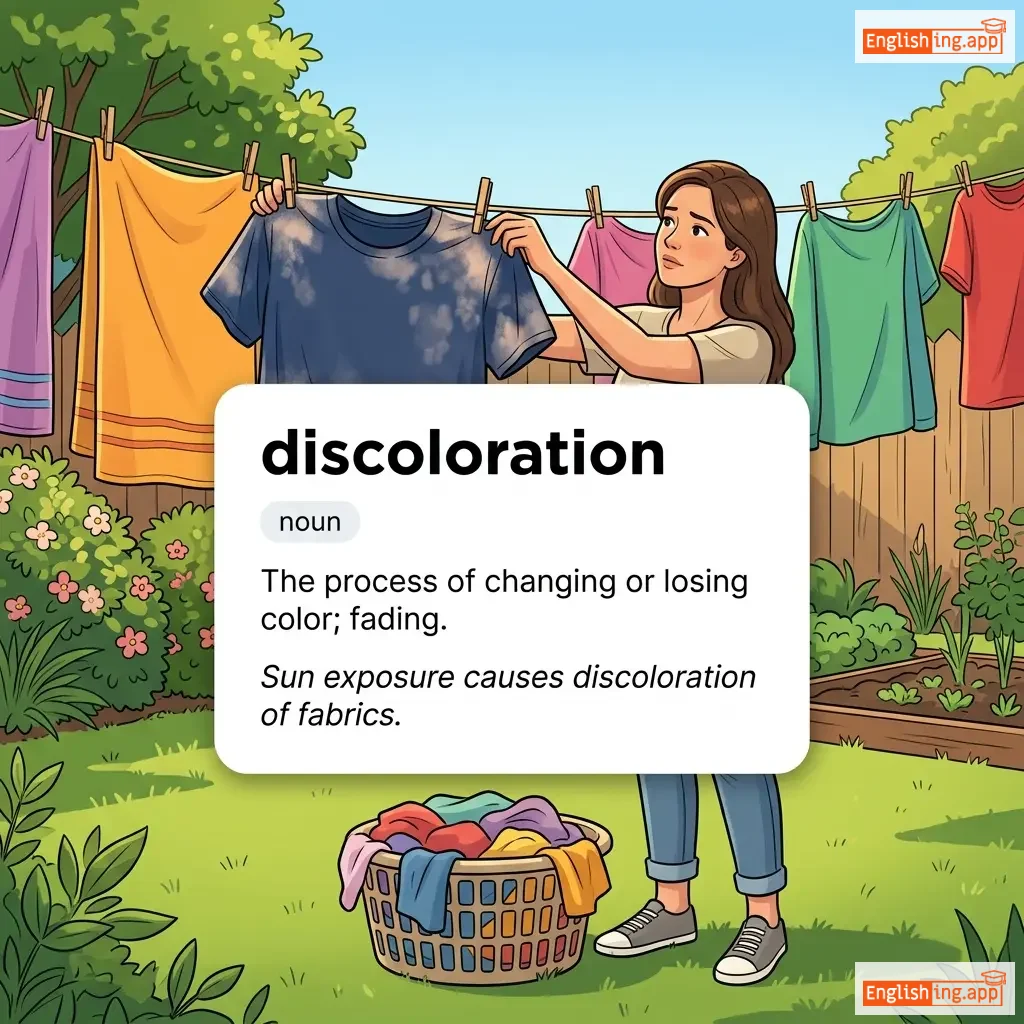
discoloration definition card — visual illustration of the meaning
noun
/ˌdɪs.kʌl.əˈreɪ.ʃən/
обесцвечивание (obesvechivanie)

The process of changing or losing color; fading.

"Sun exposure causes discoloration of fabrics."

"Воздействие солнечных лучей вызывает обесцвечивание тканей." (Vozdejstvie solnechnykh luchey vyzyvayet obesvechivanie tkaneiy.)
verb
/ˌdɪskəmˈbɑːbjuleɪt/
сбить с толку (sbit' s tolk)

to confuse or disconcert; to upset the normal order

"The sudden question seemed to discombobulate him."

"Неожиданный вопрос, похоже, сбил его с толку." (Neozhidannyy vopros, pokhozhe, sbil ego s tolku.)
adjective
/ˌdɪskəmˈbɑːbjuleɪtɪd/
смущённый (smushchyonny)

confused and disoriented; feeling unsettled

"She looked discombobulated after hearing the unexpected news."

"Она выглядела смущённой после того, как услышала неожиданные новости." (Ona viglyadela smushchennoy posle togo, kak uslyshala neozhidannye novosti.)
discomfit definition card — visual illustration of the meaning
verb
/dɪsˈkʌmfɪt/
смущать (smushchat)

to make someone feel uneasy, embarrassed, or confused

"The interviewer’s tough questions discomfited the candidate."

"Жесткие вопросы интервьюера смутили кандидата." (Zhestkie voprosy interviewera smutili kandidata.)
adjective
/dɪsˈkʌmfɪtɪŋ/
неловкий (nelovkiy)

Causing unease, embarrassment, or discomfort.

"His discomfiting questions made everyone shift uncomfortably in their seats."

"Его неловкие вопросы заставили всех неудобно ерзать на своих местах." (ego nelovkie voprosy zastavili vsekh neudobno yerzat' na svoikh mestakh)
noun
/dɪsˈkʌmfərt/
неудобство (neudobstvo)

A feeling of slight pain, unease, or awkwardness.

"She shifted in her chair due to discomfort in her back."

"Она двигалась на своем стуле из-за неудобства в спине." (Ona dvigalas' na svoem stule iz-za neudobstva v spine.)
verb
/ˌdɪskəˈmoʊd/
доставать (dostavat)

To cause inconvenience or trouble to someone.

"I hope my request does not discommode you."

"Надеюсь, мой запрос не вызовет у вас неудобства." (Nadeyus', moy zapros ne vyzovet u vas neudobstva.)
verb
/ˌdɪskəmˈpoʊz/
выводить из равновесия (vyvodit iz ravnovesiya)

To disturb the order or calmness of something or someone.

"The unexpected question seemed to discompose her."

"Неожиданный вопрос, похоже, вывел её из равновесия." (Neozhidannyy vopros, pokhozhe, vyvel yeye iz ravnovesiya.)
verb
/ˌdɪskənˈsɜːrt/
смущать (smushchat)

To unsettle, confuse, or disturb the composure of someone.

"The sudden change of plans disconcerted the team."

"Внезапное изменение планов дезориентировало команду." (Vnezapnoe izmenenie planov dezorientirovalo komandu.)
verb
/ˌdɪskəˈnɛkt/
отключить (otklyuchit)

to detach or separate from a connection or source

"Please disconnect the charger from the power outlet."

"пожалуйста, отключите зарядное устройство от розетки" (pozhaluysta, otklyuchite zaryadnoe ustrojstvo ot rozetki)
adjective
/dɪsˈkɒnsələt/
безутешный (bezyteshny)

very unhappy and unable to be comforted

"She was disconsolate after hearing the bad news."

"Она была безутешной после того, как услышала плохие новости." (Ona byla bezyteshnoj posle togo, kak uslyshala plokhie novosti.)
noun
/ˌdɪskənˈtɪnjʊəns/
прекращение (prekrashchenie)

the act of stopping something, especially permanently

"The discontinuance of the service disappointed many customers."
"Прекращение услуги разочаровало многих клиентов." (Prekrashchenie uslugi razocharovalo mnogikh klientov.)
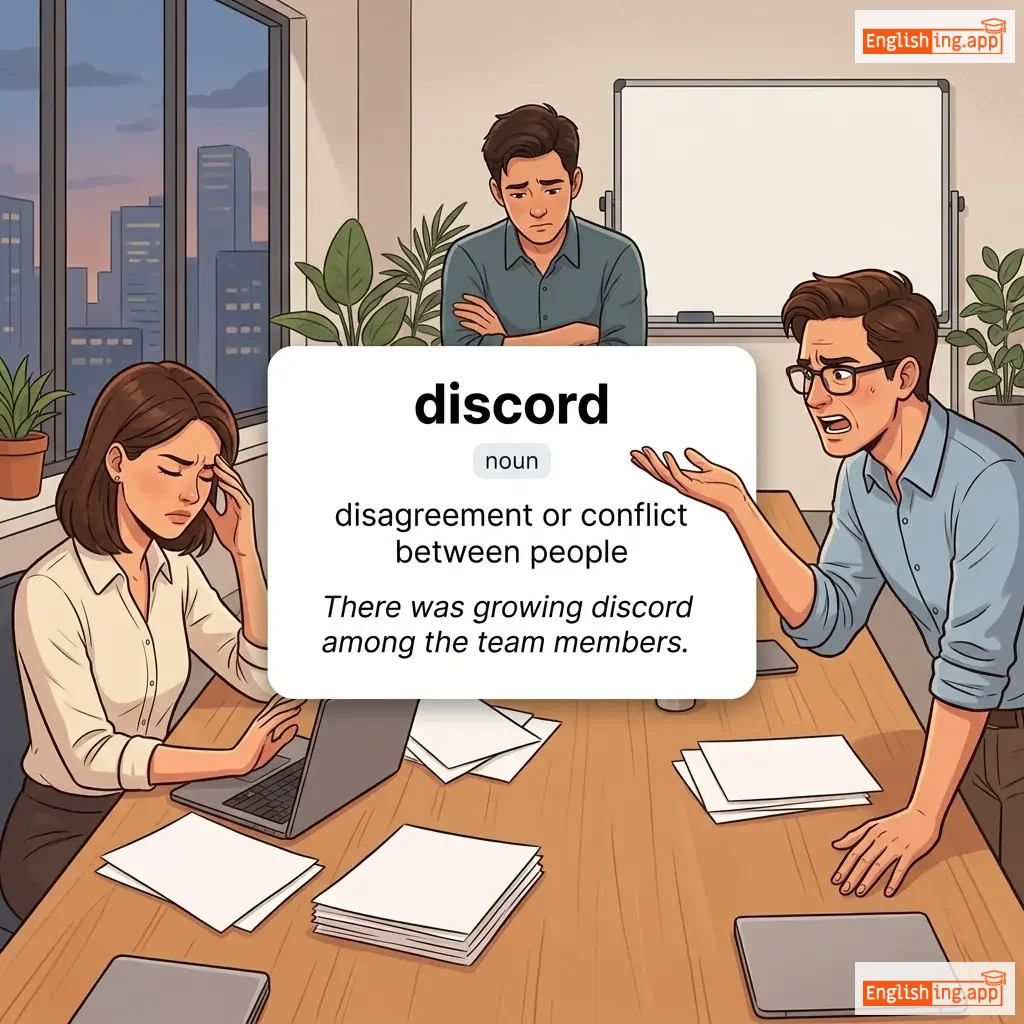
discord definition card — visual illustration of the meaning
noun
/ˈdɪskɔːrd/
раздор (razdor)

disagreement or conflict between people

"There was growing discord among the team members."
"Между членами команды рос раздор." (Mezhdu chlenami komandy ros razdor.)
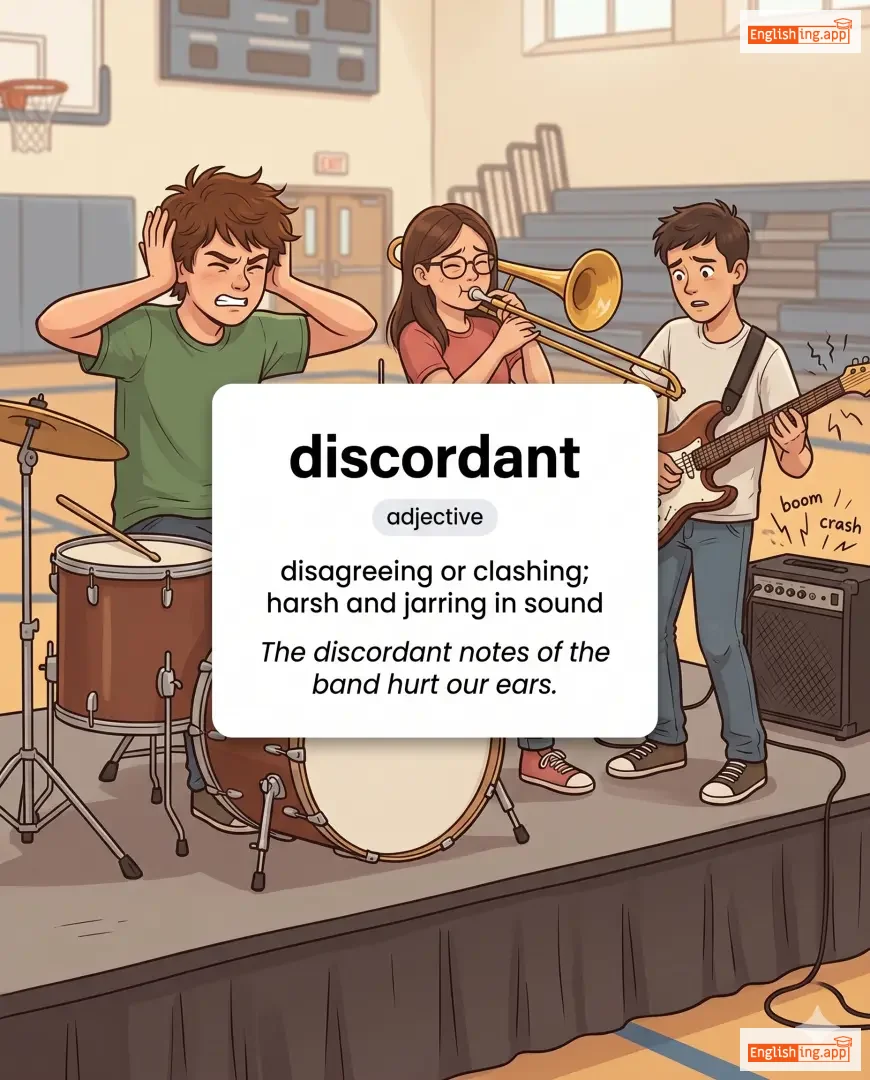
discordant definition card — visual illustration of the meaning
adjective
/dɪsˈkɔːrdənt/
дискордант (diskordant)

disagreeing or clashing; harsh and jarring in sound

"The discordant notes of the band hurt our ears."

"Дискордантные ноты группы повредили наши уши." (Diskordantnye noty gruppy povredili nashi ushi.)
noun, verb
/ˈdɪskaʊnt/
скидка (skidka)

A reduction in the usual price of something; to reduce the price of something.

"The store offered a 20% discount on all electronics."

"Магазин предложил скидку 20 % на всю электронику." (Magazin predlozhil skidku 20 % na vsyu elektronuiku.)
verb
/dɪsˈkaʊntənəns/
осуждать (osuzhdat)

To disapprove of or discourage something.

"The teacher strongly discountenanced cheating in exams."

"Учитель решительно осудил мошенничество на экзаменах." (Uchitel' reshitel'no osudil moshennichestvo na ekzamenakh.)
verb
/dɪsˈkʌrɪdʒ/

to make someone less confident or enthusiastic about doing something

"Failure should not discourage you from trying again."

adjective
/dɪˈskʌr.ɪ.dʒɪŋ/
обескураживающий (obeskurazhivayushchiy)

making someone feel less confident or enthusiastic about doing something

"The coach's discouraging words affected the team's morale."

"Обескураживающие слова тренера повлияли на мораль команды." (Obeskurazhivayushchie slova trenera povliyali na moral' komandy.)
noun, verb
/ˈdɪskɔːrs/
дискурс, лекция (diskurs, lekciya)

Written or spoken communication or debate.

"The professor gave a discourse on ancient philosophy."
"Профессор прочитал лекцию по древней философии." (Professor prochital lekciyu po drevney filosofii.)
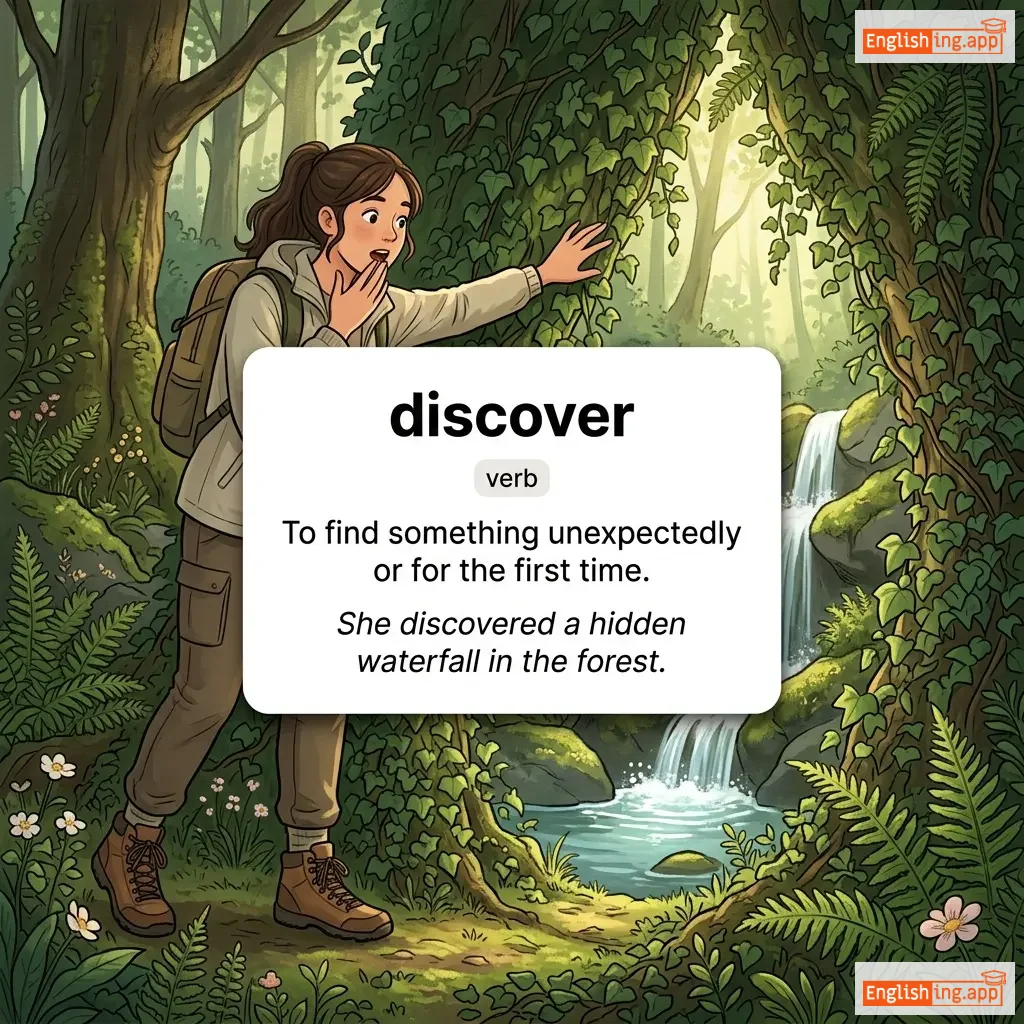
discover definition card — visual illustration of the meaning
verb
/dɪˈskʌvər/
открывать (otkryvat)

To find something unexpectedly or for the first time.

"She discovered a hidden waterfall in the forest."

"Она обнаружила скрытый водопад в лесу." (Ona obnaruzhila skrytyy vodopad v lesu.)
discoveries definition card — visual illustration of the meaning
noun
dɪˈskʌvəriz
открытия (otkrytiya)

The action or process of finding or learning something for the first time; facts or things discovered.

"His discoveries revolutionized multiple fields."

"Его открытия произвели революцию в нескольких областях." (Yego otkrytiya proizveli revolyutsiyu v neskol'kikh oblastey.)
noun
/dɪˈskʌvəri/
открытие (otkry-ti-ye)

The act of finding or learning something for the first time.

"The discovery of penicillin changed medical history."
"Открытие пенициллина изменило медицинскую историю." (Otkry-ti-ye pe-ni-tsi-lin-na iz-me-ni-lo me-di-tsins-ku-yu is-to-ri-yu.)
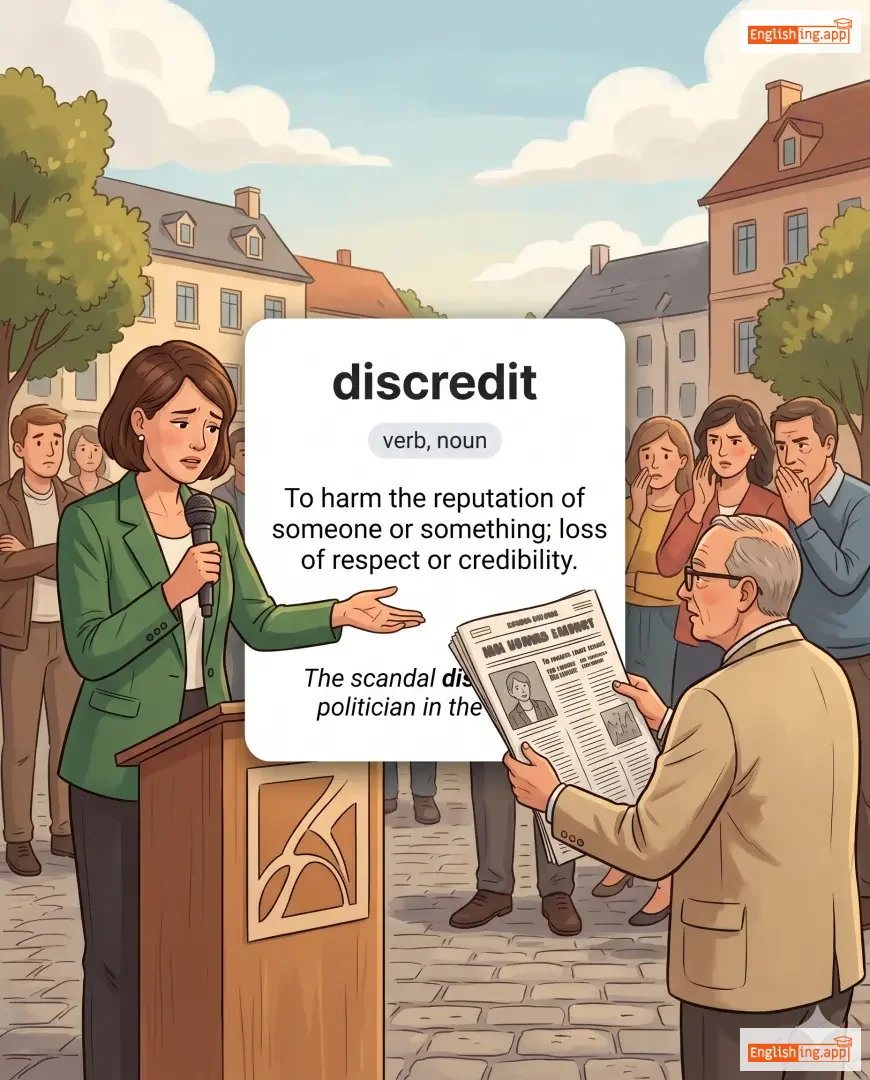
discredit definition card — visual illustration of the meaning
verb, noun
/dɪsˈkrɛdɪt/
дискредитировать (diskreditirovat)

To harm the reputation of someone or something; loss of respect or credibility.

"The scandal discredited the politician in the eyes of the public."

"Скандал дискредитировал политика в глазах общественности." (Skandal diskreditiroval politika v glazakh obshchestvennosti.)
adjective
/dɪˈskriːt/
дискретный (diskretnyj)

careful and prudent in one's speech or actions, especially to keep something confidential or avoid embarrassment

"She was discreet about the details of their conversation."
"Она была осторожна в деталях их разговора." (Ona byla ostorozhna v detal'yakh ikh razgovora.)
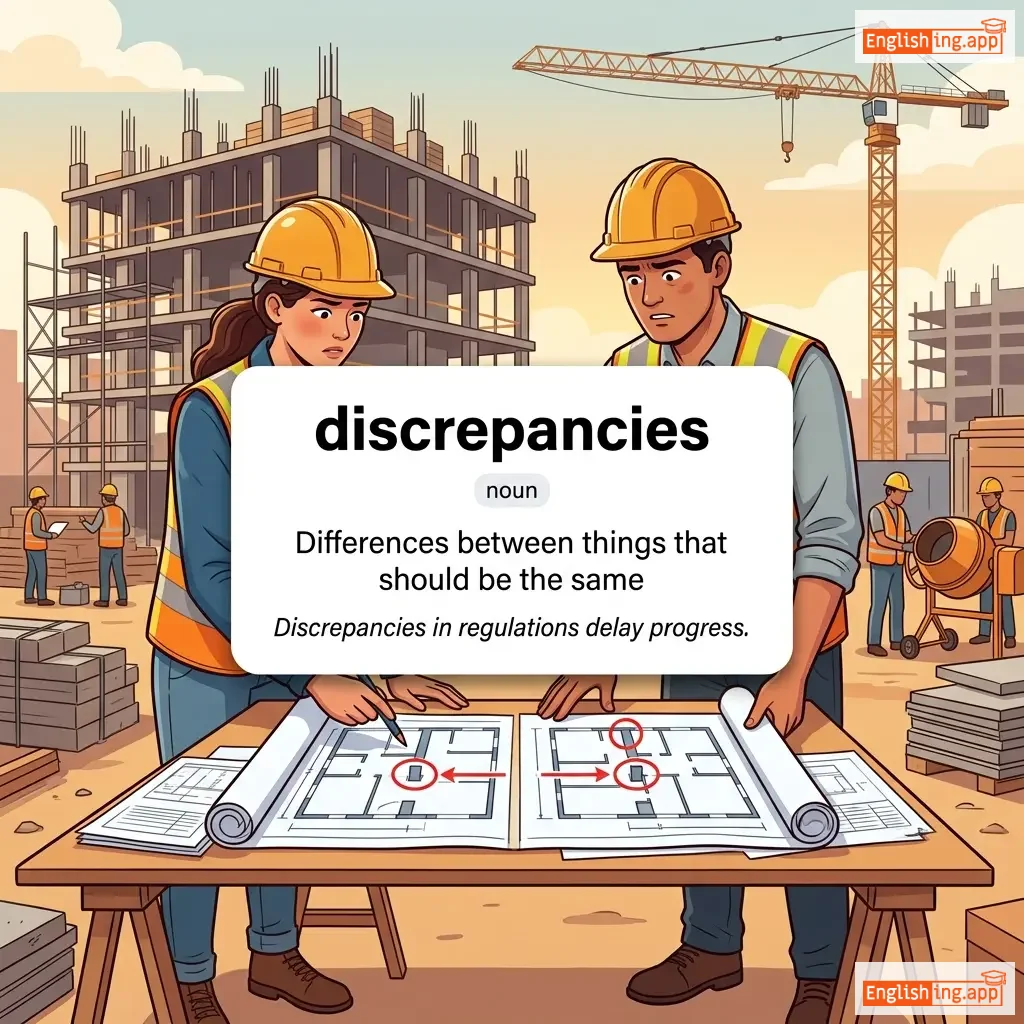
discrepancies definition card — visual illustration of the meaning
noun
dɪˈskrep.ən.siz
несоответствие (nesootvetstvie)

Differences between things that should be the same

"Discrepancies in regulations delay progress."
"Несоответствия в правилах замедляют прогресс." (Nesootvetstviya v pravilyakh zamedlyayut progress.)
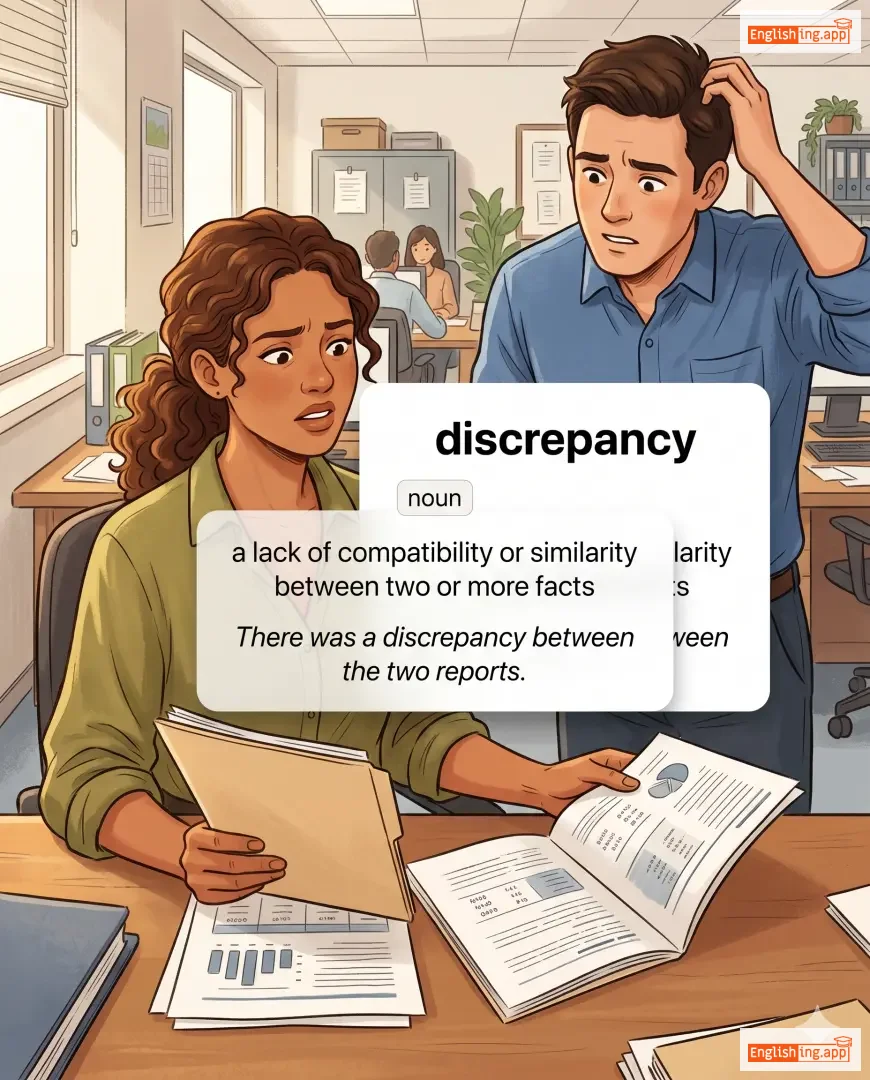
discrepancy definition card — visual illustration of the meaning
noun
/dɪˈskrɛpənsi/
несоответствие (nesootvetstvie)

a lack of compatibility or similarity between two or more facts

"There was a discrepancy between the two reports."

"Была дискретность между двумя отчетами." (Byla diskrepantsiya mezhdu dvumya otchetami.)
adjective
/dɪˈskrɛpənt/
несоответствующий (nesootvetstvuyushchiy)

showing a difference or inconsistency

"The witnesses gave discrepant accounts of the incident."
"Свидетели дали противоречивые показания об инциденте." (Svideteli dali protivorechivye pokazaniya ob incidentye.)
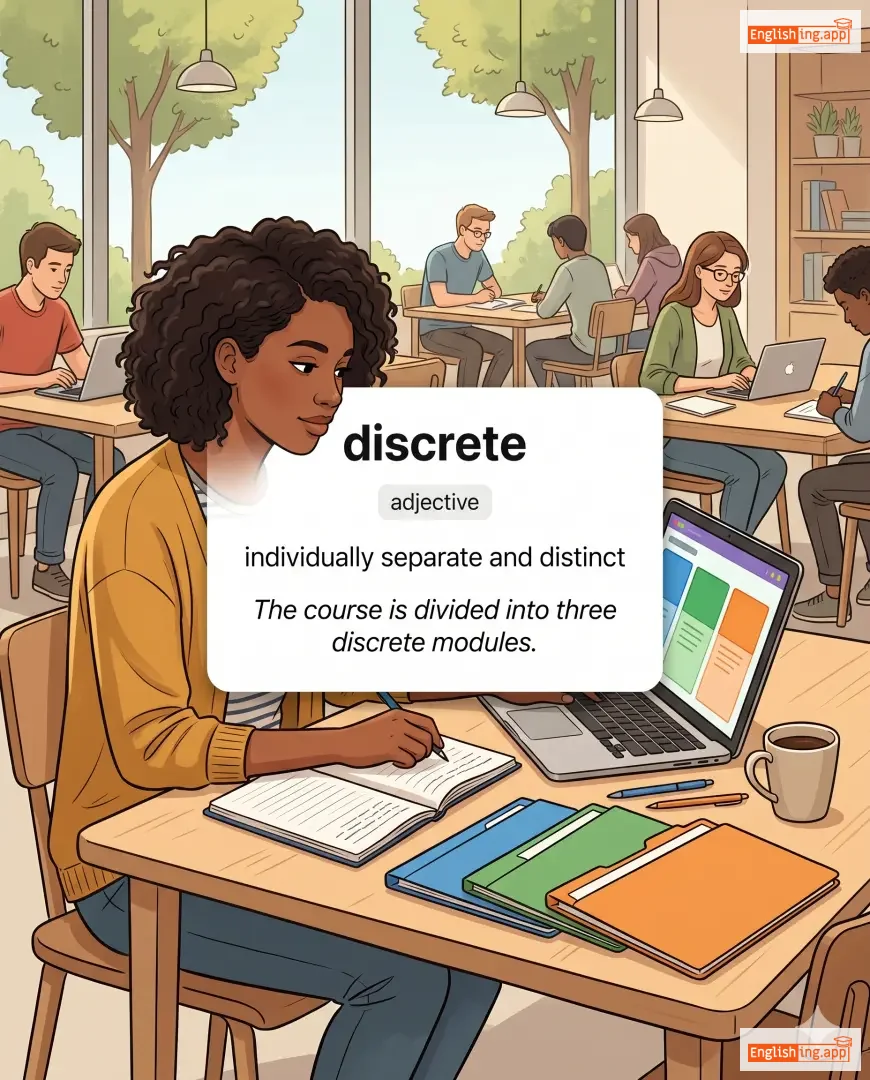
discrete definition card — visual illustration of the meaning
adjective
/dɪˈskriːt/
дискретный (diskretnyj)

individually separate and distinct

"The course is divided into three discrete modules."
"Курс разделён на три дискретных модуля." (Kurs razdeljon na tri diskretnykh modulja.)
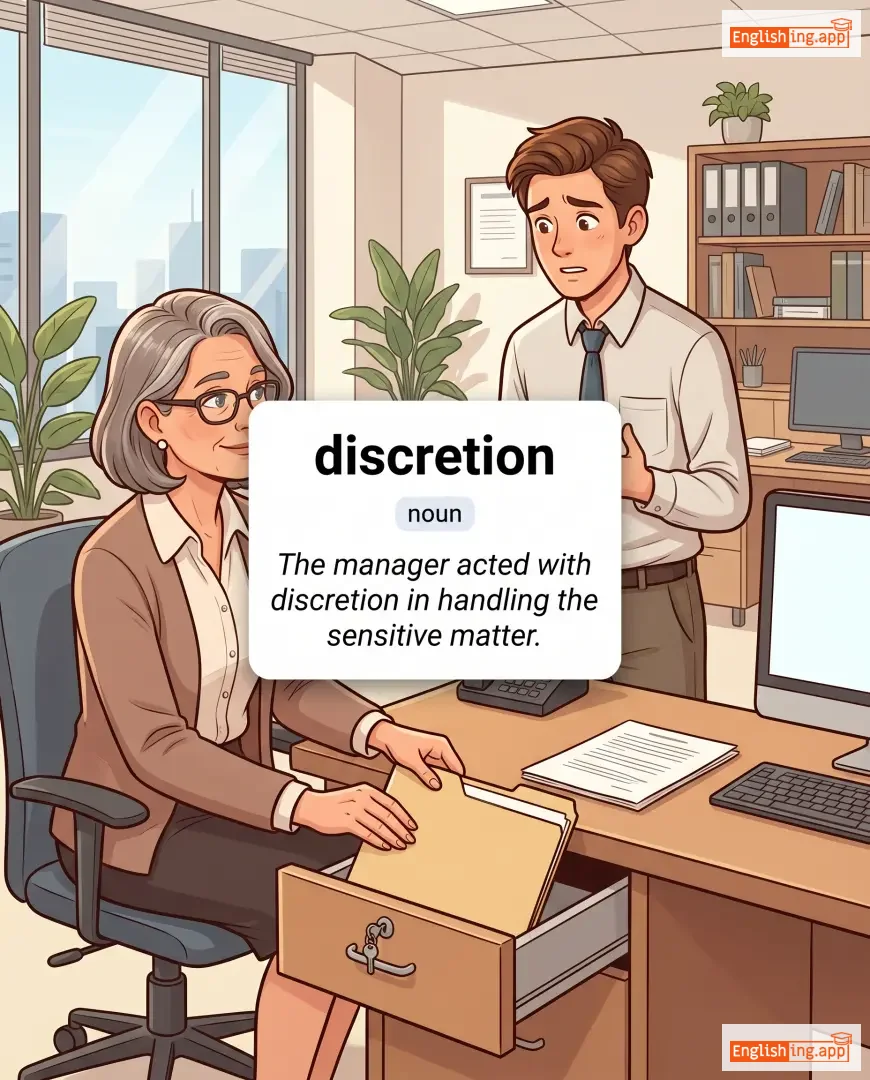
discretion definition card — visual illustration of the meaning
noun
/dɪˈskrɛʃən/
дискретность (diskretnost)

the quality of behaving or speaking in a way to avoid causing offense or revealing private information; the freedom to decide what should be done in a particular situation

"The manager acted with discretion in handling the sensitive matter."
"Менеджер действовал с дискретностью при решении чувствительного вопроса." (Menedzher deystvoval s diskretnost'yu pri reshenii chuvstvitel'nogo voprosa.)
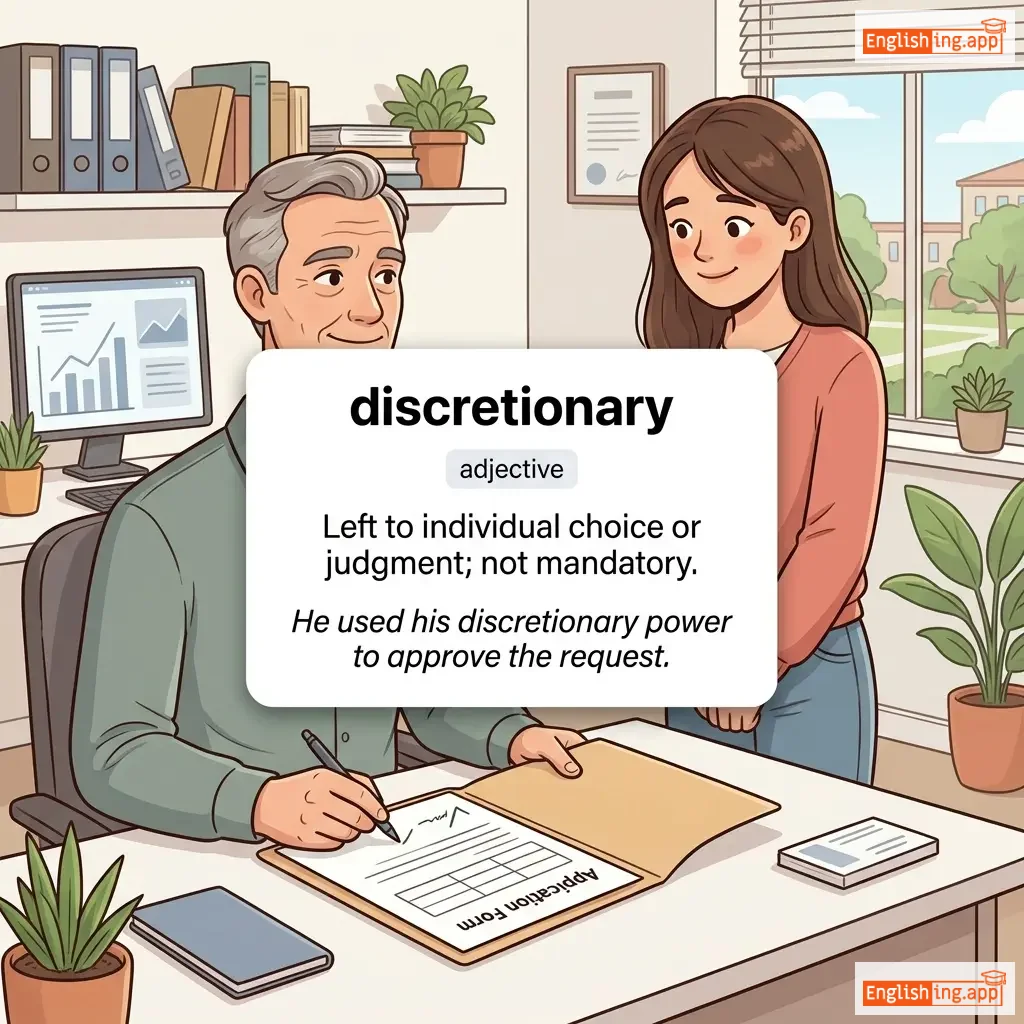
discretionary definition card — visual illustration of the meaning
adjective
/dɪˈskrɛʃəˌnɛri/
дискреционный (diskretsionnyy)

Left to individual choice or judgment; not mandatory.

"He used his discretionary power to approve the request."

"Он использовал свои дискреционные полномочия, чтобы одобрить запрос." (On ispol'zoval svoi diskretsionnye polnomochiya, chtoby odobrit' zapros.)
verb
/dɪˈskrɪmɪˌneɪt/
дискриминировать (diskriminnirovat)

To treat someone unfairly based on race, gender, or other differences; or to recognize a distinction.

"The law prohibits employers from discriminating against women."

"Закон запрещает работодателям дискриминировать против женщин." (Zakon zapreshchayet rabotodatelyam diskriminirivat' protiv zhenshchin.)
adjective
/dɪˈskrɪmɪˌneɪtɪŋ/
разборчивый (razborchivyy)

Having refined taste or good judgment; able to recognize subtle differences.

"She is known for her discriminating taste in art."

"Она известна своим разборчивым вкусом в искусстве." (Ona izvestna svoim razborchivym vkysom v iskusstve.)