Словари

Словарь английского языка | Значения слов, определения и примеры

noun
/dɪˈstrʌkʃən/
разрушение (razrushenie)

the act of causing so much damage to something that it no longer exists or cannot be repaired

"The fire caused the destruction of the building."

"Огонь стал причиной разрушения здания." (Ogon' stal prichinoy razrusheniya zdaniya.)
adjective
/dɪˈstrʌktɪv/
разрушительный (razrushitel'nyj)

Causing great and irreparable harm or damage.

"Hurricanes are often destructive to coastal cities."
"Ураганы часто разрушительны для прибрежных городов." (Uragany chasto razrushitel'ny dlya pribrizhnix gorodov.)
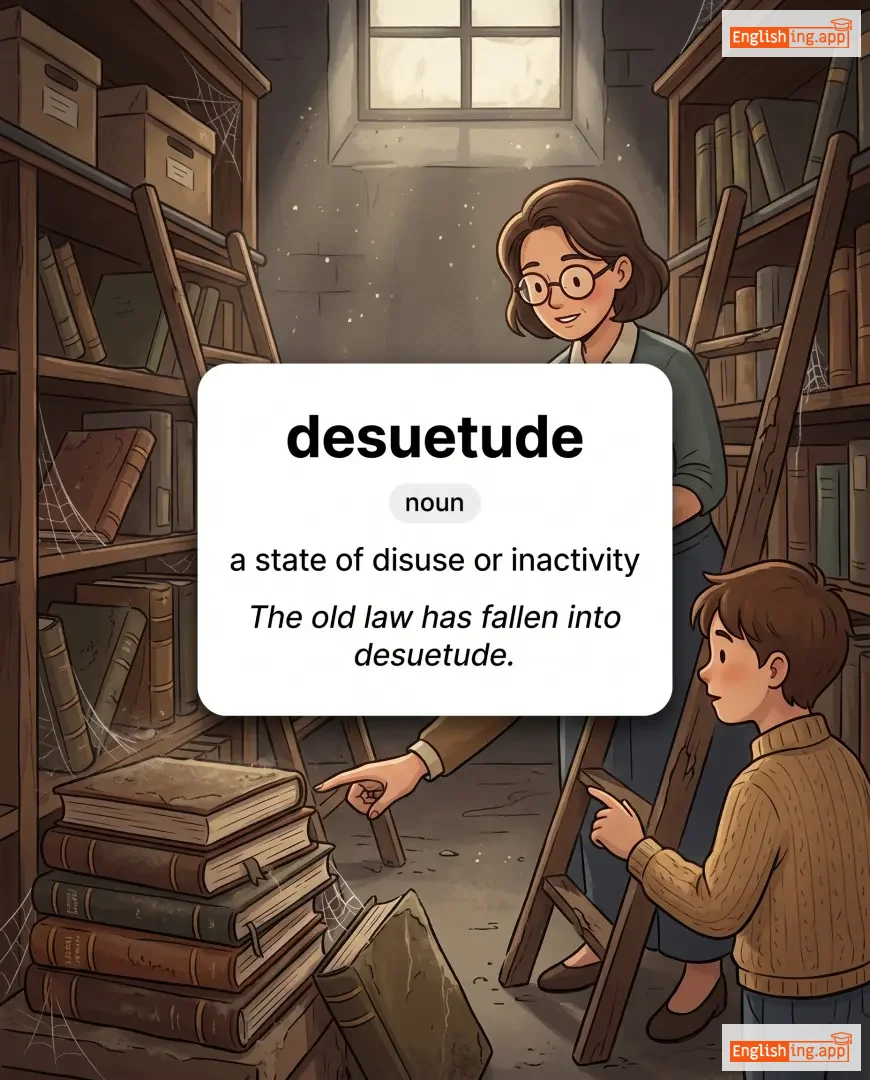
desuetude definition card — visual illustration of the meaning
noun
/ˈdɛswɪˌtuːd/
дезуэтуда (dezuetuda)

a state of disuse or inactivity

"The old law has fallen into desuetude."
"Старый закон утратил силу и оказался в дезуэтуде." (Staryy zakon ustratil silu i okazalsya v dezuetude.)
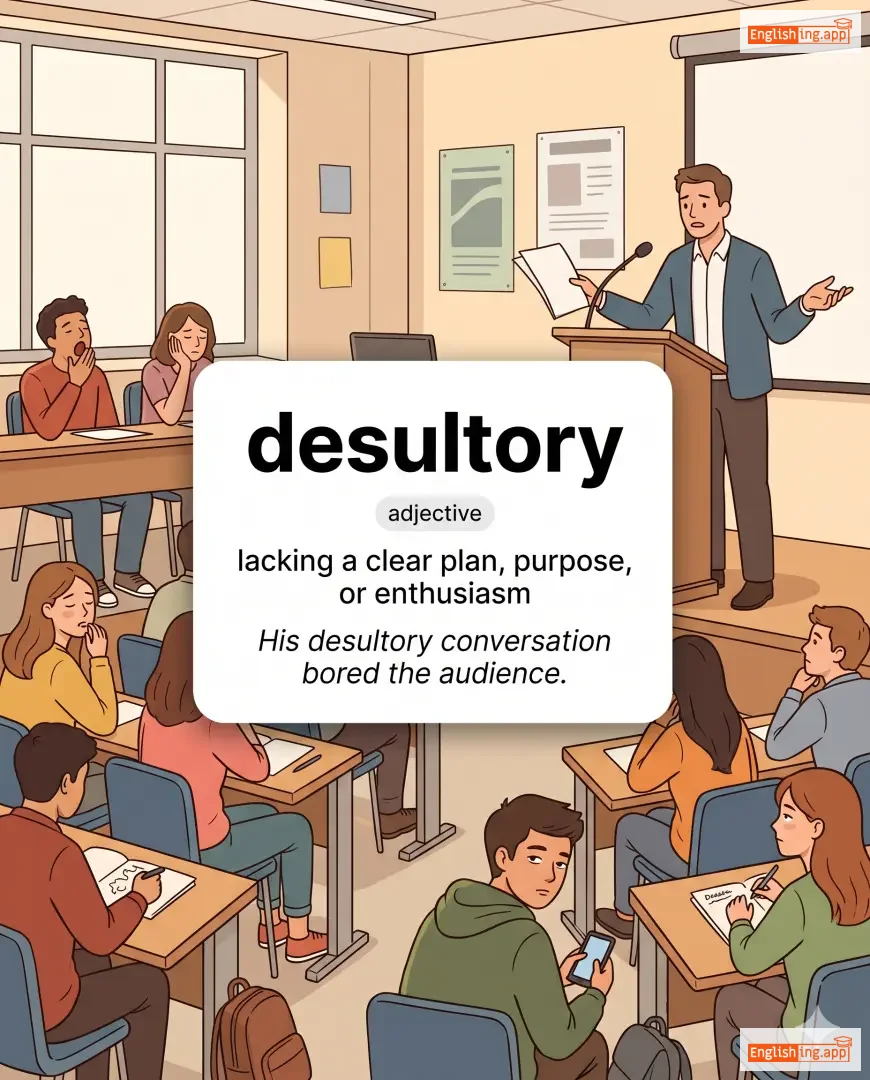
desultory definition card — visual illustration of the meaning
adjective
/ˈdɛsəlˌtɔːri/
беспорядочный (besporyadochny)

lacking a clear plan, purpose, or enthusiasm

"His desultory conversation bored the audience."

"Его беспорядочный разговор утомил зрителей." (Yego besporyadochnyy razgovor utomil zriteley.)
verb
/dɪˈtætʃ/
отсоединять (otsoedinyat)

to separate or remove something from something else

"She detached the page from the notebook."

"Она отсоединила страницу от тетради." (Ona otsoediniła stranicu ot tatradi.)
adjective
/dɪˈtætʃt/
отделённый, отчуждённый (otdelyonny, otchuzhdeny)

separate or disconnected; showing a lack of emotional involvement

"He lived in a detached house away from the city."
"Он жил в отдельно стоящем доме вдали от города." (On zhil v otdel'no stoyashchem dome vdali ot goroda.)
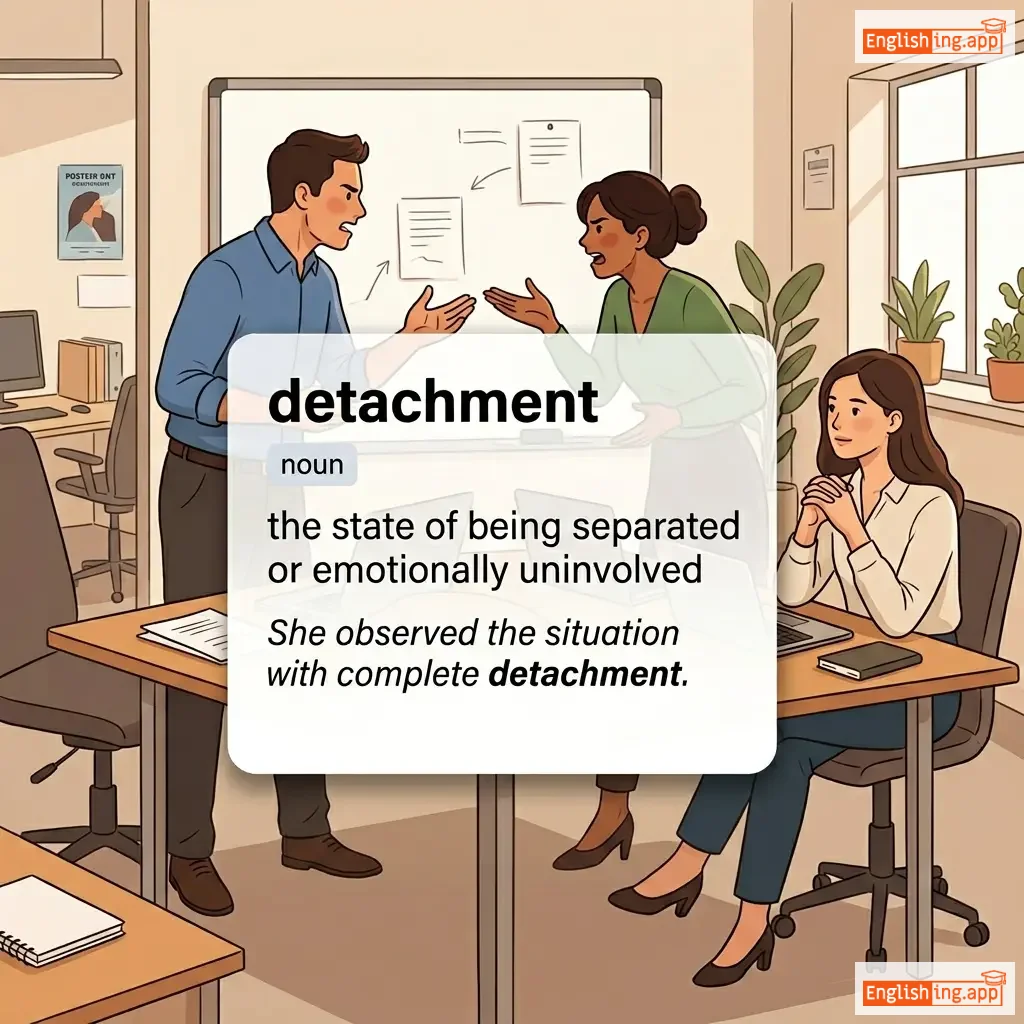
detachment definition card — visual illustration of the meaning
noun
/dɪˈtætʃmənt/
отстранение (otstranenie)

the state of being separated or emotionally uninvolved

"She observed the situation with complete detachment."

"Она наблюдала за ситуацией с полным отстранением." (Ona nablyudala za situatsiey s polnym otstraneniem.)
noun
/ˈdiː.teɪl/
деталь (detal)

An individual feature, fact, or item of information.

"She explained the plan in great detail."

"Она объяснила план в деталях." (Ona ob'yasnila plan v detal'yakh.)
adjective
/ˈdiː.teɪld/
подробный (podrobnyy)

Having many details; very thorough.

"The report provided a detailed analysis of the situation."

"Отчет представил подробный анализ ситуации." (Otchet predstavil podrobnyy analiz situatsii.)
verb
/dɪˈteɪn/
задерживать (ditein)

to keep someone from proceeding; to hold back, especially by official authority

"The police detained the suspect for questioning."

"Полиция задержала подозреваемого для допроса." (Politsiya zaderzhala podozrevaemogo dlya doprosa.)
verb
/dɪˈtɛkt/
обнаружить (obnaruzhit)

To discover or identify the presence of something.

"The device can detect smoke in the room."

"Устройство может обнаружить дым в комнате." (Ustroystvo mozhet obnaruzhit' dym v komnate.)
noun
/dɪˈtɛkʃən/
обнаружение (obnaruzhenie)

the action or process of identifying the presence of something

"The detection of fraud in the system was swift."

"Обнаружение мошенничества в системе было быстрым." (Obnaruzhenie moshenichestva v sisteme bylo bystrym.)
noun
/dɪˈtɛktɪv/
детектив (detektiv)

a person whose job is to investigate and solve crimes

"The detective solved the mystery in just two days."

"Детектив разгадал тайну всего за два дня." (Detektiv razgadаl taynu vsego za dva dnya.)
noun
/deɪˈtɒnt/
ослабление напряженных отношений (oslablenie napryazhennykh otnosheniy)

the easing of strained relations, especially between countries

"The treaty helped bring about a détente between the two nations."

"Договор помог достичь ослабления напряженности между двумя нациями." (Dogovor pomog dostich' oslableniya napryazhennosti mezhdu dvumya natsiyami.)
noun
/dɪˈtɛnʃən/
задержание (zaderzhanie)

the action of keeping someone in custody or confinement

"The student faced detention for his misbehavior."

"Студент столкнулся с задержанием за плохое поведение." (Student stolknulsya s zaderzhanie za plokhoe povedenie.)
🚫

deter

verb
/dɪˈtɜːr/

to discourage someone from doing something by instilling doubt or fear

"High fines are meant to deter people from breaking the law."

noun
/dɪˈtɜːrdʒənt/
моющее средство (moyushchee sredstvo)

a substance used for cleaning, especially for washing clothes and dishes

"She bought a new brand of detergent for laundry."
"Она купила новый бренд моющего средства для стирки." (Ona kupila novyy brand moyushchego sredstva dlya stirki.)
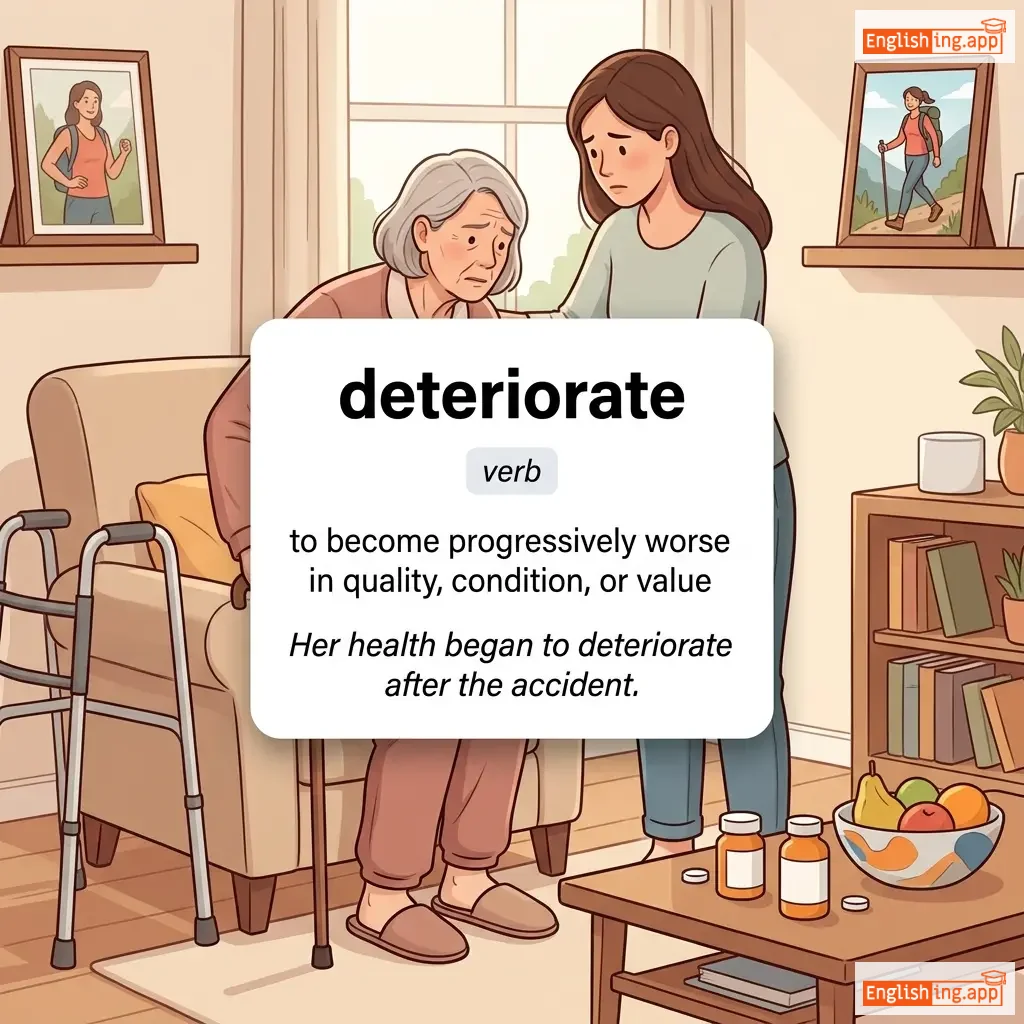
deteriorate definition card — visual illustration of the meaning
verb
/dɪˈtɪriəreɪt/
ухудшаться (ukhudshatsya)

to become progressively worse in quality, condition, or value

"Her health began to deteriorate after the accident."
"Её здоровье начало ухудшаться после аварии." (Eё zdorov'ye nachalo ukhudshatsya posle avarii.)
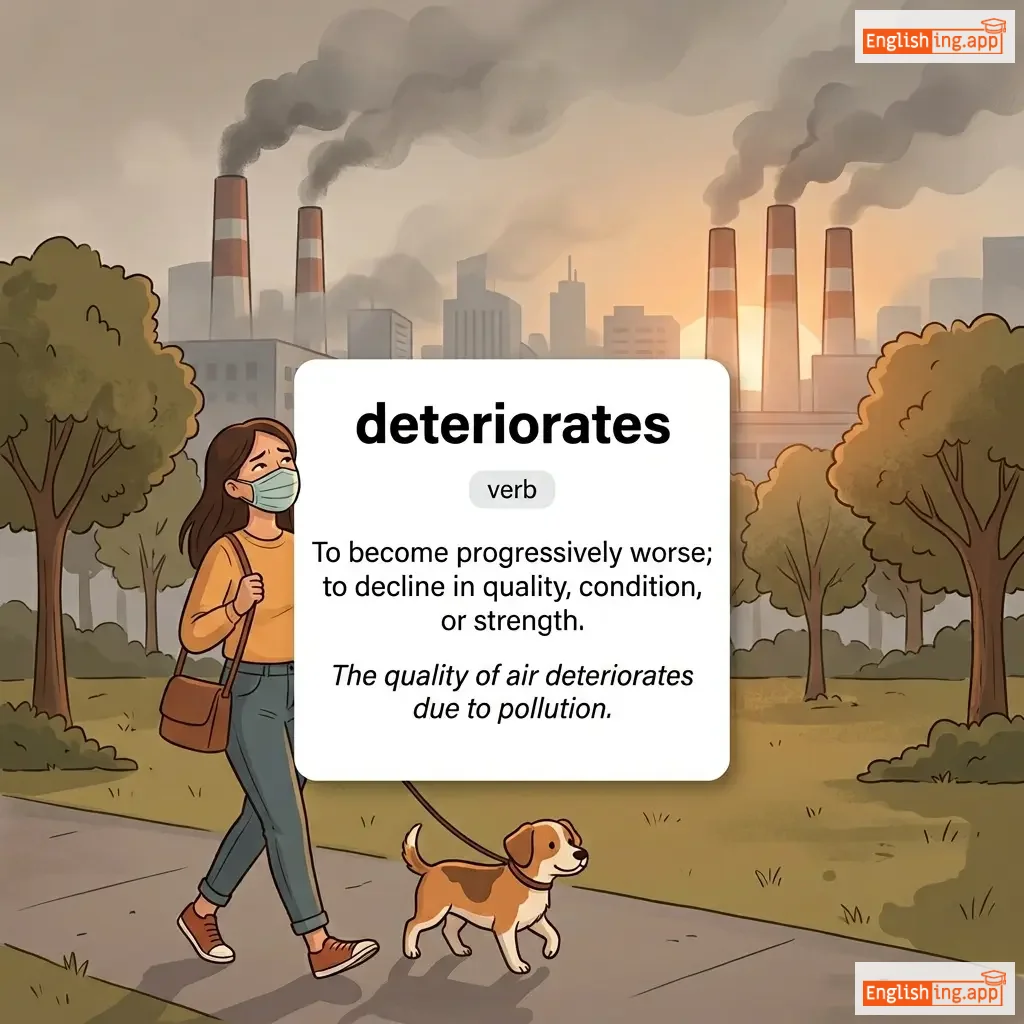
deteriorates definition card — visual illustration of the meaning
verb
dɪˈtɪrɪəˌreɪts
ухудшается (deteriorates)

To become progressively worse; to decline in quality, condition, or strength.

"The quality of air deteriorates due to pollution."
"Качество воздуха ухудшается из-за загрязнения." (kachestvavozduhaukhudshaetsyaizzazagryazneniya)
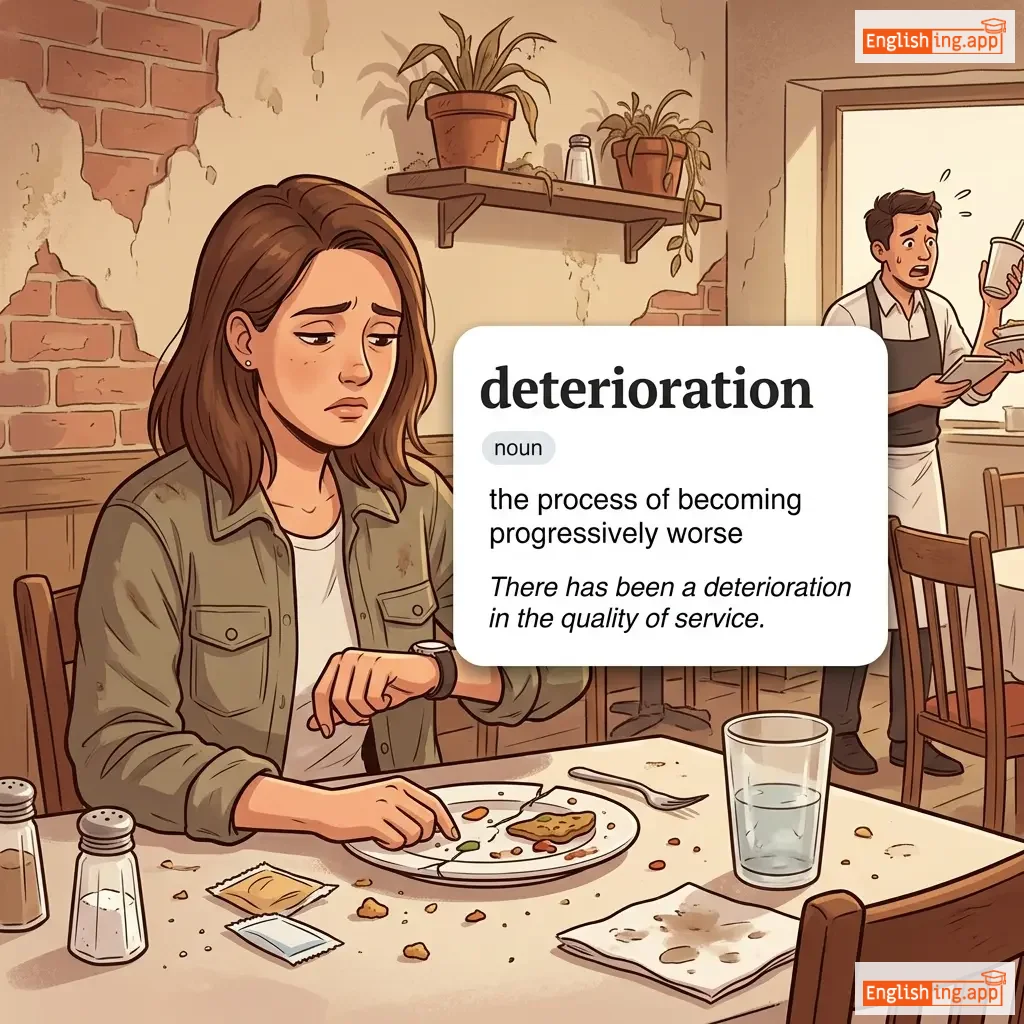
deterioration definition card — visual illustration of the meaning
noun
/dɪˌtɪriəˈreɪʃən/
ухудшение (ukhudshenie)

the process of becoming progressively worse

"There has been a deterioration in the quality of service."

"Произошло ухудшение качества обслуживания." (Proizoshlo ukhudshenie kachestva obsluzhivaniya.)
determinant definition card — visual illustration of the meaning
noun
/dɪˈtɜːrmɪnənt/
детерминант (determinant)

a factor that decisively affects the nature or outcome of something

"Education is a key determinant of economic growth."

"Образование является ключевым детерминантом экономического роста." (Obrazovanie yavlyaetsya klyuchevym determinantom ekonomicheskogo rosta.)
adjective
/dɪˈtɜːrmɪnət/
определённый (opredeljonnyj)

having exact and definite limits or form

"The contract is for a determinate period of two years."
"Контракт на определённый срок в два года." (Kontrakt na opredeljonnyj srok v dva goda.)
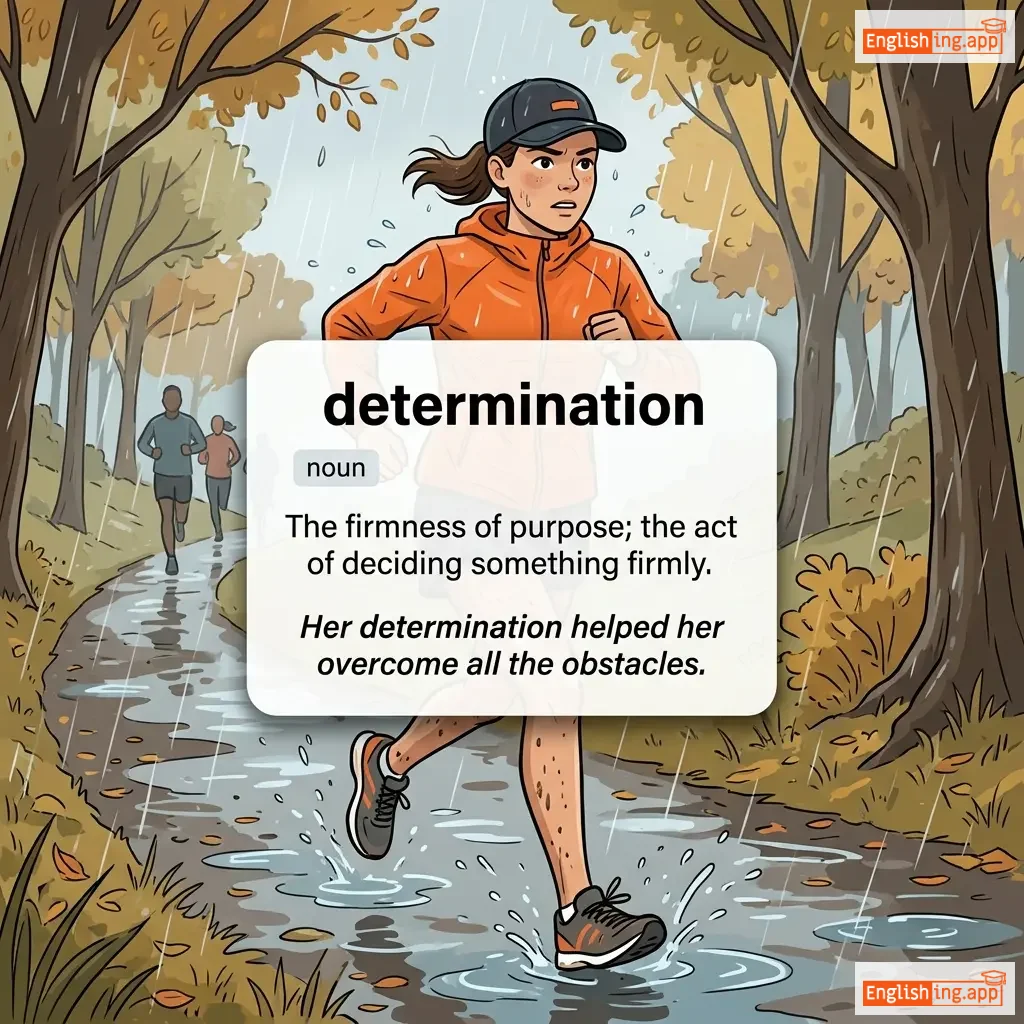
determination definition card — visual illustration of the meaning
noun
/dɪˌtɜːrmɪˈneɪʃən/
решимость (reshimost)

The firmness of purpose; the act of deciding something firmly.

"Her determination helped her overcome all the obstacles."

"Её решимость помогла ей преодолеть все препятствия." (Eyo reshimost pomogla yey preodolety vse prepyatstviya.)
verb
/dɪˈtɜː.mɪn/
определить (opredelit)

To decide or establish something after consideration.

"The jury will determine the outcome of the case."

"Жюри определит результат дела." (Zhyuri opredelit rezultat dela.)
adjective
/dɪˈtɜːrmɪnd/
решительный (reshitel'nyy)

Having firmly decided to do something and not letting anything stop you.

"She was determined to finish her studies despite many obstacles."
"Она была решительна завершить свои исследования, несмотря на многие препятствия." (Ona byla reshitelnaya zavershit' svoi issledovaniya, nesmotrya na mnogie prepyatstviya.)
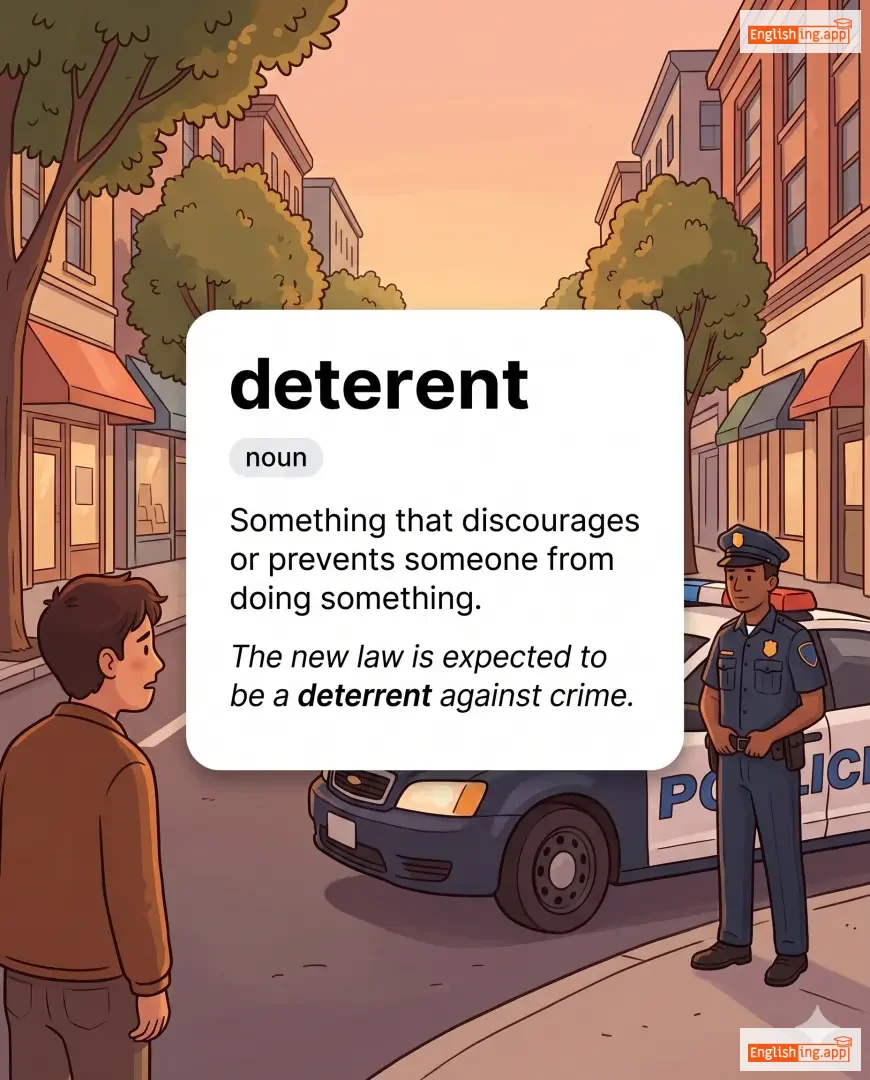
deterrent definition card — visual illustration of the meaning
noun
/dɪˈtɜːrənt/
сдерживающий фактор (sderzhivayushchiy faktor)

Something that discourages or prevents someone from doing something.

"The new law is expected to be a deterrent against crime."

"Ожидается, что новый закон станет сдерживающим фактором против преступности." (Ozhidayetsya, chto novyy zakon stanet sderzhivayushchim faktorom protiv prestupnosti.)
verb
/dɪˈtɛst/
ненавидеть (nenavidet)

To dislike intensely or hate.

"I detest waking up early on weekends."

"Я ненавижу вставать рано по выходным." (Ya nenavizhu vstavayt' rano po vykhodnym.)
noun
/ˌdɛtəˈneɪʃən/
детонация (detonaciya)

The act of exploding or causing something to explode.

"The sudden detonation shook the entire building."

"Внезапная детонация потрясла всё здание." (Vnezapnaya detonation potrasyla vse zdanije.)
noun
/ˈdiːtʊr/
объезд (ob'yezd)

A longer or less direct route taken to avoid something or reach a destination.

"We had to take a detour because the main road was closed."

"Нам пришлось сделать объезд, потому что основная дорога была закрыта." (nam prishlos' sdelat' ob'yezd, potomu chto osnovnaya doroga byla zakryta.)
detoxification definition card — visual illustration of the meaning
noun
/dɪˌtɒksɪfɪˈkeɪʃən/
детоксикация (detoksikaciya)

The process of removing toxic substances or effects from the body.

"Detoxification is often the first step in treating drug addiction."

"Детоксикация часто является первым шагом в лечении наркозависимости." (Detoksikaciya chasto yavyayetsya pervym shagom v lechenii narkozavisimosti.)
verb
/dɪˈtrækt/
уменьшать (umenshat)

To reduce or take away the worth or value of something.

"His rude behavior will detract from his good reputation."
"Его грубое поведение снизит его хорошую репутацию." (Yego gruboje povedenie snizit ego khoroshuyu reputatsiyu.)
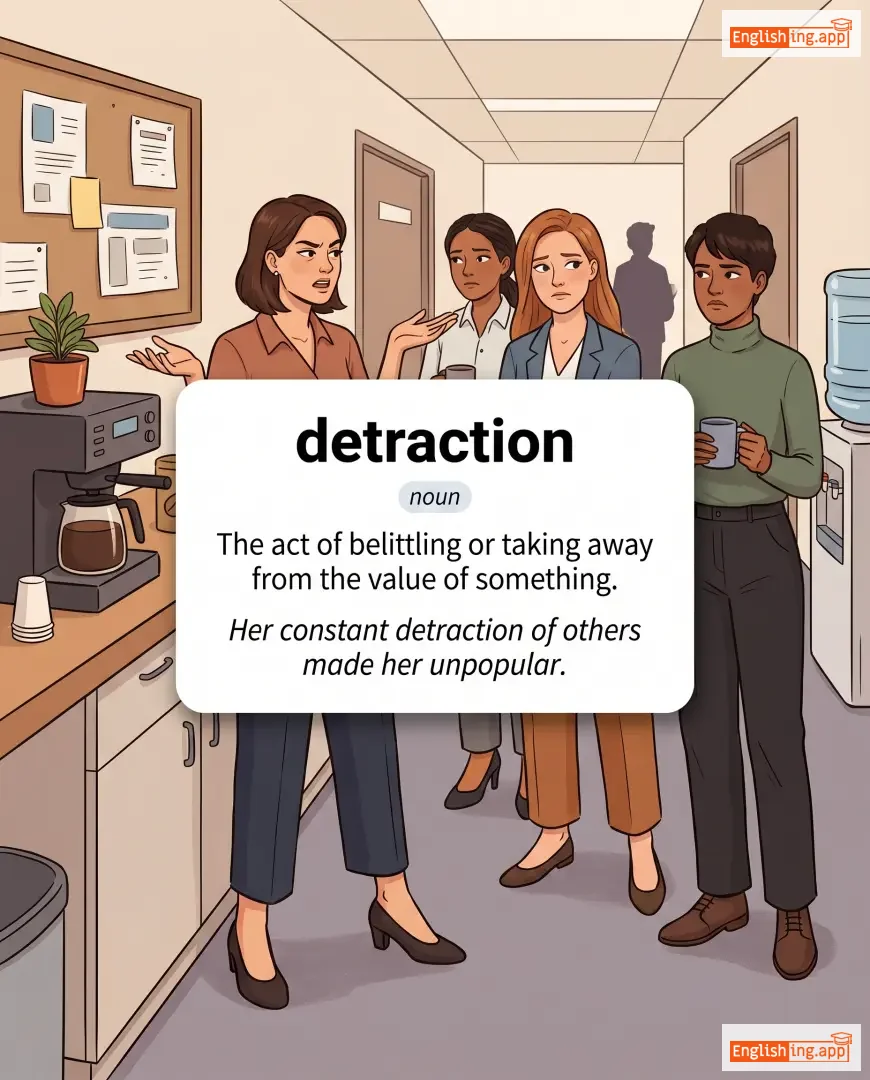
detraction definition card — visual illustration of the meaning
noun
/dɪˈtrækʃən/
принижение (prinizhenie)

The act of belittling or taking away from the value of something.

"Her constant detraction of others made her unpopular."
"Её постоянное принижение других сделало её непопулярной." (Yeyo postoyannoye prinizheniye drugikh sdelalo yeyu nepopulyarnoy.)
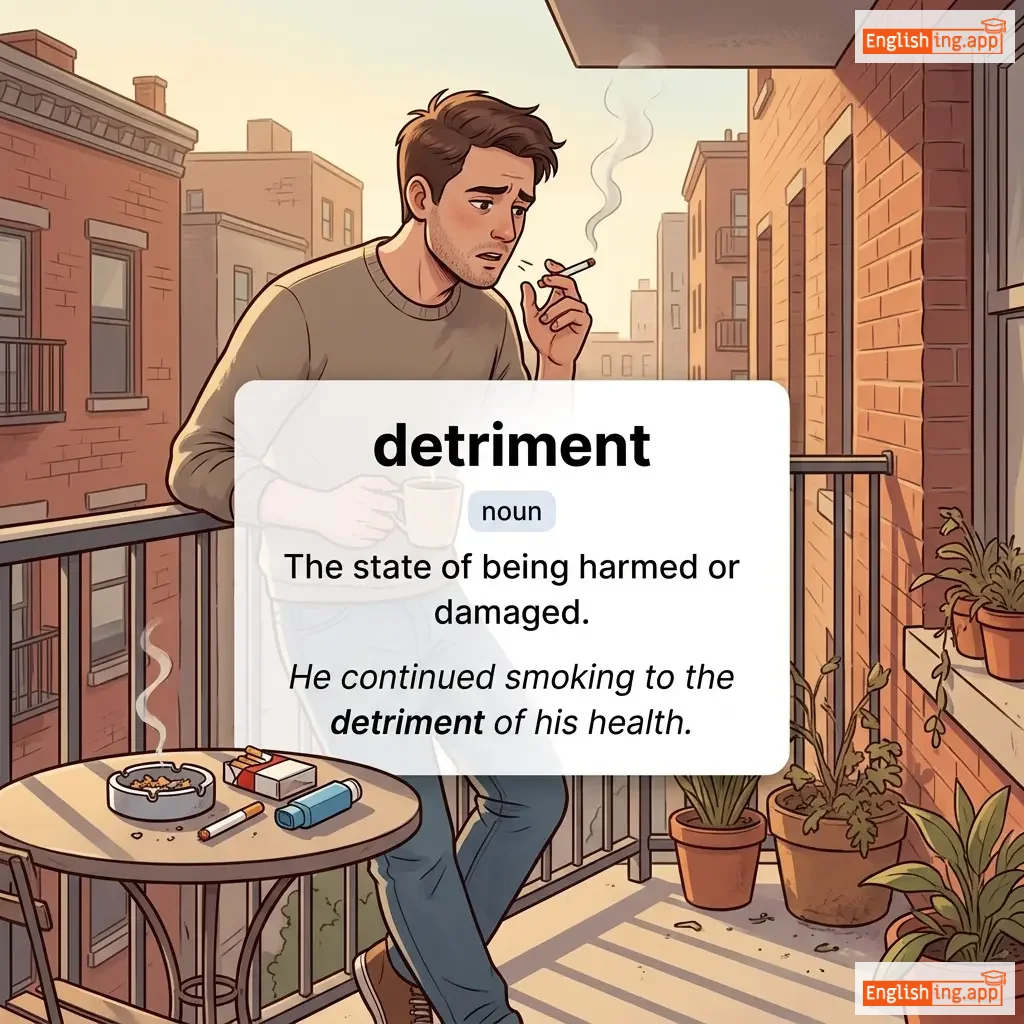
detriment definition card — visual illustration of the meaning
noun
/ˈdɛtrɪmənt/
вред (vred)

The state of being harmed or damaged.

"He continued smoking to the detriment of his health."
"Он продолжал курить во вред своему здоровью." (On prodolzhal kurit' vo vred svoemu zdorov'yu.)
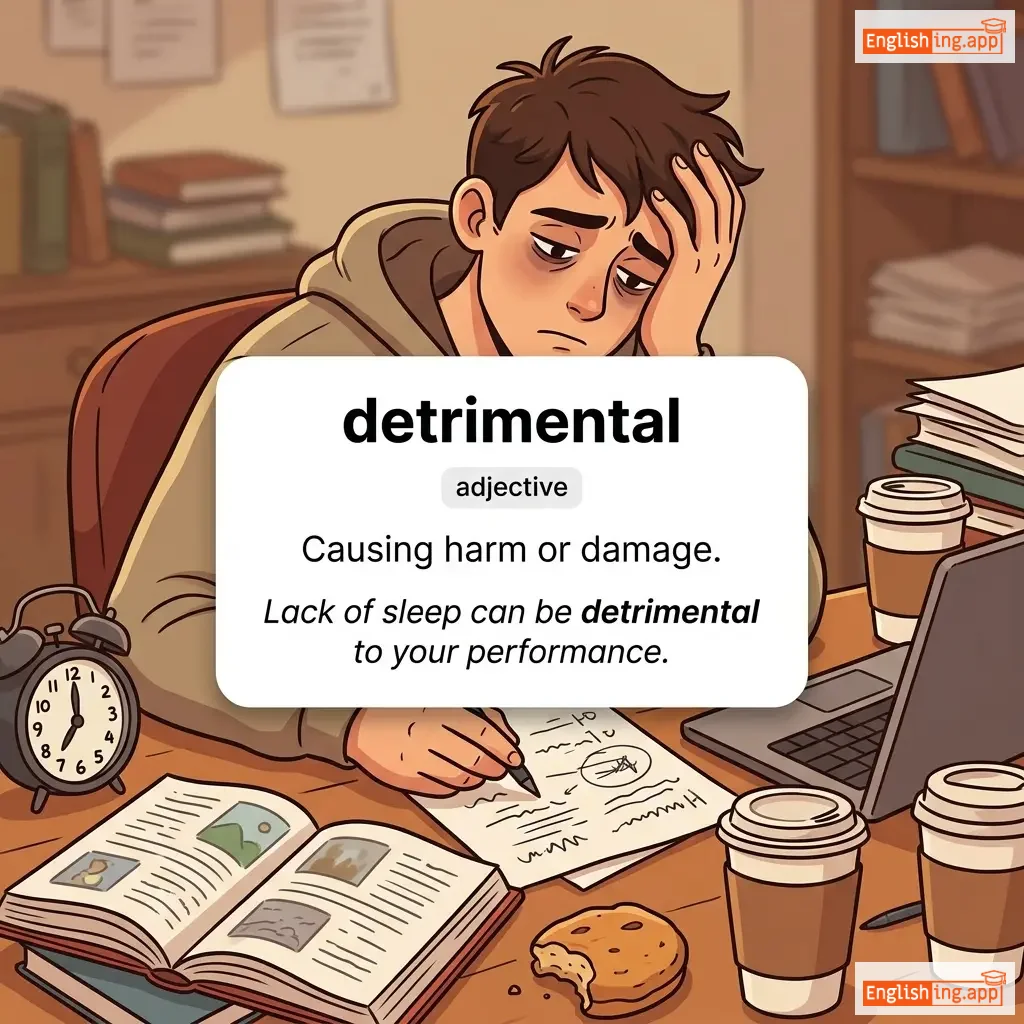
detrimental definition card — visual illustration of the meaning
adjective
/ˌdɛtrɪˈmɛntəl/

Causing harm or damage.

"Lack of sleep can be detrimental to your performance."

noun
/dɪˈtraɪtəs/
детрит (detrit)

Waste or debris of any kind; fragments left from destruction or decay.

"The riverbank was covered with detritus after the flood."

"После наводнения берег был покрыт детритом." (Posle navodneniya bereg byl pokryt detritom.)
verb
/dɪˈtruːd/
отталкивать вниз или наружу (ottalkivat' vnyz ili naruzhu)

To thrust or force something downward or outward.

"The violent waves detruded rocks from the cliff."

"Жестокие волны сдвинули камни с обрыва." (Zhestokie volny ssdvinuli kamni s obryva.)
verb
/ˈdɛvəˌsteɪt/
опустошать (opustoshat)

to cause severe and overwhelming destruction or damage

"The hurricane devastated the coastal town."

"Ураган разрушил прибрежный город." (Uragan razrushil pribrezhnyy gorod.)
adjective
/ˈdevəsteɪtɪŋ/
разрушительный (razrushitel'nyy)

causing severe shock, distress, or destruction; extremely damaging or upsetting

"The earthquake had a devastating effect on the city."
"Землетрясение оказало разрушительное воздействие на город." (Zemletryaseniye okzalo razrushitel'noe vozdeystviye na gorod.)
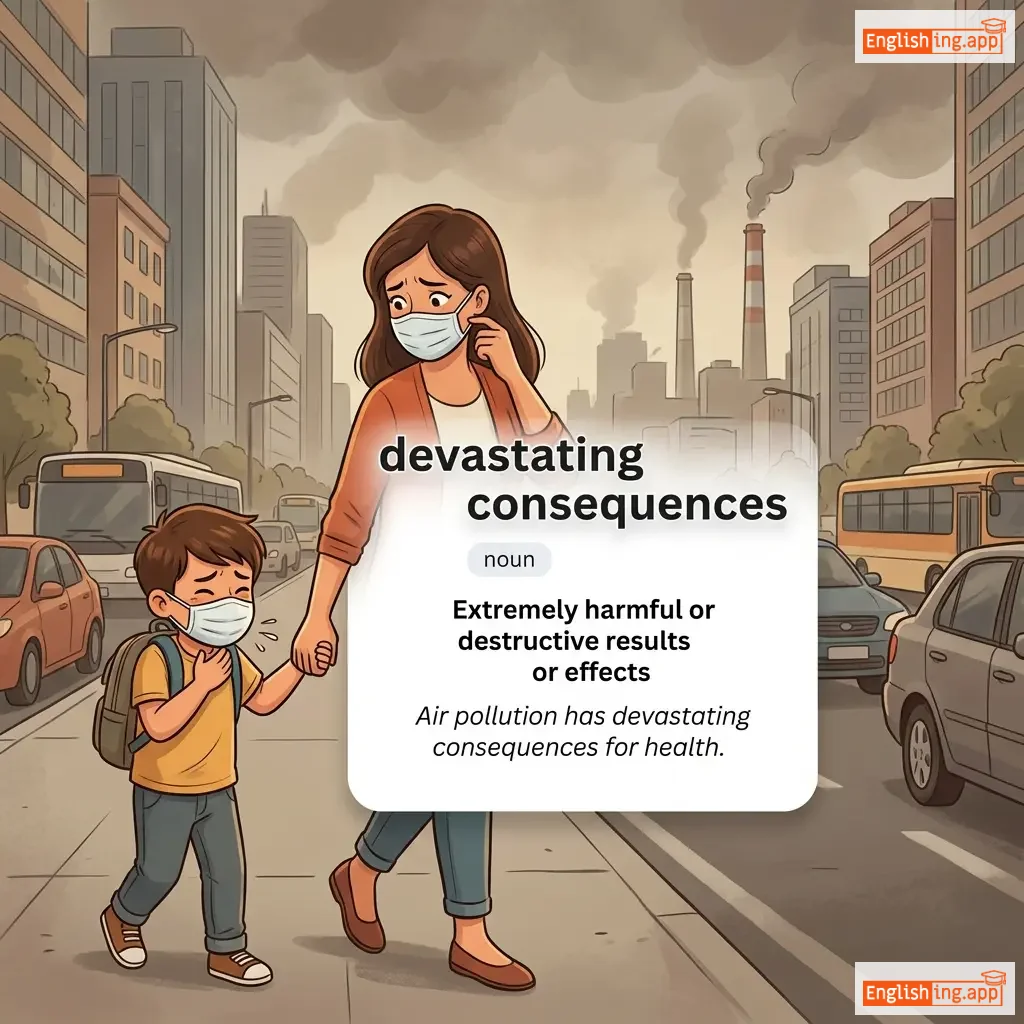
devastating consequences definition card — visual illustration of the meaning
noun
ˈdevəsteɪtɪŋ ˈkɒnsɪkwənsɪz
опустошительные последствия (opustoshtitel'nye posledstviya)

Extremely harmful or destructive results or effects

"Air pollution has devastating consequences for health."

"Загрязнение воздуха имеет опустошительные последствия для здоровья." (Zagryaznenie vozdukha imeet opustoshtitel'nye posledstviya dlya zdorov'ya.)
develop definition card — visual illustration of the meaning
verb
/dɪˈvɛləp/
развивать (razvivat)

To grow, advance, or create something over time.

"The company aims to develop new software solutions."

"Компания стремится развивать новые программные решения." (Kompaniya stremitsya razvivat' novye programmnye resheniya.)
noun
/dɪˈveləpər/
разработчик (razrabotchik)

a person or company that creates software, buildings, or land projects

"She works as a software developer at a tech company."

"Она работает разработчиком программного обеспечения в технологической компании." (Ona rabotaet razrabotchikom programmnogo obespecheniya v tekhnologicheskoi kompanii.)
verb
/dɪˈvɛləpɪŋ/
развивающий (razvivayushchiy)

the process of growing, improving, or becoming more advanced

"She is developing new skills in programming."
"Она развивает новые навыки в программировании." (Ona razvivaet novye navyki v programmirovanii.)
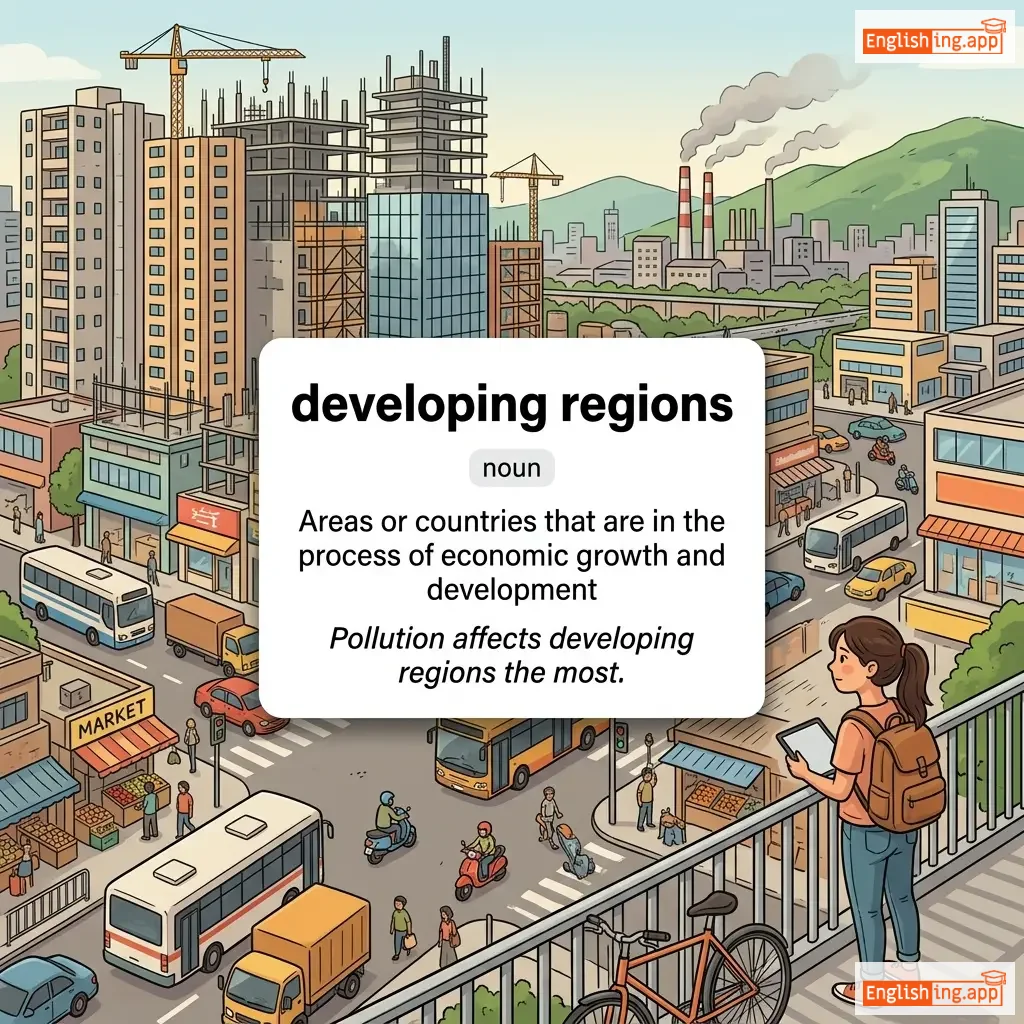
developing regions definition card — visual illustration of the meaning
noun
dɪˈveləpɪŋ ˈriːdʒənz
развивающиеся регионы (razvivayushchiesya regiony)

Areas or countries that are in the process of economic growth and development

"Pollution affects developing regions the most."
"Загрязнение больше всего затрагивает развивающиеся регионы." (Zagryaznenie bolshe vsego zatragivaet razvivayushchiesya regiony.)
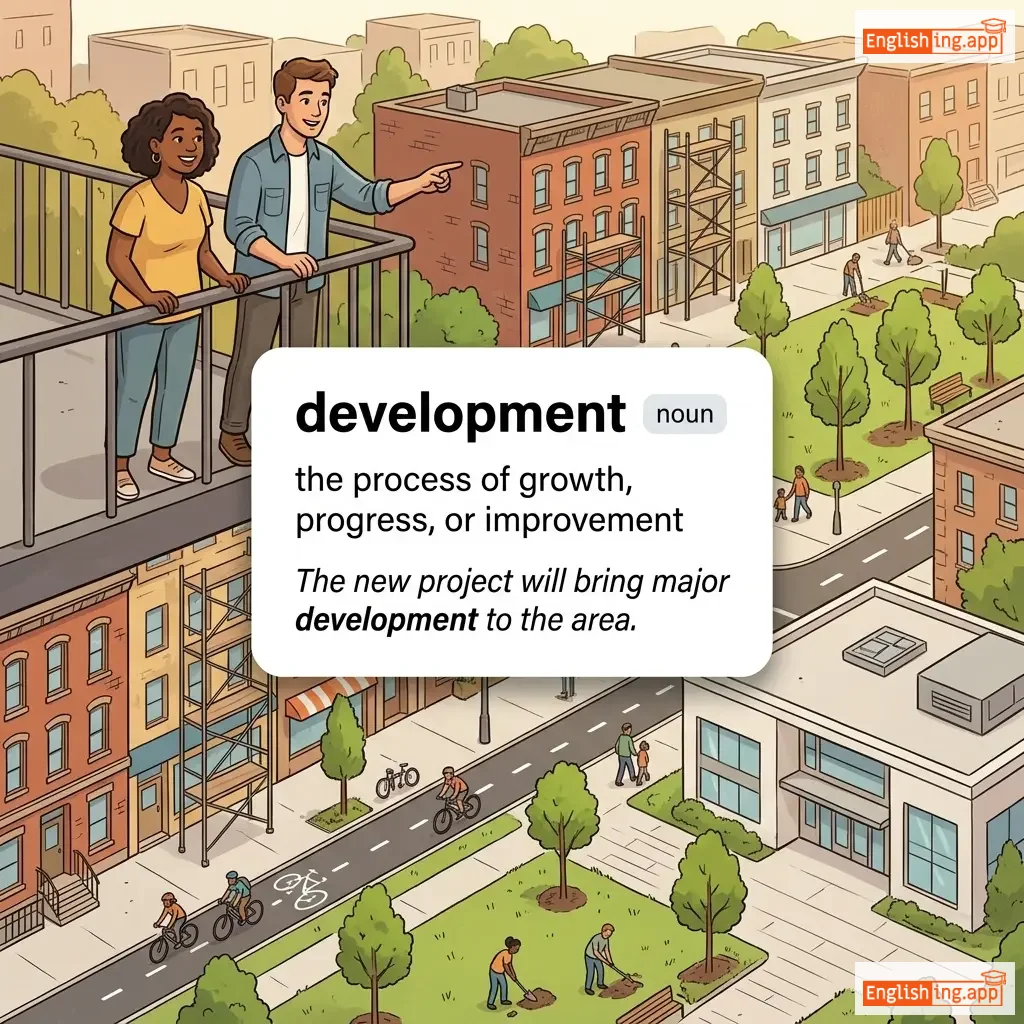
development definition card — visual illustration of the meaning
noun
/dɪˈvɛləpmənt/
развитие (razvitiye)

the process of growth, progress, or improvement

"The new project will bring major development to the area."

"Новый проект приведет к значительному развитию в регионе." (Novyy proyekt privedet k znachitel'nomu razvitiyu v regione.)
adjective
/dɪˌveləpˈmentl/
развивающий (razvivayushchiy)

relating to the process of growth or progress

"Early childhood is a crucial developmental stage for learning."

"Раннее детство - это важный развивающий этап для обучения." (Rannee detstvo - eto vazhnyy razvivayushchiy etap dlya obucheniya.)
noun
/ˈdiːviəns/
девиация (deviatsiya)

Behavior that differs from accepted social or moral standards.

"The book studies deviance in urban youth culture."
"Книга изучает девиацию в городской молодежной культуре." (Kniga izuchayet deviatsiyu v gorodskoy molodyozhnoy kulture.)
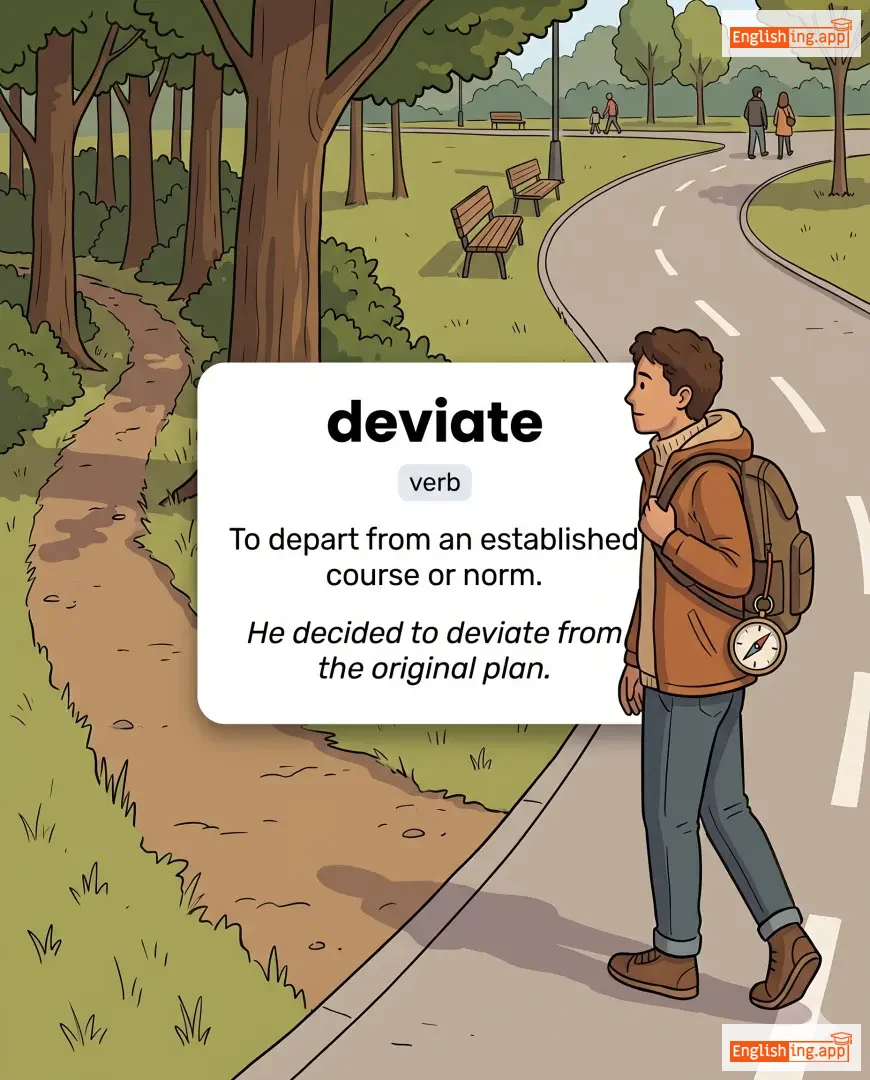
deviate definition card — visual illustration of the meaning
verb
/ˈdiːvieɪt/
отклоняться (otklonyatsya)

To depart from an established course or norm.

"He decided to deviate from the original plan."

"Он решил отклониться от исходного плана." (On reshil otklonitsya ot iskhodnogo plana.)
noun
/ˌdiːviˈeɪʃn/
отклонение (otklonenie)

The action of departing from an accepted standard or norm.

"Any deviation from the rules will not be tolerated."

"Любое отклонение от правил не будет допущено." (Lyuboye otklonenie ot pravil ne budet dopushcheno.)
device definition card — visual illustration of the meaning
noun
/dɪˈvaɪs/
устройство (ustroystvo)

An object, machine, or piece of equipment designed for a particular purpose.

"She bought a new device to track her fitness activities."

"Она купила новое устройство для отслеживания своих фитнес-активностей." (Ona kupila novoe ustroystvo dlya otslezhivaniya svoikh fitness-aktivnostej.)
noun
/ˈdɛv.əl/
дьявол (d'yavol)

An evil spirit or supernatural being often regarded as the embodiment of wickedness and harm.

"The story warned children about making deals with the devil."

"История предупреждала детей о том, чтобы они не заключали сделки с дьяволом." (Istoriya preduprezhdala detey o tom, chtoby oni ne zaklyuchali sdelki s d'yavolom.)