Словари

Словарь английского языка | Значения слов, определения и примеры

verb
/kəˈriːn/
двигаться неконтролируемо (dvigat'sya nekontrol'iruemo)

To move swiftly and in an uncontrolled way, especially in a specific direction.

"The car careened down the slippery road."

"Машина неслась по скользкой дороге неконтролируемо." (Mashina neslas' po skol'zkoy doroge nekontrol'iruemo.)
noun, verb
/kəˈrɪər/
карьера / профессия (kar'era / professiya)

As a noun: a person’s course of professional life; as a verb: to move swiftly and in an uncontrolled way.

"She built a successful career in medicine."

"Она построила успешную карьеру в медицине." (Ona postroila uspeshnuyu kar'yeru v meditsine.)
adjective
/ˈkeəfriː/
беззаботный (bezzabotny)

Free from worries or responsibilities; relaxed and happy.

"She enjoyed a carefree afternoon at the beach."

"Она наслаждалась беззаботным днем на пляже." (Ona naslazhdalas' bezzabotnym dnyom na plyazhe.)
adjective
/ˈkɛr.fəl/
осторожный (ostorozhnyy)

Exercising caution or showing concern to avoid mistakes or harm.

"He is always careful when crossing the road."

"Он всегда осторожен, когда пересекает дорогу." (On vsegda ostorozhen, kogda peresekaet dorogu.)
adverb
/ˈkɛərfəli/
осторожно (o-sto-rozh-no)

In a way that is done with attention to detail and caution to avoid mistakes or harm.

"He carefully placed the glass on the table."

"Он осторожно поставил стакан на стол." (On ostorožno postavil stakan na stol.)
🤷‍♂️😰

Careless (kerles)

adjective
/ˈkeər.ləs/
небрежный; халатный; рассеянный; беспечный; (kerles)

not giving sufficient attention or thought to avoiding harm or errors; negligent; inattentive

"His careless driving caused a serious accident on the highway."

"Его небрежное вождение привело к серьезной аварии на шоссе." (Ego nebrezhnoe vozhdenie privelo k serjoznoj avarii na shosse.)
adverb
/ˈkeərləsli/
небрежно (nebrezhno)

without care or attention; in a negligent or reckless manner

"He carelessly left the door unlocked."

"Он небрежно оставил дверь незапертой." (on nebrezhno ostavil dver nezapertoi)
noun
/ˈker.ləs.nəs/
небрежность; халатность (nebrezhnost, khalatnost)

failure to give sufficient attention to avoiding harm or errors

"His carelessness with money led to serious financial problems."

"Его небрежность с деньгами привела к серьезным финансовым проблемам." (Ego nebrezhnost' s dengami privedla k ser'yezhnym finansovym problemam.)
noun
/kəˈres/
ласковый жест (laskovy zhest)

a gentle or loving touch

"The mother's gentle caress calmed the crying baby."

"Нежное прикосновение матери успокоило плачущего ребенка." (Nezhnoe prikosnovenie materi uspokoilo plachushchego rebenka.)
noun
/ˈkærɪt/
кэ́рет (^) (caret)

A proofreading symbol (^) used to indicate where something should be inserted.

"The editor placed a caret to show where the missing word should go."

"Редактор поставил кэрет, чтобы показать, куда должно быть вставлено пропущенное слово." (Redaktor postavil caret, chtoby pokazat', kuda dolzhno byt' vstavleno propushchennoe slovo.)
adjective
/ˈkeəwɔːn/
изнурённый и обеспокоенный (iznuryonnyy i obespokoyennyy)

Showing signs of worry, stress, or exhaustion.

"His careworn face revealed years of struggle."

"Его измождённое лицо показывало годы борьбы." (Ego izmozhdyonnoe litso pokazyvalo gody bor'by.)
noun
/ˈkɑːrɡoʊ/
груз (gruz)

goods carried by a ship, plane, or other transport

"The ship was loaded with valuable cargo."

"Корабль был загружен ценным грузом." (Korabl' byl zagruzhen tsennym gruzom.)
noun
/ˈkɑr.ɡoʊ ʃɪp/
грузовое судно (gruzovoye sudno)

a ship or vessel that carries goods and materials from one port to another

"The cargo ship transported containers filled with electronics across the ocean."

"Грузовое судно перевезло контейнеры, заполненные электроникой, через океан." (Gruzovoye sudno perevezlo konteynery, zapolnennyye elektronikov, cherez okean)
noun
/ˈkærɪkətjʊə/
карикатура (karikatura)

A picture or description that exaggerates certain features for comic or satirical effect.

"The magazine published a caricature of the politician."

"Журнал опубликовал карикатуру на политика." (Zhurnal opublikoval karikaturu na politika.)
noun
/ˈkærɪlɒn/
карильон (karil'on)

A set of bells played using a keyboard, usually in a tower.

"The carillon bells rang across the town square."

"Звуки карильона разнеслись по площади города." (Zvuki karil'ona razneslis' po ploshchadi goroda.)
noun
/ˈkɑːrmaɪn/
карминовый красный (karmirovyy krasnyy)

A vivid crimson or purplish-red color, often used as a dye or pigment.

"The artist used carmine to paint the vibrant sunset sky."

"Художник использовал кармин, чтобы нарисовать яркое небо на закате." (Khodozhnik ispol'zoval karmim, chtoby narisovat' yarkoye nebo na zakate.)
noun
/ˈkɑːrnɪdʒ/
кровопролитие (krovoprolitiye)

The killing of a large number of people; great destruction and bloodshed.

"The battlefield was a scene of unimaginable carnage."

"Поле боя было сценой невообразимого кровопролития." (Pole boya bylo stsenoy nevoobrazimogo krovoprolitiya)
carnal definition card — visual illustration of the meaning
adjective
/ˈkɑːrnəl/
плотский (plotskiy)

Relating to physical, especially sexual, desires and appetites.

"The book explores the conflict between spiritual and carnal desires."

"Книга исследует конфликт между духовными и плотскими желаниями." (Kniga issleduet konflikt mezhdu dukhovnymi i plotskimi zhelaniyami.)
adjective
/kɑːrˈnɪvərəs/
плотоядный (plotoyadny)

Feeding on the flesh of other animals; meat-eating.

"Lions are carnivorous animals that hunt in groups."

"Львы — плотоядные животные, которые охотятся группами." (L'vy — plotoyadnye zhivotnye, kotorye okhotyatsya gruppami.)
noun
/ˈkærəm/
кмин (kmin)

aromatic seeds of a plant used as a spice, especially in Indian cooking

"Carom seeds are often used in traditional Indian bread recipes."

"Семена кумина часто используются в традиционных индийских рецептах хлеба." (Semena kumina chasto ispol'zujutsja v traditsionnykh indijskikh retseptakh khleba.)
noun
/kəˈraʊzl/
шумная вечеринка (shumnaya vecherinka)

A noisy or lively drinking party or festivity.

"They were exhausted after a night of wild carousal."

"Они были усталы после ночи дикой шумной вечеринки." (Oni byli ustaly posle nochi dikoy shumnoy vecherinki.)
verb
/kəˈraʊz/
веселиться (veselit'sya)

to drink and enjoy oneself noisily, often with others

"They stayed up all night to carouse after the victory."

"Они не ложились всю ночь, чтобы веселиться после победы." (Oni ne lozhilis' vsyu noch', chtoby veselit'sya posle pobedy.)
verb
/kɑːrp/
жаловатся (zhalovatsya)

to complain or find fault continually, often about trivial matters

"She tends to carp about the smallest inconveniences."

"Она склонна жаловаться на самые незначительные неудобства." (Ona sklonna zhalovatsya na samye nezna-chitelnye nedobstva.)
noun
/ˈkɑːr.pən.tər/
плотник (karpenter)

a person who makes and repairs wooden objects and structures

"The carpenter built a beautiful wooden cabinet for the kitchen."

"Плотник построил красивый деревянный шкаф для кухни." (Ze karpenter bilt a byutiful vuden kebinit for ze kitchen.)
noun
/ˈkɑːrpɪt/
ковёр (kovyor)

a thick woven floor covering

"They bought a red carpet for the living room."

"Они купили красный ковер для гостиной." (Oni kupili krasnyy kover dlya gostinoy.)
carping definition card — visual illustration of the meaning
adjective
/ˈkɑːrpɪŋ/
ворчливый (vorchlivyj)

continually complaining or finding fault in a petty way

"His carping attitude makes teamwork difficult."

"Его ворчливое поведение усложняет командную работу." (Ego vorchlivee povedenie uslozhnyaet komandyuyu rabotu.)
noun
/ˈkærɪdʒ/
карета (kareta)

a vehicle, typically a four-wheeled one, used for transporting goods or people, especially in the past

"The royal family traveled in a beautiful carriage during parades."

"Королевская семья путешествовала в красивой карете во время парадов." (Korolevskaya sem'ya puteshestvovala v krasivoy karete vo vremya paradov.)
noun
/ˈkæriər/
перевозчик (perevozchik)

A person or thing that carries, transports, or conveys something; also an organization that provides transport services.

"The airline is the largest carrier in the country."

"Авиакомпания является крупнейшим перевозчиком в стране." (Aviakompaniya yavlyaetsya krupneyshim perevozchikom v strane.)
noun
/ˈkæriən/
труп (trup)

the decaying flesh of dead animals

"Vultures feed on carrion left in the fields."

"Стервятники кормятся трупом, оставшимся на полях." (Stervyatniki kormyatsya trupom, ostavshimsy na polyakh.)
noun
/ˈkærət/
морковь (morkov)

a long, tapering orange root eaten as a vegetable

"She added chopped carrots to the soup."

"Она добавила нарезанную морковь в суп." (Ona dobavila narezannuyu morkov v sup.)
verb
/ˈkæri/
нести (nesti)

To support and move something or someone from one place to another.

"She carried the bag across the street."
"Она несла сумку через улицу." (Ona nesla sumku cherez ulitsu.)
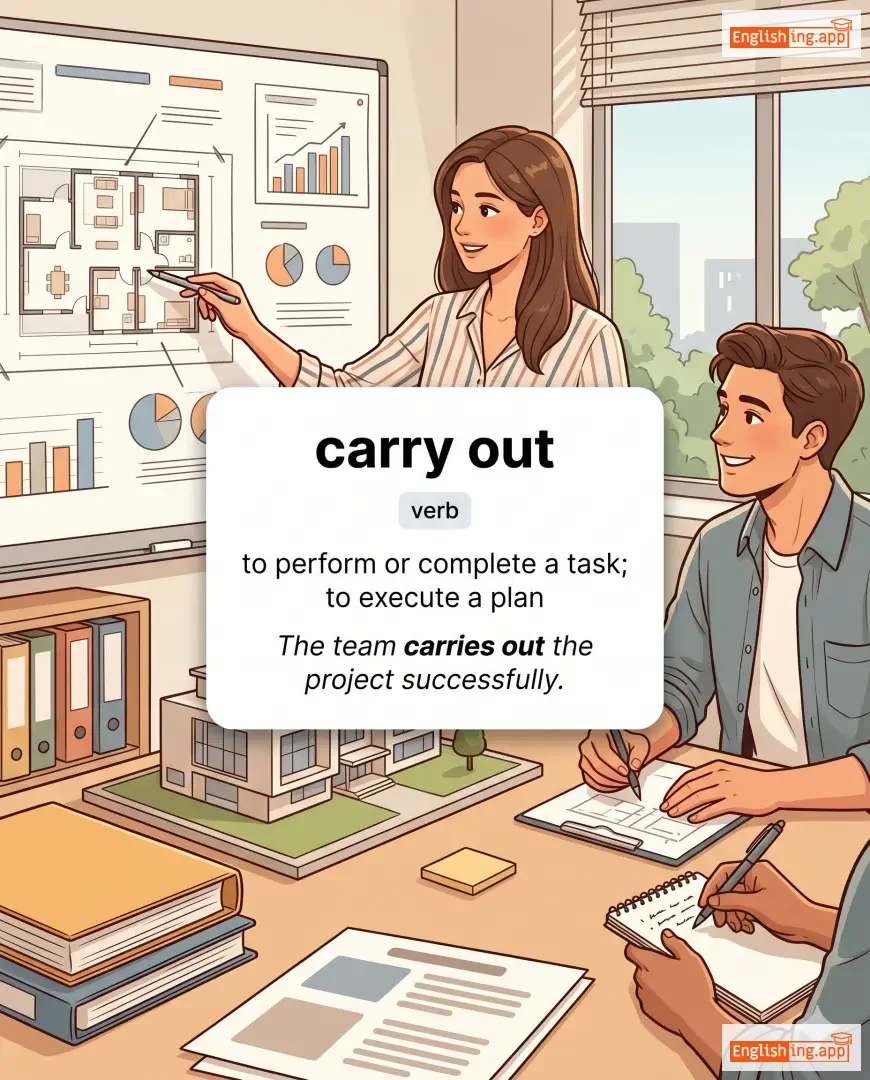
carry out definition card — visual illustration of the meaning
verb
/ˈkæri aʊt/
выполнить (vypolnit)

to perform or complete a task; to execute a plan

"The team carries out the project successfully."

"Команда успешно выполняет проект." (Komanda uspeshno vypolnyaet proyekt.)
noun
/kɑːrt/
телега (telega)

a vehicle with wheels that is pulled by a person or animal for carrying goods

"The farmer loaded hay onto the cart."

"Фермер загрузил сено на телегу." (Fermyer zagruzil seno na telegu.)
noun
/ˌkɑːrt ˈblɑːnʃ/

complete freedom to act as one wishes

"The manager gave her team carte blanche to design the project."

noun
/ˈkɑːrtɪlɪdʒ/
хрящ (khrjash)

A firm, flexible connective tissue found in various parts of the body such as joints, ear, and nose.

"The doctor explained that the injury damaged the cartilage in his knee."

"Доктор объяснил, что травма повредила хрящ в его колене." (Doktor obyasnil, chto travma povredila khrjash v ego kolene.)
noun
/kɑːrˈtɒɡrəfər/
картограф (kartograf)

A person who makes maps.

"The cartographer carefully drew the map of the new territory."
"Картограф тщательно нарисовал карту новой территории." (Kartograf tщatel'no narisoval kartu novoj teritorii.)
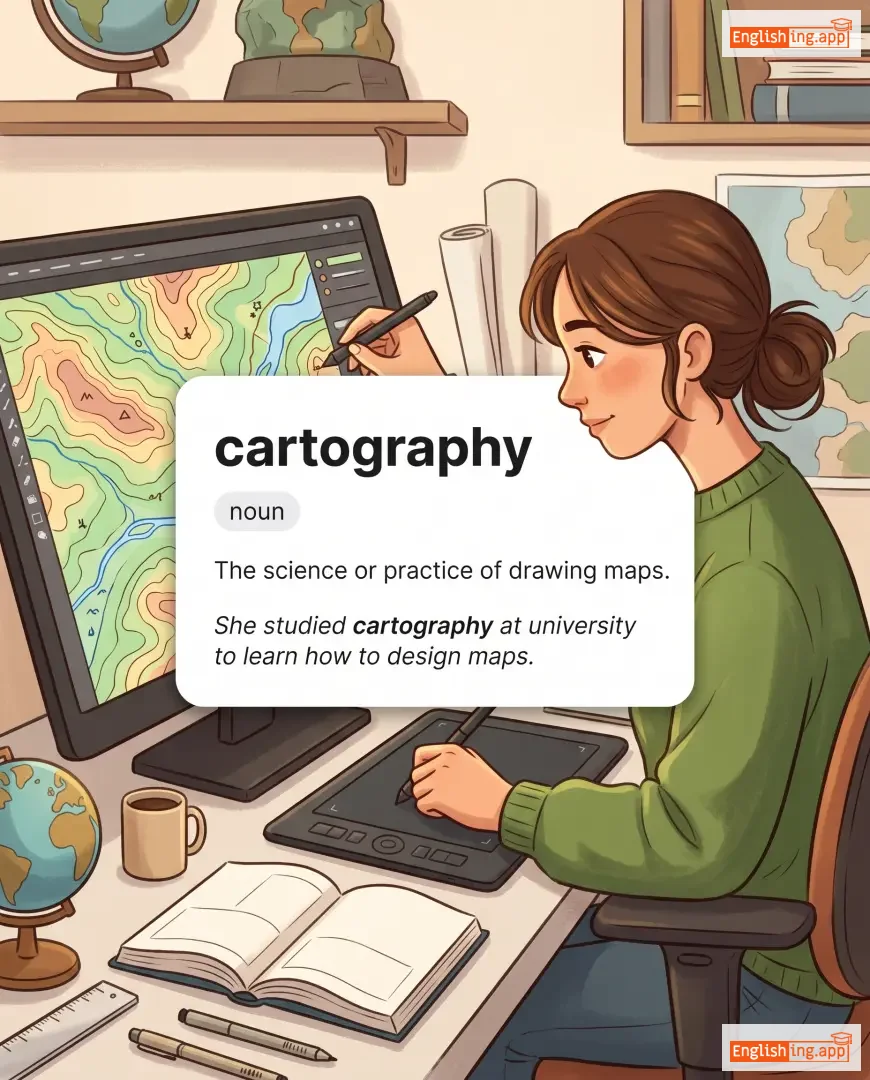
cartography definition card — visual illustration of the meaning
noun
/kɑːrˈtɒɡrəfi/
картография (kartografiya)

The science or practice of drawing maps.

"She studied cartography at university to learn how to design maps."

"Она изучала картографию в университете, чтобы научиться разрабатывать карты." (Ona izuchala kartografiyu v universitete, chtoby nauchit'sya razrabatyvat' karty.)
noun
/kɑːrˈtuːn/
мультсериал (multserial)

a humorous or animated drawing, especially one in newspapers or television

"Children love watching cartoons on TV."

"Дети любят смотреть мультсериалы по телевизору." (Deti lyubyat smotret' multserialy po televizoru.)
noun
/ˈkɑːrtrɪdʒ/
картридж (kartridzh)

A container holding a substance or device, such as ink for printers or bullets for firearms.

"The printer stopped working because the ink cartridge was empty."

"Принтер перестал работать, потому что картридж с чернилами был пуст." (Printer perestal rabotat', potomu chto kartridzh s chernilami byl pust.)
verb
/kɑːrv/
вырезать (karv)

To cut or shape something, especially wood or stone, into a desired form.

"The artist carved a beautiful statue out of marble."

"Художник вырезал красивую статую из мрамора." (khudozhnik vyrezal krasivuyu statuyu iz mramora)
noun
/ˌkɛəriˈætɪd/
столб с изображением женщины (stolb s izobrazheniem zhenshchiny)

A stone carving of a draped female figure, used as a supporting column in architecture.

"The ancient temple featured a caryatid holding up the roof."

"В древнем храме была карятита, поддерживающая крышу." (V drevnem khrame byla karyatida, podderzhivayushchaya kryshu.)
noun/verb
/kæˈskeɪd/
водопад, поток (vodopad, potok)

A small waterfall or a process that occurs in stages, one after another.

"Water cascaded down the rocky slope."

"Вода падала по склону, как водопад." (Voda padala po sklony, kak vodopad.)
noun
/keɪs/
случай / ситуация (sluchay / situatsiya)

A particular situation, occurrence, or an instance of something; also a container or covering for something.

"In this case, we should wait for further instructions."

"В этом случае нам следует дождаться дальнейших инструкций." (V etom sluchaye nam sleduyet dozhdat'sya dal'neyshikh instruktsiy.)
noun
/ˈkeɪsiːn/
казеин (kazein)

the main protein found in milk and cheese, used in food production and supplements

"Casein protein powder is popular among athletes for muscle recovery."

"Протеиновый порошок казеина популярен среди атлетов для восстановления мышц." (Proteinovyy poroshok kazeina popularen sredi atletov dlya vosstanovleniya myshch.)
noun
/kæʃ/
наличные (nalichnye)

money in the form of bills or coins, not checks or credit

"She paid the bill in cash."

"Она заплатила по счету наличными." (Ona zaplatila po schetu nalichnymi.)
noun
/ˈkæʃ.uː nʌt/
кешью (keshyu)

a kidney-shaped nut with a creamy texture and mild flavor

"Cashew nuts are often used in cooking and as a healthy snack."

"Кешью часто используют в кулинарии и как полезный перекус." (Keshyu chasto ispol'zuyut v kulinarii i kak poleznyy perekus.)
noun
/ˈkæʃuː nʌts/
кешью орехи (keshyu orekhi)

kidney-shaped nuts from the cashew tree, commonly eaten as snacks or used in cooking

"Cashew nuts are often used in Indian sweets and curries."

"Кешью орехи часто используются в индийских сладостях и карри." (Keshyu orekhi chasto ispol'zuyutsya v indiyskikh sladostyakh i karri.)
noun
/kæˈʃɪər/
кассир (kassir)

a person who handles payments and transactions in a store or bank

"The cashier scanned all the items and calculated the total bill."

"Кассир просканировал все товары и рассчитал общий счёт." (Kassir proskaniroval vse tovar i rasschital obshchij schyot.)
noun
/ˈkeɪ.sɪŋ/
оболочка; корпус (obolochka, korpus)

a cover or shell that protects or encloses something

"The mechanic removed the engine casing to examine the internal parts."

"Механик снял корпус двигателя, чтобы осмотреть внутренние детали." (Mekhanik snjal korpus dvizhka, chtoby osmotret' vnutrennie detali.)
noun
/kəˈsiːnoʊ/
казино (kazino)

a place where people gamble and play games of chance

"They spent the evening playing cards at the casino."

"Они провели вечер, играя в карты в казино." (Oni proveli vecher, igraiia v karty v kazino.)