Словари

Словарь английского языка | Значения слов, определения и примеры

noun
/ˈkænvəs/
холст (kanvas)

A strong, coarse cloth used for tents, sails, or painting.

"The artist prepared a canvas for his new painting."
"Художник приготовил холст для своей новой картины." (Khudozhnik prigotovil kholst dlya svoey novoy kartiny.)
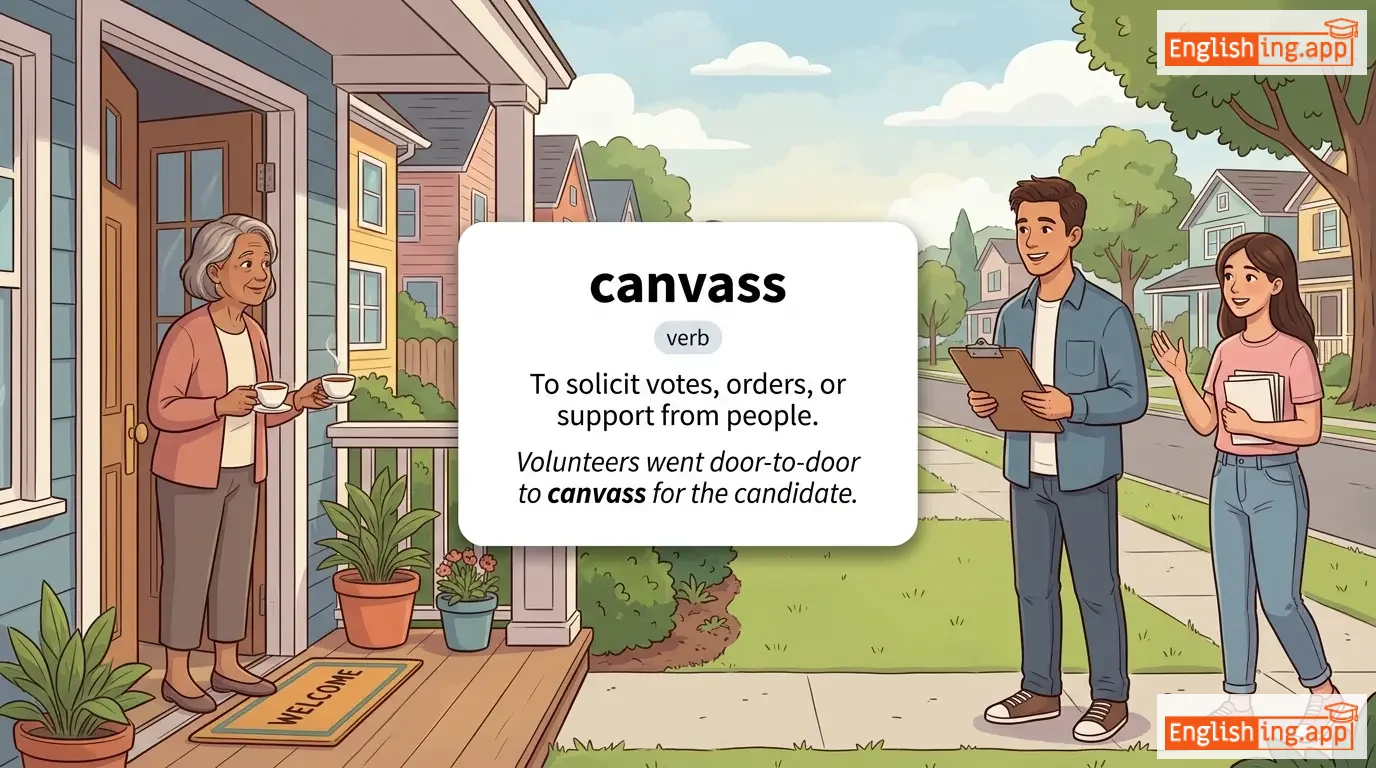
canvass definition card — visual illustration of the meaning
verb
/ˈkænvəs/
собирать голоса (sobirat' golosa)

To solicit votes, orders, or support from people.

"Volunteers went door-to-door to canvass for the candidate."

"Волонтёры ходили от двери к двери, чтобы собирать голоса за кандидата." (Volontyory khodili ot dveri k dveri, chtoby sobirat' golosa za kandidata.)
noun
/ˈkænjən/
каньон (kanyon)

A deep gorge, typically one with a river flowing through it.

"The Colorado River carved the Grand Canyon over millions of years."

"Река Колорадо вырезала Гранд-Каньон за миллионы лет." (Reka Kolorado vyrezala Grand-Kanyon za milliony let.)
🧢

Cap

noun
/kæp/

A covering for the head, often with a visor.

"He wore a red cap to the baseball game."

capability definition card — visual illustration of the meaning
noun
/ˌkeɪpəˈbɪləti/

the power or ability to do something; potential for effectiveness or success

"The company has the capability to expand internationally."

adjective
/ˈkeɪpəbl/
способный (spasobny)

having the ability, fitness, or quality necessary to do something

"She is capable of handling difficult situations calmly."

"Она способна справляться с трудными ситуациями спокойно." (Ona sposobna spravlyatsya s trudnymi situatsiyami spokoyno.)
adjective
/kəˈpeɪʃəs/
просторный (prostornyj)

Having a lot of space inside; roomy.

"The capacious hall could seat over five hundred guests."

"Просторный зал может вместить более пятисот гостей." (Prostornyj zal mozhet vmestit' bolee pyatisot gostej.)
capacity definition card — visual illustration of the meaning
noun
/kəˈpæsəti/
вместимость (vmeshimost)

the maximum amount that something can contain or produce; ability to do something

"The stadium has a seating capacity of 50,000."

"Стадион вмещает 50 000 человек." (Stadion vmeshchayet 50 000 chelovek.)
noun
/kəˈpærɪsən/
орнаментальное покрытие для лошади; богатая и сложная одежда или украшение (ornamental'noe pokrytie dlya loshadi; bogataya i slozhnaya odezhda ili ukrasheniye)

an ornamental covering for a horse; rich and elaborate clothing or decoration

"The king’s horse was adorned with a golden caparison."
"Конь короля был украшен золотым капарисоном." (Kon' korolya byl ukrasheny zolotym kaparisonom.)
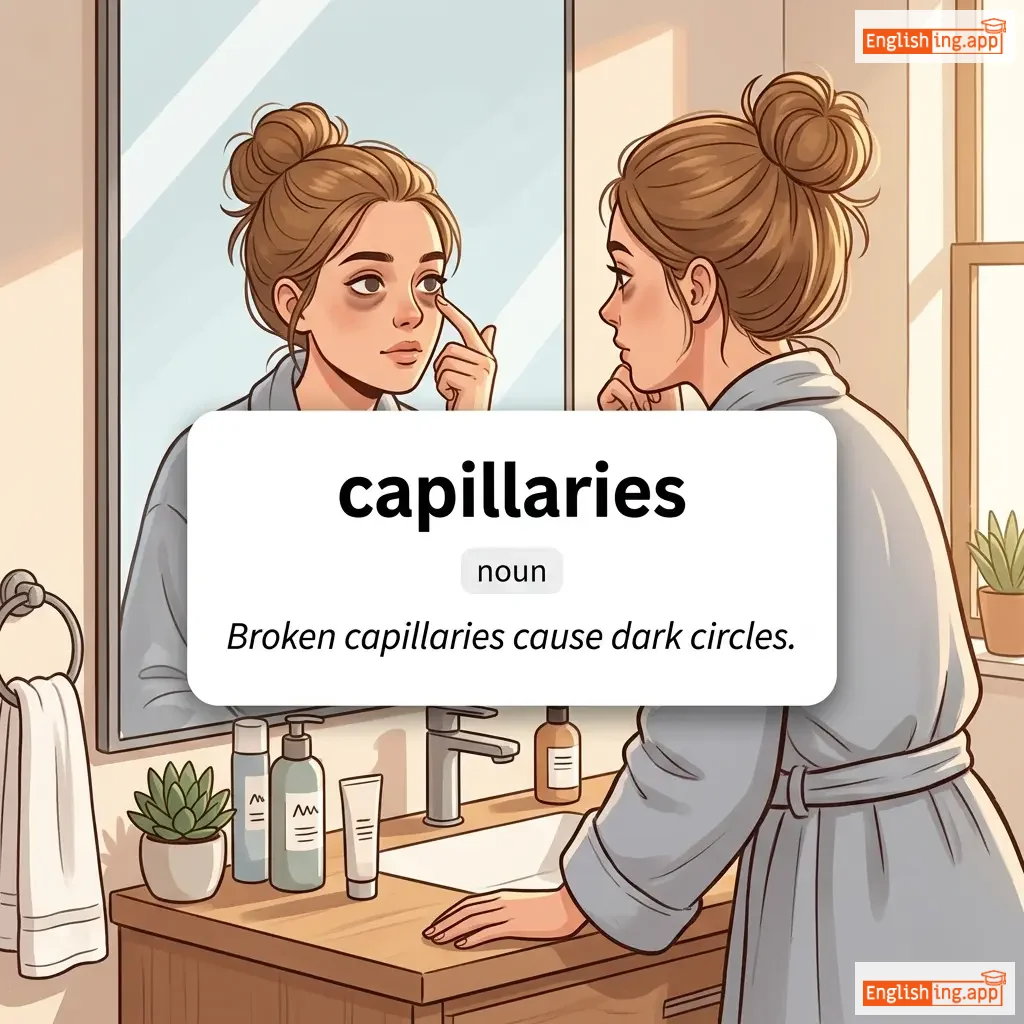
capillaries definition card — visual illustration of the meaning
noun
/kəˈpɪl.ər.iz/
капилляры (kapillyary)

Any of the fine branching blood vessels that form a network between the arterioles and venules.

"Broken capillaries cause dark circles."

"Порванные капилляры вызывают темные круги." (Porvannye kapillyary vyzyvayut temnye krugi.)
noun
/ˈkæpɪˌlɛri/
капилляр (kapilyar)

a very thin blood vessel that connects arteries and veins

"Oxygen passes from the blood into tissues through capillaries."

"Кислород проходит из крови в ткани через капилляры." (Kislorod prokhodit iz krovi v tkani cherez kapillyary.)
noun
/ˈkæpɪtl/
столица / капитал (stolica / kapital)

a city that serves as the seat of government; also wealth in the form of money or assets

"Dhaka is the capital of Bangladesh."
"Дакка — столица Бангладеш." (Dakka — stolitsa Bangladesha.)
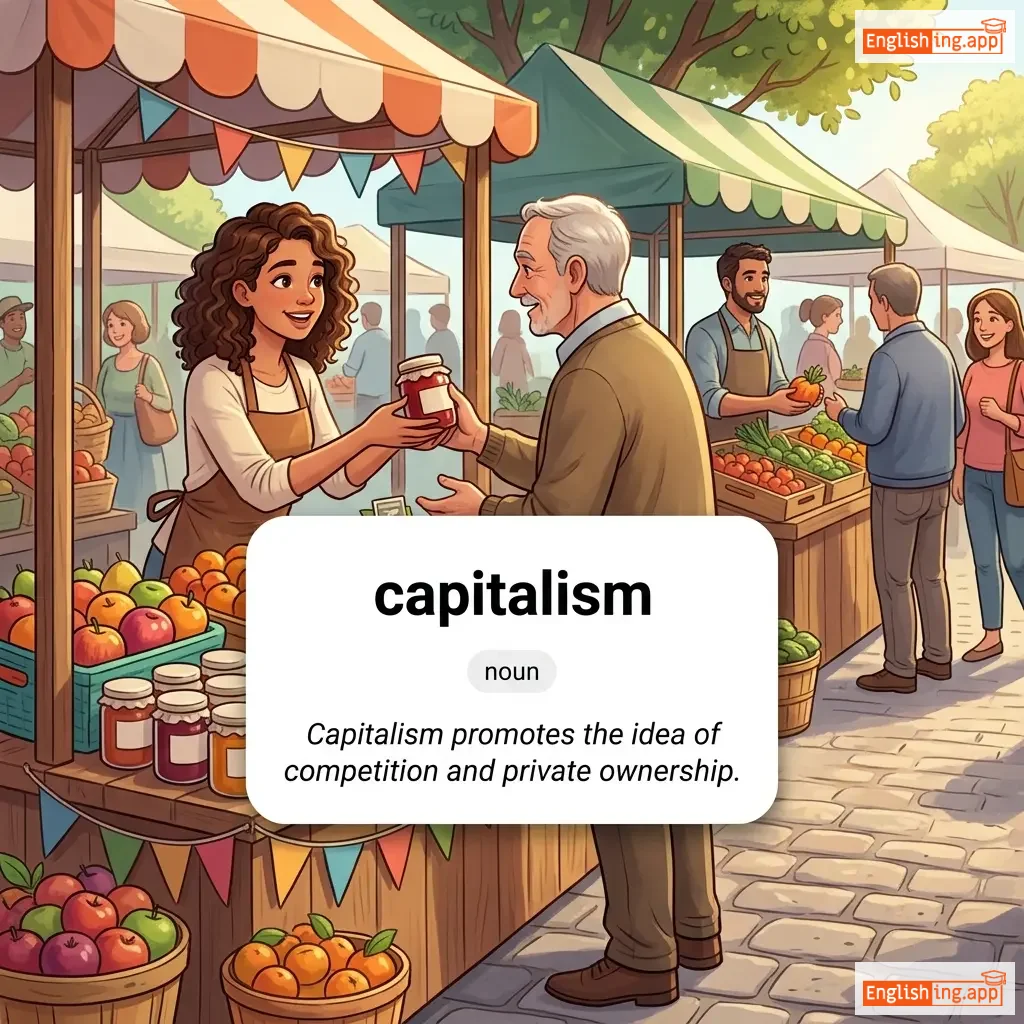
capitalism definition card — visual illustration of the meaning
noun
/ˈkæpɪtəlɪzəm/
капитализм (kapitalizm)

an economic system where private individuals or corporations control the means of production and distribution of goods

"Capitalism promotes the idea of competition and private ownership."

"Капитализм способствует идее конкуренции и частной собственности." (Kapitalizm sposobstvuyet ideye konkurentsii i chastnoy sobstvennosti.)
noun/adjective
/ˈkæpɪtəlɪst/

a person who supports or believes in capitalism; a wealthy business owner

"The capitalist believes in the freedom of the market."

capitalization definition card — visual illustration of the meaning
noun
/ˌkæp.ɪ.təl.aɪˈzeɪ.ʃən/
капитализация (kapitalizatsiya)

The provision of capital for a company or the total value of a company's shares.

"The startup secured significant capitalization from investors."

"Стартап обеспечил значительную капитализацию от инвесторов." (Startap obespechil znachitelnuyu kapitalizatsiyu ot investorov.)
verb
/kəˈpɪtjʊˌleɪt/
капитулировать (kapitulirovat)

to surrender or give in after resisting

"The army had no choice but to capitulate to the enemy."

"Армия не имела другого выбора, как капитулировать перед врагом." (Armiya ne imela drugogo vibora, kak kapitulirovat' pered vragom.)
noun
/kəˈpriːs/
каприз (kapriz)

a sudden, unpredictable change of mood or behavior

"She bought the expensive dress on a caprice."

"Она купила дорогое платье по капризу." (Ona kupila dorogoe plat'ye po kaprizu.)
capricious definition card — visual illustration of the meaning
adjective
/kəˈprɪʃəs/
капризный (kaprizny)

given to sudden and unaccountable changes of mood or behavior

"The stock market can be capricious, shifting dramatically without warning."

"Фондовый рынок может быть капризным, резко меняющимся без предупреждения." (Fondovy rynok mozhet byt kapriznym, rezko menyayushchimsya bez preduprezhdeniya.)
noun
/ˈkæp.sɪ.kəm/
перец (perets)

sweet pepper; bell pepper; colorful vegetable used in cooking

"Add red and green capsicum to make the dish colorful and nutritious."

"Добавьте красный и зеленый перец, чтобы сделать блюдо ярким и питательным." (Dobav'te krasnyy i zelenyy perets, chtoby sdelat' blyudo yarkim i pitatel'nym.)
verb
/ˈkæp.saɪz/
опрокидываться (oprokidyvat'sya)

to overturn in the water

"The small fishing boat capsized during the storm."
"Маленькая рыболовная лодка перевернулась во время шторма." (Malen'kaya rybolovnaya lodka perevernylas' vo vremya shtorma.)
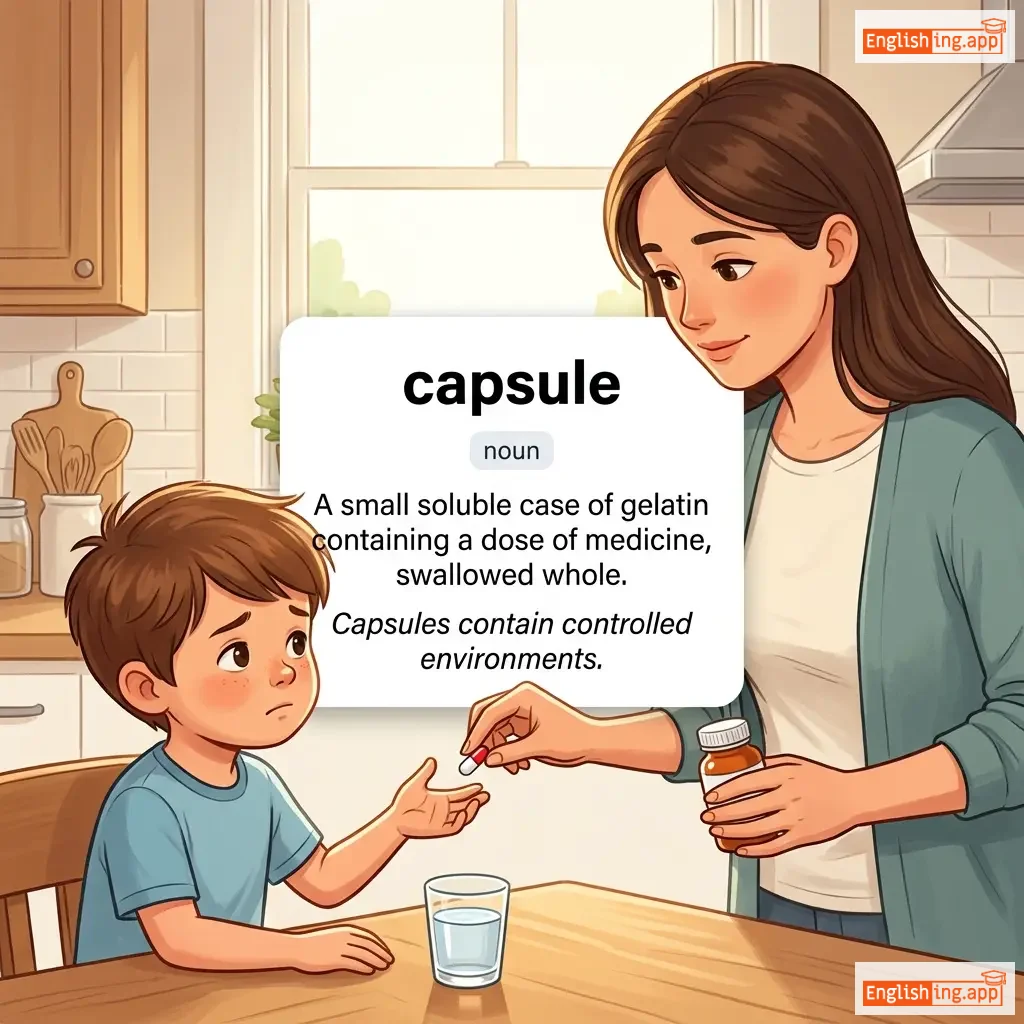
capsule definition card — visual illustration of the meaning
noun
ˈkæp.sjuːl
Капсула. Маленькая растворимая оболочка из желатина, содержащая дозу лекарства, которую проглатывают целиком. (Kapsula. Malyenkaya rastvorimaya obolochka iz zhelatina, soderzhashchaya dozu lekartsva, kotoruyu proglatyvayut tselikom.)

A small soluble case of gelatin containing a dose of medicine, swallowed whole.

"Capsules contain controlled environments."

"Капсулы содержат контролируемые условия." (Kapsuly soderzhat kontroliruemye usloviya.)
noun
/ˈkæptɪn/
капитан (kapitan)

the leader of a team, ship, or group

"The captain led his team to victory."

"Капитан привел свою команду к победе." (Kapitan priyel svoyu komandu k pobede.)
noun
/ˈkæp.ʃən/
подпись (podpis)

a brief explanation or description accompanying an illustration or photograph

"The caption under the photo explained who the people were."

"Подпись под фото объяснила, кто эти люди." (Podpis pod foto obyasnila, kto eti lyudi.)
Captious definition card — visual illustration of the meaning
adjective
/ˈkæp.ʃəs/
придирчивый (pridirchivyy)

tending to find fault or raise petty objections

"The captious reviewer criticized even the smallest details of the movie."

"Придирчивый критик критиковал даже самые мелкие детали фильма." (Pridirchivyy kritik kritikoval dazhe samye melkiye detali fil'ma.)
captivate definition card — visual illustration of the meaning
verb
/ˈkæp.tɪ.veɪt/
очаровывать (ocharovyvat)

to attract and hold the attention of someone

"The singer’s voice captivated the entire audience."

"Голос певца очаровал всю аудиторию." (Golos pevtsa ocharoval vsyu auditoriyu.)
noun
/ˈkæp.tɪv/
пленный (plennyy)

a person who has been taken prisoner or an animal that has been confined

"The captive was held in a small cell for several months."

"Пленный был удержан в маленькой камере несколько месяцев." (Plennyy byl uderzhan v malen'koy kamere neskol'ko mesyatsev.)
noun
/kæpˈtɪvɪti/
неволя (nevolya)

the state of being imprisoned, confined, or kept under control

"The rare bird has been bred in captivity."

"Редкая птица была выведена в неволе." (Redkaya ptitsa byla vyvedena v nevole.)
noun
/ˈkæptər/
похититель (pokhititel)

a person or group who has captured someone or something

"The hostage managed to escape from his captors."

"Заложник смог убежать от своих похитителей." (Zalozhnik smog ubezhat' ot svoikh pokhititeley.)
verb
/ˈkæptʃər/
захватывать (zakhvatyvat)

to take control of something or someone by force

"The soldiers managed to capture the enemy base."

"Солдаты смогли захватить вражескую базу." (Soldaty smogli zakhvatit' vrageskuyu bazu.)
noun
/kɑːr/
машина (mashina)

a road vehicle with an engine, four wheels, and seats for passengers

"She bought a new car last week."

"Она купила новую машину на прошлой неделе." (Ona kupila novuyu mashinu na proshloy nedele.)
noun
/kəˈræf/
графин (grafin)

a glass container without handles used for serving drinks like water or wine

"The waiter brought a carafe of water to the table."

"Официант принес графин воды на стол." (Ofitsiant prines grafin vody na stol.)
noun
/ˈkærəˌpeɪs/
твердое покрытие спины некоторых животных, таких как черепахи и крабы (tverdoe pokrytie spiny nekotorykh zhivotnykh, takikh kak cherepakhi i kraby)

the hard shell covering the back of some animals like turtles and crabs

"The turtle withdrew into its carapace for protection."

"Черепаха спряталась в своем карапасе для защиты." (Cherepakha spryatalas' v svoem karapase dlya zashchity.)
noun
/ˈkærət/
единица измерения веса драгоценных камней (edinitsa izmereniya vesa dragotsennykh kamney)

a unit of weight for precious stones, equal to 200 milligrams

"She received a two-carat diamond ring for her engagement."

"Она получила кольцо с бриллиантом весом два карата для помолвки." (Ona poluchila kol'tso s brilliyantom vesom dva karata dlya pomolvki.)
noun
/ˈkær.ə.væn/
караван (karavan)

a group of people traveling together, especially through desert areas

"The merchant caravan crossed the desert with camels carrying precious goods."

"Торговый караван пересек пустыню с верблюдами, которые несли ценные товары." (Torgovyy karavan peresek pustynyu s verblyudami, kotorye nesli tsennye tovaru.)
noun
/ˈkær.ə.weɪ siːdz/

aromatic seeds of the caraway plant used as a spice in cooking and baking

"The bread was flavored with caraway seeds."

noun
/ˌkɑːrboʊˈhaɪdreɪt/
углевод (uglevod)

a nutrient that provides energy, found in foods like rice, bread, and sugar

"Rice and potatoes are rich in carbohydrates."
"Рис и картофель богаты углеводами." (Ris i kartofel bogaty uglevodami.)
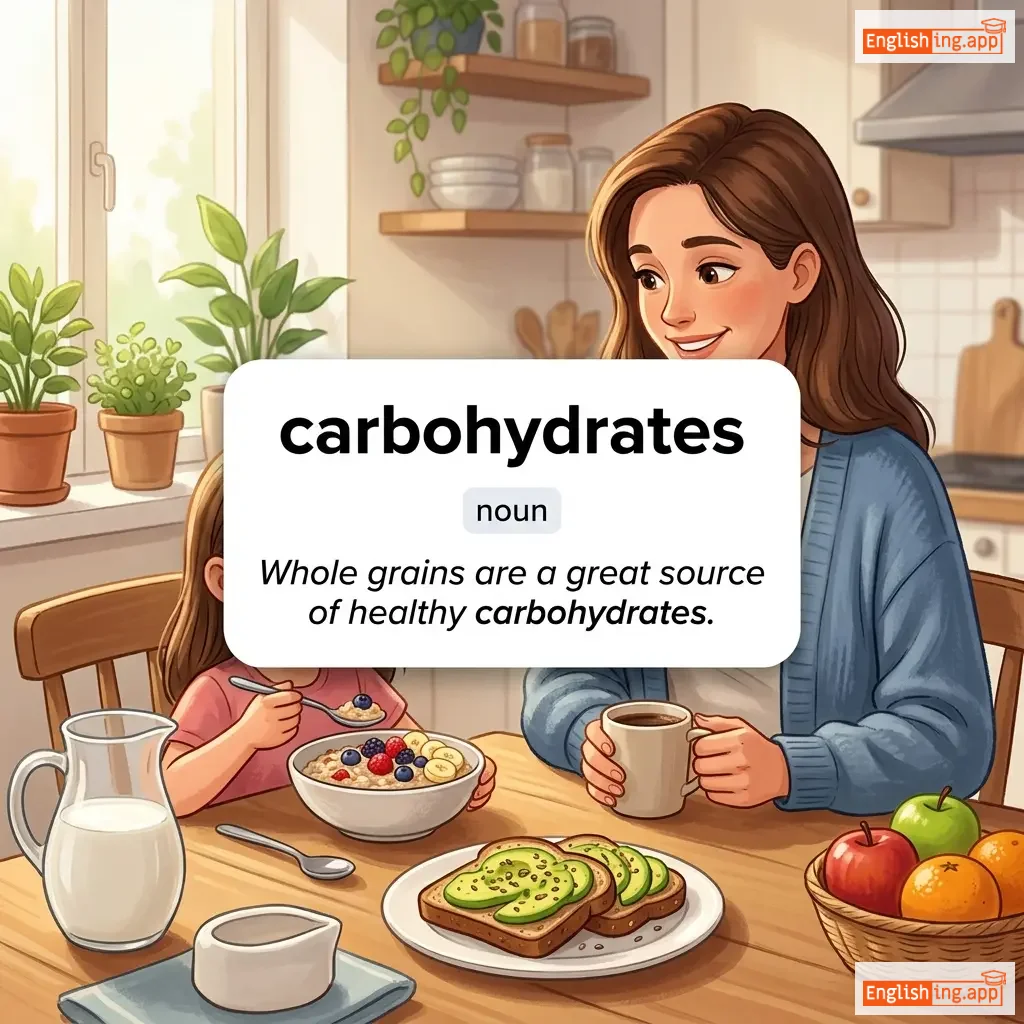
carbohydrates definition card — visual illustration of the meaning
noun
/ˌkɑː.bəʊˈhaɪ.dreɪts/
углеводы (uglevody)

Organic compounds consisting of carbon, hydrogen, and oxygen, serving as a primary source of energy for the body.

"Whole grains are a great source of healthy carbohydrates."
"Цельнозерновые продукты - отличный источник здоровых углеводов." (Tselnozernovye produkty - otlichnyy istochnik zdorovykh uglevodov.)
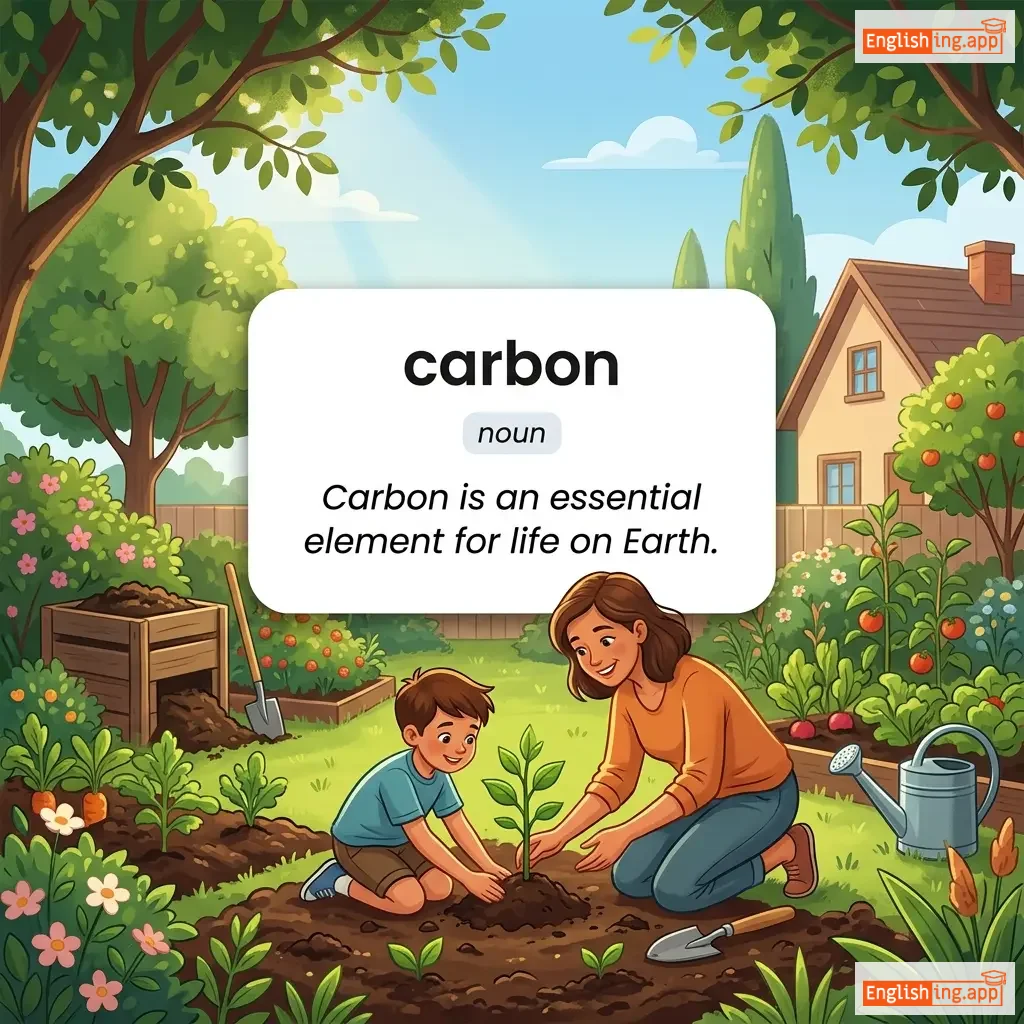
carbon definition card — visual illustration of the meaning
noun
/ˈkɑːrbən/
углерод (uglerod)

a chemical element found in all living things and used as fuel when combined with oxygen

"Carbon is an essential element for life on Earth."

"Углерод является важным элементом для жизни на Земле." (Uglerod yavyayetsya vazhnym elementom dlya zhizni na Zemle)
carbon footprint definition card — visual illustration of the meaning
noun
/ˈkɑː.bən ˈfʊt.prɪnt/
углеродный след (uglerodnyy sled)

The amount of carbon dioxide and other carbon compounds emitted due to the consumption of fossil fuels by a particular person, group, etc.

"Reducing carbon footprint is essential for combating climate change."
"Снижение углеродного следа важно для борьбы с изменением климата." (Sniizhenie uglerodnogo sledu vazhno dlya bor'by s izmeneniem klimata.)
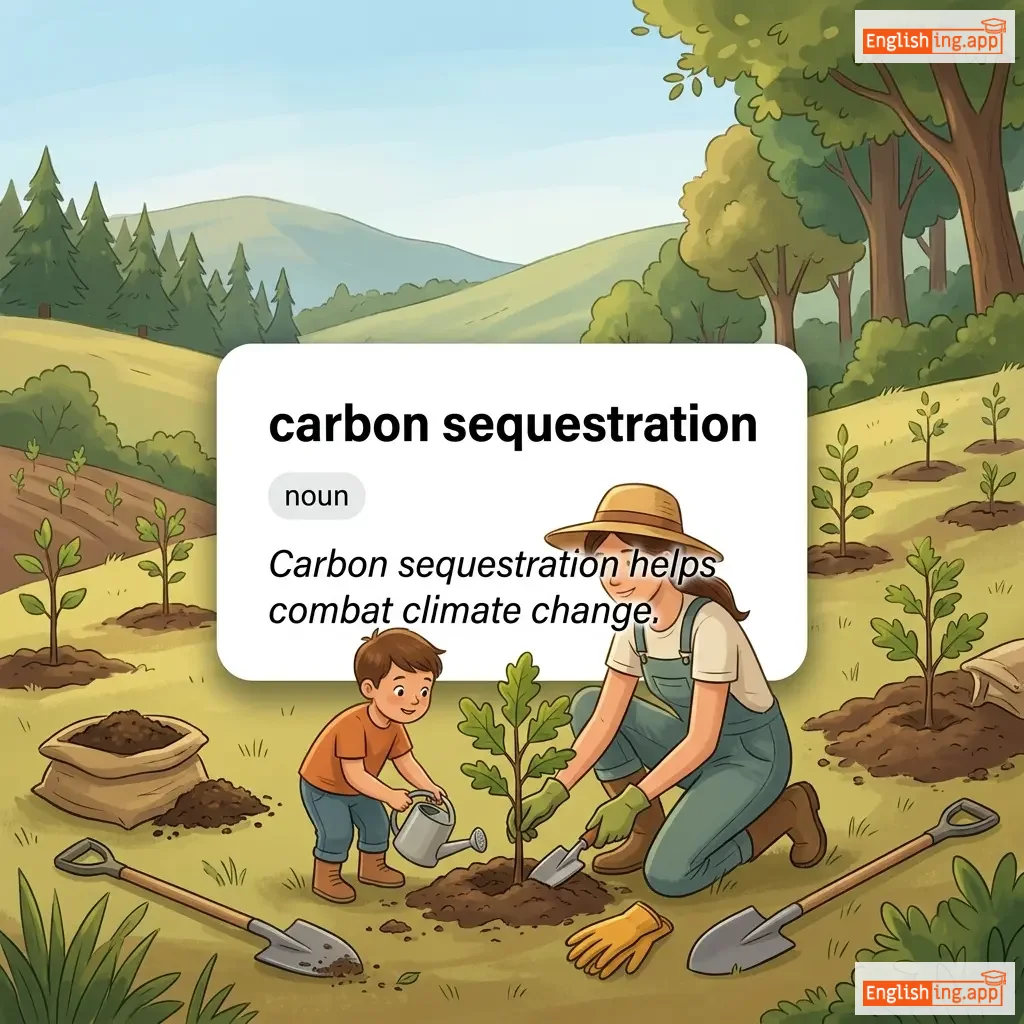
carbon sequestration definition card — visual illustration of the meaning
noun
ˈkɑː.bən ˌsiː.kwɪˈstreɪ.ʃən
секвестрация углерода (sekvestratsiya uglieroda)

The process of storing carbon dioxide in vegetation, soils, geological formations, and the ocean to reduce carbon dioxide concentrations in the atmosphere.

"Carbon sequestration helps combat climate change."

"Секвестрация углерода помогает бороться с изменением климата." (Sekvestratsiya uglieroda pomogaet borot'sya s izmeneniyem klimata.)
carbon-neutral definition card — visual illustration of the meaning
adjective
ˌkɑː.bən ˈnjuː.trəl
углеродно нейтральный (uglerodno neytral'nyy)

Having a balance between emitting carbon and absorbing carbon from the atmosphere; not adding to overall carbon emissions.

"The company aims to be carbon-neutral by 2030."

"Компания стремится быть углеродно нейтральной к 2030 году." (Kompaniya stremitsya byt' uglerodno neytral'noy k 2030 godu.)
noun
/ˈkɑːrkəs/
труп животного (trup zhivotnogo)

the dead body of an animal, especially after being slaughtered

"Vultures fed on the carcass left in the field."
"Стервятники питались трупом, оставшимся на поле." (Stervyatniki pitalis' trupom, ostavshimsya na pole.)
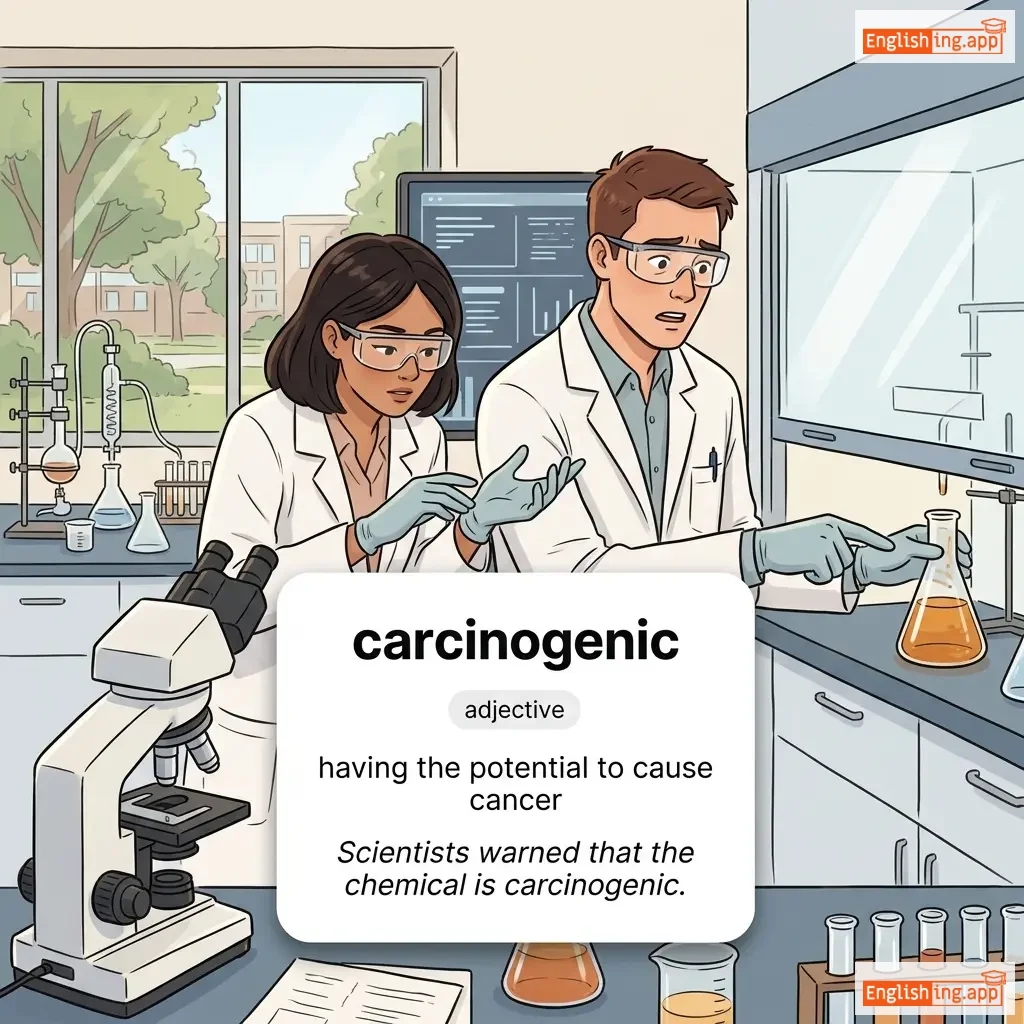
carcinogenic definition card — visual illustration of the meaning
adjective
/ˌkɑːrsɪnəˈdʒɛnɪk/
канцерогенный (kantsyerogenny)

having the potential to cause cancer

"Scientists warned that the chemical is carcinogenic."

"Учёные предупредили, что химическое вещество канцерогенно." (Uchyonye predosteregli, chto khimicheskoe veshchestvo kantsyerogenno.)
💳

card

noun
/kɑːrd/

A small, flat piece of stiff paper or thin cardboard used for various purposes, such as identification, greetings, or playing games.

"She handed me her business card after the meeting."

noun
/ˈkɑːrdəməm/
кардамон (kardamon)

aromatic seeds from a plant in the ginger family, used as a spice

"The recipe calls for a pinch of ground cardamom."

"Рецепт требует щепотку молотого кардамона." (Retsept trebujet shchepotku molotogo kardamona.)
adjective
/ˈkɑːr.di.æk/
кардиологический (kardiologicheskiy)

Relating to the heart.

"The patient was admitted with a cardiac condition."
"Пациент был принят с кардиологическим заболеванием." (Patsient byl prinyat s kardiologicheskim zabolevaniem.)
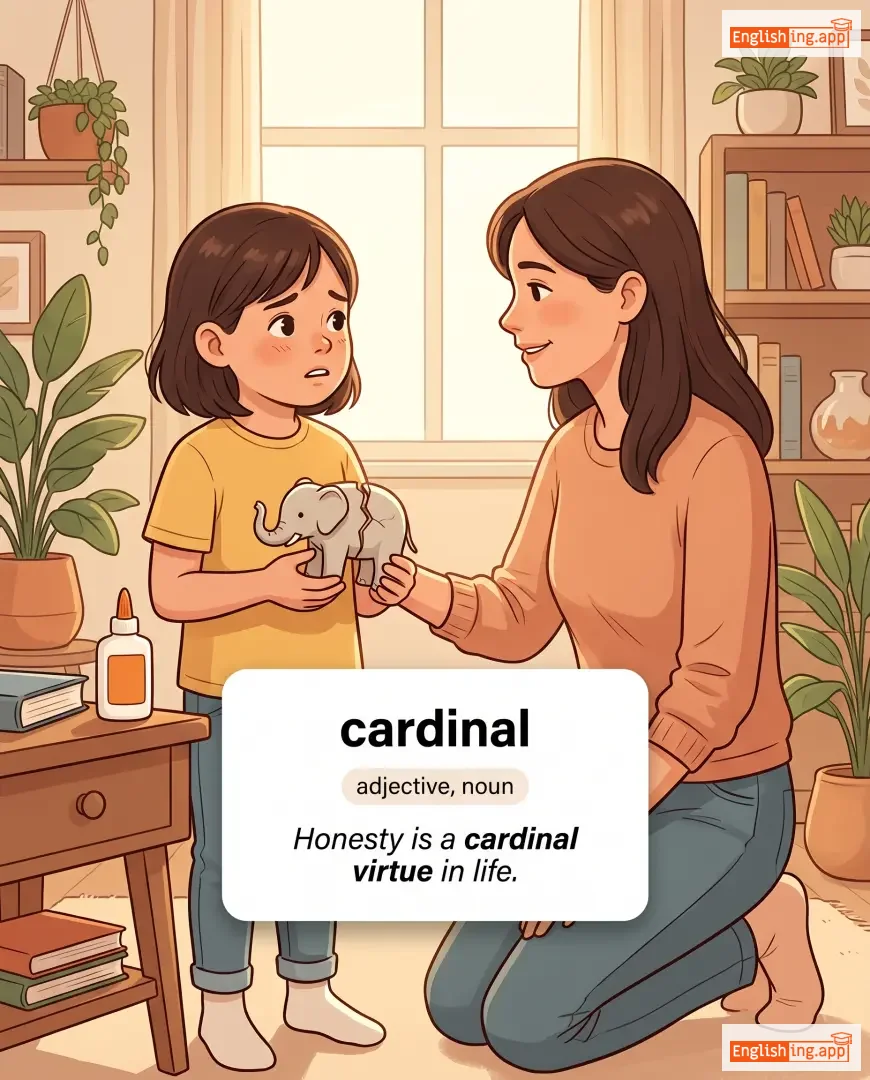
cardinal definition card — visual illustration of the meaning
adjective, noun
/ˈkɑːr.dɪ.nəl/
кардинал / основной (kardinal / osnovnoy)

As an adjective: of prime importance; as a noun: a high-ranking Catholic clergyman or a type of bird.

"Honesty is a cardinal virtue in life."

"Честность - это кардинальная добродетель в жизни." (Chestnost' - eto kardinal'naya dobrodetel' v zhizni.)
noun
/ˌkɑːr.diˈɒl.ə.dʒɪst/
кардиолог (kardiolog)

A doctor specializing in diagnosing and treating heart diseases.

"She made an appointment with a cardiologist for her chest pain."
"Она записалась на прием к кардиологу из-за боли в груди." (Ona zapisalasy na priem k kardiologu iz-za boli v grudi.)
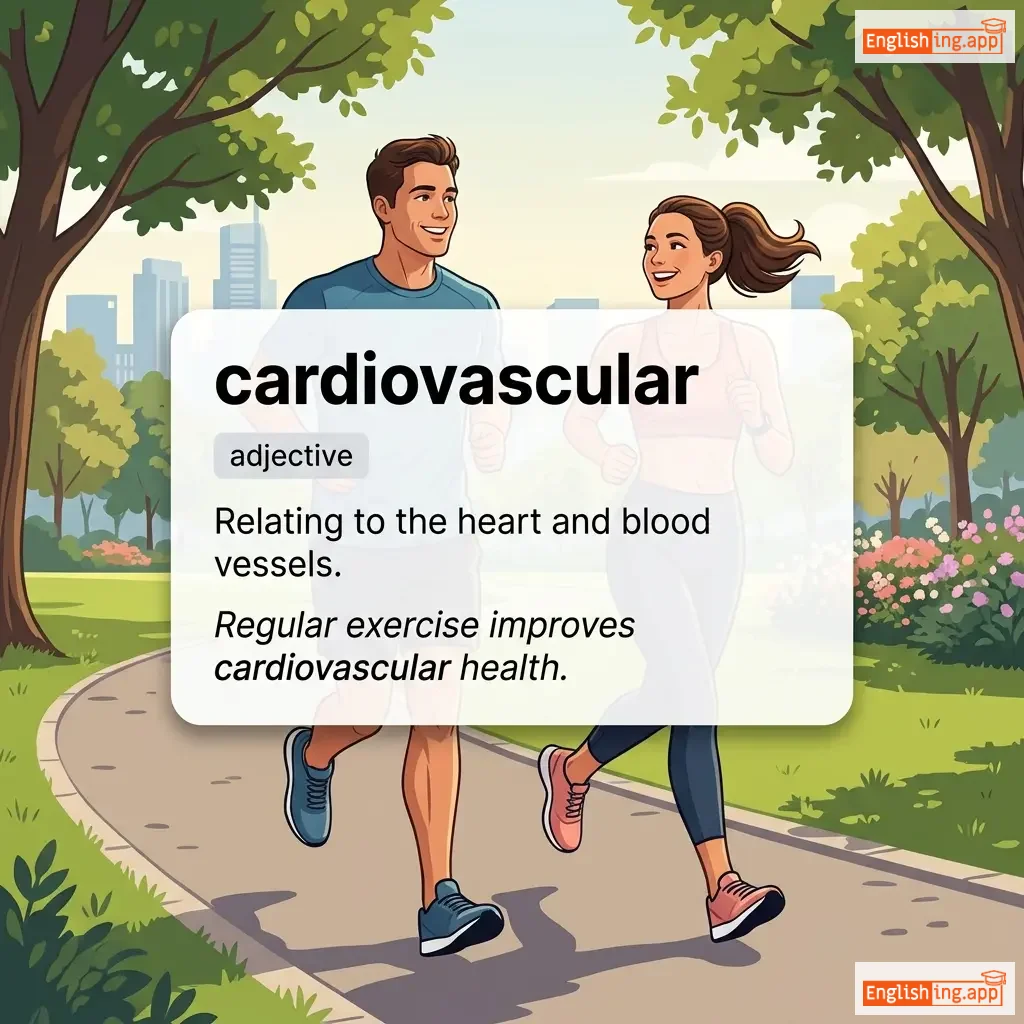
cardiovascular definition card — visual illustration of the meaning
adjective
/ˌkɑː.di.əʊˈvæs.kjʊ.lər/
относящийся к сердцу и кровеносным сосудам (otnosyashchijsya k serdtsu i krovenosnym sosudam)

Relating to the heart and blood vessels.

"Regular exercise improves cardiovascular health."

"Регулярные физические упражнения улучшают сердечно-сосудистое здоровье." (Regulyarnye fizicheskie uprazhneniya uluchshayut serdce-no-sosudistoe zdorov'ye.)
noun/verb
/kɛr/
забота (zabota)

The process of looking after someone or something; to be concerned or interested.

"She took great care of her younger brother."

"Она очень заботилась о своем младшем брате." (Ona ochen' zabotilas' o svoem mladshem brate.)