Словари

Словарь английского языка | Значения слов, определения и примеры

noun
/ˈkɒntrəbænd/
незаконные товары (nezakonnyye tovar)

goods that are illegal to import, export, or possess

"The police seized a shipment of contraband cigarettes."

"Полиция изъяла партию контрабандных сигарет." (Politsiya iz'yala partiyu kontrabandnykh sigaret.)
contract definition card — visual illustration of the meaning
noun, verb
/ˈkɒntrækt/
контракт, письменное или устное соглашение (kontrakt, pis'mennoe ili ustnoe soglashenie)

noun: a written or spoken agreement; verb: to enter into an agreement or to reduce in size

"They signed a contract for the new project."

"Они подписали контракт на новый проект." (Oni podpisali kontrakt na novyi proyekt.)
contraction definition card — visual illustration of the meaning
noun
kənˈtrækʃən
сужение (suzhenie)

The process of becoming smaller; a decrease in size or quantity.

"The economic contraction resulted in a rise in unemployment."

"Экономическое сужение привело к росту безработицы." (Ekonomicheskoe suzhenie privedlo k rostu bezrabotitsy.)
noun
/ˈkɒntræktər/
подрядчик (podryadchik)

a person or company that agrees to provide materials or labor to perform a service or do a job

"The contractor completed the building project on time."

"Подрядчик завершил строительный проект вовремя." (Podryadchik zavershil stroitel'nyy proyekt vovremya.)
verb
/ˌkɒn.trəˈdɪkt/
противоречить (protivorechit)

to say or show the opposite of something that has been said or believed

"His actions contradict his words."

"Его действия противоречат его словам." (Ego deystviya protivorechat ego slovam.)
noun
/ˌkɒntrəˈdɪkʃən/
противоречие, несоответствие (protivorechie, nesootvetstvie)

a statement or situation that is opposed to another, inconsistency

"Her actions are in clear contradiction to her words."
"Ее действия явно противоречат ее словам." (Eyo deystviya yavno protivorechat yeye slovam.)
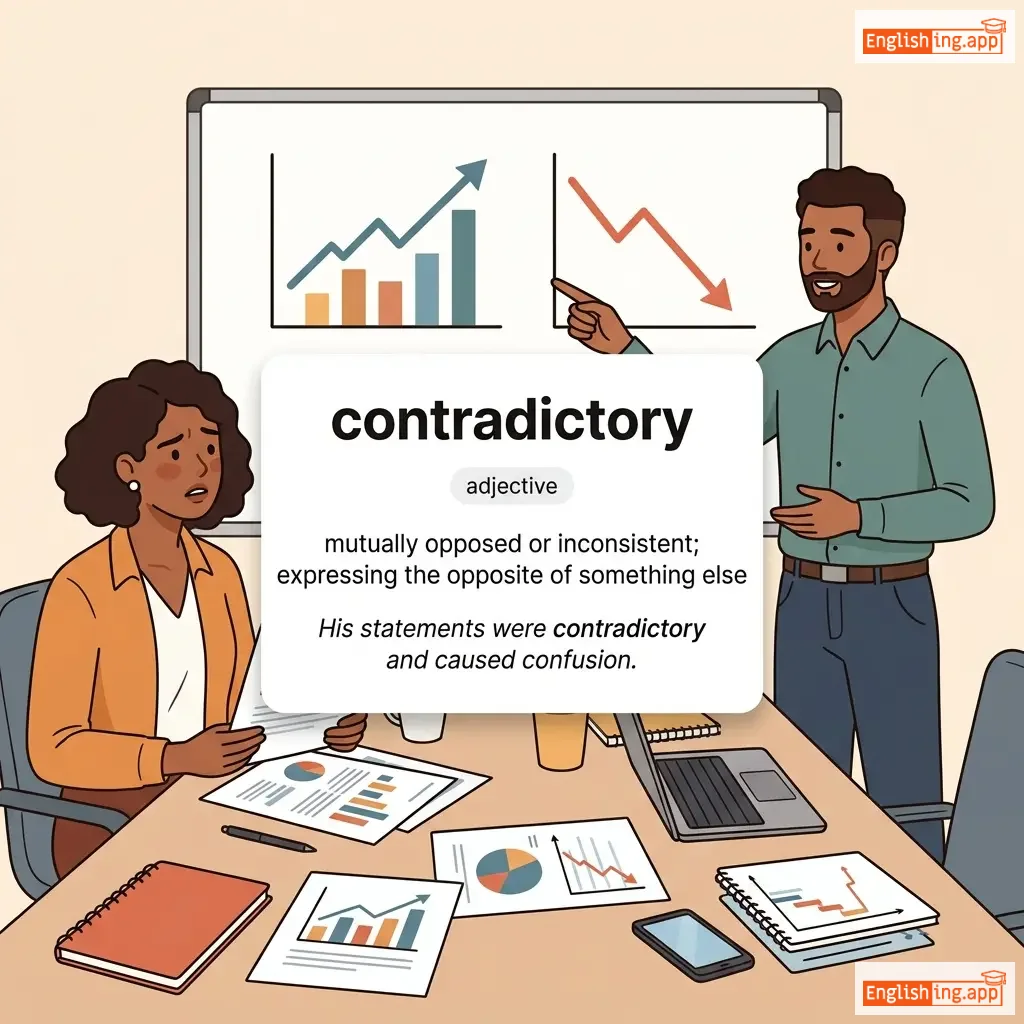
contradictory definition card — visual illustration of the meaning
adjective
/ˌkɒntrəˈdɪktəri/
противоречивый (protivorechivyy)

mutually opposed or inconsistent; expressing the opposite of something else

"His statements were contradictory and caused confusion."

"Его заявления были противоречивыми и вызвали путаницу." (Ego zayavleniya byli protivorechivymi i vyzvali putanitsu.)
noun
/ˌkɒntrəpəˈzɪʃən/
контрапозиция (kontrapoziya)

the act of placing two things in opposition for contrast or comparison

"The contraposition of the two theories highlighted their differences."

"Контрапозиция двух теорий подчеркнула их различия." (Kontrapozitsiya dvukh teoyriy podcherknula ikh razlichiya.)
noun
/ˈkɒntrəriz/
противоположные вещи (protivopolozhnye veshchi)

things that are completely different or opposite to each other

"Freedom and slavery are contraries in every sense."

"Свобода и рабство противоположны во всех отношениях." (Svoboda i rabstvo protivopolozhny vo vsekh otnosheniyakh.)
adjective
/ˈkɒn.trəri/
противоположный (protivopolozhny)

opposite in nature, direction, or meaning

"Her views are contrary to mine."
"Её взгляды противоположны моим." (Yeyo vzglyady protivopolozhny moim.)
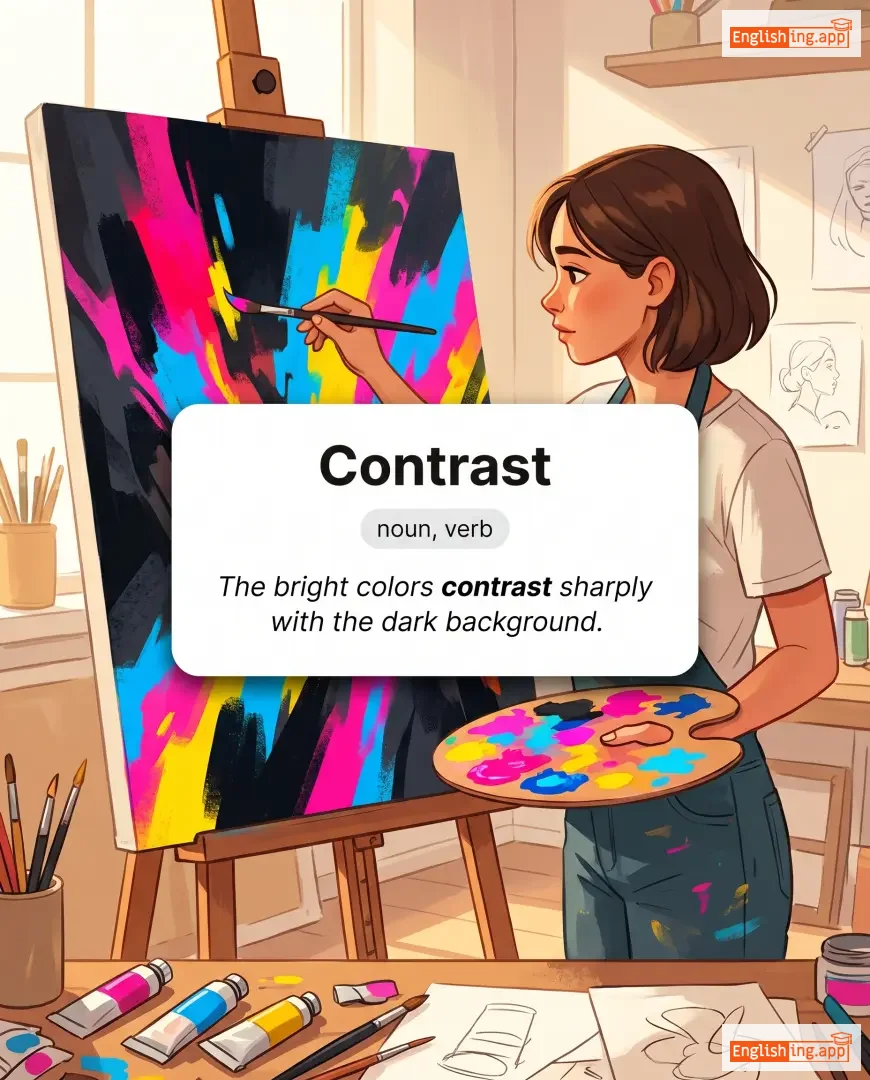
Contrast definition card — visual illustration of the meaning
noun, verb
/ˈkɒn.trɑːst/ (noun), /kənˈtræst/ (verb)
счастье (schastye)

A difference between two or more things; to compare two things to show how they are different.

"The bright colors contrast sharply with the dark background."

"Она не могла скрыть своего счастья, когда получила награду." (Ona ne mogla skryt' svoego schast'ya, kogda poluchila nagradu.)
verb
/ˌkɒntrəˈviːn/
нарушать (narushat)

to go against or act in opposition to a law, rule, or agreement

"He contravened the safety regulations and was fined."

"Он нарушил правила безопасности и был оштрафован." (On narushil pravila bezopasnosti i byl oshtrafovan.)
noun
/ˈkɒntrətɑː̃/
неожиданный конфликт (neozhidannyi konflikt)

an unexpected and unfortunate event or disagreement; a minor dispute

"There was a small contretemps between the two colleagues during the meeting."
"Между двумя коллегами возник небольшой неожиданный конфликт во время встречи." (Mezhdu dvumya kollegami voznik nebol'shoy neozhidannyy konflikt vo vremya vstrechi.)
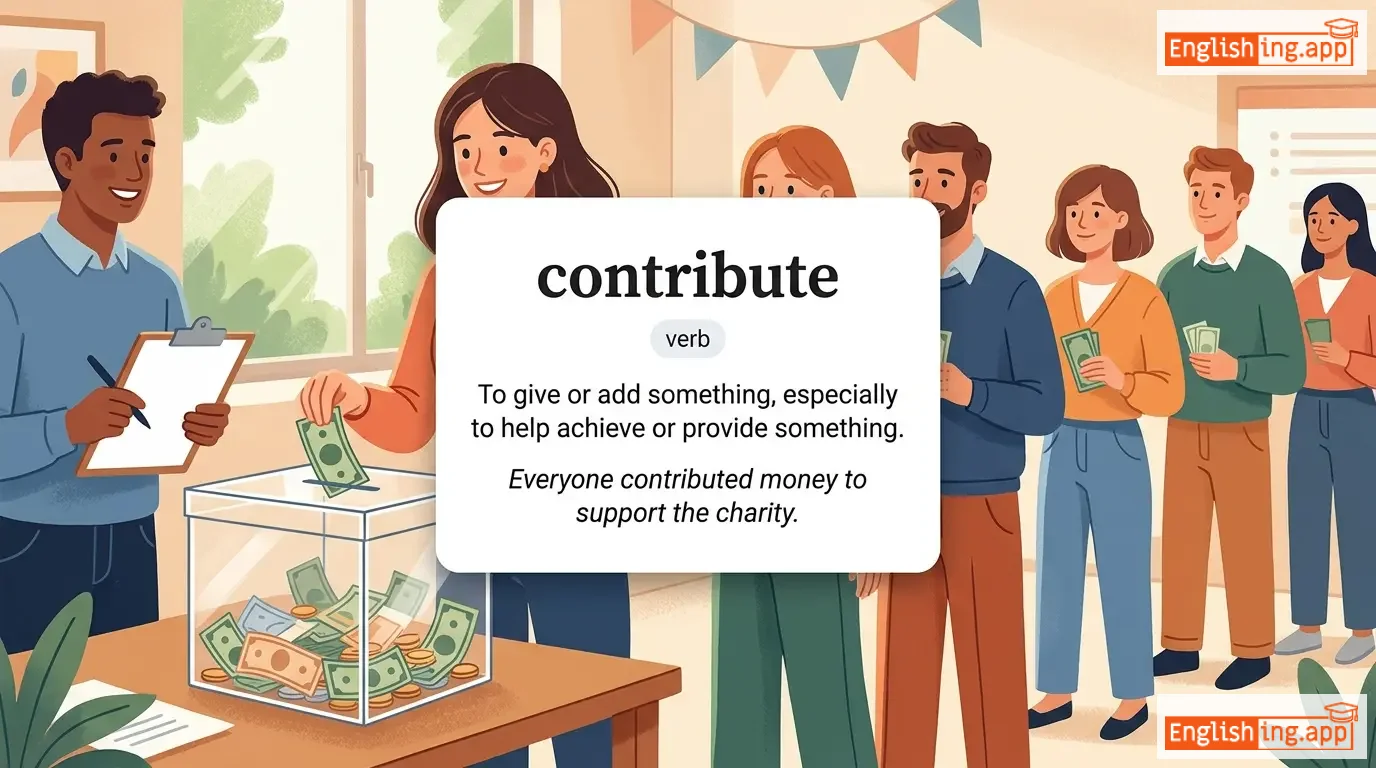
contribute definition card — visual illustration of the meaning
verb
/kənˈtrɪbjuːt/
внести вклад (vnyesti vklad)

To give or add something, especially to help achieve or provide something.

"Everyone contributed money to support the charity."
"Все внесли деньги, чтобы поддержать благотворительность." (Vse vnesli den'gi, chtoby podderzhat' blagotvoritel'nost'.)
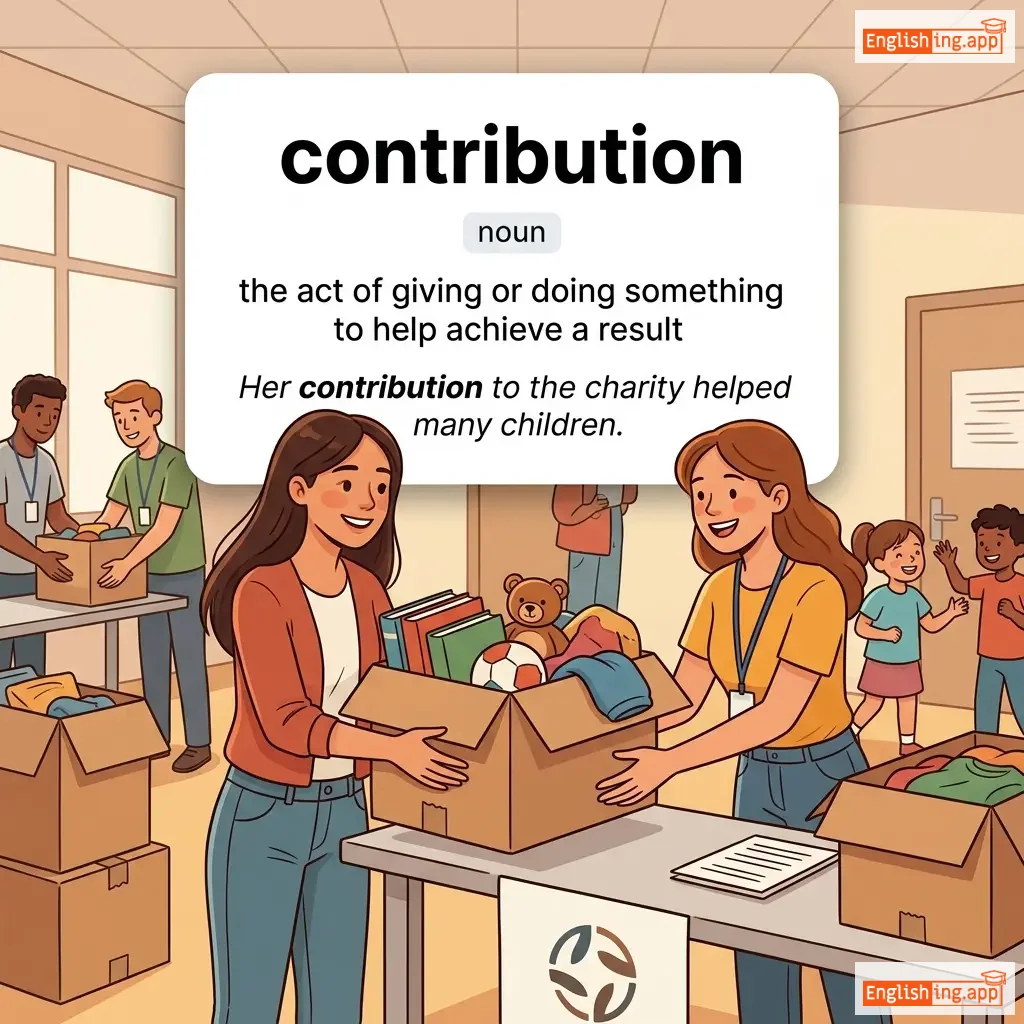
contribution definition card — visual illustration of the meaning
noun
/ˌkɒn.trɪˈbjuː.ʃən/
вклад (vklad)

the act of giving or doing something to help achieve a result

"Her contribution to the charity helped many children."

"Ее вклад в благотворительность помог многим детям." (Eyo vklad v blagotvoritel'nost' pomog mnogim detyam.)
noun
/ˈkɒn.trɪ.bjʊ.tər/
вкладчик (vkladchik)

a person who gives something to help achieve a result

"He was a regular contributor to the local newspaper."
"Он был регулярным вкладчиком в местную газету." (On byl regulyarnym vkladchikom v mestnuyu gazetu.)
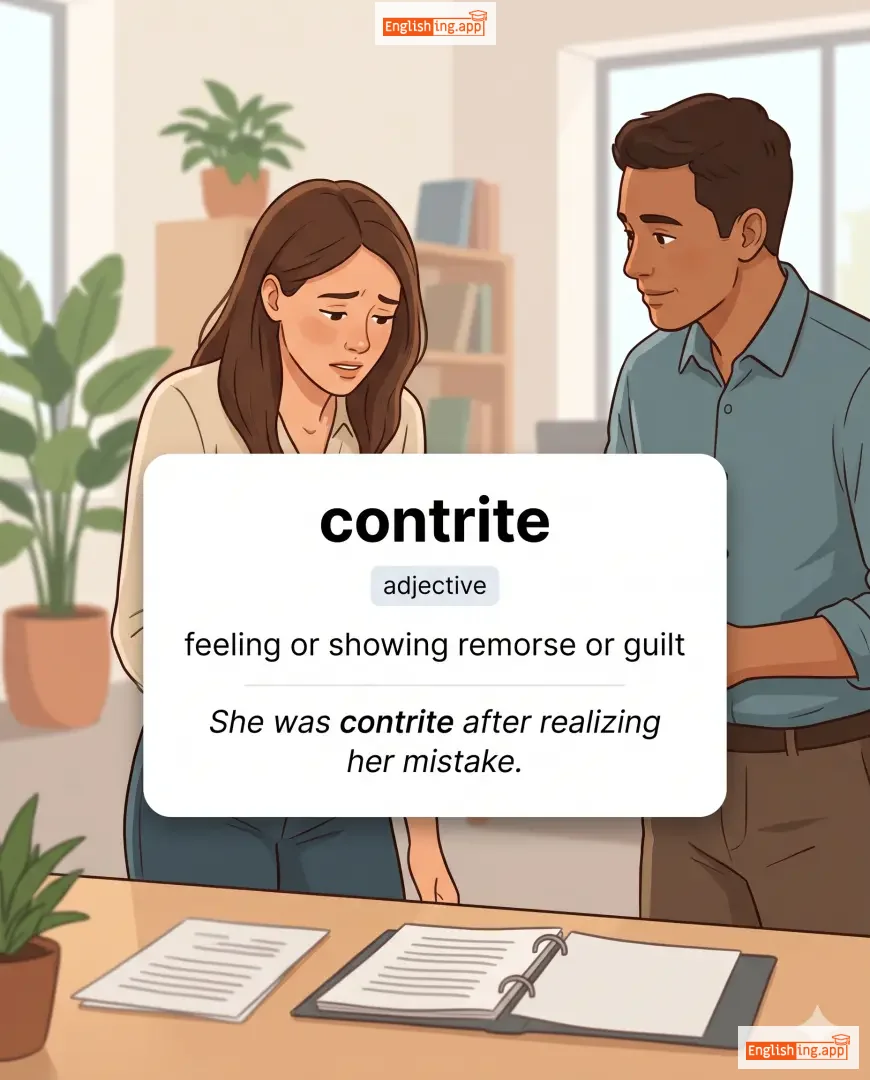
contrite definition card — visual illustration of the meaning
adjective
/kənˈtraɪt/
раскаивающийся (raskayivayushchiesya)

feeling or showing remorse or guilt

"She was contrite after realizing her mistake."

"Она была раскаявшейся, когда осознала свою ошибку." (Ona byla raskayavshiesya, kogda osoznala svoyu oshibku.)
noun
/kənˈtrɪʃ.ən/
раскаяние (raskayanie)

the state of feeling remorseful and repentant

"His contrition was evident after the apology."

"Его раскаяние было очевидно после извинений." (Ego raskayanie bylo ochevidno posle izvineniy.)
noun
/kənˈtraɪ.vəns/
изобретение или план (izobretenie ili plan)

a device or plan that is cleverly or artificially created

"The clock was an intricate contrivance of gears and springs."

"Часы были сложным изобретением из шестерёнок и пружин." (Chasy byli slozhnym izobreteniem iz shesteryonok i pruzhin.)
verb
/kənˈtraɪv/
выдумывать (vydumyvat)

to plan or devise cleverly or skillfully

"She contrived a clever plan to surprise her friends."

"Она придумала умный план, чтобы удивить своих друзей." (Ona pridumala umnyy plan, chtoby udivit' svoikh druzey.)
adjective
/kənˈtraɪvd/
искусственный или принудительный; не естественный или спонтанный (iskusstvennyy ili prinuditelnýy; ne estestvennyy ili spontannyy)

artificial or forced; not natural or spontaneous

"The ending of the movie felt contrived and unrealistic."
"Концовка фильма казалась искусственной и нереалистичной." (Kontsovka fil'ma kazalas' iskusstvennoy i nerealistichnoy.)
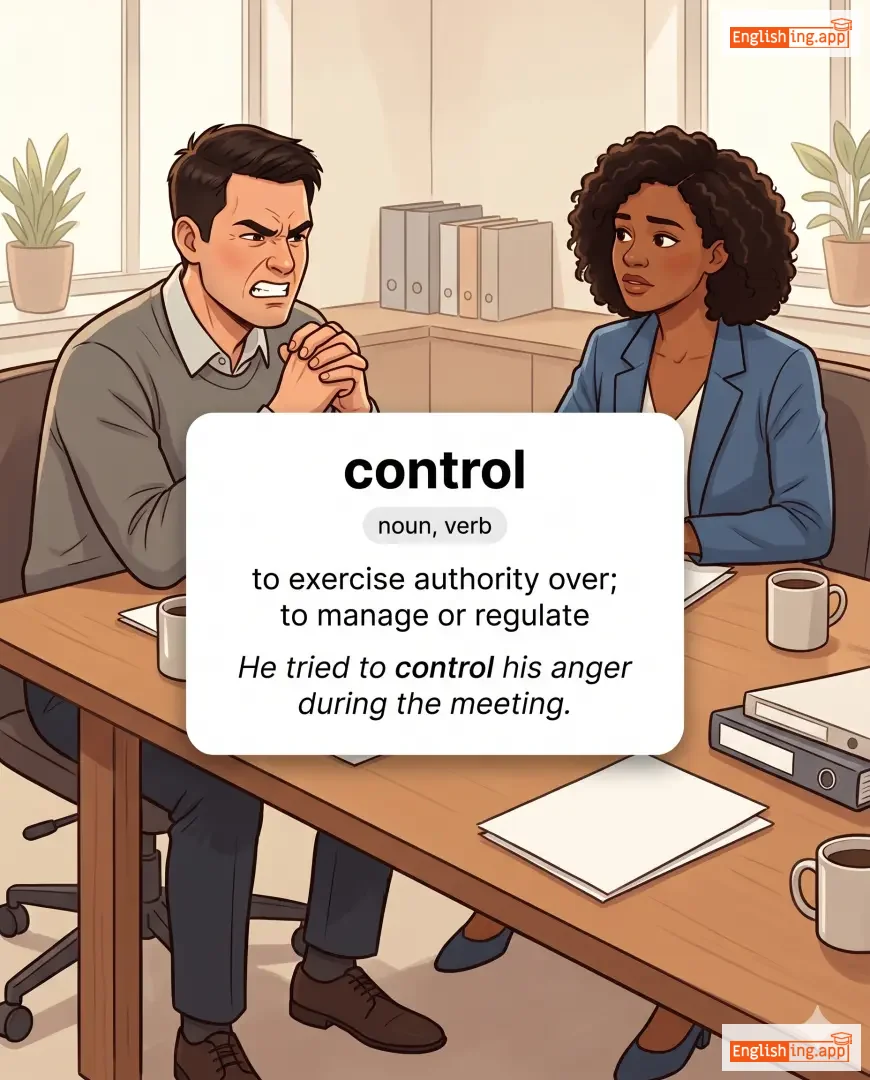
control definition card — visual illustration of the meaning
noun, verb
/kənˈtroʊl/
контролировать (kontrolirovat')

to exercise authority over; to manage or regulate

"He tried to control his anger during the meeting."

"On postaralsya kontrolirovat' svoi zlost' vo vremya sobraniya." (On postaralsya kontrolirovat' svoi zlost' vo vremya sobraniya.)
adjective
/kənˈtroʊld/
контролируемый (kontroliruemyy)

managed or regulated carefully; kept within limits

"The experiment was conducted in a controlled environment."

"Эксперимент проводился в контролируемой среде." (Eksperiment provodilsya v kontroliruemoy srede)
noun
/kənˈtroʊlər/
контроллер (kontroller)

a person or device that manages, directs, or regulates something

"The game controller made it easy to play the video game."
"Контроллер игры упростил игру в видеоигры." (Kontroller igry uprostil igru v videoigry.)
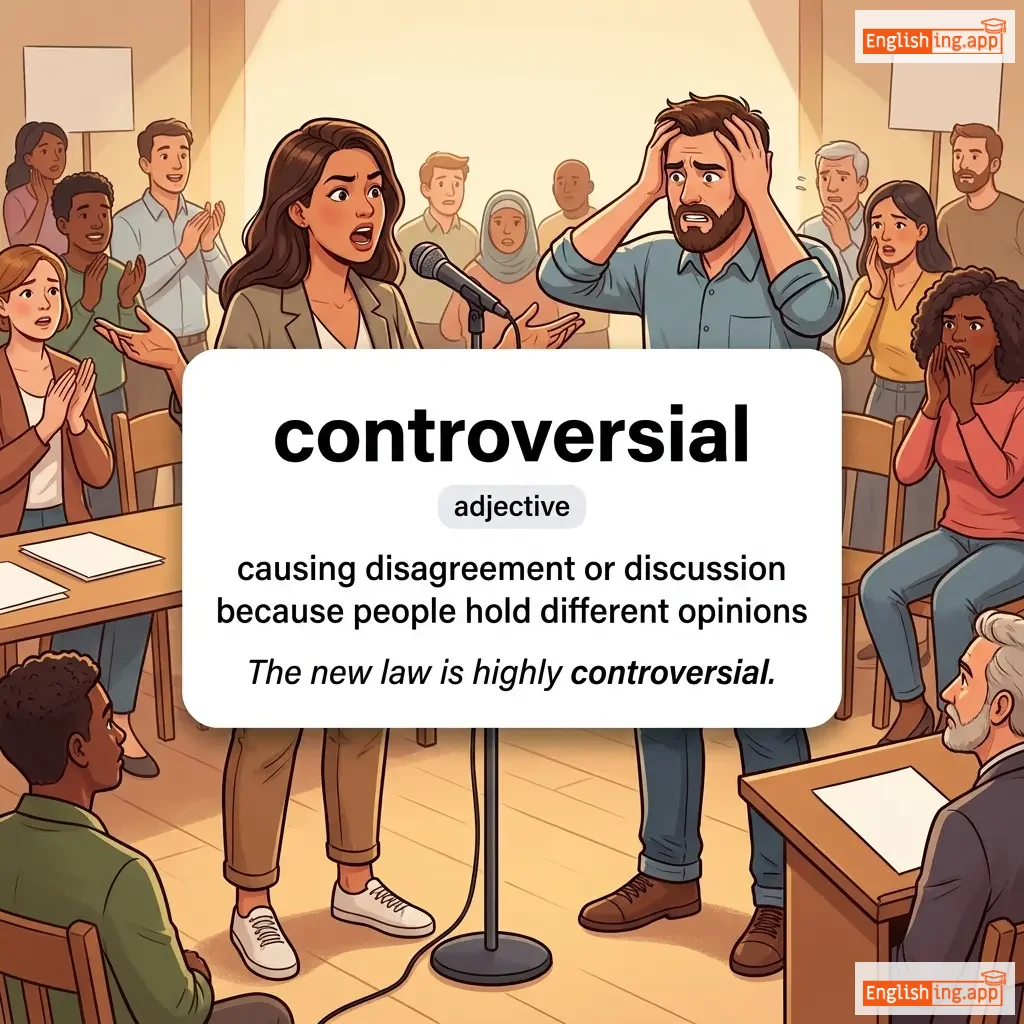
controversial definition card — visual illustration of the meaning
adjective
/ˌkɒn.trəˈvɜː.ʃəl/
спорный (spornyy)

causing disagreement or discussion because people hold different opinions

"The new law is highly controversial."

"Новый закон вызывает много споров." (Novyy zakon vyzyvayet mnogo sporov.)
noun
/ˈkɒn.trə.vɜːr.si/
спор (spor)

A prolonged public disagreement or heated discussion.

"The new policy sparked a major controversy."

"Новая политика вызвала большую контроверсию." (Novaya politika vyzvala bol'shuyu kontroversiyu.)
verb
/ˌkɒntrəˈvɜːrt/
опровергать (oprovergat)

to dispute or argue against; to contradict

"The scientist controversed the previous research findings."
"Учёный опроверг предыдущие результаты исследования." (Uchyonnyy opoverg prevyushchiye rezul'taty issledovaniya.)
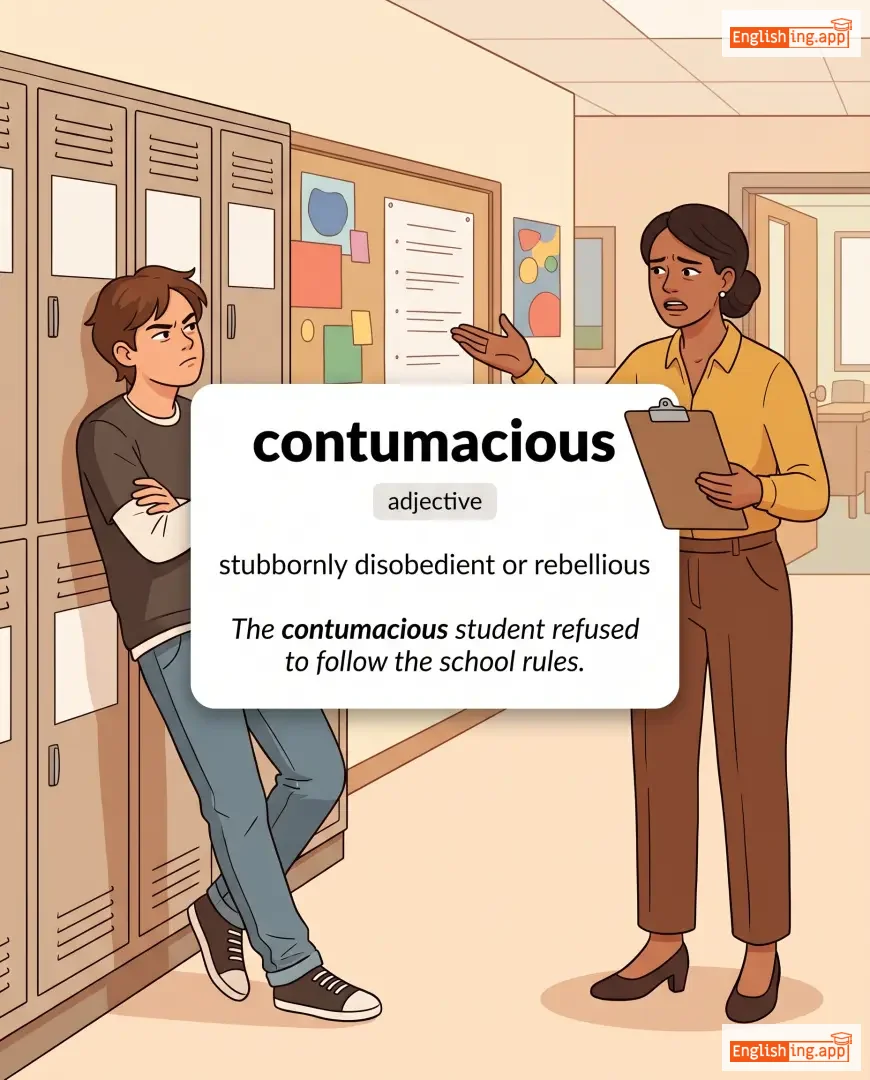
contumacious definition card — visual illustration of the meaning
adjective
/ˌkɒn.tjʊˈmeɪ.ʃəs/
неповинующийся, мятежный (nepovinuyushchiesya, myatezhnyy)

stubbornly disobedient or rebellious

"The contumacious student refused to follow the school rules."

"Неповинующийся студент отказался следовать школьным правилам." (Nepovinuyushchiesya student otkazalsya sledovat' shkol'nym pravillam.)
noun
/ˈkɒn.tjʊ.mə.si/
непослушание, упрямство (neposlushanie, upryamstvo)

stubborn refusal to obey authority

"His contumacy led to his suspension from the council."

"Его непослушание привело к его отстранению от совета." (Ego neposlushanie privedo k ego otstraneniiu ot soveta.)
noun
/ˈkɒn.tjʊ.mə.li/
оскорбление, презрение (oskorblenie, prezrenie)

insulting or humiliating treatment

"He endured the contumely of his colleagues with patience."

"Он терпел презрение со стороны своих коллег с терпением." (On terpel prezrenie so storony svoikh kolleg s terpeniem.)
verb
/kənˈtjuːz/
ушибить (ushibit)

to bruise by striking or hitting

"He contused his arm when he fell off the bike."

"Он ушиб свою руку, когда упал с велосипеда." (On ushib svoyu ruku, kogda upal s velosipeda.)
noun
/kənˈtjuː.ʒən/
ушиб, синяк (ushib, sinyak)

a bruise or injury without breaking the skin

"The boxer had several contusions after the match."
"У боксера было несколько ушибов после матча." (U boksera bylo neskol'ko ushibov posle matcha.)
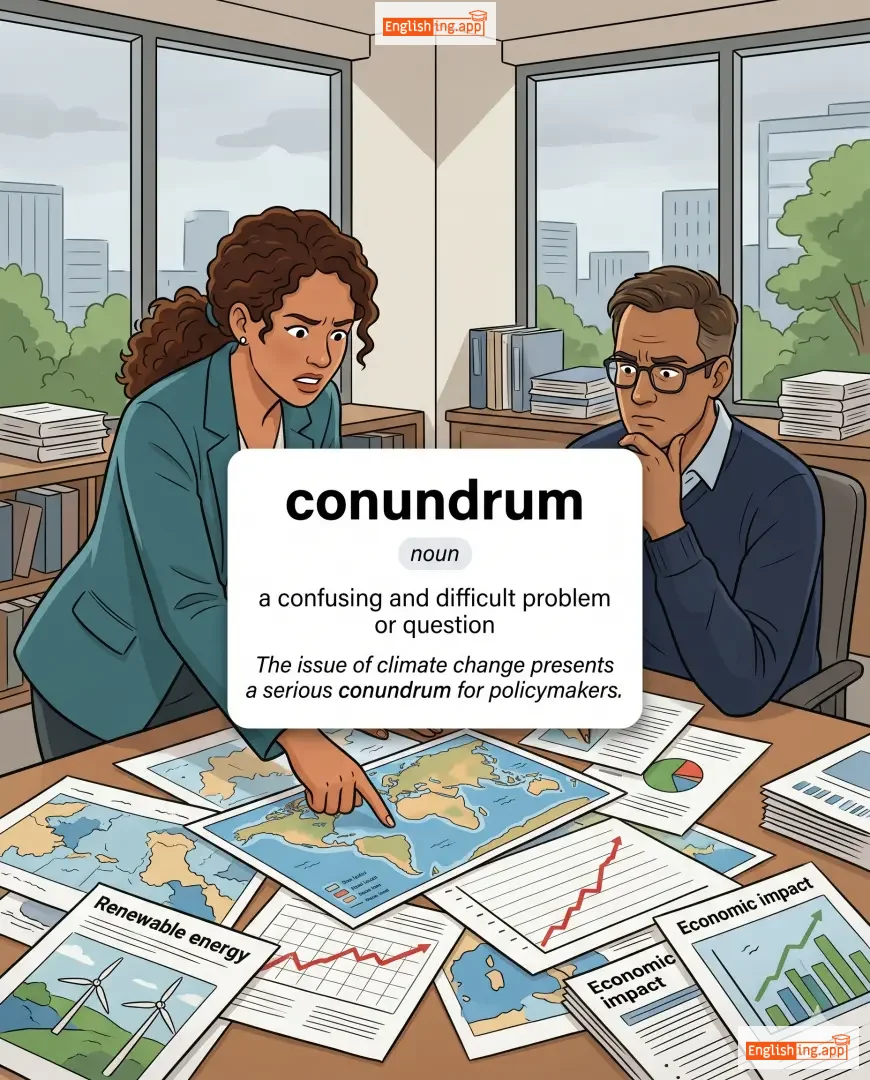
conundrum definition card — visual illustration of the meaning
noun
/kəˈnʌndrəm/
головоломка (golovolomka)

a confusing and difficult problem or question

"The issue of climate change presents a serious conundrum for policymakers."

"Проблема изменения климата представляет собой серьезную головоломку для политиков." (Problema izmeneniya klimata predstavlyaet soboy seryoznuyu golovolomku dlya politikov.)
verb
/ˌkɒnvəˈlɛs/
восстановление здоровья после болезни или медицинского лечения (vosstanovlenie zdorov'ya posle bolezni ili meditsinskogo lecheniya)

to recover health and strength after illness or medical treatment

"After the surgery, she spent several weeks convalescing at home."

"После операции она провела несколько недель, восстанавливаясь дома." (Posle operatsii ona provela neskol'ko nedel', vosstanavlivayas' doma.)
noun
/ˌkɒnvəˈlɛsns/
период восстановления (period vosstanovleniya)

the period of time spent recovering from an illness or medical treatment

"His convalescence lasted for almost two months after the accident."

"Его период восстановления продолжался почти два месяца после аварии." (Ego period vosstanovleniya prodolzhalsya pochti dva mesyatsa posle avarii.)
adjective
/ˌkɒnvəˈlɛsnt/
восстанавливающийся, в период восстановления после болезни или лечения (vosstanavlivayushchijsya, v period vosstanovleniya posle bolezni ili lecheniya)

recovering from an illness or medical treatment

"The hospital has a special ward for convalescent patients."

"В больнице есть специальное отделение для пациентов, восстанавливающихся после болезни." (V bol'nitse yest' spetsial'noye otdeleniye dlya patsiyentov, vosstanavlivayushchikhsya posle bolezni.)
verb
/kənˈviːn/
собираться, созывать встречу или собрание (sobirat'sya, sozyvat' vstrechu ili sobranie)

to come together or assemble, especially for a meeting or formal gathering

"The board will convene tomorrow to discuss the new policy."

"Совет соберется завтра, чтобы обсудить новую политику." (Sovet soberyotsya zavtra, chtoby obsudit' novuyu politiku.)
noun
/kənˈviːniəns/
удобство (udobstvo)

the state of being able to do something easily or comfortably

"Online shopping offers great convenience for busy people."

"Интернет-шоппинг предоставляет большую удобство для занятых людей." (Internet-shopping predostavlyaet bol'shuyu udobstvo dlya zanyatyh lyudey.)
adjective
/kənˈviː.ni.ənt/
удобный (udobnyy)

suitable or easy to use; fitting in well with one's needs

"This shop is convenient for my daily needs."
"Этот магазин удобен для моих повседневных нужд." (Etot magazin udoben dlya moikh povsednevnykh nuzhd.)
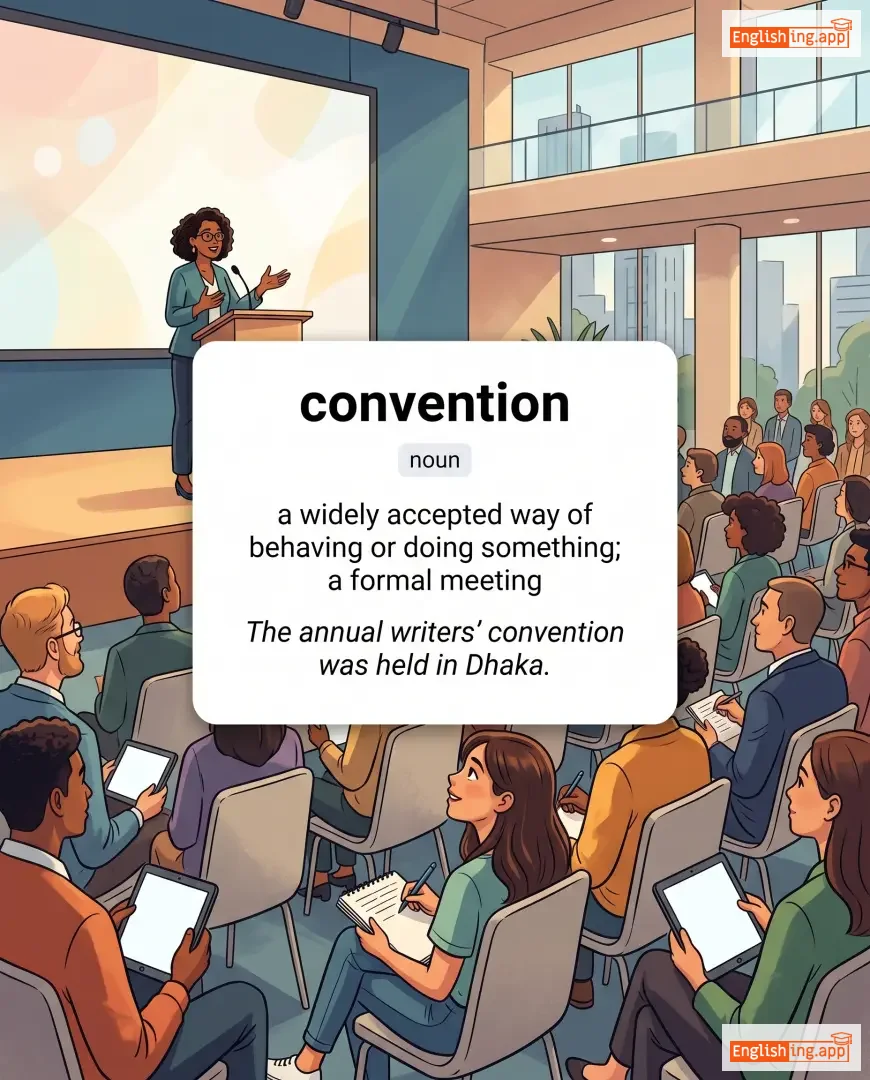
convention definition card — visual illustration of the meaning
noun
/kənˈvɛnʃən/
конвенция (konventsiya)

a widely accepted way of behaving or doing something; a formal meeting

"The annual writers' convention was held in Dhaka."

"Ежегодная конференция писателей прошла в Дакке." (Ezhegodnaya konferentsiya pisateley proshla v Dakke.)
conventional definition card — visual illustration of the meaning
adjective
/kənˈvɛnʃənəl/
традиционный (traditsionny)

based on or in accordance with what is generally done or believed

"He prefers conventional medicine over alternative treatments."
"Он предпочитает традиционную медицину альтернативным методам." (On predpochitayet traditsionnuyu meditsinu alternativnym metodam.)
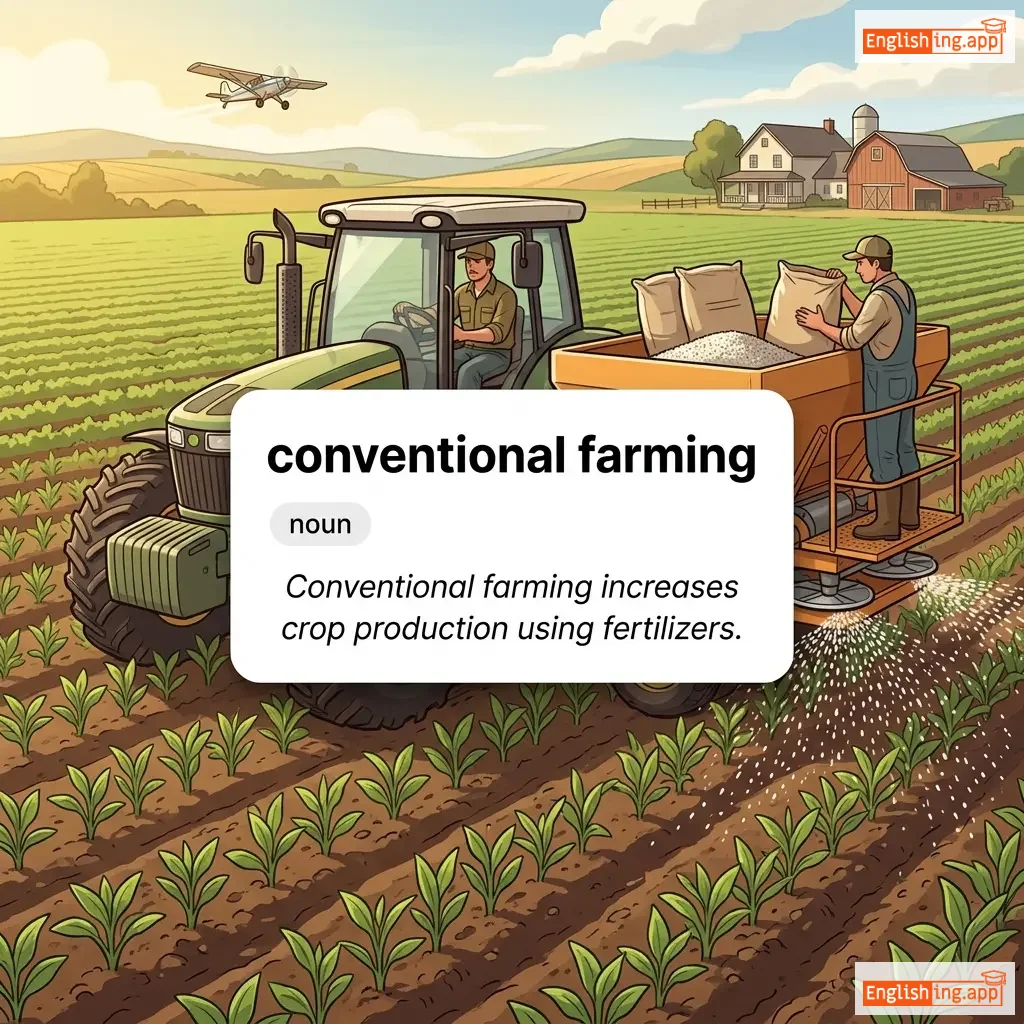
conventional farming definition card — visual illustration of the meaning
noun
/kənˈvɛn.ʃən.əl ˈfɑːr.mɪŋ/
конвенциональное сельское хозяйство (konventsiional'noe sel'skoe khozyaystvo)

Traditional farming method using synthetic fertilizers, pesticides, and modern technology.

"Conventional farming increases crop production using fertilizers."
"Конвенциональное сельское хозяйство увеличивает производство урожая с использованием удобрений." (Konventsiional'noe selskoe khozyaystvo uvelichivayet proizvodstvo urozhaya s ispol'zovaniem udobreniy.)
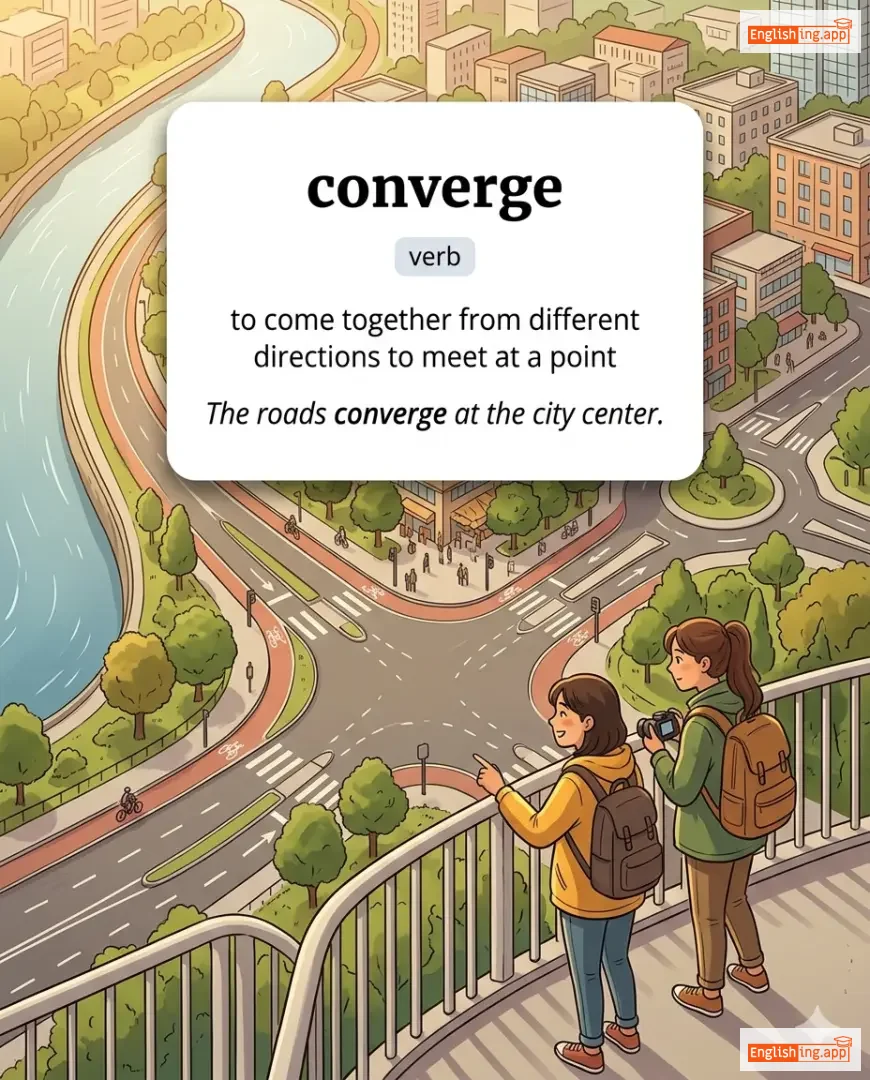
converge definition card — visual illustration of the meaning
verb
/kənˈvɜːrdʒ/
сходиться (skhoditsya)

to come together from different directions to meet at a point

"The roads converge at the city center."

"Дороги сходятся в центре города." (Dorogi skhodyatsya v tsentre goroda.)
convergence definition card — visual illustration of the meaning
noun
/kənˈvɜː.dʒəns/
конвергенция (konvergentsiya)

the process of coming together or becoming similar

"The convergence of technology and education is creating new opportunities."

"Конвергенция технологий и образования создаёт новые возможности." (Konvergentsiya tekhnologiy i obrazovaniya sozdajot novye vozmozhnosti.)
adjective
/kənˈvɜːrdʒənt/
сходящийся (skhodjashchijsya)

tending to move toward a common point or result

"The two rivers have a convergent path before entering the lake."

"Два реки имеют конвергентный путь перед тем, как войти в озеро." (Dva reki imeyut konvergentnyy put' pered tem, kak voiti v ozyero.)
adjective
/kənˈvɜːrsənt/
знакомый, сведущий (znakomyy, svedushchiy)

familiar with or knowledgeable about something

"She is conversant with the latest developments in technology."

"Она знакома с последними достижениями в области технологий." (Ona znakomaa s poslednimi dostizheniyami v oblasti tekhnologiy.)
noun
/ˌkɒnvəˈseɪʃn/
разговор (razgovor)

an informal talk between two or more people, in which ideas, feelings, and thoughts are exchanged

"We had a long conversation about future plans."

"Мы долго разговаривали о будущих планах." (My dolgo razgovarivali o budushchikh planakh.)
converse definition card — visual illustration of the meaning
verb
/kənˈvɜːrs/
беседовать (beseidovat)

to engage in spoken exchange of ideas or talk

"They often converse about literature and art."

"Они часто беседуют о литературе и искусстве." (Oni chasto beseduyut o literature i iskusstve.)
adverb
/kənˈvɜːrsli/
наоборот (naoborot)

in an opposite or contrary manner

"He is rich, conversely, his brother struggles financially."

"Он богат, наоборот, его брат финансово борется." (On bogat, naoborot, ego brat finansovo boretsya.)
Conversion definition card — visual illustration of the meaning
noun
/kənˈvɜːrʒən/
конверсия, изменение (konversiya, izmeneniye)

the act or process of changing from one form to another

"The conversion of the old factory into apartments took two years."

"Конверсия старой фабрики в квартиры заняла два года." (Konversiya staroy fabrichki v kvartiry zanyala dva goda.)