Словари

Словарь английского языка | Значения слов, определения и примеры
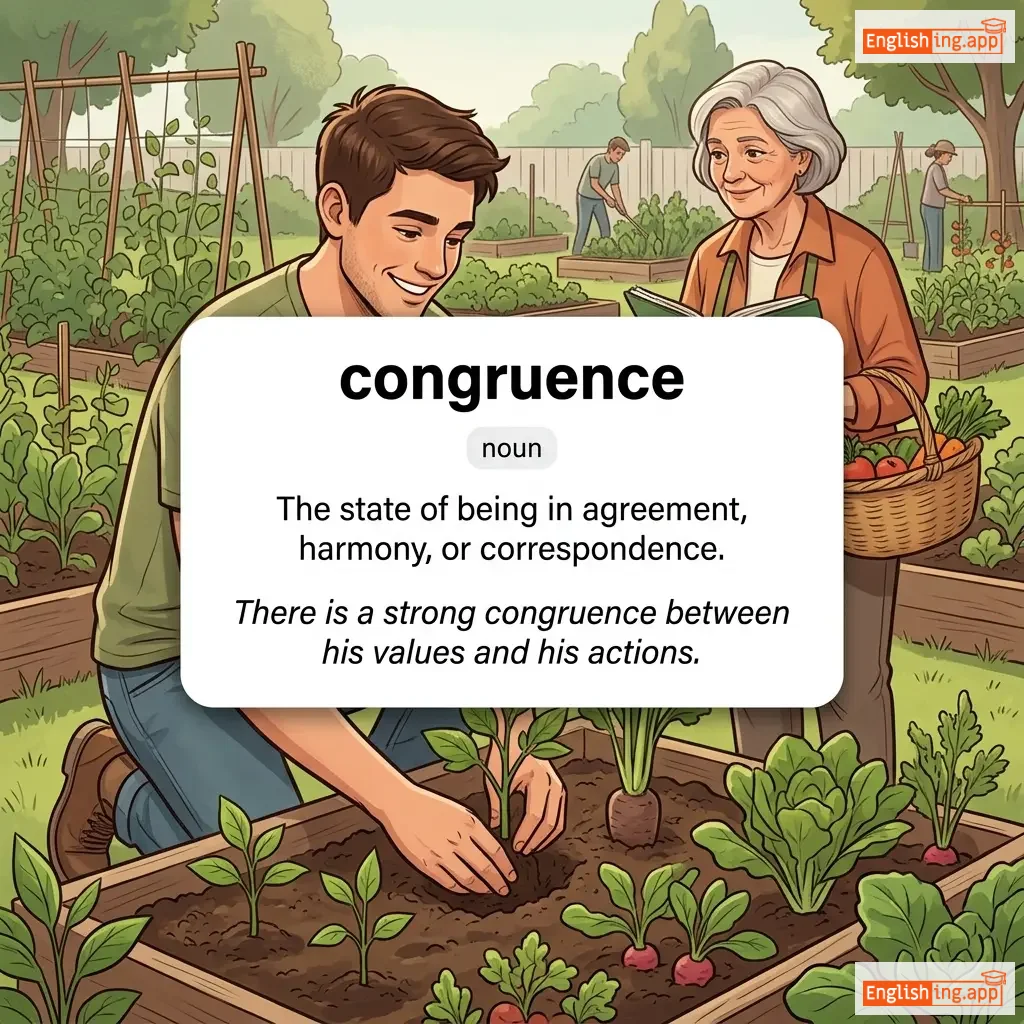
congruence definition card — visual illustration of the meaning
noun
/ˈkɒŋɡruəns/
конгруэнция (kongruentsiya)

The state of being in agreement, harmony, or correspondence.

"There is a strong congruence between his values and his actions."

"Есть сильная конгруэнтность между его ценностями и его действиями." (Yest' sil'naya kongruyentnost' mezhdu ego tsennostyami i ego deystviyami.)
adjective
/ˈkɒŋɡruənt/
конгруэнтный (kongruentnyy)

in agreement or harmony; having the same shape and size in geometry

"Their values are congruent with the goals of the organization."

"Их ценности совпадают с целями организации." (Ih tsennosti sovpadayut s tseliami organizatsii.)
noun
/ˈkɒnɪfər/
Хвойное дерево (Khvoynoye derevo)

a type of tree that bears cones and evergreen needle-like leaves, such as pine or fir

"The forest is dominated by conifers like pine and spruce."
"Лес в основном состоит из хвойных деревьев, таких как сосна и ель." (Les v osnovnom sostoit iz khvoynykh derev'yev, takikh kak sosna i el'.)
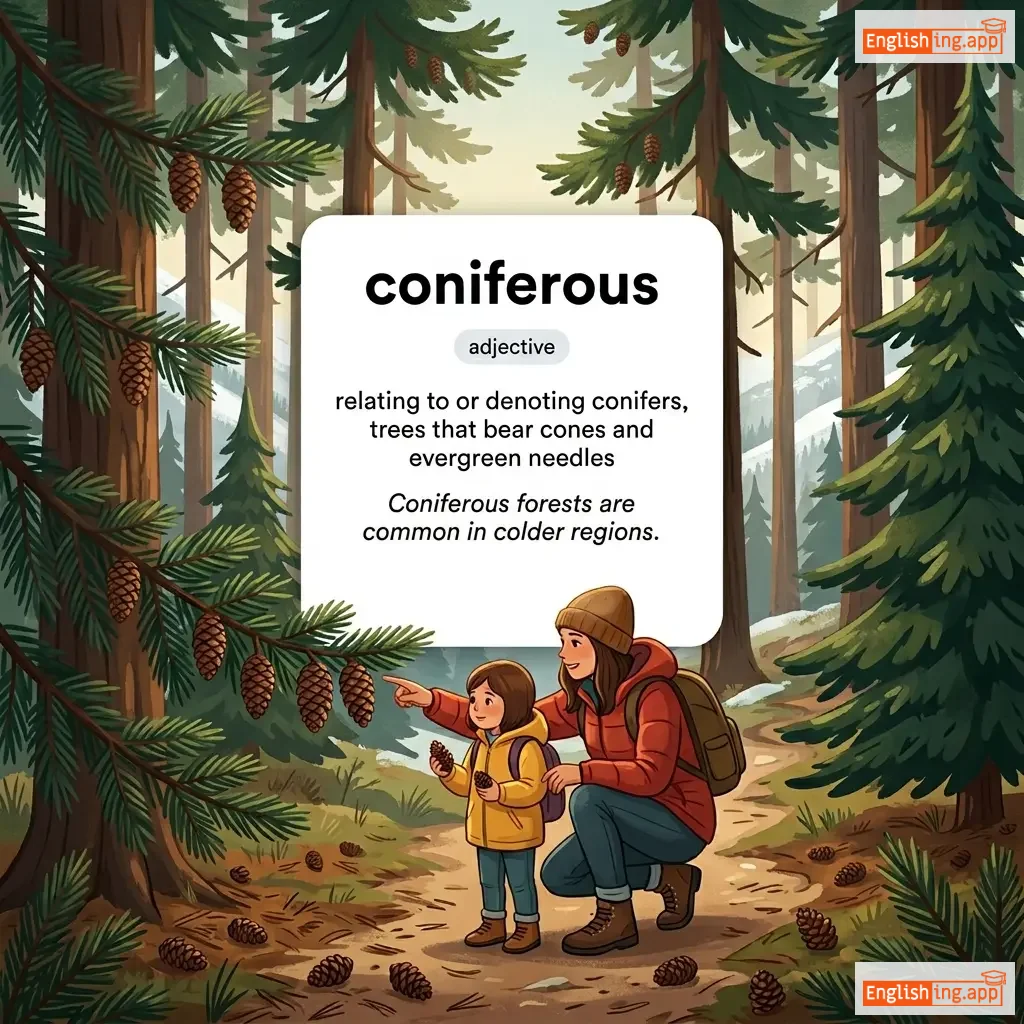
coniferous definition card — visual illustration of the meaning
adjective
/kəˈnɪfərəs/
хвойные деревья (khvoynye derev'ya)

relating to or denoting conifers, trees that bear cones and evergreen needles

"Coniferous forests are common in colder regions."

"Хвойные леса обычны в холодных регионах." (Khvoynye lesa obychny v kholodnykh regionakh.)
adjective
/kənˈdʒɛktʃərəl/
предположительный (predpolozhitelnyy)

based on guesswork or incomplete evidence rather than certain knowledge

"His explanation was purely conjectural and lacked proof."

"Его объяснение было чисто предположительным и не имело доказательств." (Ego obyasnenie bylo chisto predpolozhitel'nym i ne imelo dokazatel'stv.)
conjecture definition card — visual illustration of the meaning
noun/verb
/kənˈdʒɛktʃər/
предположение (predpolozhenie)

an opinion or conclusion formed on the basis of incomplete information; to form an opinion without sufficient evidence

"The critics conjectured that the book was inspired by real events."

"критики предположили, что книга была вдохновлена реальными событиями." (kritiki predpolozhili, chto kniga byla vdokhnovlena real'nymi sobytiyami.)
verb
/kənˈdʒɔɪn/
объединять (ob'yedin'jat')

to join together or unite; to combine

"The two rivers conjoin just before reaching the sea."

"Два реки соединяются прямо перед тем, как достичь моря." (Dva reki soedinyayutsya pryamo pered tem, kak dostich' morya.)
conjugal definition card — visual illustration of the meaning
adjective
/ˈkɒndʒʊɡəl/
супружеский (supruzheskiy)

relating to marriage or the relationship between husband and wife

"They enjoyed a long life of conjugal happiness."

"Они наслаждались долгой супружеской жизнью счастья." (Oni naslazhdalis' dolgoy supruzheskoy zhiznyu schast'ya.)
verb
/ˈkɒndʒʊɡeɪt/
спрягать (spryagat)

to list the different forms of a verb according to tense, person, and number

"Students are asked to conjugate the verb 'to be'."

"Студентам предлагают конъюгировать глагол 'быть'." (Studentam predlagayut kon'yugirovat' glagol 'byt'.)
noun
/ˌkɒndʒʊˈɡeɪʃən/
спряжение (spryazhenie)

the variation of the form of a verb to indicate tense, person, and number

"French verbs have complex conjugations."

"Во французском языке существуют сложные формы глаголов." (Vo frantsuzskom yazyke sushchestvuyut slozhnye formy glagolov.)
noun
/kənˈdʒʌŋkʃən/
союз (soyoz)

a word used to connect clauses or sentences, or to coordinate words

"The words 'and' and 'but' are common conjunctions."

"Слова 'и' и 'но' — это общие союзы." (Slova 'i' i 'no' — eto obshchie soyusy.)
verb
/ˈkʌn.dʒər/
вызывать (vyez-zy-vat)

to summon something as if by magic; to imagine vividly

"The magician conjured a rabbit out of the hat."

"Фокусник призвал кролика из шляпы." (Fokus-nik priz-val kro-li-ka iz shlyap-y.)
connect definition card — visual illustration of the meaning
verb
/kəˈnɛkt/
соединять (soedinyat)

to join or link two or more things together

"The new bridge will connect the two cities."

"Новый мост соединит два города." (Novyi most soedinit dva goroda.)
connection definition card — visual illustration of the meaning
noun
/kəˈnɛkʃən/
связь (svyaz)

a relationship in which a person, thing, or idea is linked or associated with something else

"There is a strong connection between exercise and health."

"Существует сильная связь между физическими упражнениями и здоровьем." (Sushchestvuyet sil'naya svyaz' mezhdu fizicheskimi uprazhneniyami i zdorov'yem.)
connectivity definition card — visual illustration of the meaning
noun
ˌkɒn.ekˈtɪv.ɪ.ti
способность подключения, сеть, взаимосвязь (sposobnost' podklyucheniya, set', vzaimosvyaz')

The state of being connected or interconnected; capacity for the interconnection of platforms, systems, and applications.

"The connectivity in rural areas needs improvement."

"Коннективность в сельских районах нуждается в улучшении." (Konnektivnost' v sel'skikh rayonakh nuzhdaetsya v uluchshenii.)
noun
/kəˈnaɪ.vəns/
соглашение (soglashenie)

the act of secretly allowing or being involved in wrongdoing

"The theft happened with the connivance of the security guard."

"Кража произошла с согласия охранника." (Krazha proizoshla s soglasiya okhrannika.)
verb
/kəˈnaɪv/
тайно участвовать в преступлении (tajno uchastvovat v prestuplenii)

to secretly allow or be involved in a wrongdoing

"The manager connived with the supplier to cheat the company."

"Менеджер конивал с поставщиком, чтобы обмануть компанию." (Menedzher konival s postavshchikom, chtoby obmanut' kompaniyu.)
adjective
/kəˈnaɪ.vɪŋ/
коварный (kovarnyy)

secretly scheming or plotting to help in wrongdoing

"He is a conniving politician who manipulates people for power."

"Он коварный политик, который манипулирует людьми ради власти." (On kovarnyy politik, kotoryy manipulirowet lyud'mi radi vlasti.)
connoisseur definition card — visual illustration of the meaning
noun
/ˌkɒn.əˈsɜːr/
знаток (znatok)

an expert judge in matters of taste, especially in food, art, or wine

"She is a true connoisseur of fine art."

"Она настоящий знаток изобразительного искусства." (Ona nastoyashchiy znatok izobrazitel'nogo iskusstva.)
connotation definition card — visual illustration of the meaning
noun
/ˌkɒnəˈteɪʃən/
коннотация (konnotatsiya)

An idea or feeling that a word invokes in addition to its literal meaning.

"The word 'home' has a positive connotation of warmth and family."

"Слово 'дом' имеет положительную коннотацию тепла и семьи." (Slovo 'dom' imeyet polozhitel'nuyu konnotatsiyu tepla i sem'i.)
verb
/kəˈnoʊt/
коннотировать (konnotirovat)

To suggest or imply an additional meaning beyond the literal one.

"The word 'youthful' connotes energy and vitality."

"Слово 'молодёжный' коннотирует энергию и жизненную силу." (Slovo 'molodyozhnyy' konnotiruet energiyu i zhiznennuyu silu.)
adjective
/kəˈnjuːbiəl/
супружеский (supruzheskiy)

Relating to marriage or the relationship of a married couple.

"They celebrated their connubial bliss with a honeymoon trip."

"Они отпраздновали своё супружеское счастье с медовым месяцем." (Oni otprazdnovali svojo supruzheskoe schast'je s medovym mesyacem.)
conquer definition card — visual illustration of the meaning
verb
/ˈkɒŋkər/
покорять (pokoryat)

To defeat and take control of a place or people by force.

"The king set out to conquer new lands."

"Король отправился завоевывать новые земли." (Korol' otpravil'sya zavoevyvat' novye zemli.)
adjective
/kɒnˈsæŋɡwɪn/
кровнородственный (krovnorodstvenny)

Of the same blood or origin; related by birth.

"The two families were consanguine through their grandparents."

"Два семейства были кровнородственны через своих бабушек и дедушек." (Dva semeystva byli krovnorodstvenny cherez svoikh babushek i dedushek.)
adjective
/ˌkɒnsæŋˈɡwɪniəs/
кровно родственны (krovno rodstvenny)

Related by blood; descended from the same ancestor.

"The study focused on genetic disorders in consanguineous families."

"Исследование сосредоточилось на генетических расстройствах в кровно родственных семьях." (Issledovanie sosredotochilos' na geneticheskikh rasstroystvakh v krovno rodstvennykh sem'yakh.)
noun
/ˌkɒnsæŋˈɡwɪnɪti/
кровное родство (krovnoe rodstvo)

The fact of being descended from the same ancestor; blood relationship.

"The degree of consanguinity was important in inheritance laws."

"Степень кровного родства была важна в законах о наследовании." (Stepen' krovnogo rodstva byla vazhna v zakonakh o nasledovanii.)
noun
/ˈkɒnʃəns/
совесть (sovest')

An inner sense of right and wrong that guides a person's actions.

"Her conscience told her to admit the mistake."

"Ее совесть сказала ей признать ошибку." (Eyo sovest' skazala yey priznat' oshibku.)
conscientious definition card — visual illustration of the meaning
adjective
/ˌkɒnʃiˈɛnʃəs/
добросовестный и исполнительный (dobrosovestny i ispolnitel'ny)

Wishing to do what is right, especially to do one's work or duty well and thoroughly.

"He is a conscientious employee who always meets deadlines."

"Он добросовестный сотрудник, который всегда выполняет сроки." (On dobrosovestnyy sotrudnik, kotoryy vsegda vypolnyaet sroki.)
conscientiousness definition card — visual illustration of the meaning
noun
/ˌkɒn.ʃiˈen.ʃəs.nəs/
осознанность, ответственность, добросовестность (osoznannost, otvetstvennost, dobrosovestnost)

The quality of wishing to do what is right, especially to do one's work or duty well and thoroughly.

"Her conscientiousness makes her a great leader."

"Её сознательность делает её выдающимся лидером." (Eyo soznatel'nost' delayet yeye vydajushchimsya liderom.)
adjective
/ˈkɒnʃəs/
сознательный (soznatelny)

Aware of and responding to one's surroundings; awake.

"She was fully conscious after the surgery."

"Она была полностью в сознании после операции." (Ona byla polnost'yu v soznanii posle operatsii.)
consciousness definition card — visual illustration of the meaning
noun
/ˈkɒnʃəsnəs/
сознание (soznanie)

the state of being aware of and able to think about oneself and the environment

"The patient regained consciousness after the surgery."

"Пациент пришел в сознание после операции." (Patsiyent prishel v soznanie posle operatsii.)
conscript definition card — visual illustration of the meaning
verb
/ˈkɒnskrɪpt/
заставить кого-то вступить в армию (zastavit' kogo-to vstupit' v armiyu)

to force someone into military service

"The government conscripted young men during the war."

"Правительство призвало молодых людей во время войны." (Pravitel'stvo prizvalo molodykh lyudey vo vremya voyny.)
consecrate definition card — visual illustration of the meaning
verb
/ˈkɒnsɪkreɪt/
освящать (osvyashchat)

to make something sacred, usually through a religious ceremony

"The church was consecrated by the bishop."

"Церковь была освящена епископом." (Tserkov' byla osvyashchena yepis kopom.)
adjective
/kənˈsɛkjʊtɪv/
последовательный (posledovatel'nyy)

following one after another without interruption

"She won three consecutive matches."

"Она выиграла три подряд идущие матча." (Ona vyigrala tri podryad idushchie matcha.)
consensus definition card — visual illustration of the meaning
noun
/kənˈsɛnsəs/
консенсус (konsensus)

general agreement among a group of people

"The team reached a consensus on the new strategy."

"Команда пришла к консенсусу по новой стратегии." (Komanda prishla k konsensusu po novoy strategii.)
consent definition card — visual illustration of the meaning
noun
/kənˈsɛnt/
согласие (soglasie)

permission for something to happen or agreement to do something

"She gave her consent before the operation."
"Она дала свое согласие перед операцией." (Ona dala svoe soglasie pered operatsiey.)
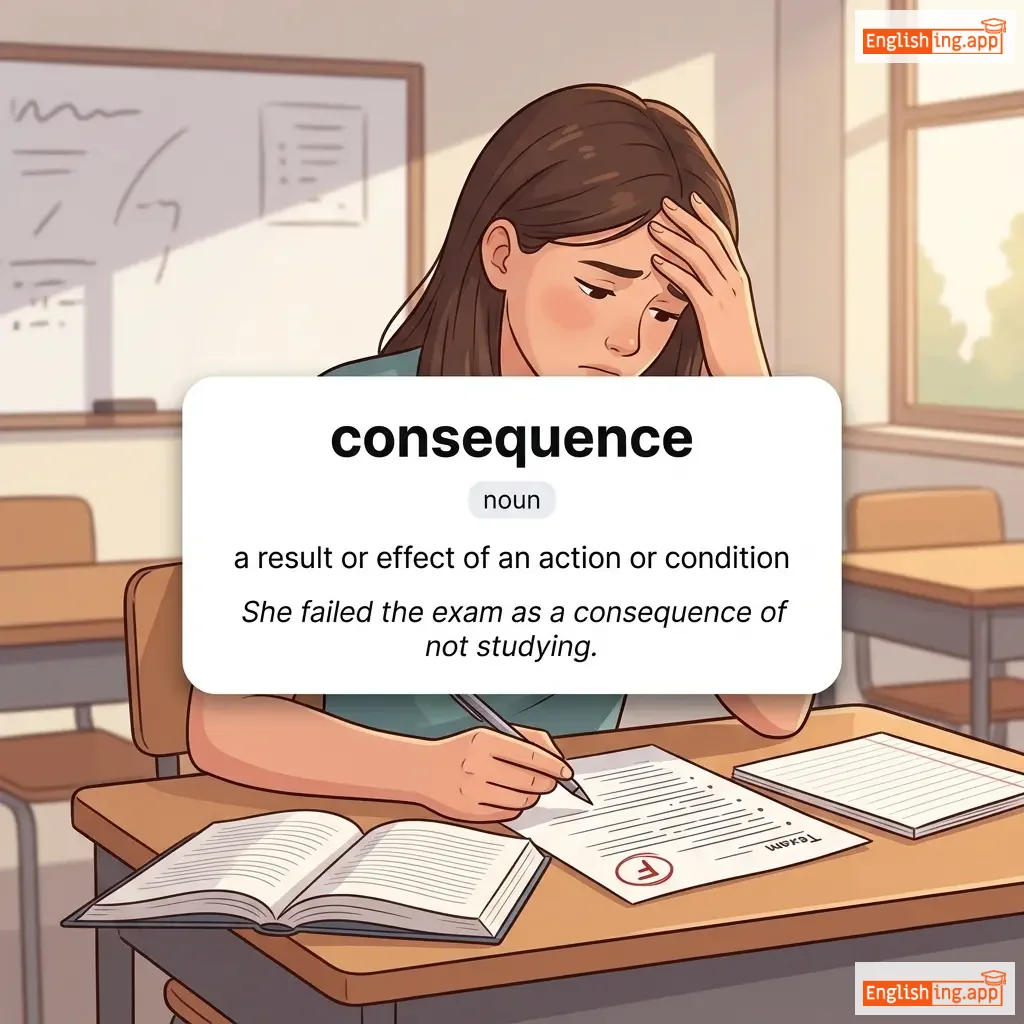
consequence definition card — visual illustration of the meaning
noun
/ˈkɒnsɪkwəns/
последствие (posledstvie)

a result or effect of an action or condition

"She failed the exam as a consequence of not studying."
"Она провалила экзамен как следствие того, что не училась." (Ona provalila ekzamen kak sledstvie togo, chto ne uchilas'.)
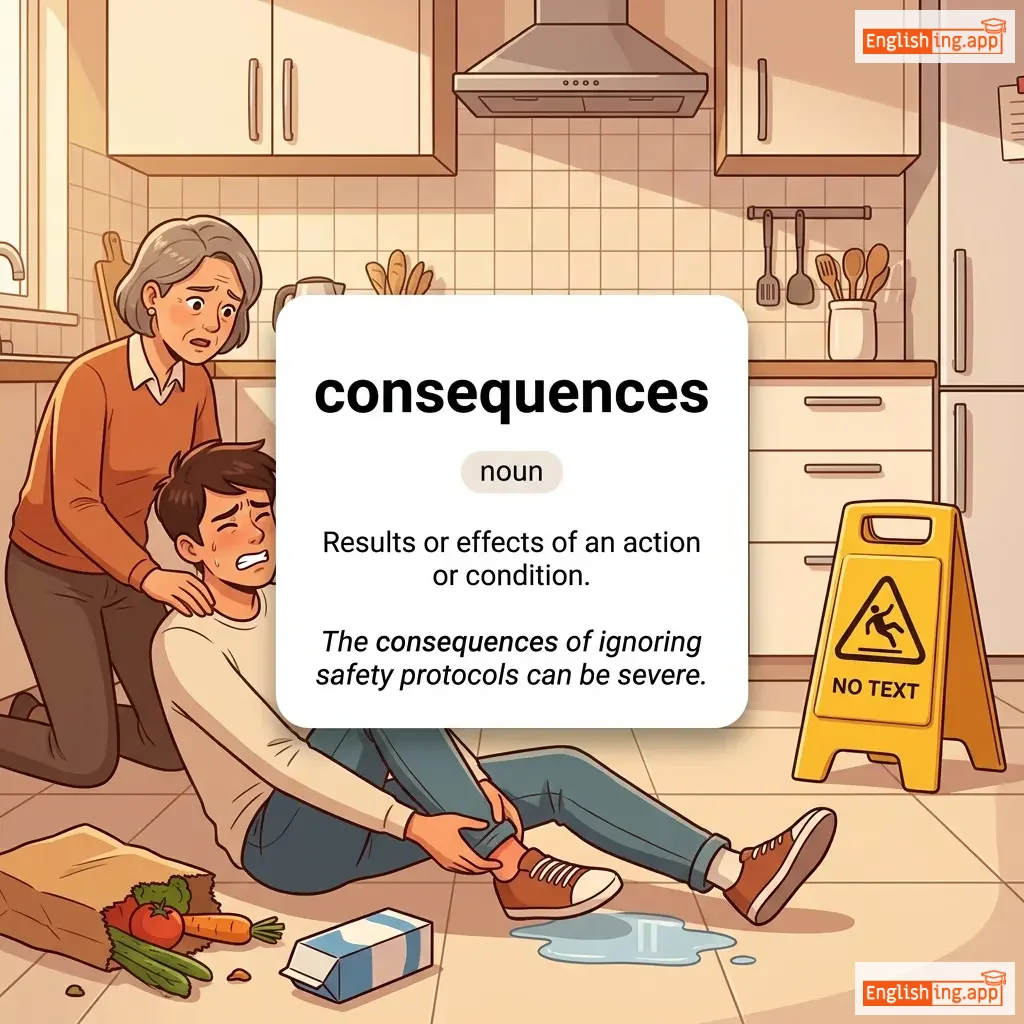
consequences definition card — visual illustration of the meaning
noun
/ˈkɒnsɪkwənsɪz/
последствия (posledstviya)

Results or effects of an action or condition.

"The consequences of ignoring safety protocols can be severe."

"Последствия игнорирования протоколов безопасности могут быть серьезными." (Posledstviya ignorirovaniya protokolov bezopasnosti mogut byt' seryoznymi.)
adjective
/ˌkɒnsɪˈkwɛnʃəl/
важный (vazhnyy)

Having important or significant consequences; resulting from something.

"The meeting was consequential for the future of the project."

"Эта встреча была решающей для будущего проекта." (Eta vstrecha byla reshaushchey dlya budushchego proekta.)
adverb
/ˈkɒnsɪkwəntli/
следовательно (slyedovatel'no)

as a result; therefore

"He didn’t study, and consequently he failed the exam."

"Он не учился, и, следовательно, не сдал экзамен." (On ne uchilsya, i, slyedovatel'no, ne sdal ekzamen.)
conservation definition card — visual illustration of the meaning
noun
/ˌkɒnsəˈveɪʃən/
сохранение (sokhranenie)

the protection and preservation of natural resources and the environment

"Conservation of forests is essential to prevent climate change."

"Сохранение лесов необходимо для предотвращения изменения климата." (Sokhranenie lesov neobkhodimo dlya predotvrashcheniya izmeneniya klimata.)
Conservation Movement definition card — visual illustration of the meaning
noun
/ˌkɒnsərˈveɪʃən ˈmuːvmənt/
Движение за сохранение природы (dvizhenie za sokhranenie prirody)

A political, environmental, and social movement that seeks to protect natural resources including plant and animal species as well as their habitat for the future.

"The conservation movement began in the 19th century to protect wildlife."

"Движение за сохранение природы началось в XIX веке с целью защиты дикой природы." (Dvizhenie za sokhranenie prirody nachalos' v XIX veke s tsel'yu zashchity dikoy prirody.)
noun
/kənˈsɜːvəˌtɪzəm/
консерватизм (konservatizm)

A political or social philosophy promoting traditional institutions and resistance to change.

"Conservatism values tradition and gradual development."

"Консерватизм ценит традиции и постепенное развитие." (Konservatizm tsenit traditsii i postepennoe razvitie.)
adjective
/kənˈsɜːvətɪv/
консервативный (konservativny)

Favoring traditional views and values; resistant to change.

"He has conservative views on family and society."

"У него консервативные взгляды на семью и общество." (U nego konservativnye vzglyady na sem'yu i obshchestvo.)
noun
/ˈkɒnsəvəˌtwɑː/
консерватория (konservatoriya)

A school specializing in the study of music or drama.

"She trained as a pianist at the Paris Conservatoire."

"Она училась на пианиста в Парижской консерватории." (Ona uchilas' na pianista v Parizhkoy konservatorii.)
noun
/kənˈsɜːvəˌtɔːri/
теплица / школа музыки и искусства (teplicha / shkola muzyki i iskusstva)

A greenhouse for growing plants or a school for music and the arts.

"They grew exotic plants in the conservatory."

"Они выращивали экзотические растения в теплице." (Oni vyrashchivali ekzoticheskie rastenija v teplitse.)
verb
/kənˈsɜːrv/
сохранять (sokhranyat')

to protect something from harm or destruction; to use resources carefully to avoid waste

"We must conserve water during the dry season."

"Мы должны экономить воду в сухой сезон." (My dolzhny ekonomit' vodu v sukhoy sezon.)
verb
/kənˈsɪdər/
рассматривать (rassmatrivat)

to think carefully about something, especially before making a decision

"She is considering studying abroad next year."

"Она рассматривает возможность учебы за границей в следующем году." (Ona rassmatrivaet vozmozhnost' ucheby za granitsey v sleduyushchem godu.)
adjective
/kənˈsɪdərəbl/
существенный (sushtestvenny)

large in amount, size, or importance

"The project required a considerable amount of time and money."

"Проект потребовал значительного времени и денег." (Proyekt potreboval znachitelnogo vremeni i deneg.)
adverb
/kənˈsɪdərəbli/
значительно (znachitel'no)

to a great extent or degree; significantly

"The weather has improved considerably since last week."

"Погода значительно улучшилась с прошлой недели." (Pogoda znachitel'no uluchshilas' s proshloy nedeli.)