Словари

Словарь английского языка | Значения слов, определения и примеры

noun
/kənˈtʃɛrtoʊ/
музыкальная композиция (muzykal'naya kompozitsiya)

a musical composition for one or more solo instruments accompanied by an orchestra

"She played a Mozart concerto with the orchestra."

"Она сыграла концерт Моцарта с оркестром." (Ona sygrala kontsert Motsarta s orkestrom.)
noun
/kənˈsɛʃən/
уступка (ustupka)

something that is granted, especially in response to demands; a compromise

"The company made several concessions during the negotiations."

"Компания сделала несколько уступок в ходе переговоров." (Kompaniya sdelala neskol'ko ustupok v khode peregovorov.)
noun
/kɑːntʃ/
раковина (rakovina)

a large spiral shell, often used as a trumpet in ceremonies

"The priest blew the conch to begin the ritual."

"Священник подул в раковину, чтобы начать ритуал." (Svyashchennik podul v rakovinu, chtoby nachat' ritual.)
verb
/kənˈsɪlieɪt/
примирить (primirit)

to stop someone from being angry; to win over by friendly acts

"He tried to conciliate the angry customer with an apology."
"Он попытался примирить разъяренного клиента с помощью извинений." (On popytalsya primirit' raz'yarennoho kliyenta s pomoshch'yu izvineniy.)
conciliatory definition card — visual illustration of the meaning
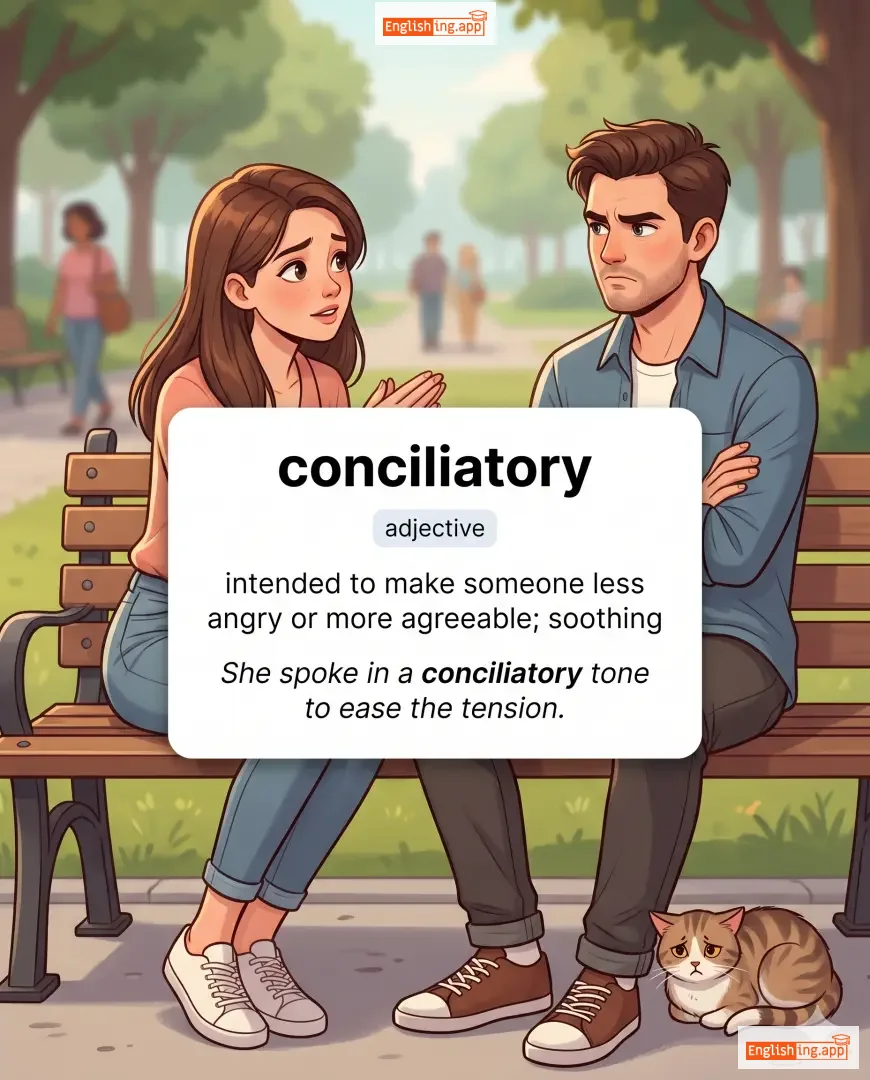
adjective
/kənˈsɪliətɔːri/
примирительный (primiritel'nyy)

intended to make someone less angry or more agreeable; soothing

"She spoke in a conciliatory tone to ease the tension."

"Она говорила примирительным тоном, чтобы уменьшить напряжение." (Ona govoryla primiritel'nym tonom, chtoby umen'shit' napryazhenie.)
concise definition card — visual illustration of the meaning
adjective
/kənˈsaɪs/
краткий (kratkiy)

giving much information clearly and in a few words; brief but comprehensive

"The teacher asked for a concise summary of the article."

"Учитель попросил краткое изложение статьи." (Uchitel' poprosil kratkoe izlozhenie stat'i.)
noun
/kɒŋk/
раковина (rakovina)

a shell, especially a large spiral one used as a horn or for decoration

"The priest blew the conch shell to signal the start of the ceremony."

"Священник подул в раковину, чтобы сигнализировать о начале церемонии." (Svyashchennik podul v rakovinu, chtoby signalizirovat' o nachale tseremonii.)
noun
/ˈkɒnk.leɪv/
секретное собрание (sekretnoe sobranie)

a private meeting, especially a secret or important one

"The leaders met in a secret conclave to discuss the strategy."
"Лидеры встретились на секретном конклаве, чтобы обсудить стратегию." (Lidery vstretilis na sekretnom konklave, chtoby obsudit' strategiyu.)
conclude definition card — visual illustration of the meaning
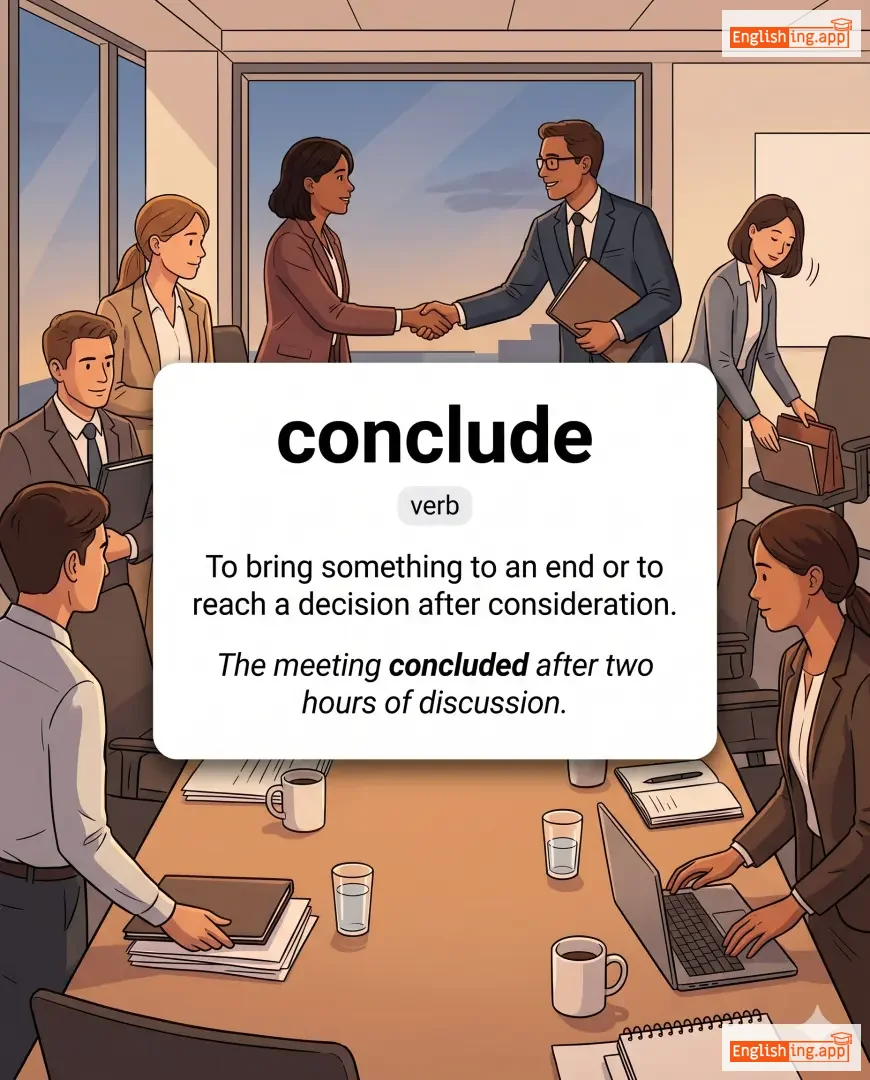
verb
/kənˈkluːd/
заключить, прийти к решению (zaklyuchit', priyti k resheniyu)

To bring something to an end or to reach a decision after consideration.

"The meeting concluded after two hours of discussion."

"Совещание завершилось через два часа обсуждения." (Soveshchanie zavershilos' cherez dva chasa obsuzhdeniya.)
noun
/kənˈkluːʒən/
заключение (zaklyucheniye)

The end or finish of an event, process, or text; a judgment reached after consideration.

"The research paper ends with a strong conclusion."

"Исследовательская работа заканчивается сильным заключением." (Issledovatelskaya rabota zakanchivayetsya sil'nym zaklyucheniem.)
adjective
/kənˈkluːsɪv/
окончательный (okonychatel'nyj)

serving to prove a case; decisive or convincing

"The DNA test provided conclusive evidence of his innocence."

"Тест ДНК предоставил убедительные доказательства его невиновности." (Test DNA predostavil ubeditel'nye dokazy ego nevinovnosti.)
concoct definition card — visual illustration of the meaning
verb
/kənˈkɒkt/
составить или придумать (sostavit' ili pridumat')

to make something, especially food or a story, by mixing or inventing

"He concocted a story to explain his absence."

"Он придумал историю, чтобы объяснить свое отсутствие." (On pridumal istoriyu, chtoby ob'yasnit' svoe otsutstvie.)
concomitant definition card — visual illustration of the meaning
adjective
/kənˈkɒmɪtənt/
сопутствующий (soputstvuyushchiy)

Naturally accompanying or associated with something.

"Increased stress is often concomitant with long working hours."
"Увеличение стресса часто сопряжено с длительным рабочим временем." (Uvelichenie stressa chasto soputstvuyet s dlitelnym rabochim vremyanym.)
concord definition card — visual illustration of the meaning
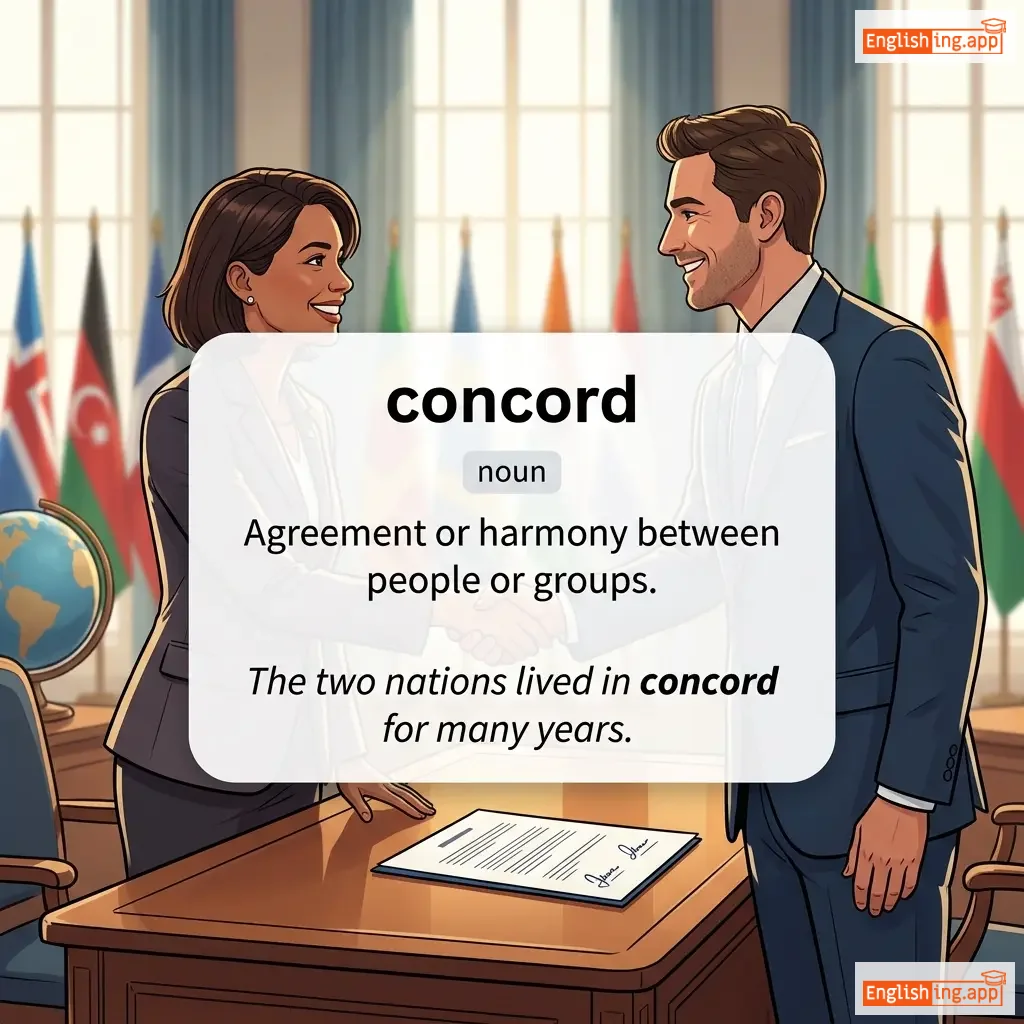
noun
/ˈkɒŋ.kɔːd/
согласие (soglasie)

Agreement or harmony between people or groups.

"The two nations lived in concord for many years."

"Два государства жили в согласии много лет." (Dva gosudarstva zhili v soglasii mnogo let.)
noun
/kənˈkɔːrdəns/
согласованность (soglasovannost)

Agreement; also an alphabetical index of the principal words in a book.

"There is a strong concordance between the two reports."

"Существует сильная согласованность между двумя отчетами." (Sushchestvuet sil'naya soglasovannost' mezhdu dvumya otchety.)
noun
/ˈkɒŋ.kɔː.dæt/
конкордат (konkordat)

An agreement or treaty, especially between the Vatican and a secular government.

"The concordat established the rights of the church within the country."

"Конкордат установил права церкви в стране." (Konkordat ustanovil prava tserkvi v strane.)
adjective
/ˈkɒŋkriːt/
конкретный (konkretnyj)

based on facts, not on ideas or guesses; specific and real

"She gave a concrete example to support her argument."

"Она привела конкретный пример, чтобы поддержать свой аргумент." (Ona privela konkretnyj primer, chtoby podderzhat' svoj argument.)
verb
/kənˈkɜːr/
согласиться (soglasitsya)

To agree with someone or something.

"I concur with your opinion on this matter."

"Я согласен с вашим мнением по этому вопросу." (Ya soglasen s vashim mneniem po etomu voprosu.)
noun
/kənˈkʌrəns/
согласие (soglasie)

Agreement or union in action, opinion, or occurrence; simultaneous happening of events.

"The project was completed with the concurrence of all departments."

"Проект был завершён с согласия всех отделов." (Proyekt byl zavershyon s soglasiya vsekh otdelov.)
concurrent definition card — visual illustration of the meaning
adjective
/kənˈkʌrənt/
одновременный (odnovremennyy)

Happening, existing, or done at the same time.

"The university offers several concurrent courses during the summer."

"Университет предлагает несколько одновременных курсов летом." (Universitet predlagayet neskol'ko odnovremennykh kursov letom.)
noun
/kənˈkʌʃən/
сотрясение мозга (sotryasenie mozga)

A temporary unconsciousness or shock caused by a blow to the head.

"He suffered a concussion after falling from the bike."

"Он получил сотрясение мозга после того, как упал с велосипеда." (On poluchil sotryasenie mozga posle togo, kak upal s velosipeda.)
condemn definition card — visual illustration of the meaning
verb
/kənˈdɛm/
осуждать (osuzhdat)

To express strong disapproval of; to declare something as wrong or unacceptable.

"The government condemned the act of violence."

"Правительство осудило акт насилия." (Pravitel'stvo osudilo akt nasiliya.)
noun
/ˌkɒndɛnˈseɪʃən/
конденсация (kondensatsiya)

The process of water vapor changing into liquid; also, the act of making something more concise.

"Condensation formed on the windows during the cold night."

"Конденсация образовалась на окнах в холодную ночь." (Kondensatsiya obrazovalas' na oknakh v kholodnuyu noch'.)
condense definition card — visual illustration of the meaning
verb
/kənˈdɛns/
сжать (szhat)

to make something shorter, more concentrated, or more compact

"The editor asked the writer to condense the article into one page."

"Редактор попросил писателя сократить статью до одной страницы." (Redaktor poprosil pisatelya sokratit' stat'yu do odnoi stranitzy.)
noun
/kənˈdenst mɪlk/
сгущенное молоко (sgushchennoye moloko)

milk from which water has been removed and sugar added, creating a thick, sweet product

"The recipe calls for a can of condensed milk to make the dessert extra creamy."

"Рецепт требует банку сгущенного молока, чтобы сделать десерт особенно кремовым." (Retsept trebuyet banku sgushchennogo moloka, chtoby sdelat' desert osobenno kremovym.)
verb
/ˌkɒndɪˈsɛnd/
снисходительно быть добрым (sniskhoditel'no byt' dobrym)

to behave as if one is superior while being gracious to others

"He would not condescend to answer such a trivial question."

"Он не стал бы унижаться, отвечая на такой тривиальный вопрос." (On ne stal by unizhat'sya, otvechaya na takoy triviial'nyy vopros.)
adjective
/ˌkɒndɪˈsɛndɪŋ/
снисходительный (sniskhoditel'nyy)

having or showing an attitude of patronizing superiority

"Her condescending tone upset her colleagues."

"Её снисходительный тон обидел коллег." (Yeyo sniskhoditel'nyy ton obidel kolleg.)
adjective
/ˈkɒndaɪn/
заслуженный (zasluzhennyy)

deserved, appropriate, and fitting (especially punishment)

"The criminal received condign punishment for his crimes."

"Преступник получил заслуженное наказание за свои преступления." (Prestuplnik poluchil zasluzhennoye nakazaniye za svoi prestupleniya.)
noun
/ˈkɒndɪmənt/
приправы/соус (pripravy/sous)

a substance such as salt, mustard, or ketchup that is used to add flavor to food

"Ketchup is a popular condiment in many countries."

"Кетчуп - популярная приправа во многих странах." (Ketchup - populyarnaya priprava vo mnogikh stranak.)
noun
/ˈkɒndɪmənts/
приправы или соусы (pripavy ili sousy)

Seasonings or sauces used to add flavor to food.

"Ketchup and mustard are popular condiments for burgers."

"Кетчуп и горчица популярны как приправы для бургеров." (Ketchup i gorchitsa popularny kak pripavy dlya burgerov.)
condition definition card — visual illustration of the meaning
noun
/kənˈdɪʃən/
состояние, условие (sostoyanie, uslovie)

The state of something with regard to its appearance, quality, or working order; a requirement that must be met.

"The car is in excellent condition."

"Машина в отличном состоянии." (Mashina v otlichnom sostoyanii.)
adjective
/kənˈdɪʃ.ən.əl/
условный; зависимый от условий (uslovnyy; zavisimyy ot usloviy)

dependent on certain conditions; not absolute

"The job offer is conditional upon passing the background check."

"Предложение о работе условно на основе прохождения проверки биографических данных." (Predlozhenie o rabote uslovno na osnove prokhozhdeniya proverki biograficheskikh dannykh.)
verb
/kənˈdəʊl/
выражать соболезнования (vyrazhat' soboleznovaniya)

To express sympathy for someone who is suffering or grieving.

"Neighbors came to condole with the family after the tragedy."

"Соседи пришли выразить соболезнования семье после трагедии." (Sosedi prishli vyrazhit' soboleznovaniya sem'ye posle tragedii.)
noun
/kənˈdəʊləns/
соболезнования (soboleznovaniya)

An expression of sympathy, especially on the occasion of death.

"She offered her sincere condolence to the grieving family."

"Она выразила свои искренние соболезнования семье, переживающей утрату." (Ona vyrazila svoi iskrennie soboleznovaniya sem'ye, perezhivayushchey utratu.)
condone definition card — visual illustration of the meaning
verb
/kənˈdəʊn/
прощать (proshchat)

To accept or allow behavior that is morally wrong or offensive.

"The manager refused to condone harassment in the workplace."

"Менеджер отказался кондонировать домогательства на рабочем месте." (Menedzher otkazalsya kondonirovat' domogatel'stva na rabochem meste.)
verb
/kənˈdjuːs/
способствовать (sposobstvovat)

To help bring about a particular result; to contribute to something.

"Regular exercise conduces to better health."
"Регулярные упражнения способствуют лучшему здоровью." (Regulyarnye uprazhneniya sposobstvuyut luchshemu zdorov'yu.)
conducive definition card — visual illustration of the meaning
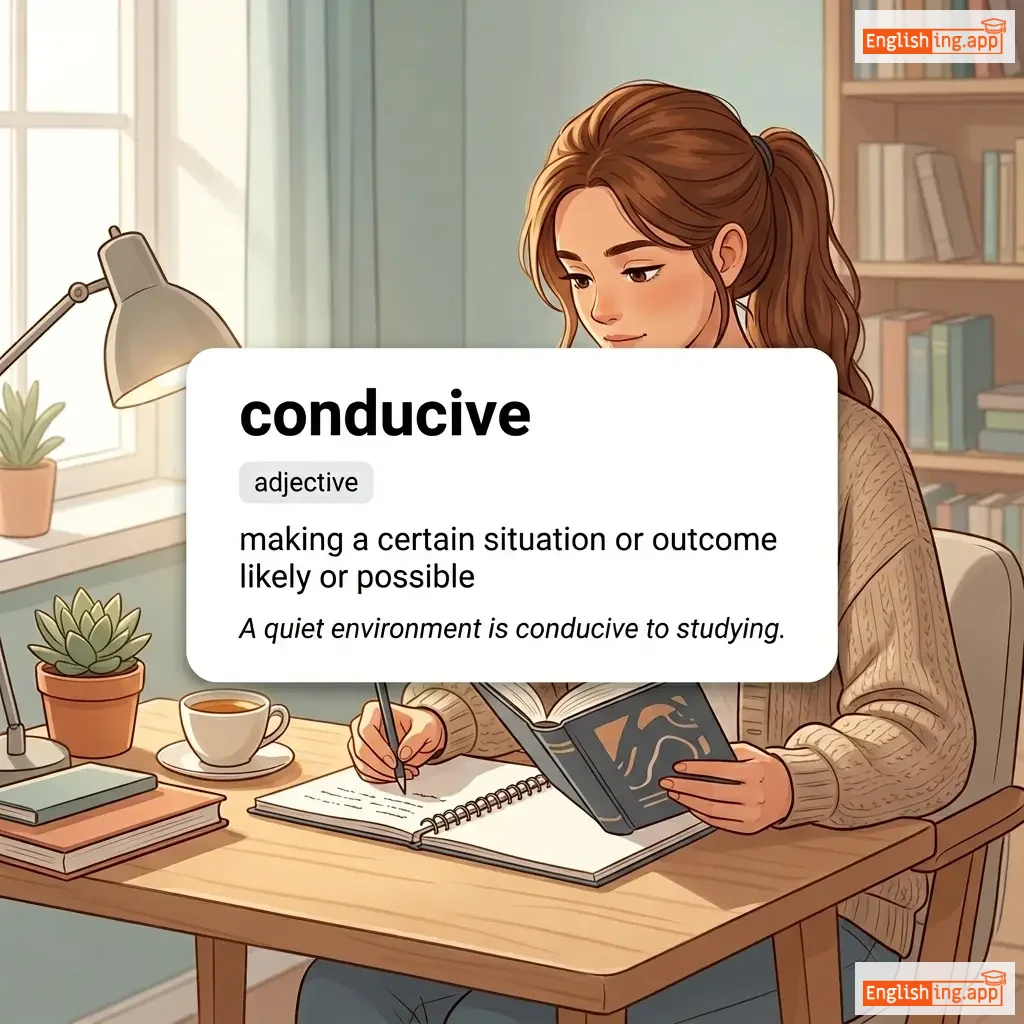
adjective
/kənˈdjuːsɪv/
способствующий (sposobstvuyushchiy)

making a certain situation or outcome likely or possible

"A quiet environment is conducive to studying."

"Тихая обстановка способствует учебе." (Tikhaya obstanovka sposobstvuyet uchebe.)
🧑‍🏫

conduct

noun, verb
/ˈkɒndʌkt/ (noun), /kənˈdʌkt/ (verb)

to organize or carry out; or a person's behavior

"The teacher conducted the exam fairly."

adjective
/kənˈdʌktəbl̩/
проводящий (provodyashchiy)

capable of being conducted, especially electricity or heat

"Copper is highly conductible to electricity."

"Медь отлично проводит электричество." (Med' otlichno provodit elektrichestvo.)
noun
/kənˈdʌktər/
дирижер / проводник (dirizher / provodnik)

a person who directs a performance or someone who collects fares on public transport; or a material that conducts electricity

"The conductor waved his baton to start the orchestra."

"Дирижер взмахнул своей палочкой, чтобы начать оркестр." (Dirizher vzmakhnul svoey palochkoy, chtoby nachat' orkestr.)
noun
/ˈkɒndjuɪt/ or /ˈkɑːnduɪt/
трубопровод / средство (truboprovod / sredstvo)

a channel or pipe for conveying water, electricity, or information

"The cable was placed inside a protective conduit."

"Кабель был помещен в защитный трубопровод." (Kabel' byl pomeshchen v zashchitnyy truboprovod.)
noun
/kənˈfɛkʃəneri/
кондитерские изделия (konditerskie izdeliya)

sweets, candies, and other food items made with sugar

"The shop sells a wide variety of confectionery."

"Магазин продает широкий ассортимент кондитерских изделий." (Magazin prodayot shirokiy assortimment konditerskikh izdeliy.)
noun
/kənˈfɛdərəsi/
конфедерация (konfederatsiya)

a group of states, people, or organizations united for a common purpose

"The southern states formed a confederacy during the civil war."

"Южные штаты образовали конфедерацию во время гражданской войны." (Yuzhnyye shtaty obrazovali konfederatsiyu vo vremya grazhdanskoy voyny.)
noun/adjective
/kənˈfɛdərət/
конфедерат (konfederat)

a person, group, or state joined in an alliance or union; relating to a confederacy

"The confederate soldiers fought bravely in the war."

"Конфедератские солдаты храбро сражались в войне." (Konfederatskie soldaty khrabro srazhalis' v voyne.)
verb
/kənˈfɜːr/

to discuss something important or to grant or bestow something

"The committee will confer to decide on the new policy."

noun
/ˌkɒnfəˈriː/
участник конференции (uchastnik konferentsii)

a person who takes part in a conference

"Each conferee received a badge at the registration desk."

"Каждый участник конференции получил значок на стойке регистрации." (Kazhdij uchastnik konferentsii poluchil znachok na stoyke registratsii.)
conference definition card — visual illustration of the meaning
noun
/ˈkɒnfərəns/
конференция (konferentsiya)

A formal meeting for discussion, especially about a particular subject.

"She is attending an international business conference."

"Она посещает международную бизнес-конференцию." (Ona poseschaet mezhdunarodnuyu biznes-konferentsiyu.)
confess definition card — visual illustration of the meaning
verb
/kənˈfɛs/
признавать (priznavat')

to admit that you have done something wrong or illegal

"He confessed that he had stolen the money."

"Он признался, что украл деньги." (On priznalsya, chto ukral den'gi.)
noun
/kənˈfɛʃən/
признание (priznanie)

a statement admitting that one is guilty of a crime or has done something wrong

"The suspect made a full confession to the police."

"Подозреваемый дал полное признание полиции." (Podozrevaemyy dal polnoe priznanie politsii.)
noun
/kənˈfɛsər/
исповедник (ispovednik)

A person who confesses sins or secrets, especially to a priest.

"The confessor listened patiently to the troubled man."

"Исповедник терпеливо выслушал обеспокоенного мужчину." (Ispovednik terpelivo vyslushal obespokoennogo muzhchinu.)