Словари

Словарь английского языка | Значения слов, определения и примеры

noun
/biːf/
говядина (govyadina)

the flesh of a cow, bull, or ox, used as food; also a complaint or dispute

"He ordered a plate of grilled beef for dinner."

"Он заказал тарелку жареной говядины на ужин." (On zakazal tarelku zharenoy govyadiny na uzhin.)
noun
/ˈbiːlaɪn/
прямая линия (pryamaya liniya)

a straight, direct route to a destination

"He made a beeline for the food table as soon as he entered the party."

"Он направился прямо к столу с едой, как только вошел на вечеринку." (On napravilsya pryamo k stolu s yedoy, kak tol'ko voshel na vecherinku.)
noun
/bɪər/
пиво (pivo)

An alcoholic drink made from yeast-fermented malt flavored with hops.

"He ordered a glass of cold beer at the bar."

"Он заказал стакан холодного пива в баре." (On zakazal stakan kholodnogo piva v bare.)
noun
/biːt/
свекла (svekla)

a plant with a round dark red root that is eaten as a vegetable

"Roasted beet with goat cheese makes a delicious salad."

"Запеченная свекла с козьим сыром делает вкусный салат." (Zapechennaya svekla s kozyim syrom delayet vkusnyy salat.)
noun
/ˈbiː.təl/
жук (zhuk)

a hard-bodied insect with wing covers

"The black beetle scurried across the garden path."

"Черный жук скакал по садовой дорожке." (Chernyy zhuk skakal po sadovoy dorozhke.)
verb
/bɪˈfɪt/
подходить (podkhodit)

to be suitable for; to be appropriate to

"Formal attire befits the seriousness of the occasion."

"Формальная одежда подходит к серьёзности события." (Formalnaya odezhda podkhodit k seryoznosti sobytiya)
adjective
/bɪˈfɪt.ɪŋ/
подобающий; подходящий; соответствующий для определенной ситуации или человека (bifiting)

appropriate; suitable; proper for a particular situation or person

"He wore formal attire befitting the important occasion."

"Он носил формальную одежду, подходящую для важного события." (On nosil formal'nuyu odezhdu, podkhodyashchuyu dlya vazhnogo sobytiya.)
verb
/bɪˈfɒɡ/
запутывать (zaputyvat)

to confuse or make unclear; to cover with fog or mist

"His mind was befogged by exhaustion."

"Его ум был сбит с толку усталостью." (Ego um byl sbit s tolkum ustalost'yu.)
adjective
/bɪˈfɒɡd/
замешанный, затуманенный (zameshanny, zatumanenny)

Confused or clouded in mind; made unclear like being surrounded by fog.

"His mind felt befogged after the long and exhausting meeting."

"Его разум чувствовал себя запутанным после долгой и утомительной встречи." (Ego razum chuvstvoval sebya zaputannym posle dolgoy i utomitel'noy vstrechi.)
verb
/bɪˈfuːl/
обманывать (obmanyvat)

to deceive or trick someone into believing something false; to make someone appear foolish

"The scammer tried to befool innocent people with fake promises."

"Мошенник пытался обмануть невинных людей ложными обещаниями." (Moshennik pytalsya obmanut nevinnikh lyudei lozhnymi obeshchaniyami)
preposition/adverb/conjunction
/bɪˈfɔːr/
до (do)

At an earlier time; in front of in order or place.

"She arrived before the meeting started."

"Она пришла до начала встречи." (Ona prishla do nachala vstrechi.)
adverb
/bɪˈfɔːr.hænd/
заранее; раньше; предварительно (zaranee; ran'she; predvaritel'no)

in advance; ahead of time; earlier

"We prepared everything beforehand."

"Мы все подготовили заранее." (my vse podgotovili zaranee)
verb
/bɪˈfaʊl/
загрязнять (zagryaznyat)

to make dirty or polluted; to disgrace or corrupt

"The factory waste befouled the river."

"Фабричные отходы загрязнили реку." (fabrichnye othody zagryaznili reku)
verb
/bɪˈfrɛnd/
подружиться (podruzhitsya)

to act as a friend to someone; to make friends with

"She befriended the new student at school."

"Она подружилась с новым учеником в школе." (Ona podruzhilas' s novym uchenikom v shkole.)
verb
/bɪˈfʌdəl/
запутывать (zaputivat)

to confuse someone completely; to make someone unable to think clearly

"The complex instructions befuddled the students."

"Сложные инструкции запутали студентов." (Slozhnyye instruktsii zaputali studentov.)
adjective
/bɪˈfʌdld/
смущённый (smushchyonny)

confused, unable to think clearly

"He looked befuddled after hearing the complex instructions."
"Он выглядел смущённым после того, как услышал сложные инструкции." (On vyhlyadel smushchyonnym posle togo, kak uslyshal slozhnye instruktsii.)
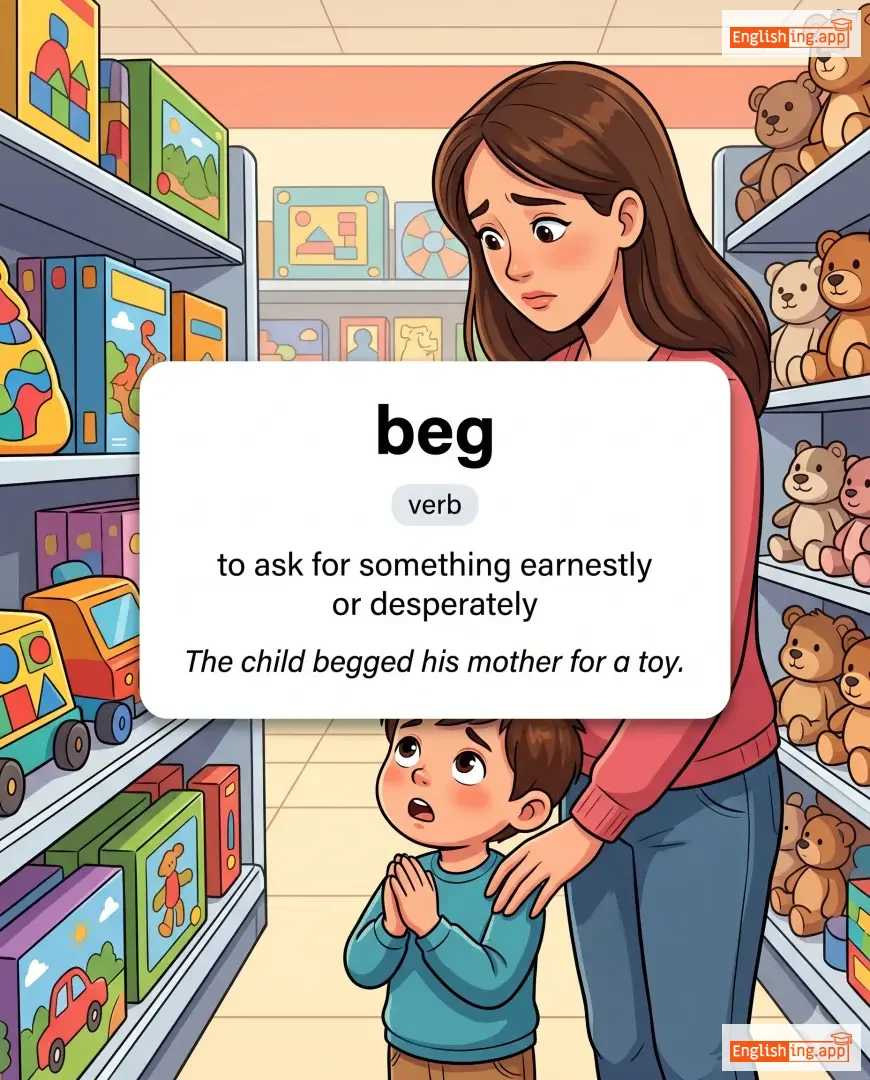
beg definition card — visual illustration of the meaning
verb
/bɛɡ/
умолять / просить (umolyat / prosit)

to ask for something earnestly or desperately

"The child begged his mother for a toy."

"Ребёнок просил у матери игрушку." (Rebyonok prosil u materi igrooshku.)
verb
/bɪˈɡɛt/
порождать / создавать (porozhdat' / sozdavat')

to bring about or give rise to; to father or produce

"Violence begets more violence."

"Насилие порождает больше насилия." (Nasiliye porozhdaet bol'she nasiliya.)
noun
/ˈbeɡər/
бомж (bomzh)

a person who lives by asking for money or food

"The beggar sat by the temple asking for alms."

"Бомж сидел у храма, прося подаяния." (Bomzh sidel u khrama, prosya podayaniya)
begin definition card — visual illustration of the meaning
verb
/bɪˈɡɪn/
начать (nachat)

To start something; to perform the first part of an action.

"They will begin the project tomorrow."

"Они начнут проект завтра." (Oni nachnut proyekt zavtra.)
noun
/bɪˈɡɪnɪŋ/
начало (nachalo)

The start or first part of something.

"The beginning of the story was very interesting."

"Начало истории было очень интересным." (Nachalo istorii bylo ochen' interesnym.)
verb
/bɪˈɡrʌdʒ/
негодовать по поводу того, что кто-то имеет что-то / давать что-то неохотно (negodovat' po povodu togo, chto kto-to imeet chto-to / davat' chto-to neokhotno)

to resent someone for having something; to give reluctantly

"She did not begrudge him his success."

"Она не позавидовала его успеху." (Ona ne pozavidovala ego uspekhu.)
verb
/bɪˈɡaɪl/
очаровывать / обманывать для привлечения (ocharovyvat' / obmanyvat' dlya privlecheniya)

to charm or enchant someone, often in a deceptive way

"She beguiled the audience with her storytelling."

"Она очаровала публику своими рассказами." (Ona ocharovala publiku svoimi rasskazami.)
noun
/bɪˈhɑːf/
от имени (ot imeni)

as a representative of someone; in the interest of someone

"She accepted the award on behalf of her team."
"Она приняла награду от имени своей команды." (Ona prinyala nagradu ot imeni svoey komandy.)
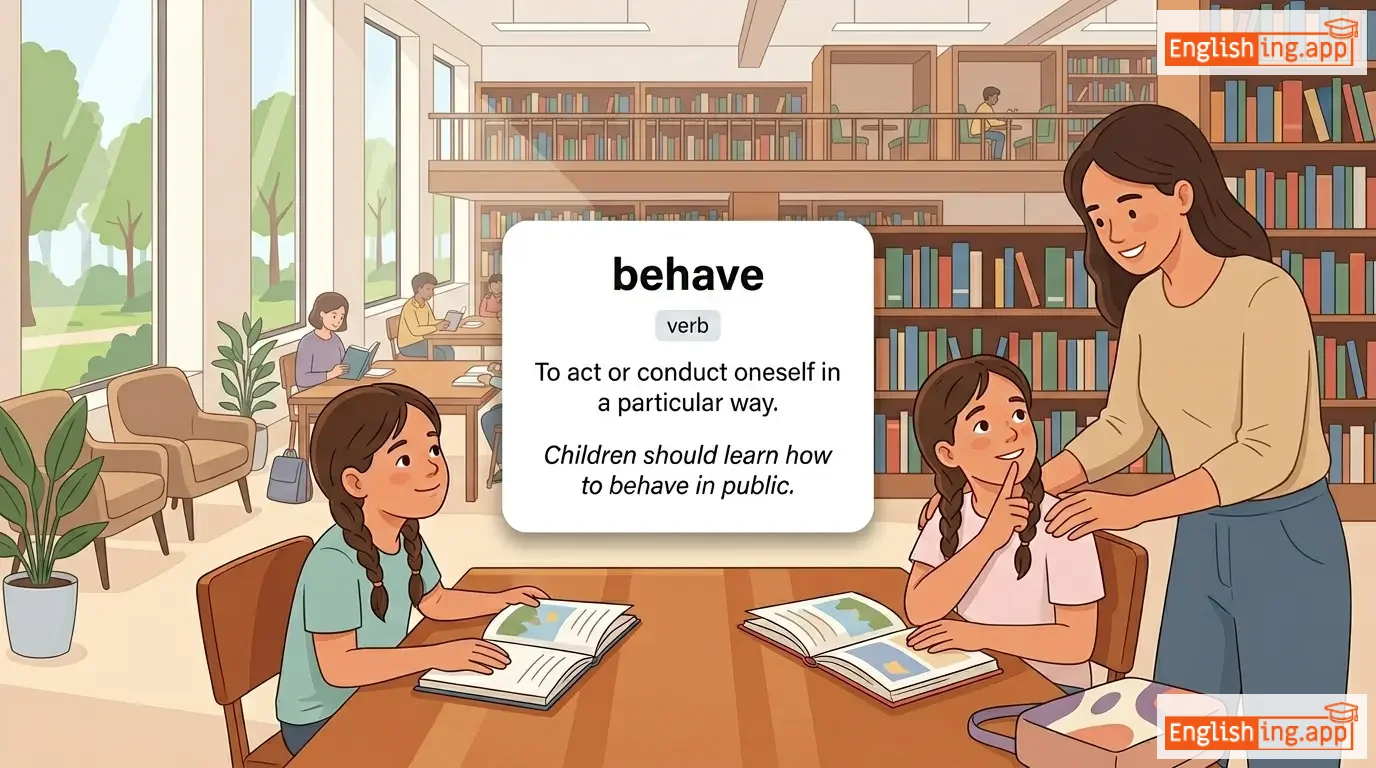
behave definition card — visual illustration of the meaning
verb
/bɪˈheɪv/
вести себя (vesti sebya)

To act or conduct oneself in a particular way.

"Children should learn how to behave in public."

"Дети должны учиться вести себя на публике." (Deti dolzhny uchitsya vesti sebya na publike.)
noun
/bɪˈheɪvjər/
поведение (povedenie)

The way in which one acts or conducts oneself, especially toward others.

"The teacher praised her good behavior in class."

"Учитель похвалил ее хорошее поведение в классе." (Uchitel' pokhvalil yejo khoroshee povedenie v klasse.)
adjective
/bɪˈheɪvjərəl/
поведенческий (povedenskij)

relating to the way a person or animal acts

"The psychologist studied the child's behavioral patterns."

"Психолог изучил поведенческие паттерны ребенка." (Psikholog izuchil povedenskie patterny rebenka.)
noun
/bɪˈheɪ.vjər/
поведение (povedenie)

the way a person or animal acts or conducts themselves

"His behaviour at the meeting was very professional."

"Его поведение на собрании было очень профессиональным." (Ego povedenie na sobranii bylo ochen' professional'nym.)
verb
/bɪˈhɛd/
обезглавить (obezglavit)

to cut off a person's or animal's head; to remove the leader or most important part

"The historical account describes how the traitor was beheaded as punishment."
"Исторический источник описывает, как предателя обезглавили в качестве наказания." (Istoricheskii istochnik opisyvaet, kak predatelya obezglavili v kachestve nakazaniya)
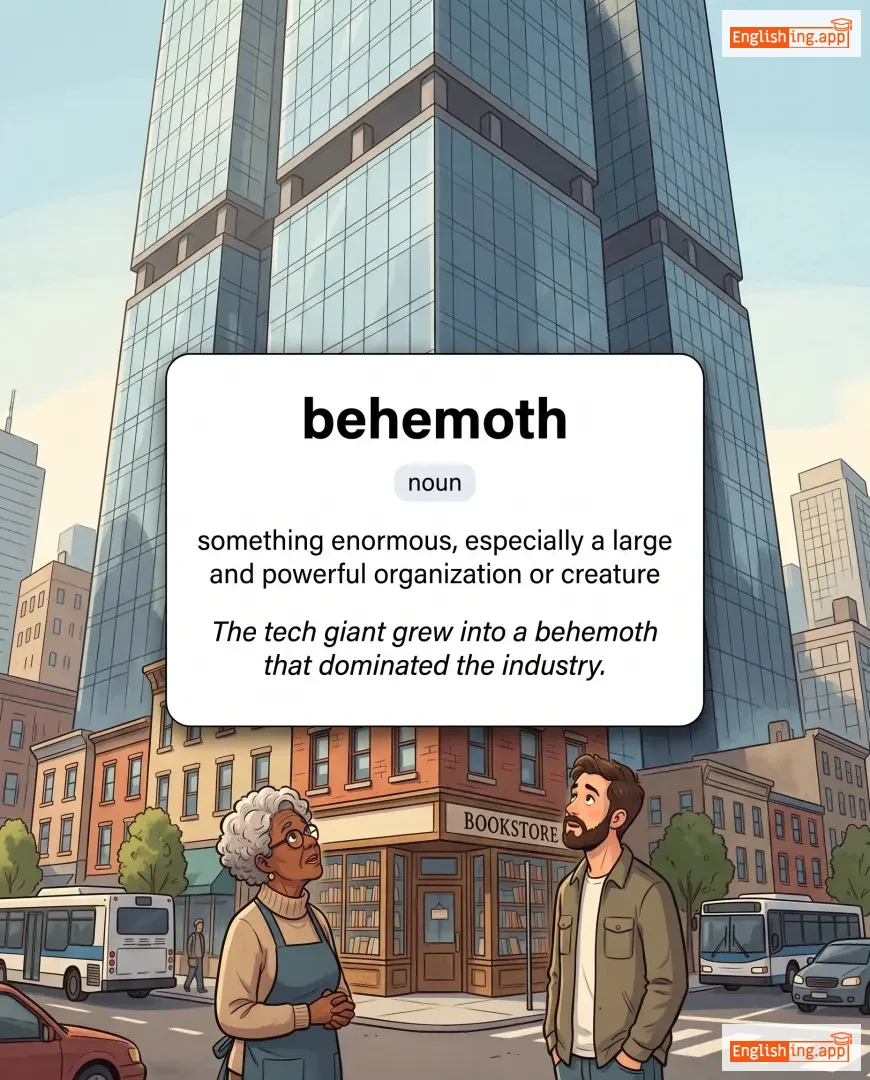
behemoth definition card — visual illustration of the meaning
noun
/bɪˈhiːməθ/
огромное существо или организация (ogromnoe suzhestvo ili organizatsiya)

something enormous, especially a large and powerful organization or creature

"The tech giant grew into a behemoth that dominated the industry."

"Технологический гигант стал бихемотом, который доминировал в отрасли." (Tekhnologicheskiy gigant stal bikhemotom, kotoryy dominiral v otrasli.)
preposition/adverb
/bɪˈhaɪnd/
за (za)

At or to the back of something; in a position further back.

"The cat is hiding behind the curtain."

"Кошка прячется за занавеской." (Koshka prachitsya za zanaveskoy.)
verb
/bɪˈhoʊld/
созерцать; лицезреть (sozertsat; litsezret)

to see or observe something, especially something remarkable or impressive

"She stood quietly to behold the sunrise over the hills."

"Она тихо стояла, чтобы созерцать восход солнца над холмами." (Ona tiho stoyala chtoby sozertsat voshod solntsa nad holmami)
adjective
/bɪˈhoʊldən/
обязанный или признателен (obyazannyy ili priznatelen)

indebted or obliged to someone for a service or help

"He felt beholden to his mentor for all the guidance."

"Он чувствовал благодарность своему наставнику за все наставления." (On chuvstvoval blagodarnost' svoemu nastavniku za vse nastavleniya.)
verb
/bɪˈhuːv/
быть необходимым или подходящим для того, чтобы кто-то что-то сделал (byt' neobhodimym ili podkhodyashchim dlya togo, chtoby kto-to chto-to sdelal)

to be necessary, proper, or appropriate for someone to do

"It would behoove you to study before the exam."

"Тебе следует изучить материал перед экзаменом." (Tebe sleduet izuchit' material pered ekzamenom.)
verb
/bɪˈhuːvz/
необходимо (neobkhodimo)

third person singular form of 'behoove'; means it is proper or necessary

"It behooves every citizen to follow the law."

"Каждому гражданину необходимо следовать закону." (Kazhdomu grazhdaninu neobkhodimo sleduyushchimi zakonu.)
verb
/bɪˈhəʊv/
быть уместным (byt' umestnym)

British spelling of 'behoove'; to be appropriate or necessary

"It would behove the company to listen to its customers."

"Компании следует выслушать своих клиентов." (Kompanii sleduyet vyslushat' svoikh klientov.)
noun/verb
/ˈbiːɪŋ/
suществovanie (sushchestvovaniye)

Existence; the state of living; a living creature.

"Kindness is part of being human."

"Dobrota - eto chast' byt' chelovekom." (Dobrota - eto chast' byt' chelovekom.)
🗣️

belabor

verb
/bɪˈleɪbər/

to argue or elaborate on a subject in excessive detail; to attack verbally or physically

"The professor belabored the point until the students grew restless."

verb
/bɪˈleɪbə/
излишне подчеркивать (izlishne podcherkivat)

to explain something repeatedly or with excessive detail; to criticize or attack verbally at length

"The teacher did not belabour the point once the students understood it."

"Учитель не стал излишне подчеркивать этот момент, когда ученики его поняли." (Uchitel ne stal izlishne podcherkivat etot moment kogda ucheniki ego ponyali)
verb
/bɪˈleɪt/
задерживать (zaderzhivat)

to delay or make late

"Heavy traffic belated our arrival at the party."

"Тяжелое движение задержало наше прибытие на вечеринку." (Tyazheloe dvizhene zaderzhalo nashe pribitie na vecherinku.)
adjective
/bɪˈleɪtɪd/
опоздавший (opozdavshiy)

coming or happening later than expected or usual

"She sent me a belated birthday card."

"Она прислала мне опоздавшую открытку с днём рождения." (Ona prislala mne opozdavshuyu otkrytku s dnyom rozhdeniya.)
verb
/bɪˈleɪ/
закрепить веревку (zakrepit' verevku)

to secure a rope by winding it around an object; to stop or cancel an order (nautical/military use)

"The climber asked his partner to belay the rope tightly."

"Скалолаз попросил своего партнера закрепить веревку крепко." (Skalolaz poprosil svoego partnera zakrepit' verevku krepko.)
😮‍💨

belch (белч)

verb; noun
/beltʃ/
рыгать (rygat)

to expel air noisily from the stomach through the mouth; to emit or pour out suddenly and forcefully

"After drinking the soda, he belched loudly."

"После того как он выпил газировку, он громко рыгнул." (posle togo kak on vypil gazirovku on gromko rygnul)
noun
/ˈbeɪleɪ/
рыба беле (ryba bele)

a type of freshwater fish found in South Asian rivers, known for its distinctive appearance

"The bele fish is commonly caught in the rivers of Bangladesh."

"Рыба беле обычно ловится в реках Бангладеш." (ryba bele obychno lovitsya v rekakh Bangladesha)
verb
/bɪˈliːɡər/
осаждать, беспокоить (osazhdat, bespokoit)

to cause difficulties, troubles, or harassment; to surround with military forces

"The company was beleaguered by constant complaints from its customers."

"Компания была осаждена постоянными жалобами от своих клиентов." (Kompaniya byla osazhdena postoyannymi zhalobami ot svoikh klientov.)
noun
/ˈbɛlfri/
колокольня (kolokolnya)

A bell tower, especially one attached to a church or building.

"The church belfry housed a large bronze bell."

"Колокольня церкви вмещала большой бронзовый колокол." (Kolokolnya tserkvi vmeshchala bol'shoy bronzovyy kolokol.)
belie definition card — visual illustration of the meaning
verb
/bɪˈlaɪ/
опровергать (oprovergat)

To give a false impression of something; to contradict.

"His calm face belied his inner anxiety."

"Его спокойное лицо опровергало его внутреннее беспокойство." (Ego spokoinoe litso oprovyrgalo ego vnutrennee bespokoystvo.)
noun
/bɪˈliːf/
вера (vera)

an acceptance that something exists or is true, especially without proof

"Her belief in kindness inspired many people."

"Ее вера в доброту вдохновила многих людей." (Eyo vera v dobrotu vdokhnovila mnogikh lyudey.)
adjective
/bɪˈliːvəbl̩/
правдоподобный (pravdopodobny)

Able to be trusted or accepted as true or reasonable.

"Her story was so detailed that it sounded believable."

"Её рассказ был настолько детализирован, что он казался правдоподобным." (Eyo rasskaz byl nastol'ko detalizirovan, chto on kazalsya pravdopodobnym.)
believe definition card — visual illustration of the meaning
verb
/bɪˈliːv/
верить (verit')

To accept something as true; to have faith or confidence in.

"She believes in the power of kindness."

"Она верит в силу доброты." (Ona verit v silu dobrot'y.)