Словари

Словарь английского языка | Значения слов, определения и примеры

noun
/ˈbuːt.leɪs/
шнурок для ботинок (shnurok dlya botinok)

a cord or string used to fasten a boot or shoe

"I need to tie my boot-lace before going for a walk."

"Мне нужно завязать шнурок на ботинке перед тем, как идти на прогулку." (Mne nuzhno zavyazat' shnurok na botinke pered tem, kak idti na progulku.)
noun
/buːθ/
кабина (kabina)

a small enclosed space or area used for a specific purpose, such as voting or selling.

"He went into the voting booth to cast his ballot."

"Он вошел в кабину для голосования, чтобы отдать свой голос." (On voshel v kabinu dlya golosovaniya, chtoby otdat' svoi golos.)
adjective
/ˈbuːtləs/
бесполезный (bepoleznyj)

Useless or futile; of no benefit.

"His bootless attempt to fix the machine only wasted time."

"Его бесполезная попытка починить машину только потратила время." (ego bespoleznaja popytka pochinit' mashinu tol'ko potratila vremja.)
bootstrap definition card — visual illustration of the meaning
verb/noun
ˈbuːt.stræp
запускать бизнес с использованием личных ресурсов без внешнего финансирования (zapuskayt' biznes s ispol'zovaniem lichnykh resursov bez vneshnego finansirovaniya)

To start and develop a business using personal resources without external funding.

"He bootstrapped his company with minimal resources."
"Он начал свой бизнес с минимальными ресурсами." (On nachal svoy biznes s minimal'nymi resursami.)
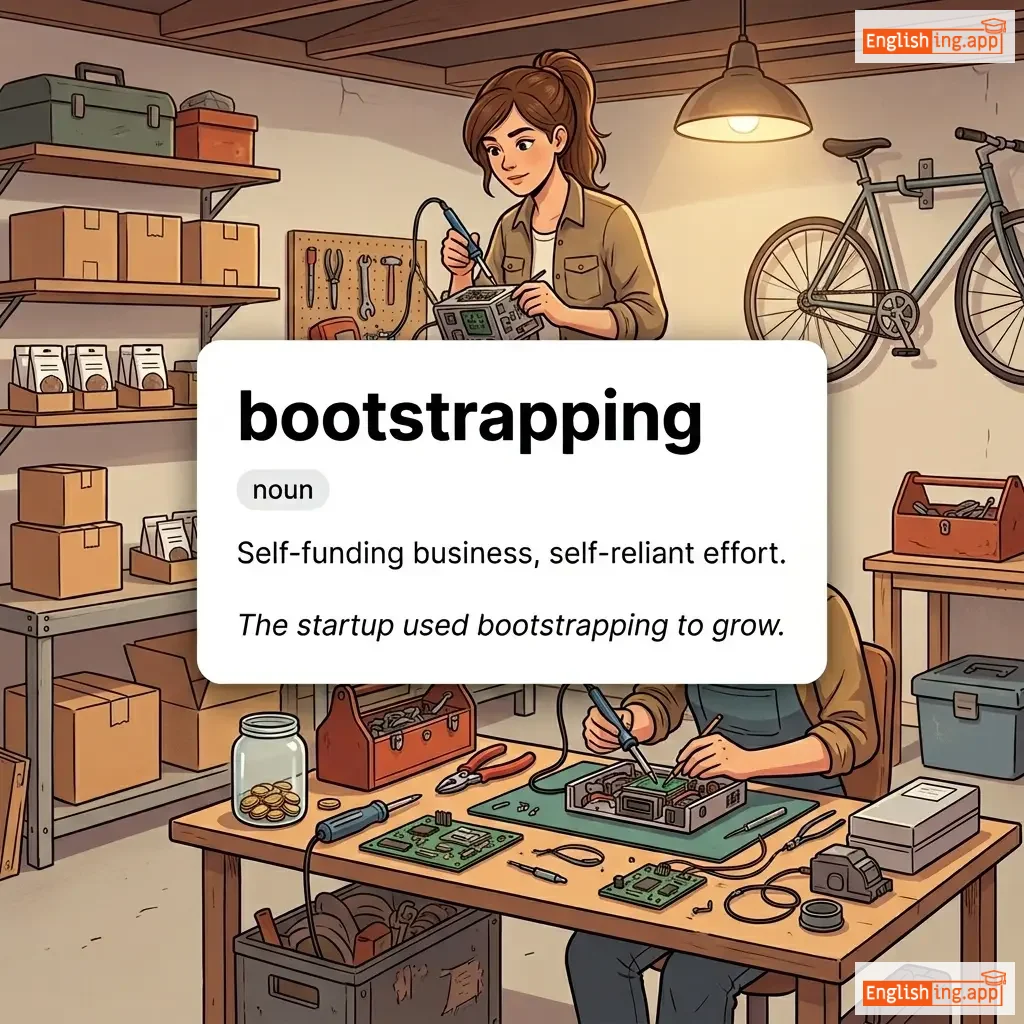
bootstrapping definition card — visual illustration of the meaning
noun
ˈbuːt.stræp.ɪŋ
самофинансирование бизнеса, самостоятельные усилия (samofinansirovanie biznesa, samostoyatelnye usiliya)

Self-funding business, self-reliant effort.

"The startup used bootstrapping to grow."

"Стартап использовал бутстрэппинг для роста." (Startap ispol'zoval bootstrapping dlya rosta.)
noun, verb
/buːz/
алкоголь (alkogol)

alcoholic drink, especially strong liquor; to drink alcohol, often excessively

"They bought some booze for the party."

"Они купили алкоголь для вечеринки." (oni kupili alkogol dlya vecherinki)
adjective
/ˈbuːzi/
пьяный (pyanyy)

containing or involving a lot of alcohol; slightly drunk from alcohol

"The party became boozy as the night went on."

"По мере того как ночь продолжалась, вечеринка стала пьяной." (po mere togo kak noch prodolzhalas vecherinka stala pyanoy)
noun, verb
/ˈbɔːrdər/
граница (granitsa)

A line separating two political or geographical areas.

"Bangladesh shares a long border with India."

"Бангладеш делит длинную границу с Индией." (Bangladesh delit dlinuyu granitsu s Indiyey.)
verb/noun
/bɔːr/
утомлять (utomlyat)

Verb: To make someone feel uninterested or tired; Noun: A dull or tiresome person.

"The lecture began to bore the students."

"Лекция начала утомлять студентов." (Lektsiya nachala utomlyat' studentov.)
adjective
/bɔːrd/
скучающий (skuchayushchiy)

feeling weary or uninterested because of lack of activity or excitement

"She felt bored during the long meeting."

"Она скучала во время долгой встречи." (ona skuchala vo vremya dolgoy vstrechi)
adjective
/ˈbɔːrɪŋ/
скучный (skuchny)

not interesting or exciting; dull.

"The lecture was so boring that several students fell asleep."

"Лекция была настолько скучной, что несколько студентов уснули." (Lektsiya byla nastol'ko skuchnoy, chto neskol'ko studentov usnuli.)
verb (past participle of 'bear'), adjective
/bɔːrn/
рождённый (rozhdyonnyy)

To come into life; brought into existence.

"He was born in Dhaka in 1995."

"Он родился в Дакке в 1995 году." (On rodilsya v Dakke v 1995 godu.)
noun
/ˈbʌrə, ˈbʊrə/
район (rajon)

A town, district, or administrative division, especially one with its own local government.

"Brooklyn is a borough of New York City."
"Бруклин — район Нью-Йорка." (Bruklin — raion N'yu-Yorka.)
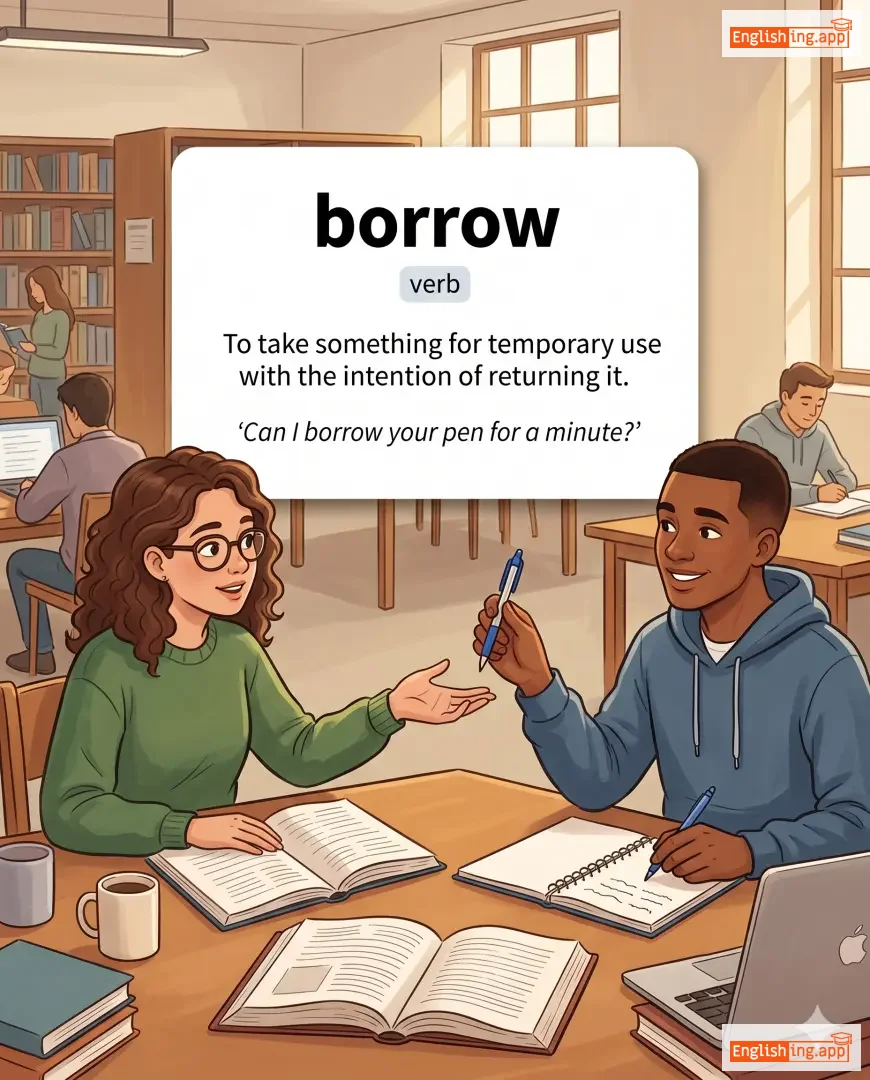
borrow definition card — visual illustration of the meaning
verb
/ˈbɑːroʊ/
одолжить (odolozhit')

To take something for temporary use with the intention of returning it.

"Can I borrow your pen for a minute?"

"Могу ли я одолжить твою ручку на минуту?" (Mogu li ya odolzhit' tvoyu ruchku na minutu?)
noun
/ˈbʊzəm/
грудь (grud')

the human chest, especially a woman’s breast; also used metaphorically to refer to closeness or intimacy

"She kept the secret close to her bosom."

"Она держала секрет близко к своей груди." (Ona derzhala sekret blizko k svoey grudi.)
👨‍💼

boss (бос)

noun
/bɒs/
босс (boss)

a person who is in charge of a worker, group, or organization

"Her boss gave her a new project to complete."

"Её босс дал ей новый проект для выполнения." (Yeyo boss dal yey novyy proyekt dlya vypolneniya.)
adjective
/bəˈtænɪkəl/
ботанический (botanicheskiy)

relating to plants or plant life

"She works at the botanical garden."

"Она работает в ботаническом саду." (Ona rabotayet v botanicheskom sadu.)
verb
/ˈbɒtənaɪz/
изучать растения (izuchat' rastenija)

to study plants in their natural environment

"They went to the forest to botanize during their vacation."

"Они пошли в лес, чтобы изучать растения во время отпуска." (Oni poshli v les, chtoby izuchat' rastenija vo vremja otpuska.)
noun
/ˈbɒtəni/
ботаника (botanika)

the scientific study of plants

"She is studying botany at the university."

"Она изучает ботанику в университете." (Ona izuchayet botaniku v universitete.)
verb
/bɒtʃ/
испортить (isportit)

to carry out a task badly or carelessly

"He completely botched the repair job."

"Он полностью испортил работу по ремонту." (On polnost'yu isportil rabotu po remonta.)
determiner/pronoun
/boʊθ/
оба (oba)

referring to two people or things together

"Both of the children were excited about the trip."

"Оба ребенка были взволнованы поездкой." (Oba rebenka byli vzvolnovany poyezdkoy.)
verb
/ˈbɒðər/
беспокоить (bespokoit)

to annoy, worry, or cause trouble to someone

"I don't want to bother you while you're working."

"Я не хочу беспокоить тебя, пока ты работаешь." (Ya ne khochu bespokoit tebya, poka ty rabotaesh.)
noun
/ˈbɒt.əl/
бутылка (butylka)

a container, typically made of glass or plastic, with a narrow neck used to hold liquids

"He poured water into the bottle."

"Он налил воду в бутылку." (On nalil vodu v butylku.)
adjective
/ˈbɒt.əl ɡriːn/
бутылочно-зеленый (butylochno-zelenyi)

a dark green color similar to that of a green glass bottle

"She wore a beautiful bottle-green dress to the evening party."
"Она надела красивое платье цвета бутылочно-зеленого на вечеринки." (Ona nadela krasivoe plat'ye tsveta butylotchno-zelenogo na vecherinki.)
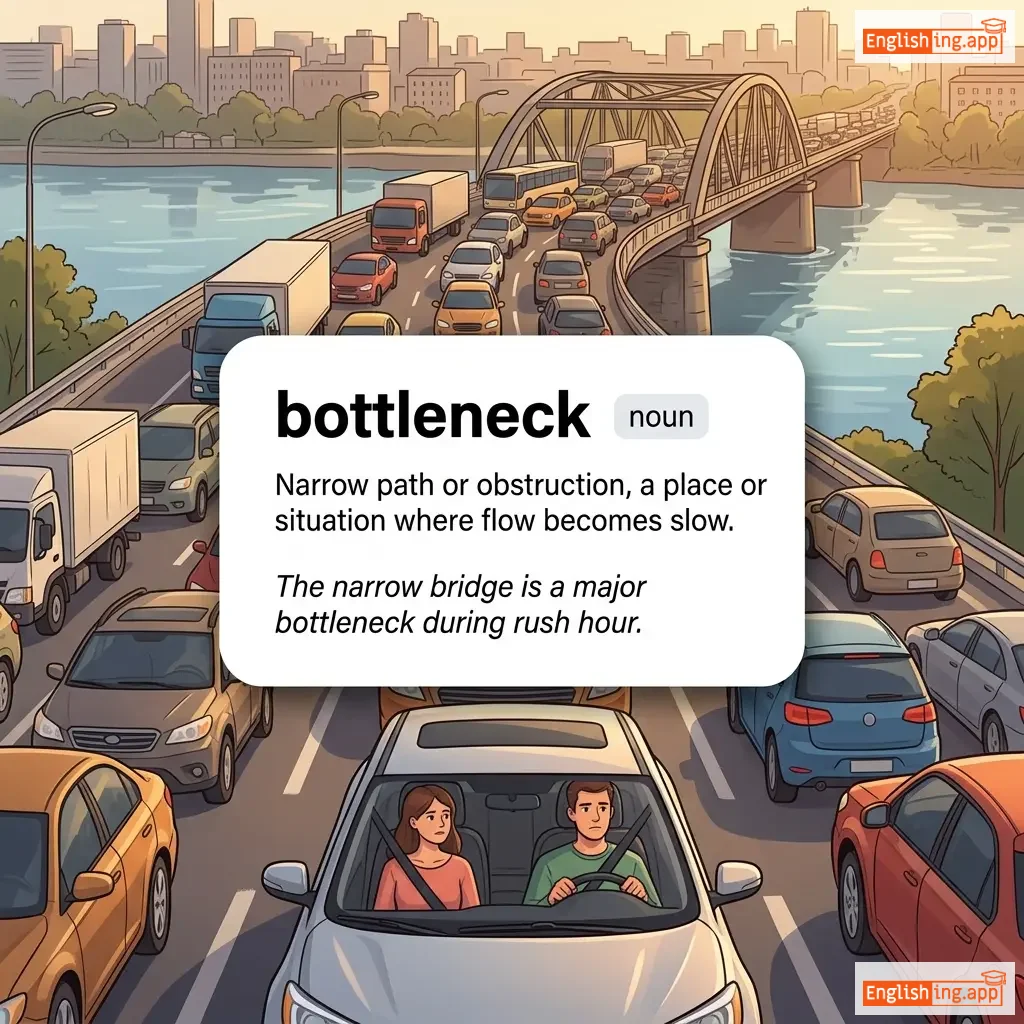
bottleneck definition card — visual illustration of the meaning
noun
/ˈbɒt.əl.nek/
узкое место (uzkoe mesto)

Narrow path or obstruction, a place or situation where flow becomes slow.

"The narrow bridge is a major bottleneck during rush hour."

"Узкий мост является основным узким местом в часы пик." (Uzkiy most yavyayetsya osnovnym uzkim mestom v chasy piki.)
noun, adjective
/ˈbɒtəm/
дно (dno)

The lowest part of something.

"The keys fell to the bottom of the bag."

"Ключи упали на дно сумки." (Klyuchi upali na dno sumki.)
noun
/ˌbuː.ɡənˈvɪl.i.ə/
бугамвиллия (bugamvilliya)

a tropical climbing plant with colorful bracts surrounding small flowers

"The bougainvillea climbing over the garden wall creates a beautiful purple display."

"Бугамвиллия, взбирающаяся по садовой стене, создает красивое фиолетовое шоу." (Bugamvilliya, vzbirayushchayasya po sadovoy stene, sozdayot krasivoe fioletovoe shou.)
noun
/ˈbuː.jɒ̃/
бульон (bul'on)

A clear, seasoned broth made by simmering meat, fish, or vegetables in water.

"She added vegetables to the bouillon for extra flavor."

"Она добавила овощи в бульон для усиления вкуса." (Ona dobavila ovoshchi v bul'on dlya usileniya vkusa.)
verb
/baʊns/
отскакивать (otskakivat)

to spring back after hitting something; to rebound.

"The ball bounced off the wall and hit the window."

"Мяч отскочил от стены и ударил окно." (Myach otskochiv ot steny i udaril okno.)
verb, noun, adjective
/baʊnd/
ограниченный / привязанный (ogranichennyi / privyazannyi)

To move with large strides or jumps; also refers to being tied, limited, or certain.

"The dog bounded across the field with joy."
"Собака прыгала по полю с радостью." (Sobaka prygala po polyu s radost'yu.)
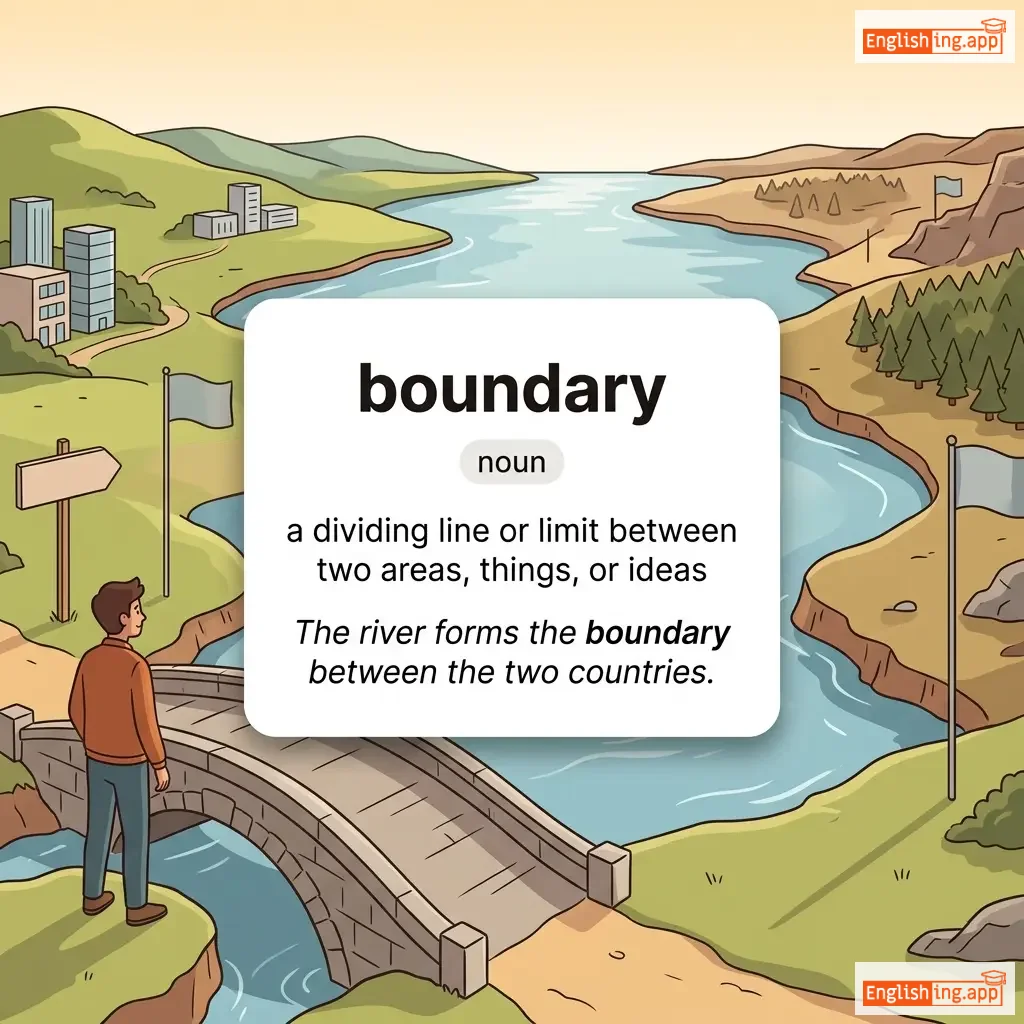
boundary definition card — visual illustration of the meaning
noun
/ˈbaʊn.dri/
граница (granitsa)

a dividing line or limit between two areas, things, or ideas

"The river forms the boundary between the two countries."

"Река образует границу между двумя странами." (Reka obrazuet granitsu mezhdu dvumya stranami.)
adjective
/ˈbaʊn.tɪ.fəl/
обильный / щедрый (obíl'nyy / shchedryy)

Large in quantity; abundant; generous in giving.

"The farmer was grateful for the bountiful harvest."

"Фермер был благодарен за обильный урожай." (Fermyer byl blagodaren za obil'nyy urozhay.)
noun
/buˈkeɪ/
букет цветов (buket tsvetov)

A bunch of flowers arranged together, often given as a gift or decoration.

"He gave her a bouquet of roses on her birthday."

"Он подарил ей букет роз на день рождения." (On podaril yey buket roz na den' rozhdeniya.)
adjective, noun
/ˈbʊrʒ.wɑː/
буржуа (burzhua)

Relating to the middle class, often with materialistic values or conventional attitudes.

"The novel criticizes the bourgeois lifestyle of the city dwellers."

"Роман критикует буржуазный образ жизни городских жителей." (Roman kritikuet burzhuzhnyy obraz zhizni gorodskikh zhiteley.)
noun
/baʊt/
краткий период интенсивной активности или соревнование, особенно в спорте или при болезни (kratkiy period intensivnoy aktivnosty ili sorevnovanie, osobenno v sporte ili pri bolezni)

a short period of intense activity or a contest, especially in sports or illness

"He had a severe bout of flu last winter."

"У него была сильная простуда прошлой зимой." (U nego byla sil'naya prostuda proshloy zimoy.)
noun
/buːˈtiːk/
модный магазин (modny magazin)

a small shop that sells fashionable clothes or accessories

"She bought a beautiful dress from a boutique downtown."
"Она купила красивое платье в модном магазине в центре города." (Ona kupila krasivoye plat'ye v modnom magazine v tsentre goroda.)
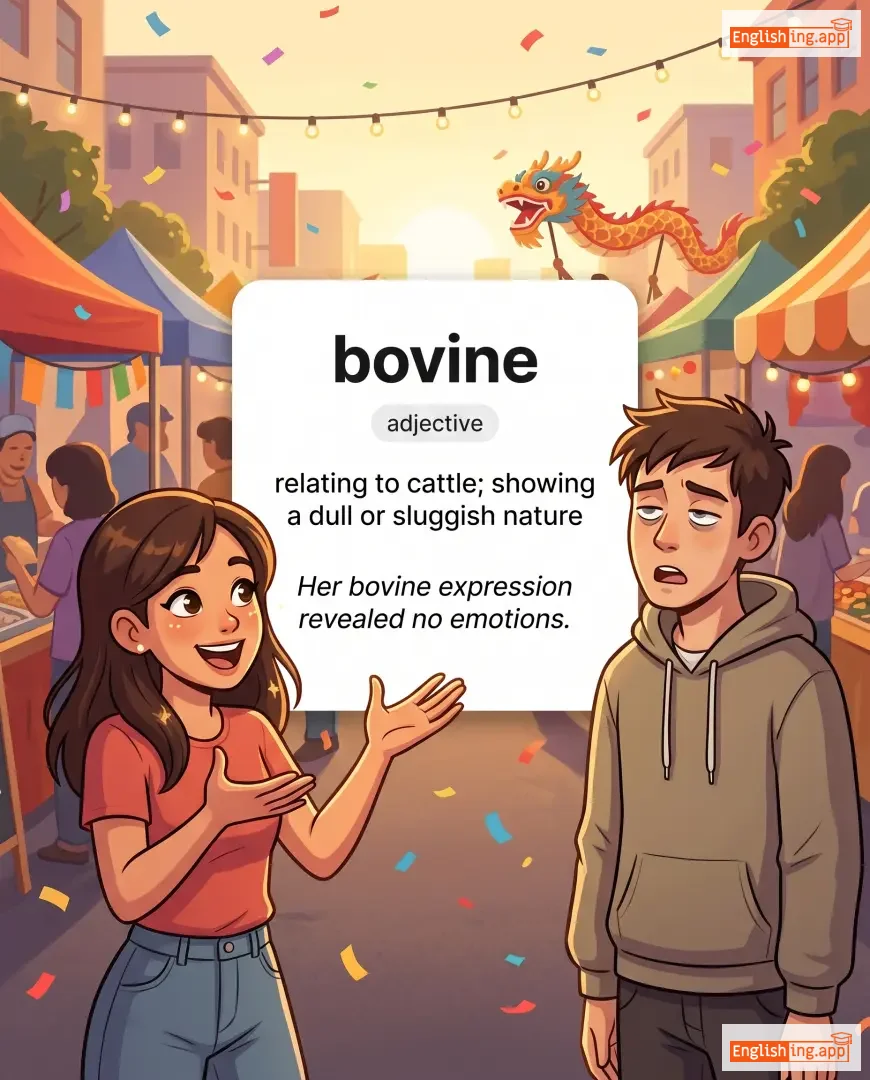
bovine definition card — visual illustration of the meaning
adjective
/ˈboʊvaɪn/
относящийся к скоту (otnosyashchijsya k skotu)

relating to cattle; showing a dull or sluggish nature

"Her bovine expression revealed no emotions."

"Её бовинное выражение не выразило никаких эмоций." (Eyo bovinnoe vyrazhenie ne vyrazilо nikakikh emotsij.)
verb
/baʊ/ (verb), /boʊ/ (noun)
поклониться (poklonit'sya)

to bend the upper part of the body forward as a sign of respect or greeting.

"The performer bowed deeply after the show."

"Исполнитель поклонился глубоко после шоу." (Ispolnitel' poklonilsya gluboko posle shou.)
verb
/ˈbaʊdləˌraɪz/
удаление оскорбительных частей (udalenie oskorbitel'nykh chastey)

to remove or modify parts of a text considered offensive or inappropriate

"The editor bowdlerized the novel to make it suitable for children."

"Редактор отредактировал роман, чтобы он стал подходящим для детей." (Redaktor otredaktiroval roman, chtoby on stal podkhodyashchim dlya detey.)
noun
/boʊl/
миска (miska)

a round, deep dish used for holding food or liquids

"She poured the soup into a large bowl."

"Она наливала суп в большую миску." (Ona nalivala sup v bol'shuyu miskу.)
noun
/ˈboʊlər/
боулер (bouler)

a person who delivers the ball in cricket; also a type of hard felt hat with a rounded crown

"The bowler took three wickets in the first over."

"Боулер взял три вики в первом овере." (Bouler vzyal tri viki v pervom overe.)
noun
/bɑːks/
коробка (korobka)

a container with flat sides, typically square or rectangular, used for storing things

"He packed his clothes in a cardboard box."

"Он упаковал свою одежду в картонную коробку." (On upakovav svoyu odezhdu v kartonnuyu korobku.)
noun
/ˈbɒksər/
боксёр; боксёрские трусы; порода собаки (boksyor; boksyorskie trusy; poroda sobaki)

a person who fights in the sport of boxing; a type of short loose-fitting underwear; a breed of medium-to-large dog

"The boxer trained hard every morning before the championship match."

"Боксёр усердно тренировался каждое утро перед чемпионатом." (Boksyor userdno trenirovalsya kazhdoe utro pered chempionatom)
noun; gerund
/ˈbɒksɪŋ/
бокс (boks)

the sport of fighting with fists using padded gloves; the act of putting something into a box

"He has been training hard for a professional boxing match."

"Он усердно тренируется к боксерскому поединку." (on userdno treniruetsya k boksyorskomu poedinku)
noun
/bɔɪ/
мальчик (malchik)

a male child or young male person

"The boy ran across the playground."
"Мальчик бегал по игровой площадке." (Malchik begal po igrovoy ploshchadke.)
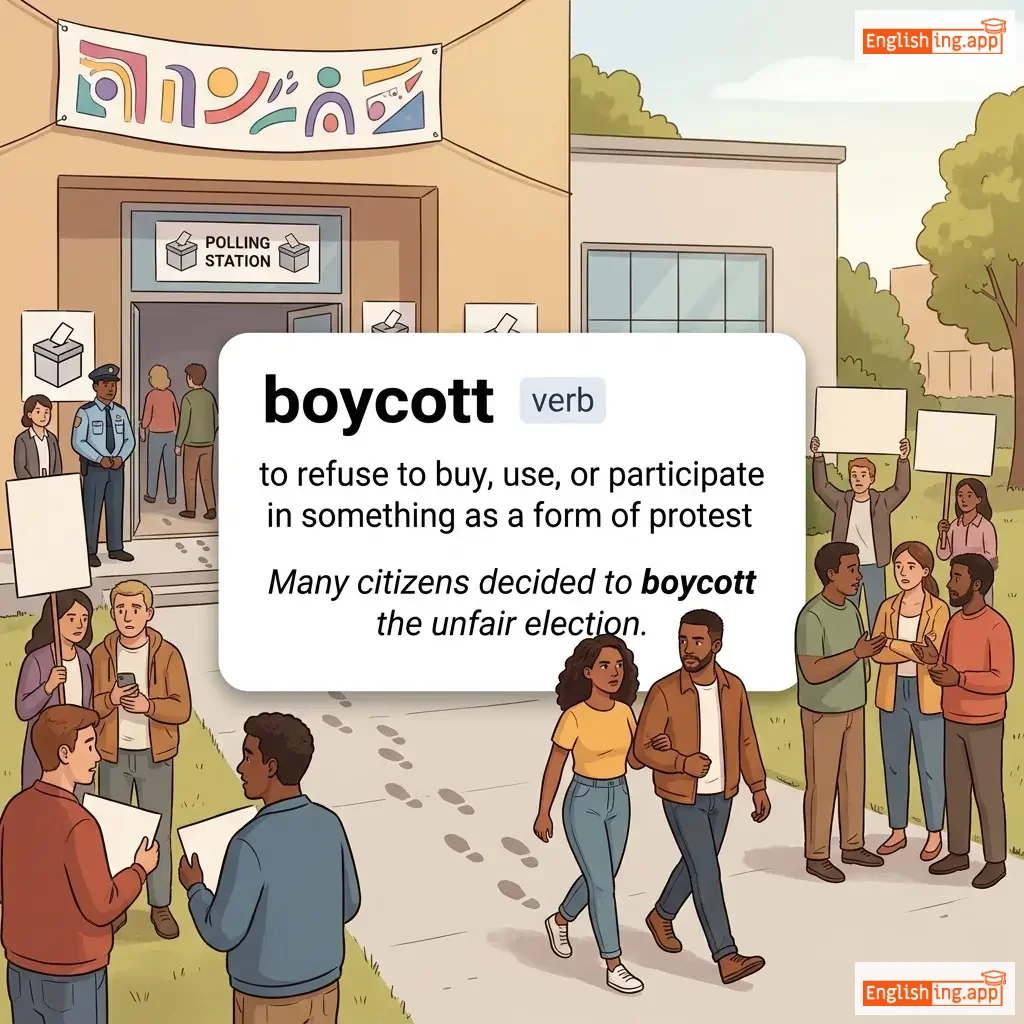
boycott definition card — visual illustration of the meaning
verb
/ˈbɔɪkɒt/
бойкотировать (boikotirovat)

to refuse to buy, use, or participate in something as a form of protest

"Many citizens decided to boycott the unfair election."

"Многие граждане решили бойкотировать несправедливые выборы." (Mnogie grazhdane reshilí boykotirovat' nespravedlivye vyibory.)
👨‍❤️‍👩

boyfriend (бойфренд)

noun
/ˈbɔɪˌfrɛnd/
бойфренд (bojfrend)

a man or boy that someone is having a romantic or close relationship with

"She introduced her boyfriend to her parents."

"Она познакомила своего бойфренда со своими родителями." (Ona poznakomila svoego bojfrenda so svoimi roditelyami.)
noun
/brɑː/
бюстгальтер (byustgalter)

a woman's undergarment worn to support and cover the breasts

"She bought a comfortable bra for everyday wear."

"Она купила удобный бюстгальтер для повседневной носки." (ona kupila udobnyi byustgalter dlya povsednevnoi noski)
noun; verb
/breɪs/
скоба; готовиться (skoba; gotovitsya)

a device that supports or strengthens something; to prepare mentally or physically for something difficult

"She braced herself for the strong wind."

"Она подготовилась к сильному ветру." (ona podgotovilas k silnomu vetru)
noun
/ˈbreɪs.lət/
браслет (braslet)

an ornamental band worn around the wrist

"She received a gold bracelet as a birthday gift."

"Она получила золотой браслет в подарок на день рождения." (Ona poluchila zolotoy braslet v podarok na den' rozhdeniya.)