Словари

Словарь английского языка | Значения слов, определения и примеры

noun
/əˌɡlɒməˈreɪʃən/
агломерация (aglomieratsiya)

A mass or collection of things, sometimes clustered together.

"The city is an agglomeration of diverse cultures and communities."
"Город является агломерацией различных культур и сообществ." (Gorod yavylyayetsya aglomeratsiyey razlichnykh kul'tur i soobshchestv.)
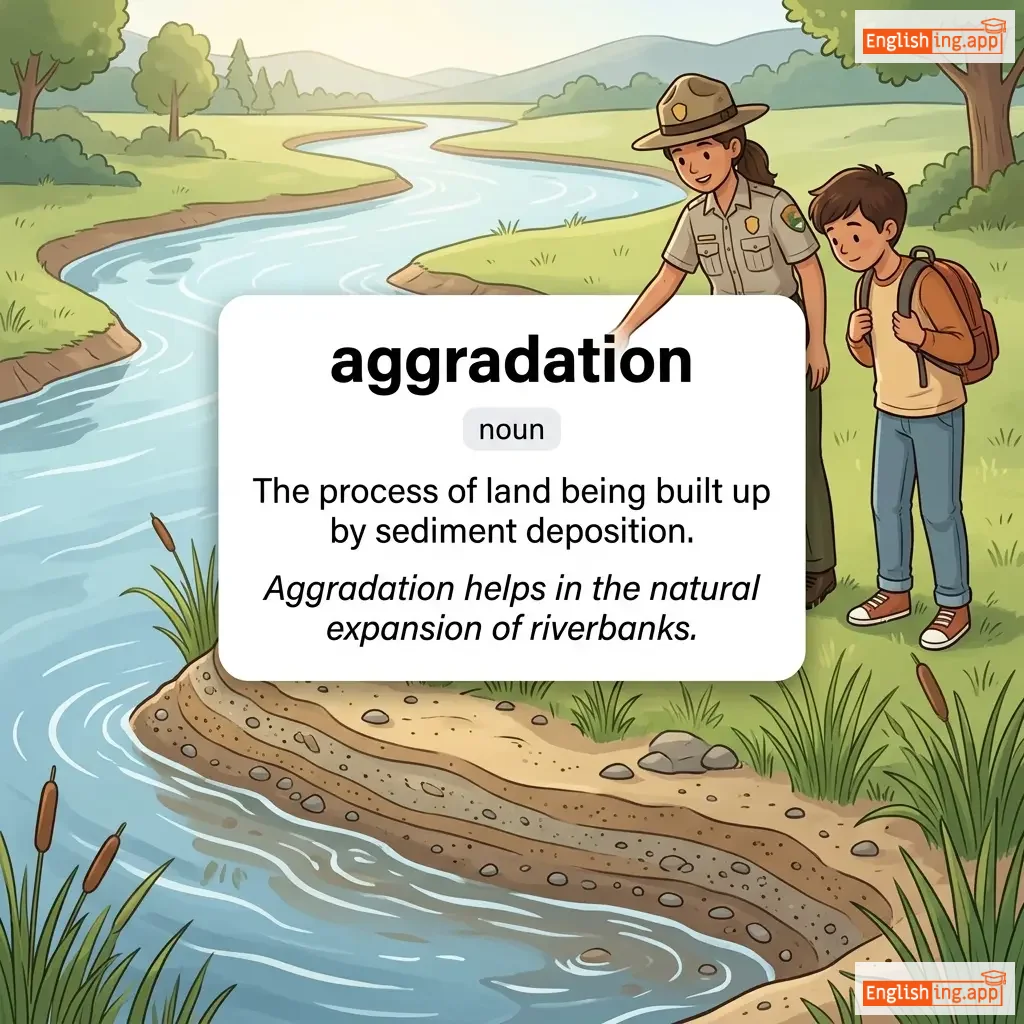
aggradation definition card — visual illustration of the meaning
noun
/ˌæɡ.rəˈdeɪ.ʃən/
процесс формирования земли через осаждение осадков (protsess formirovaniya zemli cherez osazhdenie osadkov)

The process of land being built up by sediment deposition.

"Aggradation helps in the natural expansion of riverbanks."
"Аградация помогает в естественном расширении берегов рек." (Agradasiya pomogaet v yestestvennom rasshirenii beregov rek)
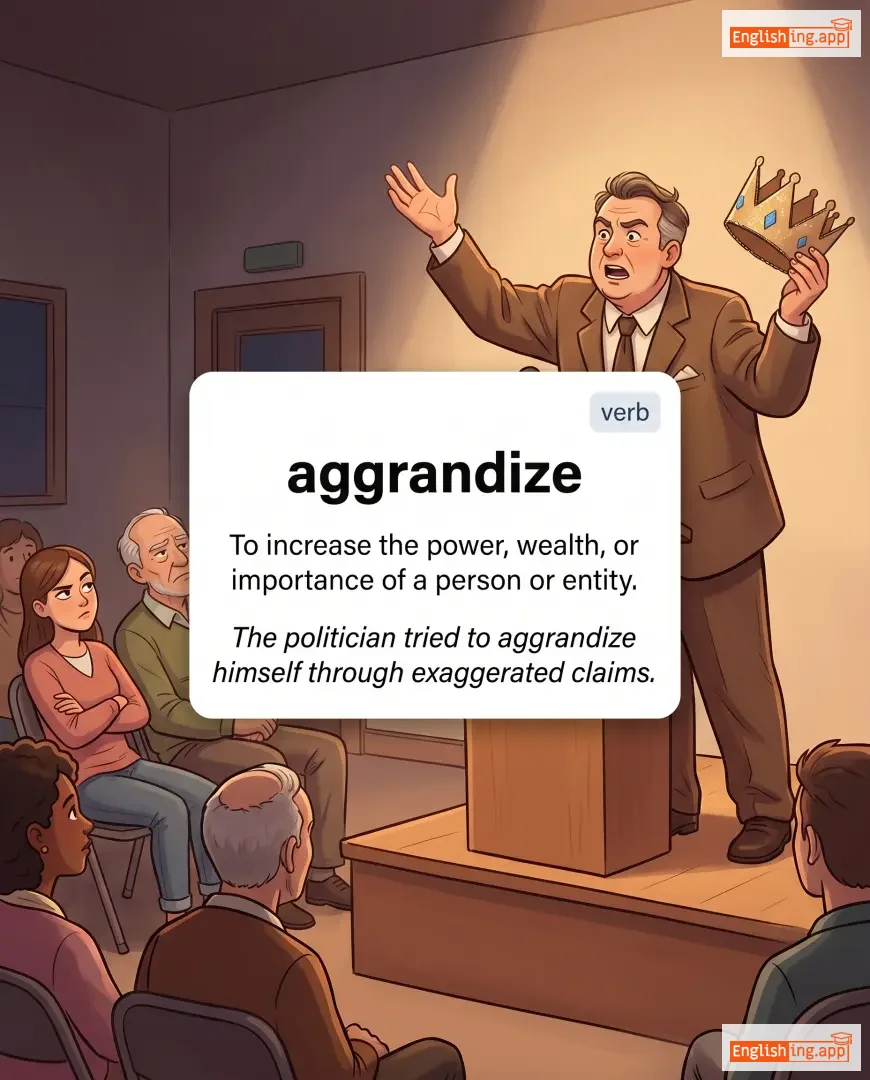
aggrandize definition card — visual illustration of the meaning
verb
/əˈɡræn.daɪz/
увеличить (uvelichit)

To increase the power, wealth, or importance of a person or entity.

"The politician tried to aggrandize himself through exaggerated claims."

"Политик пытался увеличить свою власть через преувеличенные утверждения." (Politik pytalsya uvelichit' svoyu vlast' cherez preuvelichennye utverzhdeniya.)
verb
/ˈæɡ.rə.veɪt/
усугублять (usugublyat)

To make a situation worse or more serious.

"Scratching the rash will only aggravate the condition."

"Царапание сыпи только ухудшит состояние." (Tsohkanie sypi tolko usugublyat sostoyanie.)
noun
/ˌæɡ.rəˈveɪ.ʃən/
ухудшение, обострение (agravatsiya)

The act of making a situation worse or the state of being worsened.

"The delay caused great aggravation for the passengers."

"Задержка вызвала большое раздражение у пассажиров." (Zaderzhka vyzvala bol'shoye razdrazheniye u passazhirov.)
aggregate definition card — visual illustration of the meaning
noun, verb, adjective
/ˈæɡ.rɪ.ɡət/ (noun/adjective), /ˈæɡ.rɪ.ɡeɪt/ (verb)
агрегат, совокупность (agregat, sovokupnost')

A whole formed by combining several elements; to combine into a total.

"The data was aggregated to provide a clearer picture of the market."

"Данные были агрегированы для более ясного представления о рынке." (Danniye byli agregirovany dlya boleye yasnogo predstavleniya o rynke.)
verb
/əˈɡrɛs/
агрессировать (agressirovat)

to initiate an attack or show hostile behavior

"The army chose not to aggress without provocation."

"Армия решила не агрессировать без провокации." (Armiya reshilа ne aggressirovat bez provokatsii.)
noun
/əˈɡrɛʃən/
агрессия (agressiya)

hostile or violent behavior towards others

"His sudden aggression surprised everyone in the meeting."

"Его внезапная агрессия удивила всех на встрече." (Ego vnezapnaya agressiya udivila vsekh na vstreche.)
adjective
/əˈɡrɛsɪv/
агрессивный (agressivny)

ready or likely to attack or confront; forceful

"The salesman used an aggressive strategy to close the deal."

"Продавец использовал агрессивную стратегию, чтобы завершить сделку." (Prodavets ispol'zoval agressivnuyu strategiyu, chtoby zavershit' sdelku.)
verb
/əˈɡriːv/
оскорбить (oskorbit')

to cause distress or make someone feel resentful

"She felt aggrieved by the unfair decision."

"Она почувствовала себя оскорбленной несправедливым решением." (Ona pochuvstvovala sebya oskorblennoy nespravedlivym resheniem.)
adjective
/əˈɡæst/
ошеломленный (oshelomlennyy)

filled with shock or horror

"The audience was aghast at the tragic scene."

"Зрители были ошеломлены трагической сценой." (Zriteli byli oshelomleny tragediey sczenoy.)
adjective
/ˈædʒ.aɪl/
быстрый и гибкий (bystryy i gibkiy)

able to move quickly and easily; quick and adaptable in thinking or action

"The startup team was agile in responding to market changes."
"Стартап-команда была гибкой в ответе на изменения на рынке." (Startup-komanda byla gibkoy v otvete na izmeneniya na rynke.)
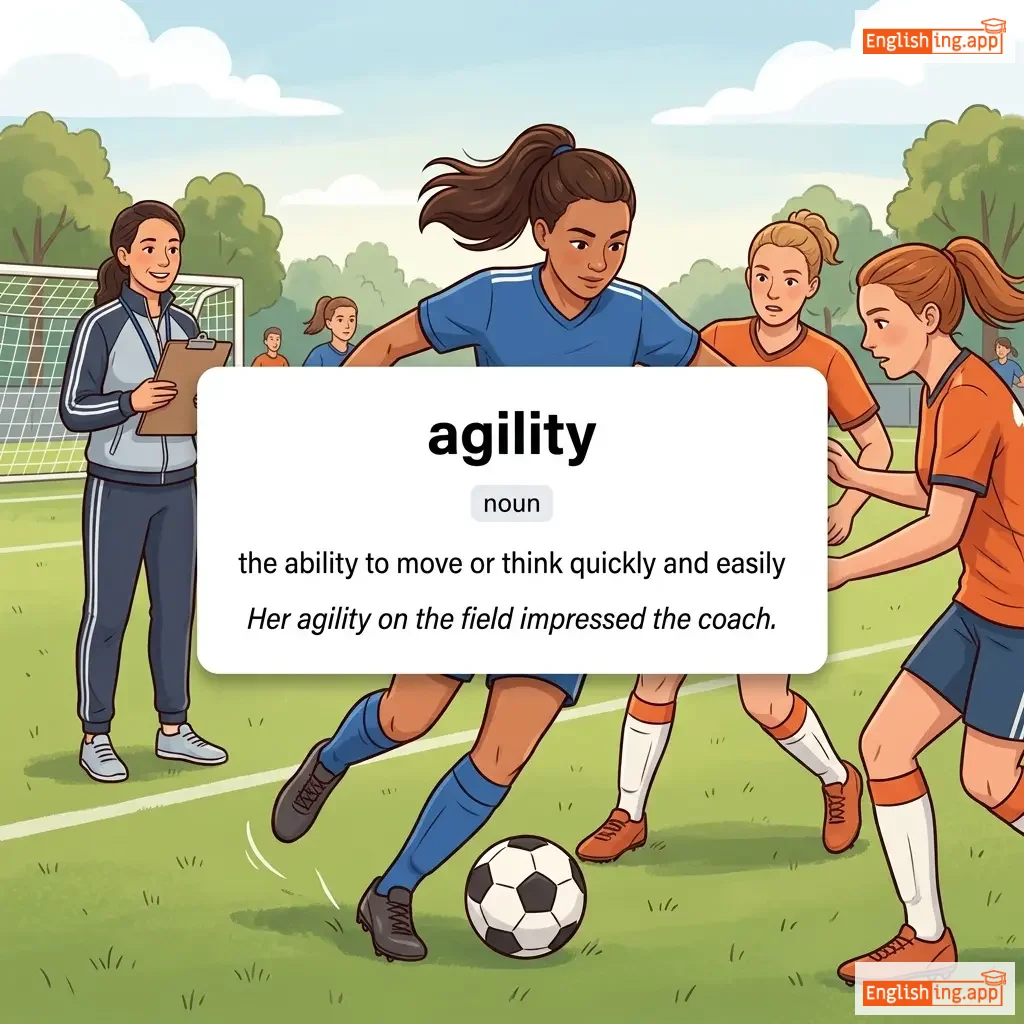
agility definition card — visual illustration of the meaning
noun
/əˈdʒɪl.ə.ti/
гибкость (gibkost)

the ability to move or think quickly and easily

"Her agility on the field impressed the coach."

"Её гибкость на поле впечатлила тренера." (Eyo gibkost' na pole vpechatlila trenera.)
verb
/ˈædʒ.ɪ.teɪt/
агитировать, возбуждать (agitirovat, vozhuzhdat)

to stir up feelings or disturb; to campaign for change

"The protesters agitated for better working conditions."

"Протестующие агитировали за лучшие условия труда." (Protestuyushchie agitirovali za luchshie usloviya truda.)
adjective
/ˈædʒɪteɪtɪd/
взволнованный; тревожный; беспокойный; возбуждённый в отрицательном смысле (vzvolnovannyy; trevozhnyy; bespokoynyy; vozbuzhdyonnnyy v otritsatelnom smysle)

disturbed; anxious; restless; excited in a negative way

"He became agitated when he heard the bad news."

"Он стал взволнованным, когда услышал плохие новости." (On stal vzvolnovannym, kogda uslyshal plokhie novosti.)
noun
/ˌædʒ.ɪˈteɪ.ʃən/
агитация (agitaciya)

a state of nervousness, excitement, or unrest; or action of stirring up public concern

"There was visible agitation among the crowd."

"В толпе было заметное возбуждение." (V tolpe bylo zameetnoe vozbuzhdenie.)
noun
/æɡˈnɒs.tɪk/
агностик (agnostik)

a person who believes that nothing is known or can be known about the existence of God; uncertain in belief

"He described himself as an agnostic rather than an atheist."

"Он описал себя как агностика, а не как атеиста." (On opisal sebya kak agnostika, a ne kak ateista.)
adverb
/əˈɡoʊ/
тому назад (tomu nazad)

Used to indicate how long before the present something happened.

"I met her two years ago."

"Я встретил её два года назад." (Ya vstretил yeyo dva goda nazad.)
adjective
/əˈɡɒɡ/
взволнованный (agog)

Highly excited by eagerness, curiosity, or anticipation.

"The children were agog with excitement as they waited for the magician to appear."

"Дети были взволнованы предвкушением, когда ждали появления фокусника." (Deti byli vzvolnovany predvkuscheniem kogda zhdali poyavleniya fokusnika)
verb
/ˈæɡənaɪz/
мучиться (muchitsya)

To suffer extreme physical or mental pain; to spend time worrying.

"She agonized for days over whether she had made the right decision."

"Она мучилась целыми днями, думая, правильно ли она приняла решение." (Ona muchilas' tselymi dnyami, dumaya, pravil'no li ona prinyala reshenie.)
noun
/ˈæɡ.ə.ni/
крайняя физическая или умственная боль; интенсивная боль (kraineya fizicheskaya ili umstvennaya bol; intensivnaya bol)

extreme physical or mental suffering; intense pain

"He was in agony after the accident."

"Он был в агонии после аварии." (on byl v agonie posle avarii.)
adjective
/əˈɡrɛəriən/
сельскохозяйственный (selskokhozyaystvenny)

Related to farming, agriculture, or rural land.

"The country’s economy is still largely agrarian."
"Экономика страны всё ещё в значительной степени аграрная." (Ekonomika strany vsyo eshchyo v znachitel'noy stepeni agrarnaya.)
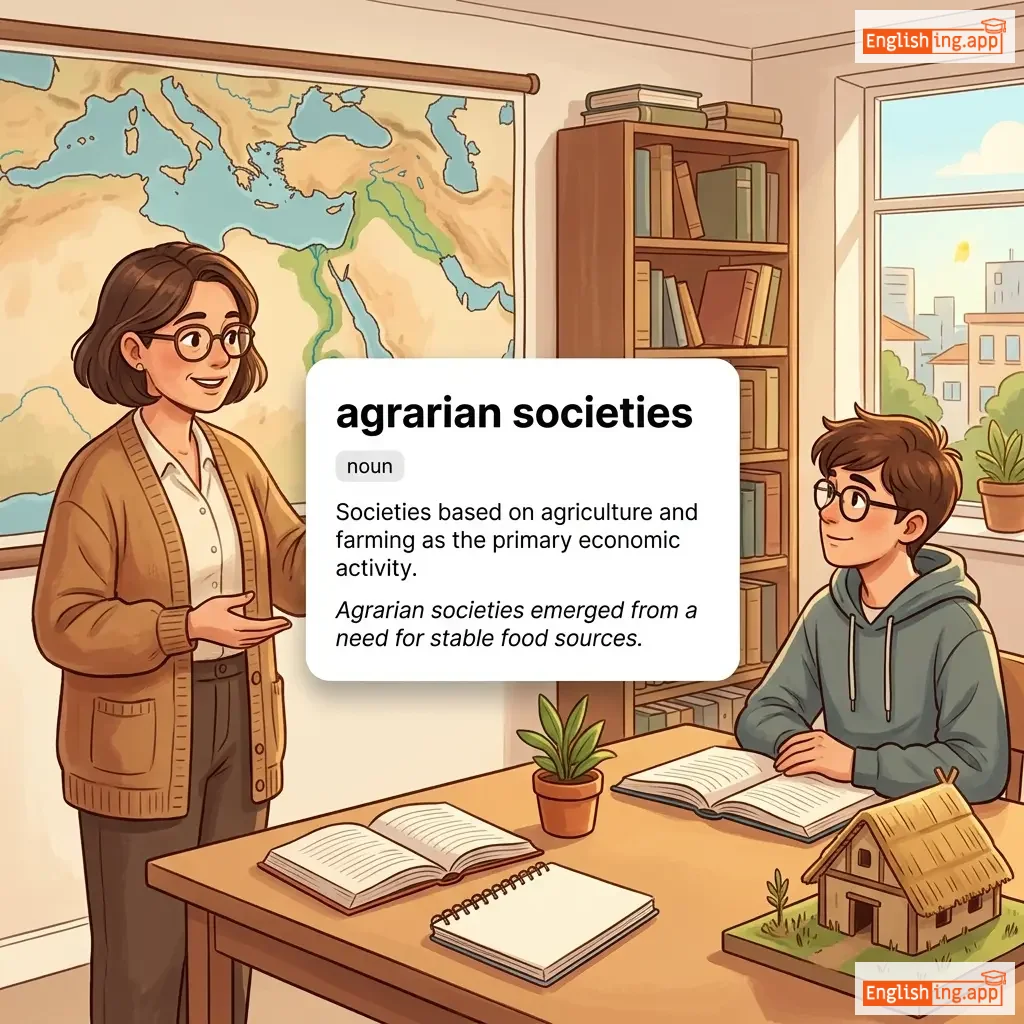
agrarian societies definition card — visual illustration of the meaning
noun
əˈɡrɛriən səˈsaɪətiz
аграрные общества (agrarnye obshchestva)

Societies based on agriculture and farming as the primary economic activity.

"Agrarian societies emerged from a need for stable food sources."
"Аграрные общества возникли из-за необходимости стабильных источников пищи." (Agrarnye obshchestva voznikli iz-za neobkhodimosti stabil'nykh istochnikov pishchi.)
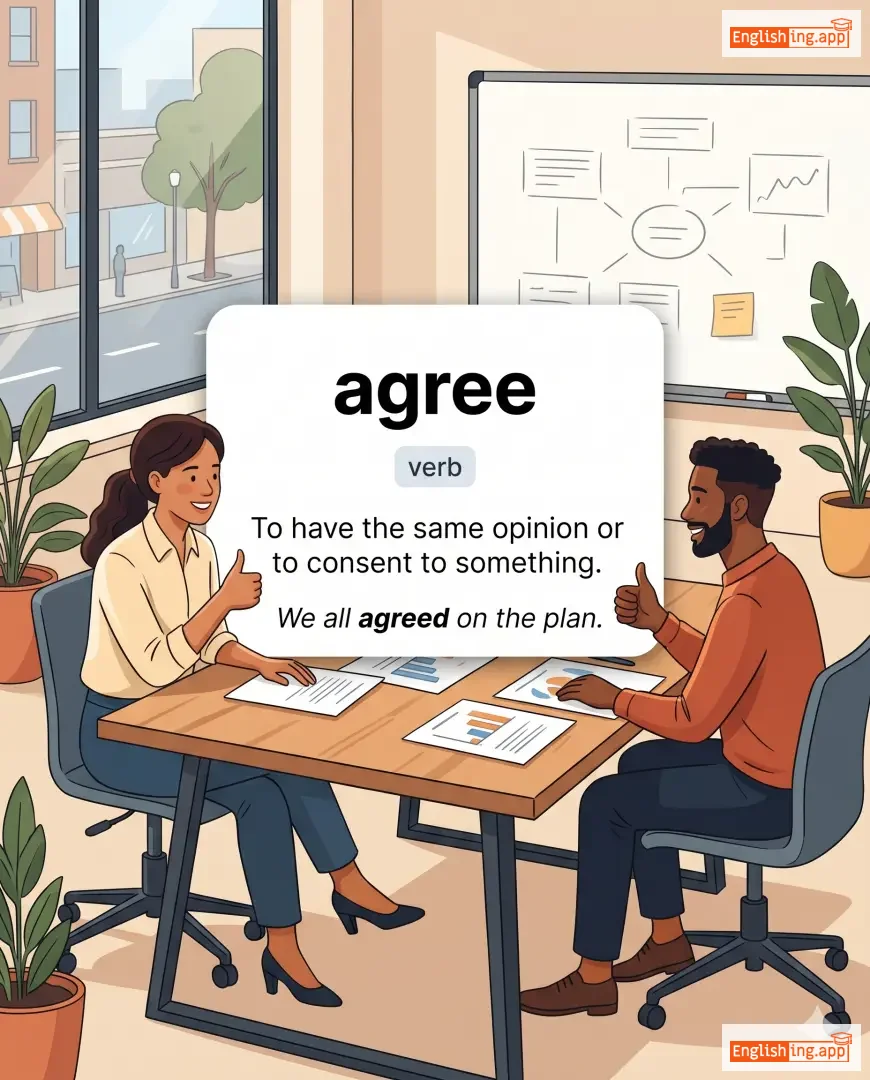
agree definition card — visual illustration of the meaning
verb
/əˈɡriː/
согласиться (soglasit'sya)

To have the same opinion or to consent to something.

"We all agreed on the plan."

"Мы все согласились с планом." (My vse soglasilis' s planom.)
adjective
/əˈɡriːəbl/
приятный; приятный; симпатичный; готовый согласиться (priyatnyy; priyatnyy; simpatichnyy; gotovyy soglasit'sya)

pleasant; enjoyable; delightful; willing to agree

"The weather is very agreeable today."

"Погода сегодня очень приятная." (Pogoda segodnya ochen' priyatnaya.)
agreement definition card — visual illustration of the meaning
noun
/əˈɡriː.mənt/
соглашение (soglashenie)

A mutual understanding or arrangement between two or more parties.

"They signed an agreement to work together."

"Они подписали соглашение о совместной работе." (Oni podpisali soglashenie o sovmestnoi rabote.)
agreements definition card — visual illustration of the meaning
noun
/əˈɡriː.mənts/
соглашения (soglasheniya)

Formal arrangements or understandings between two or more parties.

"Agreements strengthen partnerships."
"Соглашения укрепляют партнерства." (Soglasheniya ukreplyayut partnerstva.)
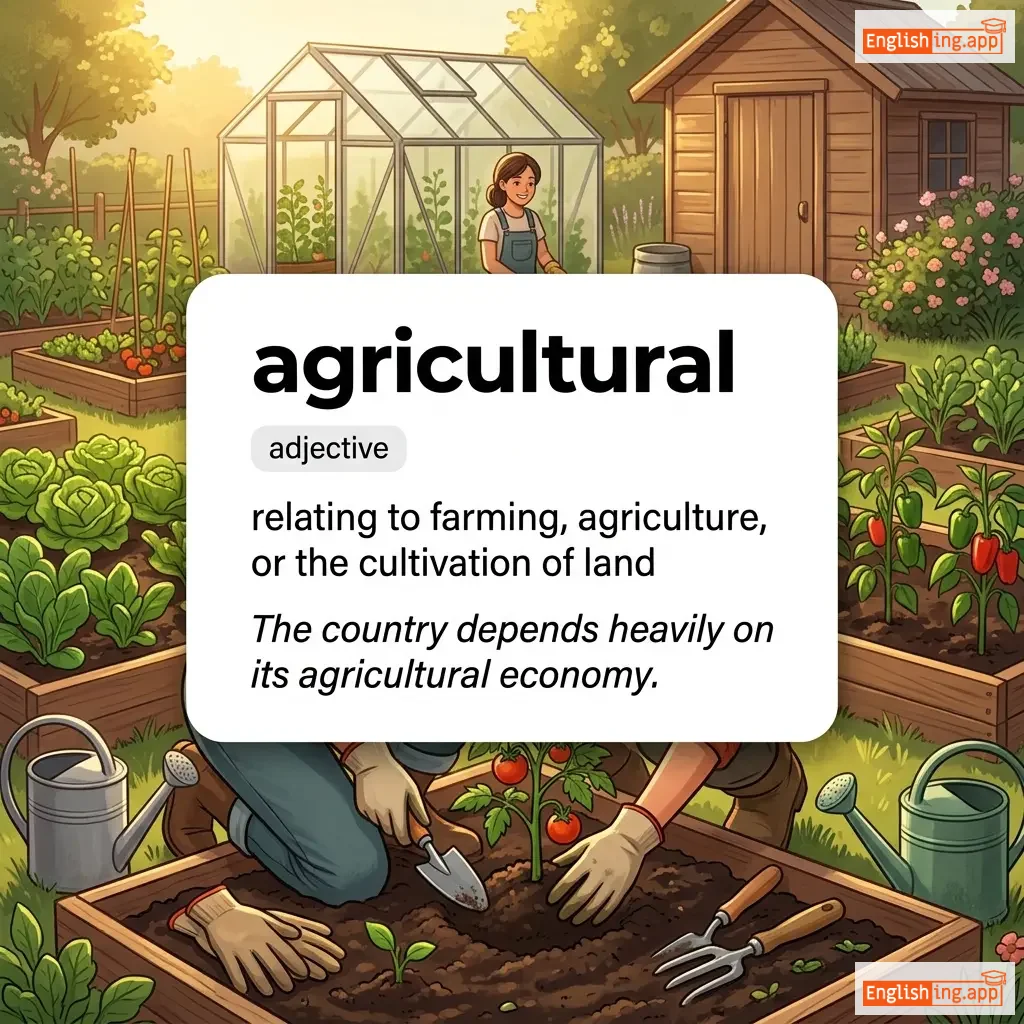
agricultural definition card — visual illustration of the meaning
adjective
/ˌæɡ.rɪˈkʌl.tʃər.əl/
сельскохозяйственный (sel'skokhozyaystvennyy)

relating to farming, agriculture, or the cultivation of land

"The country depends heavily on its agricultural economy."
"Страна в значительной степени зависит от своей сельскохозяйственной экономики." (Strana v znachitel'noi stepeni zavisit ot svoei sel'skokhozyaystvennoi ekonomiki.)
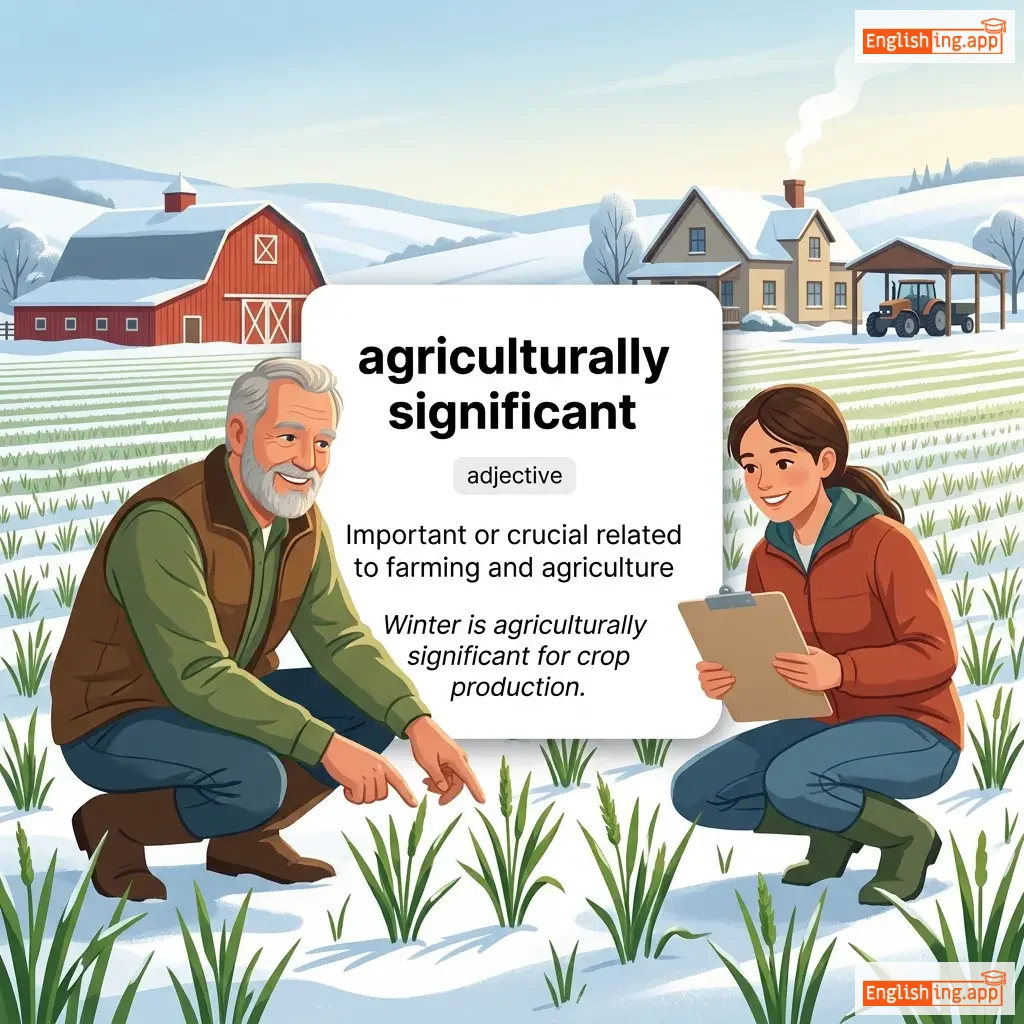
agriculturally significant definition card — visual illustration of the meaning
adjective
ˌæɡrɪˈkʌltʃərəli sɪɡˈnɪfɪkənt
важный для сельского хозяйства (vazhnyy dlya sel'skogo khozyaystva)

Important or crucial related to farming and agriculture

"Winter is agriculturally significant for crop production."
"Зима важна для сельского хозяйства и производства сельхозпродукции." (Zima vazhna dlya sel'skogo khozyaystva i proizvodstva sel'khozprodukczii.)
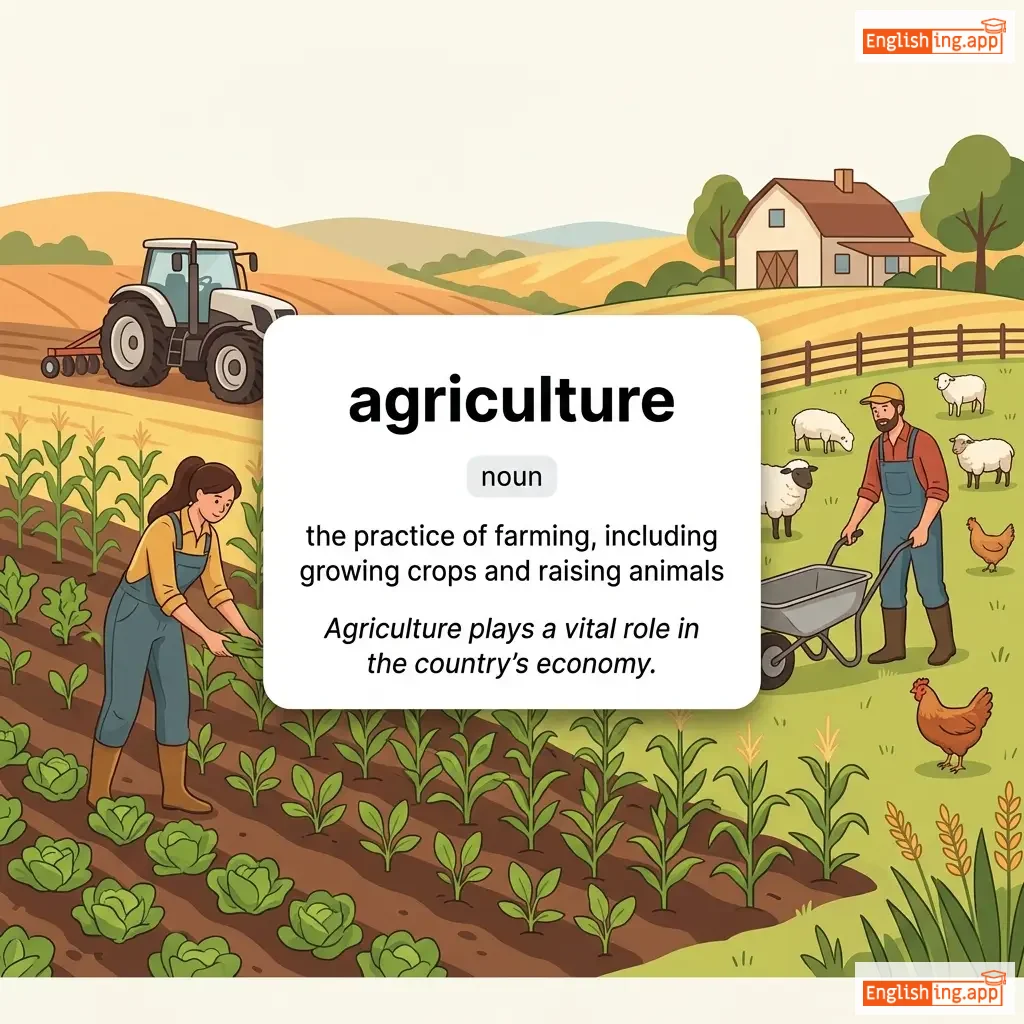
agriculture definition card — visual illustration of the meaning
noun
/ˈæɡrɪˌkʌltʃər/
сельское хозяйство (selskoe khozyaystvo)

the practice of farming, including growing crops and raising animals

"Agriculture plays a vital role in the country's economy."
"Сельское хозяйство играет важную роль в экономике страны." (Selskoe khozyaystvo igraet vazhnuyu rol' v ekonomike strany.)
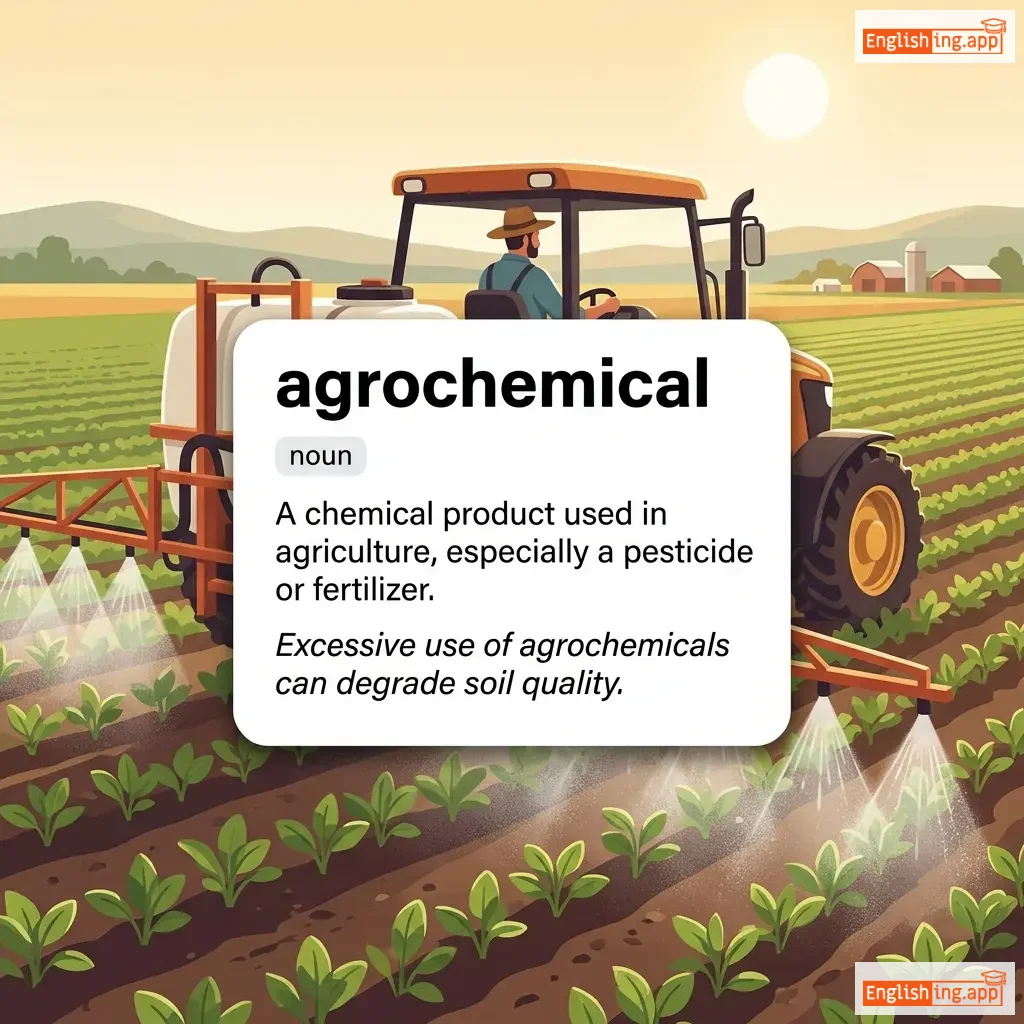
agrochemical definition card — visual illustration of the meaning
noun
ˌæɡ.rəʊˈkem.ɪ.kəl
агрохимикат (agrokhimikat)

A chemical product used in agriculture, especially a pesticide or fertilizer.

"Excessive use of agrochemicals can degrade soil quality."
"Чрезмерное использование агрохимикатов может ухудшить качество почвы." (chrezmernoe ispolzovanie agrokhimikatov mozhet ukhudit kachestvo pochvy)
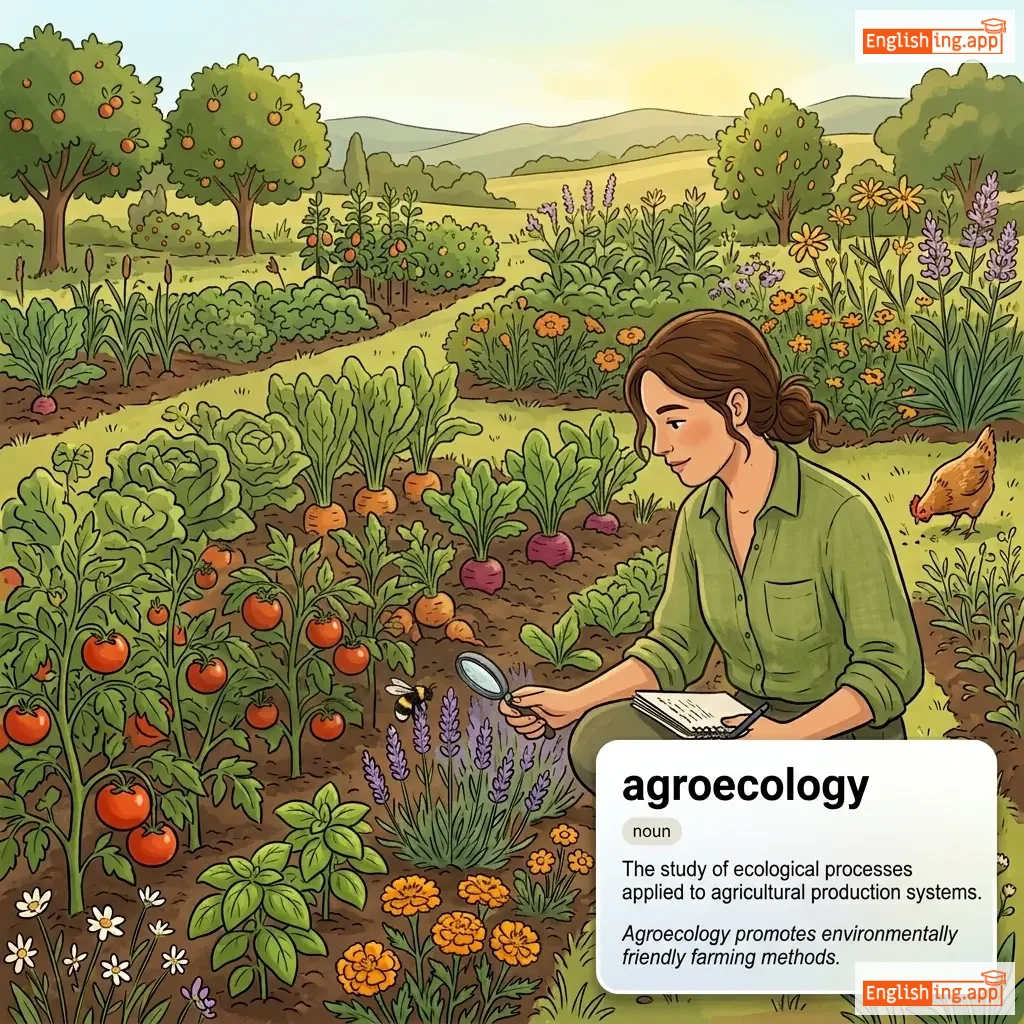
agroecology definition card — visual illustration of the meaning
noun
/ˌæɡ.roʊ.iˈkɑː.lə.dʒi/
агроэкология (agroekologiya)

The study of ecological processes applied to agricultural production systems.

"Agroecology promotes environmentally friendly farming methods."
"Агроэкология способствует экологически чистым методам сельского хозяйства." (Agroekologiya sposobstvuet ekologicheski chistym metodam selskokhozyaystva.)
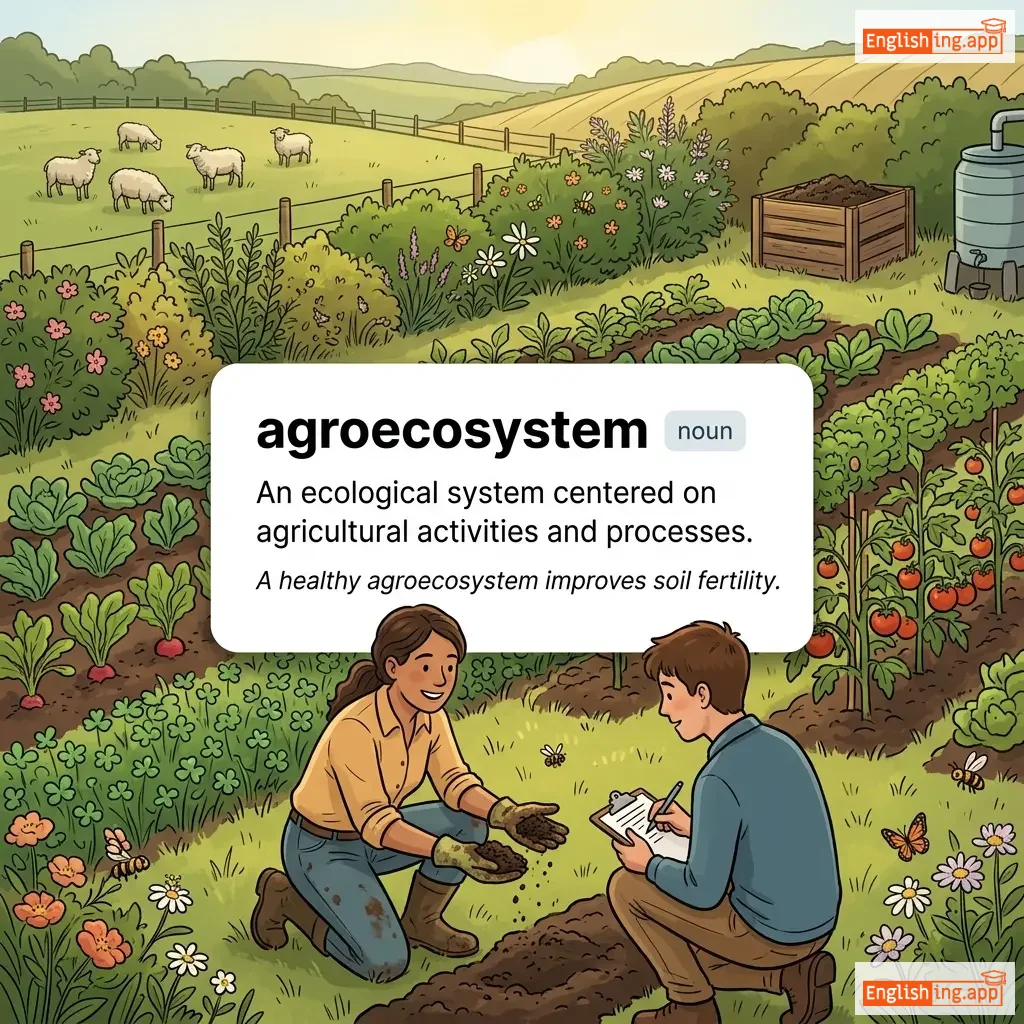
agroecosystem definition card — visual illustration of the meaning
noun
ˌæɡ.roʊˈiː.koʊˌsɪs.təm
агроэкосистема (agroecosistema)

An ecological system centered on agricultural activities and processes.

"A healthy agroecosystem improves soil fertility."
"Здоровая агроэкосистема улучшает плодородие почвы." (Zdorovaya agroecosistema uluchshayet plodorodiye pochvy.)
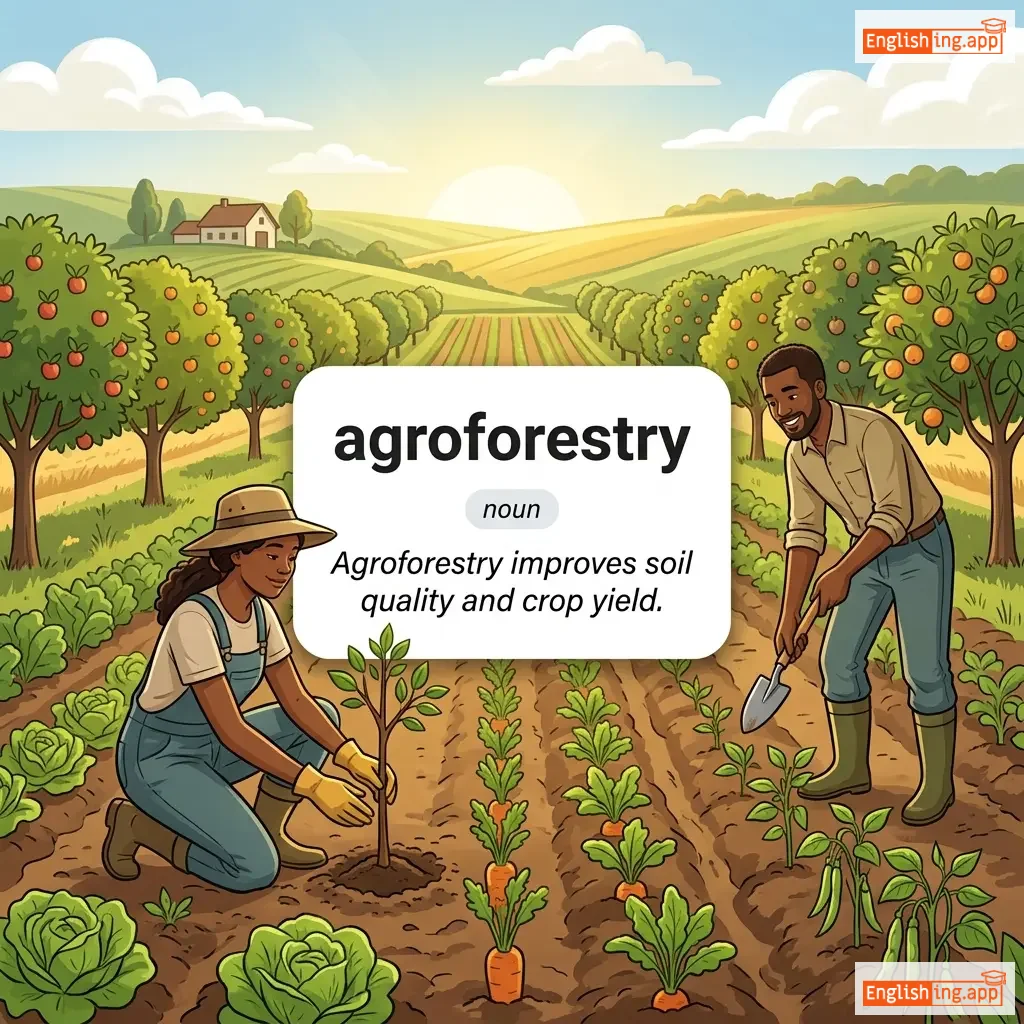
agroforestry definition card — visual illustration of the meaning
noun
ˌæɡ.roʊˈfɔːr.ɪ.stri
агролесоводство (agrolesovodstvo)

A land use management system in which trees or shrubs are grown around or among crops or pastureland.

"Agroforestry improves soil quality and crop yield."

"Агролесоводство улучшает качество почвы и урожайность культур." (Agrolesovodstvo uluchshaet kachestvo pochvy i urozhainnost' kul'tur.)
noun
/əˈɡrɒnəmɪst/
агроном (agronom)

A scientist who studies soil management and crop production.

"The agronomist suggested new methods to improve rice yields."
"Агроном предложил новые методы для улучшения урожайности риса." (Agronom predlozhil novye metody dlya uluchsheniya urozhaĭnosti risa.)
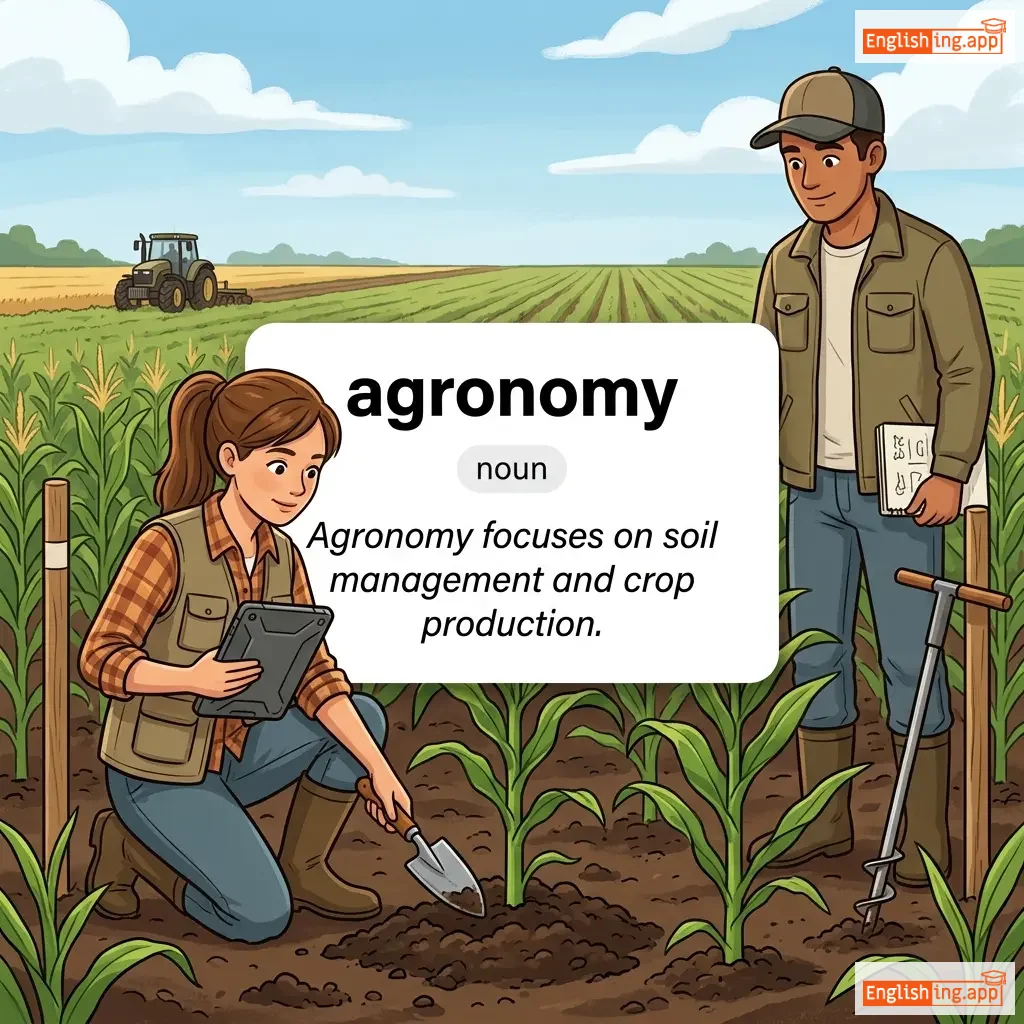
agronomy definition card — visual illustration of the meaning
noun
/əˈɡrɒnəmi/
Агрономия (agronomiya)

The science and practice of soil management and crop production, focusing on the principles of plant and soil science to optimize agricultural productivity.

"Agronomy focuses on soil management and crop production."

"Агрономия фокусируется на управлении почвой и производстве сельскохозяйственных культур." (Agronomiya fokusiruetsya na upravlenii pochvoy i proizvodstve selskokhozyaistvennykh kul'tur.)
interjection
/ɑː/
ах (akh)

used to express realization, surprise, or relief

"Ah, now I understand what you mean."

"Ах, теперь я понимаю, что ты имеешь в виду." (Akh, teper' ya ponimayu, chto ty imeyesh' v vidu.)
adverb
/əˈhɛd/
впереди (vperedí)

in front; in advance; before someone or something in position or progress

"She walked ahead of the group."

"Она шла впереди группы." (Ona shla vperedi grupy.)
noun, verb
/eɪd/
помощь (pomoshch)

help or support, typically of a practical nature

"The volunteers provided aid to the flood victims."

"Волонтеры оказали помощь жертвам наводнения." (Volontery okazali pomoshch zhertvam navodneniya.)
🧑‍💼

aide (эйд)

noun
/eɪd/
помощник (pomoshchnik)

An assistant or helper, especially to an important person.

"The senator’s aide organized the meeting with journalists."

"Помощник сенатора организовал встречу с журналистами." (Pomoshchnik senatora organizoval vstrechu s zhurnalistami.)
noun
/ˌeɪd də ˈkæmp/
военный офицер, действующий как конфиденциальный помощник старшего офицера (voennyy ofitser, deystvuyushchiy kak konfidentsial'nyy pomoshchnik starshego ofitsera)

A military officer acting as a confidential assistant to a senior officer.

"The general was accompanied by his aide-de-camp during the ceremony."

"Генерал был сопровожден своим адъютантом на церемонии." (General byl soprovozhden svoim ad'yutantom na tseremonii.)
noun
/eɪdz/
СПИД (SPID)

Acquired Immune Deficiency Syndrome, a disease of the immune system caused by HIV

"AIDS is a major global health concern."

"СПИД — это серьезная мировая угроза здоровью." (SPID — eto seryoznaya mirovaya ugroza zdorov'yu.)
verb
/eɪl/
болеть (bolet)

to be ill or suffer from a physical or mental problem; to trouble or afflict

"She has been ailing since last winter."

"Она болеет с прошлой зимы." (ona bolet s proshloy zimy)
adjective, verb
/ˈeɪlɪŋ/
больной (bolnoi)

suffering from illness or poor health; experiencing problems or decline

"The ailing patient slowly began to recover after treatment."

"Больной пациент начал медленно восстанавливаться после лечения." (Bolnoi patsient nachal medlenno vosstanavlivatsya posle lecheniya)
noun
/ˈeɪlmənt/
недуг (nedug)

An illness, typically a minor one.

"He went to the doctor for a minor stomach ailment."

"Он пошел к врачу с легким заболеванием желудка." (On poshel k vrachu s legkim zabolevaniem zheludka.)
verb
/eɪm/
прицеливаться (pritselivat'sya)

to direct a weapon, object, or effort at a target; to intend or plan

"He aimed the ball at the goal."

"Он прицелился в мяч в сторону цели." (On pritselilsya v myach v storonu tsely.)
adjective
/ˈeɪmləs/
бессмысленный; без цели (eymles)

without purpose or direction; lacking a goal

"He wandered around the city in an aimless manner."

"Он бродил по городу бессмысленно." (On brodil po gorodu bessmyslenno.)
noun
/ɛər/
воздух (vozdukh)

The invisible mixture of gases that surrounds the earth and is breathed in by people and animals.

"The air is fresh after the rain."

"Воздух свежий после дождя." (Vozdukh svezhiy posle dozhdya.)
noun
/ˈeər kənˈdɪʃ.ən.ər/
кондиционер (konditsioner)

a system that controls the temperature, humidity, and air quality in a building or room

"We turned on the air conditioner because it was too hot outside."

"Мы включили кондиционер, потому что на улице было слишком жарко." (My vklyuchili konditsioner, potomu chto na ulice bylo slishkom zharko)
noun
/ˈeər fɔːrs/
воздушные силы (vozdushnye sily)

the military organization of a country that uses aircraft for fighting

"The air force conducted a training exercise over the mountains."

"Воздушные силы провели тренировочное задание над горами." (Vozdushnye sily proveli trenirovochnoe zadanie nad gorami.)