Словари

Словарь английского языка | Значения слов, определения и примеры

aesthetics definition card — visual illustration of the meaning
noun
esˈθet.ɪks
эстетика (estetika)

A set of principles concerned with the nature and appreciation of beauty, especially in art and design.

"Interior design focuses on aesthetics and functionality."

"Дизайн интерьера сосредоточен на эстетике и функциональности." (Dizayn interyera sosredotochen na estetike i funktsional'nosti.)
adjective
/ˈæfəbəl/
дружелюбный (druzhelyubnyy)

friendly, easy to talk to, and pleasant in manner

"He is such an affable host that everyone feels comfortable at his parties."

"Он такой дружелюбный хозяин, что каждый чувствует себя комфортно на его вечеринках." (On takoy druzhelyubnyy khozyain, chto kazhdyy chuvstvuyet sebya komfortno na yego vecherinkakh.)
noun
/əˈfɛər/
дело / отношения (delo / otnosheniya)

an event, situation, or relationship, often one that is private or romantic

"The scandal became the most talked-about affair of the year."

"Этот скандал стал самой обсуждаемой афферой года." (Etot skandal stal samoy obshchayemoy afferoi goda.)
verb
/əˈfɛkt/
влиять (vliyat')

to influence or make a difference to something

"The weather can greatly affect our mood."

"Погода может сильно повлиять на наше настроение." (Pogoda mozhet sil'no povliyat' na nashe nastroenie.)
noun
/ˌæfɛkˈteɪʃən/
афектация (afektatsiya)

an unnatural behavior or speech intended to impress others

"Her British accent was just an affectation to sound sophisticated."
"Ее британский акцент был всего лишь афектацией, чтобы звучать изысканно." (Ee britanskiy aktsent byl vsego lish afektatsiey chtoby zvuchat izyskanno.)
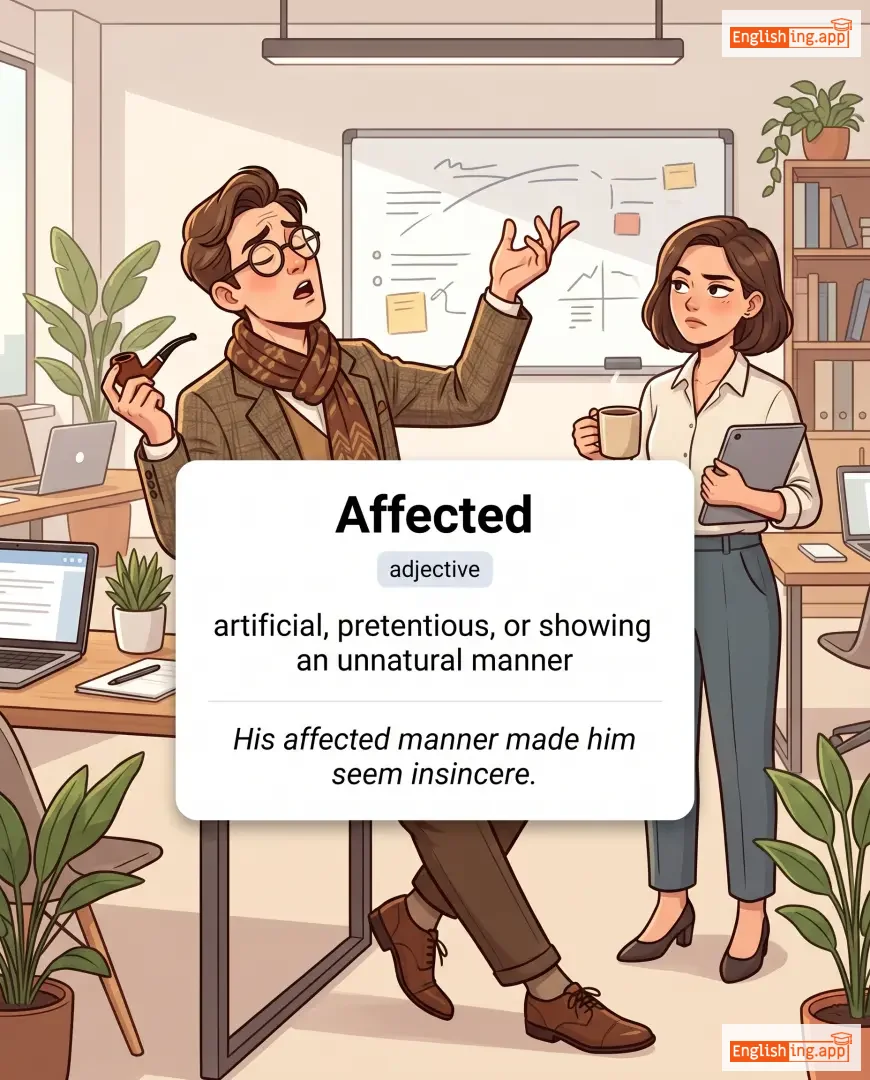
Affected definition card — visual illustration of the meaning
adjective
/əˈfɛktɪd/
афектированный (afektirovannyy)

artificial, pretentious, or showing an unnatural manner

"His affected manner made him seem insincere."

"Его аффектированное поведение заставляло его казаться неискренним." (Ego affektivannoe povedenie zastavlyalo ego kazat'sya neiskrennim.)
noun
/əˈfɛkʃən/
привязанность (privyazannost)

a gentle feeling of fondness or liking

"She showed great affection for her younger brother."

"Она проявляла большую привязанность к своему младшему брату." (Ona proyavlyala bolshuyu privyazannost k svoemu mladshemu bratu.)
adjective
/əˈfekʃənət/
нежный; любящий; заботливый; проявляющий привязанность (nezhnyy; lyubashchiy; zabotlivyy; proyavlyayushchiy privyazannost)

loving; caring; tender; showing affection

"She is very affectionate towards her children."

"Она очень ласкова к своим детям." (Ona ochen' laskova k svoim detyam.)
adverb
/əˈfek.ʃən.ət.li/
нежно (nezhno)

in a way that shows feelings of liking or love; with fondness and care

"She hugged her grandmother affectionately."

"Она обняла свою бабушку с любовью." (Ona obnyala svoiu babushku s lyubov'yu.)
adjective
/ˈæfərənt/
афферентный (affyerentny)

carrying impulses toward a central organ or part, especially toward the brain or spinal cord

"Afferent nerves carry signals from the body to the brain."

"Афферентные нервы переносят сигналы от тела к мозгу." (Affyerentnye nervy perenosyat signaly ot tela k mozgu.)
verb
/əˈfaɪəns/
обручаться (obruchatsya)

to promise or pledge marriage; to formally engage

"They decided to affiance after years of friendship."

"После многих лет дружбы они решили обручиться." (Posle mnogikh let druzhby oni reshili obruchitsya)
noun
/ˌæfəˈdeɪvɪt/
аффидевит (affidavit)

a written statement confirmed by oath or affirmation, used as evidence in court

"The witness submitted an affidavit to the court."

"Свидетель подал афидевит в суд." (Svidetel' podal affidavit v sud.)
verb
/əˈfɪliˌeɪt/
принимать в члены (prinimat' v chleny)

to officially attach or connect (a group or organization) to a larger body

"The school is affiliated with the local university."
"Школа аффилирована с местным университетом." (Shkola affil'irovana s mestnym universitetom.)
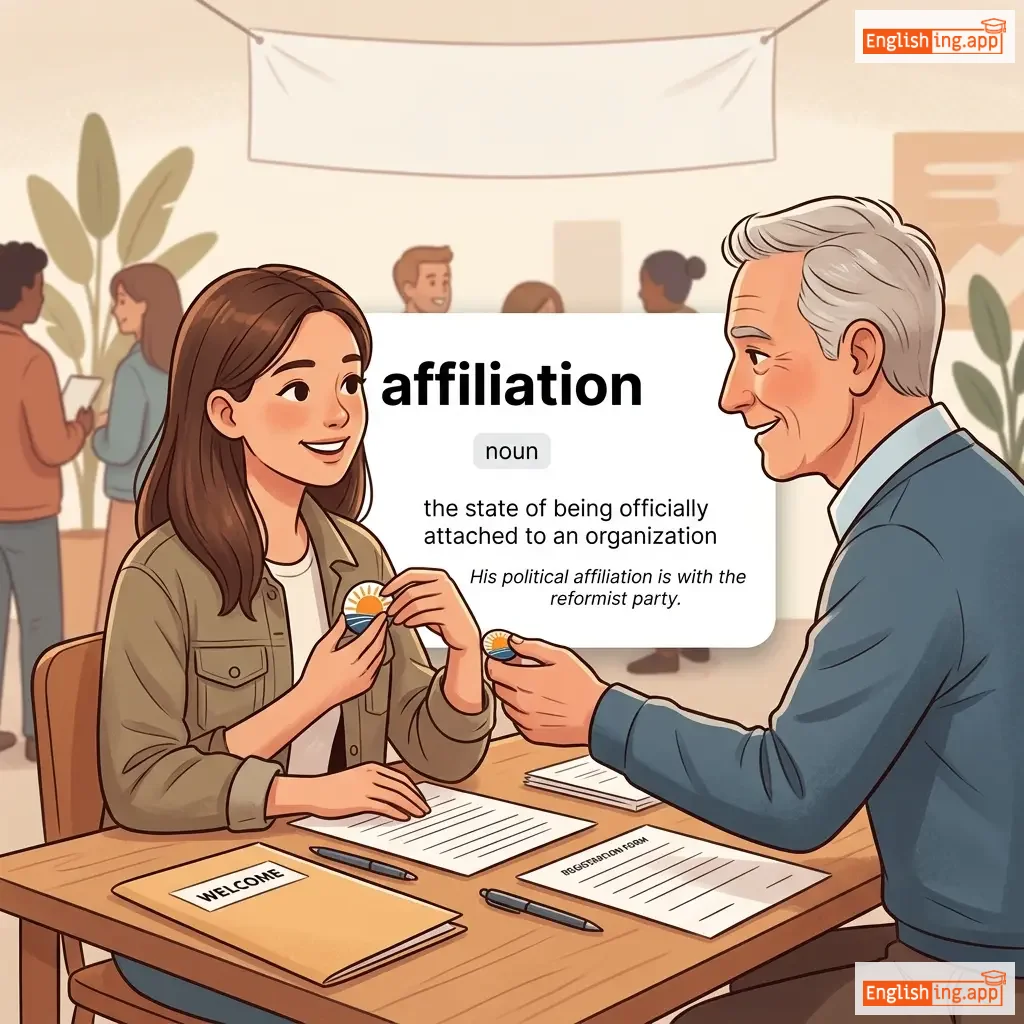
affiliation definition card — visual illustration of the meaning
noun
/əˌfɪliˈeɪʃən/
аффилиация (affiliaciya)

the state of being officially attached to an organization

"His political affiliation is with the reformist party."
"Его политическая аффилиация с реформаторской партией." (Ego politicheskaya affiliaciya s reformatorskoy partiyey.)
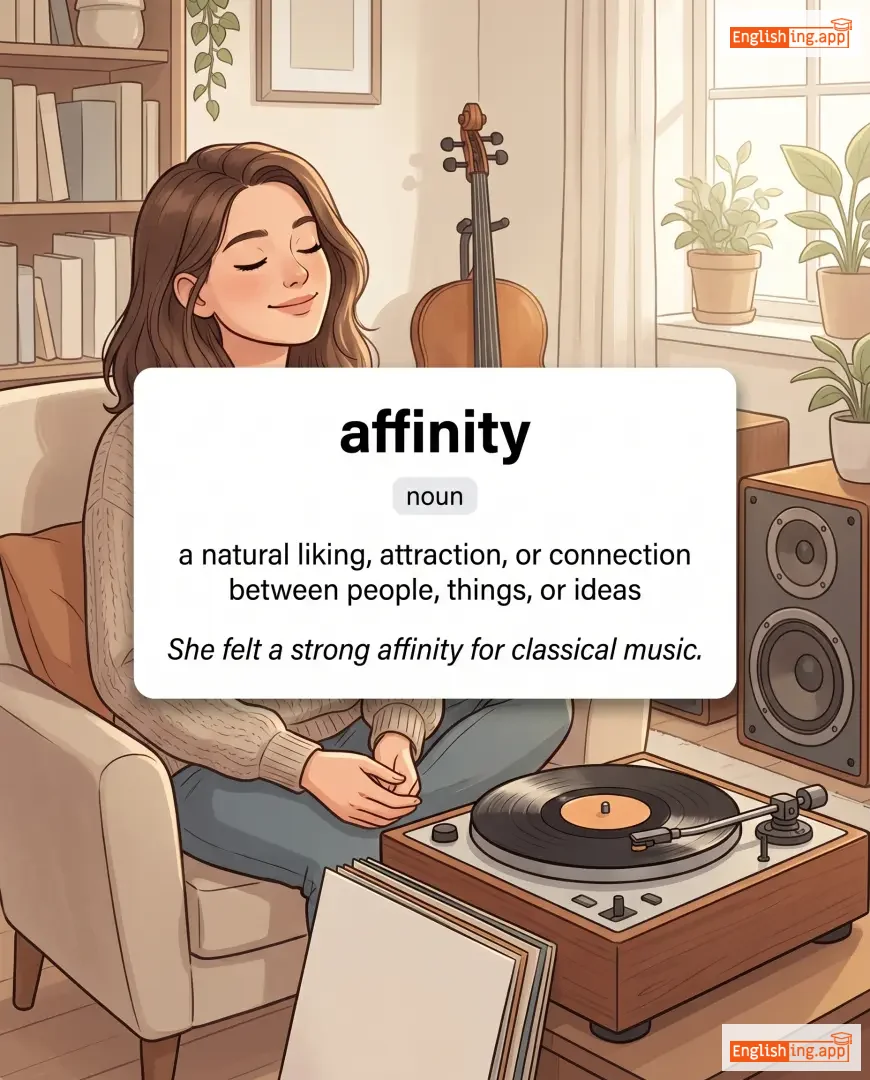
affinity definition card — visual illustration of the meaning
noun
/əˈfɪnɪti/
связь (svyaz)

a natural liking, attraction, or connection between people, things, or ideas

"She felt a strong affinity for classical music."

"Она почувствовала сильную связь с классической музыкой." (Ona pochuvstvovala sil'nuyu svyaz' s klassicheskoy muzykoy.)
affirmation definition card — visual illustration of the meaning
noun
/ˌæfərˈmeɪʃən/

the act of confirming or stating something positively; a declaration of support or belief

"Daily affirmation helps to build confidence and positivity."

adjective
/əˈfɜːrmətɪv/
утвердительный (utverditel'nyy)

expressing agreement, approval, or a positive response

"She gave an affirmative answer to the proposal."

"Она дала утвердительный ответ на предложение." (Ona dala utverditel'nyy otvet na predlozheniye.)
verb
/əˈfɪks/
прикрепить / приклеить (prikrepit' / prikeleït')

to attach or stick something firmly to another thing

"Please affix the stamp to the envelope."

"Пожалуйста, прикрепите марку к конверту." (Pozhaluysta, prikrepite marku k konvertu.)
noun
/əˈfleɪtəs/
божественное вдохновение (bozhestvennoe vdokhnovenie)

a sudden divine inspiration or creative impulse

"The poet wrote the verses under a sudden afflatus of inspiration."

"Поэт написал стихи под внезапным божественным вдохновением." (Poet napisal stikhi pod vnezapnym bozhestvennym vdokhnoveniem.)
verb
/əˈflɪkt/
причинять боль (prichinyat bol)

to cause pain, suffering, or distress to someone or something

"Many people are afflicted by seasonal allergies."

"Многие люди страдают от сезонных аллергий." (Mnogie lyudi stradayut ot sezonnukh allergiy.)
noun
/əˈflɪkʃən/
бедствие (bedstvie)

a state of pain, suffering, or distress

"Poverty is a common affliction in many parts of the world."

"Бедность - это распространённое бедствие во многих частях мира." (Bednost' - eto raspastranyonnoye bedstviye vo mnogikh chastyakh mira.)
affluence definition card — visual illustration of the meaning
noun
/ˈæfluəns/
благосостояние (blagosostoyanie)

the state of having a great deal of money or wealth

"His lifestyle shows signs of great affluence."

"Его образ жизни показывает признаки большого благосостояния." (Ego obraz zhizni pokazyvayet priznakı bol'shogo blagosostoyaniya.)
adjective
/ˈæfluənt/
состоятельный (sostoyatel'nyy)

having a great deal of money; wealthy

"She grew up in an affluent neighborhood."
"Она выросла в состоятельном районе." (Ona vyrasla v sostoyatel'nom rayone.)
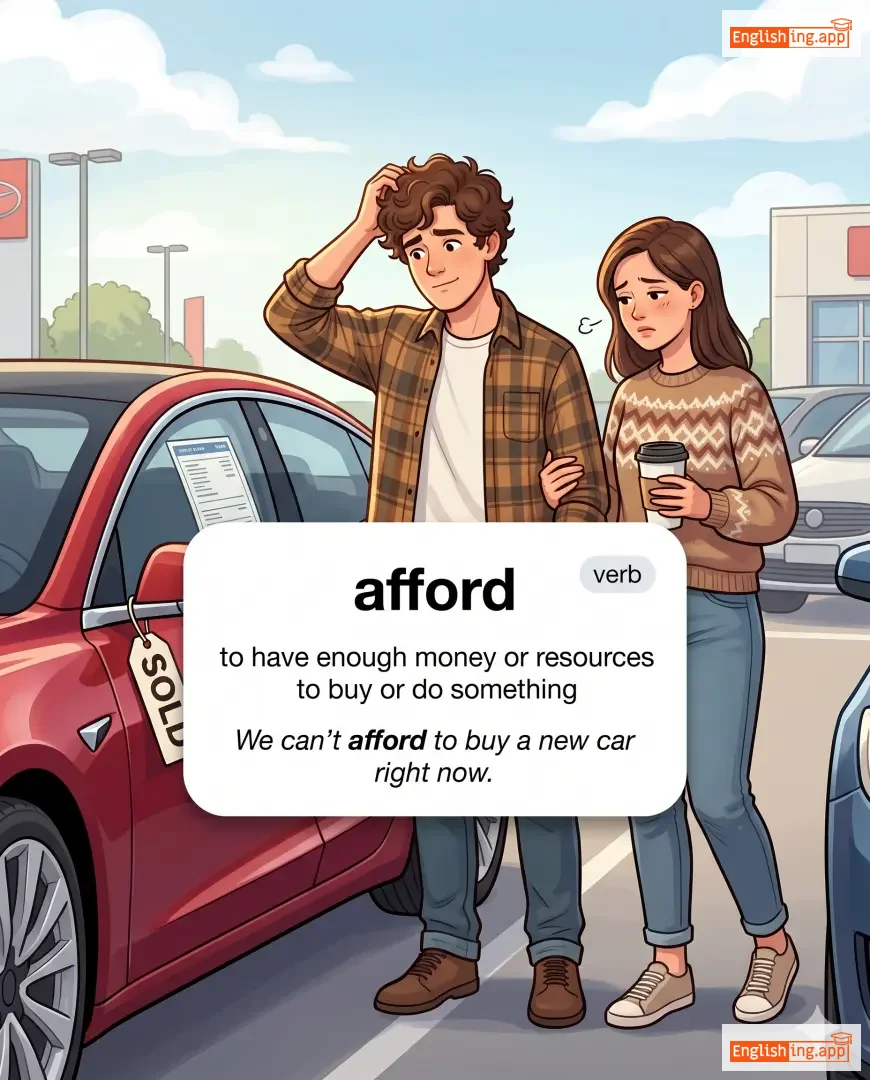
afford definition card — visual illustration of the meaning
verb
/əˈfɔːrd/
позволять себе (pozvolyat' sebe)

to have enough money or resources to buy or do something

"We can’t afford to buy a new car right now."

"Мы не можем позволить себе купить новую машину прямо сейчас." (My ne mozhem pozvolit' sebe kupit' novuyu mashinu pryamo seychas.)
adjective
/əˈfɔːdəbl/
доступный (dostupnyy)

inexpensive and within one's financial means

"This restaurant offers affordable meals for families."
"Этот ресторан предлагает доступные блюда для семей." (Eto restoran predlagayet dostupnye blyuda dlya semey.)
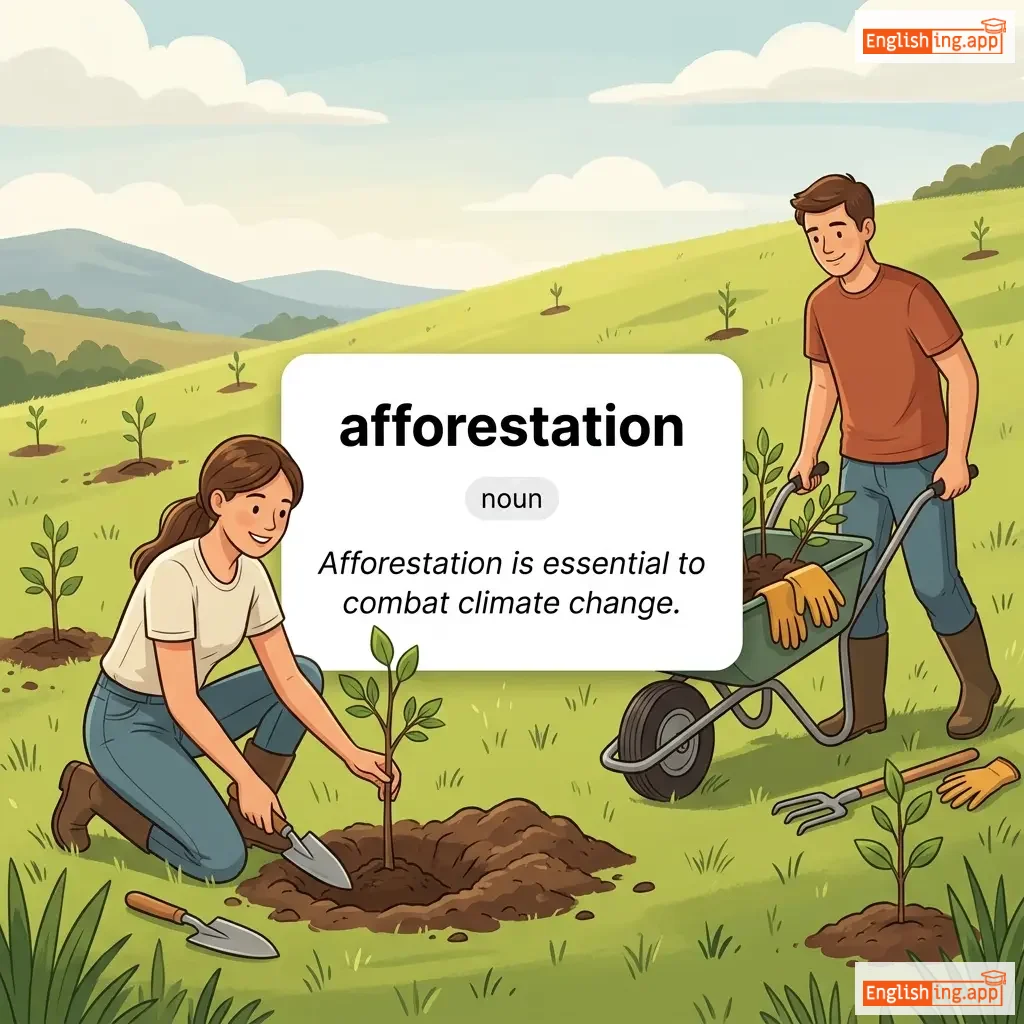
afforestation definition card — visual illustration of the meaning
noun
ˌæfɔːˈreɪʃən
лесовосстановление (lesovosstanovlenie)

The process of establishing a forest, especially on land that was not recently forested.

"Afforestation is essential to combat climate change."

"Лесовосстановление важно для борьбы с изменением климата." (Lesovosstanovlenie vazhno dlya borby s izmeneniem klimata.)
noun
/əˈfreɪ/
публичная драка (publichnaya draka)

A public fight or noisy disturbance that causes alarm.

"The police were called to break up an affray outside the stadium."

"Полиция была вызвана, чтобы прекратить драку у стадиона." (Politsiya byla vyzvana, chtoby prekratit' draku u stadiona.)
noun, verb
/əˈfrʌnt/
оскорбление (oskorblenie)

An action or remark that causes outrage or offense.

"He took her criticism as a personal affront."

"Он воспринял ее критику как личное оскорбление." (On vosprinyal yeye kritiku kak lichnoe oskorblenie.)
adjective, adverb
/əˈfʊt/
в разработке (v razrabotke)

In progress; happening or being prepared.

"There are several new projects afoot in the company."

"В компании есть несколько новых проектов в разработке." (V kompanii est' neskol'ko novykh proyektov v razrabotke.)
adjective
/əˈfɔːrˌsɛd/
упомянутый ранее (upomyanutyy ranee)

Mentioned earlier; previously stated.

"The aforesaid conditions must be met before the contract is signed."

"Условия, упомянутые ранее, должны быть выполнены до подписания контракта." (Usloviya, upomyanutye ranee, dolzhny byt' vypolneny do podpisaniya kontrakta.)
adjective
/əˈfreɪd/
испуганный (ispugannyy)

feeling fear or anxiety; worried that something undesirable will happen

"She was afraid of the dark."

"Она боялась темноты." (Ona boyalas' temnoty.)
adverb
/əˈfrɛʃ/
снова (snovaa)

From the beginning, in a new way.

"After the failure, they started the project afresh."

"После неудачи они начали проект с самого начала." (Posle neyudachi oni nachali proyekt s samogo nachala.)
adjective
/ˈæfrɪkən/
африканский (afrikanskiy)

relating to Africa or its people

"She studied African culture in university."

"Она изучала африканскую культуру в университете." (Ona izuchala afrikanskuyu kulturu v universitete.)
noun/adjective
/ˌæfrɪkən əˈmɛrɪkən/
афроамериканец (afroamericanets)

A person of African descent living in or originating from the United States; relating to such people.

"She is proud of her African-American heritage."

"Она гордится своим афроамериканским наследием." (Ona gorditsya svoim afroamerikanskim naslediem.)
preposition, conjunction, adverb
/ˈæftər/
после (posle)

in the time following an event or another action

"We went for ice cream after the movie."

"Мы пошли за мороженым после фильма." (My poshli za morozhenym posle fil'ma.)
noun
/ˈæftərˌlaɪf/

Life or existence that some believe continues after physical death.

"Many cultures have different beliefs about the afterlife."

noun
/ˈɑːftərmɑːθ/
последствия (posledstviya)

the consequences or aftereffects of an event or situation, especially a disastrous one

"The aftermath of the earthquake was devastating."

"Последствия землетрясения были разрушительными." (Posledstviya zemletryaseniya byli razrushitel'nymi.)
noun
/ˌæftərˈnuːn/
после полудня (posle poludnya)

The part of the day between noon and evening.

"We met in the afternoon for coffee."

"Мы встретились после полудня, чтобы попить кофе." (My vstretilis' posle poludnya, chtoby popit' kofe.)
noun
/ˈæftərˌθɔːt/

Something added or considered later than originally planned.

"The gift seemed like an afterthought rather than a genuine gesture."

adverb
/ˈɑːftərwərd/
позже (pozzhe)

at a later or subsequent time

"She went home afterward."

"Она пошла домой потом." (Ona poshla domoy potom.)
adverb
/ˈɑːf.tə.wərdz/
позже; затем; после (pozhe; zatem; posle)

at a later time; after an event or time that has already been mentioned

"We had dinner and afterwards we watched a movie."

"Мы поужинали, а потом посмотрели фильм." (My pouzhinali, a potom posmotreli film.)
adverb
/əˈɡɛn/ or /əˈɡeɪn/
снова (snova)

Once more; another time.

"She read the book again to understand it better."

"Она прочитала книгу снова, чтобы лучше понять." (Ona prochitala knigu snova, chtoby luchshe ponyat.)
preposition
/əˈɡɛnst/ or /əˈɡeɪnst/
против (protiv)

In opposition to; contrary to; touching or resting on.

"They voted against the proposal."

"Они проголосовали против предложения." (Oni progolosovali protiv predlozheniya.)
adjective
/əˈɡeɪp/ or /əˈɡɑːp/
с открытым ртом (s otkrytym rtom)

With the mouth wide open in surprise or wonder.

"She stood agape at the breathtaking view."

"Она стояла с открытым ртом, пораженная захватывающим видом." (Ona stoyala s otkrytym rtom, porazhennaya zakhvatyvayushchim vidom.)
noun/verb
/eɪdʒ/
возраст (vozrast)

The length of time that a person has lived; to grow older.

"She asked his age politely."

"Она вежливо спросила его возраст." (Ona vezhlivo sprosila ego vozrast.)
adjective
/eɪdʒd/
пожилой (pozhiloy)

having lived for a specified number of years; old

"The aged man sat in the park, watching the children play."

"Пожилой мужчина сидел в парке, наблюдая, как играют дети." (Pozhiloy muzhchina sidel v parke, nablyudaya, kak igrajut deti.)
noun
/ˈeɪ.dʒən.si/
агентство (agentstvo)

An organization or business that provides a particular service.

"She works at a travel agency."

"Она работает в туристическом агентстве." (Ona rabotaet v turistskom agentstve.)
noun
/əˈdʒɛndə/
повестка дня (adzhenda)

A list of items to be discussed or acted upon in a meeting or plan.

"The manager reviewed the agenda before the meeting began."

"Менеджер рассмотрел повестку дня перед началом совещания." (Menedzher rassmotrel povestku dnya pered nachalom soveshaniya.)
noun
/ˈeɪ.dʒənt/
агент (agent)

A person who acts on behalf of another person or organization.

"The real estate agent showed us several houses."

"Риэлтор показал нам несколько домов." (Rieltor pokazal nam neskol'ko domov.)
verb
/əˈɡlɒməˌreɪt/
агломерировать (aglomerirować)

To collect or form into a mass or group.

"The dust particles began to agglomerate into larger clusters."

"Пыльные частицы начали агломерировать в большие скопления." (Pylnye chastyitsy nachali aglomerirovat' v bol'shiye skopleniya.)