

翻訳
過去
過去分詞
三人称単数
動名詞
意味
例文
例文の翻訳
同義語
対義語
コロケーション
ニーモニック
Swipe left or right, or use the buttons. Tap image to zoom.
例文の翻訳
単語
Lesson 10Lesson 10 - マスクトグル
|
絵文字
|
単語 | Images | 翻訳 | 意味 | 例文 | 例文の翻訳 | 同義語 | 対義語 | コロケーション | ニーモニック |
|---|---|---|---|---|---|---|---|---|---|---|
|
#181
😊
|
/ˈsɪm.pli/
adverb
(simpuri)
••••••
|
- •••••• |
単純に; ただ;
tanjun ni; tada;
••••••
|
in a clear and easy way; merely; just
••••••
|
I simply wanted to help you with your homework.
私はただあなたの宿題を手伝いたかった。
••••••
|
私はただあなたの宿題を手伝いたかった。
Watashi wa tada anata no shukudai o tetsudaitakatta.
••••••
|
merely, just, only, plainly, clearly
••••••
|
complexly, complicatedly, difficultly
••••••
|
simply put, simply stated, simply amazing, simply beautiful
••••••
|
シンプルにやることが 'simply' だ
••••••
|
|
#182
➡️
|
/ˌðɛərˈbaɪ/
adverb
(デアバイ)
••••••
|
- •••••• |
それによって;
sore ni yotte
••••••
|
as a result of that; by that means
••••••
|
He worked hard and thereby achieved success. |
彼は一生懸命働き、それによって成功を収めました。
kare wa isshoukenmei hataraki, sore ni yotte seikou o osamemashita.
••••••
|
thus, consequently, therefore, hence
••••••
|
nevertheless, however, nonetheless
••••••
|
thereby achieving, thereby creating, thereby ensuring
••••••
|
努力して成功を収める、それによって達成される。
••••••
|
|
#183
🔄
|
/ˈsʌm.taɪmz/
adverb
(samtayms)
••••••
|
- •••••• |
時々
tokidoki
••••••
|
at times; occasionally; now and then
••••••
|
Sometimes I go for a walk in the evening.
samtayms ai gou fô ā woku in za ivuningu.
••••••
|
時々、私は夕方に散歩します。
Tokidoki, watashi wa yūgata ni sanpo shimasu.
••••••
|
occasionally, at times, now and then, from time to time
••••••
|
always, never, constantly
••••••
|
sometimes difficult, sometimes happens, sometimes feel
••••••
|
時々は散歩を楽しんでいます。
••••••
|
|
#184
🎭
|
/spɒnˈteɪ.ni.əs.li/
adverb
(スポンテニアスリー)
••••••
|
|
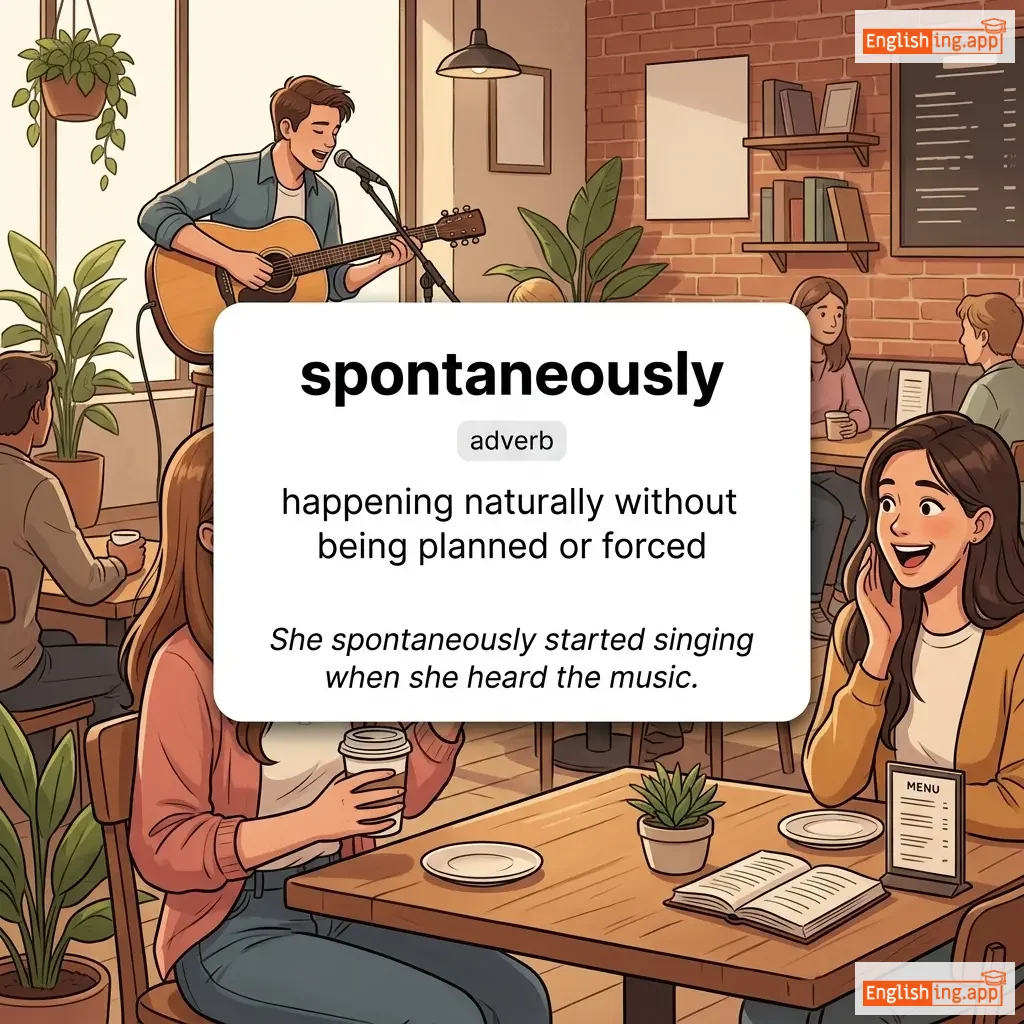
自発的に
jihatsuteki ni
••••••
|
happening naturally without being planned or forced
••••••
|
She spontaneously started singing when she heard the music. |
彼女は音楽を聞いて自発的に歌い始めました。
Kanojo wa ongaku o kiite jihatsuteki ni utai hajimemashita.
••••••
|
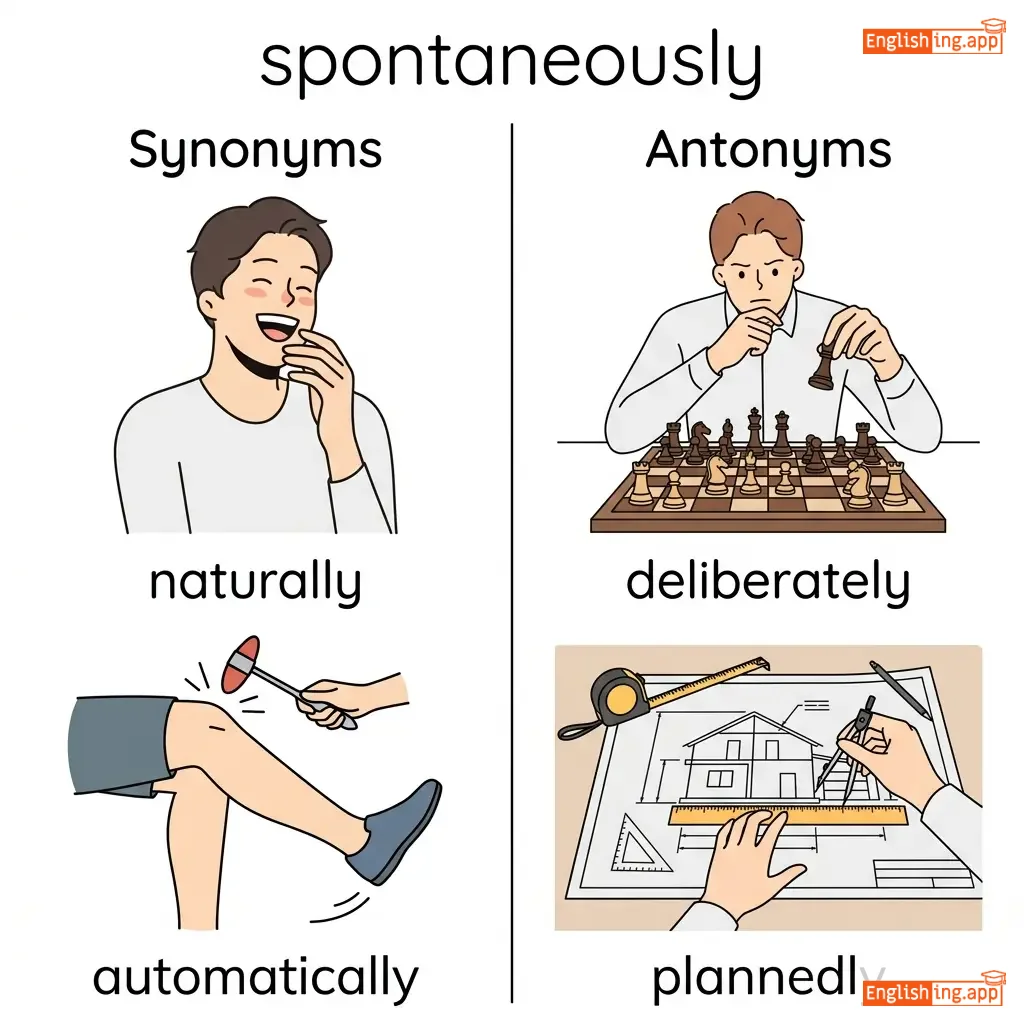
naturally, automatically, instinctively
••••••
|
deliberately, plannedly, purposefully
••••••
|
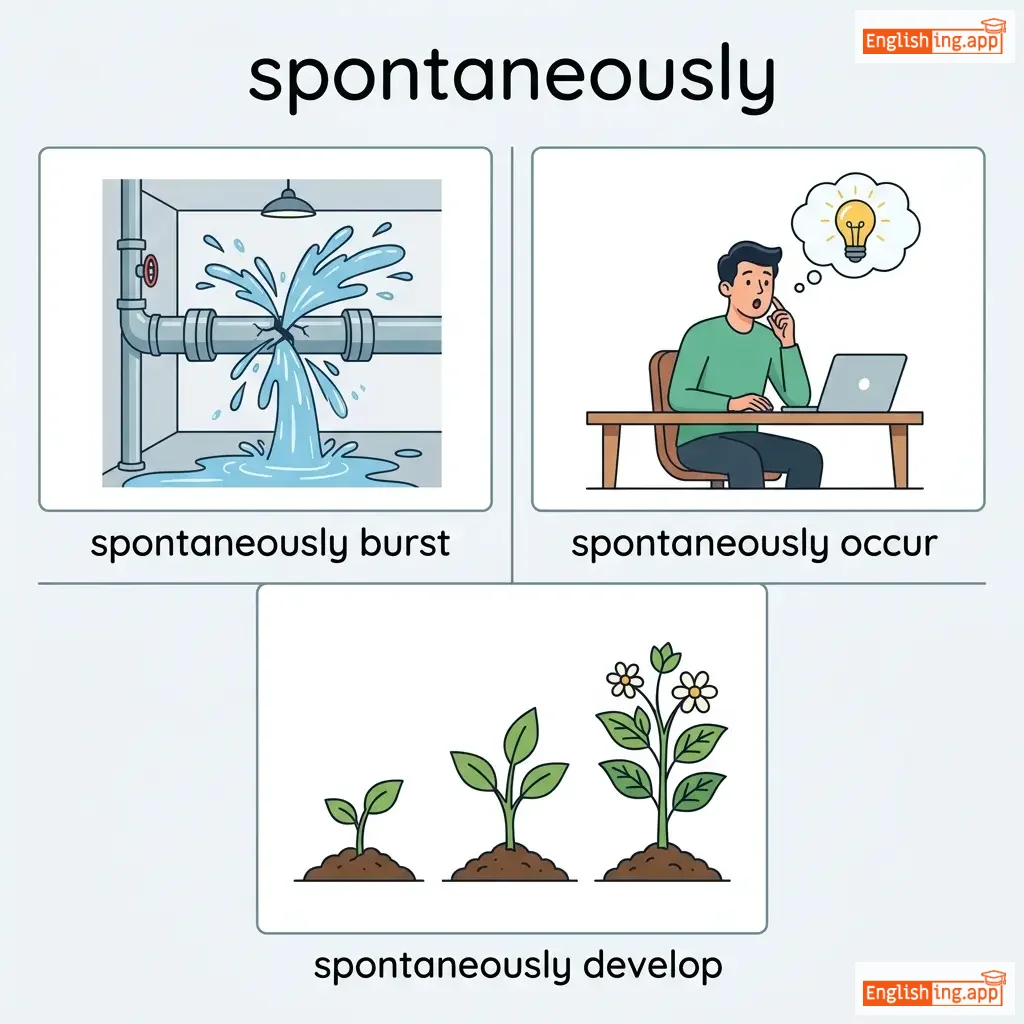
spontaneously burst, spontaneously occur, spontaneously develop
••••••
|
No •••••• |
|
#185
🎯
|
/ˈskɪl.fəl.i/
adverb
(スキルフリー)
••••••
|
- •••••• |
巧みに
takumi ni
••••••
|
in a way that shows ability and training; expertly
••••••
|
She skilfully painted the portrait in just two hours.
彼女は二時間で巧みに肖像を描いた。
••••••
|
彼女は二時間で巧みに肖像を描いた。
Kanojo wa nijikan de takumi ni shouzou o kaita.
••••••
|
expertly, proficiently, competently, adeptly, masterfully
••••••
|
clumsily, awkwardly, incompetently, unskillfully
••••••
|
skilfully crafted, skilfully executed, skilfully managed, skilfully done
••••••
|
Skilfully means 巧みに, showing expert skill like a virtuoso.
••••••
|
|
#186
🔗
|
/ˈðɛərˌfɔr/
adverb
(ゼアフォー)
••••••
|
- •••••• |
したがって
shitagatte
••••••
|
for that reason; consequently
••••••
|
It was raining, therefore we stayed inside.
It was raining, therefore we stayed inside.
••••••
|
雨が降っていたので、私たちは中にいました。
Ame ga futteita node, watashitachi wa naka ni imashita.
••••••
|
thus, hence, consequently, accordingly
••••••
|
nevertheless, however, nonetheless
••••••
|
therefore conclude, therefore decide, therefore recommend
••••••
|
したがって、すべての結果には理由がある。
••••••
|
|
#187
✅
|
/ˈʃʊə.li/
adverb
(shur-lee)
••••••
|
- •••••• |
確かに
tashika ni
••••••
|
without doubt; certainly
••••••
|
You will surely pass the exam if you study hard. |
もし一生懸命勉強すれば、確かに試験に合格します。
Moshi isshōkenmei benkyō sureba, tashika ni shiken ni gōkaku shimasu.
••••••
|
certainly, definitely, undoubtedly
••••••
|
doubtfully, uncertainly, maybe
••••••
|
surely enough, surely not, most surely
••••••
|
Visualize confidently saying '確かに' while nodding your head for sure success in Japanese!
••••••
|
|
#188
📏
|
/ˈsʌm.wʌt/
adverb
(サムワット)
••••••
|
- •••••• |
少し;
sukoshi
••••••
|
to some extent; rather; a little
••••••
|
The weather is somewhat cold today.
今日は少し寒いです。
••••••
|
今日は少し寒いです。
Kyou wa sukoshi samui desu.
••••••
|
rather, slightly, a bit, to some degree
••••••
|
completely, entirely, totally
••••••
|
somewhat different, somewhat surprised, somewhat disappointed
••••••
|
少し (sukoshi) = somewhat, 寒い (samui) = cold
••••••
|
|
#189
📍
|
/ˈsʌm.weər/
adverb
(サムウェア)
••••••
|
- •••••• |
どこか
dokoka
••••••
|
in or at some place; in an unspecified location
••••••
|
I left my keys somewhere in the house. |
家の中のどこかに鍵を置いてきた。
Ie no naka no dokoka ni kagi o oite kita.
••••••
|
someplace, anywhere, in some location
••••••
|
nowhere, everywhere
••••••
|
somewhere else, somewhere safe, somewhere around
••••••
|
鍵をどこかに隠したと思う
••••••
|
|
#190
⚡
|
/ˈsʌd.ən.li/
adverb
(サドゥンリー)
••••••
|
- •••••• |
突然
totsuzen
••••••
|
quickly and without warning; unexpectedly
••••••
|
The car suddenly stopped in the middle of the road. |
車は突然道路の真ん中で止まりました。
Kuruma wa totsuzen dōro no mannaka de tomarimashita.
••••••
|
abruptly, unexpectedly, instantly
••••••
|
gradually, slowly, predictably
••••••
|
suddenly appear, suddenly stop, suddenly realize
••••••
|
Totsuzen sounds like 'Totally Zen' (in English), suggesting an unexpected stop.
••••••
|
|
#191
🧠
|
/ˈsmɑːt.li/
adverb
(スマートリー)
••••••
|
- •••••• |
賢く; スタイリッシュに; 速く
kashikoku; sutairisshu ni; hayaku
••••••
|
in a clever or intelligent way; neatly and stylishly; quickly
••••••
|
He was smartly dressed for the business meeting.
彼はビジネスミーティングのためにスマートに服を着ていました。
••••••
|
彼はビジネスミーティングのためにスマートに服を着ていました。
Kare wa bijinesu mītingu no tame ni sumāto ni fuku o kite imashita.
••••••
|
cleverly, intelligently, stylishly, neatly, quickly
••••••
|
stupidly, foolishly, messily, slowly, carelessly
••••••
|
smartly dressed, smartly designed, smartly executed, smartly turned out
••••••
|
smartly = smartly (スマートリー) - ビジネス会議用の服装
••••••
|
|
#192
📍
|
/ˌðɛərˈɪn/
adverb
(ゼアイン)
••••••
|
- •••••• |
その中に;
sono naka ni
••••••
|
in that place; in that respect
••••••
|
The box contains many treasures, and therein lies its value. |
箱には多くの宝物があり、その中にその価値がある。
Hako ni wa ōku no hōmotsu ga ari, sono naka ni sono kachi ga aru.
••••••
|
inside, within, in that
••••••
|
outside, beyond, without
••••••
|
therein lies, therein contained, therein described
••••••
|
In Japanese, 'therein' is 'その中に' (sono naka ni), referring to something within.
••••••
|
|
#193
⏰
|
/suːn/
adverb
(スーン)
••••••
|
- •••••• |
すぐに
suguni
••••••
|
in a short time; before long; quickly
••••••
|
The train will arrive soon. |
電車はすぐに到着します。
Densha wa suguni touchaku shimasu
••••••
|
quickly, shortly, before long, in a moment
••••••
|
late, slowly, never, eventually
••••••
|
very soon, coming soon, soon after
••••••
|
Japanese 'すぐに' (suguni) is similar to 'soon' in English.
••••••
|
|
#194
🌟
|
/suːˈpɜːb.li/
adverb
(スーパーリー)
••••••
|
- •••••• |
素晴らしく
subarashiku
••••••
|
in an excellent or outstanding manner
••••••
|
She performed superbly in the dance competition. |
彼女はダンスコンテストで素晴らしくパフォーマンスをしました。
Kanojo wa dansu kontesuto de subarashiku pafōmansu o shimashita.
••••••
|
excellently, magnificently, wonderfully
••••••
|
poorly, badly, terribly
••••••
|
perform superbly, play superbly, execute superbly
••••••
|
Subarashiku, superbly performed!
••••••
|
|
#195
🛣️
|
/ˈsmuːð.li/
adverb
(スマースリー)
••••••
|
- •••••• |
スムーズに; 問題なく
sumuuzu ni; mondai naku
••••••
|
without problems or difficulties; in an even and regular way
••••••
|
The car runs smoothly on the new highway. |
車は新しい高速道路でスムーズに走る。
kuruma wa atarashī kōsoku dōro de sumūzu ni hashiru.
••••••
|
effortlessly, seamlessly, evenly, easily, fluidly
••••••
|
roughly, bumpily, unevenly, difficultly, choppily
••••••
|
run smoothly, go smoothly, operate smoothly, flow smoothly
••••••
|
'スムーズ'は、何かがスムーズに流れることを表現している。
••••••
|
|
#196
🔍
|
/ˌðɛərˈʌv/
adverb
(ðɛərɔf)
••••••
|
- •••••• |
それによって
sore ni yotte
••••••
|
of that; from that
••••••
|
The contract and all amendments thereof must be signed. |
契約とそのすべての修正はそれによって署名される必要があります。
Keiyaku to sono subete no shūsei wa sore ni yotte shomei sareru hitsuyō ga arimasu.
••••••
|
of that, from that, of it
••••••
|
apart from that, excluding that
••••••
|
part thereof, copy thereof, provisions thereof
••••••
|
前に述べたことから影響を受ける場合、'それによって'を使用します。
••••••
|
|
#197
⭐
|
/ˈspeʃ.əl.i/
adverb
(es-pe-sha-ri)
••••••
|
- •••••• |
特別に
tokubetsu ni
••••••
|
for a particular purpose; especially; specifically
••••••
|
This gift was specially made for you.
このギフトは特別にあなたのために作られました。
••••••
|
このギフトは特別にあなたのために作られました。
Kono gifuto wa tokubetsu ni anata no tame ni tsukuraremashita.
••••••
|
especially, particularly, specifically, expressly
••••••
|
generally, ordinarily, commonly
••••••
|
specially designed, specially trained, specially made
••••••
|
In Japanese, '特別に' means specially. Think of a gift specially made for you!
••••••
|
|
#198
🤷
|
/ˈsʌm.haʊ/
adverb
(sam-ow)
••••••
|
- •••••• |
なんとか;
nantoka
••••••
|
in some way; for some reason that is not clear
••••••
|
Somehow, I managed to finish the project on time.
Samow, ai manejd tu finish za purojekuto on taimu.
••••••
|
なんとか、私はプロジェクトを時間通りに終わらせることができました。
Nantoka, watashi wa purojekuto o jikan dōri ni owaraseru koto ga dekimashita.
••••••
|
someway, in some way, by some means, mysteriously
••••••
|
clearly, obviously, certainly, definitely
••••••
|
somehow manage, somehow survive, somehow succeed, somehow escape
••••••
|
Japanese and English mix: 'Somehow' becomes 'nantoka', capturing that feeling of finding a way.
••••••
|
|
#199
👉
|
/ðeər/
adverb
(ðeər)
••••••
|
- •••••• |
そこ
soko
••••••
|
in or at that place; to that place
••••••
|
I will meet you there at 5 PM. |
私は午後5時にそこであなたに会います。
Watashi wa gogo 5-ji ni soko de anata ni aimasu.
••••••
|
over there, in that place, at that location
••••••
|
here, nowhere, everywhere
••••••
|
over there, right there, out there
••••••
|
そこでは午後5時に会います。
••••••
|
|
#200
➕
|
/ˌðɛərˈtu/
adverb
(デアトゥ)
••••••
|
- •••••• |
それとともに;
sore to tomoni
••••••
|
to that; in addition to that
••••••
|
The house and the garden attached thereto were sold. |
家とそれに付随する庭が売却されました。
Ie to sore ni fuzui suru niwa ga baikyaku saremashita.
••••••
|
to that, in addition, furthermore
••••••
|
separate from, apart from
••••••
|
attached thereto, related thereto, pursuant thereto
••••••
|
それとともに、すべてを達成する方法を見つけましょう。
••••••
|
Vocabulary Quiz
Test your vocabulary by matching words with their translations or meanings.
Login to take the quiz
Comments (0)
Share your thoughts and join the discussion.
Join the discussion by logging in
Login to CommentNo comments yet
Be the first to share your thoughts!