

翻訳
過去
過去分詞
三人称単数
動名詞
意味
例文
例文の翻訳
同義語
対義語
コロケーション
ニーモニック

Swipe left or right, or use the buttons. Tap image to zoom.
例文の翻訳
単語
Lesson 3Lesson 3 - マスクトグル
|
絵文字
|
単語 | Images | 翻訳 | 意味 | 例文 | 例文の翻訳 | 同義語 | 対義語 | コロケーション | ニーモニック |
|---|---|---|---|---|---|---|---|---|---|---|
|
#41
⏱️
|
/ˈbriːf.li/
adverb
(ブリーフリー)
••••••
|
- •••••• |
簡潔に
kanketsu ni
••••••
|
in a short and clear way; for a short time
••••••
|
Please explain the problem briefly.
問題を簡潔に説明してください。
••••••
|
問題を簡潔に説明してください。
Mondai wo kanketsu ni setsumei shite kudasai.
••••••
|
shortly, concisely, quickly
••••••
|
lengthily, extensively, elaborately
••••••
|
briefly explain, briefly discuss, briefly mention
••••••
|
日本語の '簡潔に' と英語の 'briefly' を関連付けて覚えましょう。
••••••
|
|
#42
🌊
|
/ˈdiːp.li/
adverb
(ディープリー)
••••••
|
- •••••• |
深く; 強く; 深く
fukaku; tsuyoku; fukaku
••••••
|
to a great depth; intensely; profoundly
••••••
|
She breathed deeply before making her decision. |
彼女は決断を下す前に深く息を吸いました。
Kanojo wa ketsudan o kudasu mae ni fukaku iki o suimashita
••••••
|
profoundly, intensely, thoroughly
••••••
|
shallowly, superficially, lightly
••••••
|
breathe deeply, think deeply, care deeply
••••••
|
深呼吸してから決断する
••••••
|
|
#43
🕐
|
/ˈklɒkwaɪz/
adverb
(kurokawaizu)
••••••
|
- •••••• |
時計回り
tokei mawari
••••••
|
in the direction that clock hands move; in a circular direction from left to right
••••••
|
Turn the valve clockwise to tighten it.
バルブを時計回りに回して締めてください。
••••••
|
バルブを時計回りに回して締めてください。
Barubu o tokei mawari ni mawashite shimete kudasai.
••••••
|
rightward, sunwise
••••••
|
counterclockwise, anticlockwise
••••••
|
turn clockwise, rotate clockwise, move clockwise
••••••
|
時計の針のように回ると考えてみてください。
••••••
|
|
#44
🔄
|
/kənˈtɪnjuəli/
adverb
(コンティニュアリー)
••••••
|
- •••••• |
絶えず; 繰り返し
taezu; kurikaeshi
••••••
|
without stopping; repeatedly
••••••
|
She continually checked her phone for messages.
彼女はメッセージのために絶えず電話を確認しました。
••••••
|
彼女はメッセージのために絶えず電話を確認しました。
Kanojo wa messeeji no tame ni taezu denwa o kakunin shimashita.
••••••
|
constantly, repeatedly, persistently, incessantly
••••••
|
occasionally, rarely, intermittently, sporadically
••••••
|
continually improving, continually evolving, continually changing
••••••
|
In Japanese, '絶えず' means continually, just like you keep checking your phone for messages!
••••••
|
|
#45
😌
|
/ˈkɑːm.li/
adverb
(kɑːm.li)
••••••
|
- •••••• |
落ち着いて
ochitsuite
••••••
|
in a peaceful way without showing strong emotions; quietly and without excitement
••••••
|
She spoke calmly despite being angry.
彼女は怒っているにもかかわらず落ち着いて話しました。
••••••
|
彼女は怒っているにもかかわらず落ち着いて話しました。
Kanojo wa okotte iru ni mo kakawarazu ochitsuite hanashimashita.
••••••
|
peacefully, quietly, serenely, tranquilly
••••••
|
angrily, excitedly, frantically, nervously
••••••
|
speak calmly, remain calmly, act calmly
••••••
|
静かに話すことは、まるで‘落ち着いて’いるようなものです。
••••••
|
|
#46
✅
|
/ˈdef.ɪ.nət.li/
adverb
(デフィニトリー)
••••••
|
- •••••• |
間違いなく
machigainaku
••••••
|
without doubt; certainly; clearly
••••••
|
I will definitely attend the meeting tomorrow.
私は明日のミーティングに必ず出席します。
••••••
|
私は明日のミーティングに必ず出席します。
watashi wa ashita no meetingu ni kanarazu shusseki shimasu.
••••••
|
certainly, surely, absolutely
••••••
|
maybe, possibly, uncertainly
••••••
|
definitely will, definitely not, definitely yes
••••••
|
Definitely - 日本語では'間違いなく'という意味!
••••••
|
|
#47
➡️
|
/kənˈtɪnjuəsli/
adverb
(konteinyuarushi)
••••••
|
- •••••• |
連続的に; 絶え間なく; 途切れることなく
renzokuteki ni; taemanaku; togereru koto naku
••••••
|
without interruption; in an unbroken sequence
••••••
|
The machine operates continuously for 24 hours.
その機械は24時間連続して稼働します。
••••••
|
その機械は24時間連続して稼働します。
sono kikai wa 24 jikan renzoku shite kadō shimasu.
••••••
|
constantly, uninterruptedly, without pause, ceaselessly
••••••
|
intermittently, occasionally, sporadically, discontinuously
••••••
|
continuously running, continuously operating, continuously monitoring
••••••
|
In Japanese, '連続的に' (renzokuteki ni) means 'continuously', just like in English, it represents something unbroken.
••••••
|
|
#48
😌
|
/ˈkʌmftəbli/
adverb
(コンフォータブリー)
••••••
|
- •••••• |
快適に
kaiteki ni
••••••
|
in a comfortable manner; without difficulty or effort; with ease
••••••
|
She was sitting comfortably in her favorite chair. |
彼女はお気に入りの椅子に快適に座っていました。
Kanojo wa okiniiri no isu ni kaiteki ni suwatte imashita.
••••••
|
easily, relaxingly, pleasantly
••••••
|
uncomfortably, difficultly, awkwardly
••••••
|
sit comfortably, live comfortably, sleep comfortably
••••••
|
どんな時でも快適で、リラックスして楽しもう。
••••••
|
|
#49
🤐
|
/ˌkɒnfɪˈdenʃəli/
adverb
(kon-fi-den-shi-a-rii)
••••••
|
- •••••• |
機密に
kimitsuni
••••••
|
in a confidential manner; secretly; privately
••••••
|
The information was shared confidentially between the two managers.
その情報は2人のマネージャーの間で機密に共有されました。
••••••
|
その情報は2人のマネージャーの間で機密に共有されました。
Sono jōhō wa futari no manējā no aida de kimitsu ni kyōyū saremashita.
••••••
|
secretly, privately, discreetly
••••••
|
publicly, openly, transparently
••••••
|
speak confidentially, share confidentially, discuss confidentially
••••••
|
Japanese '機密' and English 'confidentially' share the concept of secrecy.
••••••
|
|
#50
🤝
|
/ˈkɔːrdiəli/
adverb
(コーディアリー)
••••••
|
- •••••• |
心から
kokorokara
••••••
|
in a warm and friendly manner; sincerely
••••••
|
You are cordially invited to our wedding ceremony.
あなたは私たちの結婚式に心から招待されています。
••••••
|
あなたは私たちの結婚式に心から招待されています。
Anata wa watashitachi no kekkonshiki ni kokorokara shōtai sareteimasu.
••••••
|
warmly, sincerely, heartily, genuinely
••••••
|
coldly, insincerely, hostilely, rudely
••••••
|
cordially invited, cordially welcome, cordially greet
••••••
|
日本語 '心から' は温かさと誠実さを表現します。
••••••
|
|
#51
🔍
|
/ˈker.fə.li/
adverb
(ケアフリー)
••••••
|
- •••••• |
慎重に
shinchou ni
••••••
|
with great attention and caution; thoughtfully and attentively
••••••
|
Please read the instructions carefully.
指示に注意深く従ってください。
••••••
|
指示に慎重に従ってください。
shiji ni shinchou ni shitagatte kudasai
••••••
|
cautiously, attentively, thoughtfully, meticulously
••••••
|
carelessly, recklessly, hastily, negligently
••••••
|
listen carefully, think carefully, choose carefully
••••••
|
慎重に進めば問題なく進む
••••••
|
|
#52
🎯
|
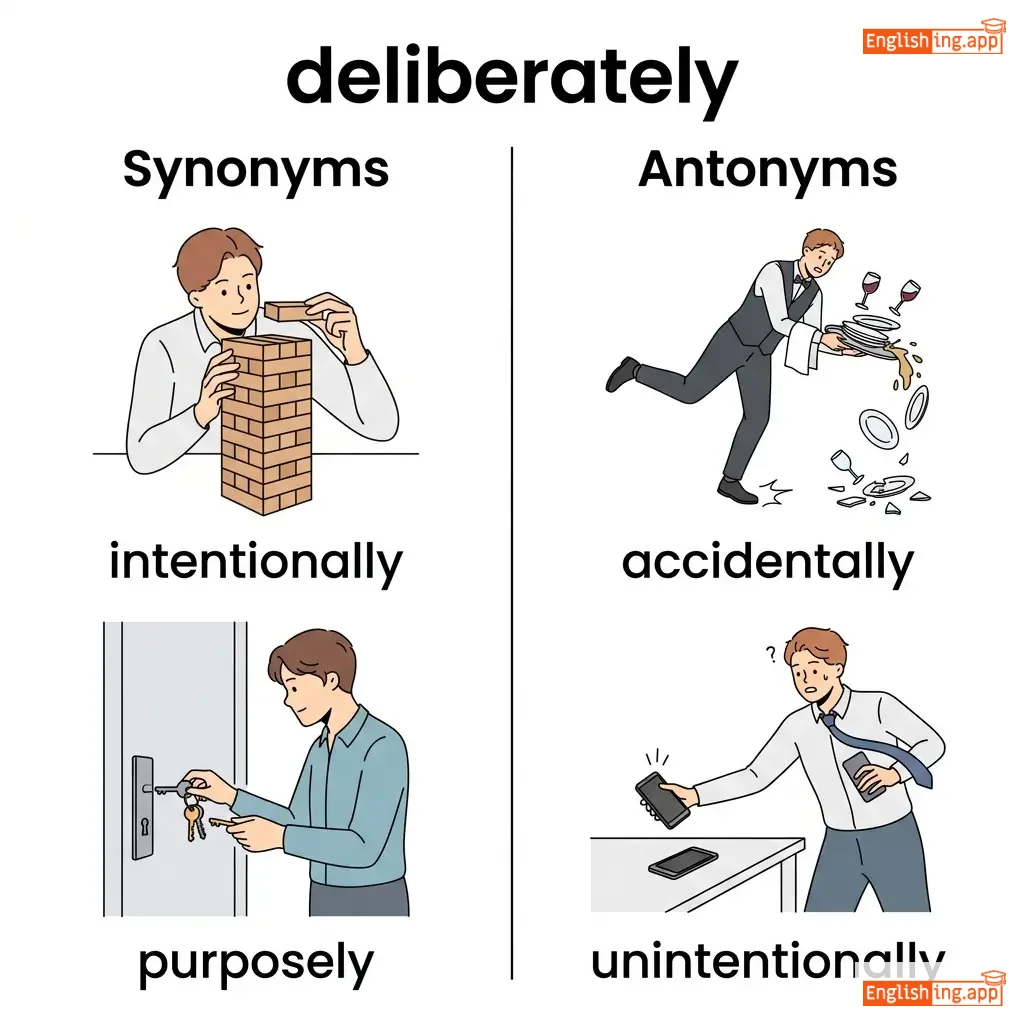
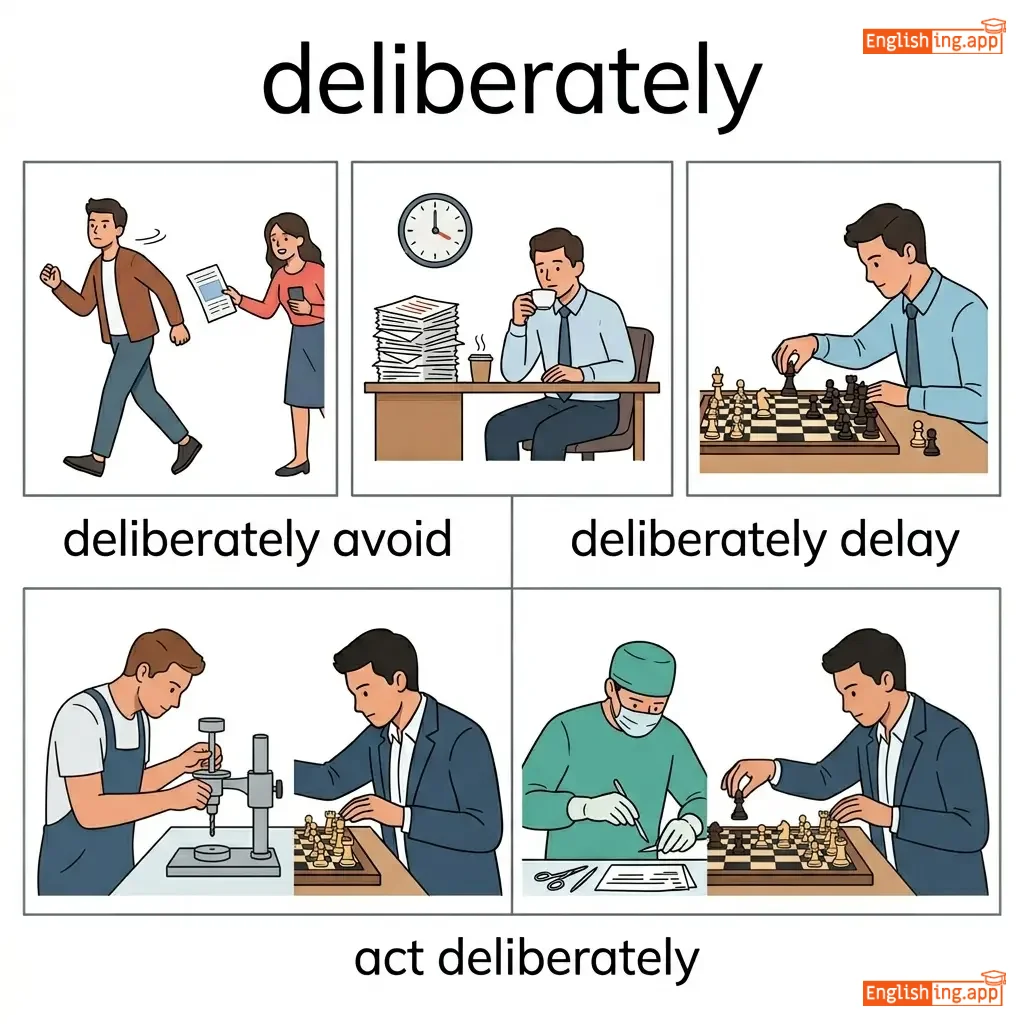
/dɪˈlɪb.ər.ət.li/
adverb
(dɪˈlɪbərətli)
••••••
|
|
意図的に; わざと; 慎重に考えた上で
itotekini; wazato; shinchou ni kangaeta ue de
••••••
|
intentionally; on purpose; with careful consideration
••••••
|
He deliberately chose not to answer the question.
彼はわざと質問に答えないことを選びました。
••••••
|
彼はわざと質問に答えないことを選びました。
Kare wa wazato shitsumon ni kotaenai koto o erabimashita.
••••••
|
intentionally, purposely, consciously
••••••
|
accidentally, unintentionally, carelessly
••••••
|
deliberately avoid, deliberately choose, deliberately ignore
••••••
|
意図的に計画することは、カフェで選ぶ時のように慎重であるべきだ。
••••••
|
|
#53
📈
|
/kənˈsɪdərəbli/
adverb
(コンシダラブリー)
••••••
|
- •••••• |
かなり; 相当
kanari; soutou
••••••
|
to a notably large degree; significantly; substantially
••••••
|
The price has increased considerably over the past year. |
昨年、価格はかなり上昇しました。
sakunen, kakaku wa kanari joushou shimashita.
••••••
|
significantly, substantially, markedly
••••••
|
slightly, minimally, insignificantly
••••••
|
increase considerably, improve considerably, differ considerably
••••••
|
No •••••• |
|
#54
❌
|
/ˈkrɒswaɪz/
adverb
(クロスワイズ)
••••••
|
- •••••• |
交差方向
kousa houkou
••••••
|
in the form of a cross; diagonally across
••••••
|
Place the logs crosswise to build a stable fire. |
安定した火を作るために丸太を交差方向に置いてください。
Anteishita hi wo tsukuru tame ni maruta wo kousa houkou ni oite kudasai.
••••••
|
diagonally, across, transversely, perpendicularly
••••••
|
lengthwise, parallel, alongside, straight
••••••
|
cut crosswise, place crosswise, arranged crosswise
••••••
|
交差方向で丸太を使って安定火!
••••••
|
|
#55
😎
|
/ˈkæʒ.u.ə.li/
adverb
(カジュアルリー)
••••••
|
- •••••• |
カジュアルに; リラックスして非公式に
kajuaru ni; rirakkusu shite hikōshiki ni
••••••
|
in a relaxed and informal way; without much thought or preparation
••••••
|
He casually mentioned that he was leaving.
彼はカジュアルに出発することを言った。
••••••
|
彼はカジュアルに出発することを言った。
Kare wa kajuaru ni shuppatsu suru koto o itta.
••••••
|
informally, relaxedly, nonchalantly, offhandedly
••••••
|
formally, seriously, deliberately, carefully
••••••
|
casually dressed, casually mention, casually ask
••••••
|
Casual = 気軽に
••••••
|
|
#56
🌲
|
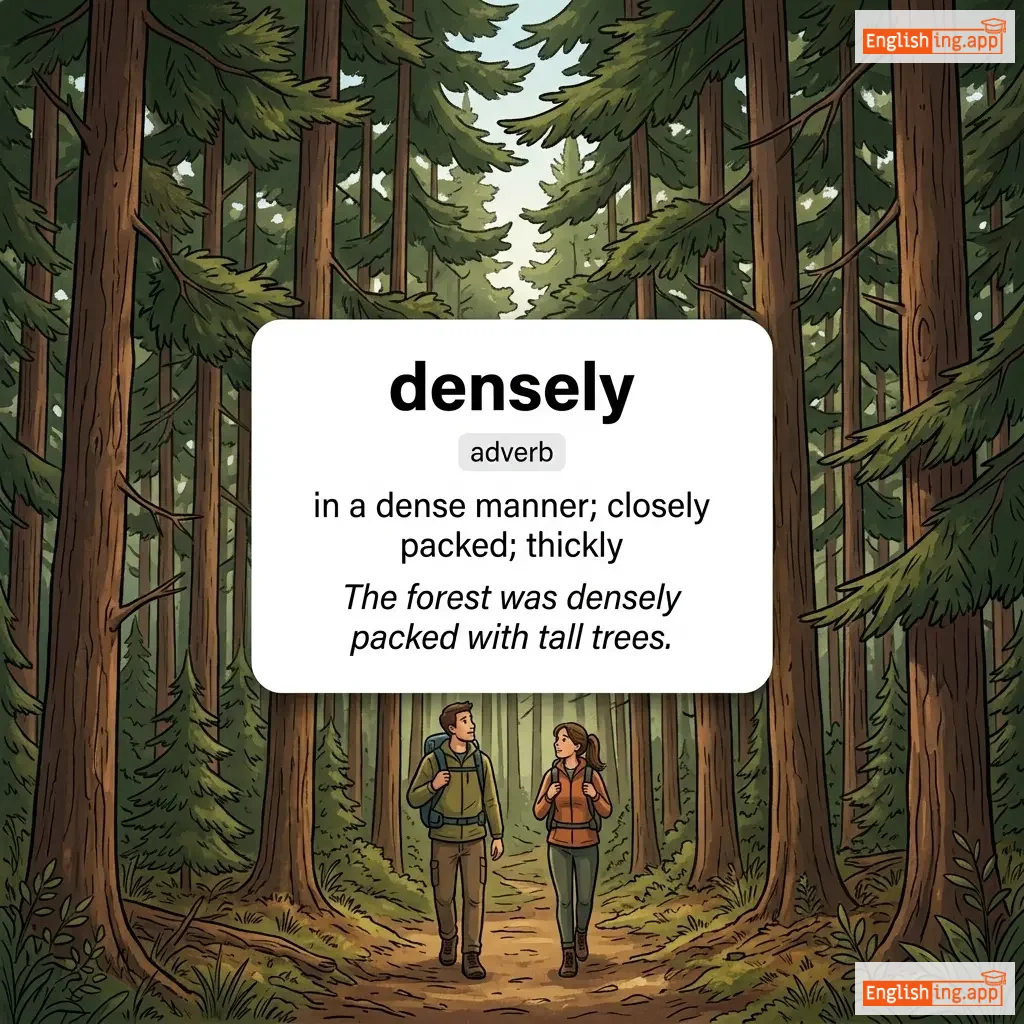
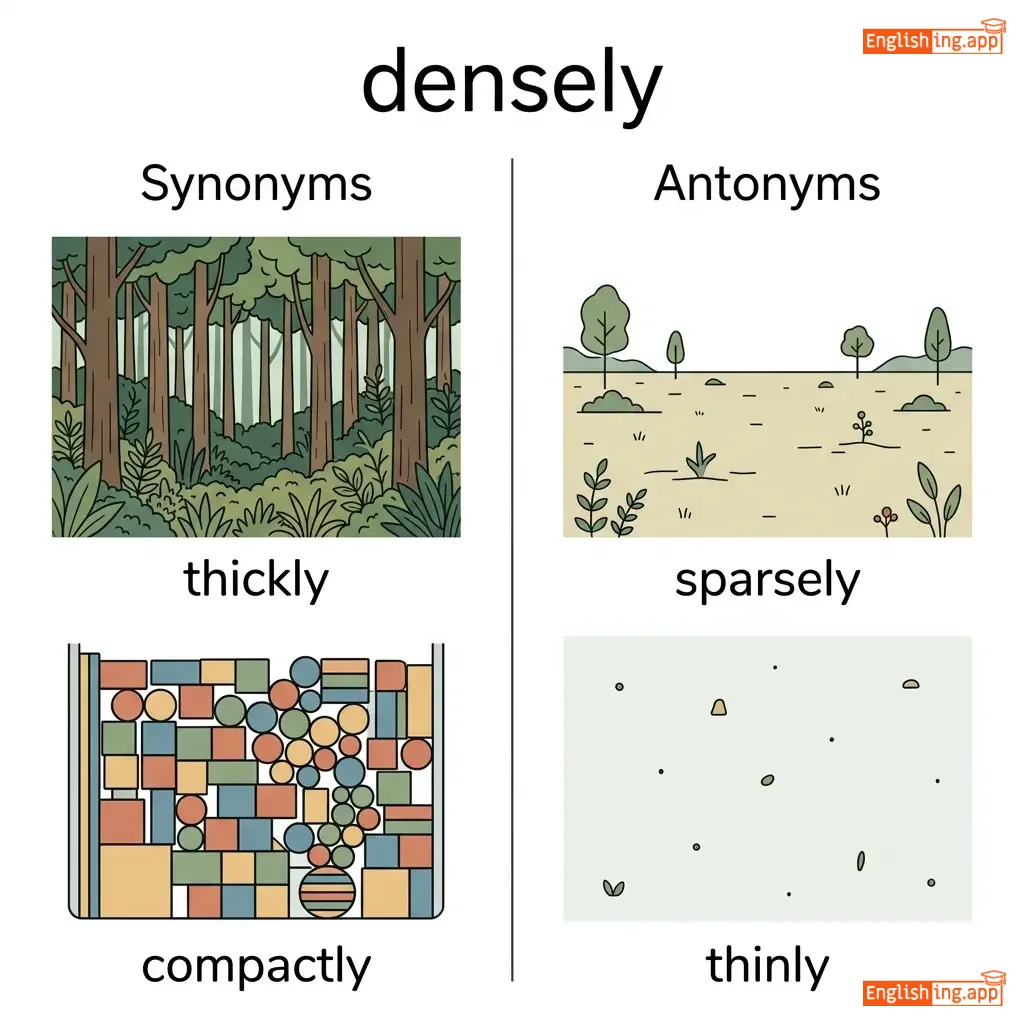
/ˈdens.li/
adverb
(デンスリー)
••••••
|
|
密集して; 密に詰められた; 厚い
misshū shite; mitsu ni tsumerareta; atsui
••••••
|
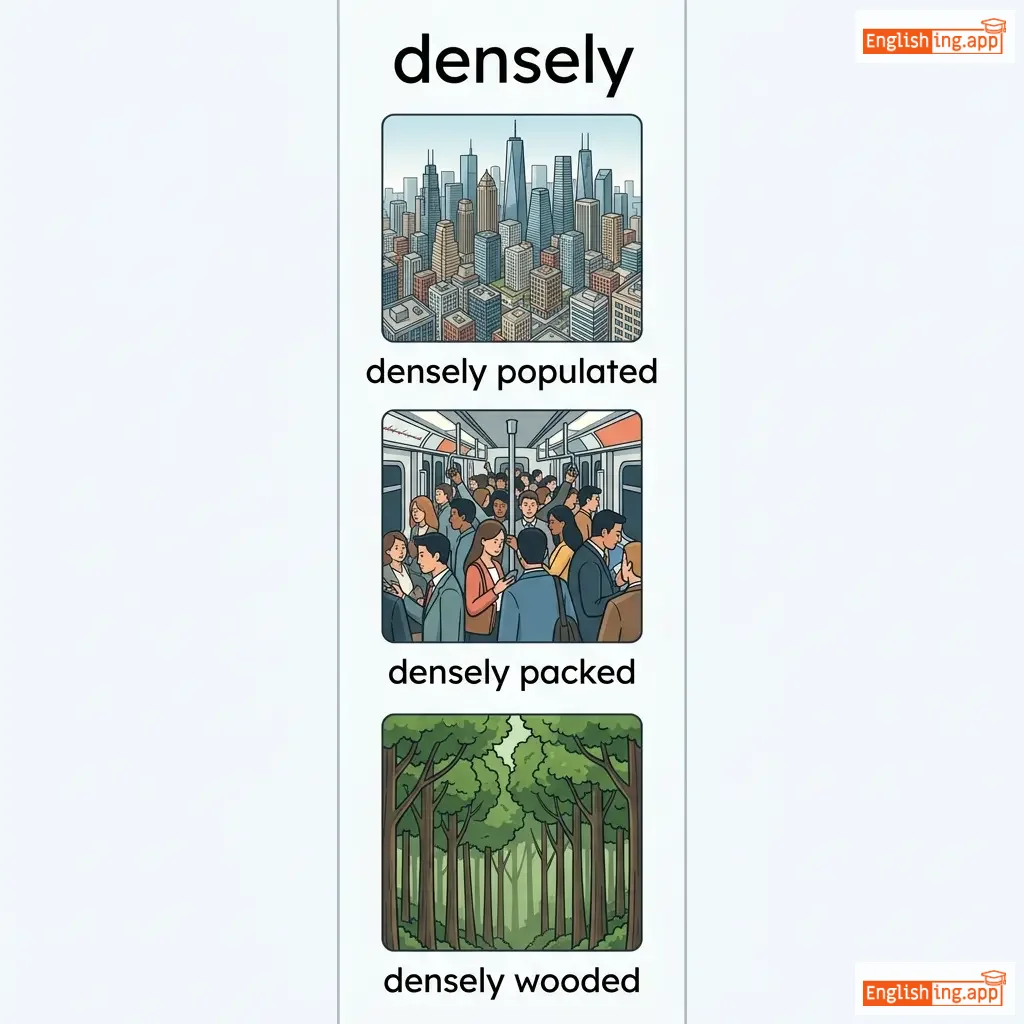
in a dense manner; closely packed; thickly
••••••
|
The forest was densely packed with tall trees. |
その森は高い木で密集していた。
sono mori wa takai ki de misshū shite ita
••••••
|
thickly, compactly, heavily
••••••
|
sparsely, thinly, loosely
••••••
|
densely populated, densely packed, densely wooded
••••••
|
森に密集した木々
••••••
|
|
#57
🔄
|
/ˈkɒnstəntli/
adverb
(コンスタントリー)
••••••
|
- •••••• |
絶え間なく; 常に; 止まることなく
taemamaku; itsumo; tomaru koto naku
••••••
|
continuously over a period of time; always; without stopping
••••••
|
The baby was constantly crying throughout the night. |
赤ちゃんは夜通し絶え間なく泣いていた。
Akachan wa yodōshi taemamaku naite ita.
••••••
|
continuously, always, perpetually
••••••
|
occasionally, rarely, never
••••••
|
constantly changing, constantly moving, constantly working
••••••
|
絶え間なく = 永遠に続く、'constant'という意味の日本語.
••••••
|
|
#58
✅
|
/ˈsɜː.tən.li/
adverb
(sātɛnli)
••••••
|
- •••••• |
確かに
tashika ni
••••••
|
without doubt; definitely; used to agree or give permission
••••••
|
I will certainly help you with this project. |
このプロジェクトであなたを確実に手伝います。
Kono purojekuto de anata o kakujitsuni tetsudaimasu.
••••••
|
definitely, surely, absolutely, undoubtedly
••••••
|
uncertainly, doubtfully, maybe, possibly
••••••
|
certainly not, certainly will, most certainly
••••••
|
Japanese: 'Tashika ni' = Certainly. English: 'For sure, certainly.'
••••••
|
|
#59
⚠️
|
/ˈdeɪndʒərəsli/
adverb
(デンジャラスリー)
••••••
|
- •••••• |
危険に
kiken ni
••••••
|
in a way that could cause harm or injury; riskily
••••••
|
He was driving dangerously fast on the highway. |
彼は高速道路で危険に速く運転していた。
kare wa kousoku douro de kiken ni hayaku unten shite ita
••••••
|
riskily, hazardously, perilously, unsafely
••••••
|
safely, securely, cautiously, carefully
••••••
|
dangerously close, dangerously high, dangerously low
••••••
|
Remember 'danger' in English and '危険' (kiken) in Japanese both relate to risk.
••••••
|
|
#60
⬇️
|
/ˌdaʊnˈsteəz/
adverb
(ダウンステアーズ)
••••••
|
- •••••• |
階下
kaika
••••••
|
on or to a lower floor of a building
••••••
|
Please go downstairs and wait in the lobby. |
階下に行ってロビーで待ってください。
Kaika ni itte robī de matte kudasai.
••••••
|
below, underneath, on the lower floor
••••••
|
upstairs, above, on the upper floor
••••••
|
go downstairs, come downstairs, live downstairs
••••••
|
Downstairs は、階下へ行くこと、地下室に向かうようなものです。
••••••
|
Vocabulary Quiz
Test your vocabulary by matching words with their translations or meanings.
Login to take the quiz
Comments (0)
Share your thoughts and join the discussion.
Join the discussion by logging in
Login to CommentNo comments yet
Be the first to share your thoughts!