

翻訳
過去
過去分詞
三人称単数
動名詞
意味
例文
例文の翻訳
同義語
対義語
コロケーション
ニーモニック
Swipe left or right, or use the buttons. Tap image to zoom.
例文の翻訳
単語
Lesson 6Lesson 6 - マスクトグル
|
絵文字
|
単語 | Images | 翻訳 | 意味 | 例文 | 例文の翻訳 | 同義語 | 対義語 | コロケーション | ニーモニック |
|---|---|---|---|---|---|---|---|---|---|---|
|
#101
🍽️
|
/ˈhʌŋ.ɡrə.li/
adverb
(ハングリリー)
••••••
|
- •••••• |
空腹で; 欲張って; 熱心に
kōfuku de; yokubatte; nesshin ni
••••••
|
in a way that shows hunger; greedily; eagerly
••••••
|
The dog ate hungrily after not eating for hours. |
犬は数時間食べていなかった後、空腹で食べました。
Inu wa suū jikan tabete inakatta ato, kōfuku de tabemashita.
••••••
|
greedily, eagerly, voraciously, ravenously
••••••
|
slowly, reluctantly, sparingly
••••••
|
eat hungrily, devour hungrily, look hungrily
••••••
|
‘空腹’を使って、‘hungrily’を覚える。
••••••
|
|
#102
😄
|
/ˈmerɪli/
adverb
(メリリー)
••••••
|
- •••••• |
楽しそうに
tanoshisou ni
••••••
|
in a cheerful and joyful manner
••••••
|
The children played merrily in the garden. |
子供たちは庭で楽しそうに遊んでいました。
Kodomotachi wa niwa de tanoshisou ni asonde imashita.
••••••
|
cheerfully, joyfully, happily, gaily
••••••
|
sadly, mournfully, gloomily, sorrowfully
••••••
|
laugh merrily, sing merrily, dance merrily
••••••
|
Merrily = 楽しそうに, 子供たちが楽しく遊んでいる
••••••
|
|
#103
😴
|
/ˈleɪ.zɪ.li/
adverb
(レイジリー)
••••••
|
- •••••• |
怠惰に
taida ni
••••••
|
in a way that shows unwillingness to work or use energy; sluggishly
••••••
|
He lazily stretched his arms and yawned in the morning.
彼は怠惰に腕を伸ばし、朝にあくびをした。
••••••
|
彼は怠惰に腕を伸ばし、朝にあくびをした。
Kare wa taida ni ude o nobashi, asa ni akubi o shita.
••••••
|
sluggishly, slowly, idly, lethargically
••••••
|
energetically, actively, quickly, vigorously
••••••
|
lazily stretch, lazily walk, lazily drift
••••••
|
怠惰に起きることが、まるで寝坊した猫のよう
••••••
|
|
#104
✋
|
/ˈmæn.ju.ə.li/
adverb
(マニュアル)
••••••
|
- •••••• |
手動で; 物理的な労力を使って;
shudō de; butsuriteki na rōryoku o tsukatte
••••••
|
by hand; using physical effort rather than machines
••••••
|
The data was entered manually into the system.
データは手動でシステムに入力されました。
••••••
|
データは手動でシステムに入力されました。
Dēta wa shudō de shisutemu ni nyūryoku saremashita.
••••••
|
by hand, physically, personally
••••••
|
automatically, mechanically, digitally
••••••
|
manually operated, manually controlled, enter manually
••••••
|
日本語の'手動'と'マニュアル'を関連付けて覚える。
••••••
|
|
#105
🤷♂️
|
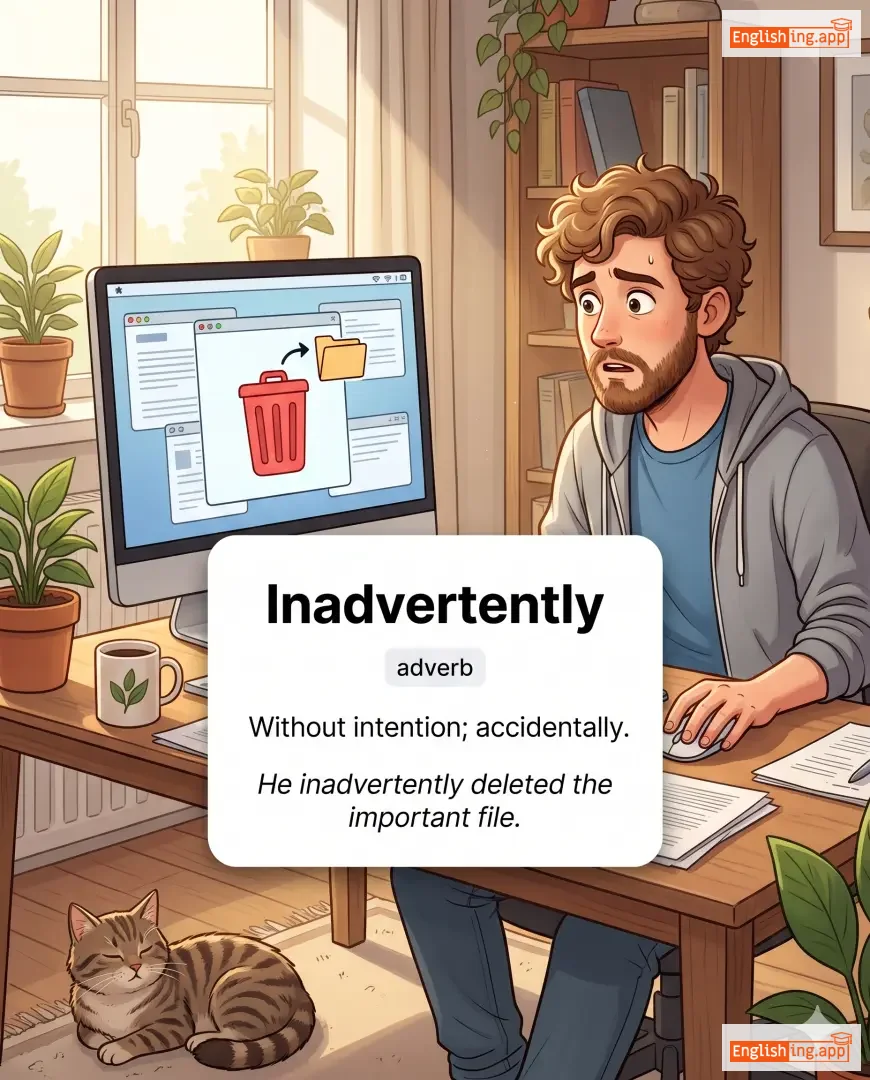
/ˌɪn.ədˈvɜːr.tənt.li/
adverb
(イナドヴァーテントリー)
••••••
|
|
うっかり; ついうっかり; 誤って
ukkari; tsui ukkari; ayamatta
••••••
|
without being aware of what you are doing; unintentionally; by mistake
••••••
|
She inadvertently deleted the important file while cleaning her computer. |
彼女はコンピュータを掃除しているとき、重要なファイルをうっかり削除してしまった。
Kanojo wa konpyu-ta wo souji shite iru toki, juuyou na fairu wo ukkari sakujyo shite shimatta.
••••••
|
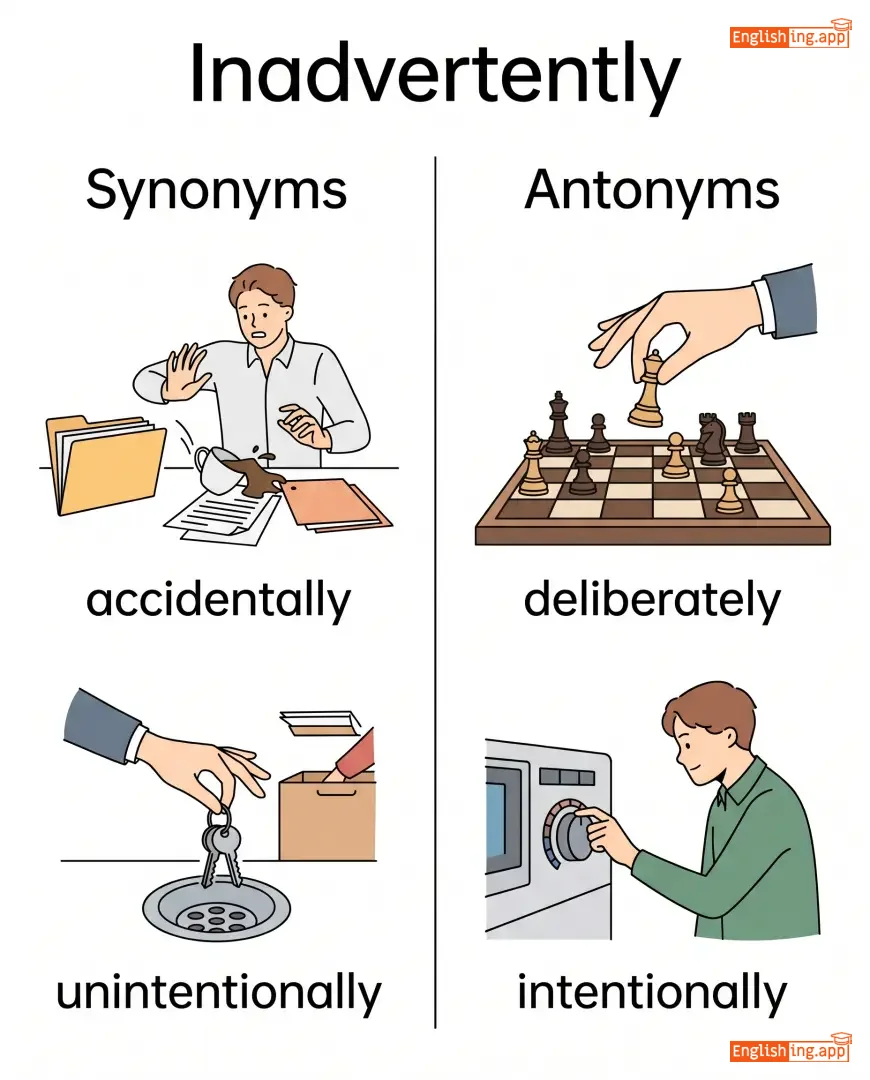
accidentally, unintentionally, unknowingly, mistakenly
••••••
|
deliberately, intentionally, purposely, consciously
••••••
|
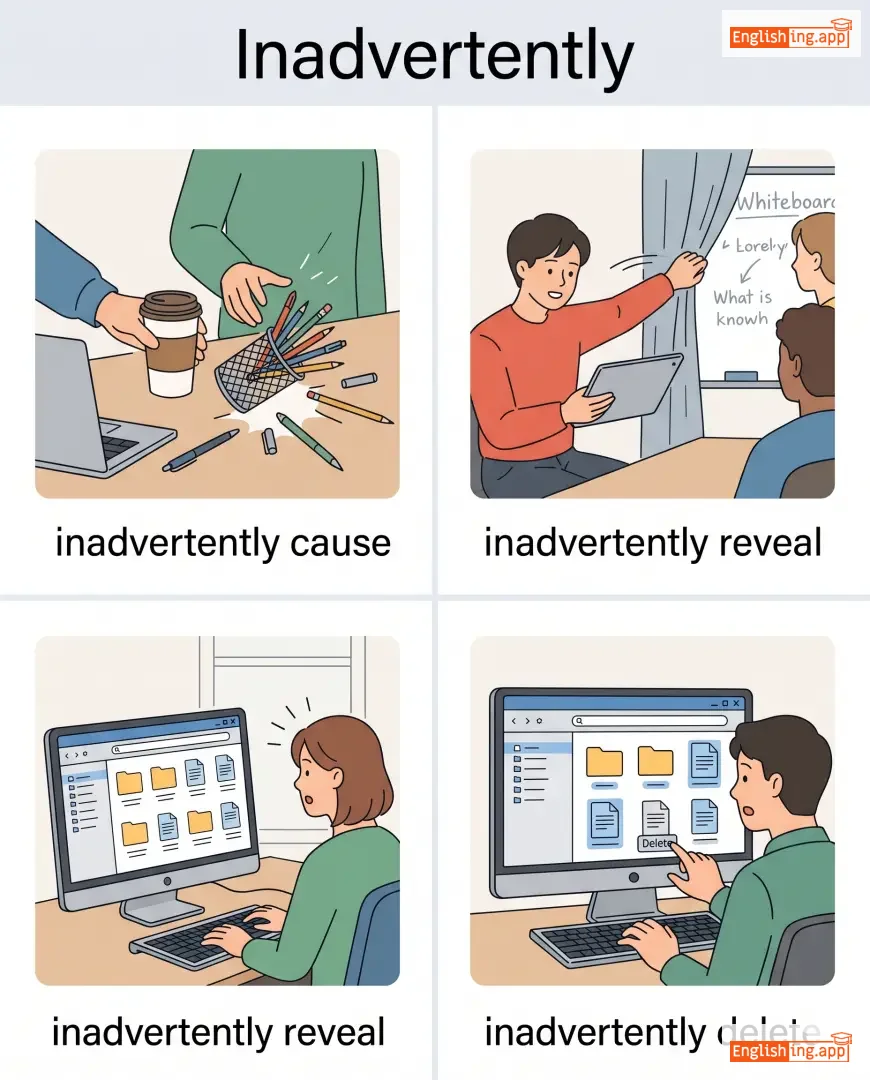
inadvertently reveal, inadvertently cause, inadvertently delete
••••••
|
うっかり — 意図せずやってしまうこと、例えばファイルを間違って削除!
••••••
|
|
#106
🎯
|
/mɪdst/
adverb
(ミッドスト)
••••••
|
- •••••• |
真ん中で; その中で
mannaka de; sono naka de
••••••
|
in the middle of; among
••••••
|
She stood in the midst of the crowd. |
彼女は群衆の真ん中に立っていました。
Kanojo wa gunshū no mannaka ni tatte imashita.
••••••
|
middle, center, among, between
••••••
|
edge, border, outside, periphery
••••••
|
in the midst of, midst the chaos, midst the confusion
••••••
|
Midst = '真ん中で' - Picture yourself in the midst of a sea of people.
••••••
|
|
#107
⏰
|
/ˈmiːn.taɪm/
adverb
(ミーンタイム)
••••••
|
- •••••• |
その間に
sono aida ni
••••••
|
during the time between two events; in the period of time between now and when something else happens
••••••
|
The food will be ready in an hour; in the meantime, we can watch TV.
食べ物は1時間後に準備が整います。その間にテレビを見ていましょう。
••••••
|
食べ物は1時間後に準備が整います。その間にテレビを見ていましょう。
Tabemono wa 1 jikan go ni junbi ga totonaimasu. Sono aida ni terebi o mite ikimashou.
••••••
|
meanwhile, in the interim, for now
••••••
|
permanently, finally, ultimately
••••••
|
in the meantime, for the meantime
••••••
|
Meantime means 'その間に' – Time to do something while waiting!
••••••
|
|
#108
📏
|
/ˈleŋθ.waɪz/
adverb
(レンサワイズ)
••••••
|
- •••••• |
長さに沿って; 最長の寸法に沿って
nagasa ni sotte; saichou no sunpou ni sotte
••••••
|
in the direction of the length; along the longest dimension
••••••
|
Fold the paper lengthwise to make it easier to carry.
紙を長さに沿って折りたたんで、持ち運びやすくします。
••••••
|
紙を長さに沿って折りたたんで、持ち運びやすくします。
kami o nagasa ni sotte oritatande, mochihakobiyasuku shimasu.
••••••
|
longitudinally, along the length
••••••
|
widthwise, crosswise, breadthwise
••••••
|
fold lengthwise, cut lengthwise, divide lengthwise
••••••
|
長さを使って、長く折りたたむ
••••••
|
|
#109
🤔
|
/ˈlaɪk.li/
adverb
(ライクリ)
••••••
|
- •••••• |
おそらく; 高い確率で
osoraku; takai kakuritsu de
••••••
|
probably; having a high probability of happening or being true
••••••
|
It will likely rain tomorrow according to the weather forecast.
天気予報によると、明日はおそらく雨が降るでしょう。
••••••
|
天気予報によると、明日はおそらく雨が降るでしょう。
tenki yohou ni yoru to, ashita wa osoraku ame ga furu deshou.
••••••
|
probably, possibly, presumably, apparently
••••••
|
unlikely, improbably, doubtfully
••••••
|
most likely, very likely, quite likely, more likely
••••••
|
おそらく雨のように
••••••
|
|
#110
⌚
|
/ˈmiːn.waɪl/
adverb
(mīn wairu)
••••••
|
- •••••• |
その間
sono aida
••••••
|
at the same time; during the same period
••••••
|
She was cooking dinner, meanwhile he was setting the table.
彼女は夕食を作っていた、その間、彼はテーブルを整えていた。
••••••
|
彼女は夕食を作っていた、その間、彼はテーブルを整えていた。
Kanojo wa yūshoku o tsukutte ita, sono aida, kare wa tēburu o totonoete ita.
••••••
|
meantime, at the same time, simultaneously
••••••
|
later, afterwards, subsequently
••••••
|
meanwhile back, meanwhile elsewhere
••••••
|
In Japanese, 'その間' means 'meanwhile', reflecting events occurring in the same period.
••••••
|
|
#111
🎯❌
|
/ˌɪn.dɪˈskrɪm.ɪ.nət.li/
adverb
(インディスクリミネートリー)
••••••
|
- •••••• |
無差別に
musabetsu ni
••••••
|
without making careful distinctions; randomly; without discrimination
••••••
|
The company fired employees indiscriminately without considering their performance.
会社は従業員を彼らのパフォーマンスを考慮せずに無差別に解雇しました。
••••••
|
会社は従業員を彼らのパフォーマンスを考慮せずに無差別に解雇しました。
Kaisha wa jūgyōin o karera no pafōmansu o kōryo sezu ni musabetsu ni kaiko shimashita.
••••••
|
randomly, arbitrarily, blindly, carelessly
••••••
|
selectively, carefully, discriminately, thoughtfully
••••••
|
kill indiscriminately, attack indiscriminately, choose indiscriminately
••••••
|
Indiscriminately means without care; in Japanese, it’s ‘無差別に.’
••••••
|
|
#112
↔️
|
/ˈmɪdweɪ/
adverb
(ミッドウェイ)
••••••
|
- •••••• |
中途; 真ん中で
chūto; mannaka de
••••••
|
halfway; at or to the middle point
••••••
|
The project is midway through completion.
プロジェクトは完了に向かってミッドウェイにあります。
••••••
|
プロジェクトは完了に向かってミッドウェイにあります。
Purojekuto wa kanryō ni mukatte middowei ni arimasu.
••••••
|
halfway, middle, center, intermediate
••••••
|
beginning, end, start, finish
••••••
|
midway point, midway through, midway between
••••••
|
中途、半ば
••••••
|
|
#113
↔️
|
/ˈlaɪk.waɪz/
adverb
(ライクワイズ)
••••••
|
- •••••• |
同様に; 同じように; 似たように
dōyō ni; onaji yō ni; nita yō ni
••••••
|
in the same way; also; similarly
••••••
|
She studied hard for the exam, and her brother did likewise.
彼女は試験のために一生懸命勉強し、彼女の兄も同様にしました。
••••••
|
彼女は試験のために一生懸命勉強し、彼女の兄も同様にしました。
Kanojo wa shiken no tame ni isshōkenmei benkyō shi, kanojo no ani mo dōyō ni shimashita.
••••••
|
similarly, also, too, equally
••••••
|
differently, otherwise, conversely
••••••
|
do likewise, think likewise, act likewise
••••••
|
Picture a pair of siblings doing things the same way, both achieving success.
••••••
|
|
#114
🙇
|
/ˈmiːk.li/
adverb
(mīkuri)
••••••
|
- •••••• |
従順に; おとなしく
jūjun ni; otonashiku
••••••
|
in a quiet, gentle way; without resistance or protest
••••••
|
He meekly accepted the criticism without arguing. |
彼は反論せずに従順に批判を受け入れた。
Kare wa hanron sezu ni jūjun ni hihan o ukeireta.
••••••
|
humbly, submissively, quietly
••••••
|
boldly, defiantly, aggressively
••••••
|
meekly accept, meekly submit, meekly follow
••••••
|
In Japanese, meekly is ‘jūjun,’ like accepting a quiet apology.
••••••
|
|
#115
↕️
|
/ɪnˈvɜːrs.li/
adverb
(インバースリー)
••••••
|
- •••••• |
逆に; 反対に
gyaku ni; hantai ni
••••••
|
in a way that is opposite or contrary; in reverse order or manner
••••••
|
The price of goods is inversely related to their availability in the market. |
商品の価格は市場での入手可能性に逆に関連しています。
shōhin no kakaku wa shijō de no nyūshu kanō-sei ni gyaku ni kanren shiteimasu.
••••••
|
oppositely, contrarily, conversely, reversely
••••••
|
directly, proportionally, correspondingly, similarly
••••••
|
inversely proportional, inversely related, inversely correlated
••••••
|
逆に = 反対方向に
••••••
|
|
#116
🔍
|
/maɪˈnjuːtli/
adverb
(マイニュートリー)
••••••
|
- •••••• |
慎重に
shinchou ni
••••••
|
in very small detail; extremely carefully
••••••
|
The detective examined the evidence minutely.
探偵は証拠を慎重に調べました。
••••••
|
探偵は証拠を慎重に調べました。
Tantei wa shouko wo shinchou ni shirabemashita.
••••••
|
carefully, precisely, meticulously, thoroughly
••••••
|
carelessly, roughly, hastily, broadly
••••••
|
examine minutely, study minutely, observe minutely
••••••
|
慎重に探偵のように、すべてを調べましょう。
••••••
|
|
#117
🎯
|
/ˈmeɪn.li/
adverb
(メインリー)
••••••
|
- •••••• |
主に; おもに
omoni; omoni
••••••
|
for the most part; chiefly; primarily
••••••
|
The conference was mainly about environmental protection and climate change.
会議は主に環境保護と気候変動についてでした。
••••••
|
会議は主に環境保護と気候変動についてでした。
kaigi wa omoni kankyō hogo to kikō hendō ni tsuite deshita
••••••
|
chiefly, primarily, mostly, principally
••••••
|
secondarily, slightly, minimally
••••••
|
mainly because, mainly due to, mainly focused
••••••
|
主に = 物事の主たる部分、環境が最も重要な部分です。
••••••
|
|
#118
⏰
|
/ˈleɪt.li/
adverb
(レイトリー)
••••••
|
- •••••• |
最近; この頃;
saikin
••••••
|
recently; in the recent past; not long ago
••••••
|
I haven't seen him lately, but I heard he got a new job.
アイ ハブント シーン ヒム レイトリー, バット アイ ハード ヒー ガット ア ニュー ジョブ。
••••••
|
最近彼を見ていませんが、新しい仕事を得たと聞きました。
saikin kare o miteimasen ga, atarashii shigoto o eta to kikimashita.
••••••
|
recently, currently, nowadays, presently
••••••
|
formerly, previously, earlier, long ago
••••••
|
lately been, seen lately, lately noticed
••••••
|
Lately = レイトリー sounds like 'late' and means 最近 (saikin) — recently.
••••••
|
|
#119
🧠
|
/ˈmen.tə.li/
adverb
(メンタリー)
••••••
|
- •••••• |
精神的に
seishinteki ni
••••••
|
relating to the mind; in terms of mental processes
••••••
|
She was mentally preparing herself for the exam.
彼女は試験のために精神的に準備していた。
••••••
|
彼女は試験のために精神的に準備していた。
Kanojo wa shiken no tame ni seishinteki ni junbi shite ita.
••••••
|
psychologically, intellectually, cognitively
••••••
|
physically, bodily, materially
••••••
|
mentally prepared, mentally strong, mentally exhausted
••••••
|
Mental + 的に = 精神的に
••••••
|
|
#120
😢
|
/ˈmɪzərəbli/
adverb
(ミゼラブリー)
••••••
|
- •••••• |
悲惨に
hisan ni
••••••
|
in a wretched or unhappy manner; extremely badly
••••••
|
The team performed miserably in the championship.
チームはチャンピオンシップでミゼラブリーにプレーしました。
••••••
|
チームはチャンピオンシップで悲惨にプレーしました。
Chiimu wa chanpionshipu de hisan ni puree shimashita.
••••••
|
wretchedly, pitifully, dreadfully, terribly
••••••
|
successfully, wonderfully, excellently, admirably
••••••
|
fail miserably, perform miserably, end miserably
••••••
|
悲惨に似た言葉で、ひどく負けた試合を連想させる。
••••••
|
Vocabulary Quiz
Test your vocabulary by matching words with their translations or meanings.
Login to take the quiz
Comments (0)
Share your thoughts and join the discussion.
Join the discussion by logging in
Login to CommentNo comments yet
Be the first to share your thoughts!