|
絵文字
|
単語 | Images | 翻訳 | 過去 | 過去分詞 | 三人称単数 | 動名詞 | 意味 | 例文 | 例文の翻訳 | 表現例 | 表現例の意味 | 表現例の翻訳 | 同義語 | 対義語 | コロケーション | ニーモニック |
|---|---|---|---|---|---|---|---|---|---|---|---|---|---|---|---|---|---|
|
🧦
••••••
|
/sɒk/
noun
••••••
|
- •••••• | - •••••• | - •••••• | - •••••• | - •••••• | - •••••• |
a piece of clothing worn on the foot and lower part of the leg.
••••••
|
He put on a pair of clean socks before leaving the house. |
- •••••• |
pull up your socks |
to make an effort to improve your performance or behavior.
••••••
|
- •••••• |
stocking, hosiery, footwear, covering
••••••
|
barefoot, naked foot
••••••
|
pair of socks, woolen socks, cotton socks, ankle socks
••••••
|
No •••••• |
|
🧸
••••••
|
/sɔft/
adjective
(ソフト)
••••••
|
- •••••• |
柔らかい; やさしい; 静か
yawarakai; yasashii; shizuka
••••••
|
- •••••• | - •••••• | - •••••• | - •••••• |
not hard or firm; gentle; quiet; tender
••••••
|
The pillow is very soft and comfortable. |
枕はとても柔らかくて快適です。
makura wa totemo yawarakakute kaiteki desu
••••••
|
- •••••• | - •••••• | - •••••• |
gentle, tender, smooth, mild
••••••
|
hard, rough, firm, harsh
••••••
|
soft touch, soft voice, soft fabric, soft light
••••••
|
柔らかい枕で快適
••••••
|
|
💻
••••••
|
/ˈsɒftweə/
noun
(ソフトウェア)
••••••
|
- •••••• |
ソフトウェア
sofuto wea
••••••
|
- •••••• | - •••••• | - •••••• | - •••••• |
the programs and other operating information used by a computer
••••••
|
He installed the software to enhance the performance of his computer.
彼はコンピュータの性能を向上させるためにソフトウェアをインストールしました。
••••••
|
彼はコンピュータの性能を向上させるためにソフトウェアをインストールしました。
Kare wa konpyu-ta no seinou wo koujou saseru tame ni sofuto wea wo insuto-ru shimashita.
••••••
|
- •••••• | - •••••• | - •••••• |
program, application, system, platform
••••••
|
hardware
••••••
|
software development, software engineer, software update, software application
••••••
|
ソフトウェア - コンピュータの性能向上に重要です。 Software is important for improving the computer's performance.
••••••
|
|
🌱
••••••
|
/sɔɪl/
noun
••••••
|
|
- •••••• | - •••••• | - •••••• | - •••••• | - •••••• |
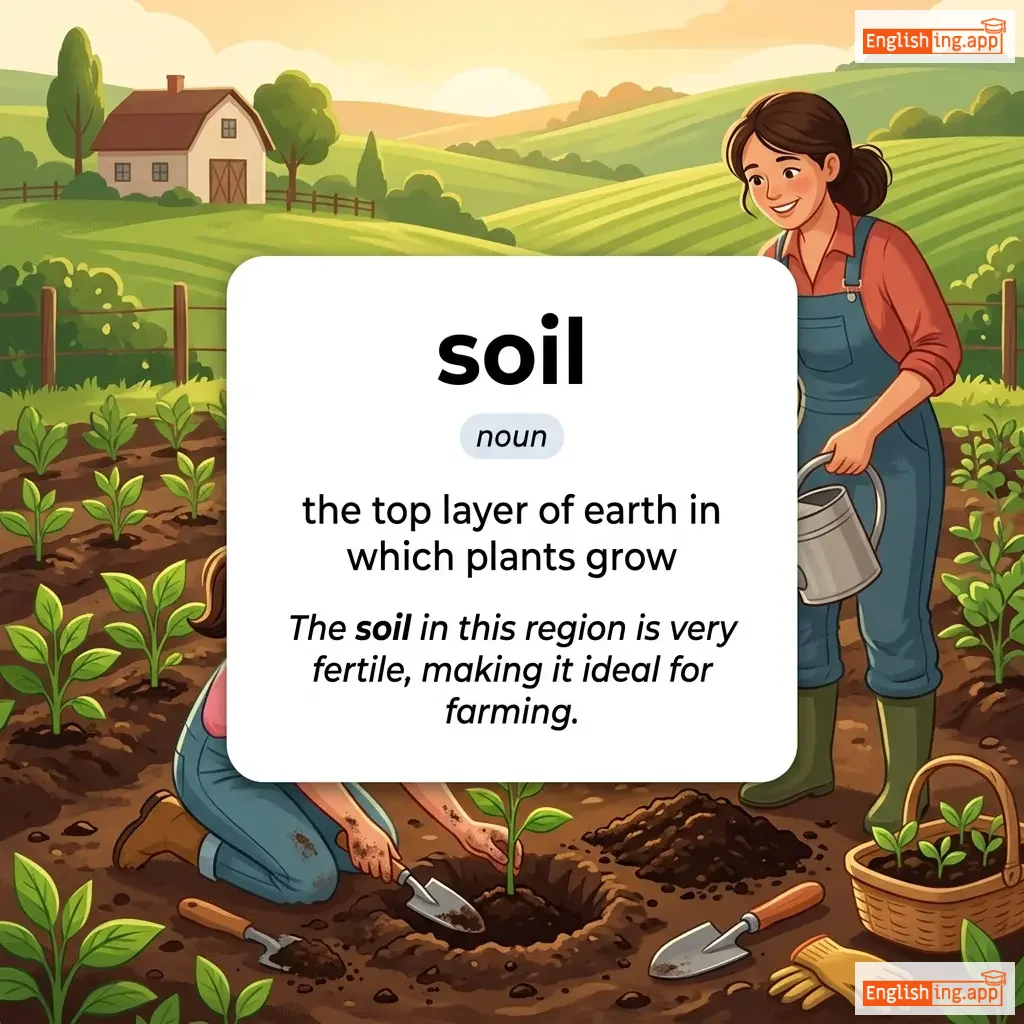
the upper layer of earth in which plants grow; dirt or earth
••••••
|
Rich soil is essential for healthy plant growth. |
- •••••• | - •••••• | - •••••• | - •••••• |
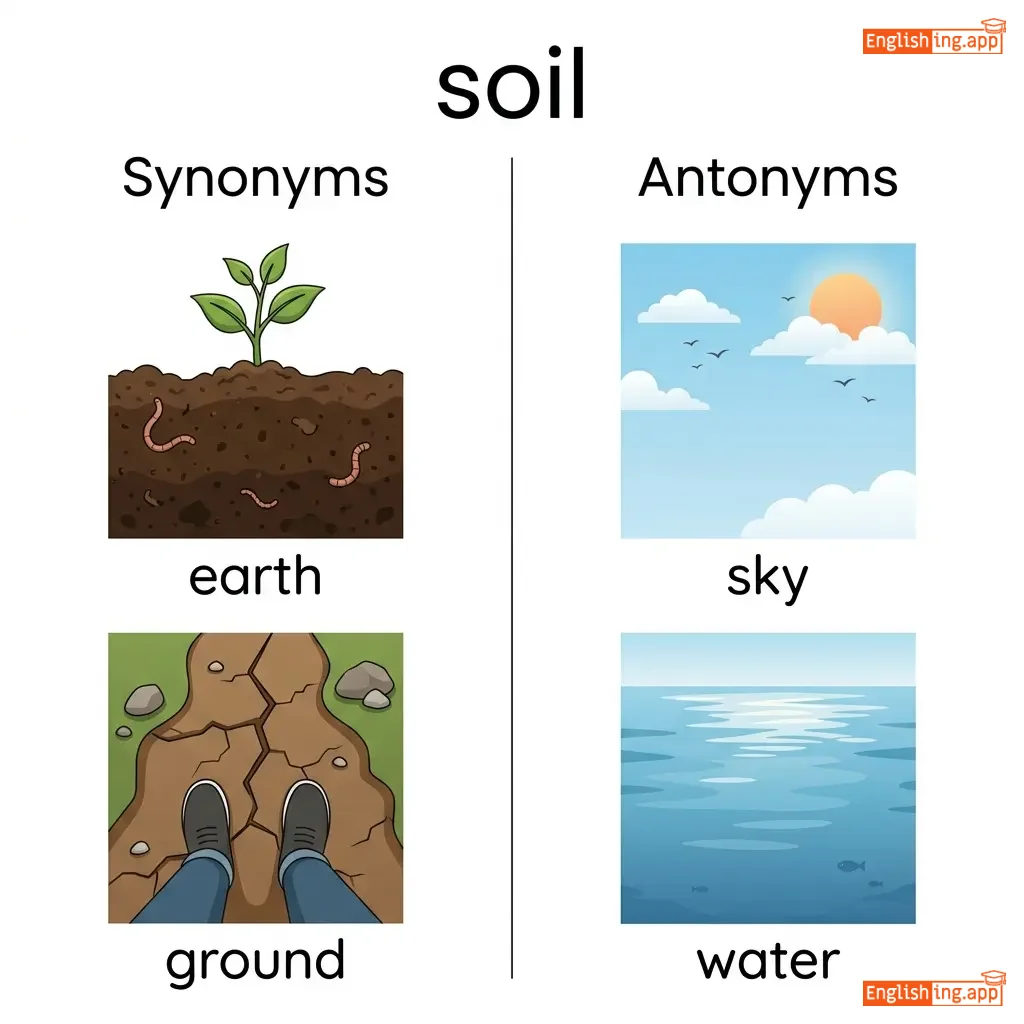
earth, dirt, ground, mud
••••••
|
rock, stone, concrete
••••••
|
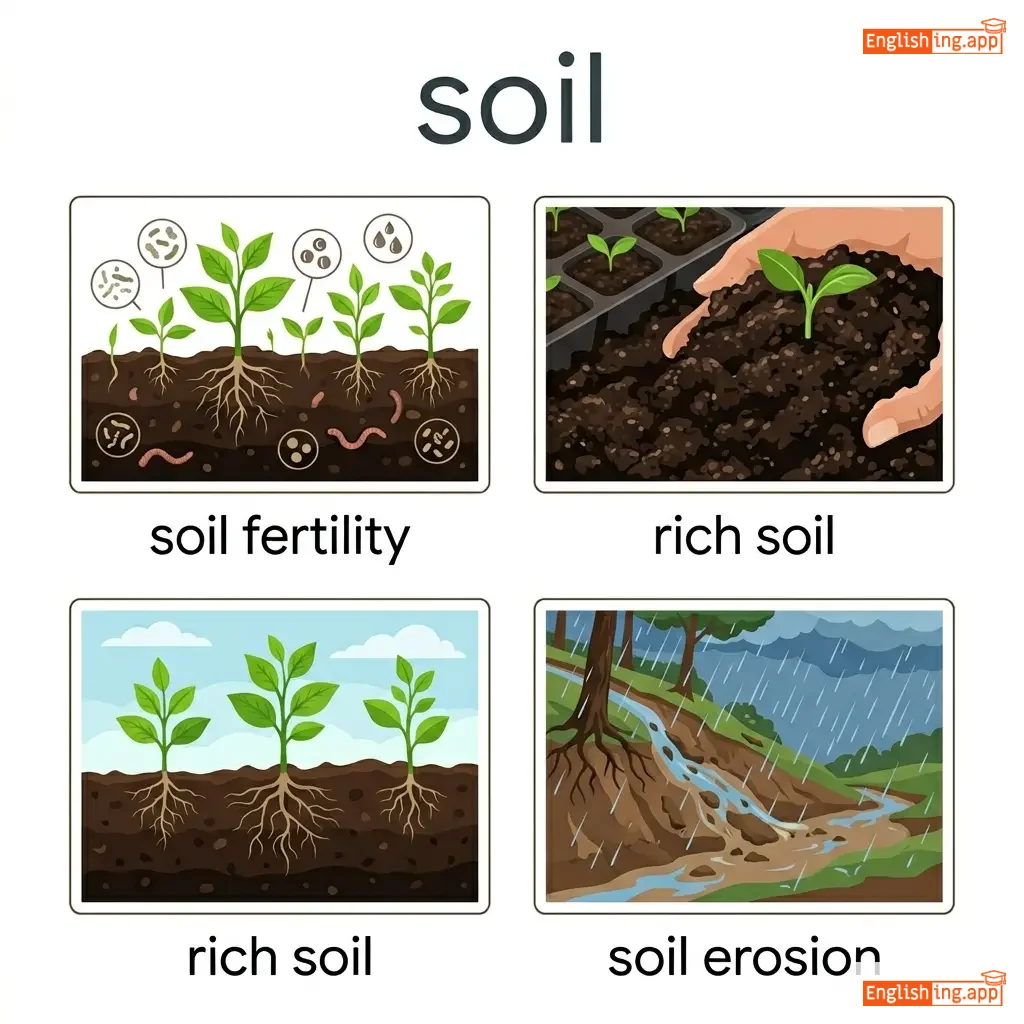
fertile soil, sandy soil, clay soil, soil erosion
••••••
|
No •••••• |
|
☀️
••••••
|
/ˈsoʊlər/
adjective
(ソーラー)
••••••
|
- •••••• |
太陽の
taiyō no
••••••
|
- •••••• | - •••••• | - •••••• | - •••••• |
Relating to or determined by the sun
••••••
|
The house is powered by solar energy. |
この家は太陽エネルギーで動いています。
Kono ie wa taiyō enerugī de ugoiteimasu.
••••••
|
solar power |
energy derived from the sun
••••••
|
太陽エネルギー
taiyō enerugī
••••••
|
sun-powered, sun-based, radiant, heliacal
••••••
|
lunar, artificial
••••••
|
solar energy, solar panel, solar system, solar eclipse
••••••
|
Solarは太陽に関連 → ソーラーパネルは太陽のエネルギーをキャッチします
••••••
|
|
🪖
••••••
|
/ˈsoʊldʒər/
noun
(ソルジャー)
••••••
|
- •••••• |
兵士
heishi
••••••
|
- •••••• | - •••••• | - •••••• | - •••••• |
a person who serves in an army, especially as a professional fighter
••••••
|
The soldier marched proudly with his unit.
兵士は誇りを持って自分の部隊と共に行進した。
••••••
|
兵士は誇りを持って自分の部隊と共に行進した。
Heishi wa hokori wo motte jibun no butai to tomo ni koushin shita.
••••••
|
old soldier
老兵
••••••
|
a person with much experience in military service or in life
••••••
|
老兵
rōhei
••••••
|
trooper, warrior, fighter, serviceman, combatant
••••••
|
civilian, noncombatant
••••••
|
brave soldier, professional soldier, soldier on, soldier's duty
••••••
|
ソルジャー = 兵士、覚えやすい!
••••••
|
|
👤
••••••
|
/soʊl/
adjective
(ソール)
••••••
|
- •••••• |
唯一の
yuiitsu no
••••••
|
- •••••• | - •••••• | - •••••• | - •••••• |
being the only one; single and not shared with others
••••••
|
She was the sole survivor of the accident. |
彼女はその事故の唯一の生存者でした。
Kanojo wa sono jiko no yuiitsu no seizonsha deshita.
••••••
|
sole proprietor |
a person who owns and runs a business alone
••••••
|
個人事業主
kojin jigyō-nushi
••••••
|
only, single, exclusive, lone, solitary
••••••
|
shared, joint, multiple
••••••
|
sole purpose, sole responsibility, sole owner, sole agent
••••••
|
Soleは'唯一'を意味します — '唯一の生存者'は、彼女だけが生き残ったことを意味します。
••••••
|
|
🎯
••••••
|
/ˈsoʊlli/
adverb
(ソーリー)
••••••
|
- •••••• |
単独で
tandoku de
••••••
|
- •••••• | - •••••• | - •••••• | - •••••• |
only; not involving anyone or anything else
••••••
|
He is solely responsible for the decision.
彼はその決定に完全に責任を持っています。
••••••
|
彼はその決定に完全に責任を持っています。
Kare wa sono kettei ni kanzen ni sekinin o motteimasu.
••••••
|
- •••••• | - •••••• | - •••••• |
only, exclusively, purely, entirely, alone
••••••
|
jointly, collectively
••••••
|
solely responsible, solely based on, solely for, solely focused on
••••••
|
Solelyは単独でを意味します — '単独で責任を持つ'は完全に責任を持つという意味です。
••••••
|
|
⚖️
••••••
|
/səˈlɪsɪtər/
noun
(ソリシター)
••••••
|
- •••••• |
弁護士
bengoshi
••••••
|
- •••••• | - •••••• | - •••••• | - •••••• |
A type of lawyer who gives legal advice and prepares legal documents, often representing clients in lower courts.
••••••
|
She consulted a solicitor before signing the contract. |
彼女は契約書に署名する前に弁護士に相談しました。
Kanojo wa keiyaku-sho ni shomei suru mae ni bengoshi ni sōdan shimashita.
••••••
|
- •••••• | - •••••• | - •••••• |
lawyer, attorney, advocate, legal advisor
••••••
|
client, layperson
••••••
|
consult a solicitor, hire a solicitor, solicitor firm, solicitor general
••••••
|
Solicitor は弁護士を意味します – 安定した法的アドバイスを得るために、ソリシターに相談してください。
••••••
|
|
🪨
••••••
|
/ˈsɒlɪd/
adjective
(ソリッド)
••••••
|
- •••••• |
固体
kotai
••••••
|
- •••••• | - •••••• | - •••••• | - •••••• |
firm and stable in shape; not liquid or fluid
••••••
|
The ground was solid underfoot. |
地面は足元で固かった。
Jimen wa ashimoto de katakatta.
••••••
|
- •••••• | - •••••• | - •••••• |
hard, firm, sturdy, unyielding
••••••
|
liquid, soft, weak
••••••
|
solid foundation, solid object, solid surface, solid structure
••••••
|
Solid rock under your feet means strength! 'Solid' and '固体' are strong!
••••••
|
|
✊
••••••
|
/ˌsɒlɪˈdærɪti/
noun
(ソリダリティ)
••••••
|
- •••••• |
連帯
rentai
••••••
|
- •••••• | - •••••• | - •••••• | - •••••• |
Unity or agreement of feeling or action, especially among individuals with a common interest.
••••••
|
Workers held a strike in solidarity with their colleagues.
労働者たちは同僚たちとの連帯のためにストライキを行った。
••••••
|
労働者たちは同僚たちとの連帯のためにストライキを行った。
Roudousha tachi wa douryou tachi to no rentai no tame ni sutoraiki o okonatta.
••••••
|
stand in solidarity
連帯を示す
••••••
|
To show unity or support with others in a shared cause.
••••••
|
連帯を示す
rentai o shimesu
••••••
|
unity, fellowship, cooperation, mutual support
••••••
|
division, disunity
••••••
|
show solidarity, express solidarity, in solidarity with
••••••
|
Solidarity = Solid + unity → 覚えておいてください、連帯は全員で一緒に強い結びつきを作ることです。
••••••
|
|
🎤
••••••
|
/ˈsoʊloʊ/
adjective
(ソロ)
••••••
|
- •••••• |
ソロ
soro
••••••
|
- •••••• | - •••••• | - •••••• | - •••••• |
performed by one person alone; a single performance
••••••
|
She decided to perform a solo dance at the talent show. |
彼女は才能ショーでソロダンスを披露することに決めた。
Kanojo wa sainō shō de soro dansu o hirō suru koto ni kimeta.
••••••
|
- •••••• | - •••••• | - •••••• |
individual, single, soloist
••••••
|
group, ensemble
••••••
|
solo performance, solo act, solo artist
••••••
|
ソロで自分の才能を試すチャンスだ!
••••••
|
|
💡
••••••
|
/səˈluː.ʃən/
noun
(ソリューション)
••••••
|
- •••••• |
解決策; 返信; 液体の混合物
kaiketsusaku; henshin; ekitai no kongōbutsu
••••••
|
- •••••• | - •••••• | - •••••• | - •••••• |
an answer to a problem; a liquid mixture
••••••
|
We need to find a solution to this problem.
私たちはこの問題の解決策を見つける必要があります。
••••••
|
私たちはこの問題の解決策を見つける必要があります。
Watashitachi wa kono mondai no kaiketsusaku wo mitsukeru hitsuyou ga arimasu.
••••••
|
- •••••• | - •••••• | - •••••• |
answer, resolution, remedy, fix
••••••
|
problem, question, complication
••••••
|
find solution, perfect solution, practical solution
••••••
|
Solution 解決策が必要です
••••••
|
|
🧩
••••••
|
/sɑːlv/
verb
(soru)
••••••
|
|
解決する
kaiketsu suru
••••••
|
solved
kaiketsu shita
••••••
|
solved
kaiketsu shita
••••••
|
solves
kaiketsu suru
••••••
|
solving
kaiketsu shite iru
••••••
|
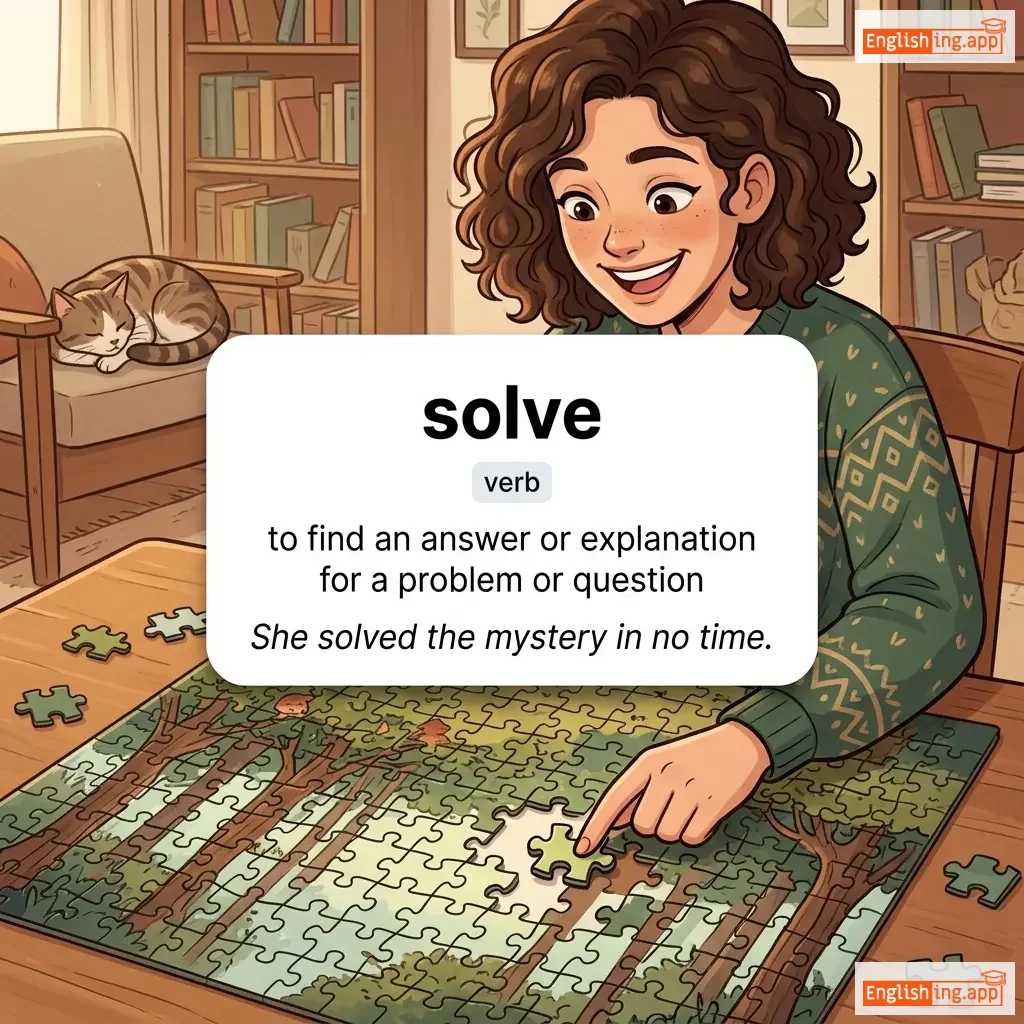
to find an answer to a problem or question; to resolve a difficulty
••••••
|
The detective finally solved the mysterious case.
Tantei wa saigo ni fushigi na jiken o kaiketsu shita.
••••••
|
探偵はついに謎の事件を解決した。
Tantei wa saigo ni fushigi na jiken o kaiketsu shita.
••••••
|
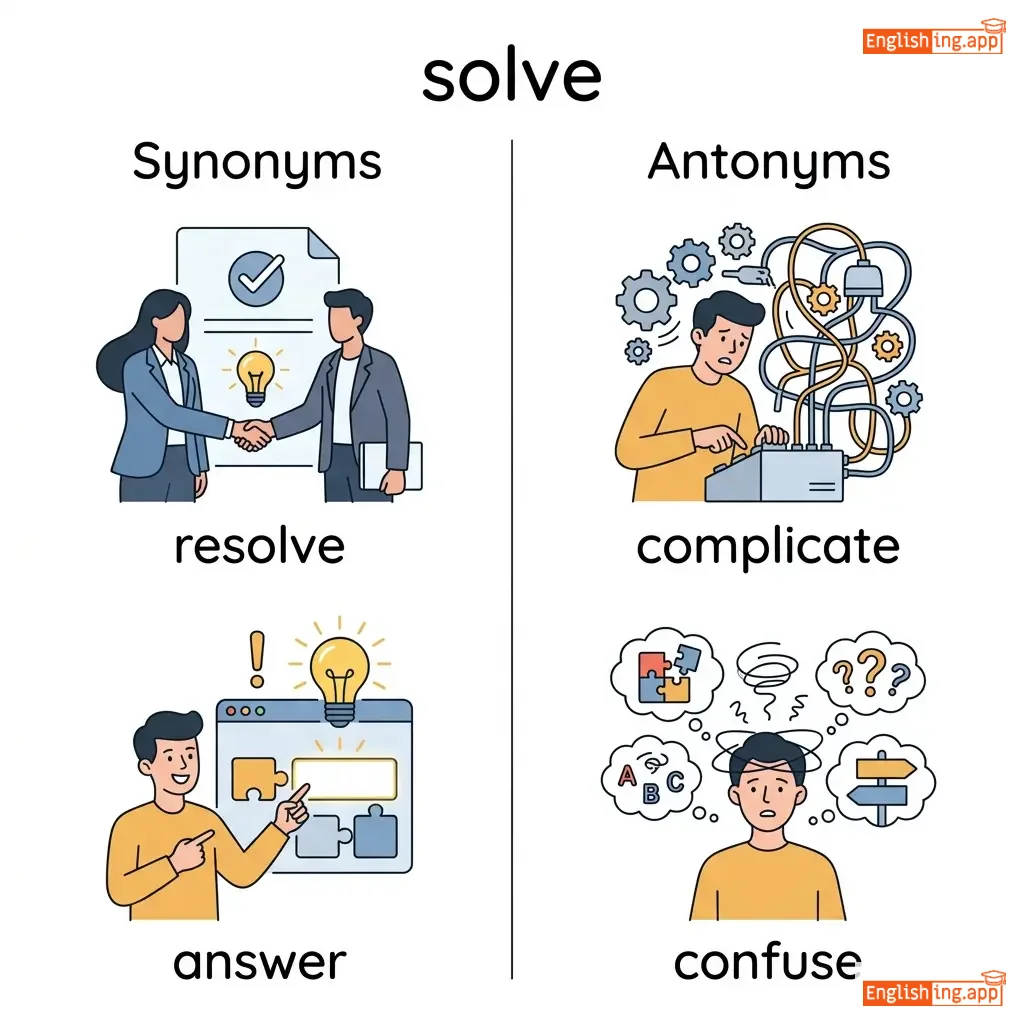
- •••••• | - •••••• | - •••••• |
resolve, answer, figure out, work out
••••••
|
complicate, confuse, perplex, puzzle
••••••
|
solve problems, solve equations, solve mysteries, solve puzzles, solve conflicts
••••••
|
解決するとは問題を解決すること。
••••••
|
|
🔢
••••••
|
/sʌm/
determiner
(サム)
••••••
|
- •••••• |
いくつか
ikutsuka
••••••
|
- •••••• | - •••••• | - •••••• | - •••••• |
an unspecified amount or number of something
••••••
|
I have some money in my wallet. |
財布に少しお金があります。
Saifu ni sukoshi okane ga arimasu.
••••••
|
- •••••• | - •••••• | - •••••• |
a few, several, a number of, certain
••••••
|
none, all
••••••
|
some time, some people, some things, some amount
••••••
|
Some 'ikutsuka' things are part of your day - like money in your wallet!
••••••
|
|
🙋♂️
••••••
|
/ˈsʌmbədi/
pronoun
(サムバディ)
••••••
|
- •••••• |
誰か
dareka
••••••
|
- •••••• | - •••••• | - •••••• | - •••••• |
an unspecified person
••••••
|
Somebody is knocking at the door. |
誰かがドアをノックしています。
Dareka ga doa o nokkushiteimasu.
••••••
|
- •••••• | - •••••• | - •••••• |
someone, a person, an individual, a soul
••••••
|
nobody
••••••
|
somebody is, somebody did, somebody told me
••••••
|
Somebody, like 'dareka', is always there knocking on your door!
••••••
|
|
🤷
••••••
|
/ˈsʌm.haʊ/
adverb
(sam-ow)
••••••
|
- •••••• |
なんとか;
nantoka
••••••
|
- •••••• | - •••••• | - •••••• | - •••••• |
in some way; for some reason that is not clear
••••••
|
Somehow, I managed to finish the project on time.
Samow, ai manejd tu finish za purojekuto on taimu.
••••••
|
なんとか、私はプロジェクトを時間通りに終わらせることができました。
Nantoka, watashi wa purojekuto o jikan dōri ni owaraseru koto ga dekimashita.
••••••
|
- •••••• | - •••••• | - •••••• |
someway, in some way, by some means, mysteriously
••••••
|
clearly, obviously, certainly, definitely
••••••
|
somehow manage, somehow survive, somehow succeed, somehow escape
••••••
|
Japanese and English mix: 'Somehow' becomes 'nantoka', capturing that feeling of finding a way.
••••••
|
|
🙋
••••••
|
/ˈsʌmwʌn/
pronoun
(サムワン)
••••••
|
- •••••• |
誰か
dareka
••••••
|
- •••••• | - •••••• | - •••••• | - •••••• |
a person, but not specifically known or named
••••••
|
Someone left their umbrella in the hallway. |
誰かが廊下に傘を忘れました。
Dareka ga rouka ni kasa o wasuremashita.
••••••
|
- •••••• | - •••••• | - •••••• |
somebody, person, individual
••••••
|
nobody
••••••
|
someone special, someone else, someone new
••••••
|
Someone can be remembered as 'Some ONE person'.
••••••
|
|
❓
••••••
|
/ˈsʌmθɪŋ/
pronoun
(サムシング)
••••••
|
- •••••• |
何か
nanika
••••••
|
- •••••• | - •••••• | - •••••• | - •••••• |
an unspecified or unknown thing
••••••
|
I think something is wrong with my phone. |
私の電話に何か問題があると思う。
Watashi no denwa ni nanika mondai ga aru to omou.
••••••
|
make something of |
to understand or interpret something in a particular way
••••••
|
何かを意味する
nanika o imi suru
••••••
|
thing, object, item, matter
••••••
|
nothing, void
••••••
|
something new, something special, something wrong, something else
••••••
|
Some + Thing = 何か (nanika)
••••••
|
|
☕
••••••
|
/ˈsʌm.taɪm/
adverb
(sāntaimu)
••••••
|
- •••••• |
そのうち
sono uchi
••••••
|
- •••••• | - •••••• | - •••••• | - •••••• |
at a time that is not known or stated; occasionally
••••••
|
Let's meet for coffee sometime next week. |
来週のどこかでコーヒーを飲むために会おう。
Raishū no dokoka de kōhī o nomu tame ni aō.
••••••
|
- •••••• | - •••••• | - •••••• |
occasionally, at some point, once, now and then
••••••
|
never, always
••••••
|
sometime soon, sometime later, sometime next week, sometime ago
••••••
|
Sometimeはそのうちという意味です — 'some'が来る日を思い出してください。
••••••
|
|
🔄
••••••
|
/ˈsʌm.taɪmz/
adverb
(samtayms)
••••••
|
- •••••• |
時々
tokidoki
••••••
|
- •••••• | - •••••• | - •••••• | - •••••• |
at times; occasionally; now and then
••••••
|
Sometimes I go for a walk in the evening.
samtayms ai gou fô ā woku in za ivuningu.
••••••
|
時々、私は夕方に散歩します。
Tokidoki, watashi wa yūgata ni sanpo shimasu.
••••••
|
- •••••• | - •••••• | - •••••• |
occasionally, at times, now and then, from time to time
••••••
|
always, never, constantly
••••••
|
sometimes difficult, sometimes happens, sometimes feel
••••••
|
時々は散歩を楽しんでいます。
••••••
|
|
🤏
••••••
|
/ˈsʌm.wʌt/
adjective
(サムワット)
••••••
|
- •••••• |
やや; 少し; ほどほど
yaya; sukoshi; hodohodo
••••••
|
- •••••• | - •••••• | - •••••• | - •••••• |
to some extent; rather; moderately
••••••
|
The movie was somewhat interesting but not great.
その映画は少し面白かったが、すごくはなかった。
••••••
|
その映画は少し面白かったが、すごくはなかった。
sono eiga wa sukoshi omoshirokatta ga, sugoku wa nakatta.
••••••
|
- •••••• | - •••••• | - •••••• |
rather, fairly, moderately, slightly
••••••
|
completely, entirely, extremely, very
••••••
|
somewhat disappointed, somewhat surprised, somewhat difficult
••••••
|
Imagine a somewhat fun but not thrilling movie.
••••••
|
|
📍
••••••
|
/ˈsʌm.weər/
adverb
(サムウェア)
••••••
|
- •••••• |
どこか
dokoka
••••••
|
- •••••• | - •••••• | - •••••• | - •••••• |
in or at some place; in an unspecified location
••••••
|
I left my keys somewhere in the house. |
家の中のどこかに鍵を置いてきた。
Ie no naka no dokoka ni kagi o oite kita.
••••••
|
- •••••• | - •••••• | - •••••• |
someplace, anywhere, in some location
••••••
|
nowhere, everywhere
••••••
|
somewhere else, somewhere safe, somewhere around
••••••
|
鍵をどこかに隠したと思う
••••••
|
|
👦
••••••
|
/sʌn/
noun
(サン)
••••••
|
- •••••• |
息子
musuko
••••••
|
- •••••• | - •••••• | - •••••• | - •••••• |
a male child of a parent
••••••
|
His son is very talented in music. |
彼の息子は音楽に非常に才能があります。
Kare no musuko wa ongaku ni hijou ni sainou ga arimasu.
••••••
|
- •••••• | - •••••• | - •••••• |
child, offspring, male heir
••••••
|
daughter, female child
••••••
|
only son, beloved son, son of a king
••••••
|
His SON is so talented at music, you'll be proud of him.
••••••
|
|
🎵
••••••
|
/sɔːŋ/
noun
(ソング)
••••••
|
- •••••• |
歌
uta
••••••
|
- •••••• | - •••••• | - •••••• | - •••••• |
a short piece of music with words that are sung
••••••
|
She sang a beautiful song at the concert. |
彼女はコンサートで美しい歌を歌った。
Kanojo wa konsāto de utsukushī uta o utatta.
••••••
|
- •••••• | - •••••• | - •••••• |
melody, tune, ballad, anthem
••••••
|
silence, quiet
••••••
|
popular song, love song, sing a song
••••••
|
A SONG that fills the world with melody.
••••••
|
|
⏰
••••••
|
/suːn/
adverb
(スーン)
••••••
|
- •••••• |
すぐに
suguni
••••••
|
- •••••• | - •••••• | - •••••• | - •••••• |
in a short time; before long; quickly
••••••
|
The train will arrive soon. |
電車はすぐに到着します。
Densha wa suguni touchaku shimasu
••••••
|
- •••••• | - •••••• | - •••••• |
quickly, shortly, before long, in a moment
••••••
|
late, slowly, never, eventually
••••••
|
very soon, coming soon, soon after
••••••
|
Japanese 'すぐに' (suguni) is similar to 'soon' in English.
••••••
|
|
🎨
••••••
|
/səˈfɪstɪkeɪt/
verb
(ソフィスティケイト)
••••••
|
- •••••• |
洗練する
senren suru
••••••
|
sophisticated
ソフィスティケイテッド
••••••
|
sophisticated
ソフィスティケイテッド
••••••
|
sophisticates
ソフィスティケイツ
••••••
|
sophisticating
ソフィスティケイティング
••••••
|
to make something more complex or refined; to educate or develop in taste and manners
••••••
|
Traveling abroad helped sophisticate his worldview.
海外旅行は彼の世界観を洗練させる手助けとなった。
••••••
|
海外旅行は彼の世界観を洗練させる手助けとなった。
Kaigai ryokō wa kare no sekaikan o senren saseru tedasuke to natta.
••••••
|
- •••••• | - •••••• | - •••••• |
refine, cultivate, educate, polish, develop
••••••
|
simplify, coarsen, degrade
••••••
|
sophisticate taste, sophisticate design, sophisticate culture
••••••
|
Sophisticateは洗練するという意味–Sophisticated食べ物は味を洗練させる。
••••••
|
|
💎
••••••
|
/səˈfɪstɪkeɪtɪd/
adjective
(ソフィスティケイテッド)
••••••
|
|
洗練された
senrensareta
••••••
|
- •••••• | - •••••• | - •••••• | - •••••• |
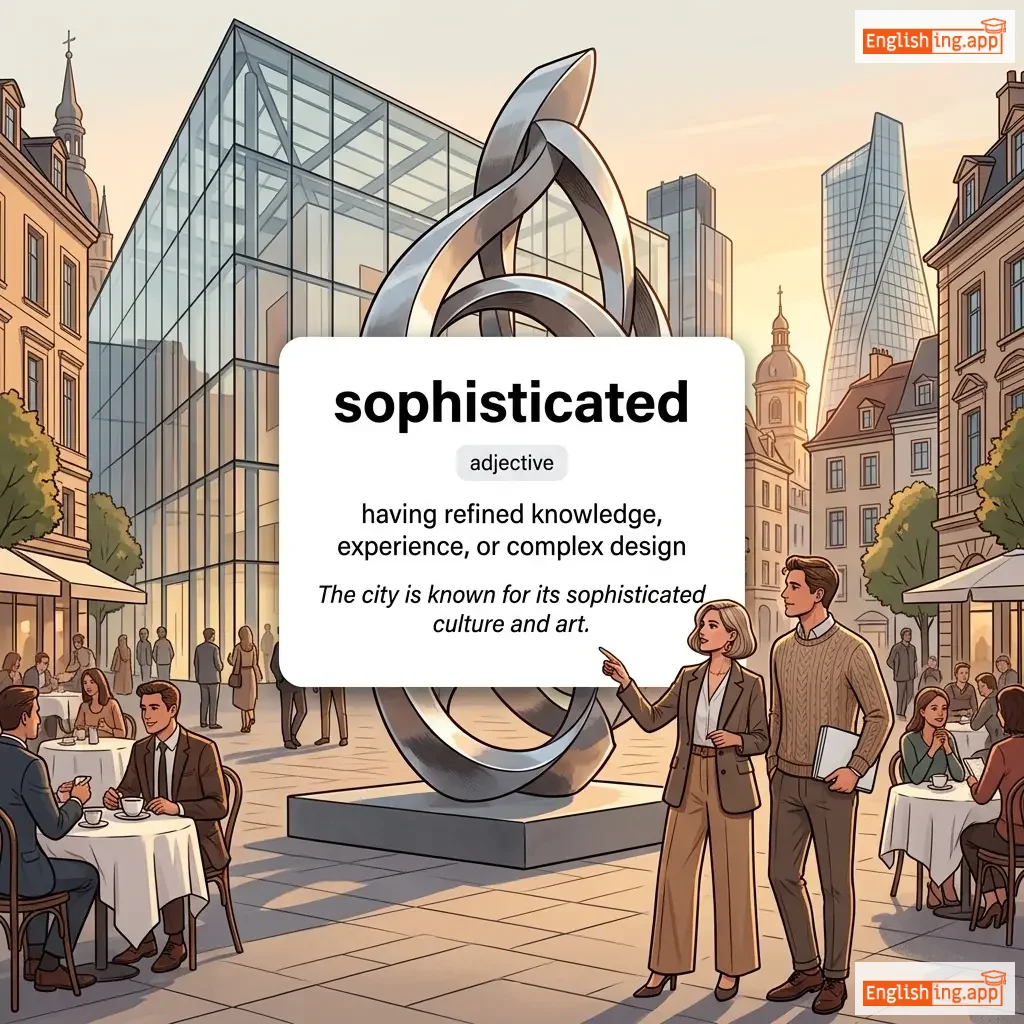
having refined knowledge, experience, or complex design
••••••
|
The city is known for its sophisticated culture and art.
この都市はその洗練された文化と芸術で知られています。
••••••
|
この都市はその洗練された文化と芸術で知られています。
Kono toshi wa sono senrensareta bunka to geijutsu de shirareteimasu.
••••••
|
sophisticated taste
洗練された趣味
••••••
|
refined or cultivated sense of style and preference
••••••
|
洗練された趣味
senrensareta shumi
••••••
|
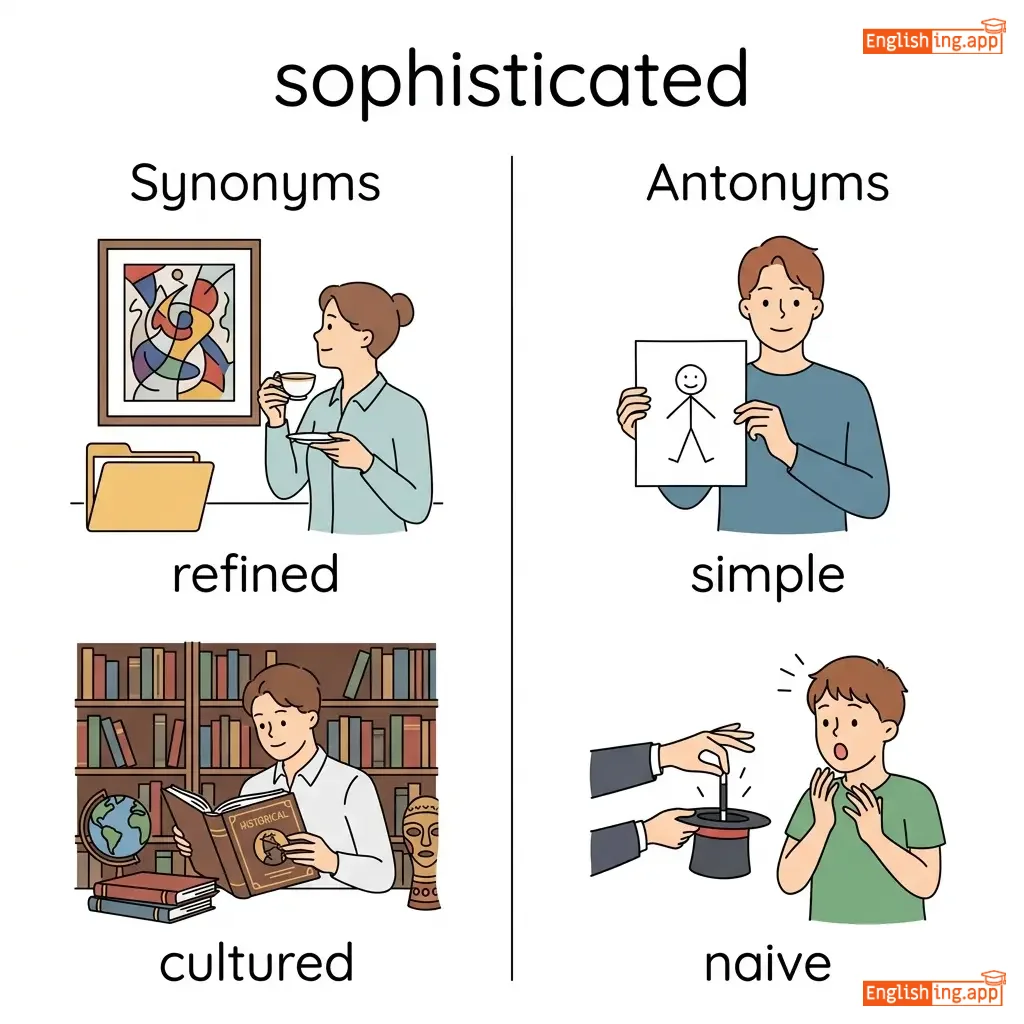
refined, cultured, elegant, advanced, polished
••••••
|
simple, naive, crude
••••••
|
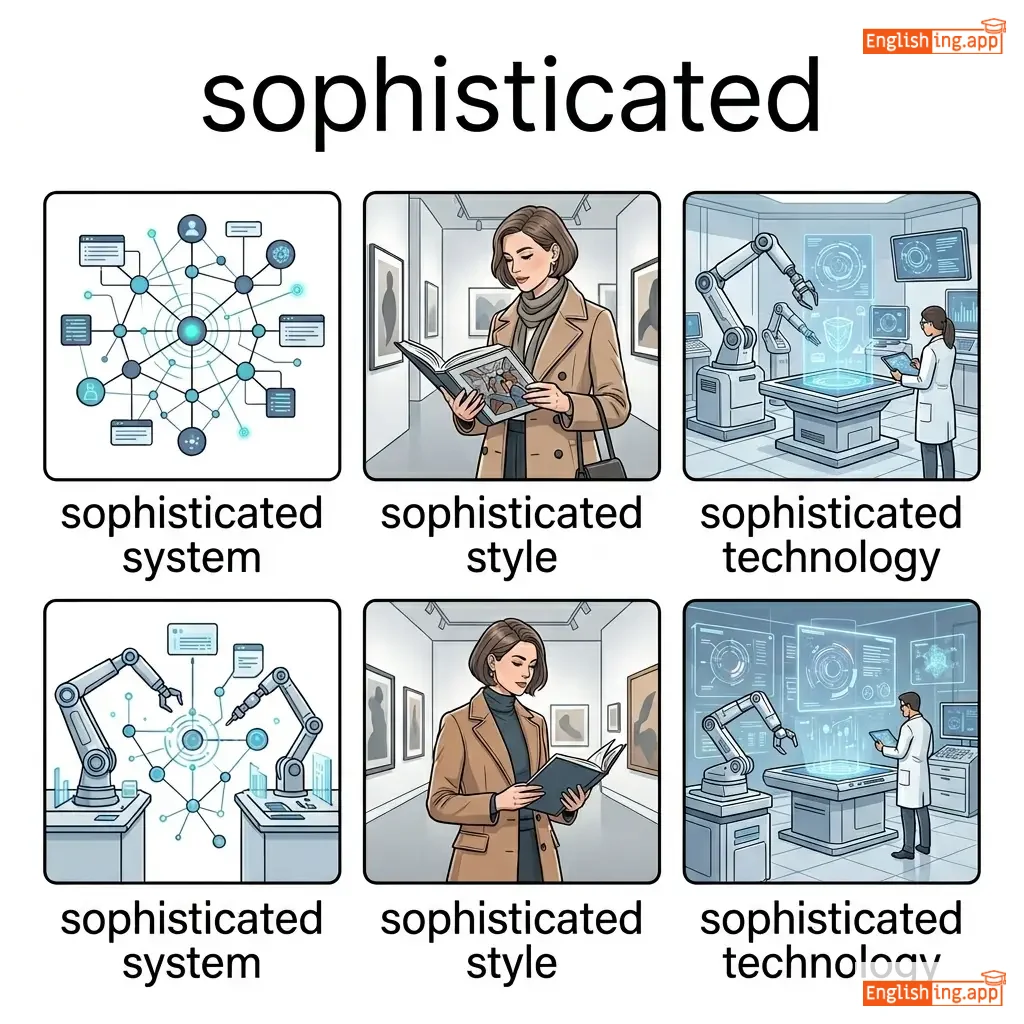
sophisticated system, sophisticated style, sophisticated technology
••••••
|
洗練された趣味は、洗練されたファッションや芸術を意味します。
••••••
|
|
🤕
••••••
|
/sɔːr/
adjective
(ソア)
••••••
|
- •••••• |
痛い
itai
••••••
|
- •••••• | - •••••• | - •••••• | - •••••• |
painful or aching, usually in a specific part of the body
••••••
|
After the long run, my legs were sore.
長いランニングの後、私の足はソアでした。
••••••
|
長いランニングの後、私の足は痛かった。
nagai running no ato, watashi no ashi wa itakatta
••••••
|
a sore point
痛い点
••••••
|
a sensitive topic that causes discomfort or anger
••••••
|
敏感な話題
binkan na wadai
••••••
|
painful, aching, tender, inflamed, sensitive
••••••
|
comfortable, painless, unhurt
••••••
|
sore muscles, sore throat, feel sore, extremely sore
••••••
|
ソア sounds like sore, remember 'itai' for pain
••••••
|
|
😢
••••••
|
/ˈsɑːroʊ/
noun
(ソーロ)
••••••
|
- •••••• |
悲しみ
kanashimi
••••••
|
- •••••• | - •••••• | - •••••• | - •••••• |
a feeling of deep sadness or grief
••••••
|
She was filled with sorrow after the loss of her friend. |
彼女は友達を失った後、悲しみに満たされていました。
Kanojo wa tomodachi o ushinatta ato, kanashimi ni mitasarete imashita.
••••••
|
drown one's sorrows |
to drink alcohol in order to forget sadness
••••••
|
悲しみを酒で流す
kanashimi o sake de nagasu
••••••
|
grief, sadness, anguish, heartache
••••••
|
joy, happiness, delight
••••••
|
deep sorrow, express sorrow, filled with sorrow, great sorrow
••••••
|
Sorrow は悲しみと深く関連しています。
••••••
|
|
😔
••••••
|
/ˈsɔːri/
adjective
(ソーリー)
••••••
|
- •••••• |
ごめん
gomen
••••••
|
- •••••• | - •••••• | - •••••• | - •••••• |
feeling regret or sympathy
••••••
|
She felt sorry for what had happened. |
彼女は起こったことを後悔していた。
Kanojo wa okotta koto o kōkai shite ita.
••••••
|
I'm sorry! |
an expression of apology or regret
••••••
|
ごめん!
Gomen!
••••••
|
apologetic, regretful, remorseful, contrite
••••••
|
happy, glad
••••••
|
sorry for, sorry about, deeply sorry
••••••
|
SORRY, she feels regret and apologizes.
••••••
|
|
🔀
••••••
|
/sɔːrt/
verb
(ソート)
••••••
|
- •••••• |
並べ替える
narabekaeru
••••••
|
sorted
ソーテッド
••••••
|
sorted
ソーテッド
••••••
|
sorts
ソーツ
••••••
|
sorting
ソーティング
••••••
|
to arrange or categorize something
••••••
|
Please sort the files by date.
ファイルを日付順にソートしてください。
••••••
|
ファイルを日付順にソートしてください。
Fairu o hizuke-jun ni sōto shite kudasai.
••••••
|
- •••••• | - •••••• | - •••••• |
arrange, categorize, organize, classify
••••••
|
disorder, scatter
••••••
|
sort out, sort through, sort by
••••••
|
SORT the files to make them easy to find!
••••••
|
|
👻
••••••
|
/soʊl/
noun
(魂)
••••••
|
- •••••• |
魂
tamashī
••••••
|
- •••••• | - •••••• | - •••••• | - •••••• |
the spiritual or immaterial essence of a human being or animal; a person's emotional or intellectual nature
••••••
|
She poured her heart and soul into her artwork.
彼女は芸術作品に心と魂を込めました。
••••••
|
彼女は芸術作品に心と魂を込めました。
kanojo wa geijutsu sakuhin ni kokoro to tamashī o komemashita.
••••••
|
- •••••• | - •••••• | - •••••• |
spirit, essence, heart, core
••••••
|
body, flesh, matter
••••••
|
heart and soul, lost soul, soul mate, save one's soul
••••••
|
魂 (Tamashī) - 創造の中に込められた魂
••••••
|
|
🔊
••••••
|
/saʊnd/
noun, verb, adjective
••••••
|
- •••••• | - •••••• |
sounded
••••••
|
sounded
••••••
|
sounds
••••••
|
sounding
••••••
|
a sensation perceived by the ear; to make or cause to make a noise; in good condition
••••••
|
The bell sounded across the valley. |
- •••••• |
sound asleep |
in a deep and peaceful sleep
••••••
|
- •••••• |
noise, tone, echo, healthy, secure
••••••
|
silence, unhealthy, weak
••••••
|
sound advice, sound asleep, sound decision, sound system
••••••
|
No •••••• |
|
🍲
••••••
|
/suːp/
noun
(スープ)
••••••
|
- •••••• |
スープ
suupu
••••••
|
- •••••• | - •••••• | - •••••• | - •••••• |
a liquid food made by boiling meat, vegetables, or other ingredients in water
••••••
|
I had a bowl of chicken soup for lunch.
私は昼食にチキンスープを一杯食べました。
••••••
|
私は昼食にチキンスープを一杯食べました。
watashi wa chūshoku ni chikinsūpu o ippai tabemashita
••••••
|
- •••••• | - •••••• | - •••••• |
broth, stew, consommé
••••••
|
solid food, dry food
••••••
|
chicken soup, vegetable soup, tomato soup, soup bowl, soup spoon
••••••
|
スープで心温まる
••••••
|
|
🍋
••••••
|
/ˈsaʊər/
adjective
(サワー)
••••••
|
- •••••• |
酸っぱい
suppai
••••••
|
- •••••• | - •••••• | - •••••• | - •••••• |
having an acidic taste; unpleasant or bad-tempered
••••••
|
The milk has gone sour. |
ミルクが酸っぱくなった。
Miruku ga suppaku natta.
••••••
|
sour grapes |
an attitude in which someone pretends to dislike or devalue something they cannot have
••••••
|
酸っぱいぶどう
suppai budou
••••••
|
acidic, tart, bitter, unpleasant
••••••
|
sweet, pleasant, agreeable
••••••
|
sour taste, sour mood, sour milk, sour relationship
••••••
|
Sourは酸っぱい、レモンの味のようです。
••••••
|
|
📍
••••••
|
/sɔːrs/
noun
(ソース)
••••••
|
- •••••• |
源
soosu
••••••
|
- •••••• | - •••••• | - •••••• | - •••••• |
a place, person, or thing from which something originates; the origin of information
••••••
|
The river's source is high in the mountains.
川の源流は山の高い所にある。
••••••
|
川の源流は山の高い所にある。
kawanogenryuuwayamanotakaitokoroniaru
••••••
|
- •••••• | - •••••• | - •••••• |
origin, beginning, root, foundation
••••••
|
destination, end, result, outcome
••••••
|
reliable source, news source, water source, energy source
••••••
|
源GENは山の頂上で現れる image を思い出す混合メモ: Sourceは起点である
••••••
|
|
⏬
••••••
|
/saʊθ/
noun/adjective
(サウス)
••••••
|
- •••••• |
南
minami
••••••
|
- •••••• | - •••••• | - •••••• | - •••••• |
the direction towards the bottom of a map, opposite to north
••••••
|
The sun rises in the east and sets in the south.
太陽は東で昇り、南で沈みます。
••••••
|
太陽は東で昇り、南で沈みます。
Taiyō wa higashi de nobori, minami de shizumimasu.
••••••
|
- •••••• | - •••••• | - •••••• |
down, southern
••••••
|
north, up
••••••
|
south of, southern hemisphere, south pole, travel south
••••••
|
South is the 'down' direction, like 'south' in the 'sunset' where the sun sets.
••••••
|
|
🌎
••••••
|
/ˈsʌðərn/
adjective
(サザン)
••••••
|
- •••••• |
南の
minami no
••••••
|
- •••••• | - •••••• | - •••••• | - •••••• |
located in or facing the south; southern regions
••••••
|
She moved to a southern city for work. |
彼女は仕事のために南の都市に引っ越した。
Kanojo wa shigoto no tame ni minami no toshi ni hikkoshita.
••••••
|
- •••••• | - •••••• | - •••••• |
southernmost, southward, lowland
••••••
|
northern, northernmost
••••••
|
southern states, southern hemisphere, southern part
••••••
|
Southern regions are like the 'South' side of your world map.
••••••
|
|
👑
••••••
|
/ˈsɒvrənti/
noun
(ソブリンティ)
••••••
|
|
主権
shuken
••••••
|
- •••••• | - •••••• | - •••••• | - •••••• |
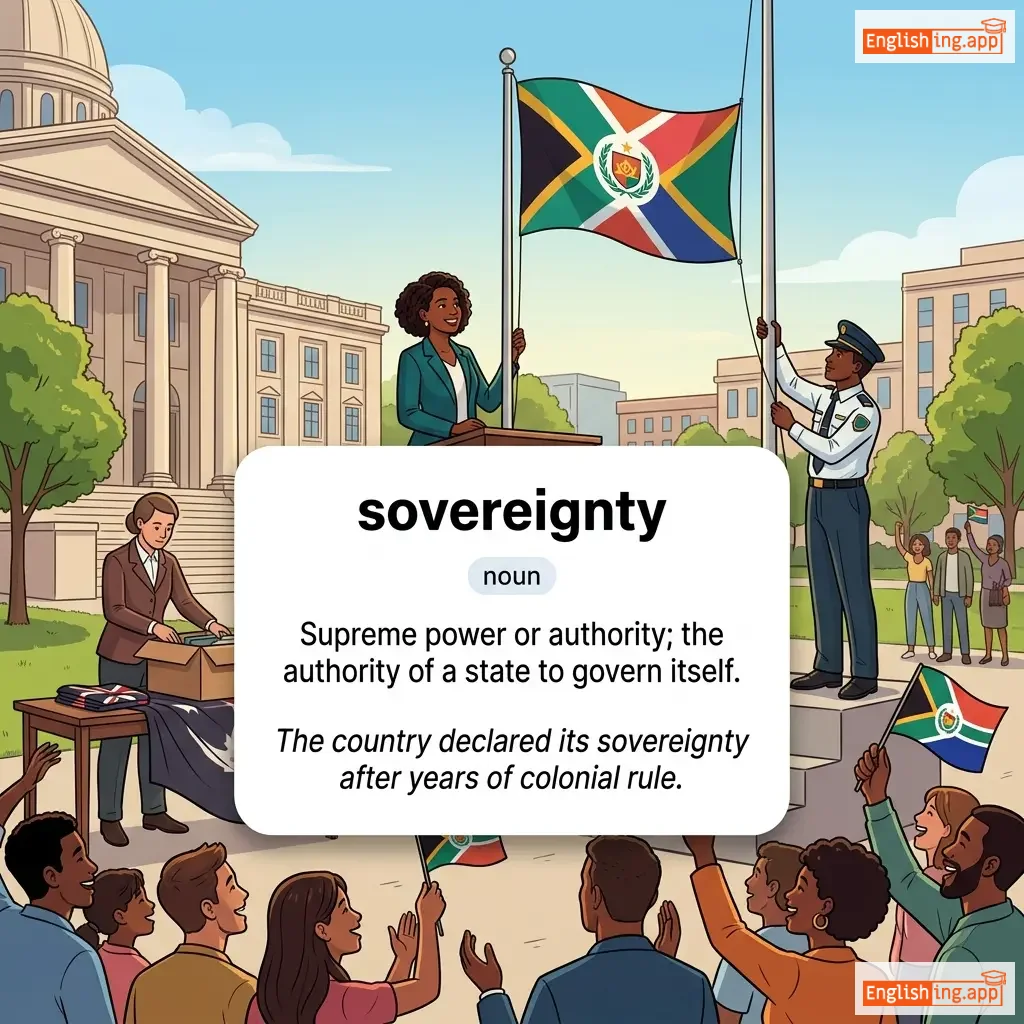
Supreme power or authority; the authority of a state to govern itself.
••••••
|
The country declared its sovereignty after years of colonial rule. |
その国は植民地支配の後、主権を宣言した。
Sono kuni wa shokuminchi shihai no ato, shuken o sengen shita.
••••••
|
sovereignty of the people |
The principle that political power ultimately resides with the people.
••••••
|
人民の主権
jinmin no shuken
••••••
|
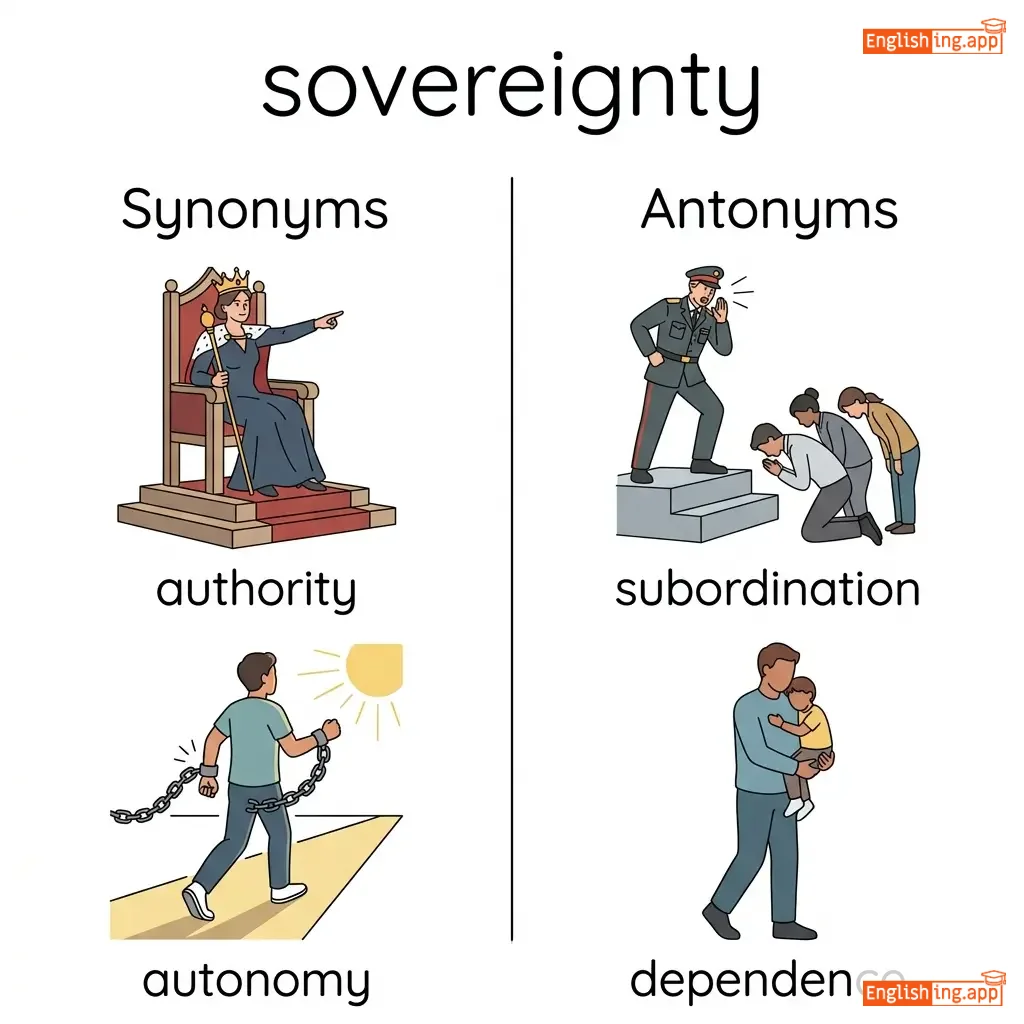
authority, autonomy, independence, self-rule, dominion
••••••
|
subordination, dependence, submission
••••••
|
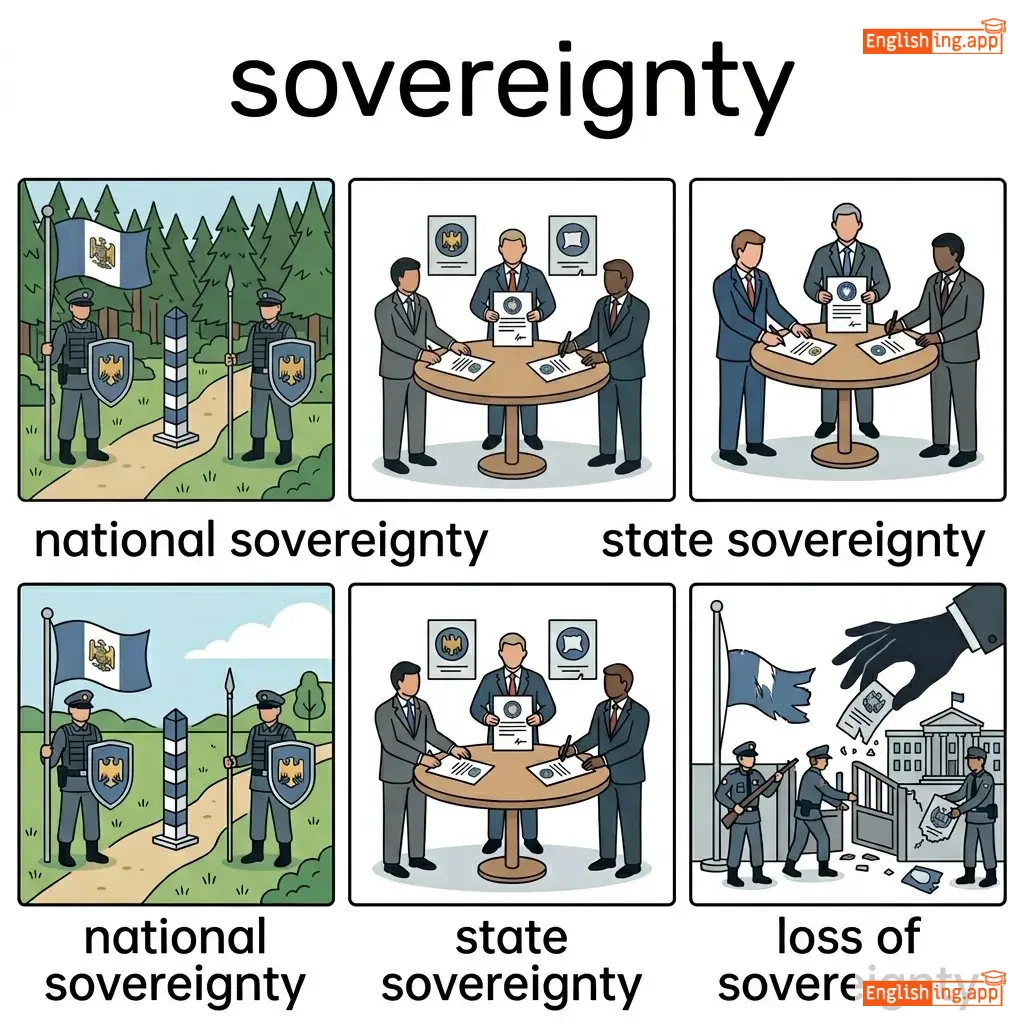
national sovereignty, state sovereignty, loss of sovereignty, sovereignty rights
••••••
|
主権 = 最高の権利 – 日本の主権を示す言葉。
••••••
|
|
🌍
••••••
|
/ˈsoʊ.vi.ət/
adjective
(ソビエト)
••••••
|
- •••••• |
ソビエト
sovieto
••••••
|
- •••••• | - •••••• | - •••••• | - •••••• |
relating to the Soviet Union or its government
••••••
|
The Soviet era saw significant changes in Eastern Europe.
ソビエト時代には東ヨーロッパで重要な変化がありました。
••••••
|
ソビエト時代には東ヨーロッパで重要な変化がありました。
Sobieto jidai niwa higashi yōroppa de jūyō na henka ga arimashita.
••••••
|
- •••••• | - •••••• | - •••••• |
communist, socialist, USSR-related
••••••
|
capitalist, democratic
••••••
|
Soviet government, Soviet Union, Soviet ideology
••••••
|
Soviet sounds like 'SOVE' - Soviets 'SOVE' changes the world!
••••••
|
|
🚀
••••••
|
/speɪs/
noun
(sūpeisu)
••••••
|
|
スペース
supeesu
••••••
|
- •••••• | - •••••• | - •••••• | - •••••• |
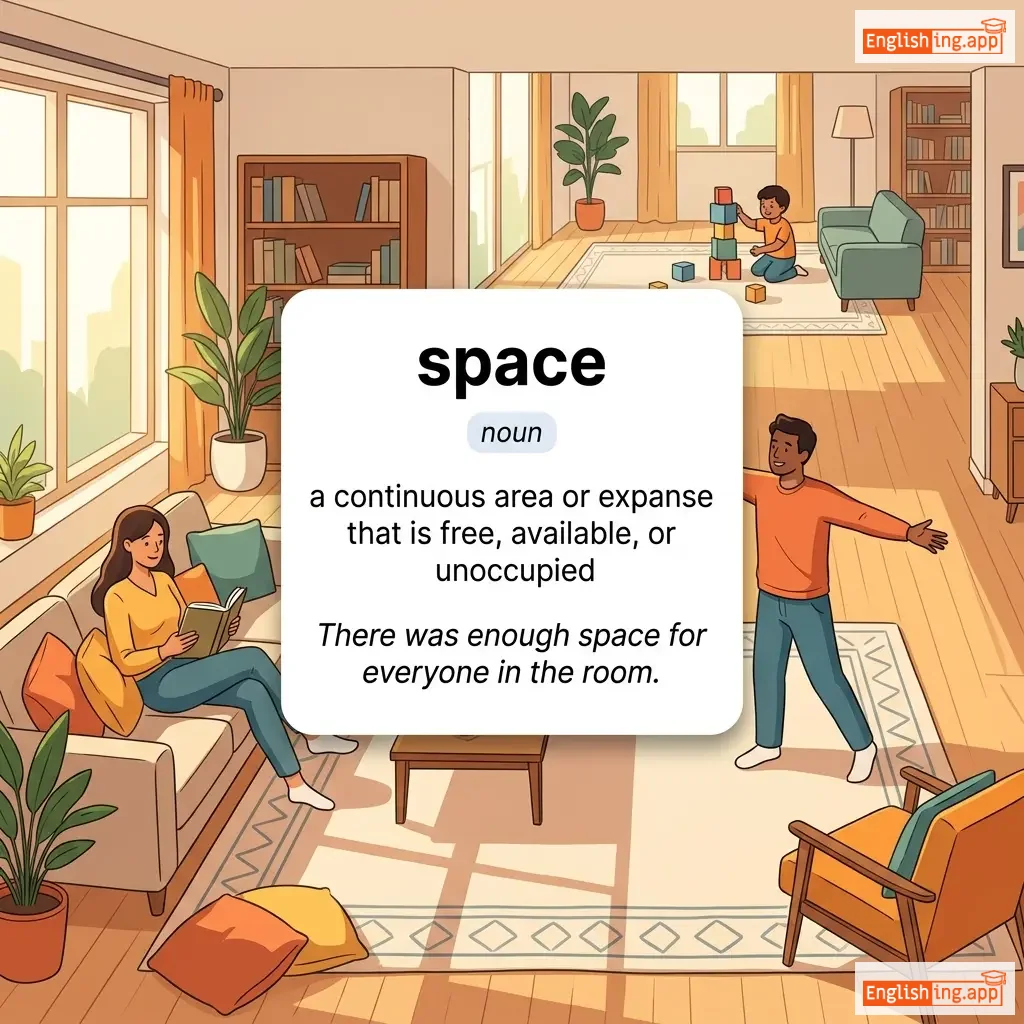
a continuous area or expanse that is free, available, or unoccupied
••••••
|
There was enough space for everyone in the room. |
部屋には皆が十分なスペースがありました。
Heya ni wa mina ga juubun na supeesu ga arimashita.
••••••
|
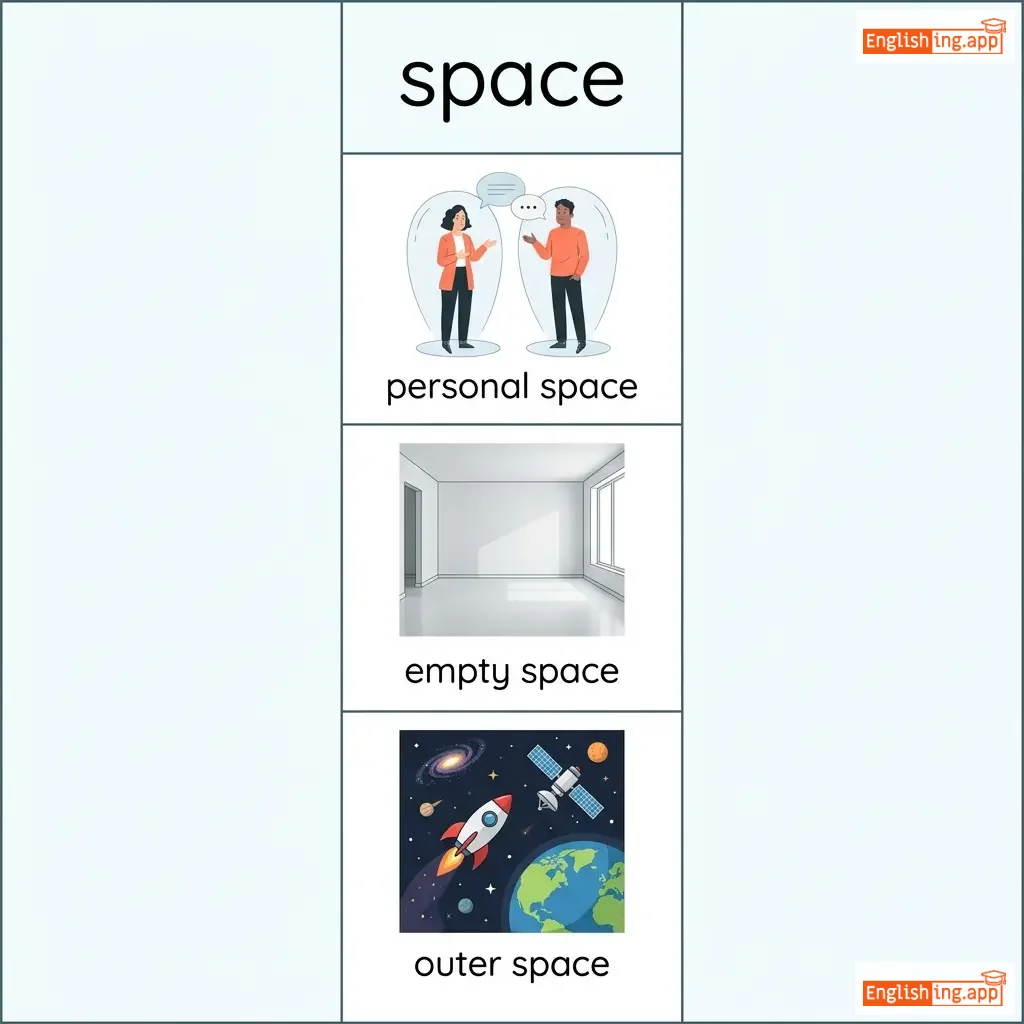
outer space |
the region beyond Earth's atmosphere
••••••
|
宇宙空間
uchuukukan
••••••
|
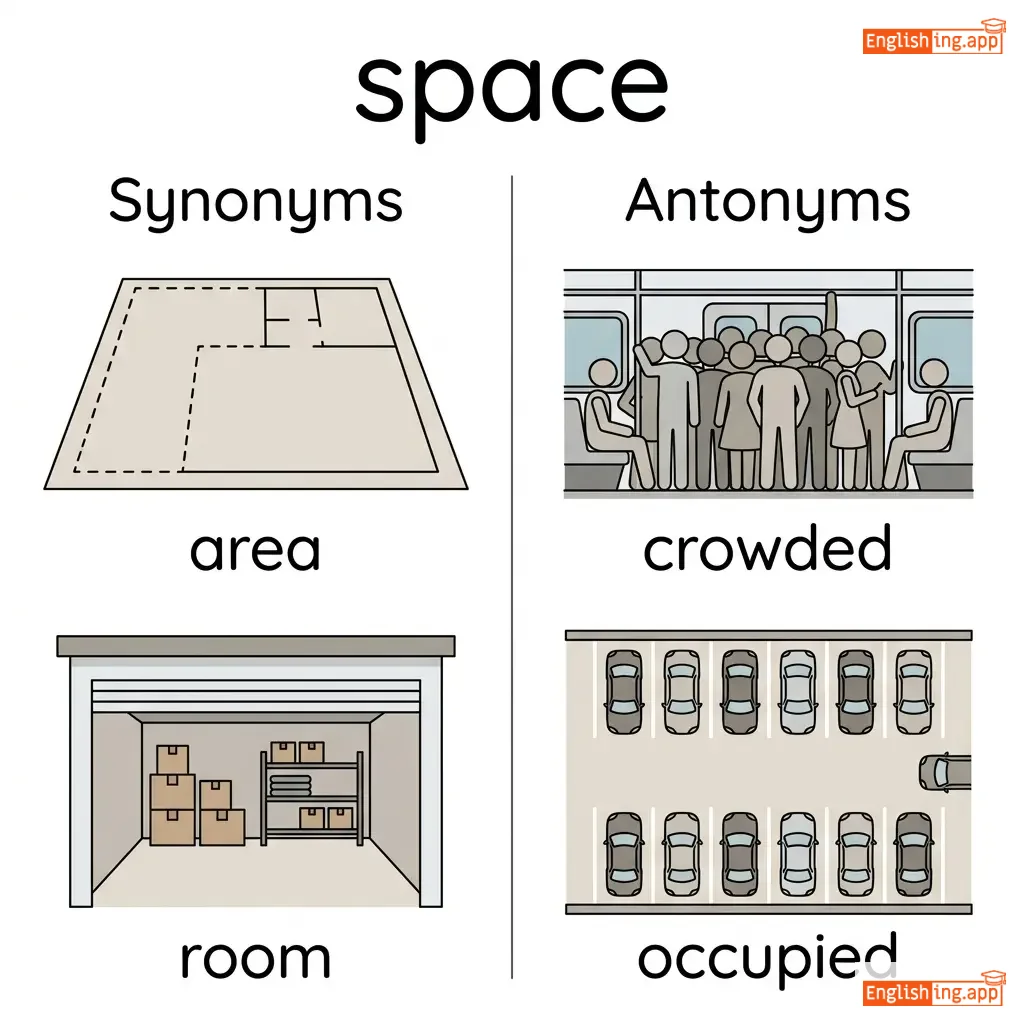
area, room, extent, volume
••••••
|
crowded, occupied, tight
••••••
|
personal space, empty space, outer space, living space
••••••
|
In 'space' we have 'S' for 'Safe', 'P' for 'Place'.
••••••
|
|
📧
••••••
|
/spæm/
noun
(スパム)
••••••
|
- •••••• |
スパム
supamu
••••••
|
- •••••• | - •••••• | - •••••• | - •••••• |
unsolicited or unwanted electronic communication, typically in the form of email
••••••
|
My inbox is full of spam emails that I need to delete.
私の受信箱はスパムメールでいっぱいで、削除する必要があります。
••••••
|
私の受信箱はスパムメールでいっぱいで、削除する必要があります。
Watashi no jushinbako wa supamu meeru de ippai de, sakujo suru hitsuyou ga arimasu.
••••••
|
- •••••• | - •••••• | - •••••• |
junk, unsolicited mail, nuisance
••••••
|
legitimate mail, valid communication
••••••
|
spam email, spam message, spam filter
••••••
|
スパムを消去して、メールをチェック!
••••••
|
|
🌉
••••••
|
/spæn/
noun
(スパン)
••••••
|
- •••••• |
スパン
supan
••••••
|
- •••••• | - •••••• | - •••••• | - •••••• |
the full extent or length of something from one end to another
••••••
|
The bridge has a span of over 500 meters.
橋のスパンは500メートル以上です。
••••••
|
橋のスパンは500メートル以上です。
Kyo no supan wa 500 meetoru ijou desu.
••••••
|
- •••••• | - •••••• | - •••••• |
range, stretch, extent
••••••
|
shortness, limit
••••••
|
span of time, span of control, wide span
••••••
|
Spanを橋のスパンとして覚えてください。
••••••
|
|
🇪🇸
••••••
|
/ˈspænɪʃ/
adjective
(スペイン語)
••••••
|
- •••••• |
スペイン語
supeingo
••••••
|
- •••••• | - •••••• | - •••••• | - •••••• |
relating to Spain or the Spanish language
••••••
|
She is fluent in Spanish and French.
彼女はスペイン語とフランス語に堪能です。
••••••
|
彼女はスペイン語とフランス語に堪能です。
kanojo wa supeingo to furansugo ni tanno desu.
••••••
|
in Spanish
スペイン語で
••••••
|
said in the Spanish language
••••••
|
スペイン語で
supeingo de
••••••
|
Hispanic, Iberian
••••••
|
non-Spanish, English
••••••
|
Spanish language, Spanish culture, Spanish cuisine
••••••
|
スペイン語の'S'は 'スペイン'、'P'は '場所'を意味します。
••••••
|
|
👐
••••••
|
/spɛər/
verb
(スペア)
••••••
|
- •••••• |
余分に与える / 節約する
yobun ni ataeru / setsuyaku suru
••••••
|
spared
スペアード
••••••
|
spared
スペアード
••••••
|
spares
スペアーズ
••••••
|
sparing
スペアリング
••••••
|
To give something that one has extra of; to refrain from harming or killing.
••••••
|
Could you spare me a few minutes of your time?
あなたは私に少し時間を割いてくれますか?
••••••
|
あなたは私に少し時間を割いてくれますか?
Anata wa watashi ni sukoshi jikan o saite kuremasu ka?
••••••
|
spare no effort
一切の努力を惜しまない
••••••
|
To try as hard as possible to achieve something.
••••••
|
一切の努力を惜しまない
Issai no doryoku o oshimanai
••••••
|
save, grant, provide, afford, allocate
••••••
|
withhold, deny, deprive
••••••
|
spare time, spare change, spare part, spare effort
••••••
|
Spareは余分に与えること 👐 - 余分なものや時間を与えること。
••••••
|
|
⚡
••••••
|
/spɑːrk/
verb
(スパーク)
••••••
|
- •••••• |
火花
hibana
••••••
|
sparked
スパークド
••••••
|
sparked
スパークド
••••••
|
sparks
スパークス
••••••
|
sparking
スパーキング
••••••
|
to cause the start of something, especially an emotion or activity
••••••
|
The news sparked a heated debate across the country.
そのニュースは国中で激しい議論を引き起こしました。
••••••
|
そのニュースは国中で激しい議論を引き起こしました。
sono nyūsu wa kokunaka de hageshī giron o hikiokoshimashita.
••••••
|
spark an interest
興味を引き起こす
••••••
|
to cause someone to become interested in something
••••••
|
興味を引き起こす
kyōmi o hikiokosu
••••••
|
ignite, trigger, provoke, stimulate, kindle
••••••
|
extinguish, suppress
••••••
|
spark interest, spark controversy, spark fire, spark protest
••••••
|
火花が火を起こすように、'spark' は新しい始まりを生み出す!
••••••
|
|
🗣️
••••••
|
/spiːk/
verb
(スピーク)
••••••
|
- •••••• |
話す
hanasu
••••••
|
spoke
スポーク
••••••
|
spoken
スポークン
••••••
|
speaks
スピークス
••••••
|
speaking
スピーキング
••••••
|
to say something in order to convey information or express feelings
••••••
|
She speaks five languages fluently.
彼女は五か国語を流暢に話します。
••••••
|
彼女は五か国語を流暢に話します。
Kanojo wa go kakkokugo wo ryuuchou ni hanashimasu.
••••••
|
speak out
声を上げて言う
••••••
|
to express one's opinion clearly and openly
••••••
|
意見を明確に表現する
iken wo meikaku ni hyougen suru
••••••
|
talk, converse, utter, communicate
••••••
|
be silent, mute, keep quiet
••••••
|
speak up, speak to, speak about, speak highly
••••••
|
Speak = 'S' for 'Say', 'P' for 'Project'.
••••••
|

