|
表情符号
|
单词 | Images | 翻译 | 过去时 | 过去分词 | 第三人称单数 | 动名词 | 含义 | 例句 | 例句翻译 | 示例表达 | 示例表达含义 | 示例表达翻译 | 同义词 | 反义词 | 搭配词 | 助记符 |
|---|---|---|---|---|---|---|---|---|---|---|---|---|---|---|---|---|---|
|
🧦
••••••
|
/sɒk/
noun
••••••
|
- •••••• | - •••••• | - •••••• | - •••••• | - •••••• | - •••••• |
a piece of clothing worn on the foot and lower part of the leg.
••••••
|
He put on a pair of clean socks before leaving the house. |
- •••••• |
pull up your socks |
to make an effort to improve your performance or behavior.
••••••
|
- •••••• |
stocking, hosiery, footwear, covering
••••••
|
barefoot, naked foot
••••••
|
pair of socks, woolen socks, cotton socks, ankle socks
••••••
|
No •••••• |
|
🧸
••••••
|
/sɔft/
adjective
(软)
••••••
|
- •••••• |
柔软; 温柔; 安静
róuruǎn; wēnróu; ānjìng
••••••
|
- •••••• | - •••••• | - •••••• | - •••••• |
not hard or firm; gentle; quiet; tender
••••••
|
The pillow is very soft and comfortable. |
枕头很柔软,且很舒服。
zhěntou hěn róuruǎn, qiě hěn shūfú
••••••
|
- •••••• | - •••••• | - •••••• |
gentle, tender, smooth, mild
••••••
|
hard, rough, firm, harsh
••••••
|
soft touch, soft voice, soft fabric, soft light
••••••
|
柔软的枕头舒适
••••••
|
|
💻
••••••
|
/ˈsɒftweə/
noun
(suǒfú tuōyà)
••••••
|
- •••••• |
软件
ruǎnjiàn
••••••
|
- •••••• | - •••••• | - •••••• | - •••••• |
the programs and other operating information used by a computer
••••••
|
He installed the software to enhance the performance of his computer.
他安装了软件以提高计算机的性能。
••••••
|
他安装了软件以提高计算机的性能。
Tā ānzhuāngle ruǎnjiàn yǐ tígāo jìsuànjī de xìngnéng.
••••••
|
- •••••• | - •••••• | - •••••• |
program, application, system, platform
••••••
|
hardware
••••••
|
software development, software engineer, software update, software application
••••••
|
软件 - 对计算机性能的提升至关重要。 Software is critical for improving the performance of the computer.
••••••
|
|
🌱
••••••
|
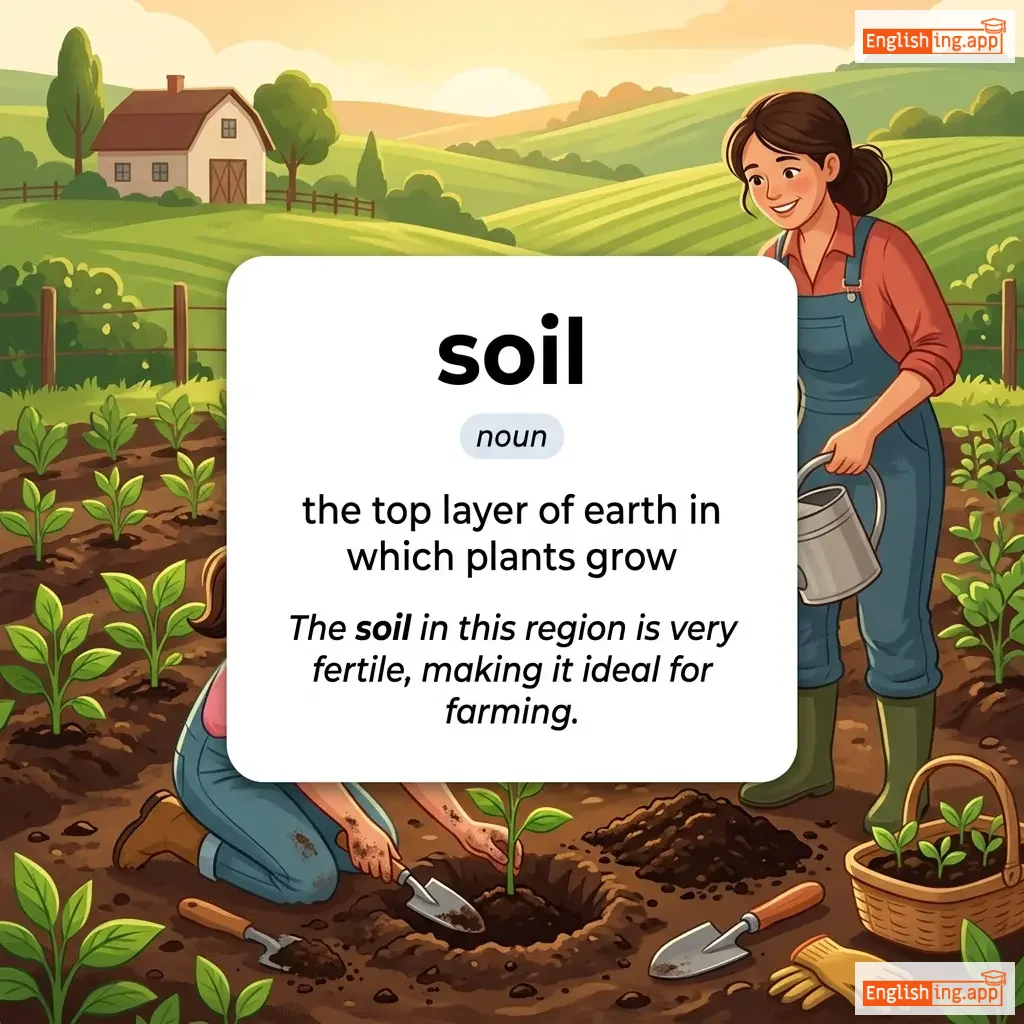
/sɔɪl/
noun
(索伊尔)
••••••
|
|
土壤
soil
••••••
|
- •••••• | - •••••• | - •••••• | - •••••• |
the upper layer of earth in which plants grow; dirt or earth
••••••
|
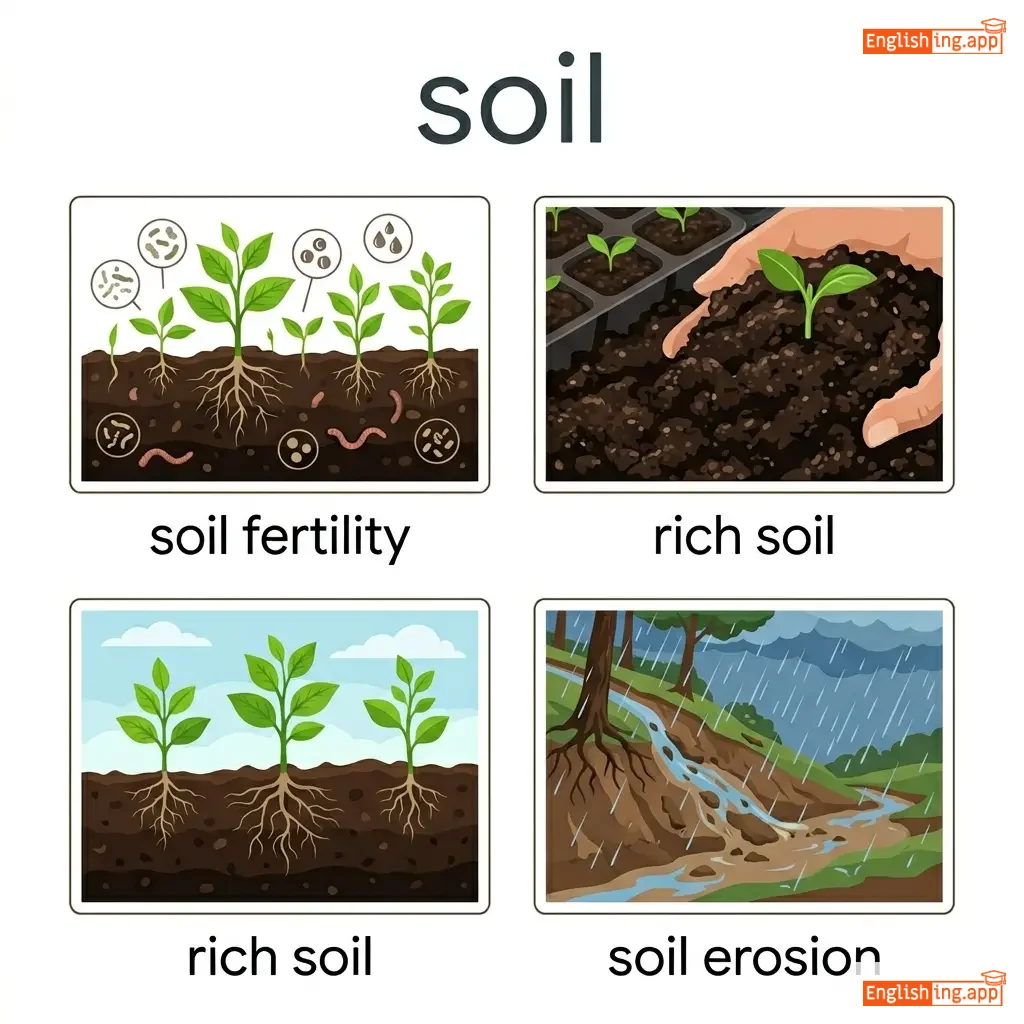
Rich soil is essential for healthy plant growth.
丰富的土壤对于健康植物生长至关重要。
••••••
|
肥沃的土壤对于健康植物的生长至关重要。
fei wo de tu rang dui yu jian kang zhi wu de sheng zhang zhi guan zhong yao
••••••
|
- •••••• | - •••••• | - •••••• |
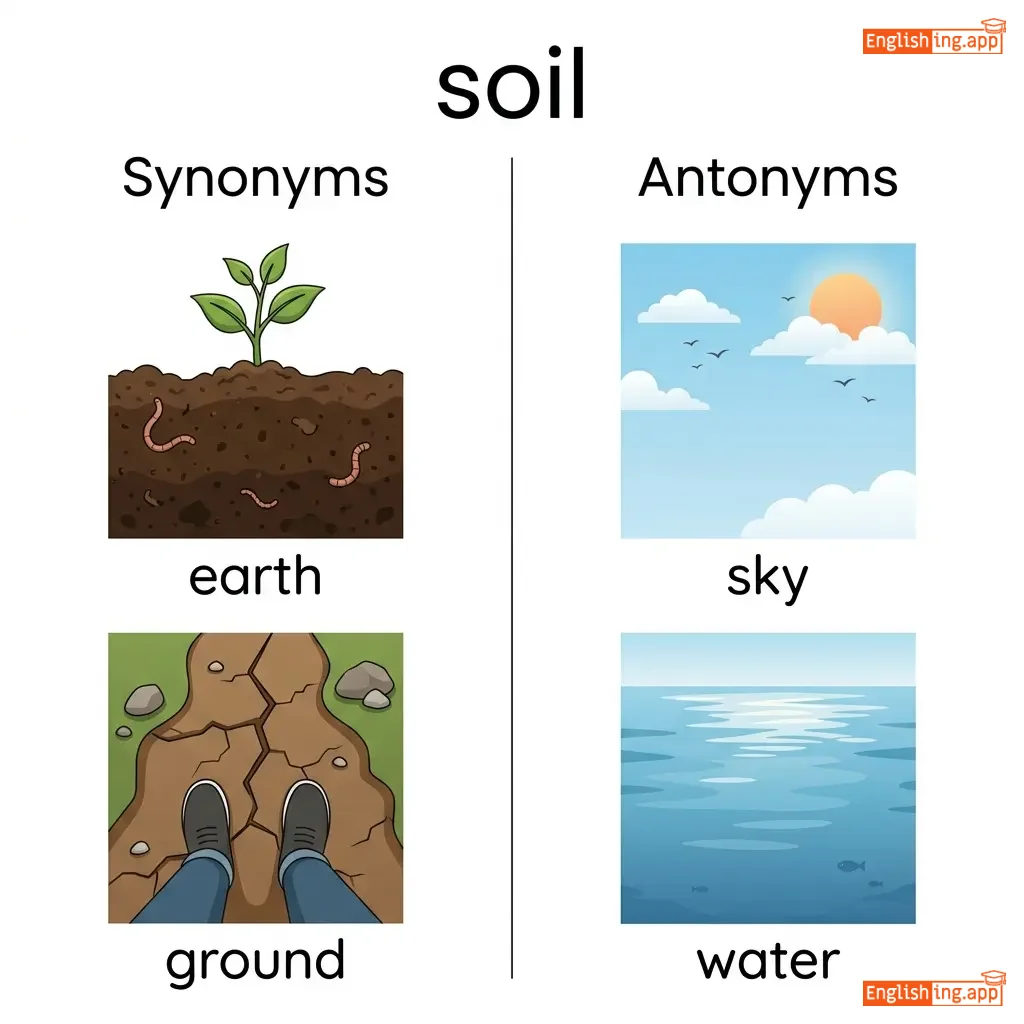
earth, dirt, ground, mud
••••••
|
rock, stone, concrete
••••••
|
fertile soil, sandy soil, clay soil, soil erosion
••••••
|
Soil 土壤记忆法: So = Sunlight, il = In Loam; remember 土壤 is the home for plant roots
••••••
|
|
☀️
••••••
|
/ˈsoʊlər/
adjective
(太阳能)
••••••
|
- •••••• |
太阳的
tàiyáng de
••••••
|
- •••••• | - •••••• | - •••••• | - •••••• |
Relating to or determined by the sun
••••••
|
The house is powered by solar energy. |
这座房子由太阳能驱动。
Zhè zuò fángzi yóu tàiyángnéng qūdòng.
••••••
|
solar power |
energy derived from the sun
••••••
|
太阳能
tàiyángnéng
••••••
|
sun-powered, sun-based, radiant, heliacal
••••••
|
lunar, artificial
••••••
|
solar energy, solar panel, solar system, solar eclipse
••••••
|
Solar意味着与太阳有关 → 太阳能面板收集太阳能
••••••
|
|
🪖
••••••
|
/ˈsoʊldʒər/
noun
(士兵)
••••••
|
- •••••• |
士兵
shìbīng
••••••
|
- •••••• | - •••••• | - •••••• | - •••••• |
a person who serves in an army, especially as a professional fighter
••••••
|
The soldier marched proudly with his unit.
士兵骄傲地与他的部队一起行进。
••••••
|
士兵骄傲地与他的部队一起行进。
Shìbīng jiāo'ào de yǔ tā de bùduì yīqǐ xíngjìn.
••••••
|
old soldier
老兵
••••••
|
a person with much experience in military service or in life
••••••
|
老兵
lǎo bīng
••••••
|
trooper, warrior, fighter, serviceman, combatant
••••••
|
civilian, noncombatant
••••••
|
brave soldier, professional soldier, soldier on, soldier's duty
••••••
|
士兵 = Soldier, 容易记住!
••••••
|
|
👤
••••••
|
/soʊl/
adjective
(索尔)
••••••
|
- •••••• |
唯一的
wei yi de
••••••
|
- •••••• | - •••••• | - •••••• | - •••••• |
being the only one; single and not shared with others
••••••
|
She was the sole survivor of the accident. |
她是事故中唯一的幸存者。
Ta shi shigu zhong wei yi de xingcun zhe.
••••••
|
sole proprietor |
a person who owns and runs a business alone
••••••
|
独资经营者
du zi jing ying zhe
••••••
|
only, single, exclusive, lone, solitary
••••••
|
shared, joint, multiple
••••••
|
sole purpose, sole responsibility, sole owner, sole agent
••••••
|
Sole意思是'唯一' — '唯一幸存者'意味着她是唯一活下来的人。
••••••
|
|
🎯
••••••
|
/ˈsoʊlli/
adverb
(sòu lì)
••••••
|
- •••••• |
仅仅
jinjin
••••••
|
- •••••• | - •••••• | - •••••• | - •••••• |
only; not involving anyone or anything else
••••••
|
He is solely responsible for the decision.
他完全对这个决定负责。
••••••
|
他完全对这个决定负责。
Ta wanquan dui zhe ge jueding fuzhe.
••••••
|
- •••••• | - •••••• | - •••••• |
only, exclusively, purely, entirely, alone
••••••
|
jointly, collectively
••••••
|
solely responsible, solely based on, solely for, solely focused on
••••••
|
Solely意味着仅仅 — '仅仅负责'意味着完全负责。
••••••
|
|
⚖️
••••••
|
/səˈlɪsɪtər/
noun
(苏利西特)
••••••
|
- •••••• |
律师
lǜ shī
••••••
|
- •••••• | - •••••• | - •••••• | - •••••• |
A type of lawyer who gives legal advice and prepares legal documents, often representing clients in lower courts.
••••••
|
She consulted a solicitor before signing the contract. |
她在签署合同之前咨询了律师。
Tā zài qiānshǔ hé tóng zhīqián zīxúnle lǜshī.
••••••
|
- •••••• | - •••••• | - •••••• |
lawyer, attorney, advocate, legal advisor
••••••
|
client, layperson
••••••
|
consult a solicitor, hire a solicitor, solicitor firm, solicitor general
••••••
|
Solicitor 意味着律师 – 记住,要获得坚实的法律建议,就去找 solicitor。
••••••
|
|
🪨
••••••
|
/ˈsɒlɪd/
adjective
(索利德)
••••••
|
- •••••• |
坚固
jiangu
••••••
|
- •••••• | - •••••• | - •••••• | - •••••• |
firm and stable in shape; not liquid or fluid
••••••
|
The ground was solid underfoot. |
地面在脚下是坚固的。
Dimian zai jiao xia shi jiangu de.
••••••
|
- •••••• | - •••••• | - •••••• |
hard, firm, sturdy, unyielding
••••••
|
liquid, soft, weak
••••••
|
solid foundation, solid object, solid surface, solid structure
••••••
|
Solid rock under your feet means strength! 'Solid' and '坚固' are strong!
••••••
|
|
✊
••••••
|
/ˌsɒlɪˈdærɪti/
noun
(团结)
••••••
|
- •••••• |
团结
tuánjié
••••••
|
- •••••• | - •••••• | - •••••• | - •••••• |
Unity or agreement of feeling or action, especially among individuals with a common interest.
••••••
|
Workers held a strike in solidarity with their colleagues.
工人们在与同事们的团结下举行了罢工。
••••••
|
工人们在与同事们的团结下举行了罢工。
Gōngrén men zài yǔ tóngshì men de tuánjié xià jǔxíngle bàgōng.
••••••
|
stand in solidarity
团结一致
••••••
|
To show unity or support with others in a shared cause.
••••••
|
团结一致
tuánjié yízhì
••••••
|
unity, fellowship, cooperation, mutual support
••••••
|
division, disunity
••••••
|
show solidarity, express solidarity, in solidarity with
••••••
|
Solidarity = Solid + unity → 记住,团结意味着大家团结在一起,形成强大力量。
••••••
|
|
🎤
••••••
|
/ˈsoʊloʊ/
adjective
(索罗)
••••••
|
- •••••• |
独奏
du zou
••••••
|
- •••••• | - •••••• | - •••••• | - •••••• |
performed by one person alone; a single performance
••••••
|
She decided to perform a solo dance at the talent show. |
她决定在才艺表演中做独舞表演。
Ta jue ding zai cai yi biao yan zhong zuo du wu biao yan.
••••••
|
- •••••• | - •••••• | - •••••• |
individual, single, soloist
••••••
|
group, ensemble
••••••
|
solo performance, solo act, solo artist
••••••
|
Solo演奏,独自展现自己的才华。
••••••
|
|
💡
••••••
|
/səˈluː.ʃən/
noun
(解决方案)
••••••
|
- •••••• |
解决方案; 答案; 液体混合物
jiejue fang'an; da'an; ye ti hunhe wu
••••••
|
- •••••• | - •••••• | - •••••• | - •••••• |
an answer to a problem; a liquid mixture
••••••
|
We need to find a solution to this problem.
我们需要找到这个问题的解决方案。
••••••
|
我们需要找到这个问题的解决方案。
Women xuyao zhidao zhege wenti de jiejue fang'an.
••••••
|
- •••••• | - •••••• | - •••••• |
answer, resolution, remedy, fix
••••••
|
problem, question, complication
••••••
|
find solution, perfect solution, practical solution
••••••
|
Solution 解决方案,答案.
••••••
|
|
🧩
••••••
|
/sɑːlv/
verb
(suōwén)
••••••
|

|
解决
jie jue
••••••
|
solved
jiějué
••••••
|
solved
jiějué
••••••
|
solves
jiějué
••••••
|
solving
jiějuézhōng
••••••
|
to find an answer to a problem or question; to resolve a difficulty
••••••
|
The detective finally solved the mysterious case.
Tàn'ān zhōngshí de ànshì jiějuéle.
••••••
|
侦探终于解决了神秘案件。
Zhēntàn zhōngyú jiějuéle shénmì ànjiàn.
••••••
|
- •••••• | - •••••• | - •••••• |
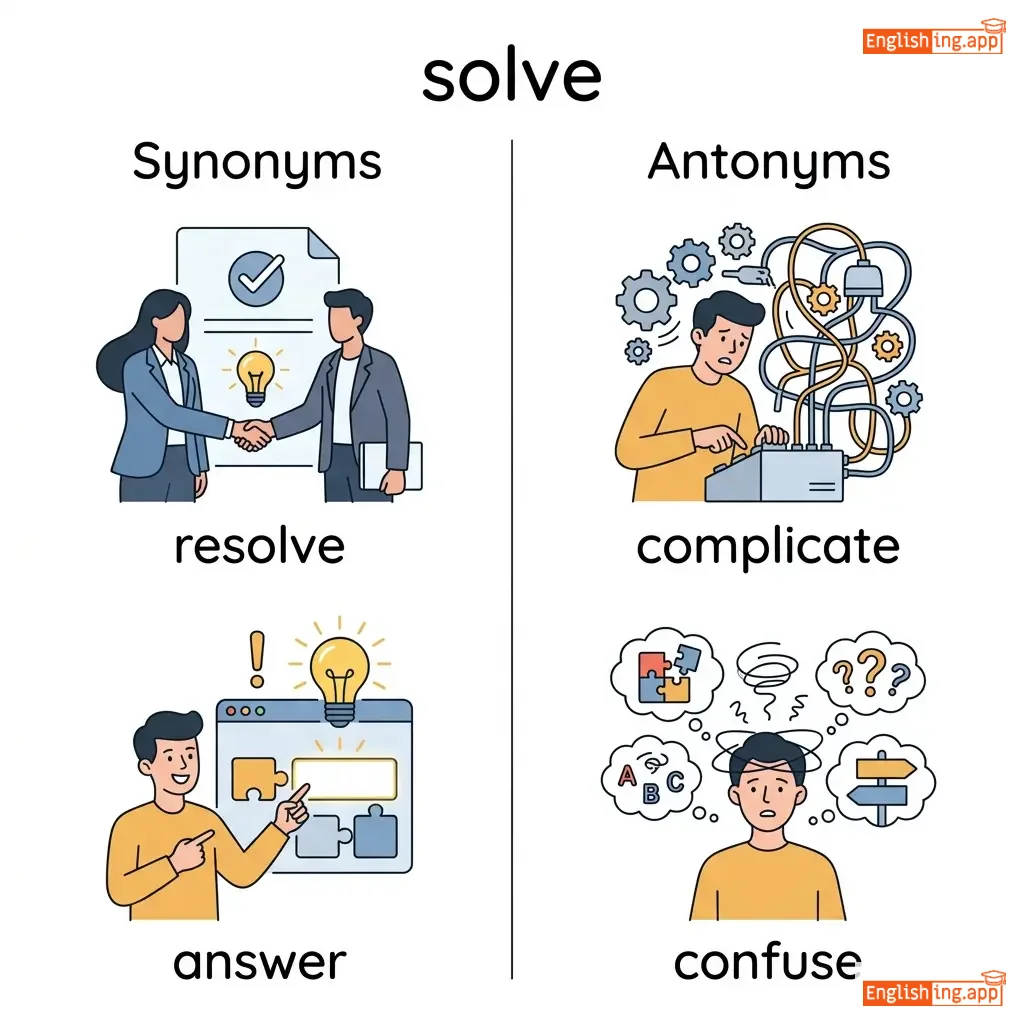
resolve, answer, figure out, work out
••••••
|
complicate, confuse, perplex, puzzle
••••••
|
solve problems, solve equations, solve mysteries, solve puzzles, solve conflicts
••••••
|
解决是找到问题的答案。
••••••
|
|
🔢
••••••
|
/sʌm/
determiner
(sām)
••••••
|
- •••••• |
一些
yīxiē
••••••
|
- •••••• | - •••••• | - •••••• | - •••••• |
an unspecified amount or number of something
••••••
|
I have some money in my wallet. |
我的钱包里有一些钱。
Wǒ de qiánbāo lǐ yǒu yīxiē qián.
••••••
|
- •••••• | - •••••• | - •••••• |
a few, several, a number of, certain
••••••
|
none, all
••••••
|
some time, some people, some things, some amount
••••••
|
Some 'yīxiē' things are part of your day - like money in your wallet!
••••••
|
|
🙋♂️
••••••
|
/ˈsʌmbədi/
pronoun
(sʌmbədi)
••••••
|
- •••••• |
有人
you ren
••••••
|
- •••••• | - •••••• | - •••••• | - •••••• |
an unspecified person
••••••
|
Somebody is knocking at the door. |
有人在敲门。
You ren zai qiao men.
••••••
|
- •••••• | - •••••• | - •••••• |
someone, a person, an individual, a soul
••••••
|
nobody
••••••
|
somebody is, somebody did, somebody told me
••••••
|
Somebody, like 'you ren', is always there knocking on your door!
••••••
|
|
🤷
••••••
|
/ˈsʌm.haʊ/
adverb
(sām-óu)
••••••
|
- •••••• |
不管怎样;
bù guǎn zěnyàng
••••••
|
- •••••• | - •••••• | - •••••• | - •••••• |
in some way; for some reason that is not clear
••••••
|
Somehow, I managed to finish the project on time.
Sām-óu, wǒ chénggōng dì wánchéngle xiàngmù.
••••••
|
不管怎样,我成功地按时完成了项目。
Bù guǎn zěnyàng, wǒ chénggōng de ànshí wánchéngle xiàngmù.
••••••
|
- •••••• | - •••••• | - •••••• |
someway, in some way, by some means, mysteriously
••••••
|
clearly, obviously, certainly, definitely
••••••
|
somehow manage, somehow survive, somehow succeed, somehow escape
••••••
|
Chinese and English mix: 'Somehow' becomes 'bù guǎn zěnyàng', emphasizing a mysterious solution.
••••••
|
|
🙋
••••••
|
/ˈsʌmwʌn/
pronoun
(sʌmwʌn)
••••••
|
- •••••• |
某人
mǒu rén
••••••
|
- •••••• | - •••••• | - •••••• | - •••••• |
a person, but not specifically known or named
••••••
|
Someone left their umbrella in the hallway. |
某人把他们的伞忘在了走廊里。
Mǒu rén bǎ tāmen de sǎn wàng zài le zǒuláng lǐ.
••••••
|
- •••••• | - •••••• | - •••••• |
somebody, person, individual
••••••
|
nobody
••••••
|
someone special, someone else, someone new
••••••
|
Someone can be remembered as 'Some ONE person'.
••••••
|
|
❓
••••••
|
/ˈsʌmθɪŋ/
pronoun
(sʌmθɪŋ)
••••••
|
- •••••• |
某事
mou shi
••••••
|
- •••••• | - •••••• | - •••••• | - •••••• |
an unspecified or unknown thing
••••••
|
I think something is wrong with my phone. |
我觉得我的手机有些问题。
Wo juede wode shouji youxie wenti.
••••••
|
make something of |
to understand or interpret something in a particular way
••••••
|
对某事做出解释
dui mou shi zuo chu jie shi
••••••
|
thing, object, item, matter
••••••
|
nothing, void
••••••
|
something new, something special, something wrong, something else
••••••
|
Some + Thing = 某事 (mou shi)
••••••
|
|
☕
••••••
|
/ˈsʌm.taɪm/
adverb
(sāngtāim)
••••••
|
- •••••• |
某个时候
mǒu gè shíhòu
••••••
|
- •••••• | - •••••• | - •••••• | - •••••• |
at a time that is not known or stated; occasionally
••••••
|
Let's meet for coffee sometime next week. |
我们下周某个时候见面喝咖啡吧。
Wǒmen xià zhōu mǒu gè shíhòu jiànmiàn hē kāfēi ba.
••••••
|
- •••••• | - •••••• | - •••••• |
occasionally, at some point, once, now and then
••••••
|
never, always
••••••
|
sometime soon, sometime later, sometime next week, sometime ago
••••••
|
Sometime 意味着某个时候 — 想象 'some' 是未来的一个时刻。
••••••
|
|
🔄
••••••
|
/ˈsʌm.taɪmz/
adverb
(sǎm tái mǔs)
••••••
|
- •••••• |
有时
yǒu shí
••••••
|
- •••••• | - •••••• | - •••••• | - •••••• |
at times; occasionally; now and then
••••••
|
Sometimes I go for a walk in the evening.
sǎm tái mǔs ài gǒu fǒr à wòk in dì ivníng.
••••••
|
有时我会在晚上散步。
Yǒu shí wǒ huì zài wǎnshàng sànbù.
••••••
|
- •••••• | - •••••• | - •••••• |
occasionally, at times, now and then, from time to time
••••••
|
always, never, constantly
••••••
|
sometimes difficult, sometimes happens, sometimes feel
••••••
|
有时,你会在夜晚走路就像以前一样。
••••••
|
|
🤏
••••••
|
/ˈsʌm.wʌt/
adjective
(som-wat)
••••••
|
- •••••• |
有点; 稍微; 适度
yǒudiǎn; shāowéi; shìdù
••••••
|
- •••••• | - •••••• | - •••••• | - •••••• |
to some extent; rather; moderately
••••••
|
The movie was somewhat interesting but not great.
这部电影有点有趣,但不太棒。
••••••
|
这部电影有点有趣,但不太棒。
zhè bù diànyǐng yǒudiǎn yǒuqù, dàn bù tài bàng.
••••••
|
- •••••• | - •••••• | - •••••• |
rather, fairly, moderately, slightly
••••••
|
completely, entirely, extremely, very
••••••
|
somewhat disappointed, somewhat surprised, somewhat difficult
••••••
|
Imagine a movie that's somewhat funny but not too impressive.
••••••
|
|
📍
••••••
|
/ˈsʌm.weər/
adverb
(sʌm.wɛr)
••••••
|
- •••••• |
某处
mǒu chù
••••••
|
- •••••• | - •••••• | - •••••• | - •••••• |
in or at some place; in an unspecified location
••••••
|
I left my keys somewhere in the house. |
我把钥匙放在屋子里的某处。
Wǒ bǎ yàoshi fàng zài wūzi lǐ de mǒu chù.
••••••
|
- •••••• | - •••••• | - •••••• |
someplace, anywhere, in some location
••••••
|
nowhere, everywhere
••••••
|
somewhere else, somewhere safe, somewhere around
••••••
|
在屋里某处找到钥匙
••••••
|
|
👦
••••••
|
/sʌn/
noun
(孙)
••••••
|
- •••••• |
儿子
er zi
••••••
|
- •••••• | - •••••• | - •••••• | - •••••• |
a male child of a parent
••••••
|
His son is very talented in music. |
他的儿子在音乐方面非常有才华。
Tā de érzi zài yīnyuè fāngmiàn fēicháng yǒu cáihuá.
••••••
|
- •••••• | - •••••• | - •••••• |
child, offspring, male heir
••••••
|
daughter, female child
••••••
|
only son, beloved son, son of a king
••••••
|
His SON is a musical genius; you’ll be so proud of him.
••••••
|
|
🎵
••••••
|
/sɔːŋ/
noun
(sōng)
••••••
|
- •••••• |
歌曲
gequ
••••••
|
- •••••• | - •••••• | - •••••• | - •••••• |
a short piece of music with words that are sung
••••••
|
She sang a beautiful song at the concert. |
她在音乐会上唱了一首美丽的歌曲。
Ta zai yinyuehui shang chang le yi shou mei li de gequ.
••••••
|
- •••••• | - •••••• | - •••••• |
melody, tune, ballad, anthem
••••••
|
silence, quiet
••••••
|
popular song, love song, sing a song
••••••
|
A SONG that resonates across the heart.
••••••
|
|
⏰
••••••
|
/suːn/
adverb
(sun)
••••••
|
- •••••• |
很快
hen kuai
••••••
|
- •••••• | - •••••• | - •••••• | - •••••• |
in a short time; before long; quickly
••••••
|
The train will arrive soon. |
火车很快就到。
huoche hen kuai jiu dao
••••••
|
- •••••• | - •••••• | - •••••• |
quickly, shortly, before long, in a moment
••••••
|
late, slowly, never, eventually
••••••
|
very soon, coming soon, soon after
••••••
|
Chinese '很快' (hen kuai) means 'soon'.
••••••
|
|
🎨
••••••
|
/səˈfɪstɪkeɪt/
verb
(suo fī sṭī kèit)
••••••
|
- •••••• |
使精致
shi jing zhi
••••••
|
sophisticated
suo fī sṭī kèitèd
••••••
|
sophisticated
suo fī sṭī kèitèd
••••••
|
sophisticates
suo fī sṭī kèits
••••••
|
sophisticating
suo fī sṭī kèiting
••••••
|
to make something more complex or refined; to educate or develop in taste and manners
••••••
|
Traveling abroad helped sophisticate his worldview.
出国旅行帮助他完善了世界观。
••••••
|
出国旅行帮助他完善了世界观。
Chu guo lv xing bang zhu ta wan shan le shi jie guan.
••••••
|
- •••••• | - •••••• | - •••••• |
refine, cultivate, educate, polish, develop
••••••
|
simplify, coarsen, degrade
••••••
|
sophisticate taste, sophisticate design, sophisticate culture
••••••
|
Sophisticate意味着精致–Sophisticated食物提高了品味。
••••••
|
|
💎
••••••
|
/səˈfɪstɪkeɪtɪd/
adjective
(sophistikèitid)
••••••
|
|
复杂的
fuza de
••••••
|
- •••••• | - •••••• | - •••••• | - •••••• |
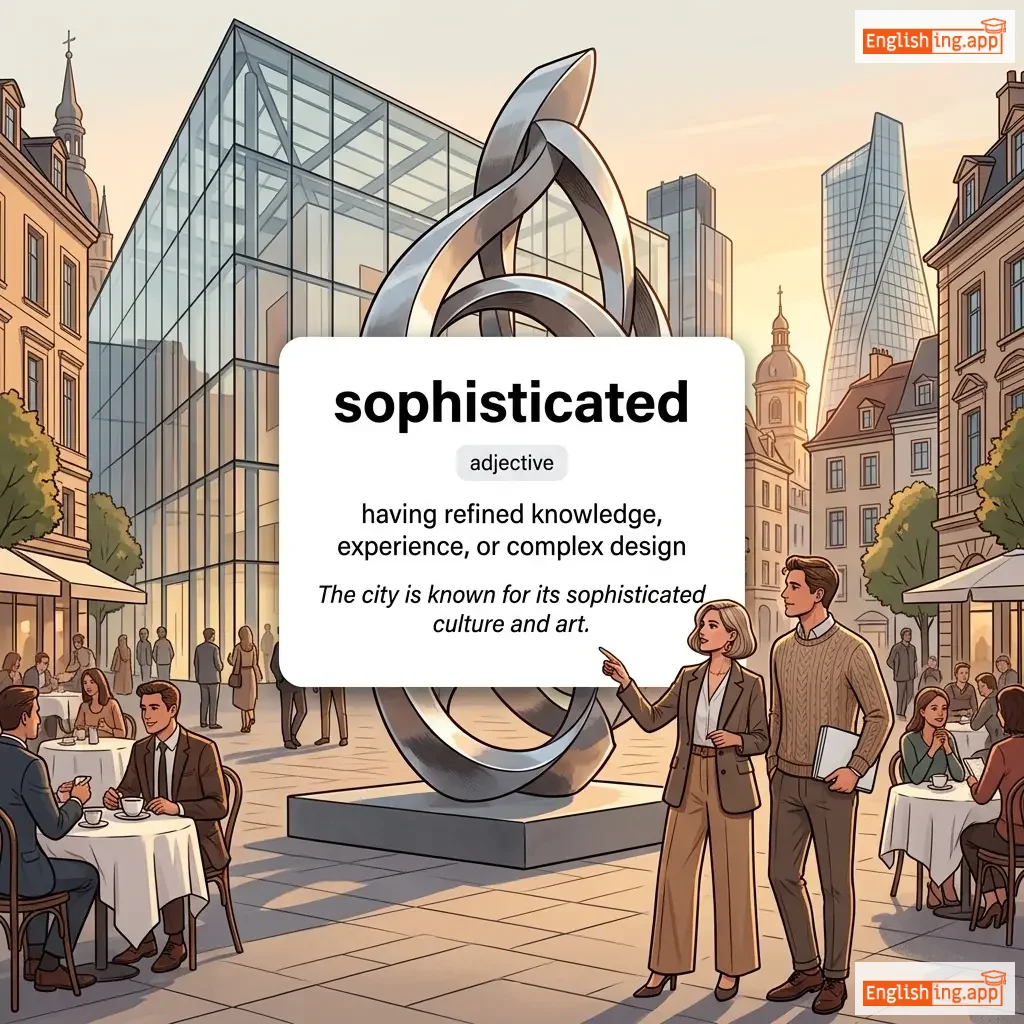
having refined knowledge, experience, or complex design
••••••
|
The city is known for its sophisticated culture and art.
这个城市以其复杂的文化和艺术而闻名。
••••••
|
这个城市以其复杂的文化和艺术而闻名。
Zhe ge chengshi yi qi fuza de wenhua he yishu er wenming.
••••••
|
sophisticated taste
复杂的品味
••••••
|
refined or cultivated sense of style and preference
••••••
|
复杂的品味
fuza de pinwei
••••••
|
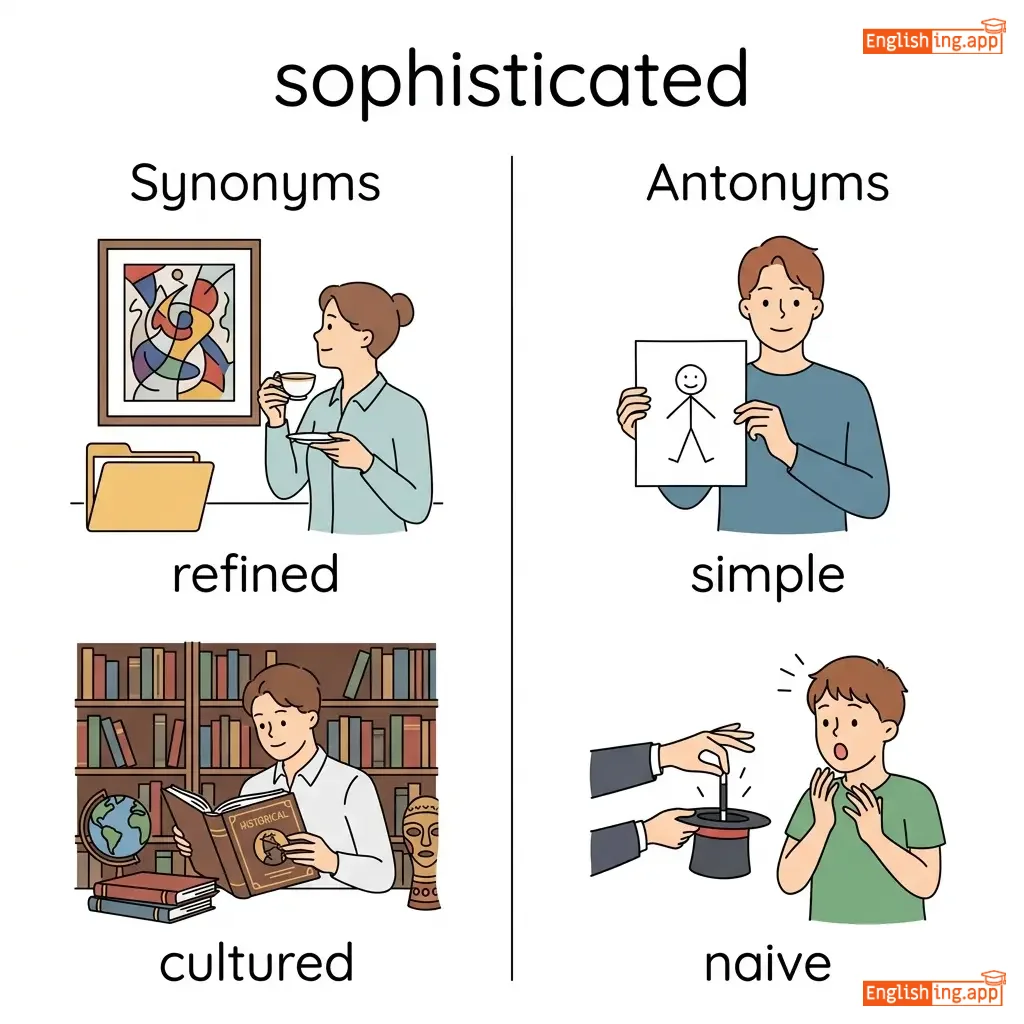
refined, cultured, elegant, advanced, polished
••••••
|
simple, naive, crude
••••••
|
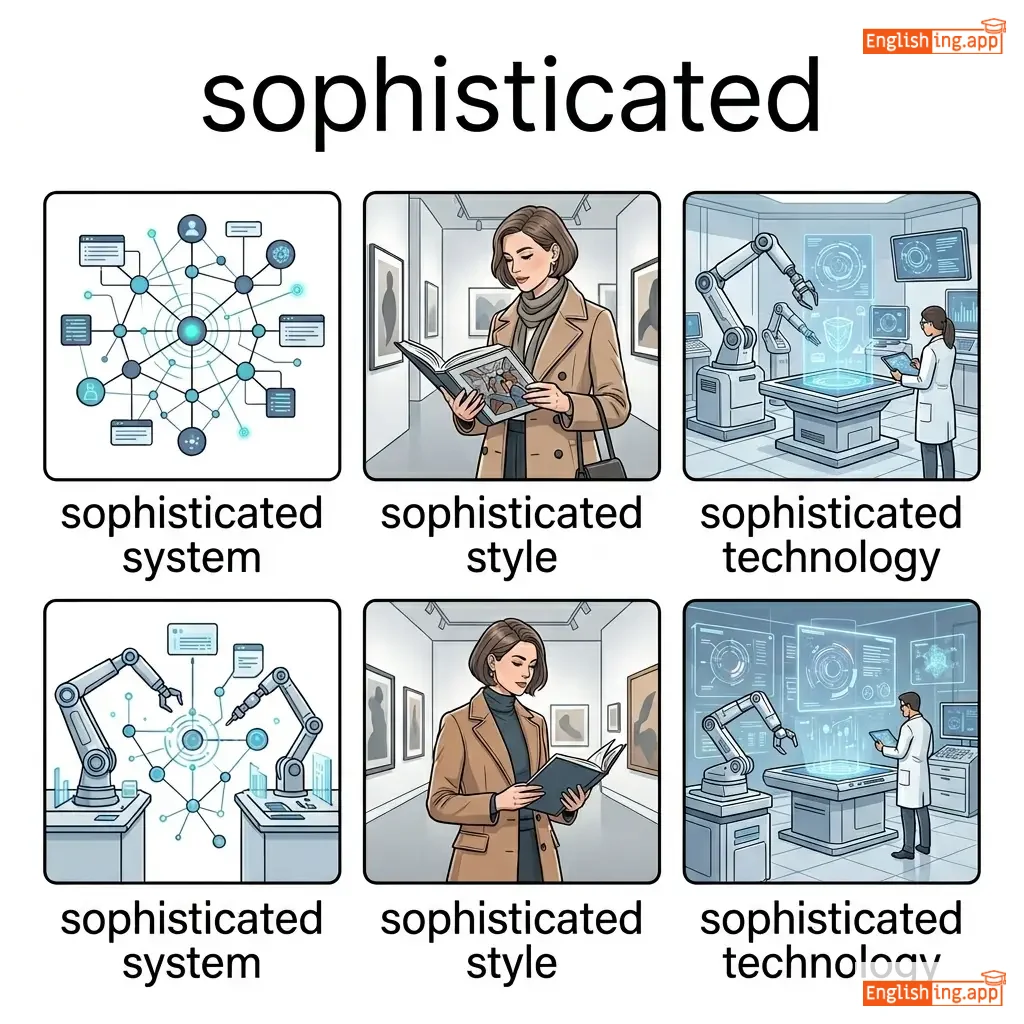
sophisticated system, sophisticated style, sophisticated technology
••••••
|
复杂的品味意味着优雅和高雅的风格。
••••••
|
|
🤕
••••••
|
/sɔːr/
adjective
(索尔)
••••••
|
- •••••• |
酸痛
suantong
••••••
|
- •••••• | - •••••• | - •••••• | - •••••• |
painful or aching, usually in a specific part of the body
••••••
|
After the long run, my legs were sore.
长跑后,我的腿很 sore。
••••••
|
长跑后,我的腿很酸痛。
changpao hou, wo de tui hen suantong
••••••
|
a sore point
痛点
••••••
|
a sensitive topic that causes discomfort or anger
••••••
|
敏感话题
mingan huati
••••••
|
painful, aching, tender, inflamed, sensitive
••••••
|
comfortable, painless, unhurt
••••••
|
sore muscles, sore throat, feel sore, extremely sore
••••••
|
sore sounds like 酸痛, legs suantong
••••••
|
|
😢
••••••
|
/ˈsɑːroʊ/
noun
(suo ro)
••••••
|
- •••••• |
悲伤
bēi shāng
••••••
|
- •••••• | - •••••• | - •••••• | - •••••• |
a feeling of deep sadness or grief
••••••
|
She was filled with sorrow after the loss of her friend. |
在失去朋友后,她充满了悲伤。
Zài shī qù péng yǒu hòu, tā chōng mǎn le bēi shāng.
••••••
|
drown one's sorrows |
to drink alcohol in order to forget sadness
••••••
|
用酒消愁
yòng jiǔ xiāo chóu
••••••
|
grief, sadness, anguish, heartache
••••••
|
joy, happiness, delight
••••••
|
deep sorrow, express sorrow, filled with sorrow, great sorrow
••••••
|
Sorrow 和悲伤很相似,都是痛苦的感受。
••••••
|
|
😔
••••••
|
/ˈsɔːri/
adjective
(对不起)
••••••
|
- •••••• |
对不起
duìbuqǐ
••••••
|
- •••••• | - •••••• | - •••••• | - •••••• |
feeling regret or sympathy
••••••
|
She felt sorry for what had happened. |
她为发生的事情感到抱歉。
Tā wèi fāshēng de shìqíng gǎndào bàoqiàn.
••••••
|
I'm sorry! |
an expression of apology or regret
••••••
|
对不起!
Duìbuqǐ!
••••••
|
apologetic, regretful, remorseful, contrite
••••••
|
happy, glad
••••••
|
sorry for, sorry about, deeply sorry
••••••
|
SORRY, she feels regret and apologizes.
••••••
|
|
🔀
••••••
|
/sɔːrt/
verb
(sɔːrt)
••••••
|
- •••••• |
排序
paixu
••••••
|
sorted
sorted
••••••
|
sorted
sorted
••••••
|
sorts
sorts
••••••
|
sorting
sorting
••••••
|
to arrange or categorize something
••••••
|
Please sort the files by date.
请按日期排序文件。
••••••
|
请按日期排序文件。
Qǐng àn rìqī páixù wénjiàn.
••••••
|
- •••••• | - •••••• | - •••••• |
arrange, categorize, organize, classify
••••••
|
disorder, scatter
••••••
|
sort out, sort through, sort by
••••••
|
SORT the files to keep everything organized!
••••••
|
|
👻
••••••
|
/soʊl/
noun
(灵魂)
••••••
|
- •••••• |
灵魂
linghun
••••••
|
- •••••• | - •••••• | - •••••• | - •••••• |
the spiritual or immaterial essence of a human being or animal; a person's emotional or intellectual nature
••••••
|
She poured her heart and soul into her artwork.
她将自己的心和灵魂投入到艺术创作中。
••••••
|
她将自己的心和灵魂投入到艺术创作中。
ta jiang ziji de xin he linghun touru dao yishu chuangzuo zhong.
••••••
|
- •••••• | - •••••• | - •••••• |
spirit, essence, heart, core
••••••
|
body, flesh, matter
••••••
|
heart and soul, lost soul, soul mate, save one's soul
••••••
|
灵魂 (Linghun) - 藏在每一创作中的情感和思想。
••••••
|
|
🔊
••••••
|
/saʊnd/
noun, verb, adjective
••••••
|
- •••••• | - •••••• |
sounded
••••••
|
sounded
••••••
|
sounds
••••••
|
sounding
••••••
|
a sensation perceived by the ear; to make or cause to make a noise; in good condition
••••••
|
The bell sounded across the valley. |
- •••••• |
sound asleep |
in a deep and peaceful sleep
••••••
|
- •••••• |
noise, tone, echo, healthy, secure
••••••
|
silence, unhealthy, weak
••••••
|
sound advice, sound asleep, sound decision, sound system
••••••
|
No •••••• |
|
🍲
••••••
|
/suːp/
noun
(汤)
••••••
|
- •••••• |
汤
tang
••••••
|
- •••••• | - •••••• | - •••••• | - •••••• |
a liquid food made by boiling meat, vegetables, or other ingredients in water
••••••
|
I had a bowl of chicken soup for lunch.
我午餐吃了一碗鸡汤。
••••••
|
我午餐吃了一碗鸡汤。
wo wucan chi le yi wan ji tang
••••••
|
- •••••• | - •••••• | - •••••• |
broth, stew, consommé
••••••
|
solid food, dry food
••••••
|
chicken soup, vegetable soup, tomato soup, soup bowl, soup spoon
••••••
|
汤可以暖胃,温暖你。
••••••
|
|
🍋
••••••
|
/ˈsaʊər/
adjective
(sàowò)
••••••
|
- •••••• |
酸的
suān de
••••••
|
- •••••• | - •••••• | - •••••• | - •••••• |
having an acidic taste; unpleasant or bad-tempered
••••••
|
The milk has gone sour. |
牛奶变酸了。
Niúnǎi biàn suān le.
••••••
|
sour grapes |
an attitude in which someone pretends to dislike or devalue something they cannot have
••••••
|
酸葡萄
suān pútáo
••••••
|
acidic, tart, bitter, unpleasant
••••••
|
sweet, pleasant, agreeable
••••••
|
sour taste, sour mood, sour milk, sour relationship
••••••
|
Sour意味着酸的,就像柠檬的味道。
••••••
|
|
📍
••••••
|
/sɔːrs/
noun
(索斯)
••••••
|
- •••••• |
源头; 来源
sawrs
••••••
|
- •••••• | - •••••• | - •••••• | - •••••• |
a place, person, or thing from which something originates; the origin of information
••••••
|
The river's source is high in the mountains.
这条河的源头在群山之中。
••••••
|
这条河的源头位于群山之中。
zhe tiao he de yuan tou zai qun shan zhi zhong
••••••
|
- •••••• | - •••••• | - •••••• |
origin, beginning, root, foundation
••••••
|
destination, end, result, outcome
••••••
|
reliable source, news source, water source, energy source
••••••
|
源头在山顶, Source 就是 yuan tou, 想象知识从那里起流
••••••
|
|
⏬
••••••
|
/saʊθ/
noun/adjective
(sàuth)
••••••
|
- •••••• |
南方
nanfang
••••••
|
- •••••• | - •••••• | - •••••• | - •••••• |
the direction towards the bottom of a map, opposite to north
••••••
|
The sun rises in the east and sets in the south.
太阳从东方升起,西方落下。
••••••
|
太阳从东方升起,西方落下。
Taiyang cong dongfang shengqi, xifang luoxia.
••••••
|
- •••••• | - •••••• | - •••••• |
down, southern
••••••
|
north, up
••••••
|
south of, southern hemisphere, south pole, travel south
••••••
|
South is the 'down' direction, like 'south' in the 'sunset' where the sun sets.
••••••
|
|
🌎
••••••
|
/ˈsʌðərn/
adjective
(sādén)
••••••
|
- •••••• |
南方的
nánfāng de
••••••
|
- •••••• | - •••••• | - •••••• | - •••••• |
located in or facing the south; southern regions
••••••
|
She moved to a southern city for work. |
她为了工作搬到了一个南方城市。
Tā wèile gōngzuò bān dào le yīgè nánfāng chéngshì.
••••••
|
- •••••• | - •••••• | - •••••• |
southernmost, southward, lowland
••••••
|
northern, northernmost
••••••
|
southern states, southern hemisphere, southern part
••••••
|
Southern regions are like the 'South' side of your world map.
••••••
|
|
👑
••••••
|
/ˈsɒvrənti/
noun
(sòu wèi rén tì)
••••••
|
|
主权
zhǔquán
••••••
|
- •••••• | - •••••• | - •••••• | - •••••• |
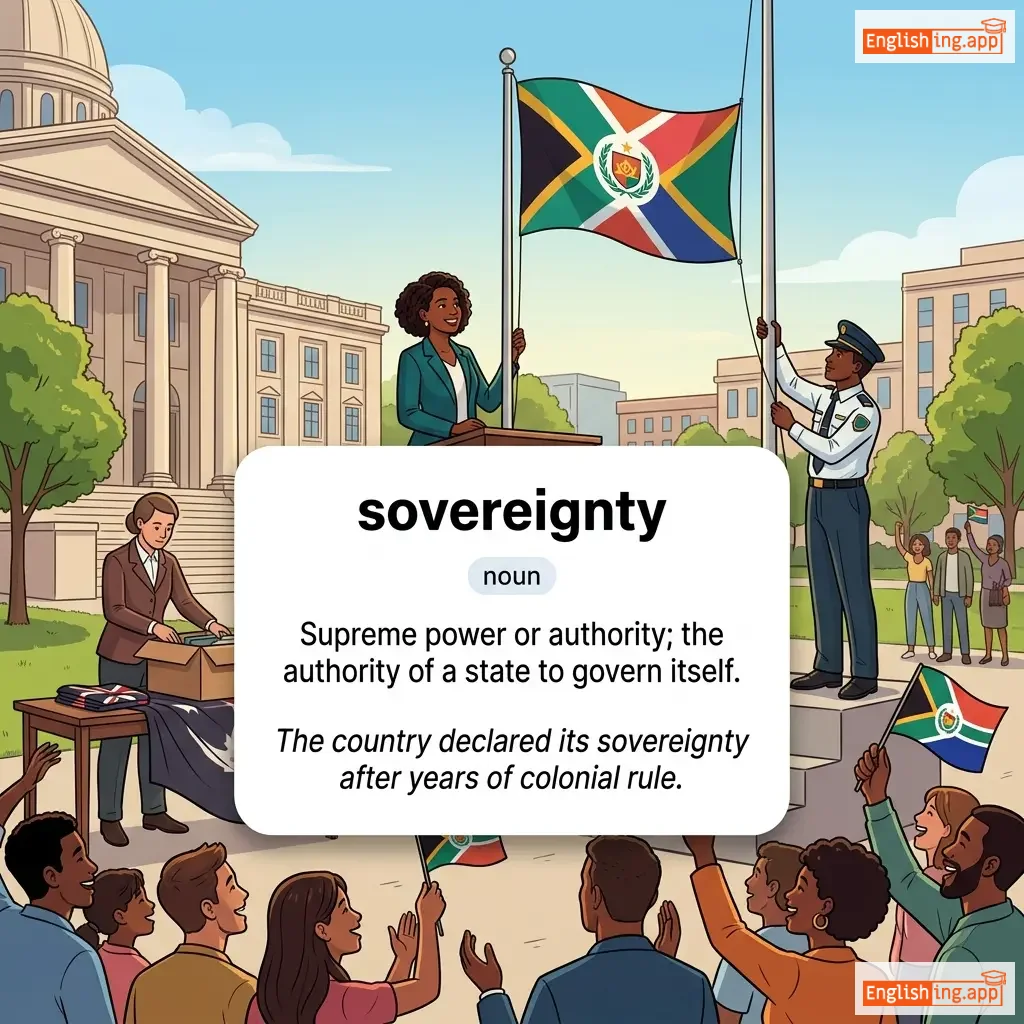
Supreme power or authority; the authority of a state to govern itself.
••••••
|
The country declared its sovereignty after years of colonial rule. |
该国在经历多年殖民统治后宣布了其主权。
Gāi guó zài jīnglì duōnián zhímín tǒngzhì hòu xuānbù le qí zhǔquán.
••••••
|
sovereignty of the people |
The principle that political power ultimately resides with the people.
••••••
|
人民的主权
rénmín de zhǔquán
••••••
|
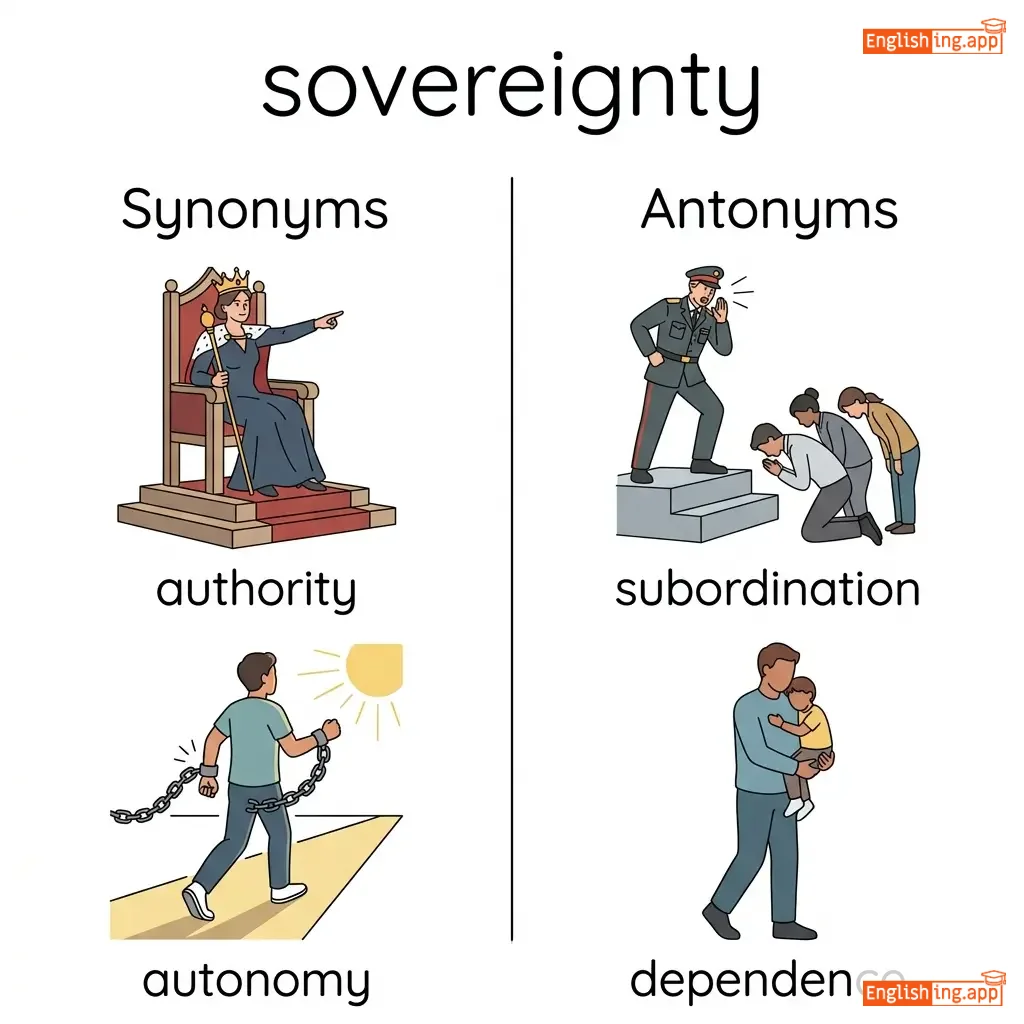
authority, autonomy, independence, self-rule, dominion
••••••
|
subordination, dependence, submission
••••••
|
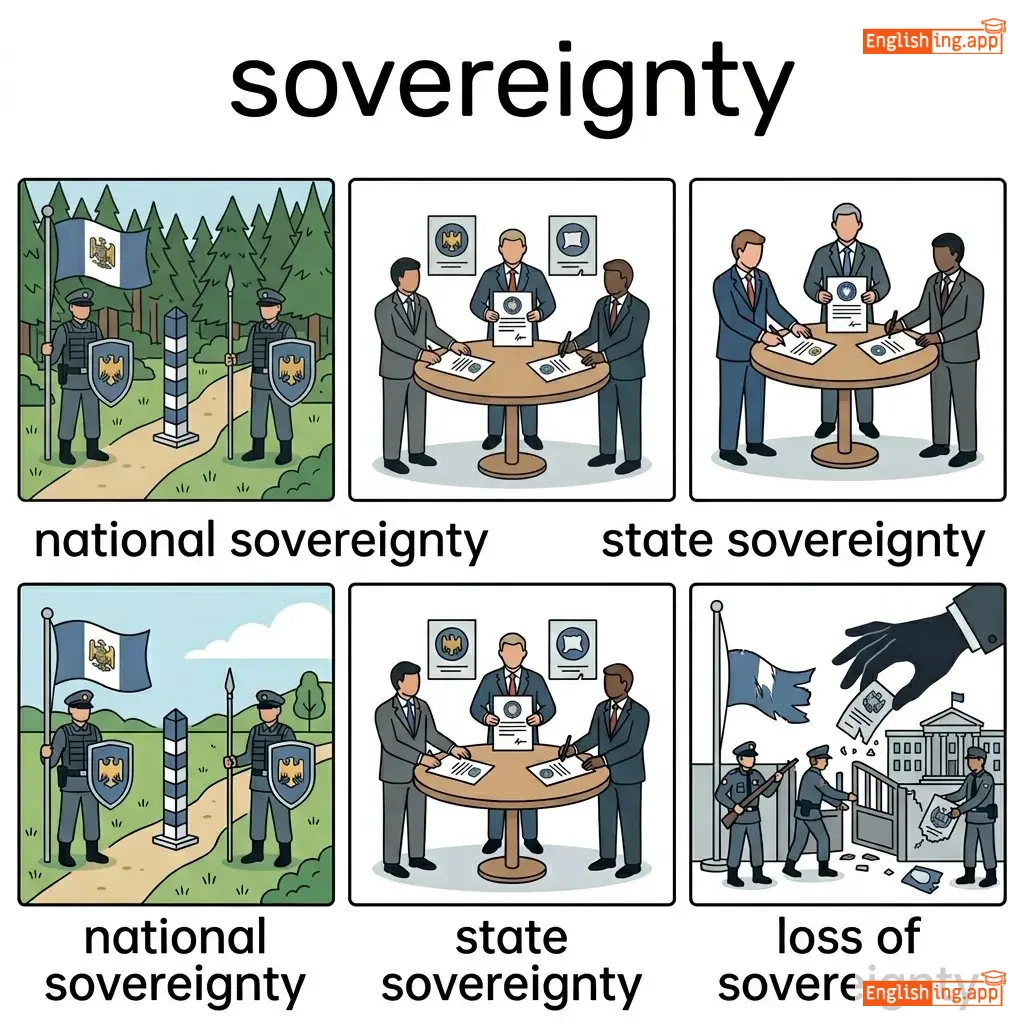
national sovereignty, state sovereignty, loss of sovereignty, sovereignty rights
••••••
|
主权 = 国家自主权 – 中国拥有自己的主权。
••••••
|
|
🌍
••••••
|
/ˈsoʊ.vi.ət/
adjective
(苏联的)
••••••
|
- •••••• |
苏联的
sulian de
••••••
|
- •••••• | - •••••• | - •••••• | - •••••• |
relating to the Soviet Union or its government
••••••
|
The Soviet era saw significant changes in Eastern Europe.
苏联时代见证了东欧的重大变化。
••••••
|
苏联时代见证了东欧的重大变化。
Sulian shidai jianzheng le dong'ou de zhongda bianhua.
••••••
|
- •••••• | - •••••• | - •••••• |
communist, socialist, USSR-related
••••••
|
capitalist, democratic
••••••
|
Soviet government, Soviet Union, Soviet ideology
••••••
|
Soviet sounds like 'SOVE' - Soviets 'SOVE' changes the world!
••••••
|
|
🚀
••••••
|
/speɪs/
noun
(sīpèi sī)
••••••
|

|
空间
kongjian
••••••
|
- •••••• | - •••••• | - •••••• | - •••••• |
a continuous area or expanse that is free, available, or unoccupied
••••••
|
There was enough space for everyone in the room. |
房间里有足够的空间给每个人。
Fángjiān lǐ yǒu zúgòu de kōngjiān gěi měi gè rén.
••••••
|
outer space |
the region beyond Earth's atmosphere
••••••
|
外太空
wài tàikōng
••••••
|
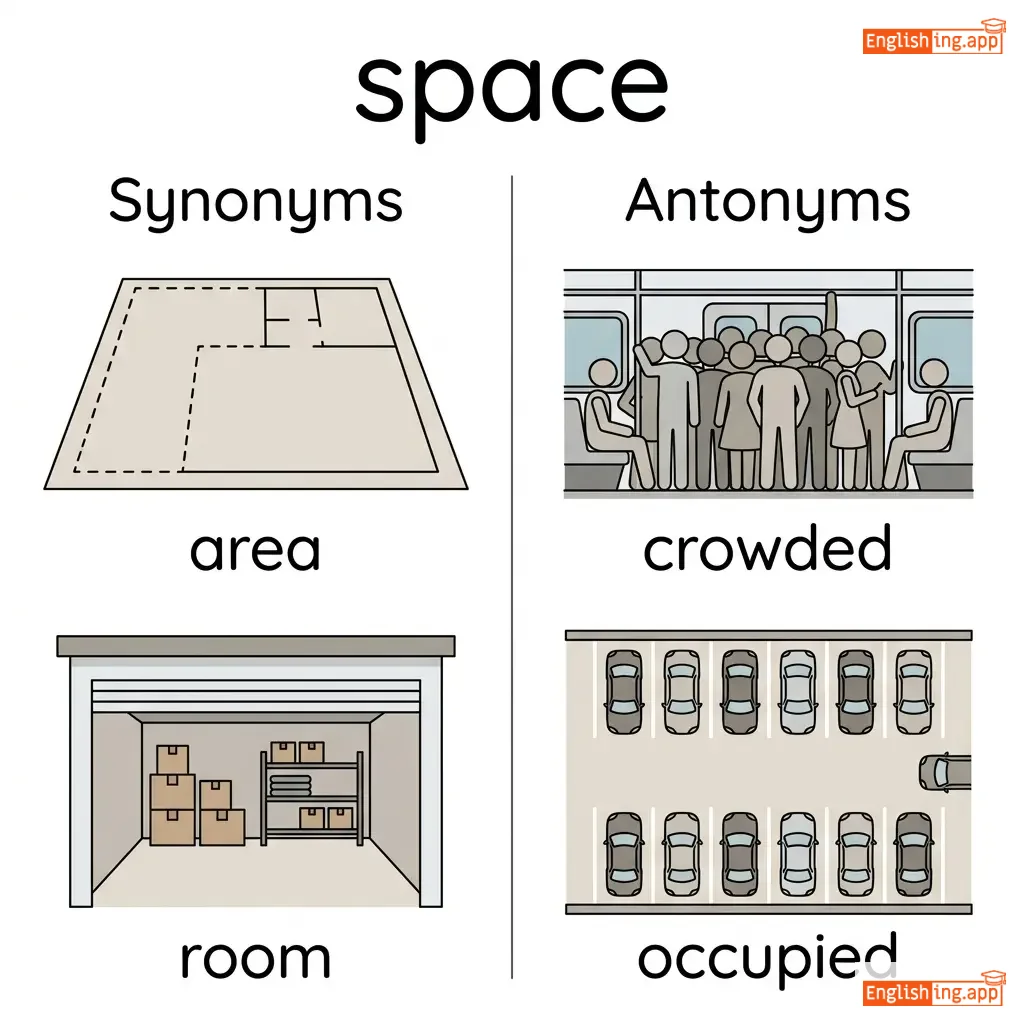
area, room, extent, volume
••••••
|
crowded, occupied, tight
••••••
|
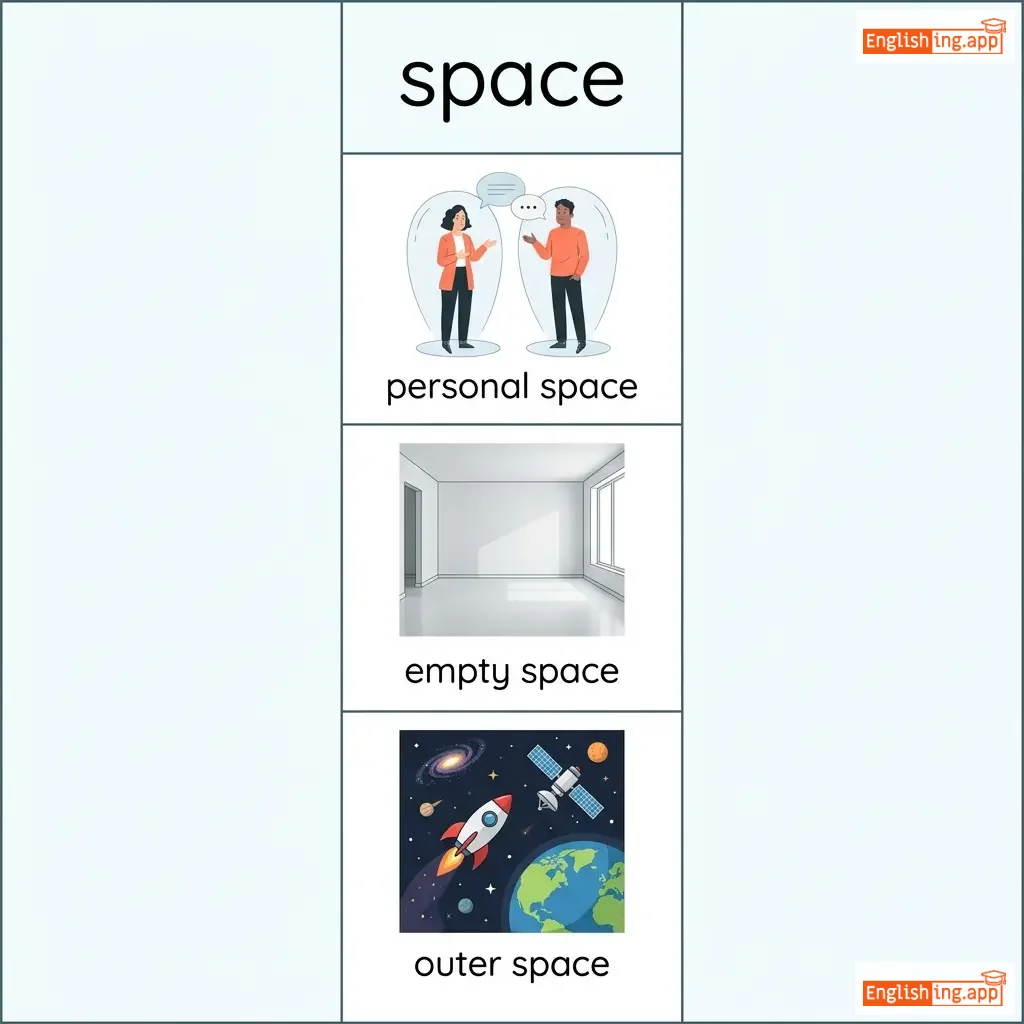
personal space, empty space, outer space, living space
••••••
|
In 'space' we have 'S' for 'Safe', 'P' for 'Place'.
••••••
|
|
📧
••••••
|
/spæm/
noun
(垃圾邮件)
••••••
|
- •••••• |
垃圾邮件
laji youjian
••••••
|
- •••••• | - •••••• | - •••••• | - •••••• |
unsolicited or unwanted electronic communication, typically in the form of email
••••••
|
My inbox is full of spam emails that I need to delete.
我的收件箱里满是垃圾邮件,我需要删除它们。
••••••
|
我的收件箱里满是垃圾邮件,我需要删除它们。
Wo de shoujiankuang li man shi laji youjian, wo xuyao shanchu tamen.
••••••
|
- •••••• | - •••••• | - •••••• |
junk, unsolicited mail, nuisance
••••••
|
legitimate mail, valid communication
••••••
|
spam email, spam message, spam filter
••••••
|
垃圾邮件,删除它,清理邮箱!
••••••
|
|
🌉
••••••
|
/spæn/
noun
(span)
••••••
|
- •••••• |
跨度
kuandu
••••••
|
- •••••• | - •••••• | - •••••• | - •••••• |
the full extent or length of something from one end to another
••••••
|
The bridge has a span of over 500 meters.
这座桥的跨度超过了500米。
••••••
|
这座桥的跨度超过了500米。
Zhezuo qiao de kuandu chao guo le 500 mi.
••••••
|
- •••••• | - •••••• | - •••••• |
range, stretch, extent
••••••
|
shortness, limit
••••••
|
span of time, span of control, wide span
••••••
|
记住Span就像桥梁的跨度。
••••••
|
|
🇪🇸
••••••
|
/ˈspænɪʃ/
adjective
(西班牙语)
••••••
|
- •••••• |
西班牙语
xibanya yu
••••••
|
- •••••• | - •••••• | - •••••• | - •••••• |
relating to Spain or the Spanish language
••••••
|
She is fluent in Spanish and French.
她能流利地讲西班牙语和法语。
••••••
|
她能流利地讲西班牙语和法语。
ta neng liuli de jiang xibanya yu he fayu.
••••••
|
in Spanish
用西班牙语
••••••
|
said in the Spanish language
••••••
|
用西班牙语
yong xibanya yu
••••••
|
Hispanic, Iberian
••••••
|
non-Spanish, English
••••••
|
Spanish language, Spanish culture, Spanish cuisine
••••••
|
西班牙语中的'S'代表西班牙,'P'代表地方。
••••••
|
|
👐
••••••
|
/spɛər/
verb
(spɛr)
••••••
|
- •••••• |
额外给予 / 节省
éwài jǐyǔ / jiéshěng
••••••
|
spared
spɛrd
••••••
|
spared
spɛrd
••••••
|
spares
spɛrs
••••••
|
sparing
spɛrɪŋ
••••••
|
To give something that one has extra of; to refrain from harming or killing.
••••••
|
Could you spare me a few minutes of your time?
你能给我一些你的时间吗?
••••••
|
你能给我一些你的时间吗?
Nǐ néng gěi wǒ yīxiē nǐ de shíjiān ma?
••••••
|
spare no effort
不惜一切努力
••••••
|
To try as hard as possible to achieve something.
••••••
|
不惜一切努力
Bùxī yīqiè nǔlì
••••••
|
save, grant, provide, afford, allocate
••••••
|
withhold, deny, deprive
••••••
|
spare time, spare change, spare part, spare effort
••••••
|
Spare意味着额外给予 👐 - 给多余的东西或时间。
••••••
|
|
⚡
••••••
|
/spɑːrk/
verb
(spark)
••••••
|
- •••••• |
火花
huǒ huā
••••••
|
sparked
sparked
••••••
|
sparked
sparked
••••••
|
sparks
sparks
••••••
|
sparking
sparking
••••••
|
to cause the start of something, especially an emotion or activity
••••••
|
The news sparked a heated debate across the country.
这个消息在全国范围内引发了激烈的辩论。
••••••
|
这个消息在全国范围内引发了激烈的辩论。
zhège xiāoxī zài quánguó fànwéi nèi yǐn fà le jīliè de biànlùn.
••••••
|
spark an interest
激发兴趣
••••••
|
to cause someone to become interested in something
••••••
|
激发兴趣
jīfā xìngqù
••••••
|
ignite, trigger, provoke, stimulate, kindle
••••••
|
extinguish, suppress
••••••
|
spark interest, spark controversy, spark fire, spark protest
••••••
|
火花点燃火焰,就像 'spark' 一样开始一切!
••••••
|
|
🗣️
••••••
|
/spiːk/
verb
(spiːk)
••••••
|
- •••••• |
说
shuo
••••••
|
spoke
spok
••••••
|
spoken
spouken
••••••
|
speaks
spiks
••••••
|
speaking
spiiking
••••••
|
to say something in order to convey information or express feelings
••••••
|
She speaks five languages fluently.
她流利地说五种语言。
••••••
|
她流利地说五种语言。
Ta liuli de shuo wuzhong yuyan.
••••••
|
speak out
大声说
••••••
|
to express one's opinion clearly and openly
••••••
|
清晰表达意见
qingxi biaoda yijian
••••••
|
talk, converse, utter, communicate
••••••
|
be silent, mute, keep quiet
••••••
|
speak up, speak to, speak about, speak highly
••••••
|
Speak = 'S' for 'Say', 'P' for 'Project'.
••••••
|

