Получите неограниченный доступ ко всем словам с подпиской Pro
Обновить до ProПолучите неограниченный доступ ко всем предложениям с подпиской Pro
Обновить до Pro|
Эмодзи
|
Слово | Images | Перевод | Прошедшее | Причастие прошедшего времени | Третье лицо единственного числа | Герундий | Значение | Пример предложения | Перевод примера предложения | Пример выражения | Значение примера выражения | Перевод примера выражения | Синонимы | Антонимы | Коллокации | Мнемоника |
|---|---|---|---|---|---|---|---|---|---|---|---|---|---|---|---|---|---|
|
🧦
••••••
|
/sɒk/
noun
(сок)
••••••
|
- •••••• |
носки
noski
••••••
|
- •••••• | - •••••• | - •••••• | - •••••• |
a piece of clothing worn on the foot and lower part of the leg.
••••••
|
He put on a pair of clean socks before leaving the house.
Он надел пару чистых носок перед тем, как выйти из дома.
••••••
|
Он надел пару чистых носок перед тем, как выйти из дома.
On nadel paru chistyh nosok pered tem, kak vyjti iz doma.
••••••
|
pull up your socks
подними носки
••••••
|
to make an effort to improve your performance or behavior.
••••••
|
постараться улучшить свою производительность или поведение.
postarat'sya uluchshit' svoyu proizvoditel'nost' ili povedenie.
••••••
|
stocking, hosiery, footwear, covering
••••••
|
barefoot, naked foot
••••••
|
pair of socks, woolen socks, cotton socks, ankle socks
••••••
|
Sock = носки, помни: если 'шок' тебе не по душе, закрой свои ноги носками!
••••••
|
|
🧸
••••••
|
/sɔft/
adjective
(софТ)
••••••
|
- •••••• |
мягкий; нежный; тихий
myagkiy; nezhnyy; tikhiy
••••••
|
- •••••• | - •••••• | - •••••• | - •••••• |
not hard or firm; gentle; quiet; tender
••••••
|
The pillow is very soft and comfortable. |
Подушка очень мягкая и удобная.
Podushka ochen' myagkaya i udobnaya
••••••
|
- •••••• | - •••••• | - •••••• |
gentle, tender, smooth, mild
••••••
|
hard, rough, firm, harsh
••••••
|
soft touch, soft voice, soft fabric, soft light
••••••
|
мягкая подушка удобная
••••••
|
|
💻
••••••
|
/ˈsɒftweə/
noun
(sof-tver)
••••••
|
- •••••• |
программное обеспечение
programnoye oborudovaniye
••••••
|
- •••••• | - •••••• | - •••••• | - •••••• |
the programs and other operating information used by a computer
••••••
|
He installed the software to enhance the performance of his computer.
Он установил программу, чтобы улучшить производительность своего компьютера.
••••••
|
Он установил программу, чтобы улучшить производительность своего компьютера.
On ustanovil programmu, chtoby uluchshit' proizvoditel'nost' svoego komp'yutera.
••••••
|
- •••••• | - •••••• | - •••••• |
program, application, system, platform
••••••
|
hardware
••••••
|
software development, software engineer, software update, software application
••••••
|
Программное обеспечение - Важно для улучшения работы компьютера. Software is essential for enhancing the computer's performance.
••••••
|
|
🌱
••••••
|
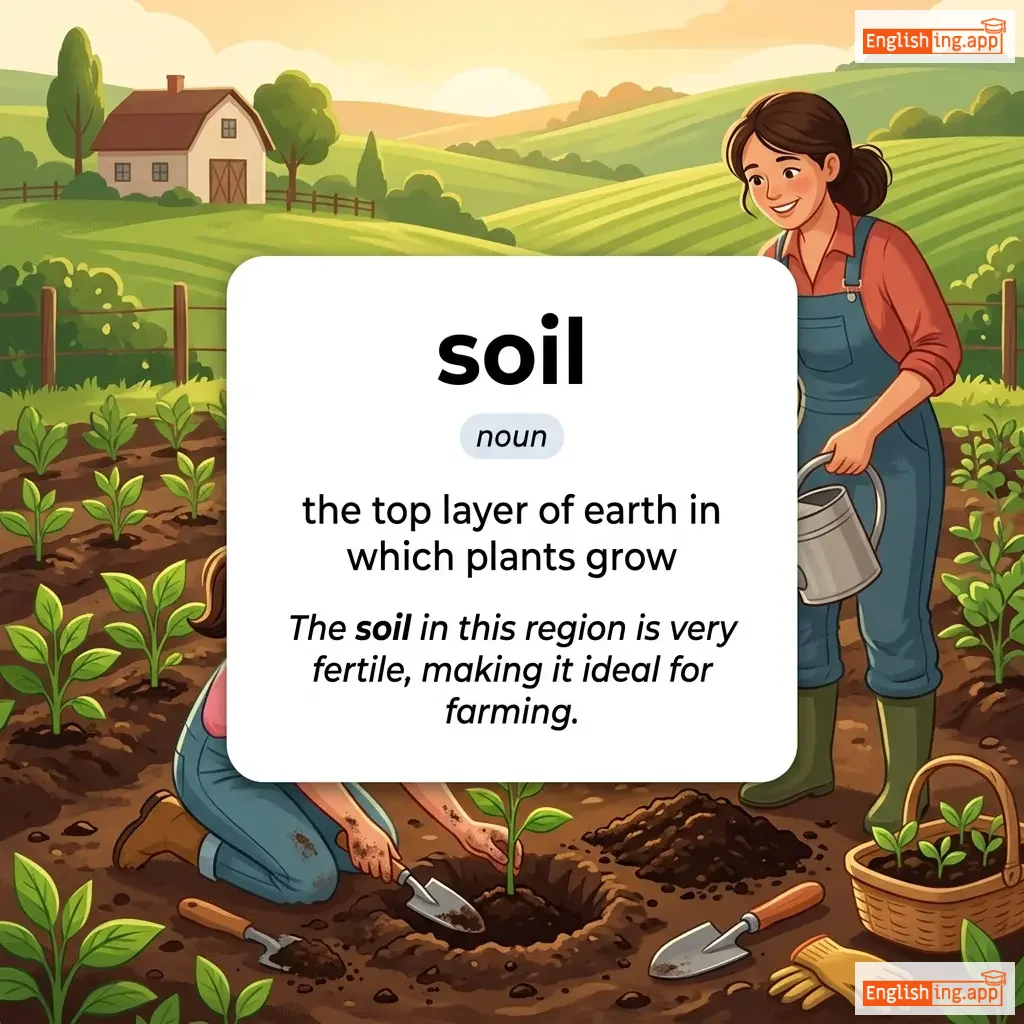
/sɔɪl/
noun
(сойл)
••••••
|
|
почва
soil
••••••
|
- •••••• | - •••••• | - •••••• | - •••••• |
the upper layer of earth in which plants grow; dirt or earth
••••••
|
Rich soil is essential for healthy plant growth.
Богатая почва необходима для здорового роста растений.
••••••
|
Богатая почва необходима для здорового роста растений.
Bogataya pochva neobkhodima dlya zdorovogo rosta rasteniy.
••••••
|
- •••••• | - •••••• | - •••••• |
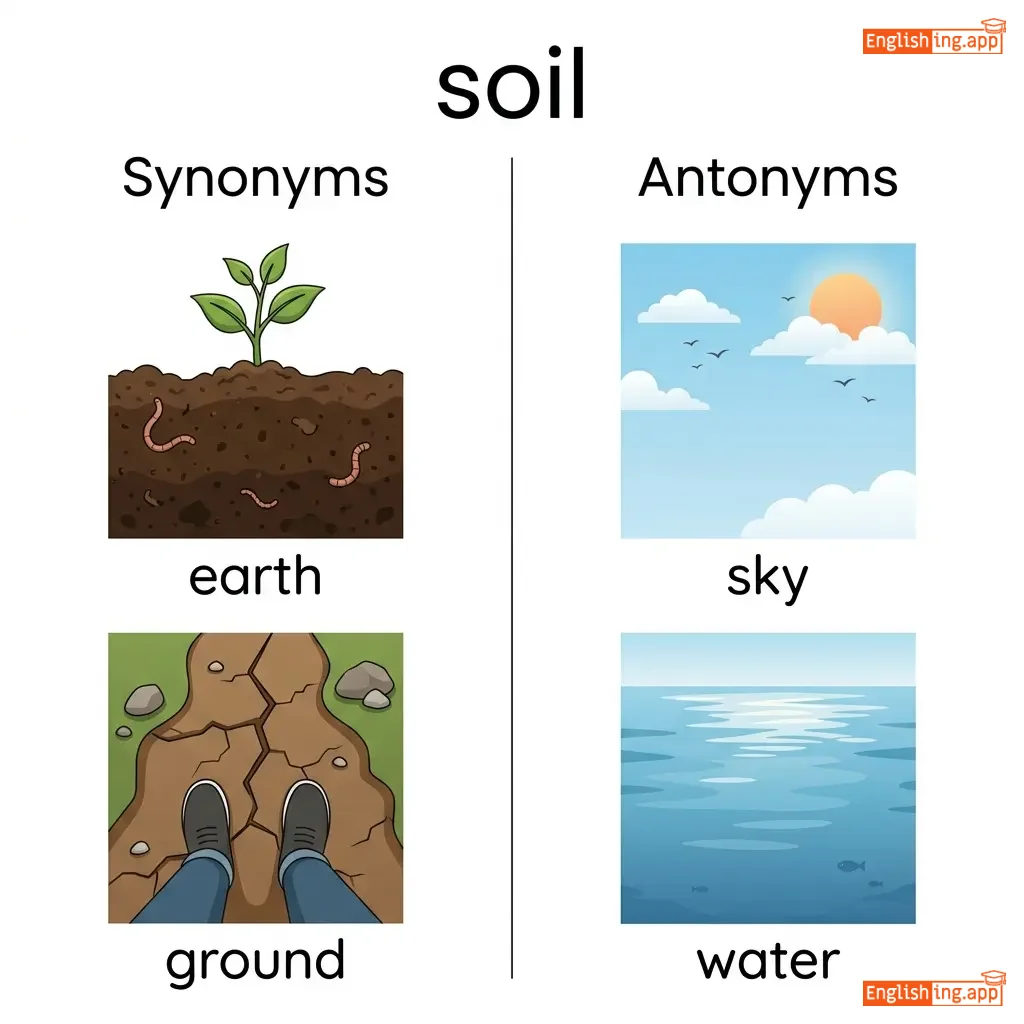
earth, dirt, ground, mud
••••••
|
rock, stone, concrete
••••••
|
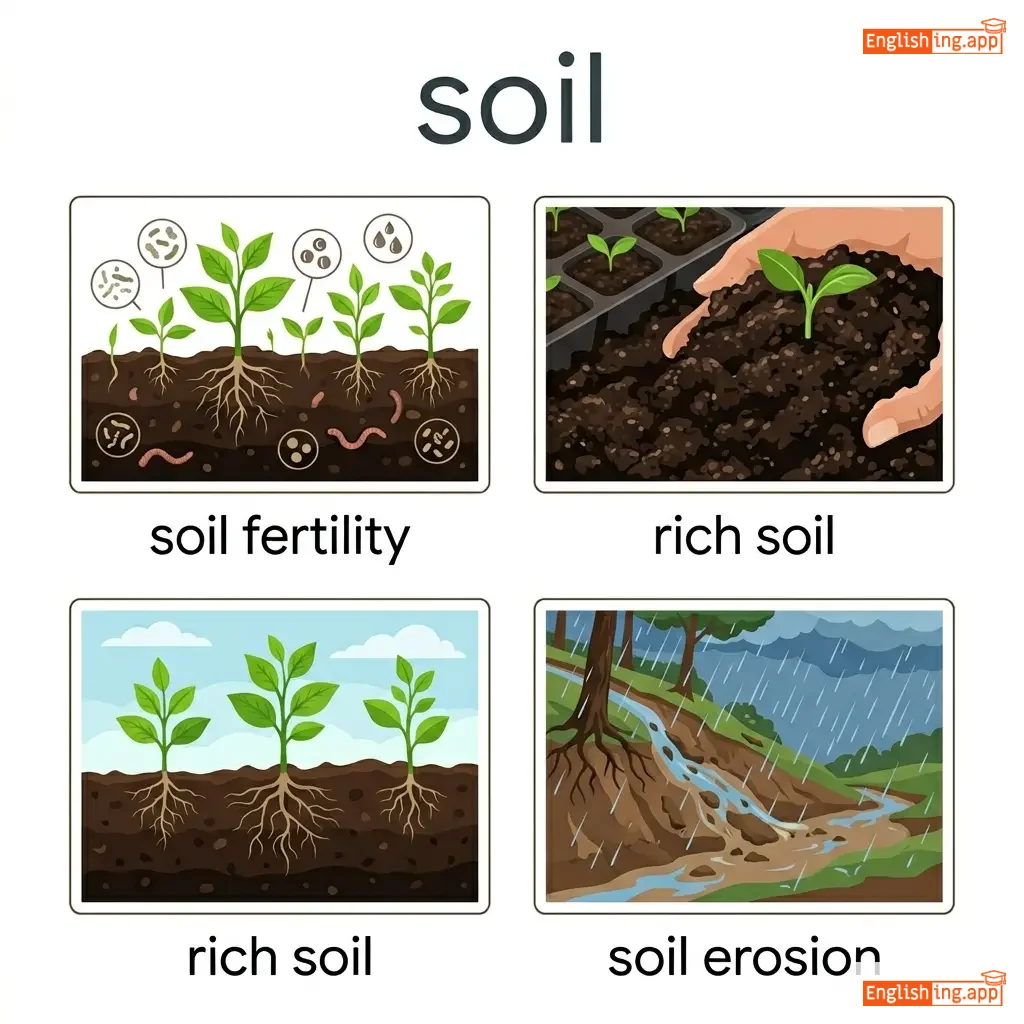
fertile soil, sandy soil, clay soil, soil erosion
••••••
|
Сойл = soil; представь: 'so I will' посадить растения на богатой почве
••••••
|
|
☀️
••••••
|
/ˈsoʊlər/
adjective
(солар)
••••••
|
- •••••• |
солнечный
solnechnyy
••••••
|
- •••••• | - •••••• | - •••••• | - •••••• |
Relating to or determined by the sun
••••••
|
The house is powered by solar energy. |
Этот дом работает на солнечной энергии.
Etot dom rabotayet na solnechnoy energii.
••••••
|
solar power |
energy derived from the sun
••••••
|
солнечная энергия
solnechnaya energiya
••••••
|
sun-powered, sun-based, radiant, heliacal
••••••
|
lunar, artificial
••••••
|
solar energy, solar panel, solar system, solar eclipse
••••••
|
Solar значит связанный с солнцем → Солнечная панель ловит солнечную энергию
••••••
|
|
🪖
••••••
|
/ˈsoʊldʒər/
noun
(сольдат)
••••••
|
- •••••• |
солдат
soldat
••••••
|
- •••••• | - •••••• | - •••••• | - •••••• |
a person who serves in an army, especially as a professional fighter
••••••
|
The soldier marched proudly with his unit.
Солдат гордо шел с его подразделением.
••••••
|
Солдат гордо шел с его подразделением.
Soldat gordo shel s ego podrazdeleniyem.
••••••
|
old soldier
старый солдат
••••••
|
a person with much experience in military service or in life
••••••
|
старый солдат
staryy soldat
••••••
|
trooper, warrior, fighter, serviceman, combatant
••••••
|
civilian, noncombatant
••••••
|
brave soldier, professional soldier, soldier on, soldier's duty
••••••
|
Солдат = Soldier, запомни это!
••••••
|
|
👤
••••••
|
/soʊl/
adjective
(соль)
••••••
|
- •••••• |
единственный
edinstvenny
••••••
|
- •••••• | - •••••• | - •••••• | - •••••• |
being the only one; single and not shared with others
••••••
|
She was the sole survivor of the accident. |
Она была единственным выжившим в аварии.
Ona byla edinstvennym vyzhivshim v avarii.
••••••
|
sole proprietor |
a person who owns and runs a business alone
••••••
|
единоличный владелец
edinolichnyy vladelets
••••••
|
only, single, exclusive, lone, solitary
••••••
|
shared, joint, multiple
••••••
|
sole purpose, sole responsibility, sole owner, sole agent
••••••
|
Sole означает 'единственный' — 'единственный выживший' означает, что она была единственной, кто выжил.
••••••
|
|
🎯
••••••
|
/ˈsoʊlli/
adverb
(соли)
••••••
|
- •••••• |
исключительно
isklyuchitel'no
••••••
|
- •••••• | - •••••• | - •••••• | - •••••• |
only; not involving anyone or anything else
••••••
|
He is solely responsible for the decision.
Он полностью ответственен за это решение.
••••••
|
Он полностью ответственен за это решение.
On polnost'yu otvetstvenen za eto reshenie.
••••••
|
- •••••• | - •••••• | - •••••• |
only, exclusively, purely, entirely, alone
••••••
|
jointly, collectively
••••••
|
solely responsible, solely based on, solely for, solely focused on
••••••
|
Solely означает исключительно — 'Соли ответственный' означает полностью ответственный.
••••••
|
|
⚖️
••••••
|
/səˈlɪsɪtər/
noun
(солиситор)
••••••
|
- •••••• |
адвокат
advokat
••••••
|
- •••••• | - •••••• | - •••••• | - •••••• |
A type of lawyer who gives legal advice and prepares legal documents, often representing clients in lower courts.
••••••
|
She consulted a solicitor before signing the contract. |
Она проконсультировалась с адвокатом перед подписанием контракта.
Ona prokonsul'tirovalas' s advokatom pered podpisaniem kontrakta.
••••••
|
- •••••• | - •••••• | - •••••• |
lawyer, attorney, advocate, legal advisor
••••••
|
client, layperson
••••••
|
consult a solicitor, hire a solicitor, solicitor firm, solicitor general
••••••
|
Solicitor означает адвокат – помните, для получения солидных юридических консультаций обращайтесь к solicitor.
••••••
|
|
🪨
••••••
|
/ˈsɒlɪd/
adjective
(солид)
••••••
|
- •••••• |
твердый
tvyordyy
••••••
|
- •••••• | - •••••• | - •••••• | - •••••• |
firm and stable in shape; not liquid or fluid
••••••
|
The ground was solid underfoot. |
Земля была твёрдой под ногами.
Zemlya byla tvyordoy pod nogami.
••••••
|
- •••••• | - •••••• | - •••••• |
hard, firm, sturdy, unyielding
••••••
|
liquid, soft, weak
••••••
|
solid foundation, solid object, solid surface, solid structure
••••••
|
Solid rock under your feet means strength! 'Solid' and 'Твердый' are strong!
••••••
|
|
✊
••••••
|
/ˌsɒlɪˈdærɪti/
noun
(солидарность)
••••••
|
- •••••• |
солидарность
solidarnost
••••••
|
- •••••• | - •••••• | - •••••• | - •••••• |
Unity or agreement of feeling or action, especially among individuals with a common interest.
••••••
|
Workers held a strike in solidarity with their colleagues.
Рабочие провели забастовку в знак солидарности с коллегами.
••••••
|
Рабочие провели забастовку в знак солидарности с коллегами.
Rabochie proveli zabastovku v znak solidarnosti s kollegami.
••••••
|
stand in solidarity
стоять в солидарности
••••••
|
To show unity or support with others in a shared cause.
••••••
|
стоять в солидарности
stoyat v solidarnosti
••••••
|
unity, fellowship, cooperation, mutual support
••••••
|
division, disunity
••••••
|
show solidarity, express solidarity, in solidarity with
••••••
|
Solidarity = Solid + unity → Помните, солидарность означает крепкую связь между всеми.
••••••
|
|
🎤
••••••
|
/ˈsoʊloʊ/
adjective
(соло)
••••••
|
- •••••• |
соло
solo
••••••
|
- •••••• | - •••••• | - •••••• | - •••••• |
performed by one person alone; a single performance
••••••
|
She decided to perform a solo dance at the talent show. |
Она решила выступить с сольным танцем на шоу талантов.
Ona reshila vystupit' s sol'nym tantsem na shou talantov.
••••••
|
- •••••• | - •••••• | - •••••• |
individual, single, soloist
••••••
|
group, ensemble
••••••
|
solo performance, solo act, solo artist
••••••
|
Соло — это один человек на сцене, как ты!
••••••
|
|
💡
••••••
|
/səˈluː.ʃən/
noun
(решение)
••••••
|
- •••••• |
решение; ответ; жидкая смесь
reshenie; otvet; zhidkaya smes
••••••
|
- •••••• | - •••••• | - •••••• | - •••••• |
an answer to a problem; a liquid mixture
••••••
|
We need to find a solution to this problem.
Нам нужно найти решение этой проблемы.
••••••
|
Нам нужно найти решение этой проблемы.
Nam nuzhno nayti reshenie etoy problemy.
••••••
|
- •••••• | - •••••• | - •••••• |
answer, resolution, remedy, fix
••••••
|
problem, question, complication
••••••
|
find solution, perfect solution, practical solution
••••••
|
Решение - это ответ на проблему.
••••••
|
|
🧩
••••••
|
/sɑːlv/
verb
(solv)
••••••
|
|
решать
reshat
••••••
|
solved
reshil
••••••
|
solved
resheno
••••••
|
solves
reshayet
••••••
|
solving
resheniye
••••••
|
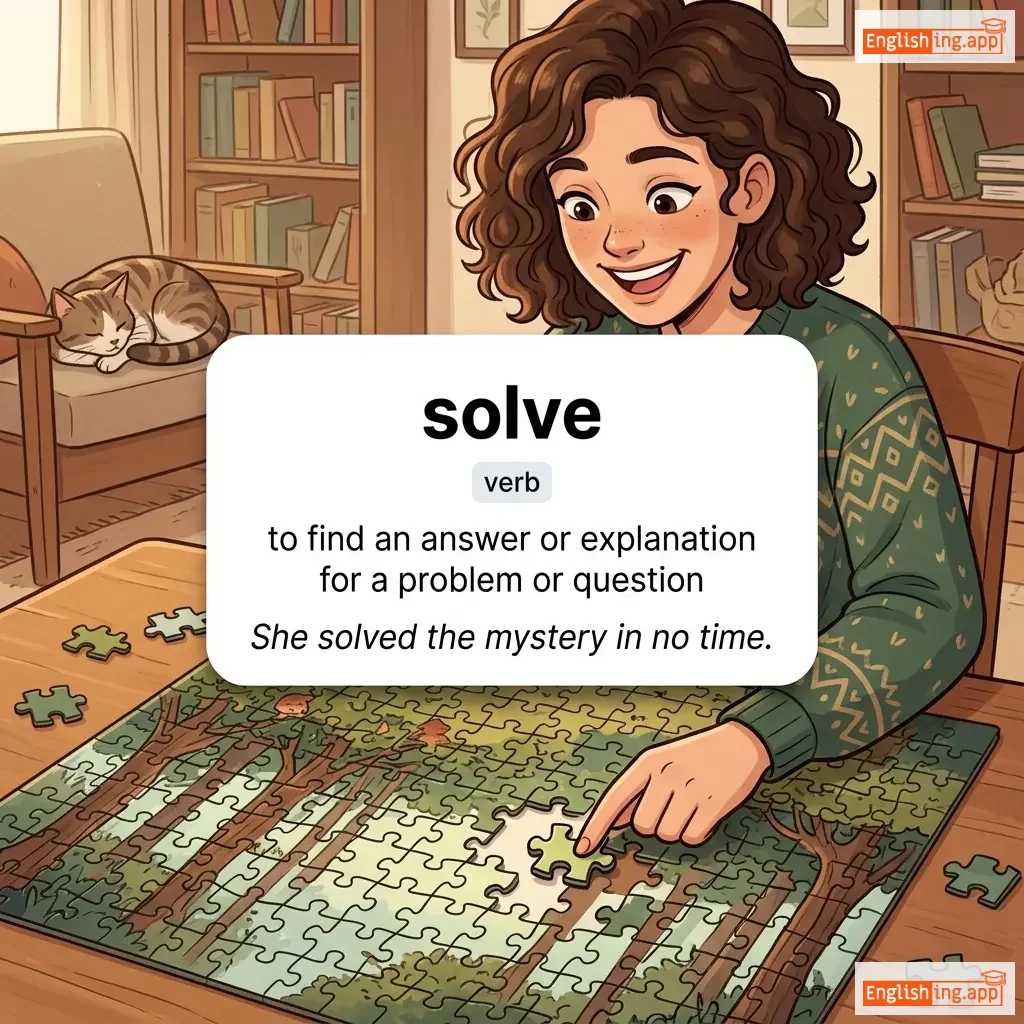
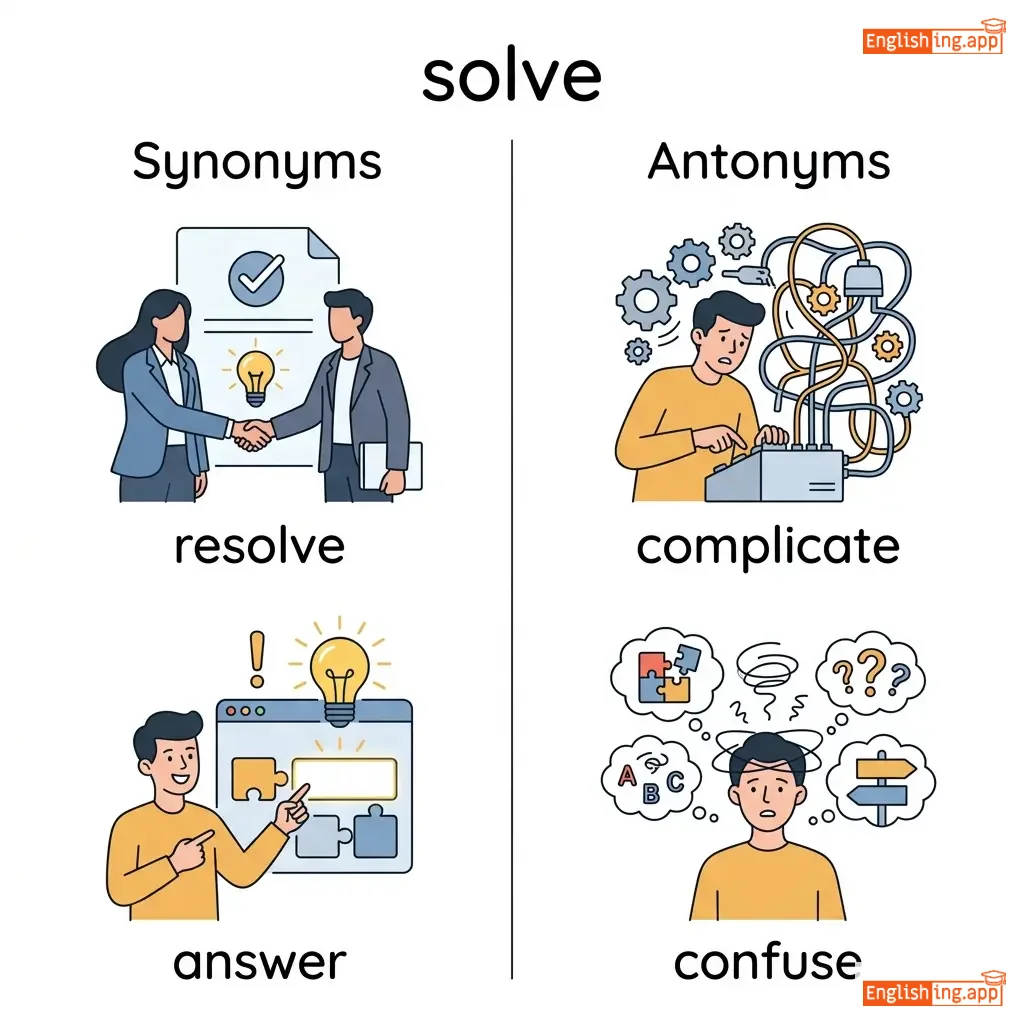
to find an answer to a problem or question; to resolve a difficulty
••••••
|
The detective finally solved the mysterious case.
Detektiv nakonec reshil taemny sluchay.
••••••
|
Детектив наконец решил таинственное дело.
Detektiv nakonec reshil taemny sluchay.
••••••
|
- •••••• | - •••••• | - •••••• |
resolve, answer, figure out, work out
••••••
|
complicate, confuse, perplex, puzzle
••••••
|
solve problems, solve equations, solve mysteries, solve puzzles, solve conflicts
••••••
|
Решать — это находить решение проблемы.
••••••
|
|
🔢
••••••
|
/sʌm/
determiner
(sam)
••••••
|
- •••••• |
некоторые
nekotorye
••••••
|
- •••••• | - •••••• | - •••••• | - •••••• |
an unspecified amount or number of something
••••••
|
I have some money in my wallet. |
У меня есть немного денег в кошельке.
U menya yest' nemnogo deneg v koshel'ke.
••••••
|
- •••••• | - •••••• | - •••••• |
a few, several, a number of, certain
••••••
|
none, all
••••••
|
some time, some people, some things, some amount
••••••
|
Some 'nekotorye' things are part of your day - like money in your wallet!
••••••
|
|
🙋♂️
••••••
|
/ˈsʌmbədi/
pronoun
(сʌмбэди)
••••••
|
- •••••• |
кто-то
kto-to
••••••
|
- •••••• | - •••••• | - •••••• | - •••••• |
an unspecified person
••••••
|
Somebody is knocking at the door. |
Кто-то стучит в дверь.
Kto-to stuchit v dver'.
••••••
|
- •••••• | - •••••• | - •••••• |
someone, a person, an individual, a soul
••••••
|
nobody
••••••
|
somebody is, somebody did, somebody told me
••••••
|
Somebody, like 'kto-to', is always there knocking on your door!
••••••
|
|
🤷
••••••
|
/ˈsʌm.haʊ/
adverb
(sam-ow)
••••••
|
- •••••• |
так или иначе;
tak ili inache
••••••
|
- •••••• | - •••••• | - •••••• | - •••••• |
in some way; for some reason that is not clear
••••••
|
Somehow, I managed to finish the project on time.
Samow, ja spravilsja zavershit' proekt v srok.
••••••
|
Так или иначе, я успел завершить проект вовремя.
Tak ili inache, ja uspel zavershit' proekt vovremja.
••••••
|
- •••••• | - •••••• | - •••••• |
someway, in some way, by some means, mysteriously
••••••
|
clearly, obviously, certainly, definitely
••••••
|
somehow manage, somehow survive, somehow succeed, somehow escape
••••••
|
Russian and English mix: 'Somehow' becomes 'tak ili inache', meaning the path we take despite obstacles.
••••••
|
|
🙋
••••••
|
/ˈsʌmwʌn/
pronoun
(sʌmwʌn)
••••••
|
- •••••• |
кто-то
kto-to
••••••
|
- •••••• | - •••••• | - •••••• | - •••••• |
a person, but not specifically known or named
••••••
|
Someone left their umbrella in the hallway. |
Кто-то оставил свой зонтик в коридоре.
Kto-to ostavil svoy zontik v koridore.
••••••
|
- •••••• | - •••••• | - •••••• |
somebody, person, individual
••••••
|
nobody
••••••
|
someone special, someone else, someone new
••••••
|
Someone can be remembered as 'Some ONE person'.
••••••
|
|
❓
••••••
|
/ˈsʌmθɪŋ/
pronoun
(sʌmθɪŋ)
••••••
|
- •••••• |
что-то
chto-to
••••••
|
- •••••• | - •••••• | - •••••• | - •••••• |
an unspecified or unknown thing
••••••
|
I think something is wrong with my phone. |
Я думаю, что с моим телефоном что-то не так.
Ya dumayu, chto s moim telefonov chto-to ne tak.
••••••
|
make something of |
to understand or interpret something in a particular way
••••••
|
придавать смысл чему-то
pridavat' smysl chemu-to
••••••
|
thing, object, item, matter
••••••
|
nothing, void
••••••
|
something new, something special, something wrong, something else
••••••
|
Some + Thing = что-то (chto-to)
••••••
|
|
☕
••••••
|
/ˈsʌm.taɪm/
adverb
(sámtáim)
••••••
|
- •••••• |
когда-нибудь
kogda-nibud
••••••
|
- •••••• | - •••••• | - •••••• | - •••••• |
at a time that is not known or stated; occasionally
••••••
|
Let's meet for coffee sometime next week. |
Давай встретимся за кофе когда-нибудь на следующей неделе.
Davaj vstretimsya za kofe kogda-nibud na sleduyushchey nedele.
••••••
|
- •••••• | - •••••• | - •••••• |
occasionally, at some point, once, now and then
••••••
|
never, always
••••••
|
sometime soon, sometime later, sometime next week, sometime ago
••••••
|
Sometime означает когда-нибудь — думай о 'some' как о будущем моменте.
••••••
|
|
🔄
••••••
|
/ˈsʌm.taɪmz/
adverb
(samtaims)
••••••
|
- •••••• |
иногда
inogda
••••••
|
- •••••• | - •••••• | - •••••• | - •••••• |
at times; occasionally; now and then
••••••
|
Sometimes I go for a walk in the evening.
samtaims ai gou for a walk in de ivning.
••••••
|
Иногда я гуляю вечером.
Inogda ya gulyayu vecherom.
••••••
|
- •••••• | - •••••• | - •••••• |
occasionally, at times, now and then, from time to time
••••••
|
always, never, constantly
••••••
|
sometimes difficult, sometimes happens, sometimes feel
••••••
|
Иногда ты гуляешь вечером, как и всегда.
••••••
|
|
🤏
••••••
|
/ˈsʌm.wʌt/
adjective
(sam-vat)
••••••
|
- •••••• |
немного; немного; умеренно
nemnogo; nemnogo; umerenno
••••••
|
- •••••• | - •••••• | - •••••• | - •••••• |
to some extent; rather; moderately
••••••
|
The movie was somewhat interesting but not great.
Фильм был немного интересным, но не великим.
••••••
|
Фильм был немного интересным, но не великим.
Film byl nemnogo interesnym, no ne velikim.
••••••
|
- •••••• | - •••••• | - •••••• |
rather, fairly, moderately, slightly
••••••
|
completely, entirely, extremely, very
••••••
|
somewhat disappointed, somewhat surprised, somewhat difficult
••••••
|
Think of a somewhat okay movie, not amazing but still decent.
••••••
|
|
📍
••••••
|
/ˈsʌm.weər/
adverb
(сам.уэр)
••••••
|
- •••••• |
где-то
gde-to
••••••
|
- •••••• | - •••••• | - •••••• | - •••••• |
in or at some place; in an unspecified location
••••••
|
I left my keys somewhere in the house. |
Я оставил свои ключи где-то в доме.
Ya ostavil svoi kliuchi gde-to v dome.
••••••
|
- •••••• | - •••••• | - •••••• |
someplace, anywhere, in some location
••••••
|
nowhere, everywhere
••••••
|
somewhere else, somewhere safe, somewhere around
••••••
|
Представь, что ты теряешь ключи где-то в доме
••••••
|
|
👦
••••••
|
/sʌn/
noun
(сан)
••••••
|
- •••••• |
сын
syn
••••••
|
- •••••• | - •••••• | - •••••• | - •••••• |
a male child of a parent
••••••
|
His son is very talented in music. |
Его сын очень талантлив в музыке.
Ego syn ochen' talantliv v musike.
••••••
|
- •••••• | - •••••• | - •••••• |
child, offspring, male heir
••••••
|
daughter, female child
••••••
|
only son, beloved son, son of a king
••••••
|
His SON is so good at music, you'll be proud of him.
••••••
|
|
🎵
••••••
|
/sɔːŋ/
noun
(сóнг)
••••••
|
- •••••• |
песня
pesnya
••••••
|
- •••••• | - •••••• | - •••••• | - •••••• |
a short piece of music with words that are sung
••••••
|
She sang a beautiful song at the concert. |
Она спела красивую песню на концерте.
Ona spela krasivuyu pesnyu na koncerte.
••••••
|
- •••••• | - •••••• | - •••••• |
melody, tune, ballad, anthem
••••••
|
silence, quiet
••••••
|
popular song, love song, sing a song
••••••
|
A SONG that lifts the spirit higher.
••••••
|
|
⏰
••••••
|
/suːn/
adverb
(сун)
••••••
|
- •••••• |
скоро
skoro
••••••
|
- •••••• | - •••••• | - •••••• | - •••••• |
in a short time; before long; quickly
••••••
|
The train will arrive soon. |
Поезд скоро приедет.
Poyezd skoro priyedet
••••••
|
- •••••• | - •••••• | - •••••• |
quickly, shortly, before long, in a moment
••••••
|
late, slowly, never, eventually
••••••
|
very soon, coming soon, soon after
••••••
|
Russian 'скоро' (skoro) is very close to English 'soon'.
••••••
|
|
🎨
••••••
|
/səˈfɪstɪkeɪt/
verb
(sofisṭikeit)
••••••
|
- •••••• |
усовершенствовать
usovershenstvovat
••••••
|
sophisticated
sofisṭikeited
••••••
|
sophisticated
sofisṭikeited
••••••
|
sophisticates
sofisṭikeits
••••••
|
sophisticating
sofisṭikeiting
••••••
|
to make something more complex or refined; to educate or develop in taste and manners
••••••
|
Traveling abroad helped sophisticate his worldview.
Поездки за границу помогли улучшить его мировоззрение.
••••••
|
Поездки за границу помогли улучшить его мировоззрение.
Poezdi za granitsu pomogli uluchshit' ego mirovoszrenie.
••••••
|
- •••••• | - •••••• | - •••••• |
refine, cultivate, educate, polish, develop
••••••
|
simplify, coarsen, degrade
••••••
|
sophisticate taste, sophisticate design, sophisticate culture
••••••
|
Sophisticate значит усовершенствовать – Sophisticated еда улучшает вкус.
••••••
|
|
💎
••••••
|
/səˈfɪstɪkeɪtɪd/
adjective
(sophistikejted)
••••••
|
|
утонченный
utochhenny
••••••
|
- •••••• | - •••••• | - •••••• | - •••••• |
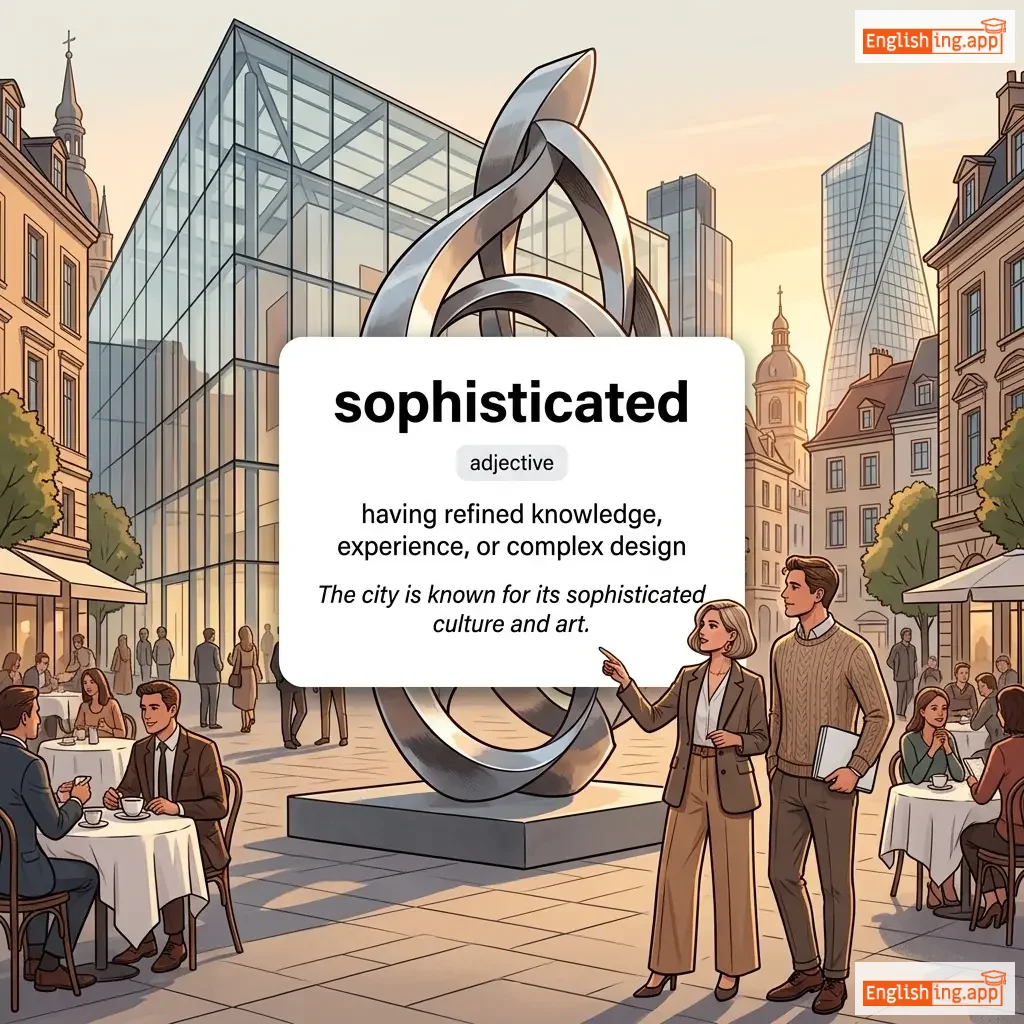
having refined knowledge, experience, or complex design
••••••
|
The city is known for its sophisticated culture and art.
город известен своей утонченной культурой и искусством.
••••••
|
Город известен своей утонченной культурой и искусством.
Gorod izvesten svoey utochhennoy kul'turoy i iskusstvom.
••••••
|
sophisticated taste
утонченный вкус
••••••
|
refined or cultivated sense of style and preference
••••••
|
утонченный вкус
utochhennyy vkus
••••••
|
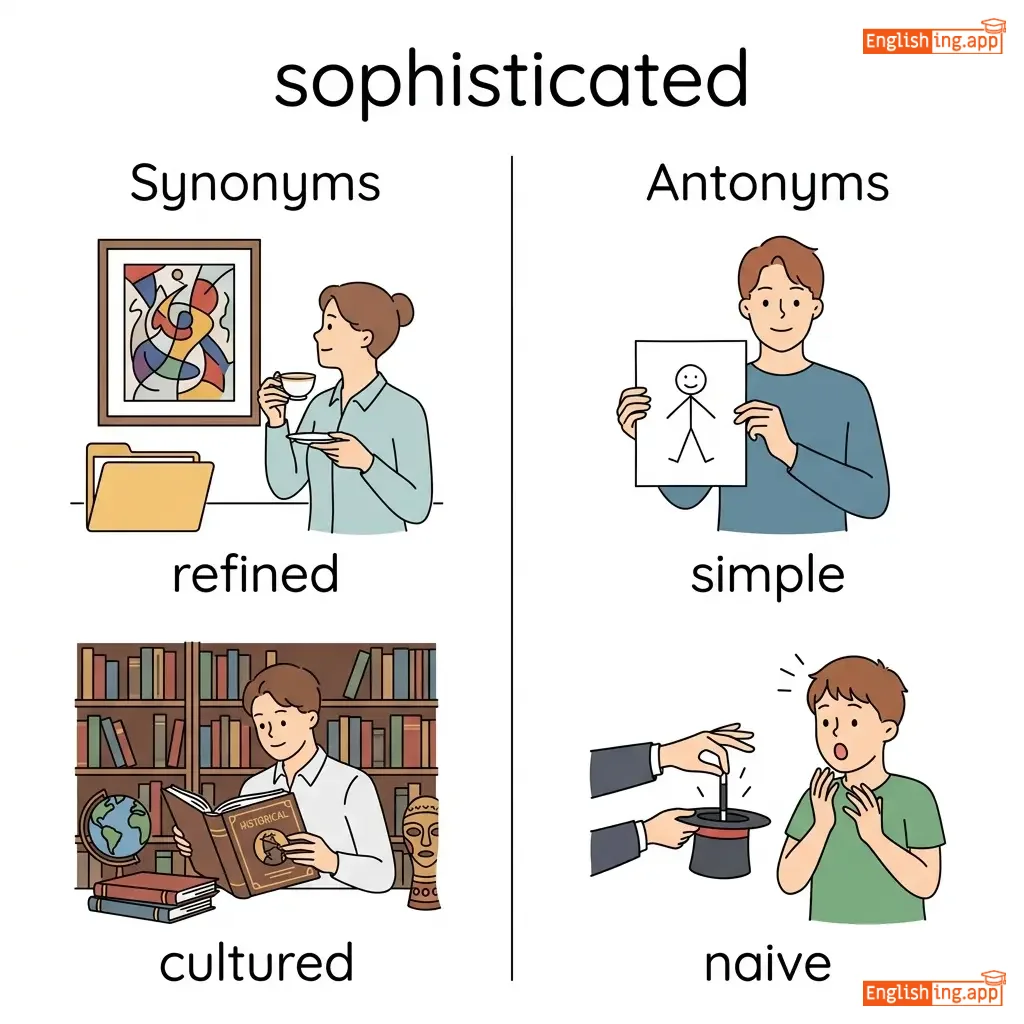
refined, cultured, elegant, advanced, polished
••••••
|
simple, naive, crude
••••••
|
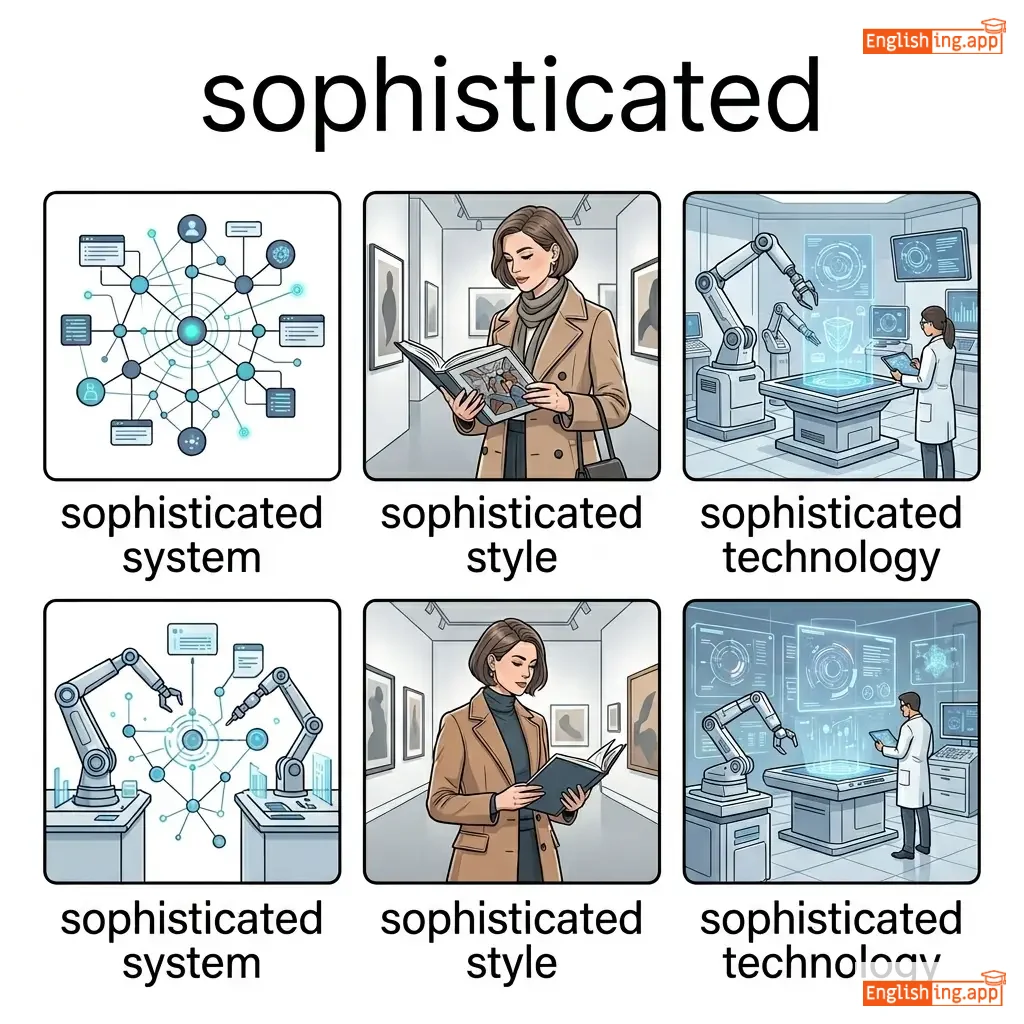
sophisticated system, sophisticated style, sophisticated technology
••••••
|
Утонченный вкус – это признак изысканности и культуры.
••••••
|
|
🤕
••••••
|
/sɔːr/
adjective
(сор)
••••••
|
- •••••• |
болезненный
boleznennyy
••••••
|
- •••••• | - •••••• | - •••••• | - •••••• |
painful or aching, usually in a specific part of the body
••••••
|
After the long run, my legs were sore.
После длинного бега мои ноги были sore.
••••••
|
После длинного бега мои ноги были болючими.
Posle dlinogo bega moi nogi byli bolyuchimi
••••••
|
a sore point
болезненный момент
••••••
|
a sensitive topic that causes discomfort or anger
••••••
|
щепетильная тема
shchepetilnaya tema
••••••
|
painful, aching, tender, inflamed, sensitive
••••••
|
comfortable, painless, unhurt
••••••
|
sore muscles, sore throat, feel sore, extremely sore
••••••
|
сор ноги болят, sore = боль
••••••
|
|
😢
••••••
|
/ˈsɑːroʊ/
noun
(соро)
••••••
|
- •••••• |
горе
gore
••••••
|
- •••••• | - •••••• | - •••••• | - •••••• |
a feeling of deep sadness or grief
••••••
|
She was filled with sorrow after the loss of her friend. |
Она была полна горя после потери своей подруги.
Ona byla polna gory posle poteri svoey podrugi.
••••••
|
drown one's sorrows |
to drink alcohol in order to forget sadness
••••••
|
топить горе в алкоголе
topit' gore v alkogole
••••••
|
grief, sadness, anguish, heartache
••••••
|
joy, happiness, delight
••••••
|
deep sorrow, express sorrow, filled with sorrow, great sorrow
••••••
|
Sorrow и горе означают одно и то же — глубокая печаль.
••••••
|
|
😔
••••••
|
/ˈsɔːri/
adjective
(сори)
••••••
|
- •••••• |
извини
izvini
••••••
|
- •••••• | - •••••• | - •••••• | - •••••• |
feeling regret or sympathy
••••••
|
She felt sorry for what had happened. |
Ей было жаль, что случилось.
Ey bylo zhal', chto sluchilos'.
••••••
|
I'm sorry! |
an expression of apology or regret
••••••
|
Простите!
Prostite!
••••••
|
apologetic, regretful, remorseful, contrite
••••••
|
happy, glad
••••••
|
sorry for, sorry about, deeply sorry
••••••
|
SORRY, she feels bad and apologizes.
••••••
|
|
🔀
••••••
|
/sɔːrt/
verb
(сорт)
••••••
|
- •••••• |
сортировать
sortirovat
••••••
|
sorted
сортед
••••••
|
sorted
сортед
••••••
|
sorts
сортс
••••••
|
sorting
сортинг
••••••
|
to arrange or categorize something
••••••
|
Please sort the files by date.
Пожалуйста, отсортируйте файлы по дате.
••••••
|
Пожалуйста, отсортируйте файлы по дате.
Pozhaluysta, otsortiruyte fayly po date.
••••••
|
- •••••• | - •••••• | - •••••• |
arrange, categorize, organize, classify
••••••
|
disorder, scatter
••••••
|
sort out, sort through, sort by
••••••
|
SORT the documents to make them easy to find!
••••••
|
|
👻
••••••
|
/soʊl/
noun
(душа)
••••••
|
- •••••• |
душа
dusha
••••••
|
- •••••• | - •••••• | - •••••• | - •••••• |
the spiritual or immaterial essence of a human being or animal; a person's emotional or intellectual nature
••••••
|
She poured her heart and soul into her artwork.
Она вложила своё сердце и душу в своё произведение искусства.
••••••
|
Она вложила своё сердце и душу в своё произведение искусства.
ona vlozhila svojo serdtse i dushu v svojo proyizvedenie iskusstva.
••••••
|
- •••••• | - •••••• | - •••••• |
spirit, essence, heart, core
••••••
|
body, flesh, matter
••••••
|
heart and soul, lost soul, soul mate, save one's soul
••••••
|
душа (Dusha) - Ваша душа в каждом произведении.
••••••
|
|
🔊
••••••
|
/saʊnd/
noun, verb, adjective
(saunt)
••••••
|
- •••••• |
звук
zvuk
••••••
|
sounded
saunded
••••••
|
sounded
saunded
••••••
|
sounds
saunts
••••••
|
sounding
saunding
••••••
|
a sensation perceived by the ear; to make or cause to make a noise; in good condition
••••••
|
The bell sounded across the valley.
Колокол прозвучал через долину.
••••••
|
Колокол прозвучал через долину.
Kolokol prozvuchal cherez dolinu.
••••••
|
sound asleep
крепко спящий
••••••
|
in a deep and peaceful sleep
••••••
|
крепко спящий
krepko spyashchiy
••••••
|
noise, tone, echo, healthy, secure
••••••
|
silence, unhealthy, weak
••••••
|
sound advice, sound asleep, sound decision, sound system
••••••
|
Звук означает 'шум' и 'хорошо' - Ясный звук в голове значит хорошее состояние.
••••••
|
|
🍲
••••••
|
/suːp/
noun
(суп)
••••••
|
- •••••• |
суп
soop
••••••
|
- •••••• | - •••••• | - •••••• | - •••••• |
a liquid food made by boiling meat, vegetables, or other ingredients in water
••••••
|
I had a bowl of chicken soup for lunch.
Я съел тарелку куриного супа на обед.
••••••
|
Я съел тарелку куриного супа на обед.
ya s'yel tarelku kurinogo supa na obed
••••••
|
- •••••• | - •••••• | - •••••• |
broth, stew, consommé
••••••
|
solid food, dry food
••••••
|
chicken soup, vegetable soup, tomato soup, soup bowl, soup spoon
••••••
|
Суп — это еда, которая согревает тебя.
••••••
|
|
🍋
••••••
|
/ˈsaʊər/
adjective
(сауэр)
••••••
|
- •••••• |
кислый
kisly
••••••
|
- •••••• | - •••••• | - •••••• | - •••••• |
having an acidic taste; unpleasant or bad-tempered
••••••
|
The milk has gone sour. |
Молоко стало кислым.
Moloko stalo kislym.
••••••
|
sour grapes |
an attitude in which someone pretends to dislike or devalue something they cannot have
••••••
|
кислый виноград
kisly vinograd
••••••
|
acidic, tart, bitter, unpleasant
••••••
|
sweet, pleasant, agreeable
••••••
|
sour taste, sour mood, sour milk, sour relationship
••••••
|
Sour означает кислый, как вкус лимона.
••••••
|
|
📍
••••••
|
/sɔːrs/
noun
(сорс)
••••••
|
- •••••• |
источник
istochnik
••••••
|
- •••••• | - •••••• | - •••••• | - •••••• |
a place, person, or thing from which something originates; the origin of information
••••••
|
The river's source is high in the mountains.
зе риверз сорс из хай ин зе маунтинз.
••••••
|
Исток реки находится высоко в горах.
Istok reki nahoditsya vysoko v gorakh.
••••••
|
- •••••• | - •••••• | - •••••• |
origin, beginning, root, foundation
••••••
|
destination, end, result, outcome
••••••
|
reliable source, news source, water source, energy source
••••••
|
Source = источник; вообрази вот заветную метку is-tochnik у начала всего Source -> Источник.
••••••
|
|
⏬
••••••
|
/saʊθ/
noun/adjective
(sauth)
••••••
|
- •••••• |
юг
yug
••••••
|
- •••••• | - •••••• | - •••••• | - •••••• |
the direction towards the bottom of a map, opposite to north
••••••
|
The sun rises in the east and sets in the south.
Солнце восходит на востоке и садится на юге.
••••••
|
Солнце восходит на востоке и садится на юге.
Solntse voskhodit na vostoke i saditsya na yuge.
••••••
|
- •••••• | - •••••• | - •••••• |
down, southern
••••••
|
north, up
••••••
|
south of, southern hemisphere, south pole, travel south
••••••
|
South is the 'down' direction, like 'south' in the 'sunset' where the sun sets.
••••••
|
|
🌎
••••••
|
/ˈsʌðərn/
adjective
(сазерн)
••••••
|
- •••••• |
южный
yuzhny
••••••
|
- •••••• | - •••••• | - •••••• | - •••••• |
located in or facing the south; southern regions
••••••
|
She moved to a southern city for work. |
Она переехала в южный город для работы.
Ona pereyekhala v yuzhnyy gorod dlya raboty.
••••••
|
- •••••• | - •••••• | - •••••• |
southernmost, southward, lowland
••••••
|
northern, northernmost
••••••
|
southern states, southern hemisphere, southern part
••••••
|
Southern regions are like the 'South' side of your world map.
••••••
|
|
👑
••••••
|
/ˈsɒvrənti/
noun
(sovrénti)
••••••
|
|
суверенитет
suverenitet
••••••
|
- •••••• | - •••••• | - •••••• | - •••••• |
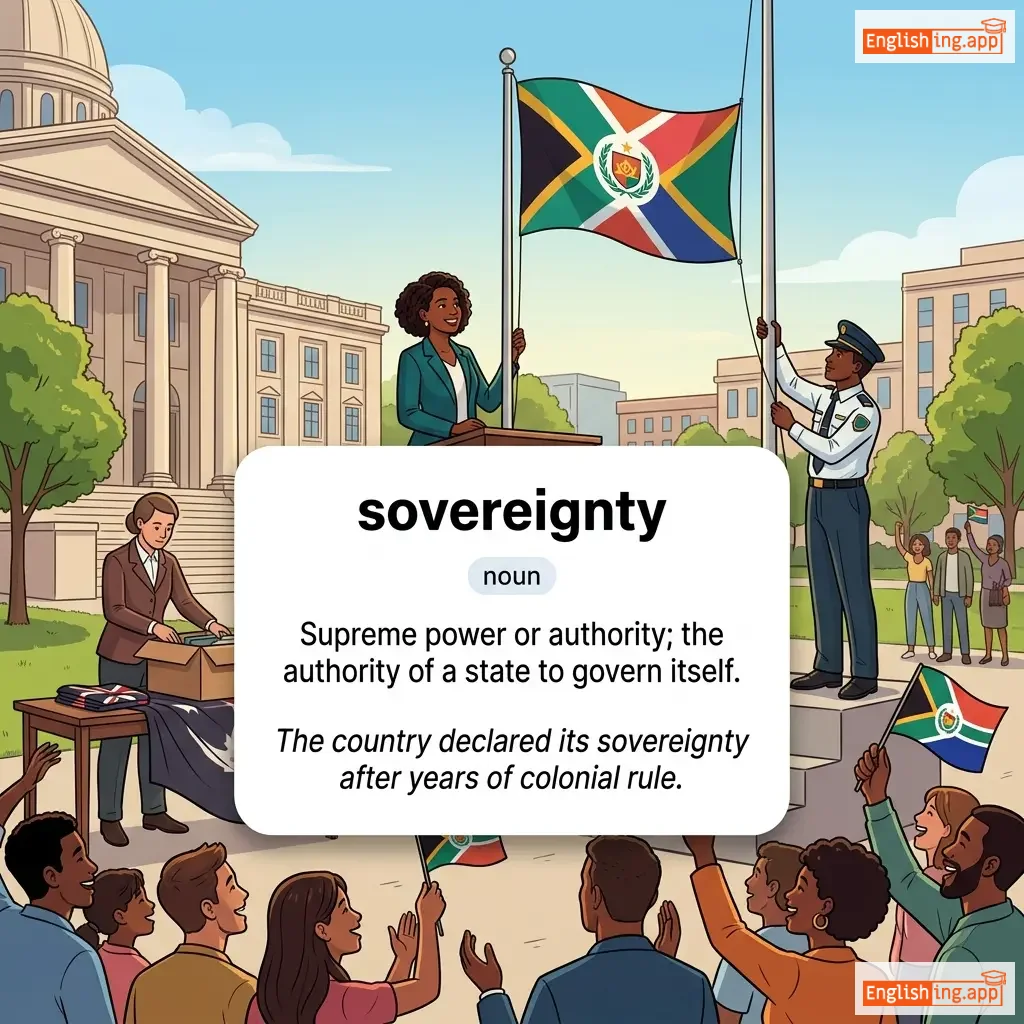
Supreme power or authority; the authority of a state to govern itself.
••••••
|
The country declared its sovereignty after years of colonial rule. |
Страна объявила о своем суверенитете после многих лет колониального правления.
Strana ob'yavila o svoem suverenitete posle mnogikh let kolonial'nogo pravleniya.
••••••
|
sovereignty of the people |
The principle that political power ultimately resides with the people.
••••••
|
суверенитет народа
suverenitet naroda
••••••
|
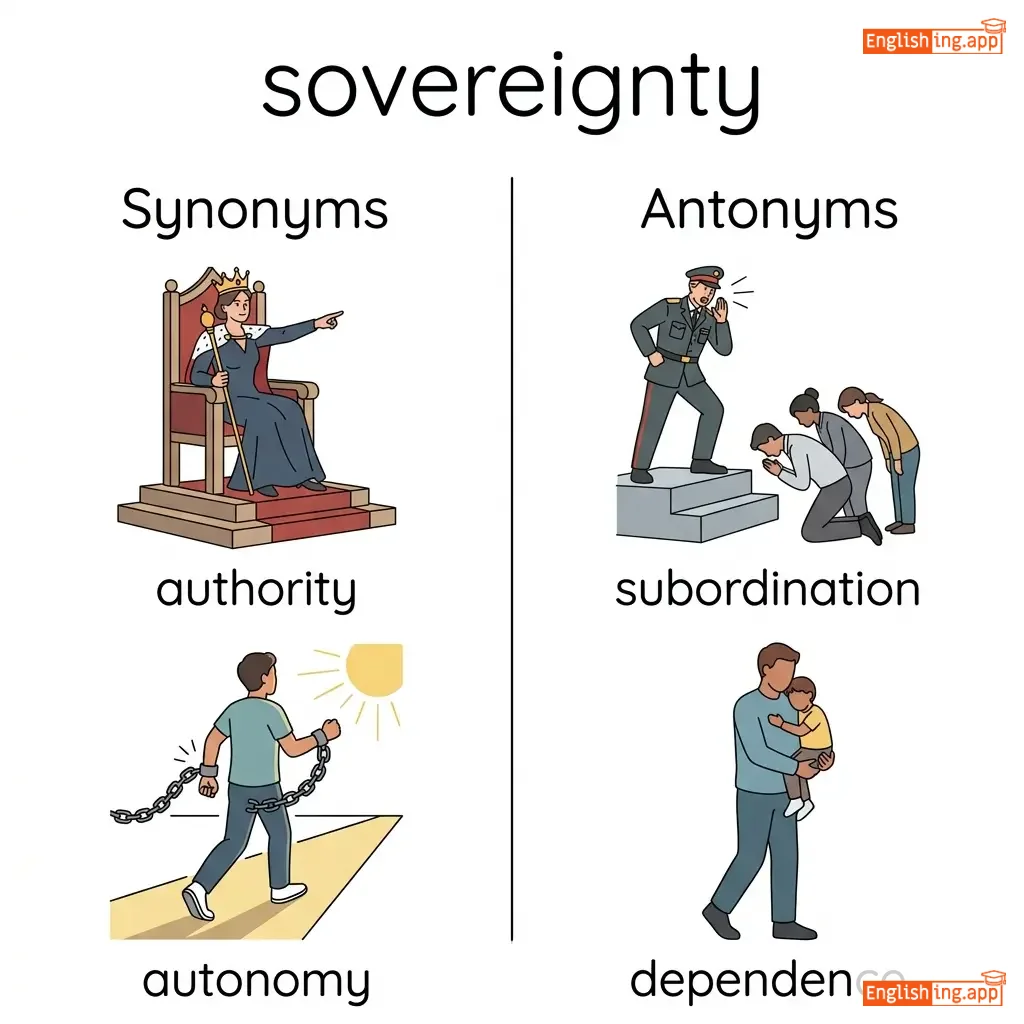
authority, autonomy, independence, self-rule, dominion
••••••
|
subordination, dependence, submission
••••••
|
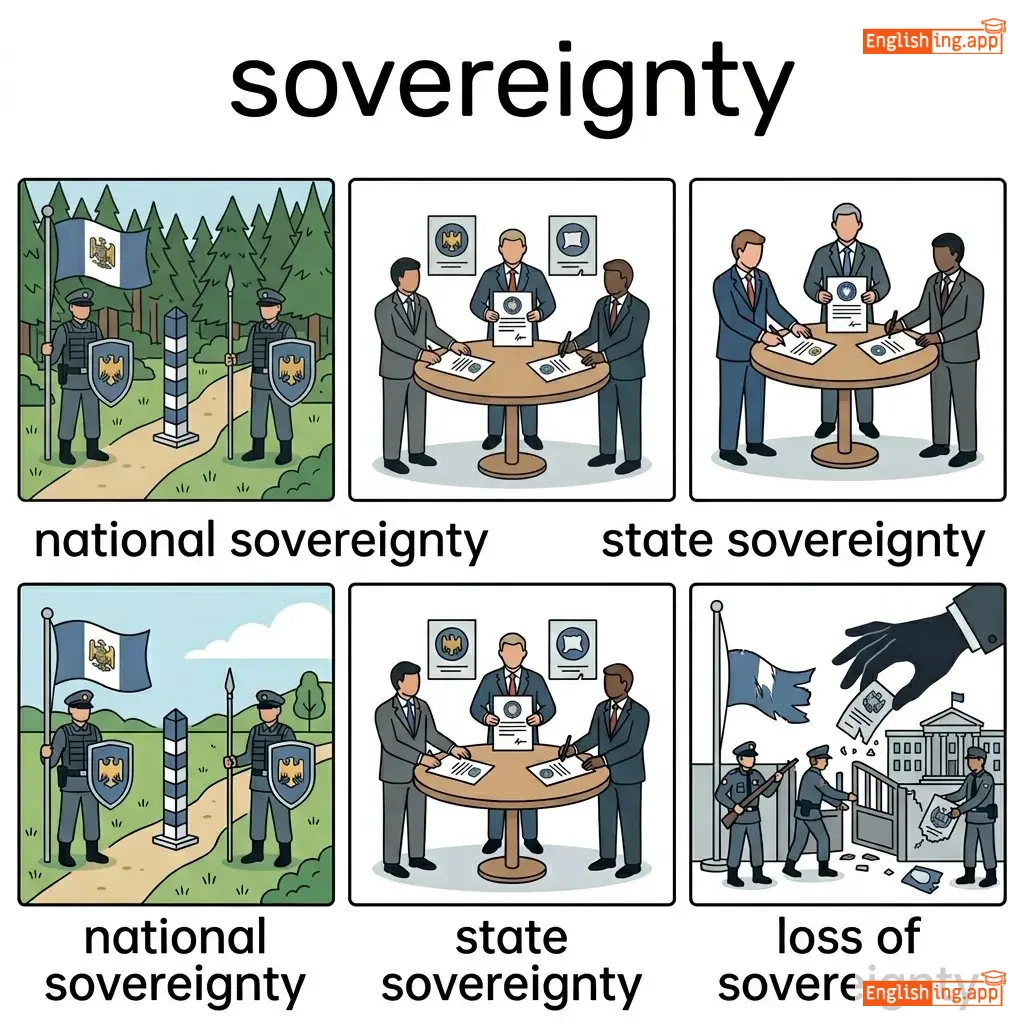
national sovereignty, state sovereignty, loss of sovereignty, sovereignty rights
••••••
|
Суверенитет = Политическая власть – Россия имеет свой суверенитет.
••••••
|
|
🌍
••••••
|
/ˈsoʊ.vi.ət/
adjective
(советский)
••••••
|
- •••••• |
советский
sovetskiy
••••••
|
- •••••• | - •••••• | - •••••• | - •••••• |
relating to the Soviet Union or its government
••••••
|
The Soviet era saw significant changes in Eastern Europe.
Советская эра принесла значительные изменения в Восточной Европе.
••••••
|
Советская эра принесла значительные изменения в Восточной Европе.
Sovetskaya era prinesla znachitel'nye izmeneniya v Vostochnoy Evrope.
••••••
|
- •••••• | - •••••• | - •••••• |
communist, socialist, USSR-related
••••••
|
capitalist, democratic
••••••
|
Soviet government, Soviet Union, Soviet ideology
••••••
|
Soviet sounds like 'SOVE' - Soviets 'SOVE' changes the world!
••••••
|
|
🚀
••••••
|
/speɪs/
noun
(speys)
••••••
|
|
пространство
prostranstvo
••••••
|
- •••••• | - •••••• | - •••••• | - •••••• |
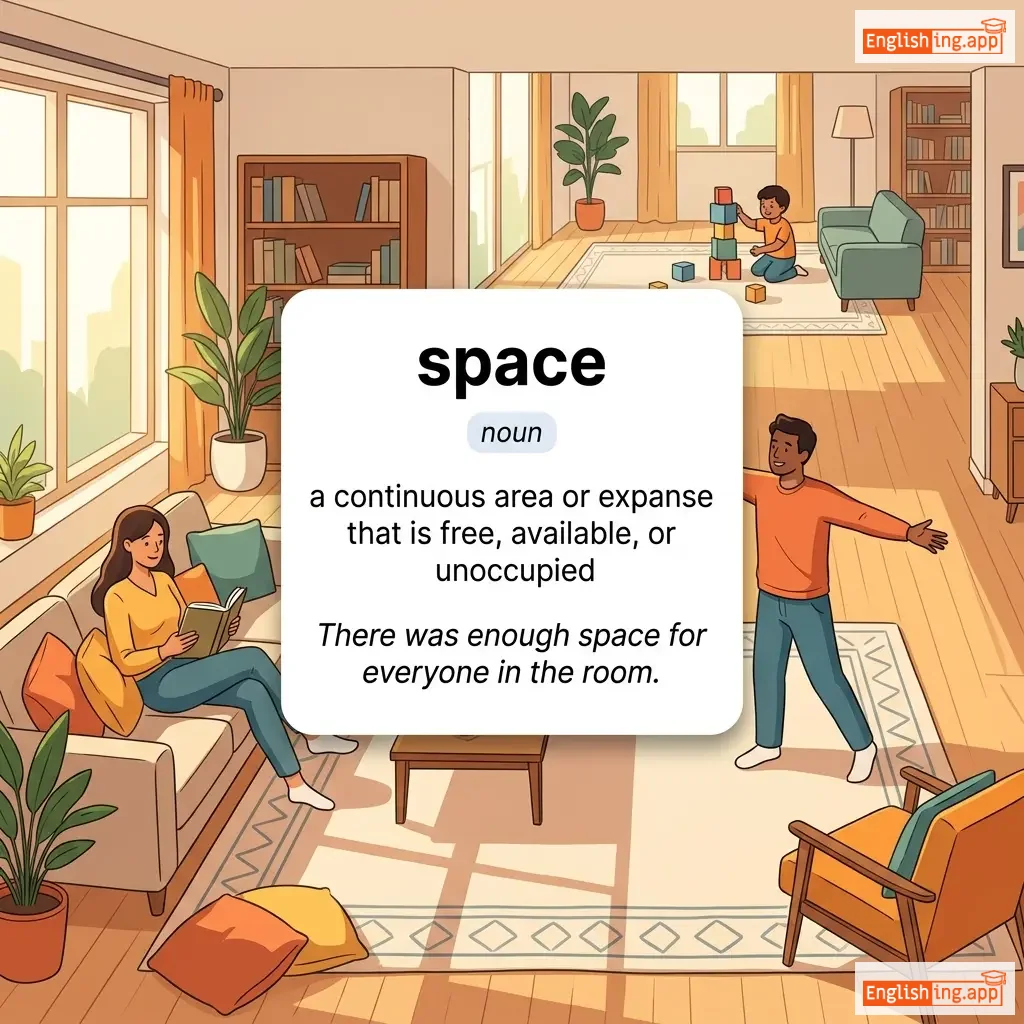
a continuous area or expanse that is free, available, or unoccupied
••••••
|
There was enough space for everyone in the room. |
В комнате было достаточно места для всех.
V komnate bylo dostatochno mesta dlya vsekh.
••••••
|
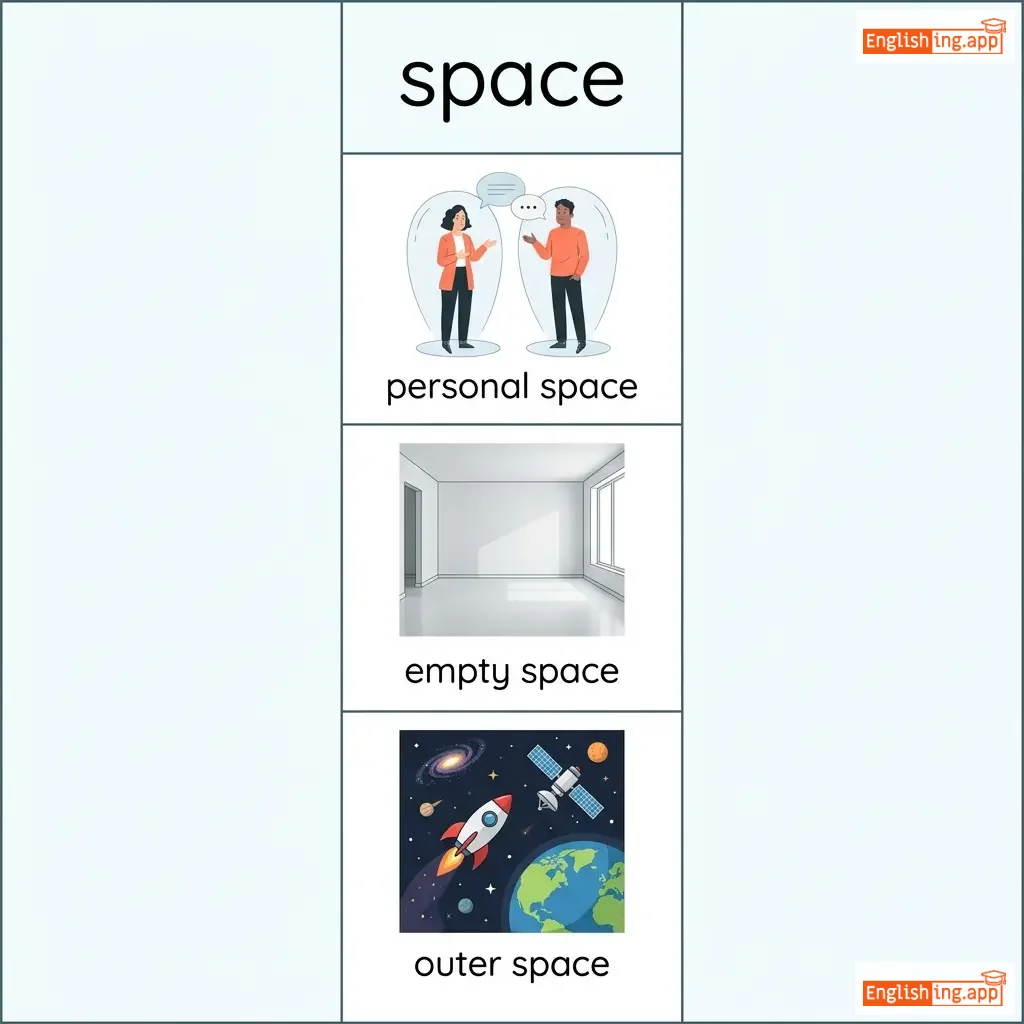
outer space |
the region beyond Earth's atmosphere
••••••
|
космическое пространство
kosmicheskoe prostranstvo
••••••
|
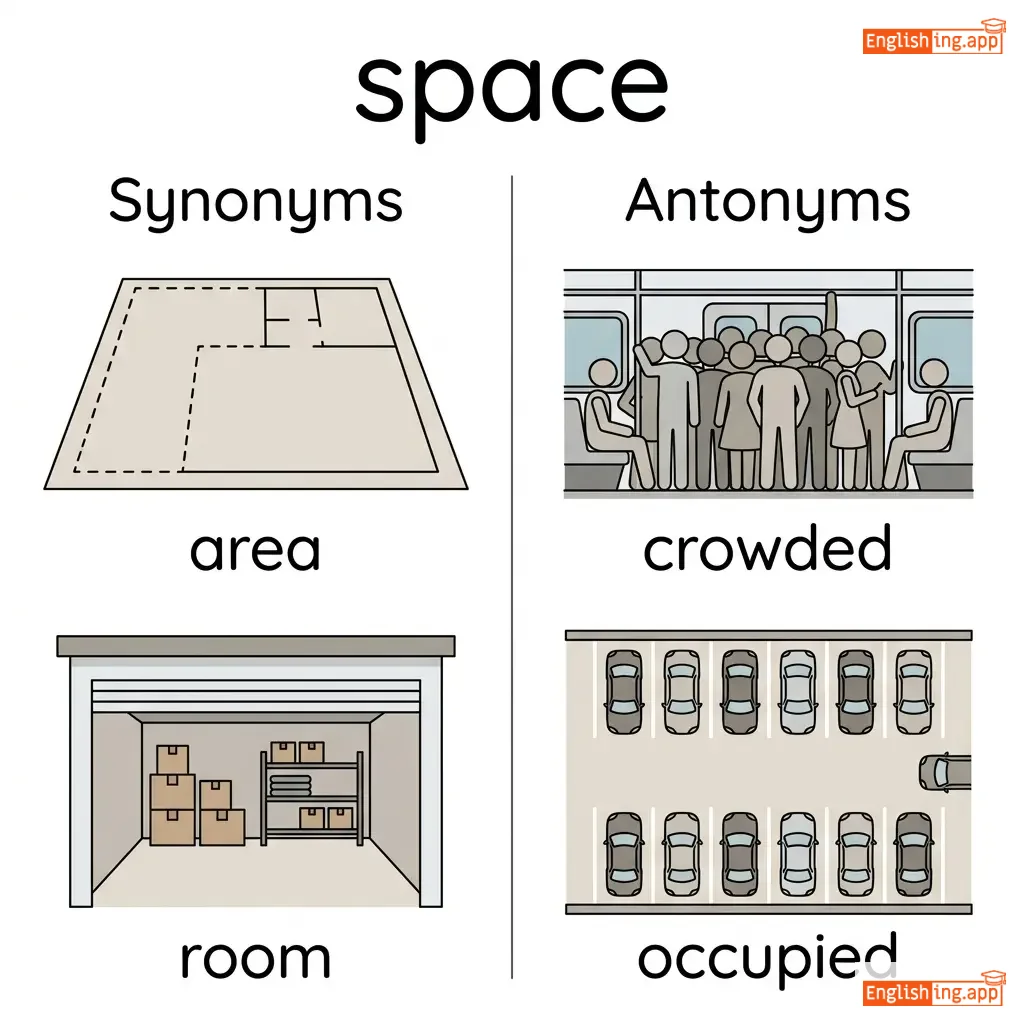
area, room, extent, volume
••••••
|
crowded, occupied, tight
••••••
|
personal space, empty space, outer space, living space
••••••
|
In 'space' we have 'S' for 'Safe', 'P' for 'Place'.
••••••
|
|
📧
••••••
|
/spæm/
noun
(спам)
••••••
|
- •••••• |
спам
spam
••••••
|
- •••••• | - •••••• | - •••••• | - •••••• |
unsolicited or unwanted electronic communication, typically in the form of email
••••••
|
My inbox is full of spam emails that I need to delete.
Мой почтовый ящик полон спам-писем, которые мне нужно удалить.
••••••
|
Мой почтовый ящик полон спам-писем, которые мне нужно удалить.
Moi pochtovyi yashchik polon spam-pisem, kotorye mne nuzhno udalit'.
••••••
|
- •••••• | - •••••• | - •••••• |
junk, unsolicited mail, nuisance
••••••
|
legitimate mail, valid communication
••••••
|
spam email, spam message, spam filter
••••••
|
Спам - удаляй письма, проверяй почту!
••••••
|
|
🌉
••••••
|
/spæn/
noun
(спэн)
••••••
|
- •••••• |
размах
razmakh
••••••
|
- •••••• | - •••••• | - •••••• | - •••••• |
the full extent or length of something from one end to another
••••••
|
The bridge has a span of over 500 meters.
Мост имеет размах более 500 метров.
••••••
|
Мост имеет размах более 500 метров.
Most imeyet razmakh bolee 500 metrov.
••••••
|
- •••••• | - •••••• | - •••••• |
range, stretch, extent
••••••
|
shortness, limit
••••••
|
span of time, span of control, wide span
••••••
|
Вспомни Span как размах моста.
••••••
|
|
🇪🇸
••••••
|
/ˈspænɪʃ/
adjective
(испани́ш)
••••••
|
- •••••• |
испанский
ispanskiy
••••••
|
- •••••• | - •••••• | - •••••• | - •••••• |
relating to Spain or the Spanish language
••••••
|
She is fluent in Spanish and French.
Она свободно говорит на испанском и французском.
••••••
|
Она свободно говорит на испанском и французском.
Ona svobodno govorit na ispanskom i frantsuzskom.
••••••
|
in Spanish
на испанском
••••••
|
said in the Spanish language
••••••
|
на испанском
na ispanskom
••••••
|
Hispanic, Iberian
••••••
|
non-Spanish, English
••••••
|
Spanish language, Spanish culture, Spanish cuisine
••••••
|
ИСПАНСКИЙ имеет 'И' для 'Испания', 'П' для 'Площадь'.
••••••
|
|
👐
••••••
|
/spɛər/
verb
(spɛr)
••••••
|
- •••••• |
дать что-то лишнее / спасать
dat' chto-to lishnee / spasat'
••••••
|
spared
spɛrd
••••••
|
spared
spɛrd
••••••
|
spares
spɛrs
••••••
|
sparing
spɛrɪŋ
••••••
|
To give something that one has extra of; to refrain from harming or killing.
••••••
|
Could you spare me a few minutes of your time?
Можете ли вы уделить мне несколько минут вашего времени?
••••••
|
Можете ли вы уделить мне несколько минут вашего времени?
Mozhete li vy udelit' mne neskol'ko minut vashego vremeni?
••••••
|
spare no effort
не жалеть усилий
••••••
|
To try as hard as possible to achieve something.
••••••
|
не жалеть усилий
ne zhalet' usiliy
••••••
|
save, grant, provide, afford, allocate
••••••
|
withhold, deny, deprive
••••••
|
spare time, spare change, spare part, spare effort
••••••
|
Spare означает дать лишнее 👐 - давайте лишние вещи или время.
••••••
|
|
⚡
••••••
|
/spɑːrk/
verb
(спарк)
••••••
|
- •••••• |
искрить
iskrit
••••••
|
sparked
спаркд
••••••
|
sparked
спаркд
••••••
|
sparks
спаркс
••••••
|
sparking
спаркинг
••••••
|
to cause the start of something, especially an emotion or activity
••••••
|
The news sparked a heated debate across the country.
Новости вызвали жаркие дебаты по всей стране.
••••••
|
Новости вызвали жаркие дебаты по всей стране.
Novosti vyzvali zharkie debaty po vsey strane.
••••••
|
spark an interest
разжечь интерес
••••••
|
to cause someone to become interested in something
••••••
|
разжечь интерес
razzhech' interes
••••••
|
ignite, trigger, provoke, stimulate, kindle
••••••
|
extinguish, suppress
••••••
|
spark interest, spark controversy, spark fire, spark protest
••••••
|
Искра воспламеняет огонь — как 'spark' по-английски.
••••••
|
|
🗣️
••••••
|
/spiːk/
verb
(spik)
••••••
|
- •••••• |
говорить
govorit
••••••
|
spoke
spok
••••••
|
spoken
spouken
••••••
|
speaks
spiks
••••••
|
speaking
spiiking
••••••
|
to say something in order to convey information or express feelings
••••••
|
She speaks five languages fluently.
Она говорит на пяти языках бегло.
••••••
|
Она говорит на пяти языках бегло.
Ona govorit na pyati yazykakh beglo.
••••••
|
speak out
выразить мнение
••••••
|
to express one's opinion clearly and openly
••••••
|
выразить свое мнение
vyrazit' svoe mnenie
••••••
|
talk, converse, utter, communicate
••••••
|
be silent, mute, keep quiet
••••••
|
speak up, speak to, speak about, speak highly
••••••
|
Speak = 'S' for 'Say', 'P' for 'Project'.
••••••
|

