|
絵文字
|
単語 | Images | 翻訳 | 過去 | 過去分詞 | 三人称単数 | 動名詞 | 意味 | 例文 | 例文の翻訳 | 表現例 | 表現例の意味 | 表現例の翻訳 | 同義語 | 対義語 | コロケーション | ニーモニック |
|---|---|---|---|---|---|---|---|---|---|---|---|---|---|---|---|---|---|
|
🖼️
••••••
|
/freɪm/
noun/verb
••••••
|
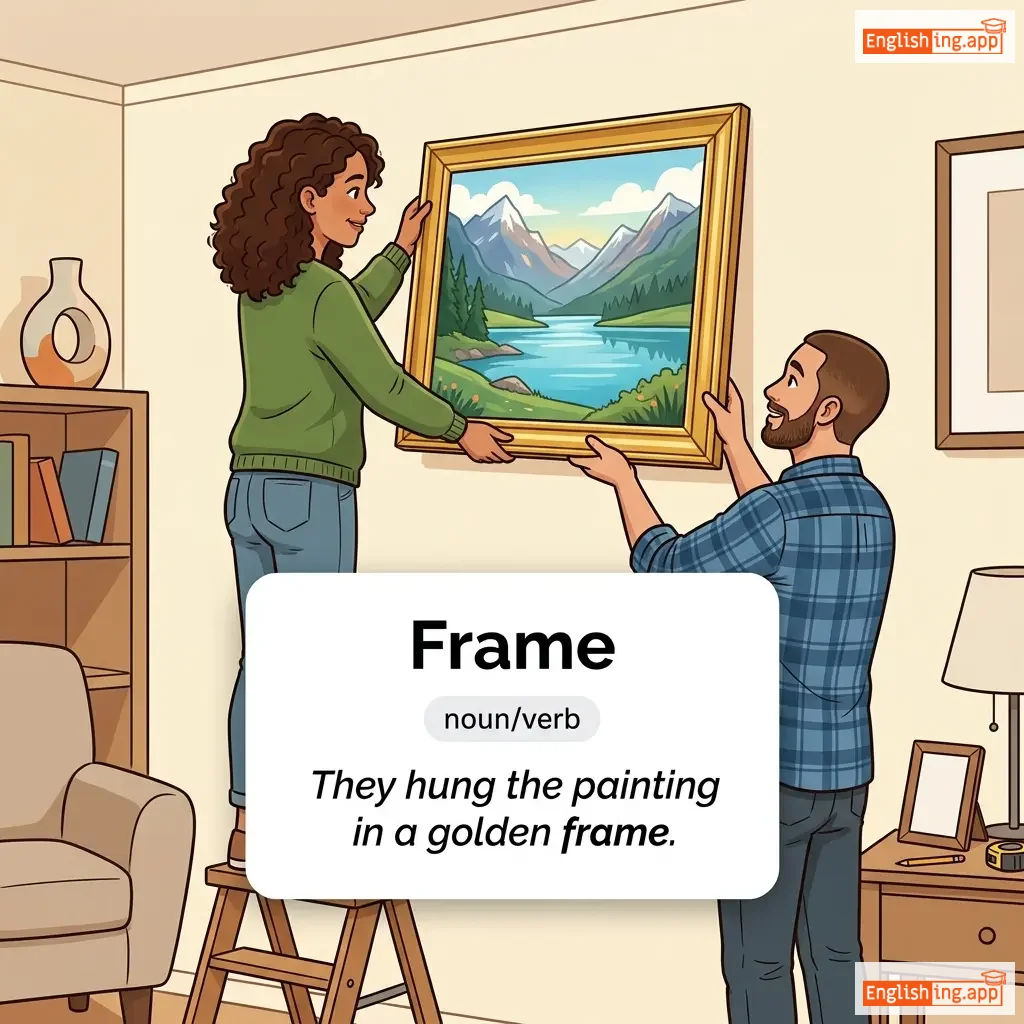
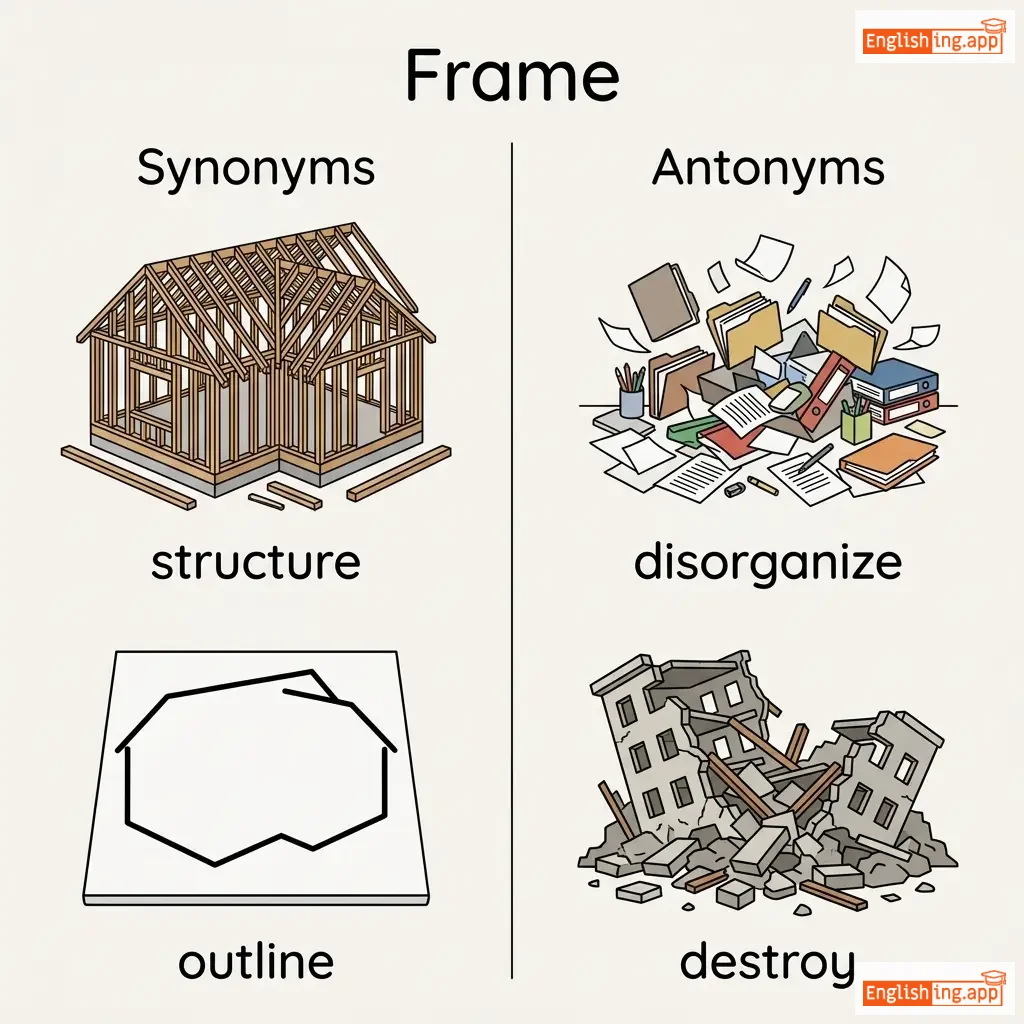
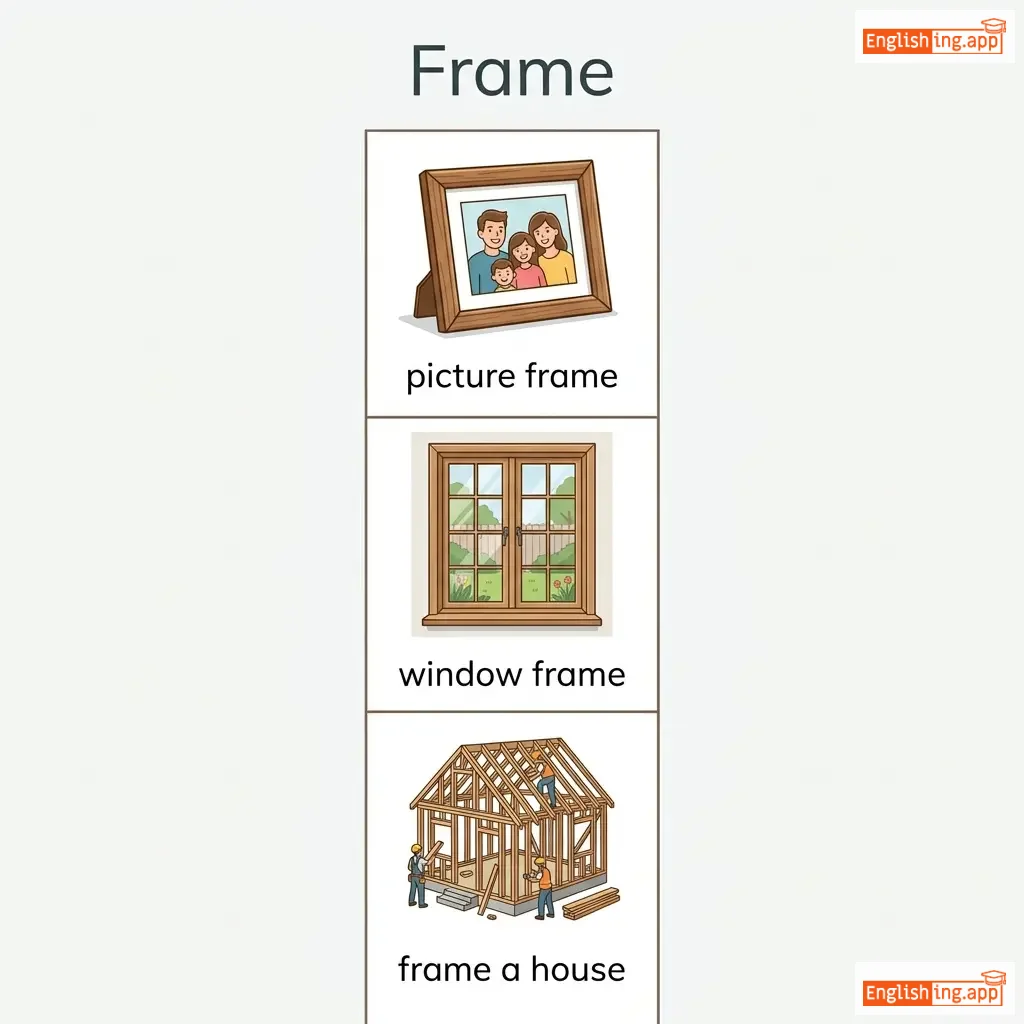
|
- •••••• |
framed
••••••
|
framed
••••••
|
frames
••••••
|
framing
••••••
|
A rigid structure that surrounds or encloses something; to construct or formulate.
••••••
|
They hung the painting in a golden frame. |
- •••••• |
frame of mind |
a person's mood or mental state
••••••
|
- •••••• |
structure, outline, border, skeleton, formulate
••••••
|
disorganize, destroy
••••••
|
picture frame, window frame, frame a house, frame of reference
••••••
|
No •••••• |
|
🏗️
••••••
|
/ˈfreɪmˌwɜːrk/
noun
(フレームワーク)
••••••
|
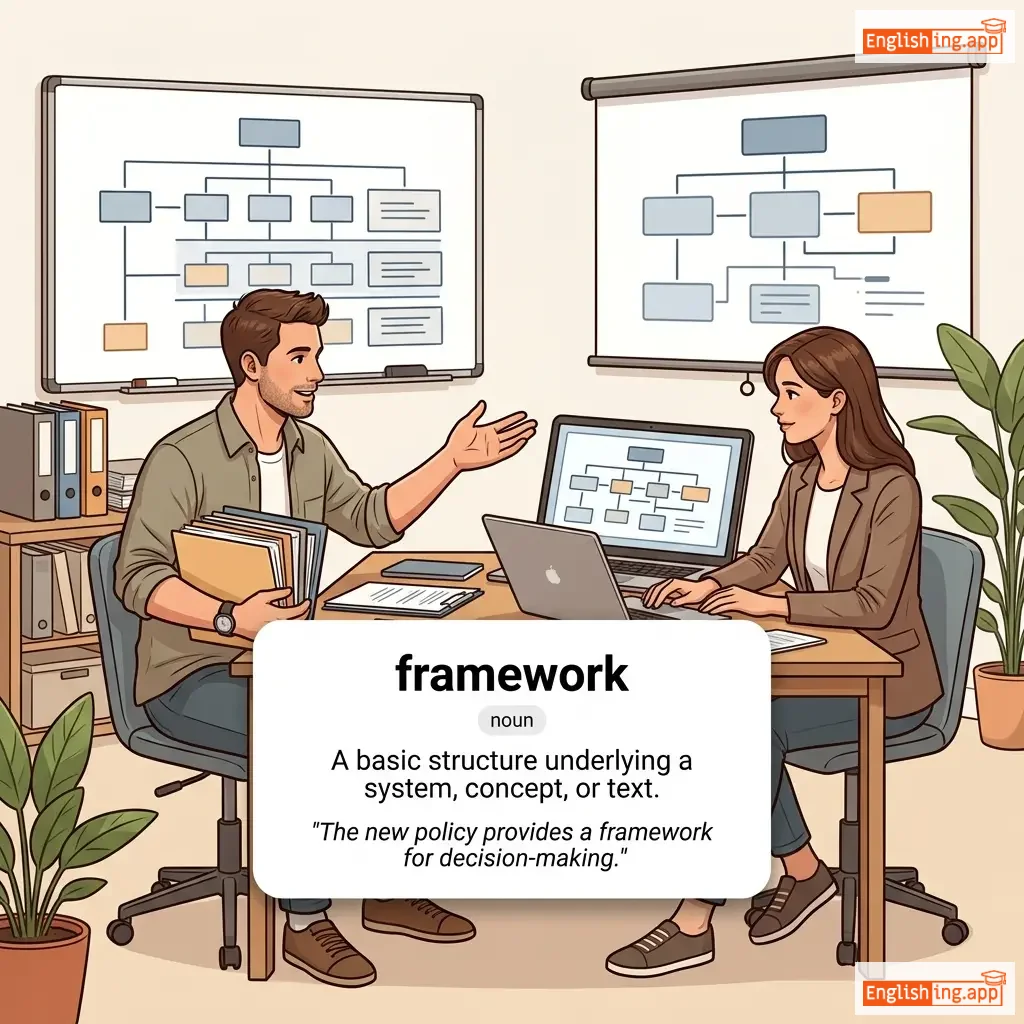
|
枠組み
wakugumi
••••••
|
- •••••• | - •••••• | - •••••• | - •••••• |
A basic structure underlying a system, concept, or text.
••••••
|
The new policy provides a framework for decision-making.
新しいポリシーは意思決定のためのフレームワークを提供します。
••••••
|
新しいポリシーは意思決定のための枠組みを提供します。
Atarashī porishī wa ishikettei no tame no wakugumi o teikyō shimasu.
••••••
|
- •••••• | - •••••• | - •••••• |
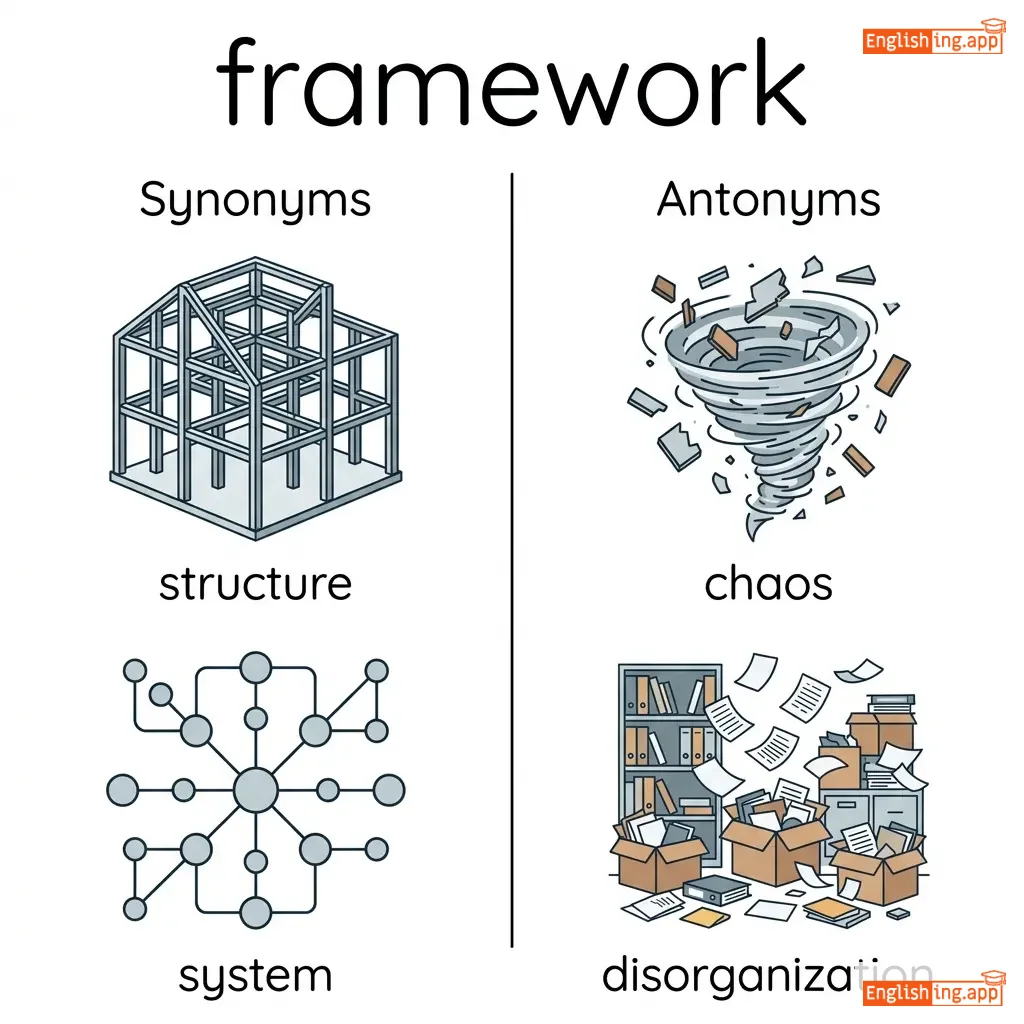
structure, system, skeleton, outline, basis
••••••
|
chaos, disorganization
••••••
|
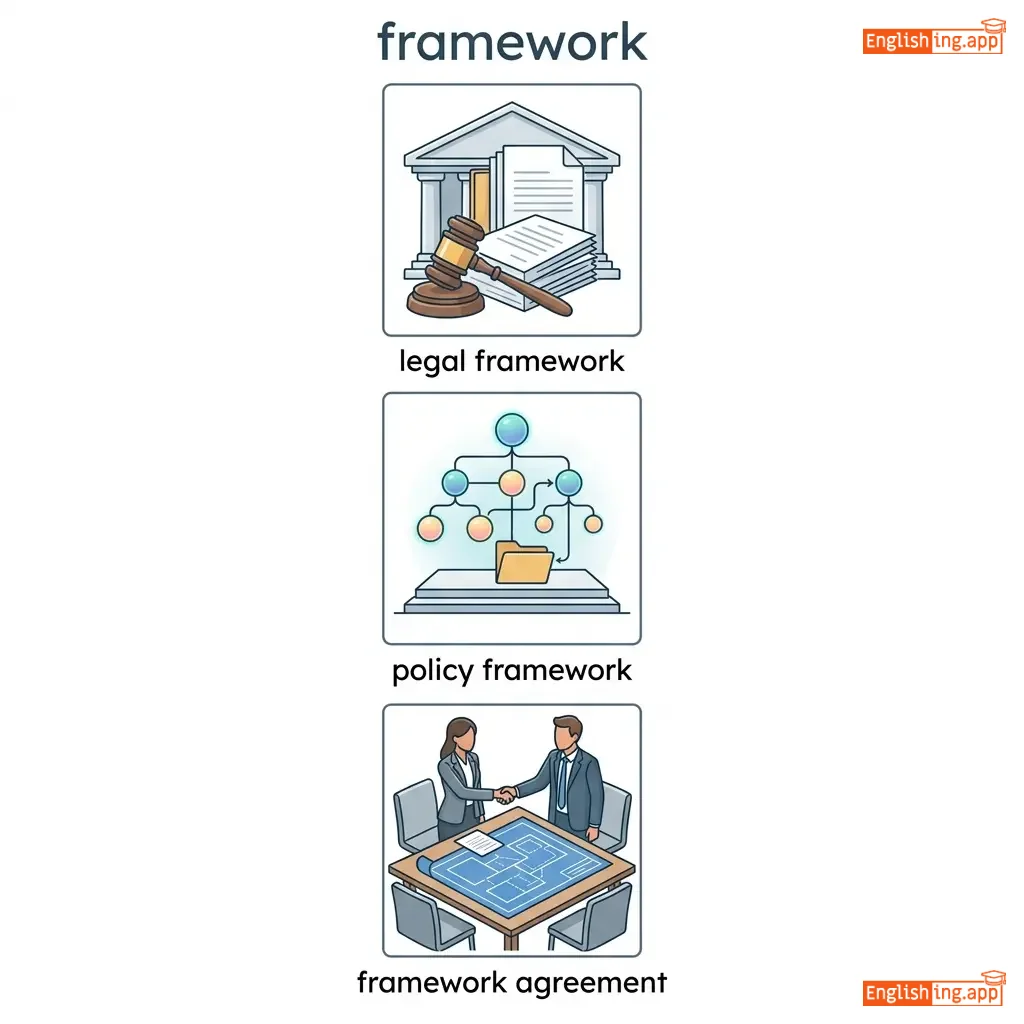
legal framework, policy framework, framework agreement, conceptual framework
••••••
|
Framework は枠組み、建物の枠組みのように。
••••••
|
|
🏢
••••••
|
/ˈfrænʧaɪz/
noun, verb
(furanchaizu)
••••••
|
- •••••• |
フランチャイズ
furanchaizu
••••••
|
franchised
furanchaizu-d
••••••
|
franchised
furanchaizu-d
••••••
|
franchises
furanchaizu-su
••••••
|
franchising
furanchaizu-ing
••••••
|
A legal right to sell or distribute goods or services in a specific area; to grant such a right.
••••••
|
He opened a new fast-food franchise in the city.
彼は都市で新しいファーストフードのフランチャイズを開設しました。
••••••
|
彼は都市で新しいファーストフードのフランチャイズを開設しました。
Kare wa toshi de atarashī fāsuto fūdo no furanchaizu o kaisetsu shimashita.
••••••
|
buy a franchise
フランチャイズを買う
••••••
|
To purchase the right to operate a business under a company's brand.
••••••
|
フランチャイズを買う
furanchaizu o kau
••••••
|
license, authorization, dealership, permit
••••••
|
restriction, prohibition
••••••
|
franchise agreement, franchise owner, franchise business, buy a franchise
••••••
|
フランチャイズは自由 + 選択 - ブランドの下で運営するチャンス。
••••••
|
|
🗣️
••••••
|
/ˈfræŋkli/
adverb
(furankuri)
••••••
|
- •••••• |
率直に
sokushiki ni
••••••
|
- •••••• | - •••••• | - •••••• | - •••••• |
in an honest and direct way
••••••
|
Frankly, I don’t think this plan will work. |
率直に言って、この計画はうまくいかないと思います。
Sokushiki ni itte, kono keikaku wa umaku ikanai to omoimasu.
••••••
|
to be frank |
to speak honestly
••••••
|
率直に言う
sokushiki ni iu
••••••
|
honestly, openly, directly, sincerely
••••••
|
dishonestly, secretly
••••••
|
frankly speaking, quite frankly, to speak frankly
••••••
|
率直に言うことは、まるで親友に本音を話すようなものです!
••••••
|
|
🕵️
••••••
|
/frɔːd/
noun
(フロード)
••••••
|
- •••••• |
詐欺
sagi
••••••
|
- •••••• | - •••••• | - •••••• | - •••••• |
A wrongful or criminal deception intended to result in financial or personal gain.
••••••
|
The company collapsed due to massive accounting fraud.
その会社は大規模な会計詐欺のために倒産しました。
••••••
|
その会社は大規模な会計詐欺のために倒産しました。
Sono kaisha wa daikibo na kaikei sagi no tame ni tōsan shimashita.
••••••
|
identity fraud
身元詐欺
••••••
|
The use of another person's personal information without permission for fraudulent purposes.
••••••
|
身元詐欺
Mimoto sagi
••••••
|
deception, scam, trickery, dishonesty, swindle
••••••
|
honesty, truth
••••••
|
commit fraud, insurance fraud, fraud case, fraud detection
••••••
|
Fraudは詐欺の意味です。詐欺をすると友達を失うよ。
••••••
|
|
🕊️
••••••
|
/friː/
adjective/verb/adverb
(フリー)
••••••
|
- •••••• |
自由
jiyū
••••••
|
freed
フリード
••••••
|
freed
フリード
••••••
|
frees
フリーズ
••••••
|
freeing
フリーイング
••••••
|
Not under the control or in the power of another; able to act or be done as one wishes.
••••••
|
The children are free to play outside.
子供たちは外で自由に遊べます。
••••••
|
子供たちは外で自由に遊べます。
Kodomotachi wa soto de jiyū ni asobemasu.
••••••
|
set free
自由にする
••••••
|
to release from captivity or constraints
••••••
|
自由にする
jiyū ni suru
••••••
|
unrestricted, independent, open, liberated, gratis
••••••
|
restricted, bound, captive
••••••
|
free time, free speech, free market, free trial
••••••
|
自由はfreeと同じ意味です。'自由に遊ぶ'のように覚えましょう。
••••••
|
|
⏰
••••••
|
/ˈfriː taɪm/
noun
(フリー タイム)
••••••
|
- •••••• |
自由時間
jiyu jikan
••••••
|
- •••••• | - •••••• | - •••••• | - •••••• |
time when a person is not working or occupied and can do activities they enjoy
••••••
|
She likes to read books in her free time.
シー ライクス トゥ リード ブックス イン ハー フリー タイム。
••••••
|
彼女は自由時間に本を読むのが好きです。
kanojo wa jiyu jikan ni hon o yomu no ga suki desu
••••••
|
in one's free time
イン ワンズ フリー タイム
••••••
|
during the time when someone is not busy with work or duties
••••••
|
自由時間に
jiyu jikan ni
••••••
|
leisure, spare time, downtime, recreation time
••••••
|
work time, busy time
••••••
|
free time activities, spend free time, enjoy free time, little free time
••••••
|
フリータイム=自由な時間
••••••
|
|
🕊️
••••••
|
/ˈfriːdəm/
noun
(自由)
••••••
|

|
自由
jiyū
••••••
|
- •••••• | - •••••• | - •••••• | - •••••• |
The state of being free; the power or right to act, speak, or think without hindrance or restraint.
••••••
|
Freedom of speech is a fundamental right in many countries. |
言論の自由は多くの国で基本的な権利です。
Genron no jiyū wa ōku no kuni de kihonteki na kenri desu.
••••••
|
freedom of choice |
the right to make one’s own decisions without outside control
••••••
|
選択の自由
Sentaku no jiyū
••••••
|
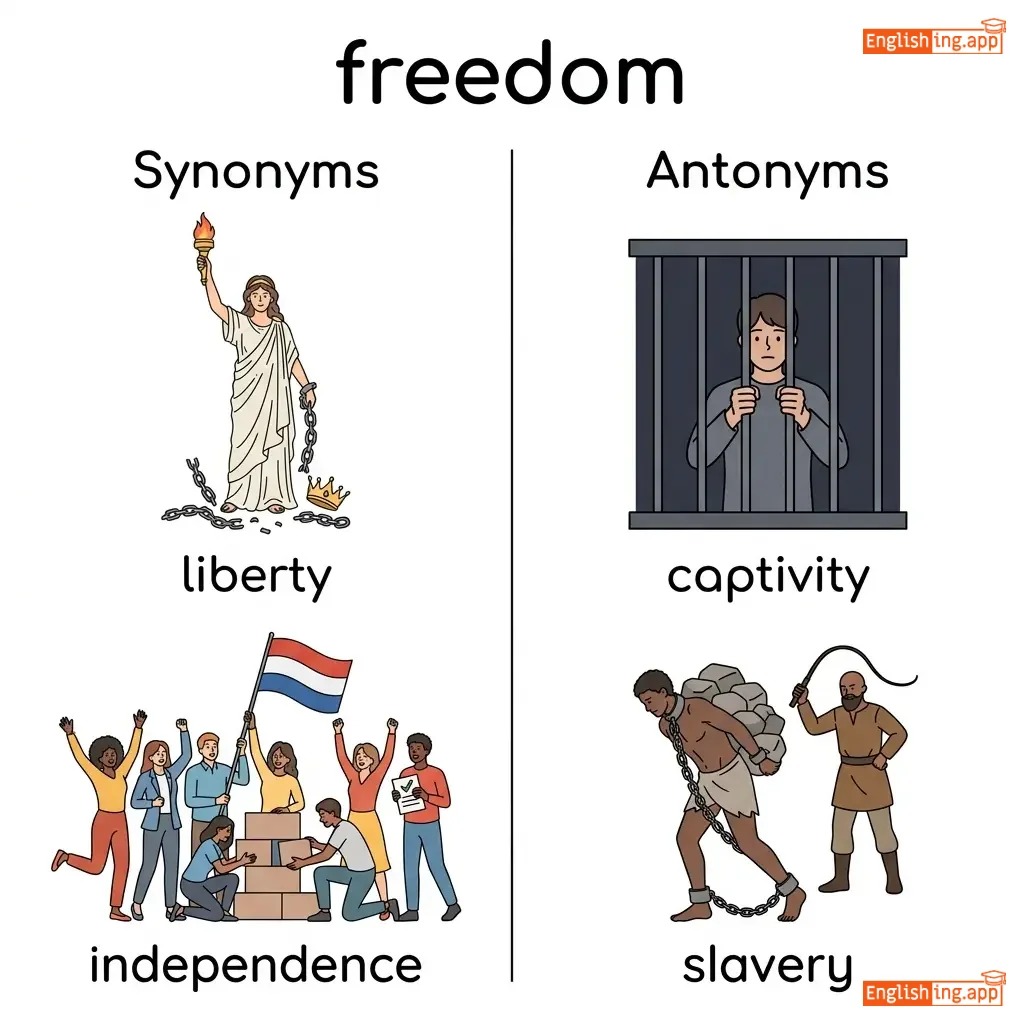
liberty, independence, autonomy, emancipation, self-determination
••••••
|
captivity, slavery, restriction
••••••
|
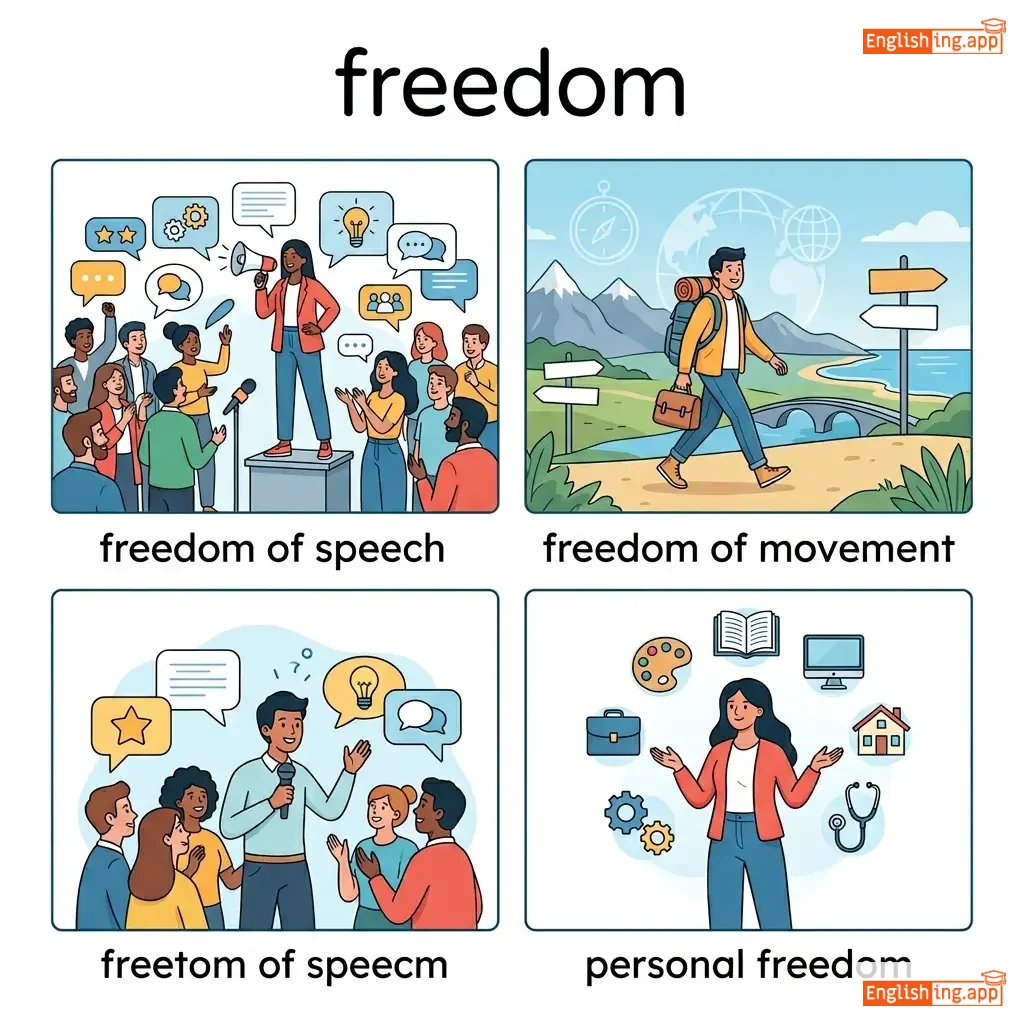
freedom of speech, freedom of movement, personal freedom, political freedom
••••••
|
Freedom = 空を飛んでいるような自由さ (jiyū)
••••••
|
|
🕊️
••••••
|
/ˈfriːdəm ˌfaɪtər/
noun
(フリーダム・ファイター)
••••••
|
- •••••• |
自由の戦士
jiyuu no senshi
••••••
|
- •••••• | - •••••• | - •••••• | - •••••• |
a person who takes part in an armed or political struggle to achieve freedom or independence for their people or country
••••••
|
The freedom fighter dedicated his life to the liberation of his homeland.
ザ・フリーダム・ファイターは祖国の解放のために人生を捧げた。
••••••
|
その自由の戦士は祖国の解放のために人生を捧げた。
sono jiyuu no senshi wa sokoku no kaihou no tame ni jinsei o sasageta
••••••
|
- •••••• | - •••••• | - •••••• |
liberator, revolutionary, insurgent, resistance fighter, patriot
••••••
|
oppressor, colonizer, tyrant
••••••
|
brave freedom fighter, freedom fighter movement, fallen freedom fighter, freedom fighter leader
••••••
|
Freedom = 自由, fighter = 戦士
••••••
|
|
🕊️
••••••
|
/ˈfriːli/
adverb
(furi)
••••••
|
- •••••• |
自由に
jiyū ni
••••••
|
- •••••• | - •••••• | - •••••• | - •••••• |
without restriction or control; willingly
••••••
|
Information should flow freely in a democratic society. |
情報は民主主義社会で自由に流れるべきです。
Jōhō wa minshushugi shakai de jiyū ni nagareru beki desu.
••••••
|
speak freely |
to express opinions openly
••••••
|
自由に話す
jiyū ni hanasu
••••••
|
openly, willingly, easily, voluntarily
••••••
|
reluctantly, restrictively
••••••
|
move freely, give freely, flow freely, speak freely
••••••
|
自由は制限なし、だから freely は自由に!
••••••
|
|
❄️
••••••
|
/friːz/
verb
(フリーズ)
••••••
|
- •••••• |
凍る
kooru
••••••
|
froze
フローズ
••••••
|
frozen
フローゼン
••••••
|
freezes
フリーズズ
••••••
|
freezing
フリージング
••••••
|
To turn into ice or cause to become hard due to extreme cold.
••••••
|
The water in the lake will freeze during winter.
湖の水は冬に凍ります。
••••••
|
湖の水は冬に凍ります。
Mizu wa fuyu ni koorimasu.
••••••
|
freeze up
凍る
••••••
|
to stop functioning or become immobile
••••••
|
機能停止する
kinou teishi suru
••••••
|
ice, chill, harden, solidify, stiffen
••••••
|
melt, thaw, heat
••••••
|
freeze water, freeze assets, freeze to death, freeze up
••••••
|
Freeze は水が氷に変わるように、凍ることを意味します!
••••••
|
|
📡
••••••
|
/ˈfriː.kwən.si/
noun
(furiwensu)
••••••
|
- •••••• |
頻度
hindou
••••••
|
- •••••• | - •••••• | - •••••• | - •••••• |
The rate at which something occurs or is repeated over a period of time
••••••
|
The frequency of bus services has been increased during rush hours. |
ラッシュアワー中にバスの頻度が増加しました。
Rasshu awā chū ni basu no hindō ga zōka shimashita.
••••••
|
with increasing frequency |
happening more often
••••••
|
増加する頻度で
zōka suru hindō de
••••••
|
rate, occurrence, repetition, regularity, incidence
••••••
|
rarity, infrequency
••••••
|
high frequency, radio frequency, frequency of occurrence, frequency distribution
••••••
|
頻度とは、何かがどれだけ頻繁に起こるか、例えばラジオで同じ歌が何度も流れるようなものです。
••••••
|
|
🔄
••••••
|
/ˈfriː.kwənt/ (adj.), /friːˈkwent/ (verb)
adjective, verb
(furiƙwento)
••••••
|
- •••••• |
頻繁
hinpan
••••••
|
frequented
furiƙwentōdo
••••••
|
frequented
furiƙwentōdo
••••••
|
frequents
furiƙwentōtsu
••••••
|
frequenting
furiƙwentoing
••••••
|
Adjective: happening often; Verb: to visit a place regularly
••••••
|
He is a frequent visitor to the library.
彼は図書館の頻繁な訪問者です。
••••••
|
彼は図書館の頻繁な訪問者です。
Kare wa toshokan no hinpan na hōmon-sha desu.
••••••
|
frequent flyer
頻繁な飛行機利用者
••••••
|
a person who travels often by plane
••••••
|
頻繁な飛行機利用者
hinpan na hikōki riyō-sha
••••••
|
regular, repeated, habitual, constant, usual
••••••
|
rare, occasional, infrequent
••••••
|
frequent visits, frequent traveler, frequent customer, frequent contact
••••••
|
Frequent は頻繁、例えば友達がよく電話をかけてくるように。
••••••
|
|
🔄
••••••
|
/ˈfriːkwəntli/
adverb
(フリークエントリー)
••••••
|
- •••••• |
頻繁に; 定期的に; 多くの回数
hinpan ni, teikiteki ni, ooku no kaisuu
••••••
|
- •••••• | - •••••• | - •••••• | - •••••• |
often; regularly; many times
••••••
|
She frequently visits her grandmother on weekends. |
彼女は週末に頻繁に祖母を訪れます。
Kanojo wa shūmatsu ni hinpan ni sobo o otozuremasu.
••••••
|
- •••••• | - •••••• | - •••••• |
often, regularly, repeatedly, commonly, habitually
••••••
|
rarely, seldom, infrequently, occasionally, never
••••••
|
frequently asked questions, frequently used, frequently visited
••••••
|
何度も繰り返して訪れること、それが頻繁にです。
••••••
|
|
🌱
••••••
|
/frɛʃ/
adjective
(フレッシュ)
••••••
|
- •••••• |
新鮮
shinsen
••••••
|
- •••••• | - •••••• | - •••••• | - •••••• |
new, recently made, or clean and pure
••••••
|
The bread is still fresh from the oven.
パンはオーブンから出たばかりです。
••••••
|
パンはオーブンから出たばかりです。
Pan wa ōbun kara deta bakari desu.
••••••
|
fresh start
新たなスタート
••••••
|
a new beginning
••••••
|
新たなスタート
Aratana sutāto
••••••
|
new, recent, clean, pure, original
••••••
|
stale, old, rotten
••••••
|
fresh air, fresh start, fresh bread, fresh idea
••••••
|
新鮮なパンの香り!
••••••
|
|
📅
••••••
|
/ˈfraɪ.deɪ/
noun
(フライデー)
••••••
|
- •••••• |
金曜日
kinyoubi
••••••
|
- •••••• | - •••••• | - •••••• | - •••••• |
the day of the week following Thursday and preceding Saturday
••••••
|
We have a team meeting every Friday afternoon.
ウィー ハブ ア チーム ミーティング エブリー フライデー アフタヌーン。
••••••
|
私たちは毎週金曜日の午後にチーム会議があります。
watashitachi wa maishuu kinyoubi no gogo ni chiimu kaigi ga arimasu
••••••
|
Black Friday
ブラックフライデー
••••••
|
the day after Thanksgiving in the US, known for major retail discounts
••••••
|
ブラックフライデー
burakku furaidee
••••••
|
weekday, workday, end of week
••••••
|
Monday, Sunday
••••••
|
Friday evening, Friday night, last Friday, next Friday
••••••
|
金曜日はゴールド、週のご褒美の日
••••••
|
|
🧊
••••••
|
/frɪdʒ/
noun
(フリッジ)
••••••
|
- •••••• |
冷蔵庫
reizouko
••••••
|
- •••••• | - •••••• | - •••••• | - •••••• |
a household appliance used to keep food and drinks cold to preserve freshness
••••••
|
I put the milk back in the fridge after breakfast.
朝食の後で牛乳を冷蔵庫に入れました。
••••••
|
朝食の後で牛乳を冷蔵庫に入れました。
choushoku no ato de gyuunyuu o reizouko ni iremashita
••••••
|
- •••••• | - •••••• | - •••••• |
refrigerator, icebox, cooler, chiller
••••••
|
heater, oven
••••••
|
open the fridge, put in the fridge, fridge door, fridge magnet
••••••
|
冷 means cold—冷蔵庫 is fridge
••••••
|
|
👫
••••••
|
/frɛnd/
noun
(furendo)
••••••
|
- •••••• |
友達
tomodachi
••••••
|
- •••••• | - •••••• | - •••••• | - •••••• |
a person with whom one has a bond of mutual affection
••••••
|
He is my best friend. |
彼は私の親友です。
Kare wa watashi no shinyuu desu.
••••••
|
fair-weather friend |
someone who is only a friend in good times
••••••
|
晴れた日の友達
Hareta hi no tomodachi
••••••
|
companion, pal, mate, buddy, ally
••••••
|
enemy, foe, rival
••••••
|
best friend, close friend, true friend, make friends
••••••
|
Friend は友達を意味します – 友達はいつでもあなたのそばにいます。
••••••
|
|
😊
••••••
|
/ˈfrɛndli/
adjective
(happiness)
••••••
|
- •••••• |
幸福
koufuku
••••••
|
- •••••• | - •••••• | - •••••• | - •••••• |
Kind and pleasant; showing goodwill and affection.
••••••
|
The shop owner is very friendly to new customers. |
彼女は賞を受け取ったとき、幸せを隠すことができませんでした。
Kanojo wa shou wo uketotta toki, shiawase wo kakusu koto ga dekimasen deshita.
••••••
|
friendly fire |
weapon fire coming from one's own side by mistake
••••••
|
幸福を追求する
Koufuku wo tsuikyuu suru
••••••
|
kind, warm, amiable, welcoming, sociable
••••••
|
hostile, unfriendly, cold
••••••
|
friendly smile, friendly attitude, friendly relationship, friendly environment
••••••
|
幸福 (koufuku) = 幸せ (shiawase) = みんなが追い求めるもの。
••••••
|
|
🤗
••••••
|
/ˈfrɛndʃɪp/
noun
(フレンドシップ)
••••••
|
- •••••• |
友情
yūjō
••••••
|
- •••••• | - •••••• | - •••••• | - •••••• |
A close and trusting relationship between two or more people.
••••••
|
Their friendship has lasted since childhood. |
彼らの友情は幼少期から続いています。
Karera no yūjō wa yōshōki kara tsuzuiteimasu.
••••••
|
true friendship |
A genuine and deep bond between friends.
••••••
|
真の友情
Shin no yūjō
••••••
|
companionship, fellowship, camaraderie, closeness, bond
••••••
|
enmity, hostility, animosity
••••••
|
strong friendship, close friendship, lasting friendship, build friendship
••••••
|
友情はみんなで一緒に乗る船のようなものです。
••••••
|
|
😱
••••••
|
/fraɪt/
noun
(フライト)
••••••
|
- •••••• |
恐怖; 驚き; 驚愕
kyoufu, odoroki, kyougaku
••••••
|
- •••••• | - •••••• | - •••••• | - •••••• |
a sudden intense feeling of fear; a shock or surprise that causes fear
••••••
|
The loud thunder gave her such a fright that she dropped her coffee cup. |
大きな雷の音で、彼女は恐怖を感じてコーヒーカップを落としました。
Ookina kaminari no oto de, kanojo wa kyoufu o kanjite koohii kappu o otoshimashita.
••••••
|
- •••••• | - •••••• | - •••••• |
fear, terror, alarm, panic
••••••
|
calmness, courage, composure, bravery
••••••
|
get a fright, terrible fright, sudden fright
••••••
|
恐怖 (kyoufu) と驚き (odoroki) のミックス
••••••
|
|
😱
••••••
|
/ˈfraɪtən/
verb
(フライトン)
••••••
|
- •••••• |
怖がらせる
kowagaraseru
••••••
|
frightened
フライトンド
••••••
|
frightened
フライトンド
••••••
|
frightens
フライトンズ
••••••
|
frightening
フライトニング
••••••
|
to cause fear or alarm in someone
••••••
|
The loud noise frightened the child.
ザ ラウド ノイズ フライトンド ザ チャイルド
••••••
|
大きな音が子供を怖がらせた。
ookina oto ga kodomo o kowagaraseta
••••••
|
frighten the life out of someone
フライトン ザ ライフ アウト オブ サムワン
••••••
|
to scare someone very badly
••••••
|
誰かをひどく怖がらせる
dareka o hidoku kowagaraseru
••••••
|
scare, terrify, alarm, startle, intimidate
••••••
|
calm, reassure, comfort
••••••
|
frighten someone badly, frighten easily, frighten away, frighten children
••••••
|
frighten = 怖がらせる、フライトで怖い想像
••••••
|
|
😨
••••••
|
/ˈfraɪtənd/
adjective
(フライトンド)
••••••
|
- •••••• |
怯えた
obieta
••••••
|
- •••••• | - •••••• | - •••••• | - •••••• |
feeling fear or anxiety; scared
••••••
|
The child was frightened by the loud noise.
ザ チャイルド ワズ フライトンド バイ ザ ラウド ノイズ
••••••
|
その子供は大きな音に怯えた。
sono kodomo wa ookina oto ni obieta
••••••
|
frightened to death
フライトンド トゥ デス
••••••
|
extremely scared
••••••
|
死ぬほど怖い
shinu hodo kowai
••••••
|
scared, afraid, terrified, alarmed, fearful
••••••
|
calm, brave, fearless
••••••
|
deeply frightened, visibly frightened, frightened child, frightened face
••••••
|
frightened = フライトで怖くなる
••••••
|
|
🐸
••••••
|
/frɒɡ/
noun
(フロッグ)
••••••
|
- •••••• |
カエル
kaeru
••••••
|
- •••••• | - •••••• | - •••••• | - •••••• |
a small amphibian animal that lives both in water and on land
••••••
|
The frog jumped from the lily pad into the pond.
カエルは睡蓮の葉から池に飛び込んだ。
••••••
|
カエルは睡蓮の葉から池に飛び込んだ。
Kaeru wa suiren no ha kara ike ni tobikonda.
••••••
|
- •••••• | - •••••• | - •••••• |
amphibian, toad
••••••
|
- •••••• |
tree frog, pond frog, frog legs
••••••
|
カエルは睡蓮の葉から池に飛び込む。
••••••
|
|
➡️
••••••
|
/frəm/ or /frʌm/
preposition
(フロム)
••••••
|
- •••••• |
から
kara
••••••
|
- •••••• | - •••••• | - •••••• | - •••••• |
Used to indicate the starting point of a journey, action, or source.
••••••
|
She came from Dhaka to visit her family. |
彼女はダッカから家族を訪ねて来ました。
Kanojo wa Dakkā kara kazoku o tazunete kimashita.
••••••
|
far from |
Very different from or not at all like.
••••••
|
遠くから
tōku kara
••••••
|
out of, away from, off, since, starting at
••••••
|
to, towards
••••••
|
from start, from scratch, from now, far from
••••••
|
FROMは'から'を意味します—例えばダッカから(Dakkā kara)旅が始まります。
••••••
|
|
🚪
••••••
|
/frʌnt/
noun
(フロント)
••••••
|
- •••••• |
前面
maemuki
••••••
|
- •••••• | - •••••• | - •••••• | - •••••• |
the forward-facing part of something
••••••
|
The house has a garden in front. |
家の前に庭があります。
Ie no mae ni niwa ga arimasu.
••••••
|
put on a brave front |
to appear confident while hiding true feelings
••••••
|
勇敢な顔を見せる
yūkan na kao o miseru
••••••
|
fore, facade, frontage, forefront, entrance
••••••
|
back, rear
••••••
|
front door, front line, front page, in front of
••••••
|
Front doorは前のドアという意味です – front = 前面.
••••••
|
|
🍎
••••••
|
/fruːt/
noun
(フルーツ)
••••••
|
- •••••• |
果物
kudamono
••••••
|
- •••••• | - •••••• | - •••••• | - •••••• |
The sweet and fleshy product of a plant that contains seeds.
••••••
|
Mango is my favorite fruit.
マンゴーは私のお気に入りのフルーツです。
••••••
|
マンゴーは私のお気に入りのフルーツです。
Mangō wa watashi no okiniiri no furūtsu desu.
••••••
|
bear fruit
実を結ぶ
••••••
|
To produce good results or be successful.
••••••
|
実を結ぶ
Mi o musubu
••••••
|
produce, crop, harvest, berry, yield
••••••
|
vegetable, grain
••••••
|
fresh fruit, ripe fruit, tropical fruit, eat fruit
••••••
|
フルーツは新鮮で美味しいので、覚えやすいです。
••••••
|
|
🍎
••••••
|
/ˈfruːtfəl/
adjective
(furuutofuru)
••••••
|
- •••••• |
実りのある
minori no aru
••••••
|
- •••••• | - •••••• | - •••••• | - •••••• |
Producing good results or being productive.
••••••
|
Their meeting was fruitful and led to many new ideas. |
彼らの会議は実りのあるもので、多くの新しいアイデアを生み出しました。
Karera no kaigi wa minori no aru mono de, ooku no atarashī aidea o umidashimashita.
••••••
|
fruitful discussion |
A conversation that generates useful results or progress.
••••••
|
実りのある議論
minori no aru giron
••••••
|
productive, beneficial, rewarding, fertile, successful
••••••
|
barren, unproductive, useless
••••••
|
fruitful discussion, fruitful outcome, fruitful results, fruitful collaboration
••••••
|
Fruitfulは実を結ぶこと、つまり良い成果を生むこと。
••••••
|
|
😤
••••••
|
/ˈfrʌstreɪt/
verb
••••••
|
- •••••• | - •••••• |
frustrated
••••••
|
frustrated
••••••
|
frustrates
••••••
|
frustrating
••••••
|
To prevent someone from accomplishing something; to cause feelings of annoyance or disappointment.
••••••
|
The constant delays frustrated the team. |
- •••••• |
frustrate the purpose |
To hinder the intended result.
••••••
|
- •••••• |
annoy, thwart, hinder, disappoint, obstruct
••••••
|
encourage, assist, satisfy
••••••
|
frustrate the efforts, feel frustrated, frustrating situation, frustrate attempts
••••••
|
No •••••• |
|
😤
••••••
|
/ˈfrʌstreɪtɪd/
adjective
(フラストレイテッド)
••••••
|
- •••••• |
フラストレーション
furasutore-shon
••••••
|
- •••••• | - •••••• | - •••••• | - •••••• |
feeling annoyed or upset because of inability to achieve something
••••••
|
She felt frustrated after failing the exam. |
彼女は試験に失敗した後、フラストレーションを感じました。
Kanojo wa shiken ni shippai shita ato, furasutore-shon o kanjimashita.
••••••
|
- •••••• | - •••••• | - •••••• |
annoyed, upset, discouraged, disappointed
••••••
|
calm, content, pleased
••••••
|
feel frustrated, get frustrated, frustrated with
••••••
|
フラストレーションは、進む道が凍っているように感じる。
••••••
|
|
😩
••••••
|
/ˈfrʌstreɪtɪŋ/
adjective
(フラストレイティング)
••••••
|
- •••••• |
苛立たしい
iradateshii
••••••
|
- •••••• | - •••••• | - •••••• | - •••••• |
causing annoyance or dissatisfaction
••••••
|
The slow internet connection was really frustrating. |
遅いインターネット接続は本当に苛立たしかった。
Osui intānetto setsuzoku wa hontōni iradateshikatta.
••••••
|
- •••••• | - •••••• | - •••••• |
annoying, exasperating, irritating
••••••
|
pleasing, satisfying, enjoyable
••••••
|
frustrating experience, frustrating situation, frustrating delay
••••••
|
Frustrating situations feel like 'frozen traffic' – you just can't move ahead.
••••••
|
|
😣
••••••
|
/frʌˈstreɪʃən/
noun
(furasutoreishon)
••••••
|
- •••••• |
フラストレーション
furasutoreeshon
••••••
|
- •••••• | - •••••• | - •••••• | - •••••• |
The feeling of being upset or annoyed due to inability to achieve something.
••••••
|
He felt deep frustration when his plans failed. |
彼は自分の計画が失敗したとき、深いフラストレーションを感じました。
Kare wa jibun no keikaku ga shippai shita toki, fukai furasutoreeshon o kanjimashita.
••••••
|
vent frustration |
To express anger or annoyance openly.
••••••
|
フラストレーションを表現する
furasutoreeshon o hyōgen suru
••••••
|
annoyance, irritation, disappointment, exasperation, discontent
••••••
|
satisfaction, contentment, delight
••••••
|
cause frustration, deep frustration, express frustration, frustration level
••••••
|
フラストレーション(furasutoreeshon)は、達成できないことに対する怒りです。
••••••
|
|
🍳
••••••
|
/fraɪ/
verb
(fura)
••••••
|
|
揚げる
ageru
••••••
|
fried
furaido
••••••
|
fried
furaido
••••••
|
fries
furaizu
••••••
|
frying
furaingu
••••••
|
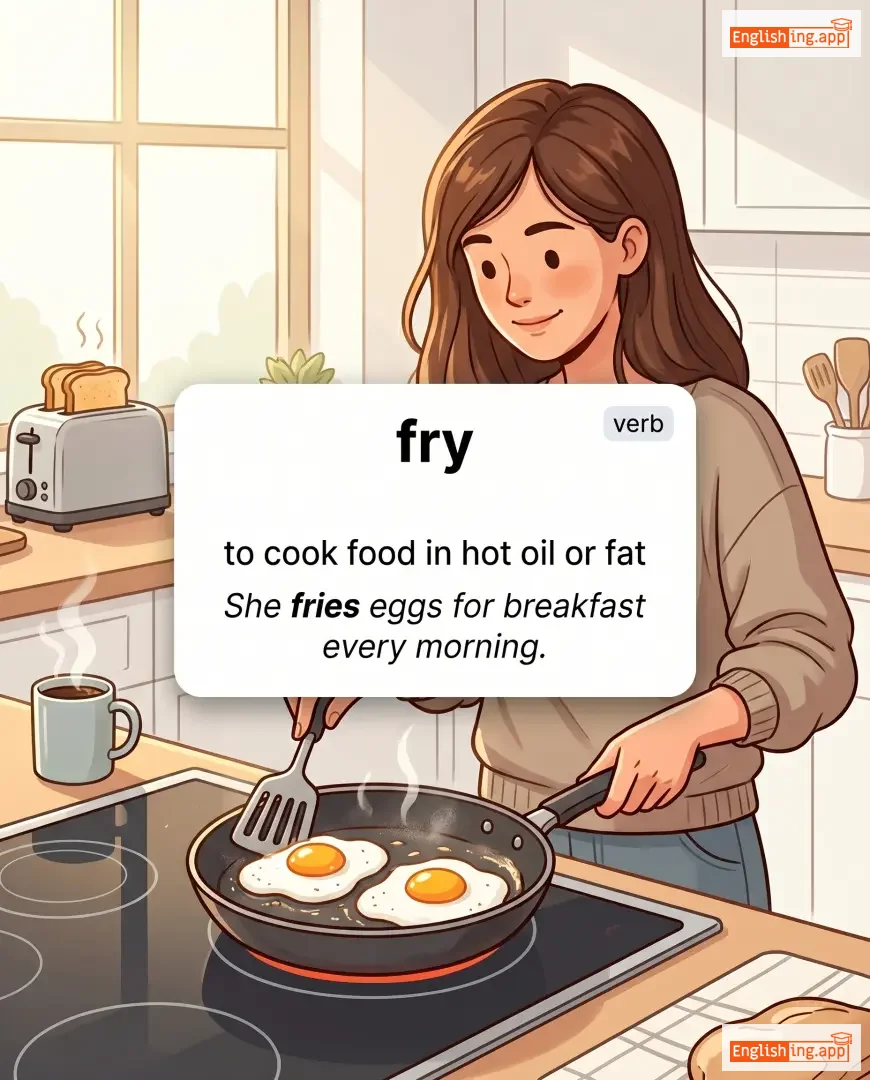
to cook food in hot oil or fat
••••••
|
She fries eggs for breakfast every morning.
彼女は毎朝朝食に卵をフライします。
••••••
|
彼女は毎朝朝食に卵を揚げます。
Kanojo wa mai asa choushoku ni tamago o agemasu.
••••••
|
- •••••• | - •••••• | - •••••• |
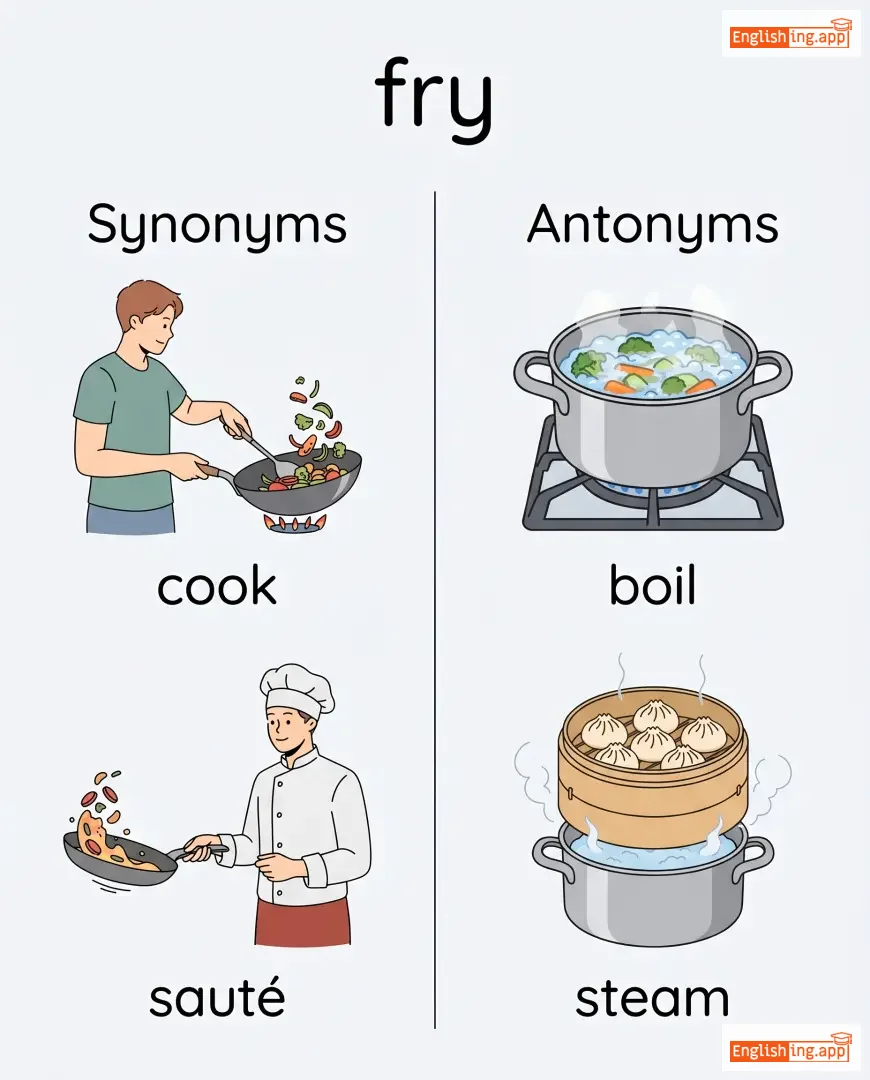
cook, sauté, pan-fry
••••••
|
boil, steam, bake
••••••
|
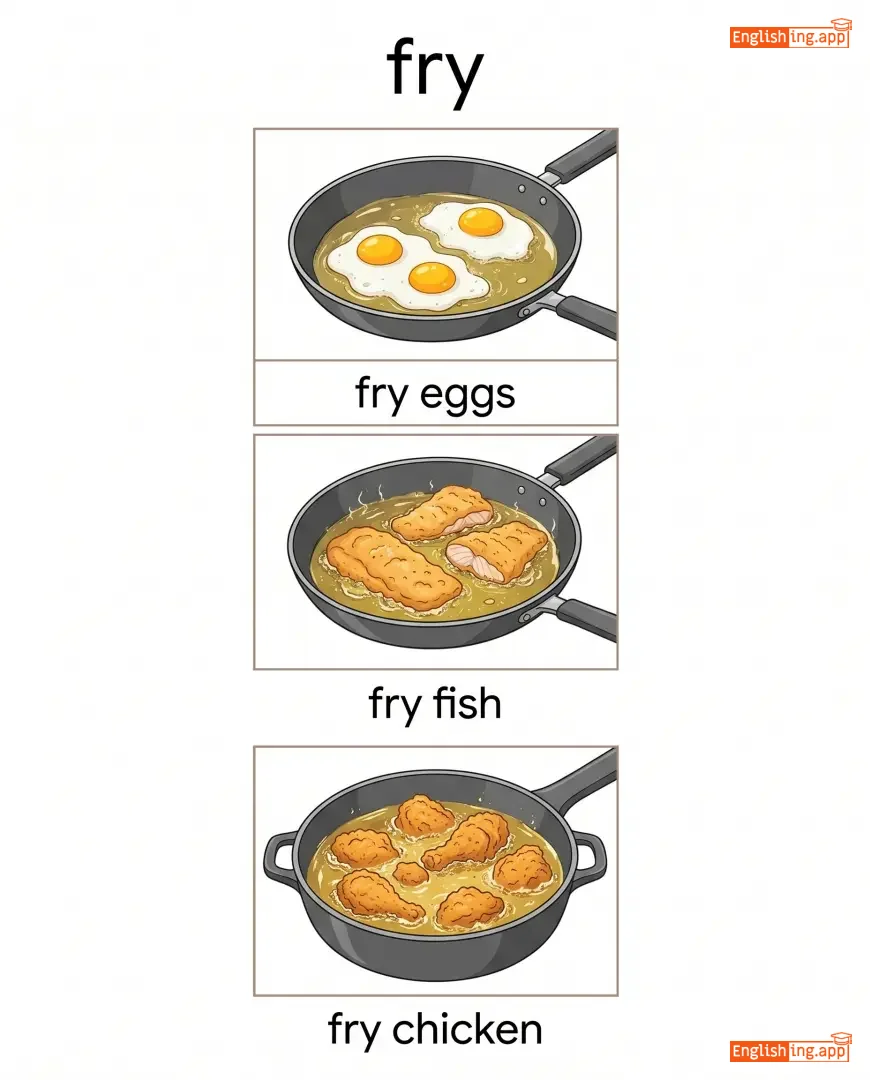
fry eggs, fry fish, fry chicken, fry onions, deep fry
••••••
|
No •••••• |
|
⛽
••••••
|
/ˈfjuːəl/
noun/verb
••••••
|
- •••••• | - •••••• |
fueled
••••••
|
fueled
••••••
|
fuels
••••••
|
fueling
••••••
|
A material such as coal, gas, or oil that is burned to produce energy; also to supply with energy or power.
••••••
|
The car needs fuel to run efficiently. |
- •••••• |
fuel the fire |
To make a situation worse or more intense.
••••••
|
- •••••• |
power, energy, propellant, feed, sustain
••••••
|
drain, exhaust
••••••
|
burn fuel, fossil fuel, run on fuel, fuel supply
••••••
|
No •••••• |
|
✅
••••••
|
/fʊlˈfɪl/
verb
(フルフィル)
••••••
|
- •••••• |
果たす
hatasu
••••••
|
fulfilled
フルフィルド
••••••
|
fulfilled
フルフィルド
••••••
|
fulfils
フルフィルズ
••••••
|
fulfilling
フルフィリング
••••••
|
to complete or achieve something that was expected or promised; to satisfy a requirement or desire
••••••
|
She worked hard to fulfil her dream of becoming a doctor.
シー ワークト ハード トゥ フルフィル ハー ドリーム
••••••
|
彼女は医者になる夢を果たすために一生懸命働いた。
Kanojo wa isha ni naru yume o hatasu tame ni isshoukenmei hataraita
••••••
|
fulfil a promise
フルフィル ア プロミス
••••••
|
to do what you said you would do
••••••
|
約束を果たす
yakusoku o hatasu
••••••
|
accomplish, achieve, complete, realize, satisfy
••••••
|
fail, neglect, abandon
••••••
|
fulfil a promise, fulfil a duty, fulfil a requirement, fulfil a dream
••••••
|
fulfil = フル(full)に果たす
••••••
|
|
🍶
••••••
|
/fʊl/
adjective
(フル)
••••••
|
- •••••• |
満杯
manpai
••••••
|
- •••••• | - •••••• | - •••••• | - •••••• |
Containing as much or as many as possible; complete.
••••••
|
The glass is full of water. |
グラスは水で満杯です。
Gurasu wa mizu de manpai desu.
••••••
|
full of life |
very energetic and lively
••••••
|
生き生きとした
ikiiki to shita
••••••
|
complete, filled, packed, crowded, entire
••••••
|
empty, vacant, partial
••••••
|
full of water, full moon, full capacity, full name, full potential
••••••
|
満杯は水でいっぱいのように、すべてが埋め尽くされている状態。
••••••
|
|
🕒
••••••
|
/ˈfʊl taɪm/
adjective, adverb
(フルタイム)
••••••
|
- •••••• |
フルタイム
furu taimu
••••••
|
- •••••• | - •••••• | - •••••• | - •••••• |
working or studying for the whole standard period of time
••••••
|
She works full-time as a teacher. |
彼女は教師としてフルタイムで働いています。
Kanojo wa kyōshi toshite furu taimu de hataraiteimasu.
••••••
|
- •••••• | - •••••• | - •••••• |
permanent, regular, continual, steady
••••••
|
part-time, temporary
••••••
|
full-time job, full-time employee, full-time student
••••••
|
フルタイムはパートタイムではなく、フルに働くことです。
••••••
|
|
✅
••••••
|
/ˈfʊli/
adverb
(フリー)
••••••
|
- •••••• |
完全に
kanzen ni
••••••
|
- •••••• | - •••••• | - •••••• | - •••••• |
completely or entirely; to the fullest extent
••••••
|
She is fully aware of the risks. |
彼女はリスクについて完全に認識しています。
Kanojo wa risuku ni tsuite kanzen ni ninshiki shiteimasu.
••••••
|
fully booked |
completely reserved with no space left
••••••
|
完全に予約済み
kanzen ni yoyaku zumi
••••••
|
completely, entirely, totally, wholly, absolutely
••••••
|
partially, incompletely
••••••
|
fully aware, fully understand, fully booked, fully equipped
••••••
|
Fullyは完全にという意味で、'フリー'(満ちている)ように完全に満たされた状態を想像してください。
••••••
|
|
🎉
••••••
|
/fʌn/
noun
(fan)
••••••
|
- •••••• |
楽しみ
tanoshimi
••••••
|
- •••••• | - •••••• | - •••••• | - •••••• |
enjoyment, amusement, or light-hearted pleasure
••••••
|
We had a lot of fun at the party. |
パーティーでとても楽しみました。
Pātī de totemo tanoshimimashita.
••••••
|
make fun of |
to tease or mock someone
••••••
|
からかう
karakau
••••••
|
enjoyment, amusement, entertainment, pleasure
••••••
|
boredom, sadness
••••••
|
have fun, fun activity, fun time, fun party
••••••
|
Fun は楽しみ、パーティーでみんなが「楽しんで!」と言う!
••••••
|
|
⚙️
••••••
|
/ˈfʌŋkʃən/
noun
(ファンクション)
••••••
|
- •••••• |
機能
kinou
••••••
|
- •••••• | - •••••• | - •••••• | - •••••• |
An activity or purpose natural to or intended for a person or thing.
••••••
|
The main function of the heart is to pump blood. |
心臓の主な機能は血液をポンプすることです。
Shinzou no omona kinou wa ketsueki o ponpu suru koto desu.
••••••
|
perform a function |
to carry out a specific role or purpose
••••••
|
機能を実行する
Kinou o jikkou suru
••••••
|
role, purpose, duty, job, task
••••••
|
malfunction, failure, inactivity
••••••
|
main function, important function, perform a function, social function
••••••
|
機能は英語の‘function’のように、特定の目的に対する役割を持っています。
••••••
|
|
⚙️
••••••
|
/ˈfʌŋkʃənl/
adjective
(ファンクショナル)
••••••
|
- •••••• |
機能的
kinōteki
••••••
|
- •••••• | - •••••• | - •••••• | - •••••• |
designed to be practical and useful, rather than just decorative
••••••
|
The design of the chair is simple but highly functional. |
椅子のデザインはシンプルですが、非常に機能的です。
Isu no dezain wa shinpuru desu ga, hijō ni kinōteki desu.
••••••
|
- •••••• | - •••••• | - •••••• |
practical, useful, efficient, operative
••••••
|
useless, impractical
••••••
|
functional design, functional purpose, fully functional, functional system
••••••
|
機能的は機能に関連して、実用的で有用。
••••••
|
|
💰
••••••
|
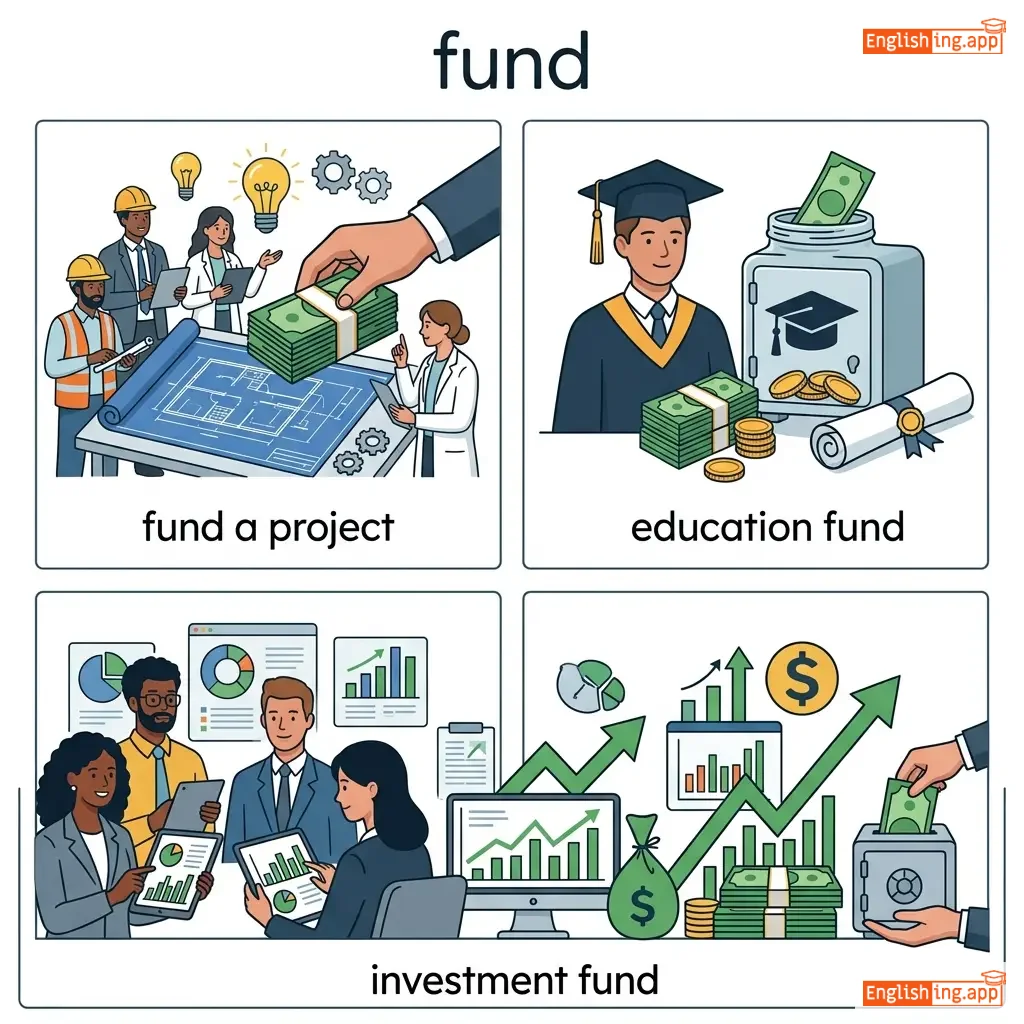
/fʌnd/
noun/verb
(ファンド)
••••••
|

|
基金
kikin
••••••
|
funded
ファンデッド
••••••
|
funded
ファンデッド
••••••
|
funds
ファンズ
••••••
|
funding
ファンディング
••••••
|
a sum of money saved or made available for a particular purpose; to provide money for
••••••
|
The government created a fund for education.
政府は教育のためのファンドを作成しました。
••••••
|
政府は教育のための基金を作成しました。
Seifu wa kyōiku no tame no kikin o sakusei shimashita.
••••••
|
mutual fund
投資信託
••••••
|
a professionally managed investment fund
••••••
|
投資信託
tōshi shintaku
••••••
|
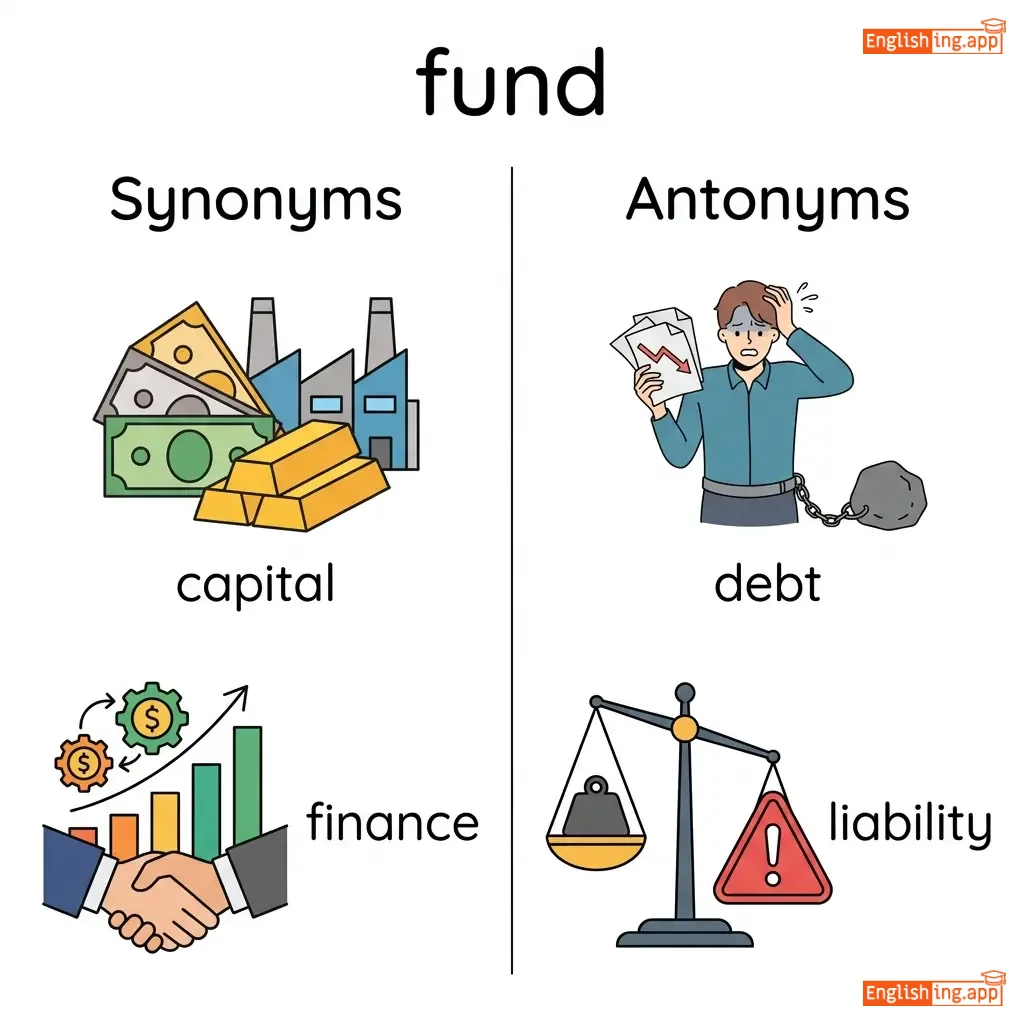
capital, finance, money, resource, investment
••••••
|
debt, liability
••••••
|
fund a project, education fund, investment fund, fund allocation
••••••
|
基金は基金を意味します — 基金 = 'ファンド配達', 楽しむためにお金が必要です。
••••••
|
|
📖
••••••
|
/ˌfʌndəˈmɛntl/
adjective
••••••
|
- •••••• | - •••••• | - •••••• | - •••••• | - •••••• | - •••••• |
forming a necessary base or core; of central importance
••••••
|
Honesty is a fundamental principle of good leadership. |
- •••••• |
fundamental truth |
a basic and undeniable fact
••••••
|
- •••••• |
basic, essential, primary, foundational, vital
••••••
|
trivial, secondary
••••••
|
fundamental principle, fundamental right, fundamental importance, fundamental truth
••••••
|
No •••••• |
|
🔑
••••••
|
/ˌfʌndəˈmɛntəli/
adverb
(ファンダメンタリー)
••••••
|
- •••••• |
基本的に
kihonteki ni
••••••
|
- •••••• | - •••••• | - •••••• | - •••••• |
in a basic and important way; at the core
••••••
|
The two theories are fundamentally different.
この二つの理論は基本的に異なります。
••••••
|
この二つの理論は基本的に異なります。
Kono futatsu no riron wa kihonteki ni kotonari masu.
••••••
|
- •••••• | - •••••• | - •••••• |
basically, essentially, primarily, principally
••••••
|
superficially, peripherally
••••••
|
fundamentally different, fundamentally important
••••••
|
Fundamentally = 基本的に = すべての基礎として!
••••••
|
|
🏦
••••••
|
/ˈfʌndɪŋ/
noun
(fanding)
••••••
|
- •••••• |
資金調達
shikin chōtatsu
••••••
|
- •••••• | - •••••• | - •••••• | - •••••• |
financial support for a project or organization
••••••
|
The startup is seeking funding from investors. |
スタートアップは投資家から資金調達を試みています。
Sutātopu wa tōshika kara shikin chōtatsu o kokoromotteimasu.
••••••
|
government funding |
financial support provided by the government
••••••
|
政府の資金調達
seifu no shikin chōtatsu
••••••
|
financing, capital, investment, sponsorship, backing
••••••
|
withdrawal, loss
••••••
|
seek funding, government funding, secure funding, lack of funding
••••••
|
Funding は資金調達 — スタートアップは 'Fun ding' と言い、つまりお金が必要だということです。
••••••
|
|
💰
••••••
|
/ˈfʌndˌreɪzɪŋ/
noun
(ファンドレイジング)
••••••
|
- •••••• |
資金調達
shikin choutatsu
••••••
|
- •••••• | - •••••• | - •••••• | - •••••• |
the process of collecting money for a cause or project
••••••
|
The organization is organizing a fundraising event. |
その組織は資金調達イベントを開催しています。
Sono soshiki wa shikin choutatsu ibento o kaisai shiteimasu.
••••••
|
- •••••• | - •••••• | - •••••• |
charity event, donation drive, campaign, benefit
••••••
|
spending, wasting
••••••
|
fundraising campaign, fundraising event, fundraising dinner
••••••
|
資金 (fund) 調達 (raise), fundraising!
••••••
|
|
⚰️
••••••
|
/ˈfjuːnərəl/
noun
(fyūnɛrəl)
••••••
|
- •••••• |
葬式
sōshiki
••••••
|
- •••••• | - •••••• | - •••••• | - •••••• |
a ceremony held to honor and bury or cremate someone who has died
••••••
|
The family attended the funeral of their grandfather. |
家族は祖父の葬式に出席しました。
Kazoku wa sofu no sōshiki ni shusseki shimashita.
••••••
|
funeral service |
the ceremony connected with a funeral
••••••
|
葬式のサービス
sōshiki no sābisu
••••••
|
memorial, burial, cremation, obsequies
••••••
|
celebration, festival
••••••
|
funeral ceremony, funeral service, attend a funeral, funeral procession
••••••
|
葬式は最後の儀式、それが命の終わりを意味します。
••••••
|
|
😂
••••••
|
/ˈfʌni/
adjective
(ファニー)
••••••
|
- •••••• |
面白い
omoshiroi
••••••
|
- •••••• | - •••••• | - •••••• | - •••••• |
Causing laughter or amusement; humorous.
••••••
|
The comedian told a very funny joke.
コメディアンは非常に面白いジョークを言いました。
••••••
|
コメディアンは非常に面白いジョークを言いました。
Komedian wa hijou ni omoshiroi jooku o iimashita.
••••••
|
funny bone
面白い骨
••••••
|
the part of the elbow that causes a tingling feeling when hit
••••••
|
面白い骨
omoshiroi hone
••••••
|
humorous, amusing, comic, hilarious, entertaining
••••••
|
serious, sad, boring
••••••
|
funny story, funny joke, very funny, funny moment
••••••
|
Funnyは面白いという意味です。面白いものを見ると、笑いを止められません。
••••••
|

