|
表情符号
|
单词 | Images | 翻译 | 过去时 | 过去分词 | 第三人称单数 | 动名词 | 含义 | 例句 | 例句翻译 | 示例表达 | 示例表达含义 | 示例表达翻译 | 同义词 | 反义词 | 搭配词 | 助记符 |
|---|---|---|---|---|---|---|---|---|---|---|---|---|---|---|---|---|---|
|
🖼️
••••••
|
/freɪm/
noun/verb
••••••
|

|
- •••••• |
framed
••••••
|
framed
••••••
|
frames
••••••
|
framing
••••••
|
A rigid structure that surrounds or encloses something; to construct or formulate.
••••••
|
They hung the painting in a golden frame. |
- •••••• |
frame of mind |
a person's mood or mental state
••••••
|
- •••••• |
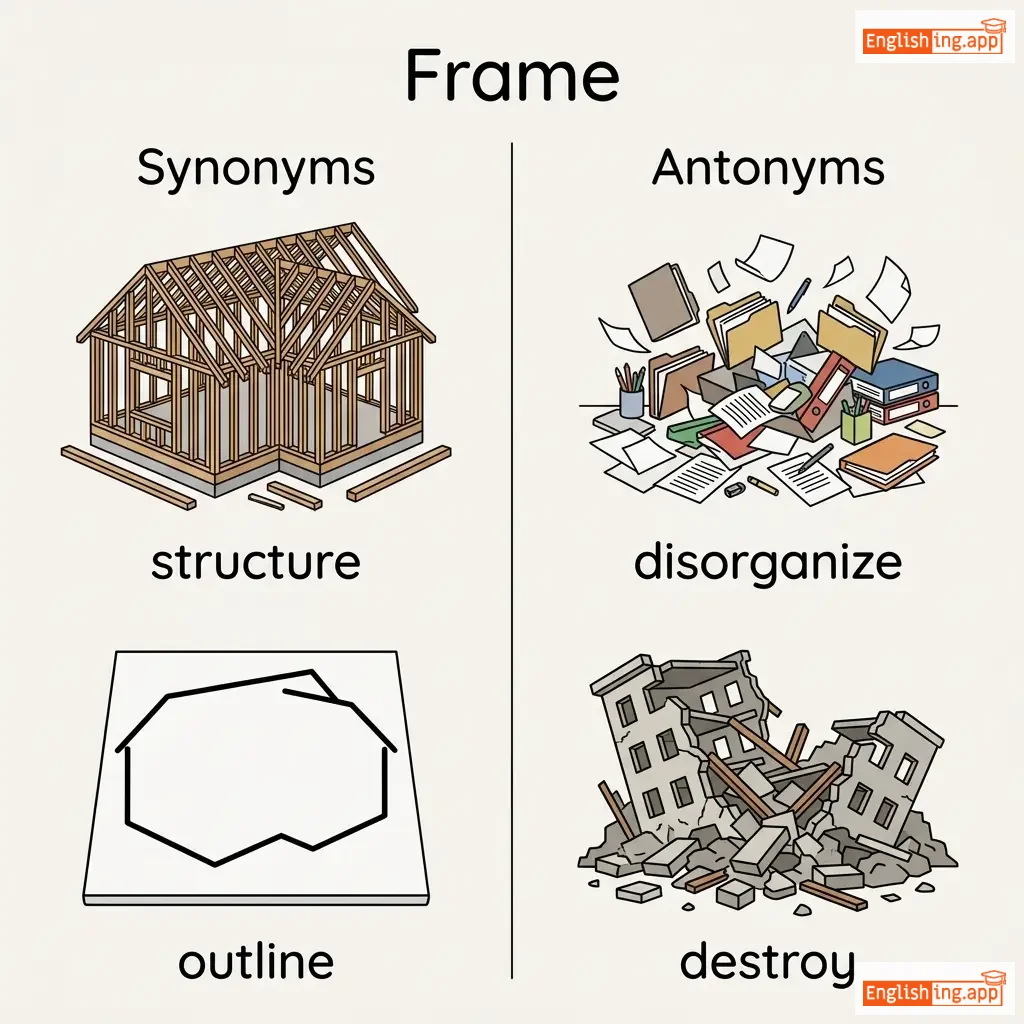
structure, outline, border, skeleton, formulate
••••••
|
disorganize, destroy
••••••
|
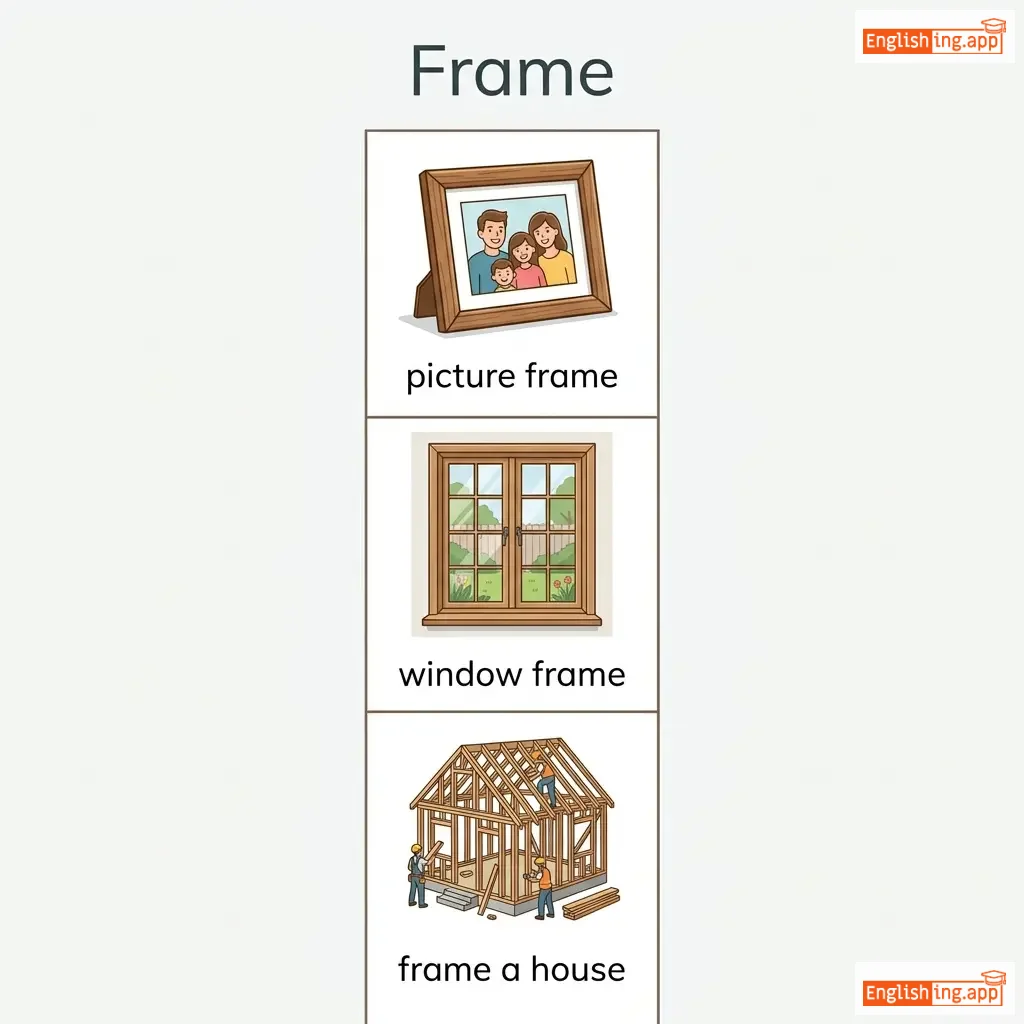
picture frame, window frame, frame a house, frame of reference
••••••
|
No •••••• |
|
🏗️
••••••
|
/ˈfreɪmˌwɜːrk/
noun
(frɛɪmwɜrk)
••••••
|

|
框架
kuàngjià
••••••
|
- •••••• | - •••••• | - •••••• | - •••••• |
A basic structure underlying a system, concept, or text.
••••••
|
The new policy provides a framework for decision-making.
新政策为决策提供了框架。
••••••
|
新政策为决策提供了框架。
Xīn zhèngcè wèi juécè tígōngle kuàngjià.
••••••
|
- •••••• | - •••••• | - •••••• |
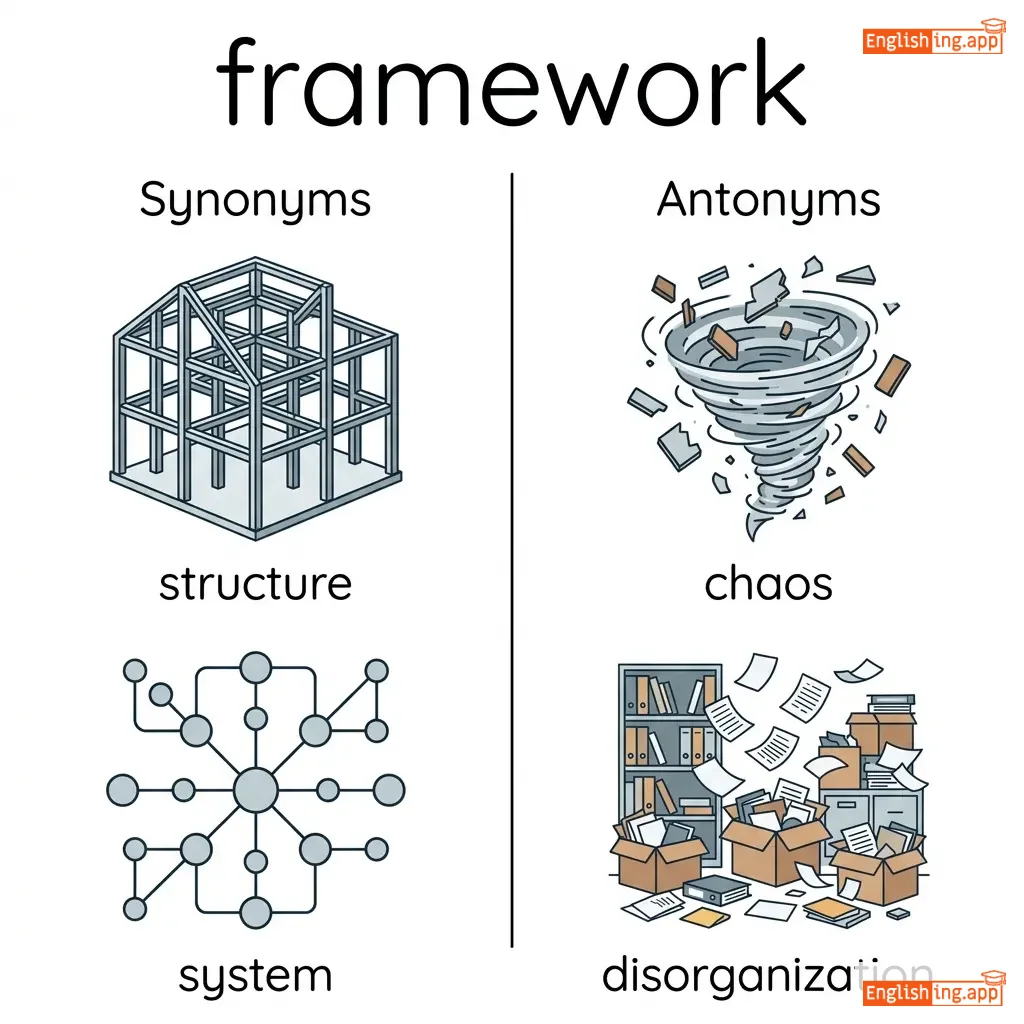
structure, system, skeleton, outline, basis
••••••
|
chaos, disorganization
••••••
|
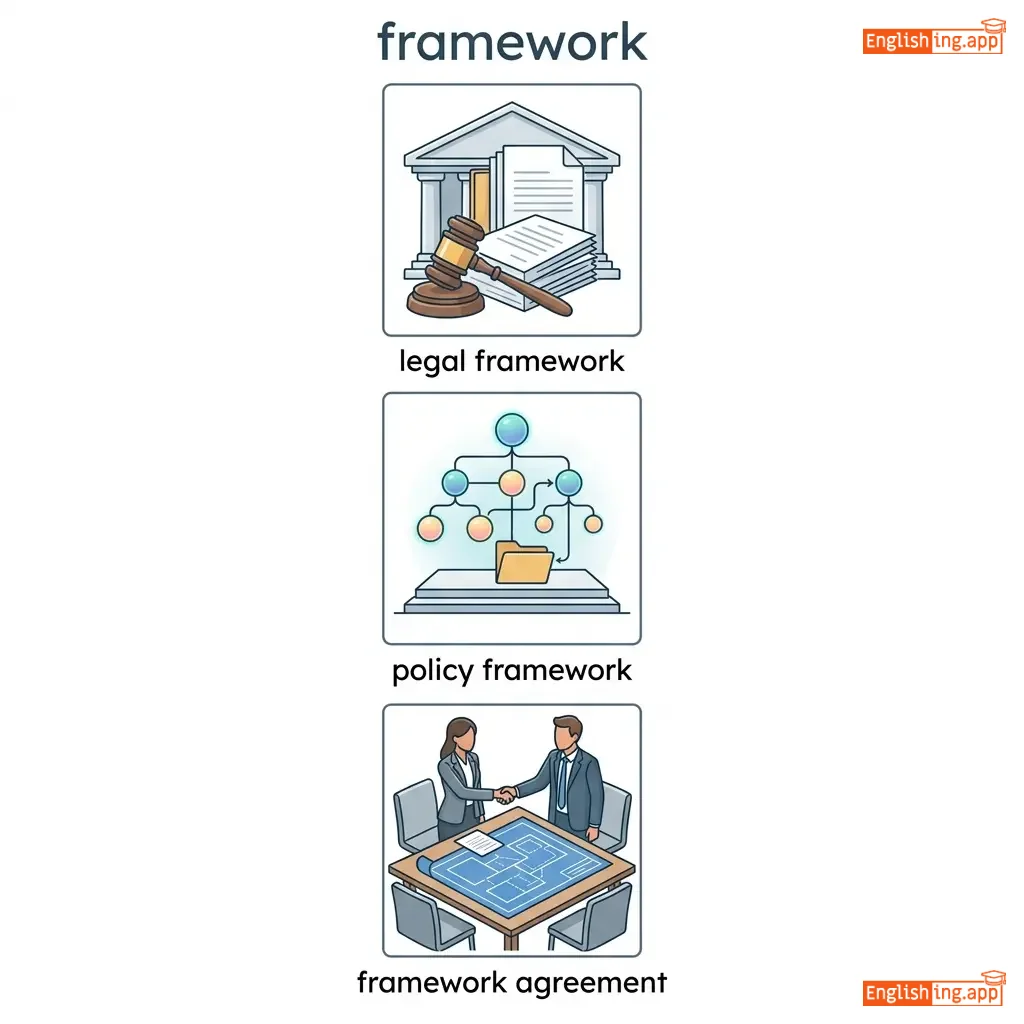
legal framework, policy framework, framework agreement, conceptual framework
••••••
|
Framework 意味着框架,就像建筑的框架一样。
••••••
|
|
🏢
••••••
|
/ˈfrænʧaɪz/
noun, verb
(fú lán chāi zī)
••••••
|
- •••••• |
特许经营
tè xǔ jīng yíng
••••••
|
franchised
fú lán chāi zī dé
••••••
|
franchised
fú lán chāi zī dé
••••••
|
franchises
fú lán chāi zī sī
••••••
|
franchising
fú lán chāi zī ing
••••••
|
A legal right to sell or distribute goods or services in a specific area; to grant such a right.
••••••
|
He opened a new fast-food franchise in the city.
他在城市里开设了一家新的快餐特许经营店。
••••••
|
他在城市里开设了一家新的快餐特许经营店。
Tā zài chéngshì lǐ kāishè le yījiā xīn de kuàicān tèxǔ jīngyíng diàn.
••••••
|
buy a franchise
购买特许经营
••••••
|
To purchase the right to operate a business under a company's brand.
••••••
|
购买特许经营
gòumǎi tèxǔ jīngyíng
••••••
|
license, authorization, dealership, permit
••••••
|
restriction, prohibition
••••••
|
franchise agreement, franchise owner, franchise business, buy a franchise
••••••
|
特许经营 - 免费选择 - 作为公司品牌下运营的机会。
••••••
|
|
🗣️
••••••
|
/ˈfræŋkli/
adverb
(fúlánkèli)
••••••
|
- •••••• |
坦率地
tǎnshuài de
••••••
|
- •••••• | - •••••• | - •••••• | - •••••• |
in an honest and direct way
••••••
|
Frankly, I don’t think this plan will work. |
坦率地说,我不认为这个计划会成功。
Tǎnshuài de shuō, wǒ bù rènwéi zhège jìhuà huì chénggōng.
••••••
|
to be frank |
to speak honestly
••••••
|
直言不讳
zhíyán bù huì
••••••
|
honestly, openly, directly, sincerely
••••••
|
dishonestly, secretly
••••••
|
frankly speaking, quite frankly, to speak frankly
••••••
|
坦率地讲就是毫不掩饰地表达自己,像对朋友一样!
••••••
|
|
🕵️
••••••
|
/frɔːd/
noun
(弗劳德)
••••••
|
- •••••• |
欺诈
qīzhà
••••••
|
- •••••• | - •••••• | - •••••• | - •••••• |
A wrongful or criminal deception intended to result in financial or personal gain.
••••••
|
The company collapsed due to massive accounting fraud.
公司因大规模的会计欺诈而倒闭。
••••••
|
公司因大规模的会计欺诈而倒闭。
Gōngsī yīn dà kuòsù de huìjì qīzhà ér dǎobì.
••••••
|
identity fraud
身份欺诈
••••••
|
The use of another person's personal information without permission for fraudulent purposes.
••••••
|
身份欺诈
shēnfèn qīzhà
••••••
|
deception, scam, trickery, dishonesty, swindle
••••••
|
honesty, truth
••••••
|
commit fraud, insurance fraud, fraud case, fraud detection
••••••
|
Fraud 意味着欺诈,欺诈会让你失去朋友。
••••••
|
|
🕊️
••••••
|
/friː/
adjective/verb/adverb
(fú lì)
••••••
|
- •••••• |
自由
zì yóu
••••••
|
freed
fú lǐ dé
••••••
|
freed
fú lǐ dé
••••••
|
frees
fú lǐ
••••••
|
freeing
fú lìng
••••••
|
Not under the control or in the power of another; able to act or be done as one wishes.
••••••
|
The children are free to play outside.
孩子们可以自由地在外面玩。
••••••
|
孩子们可以自由地在外面玩。
Háizimen kěyǐ zìyóu de zài wàimiàn wán.
••••••
|
set free
释放
••••••
|
to release from captivity or constraints
••••••
|
释放
shìfàng
••••••
|
unrestricted, independent, open, liberated, gratis
••••••
|
restricted, bound, captive
••••••
|
free time, free speech, free market, free trial
••••••
|
自由就像free,记住 '孩子们自由玩耍'。
••••••
|
|
⏰
••••••
|
/ˈfriː taɪm/
noun
(弗里 泰姆)
••••••
|
- •••••• |
空闲时间
kongxian shijian
••••••
|
- •••••• | - •••••• | - •••••• | - •••••• |
time when a person is not working or occupied and can do activities they enjoy
••••••
|
She likes to read books in her free time.
她 喜欢 在 弗里 泰姆 读 书。
••••••
|
她喜欢在空闲时间读书。
ta xihuan zai kongxian shijian dushu
••••••
|
in one's free time
因 万 弗里 泰姆
••••••
|
during the time when someone is not busy with work or duties
••••••
|
在空闲时间
zai kongxian shijian
••••••
|
leisure, spare time, downtime, recreation time
••••••
|
work time, busy time
••••••
|
free time activities, spend free time, enjoy free time, little free time
••••••
|
Free 的时间 = 空闲时间
••••••
|
|
🕊️
••••••
|
/ˈfriːdəm/
noun
(自由)
••••••
|


|
自由
zìyóu
••••••
|
- •••••• | - •••••• | - •••••• | - •••••• |
The state of being free; the power or right to act, speak, or think without hindrance or restraint.
••••••
|
Freedom of speech is a fundamental right in many countries. |
言论自由是许多国家的基本权利。
yánlùn zìyóu shì xǔduō guójiā de jīběn quánlì.
••••••
|
freedom of choice |
the right to make one’s own decisions without outside control
••••••
|
选择自由
xuǎnzé zìyóu
••••••
|
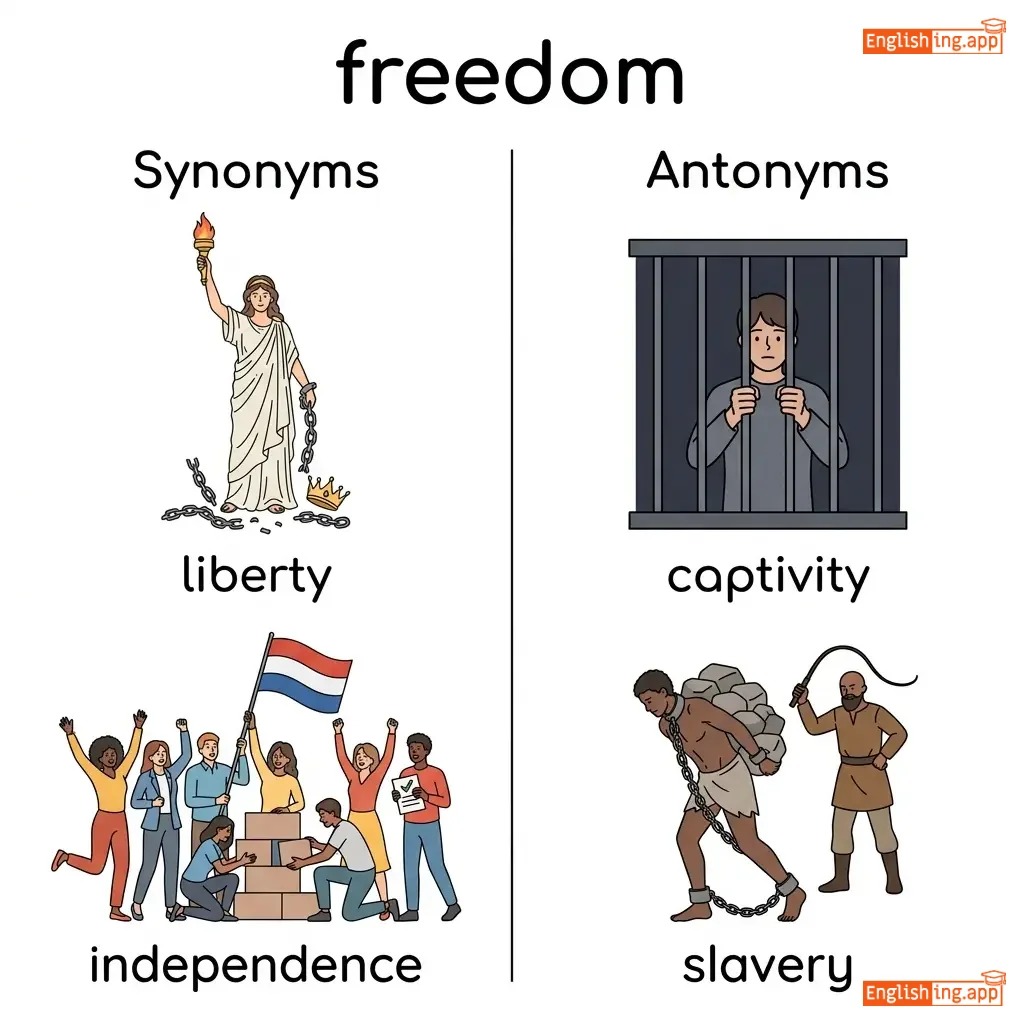
liberty, independence, autonomy, emancipation, self-determination
••••••
|
captivity, slavery, restriction
••••••
|
freedom of speech, freedom of movement, personal freedom, political freedom
••••••
|
Freedom = 没有束缚的生活,自由自在 (zìyóu)
••••••
|
|
🕊️
••••••
|
/ˈfriːdəm ˌfaɪtər/
noun
(弗里达姆 法伊特)
••••••
|
- •••••• |
自由斗士
ziyou doushi
••••••
|
- •••••• | - •••••• | - •••••• | - •••••• |
a person who takes part in an armed or political struggle to achieve freedom or independence for their people or country
••••••
|
The freedom fighter dedicated his life to the liberation of his homeland.
这个弗里达姆法伊特把一生献给了祖国的解放。
••••••
|
这位自由斗士把一生献给了祖国的解放。
Zhe wei ziyou doushi ba yisheng xiangei le zuguo de jiefang
••••••
|
- •••••• | - •••••• | - •••••• |
liberator, revolutionary, insurgent, resistance fighter, patriot
••••••
|
oppressor, colonizer, tyrant
••••••
|
brave freedom fighter, freedom fighter movement, fallen freedom fighter, freedom fighter leader
••••••
|
Freedom 是 自由, fighter 是 斗士
••••••
|
|
🕊️
••••••
|
/ˈfriːli/
adverb
(fúrlì)
••••••
|
- •••••• |
自由地
zìyóu de
••••••
|
- •••••• | - •••••• | - •••••• | - •••••• |
without restriction or control; willingly
••••••
|
Information should flow freely in a democratic society. |
信息应该在民主社会中自由流动。
Xìnxī yīnggāi zài mínzhǔ shèhuì zhōng zìyóu liúdòng.
••••••
|
speak freely |
to express opinions openly
••••••
|
自由地说
zìyóu de shuō
••••••
|
openly, willingly, easily, voluntarily
••••••
|
reluctantly, restrictively
••••••
|
move freely, give freely, flow freely, speak freely
••••••
|
自由意味着没有限制,freely 意味着自由地!
••••••
|
|
❄️
••••••
|
/friːz/
verb
(弗里兹)
••••••
|
- •••••• |
冻结
dongjie
••••••
|
froze
冻结
••••••
|
frozen
冰冻
••••••
|
freezes
冻结
••••••
|
freezing
冻结中
••••••
|
To turn into ice or cause to become hard due to extreme cold.
••••••
|
The water in the lake will freeze during winter.
湖里的水在冬天会冻结。
••••••
|
湖里的水在冬天会冻结。
Hu li de shui zai dongtian hui dongjie.
••••••
|
freeze up
冻结
••••••
|
to stop functioning or become immobile
••••••
|
停止工作
tingzhi gongzuo
••••••
|
ice, chill, harden, solidify, stiffen
••••••
|
melt, thaw, heat
••••••
|
freeze water, freeze assets, freeze to death, freeze up
••••••
|
Freeze 意味着冻结,就像水变成冰一样!
••••••
|
|
📡
••••••
|
/ˈfriː.kwən.si/
noun
(fú lí kè wén xī)
••••••
|
- •••••• |
频率
pinlü
••••••
|
- •••••• | - •••••• | - •••••• | - •••••• |
The rate at which something occurs or is repeated over a period of time
••••••
|
The frequency of bus services has been increased during rush hours. |
在高峰时段,公交车的频率已经增加。
Zài gāofēng shíduàn, gōngjiāo chē de pínlǜ yǐjīng zēngjiā.
••••••
|
with increasing frequency |
happening more often
••••••
|
以增加的频率
yǐ zēngjiā de pínlǜ
••••••
|
rate, occurrence, repetition, regularity, incidence
••••••
|
rarity, infrequency
••••••
|
high frequency, radio frequency, frequency of occurrence, frequency distribution
••••••
|
频率意味着某事物发生的频率,就像电台每小时播同一首歌。
••••••
|
|
🔄
••••••
|
/ˈfriː.kwənt/ (adj.), /friːˈkwent/ (verb)
adjective, verb
(fù kuān tè)
••••••
|
- •••••• |
频繁
pín fán
••••••
|
frequented
fù kuān tè dé
••••••
|
frequented
fù kuān tè dé
••••••
|
frequents
fù kuān tè sī
••••••
|
frequenting
fù kuān tè zhōng
••••••
|
Adjective: happening often; Verb: to visit a place regularly
••••••
|
He is a frequent visitor to the library.
他是图书馆的常客。
••••••
|
他是图书馆的常客。
Tā shì túshūguǎn de chángkè.
••••••
|
frequent flyer
常旅客
••••••
|
a person who travels often by plane
••••••
|
常旅客
cháng lǚ kè
••••••
|
regular, repeated, habitual, constant, usual
••••••
|
rare, occasional, infrequent
••••••
|
frequent visits, frequent traveler, frequent customer, frequent contact
••••••
|
Frequent 意味着频繁,比如一个朋友经常打电话。
••••••
|
|
🔄
••••••
|
/ˈfriːkwəntli/
adverb
(频繁)
••••••
|
- •••••• |
频繁; 定期; 多次
pínfán, dìngqī, duōcì
••••••
|
- •••••• | - •••••• | - •••••• | - •••••• |
often; regularly; many times
••••••
|
She frequently visits her grandmother on weekends. |
她在周末经常探望她的祖母。
Tā zài zhōumò jīngcháng tànwàng tā de zǔmǔ.
••••••
|
- •••••• | - •••••• | - •••••• |
often, regularly, repeatedly, commonly, habitually
••••••
|
rarely, seldom, infrequently, occasionally, never
••••••
|
frequently asked questions, frequently used, frequently visited
••••••
|
频繁的动作就是常常做,像是定期做事。
••••••
|
|
🌱
••••••
|
/frɛʃ/
adjective
(新鲜)
••••••
|
- •••••• |
新鲜
xinxian
••••••
|
- •••••• | - •••••• | - •••••• | - •••••• |
new, recently made, or clean and pure
••••••
|
The bread is still fresh from the oven.
面包还是刚从烤箱出来。
••••••
|
面包还是刚从烤箱出来。
Miànbāo háishì gāng cóng kǎoxiāng chūlái.
••••••
|
fresh start
重新开始
••••••
|
a new beginning
••••••
|
重新开始
Chóngxīn kāishǐ
••••••
|
new, recent, clean, pure, original
••••••
|
stale, old, rotten
••••••
|
fresh air, fresh start, fresh bread, fresh idea
••••••
|
新鲜面包出炉的味道!
••••••
|
|
📅
••••••
|
/ˈfraɪ.deɪ/
noun
(弗莱迪)
••••••
|
- •••••• |
星期五
xingqi wu
••••••
|
- •••••• | - •••••• | - •••••• | - •••••• |
the day of the week following Thursday and preceding Saturday
••••••
|
We have a team meeting every Friday afternoon.
我们每个弗莱迪下午有一个团队会议。
••••••
|
我们每个星期五下午都有团队会议。
women mei ge xingqi wu xiawu dou you tuandui huiyi
••••••
|
Black Friday
黑色弗莱迪
••••••
|
the day after Thanksgiving in the US, known for major retail discounts
••••••
|
黑色星期五
heise xingqi wu
••••••
|
weekday, workday, end of week
••••••
|
Monday, Sunday
••••••
|
Friday evening, Friday night, last Friday, next Friday
••••••
|
星期五 wu,工作结束,玩乐开始
••••••
|
|
🧊
••••••
|
/frɪdʒ/
noun
(弗里奇)
••••••
|
- •••••• |
冰箱
bingxiang
••••••
|
- •••••• | - •••••• | - •••••• | - •••••• |
a household appliance used to keep food and drinks cold to preserve freshness
••••••
|
I put the milk back in the fridge after breakfast.
早餐后我把牛奶放进了冰箱。
••••••
|
早餐后我把牛奶放进了冰箱。
zaocan hou wo ba niunai fang jin le bingxiang
••••••
|
- •••••• | - •••••• | - •••••• |
refrigerator, icebox, cooler, chiller
••••••
|
heater, oven
••••••
|
open the fridge, put in the fridge, fridge door, fridge magnet
••••••
|
冰 means ice—冰箱 is fridge
••••••
|
|
👫
••••••
|
/frɛnd/
noun
(fú rén)
••••••
|
- •••••• |
朋友
péng yǒu
••••••
|
- •••••• | - •••••• | - •••••• | - •••••• |
a person with whom one has a bond of mutual affection
••••••
|
He is my best friend. |
他是我最好的朋友。
Tā shì wǒ zuì hǎo de péng yǒu.
••••••
|
fair-weather friend |
someone who is only a friend in good times
••••••
|
顺风朋友
shùn fēng péng yǒu
••••••
|
companion, pal, mate, buddy, ally
••••••
|
enemy, foe, rival
••••••
|
best friend, close friend, true friend, make friends
••••••
|
Friend 意味着朋友 – 朋友永远在你身边。
••••••
|
|
😊
••••••
|
/ˈfrɛndli/
adjective
(happiness)
••••••
|
- •••••• |
幸福
xingfu
••••••
|
- •••••• | - •••••• | - •••••• | - •••••• |
Kind and pleasant; showing goodwill and affection.
••••••
|
The shop owner is very friendly to new customers. |
她收到奖项时无法掩饰自己的幸福。
Ta shoudao jiangxiang shi wu fa yanshi ziji de xingfu.
••••••
|
friendly fire |
weapon fire coming from one's own side by mistake
••••••
|
追求幸福
Zhuiqiu xingfu
••••••
|
kind, warm, amiable, welcoming, sociable
••••••
|
hostile, unfriendly, cold
••••••
|
friendly smile, friendly attitude, friendly relationship, friendly environment
••••••
|
幸福 (xingfu) = 快乐 (happiness) = 每个人都在寻找幸福。
••••••
|
|
🤗
••••••
|
/ˈfrɛndʃɪp/
noun
(fùrénshìp)
••••••
|
- •••••• |
友谊
yǒuyì
••••••
|
- •••••• | - •••••• | - •••••• | - •••••• |
A close and trusting relationship between two or more people.
••••••
|
Their friendship has lasted since childhood. |
他们的友谊从小就开始了。
Tāmen de yǒuyì cóng xiǎo jiù kāishǐ le.
••••••
|
true friendship |
A genuine and deep bond between friends.
••••••
|
真挚的友谊
zhēnzhì de yǒuyì
••••••
|
companionship, fellowship, camaraderie, closeness, bond
••••••
|
enmity, hostility, animosity
••••••
|
strong friendship, close friendship, lasting friendship, build friendship
••••••
|
友谊就像是一艘船,大家一起航行。
••••••
|
|
😱
••••••
|
/fraɪt/
noun
(frait)
••••••
|
- •••••• |
恐惧; 惊恐; 吓
kongju, jingkong, xia
••••••
|
- •••••• | - •••••• | - •••••• | - •••••• |
a sudden intense feeling of fear; a shock or surprise that causes fear
••••••
|
The loud thunder gave her such a fright that she dropped her coffee cup. |
那声雷鸣让她吓得掉了咖啡杯。
Na sheng leiming rang ta xiade diao le kafei bei.
••••••
|
- •••••• | - •••••• | - •••••• |
fear, terror, alarm, panic
••••••
|
calmness, courage, composure, bravery
••••••
|
get a fright, terrible fright, sudden fright
••••••
|
恐惧 (kongju) 和惊恐 (jingkong) 结合
••••••
|
|
😱
••••••
|
/ˈfraɪtən/
verb
(弗赖顿)
••••••
|
- •••••• |
吓唬
xiahu
••••••
|
frightened
弗赖顿德
••••••
|
frightened
弗赖顿德
••••••
|
frightens
弗赖顿兹
••••••
|
frightening
弗赖顿宁
••••••
|
to cause fear or alarm in someone
••••••
|
The loud noise frightened the child.
泽 劳德 诺伊兹 弗赖顿德 泽 柴尔德
••••••
|
巨大的噪音吓到了孩子。
judade zaoyin xia dao le haizi
••••••
|
frighten the life out of someone
弗赖顿 泽 莱夫 奥特 阿夫 萨姆万
••••••
|
to scare someone very badly
••••••
|
把某人吓得要命
ba mouren xia de yaoming
••••••
|
scare, terrify, alarm, startle, intimidate
••••••
|
calm, reassure, comfort
••••••
|
frighten someone badly, frighten easily, frighten away, frighten children
••••••
|
frighten = 吓唬,看到就怕
••••••
|
|
😨
••••••
|
/ˈfraɪtənd/
adjective
(弗赖滕德)
••••••
|
- •••••• |
害怕的
haipa de
••••••
|
- •••••• | - •••••• | - •••••• | - •••••• |
feeling fear or anxiety; scared
••••••
|
The child was frightened by the loud noise.
泽 柴尔德 沃兹 弗赖滕德 拜 泽 劳德 诺伊兹
••••••
|
孩子被巨大的噪音吓到了。
haizi bei judade zaoyin xia dao le
••••••
|
frightened to death
弗赖滕德 图 德斯
••••••
|
extremely scared
••••••
|
吓得要命
xia de yaoming
••••••
|
scared, afraid, terrified, alarmed, fearful
••••••
|
calm, brave, fearless
••••••
|
deeply frightened, visibly frightened, frightened child, frightened face
••••••
|
frightened 听起来像 fright → 害怕
••••••
|
|
🐸
••••••
|
/frɒɡ/
noun
(弗罗格)
••••••
|
- •••••• |
青蛙
qīngwā
••••••
|
- •••••• | - •••••• | - •••••• | - •••••• |
a small amphibian animal that lives both in water and on land
••••••
|
The frog jumped from the lily pad into the pond.
青蛙从睡莲叶上跳进池塘。
••••••
|
青蛙从睡莲叶上跳进池塘。
qīngwā cóng shuìlián yè shàng tiàojìn chítáng.
••••••
|
- •••••• | - •••••• | - •••••• |
amphibian, toad
••••••
|
- •••••• |
tree frog, pond frog, frog legs
••••••
|
青蛙从睡莲叶跳进池塘。
••••••
|
|
➡️
••••••
|
/frəm/ or /frʌm/
preposition
(from)
••••••
|
- •••••• |
从
cong
••••••
|
- •••••• | - •••••• | - •••••• | - •••••• |
Used to indicate the starting point of a journey, action, or source.
••••••
|
She came from Dhaka to visit her family. |
她从达卡来探望她的家人。
Tā cóng Dákǎ lái tànwàng tā de jiārén.
••••••
|
far from |
Very different from or not at all like.
••••••
|
远离
yuǎn lí
••••••
|
out of, away from, off, since, starting at
••••••
|
to, towards
••••••
|
from start, from scratch, from now, far from
••••••
|
FROM意思是'从'—比如从达卡(cong Dákǎ)开始旅程。
••••••
|
|
🚪
••••••
|
/frʌnt/
noun
(front)
••••••
|
- •••••• |
前面
qianmian
••••••
|
- •••••• | - •••••• | - •••••• | - •••••• |
the forward-facing part of something
••••••
|
The house has a garden in front. |
房子前面有一个花园。
Fángzi qiánmiàn yǒu yīgè huāyuán.
••••••
|
put on a brave front |
to appear confident while hiding true feelings
••••••
|
摆出勇敢的面容
bǎichū yǒnggǎn de miànróng
••••••
|
fore, facade, frontage, forefront, entrance
••••••
|
back, rear
••••••
|
front door, front line, front page, in front of
••••••
|
Front door 是指前门 – front = 前面.
••••••
|
|
🍎
••••••
|
/fruːt/
noun
(frut)
••••••
|
- •••••• |
水果
shuǐguǒ
••••••
|
- •••••• | - •••••• | - •••••• | - •••••• |
The sweet and fleshy product of a plant that contains seeds.
••••••
|
Mango is my favorite fruit.
芒果是我最喜欢的水果。
••••••
|
芒果是我最喜欢的水果。
Mángguǒ shì wǒ zuì xǐhuān de shuǐguǒ.
••••••
|
bear fruit
结出果实
••••••
|
To produce good results or be successful.
••••••
|
结出果实
Jié chū guǒshí
••••••
|
produce, crop, harvest, berry, yield
••••••
|
vegetable, grain
••••••
|
fresh fruit, ripe fruit, tropical fruit, eat fruit
••••••
|
水果很甜,可以记住因为它美味。
••••••
|
|
🍎
••••••
|
/ˈfruːtfəl/
adjective
(fúruìtúfūl)
••••••
|
- •••••• |
富有成效的
fùyǒu chéngxiào de
••••••
|
- •••••• | - •••••• | - •••••• | - •••••• |
Producing good results or being productive.
••••••
|
Their meeting was fruitful and led to many new ideas. |
他们的会议富有成效,带来了许多新想法。
Tāmen de huìyì fùyǒu chéngxiào, dàilái le xǔduō xīn xiǎngfǎ.
••••••
|
fruitful discussion |
A conversation that generates useful results or progress.
••••••
|
富有成效的讨论
fùyǒu chéngxiào de tǎolùn
••••••
|
productive, beneficial, rewarding, fertile, successful
••••••
|
barren, unproductive, useless
••••••
|
fruitful discussion, fruitful outcome, fruitful results, fruitful collaboration
••••••
|
Fruitful 就像丰收的果实,带来美好的成果。
••••••
|
|
😤
••••••
|
/ˈfrʌstreɪt/
verb
••••••
|
- •••••• | - •••••• |
frustrated
••••••
|
frustrated
••••••
|
frustrates
••••••
|
frustrating
••••••
|
To prevent someone from accomplishing something; to cause feelings of annoyance or disappointment.
••••••
|
The constant delays frustrated the team. |
- •••••• |
frustrate the purpose |
To hinder the intended result.
••••••
|
- •••••• |
annoy, thwart, hinder, disappoint, obstruct
••••••
|
encourage, assist, satisfy
••••••
|
frustrate the efforts, feel frustrated, frustrating situation, frustrate attempts
••••••
|
No •••••• |
|
😤
••••••
|
/ˈfrʌstreɪtɪd/
adjective
(弗鲁斯特雷特德)
••••••
|
- •••••• |
沮丧
jǔsàng
••••••
|
- •••••• | - •••••• | - •••••• | - •••••• |
feeling annoyed or upset because of inability to achieve something
••••••
|
She felt frustrated after failing the exam. |
她在考试失败后感到沮丧。
Tā zài kǎoshì shībài hòu gǎndào jǔsàng.
••••••
|
- •••••• | - •••••• | - •••••• |
annoyed, upset, discouraged, disappointed
••••••
|
calm, content, pleased
••••••
|
feel frustrated, get frustrated, frustrated with
••••••
|
沮丧就像是冻结在冰冷的状态中,无法前进。
••••••
|
|
😩
••••••
|
/ˈfrʌstreɪtɪŋ/
adjective
(frustrating)
••••••
|
- •••••• |
令人沮丧
lìng rén jǔsàng
••••••
|
- •••••• | - •••••• | - •••••• | - •••••• |
causing annoyance or dissatisfaction
••••••
|
The slow internet connection was really frustrating. |
缓慢的互联网连接真的令人沮丧。
Huǎnmàn de hùliánwǎng liánjiē zhēn de lìng rén jǔsàng.
••••••
|
- •••••• | - •••••• | - •••••• |
annoying, exasperating, irritating
••••••
|
pleasing, satisfying, enjoyable
••••••
|
frustrating experience, frustrating situation, frustrating delay
••••••
|
Frustrating situations feel like 'frozen traffic' – you just can't move ahead.
••••••
|
|
😣
••••••
|
/frʌˈstreɪʃən/
noun
(fu-ruu-strei-shen)
••••••
|
- •••••• |
挫折
cuòzhé
••••••
|
- •••••• | - •••••• | - •••••• | - •••••• |
The feeling of being upset or annoyed due to inability to achieve something.
••••••
|
He felt deep frustration when his plans failed. |
当他的计划失败时,他感到深深的挫折。
Dāng tā de jìhuà shībài shí, tā gǎndào shēnshēn de cuòzhé.
••••••
|
vent frustration |
To express anger or annoyance openly.
••••••
|
表达挫折
biǎodá cuòzhé
••••••
|
annoyance, irritation, disappointment, exasperation, discontent
••••••
|
satisfaction, contentment, delight
••••••
|
cause frustration, deep frustration, express frustration, frustration level
••••••
|
挫折(cuòzhé)表示无法成功的无奈感,就像英文中的frustration一样。
••••••
|
|
🍳
••••••
|
/fraɪ/
verb
(fry)
••••••
|
|
油炸
you zha
••••••
|
fried
chao
••••••
|
fried
chao
••••••
|
fries
chao
••••••
|
frying
chao
••••••
|
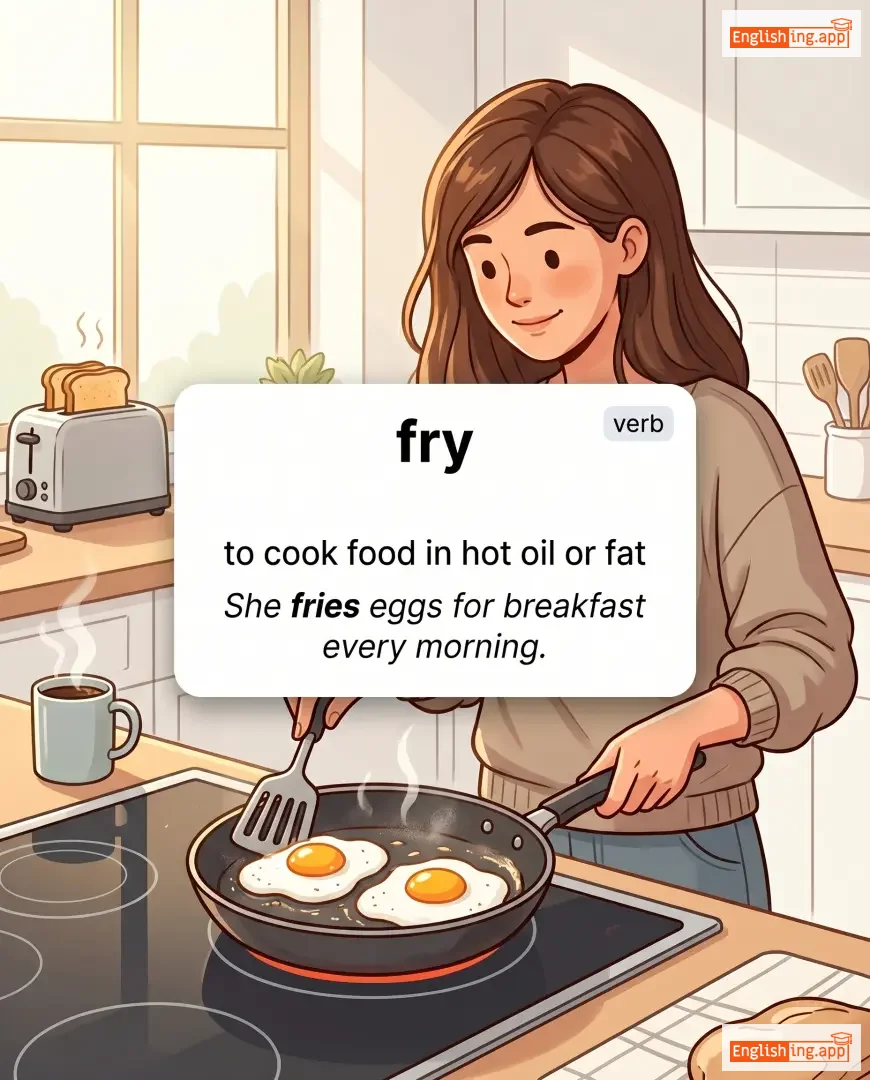
to cook food in hot oil or fat
••••••
|
She fries eggs for breakfast every morning.
她每天早晨煎蛋作为早餐。
••••••
|
她每天早晨煎蛋作为早餐。
Ta mei tian zao chen jian dan zuo wei zao can.
••••••
|
- •••••• | - •••••• | - •••••• |
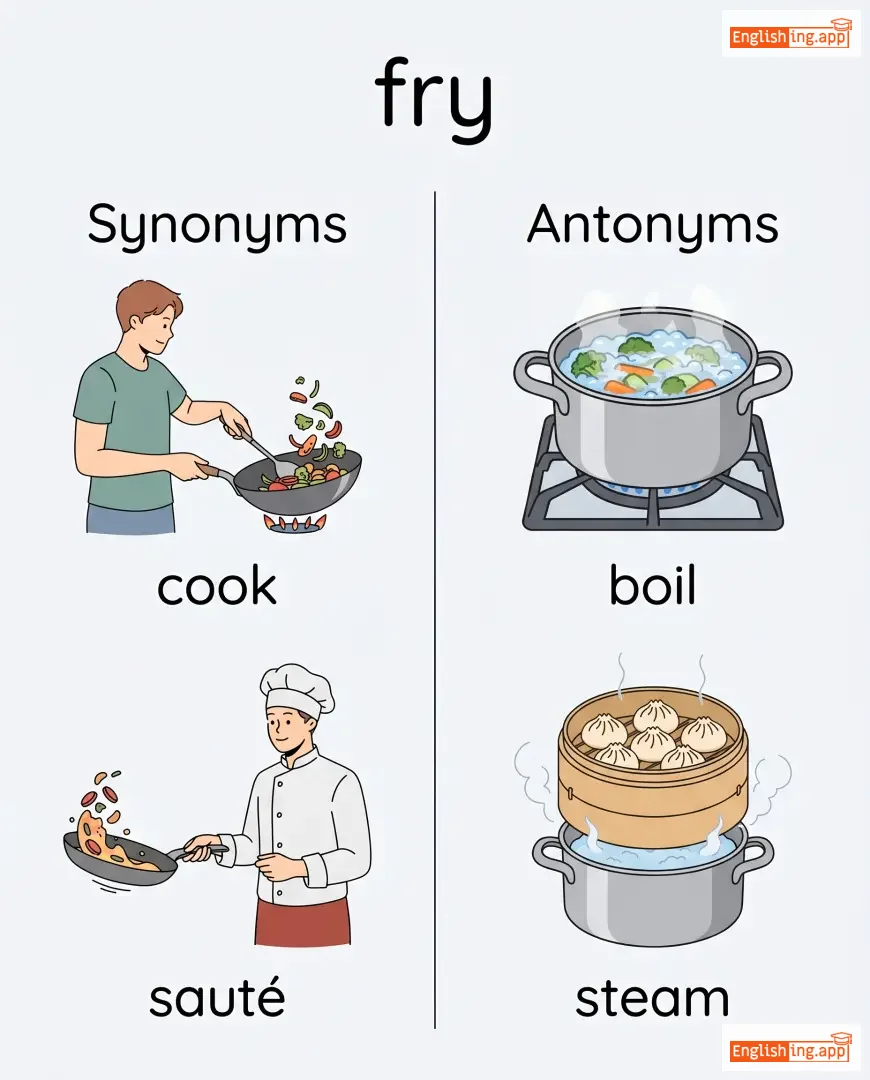
cook, sauté, pan-fry
••••••
|
boil, steam, bake
••••••
|
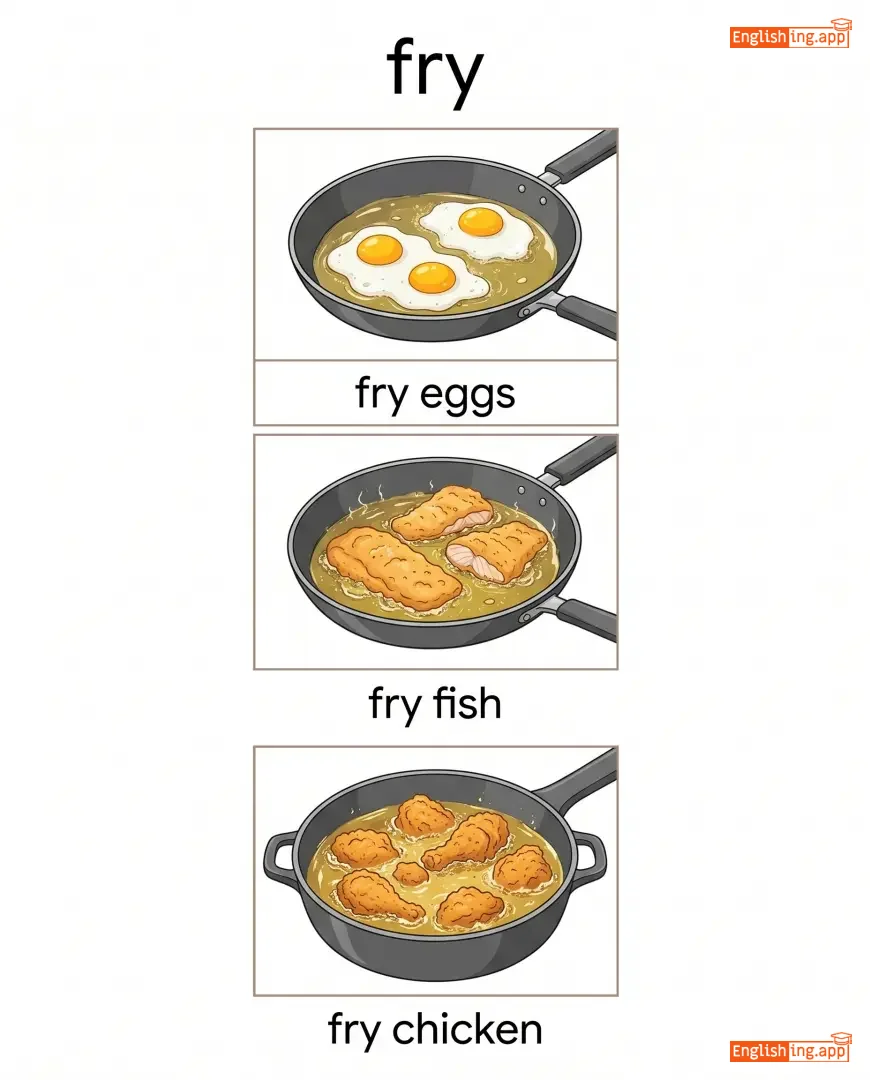
fry eggs, fry fish, fry chicken, fry onions, deep fry
••••••
|
No •••••• |
|
⛽
••••••
|
/ˈfjuːəl/
noun/verb
••••••
|
- •••••• | - •••••• |
fueled
••••••
|
fueled
••••••
|
fuels
••••••
|
fueling
••••••
|
A material such as coal, gas, or oil that is burned to produce energy; also to supply with energy or power.
••••••
|
The car needs fuel to run efficiently. |
- •••••• |
fuel the fire |
To make a situation worse or more intense.
••••••
|
- •••••• |
power, energy, propellant, feed, sustain
••••••
|
drain, exhaust
••••••
|
burn fuel, fossil fuel, run on fuel, fuel supply
••••••
|
No •••••• |
|
✅
••••••
|
/fʊlˈfɪl/
verb
(富菲尔)
••••••
|
- •••••• |
实现
shixian
••••••
|
fulfilled
富菲尔德
••••••
|
fulfilled
富菲尔德
••••••
|
fulfils
富菲尔斯
••••••
|
fulfilling
富菲尔英
••••••
|
to complete or achieve something that was expected or promised; to satisfy a requirement or desire
••••••
|
She worked hard to fulfil her dream of becoming a doctor.
希 沃克德 哈德 图 富菲尔 赫 德瑞姆
••••••
|
她努力工作以实现成为医生的梦想。
Ta nuli gongzuo yi shixian chengwei yisheng de mengxiang
••••••
|
fulfil a promise
富菲尔 阿 普罗米斯
••••••
|
to do what you said you would do
••••••
|
履行承诺
lixing chengnuo
••••••
|
accomplish, achieve, complete, realize, satisfy
••••••
|
fail, neglect, abandon
••••••
|
fulfil a promise, fulfil a duty, fulfil a requirement, fulfil a dream
••••••
|
fulfil 就是实现目标,把事情做满
••••••
|
|
🍶
••••••
|
/fʊl/
adjective
(ful)
••••••
|
- •••••• |
满
man
••••••
|
- •••••• | - •••••• | - •••••• | - •••••• |
Containing as much or as many as possible; complete.
••••••
|
The glass is full of water. |
杯子里满是水。
Beizi li man shi shui.
••••••
|
full of life |
very energetic and lively
••••••
|
充满活力
chongman huoli
••••••
|
complete, filled, packed, crowded, entire
••••••
|
empty, vacant, partial
••••••
|
full of water, full moon, full capacity, full name, full potential
••••••
|
满就像装满水的杯子,完全填满。
••••••
|
|
🕒
••••••
|
/ˈfʊl taɪm/
adjective, adverb
(fʊl taɪm)
••••••
|
- •••••• |
全职
quán zhí
••••••
|
- •••••• | - •••••• | - •••••• | - •••••• |
working or studying for the whole standard period of time
••••••
|
She works full-time as a teacher. |
她作为老师全职工作。
Tā zuòwéi lǎoshī quánzhí gōngzuò.
••••••
|
- •••••• | - •••••• | - •••••• |
permanent, regular, continual, steady
••••••
|
part-time, temporary
••••••
|
full-time job, full-time employee, full-time student
••••••
|
Full-time意味着全天工作,而不是兼职。
••••••
|
|
✅
••••••
|
/ˈfʊli/
adverb
(fūlì)
••••••
|
- •••••• |
完全
wanquan
••••••
|
- •••••• | - •••••• | - •••••• | - •••••• |
completely or entirely; to the fullest extent
••••••
|
She is fully aware of the risks. |
她完全意识到这些风险。
Ta wanquan yishi dao zhexie fengxian.
••••••
|
fully booked |
completely reserved with no space left
••••••
|
完全预定
wanquan yuding
••••••
|
completely, entirely, totally, wholly, absolutely
••••••
|
partially, incompletely
••••••
|
fully aware, fully understand, fully booked, fully equipped
••••••
|
Fully 意味着完全,想象 'fuli' (充满),完全充满。
••••••
|
|
🎉
••••••
|
/fʌn/
noun
(fān)
••••••
|
- •••••• |
乐趣
lequ
••••••
|
- •••••• | - •••••• | - •••••• | - •••••• |
enjoyment, amusement, or light-hearted pleasure
••••••
|
We had a lot of fun at the party. |
我们在聚会上玩得很开心。
Wǒmen zài jùhuì shàng wán de hěn kāixīn.
••••••
|
make fun of |
to tease or mock someone
••••••
|
取笑
qǔxiào
••••••
|
enjoyment, amusement, entertainment, pleasure
••••••
|
boredom, sadness
••••••
|
have fun, fun activity, fun time, fun party
••••••
|
Fun 就是乐趣,在聚会中大家都会说‘尽情享受!’
••••••
|
|
⚙️
••••••
|
/ˈfʌŋkʃən/
noun
(fángkèshùn)
••••••
|
- •••••• |
功能
gongneng
••••••
|
- •••••• | - •••••• | - •••••• | - •••••• |
An activity or purpose natural to or intended for a person or thing.
••••••
|
The main function of the heart is to pump blood. |
心脏的主要功能是泵送血液。
Xīnzàng de zhǔyào gōngnéng shì bèngsòng xuèyè.
••••••
|
perform a function |
to carry out a specific role or purpose
••••••
|
执行功能
Zhíxíng gōngnéng
••••••
|
role, purpose, duty, job, task
••••••
|
malfunction, failure, inactivity
••••••
|
main function, important function, perform a function, social function
••••••
|
功能在中文里指的是事物的特定作用,就像英文里的‘function’一样。
••••••
|
|
⚙️
••••••
|
/ˈfʌŋkʃənl/
adjective
(fàngkèshùnēl)
••••••
|
- •••••• |
功能性
gōngnéngxìng
••••••
|
- •••••• | - •••••• | - •••••• | - •••••• |
designed to be practical and useful, rather than just decorative
••••••
|
The design of the chair is simple but highly functional. |
椅子的设计简单,但非常实用。
Yǐzi de shèjì jiǎndān, dàn fēicháng shíyòng.
••••••
|
- •••••• | - •••••• | - •••••• |
practical, useful, efficient, operative
••••••
|
useless, impractical
••••••
|
functional design, functional purpose, fully functional, functional system
••••••
|
功能性像功能,表示有用和实用。
••••••
|
|
💰
••••••
|
/fʌnd/
noun/verb
(fán)
••••••
|

|
基金
jījīn
••••••
|
funded
fánded
••••••
|
funded
fánded
••••••
|
funds
fánds
••••••
|
funding
fánding
••••••
|
a sum of money saved or made available for a particular purpose; to provide money for
••••••
|
The government created a fund for education.
政府为教育创建了一个基金。
••••••
|
政府为教育创建了一个基金。
Zhèngfǔ wèi jiàoyù chuàngjiànle yīgè jījīn.
••••••
|
mutual fund
共同基金
••••••
|
a professionally managed investment fund
••••••
|
共同基金
gòngtóng jījīn
••••••
|
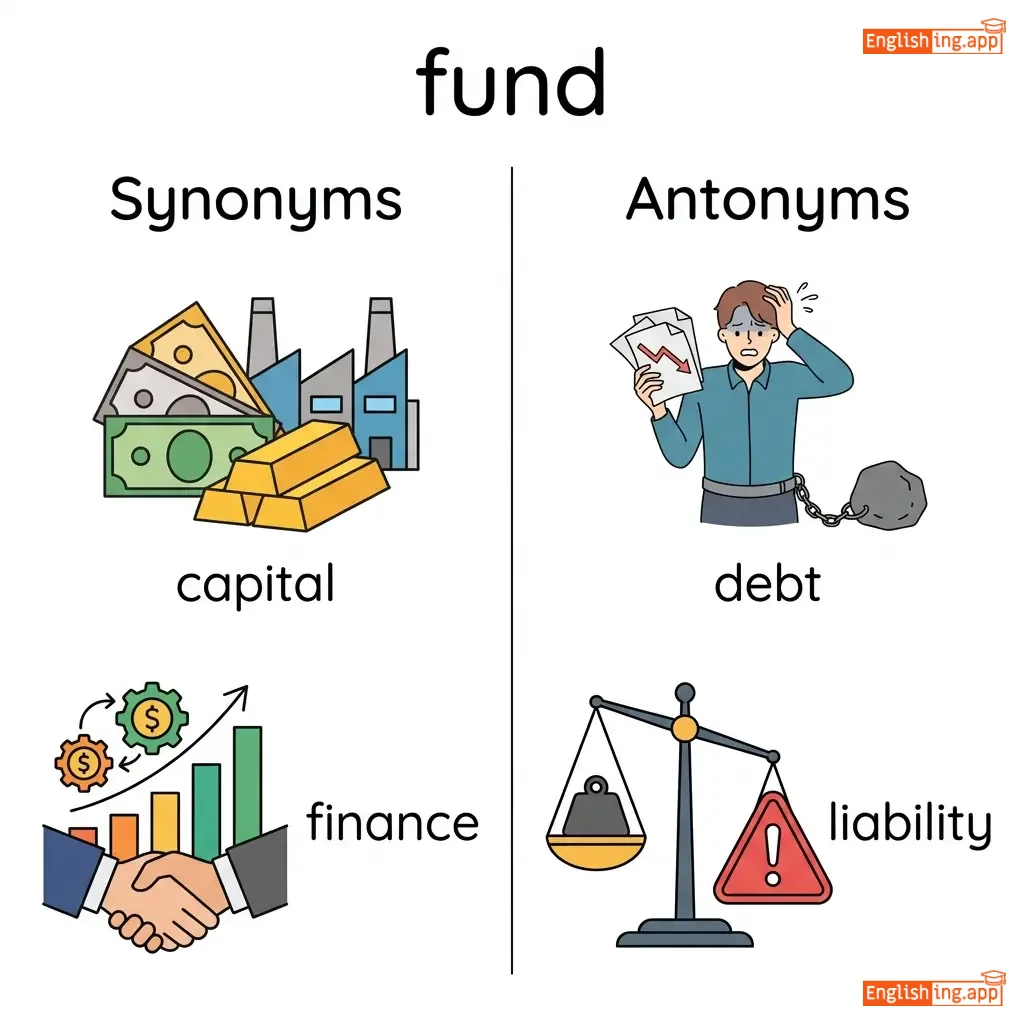
capital, finance, money, resource, investment
••••••
|
debt, liability
••••••
|
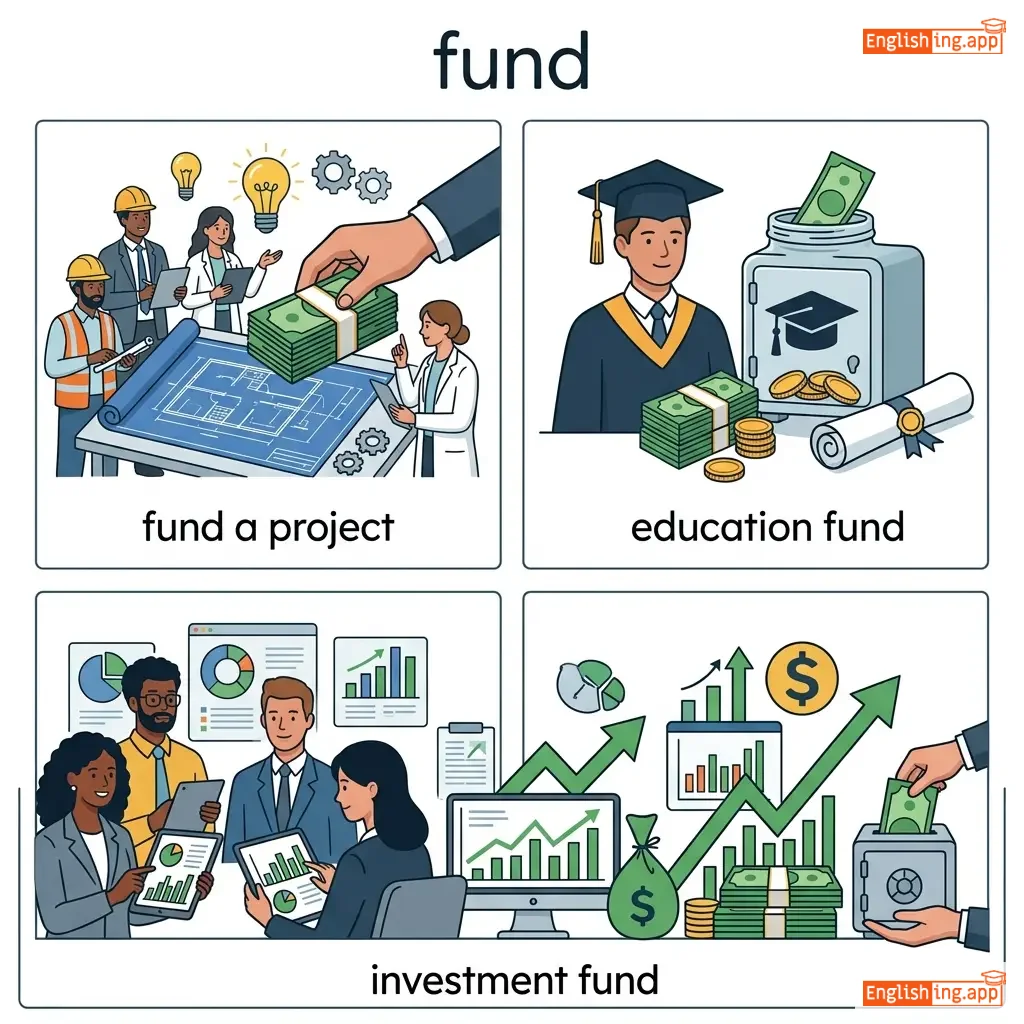
fund a project, education fund, investment fund, fund allocation
••••••
|
基金意味着基金 — 想象基金 = '翻递', 享受时需要资金。
••••••
|
|
📖
••••••
|
/ˌfʌndəˈmɛntl/
adjective
••••••
|
- •••••• | - •••••• | - •••••• | - •••••• | - •••••• | - •••••• |
forming a necessary base or core; of central importance
••••••
|
Honesty is a fundamental principle of good leadership. |
- •••••• |
fundamental truth |
a basic and undeniable fact
••••••
|
- •••••• |
basic, essential, primary, foundational, vital
••••••
|
trivial, secondary
••••••
|
fundamental principle, fundamental right, fundamental importance, fundamental truth
••••••
|
No •••••• |
|
🔑
••••••
|
/ˌfʌndəˈmɛntəli/
adverb
(fūndamentāli)
••••••
|
- •••••• |
从根本上
cóng gēnběn shàng
••••••
|
- •••••• | - •••••• | - •••••• | - •••••• |
in a basic and important way; at the core
••••••
|
The two theories are fundamentally different.
这两个理论从根本上不同。
••••••
|
这两个理论从根本上不同。
Zhè liǎng gè lǐlùn cóng gēnběn shàng bùtóng.
••••••
|
- •••••• | - •••••• | - •••••• |
basically, essentially, primarily, principally
••••••
|
superficially, peripherally
••••••
|
fundamentally different, fundamentally important
••••••
|
Fundamentally = 从根本上 = 就像事情的核心!
••••••
|
|
🏦
••••••
|
/ˈfʌndɪŋ/
noun
(fanding)
••••••
|
- •••••• |
资金
zijin
••••••
|
- •••••• | - •••••• | - •••••• | - •••••• |
financial support for a project or organization
••••••
|
The startup is seeking funding from investors. |
初创公司正在寻求投资者的资金支持。
Chuchuang gongsi zhengzai xunqiu touzizhe de zijin zhichi.
••••••
|
government funding |
financial support provided by the government
••••••
|
政府资金
zhèngfǔ zījīn
••••••
|
financing, capital, investment, sponsorship, backing
••••••
|
withdrawal, loss
••••••
|
seek funding, government funding, secure funding, lack of funding
••••••
|
Funding 即资金 — 初创公司说 'Fun ding',就是需要钱。
••••••
|
|
💰
••••••
|
/ˈfʌndˌreɪzɪŋ/
noun
(fāndùo lěi zīng)
••••••
|
- •••••• |
筹款活动
choukuan huodong
••••••
|
- •••••• | - •••••• | - •••••• | - •••••• |
the process of collecting money for a cause or project
••••••
|
The organization is organizing a fundraising event. |
该组织正在组织一个筹款活动。
Gai zuzhi zhengzai zuzhi yige choukuan huodong.
••••••
|
- •••••• | - •••••• | - •••••• |
charity event, donation drive, campaign, benefit
••••••
|
spending, wasting
••••••
|
fundraising campaign, fundraising event, fundraising dinner
••••••
|
筹款 (fund) 活动 (raise), fundraising!
••••••
|
|
⚰️
••••••
|
/ˈfjuːnərəl/
noun
(fyuːnɛrəl)
••••••
|
- •••••• |
葬礼
zànglǐ
••••••
|
- •••••• | - •••••• | - •••••• | - •••••• |
a ceremony held to honor and bury or cremate someone who has died
••••••
|
The family attended the funeral of their grandfather. |
家人参加了祖父的葬礼。
Jiārén cānjiāle zǔfù de zànglǐ.
••••••
|
funeral service |
the ceremony connected with a funeral
••••••
|
葬礼服务
zànglǐ fúwù
••••••
|
memorial, burial, cremation, obsequies
••••••
|
celebration, festival
••••••
|
funeral ceremony, funeral service, attend a funeral, funeral procession
••••••
|
葬礼是告别的仪式,最终的告别。
••••••
|
|
😂
••••••
|
/ˈfʌni/
adjective
(法尼)
••••••
|
- •••••• |
有趣
youqu
••••••
|
- •••••• | - •••••• | - •••••• | - •••••• |
Causing laughter or amusement; humorous.
••••••
|
The comedian told a very funny joke.
喜剧演员讲了一个非常有趣的笑话。
••••••
|
喜剧演员讲了一个非常有趣的笑话。
Xiju yan yuan jiang le yi ge feichang youqu de xiaohua.
••••••
|
funny bone
有趣的骨头
••••••
|
the part of the elbow that causes a tingling feeling when hit
••••••
|
有趣的骨头
youqu de gutou
••••••
|
humorous, amusing, comic, hilarious, entertaining
••••••
|
serious, sad, boring
••••••
|
funny story, funny joke, very funny, funny moment
••••••
|
Funny表示有趣,当你看到有趣的事物时,你无法停止笑。
••••••
|

