Получите неограниченный доступ ко всем словам с подпиской Pro
Обновить до ProПолучите неограниченный доступ ко всем предложениям с подпиской Pro
Обновить до Pro|
Эмодзи
|
Слово | Images | Перевод | Прошедшее | Причастие прошедшего времени | Третье лицо единственного числа | Герундий | Значение | Пример предложения | Перевод примера предложения | Пример выражения | Значение примера выражения | Перевод примера выражения | Синонимы | Антонимы | Коллокации | Мнемоника |
|---|---|---|---|---|---|---|---|---|---|---|---|---|---|---|---|---|---|
|
🖼️
••••••
|
/freɪm/
noun/verb
(фрейм)
••••••
|

|
рамка
freym
••••••
|
framed
фреймд
••••••
|
framed
фреймд
••••••
|
frames
фреймз
••••••
|
framing
фрейминг
••••••
|
A rigid structure that surrounds or encloses something; to construct or formulate.
••••••
|
They hung the painting in a golden frame.
зей ханг зе пэйнтинг ин э голдэн фрейм
••••••
|
Они повесили картину в золотую рамку.
Oni povesili kartinu v zolotuyu ramku.
••••••
|
frame of mind |
a person's mood or mental state
••••••
|
настроение
nastroyenie cheloveka ili ego umstvennoe sostoyanie
••••••
|
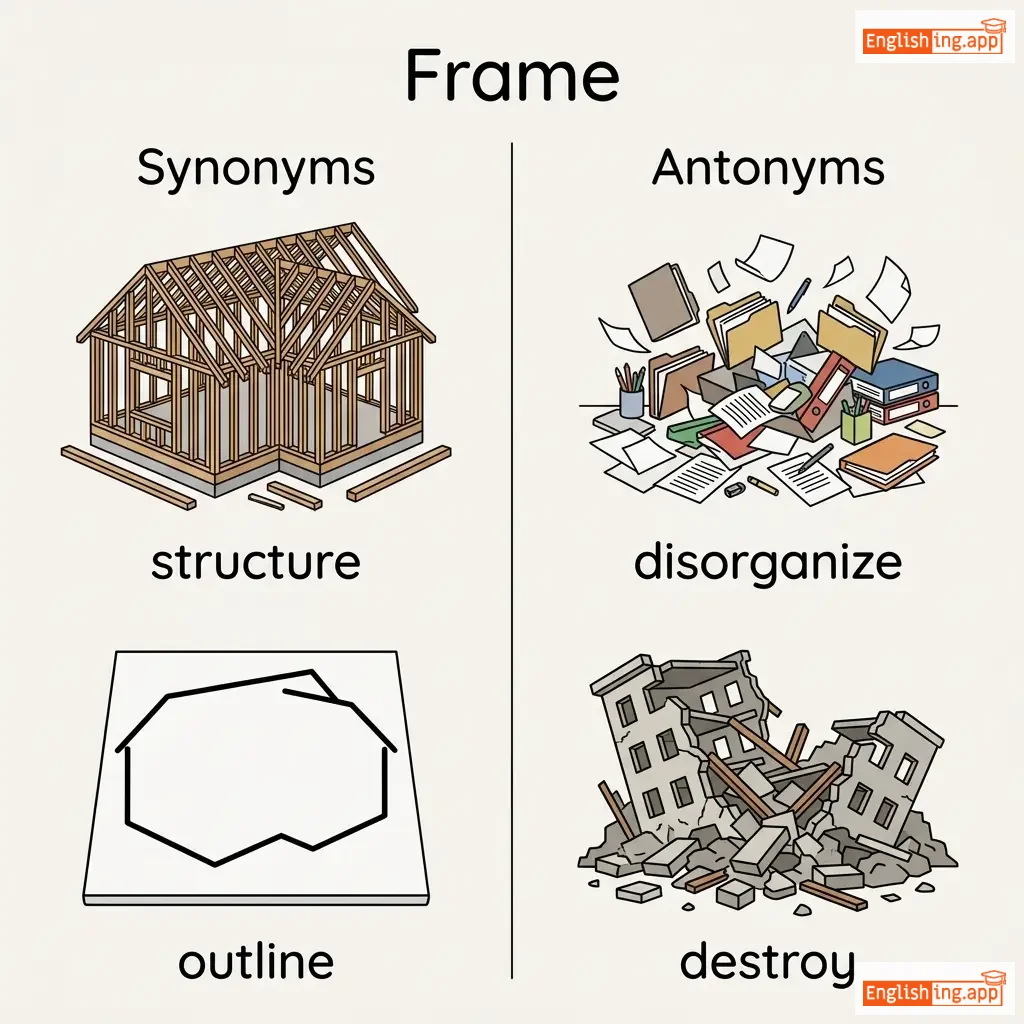
structure, outline, border, skeleton, formulate
••••••
|
disorganize, destroy
••••••
|
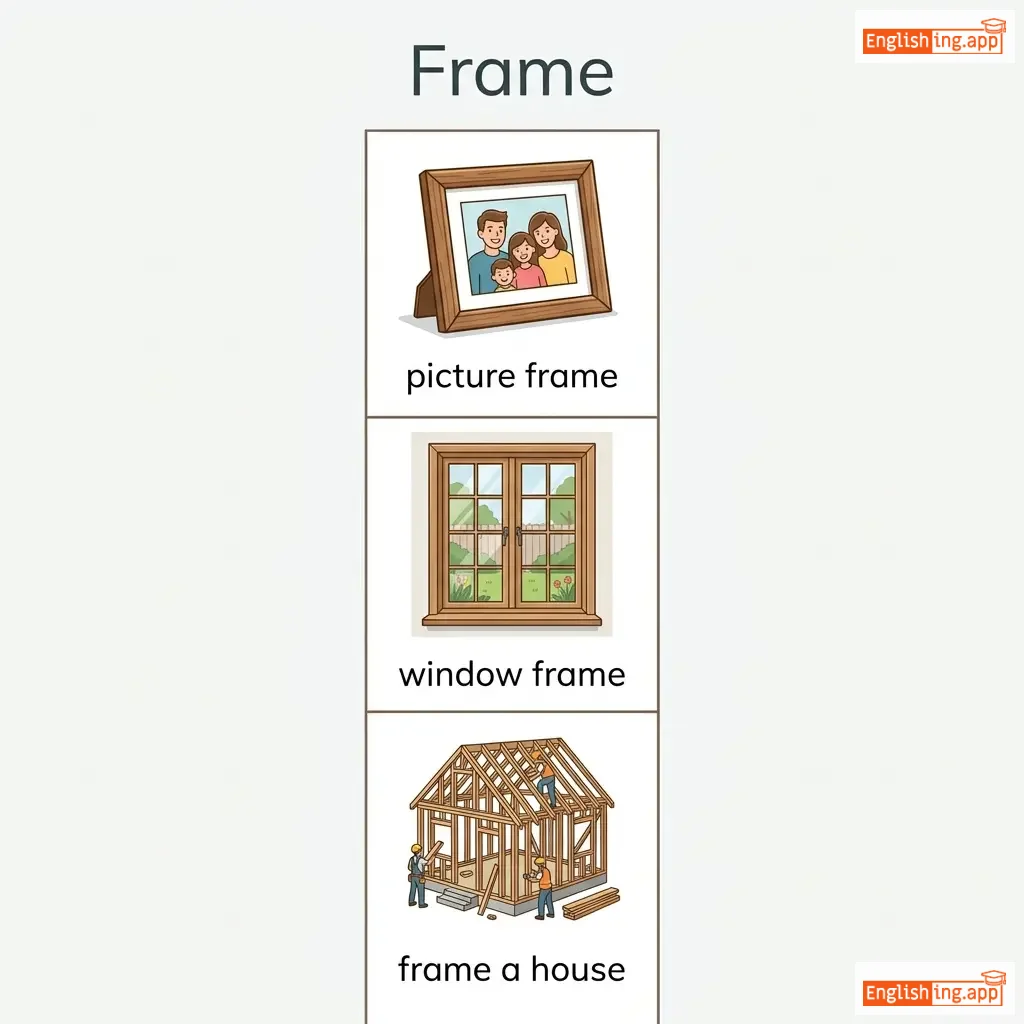
picture frame, window frame, frame a house, frame of reference
••••••
|
FREYM = РАМКА around ART, zapomni: frame = ramka
••••••
|
|
🏗️
••••••
|
/ˈfreɪmˌwɜːrk/
noun
(freɪmwɜrk)
••••••
|
|
рамка
ramka
••••••
|
- •••••• | - •••••• | - •••••• | - •••••• |
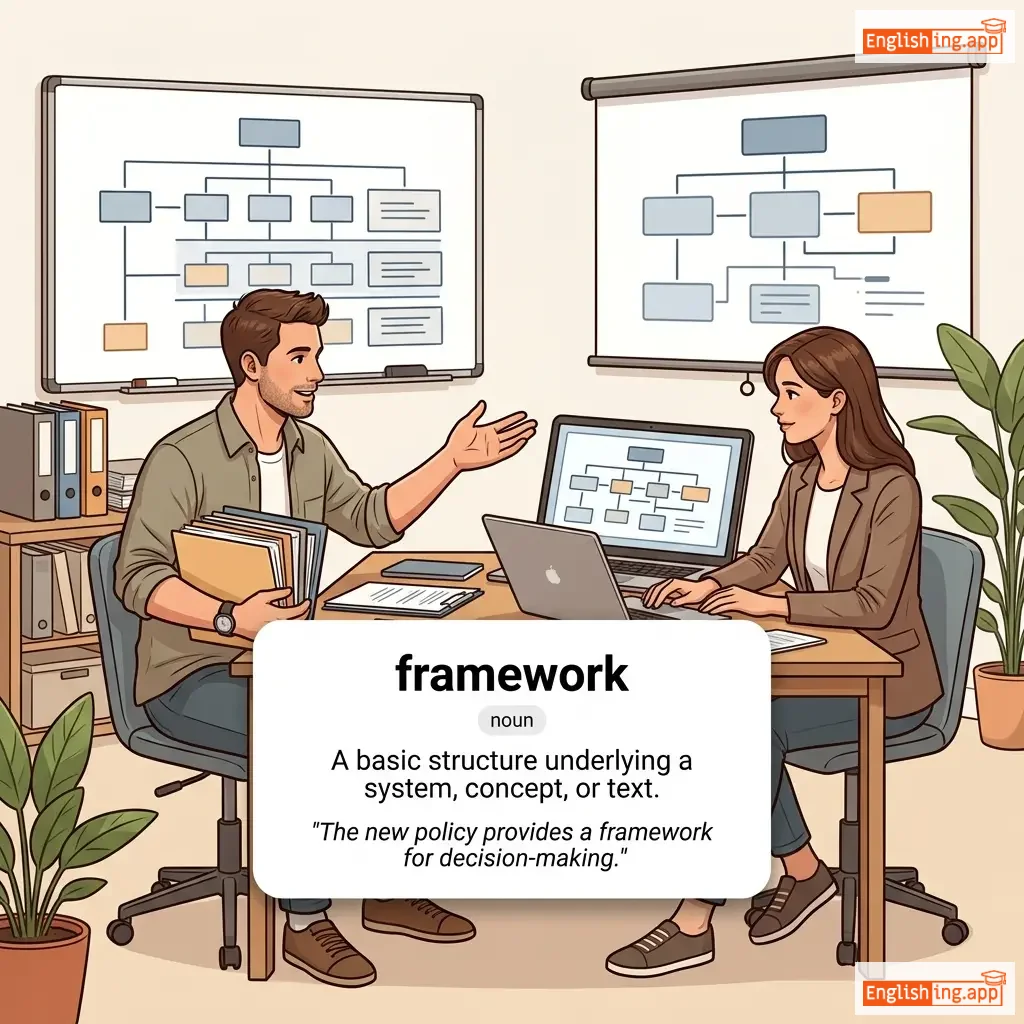
A basic structure underlying a system, concept, or text.
••••••
|
The new policy provides a framework for decision-making.
Новая политика предоставляет основу для принятия решений.
••••••
|
Новая политика предоставляет основу для принятия решений.
Novaya politika predostavlyaet osnovu dlya prinyatiya resheniy.
••••••
|
- •••••• | - •••••• | - •••••• |
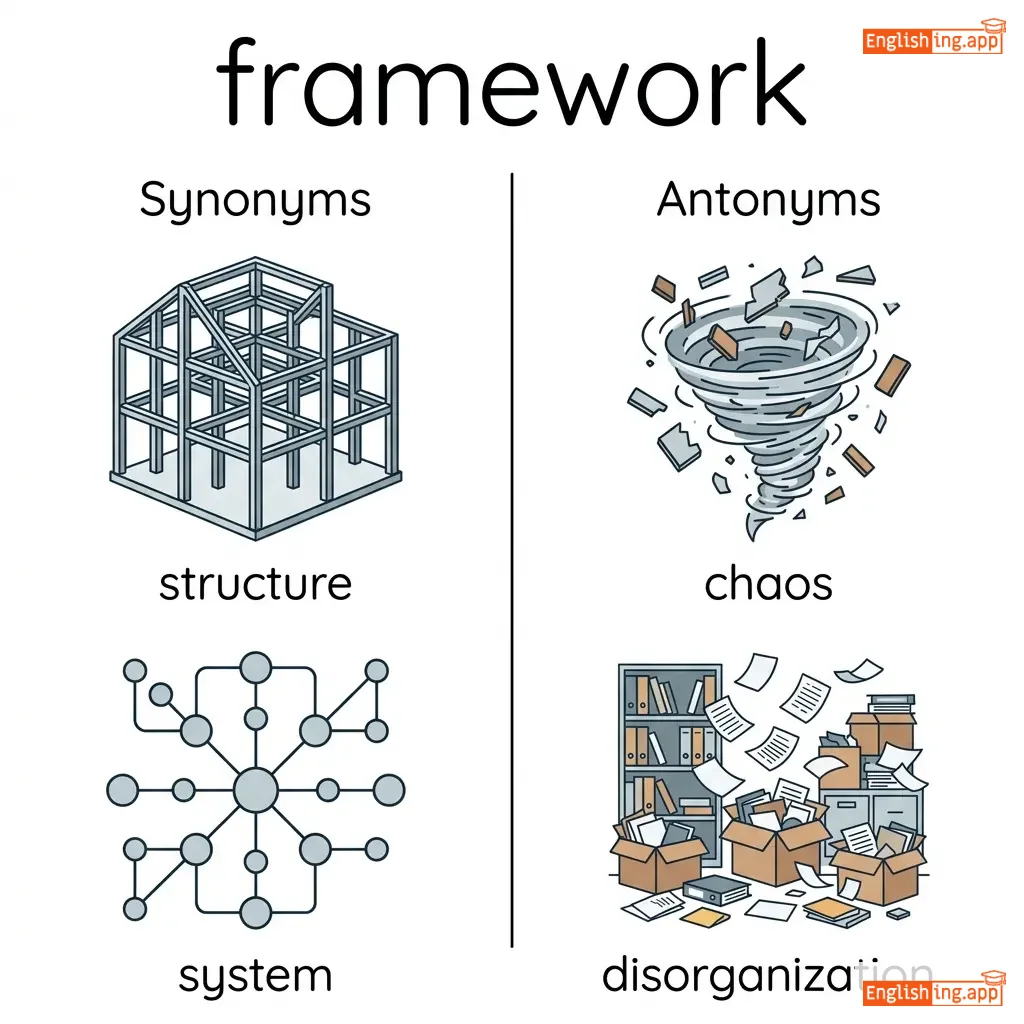
structure, system, skeleton, outline, basis
••••••
|
chaos, disorganization
••••••
|
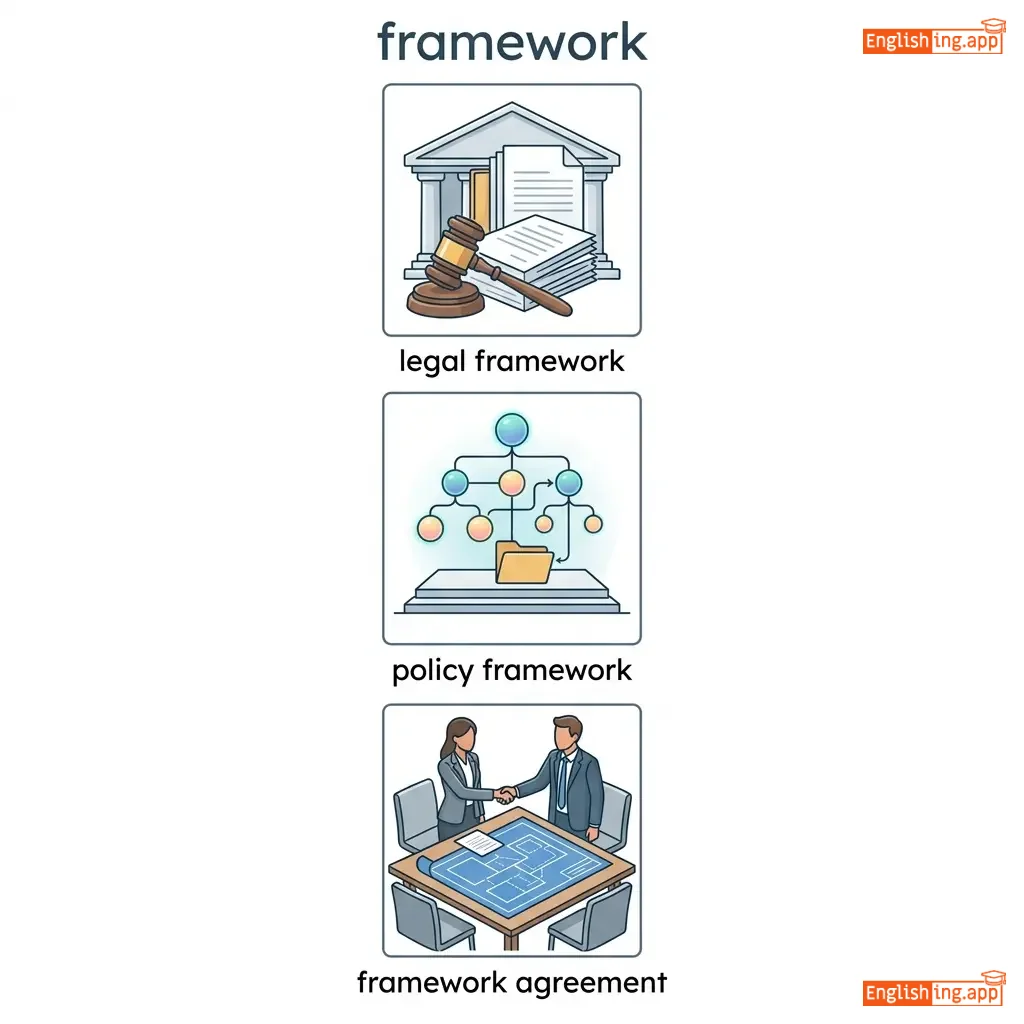
legal framework, policy framework, framework agreement, conceptual framework
••••••
|
Framework означает рамка, как каркас здания.
••••••
|
|
🏢
••••••
|
/ˈfrænʧaɪz/
noun, verb
(fran-chayz)
••••••
|
- •••••• |
франшиза
franshiza
••••••
|
franchised
fran-chayzd
••••••
|
franchised
fran-chayzd
••••••
|
franchises
fran-chayzes
••••••
|
franchising
fran-chayzing
••••••
|
A legal right to sell or distribute goods or services in a specific area; to grant such a right.
••••••
|
He opened a new fast-food franchise in the city.
Он открыл новый франшизный ресторан быстрого питания в городе.
••••••
|
Он открыл новый франшизный ресторан быстрого питания в городе.
On otkryl novyy franshiznyy restorann bystrogo pitaniya v gorode.
••••••
|
buy a franchise
купить франшизу
••••••
|
To purchase the right to operate a business under a company's brand.
••••••
|
купить франшизу
kupit' franshizu
••••••
|
license, authorization, dealership, permit
••••••
|
restriction, prohibition
••••••
|
franchise agreement, franchise owner, franchise business, buy a franchise
••••••
|
Франшиза - свобода + выбор – работать под маркой.
••••••
|
|
🗣️
••••••
|
/ˈfræŋkli/
adverb
(frankli)
••••••
|
- •••••• |
откровенно
otkrovenno
••••••
|
- •••••• | - •••••• | - •••••• | - •••••• |
in an honest and direct way
••••••
|
Frankly, I don’t think this plan will work. |
Откровенно говоря, я не думаю, что этот план сработает.
Otkrovenno govorya, ya ne dumayu, chto etot plan srabotayet.
••••••
|
to be frank |
to speak honestly
••••••
|
быть откровенным
byt' otkrovennym
••••••
|
honestly, openly, directly, sincerely
••••••
|
dishonestly, secretly
••••••
|
frankly speaking, quite frankly, to speak frankly
••••••
|
Откровенно — значит говорить прямо, как с лучшим другом.
••••••
|
|
🕵️
••••••
|
/frɔːd/
noun
(фрод)
••••••
|
- •••••• |
мошенничество
moshennichestvo
••••••
|
- •••••• | - •••••• | - •••••• | - •••••• |
A wrongful or criminal deception intended to result in financial or personal gain.
••••••
|
The company collapsed due to massive accounting fraud.
Компания обанкротилась из-за массового бухгалтерского мошенничества.
••••••
|
Компания обанкротилась из-за массового бухгалтерского мошенничества.
Kompaniya obankrotilas' iz-za massovogo buhgalterskogo moshennichestva.
••••••
|
identity fraud
мошенничество с личностью
••••••
|
The use of another person's personal information without permission for fraudulent purposes.
••••••
|
мошенничество с личностью
moshennichestvo s lichnost'yu
••••••
|
deception, scam, trickery, dishonesty, swindle
••••••
|
honesty, truth
••••••
|
commit fraud, insurance fraud, fraud case, fraud detection
••••••
|
Fraud означает мошенничество, если вы обманываете, потеряете друга.
••••••
|
|
🕊️
••••••
|
/friː/
adjective/verb/adverb
(fri)
••••••
|
- •••••• |
свободный
svobodny
••••••
|
freed
frid
••••••
|
freed
frid
••••••
|
frees
friz
••••••
|
freeing
friing
••••••
|
Not under the control or in the power of another; able to act or be done as one wishes.
••••••
|
The children are free to play outside.
Дети могут играть на улице свободно.
••••••
|
Дети могут играть на улице свободно.
Deti mogut igrat' na ulitse svobodno.
••••••
|
set free
освободить
••••••
|
to release from captivity or constraints
••••••
|
освободить
osvobodit'
••••••
|
unrestricted, independent, open, liberated, gratis
••••••
|
restricted, bound, captive
••••••
|
free time, free speech, free market, free trial
••••••
|
Свободный – free, как в 'дети могут играть свободно'.
••••••
|
|
⏰
••••••
|
/ˈfriː taɪm/
noun
(фри тайм)
••••••
|
- •••••• |
свободное время
svobodnoe vremya
••••••
|
- •••••• | - •••••• | - •••••• | - •••••• |
time when a person is not working or occupied and can do activities they enjoy
••••••
|
She likes to read books in her free time.
Ши лайкс ту рид букс ин хёр фри тайм.
••••••
|
Она любит читать книги в свободное время.
Ona lyubit chitat knigi v svobodnoe vremya
••••••
|
in one's free time
ин уанз фри тайм
••••••
|
during the time when someone is not busy with work or duties
••••••
|
в свободное время
v svobodnoe vremya
••••••
|
leisure, spare time, downtime, recreation time
••••••
|
work time, busy time
••••••
|
free time activities, spend free time, enjoy free time, little free time
••••••
|
Free time = свободное время
••••••
|
|
🕊️
••••••
|
/ˈfriːdəm/
noun
(свобода)
••••••
|


|
свобода
svoboda
••••••
|
- •••••• | - •••••• | - •••••• | - •••••• |
The state of being free; the power or right to act, speak, or think without hindrance or restraint.
••••••
|
Freedom of speech is a fundamental right in many countries. |
Свобода слова является основным правом во многих странах.
Svoboda slova yavlyaetsya osnovnym pravom vo mnogikh stranakh.
••••••
|
freedom of choice |
the right to make one’s own decisions without outside control
••••••
|
свобода выбора
svoboda vibora
••••••
|
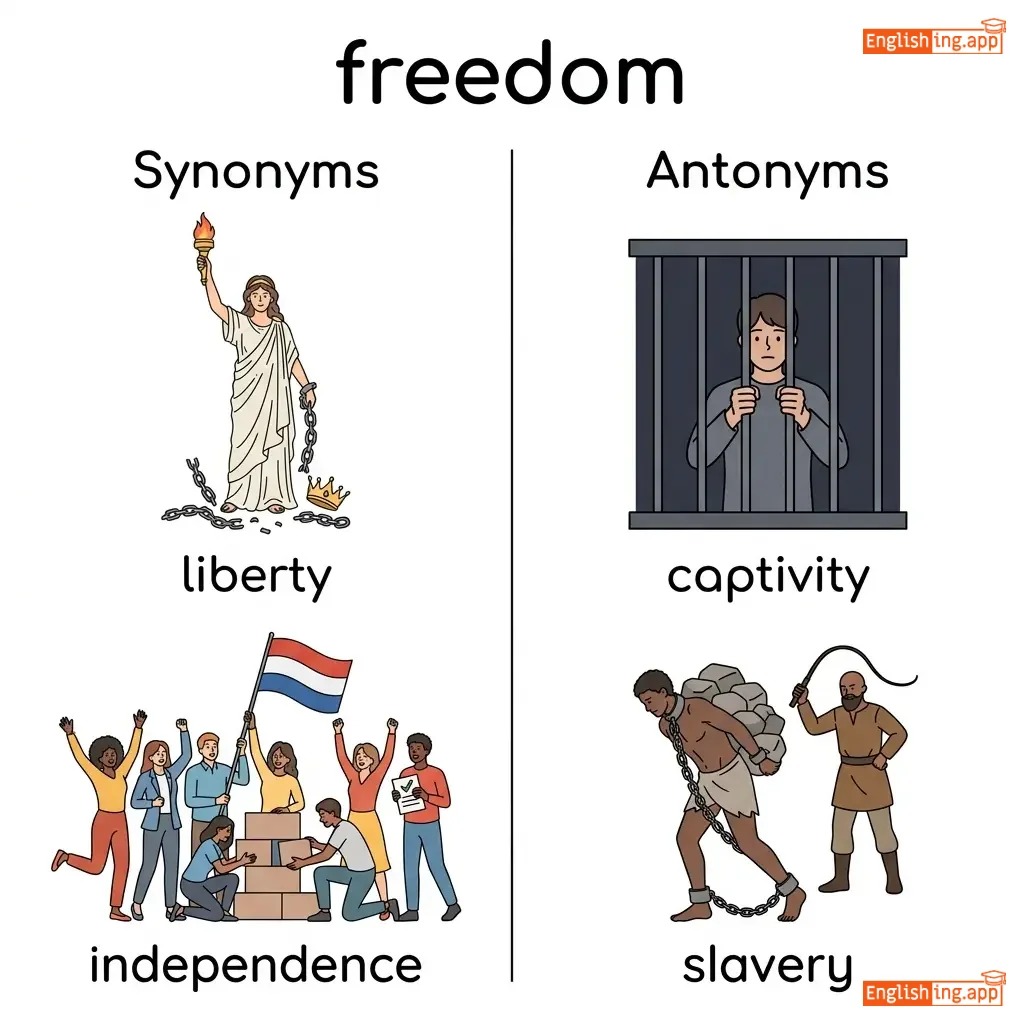
liberty, independence, autonomy, emancipation, self-determination
••••••
|
captivity, slavery, restriction
••••••
|
freedom of speech, freedom of movement, personal freedom, political freedom
••••••
|
Freedom = право быть собой, без ограничений (svoboda)
••••••
|
|
🕊️
••••••
|
/ˈfriːdəm ˌfaɪtər/
noun
(фридом файтер)
••••••
|
- •••••• |
борец за свободу
borets za svobodu
••••••
|
- •••••• | - •••••• | - •••••• | - •••••• |
a person who takes part in an armed or political struggle to achieve freedom or independence for their people or country
••••••
|
The freedom fighter dedicated his life to the liberation of his homeland.
Зе фридом файтер дедикейтед хиз лайф ту зе либерейшн ов хиз хоумлэнд.
••••••
|
Борец за свободу посвятил свою жизнь освобождению своей страны.
Borets za svobodu posvyatil svoyu zhizn osvobozhdeniyu svoey strany
••••••
|
- •••••• | - •••••• | - •••••• |
liberator, revolutionary, insurgent, resistance fighter, patriot
••••••
|
oppressor, colonizer, tyrant
••••••
|
brave freedom fighter, freedom fighter movement, fallen freedom fighter, freedom fighter leader
••••••
|
Freedom значит свобода, fighter — борец
••••••
|
|
🕊️
••••••
|
/ˈfriːli/
adverb
(frili)
••••••
|
- •••••• |
свободно
svobodno
••••••
|
- •••••• | - •••••• | - •••••• | - •••••• |
without restriction or control; willingly
••••••
|
Information should flow freely in a democratic society. |
Информация должна свободно циркулировать в демократическом обществе.
Informatsiya dolzhna svobodno tsirkulirovat' v demokraticheskom obshchestve.
••••••
|
speak freely |
to express opinions openly
••••••
|
говорить свободно
govorit' svobodno
••••••
|
openly, willingly, easily, voluntarily
••••••
|
reluctantly, restrictively
••••••
|
move freely, give freely, flow freely, speak freely
••••••
|
Свобода означает отсутствие ограничений, так что freely означает свободно.
••••••
|
|
❄️
••••••
|
/friːz/
verb
(фриз)
••••••
|
- •••••• |
замерзать
zamerzat
••••••
|
froze
фроуз
••••••
|
frozen
фроузен
••••••
|
freezes
фризез
••••••
|
freezing
фризинг
••••••
|
To turn into ice or cause to become hard due to extreme cold.
••••••
|
The water in the lake will freeze during winter.
Вода в озере замерзнет зимой.
••••••
|
Вода в озере замерзнет зимой.
Voda v ozerе zamerznet zimoy.
••••••
|
freeze up
замерзать
••••••
|
to stop functioning or become immobile
••••••
|
замерзнуть
zamerznut'
••••••
|
ice, chill, harden, solidify, stiffen
••••••
|
melt, thaw, heat
••••••
|
freeze water, freeze assets, freeze to death, freeze up
••••••
|
Freeze означает замерзать, как вода превращается в лед!
••••••
|
|
📡
••••••
|
/ˈfriː.kwən.si/
noun
(frikventsi)
••••••
|
- •••••• |
частота
chastota
••••••
|
- •••••• | - •••••• | - •••••• | - •••••• |
The rate at which something occurs or is repeated over a period of time
••••••
|
The frequency of bus services has been increased during rush hours. |
Частота автобусных маршрутов была увеличена в часы пик.
Chastota avtobusnykh marshrutov byla uvelichena v chasy pik.
••••••
|
with increasing frequency |
happening more often
••••••
|
с растущей частотой
s rastushchey chastotoy
••••••
|
rate, occurrence, repetition, regularity, incidence
••••••
|
rarity, infrequency
••••••
|
high frequency, radio frequency, frequency of occurrence, frequency distribution
••••••
|
Частота - это как часто что-то происходит, например, любимая песня, которая играет на радио каждую неделю.
••••••
|
|
🔄
••••••
|
/ˈfriː.kwənt/ (adj.), /friːˈkwent/ (verb)
adjective, verb
(frikvent)
••••••
|
- •••••• |
частый
chasty
••••••
|
frequented
frikventirovanny
••••••
|
frequented
frikventirovanny
••••••
|
frequents
frikventiruet
••••••
|
frequenting
frikventiruyushchij
••••••
|
Adjective: happening often; Verb: to visit a place regularly
••••••
|
He is a frequent visitor to the library.
Он часто посещает библиотеку.
••••••
|
Он часто посещает библиотеку.
On chasto poseshchayet biblioteku.
••••••
|
frequent flyer
частый пассажир
••••••
|
a person who travels often by plane
••••••
|
частый пассажир
chasty passazhir
••••••
|
regular, repeated, habitual, constant, usual
••••••
|
rare, occasional, infrequent
••••••
|
frequent visits, frequent traveler, frequent customer, frequent contact
••••••
|
Frequent означает частый, как друг, который часто звонит.
••••••
|
|
🔄
••••••
|
/ˈfriːkwəntli/
adverb
(фриквентли)
••••••
|
- •••••• |
часто; регулярно; много раз
chasto, regulyarno, mnogo raz
••••••
|
- •••••• | - •••••• | - •••••• | - •••••• |
often; regularly; many times
••••••
|
She frequently visits her grandmother on weekends. |
Она часто навещает свою бабушку по выходным.
Ona chasto navešchayet svoiu babushku po vykhodnym.
••••••
|
- •••••• | - •••••• | - •••••• |
often, regularly, repeatedly, commonly, habitually
••••••
|
rarely, seldom, infrequently, occasionally, never
••••••
|
frequently asked questions, frequently used, frequently visited
••••••
|
Когда вы часто что-то делаете, это происходит регулярно.
••••••
|
|
🌱
••••••
|
/frɛʃ/
adjective
(фрэш)
••••••
|
- •••••• |
свежий
svezhiy
••••••
|
- •••••• | - •••••• | - •••••• | - •••••• |
new, recently made, or clean and pure
••••••
|
The bread is still fresh from the oven.
Хлеб ещё свежий из печи.
••••••
|
Хлеб ещё свежий из печи.
Khleb eshcho svezhiy iz pechi.
••••••
|
fresh start
новое начало
••••••
|
a new beginning
••••••
|
новое начало
novoe nachalo
••••••
|
new, recent, clean, pure, original
••••••
|
stale, old, rotten
••••••
|
fresh air, fresh start, fresh bread, fresh idea
••••••
|
Свежий хлеб, как свежий воздух!
••••••
|
|
📅
••••••
|
/ˈfraɪ.deɪ/
noun
(фрайдей)
••••••
|
- •••••• |
пятница
pyatnitsa
••••••
|
- •••••• | - •••••• | - •••••• | - •••••• |
the day of the week following Thursday and preceding Saturday
••••••
|
We have a team meeting every Friday afternoon.
Уи хэв э тим митинг эври фрайдей афтернун.
••••••
|
У нас командное собрание каждую пятницу днем.
u nas komandnoye sobraniye kazhduyu pyatnitsu dnem
••••••
|
Black Friday
Блэк Фрайдей
••••••
|
the day after Thanksgiving in the US, known for major retail discounts
••••••
|
Чёрная пятница
chyornaya pyatnitsa
••••••
|
weekday, workday, end of week
••••••
|
Monday, Sunday
••••••
|
Friday evening, Friday night, last Friday, next Friday
••••••
|
Пятница — праздник, работа заканчивается
••••••
|
|
🧊
••••••
|
/frɪdʒ/
noun
(фридж)
••••••
|
- •••••• |
холодильник
kholodilnik
••••••
|
- •••••• | - •••••• | - •••••• | - •••••• |
a household appliance used to keep food and drinks cold to preserve freshness
••••••
|
I put the milk back in the fridge after breakfast.
После завтрака я поставил молоко в холодильник.
••••••
|
После завтрака я поставил молоко в холодильник.
posle zavtraka ya postavil moloko v kholodilnik
••••••
|
- •••••• | - •••••• | - •••••• |
refrigerator, icebox, cooler, chiller
••••••
|
heater, oven
••••••
|
open the fridge, put in the fridge, fridge door, fridge magnet
••••••
|
Холод means cold—fridge is all about cold
••••••
|
|
👫
••••••
|
/frɛnd/
noun
(фрэнд)
••••••
|
- •••••• |
друг
drug
••••••
|
- •••••• | - •••••• | - •••••• | - •••••• |
a person with whom one has a bond of mutual affection
••••••
|
He is my best friend. |
Он мой лучший друг.
On moy luchshiy drug.
••••••
|
fair-weather friend |
someone who is only a friend in good times
••••••
|
друг на хорошую погоду
drug na khoroshuyu pogodu
••••••
|
companion, pal, mate, buddy, ally
••••••
|
enemy, foe, rival
••••••
|
best friend, close friend, true friend, make friends
••••••
|
Friend означает друг – друг всегда рядом с тобой.
••••••
|
|
😊
••••••
|
/ˈfrɛndli/
adjective
(хэппинесс)
••••••
|
- •••••• |
счастье
schast'ye
••••••
|
- •••••• | - •••••• | - •••••• | - •••••• |
Kind and pleasant; showing goodwill and affection.
••••••
|
The shop owner is very friendly to new customers. |
Она не могла скрыть свое счастье, когда получила награду.
Ona ne mogla skryt' svoe schast'ye, kogda poluchila nagradu.
••••••
|
friendly fire |
weapon fire coming from one's own side by mistake
••••••
|
поиск счастья
poisk schast'ya
••••••
|
kind, warm, amiable, welcoming, sociable
••••••
|
hostile, unfriendly, cold
••••••
|
friendly smile, friendly attitude, friendly relationship, friendly environment
••••••
|
Счастье = Счастливый = Все мы стремимся к счастью.
••••••
|
|
🤗
••••••
|
/ˈfrɛndʃɪp/
noun
(фрэндшип)
••••••
|
- •••••• |
дружба
druzhba
••••••
|
- •••••• | - •••••• | - •••••• | - •••••• |
A close and trusting relationship between two or more people.
••••••
|
Their friendship has lasted since childhood. |
Их дружба длится с детства.
Ikh druzhba dlitsya s detstva.
••••••
|
true friendship |
A genuine and deep bond between friends.
••••••
|
истинная дружба
istinnaya druzhba
••••••
|
companionship, fellowship, camaraderie, closeness, bond
••••••
|
enmity, hostility, animosity
••••••
|
strong friendship, close friendship, lasting friendship, build friendship
••••••
|
Дружба - это корабль, в котором все друзья плывут вместе.
••••••
|
|
😱
••••••
|
/fraɪt/
noun
(фрайт)
••••••
|
- •••••• |
страх; ужас; испуг
strakh, uzhas, ispug
••••••
|
- •••••• | - •••••• | - •••••• | - •••••• |
a sudden intense feeling of fear; a shock or surprise that causes fear
••••••
|
The loud thunder gave her such a fright that she dropped her coffee cup. |
Гром такой силы испугал её, что она уронила свою чашку с кофе.
Grom takoy sily ispugal yeye, chto ona uronila svoyu chashku s kofe.
••••••
|
- •••••• | - •••••• | - •••••• |
fear, terror, alarm, panic
••••••
|
calmness, courage, composure, bravery
••••••
|
get a fright, terrible fright, sudden fright
••••••
|
Страх (strakh) и ужас (uzhas) вместе
••••••
|
|
😱
••••••
|
/ˈfraɪtən/
verb
(фрайтэн)
••••••
|
- •••••• |
пугать
pugat
••••••
|
frightened
фрайтэнд
••••••
|
frightened
фрайтэнд
••••••
|
frightens
фрайтэнз
••••••
|
frightening
фрайтэнинг
••••••
|
to cause fear or alarm in someone
••••••
|
The loud noise frightened the child.
зэ лауд нойз фрайтэнд зэ чайлд
••••••
|
Громкий шум испугал ребёнка.
Gromkii shum ispugal rebenka
••••••
|
frighten the life out of someone
фрайтэн зэ лайф аут ов самуан
••••••
|
to scare someone very badly
••••••
|
очень сильно напугать
ochen silno napugat
••••••
|
scare, terrify, alarm, startle, intimidate
••••••
|
calm, reassure, comfort
••••••
|
frighten someone badly, frighten easily, frighten away, frighten children
••••••
|
frighten = пугать, fright = страх
••••••
|
|
😨
••••••
|
/ˈfraɪtənd/
adjective
(фрайтэнд)
••••••
|
- •••••• |
испуганный
ispugannyi
••••••
|
- •••••• | - •••••• | - •••••• | - •••••• |
feeling fear or anxiety; scared
••••••
|
The child was frightened by the loud noise.
Зэ чайлд уоз фрайтэнд бай зэ лауд нойз
••••••
|
Ребёнок испугался громкого шума.
Rebyonok ispugalsya gromkogo shuma
••••••
|
frightened to death
фрайтэнд ту дэт
••••••
|
extremely scared
••••••
|
испуган до смерти
ispugan do smerti
••••••
|
scared, afraid, terrified, alarmed, fearful
••••••
|
calm, brave, fearless
••••••
|
deeply frightened, visibly frightened, frightened child, frightened face
••••••
|
frightened = страх → испуганный
••••••
|
|
🐸
••••••
|
/frɒɡ/
noun
(фрог)
••••••
|
- •••••• |
лягушка
lyagushka
••••••
|
- •••••• | - •••••• | - •••••• | - •••••• |
a small amphibian animal that lives both in water and on land
••••••
|
The frog jumped from the lily pad into the pond.
Лягушка прыгнула с лилии в пруд.
••••••
|
Лягушка прыгнула с лилии в пруд.
Lyagushka prygnula s lilii v prud.
••••••
|
- •••••• | - •••••• | - •••••• |
amphibian, toad
••••••
|
- •••••• |
tree frog, pond frog, frog legs
••••••
|
Лягушка прыгает с лилии в пруд.
••••••
|
|
➡️
••••••
|
/frəm/ or /frʌm/
preposition
(фром)
••••••
|
- •••••• |
из
iz
••••••
|
- •••••• | - •••••• | - •••••• | - •••••• |
Used to indicate the starting point of a journey, action, or source.
••••••
|
She came from Dhaka to visit her family. |
Она приехала из Дакки, чтобы навестить свою семью.
Ona priekhala iz Dakkī, chtoby navestit' svoyu sem'yu.
••••••
|
far from |
Very different from or not at all like.
••••••
|
далеко от
daleko ot
••••••
|
out of, away from, off, since, starting at
••••••
|
to, towards
••••••
|
from start, from scratch, from now, far from
••••••
|
FROM означает 'из'—как из Дакки (iz Dakkī) начался путь.
••••••
|
|
🚪
••••••
|
/frʌnt/
noun
(фронт)
••••••
|
- •••••• |
спереди
speredi
••••••
|
- •••••• | - •••••• | - •••••• | - •••••• |
the forward-facing part of something
••••••
|
The house has a garden in front. |
У дома есть сад спереди.
U doma yest' sad speredi.
••••••
|
put on a brave front |
to appear confident while hiding true feelings
••••••
|
показать смелое лицо
pokazat' smeloe litso
••••••
|
fore, facade, frontage, forefront, entrance
••••••
|
back, rear
••••••
|
front door, front line, front page, in front of
••••••
|
Front door означает дверь спереди – front = спереди.
••••••
|
|
🍎
••••••
|
/fruːt/
noun
(frut)
••••••
|
- •••••• |
фрукты
frukty
••••••
|
- •••••• | - •••••• | - •••••• | - •••••• |
The sweet and fleshy product of a plant that contains seeds.
••••••
|
Mango is my favorite fruit.
Манго — мой любимый фрукт.
••••••
|
Манго — мой любимый фрукт.
Mango — moy lyubimyy frukt.
••••••
|
bear fruit
приносить плоды
••••••
|
To produce good results or be successful.
••••••
|
приносить плоды
prinosit' plody
••••••
|
produce, crop, harvest, berry, yield
••••••
|
vegetable, grain
••••••
|
fresh fruit, ripe fruit, tropical fruit, eat fruit
••••••
|
Фрукты — это то, что вкусно и полезно, легко запомнить.
••••••
|
|
🍎
••••••
|
/ˈfruːtfəl/
adjective
(frutful)
••••••
|
- •••••• |
плодотворный
plodotvornyy
••••••
|
- •••••• | - •••••• | - •••••• | - •••••• |
Producing good results or being productive.
••••••
|
Their meeting was fruitful and led to many new ideas. |
Их встреча была плодотворной и привела к множеству новых идей.
Ikh vstrecha byla plodotvornoy i privedla k mnozhestvu novykh idey.
••••••
|
fruitful discussion |
A conversation that generates useful results or progress.
••••••
|
плодотворная дискуссия
plodotvornaya diskussiya
••••••
|
productive, beneficial, rewarding, fertile, successful
••••••
|
barren, unproductive, useless
••••••
|
fruitful discussion, fruitful outcome, fruitful results, fruitful collaboration
••••••
|
Fruitful как плодотворный, как хороший урожай.
••••••
|
|
😤
••••••
|
/ˈfrʌstreɪt/
verb
(frastreit)
••••••
|
- •••••• |
разочаровывать
razocharovyvat'
••••••
|
frustrated
frastreitid
••••••
|
frustrated
frastreitid
••••••
|
frustrates
frastreits
••••••
|
frustrating
frastreiting
••••••
|
To prevent someone from accomplishing something; to cause feelings of annoyance or disappointment.
••••••
|
The constant delays frustrated the team.
postoyannye zaderzhki frustrirovali komandu.
••••••
|
Постоянные задержки разочаровали команду.
Postoyannye zaderzhki razocharovali komandu.
••••••
|
frustrate the purpose
frustratsiya tsele
••••••
|
To hinder the intended result.
••••••
|
помешать цели
pomeshat' tseli
••••••
|
annoy, thwart, hinder, disappoint, obstruct
••••••
|
encourage, assist, satisfy
••••••
|
frustrate the efforts, feel frustrated, frustrating situation, frustrate attempts
••••••
|
Frustrate - значит разочаровывать, как в трудном пути.
••••••
|
|
😤
••••••
|
/ˈfrʌstreɪtɪd/
adjective
(фрустрэйтэд)
••••••
|
- •••••• |
фрустрированный
frustrirovannyj
••••••
|
- •••••• | - •••••• | - •••••• | - •••••• |
feeling annoyed or upset because of inability to achieve something
••••••
|
She felt frustrated after failing the exam. |
Она почувствовала разочарование после того, как не сдала экзамен.
Ona pochuvstvovala razocharovanie posle togo, kak ne sdala ekzamen.
••••••
|
- •••••• | - •••••• | - •••••• |
annoyed, upset, discouraged, disappointed
••••••
|
calm, content, pleased
••••••
|
feel frustrated, get frustrated, frustrated with
••••••
|
Фрустрированный — как 'замороженный' внутри, ничего не получается.
••••••
|
|
😩
••••••
|
/ˈfrʌstreɪtɪŋ/
adjective
(фрустрейтинг)
••••••
|
- •••••• |
раздражающий
razdrazhayushchiy
••••••
|
- •••••• | - •••••• | - •••••• | - •••••• |
causing annoyance or dissatisfaction
••••••
|
The slow internet connection was really frustrating. |
Медленное интернет-соединение было действительно раздражающим.
Medlennoe internet-soedinenie bylo deystvitel'no razdrazhayushchim.
••••••
|
- •••••• | - •••••• | - •••••• |
annoying, exasperating, irritating
••••••
|
pleasing, satisfying, enjoyable
••••••
|
frustrating experience, frustrating situation, frustrating delay
••••••
|
Frustrating situations feel like 'frozen traffic' – you just can't move ahead.
••••••
|
|
😣
••••••
|
/frʌˈstreɪʃən/
noun
(fruh-strey-shuhn)
••••••
|
- •••••• |
фрустрация
frustratsiya
••••••
|
- •••••• | - •••••• | - •••••• | - •••••• |
The feeling of being upset or annoyed due to inability to achieve something.
••••••
|
He felt deep frustration when his plans failed. |
Он почувствовал глубокую фрустрацию, когда его планы провалились.
On pochuvstvoval glubokuyu frustratsiyu, kogda ego plany provalilis.
••••••
|
vent frustration |
To express anger or annoyance openly.
••••••
|
выражать фрустрацию
vyrazhat' frustratsiyu
••••••
|
annoyance, irritation, disappointment, exasperation, discontent
••••••
|
satisfaction, contentment, delight
••••••
|
cause frustration, deep frustration, express frustration, frustration level
••••••
|
Фрустрация на русском и английском означает, что ты не можешь достичь своей цели.
••••••
|
|
🍳
••••••
|
/fraɪ/
verb
(fray)
••••••
|
|
жарить
zharit
••••••
|
fried
fryed
••••••
|
fried
fryed
••••••
|
fries
fryes
••••••
|
frying
frying
••••••
|
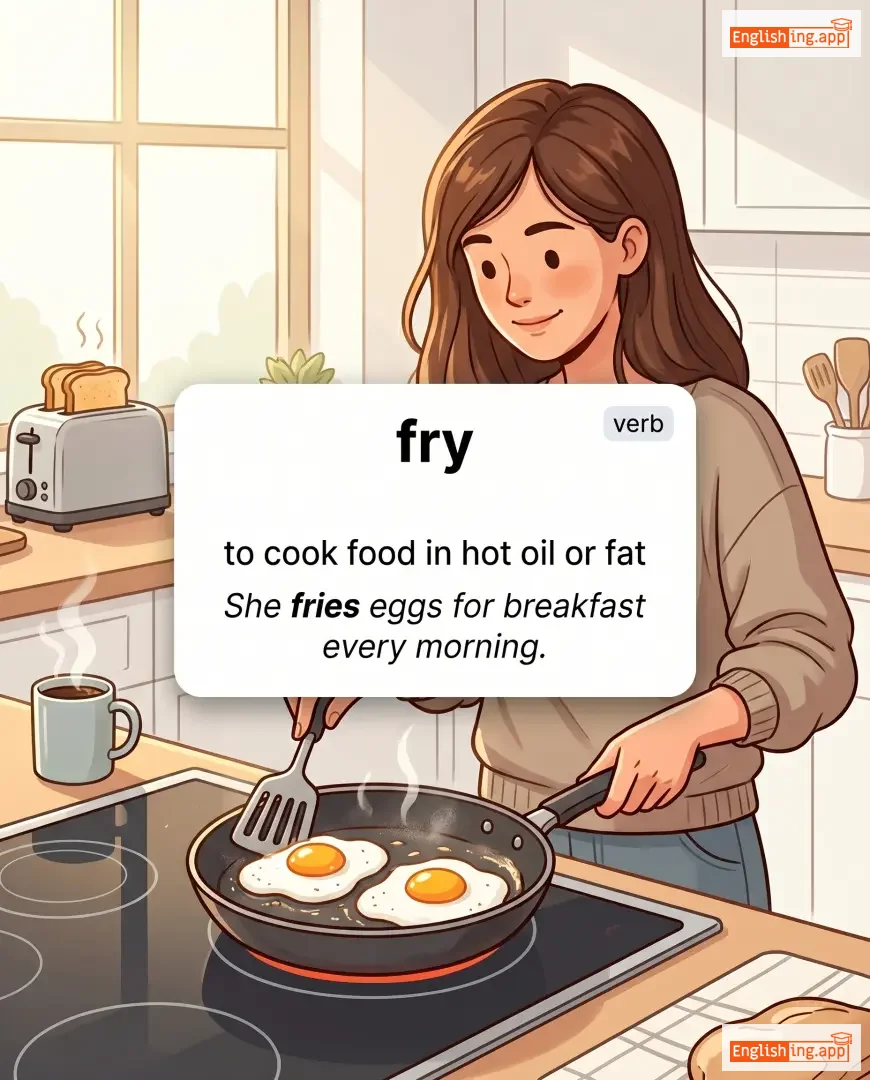
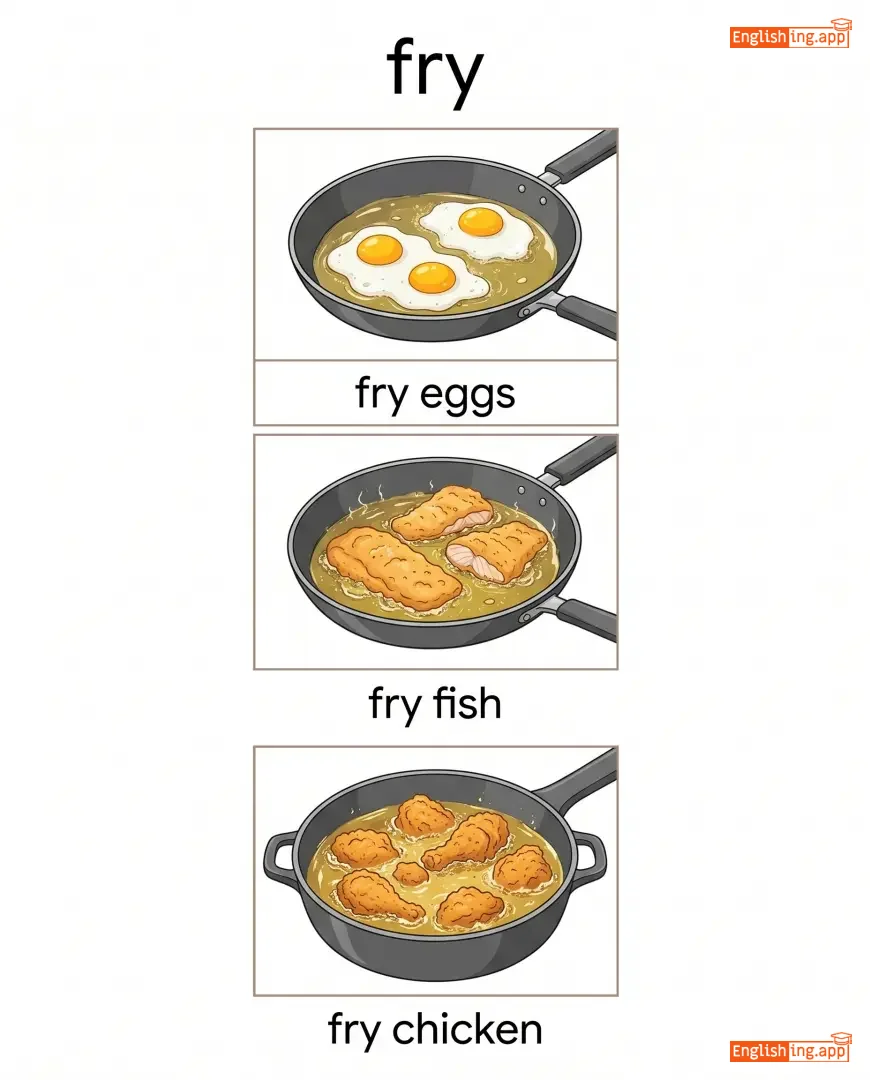
to cook food in hot oil or fat
••••••
|
She fries eggs for breakfast every morning.
Она жарит яйца на завтрак каждое утро.
••••••
|
Она жарит яйца на завтрак каждое утро.
Ona zharit yaytsa na zavtrak kazhdoe utro.
••••••
|
- •••••• | - •••••• | - •••••• |
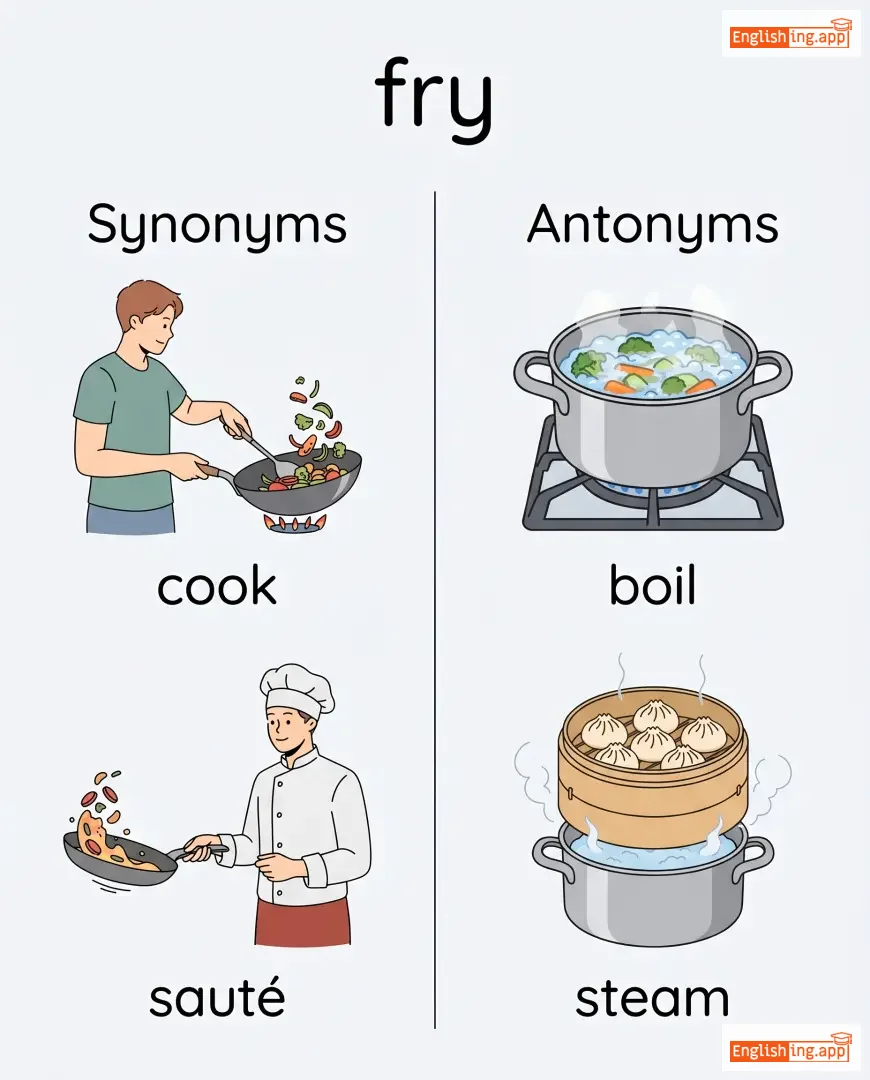
cook, sauté, pan-fry
••••••
|
boil, steam, bake
••••••
|
fry eggs, fry fish, fry chicken, fry onions, deep fry
••••••
|
No •••••• |
|
⛽
••••••
|
/ˈfjuːəl/
noun/verb
••••••
|
- •••••• | - •••••• |
fueled
••••••
|
fueled
••••••
|
fuels
••••••
|
fueling
••••••
|
A material such as coal, gas, or oil that is burned to produce energy; also to supply with energy or power.
••••••
|
The car needs fuel to run efficiently. |
- •••••• |
fuel the fire |
To make a situation worse or more intense.
••••••
|
- •••••• |
power, energy, propellant, feed, sustain
••••••
|
drain, exhaust
••••••
|
burn fuel, fossil fuel, run on fuel, fuel supply
••••••
|
No •••••• |
|
✅
••••••
|
/fʊlˈfɪl/
verb
(фулфил)
••••••
|
- •••••• |
выполнять
vypolnyat
••••••
|
fulfilled
фулфилд
••••••
|
fulfilled
фулфилд
••••••
|
fulfils
фулфилс
••••••
|
fulfilling
фулфилинг
••••••
|
to complete or achieve something that was expected or promised; to satisfy a requirement or desire
••••••
|
She worked hard to fulfil her dream of becoming a doctor.
ши воркт хард ту фулфил хер дрим ов бикоминг э доктор
••••••
|
Она усердно работала, чтобы осуществить свою мечту стать врачом.
Ona userdno rabotala chtoby osushchestvit svoyu mechtu stat vrachom
••••••
|
fulfil a promise
фулфил э промис
••••••
|
to do what you said you would do
••••••
|
выполнить обещание
vypolnit obeshchanie
••••••
|
accomplish, achieve, complete, realize, satisfy
••••••
|
fail, neglect, abandon
••••••
|
fulfil a promise, fulfil a duty, fulfil a requirement, fulfil a dream
••••••
|
fulfil = выполнить полностью, full + fill
••••••
|
|
🍶
••••••
|
/fʊl/
adjective
(ful)
••••••
|
- •••••• |
полный
polnyy
••••••
|
- •••••• | - •••••• | - •••••• | - •••••• |
Containing as much or as many as possible; complete.
••••••
|
The glass is full of water. |
Стакан полный воды.
Stakan polnyy vody.
••••••
|
full of life |
very energetic and lively
••••••
|
полный жизни
polnyy zhizni
••••••
|
complete, filled, packed, crowded, entire
••••••
|
empty, vacant, partial
••••••
|
full of water, full moon, full capacity, full name, full potential
••••••
|
Полный как стакан воды.
••••••
|
|
🕒
••••••
|
/ˈfʊl taɪm/
adjective, adverb
(фул тайм)
••••••
|
- •••••• |
полный рабочий день
polnyy rabochiy den'
••••••
|
- •••••• | - •••••• | - •••••• | - •••••• |
working or studying for the whole standard period of time
••••••
|
She works full-time as a teacher. |
Она работает полный рабочий день как учитель.
Ona rabotayet polnyy rabochiy den' kak uchitel'.
••••••
|
- •••••• | - •••••• | - •••••• |
permanent, regular, continual, steady
••••••
|
part-time, temporary
••••••
|
full-time job, full-time employee, full-time student
••••••
|
Full-time означает работать полный день, а не неполный.
••••••
|
|
✅
••••••
|
/ˈfʊli/
adverb
(фули)
••••••
|
- •••••• |
полностью
polnostyu
••••••
|
- •••••• | - •••••• | - •••••• | - •••••• |
completely or entirely; to the fullest extent
••••••
|
She is fully aware of the risks. |
Она полностью осведомлена о рисках.
Ona polnostyu osvedomlena o riskakh.
••••••
|
fully booked |
completely reserved with no space left
••••••
|
полностью забронировано
polnostyu zabronirovano
••••••
|
completely, entirely, totally, wholly, absolutely
••••••
|
partially, incompletely
••••••
|
fully aware, fully understand, fully booked, fully equipped
••••••
|
Fully означает полностью, представь, что что-то 'фули' (полное), полностью заполнено.
••••••
|
|
🎉
••••••
|
/fʌn/
noun
(fan)
••••••
|
- •••••• |
веселье
veselye
••••••
|
- •••••• | - •••••• | - •••••• | - •••••• |
enjoyment, amusement, or light-hearted pleasure
••••••
|
We had a lot of fun at the party. |
Мы отлично провели время на вечеринке.
My otlichno proveli vremya na vecherinke.
••••••
|
make fun of |
to tease or mock someone
••••••
|
смеяться над кем-то
smeyat'sya nad kem-to
••••••
|
enjoyment, amusement, entertainment, pleasure
••••••
|
boredom, sadness
••••••
|
have fun, fun activity, fun time, fun party
••••••
|
Fun означает веселье, на вечеринке все говорят 'веселись!'
••••••
|
|
⚙️
••••••
|
/ˈfʌŋkʃən/
noun
(fʌŋkʃən)
••••••
|
- •••••• |
функция
funkciya
••••••
|
- •••••• | - •••••• | - •••••• | - •••••• |
An activity or purpose natural to or intended for a person or thing.
••••••
|
The main function of the heart is to pump blood. |
Основная функция сердца - качать кровь.
Osnovnaya funkciya serdca - kachat' krov'.
••••••
|
perform a function |
to carry out a specific role or purpose
••••••
|
выполнять функцию
vypolnyat' funkciyu
••••••
|
role, purpose, duty, job, task
••••••
|
malfunction, failure, inactivity
••••••
|
main function, important function, perform a function, social function
••••••
|
Функция - это как в английском, значит определенная задача или роль.
••••••
|
|
⚙️
••••••
|
/ˈfʌŋkʃənl/
adjective
(fʊŋkʃənl)
••••••
|
- •••••• |
функциональный
funktsional'nyy
••••••
|
- •••••• | - •••••• | - •••••• | - •••••• |
designed to be practical and useful, rather than just decorative
••••••
|
The design of the chair is simple but highly functional. |
Дизайн стула прост, но очень функционален.
Dizayn stula prost, no ochen' funktsionalen.
••••••
|
- •••••• | - •••••• | - •••••• |
practical, useful, efficient, operative
••••••
|
useless, impractical
••••••
|
functional design, functional purpose, fully functional, functional system
••••••
|
Функциональный — как функция, полезно и практично.
••••••
|
|
💰
••••••
|
/fʌnd/
noun/verb
(фанд)
••••••
|

|
фонд
fond
••••••
|
funded
фандед
••••••
|
funded
фандед
••••••
|
funds
фандс
••••••
|
funding
фандинг
••••••
|
a sum of money saved or made available for a particular purpose; to provide money for
••••••
|
The government created a fund for education.
Правительство создало фонд для образования.
••••••
|
Правительство создало фонд для образования.
Pravitel'stvo sozdalo fond dlya obrazovaniya.
••••••
|
mutual fund
взаимный фонд
••••••
|
a professionally managed investment fund
••••••
|
взаимный фонд
vzaimnyy fond
••••••
|
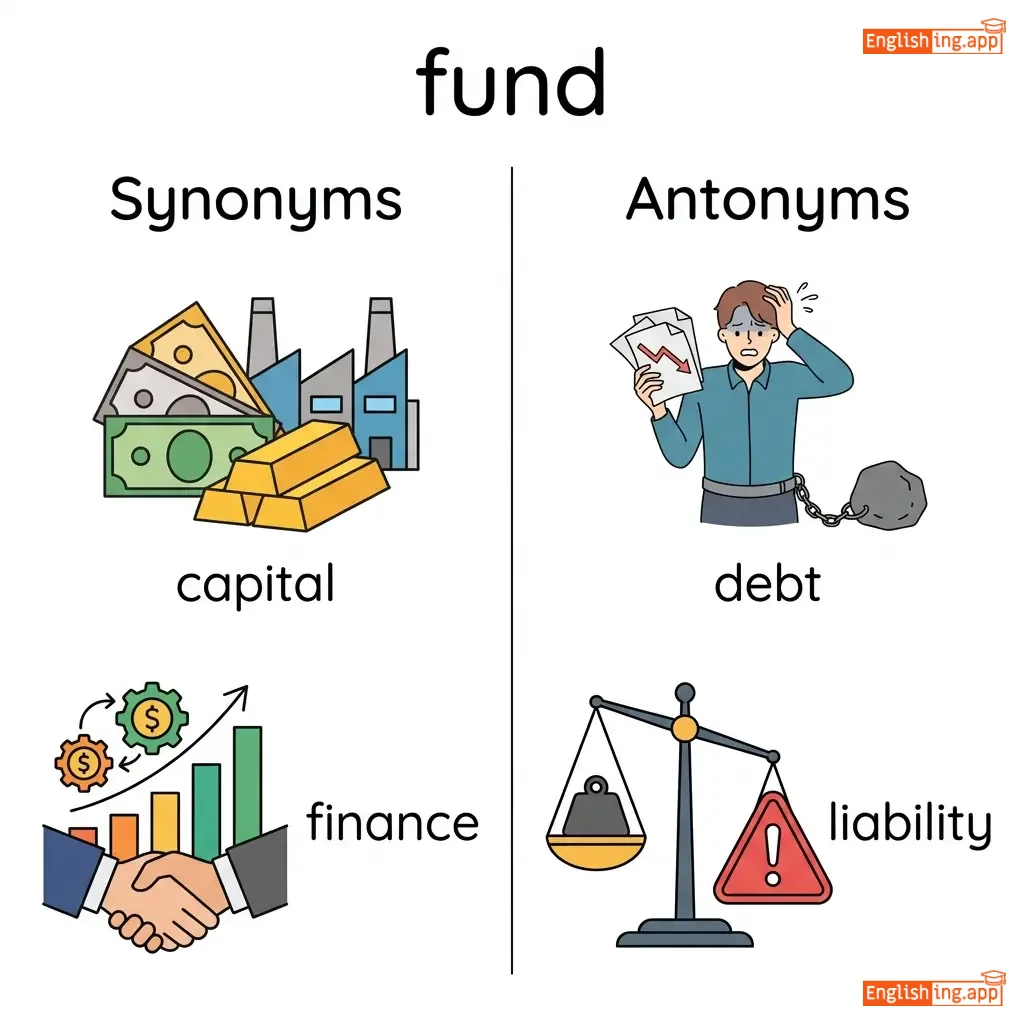
capital, finance, money, resource, investment
••••••
|
debt, liability
••••••
|
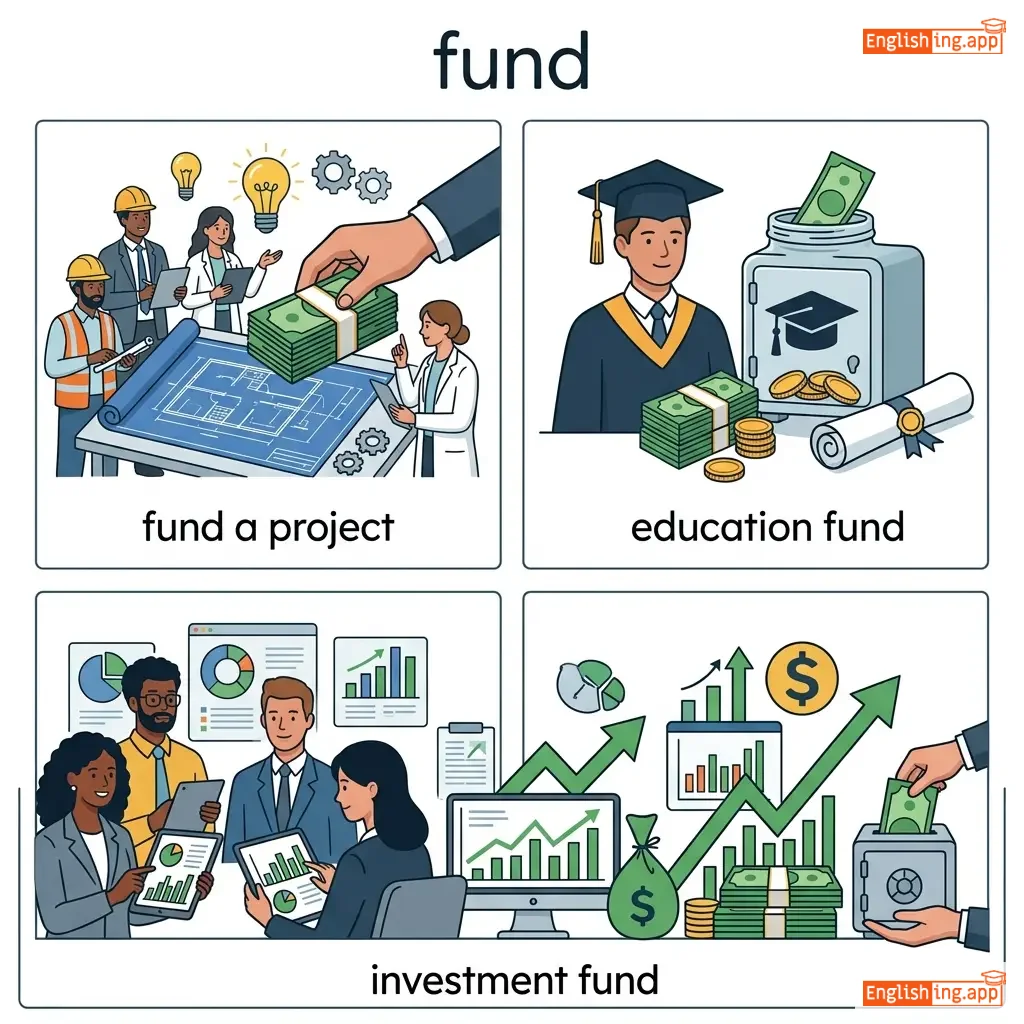
fund a project, education fund, investment fund, fund allocation
••••••
|
Фонд означает фонд — подумай о фонде = 'Фан Доставка', для развлечений нужны деньги.
••••••
|
|
📖
••••••
|
/ˌfʌndəˈmɛntl/
adjective
(фундаментал)
••••••
|
- •••••• |
фундаментальный
fundamental'nyy
••••••
|
- •••••• | - •••••• | - •••••• | - •••••• |
forming a necessary base or core; of central importance
••••••
|
Honesty is a fundamental principle of good leadership.
Честность — это фундаментальный принцип хорошего лидерства.
••••••
|
Честность — это фундаментальный принцип хорошего лидерства.
Chestnost' — eto fundamental'nyy printsip khoroshego liderstva.
••••••
|
fundamental truth
фундаментальная истина
••••••
|
a basic and undeniable fact
••••••
|
фундаментальная истина
fundamental'naya istina
••••••
|
basic, essential, primary, foundational, vital
••••••
|
trivial, secondary
••••••
|
fundamental principle, fundamental right, fundamental importance, fundamental truth
••••••
|
Фундаментальный — это основа или база для всего.
••••••
|
|
🔑
••••••
|
/ˌfʌndəˈmɛntəli/
adverb
(fundamentali)
••••••
|
- •••••• |
фундаментально
fundamental'no
••••••
|
- •••••• | - •••••• | - •••••• | - •••••• |
in a basic and important way; at the core
••••••
|
The two theories are fundamentally different.
Эти две теории принципиально разные.
••••••
|
Эти две теории принципиально разные.
Eti dve teorii printsipial'no raznye.
••••••
|
- •••••• | - •••••• | - •••••• |
basically, essentially, primarily, principally
••••••
|
superficially, peripherally
••••••
|
fundamentally different, fundamentally important
••••••
|
Fundamentally = фундаментально = Это основа всего!
••••••
|
|
🏦
••••••
|
/ˈfʌndɪŋ/
noun
(fanding)
••••••
|
- •••••• |
финансирование
finansirovanie
••••••
|
- •••••• | - •••••• | - •••••• | - •••••• |
financial support for a project or organization
••••••
|
The startup is seeking funding from investors. |
Стартап ищет финансирование от инвесторов.
Startap ishchet finansirovanie ot investorov.
••••••
|
government funding |
financial support provided by the government
••••••
|
государственное финансирование
gosudarstvennoe finansirovanie
••••••
|
financing, capital, investment, sponsorship, backing
••••••
|
withdrawal, loss
••••••
|
seek funding, government funding, secure funding, lack of funding
••••••
|
Funding значит финансирование — Стартап говорит 'Fun ding', значит нужно деньги.
••••••
|
|
💰
••••••
|
/ˈfʌndˌreɪzɪŋ/
noun
(фандрейзинг)
••••••
|
- •••••• |
сбор средств
sbor sredstv
••••••
|
- •••••• | - •••••• | - •••••• | - •••••• |
the process of collecting money for a cause or project
••••••
|
The organization is organizing a fundraising event. |
Организация организует событие по сбору средств.
Organizatsiya organizuyet sobytiye po sbory sredstv.
••••••
|
- •••••• | - •••••• | - •••••• |
charity event, donation drive, campaign, benefit
••••••
|
spending, wasting
••••••
|
fundraising campaign, fundraising event, fundraising dinner
••••••
|
сбор (fund) средств (raise), fundraising!
••••••
|
|
⚰️
••••••
|
/ˈfjuːnərəl/
noun
(fyːnərəl)
••••••
|
- •••••• |
похороны
pokhorony
••••••
|
- •••••• | - •••••• | - •••••• | - •••••• |
a ceremony held to honor and bury or cremate someone who has died
••••••
|
The family attended the funeral of their grandfather. |
Семья присутствовала на похоронах их дедушки.
Sem'ya prisutstvovala na pokhoronakh ikh dedushki.
••••••
|
funeral service |
the ceremony connected with a funeral
••••••
|
похоронная служба
pokhoronnaya sluzhba
••••••
|
memorial, burial, cremation, obsequies
••••••
|
celebration, festival
••••••
|
funeral ceremony, funeral service, attend a funeral, funeral procession
••••••
|
Похороны - когда тишина, не праздник.
••••••
|
|
😂
••••••
|
/ˈfʌni/
adjective
(Фани)
••••••
|
- •••••• |
смешной
smeshnoy
••••••
|
- •••••• | - •••••• | - •••••• | - •••••• |
Causing laughter or amusement; humorous.
••••••
|
The comedian told a very funny joke.
Комик рассказал очень смешной анекдот.
••••••
|
Комик рассказал очень смешной анекдот.
Komik rasskazal ochen' smeshnoy anekdot.
••••••
|
funny bone
смешной косточка
••••••
|
the part of the elbow that causes a tingling feeling when hit
••••••
|
смешной косточка
smeshnoy kostochka
••••••
|
humorous, amusing, comic, hilarious, entertaining
••••••
|
serious, sad, boring
••••••
|
funny story, funny joke, very funny, funny moment
••••••
|
Funny означает смешной, когда что-то смешное, ты не можешь не смеяться.
••••••
|

