वोकैबुलरीज

इंग्लिश वोकैबुलरी डिस्कवर, लर्न और मास्टर करें

preposition
/wɪð/
के साथ (ke saath)

indicating the person or thing that is accompanying or involved with someone or something else

"She went to the market with her friend."

"वह अपने दोस्त के साथ बाजार गई थी।" (Vah apne dost ke saath bazar gayi thi.)
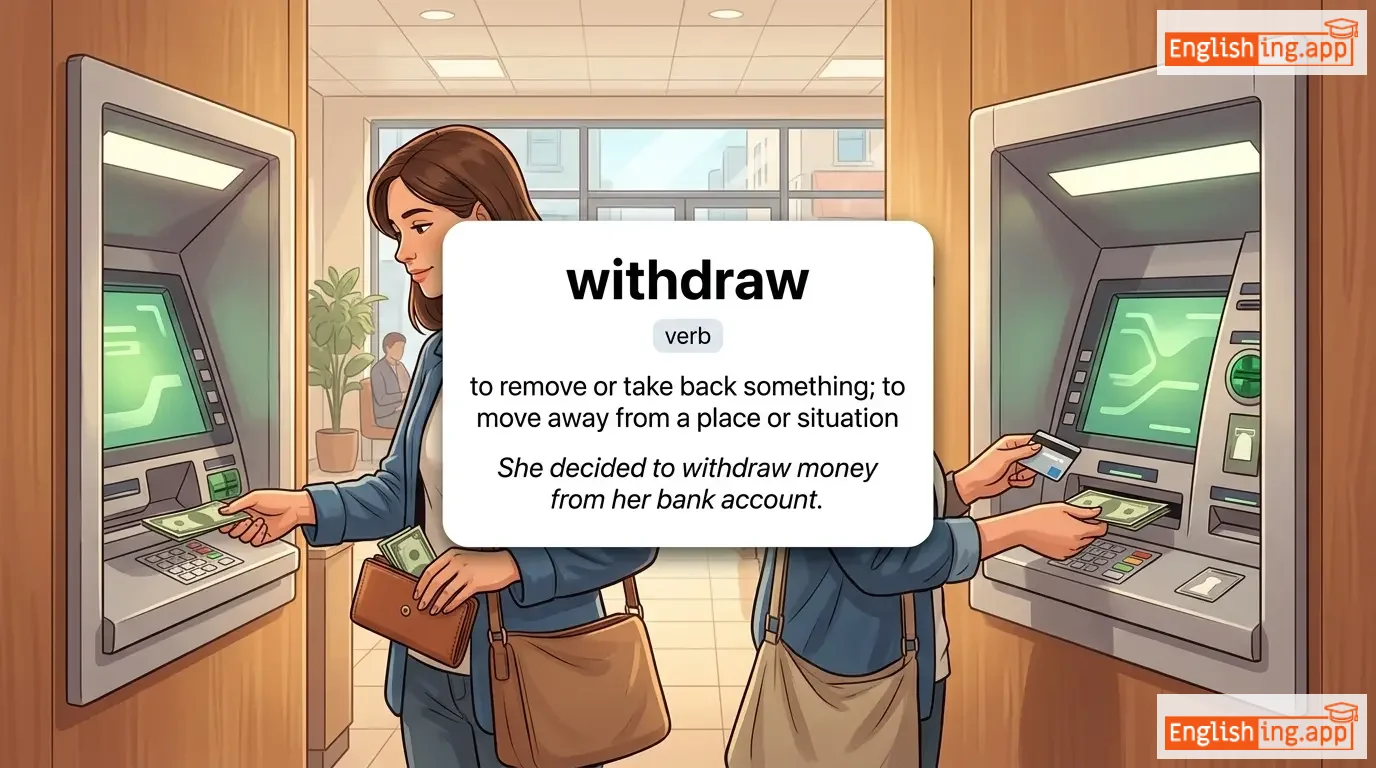
withdraw definition card — visual illustration of the meaning
verb
/wɪðˈdrɔː/
निकालना (nikalna)

to remove or take back something; to move away from a place or situation

"She decided to withdraw money from her bank account."

"उसने अपने बैंक खाते से पैसे निकालने का फैसला किया।" (Usne apne bank khate se paise nikalne ka faisla kiya.)
noun
/wɪðˈdrɔːəl/
निकासी (nikaasi)

the act of taking something back or removing oneself from a situation

"He made a withdrawal of $500 from his bank account."

"उसने अपने बैंक खाते से $500 की निकासी की।" (Usne apne bank khate se 500 dollar ki nikaasi ki.)
adjective
/wɪðˈdrɔːn/
संकोची (sankochi)

quiet and shy; not wanting to talk to others

"After the incident, he became withdrawn and avoided his friends."

"घटना के बाद, वह संकोची हो गया और अपने दोस्तों से बचने लगा।" (ghatna ke baad, wah sankochi ho gaya aur apne doston se bachne laga.)
verb
/ˈwɪð.ər/
मुरझाना (murjhana)

to dry up and die, typically used for plants

"The flowers will wither without enough water."

"फूल पर्याप्त पानी के बिना मुरझा जाएंगे।" (phool paryapt paani ke bina murjha jaenge.)
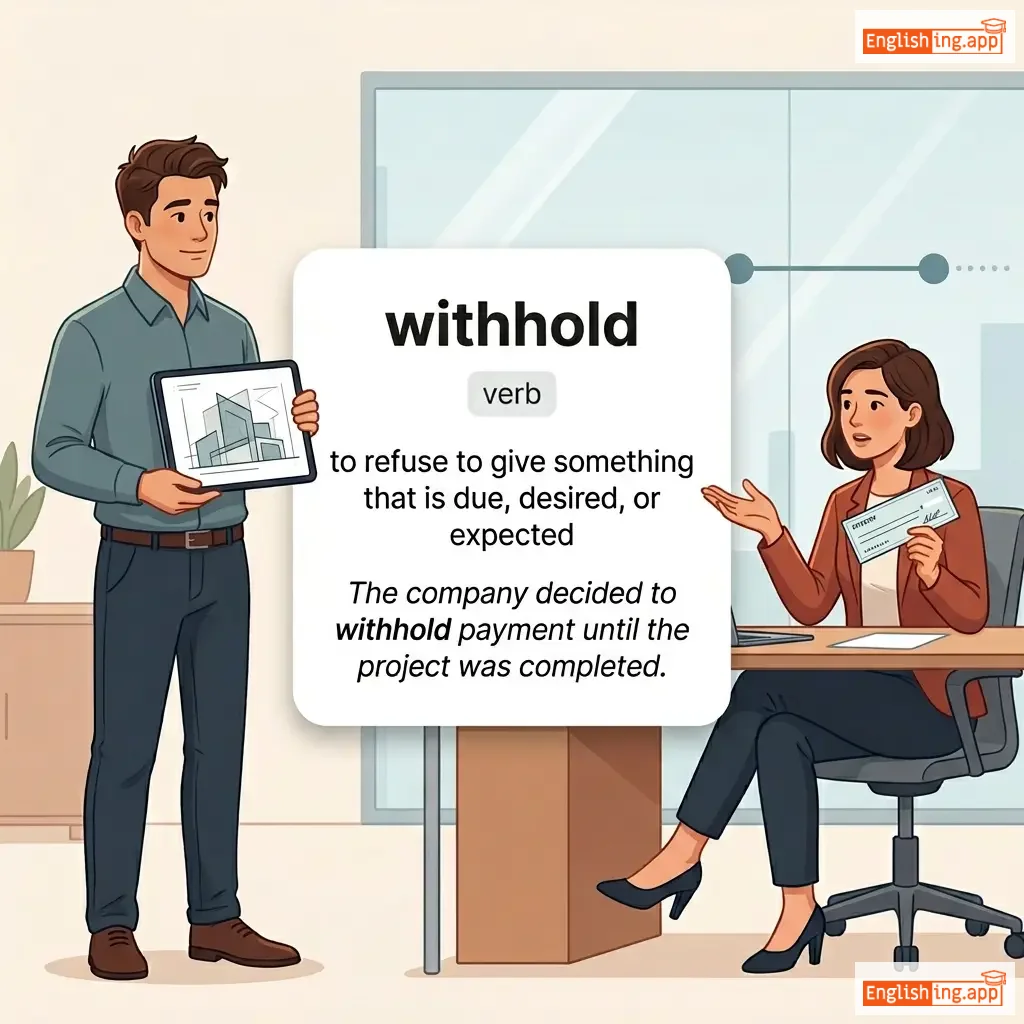
withhold definition card — visual illustration of the meaning
verb
/wɪðˈhoʊld/
रोकना (rokna)

to refuse to give something that is due, desired, or expected

"The company decided to withhold payment until the project was completed."

"कंपनी ने परियोजना के पूर्ण होने तक भुगतान रोकने का निर्णय लिया।" (Kampani ne pariyojna ke poorn hone tak bhugtan rokne ka nirnay liya.)
preposition
/wɪðˈɪn/
के भीतर (ke bhitar)

inside the limits of something, or as part of a particular space or time

"The keys are within the drawer."

"चाबियाँ दराज के भीतर हैं।" (Chaabiyaan daraj ke bhitar hain.)
preposition
/wɪðˈaʊt/
बिना (bina)

in the absence of, or not having something

"He left without saying goodbye."

"वह बिना अलविदा कहे चला गया।" (Wah bina alvida kahe chala gaya.)
verb
/wɪðˈstænd/
सहन करना / प्रतिरोध करना (sahan karna / pratirodh karna)

to resist or endure something without being harmed

"This building can withstand strong earthquakes."

"यह भवन मजबूत भूकंपों को सहन कर सकता है।" (Yeh bhavan majboot bhookampon ko sahan kar sakta hai.)
adjective
/ˈwɪtləs/
मूर्ख (murkh)

lacking intelligence or good sense

"It was a witless decision to leave the door unlocked."

"यह दरवाजा अनलॉक छोड़ने का एक मूर्ख निर्णय था।" (Yeh darwaza unlock chhodne ka ek murkh nirnay tha.)
noun
/ˈwɪtlɪŋ/
मूर्ख / नकलची बुद्धिमान (moorkh / nakalchi buddhimaan)

a person who has little wit or pretends to be witty

"He acted like a witling among scholars."

"वह विद्वानों के बीच एक मूर्ख की तरह व्यवहार कर रहा था।" (Vah vidwanon ke beech ek moorkh ki tarah vyavhaar kar raha tha.)
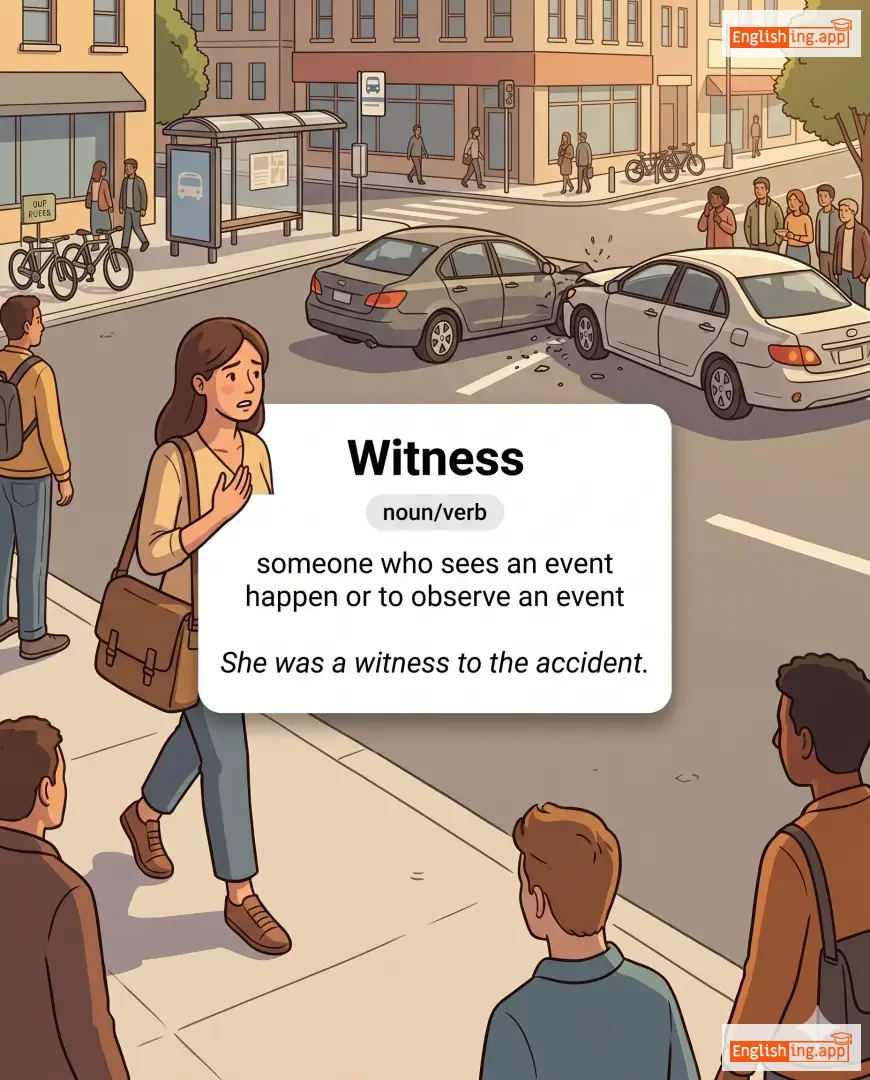
Witness definition card — visual illustration of the meaning
noun/verb
/ˈwɪtnɪs/
गवाह (gawah)

someone who sees an event happen or to observe an event

"She was a witness to the accident."

"वह दुर्घटना का गवाह थी।" (Wah durghatna ka gawah thi.)
noun
/ˈwɪtɪˌsɪzəm/
चतुर वाक्य / हास्यपूर्ण टिप्पणी (chatur vaaky / haasyapurn tippani)

a clever or funny remark

"Her witticism made everyone laugh during the meeting."

"उसकी चतुर टिप्पणी ने बैठक के दौरान सभी को हंसा दिया।" (Uski chatur tippani ne baithak ke dauran sabhi ko hansa diya.)
adverb
/ˈwɪtɪŋli/
जानबूझकर (janboojhkar)

Consciously and intentionally; on purpose.

"He wittingly withheld information from the police."

"वह जानबूझकर पुलिस से जानकारी छिपा रहा था।" (Vah janboojhkar police se jankari chhupa raha tha.)
adjective
/ˈwɪt.i/
चतुर; मजेदार (chatur; mazedar)

having or showing quick intelligence; amusing in a clever way

"Her witty response to the critic's question impressed the entire audience."

"उसकी चतुर प्रतिक्रिया ने आलोचक के सवाल का पूरी ऑडियंस पर प्रभाव डाला।" (uski chatur pratikriya ne alochak ke sawal ka puri audience par prabhav dala)
noun
/ˈwɪzərd/
जादूगर (jadugar)

a man who is supposed to have magical powers; a person who is very skilled in a particular area

"The wizard performed amazing magic tricks."

"जादूगर ने अद्भुत जादुई ट्रिक्स दिखाई।" (jadugar ne adbhut jadooee tricks dikhayi)
noun
/ˈwɪzərdri/
जादूगरी कौशल (jadugari kaushal)

The art or practice of magic; great skill or expertise in something.

"The programmer's wizardry amazed everyone in the room."

"प्रोग्रामर की जादूगरी कौशल ने कमरे में सभी को हैरान कर दिया।" (Programmer ki jadugari kaushal ne kamre mein sabhi ko hairan kar diya.)
verb
/ˈwɪzn/
सूखा हुआ (sookha hua)

To become dry, shrunken, and wrinkled.

"The flowers began to wizen after days without water."

"फूल पानी के बिना कुछ दिनों बाद सूखने लगे।" (Phool pani ke bina kuch dinon baad sookhne lage.)
adjective
/ˈwɪzn feɪst/
सूखा और झुर्रीदार चेहरा (sookha aur jhurridar chehra)

Having a dry, wrinkled, and withered face.

"A wizen-faced old man sat quietly in the corner."

"एक सूखा और झुर्रीदार चेहरा वाला बूढ़ा आदमी शांति से कोने में बैठा था।" (Ek sookha aur jhurridar chehra wala boodha aadmi shaanti se kone mein baitha tha.)
adjective
/ˈwɪznd/
झुर्रीदार (jhurreedaar)

Shriveled, wrinkled, or withered, often due to age.

"The wizened tree stood in the field for centuries."

"वह झुर्रीदार पेड़ सदियों से खेत में खड़ा था।" (Wah jhurreedaar ped sadiyon se khet mein khada tha.)
verb
/ˈwɒb.l̩/
डगमग करना (dogmag karna)

to move unsteadily from side to side; to shake or tremble slightly

"The table began to wobble when he leaned on it."

"जब उसने टेबल पर झुककर रखा, तो टेबल डगमग करने लगी।" (Jab usne table par jhukar rakha, to table dogmag karne lagi.)
noun
/woʊ/
दुःख (dukh)

great sorrow, distress, or trouble

"Her heart was filled with woe after hearing the sad news."

"उसने दुखद समाचार सुनकर अपना दिल भारी महसूस किया।" (Usne dukhad samachar sunkar apna dil bhari mahsus kiya.)
adjective
/ˈwoʊ.fəl/
दुखद (dukhad)

full of woe; very sad or miserable; also used to mean very bad or deplorable

"He gave me a woeful look when he lost the match."

"जब उसने मैच खो दिया तो उसने मुझे दुखी नज़र से देखा।" (Jab usne match kho diya to usne mujhe dukhi nazar se dekha.)
noun
/woʊz/
विपत्ति (vipatti)

great sorrow or distress; troubles

"The company faced financial woes after the market crash."

"बाजार के पतन के बाद कंपनी को वित्तीय विपत्तियों का सामना करना पड़ा।" (Bazar ke patan ke baad company ko vittiya vipattiyon ka samna karna pada.)
noun
/wʊlf/
भेड़िया (bhediya)

a wild carnivorous animal related to the dog, living and hunting in packs

"The wolf howled loudly under the full moon."

"भेड़िया पूर्णिमा की रात में जोर से दहाड़ रहा था।" (Bhediya poornima ki raat mein zor se dahad raha tha.)
noun
/ˈwɪmən/
महिला (mahila)

an adult human female

"The woman at the counter helped me."

"काउंटर पर खड़ी महिला ने मेरी मदद की।" (Counter par khadi mahila ne meri madad ki.)
noun
/ˈwʌndər/
आश्चर्य (aashcharya)

a feeling of amazement and admiration, caused by something beautiful, remarkable, or unfamiliar

"The view from the mountain was a true wonder."

"पहाड़ से दृश्य एक असली आश्चर्य था।" (Pahaad se drishya ek asli aashcharya tha.)
adjective
/ˈwʌndərfəl/
शानदार (shandar)

extremely good or impressive

"She had a wonderful time at the party."

"वह पार्टी में एक शानदार समय बिता रही थी।" (Woh party mein ek shandar samay bita rahi thi.)
adjective
/ˈwɒŋki/
अस्थिर; अविश्वसनीय; ठीक से काम नहीं कर रहा (wonki)

unstable; unreliable; not working properly

"The old chair was wonky and wobbled every time someone sat on it."

"पुराना कुर्सी वोंकी था और हर बार जब कोई उस पर बैठता तो हिलता था।" (purana kursi wonki tha aur har baar jab koi us par baithta to hilta tha)
adjective
/woʊnt/ or /wɔːnt/
आदी (aadi)

accustomed or used to doing something

"She rose early, as she was wont to do."

"वह जल्दी उठी, जैसा कि वह करने की आदी थी।" (Vah jaldi uthi, jaisa ki vah karne ki aadi thi.)
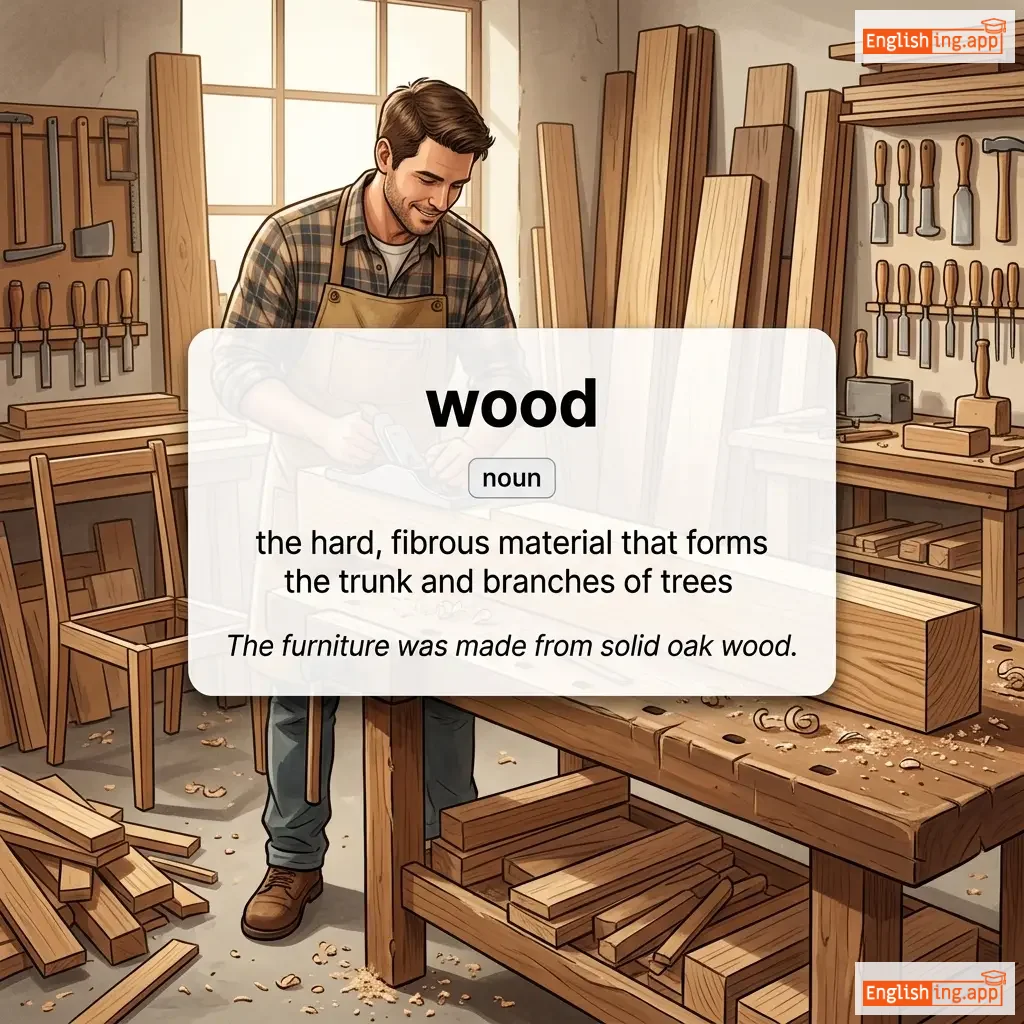
wood definition card — visual illustration of the meaning
noun
/wʊd/
लकड़ी (lakdi)

the hard, fibrous material that forms the trunk and branches of trees

"The furniture was made from solid oak wood."

"फर्नीचर ठोस ओक लकड़ी से बना था।" (Furnichar thos oak lakdi se bana tha.)
noun
/wʊd ˈæp.əl/
लकड़ी का सेब (lakdi ka seb)

a hard-shelled tropical fruit with aromatic pulp used in beverages and medicine

"The wood apple has a hard shell but sweet pulp inside."

"लकड़ी का सेब में कठोर खोल होता है लेकिन अंदर मीठा गूदा होता है" (lakdi ka seb mein kathor khol hota hai lekin andar meetha guda hota hai)
adjective
/ˈwʊdən/
लकड़ी का (lakdi ka)

made of wood

"The house had beautiful wooden floors."

"घर में खूबसूरत लकड़ी के फर्श थे।" (Ghar mein khubsurat lakdi ke farsh the.)
noun
/ˈwʊd.ən ˈsæn.dəl/
लकड़ी की चप्पल (lakdi ki chappal)

a type of footwear made of wood, typically worn as traditional shoes

"She wore wooden sandals to the traditional ceremony."

"वह पारंपरिक समारोह में लकड़ी की चप्पल पहने हुए थीं।" (vah paaramparik samaaroh mein lakdi ki chappal pehene hue thi)
noun
/ˈwʊd.pek.ər/
लकड़ी तोकने वाला पक्षी (lakdi toknay wala pakshi)

a bird that pecks at tree bark to find insects and create nesting holes

"The woodpecker hammered against the oak tree."

"लकड़ी तोकने वाला पक्षी ओक के पेड़ पर थपथपाया।" (lakdi toknay wala pakshi oak ke ped par thapthapaya)
noun
/ˈwʊlən dres/
ऊनी ड्रेस (ooni dres)

a dress made from wool fabric, typically worn in cold weather

"She wore a warm woolen dress during the winter months."

"उसने सर्दियों के महीनों में एक गर्म ऊनी ड्रेस पहनी।" (usne sardiyon ke mahino mein ek garm ooni dres pehni)
noun
/wɜːrd/
शब्द (shabd)

a single distinct meaningful element of speech or writing

"He looked up the word in the dictionary."

"उसने शब्द को शब्दकोश में देखा।" (Usne shabd ko shabdkosh mein dekha.)
noun
/wɜːrd fɔːrˈmeɪʃən/
शब्द निर्माण (shabd nirman)

the process by which new words are created or existing words are modified in a language

"Word formation helps learners understand how new vocabulary develops in English."

"शब्द निर्माण अंग्रेज़ी में नए शब्दों को समझने में मदद करता है।" (shabd nirman angrezi mein naye shabdon ko samajhne mein madad karta hai)
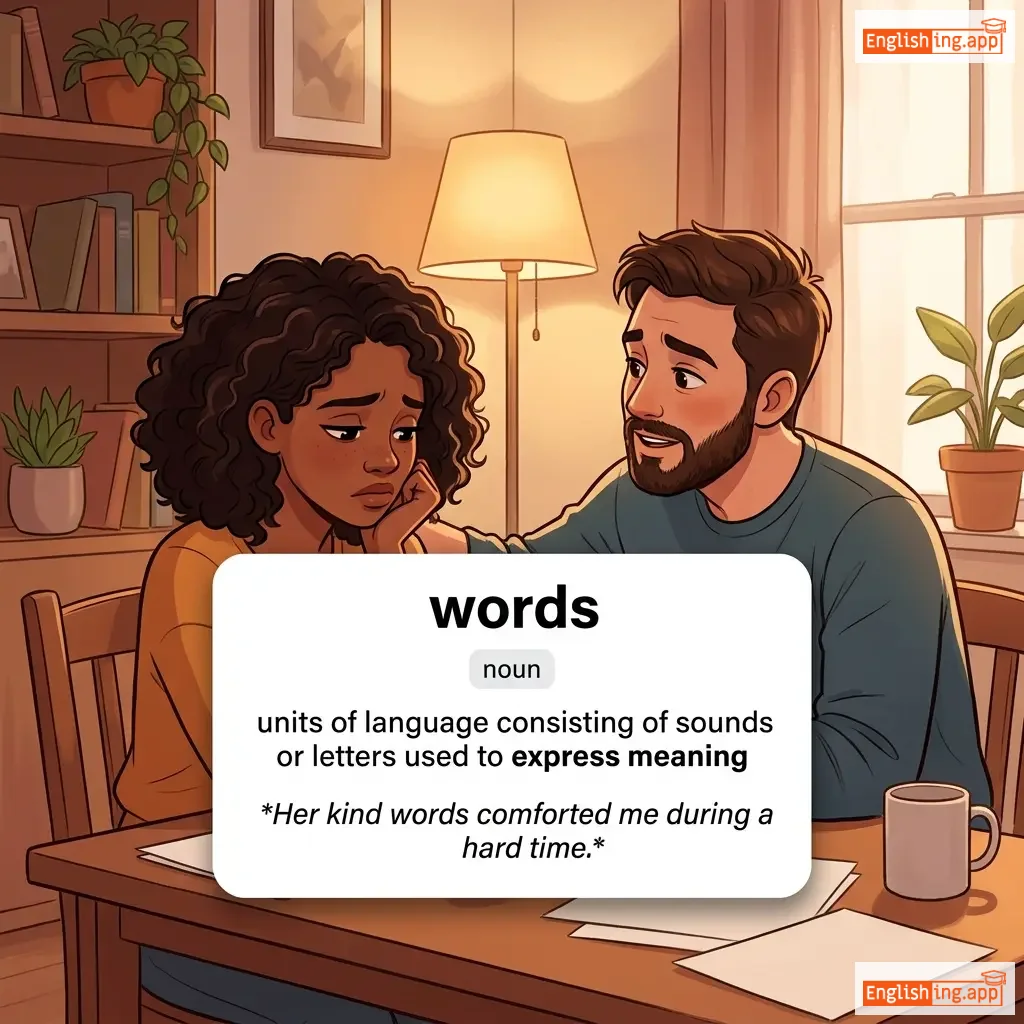
words definition card — visual illustration of the meaning
noun
/wɜːdz/
शब्द (shabd)

units of language consisting of sounds or letters used to express meaning

"Her kind words comforted me during a hard time."

"उसके दयालु शब्दों ने मुझे कठिन समय में सांत्वना दी।" (Uske dayalu shabdon ne mujhe kathin samay mein santvana di.)
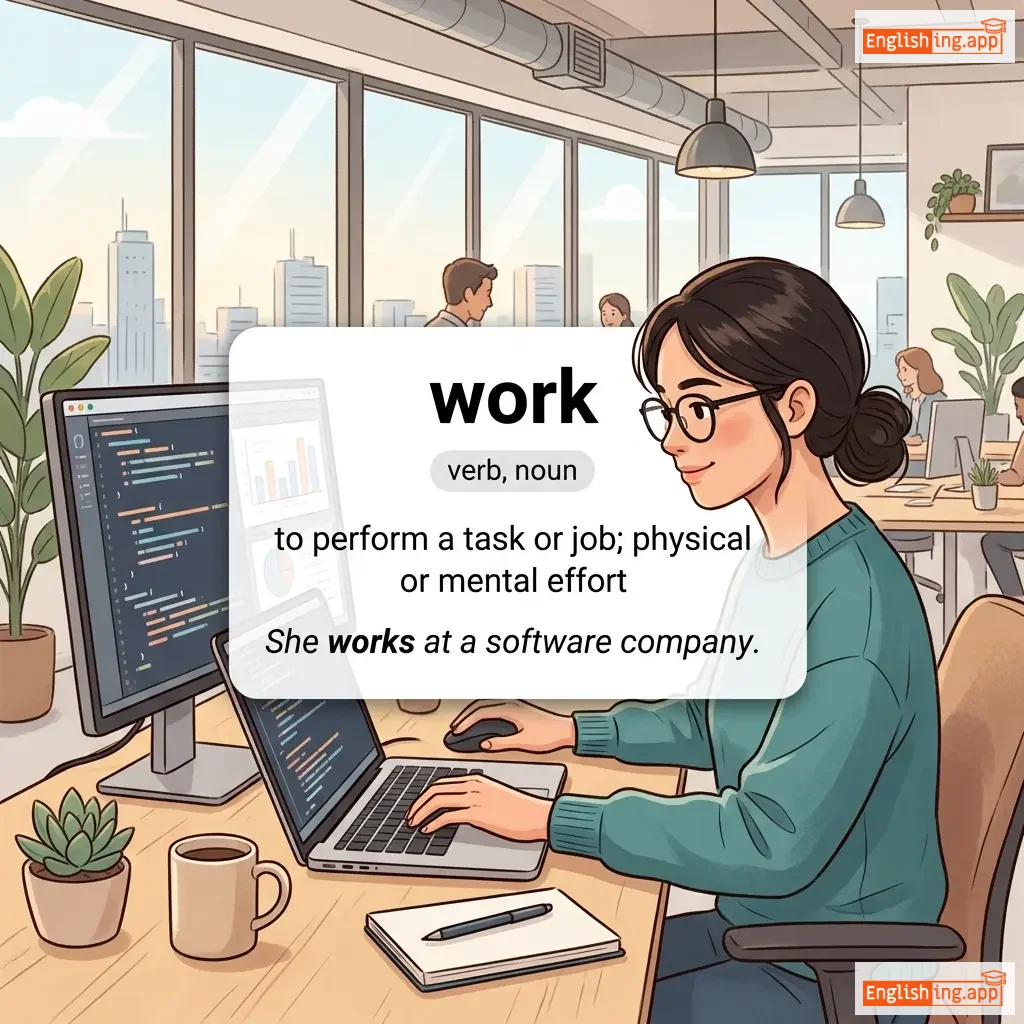
work definition card — visual illustration of the meaning
verb, noun
/wɜːrk/
काम (kaam)

to perform a task or job; physical or mental effort

"She works at a software company."

"वह एक सॉफ़्टवेयर कंपनी में काम करती है।" (Vah ek software company mein kaam karti hai.)
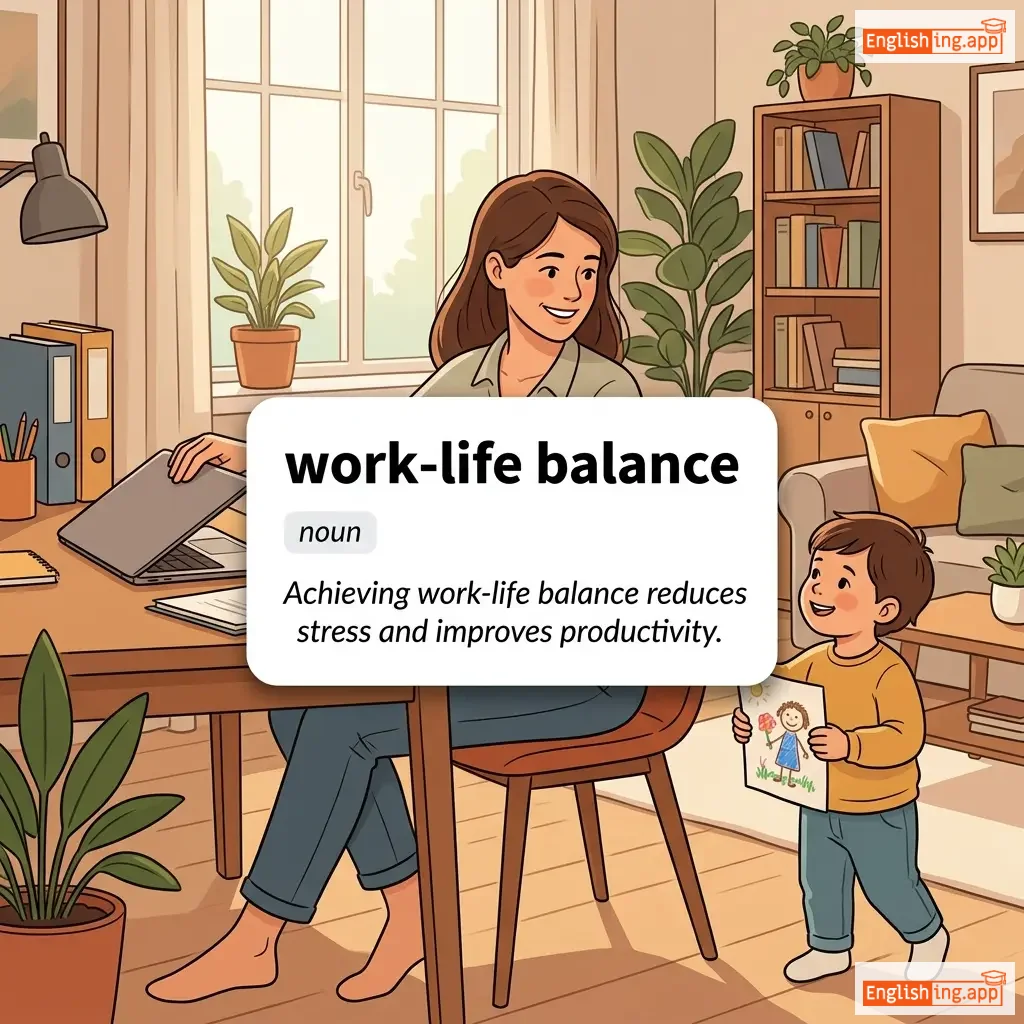
work-life balance definition card — visual illustration of the meaning
noun
/ˈwɜːrk laɪf ˈbæl.əns/
कार्य-जीवन संतुलन (karya-jeevan santulan)

The equilibrium between personal and professional life, ensuring neither dominates at the expense of the other.

"Achieving work-life balance reduces stress and improves productivity."

"कार्य-जीवन संतुलन प्राप्त करने से तनाव कम होता है और उत्पादकता में सुधार होता है।" (Karya-jeevan santulan prapt karne se tanav kam hota hai aur utpadakta mein sudhaar hota hai.)
adjective
/ˈwɜːrkəbəl/
कार्यशील; प्रयुक्त किया जा सकने योग्य (kaaryasheel; prayukt kiya ja sakne yogya)

capable of being done or put into effect; practical

"We need a workable solution to solve this problem quickly."

"हमें इस समस्या को जल्दी हल करने के लिए एक कार्यशील समाधान की आवश्यकता है।" (humein is samasya ko jaldi hal karne ke liye ek kaaryasheel samaadhan ki aavashyakta hai.)
noun
/ˈwɜːrkər/
कर्मचारी (karmachari)

a person who is employed to perform tasks or duties

"The workers were busy building the bridge."

"कर्मचारी पुल बनाने में व्यस्त थे।" (Karmachari pul banane mein vyast the.)
workflow definition card — visual illustration of the meaning
noun
/ˈwɜːk.fləʊ/
कार्यप्रवाह, प्रक्रियाओं का अनुक्रम (karyapravah, prakriyaon ka anukram)

The sequence of processes through which a piece of work passes from initiation to completion.

"A well-structured workflow enhances productivity."

"एक अच्छी तरह से संरचित कार्यप्रवाह उत्पादकता बढ़ाता है।" (Ek acchi tarah se sanrachit karyapravah utpadakta badhata hai.)
noun
/ˈwɜːrkˌfɔːrs/
कार्यबल (karyabal)

the people engaged in or available for work

"The company is looking to expand its workforce by 20%."

"कंपनी अपने कार्यबल को 20% बढ़ाने की योजना बना रही है।" (Kampani apne karyabal ko 20% badhane ki yojna bana rahi hai.)
adjective
/ˈwɜːrkɪŋ/
काम करना (kaam karna)

engaged in physical or mental effort to achieve a goal or task

"She is working on her project right now."

"वह अभी अपने प्रोजेक्ट पर काम कर रही है।" (Wah abhi apne project par kaam kar rahi hai.)
noun
/ˈwɜːrkɪŋ mæn/
कर्मचारी (karmachari)

a man engaged in manual labor or industrial work, often considered as part of the working class

"The working-man fought hard for better wages and conditions."

"कर्मचारी बेहतर वेतन और शर्तों के लिए कड़ी मेहनत कर रहा था।" (Karmachari behtar vetan aur sharton ke liye kadi mehnat kar raha tha.)
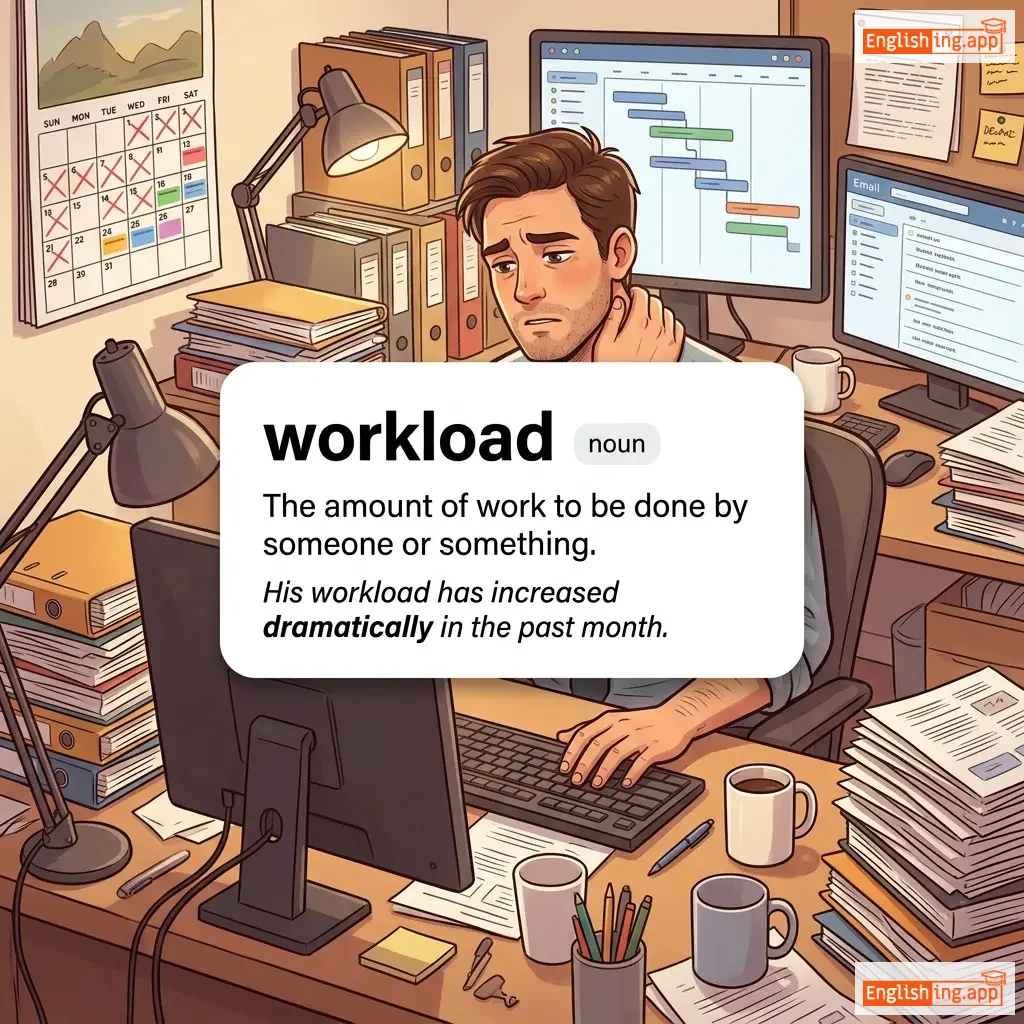
workload definition card — visual illustration of the meaning
noun
ˈwɜːrkˌləʊd
कार्यभार (kaaryabhaar)

The amount of work to be done by someone or something.

"His workload has increased dramatically in the past month."

"उसके वर्कलोड में पिछले महीने में नाटकीय रूप से वृद्धि हुई है।" (Uske workload mein pichhle mahine mein naatakiy roop se vruddhi hui hai.)
adjective
/ˈwɜːkmənˌlaɪk/
कुशलतापूर्वक (kushaltapurvak)

Showing efficient, competent, and practical skill, but without flair or creativity.

"The carpenter delivered a workmanlike performance on the project."

"कारपेंटर ने प्रोजेक्ट पर एक कुशलतापूर्वक प्रदर्शन दिया।" (Carpenter ne project par ek kushaltapurvak pradarshan diya.)
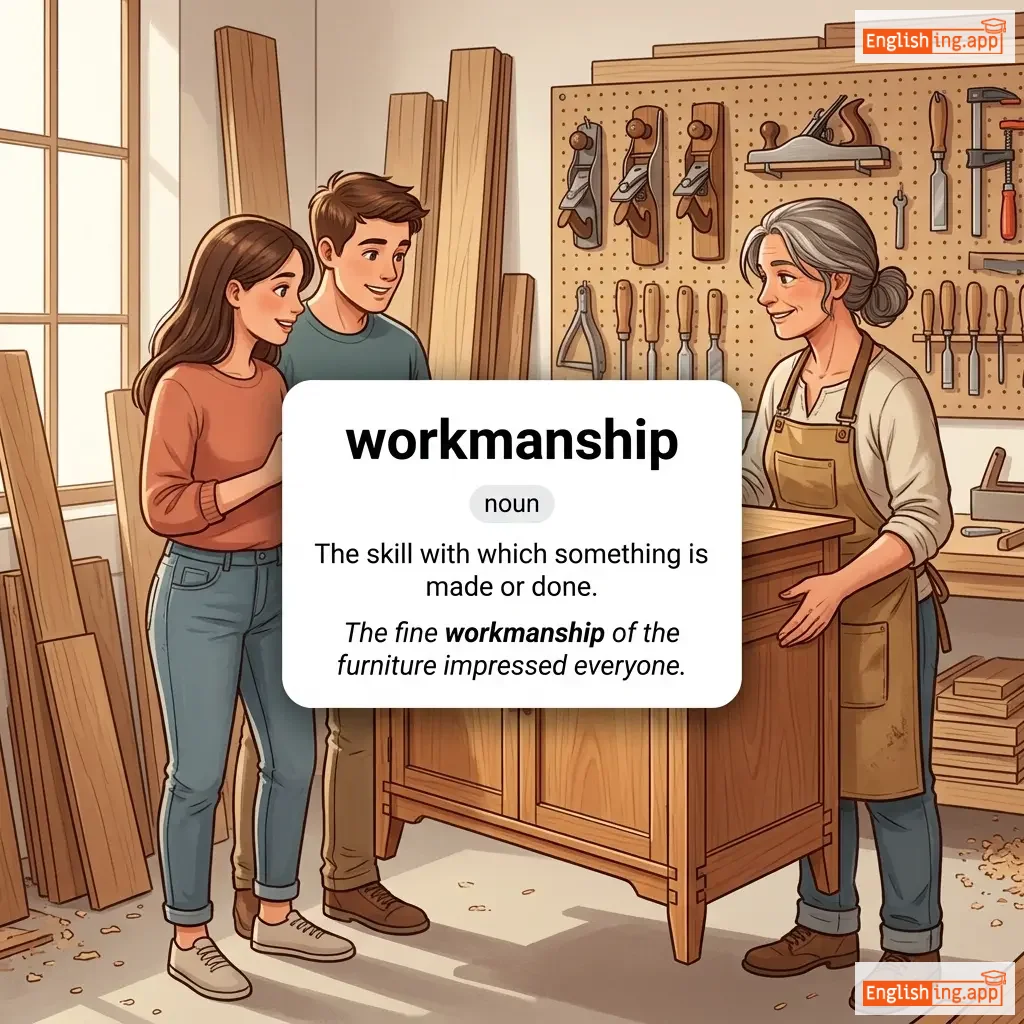
workmanship definition card — visual illustration of the meaning
noun
/ˈwɜːkmənˌʃɪp/
कला कौशल (kala kaushal)

The skill with which something is made or done.

"The fine workmanship of the furniture impressed everyone."

"फर्नीचर का उत्कृष्ट कला कौशल सभी को प्रभावित कर गया।" (Furnichar ka utkṛṣṭ kala kaushal sabhi ko prabhavit kar gaya.)