वोकैबुलरीज

इंग्लिश वोकैबुलरी डिस्कवर, लर्न और मास्टर करें

adjective
/ˈwɪəri/
थका हुआ (thaka hua)

feeling or showing extreme tiredness, especially as a result of exertion or lack of sleep

"After the long journey, she felt weary and wanted to rest."

"लंबी यात्रा के बाद, उसे थका हुआ महसूस हुआ और वह आराम करना चाहती थी।" (Lambi yatra ke baad, use thaka hua mehsoos hua aur wah aaram karna chahti thi.)
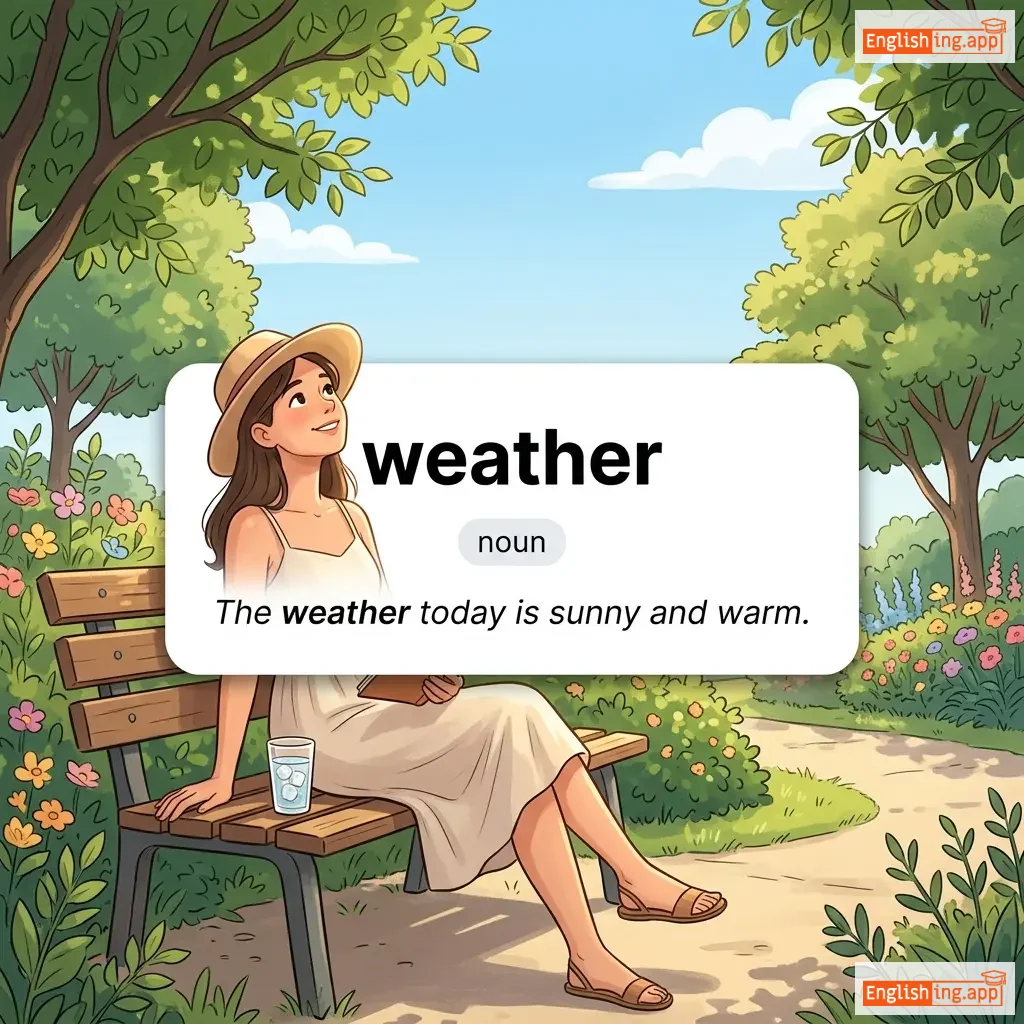
weather definition card — visual illustration of the meaning
noun
/ˈwɛðər/
मौसम (mausam)

the state of the atmosphere at a particular place and time in terms of heat, cloudiness, dryness, sunshine, wind, rain, etc.

"The weather today is sunny and warm."

"आज का मौसम धूप और गर्म है।" (Aaj ka mausam dhoop aur garm hai.)
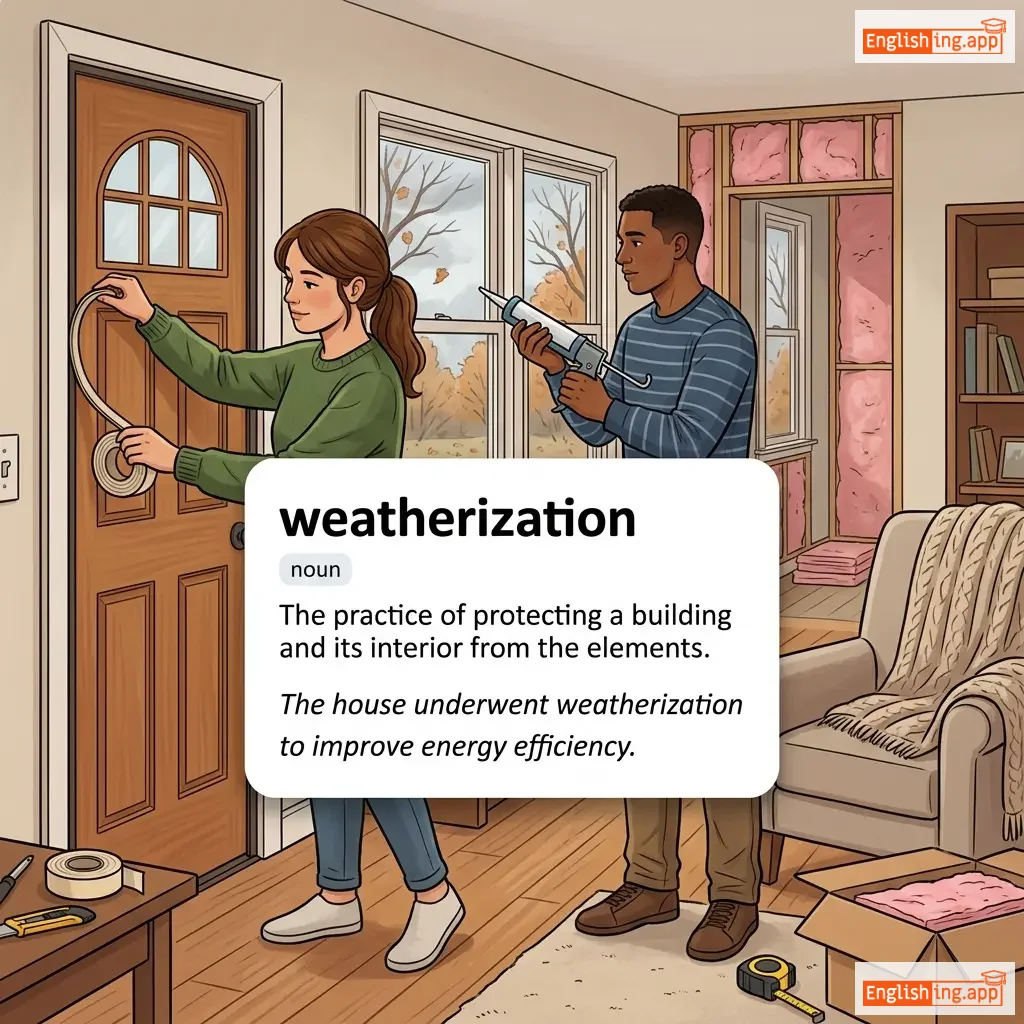
weatherization definition card — visual illustration of the meaning
noun
ˌwɛðəraɪˈzeɪʃən
मौसम के अनुसार अनुकूलन (mausam ke anusar anukoolan)

The practice of protecting a building and its interior from the elements.

"The house underwent weatherization to improve energy efficiency."

"घर की ऊर्जा दक्षता बढ़ाने के लिए मौसम के अनुसार अनुकूलन किया गया।" (Ghar ki urja dakshata badhane ke liye mausam ke anusar anukoolan kiya gaya.)
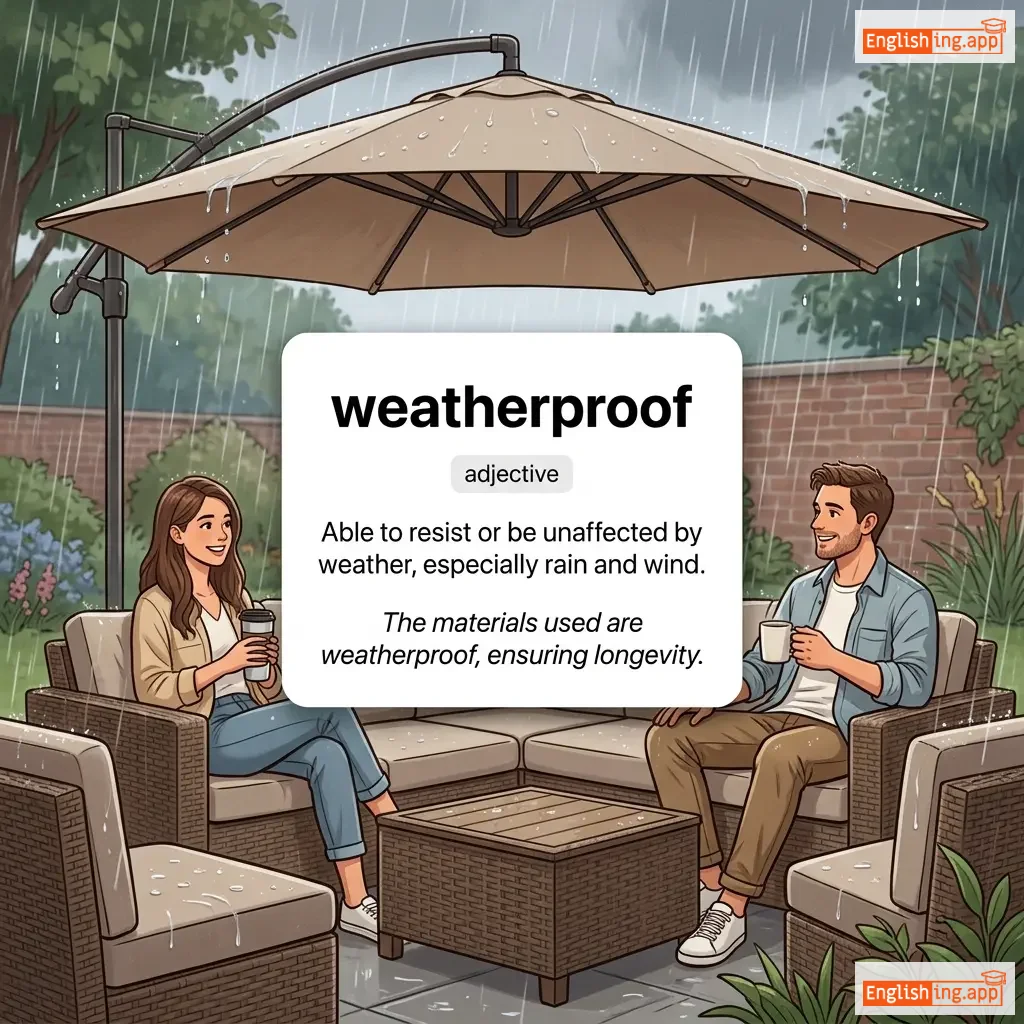
weatherproof definition card — visual illustration of the meaning
adjective
ˈwɛðərpruːf
मौसम प्रतिरोधी (mausam pratirodhī)

Able to resist or be unaffected by weather, especially rain and wind.

"The materials used are weatherproof, ensuring longevity."

"उपयोग किए गए सामग्री मौसम प्रतिरोधी हैं, जो दीर्घायु सुनिश्चित करते हैं।" (Upyog kiye gaye samagri mausam pratirodhī hain, jo dīrghāyū sunishchit karte hain.)
verb
/wiːv/
बुनाई करना (bunai karna)

to make cloth by interlacing threads or to combine elements into a whole

"She weaves beautiful patterns on her loom."

"वह अपनी चक्की पर सुंदर पैटर्न बुनती है।" (Vah apni chakki par sundar pattern bunti hai.)
noun
/ˈwiː.vər/
बुनकर (bunkar)

a person who makes cloth by interlacing threads on a loom

"The skilled weaver created intricate patterns on the silk fabric."

"कुशल बुनकर ने रेशमी कपड़े पर जटिल पैटर्न बनाए।" (kushal bunkar ne reshmi kapde par jatil pattern banaye.)
noun
/ˈwiː.vər bɜːd/
बुनकर पक्षी (bunkar pakshi)

a small bird that builds elaborate woven nests from grass and twigs

"The weaver bird skillfully constructs its intricate nest."

"वीवर बर्ड कुशलता से अपना जटिल घोंसला बनाता है" (weaver bird kushalta se apna jatil ghosla banata hai)
🕸️

web

noun
/wɛb/

a network of fine threads spun by a spider or a complex interconnected system

"The spider spun a large web in the corner of the room."

verb
/wɛd/
शादी करना (shaadi karna)

to marry someone; to enter into a marriage

"They decided to wed in a small ceremony by the beach."

"उन्होंने समुद्र के किनारे एक छोटे समारोह में शादी करने का निर्णय लिया।" (Unhone samudra ke kinare ek chhote samaaroh mein shaadi karne ka nirnay liya.)
noun
/ˈwed.lɒk/
विवाह बंधन (vivah bandhan)

the state of being married; matrimony

"They have been happily united in wedlock for twenty years."

"वे बीस सालों से खुशी-खुशी विवाह बंधन में बंधे हुए हैं।" (Ve bees salon se khushi-khushi vivah bandhan mein bandhe hue hain.)
noun
/ˈwɛdɪŋ/
विवाह (vivāh)

a marriage ceremony, especially considered as including the associated celebrations

"They are planning a wedding in the summer."

"वे गर्मियों में एक शादी की योजना बना रहे हैं।" (Ve garmiyon mein ek shadi ki yojana bana rahe hain.)
noun
/wedʒ/
चक्की; ठोकना; फंसाना (chakki; thokna; fansana)

a triangular piece of wood or metal used for splitting or securing; a piece of cheese or cake

"He used a wooden wedge to split the log into smaller pieces."

"उसने लकड़ी के वेज़ का उपयोग लकड़ी को छोटे टुकड़ों में विभाजित करने के लिए किया।" (Usne lakdi ke vej ka upyog lakdi ko chhote tukdon mein vibhajit karne ke liye kiya.)
noun
/ˈwɛnzdeɪ/
बुधवार (budhvar)

the fourth day of the week, following Tuesday and preceding Thursday

"The meeting has been scheduled for Wednesday afternoon."

"बैठक बुधवार दोपहर के लिए तय की गई है।" (baithak budhvar dopahar ke liye tay ki gai hai)
adjective
/wiː/
बहुत छोटा (bahut chhota)

very small in size; tiny

"She gave me a wee smile before leaving."

"उसने जाने से पहले मुझे एक छोटी मुस्कान दी।" (Usne jaane se pehle mujhe ek chhoti muskaan di.)
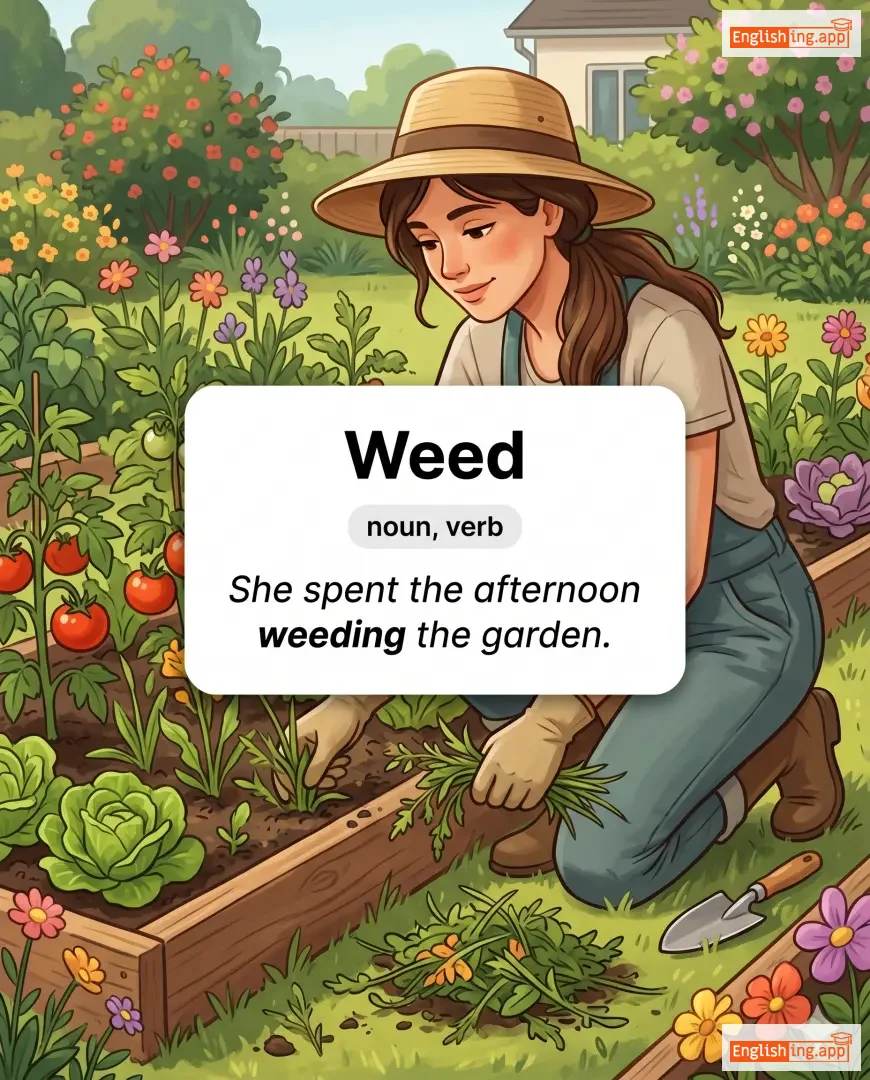
Weed definition card — visual illustration of the meaning
noun, verb
/wiːd/
घास (ghas)

a wild plant growing where it is not wanted, especially among crops; to remove such plants

"She spent the afternoon weeding the garden."

"वह दोपहर का समय बगिया की घास निकालने में बिता रही थी।" (Wah dopahar ka samay bagiya ki ghas nikaalne mein bita rahi thi.)
noun
/wiːk/
सप्ताह (saptah)

a period of seven days

"I will finish the project by the end of the week."

"मैं परियोजना को सप्ताह के अंत तक समाप्त कर लूंगा।" (Main pariyojna ko saptah ke ant tak samaapt kar loonga.)
noun
/ˈwiːkˌɛnd/
सप्ताहांत (saptāhānta)

the end of the week, typically regarded as Saturday and Sunday

"They are planning a trip for the weekend."

"वे वीकेंड के लिए एक यात्रा की योजना बना रहे हैं।" (Ve weekend ke liye ek yātrā kī yojanā banā rahe hain.)
adjective
/ˈwiːkli/
साप्ताहिक (saptahik)

occurring or done every week

"We have a weekly meeting on Mondays."

"हमारी साप्ताहिक बैठक सोमवार को होती है।" (Hamari saptahik baithak somvaar ko hoti hai.)
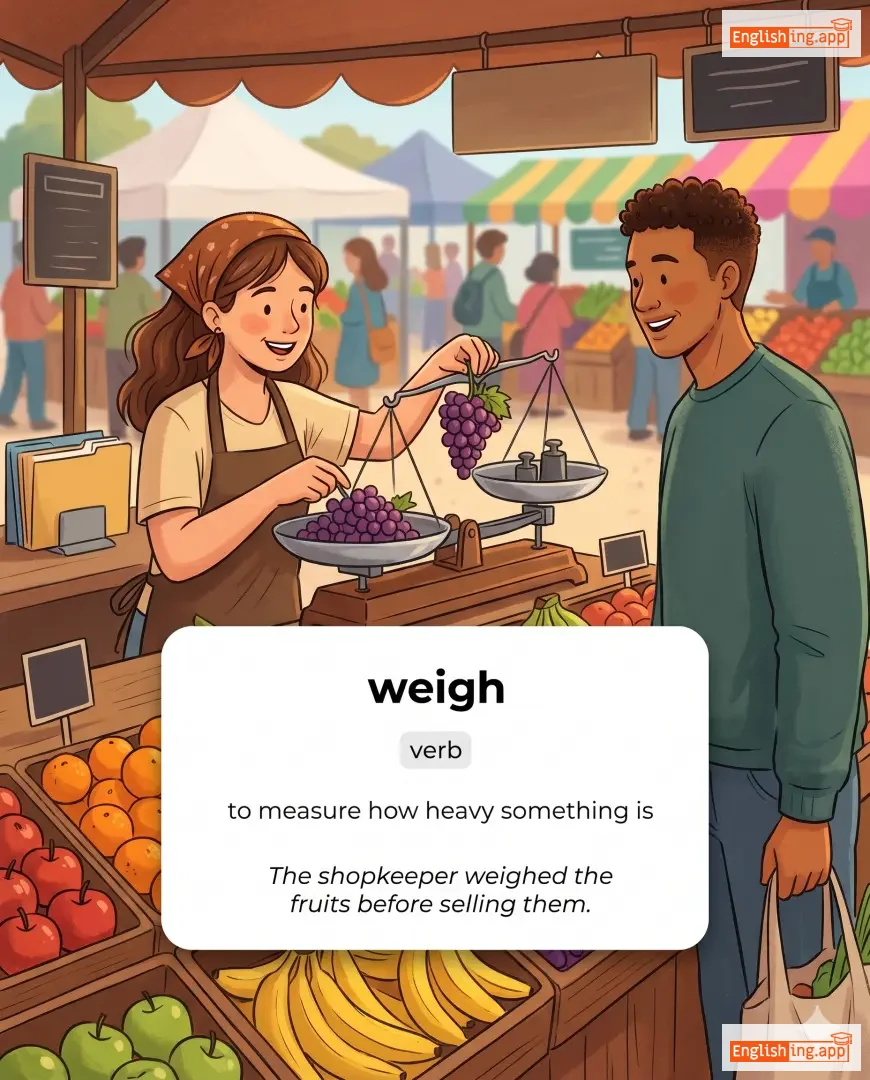
weigh definition card — visual illustration of the meaning
verb
/weɪ/
तौलना (taulna)

to measure how heavy something is

"The shopkeeper weighed the fruits before selling them."

"दुकानदार ने फल बेचने से पहले तौल लिया।" (Dukandaar ne phal bechne se pehle taul liya.)
noun
/weɪt/
वजन (vajan)

a measure of how heavy something is

"The weight of the package was 10 kilograms."

"पैकेज का वजन 10 किलोग्राम था।" (Paikej ka vajan 10 kilogram tha.)
noun
/ˈweɪtˌlɪftɪŋ/
भारोत्तोलन (bharottolan)

the sport or activity of lifting heavy weights to build strength and muscle

"Weightlifting requires discipline, proper technique, and consistent training."

"भारोत्तोलन के लिए अनुशासन और सही तकनीक आवश्यक है।" (bharottolan ke liye anushasan aur sahi technique avashyak hai)
adjective
/wɪrd/
अजीब (ajeeb)

suggesting something supernatural or very strange; unusual

"The movie had a weird ending that nobody expected."

"फिल्म का एक अजीब अंत था जिसे किसी ने भी उम्मीद नहीं की थी।" (Film ka ek ajeeb ant tha jise kisi ne bhi ummid nahi ki thi.)
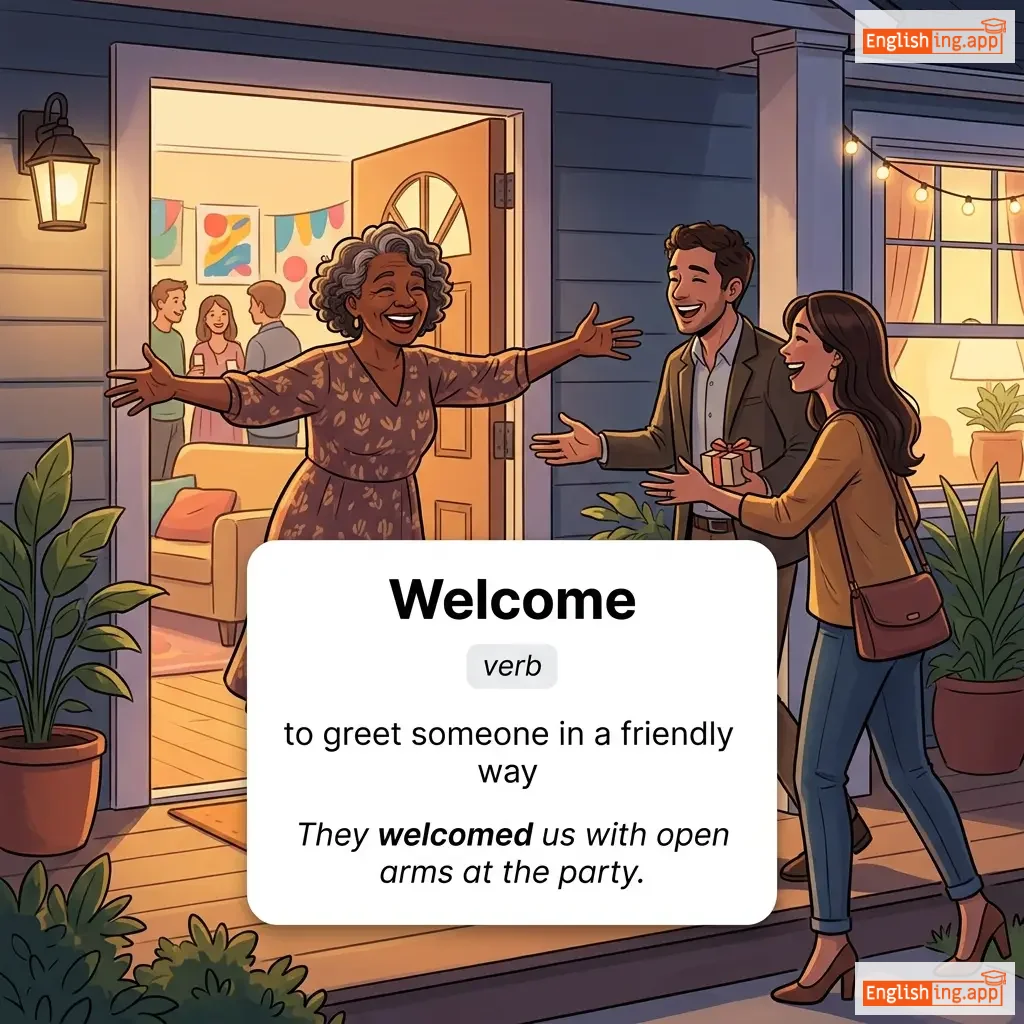
Welcome definition card — visual illustration of the meaning
verb
/ˈwɛlkəm/
स्वागत (swāgat)

to greet someone in a friendly way

"They welcomed us with open arms at the party."

"उन्होंने हमें पार्टी में खुले हाथों से स्वागत किया।" (Unhone humein party mein khule haathon se swāgat kiya.)
noun
/ˈwɛlfɛr/
कल्याण (kalyān)

the health, happiness, and fortunes of a person or group

"The government provides welfare to low-income families."

"सरकार निम्न-आय वाले परिवारों को कल्याण प्रदान करती है।" (Sarkār nimn-āy wāle parivāron ko kalyān pradan kartī hai.)
noun
/ˈwɛlkɪn/
आकाश (aakash)

The sky, the heavens, or the upper air.

"The eagle soared high into the welkin."

"ईगल आकाश में ऊँचाई पर उड़ गया।" (Eagle aakash mein unchai par ud gaya.)
adverb
/wɛl/
अच्छा (achchha)

in a good or satisfactory way

"She did well in her exams."

"उसने अपनी परीक्षा में अच्छा किया।" (Usne apni pariksha mein achha kiya.)
adjective
/ˌwel bɪˈheɪvd/
शिष्ट; सभ्य; (shisht; sabhya)

conducting oneself in a proper and polite manner; showing good manners

"The children were well-behaved during the ceremony."

"समारोह के दौरान बच्चे शिष्ट थे।" (samaroh ke dauran bachche shisht the.)
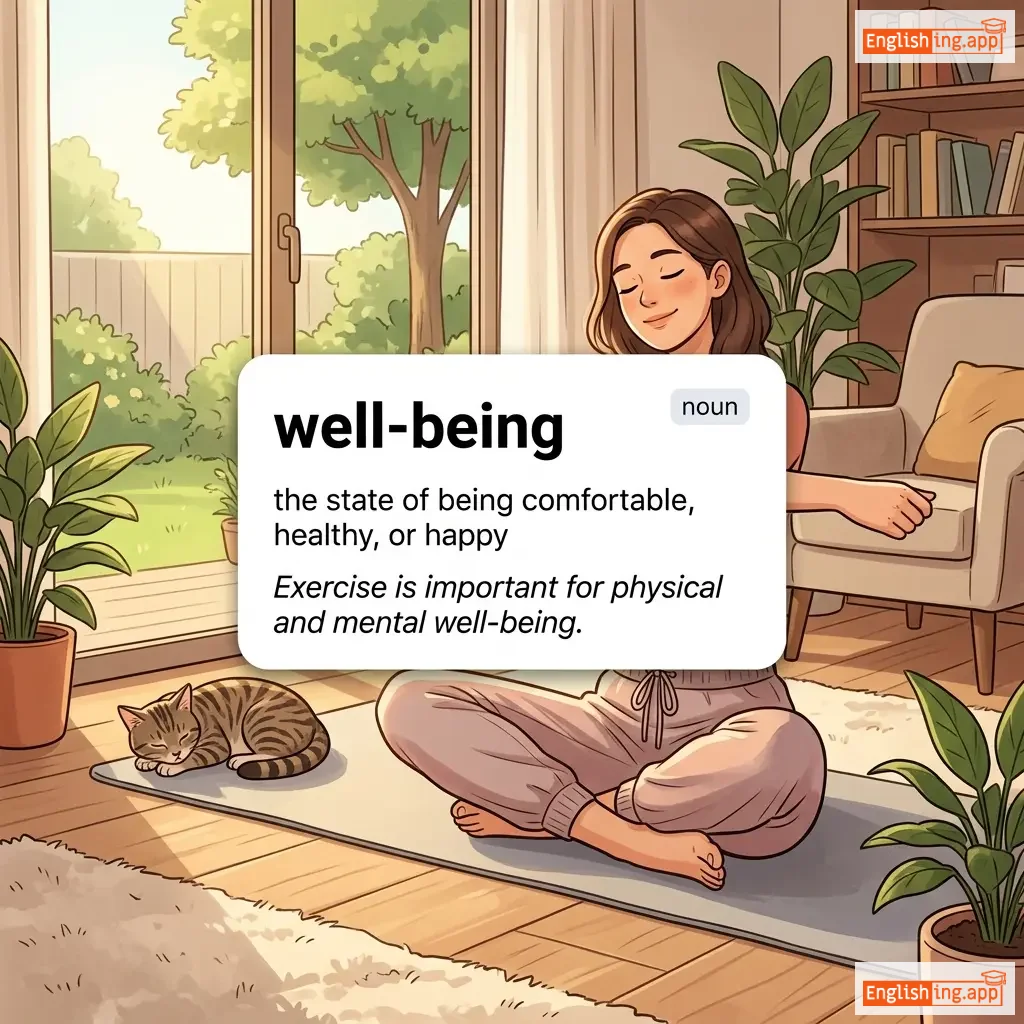
well-being definition card — visual illustration of the meaning
noun
/ˌwelˈbiːɪŋ/
कल्याण (kalyan)

the state of being comfortable, healthy, or happy

"Exercise is important for physical and mental well-being."

"व्यायाम शारीरिक और मानसिक कल्याण के लिए महत्वपूर्ण है।" (Vyayam sharirik aur mansik kalyan ke liye mahatvapurn hai.)
adjective
/ˌwɛlˈbrɛd/
सभ्य (sabhy)

Having or showing good manners; properly raised.

"She is a well-bred young lady with excellent manners."

"वह एक सभ्य और अच्छे संस्कारों वाली युवती है।" (Vah ek sabhy aur acche sanskaron wali yuvti hai.)
noun
/ˈwɛlˌduːər/
अच्छे काम करने वाला (achhe kaam karne wala)

A person who does good deeds; a benefactor.

"The community praised the well-doer for his charity."

"समुदाय ने उसकी चैरिटी के लिए अच्छे काम करने वाले की सराहना की।" (Samudaay ne uski charity ke liye achhe kaam karne wale ki sarahna ki.)
adjective
/ˌwel ˈdʌn/
अच्छा किया हुआ; पूर्ण रूप से पकाया गया (accha kiya hua; poorn roop se pakaya gaya)

performed skillfully and successfully; cooked thoroughly

"The project was well-done and impressed everyone."

"परियोजना अच्छा किया हुआ था और सभी को प्रभावित किया।" (pariyojana accha kiya hua tha aur sabhi ko prabhavit kiya.)
adjective
/ˌwelˈnoʊn/
प्रसिद्ध (prasiddh)

known by many people; famous or recognized

"He is a well-known actor in his country."

"वह अपने देश में एक प्रसिद्ध अभिनेता है।" (Woh apne desh mein ek prasiddh abhineta hai.)
adjective
/ˌwɛl tə ˈduː/
धनवान (dhanwan)

Prosperous, wealthy, or financially comfortable.

"They belong to a well-to-do family in the city."

"वे शहर में एक धनवान परिवार से हैं।" (Ve shehar mein ek dhanwan parivaar se hain.)
noun
/ˈwel.wɪʃ.ər/
कल्याणकामी (kalyankami)

a person who desires happiness or success for another

"Many well-wishers came to congratulate her on her graduation."

"कई कल्याणकामी उसे उसकी स्नातक होने पर बधाई देने आए।" (Kai kalyankami use uski snatak hone par badhai dene aaye.)
noun
/wɛlt/
उभार (ubhaar)

A raised mark on the skin, usually from a blow or allergic reaction.

"He had a red welt on his arm after the bee sting."

"मधुमक्खी के डंक के बाद उसके हाथ पर एक लाल उभार था।" (Madhumakkhi ke dank ke baad uske haath par ek lal ubhaar tha.)
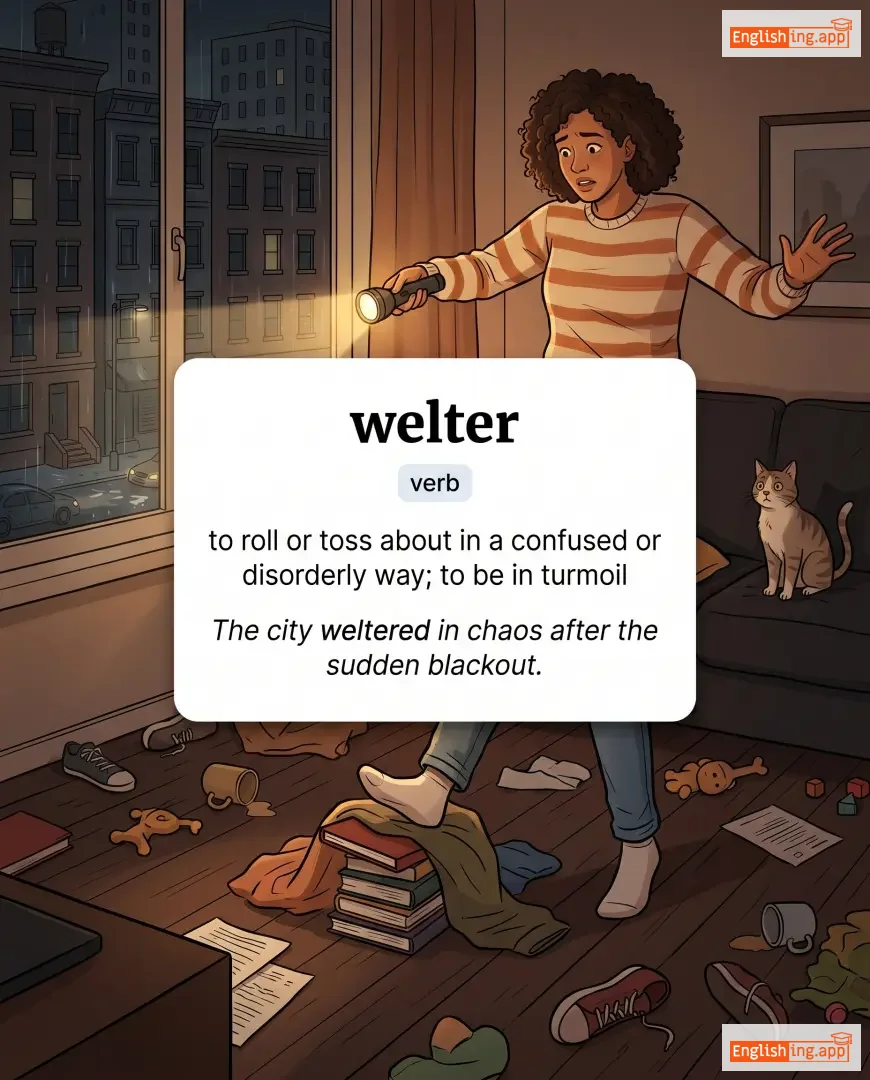
welter definition card — visual illustration of the meaning
verb
/ˈwɛltər/
अराजकता में लुड़कना (arajakta mein ludakna)

to roll or toss about in a confused or disorderly way; to be in turmoil

"The city weltered in chaos after the sudden blackout."

"शहर अचानक ब्लैकआउट के बाद अराजकता में डूब गया था।" (Shehar achanak blackout ke baad arajakta mein doob gaya tha.)
noun
/wɛst/
पश्चिम (pashchim)

the direction to the left of the north and to the right of the south, typically associated with the sunset

"The sun sets in the west."

"सूरज पश्चिम में अस्त होता है।" (Suraj pashchim mein ast hota hai.)
adjective
/ˈwɛstərn/
पश्चिमी (pashchimi)

relating to or characteristic of the West, especially Europe and the Americas

"She loves western music and culture."

"उसे पश्चिमी संगीत और संस्कृति बहुत पसंद है।" (Use pashchimi sangeet aur sanskriti bahut pasand hai.)
adjective
/wɛt/
गीला (geela)

covered with, or saturated with liquid (usually water)

"The ground is wet after the rain."

"बारिश के बाद ज़मीन गीली है।" (Baarish ke baad zameen geeli hai.)
noun
/weɪl/
तिमिंग (timing)

a very large marine mammal that lives in the ocean

"We saw a huge whale swimming near the boat."

"हमने नाव के पास एक विशाल व्हेल को तैरते हुए देखा।" (hamne naav ke paas ek vishal vhel ko tairte hue dekha.)
pronoun
/wɒt/
क्या (kya)

used to ask for information about something

"What is your name?"

"तुम्हारा नाम क्या है?" (Tumhara naam kya hai?)
pronoun
/wɒtˈɛvər/
जो कुछ भी (jo kuch bhi)

used to refer to anything or everything that is of the type mentioned

"You can choose whatever you like."

"आप जो चाहें चुन सकते हैं।" (Aap jo chahen chun sakte hain.)
adverb
/wɒtˈsəʊɛvər/
बिलकुल भी (bilkul bhi)

used for emphasis after a negative statement to mean 'at all'

"She has no interest in the matter whatsoever."

"उसको इस मामले में कोई रुचि नहीं है, बिल्कुल भी।" (Usko is maamle mein koi ruchi nahi hai, bilkul bhi.)
noun
/wiːt/
गेंहू (genhoo)

a cereal plant whose grain is used to make flour for bread and other foods

"Farmers harvested the wheat in early summer."

"किसानों ने गर्मी की शुरुआत में गेंहू की फसल काटी।" (Kisano ne garmi ki shuruat mein genhoo ki fasal kaati.)
verb
/ˈwiːdəl/
चापलूसी करके मनाना (chaplusi karke manana)

to persuade or coax someone by using flattery or smooth talk

"She managed to wheedle extra pocket money from her father."

"वह अपने पिता से अतिरिक्त जेब खर्च मनवाने में सफल हो गई।" (Vah apne pita se atirikt jeb kharch manwane mein safal ho gayi.)
noun
/wiːl/
पहिया (pahiya)

a circular object that revolves on an axle and is used to move or carry things

"The wheel of the car broke down on the way."

"कार का पहिया रास्ते में टूट गया था।" (Car ka pahiya raste mein toot gaya tha.)
noun
/ˈwiːltʃeər/
व्हीलचेयर (wheelchair)

a chair with wheels, used by people who cannot walk easily or at all

"The hospital provided a wheelchair for the injured patient."

"अस्पताल ने घायल रोगी के लिए एक व्हीलचेयर प्रदान की।" (aspataal ne ghaayal rogi ke liye ek wheelchair pradan ki.)
noun
/wɛlp/
पिल्ला (pilla)

a young offspring of a dog or other carnivorous mammal; sometimes used to mean an impudent young person

"The farmer found a wolf whelp hiding near the barn."

"किसान ने खलिहान के पास एक भेड़िए के पिल्ले को छिपते हुए पाया।" (Kisaan ne khalihaan ke paas ek bhediye ke pille ko chhipte hue paaya.)
adverb
/wɛn/
कब (kab)

at what time

"Do you know when the train leaves?"

"क्या तुम जानते हो कब ट्रेन छूटेगी?" (Kya tum jaante ho kab train chootegi?)
adverb
/wɛnˈɛvər/
जब भी (jab bhi)

at any time, or whenever it happens

"You can call me whenever you want."

"तुम मुझे जब भी चाहो कॉल कर सकते हो।" (Tum mujhe jab bhi chaho kol kar sakte ho.)