वोकैबुलरीज

इंग्लिश वोकैबुलरी डिस्कवर, लर्न और मास्टर करें

noun
/ˈvaɪnəri/
मद्य उत्पादन स्थल (madya utpadan sthal)

A place where vines are cultivated, especially a vineyard or greenhouse for vines.

"The old vinery was filled with grapevines."

"पुरानी वाइनरी अंगूर की लताओं से भरी हुई थी।" (purani winery angur ki lataon se bhari hui thi.)
noun/adjective
/ˈvɪntɪdʒ/
प्राचीन / पुरानी मूल्यवान (prachin / purani mulyavan)

Relating to high quality from the past; classic; also the year of a wine harvest.

"She wore a vintage dress from the 1950s."

"उसने 1950 के दशक का एक विंटेज ड्रेस पहना था।" (usne 1950 ke dashak ka ek vintage dress pehna tha.)
noun
/ˈvɪntnər/
शराब बनानेवाला / विक्रेता (sharab bananewala / vikreta)

A person who makes or sells wine.

"The vintner explained the process of making red wine."

"शराब बनानेवाले ने लाल शराब बनाने की प्रक्रिया समझाई।" (sharab bananewale ne lal sharab banane ki prakriya samjhayi.)
noun
/ˈvaɪəl/
एक प्रकार का प्राचीन तार वाद्ययंत्र (ek prakar ka prachin taar vaadyayantra)

A stringed musical instrument of the Renaissance and Baroque periods, played with a bow and similar to but distinct from the violin family.

"The musician played an old viol in the chamber music concert."

"संगीतकार ने चेंबर म्यूज़िक कॉन्सर्ट में एक पुराना वायल बजाया।" (sangeetkar ne chamber music concert mein ek purana viol bajaya.)
noun
/viˈoʊlə/ or /ˈvaɪələ/
वायोला (viola)

A stringed instrument slightly larger than a violin, with a deeper and mellower tone.

"She chose to play the viola in the school orchestra."

"उसने स्कूल ऑर्केस्ट्रा में वायोला बजाने का चयन किया।" (usne school orchestra mein viola bajane ka chayan kiya.)
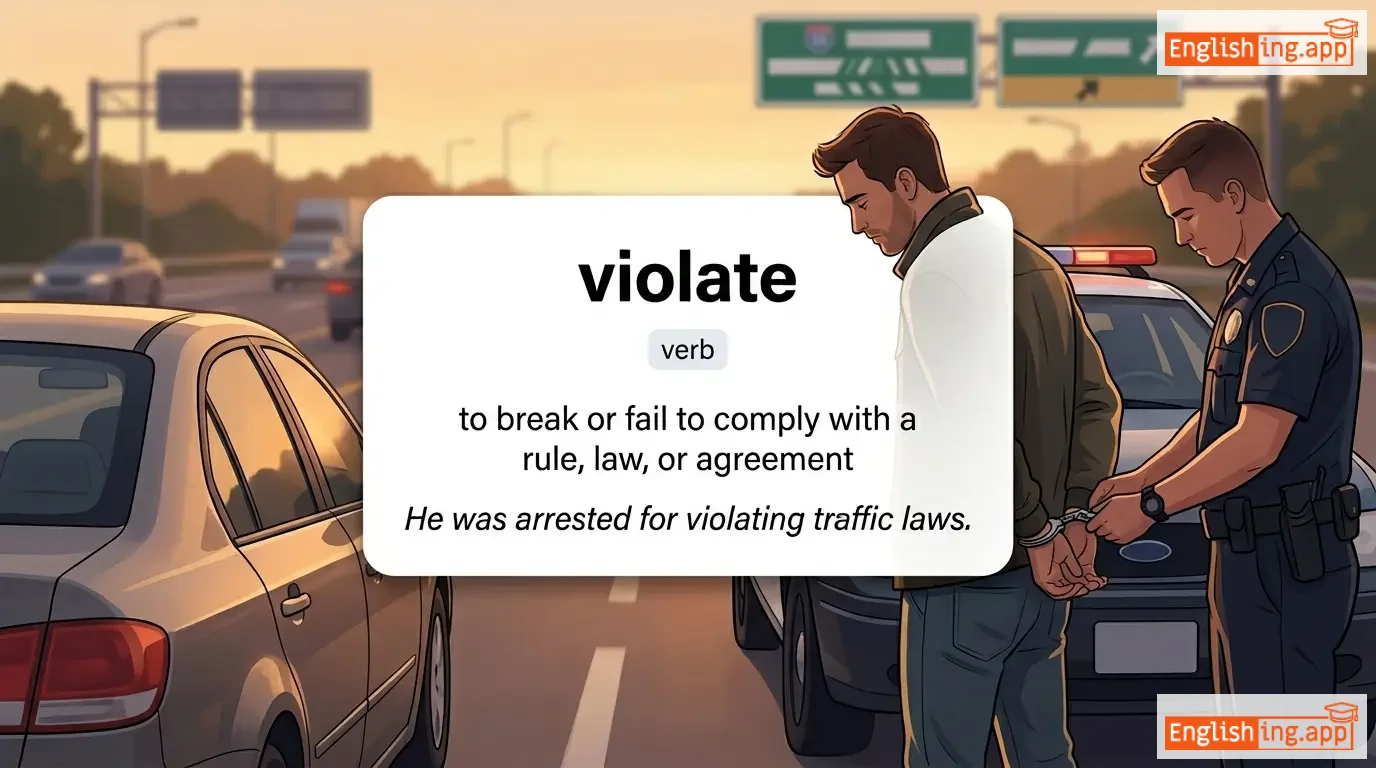
violate definition card — visual illustration of the meaning
verb
/ˈvaɪ.ə.leɪt/
उल्लंघन करना (ullanghan karna)

to break or fail to comply with a rule, law, or agreement

"He was arrested for violating traffic laws."

"उसे ट्रैफिक कानून उल्लंघन करने पर गिरफ्तार किया गया था।" (Use traffic kanoon ullanghan karne par giraftaar kiya gaya tha.)
noun
/ˌvaɪəˈleɪʃən/
उल्लंघन (ullanghan)

The act of breaking or disregarding a law, rule, or agreement.

"Driving without a license is a violation of the law."

"बिना लाइसेंस के गाड़ी चलाना कानून का उल्लंघन है।" (bina license ke gadi chalana kanoon ka ullanghan hai.)
noun
/ˈvaɪəˌleɪtər/
उल्लंघनकर्ता (ullanghankarta)

A person who breaks or disregards a law, rule, or agreement.

"The police caught the traffic violator at the intersection."

"पुलिस ने ट्रैफिक उल्लंघनकर्ता को चौराहे पर पकड़ा।" (police ne traffic ullanghankarta ko chaurahe par pakda.)
noun
/ˈvaɪ.ə.ləns/
हिंसा (hinsa)

behavior involving physical force intended to hurt or damage

"The protest turned into an act of violence."

"प्रदर्शन एक हिंसक कृत्य में बदल गया।" (Pradarshan ek hinsak krity mein badal gaya.)
adjective
/ˈvaɪ.ə.lənt/
हिंसक (hinsak)

using or involving physical force intended to hurt or damage

"He became violent after hearing the bad news."

"वह बुरी खबर सुनने के बाद हिंसक हो गया।" (Vah buri khabar sunne ke baad hinsak ho gaya.)
adjective
/ˈvaɪə.lət/
बैंगनी (baingani)

a bluish-purple color

"She wore a beautiful violet dress to the party."

"उसने पार्टी में एक खूबसूरत बैंगनी ड्रेस पहनी थी।" (usne party mein ek khoobsurat baingani dress pehni thi)
noun
/vaɪəˈlɪn/
वायलिन (vayalin)

a musical instrument with four strings that is played with a bow

"She plays the violin beautifully in the orchestra."

"वह ऑर्केस्ट्रा में खूबसूरती से वायोलिन बजाती है।" (vah orkestrah mein khoobsurti se vayalin bajati hai)
noun
/ˌviːələnsɛloʊ/
चेलो (chelo)

The full name of the cello, a large string instrument played with a bow and held between the knees.

"He practiced the violoncello for hours each day."

"उसने हर दिन घंटों तक वायोलोंचेलो का अभ्यास किया।" (usne har din ghanton tak violoncello ka abhyas kiya.)
noun
/ˈvaɪpər/
विषैला सांप (vishaila saap)

a type of poisonous snake; metaphorically, a spiteful or treacherous person

"The viper lay hidden in the tall grass."

"वाइपर ऊंचे घास में छिपा हुआ था।" (Viper unche ghaas mein chhupa hua tha.)
noun
/vəˈrɑːɡoʊ/
कर्कश या हठी महिला (karkash ya hathi mahila)

a loud, overbearing woman; historically, a strong or courageous woman

"The play depicted the heroine as a fierce virago who defied tradition."

"नाटक में नायिका को एक साहसी विरागो के रूप में दिखाया गया था जो परंपरा को चुनौती देती थी।" (Natak mein nayika ko ek sahasi virago ke roop mein dikhaya gaya tha jo parampara ko chunauti deti thi.)
adjective
/ˈvɪrəl/
पुरुषोचित (purushocit)

having traditionally masculine qualities, such as strength, energy, and sexual vigor

"The actor was admired for his virile appearance."

"अभिनेता को उसके पुरुषोचित रूप के लिए सराहा गया।" (Abhineta ko uske purushocit roop ke liye saraha gaya.)
noun
/vɜːrˈtuː/
कला के प्रति रुचि (kala ke prati ruchi)

a love of or taste for fine art, antiques, or curiosities

"The collector’s house was filled with objects of virtu."

"कलेक्टर का घर कला के वस्तुओं से भरा हुआ था।" (Collector ka ghar kala ke vastuon se bhara hua tha.)
adjective
/ˈvɜːrtʃuəl/
वर्चुअल / काल्पनिक (varchual / kalpnik)

existing or simulated on a computer or online rather than physically; almost but not exactly the same as

"The company held a virtual meeting with employees worldwide."

"कंपनी ने दुनिया भर के कर्मचारियों के साथ एक वर्चुअल बैठक की।" (Company ne duniya bhar ke karyakartao ke saath ek varchual baithak ki.)
virtual classrooms definition card — visual illustration of the meaning
noun
ˈvɜː.tʃu.əl ˈklɑːs.ruːmz
वर्चुअल कक्षा (virtual kaksha)

An online learning environment where teachers and students interact via digital platforms.

"Virtual classrooms enable remote learning for students worldwide."

"वर्चुअल कक्षाएं छात्रों को दूरस्थ शिक्षा का अवसर प्रदान करती हैं।" (Virtual kakshaen chhatron ko durasth shiksha ka avsar pradan karti hain.)
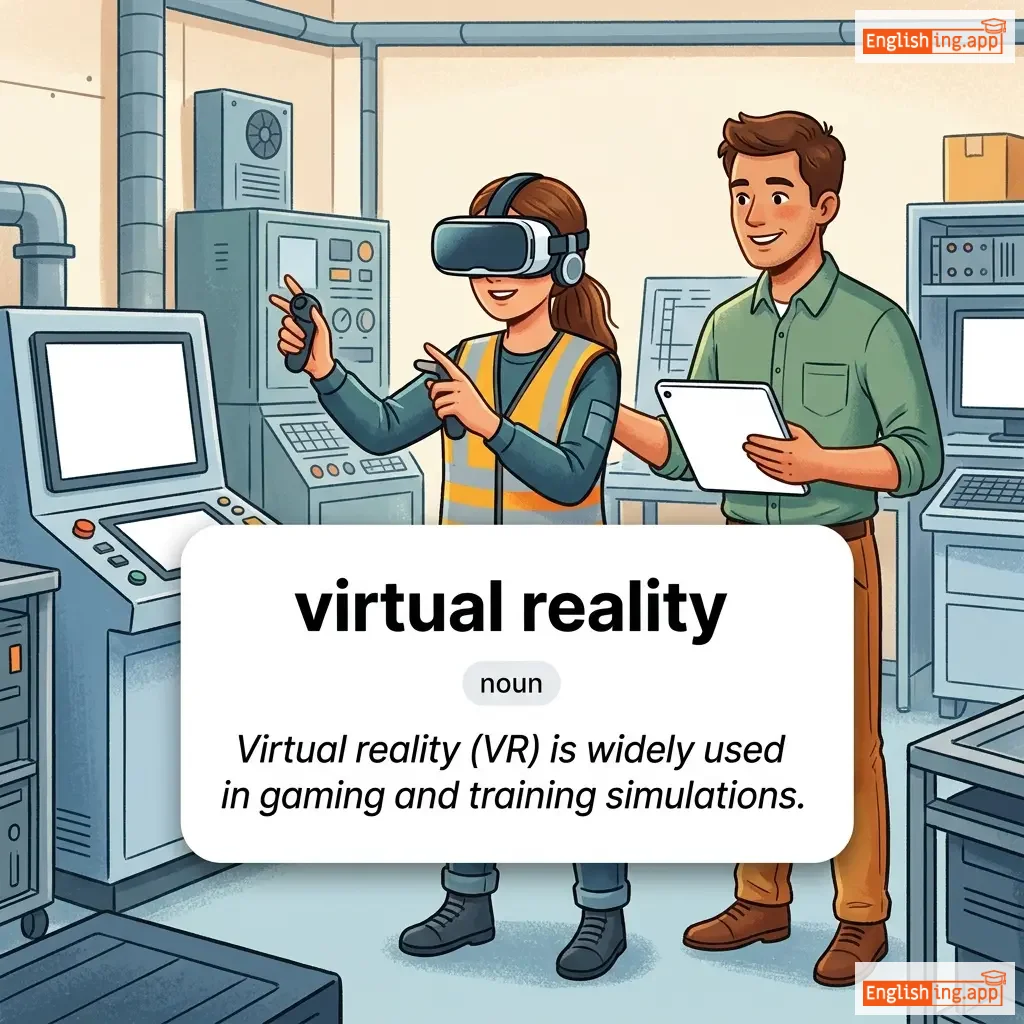
virtual reality definition card — visual illustration of the meaning
noun
/ˈvɜː.tʃu.əl riˈæl.ɪ.ti/
आभासी वास्तविकता (aabhaasee vastavikata)

Computer technology that creates an artificial three-dimensional environment where users can feel like they are in a real environment.

"Virtual reality (VR) is widely used in gaming and training simulations."

"आभासी वास्तविकता (VR) गेमिंग और प्रशिक्षण सिमुलेशनों में व्यापक रूप से उपयोग की जाती है।" (Aabhaasee vastavikata (VR) gaming aur prashikshan simulationon mein vyapak roop se upayog kee jaatee hai.)
adverb
/ˈvɜː.tʃu.ə.li/
लगभग, ऑनलाइन (lagbhag, online)

almost or nearly, but not completely; by means of computer technology

"The meeting was held virtually due to travel restrictions."

"यात्रा प्रतिबंधों के कारण बैठक वर्चुअली आयोजित की गई थी।" (Yatra pratibandhon ke karan baithak virtually aayojit ki gayi thi.)
noun
/ˈvɜːrtʃuː/
गुण (gun)

High moral standards or a good quality considered morally good.

"Patience is considered a great virtue."

"धैर्य को एक महान गुण माना जाता है।" (Dhairya ko ek mahaan gun maana jaata hai.)
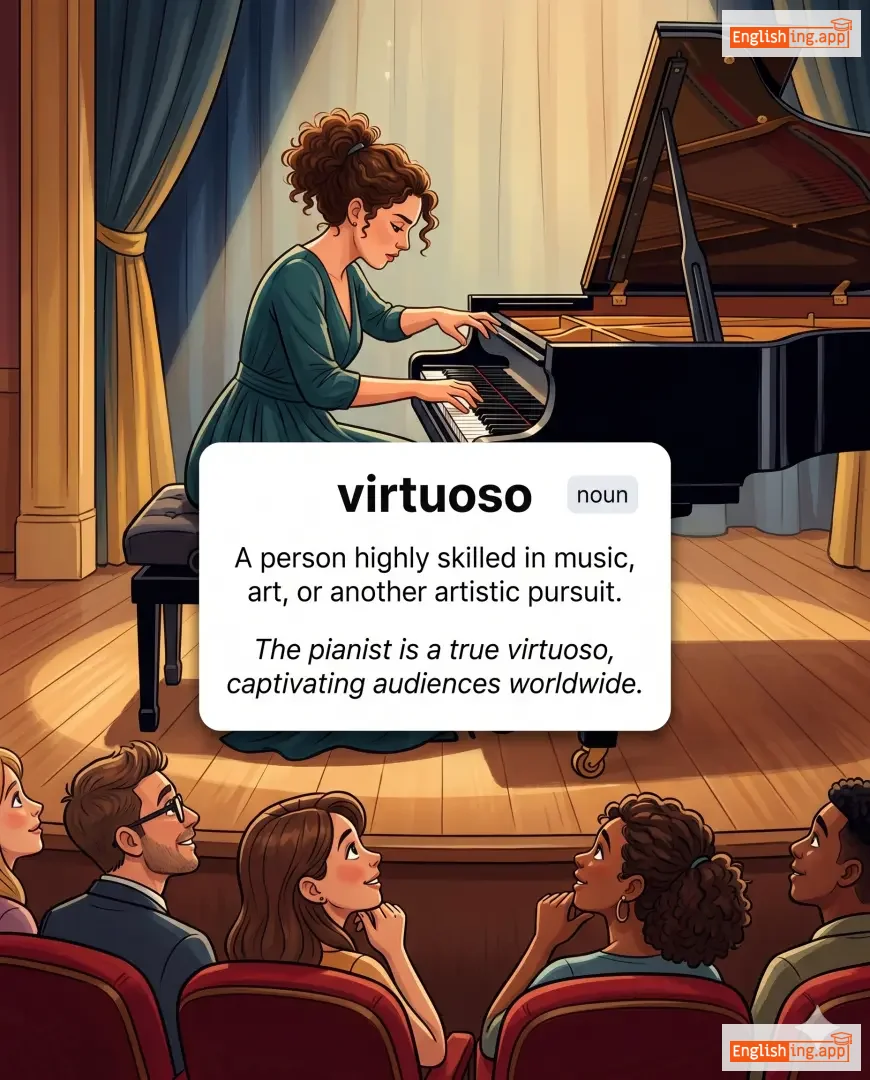
virtuoso definition card — visual illustration of the meaning
noun
/ˌvɜːrtʃuˈoʊsoʊ/
विशेषज्ञ कलाकार (visheshagya kalakar)

A person highly skilled in music, art, or another artistic pursuit.

"The pianist is a true virtuoso, captivating audiences worldwide."

"पियानोवादक एक सच्चे विशेषज्ञ कलाकार हैं, जो दुनिया भर के दर्शकों को मंत्रमुग्ध करते हैं।" (Piyanovadak ek sachche visheshagya kalakar hain, jo duniya bhar ke darshako ko mantramugdh karte hain.)
adjective
/ˈvɜːrtʃuəs/
गुणी (guni)

Having or showing high moral standards.

"She is known as a virtuous woman who helps the poor."

"वह एक गुणी महिला के रूप में जानी जाती है जो गरीबों की मदद करती है।" (Wah ek guni mahila ke roop mein jani jati hai jo gareebon ki madad karti hai.)
noun
/ˈvɪrjʊləns/
संक्रमणता (sankramanta)

The severity or harmfulness of a disease or poison.

"Scientists studied the virulence of the new virus strain."

"वैज्ञानिकों ने नए वायरस के स्ट्रेन की संक्रमणता का अध्ययन किया।" (Vaigyanikon ne naye virus ke strain ki sankramanta ka adhyayan kiya.)
adjective
/ˈvɪrjʊlənt/
अत्यंत हानिकारक (atyant hanikarak)

Extremely severe or harmful in its effects.

"The virulent disease spread rapidly across the region."

"वायरुलेंट बीमारी ने क्षेत्र भर में तेजी से फैलने शुरू कर दिया।" (Viralent bimari ne kshetra bhar mein tezi se phailne shuru kar diya.)
noun
/ˈvaɪrəs/
वायरस (virus)

A tiny infectious agent that can replicate only inside the living cells of an organism.

"The computer was infected with a dangerous virus."

"कंप्यूटर एक खतरनाक वायरस से संक्रमित था।" (Computer ek khatarnak virus se sankramit tha.)
noun
/ˈviːzə/
वीज़ा (veezā)

an official authorization or permission to enter, leave, or stay in a country

"She applied for a visa to study abroad."

"उसने विदेश में पढ़ाई करने के लिए वीजा के लिए आवेदन किया।" (Usne videsh mein padhai karne ke liye veezā ke liye āvedan kiyā.)
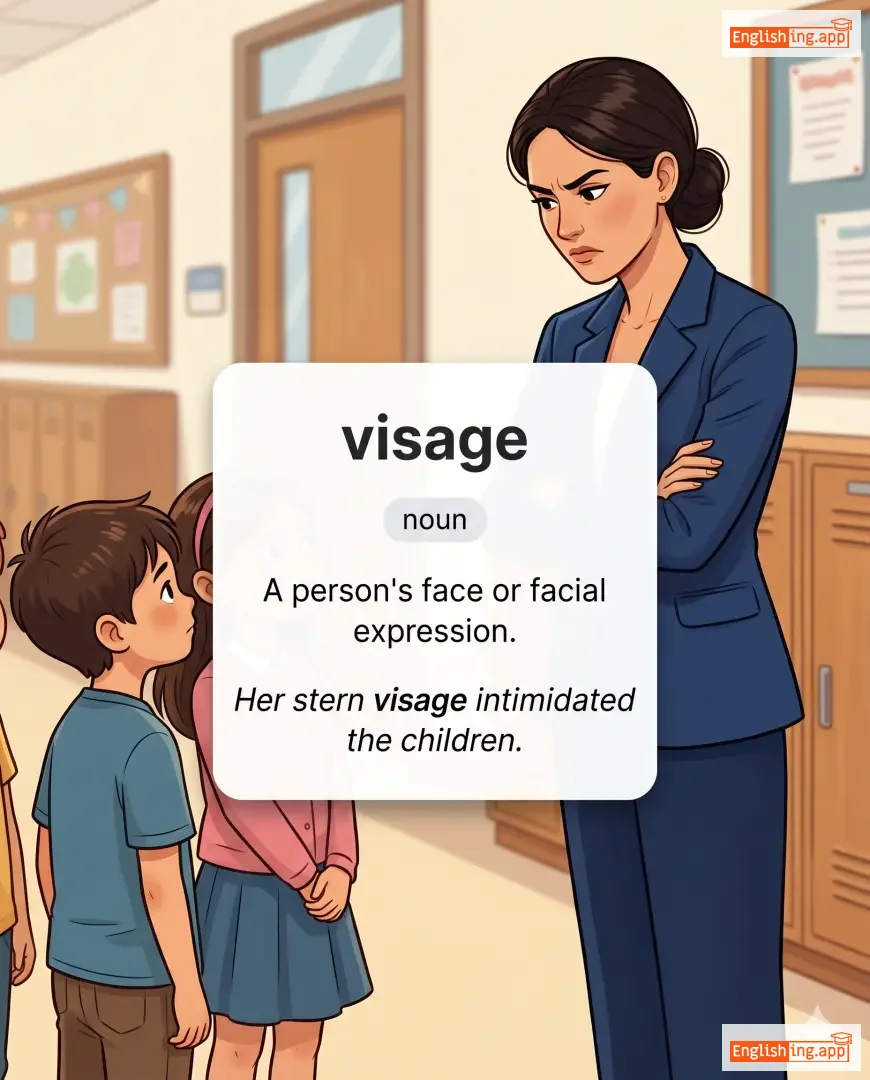
visage definition card — visual illustration of the meaning
noun
/ˈvɪzɪdʒ/
ख़ुशी (khushi)

A person's face or facial expression.

"Her stern visage intimidated the children."

"वह पुरस्कार प्राप्त करते समय अपनी खुशी को छिपा नहीं सकी।" (vah puraskaar praapt karte samay apni khushi ko chhupa nahi sakee.)
adjective
/ˈvɪsɪd/
चिपचिपा (chipchipa)

Having a thick, sticky consistency.

"The sap had a viscid texture that stuck to his hands."

"रस में चिपचिपा बनावट थी जो उसके हाथों में चिपक गई।" (ras mein chipchipa banawat thi jo uske haathon mein chipak gayi.)
noun
/ˈvaɪkaʊnt/
वाइस्काउंट (vaiskaunt)

A British nobleman ranking below an earl and above a baron.

"The viscount inherited the estate from his father."

"वाइस्काउंट ने अपने पिता से संपत्ति विरासत में प्राप्त की।" (Vaiskaunt ne apne pita se sampatti virasat mein prapt ki.)
viscous definition card — visual illustration of the meaning
adjective
/ˈvɪskəs/
गाढ़ा चिपचिपा (gadha chipchipa)

Having a thick, sticky consistency between solid and liquid.

"Honey is a viscous liquid that flows slowly."

"शहद एक चिपचिपा तरल है जो धीरे-धीरे बहता है।" (shahad ek chipchipa taral hai jo dheere-dheere bahta hai.)
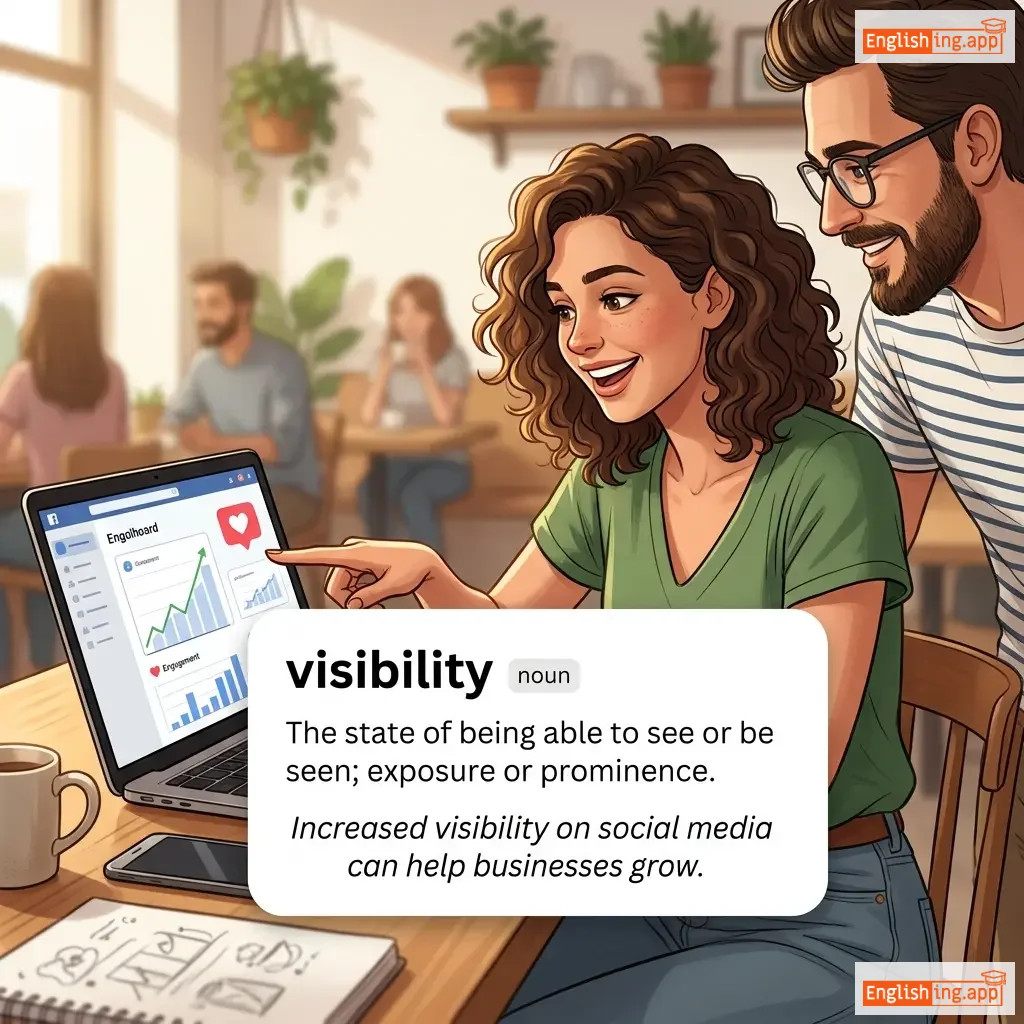
visibility definition card — visual illustration of the meaning
noun
/ˌvɪz.ɪˈbɪlɪti/
दृश्यता, दिखाई देना (drishyata, dikhai dena)

The state of being able to see or be seen; exposure or prominence.

"Increased visibility on social media can help businesses grow."

"सोशल मीडिया पर दृश्यता बढ़ाने से व्यवसायों को बढ़ने में मदद मिल सकती है।" (Social media par drishyata badhane se vyavsayon ko badhne mein madad mil sakti hai.)
adjective
/ˈvɪzəbl/
दृश्यमान (drishyamaan)

able to be seen; perceptible by the eye

"The stars were clearly visible in the night sky."

"तारें रात के आकाश में स्पष्ट रूप से दृश्यमान थीं।" (Tare raat ke aakaash mein spashṭ roop se drishyamaan thiin.)
vision definition card — visual illustration of the meaning
noun
/ˈvɪʒən/
सुख (sukh)

the ability to see or a mental image of something

"She had a clear vision of her future."

"जब उसे पुरस्कार मिला तो वह अपनी खुशी छुपा नहीं पाई।" (Jab use puraskar mila to vah apni khushi chhupa nahi pai.)
adjective
/ˈvɪʒəneri/
दूरदर्शी (durdarshi)

Thinking about or planning the future with imagination and wisdom.

"She is considered a visionary leader in technology."

"उसे तकनीकी में एक दूरदर्शी नेता माना जाता है।" (use takneeki mein ek durdarshi neta maana jaata hai.)
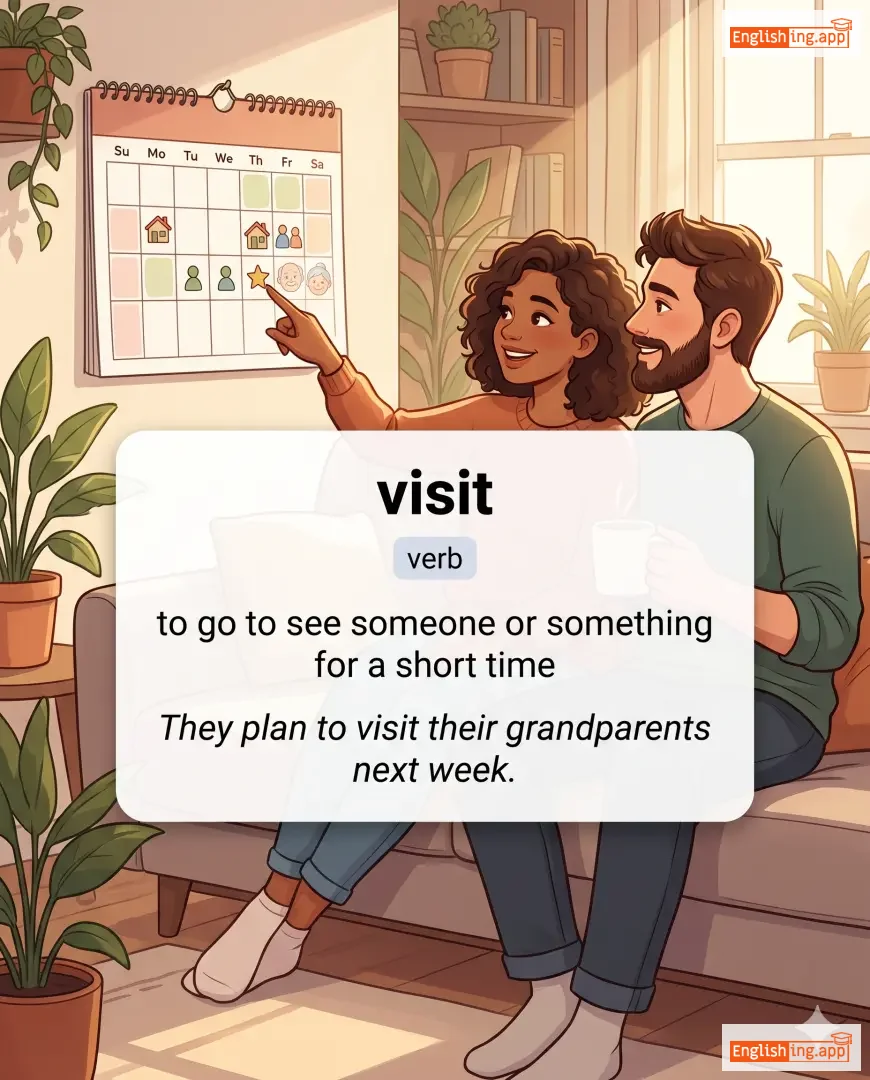
visit definition card — visual illustration of the meaning
verb
/ˈvɪzɪt/
यात्रा (yatra)

to go to see someone or something for a short time

"They plan to visit their grandparents next week."

"वे अगले हफ्ते अपने दादी-दादी से मिलने का प्लान बना रहे हैं।" (Ve agle hafte apne dadi-dadi se milne ka plan bana rahe hain.)
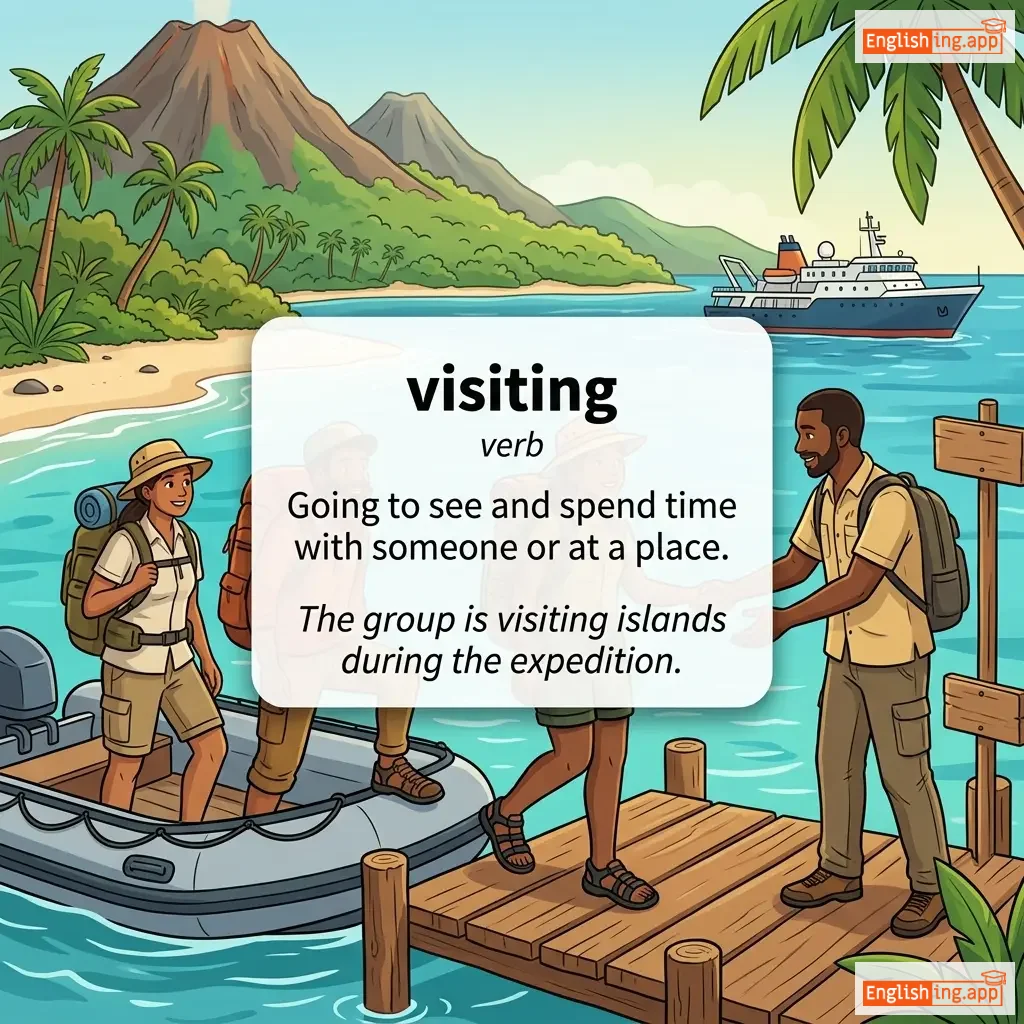
visiting definition card — visual illustration of the meaning
verb
/ˈvɪzɪtɪŋ/
दौरा करना (daura karna)

Going to see and spend time with someone or at a place.

"The group is visiting islands during the expedition."

"समूह अभियान के दौरान द्वीपों का दौरा कर रहा है।" (Samuh abhiyan ke dauran dweepo ka daura kar raha hai.)
noun
/ˈvɪzɪtər/
यात्री (yatri)

a person who goes to see a place or someone for a short time

"The museum had many visitors last weekend."

"म्यूज़ियम में पिछले सप्ताहांत में कई यात्री आए थे।" (Myujiyam mein pichhle saptahant mein kai yatri aaye the.)
noun
/ˈvɪstə/
दृश्य (drishya)

A pleasing view, especially one seen through a long, narrow opening.

"From the mountain top, we admired the breathtaking vista of the valley below."

"पहाड़ी की चोटी से, हमने घाटी के नीचे के आश्चर्यजनक दृश्य का आनंद लिया।" (Pahaadi ki choti se, humne ghaati ke neeche ke aashcharyajanak drishya ka aanand liya.)
adjective
/ˈvɪʒuəl/
दृश्यात्मक (dṛśyātmaka)

Relating to seeing or sight.

"The movie was praised for its stunning visual effects."

"फिल्म को इसके शानदार दृश्यात्मक प्रभावों के लिए सराहा गया था।" (Film ko iske shandaar dṛśyātmaka prabhāvon ke liye sarāhā gayā thā.)
verb
/ˈvɪʒuəlaɪz/
कल्पना करना (kalpana karna)

To form a mental image of something; to imagine.

"She tried to visualize her success before the big presentation."

"वह बड़ी प्रस्तुति से पहले अपनी सफलता की कल्पना करने की कोशिश कर रही थी।" (Wah badi prastuti se pehle apni safalta ki kalpana karne ki koshish kar rahi thi.)
visuospatial definition card — visual illustration of the meaning
adjective
ˌvɪz.ju.oʊˈspeɪ.ʃəl
दृष्टि और वस्तुओं के बीच स्थानिक संबंध से संबंधित (drishti aur vastuon ke beech sthanik sambandh se sambandhit)

Related to understanding the relationship between space and objects through vision.

"Good visuospatial skills are important for architecture and design."

"अच्छे विजुअलस्पेशियल कौशल वास्तुकला और डिज़ाइन के लिए महत्वपूर्ण हैं।" (Achhe visualspatial kaushal vastukala aur design ke liye mahatvapurn hain.)
adjective
/ˈvaɪtl/
अत्यंत महत्वपूर्ण (atyant mahatvapurn)

essential or necessary for life or success

"It's vital to stay hydrated during the summer."

"गर्मियों में हाइड्रेटेड रहना महत्वपूर्ण है।" (Garmiyon mein hydrated rehna mahatvapurn hai.)
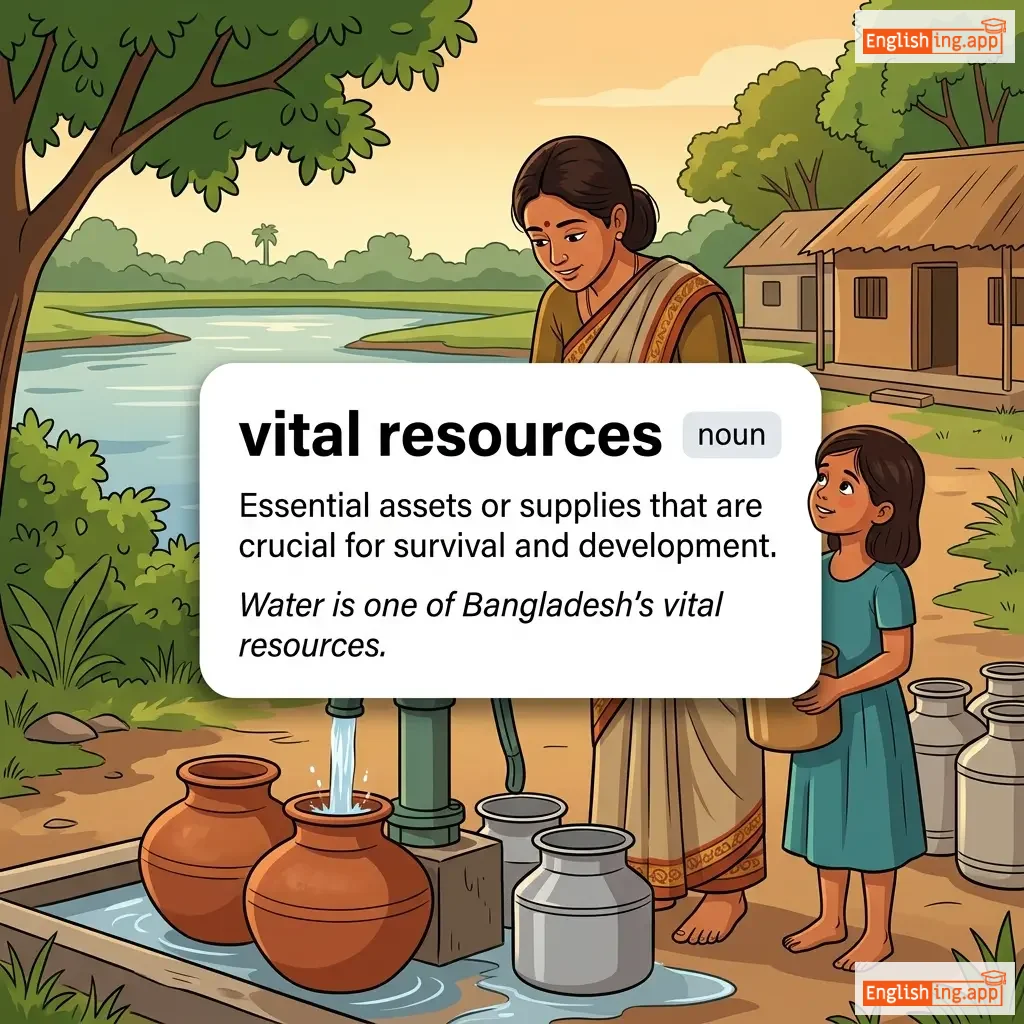
vital resources definition card — visual illustration of the meaning
noun
ˈvaɪtəl rɪˈsɔːrsɪz
महत्वपूर्ण संसाधन (mahatvapoorn sansadhan)

Essential assets or supplies that are crucial for survival and development.

"Water is one of Bangladesh's vital resources."

"पानी बांगलादेश के महत्वपूर्ण संसाधनों में से एक है।" (Pani Bangladesh ke mahatvapoorn sansadhanon mein se ek hai.)
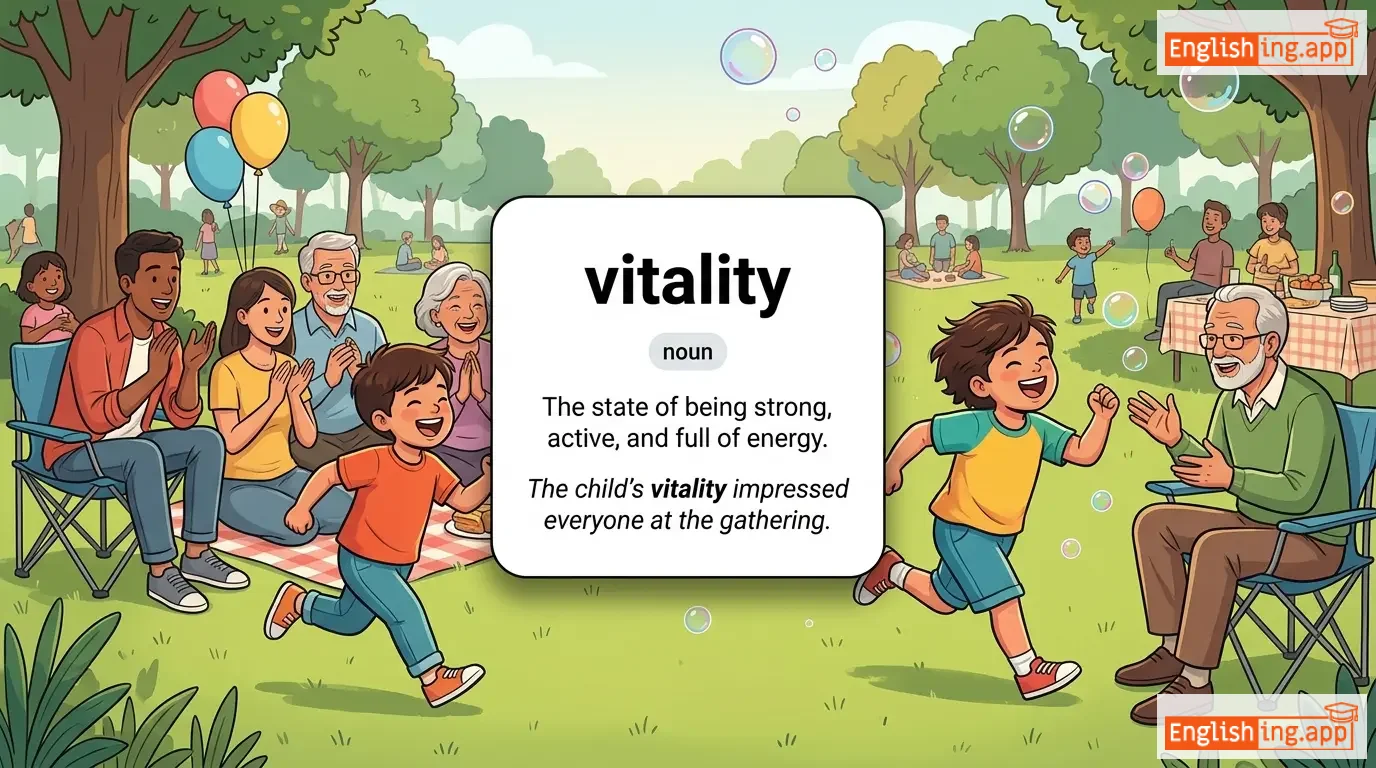
vitality definition card — visual illustration of the meaning
noun
/vaɪˈtæləti/
जीवंतता (jeevantata)

The state of being strong, active, and full of energy.

"The child’s vitality impressed everyone at the gathering."

"बच्चे की जीवंतता ने सभा में सभी को प्रभावित किया।" (bachche ki jeevantata ne sabha mein sabhi ko prabhavit kiya.)
verb
/ˈvaɪtəlaɪz/
जीवन्त करना (jivant karna)

To give life, energy, or strength to something.

"Fresh air and exercise can vitalize the body and mind."

"ताजे हवा और व्यायाम शरीर और मन को जीवन दे सकते हैं।" (Taje hawa aur vyayam sharir aur man ko jeevan de sakte hain.)
adverb
/ˈvaɪtəli/
अत्यंत महत्वपूर्ण रूप से (atyant mahatvapurn rup se)

in an extremely important or essential way; in a manner relating to life or vitality

"Access to clean water is vitally important for public health."

"स्वास्थ्य के लिए साफ पानी तक पहुंच अत्यंत महत्वपूर्ण रूप से आवश्यक है।" (swasthya ke liye saaf pani tak pahunch atyant mahatvapurn rup se avashyak hai)
noun
/ˈvaɪtəmɪn/
विटामिन (vitamin)

a natural substance needed by the body to stay healthy

"Fruits and vegetables are rich sources of vitamins."

"फल और सब्जियाँ विटामिन के समृद्ध स्रोत हैं।" (phal aur sabziyan vitamin ke samriddh srot hain)
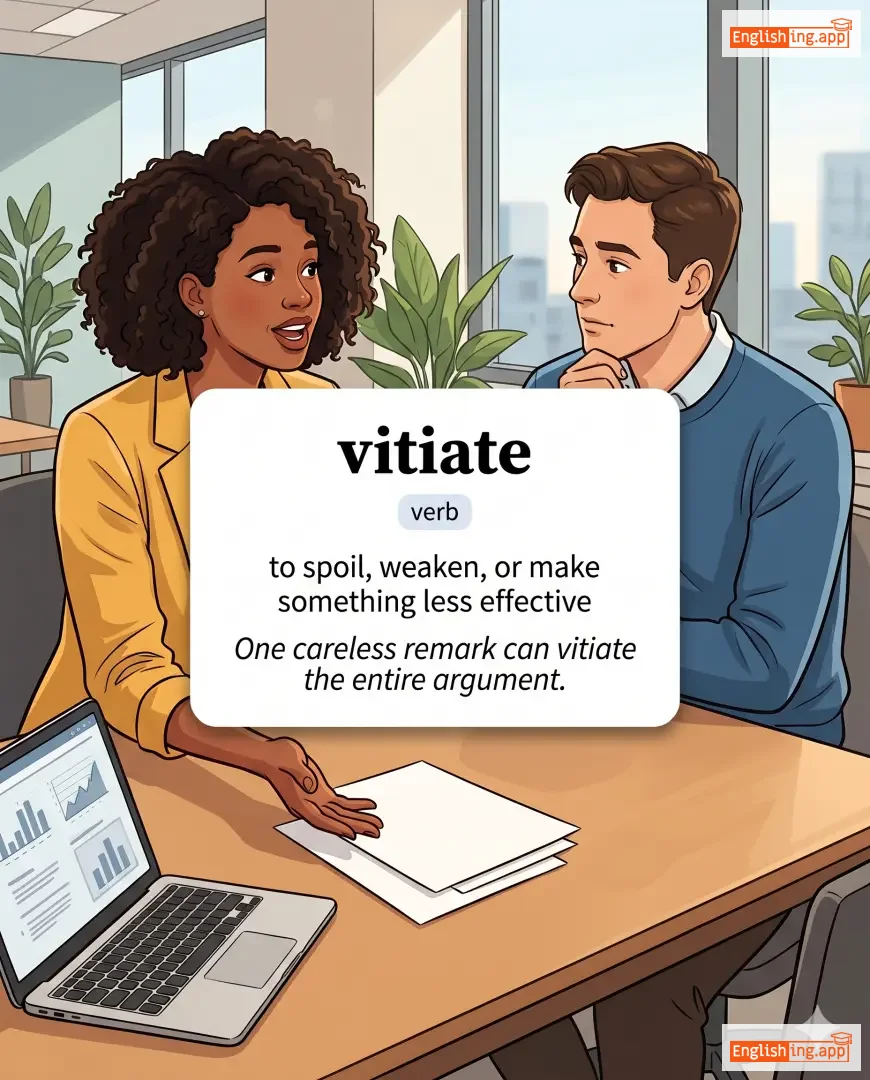
vitiate definition card — visual illustration of the meaning
verb
/ˈvɪʃieɪt/
नष्ट करना (nasht karna)

to spoil, weaken, or make something less effective

"One careless remark can vitiate the entire argument."

"एक असावधान टिप्पणी सम्पूर्ण तर्क को नष्ट कर सकती है।" (Ek asavdhan tipanni sampoorn tark ko nasht kar sakti hai.)