वोकैबुलरीज

इंग्लिश वोकैबुलरी डिस्कवर, लर्न और मास्टर करें

noun
/vɜːrv/
उत्साह (utsah)

Great enthusiasm, spirit, or energy in expression or performance.

"The actor performed his role with remarkable verve."

"एक्टर ने अपनी भूमिका को असाधारण उत्साह के साथ अदा किया।" (Aktor ne apni bhumika ko asadharan utsah ke saath ada kiya.)
adverb
/ˈvɛri/
बहुत (bahut)

used to emphasize an adjective or adverb

"She is very happy with her results."

"वह अपने परिणामों से बहुत खुश है।" (Wah apne parinaamon se bahut khush hai.)
vessel definition card — visual illustration of the meaning
noun
/ˈvɛsəl/
पोत / पात्र (pot / patra)

A ship or large boat; also a container for holding liquids or a tube in the body that carries blood.

"The fishing vessel returned safely to the harbor."

"मछली पकड़ने वाला जहाज सुरक्षित रूप से बंदरगाह वापस लौटा।" (Machhli pakadne wala jahaj surakshit roop se bandargah wapas laut aaya.)
noun
/ˈvɛstɪdʒ/
अवशेष (avshesh)

A small remaining part of something that once existed.

"Only a vestige of the ancient wall remains today."

"आज केवल प्राचीन दीवार का एक अवशेष बचा हुआ है।" (Aaj kebal prachin deewar ka ek avshesh bacha hua hai.)
adjective
/vɛˈstɪdʒiəl/
अवशिष्ट / अव्यवस्थित (avashisht / avyavasthit)

Relating to a small, undeveloped remnant of something that was once much larger or more functional.

"Humans have a vestigial tailbone that no longer serves its original purpose."

"मानवों के पास एक अवशिष्ट पूंछ की हड्डी है जो अब अपनी मूल भूमिका नहीं निभाती।" (Manavon ke paas ek avashisht poonch ki haddi hai jo ab apni mool bhoomika nahi nibhati.)
noun
/ˈvɛstmənt/
धार्मिक वस्त्र (dharmik vastra)

a garment, especially a ceremonial or official robe worn during religious services

"The priest wore a golden vestment during the ceremony."

"पादरी ने समारोह के दौरान एक सुनहरा धार्मिक वस्त्र पहना।" (Paadri ne samaaroh ke dauran ek sunahra dharmik vastra pehna.)
noun
/ˈvɛtərən/
वरिष्ठ व्यक्ति / सेवानिवृत्त सैनिक (varishth vyakti / sevanivritt sainik)

a person who has long experience in a particular field or an ex-member of the armed forces

"He is a veteran of the software industry."

"वह सॉफ़्टवेयर उद्योग का एक अनुभवी है।" (vah software udyog ka ek anubhavi hai)
verb
/ˈviːtoʊ/
वीटो करना (veeto karna)

to reject or forbid a decision, proposal, or law

"The president decided to veto the new bill."

"राष्ट्रपति ने नए बिल को वीटो करने का निर्णय लिया।" (Rashtrapati ne naye bil ko veto karne ka nirnay liya.)
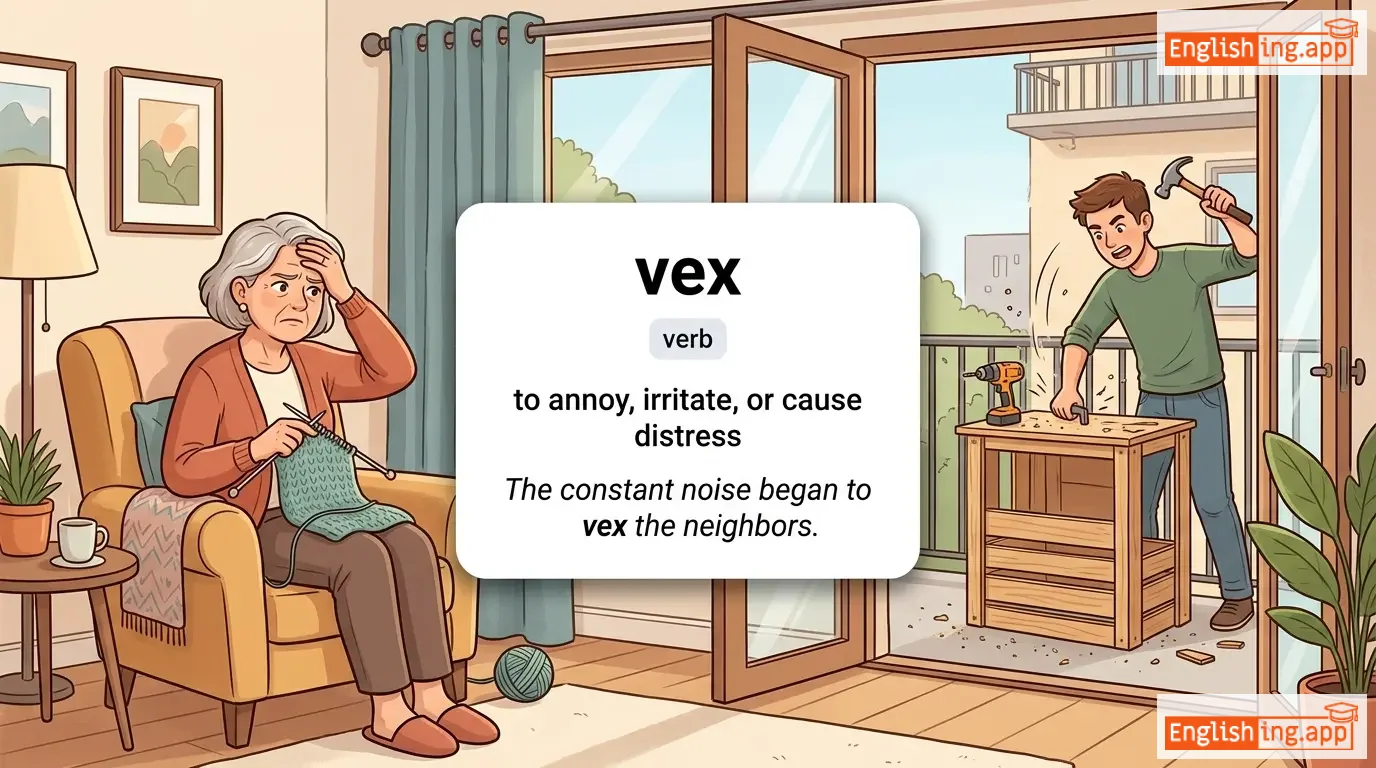
vex definition card — visual illustration of the meaning
verb
/vɛks/
परेशान करना (pareshan karna)

to annoy, irritate, or cause distress

"The constant noise began to vex the neighbors."

"लगातार शोर ने पड़ोसियों को परेशान करना शुरू कर दिया।" (Lagaataar shor ne padosiyon ko pareshan karna shuru kar diya.)
vexation definition card — visual illustration of the meaning
noun
/vɛkˈseɪʃən/
निराशा (niraasha)

the state of being annoyed, frustrated, or worried

"She could not hide her vexation after the repeated delays."

"वह बार-बार की देरी के बाद अपनी निराशा छुपा नहीं सकी।" (Woh baar-baar ki deri ke baad apni niraasha chhupa nahi sakti.)
preposition
/ˈvaɪə/ or /ˈviːə/
के माध्यम से (ke madhyam se)

through, by way of, or using a particular route or means

"She sent the documents via email."

"उसने दस्तावेज़ ईमेल के माध्यम से भेजे।" (Usne dastavez email ke madhyam se bheje.)
viability definition card — visual illustration of the meaning
noun
/ˌvaɪ.əˈbɪl.ə.ti/
कार्य करने की क्षमता (kaary karne ki kshamata)

Ability to work successfully.

"The viability of a business depends on financial stability."

"व्यवसाय की कार्यशीलता वित्तीय स्थिरता पर निर्भर करती है।" (Vyavsay ki kaaryasheelata vittiya sthirta par nirbhar karti hai.)
viable definition card — visual illustration of the meaning
adjective
/ˈvaɪəbl̩/
व्यावहारिक (vyavaharik)

capable of working successfully or able to survive

"They need a viable business plan to attract investors."

"उन्हें निवेशकों को आकर्षित करने के लिए एक व्यवहार्य व्यापार योजना की आवश्यकता है।" (Unhein niveshako ko aakarshit karne ke liye ek vyavaharik vyapaar yojna ki aavashyakta hai.)
noun
/ˈvaɪənd/
विविध व्यंजन (vividh vyanjan)

an item of food, especially a delicacy

"The banquet was filled with rich viands and wines."

"भोजन में विभिन्न प्रकार के व्यंजन और शराब थी।" (Bhojan mein vividh prakar ke vyanjan aur sharab thi.)
adjective
/ˈvaɪbrənt/
जीवंत (jivant)

full of energy and life; bright and striking

"The city is vibrant with culture and color."

"शहर संस्कृति और रंगों से जीवंत है।" (Shehar sanskriti aur rangon se jivant hai.)
verb
/ˈvaɪbreɪt/
कंपन करना (kampan karna)

To move or cause to move continuously and rapidly back and forth.

"The phone began to vibrate on the table."

"फोन टेबल पर कंपन करने लगा।" (Phon table par kampan karne laga.)
noun
/vaɪˈbreɪ.ʃən/
कंपन; स्पंदन; (vibration)

a rapid back and forth movement; oscillation

"The phone's vibration woke me up."

"फोन की वाइब्रेशन ने मुझे जगा दिया।" (phone ki vibration ne mujhe jaga diya.)
adjective
/vaɪˈkɛəriəs/
खुशी (khushi)

experienced through the feelings or actions of another person

"She felt vicarious excitement watching her son win the award."

"जब उसे पुरस्कार मिला, तो वह अपनी खुशी छुपा नहीं पाई।" (Jab use puraskar mila, to vah apni khushi chhupa nahi paayi.)
noun
/vaɪs/
दुष्कर्म (dushkarm)

immoral or wicked behavior; a weakness in someone's character

"Greed is a vice that can destroy lives."

"लालच एक दुष्कर्म है जो जीवन नष्ट कर सकता है।" (Lalach ek dushkarm hai jo jeevan nasht kar sakta hai.)
noun
/ˈvaɪsrɔɪ/
उप-राजा (up-raja)

a ruler exercising authority on behalf of a sovereign in a colony or province

"The viceroy governed the colony in the king's name."

"वाइसरॉय ने राजा के नाम पर उपनिवेश को शासित किया।" (Viceroy ne raja ke naam par upnivesh ko shasit kiya.)
noun
/vɪˈsɪn.ə.ti/
आसपास; निकटवर्ती (vicinity)

the area near or surrounding a particular place; neighborhood

"There are many shops in the vicinity of the school."

"स्कूल के पास कई दुकानें हैं।" (school ke paas kai dukanein hain.)
adjective
/ˈvɪʃəs/
क्रूर (krur)

Deliberately cruel, violent, or immoral.

"The dog gave a vicious growl when the stranger approached."

"जब अजनबी ने करीब आकर देखा तो कुत्ते ने भयंकर दहाड़ मारी।" (Jab ajnabi ne kareeb aakar dekha to kutte ne bhayankar dahad maari.)
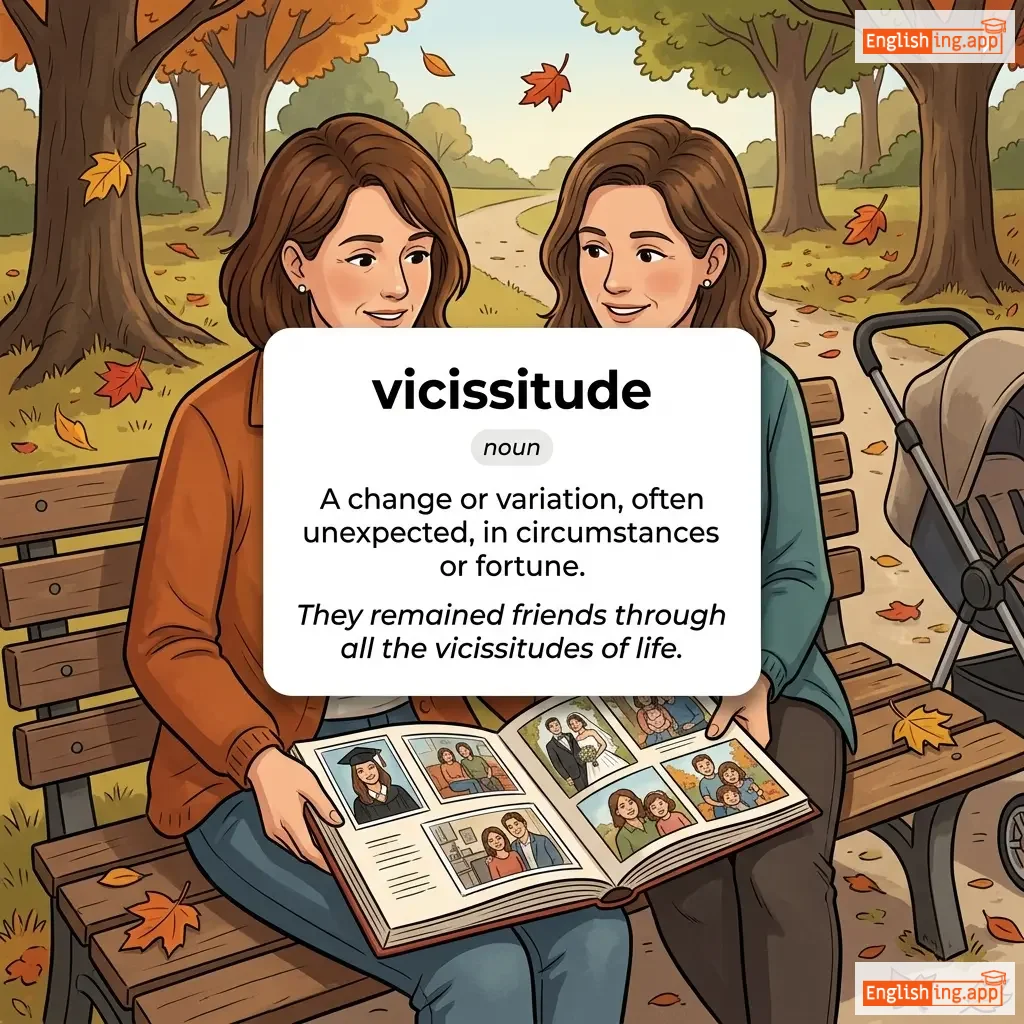
vicissitude definition card — visual illustration of the meaning
noun
/vɪˈsɪsɪtjuːd/
परिवर्तन (parivartan)

A change or variation, often unexpected, in circumstances or fortune.

"They remained friends through all the vicissitudes of life."

"वे जीवन के सभी उतार-चढ़ाव में दोस्त बने रहे।" (Ve jeevan ke sabhi utaar-chadhaav mein dost bane rahe.)
noun
/ˈvɪktɪm/
विक्टिम (viktim)

a person who suffers harm, injury, or death due to an event or action

"The victim of the accident was taken to the hospital immediately."

"दुर्घटना का शिकार व्यक्ति को तुरंत अस्पताल ले जाया गया।" (Durghatna ka shikar vyakti ko turant aspatal le jaya gaya.)
verb
/ˈvɪktɪmaɪz/
पीड़ित करना (peedit karna)

To make someone a victim, often by treating them unfairly or cruelly.

"The corrupt officials victimized the poor villagers."

"दुराचारियों ने गरीब गांववालों को शिकार बनाया।" (Durachariyon ne gareeb gaonwalo ko shikar banaya.)
adjective
/vɪkˈtɔː.ri.əs/
विजयी (vijayi)

having won a victory; successful in a struggle or contest

"The victorious team celebrated their championship win with great joy."

"विजयी टीम ने अपनी चैंपियनशिप जीत के साथ बड़ी खुशी मनाई।" (vijayi team ne apni championship jeet ke saath badi khushi manai.)
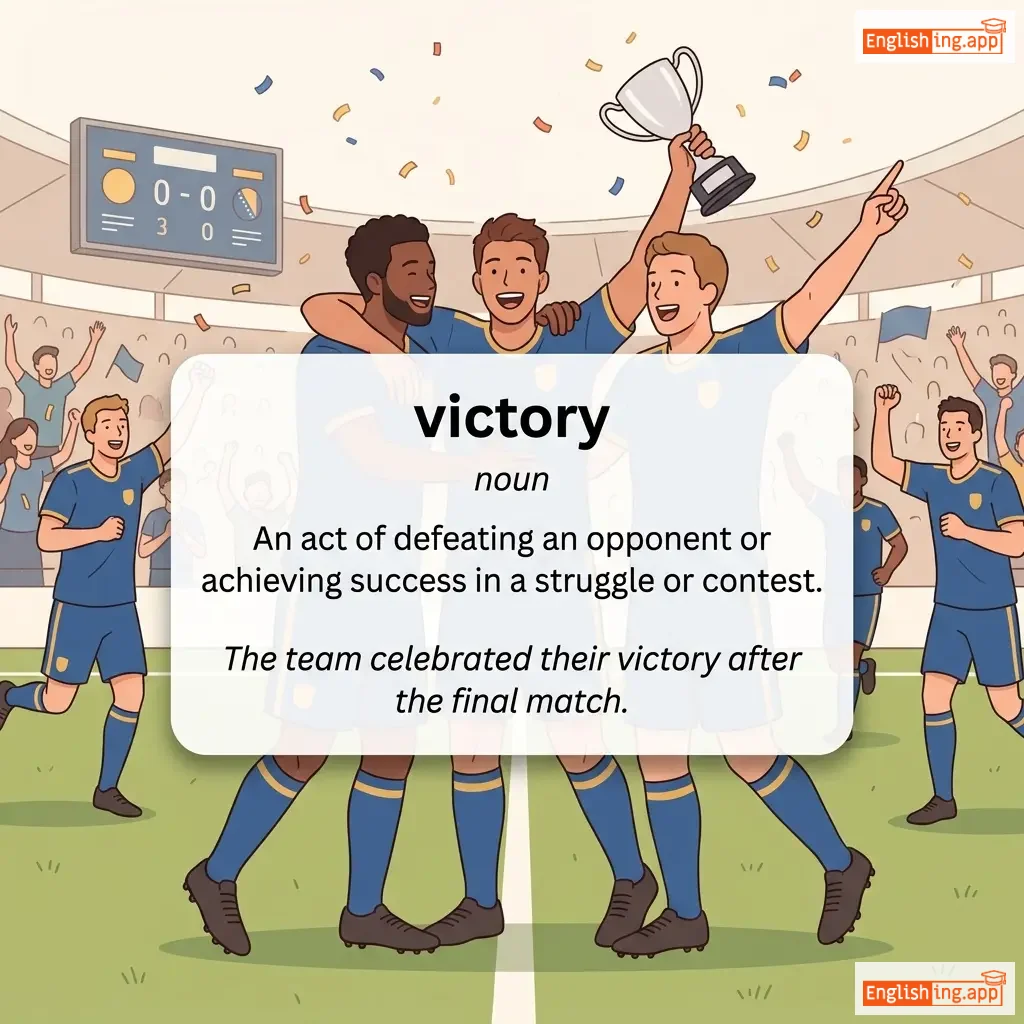
victory definition card — visual illustration of the meaning
noun
/ˈvɪktəri/
विजय (vijay)

An act of defeating an opponent or achieving success in a struggle or contest.

"The team celebrated their victory after the final match."

"टीम ने अंतिम मैच के बाद अपनी विजय का जश्न मनाया।" (Teem ne antim match ke baad apni vijay ka jashn manaya.)
noun
/ˈvɪtəlz/
भोजन (bhojan)

Food or provisions, especially for human consumption.

"The travelers packed enough victuals for their long journey."

"यात्रियों ने अपनी लंबी यात्रा के लिए पर्याप्त भोजन पैक किया।" (Yaatriyon ne apni lambi yatra ke liye paryapt bhojan paak kiya.)
noun
/ˈvɪdiəʊ/
वीडियो (video)

a recording of moving visual images made digitally or on film

"She watched the video of her favorite concert online."

"उसने अपनी पसंदीदा कंसर्ट का वीडियो ऑनलाइन देखा।" (Usne apni pasandida concert ka video online dekha.)
verb
/vaɪ/
प्रतिस्पर्धा करना (pratispardha karna)

To compete eagerly with someone in order to do or achieve something.

"Several companies are vying for the contract."

"कई कंपनियां अनुबंध के लिए प्रतिस्पर्धा कर रही हैं।" (Kai kampaniyan anubandh ke liye pratispardha kar rahi hain.)
noun/verb
/vjuː/
दृश्य (drishya)

the act of seeing or observing something, or an area of sight

"She had a great view of the sunset from her balcony."

"उसे अपनी बालकनी से सूर्यास्त का शानदार दृश्य देखने को मिला।" (Use apni balcony se suryast ka shandaar drishya dekhne ko mila.)
noun
/ˈvɪərər/
दर्शक (darshak)

a person who watches something, especially television or video content

"The viewer is able to switch channels with the remote control."

"दर्शक रिमोट कंट्रोल से चैनल बदलने में सक्षम है।" (Darshak remote control se channel badalne mein saksham hai.)
adjective
/ˈvjuː.ləs/
अदृश्य; विचारहीन (adrishya; vicharheen)

invisible; having no views or opinions

"The ghost remained viewless to most people in the haunted house."

"भूत हॉन्टेड हाउस में अधिकांश लोगों के लिए अदृश्य था।" (bhoot haunted house mein adhikansh logon ke liye adrishya tha)
noun
/ˈvjuːpɔɪnt/
दृष्टिकोण (drishtikon)

a particular attitude or way of considering a matter

"From his viewpoint, the situation was hopeless."

"उसके दृष्टिकोण से, स्थिति निराशाजनक थी।" (Uske drishtikon se, sthiti niraashajanak thi.)
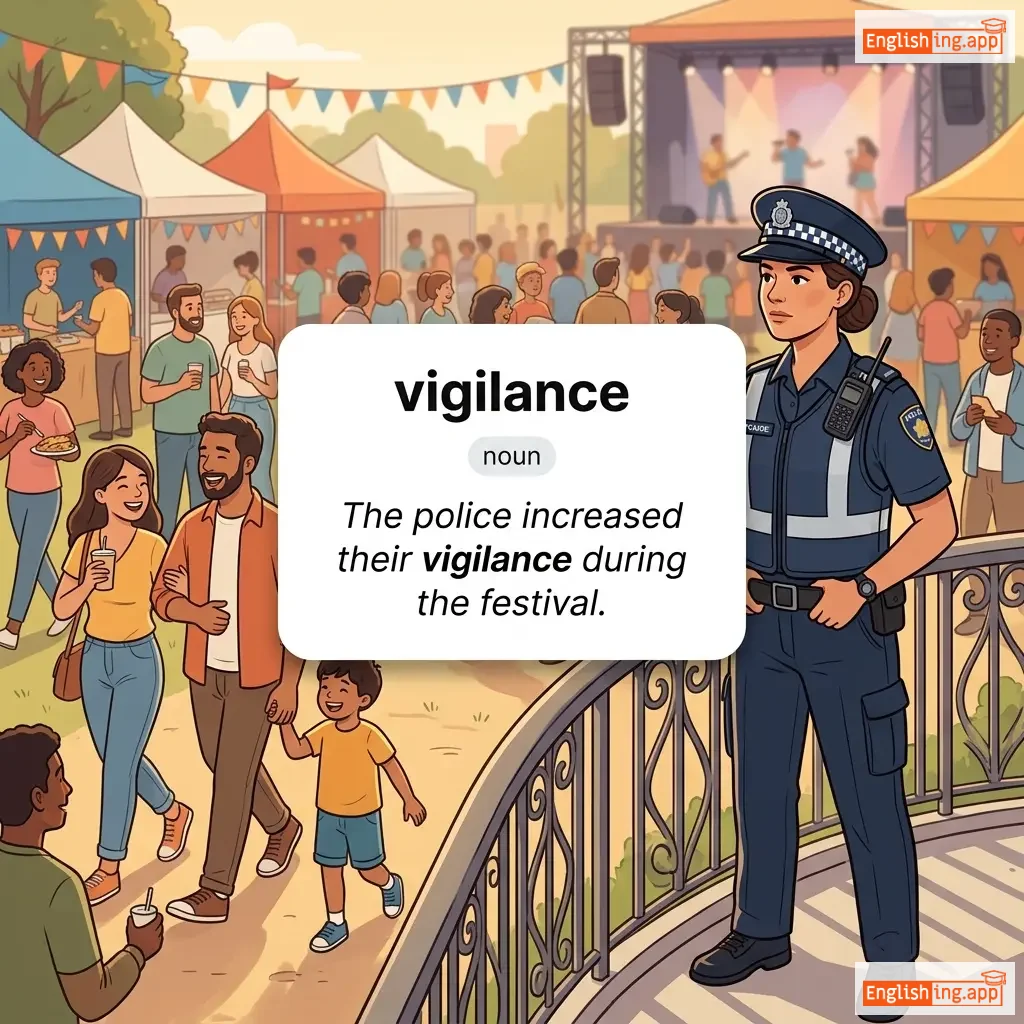
vigilance definition card — visual illustration of the meaning
noun
/ˈvɪdʒɪləns/
सतर्कता (satarkata)

The action or state of keeping careful watch for possible danger or difficulties.

"The police increased their vigilance during the festival."

"त्योहार के दौरान पुलिस ने अपनी सतर्कता बढ़ा दी।" (Tyohar ke dauran police ne apni satarkata badha di.)
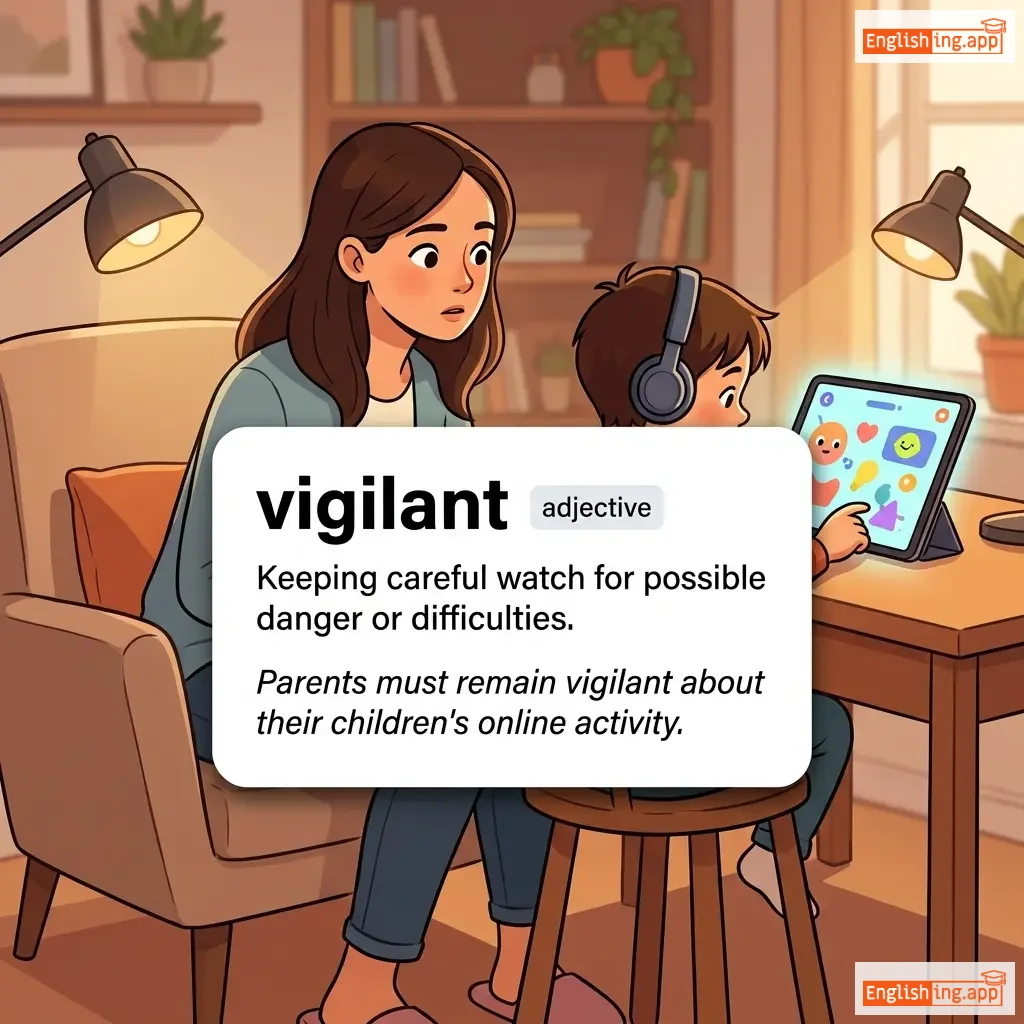
vigilant definition card — visual illustration of the meaning
adjective
/ˈvɪdʒɪlənt/
सतर्क (satark)

Keeping careful watch for possible danger or difficulties.

"Parents must remain vigilant about their children's online activity."

"माता-पिता को अपने बच्चों की ऑनलाइन गतिविधियों के बारे में सतर्क रहना चाहिए।" (Mata-pita ko apne bachchon ki online gatividhiyon ke baare mein satark rehna chahiye.)
noun
/vɪnˈjɛt/
संक्षिप्त लेख (sankshipt lekh)

A short, descriptive piece of writing or a brief scene.

"The author included a poignant vignette in the introduction of the book."

"लेखक ने किताब की प्रस्तावना में एक मार्मिक संक्षिप्त लेख शामिल किया।" (Lekhak ne kitaab ki prastaavna mein ek maarmik sankshipt lekh shaamil kiya.)
noun
/ˈvɪɡər/
उत्साह (utsah)

Physical strength, energy, or enthusiasm.

"She tackled the project with great vigor and determination."

"उसने महान उत्साह और दृढ़ संकल्प के साथ परियोजना को हल किया।" (Usne mahaan utsah aur drid sankalp ke saath pariyojna ko hal kiya.)
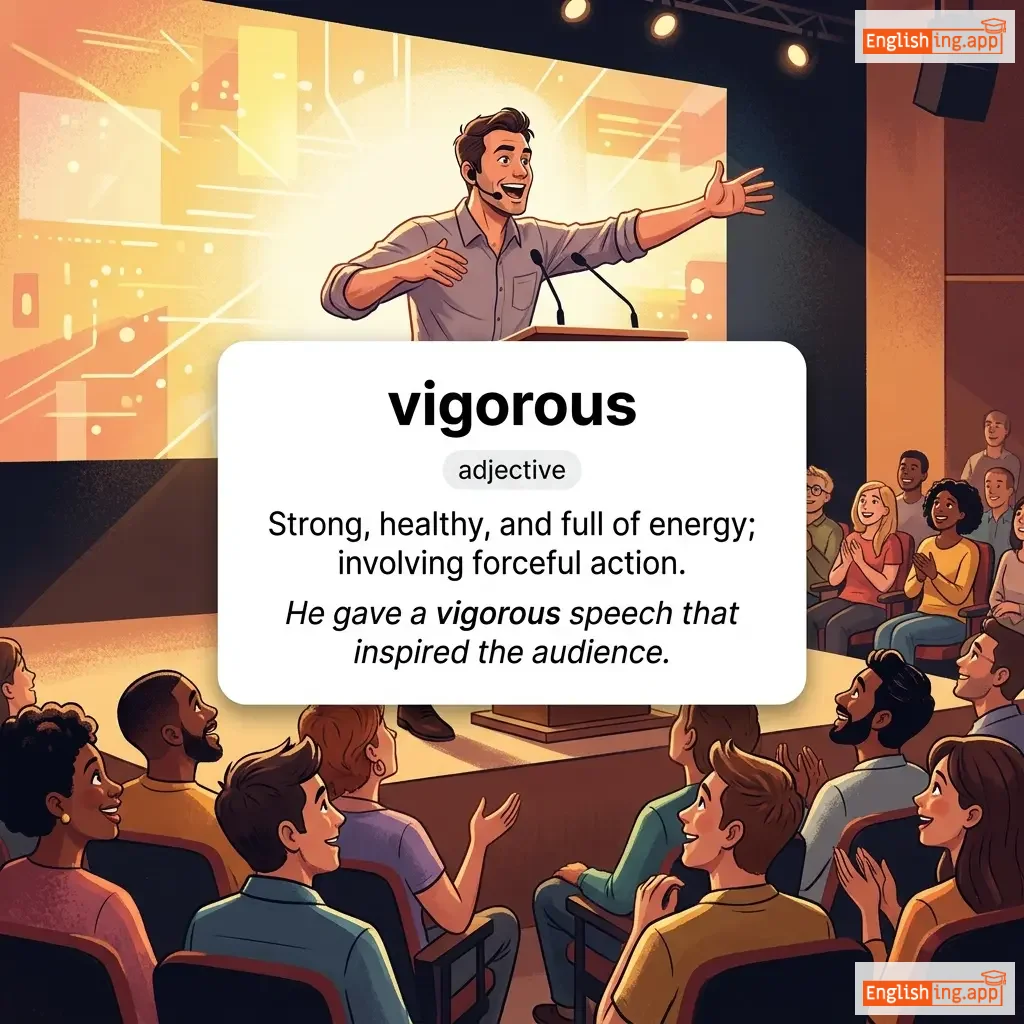
vigorous definition card — visual illustration of the meaning
adjective
/ˈvɪɡərəs/
उद्यमी (udyami)

Strong, healthy, and full of energy; involving forceful action.

"He gave a vigorous speech that inspired the audience."

"उसने एक जोरदार भाषण दिया जिसने दर्शकों को प्रेरित किया।" (Usne ek jor daar bhashan diya jisne darshako ko prerit kiya.)
noun
/ˈvɪɡ.ər/
शारीरिक शक्ति और अच्छा स्वास्थ्य; प्रयास, ऊर्जा और उत्साह (vigor)

physical strength and good health; effort, energy, and enthusiasm

"She approached her work with renewed vigour after the vacation."

"छुट्टी के बाद, उसने अपने काम को नई ऊर्जा के साथ शुरू किया।" (chhutti ke baad, usne apne kaam ko nai urja ke saath shuru kiya.)
verb
/ˈvɪlɪfaɪ/
खुशी (khushi)

to speak or write about someone in an abusive or disparaging manner

"The politician was vilified in the media for his controversial remarks."

"जब उसे पुरस्कार मिला तो वह अपनी खुशी नहीं छिपा सकी।" (Jab use puraskar mila to wah apni khushi nahi chhupa saki.)
noun
/ˈvɪlɪdʒ/
गांव (gaon)

a small community or group of houses in a rural area

"They live in a small village surrounded by mountains."

"वे एक छोटे से गांव में रहते हैं जो पहाड़ों से घिरा हुआ है।" (Ve ek chhote se gaon mein rehte hain jo pahadon se ghira hua hai.)
noun
/vɪm/
उत्साह (utsah)

energy and enthusiasm

"She performed the dance with great vim and vigor."

"उसने नृत्य को बड़ी उत्साह और ताकत के साथ प्रदर्शन किया।" (Usne nritya ko badi utsah aur takat ke saath pradarshan kiya.)
adjective
/ˈvɪnsəbl/
पराजेय (parajey)

capable of being overcome or defeated

"The enemy seemed vincible after losing their main base."

"दुश्मन मुख्य ठिकाना खोने के बाद पराजेय लग रहा था।" (Dushman mukhya thikana khone ke baad parajey lag raha tha.)
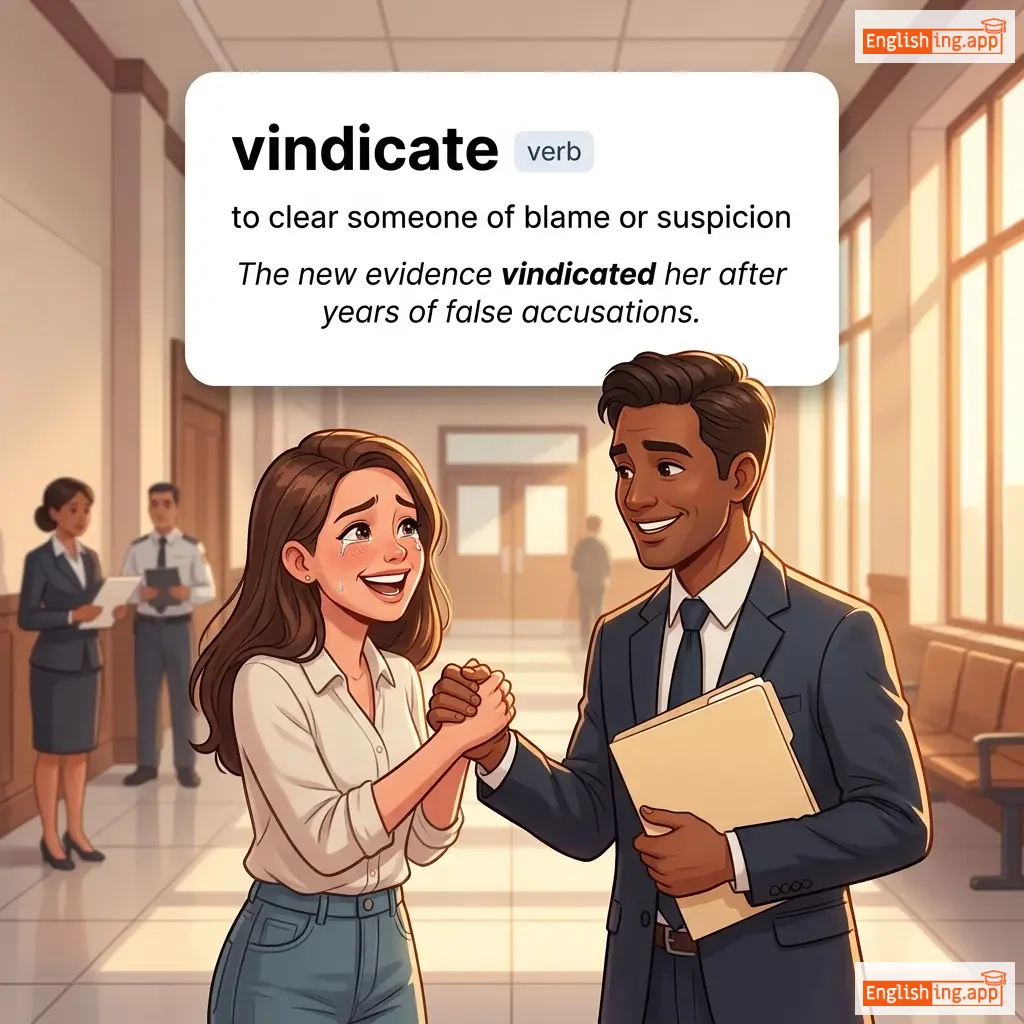
vindicate definition card — visual illustration of the meaning
verb
/ˈvɪndɪkeɪt/
निर्दोष प्रमाणित करना (nirdosh pramanit karna)

to clear someone of blame or suspicion

"The new evidence vindicated her after years of false accusations."

"नए सबूतों ने वर्षों की झूठी आरोपों के बाद उसे निर्दोष प्रमाणित किया।" (Naye sabuton ne varsho ki jhoothi aaropon ke baad use nirdosh pramanit kiya.)
adjective
/ˈvɪndɪkeɪtɪv/
न्यायप्रमाणात्मक (nyaypramanatmak)

showing a tendency to vindicate or justify; inclined to defend

"Her vindicative tone showed that she strongly believed in her innocence."

"उसकी विंडिकेटिव ध्वनि ने दिखाया कि वह अपनी निर्दोषता में पूरी तरह विश्वास करती थी।" (Uski vindicative dhvani ne dikhaya ki vah apni nirdoshata mein puri tarah vishwas karti thi.)
adjective
/ˈvɪndɪkətɔːri/
न्यायसंगत (nyayasangat)

Serving to justify, clear of blame, or defend.

"His vindicatory remarks restored his reputation."

"उसके न्यायसंगत टिप्पणियाँ ने उसकी प्रतिष्ठा को बहाल किया।" (uske nyayasangat tippaniyon ne uski pratishtha ko bahaal kiya.)
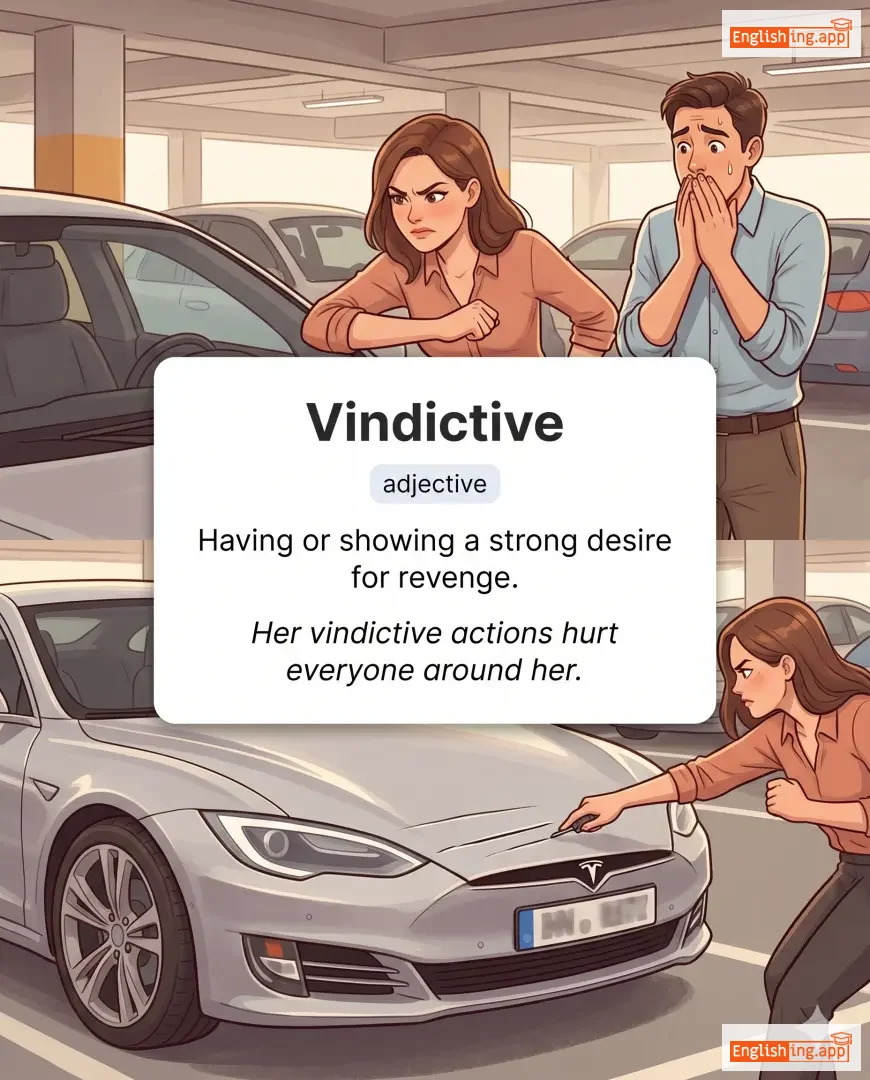
Vindictive definition card — visual illustration of the meaning
adjective
/vɪnˈdɪktɪv/
प्रतिशोधी (pratishodhi)

Having or showing a strong desire for revenge.

"Her vindictive actions hurt everyone around her."

"उसकी प्रतिशोधी क्रियाओं ने उसके चारों ओर सभी को आहत किया।" (uski pratishodhi kriyaon ne uske charon or sabhi ko aahat kiya.)
noun
/vaɪn/
लता (lata)

a climbing or trailing plant with long stems; a plant that produces grapes

"The vine climbed up the wall and covered it with green leaves."

"लता दीवार पर चढ़कर हरी पत्तियों से ढक गई।" (lata deewar par chadhkar hari pattiyon se dhak gai)
noun
/ˈvɪn.ɪ.ɡər/
सिरका (sirka)

a sour liquid made from fermented alcohol, used for cooking and preserving

"I added vinegar to the salad dressing for extra flavor."

"मैंने सलाद ड्रेसिंग में अतिरिक्त स्वाद के लिए सिरका डाला।" (maine salad dressing mein atirikt swad ke liye sirka dala.)