वोकैबुलरीज

इंग्लिश वोकैबुलरी डिस्कवर, लर्न और मास्टर करें

noun
/ˈveɪ.pər/
वाष्प (vaashp)

a mass of tiny water droplets suspended in the atmosphere; gas formed from a liquid

"Water vapour rises from the hot tea cup."

"गर्म चाय के कप से वायू उठता है।" (garm chay ke kap se vaayu uthta hai.)
adjective, noun
/ˈvɛriəbl/
परिवर्तनीय (parivartaniy)

liable to change; in mathematics, a symbol representing a quantity that may change

"The weather is highly variable in this region."

"यह क्षेत्र अत्यधिक परिवर्तनीय है।" (Yah kshetra atyadhik parivartaniy hai.)
noun
/ˈvɛriəns/
वेरिएंस (verians)

the state of being different or inconsistent; in statistics, a measure of the spread between numbers

"There is a wide variance in students' performance levels."

"छात्रों के प्रदर्शन स्तर में व्यापक वेरियन्स है।" (Chhatron ke pradarshan star mein vyapak verians hai.)
noun
/ˈvɛəriənt/
रूपांतर (roopantar)

A form or version of something that differs in some way from other forms of the same thing.

"The new variant of the virus spread rapidly."

"वायरस का नया रूप तेजी से फैल गया।" (virus ka naya roop tezi se phail gaya.)
noun
/ˌvɛəriˈeɪʃən/
भिन्नता (bhinnata)

A change or slight difference in condition, amount, or level.

"There is a wide variation in climate across the country."

"देशभर में जलवायु में व्यापक भिन्नता है।" (deshbhar mein jalvayu mein vyapak bhinnata hai.)
adjective
/ˈvɛərɪd/
विविध (vividh)

showing many different kinds or forms

"The menu offers a varied selection of dishes."

"मेनू में विभिन्न प्रकार के व्यंजनों का चयन है।" (Menu mein vividh prakar ke vyajanon ka chayan hai.)
verb
/ˈvɛəriəˌɡeɪt/
विविध करना (vividh karna)

To diversify or mark with different colors or patterns.

"The artist used different shades to variegate the design."

"कलाकार ने डिजाइन को विविध बनाने के लिए विभिन्न शेड्स का उपयोग किया।" (kalakar ne design ko vividh banane ke liye vibhinn shades ka upyog kiya.)
adjective
/ˈvɛəriəˌɡeɪtɪd/
बहुरंगी (bahurangi)

Having different colors, especially in irregular patches or streaks.

"The garden was full of variegated plants."

"बगीचा बहुरंगी पौधों से भरा हुआ था।" (bagicha bahurangi paudhon se bhara hua tha)
noun
/ˌvɛəriəˈɡeɪʃən/
विविधता (vividhata)

The appearance of differently colored zones in the leaves, flowers, or stems of plants.

"Variegation makes the foliage look more attractive."

"वेरिगेशन पत्तियों को और अधिक आकर्षक बनाता है।" (Variegation pattiyon ko aur adhik aakarshak banata hai.)
noun
/vəˈraɪəti/
विविधता (vividhata)

the quality or state of being different or diverse; a range of different things

"There is a variety of fruits available in the market."

"बाजार में विभिन्न प्रकार के फल उपलब्ध हैं।" (Bazaar mein vividh prakar ke phal upalabdh hain.)
adjective
/ˈvɛə.ri.əs/
विभिन्न (vibhinn)

different from one another; of several different kinds

"She owns various kinds of books."

"उसके पास विभिन्न प्रकार की किताबें हैं।" (Uske paas vibhinn prakar ki kitaabein hain.)
noun/verb
/ˈvɑːrnɪʃ/
वार्निश (varnish)

A liquid that is applied to wood or other materials to form a hard, shiny surface; also to apply such a liquid.

"The carpenter varnished the table to give it a glossy finish."

"कंपाउंडर ने टेबल को चमकदार बनाने के लिए वार्निश किया।" (Carpenter ne table ko chamakdar banaane ke liye varnish kiya.)
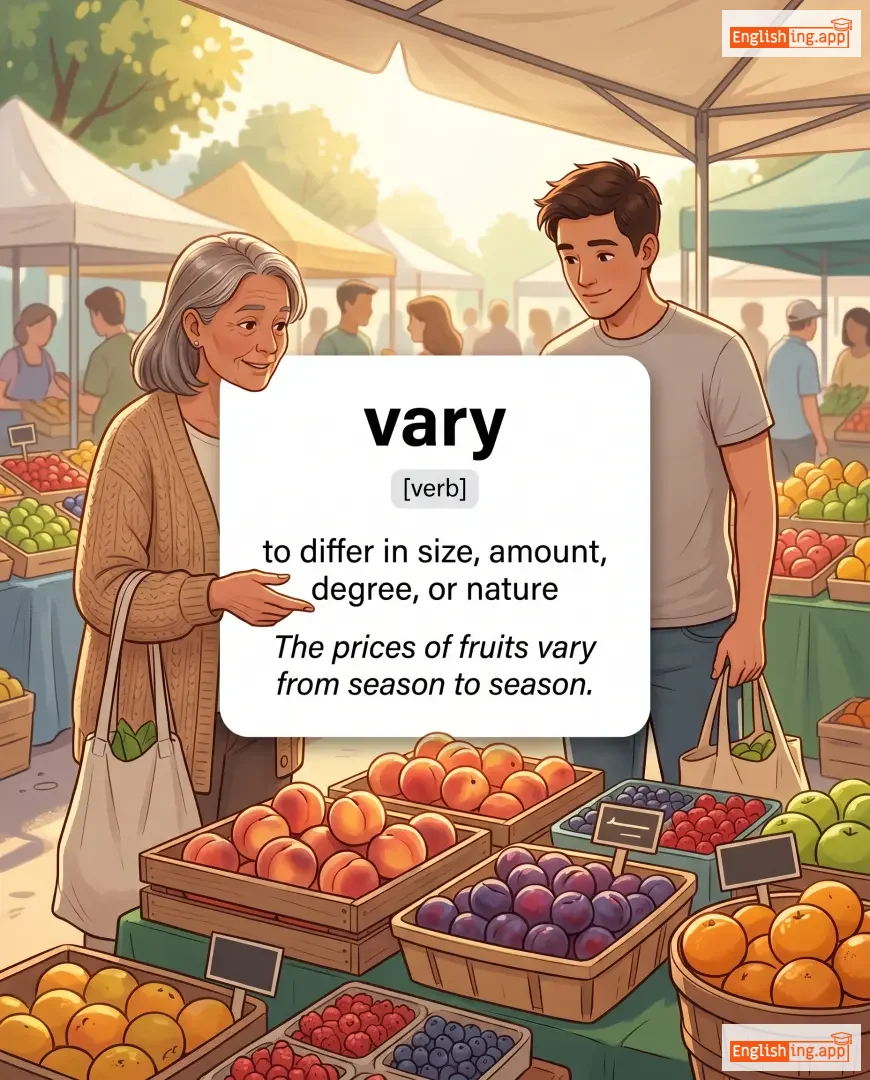
vary definition card — visual illustration of the meaning
verb
/ˈveəri/
विभिन्न होना (vibhinn hona)

to differ in size, amount, degree, or nature

"The prices of fruits vary from season to season."

"फलों की कीमतें मौसम दर मौसम बदलती हैं।" (Phalon ki keematen mausam dar mausam badalti hain.)
noun
/ˈvæsəl/
वassल (vassal)

A person or country in a subordinate position to another, especially in feudal times under a lord.

"The king granted land to his vassal in return for loyalty and service."

"राजा ने अपने वासल को निष्ठा और सेवा के बदले ज़मीन दी।" (Raja ne apne vassal ko nishtha aur seva ke badle zameen di.)
adjective
/vɑːst/
विशाल (vaast)

extremely large in size, amount, or extent

"The desert stretches across a vast area of land."

"रेगिस्तान एक विशाल क्षेत्र में फैला हुआ है" (registan ek vishal kshetra mein phaila hua hai)
noun
/væt/
बड़ा पात्र (bada patra)

A large container used for holding liquids such as dye or wine.

"The workers filled the vat with freshly pressed grape juice."

"कर्मचारियों ने ताजे अंगूर के रस से बड़ा पात्र भरा।" (Karmachariyon ne taje angoor ke ras se bada patra bhara.)
noun
/ˈvɔːdəvɪl/
वॉडविल (vaudeville)

A type of entertainment popular in the early 20th century, featuring a mixture of comedy, song, dance, and variety acts.

"The vaudeville show included comedians, magicians, and dancers."

"वॉडविल शो में हास्य कलाकार, जादूगर और नर्तक शामिल थे।" (Vaudeville show mein hasya kalakar, jadugar aur nartak shamil the.)
noun/verb
/vɔːlt/
सुरक्षित कक्ष / कूदना (surakshit kaksh / kudna)

A secure room for storing valuables; also to leap or spring over something.

"The bank kept its gold bars in a secure vault."

"बैंक ने अपने सोने के बरे एक सुरक्षित वॉल्ट में रखे।" (Bank ne apne sone ke bare ek surakshit vault mein rakhe.)
verb
/vɔːnt/
दंभ करना (dambh karna)

to boast or brag about something, especially in an excessive way

"He would often vaunt his achievements in front of his colleagues."

"वह अक्सर अपने सहकर्मियों के सामने अपनी उपलब्धियों की बड़ाई करता था।" (Wah aksar apne sahkarmiyon ke samne apni uplabdhiyon ki badaai karta tha.)
adjective
/ˈvɔːntɪd/
अत्यधिक सराहा गया (atyadhik saraha gaya)

praised or boasted about, especially excessively

"The vaunted technology failed to deliver the expected results."

"वह अत्यधिक सराहा गया तकनीक अपेक्षित परिणाम देने में विफल हो गया।" (Wah atyadhik saraha gaya takneek apekshit parinaam dene mein viphal ho gaya.)
verb
/vɪə(r)/
दिशा बदलना (disha badalna)

to change direction suddenly

"The car veered off the road to avoid the accident."

"दुर्घटना से बचने के लिए कार ने अचानक रास्ता बदल लिया।" (Durghatna se bachne ke liye car ne achanak rasta badal liya.)
noun
/ˈvɛdʒ.tə.bəl/
सुख (sukh)

a plant or part of a plant used as food

"I eat vegetables every day for health."

"जब उसे पुरस्कार मिला तो वह अपनी खुशी नहीं छिपा सकी।" (Jab use puraskaar mila to wah apni khushi nahin chhupa sakee.)
noun
/ˈvedʒtəbəl ɔɪl/
वनस्पति तेल (vanspati tel)

Oil extracted from plants, seeds, or nuts used for cooking

"She heated vegetable oil in the pan before adding the vegetables."

"उसने सब्जियां डालने से पहले पैन में वनस्पति तेल गरम किया" (usne sabziyan dalne se pehle pan mein vanspati tel garam kiya)
noun
/ˈvedʒ.tə.bəlz/
सब्जियाँ (sabziyan)

plants or parts of plants that are eaten as food, such as peas, beans, cabbage, potatoes, onions, or carrots

"We should eat more vegetables to maintain a healthy diet."

"हमें एक स्वस्थ आहार बनाए रखने के लिए अधिक सब्जियाँ खानी चाहिए।" (humein ek swasth aahaar banaye rakhne ke liye adhik sabziyan khani chahiye.)
adjective
/ˈvɛdʒɪtəl/
वेजेटल (vegetal)

relating to or consisting of plants or vegetation

"The soup had a distinct vegetal flavor."

"सूप में एक विशिष्ट वेजेटल स्वाद था।" (Soop mein ek vishisht vegetal swaad tha.)
noun
/ˌvɛdʒəˈtɛəriən/
खुशी (khushi)

a person who does not eat meat and sometimes other animal products, eating mainly vegetables, grains, and fruits

"She has been a vegetarian for over ten years."

"वह पुरस्कार प्राप्त करने पर अपनी खुशी को छिपा नहीं पाई।" (Wah puraskar prapt karne par apni khushi ko chhupa nahin paayi.)
verb
/ˈvɛdʒɪteɪt/
निष्क्रिय रहना (nishkriya rehna)

to live in a dull, inactive, or unchallenging way, often with little physical or mental effort

"He spent his vacation vegetating on the couch in front of the TV."

"उसने अपनी छुट्टी सोफे पर टीवी के सामने निष्क्रिय तरीके से बिताई।" (Usne apni chhuti sofay par TV ke samne nishkriya tareeke se bitayi.)
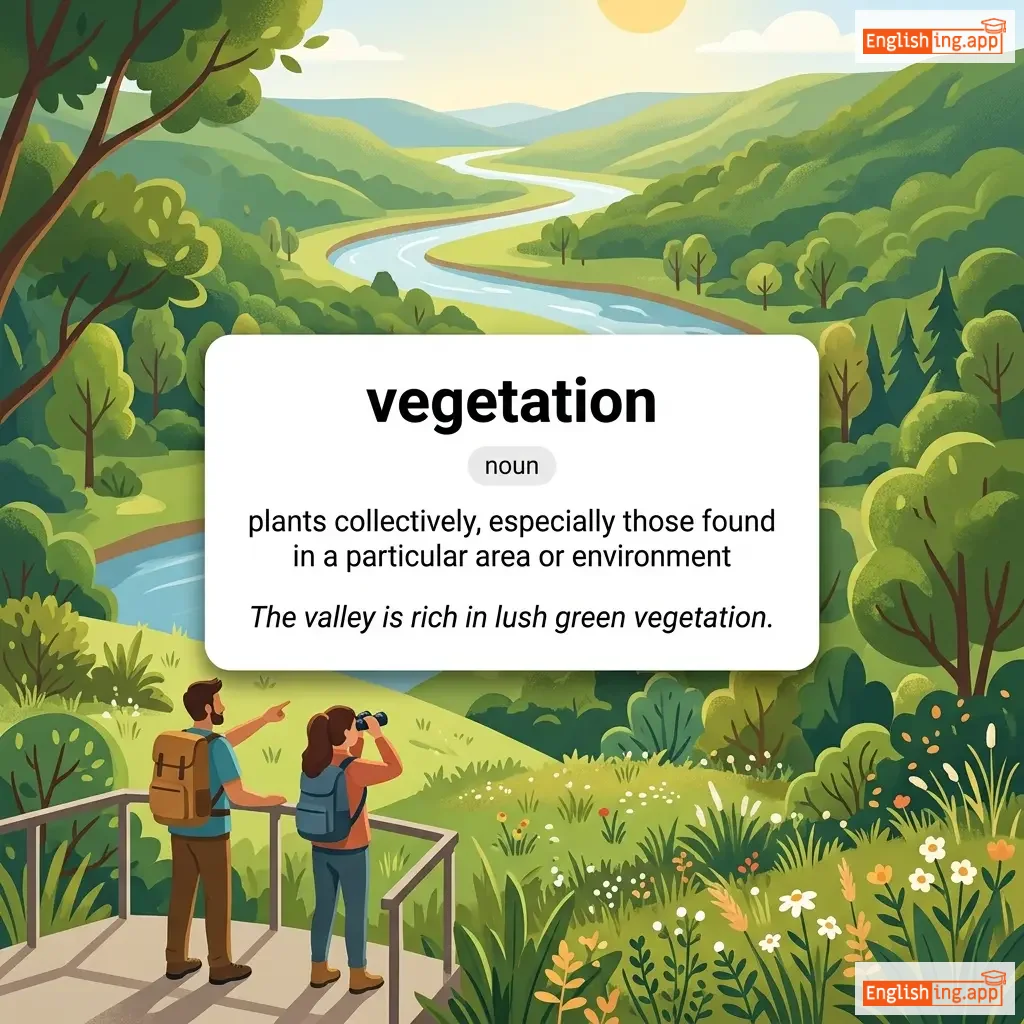
vegetation definition card — visual illustration of the meaning
noun
/ˌvɛdʒɪˈteɪʃən/
वृक्षावरण (vrikshavaran)

plants collectively, especially those found in a particular area or environment

"The valley is rich in lush green vegetation."

"घाटी हरे-भरे वृक्षावरण से समृद्ध है।" (Ghaati hare-bhare vrikshavaran se samriddh hai.)
adjective
/ˈvɛdʒɪtətɪv/
निराश्रित या पौधों से संबंधित (niraashrit ya paudhon se sambandhit)

relating to growth or the basic processes of life, often without conscious thought or activity

"The patient remained in a vegetative state after the accident."

"दुर्घटना के बाद रोगी एक निराश्रित स्थिति में रहा।" (Durghatna ke baad rogi ek niraashrit sthiti mein raha.)
noun
/ˈviːəməns/
जोर (jor)

Great forcefulness or intensity of expression, emotion, or conviction.

"She spoke with vehemence during the debate."

"उसने बहस के दौरान जोर से बात की।" (Usne bahas ke dauran zor se baat ki.)
adjective
/ˈviːəmənt/
जोरदार (jordar)

showing strong feeling; forceful, passionate, or intense

"She made a vehement argument against the proposal."

"उसने प्रस्ताव के खिलाफ एक जोरदार तर्क प्रस्तुत किया।" (Usne prastav ke khilaf ek jordar tark prastut kiya.)
noun
/ˈviːɪkəl/
वाहन (vahan)

a machine used for transporting people or goods

"He drives a vehicle to work every day."

"वह हर दिन काम पर जाने के लिए एक वाहन चलाता है।" (Vah har din kaam par jaane ke liye ek vahan chalata hai.)
noun
/ˈviː.ɪ.kəlz/
वाहन (vaahan)

machines used for transporting people or goods from one place to another

"There are many different types of vehicles on the road today."

"आजकल सड़कों पर कई तरह के वाहन हैं।" (aajkal sadkon par kai tarah ke vaahan hain)
noun
/veɪl/
पल्लू (pallu)

a piece of fine material worn by women to protect or conceal the face

"The bride wore a beautiful white veil during her wedding ceremony."

"दुल्हन ने अपनी शादी के समारोह के दौरान एक सुंदर सफेद पल्लू पहना।" (dulhan ne apni shaadi ke samaroh ke dauran ek sundar safed pallu pehna)
noun
/veɪn/
शिरा (shira)

a tube in the body that carries blood to the heart

"The nurse checked the patient's veins for an IV insertion."

"नर्स ने मरीज की शिराओं की जाँच की IV इन्सर्शन के लिए।" (Nars ne mareez ki shiraon ki jaanch ki IV insertion ke liye.)
noun
/vəˈliːɪti/
कमजोर इच्छा (kamjor ichcha)

A wish or inclination not strong enough to lead to action.

"His interest in painting never grew beyond a mere velleity."

"पेंटिंग में उसकी रुचि कभी भी एक मामूली कमजोर इच्छा से आगे नहीं बढ़ी।" (Painting mein uski ruchi kabhi bhi ek mamooli kamjor ichcha se aage nahi badhi.)
noun
/ˈvɛləm/
वेलम (velam)

a fine parchment made originally from the skin of a calf, used for writing or printing

"The ancient manuscript was written on vellum."

"प्राचीन पांडुलिपि वेलम पर लिखी गई थी।" (Prachin pandulipi velam par likhi gayi thi.)
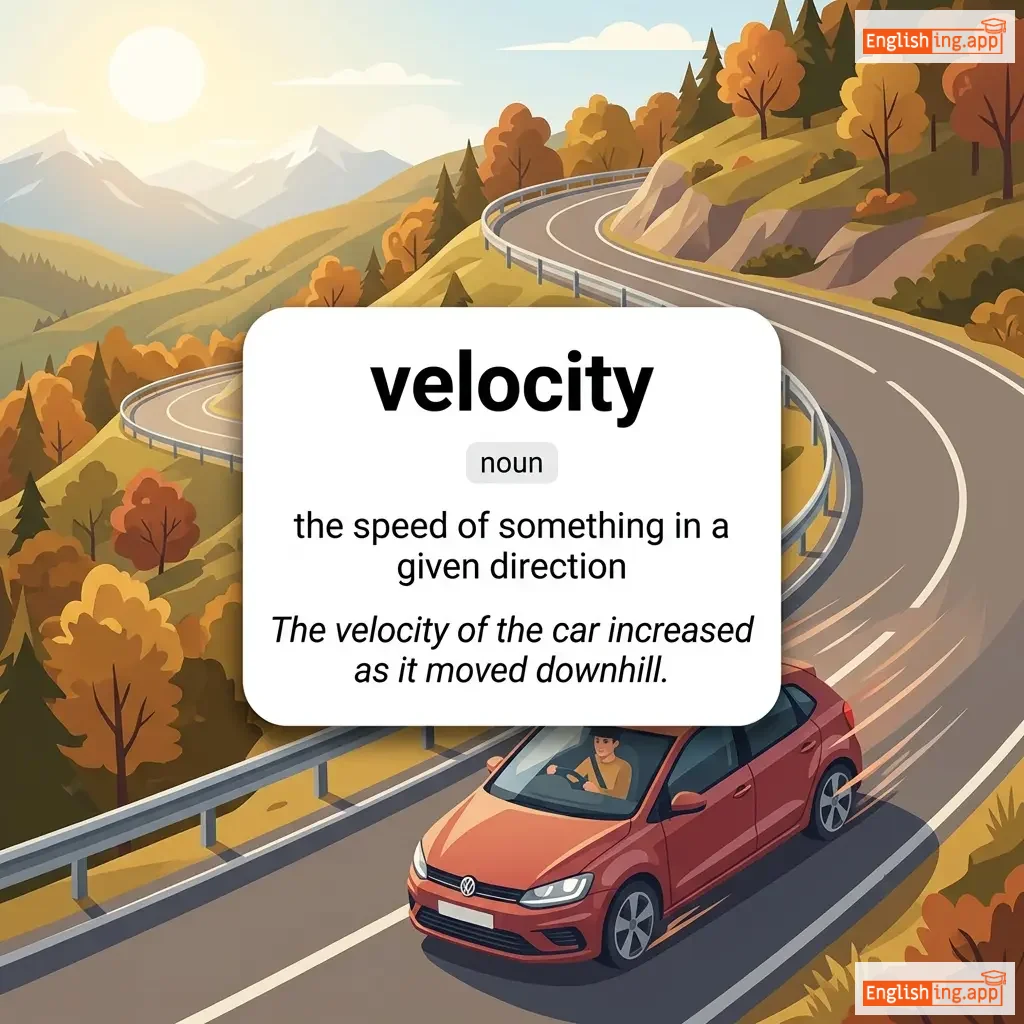
velocity definition card — visual illustration of the meaning
noun
/vəˈlɒsəti/
वेग (veg)

the speed of something in a given direction

"The velocity of the car increased as it moved downhill."

"कार की गति बढ़ गई जब वह नीचे की ओर चली।" (kaar ki veg badh gayi jab wah neeche ki aur chali.)
noun
/ˈvel.vɪt/
समेट (samet)

a soft, luxurious fabric with a thick, short pile on one side

"The royal curtains were made of rich red velvet."

"राजसी परदे समृद्ध लाल समेट से बने थे।" (raajsi parde samriddh laal samet se bane the)
adjective
/ˈvɛlvəti/
सुख (sukh)

having a smooth, soft texture like velvet

"She spoke in a low, velvety voice."

"उसे पुरस्कार मिलने पर अपनी खुशी छुपाने में मुश्किल हो रही थी।" (Use puraskar milne par apni khushi chhupane mein mushkil ho rahi thi.)
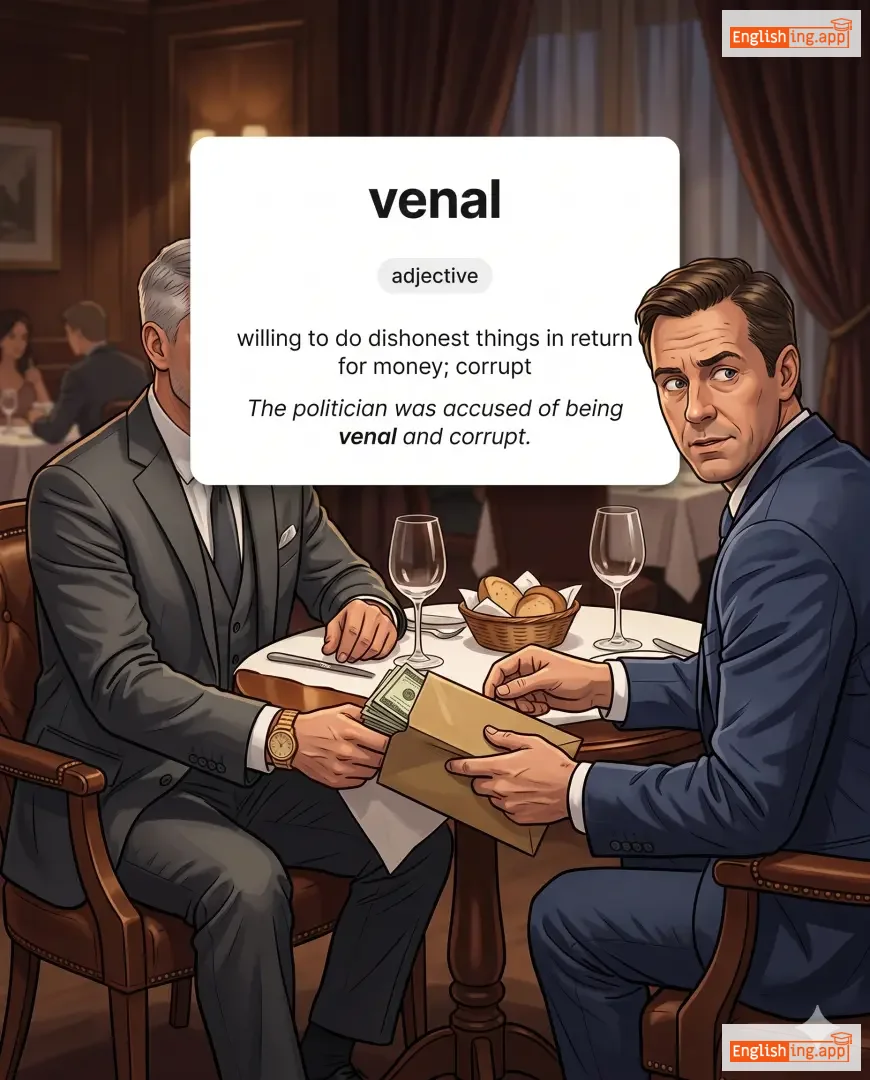
venal definition card — visual illustration of the meaning
adjective
/ˈviːnəl/
घूसखोर (ghooskhore)

willing to do dishonest things in return for money; corrupt

"The politician was accused of being venal and corrupt."

"राजनेता को घूसखोर और भ्रष्ट होने का आरोप लगा था।" (Raajnetaa ko ghooskhore aur bhrasht hone ka aarop laga tha.)
noun
/viːˈnæləti/
घूसखोरी (ghooskhori)

the quality of being open to bribery or corruption

"The scandal revealed the venality of several senior officials."

"कैलेंकारिटी ने कई वरिष्ठ अधिकारियों की घूसखोरी को उजागर किया।" (Kailenkaariti ne kai varishth adhikariyon ki ghooskhori ko ujagar kiya.)
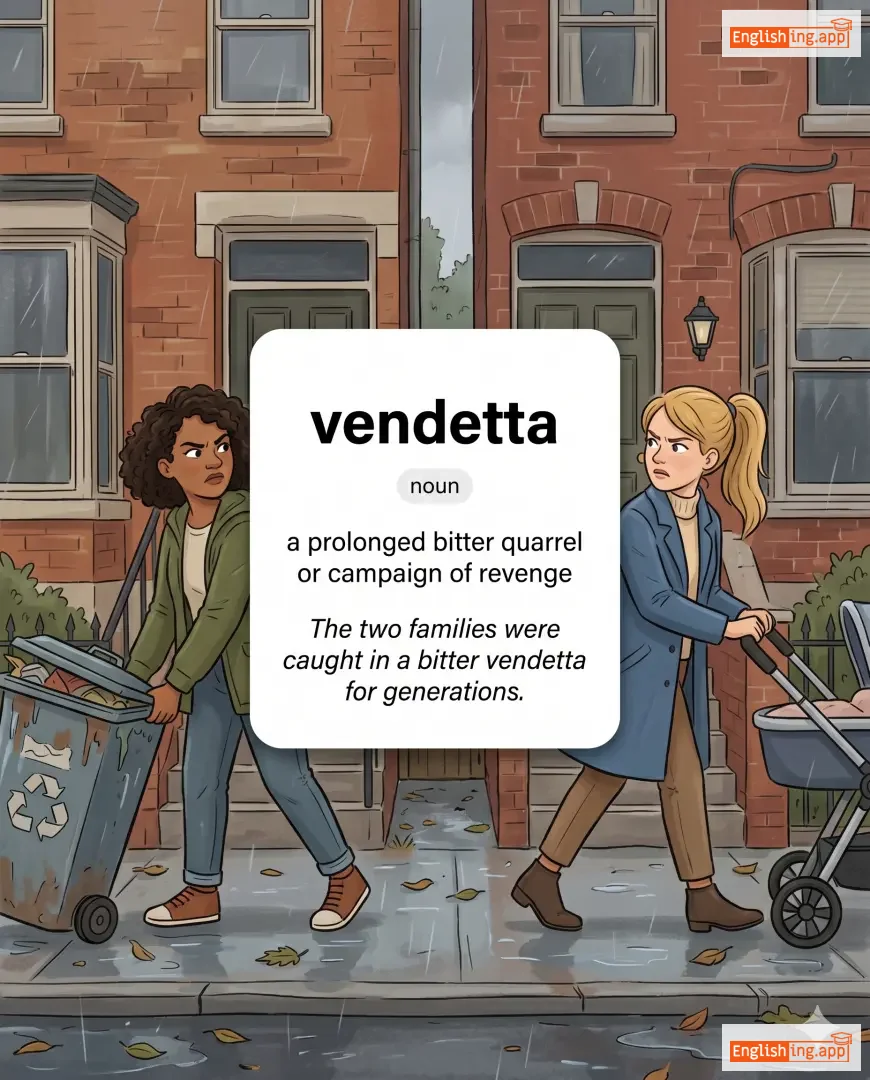
vendetta definition card — visual illustration of the meaning
noun
/vɛnˈdɛtə/
प्रतिशोध (pratishodh)

a prolonged bitter quarrel or campaign of revenge

"The two families were caught in a bitter vendetta for generations."

"दो परिवार पीढ़ियों से कड़वी प्रतिशोध की चपेट में थे।" (Do parivaar peedhiyon se kadwi pratishodh ki chhapet mein the.)
adjective
/ˈvɛndɪbəl/
बेचने योग्य (bechne yogya)

Capable of being sold; marketable.

"Only vendible products were displayed at the trade fair."

"केवल बेचने योग्य उत्पाद ही व्यापार मेले में प्रदर्शित किए गए थे।" (Keval bechne yogya utpad hi vyapar mele mein pradarshit kiye gaye the.)
noun
/vɛnˈdɪʃən/
विक्रय (vikray)

The act of selling; sale.

"The auction was a formal vendition of the estate's assets."

"नीलामी संपत्ति के संपत्तियों की एक औपचारिक विक्रय थी।" (Neelami sampatti ke sampattiyon ki ek aupcharik vikray thi.)
noun
/ˈvɛndɔːr/
विक्रेता (vikreta)

A person or company that sells goods or services.

"The street vendor sold fresh fruits every morning."

"सड़क के विक्रेता ने हर सुबह ताजे फल बेचे।" (Sadak ke vikreta ne har subah taje phal beche.)
noun
/vəˈnɪər/
खुशी (khushi)

A thin decorative covering of fine wood applied to a coarser wood or other material; a superficially attractive appearance.

"The table was covered with a thin veneer of mahogany."

"वह पुरस्कार मिलने पर अपनी खुशी को छुपा नहीं सकी।" (vah puraskaar milne par apni khushi ko chhupa nahi saki.)
adjective
/ˈvɛnərəbl/
आदरणीय (aadarniya)

Accorded a great deal of respect, especially because of age, wisdom, or character.

"The venerable professor was admired by generations of students."

"आदरणीय प्रोफेसर को पीढ़ियों से छात्रों द्वारा सराहा गया।" (Aadarniya professor ko peedhiyon se chatron dwara saraha gaya.)
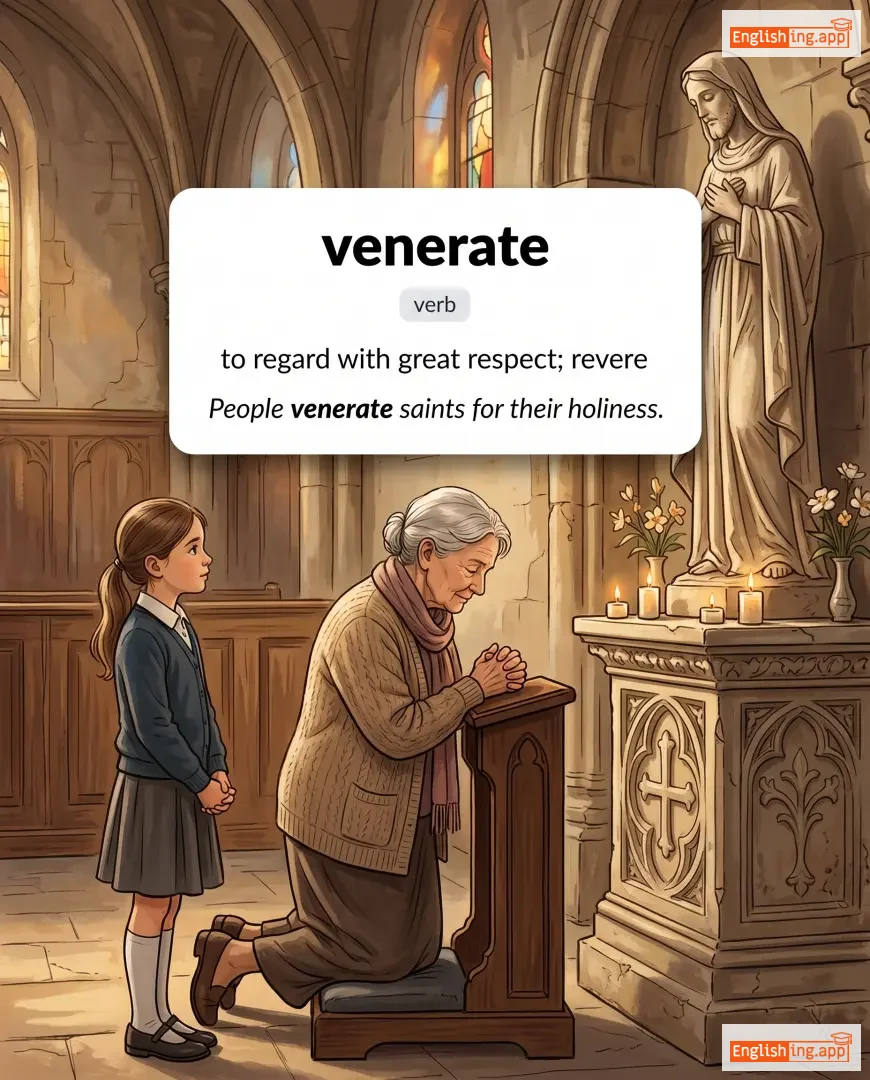
venerate definition card — visual illustration of the meaning
verb
/ˈvɛnəˌreɪt/
गहरी श्रद्धा करना (gari shraddha karna)

to regard with great respect; revere

"People venerate saints for their holiness."

"लोग संतों को उनके पवित्रता के लिए सम्मानित करते हैं।" (Log santon ko unke pavitrata ke liye sammaanit karte hain.)
adjective
/ˈvɛnəˌreɪtɪd/
आदरनीय (adarniya)

respected and admired deeply

"The venerated professor was honored with an award."

"आदरनीय प्रोफेसर को एक पुरस्कार से सम्मानित किया गया था।" (Adarniya professor ko ek puraskar se sammaanit kiya gaya tha.)