वोकैबुलरीज

इंग्लिश वोकैबुलरी डिस्कवर, लर्न और मास्टर करें

adjective
/ʌnˈedjʊkeɪtɪd/
अशिक्षित; निरक्षर; (ashikshit; nirakshar)

lacking education; not having received formal schooling or training

"Many uneducated workers struggle to find well-paying jobs."

"कई अशिक्षित श्रमिकों को अच्छी वेतन वाली नौकरियाँ ढूँढने में संघर्ष करना पड़ता है।" (kai ashikshit shramikon ko achhi vetan wali naukriyan dhoondhne mein sangharsh karna padta hai)
adjective
/ˌʌnɪmˈplɔɪəbəl/
रोजगार योग्य नहीं (rojgar yogya nahi)

Not able to be employed; lacking the skills or qualities necessary for employment

"Due to his criminal record, he was considered unemployable in most companies."

"उसके आपराधिक रिकॉर्ड के कारण, उसे अधिकांश कंपनियों में रोजगार योग्य नहीं माना गया।" (uske aparadhik record ke karan, use adhikansh kampaniyon mein rojgar yogya nahi mana gaya)
adjective
/ʌnɪmˈplɔɪd/
बेरोज़गार (berozgar)

without a job; not having paid work

"He has been unemployed for six months now."

"वह अब छह महीने से बेरोज़गार है।" (vah ab chhah mahine se berozgar hai)
noun
/ˌʌnɪmˈplɔɪmənt/
बेरोज़गारी (berozgaari)

the state of not having a paid job despite being able and willing to work

"High unemployment is a major issue in the country."

"उच्च बेरोज़गारी देश में एक प्रमुख समस्या है।" (Ucch berozgaari desh mein ek pramukh samasya hai.)
adjective
/ʌnˈendɪŋ/
अंतहीन (antheen)

continuing forever; without end

"The unending rain made the day feel gloomy."

"लगातार बारिश ने दिन को उदास बना दिया।" (lagatar barish ne din ko udaas bana diya)
adjective
/ʌnˈiːkwəl/
असमान; अनुचित; (asamaan; anuchit)

not the same in quantity, size, or value; not fair or just

"The distribution of wealth is unequal in many countries."

"धन का वितरण कई देशों में असमान है।" (Dhan ka vitran kai deshon mein asamaan hai.)
adjective
/ˌʌnɪˈkwɪvəkəl/
स्पष्ट (spasht)

Leaving no doubt; clear and unambiguous

"She gave an unequivocal answer to the question."

"उसने सवाल का एक स्पष्ट उत्तर दिया।" (Usne sawal ka ek spasht uttar diya.)
adverb
/ʌnˈɜːrɪŋli/
गलती रहित (galti rahit)

Without making any mistakes; always accurate

"The archer aimed unerringly at the target."

"धनुर्धारी ने बिना गलती किए लक्ष्य पर निशाना साधा।" (Dhanurdhari ne bina galti kiye lakshya par nishana sadha.)
adjective
/ʌnˈiːvən/
असमतल; असमान (asamatal; asamaan)

not level or smooth; not regular or consistent

"The road was uneven and full of potholes."

"सड़क असमतल थी और गड्ढों से भरी हुई थी।" (Sadak asamatal thi aur gaddo se bhari hui thi.)
adjective
/ˌʌnɪkˈsɛpʃənəbl/
अस्वीकृत न होने योग्य (asweekrit na hone yogya)

Not open to objection; acceptable and unobjectionable

"His behavior was unexceptionable throughout the event."

"उसका व्यवहार पूरे इवेंट में अस्वीकृत न होने योग्य था।" (Uska vyavhaar poore event mein asweekrit na hone yogya tha.)
adjective
/ˌʌnɪkˈspɛktɪd/
अनपेक्षित (anapekshit)

not anticipated or predicted; surprising

"We had an unexpected visitor last night."

"हमें पिछले रात एक अनपेक्षित आगंतुक मिला।" (Humein pichle raat ek anapekshit aagantuk mila.)
adjective
/ʌnˈfɛər/
अन्यायपूर्ण (anyaypurn)

not based on or behaving according to the principles of equality or justice

"It’s unfair to blame her for the team’s failure."

"टीम की विफलता के लिए उसे दोषी ठहराना अन्यायपूर्ण है।" (Team ki viphalta ke liye use doshi thaharana anyaypurn hai.)
adverb
/ʌnˈfɛərli/
अन्यायपूर्वक (anyaypurvak)

In a manner that is not just, reasonable, or impartial

"He was treated unfairly by the committee."

"उसके साथ समिति द्वारा अन्यायपूर्वक व्यवहार किया गया।" (Uske sath samiti dvara anyaypurvak vyavhar kiya gaya.)
adjective
/ʌnˈfeɪθ.fəl/
बेवफा; विश्वासघात करने वाला (bewafa; vishwāsghāt karne wālā)

not loyal or true to a spouse, partner, or commitment

"He was unfaithful to his wife for many years."

"वह अपनी पत्नी के प्रति कई वर्षों तक बेवफा था।" (vah apnī patnī ke prati kai varṣoṅ tak bewafā thā.)
noun
/ʌnˈfeɪθfʊlnəs/
विश्वासघात (vishwasghat)

the quality of being disloyal or not faithful; breach of trust or fidelity

"His unfaithfulness led to the end of their marriage."

"उसका विश्वासघात उनकी शादी का अंत कर गया।" (uska vishwasghat unki shadi ka ant kar gaya)
adjective
/ʌnˈfɔːltərɪŋ/
अडिग (adig)

Steady and resolute; not weakening or hesitating

"She continued with unfaltering determination."

"उसने अडिग संकल्प के साथ जारी रखा।" (Usne adig sankalp ke saath jari rakha.)
adjective
/ʌnfəˈmɪl.jər/
अपरिचित; अजनबी (aparichit; ajanbi)

not known or recognized; strange

"The city was unfamiliar to me since I had never been there before."

"यह शहर मेरे लिए अपरिचित था क्योंकि मैं पहले कभी वहां नहीं गया था।" (Yeh shaher mere liye aparichit tha kyonki main pehle kabhi wahan nahin gaya tha.)
adjective
/ʌnˈfeɪv(ə)rəbəl/
प्रतिकूल (pratikool)

not beneficial or advantageous; showing disapproval or opposition

"The proposal received an unfavorable response from the committee."

"प्रस्ताव को समिति से प्रतिकूल प्रतिक्रिया मिली।" (Prastaav ko samiti se pratikool pratikriya mili.)
adjective
/ʌnˈfeɪ.vər.ə.bəl/
हानिकारक; प्रतिकूल (haanikarak; pratikool)

not helpful or advantageous; adverse

"The weather conditions were unfavourable for our outdoor event."

"हमारे बाहरी कार्यक्रम के लिए मौसम की स्थिति प्रतिकूल थी।" (hamare baahari kaaryakram ke liye mausam ki sthiti pratikool thi.)
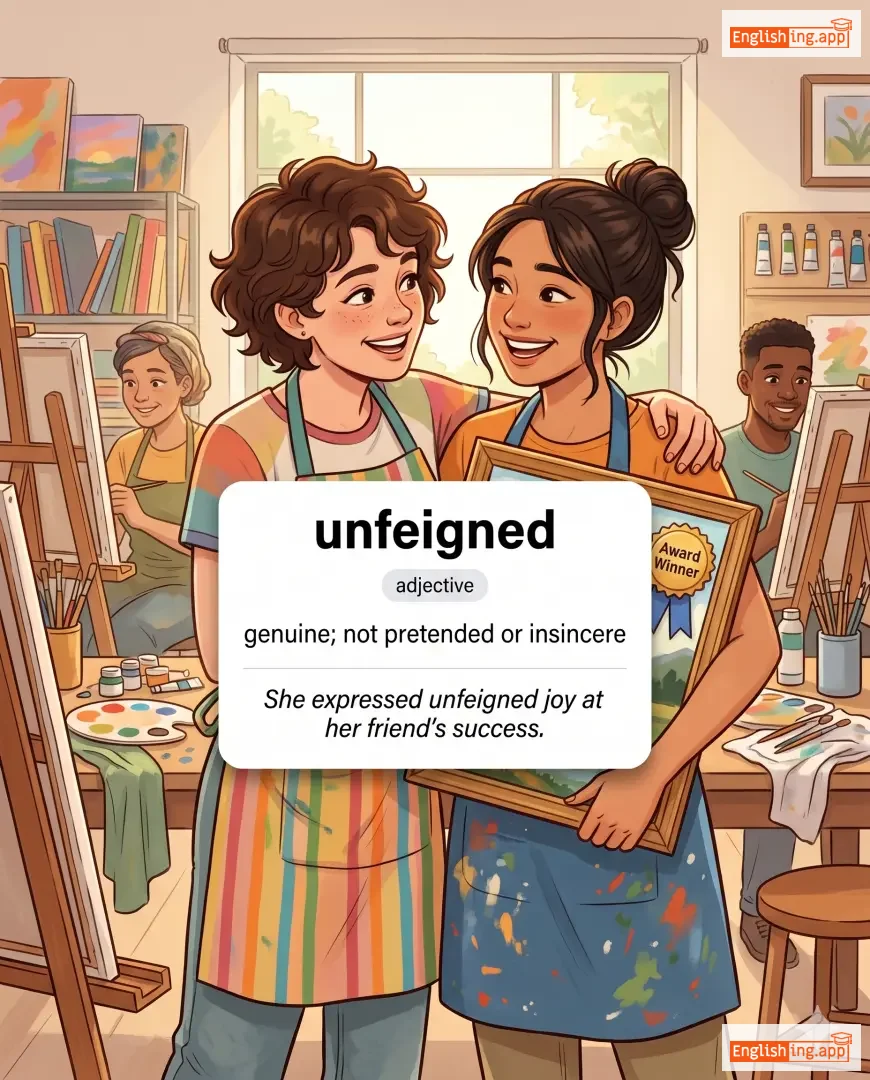
unfeigned definition card — visual illustration of the meaning
adjective
/ʌnˈfeɪnd/
असली (asli)

genuine; not pretended or insincere

"She expressed unfeigned joy at her friend's success."

"उसने अपनी दोस्त की सफलता पर असली खुशी व्यक्त की।" (Usne apni dost ki safalta par asli khushi vyakt ki.)
verb
/ʌnˈfɛtər/
बाधामुक्त करना (baadhamukt karna)

to release from restraint or restriction; to free

"The new law will unfetter small businesses from excessive regulations."

"नया कानून छोटे व्यवसायों को अत्यधिक नियमों से मुक्त करेगा।" (Naya kanoon chhote vyavsayon ko atyadhik niyamon se mukt karega.)
adjective
/ʌnˈfɛtərd/
असीम स्वतंत्र (aseem svatantra)

not restricted or confined; free

"The artist enjoyed unfettered freedom of expression."

"कलाकार ने अभिव्यक्ति की असीम स्वतंत्रता का आनंद लिया।" (Kalakar ne abhivyakti ki aseeem svatantrata ka aanand liya.)
adjective
/ʌnˈfɪt/
अयोग्य; अनुपयुक्त; (ayogya; anupayukt)

not in good physical condition; unsuitable or inappropriate

"He was declared unfit for military service due to his poor health."

"वह खराब स्वास्थ्य के कारण सैन्य सेवा के लिए अनफिट घोषित किया गया था।" (vah kharab swasthya ke karan sainik seva ke liye anfit ghoshit kiya gaya tha.)
adjective
/ʌnˈflæpəbəl/
अडिग (adig)

calm and composed, especially in difficult situations

"Despite the crisis, he remained unflappable and confident."

"संकट के बावजूद, वह अडिग और आत्मविश्वासी बना रहा।" (Sankat ke bawjood, vah adig aur atmbishwasi bana raha.)
adjective
/ʌnˈflɛdʒd/
अपरिपक्व (aparipakv)

Inexperienced, immature, or not fully developed.

"The unfledged writer struggled to complete his first novel."

"अपरिपक्व लेखक अपनी पहली उपन्यास पूरी करने में संघर्ष कर रहा था।" (Aparipakv lekhak apni pehli upanyas poori karne mein sangharsh kar raha tha.)
verb
/ʌnˈfəʊld/
खोलना या खोलना (kholna ya kholna)

to open or spread out something that was folded; to gradually reveal or develop

"She unfolded the letter carefully."

"उसने पत्र को ध्यान से खोला।" (Usne patra ko dhyan se khola.)
adjective
/ˌʌnfɔːrˈsiːn/
अनपेक्षित (anapekshit)

Not anticipated or predicted; unexpected.

"The project faced unforeseen challenges that delayed its completion."

"परियोजना को अनपेक्षित चुनौतियों का सामना करना पड़ा, जिससे उसकी समाप्ति में देरी हो गई।" (pariyojana ko anapekshit chunautiyon ka samna karna pada, jisse uski samapti me der ho gayi.)
adjective
/ˌʌnfɔːrθˈkʌmɪŋ/
असहयोगी (asahyogi)

Not willing to talk or provide information; uncooperative.

"The witness was unforthcoming about what he had seen."

"गवाह जो उसने देखा था, उसके बारे में असहयोगी था।" (Gawah jo usne dekha tha, uske baare mein asahyogi tha.)
adjective
/ʌnˈfɔːrtʃənət/
दुर्भाग्यपूर्ण (durbhagyapurn)

Having or marked by bad luck; unlucky.

"It was unfortunate that the meeting was canceled at the last minute."

"यह दुर्भाग्यपूर्ण था कि बैठक आखिरी मिनट में रद्द कर दी गई।" (Yeh durbhagyapurn tha ki baithak aakhiri minute mein radd kar di gayi.)
adverb
/ʌnˈfɔːtʃənətli/
दुर्भाग्यवश (durbhagya vash)

used to express regret or disappointment about something that has happened or is going to happen

"Unfortunately, the event was canceled due to the rain."

"दुर्भाग्यवश, कार्यक्रम वर्षा के कारण रद्द कर दिया गया था।" (durbhagya vash, karyakram varsha ke karan radd kar diya gaya tha.)
adjective
/ʌnˈfrɛndli/
अमित्रतापूर्ण (amitrataapurn)

not kind or welcoming; hostile or cold in behavior or attitude

"The shop owner seemed unfriendly to new customers."

"दुकान का मालिक नए ग्राहकों के प्रति अमित्रतापूर्ण लगा।" (dukaan ka maalik naye graahakon ke prati amitrataapurn laga)
verb
/ʌnˈfrɒk/
पादरी को पद से हटा देना (padri ko pad se hata dena)

To remove a priest from his position or deprive someone of a rank.

"The corrupt priest was unfrocked after the investigation."

"भ्रष्ट पादरी को जांच के बाद पद से हटा दिया गया था।" (Bhrasht padri ko jaanch ke baad pad se hata diya gaya tha.)
adjective
/ʌnˈɡeɪnli/
असंगत (asangat)

Awkward, clumsy, or lacking grace in movement or appearance.

"The tall boy moved in an ungainly manner."

"लंबा लड़का एक अजीब तरीके से चला।" (Lamba ladka ek ajeeb tareeke se chala.)
adjective
/ʌnˈɡreɪt.fəl/
अकृतज्ञ (akritagnya)

not feeling or showing thanks for something done or given; not appreciating kindness

"She felt he was ungrateful for all the help she had given him."

"उसे महसूस हुआ कि उसने जो मदद दी थी उसके लिए वह अकृतज्ञ था।" (use mehsoos hua ki usne jo madad dee thi uske liye vah akritagnya tha)
adjective
/ʌnˈɡɑː.dɪd/
सुरक्षा विहीन, असावधान (suraksha viheen, asavdhan)

not protected or defended; careless about revealing private thoughts or information

"In an unguarded moment, she revealed her true feelings about the project."

"एक असावधान क्षण में, उसने प्रोजेक्ट के बारे में अपनी सच्ची भावनाएँ जाहिर कीं।" (ek asavdhan kshan mein, usne project ke baare mein apni sachchi bhavnaayein jaahir ki.)
noun
/ˈʌŋɡwənt/
औषधि (aushadhi)

A soothing or healing ointment applied to the skin.

"The doctor applied an unguent to heal the burn."

"डॉक्टर ने जलन को ठीक करने के लिए अंग्वेंट लगाया।" (Doktor ne jalan ko theek karne ke liye angvent lagaya.)
noun
/ʌnˈhæp.i.nəs/
असंतोष (asantosh)

the state of being unhappy; sadness or dissatisfaction

"Her constant unhappiness affected everyone around her."

"उसकी लगातार असंतोष ने उसके आस-पास सभी को प्रभावित किया।" (uski lagataar asantosh ne uske aas-paas sabhi ko prabhavit kiya)
adjective
/ʌnˈhæpi/
असंतुष्ट या दुखी (asantuṣṭ ya dukhi)

not happy; sad, disappointed, or dissatisfied

"He was unhappy with the final decision."

"वह अंतिम निर्णय से असंतुष्ट था।" (vah antim nirnay se asantuṣṭ tha.)
adjective
/ʌnˈhel.θi/
अस्वास्थ्यकर; अस्वस्थ (aswasthyakaar, aswasth)

harmful to health; not in good health; detrimental to well-being

"Eating too much fast food is unhealthy for your body."

"बहुत अधिक फास्ट फूड खाना आपके शरीर के लिए अस्वास्थ्यकर है।" (bahut adhik fast food khana aapke sharir ke liye aswasthyakaar hai।)
adjective
/ʌnˈhɜːd/
अश्रुत; सुनी नहीं गई (ashrut; suni nahin gayi)

not heard or listened to; not given a hearing; unknown or unfamiliar

"His complaints went unheard by the management."

"उसकी शिकायतें प्रबंधन द्वारा अनसुनी रह गईं।" (uski shikayatein prabandhan dwara ansuni reh gayi)
adjective
/ʌnˈhɛlpfəl/
असहायक (asahayak)

not providing help or support; making a situation harder rather than easier

"His unhelpful attitude slowed down the entire project."

"उसका असहायक रवैया पूरे प्रोजेक्ट को धीमा कर गया।" (uska asahayak ravaiya poore project ko dheema kar gaya)
adjective
/ʌnˈhoʊli/
अपवित्र; पापी; अपमानजनक (apavitra; paapi; apmaanjanak)

wicked; sinful; profane

"The unholy alliance between the two companies caused public outrage."

"दो कंपनियों के बीच अपवित्र गठबंधन ने सार्वजनिक आक्रोश पैदा किया।" (do companion ke beech apavitra gathbandhan ne sarvajanik aakrosh paida kiya.)
adjective
/ʌnˈɒnəd/
अपमानित (apmanit)

not respected or given the recognition that is deserved; treated without honor

"He felt unhonoured after his years of service were ignored."

"उसकी वर्षों की सेवा की अनदेखी होने पर वह अपमानित महसूस करने लगा।" (uski varshon ki seva ki andekhi hone par vah apmanit mahsus karne laga)
adjective
/ʌnˈhɜːrt/
अचेत (achet)

Not injured or harmed.

"She walked away from the accident unhurt."

"वह दुर्घटना से अचेत होकर बाहर निकल आई।" (Wah durghatna se achet hokar bahar nikal aayi.)
adjective
/ʌnhaɪˈdʒiːnɪk/
अस्वच्छ; उचित स्वच्छता की कमी (ashvachchh; uchit svacchata ki kami)

not clean; lacking proper sanitation

"The restaurant was closed due to unhygienic conditions in the kitchen."

"रेस्टोरेंट रसोई में अस्वच्छ स्थितियों के कारण बंद था।" (restorent rasoi mein asvachchh sthitiyon ke karan band tha.)
adjective
/ˌjuːnɪˈsɛljʊlər/
एककोशीय (ekkoshiya)

Consisting of a single cell.

"Amoebas are unicellular organisms."

"एमीबा एककोशीय जीव हैं।" (Ameeba ekkoshiya jeev hain.)
unified definition card — visual illustration of the meaning
adjective
/ˈjuː.nɪ.faɪd/
एकीकृत (ekikrit)

Made into a whole or joined together.

"A unified approach fosters better outcomes."

"एकीकृत दृष्टिकोण बेहतर परिणाम उत्पन्न करता है।" (Ekikrit drishtikon behatar parinaam utpann karta hai.)
adjective
/ˈjuːnɪfɔːm/
यूनिफ़ॉर्म (uniform)

consistent or the same in form, manner, or degree

"The students were required to wear a uniform to school."

"विद्यार्थियों से स्कूल में यूनिफ़ॉर्म पहनने की उम्मीद की गई थी।" (Vidyarthiyon se school mein uniform pehane ki ummid ki gayi thi.)
noun
/ˌjuːnɪˈfɔːrmɪti/
एकरूपता (ekarupta)

The quality or state of being the same, consistent, or without variation.

"The teacher insisted on uniformity in the students' dress code."

"शिक्षक ने छात्रों के वस्त्रकोड में एकरूपता पर जोर दिया।" (Shikshak ne chhatron ke vastrakoḍ mein ekarupta par zor diya.)
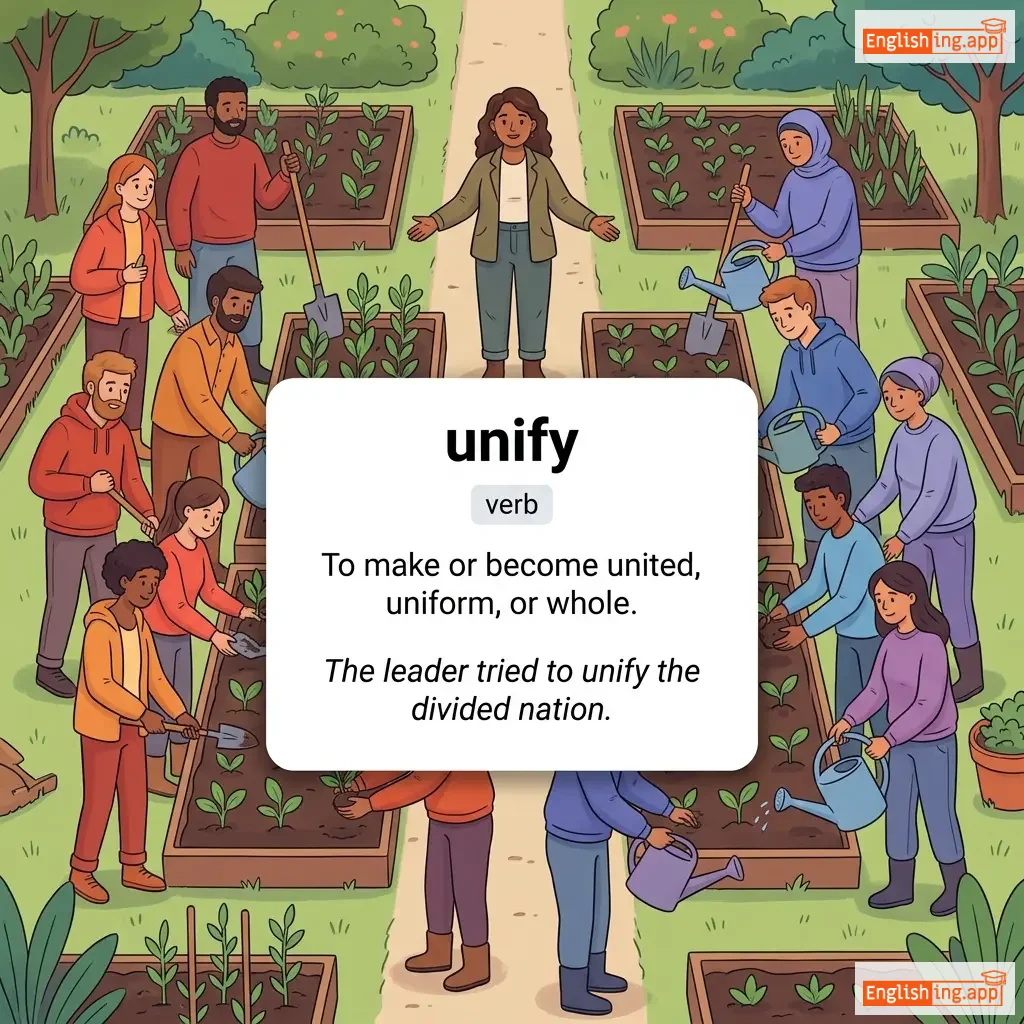
unify definition card — visual illustration of the meaning
verb
/ˈjuːnɪfaɪ/
एकीकृत करना (eekikrit karna)

To make or become united, uniform, or whole.

"The leader tried to unify the divided nation."

"नेता ने विभाजित राष्ट्र को एकजुट करने की कोशिश की।" (Neta ne vibhajit rashtra ko ekjut karne ki koshish ki.)