वोकैबुलरीज

इंग्लिश वोकैबुलरी डिस्कवर, लर्न और मास्टर करें

adjective
/ʌnˈbreɪkəbəl/
जो टूटा या क्षतिग्रस्त नहीं हो सकता; बहुत मजबूत और टिकाऊ (jo toota ya kṣatigrast nahin ho sakta; bahut majboot aur tikao)

not able to be broken or damaged; very strong and durable

"Their friendship formed an unbreakable bond."

"उनकी दोस्ती ने एक अडिग बंधन बनाया था।" (unki dosti ne ek adig bandhan banaya tha.)
adjective
/ʌnˈbraɪdld/
बेकाबू (bekabu)

Uncontrolled and unrestrained.

"The protesters showed unbridled enthusiasm for change."

"प्रदर्शनकारियों ने बदलाव के लिए बेकाबू उत्साह दिखाया।" (Pradarshankariyon ne badlav ke liye bekabu utsah dikhaya.)
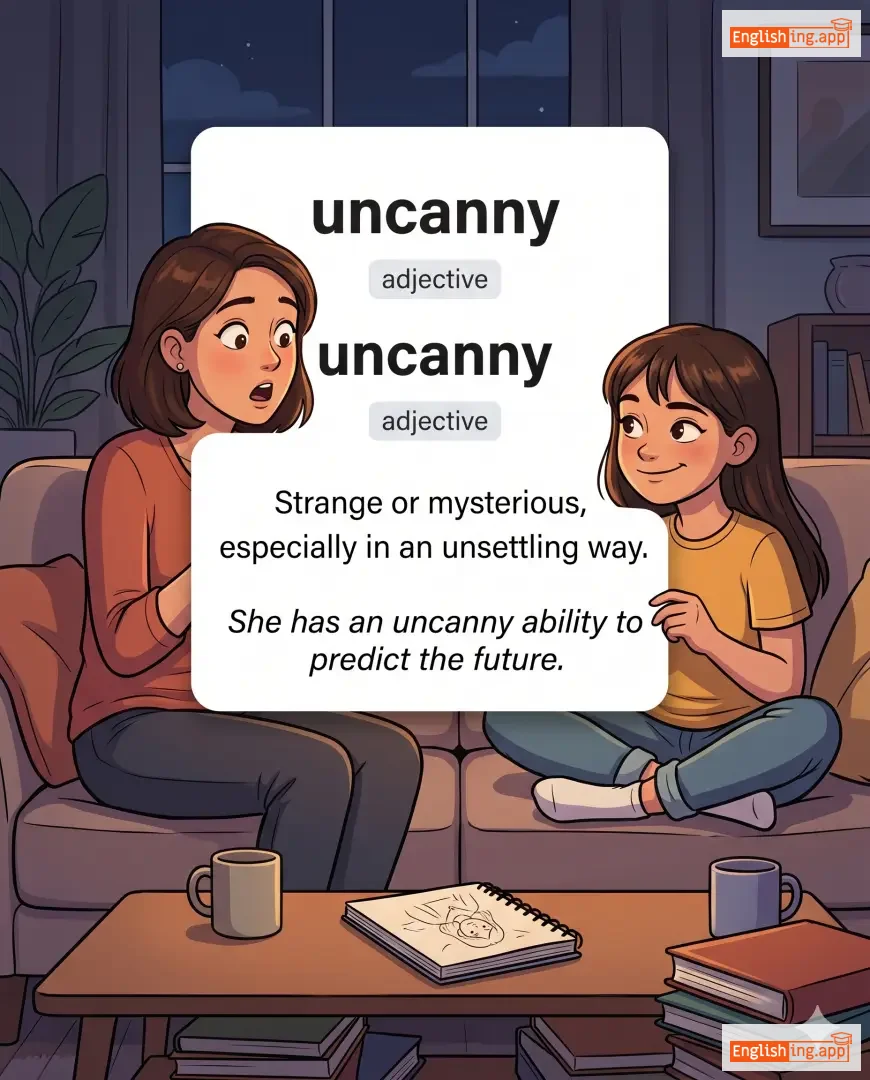
uncanny definition card — visual illustration of the meaning
adjective
/ʌnˈkæni/
अजीब (ajeeb)

Strange or mysterious, especially in an unsettling way.

"She has an uncanny ability to predict the future."

"उसके पास भविष्यवाणी करने की एक अजीब क्षमता है।" (uske paas bhavishyavani karne ki ek ajeeb kshamata hai.)
adjective
/ˌʌnsɛrəˈmoʊniəs/
अनौपचारिक/रूखा (anaupcharik/rukha)

Done without formality or courtesy; abrupt or rude.

"He made an unceremonious exit from the party."

"उसने पार्टी से अनौपचारिक तरीके से बाहर निकलने का फैसला किया।" (Usne party se anaupcharik tareeke se baahar nikalne ka faisla kiya.)
adjective
/ʌnˈsɜːtən/
अनिश्चित (anishchit)

not sure or confident about something; not clearly known or decided

"She felt uncertain about her future after graduation."

"ग्रेजुएशन के बाद उसे अपने भविष्य के बारे में अनिश्चित महसूस हुआ।" (Graduation ke baad use apne bhavishya ke baare mein anishchit mehsoos hua.)
adverb
/ʌnˈsɜːrtənli/
अनिश्चित रूप से (anishchit roop se)

in a way that shows doubt or lack of certainty

"She glanced uncertainly at the complicated instructions."

"उसने जटिल निर्देशों की ओर अनिश्चित रूप से देखा।" (Usne jatil nirdeshon ki or anishchit roop se dekha.)
noun
/ʌnˈsɜːtənti/
अनिश्चितता (anishchitata)

the state of being unsure or not knowing what will happen

"Economic uncertainty affects business investments."

"आर्थिक अनिश्चितता व्यापार निवेश को प्रभावित करती है।" (Aarthik anishchitata vyapaar nivesh ko prabhavit karti hai.)
adjective
/ʌnˈtʃælɪndʒd/
अप्रतिस्पर्धित; बिना विरोध के स्वीकार किया गया; बिना प्रतिद्वंद्वी के (apratispardhit; bina virodh ke sveekar kiya gaya; bina pratidvandvi ke)

not disputed or questioned; accepted without opposition; having no rival

"He remained the unchallenged champion for five years."

"वह पाँच वर्षों तक अचल चैंपियन बने रहे।" (vah paanch varshon tak achal champion bane rahe.)
adjective
/ʌnˈtʃeɪndʒəbəl/
अपरिवर्तनीय; स्थिर; (aporibartaniy; sthir;)

not able to be changed or altered; fixed and permanent

"The laws of physics are unchangeable principles that govern the universe."

"भौतिकी के नियम अपरिवर्तनीय सिद्धांत हैं जो ब्रह्मांड को नियंत्रित करते हैं।" (bhoutiki ke niyam aparivartaniy siddhant hain jo brahmand ko niyantrit karte hain.)
adjective
/ʌnˈtʃeɪndʒɪŋ/
अपरिवर्तनीय (aparivartaniy)

remaining the same over time; not changing

"Her love for her family was unchanging throughout the years."

"अपने परिवार के प्रति उसका प्यार वर्षों में अपरिवर्तनीय रहा।" (apne parivar ke prati uska pyar varshon mein aparivartaniy raha)
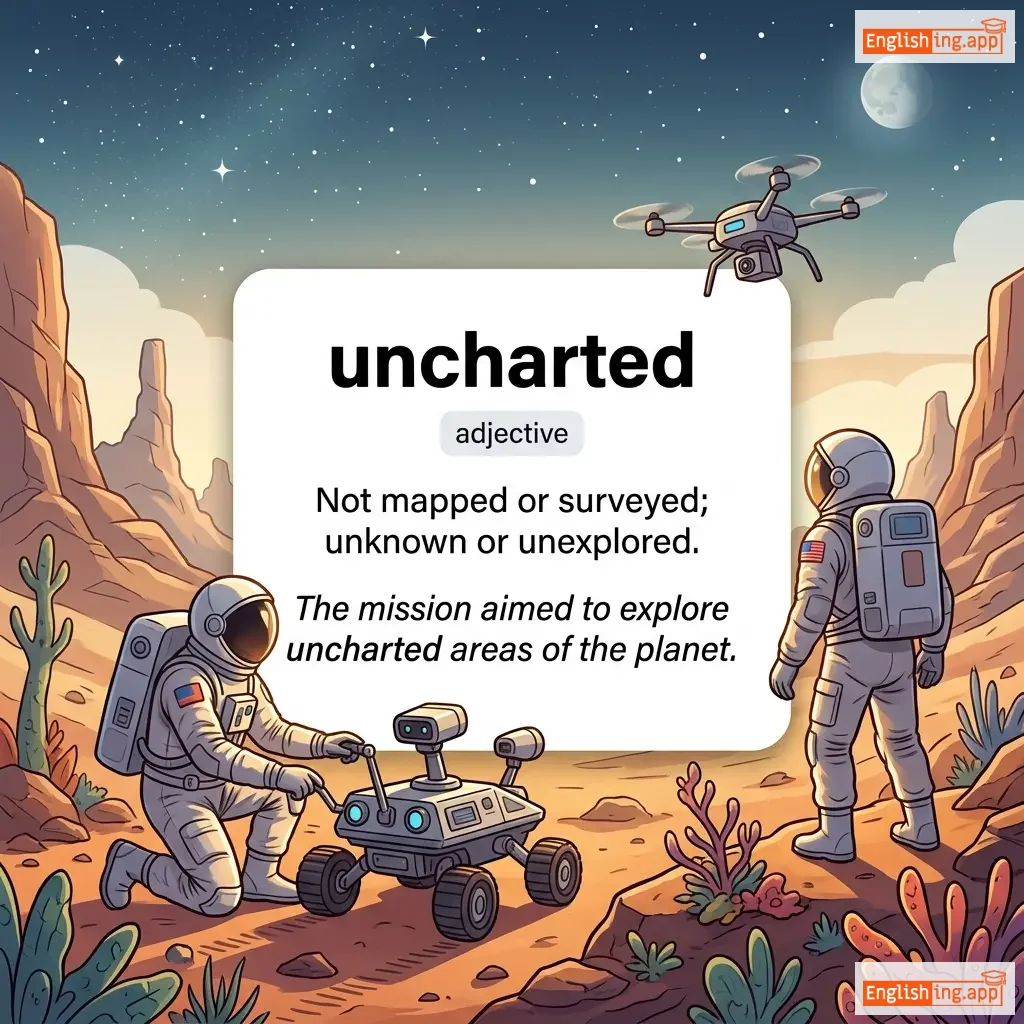
uncharted definition card — visual illustration of the meaning
adjective
ʌnˈtʃɑːtɪd
अनन्य (annya)

Not mapped or surveyed; unknown or unexplored.

"The mission aimed to explore uncharted areas of the planet."

"मिशन ने ग्रह के अनचाहे हिस्सों की खोज करने का लक्ष्य रखा था।" (D mission ne grah ke anchahe hisso ki khoj karne ka lakshya rakha tha.)
adjective
/ʌnˈtʃeɪst/
अविचारपूर्ण; अपवित्र; (avicharpurn; apavitra;)

not celibate; having engaged in sexual relations; lacking moral purity

"The conservative society considered her behavior unchaste and improper."

"संरक्षणवादी समाज ने उसके व्यवहार को अविचारपूर्ण और अनुचित माना।" (sarnrakshanvadi samaj ne uske vyavhaar ko avicharpurn aur anuchit mana.)
adjective
/ʌnˈsɪvəl/
असभ्य; अभद्र; (ashabhya; abhadra)

not polite or courteous; rude and discourteous in behavior

"His uncivil remarks during the meeting offended everyone present."

"उसकी अन्सिविल टिप्पणियाँ बैठक में मौजूद सभी को आहत कर गईं।" (Uski ansivil tippaniyan baithak mein maujood sabhi ko aahat kar gayi.)
adjective
/ʌnˈsɪvəlaɪzd/
असभ्य; जंगली; (ashabhya; jangli;)

not developed in terms of civilization; lacking social organization and culture; barbarous

"The explorers encountered an uncivilized tribe deep in the Amazon rainforest."

"अन्वेषकों ने अमेज़न वर्षावन में एक असभ्य जनजाति का सामना किया।" (anveshako ne amazon varshavan mein ek asabhya janjati ka samna kiya.)
adjective
/ʌnˈkleɪmd/
बिना दावा किया हुआ; मांग नहीं किया गया; छोड़ दिया गया या मालिक रहित (bina daawa kiya hua; maang nahi kiya gaya; chhod diya gaya ya malik rahit)

not claimed by anyone; not demanded or requested; abandoned or ownerless

"The unclaimed luggage was stored in the airport's lost property department."

"बिना दावा किया हुआ सामान हवाई अड्डे के खोए हुए संपत्ति विभाग में संग्रहीत किया गया था।" (bina daawa kiya hua saamaan havai addhe ke khoye hue sampatti vibhag mein sangrahit kiya gaya tha.)
noun
/ˈʌŋkəl/
चाचा/काकू (chacha/kaku)

the brother of one's father or mother

"My uncle is visiting us next week."

"मेरा अंकल अगले सप्ताह हमसे मिलने आ रहे हैं।" (Mera uncle agle saptah humse milne aa rahe hain.)
adjective
/ʌnˈklɪər/
अस्पष्ट (aspasht)

not easy to understand; vague or ambiguous

"The instructions were unclear, so I asked for clarification."

"निर्देश अस्पष्ट थे, इसलिए मैंने स्पष्टीकरण माँगा।" (nirdesh aspasht the, isliye maine spashtikaran manga)
verb
/ʌnˈkloʊð/
कपड़े उतारना; वस्र मुक्त करना (kapde utarna; vasra mukt karna)

to remove clothing from someone or something

"The nurse helped unclothe the patient for the examination."

"नर्स ने मरीज की जांच के लिए कपड़े उतारने में मदद की।" (nars ne mariz ki jaanch ke liye kapde utarne mein madad ki)
noun
/ʌnˈkloʊðɪŋ/
कपड़े उतारना (kapde utarna)

the act or process of removing clothing

"The child quickly ran inside for unclothing after playing in the mud."

"बच्चा कीचड़ में खेलने के बाद जल्दी अंदर जाकर कपड़े उतारने लगा।" (bacha kichad me khelne ke baad jaldi andar jaakar kapde utarne laga)
adjective
/ʌnˈkʌmfətəbl/
असहज (asahaj)

causing or feeling physical or emotional discomfort

"He felt uncomfortable during the long meeting."

"लंबी बैठक के दौरान उसे असहज महसूस हुआ।" (Lambi baithak ke dauran use asahaj mehsoos hua.)
adjective
/ʌnˈkɒmən/
असामान्य (asamaanya)

rare, unusual, or remarkable

"It is uncommon to see snow in this region."

"इस क्षेत्र में बर्फबारी असामान्य है।" (Is kshetra mein barfbaari asamaanya hai.)
adjective
/ʌnˈkɒmprəmaɪzɪŋ/
अडिग (adig)

not willing to make concessions; firm and resolute

"She remained uncompromising in her principles."

"वह अपने सिद्धांतों में अडिग रही।" (Wah apne siddhanton mein adig rahi.)
noun
/ʌnkənˈsɜːrn/
उदासीनता (udasinata)

lack of worry or interest; indifference

"She showed complete unconcern about the criticism."

"उसने आलोचना के बारे में पूरी तरह से उदासीनता दिखाई।" (usne alochana ke baare mein poori tarah se udasinata dikhayi.)
adjective
/ʌnˌkənˈdɪʃ.ən.əl/
निर्विवाद; बिना शर्त (nirvivad; bina shart)

not subject to any conditions; complete and absolute

"She offered her unconditional support to her friend in need."

"उसने अपने दोस्त को बिना शर्त सहायता प्रदान की।" (usne apne dost ko bina shart sahayata pradan ki.)
adjective
/ʌnˌkənˈfɜːmd/
असत्यापित; अप्रमाणित; (anasatyapit, apramanit)

not confirmed as true or definite; not verified or substantiated

"The report remains unconfirmed until we receive official verification."

"रिपोर्ट तब तक असत्यापित रहती है जब तक हमें आधिकारिक सत्यापन नहीं मिल जाता।" (report tab tak asatyapit rahti hai jab tak hume adhikarik satyapan nahi mil jata.)
adjective
/ʌnˈkɒnʃənəbl/
अन्यायपूर्ण (anyaypoorN)

shockingly unfair or unreasonable

"The company made unconscionable profits from the crisis."

"कंपनी ने संकट से अन्यायपूर्ण मुनाफा कमाया।" (Company ne sankat se anyaypoorN munafa kamaya.)
adjective
/ʌnˈkɒnʃəs/
अचेतन (achetan)

not awake and aware of surroundings

"He was knocked unconscious by the fall."

"वह गिरने से अचेतन हो गया था।" (vah girne se achetan ho gaya tha.)
adverb
/ʌnˈkɒnʃəsli/
अवचेतन रूप से (avchetan roop se)

without being aware of one's actions or surroundings

"She unconsciously tapped her foot to the rhythm of the music."

"वह अवचेतन रूप से अपने पैरों को संगीत की लय में थपथपा रही थी।" (vah avchetan roop se apne pairon ko sangeet ki lay mein thapthapa rahi thi)
noun
/ʌnˈkɒnʃəsnəs/
अचेतनता (achetanata)

the state of being unaware of and unable to respond to one's surroundings

"After the accident, he was in a state of unconsciousness for several hours."

"दुर्घटना के बाद, वह कई घंटों के लिए अचेतन स्थिति में था।" (durghatna ke baad, vah kai ghanton ke liye achetan sthiti mein tha.)
adjective
/ˌʌnkənˈstɪtjuːʃənl/
असंवैधानिक (asvaydhanik)

not in accordance with a political constitution

"The court ruled that the law was unconstitutional."

"कोर्ट ने फैसला सुनाया कि कानून असंवैधानिक था।" (Kort ne faisla sunaya ki kanoon asvaydhanik tha.)
adjective
/ˌʌnkənˈtroʊld/
अनियंत्रित (aniyantrit)

not restrained or managed; lacking control

"The wildfire spread in an uncontrolled manner, causing widespread damage."

"जंगली आग एक अनियंत्रित तरीके से फैल गई, जिससे व्यापक नुकसान हुआ।" (jangli aag ek aniyantrit tarike se phail gayi, jisse vyapak nuksan hua)
adjective
/ˌʌnkənˈvɛnʃənl/
परंपरागत नहीं (paramparagat nahi)

not based on or conforming to what is generally done or believed

"Her unconventional approach to teaching inspired her students to think creatively."

"उसका परंपरागत नहीं शिक्षण दृष्टिकोण छात्रों को रचनात्मक सोचने के लिए प्रेरित करता है।" (uska paramparagat nahi shikshan drishtikon chatron ko rachnatmak sochne ke liye prerit karta hai)
adverb
/ˌʌnkənˈvɛnʃənəli/
परंपरागत रूप से अलग तरीके से (paramparagat roop se alag tarike se)

in a way that is not based on or conforming to accepted standards or norms

"She dresses unconventionally, mixing bold colors and patterns that surprise everyone."

"वह परंपरागत रूप से अलग तरीके से कपड़े पहनती है, साहसिक रंग और पैटर्न मिलाकर जो सभी को आश्चर्यचकित कर देता है।" (vah paramparagat roop se alag tarike se kapde pehanti hai, sahasik rang aur pattern milakar jo sabhi ko ashcharyachakit kar deta hai.)
adjective
/ˌʌnkənˈvɪnsɪŋ/
अविश्वसनीय (avishwasniya)

failing to persuade or impress; not believable or credible

"His excuse for being late was completely unconvincing."

"उसका देर होने का बहाना पूरी तरह से अविश्वसनीय था।" (uska der hone ka bahana puri tarah se avishwasniya tha)
adjective
/ʌnˈkʊkt/
कच्चा (kacha)

Not cooked; in a raw state.

"Eating uncooked meat can be dangerous."

"कच्चा मांस खाना खतरनाक हो सकता है।" (Kacha maans khana khatarnak ho sakta hai.)
adjective
/ˌʌn.kəʊˈɒp.ər.ə.tɪv/
असहयोगी (asahyogi)

not willing to help or work with others; unhelpful

"The witness was uncooperative and refused to answer questions."

"गवाह असहयोगी था और उसने सवालों का जवाब देने से इंकार कर दिया।" (Gawah asahyogi tha aur usne sawalon ka jawab dene se inkaar kar diya.)
adjective
/ˌʌnˈkɔːrdɪneɪtɪd/
असंगठित; असमन्वित (asangathit; asamnvith)

lacking coordination, not well-organized or clumsy in movement

"His movements were uncoordinated, making him prone to accidents."

"उसकी हरकतें असंयोजित थीं, जिससे वह दुर्घटनाओं का शिकार हो गया।" (uski harkatein asanyojeet thin, jisse vah durghatanon ka shikar ho gaya.)
verb
/ʌnˈkɔrk/
कॉर्क खोलना (cork kholna)

To remove the cork from a bottle; to open a bottle, especially of wine

"He uncorked the wine and poured a glass for everyone."

"उन्होंने शराब का कॉर्क खोला और सभी के लिए एक गिलास डाला।" (unhone sharab ka cork khola aur sabhi ke liye ek gilas dala.)
verb
/ʌnˈkaʊtʃ/
काउच से हटाना (दुर्लभ अर्थ) (kaauch se hatana)

to remove from a couch or to release from being laid down (rare/archaic usage)

"The surgeon attempted to uncouch the cataract."

"सर्जन ने मोतियाबिंद को निकालने की कोशिश की।" (Sarjan ne motiyabind ko nikaalne ki koshish ki.)
adjective
/ʌnˈkaʊntəbəl/
गणनात्मक नहीं; अनगिनत; अपरिमेय (gannatmak nahin; anginat; aparimey)

too many to be counted; innumerable; infinite in quantity

"There are uncountable stars in the night sky."

"वहाँ रात के आकाश में अनगिनत तारे हैं।" (wahan raat ke aakash mein anginat tare hain)
adjective
/ʌnˈkuːθ/
असभ्य (asabhya)

Lacking good manners, refinement, or grace; awkward or rough.

"His uncouth behavior shocked the guests at the party."

"उसका असभ्य व्यवहार पार्टी में मेहमानों को चौंका दिया।" (uska asabhya vyavhaar party mein mehmaanon ko chaunka diya.)
verb
/ʌnˈkʌvə(r)/
उन्मुक्त करना (unmukt karna)

to reveal something that was hidden or secret

"The investigation uncovered new evidence."

"जांच ने नए सबूतों को प्रकट किया।" (Jaanch ne naye sabooton ko prakat kiya.)
noun
/ˈʌŋkʃən/
अभिषेक (abhishek)

The act of anointing as part of a religious or ceremonial ritual; excessive or insincere flattery.

"The priest performed the holy unction with solemnity."

"पादरी ने गंभीरता से पवित्र अभिषेक किया।" (padri ne gambhirta se pavitra abhishek kiya.)
adjective
/ˈʌŋk.tʃu.əs/
चाटूकार (chatukar)

Excessively flattering or ingratiating; oily in texture.

"His unctuous tone made everyone uncomfortable."

"उसका चाटूकार स्वर सभी को असहज बना देता था।" (uska chatukar swar sabhi ko asahaj bana deta tha.)
adjective
/ʌnˈkʌltʃəd/
असभ्य; अशिक्षित; (ashabhya)

lacking good manners, refinement, or education; uncivilized

"His uncultured behavior embarrassed everyone at the dinner party."

"डिनर पार्टी में उसका असभ्य व्यवहार सभी को शर्मिंदा कर रहा था।" (dinnar party mein uska asabhya vyavhaar sabhi ko sharminda kar raha tha.)
adjective
/ʌnˈdɔːntɪd/
निडर; साहसी; निश्चल; (nidar)

not intimidated or discouraged by difficulty, danger, or disappointment

"Despite the setbacks, she remained undaunted in pursuing her goals."

"अवरोधों के बावजूद, वह अपने लक्ष्यों का पीछा करने में निडर रही।" (avrodhon ke bawjood, vah apne lakshyon ka peecha karne mein nidar rahi.)
verb
/ˌʌn.dɪˈsiːv/
भ्रम मुक्त करना (bhram mukt karna)

To free someone from a misconception or false belief.

"She tried to undeceive him about the false rumors."

"उसने झूठी अफवाहों के बारे में उसे भ्रम मुक्त करने की कोशिश की।" (usne jhoothi afwahon ke baare mein use bhram mukt karne ki koshish ki.)
adjective
/ˌʌndɪˈsaɪdɪd/
अविचलित; अनिश्चित (avichalit; anishchit)

not having made a decision; uncertain

"She was undecided about which college to attend."

"वह किस कॉलेज में दाखिला लें, इस बारे में वह अविचलित थी।" (Vah kis college mein dakhila lein, is baare mein vah avichalit thi.)
adjective
/ˌʌndɪˈnaɪəbl/
अस्वीकार करने योग्य नहीं (asweekar karne yogya nahin)

Impossible to deny; clearly true or real.

"Her talent is undeniable."

"उसकी प्रतिभा नकारा नहीं जा सकता।" (Uski pratibha nakara nahin ja sakta.)
preposition
/ˈʌndər/
नीचे (neeche)

in or to a lower position than something

"The cat is under the table."

"बिल्ली टेबल के नीचे है।" (Billi table ke neeche hai.)