वोकैबुलरीज

इंग्लिश वोकैबुलरी डिस्कवर, लर्न और मास्टर करें

noun
/ˈtiːtʃər/
शिक्षक (shikshak)

a person who teaches, especially in a school

"Mr. Smith is the teacher of the math class."

"श्री स्मिथ गणित कक्षा के शिक्षक हैं।" (Shri Smith ganit kaksha ke shikshak hain.)
noun
/ˈtiːtʃɪŋ/
शिक्षण (shikshan)

the profession or practice of teaching

"Teaching is a noble profession."

"शिक्षण एक महान पेशा है।" (Shikshan ek mahān pesha hai.)
noun
/tiːm/
टीम (team)

a group of people working together towards a common goal

"Our team won the match after a great effort."

"हमारी टीम ने एक शानदार प्रयास के बाद मैच जीत लिया।" (Hamārī ṭīm ne ek śāndār prayaas ke baad match jeet liyā.)
noun
/ˈtiːmmeɪt/
टीम साथी (team saathi)

a member of the same team

"He congratulated his teammate after scoring the goal."

"उसने गोल करने के बाद अपने टीम साथी को बधाई दी।" (Usne gol karne ke baad apne team saathi ko badhaai dee.)
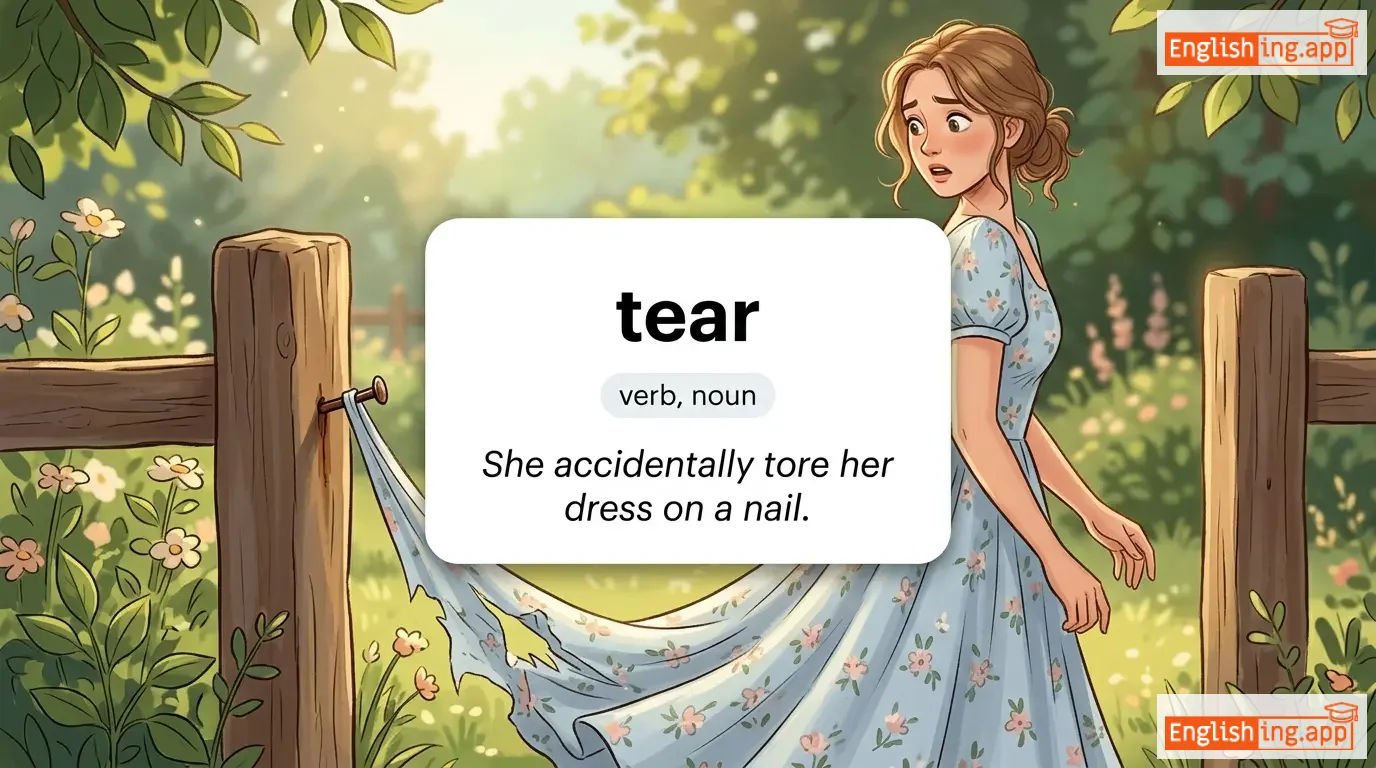
tear definition card — visual illustration of the meaning
verb, noun
/tɪər/ (noun: liquid) /tɛər/ (verb: rip)
आंसू / फाड़ना (aansoo / faadna)

As a verb: to pull apart or rip something. As a noun: a drop of clear salty liquid produced by glands in your eyes.

"She accidentally tore her dress on a nail."

"वह दुर्घटनावश अपनी ड्रेस को नाखून से फाड़ बैठी।" (vah durghatanavash apni dress ko naakhun se faad baithi.)
adjective
/ˈtɪərfəl/
आंसू भरा; रोने वाला; (aansoo bhara; rone wala;)

expressing or showing sadness and sorrow; inclined to weep

"She gave a tearful goodbye to her friends at the airport."

"उसने हवाई अड्डे पर अपने दोस्तों से आंसू भरी विदाई दी।" (Usne havai addhe par apne doston se aansoo bhari vidaai dee.)
verb
/tiːz/
चिढ़ाना (chidhana)

to make fun of someone in a playful or unkind way

"Children often tease their younger siblings playfully."

"बच्चे अक्सर अपने छोटे भाई-बहनों को खेल-खेल में चिढ़ाते हैं।" (Bacche aksar apne chhote bhai-behon ko khel-khel mein chidhate hain.)
noun
/ˈtiːspuːn/
खुशी (khushi)

a small spoon used for stirring drinks or eating soft foods, or for measuring small amounts of ingredients.

"Add a teaspoon of sugar to the tea."

"वह पुरस्कार प्राप्त करने पर अपनी खुशी को छिपा नहीं सकी।" (Vah puraskar prapt karne par apni khushi ko chhupa nahi saki.)
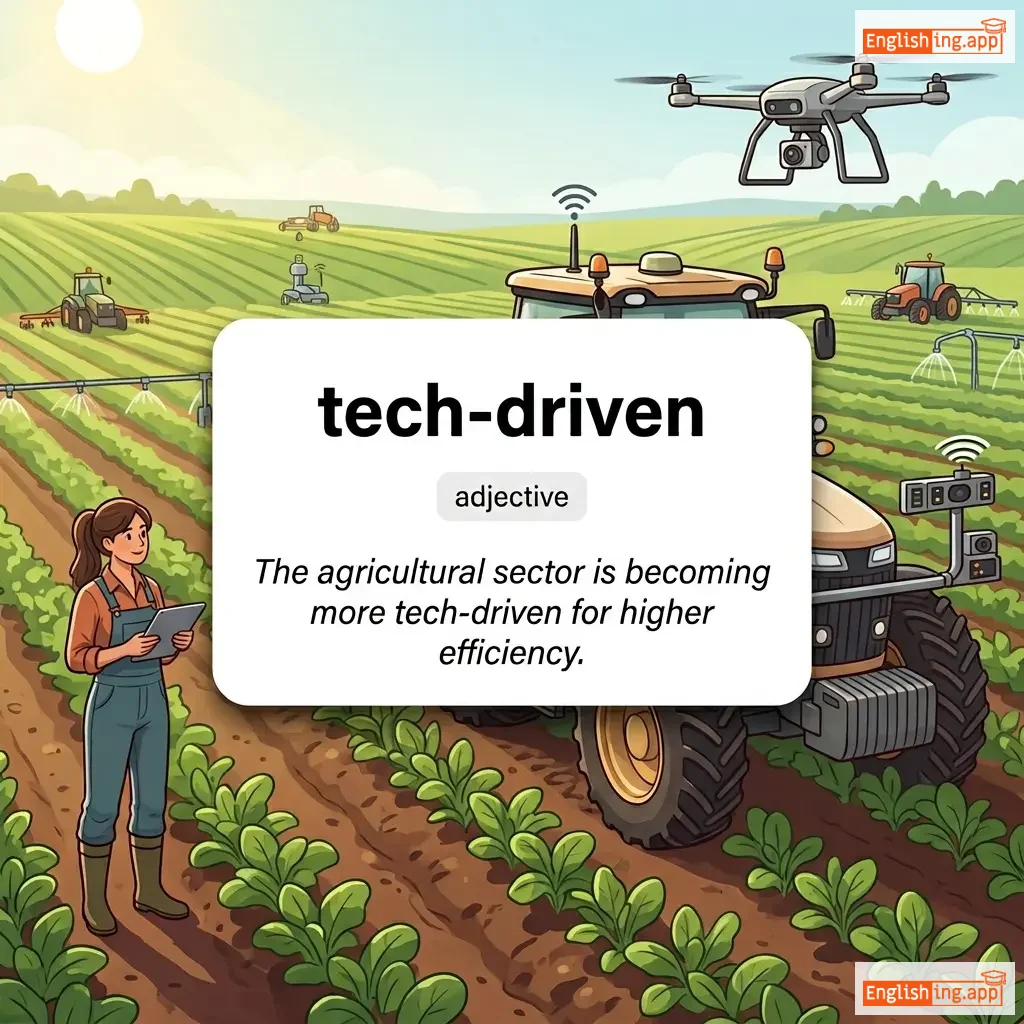
tech-driven definition card — visual illustration of the meaning
adjective
/tɛk ˈdrɪv.ən/
तकनीकी-निर्भर (takneeki-nirbhar)

Powered or guided by technology; dependent on technological advancement for operation.

"The agricultural sector is becoming more tech-driven for higher efficiency."

"कृषि क्षेत्र उच्च दक्षता के लिए अधिक तकनीकी-निर्भर होता जा रहा है।" (Krishi kshetra uchch dakshata ke liye adhik takneeki-nirbhar hota ja raha hai.)
noun
/ˈtɛknɪk/
तकनीक (takneek)

A method, skill, or art in a particular field, especially in the arts or sciences.

"The artist’s technic in watercolor impressed the judges."

"कला में कलाकार की तकनीक ने जजेस को प्रभावित किया।" (kala mein kalakar ki takneek ne jajas ko prabhavit kiya.)
adjective
/ˈtɛknɪkəl/
तकनीकी (takneeki)

relating to a specific subject, art, or craft, or its techniques.

"He has a technical background in engineering."

"उसके पास इंजीनियरिंग में एक तकनीकी पृष्ठभूमि है।" (Uske paas engineering mein ek takneeki prishthabhoomi hai.)
noun
/ˌtɛknɪˈkæləti/
तकनीकीता (takneekita)

A small detail of law, rule, or procedure; a minor point that affects an outcome.

"The case was dismissed on a technicality."

"मामला एक तकनीकीता पर खारिज कर दिया गया।" (mamla ek takneekita par kharij kar diya gaya.)
noun
/tɛkˈnɪʃən/
तकनीशियन (takneeshiyan)

a person skilled in the practical aspects of a particular science, art, or job

"The technician repaired the computer within an hour."

"तकनीशियन ने एक घंटे में कंप्यूटर मरम्मत कर दिया।" (Takneeshiyan ne ek ghante mein computer marammat kar diya.)
noun
/tɛkˈniːk/
तकनीक (takneek)

A particular way of carrying out a task, especially with skill.

"She learned a new breathing technique in yoga class."

"उसने योग कक्षा में एक नई श्वास तकनीक सीखी।" (Usne yog kaksha mein ek nai shwaas takneek seekhi.)
noun
/tɛkˈnɒɡrəfi/
तकनोग्राफी (taknography)

the descriptive study or writing about the practical arts, technologies, or technical methods of a society

"The anthropologist specialized in technography to understand indigenous tool-making traditions."

"मानवशास्त्री ने आदिवासी उपकरण बनाने की परंपराओं को समझने के लिए टेक्नोग्राफी में विशेषज्ञता हासिल की।" (Manavshastri ne adivasi upkaran banane ki paramparao ko samajhne ke liye technography mein visheshagya haasil ki.)
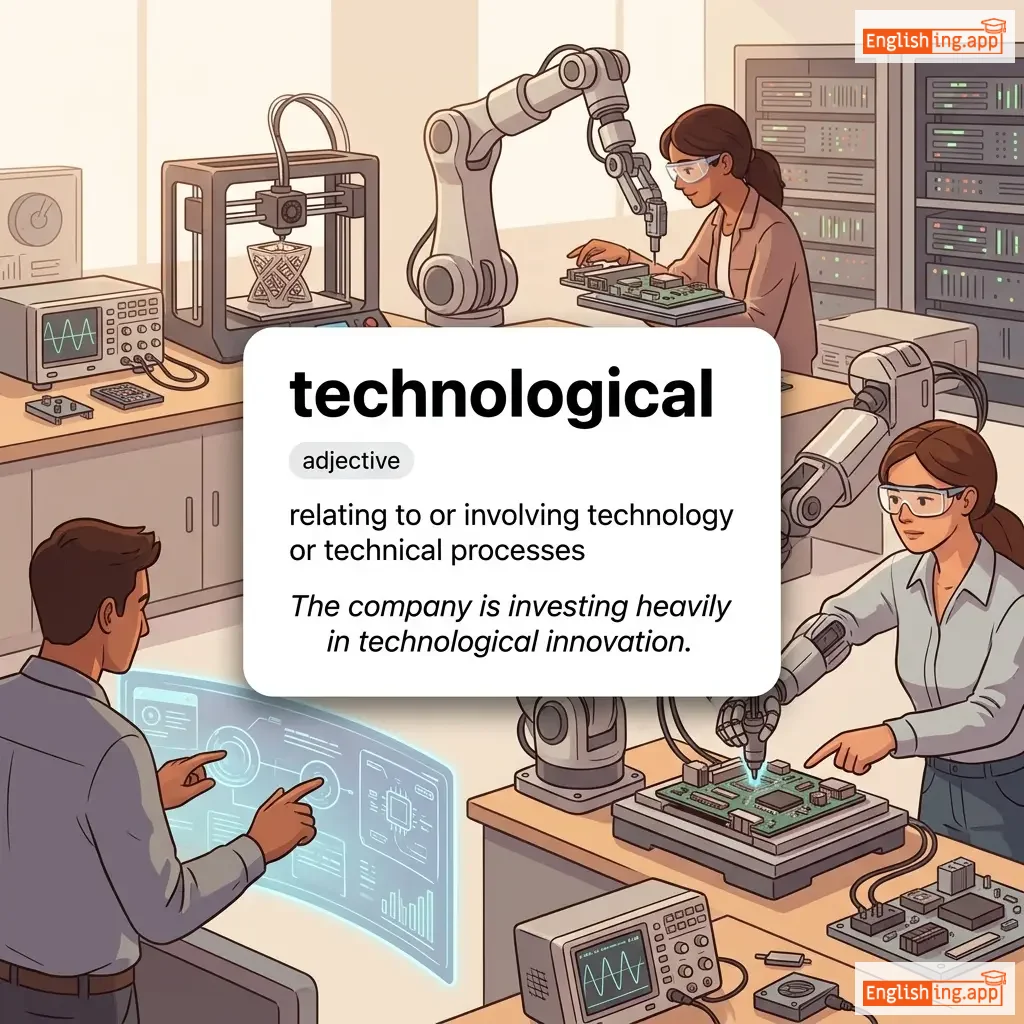
technological definition card — visual illustration of the meaning
adjective
/ˌteknəˈlɒdʒɪkəl/

relating to or involving technology or technical processes

"The company is investing heavily in technological innovation."

technological advancement definition card — visual illustration of the meaning
noun
/tekˈnɒl.ə.dʒɪ.kəl ədˈvɑːns.mənt/
प्रौद्योगिकी में प्रगति (praudyogiki mein pragati)

Progress or improvement in technology that leads to better solutions or capabilities.

"Technological advancement is revolutionizing healthcare."

"तकनीकी प्रगति स्वास्थ्य देखभाल में क्रांति ला रही है।" (Takneeki pragati swasthya dekbhakal mein kranti la rahi hai.)
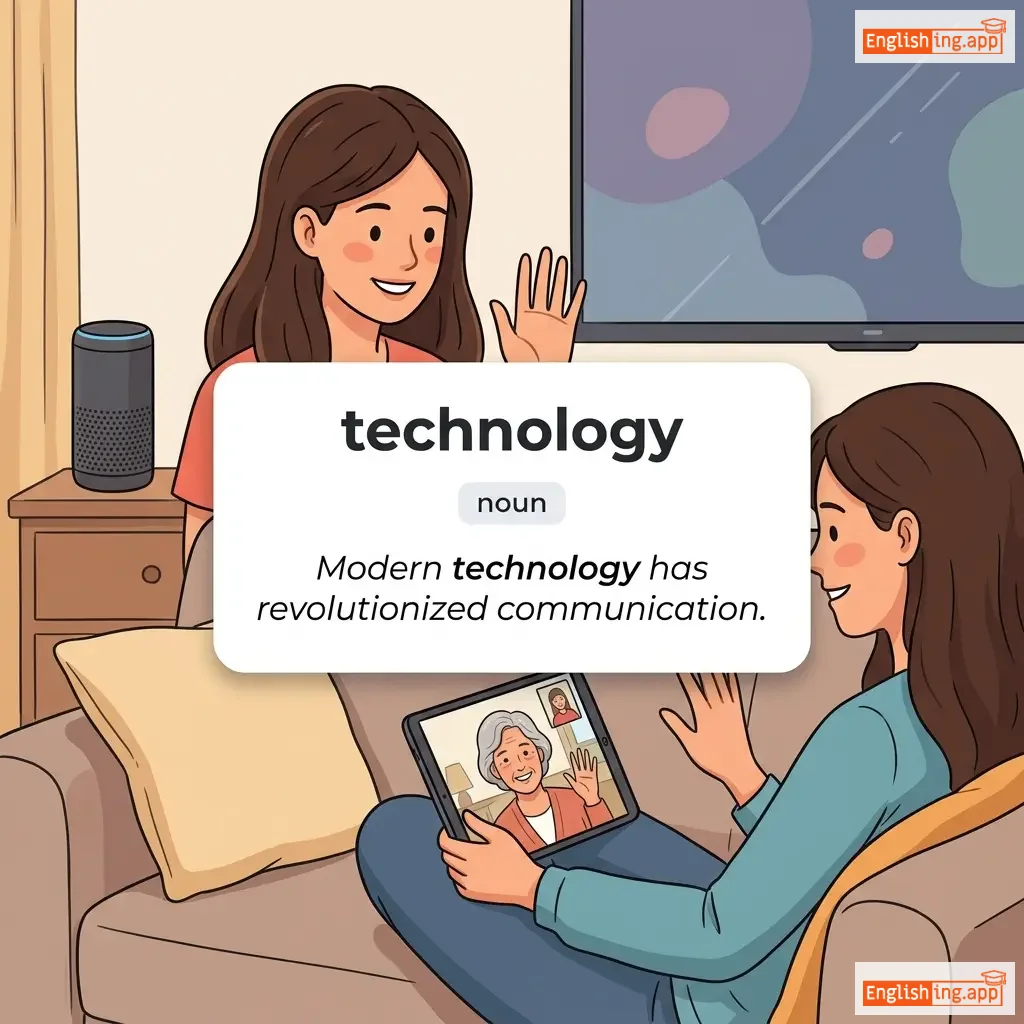
technology definition card — visual illustration of the meaning
noun
/tɛkˈnɒlədʒi/
प्रौद्योगिकी (praudyogiki)

the application of scientific knowledge for practical purposes, especially in industry

"Modern technology has revolutionized communication."

"आधुनिक प्रौद्योगिकी ने संचार में क्रांति ला दी है।" (Aadhunik praudyogiki ne sanchar mein kranti la dee hai.)
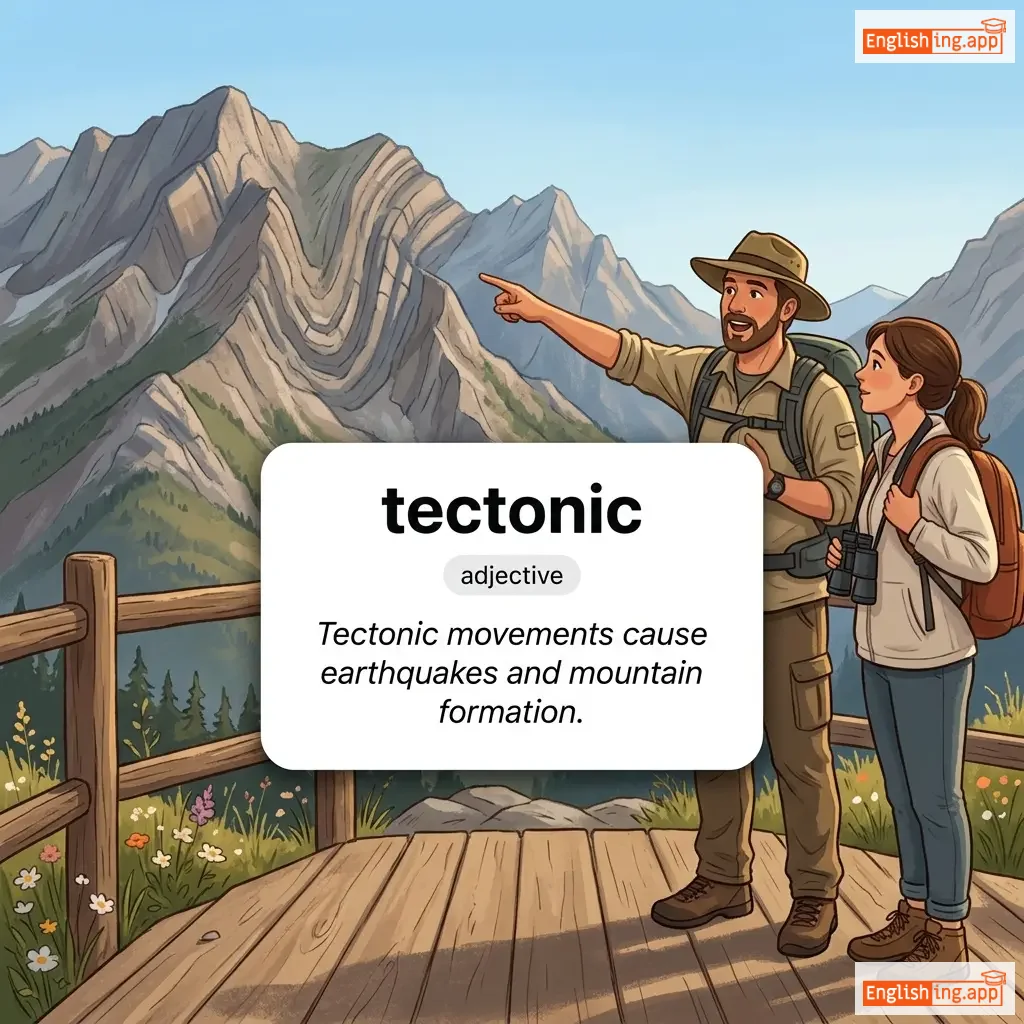
tectonic definition card — visual illustration of the meaning
adjective
/tɛkˈtɑː.nɪk/
भूगर्भीय (bhugarbhiya)

Relating to the structure of the earth's crust and the large-scale processes that take place within it.

"Tectonic movements cause earthquakes and mountain formation."

"टेक्टॉनिक हलचलें भूकंप और पर्वत निर्माण का कारण बनती हैं।" (Tectonic halchale bhookamp aur parvat nirman ka kaaran banti hain.)
adjective
/ˈtiːdiəs/
उबाऊ (ubau)

too long, slow, or dull; tiresome or monotonous

"Filling out endless forms can be a tedious task."

"अनंत फॉर्म भरना एक उबाऊ काम हो सकता है।" (Anant form bharna ek ubau kaam ho sakta hai.)
noun
/ˈtiːdiəm/
उबाऊपन (ubaupan)

the state of being tedious; monotony or boredom

"The tedium of long meetings often drains motivation."

"लंबी बैठकों का उबाऊपन अक्सर प्रेरणा को समाप्त कर देता है।" (Lambi baithakon ka ubaupan aksar prerana ko samaapt kar deta hai.)
verb
/tiːm/
पूर्ण होना (poorn hona)

to be full of or swarming with

"The forest teems with wildlife."

"जंगल वन्यजीवों से भरा हुआ है।" (Jangal vanyajeevon se bhara hua hai.)
adjective
/ˈtiːmɪŋ/
भरपूर (bharpoor)

full of or swarming with things or people

"The market was teeming with shoppers."

"बाजार खरीदारों से भरपूर था।" (Bazaar khareedaron se bharpoor tha.)
noun
/tiːn/
किशोर (kishor)

a person aged between 13 and 19 years.

"He's a teenager who loves sports."

"वह एक किशोर है जो खेल पसंद करता है।" (Wah ek kishor hai jo khel pasand karta hai.)
adjective
/ˈtiːnˌeɪdʒ/
किशोरावस्था (kishoravastha)

relating to or characteristic of people aged between 13 and 19 years old

"She spent her teenage years in a small town."

"उसने अपने किशोरावस्था के साल एक छोटे से शहर में बिताए।" (Usne apne kishoravastha ke saal ek chhote se shahar mein bitaaye.)
noun
/ˈtiːneɪdʒər/
किशोर (kishor)

a person aged between 13 and 19 years.

"Teenagers often enjoy hanging out with friends."

"किशोर अक्सर दोस्तों के साथ समय बिताना पसंद करते हैं।" (Kishor aksar doston ke saath samay bitana pasand karte hain.)
verb
/ˈtiːtər/
डगमग करना (dogmag karna)

to move or balance unsteadily; to wobble

"The glass began to teeter on the edge of the table."

"गिलास ने मेज के किनारे पर डगमग करना शुरू कर दिया।" (Gilas ne mej ke kinare par dogmag karna shuru kar diya.)
noun
/tiːˈtoʊtəlɪzəm/
शराब से पूरी तरह से परहेज करना (sharab se puri tarah se parhej karna)

the practice or principle of abstaining completely from alcoholic drinks

"He practiced teetotalism throughout his life."

"उन्होंने अपनी पूरी जिंदगी टीटोटलिज़म का पालन किया।" (Unhone apni puri zindagi teetotalism ka palan kiya.)
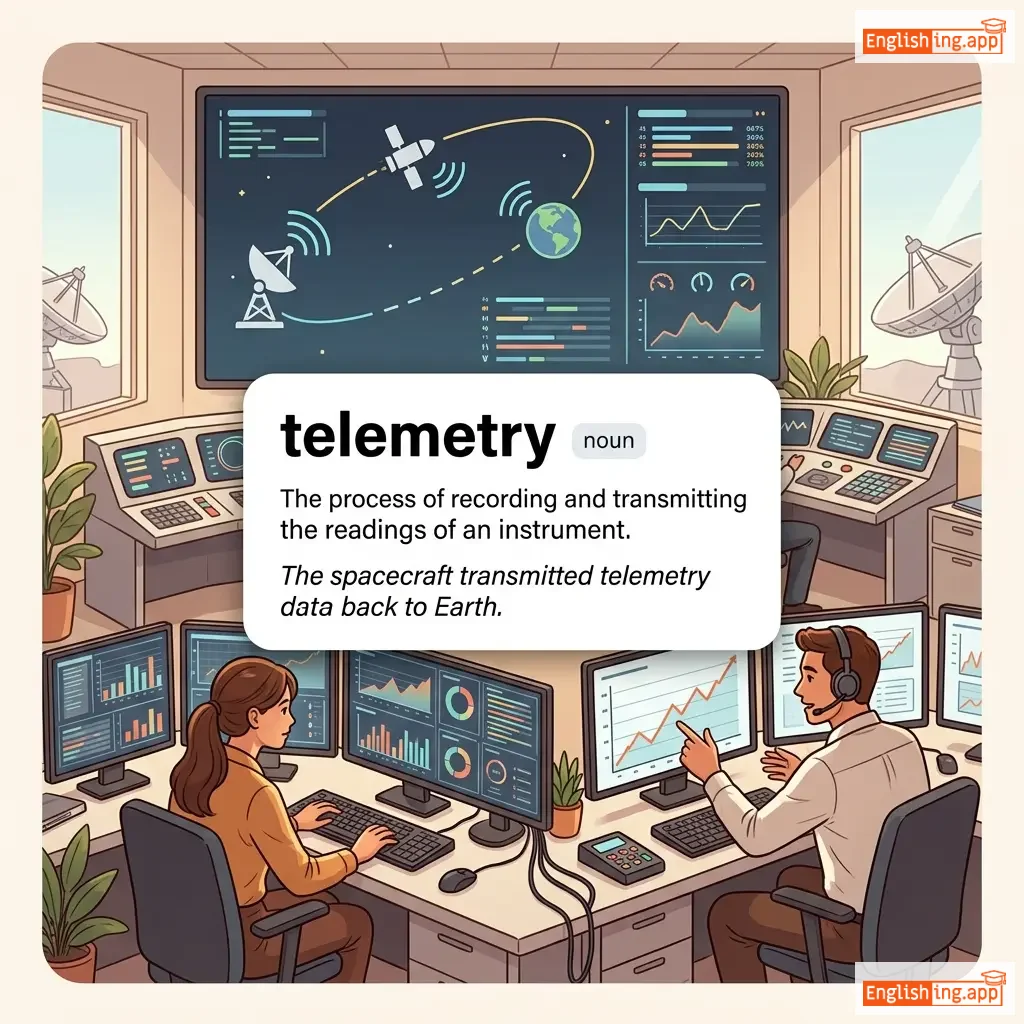
telemetry definition card — visual illustration of the meaning
noun
ˈtɛlɪˌmɛtri
टेलीमेट्री (telemetry)

The process of recording and transmitting the readings of an instrument.

"The spacecraft transmitted telemetry data back to Earth."

"स्पेसक्राफ्ट ने टेलीमेट्री डेटा पृथ्वी पर भेजा।" (Spacecraft ne telemetry data prithvi par bheja.)
noun
/ˌtɛliˈɒlədʒi/
उद्देश्यवाद (uddeshyavad)

the explanation of phenomena by the purpose they serve rather than by cause

"Aristotle is often associated with the concept of teleology in philosophy."

"अरस्तू को अक्सर दर्शनशास्त्र में उद्देश्यवाद के सिद्धांत से जोड़ा जाता है।" (Arastu ko aksar darshanshastra mein uddeshyavad ke siddhant se joda jata hai.)
noun
/təˈlɛpəθi/
टेलीपैथी (telepathy)

the supposed communication of thoughts or ideas by means other than the known senses

"The twins claimed to share telepathy with each other."

"जुड़वा बच्चों ने दावा किया कि वे एक दूसरे के साथ टेलीपैथी साझा करते हैं।" (Judva bachchon ne daava kiya ki ve ek doosre ke saath telepathi sanjha karte hain.)
noun
/ˈtɛlɪfəʊn/
टेलीफोन (ṭelīphon)

a system for transmitting voices over a distance using wire or radio, typically for communication.

"I need to make a telephone call to my friend."

"मुझे अपने दोस्त को एक टेलीफोन कॉल करनी है।" (Mujhe apne dost ko ek ṭelīphon kol karni hai.)
noun
/təˈlɛfəni/
दूरसंचार (doorsanchar)

the technology and systems for transmitting voice over distances by telephone

"Modern telephony has evolved to include internet-based calls."

"आधुनिक टेलीफोनी अब इंटरनेट आधारित कॉल्स को शामिल करती है।" (Aadhunik telephony ab internet aadhaarit calls ko shaamil karti hai.)
noun
/ˈtɛlɪˌskoʊp/
दूरबीन (doorbīn)

An optical instrument used to make distant objects appear closer and larger by collecting and focusing light.

"The astronomer used a telescope to observe the distant planets."

"खगोलज्ञ ने दूर के ग्रहों का अवलोकन करने के लिए दूरबीन का उपयोग किया।" (khagolgyan ne door ke grahon ka avlokan karne ke liye doorbīn ka upyog kiya.)
noun
/ˈtɛlɪˌvɪʒən/
टेलीविजन (telivijan)

a device that receives television signals and displays them on a screen

"I like to watch the news on television."

"मुझे टेलीविजन पर समाचार देखना पसंद है." (mujhe telivijan par samachar dekhna pasand hai)
tell definition card — visual illustration of the meaning
verb
/tɛl/
बताना (batana)

to communicate information, give an account of something, or instruct someone to do something

"She asked him to tell the truth."

"उसने उससे सच बताने को कहा।" (Usne usse sach batane ko kaha.)
noun
/ˈtɛl.ər/
बैंक कर्मी; कहानी सुनाने वाला व्यक्ति (bank karmi; kahani sunane wala vyakti)

A person who counts and manages money at a bank; a person who tells or relates something

"The bank teller counted the cash carefully before handing it over."

"बैंक टेलर ने सावधानी से नकद गिनती की और सौंप दिया।" (bank teller ne saavdhani se nakad ginti ki aur saunp diya.)
adjective
/ˈtɛlɪŋ/
महत्वपूर्ण प्रकट करने वाला (mahatvapurn prakat karne wala)

Revealing something significant or giving important information.

"Her silence was more telling than words."

"उसकी चुप्पी शब्दों से ज्यादा महत्वपूर्ण थी।" (Uski chuppi shabdon se zyada mahatvapurn thi.)
adjective
/ˈtɛlˌteɪl/
साक्षी (saakshi)

Revealing something that is usually hidden; giving away a secret or clue.

"The telltale signs of fatigue were visible on his face."

"उसके चेहरे पर थकान के साक्षी संकेत दिख रहे थे।" (Uske chehre par thakaan ke saakshi sanket dikh rahe the.)
adjective
/ˌtɛmɪˈrɛəriəs/
उत्साही (utsahi)

Reckless or rash; showing a lack of caution.

"It was a temerarious decision to cross the river during the storm."

"तूफ़ान के दौरान नदी को पार करना एक उत्साही निर्णय था।" (Toofan ke dauran nadi ko paar karna ek utsahi nirnay tha.)
noun
/təˈmɛrɪti/
अविचारिता (avicharita)

Excessive confidence or boldness; audacity.

"He had the temerity to challenge the professor’s argument."

"उसने प्रोफेसर के तर्क को चुनौती देने की अविचारिता दिखाई।" (Usne professor ke tark ko chunauti dene ki avicharita dikhayi.)
verb
/ˈtɛmpər/
संतुलित करना / गुस्सा (santulit karna / gussa)

to moderate, soften, or tone down something; also to strengthen by heat treatment (as in metal).

"She tried to temper her criticism with kindness."

"उसने अपनी आलोचना को दया के साथ संतुलित करने की कोशिश की।" (Usne apni alochana ko daya ke saath santulit karne ki koshish ki.)
noun
/ˈtɛmpərəmənt/
मिजाज (mijaj)

a person's characteristic mood, disposition, or nature.

"He has a calm temperament that makes him a good leader."

"उसका शांत मिजाज उसे एक अच्छा नेता बनाता है।" (Uska shaant mijaj use ek accha neta banata hai.)
temperance definition card — visual illustration of the meaning
noun
/ˈtɛmpərəns/
मितव्ययिता (mitvyayita)

moderation in action, thought, or feeling; restraint, especially regarding alcohol.

"The monk practiced temperance in all aspects of his life."

"संत ने अपने जीवन के सभी पहलुओं में मितव्ययिता का अभ्यास किया।" (Sant ne apne jeevan ke sabhi pehluon mein mitvyayita ka abhyas kiya.)
adjective
/ˈtɛmpərət/
मध्यम / संयत (madhyam / sanyat)

showing moderation or self-restraint; also describing mild climate.

"He is known for his temperate behavior even in stressful situations."

"वह तनावपूर्ण परिस्थितियों में भी अपने संयमित व्यवहार के लिए जाना जाता है।" (Vah tanavpoorn paristhitiyon mein bhi apne sanyamit vyavhaar ke liye jaana jaata hai.)
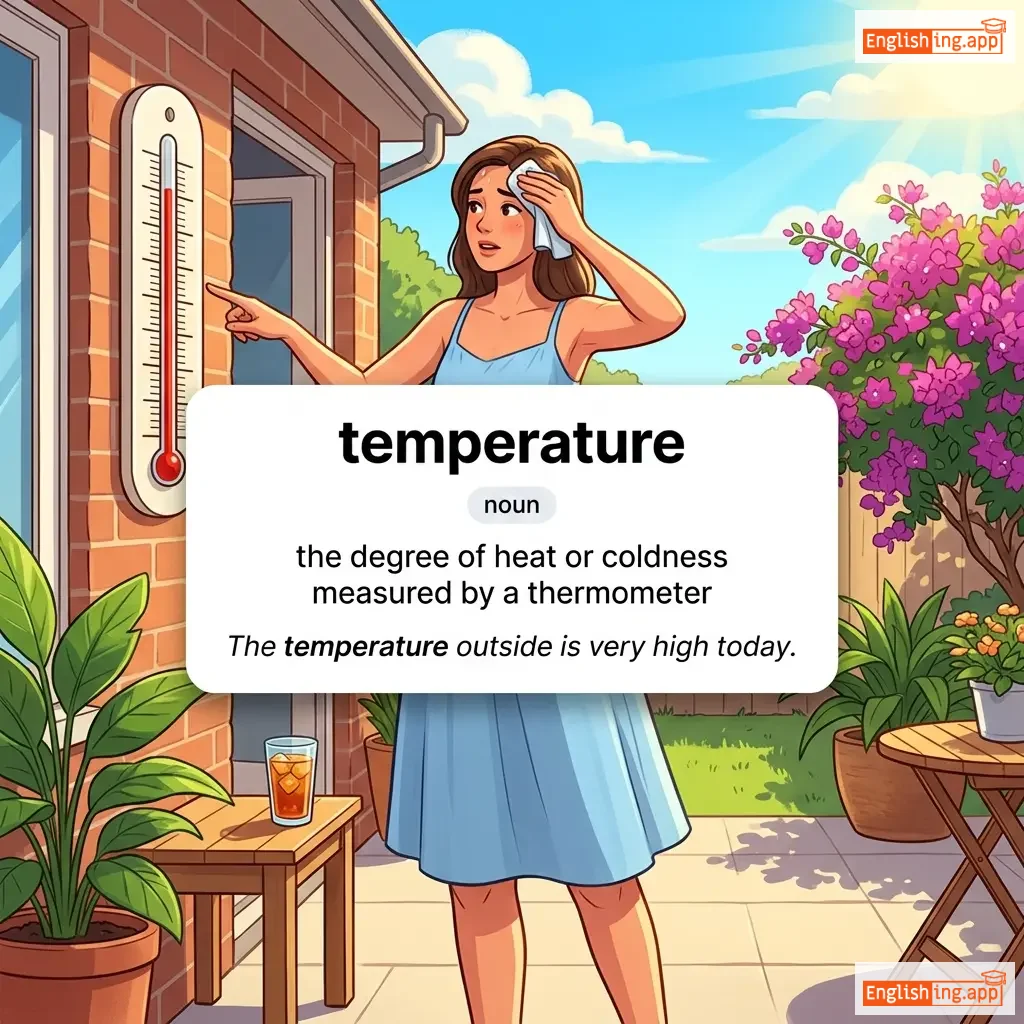
temperature definition card — visual illustration of the meaning
noun
/ˈtɛmpərətʃər/
तापमान (tāpmān)

the degree of heat or coldness measured by a thermometer

"The temperature outside is very high today."

"आज बाहर तापमान बहुत अधिक है।" (Āj bā'ir tāpmān bahut adhik hai.)
adjective
/ˈtɛmpərd/
संयमित (sanyamit)

having a specified temper or disposition; strengthened or moderated.

"She gave a tempered response to the criticism."

"उसने आलोचना पर संयमित प्रतिक्रिया दी।" (Usne alochana par sanyamit pratikriya di.)
noun
/ˈtem.pɪst/
तूफान (toofan)

a violent storm with strong winds; a state of great disturbance or tumult

"The sailors struggled to navigate through the fierce tempest."

"नाविकों को भयंकर तूफान के बीच से गुजरने में संघर्ष करना पड़ा।" (Navikon ko bhayankar toofan ke beech se guzarne mein sangharsh karna pada.)
adjective
/tɛmˈpɛstjuəs/
प्रकोपपूर्ण, तूफानी (prakoppoorn, toofani)

Characterized by strong and turbulent emotions or stormy conditions.

"Their tempestuous relationship often swung between love and anger."

"उनके प्रकोपपूर्ण संबंध अक्सर प्यार और गुस्से के बीच झूलते रहते थे।" (unke prakoppoorn sambandh aksar pyaar aur gusse ke beech jhoolte rahte the.)
noun
/ˈtɛmpəl/
मंदिर (mandir)

a building used for the worship of a god or gods

"They visited an ancient temple during their trip to India."

"उन्होंने अपनी यात्रा के दौरान एक प्राचीन मंदिर का दौरा किया।" (Unhone apni yatra ke dauran ek pracheen mandir ka daura kiya.)