वोकैबुलरीज

इंग्लिश वोकैबुलरी डिस्कवर, लर्न और मास्टर करें

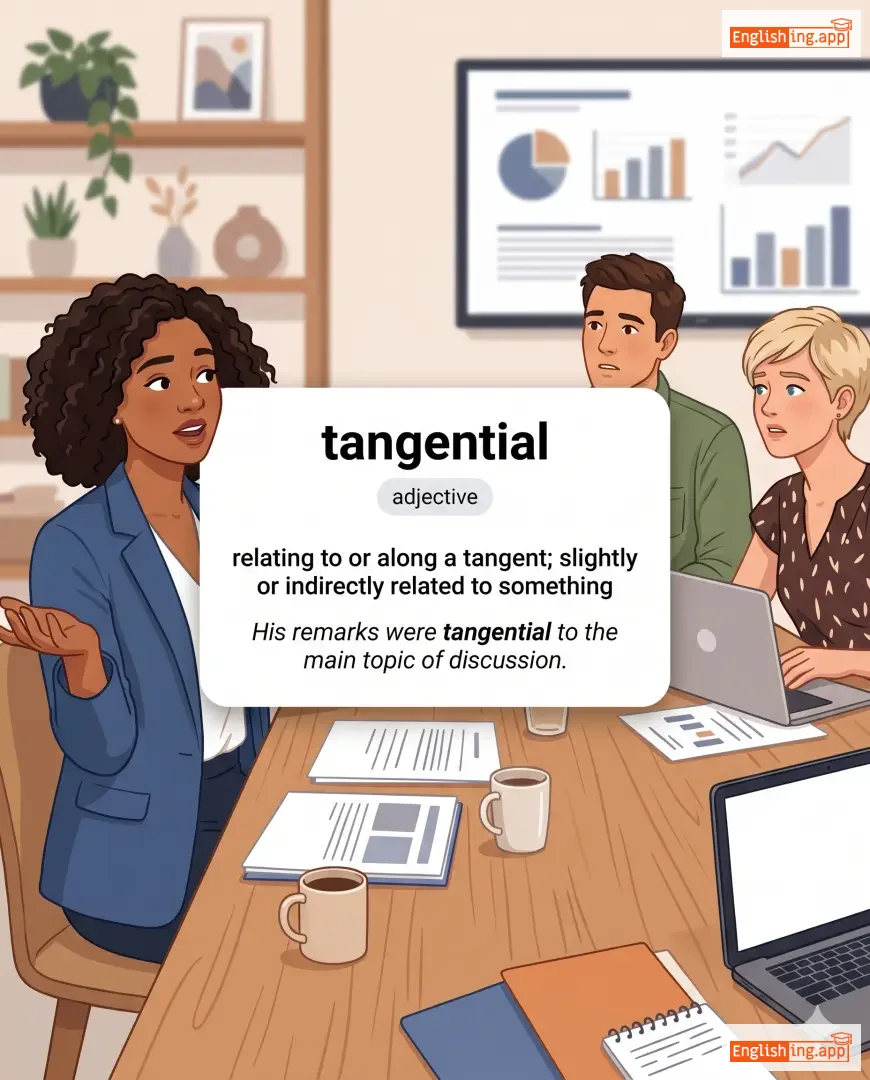
tangential definition card — visual illustration of the meaning
adjective
/tænˈdʒɛnʃəl/
संवेदी (sanvedi)

relating to or along a tangent; slightly or indirectly related to something

"His remarks were tangential to the main topic of discussion."

"उसकी टिप्पणियाँ चर्चा के मुख्य विषय से संवेदी थीं।" (Uski tippaniyan charcha ke mukhya vishay se sanvedi thin.)
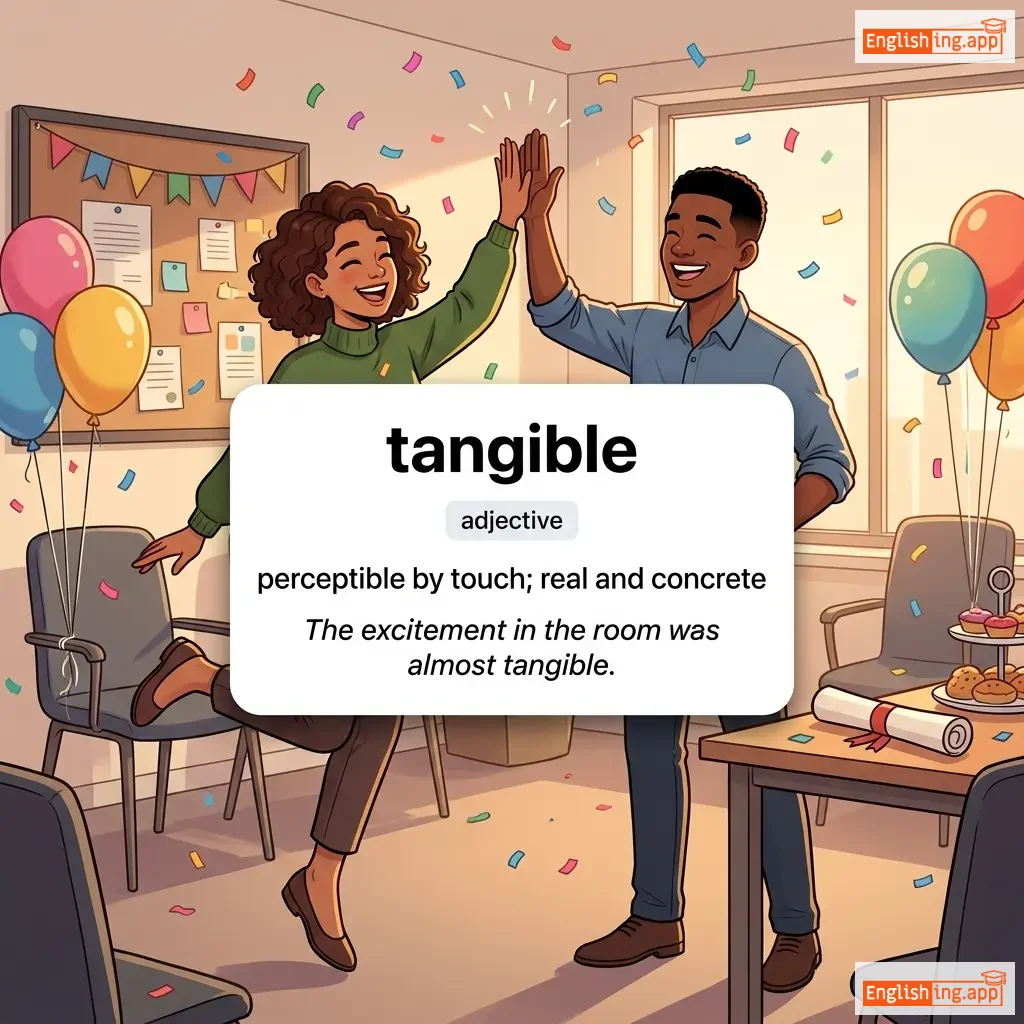
tangible definition card — visual illustration of the meaning
adjective
/ˈtændʒəbl/
स्पर्शनीय (sparshneeya)

perceptible by touch; real and concrete

"The excitement in the room was almost tangible."

"कमरे में उत्तेजना लगभग स्पर्शनीय थी।" (Kamre mein uttejana lagbhag sparshneeya thi.)
adjective
/ˈtæŋ.i/
तीखा (teekha)

Having a strong, sharp, and pleasantly biting flavor or taste.

"The sauce had a tangy flavor that brightened the dish."

"सॉस में एक तीखा स्वाद था जिसने डिश को और भी स्वादिष्ट बना दिया।" (Sauce mein ek teekha swad tha jisne dish ko aur bhi swadisht bana diya.)
noun
/tæŋk/
टैंक (tank)

a large, heavy military vehicle that moves on tracks and is armed with weapons

"The army sent tanks to the front lines."

"सेना ने मोर्चों पर टैंक भेजे।" (sena ne morchon par tank bheje)
noun
/ˈtæn.ər/
चर्मकार (charmkaar)

A person whose job is to tan animal hides to make leather.

"The tanner worked long hours to produce fine leather."

"चर्मकार ने अच्छे चमड़े के उत्पादन के लिए लंबे घंटे काम किए।" (Charmkaar ne achhe chamde ke utpadan ke liye lambe ghante kaam kiye.)
noun
/ˈtæn.ə.ri/
चमड़ा कारख़ाना (chamda karkhana)

A place where animal hides are processed into leather.

"The tannery produced high-quality leather for export."

"चमड़ा कारख़ाने ने निर्यात के लिए उच्च गुणवत्ता वाली चमड़ी तैयार की।" (Chamda karkhane ne niryaat ke liye uchch gunwatta wali chamdi tayar ki.)
verb
/ˈtæn.tə.laɪz/
ललचाना (lalchana)

To tease or torment someone with the promise of something desirable but unattainable.

"The aroma of the bakery tantalized the hungry children."

"बेकरी की खुशबू ने भूखे बच्चों को ललचाया।" (Bekari ki khushboo ne bhookhe bachchon ko lalchaya.)
adjective
/ˈtæn.tə.laɪ.zɪŋ/
ललचाने वाला (lalchane wala)

Something that excites desire or interest, often by being just out of reach.

"She wore a tantalizing perfume that caught everyone's attention."

"उसने एक ललचाने वाला परफ्यूम पहना था जो सबका ध्यान खींच रहा था।" (Usne ek lalchane wala perfume pehna tha jo sabka dhyaan kheench raha tha.)
adjective
/ˈtæntəmaʊnt/
समकक्ष (samaksh)

Equivalent in seriousness or effect; virtually the same as.

"His refusal to speak was tantamount to an admission of guilt."

"उसका बोलने से इनकार करना अपराध स्वीकार करने के बराबर था।" (uska bolne se inkaar karna aparadh sweekar karne ke barabar tha.)
noun
/ˈtæntrəm/
गुस्से का मचलना (gusse ka machalna)

An uncontrolled outburst of anger and frustration, typically in a young child.

"The child threw a tantrum when he didn’t get the toy."

"जब बच्चे को खिलौना नहीं मिला, तो उसने गुस्से का मचलना किया।" (jab bachche ko khilona nahin mila, to usne gusse ka machalna kiya.)
verb
/tæp/
टैप करना (tap karna)

to strike something lightly, usually with a quick, sharp sound

"He tapped on the door to get her attention."

"उसने ध्यान आकर्षित करने के लिए दरवाजे पर टैप किया।" (Usne dhyan aakarshit karne ke liye darwaze par tap kiya.)
noun
/teɪp/
टेप (tep)

a long, narrow strip of material, often sticky on one side, used for fastening or sticking things together

"I need some tape to seal this box."

"मुझे इस बॉक्स को सील करने के लिए कुछ टेप चाहिए।" (Mujhe is box ko seal karne ke liye kuch tape chahiye.)
verb
/ˈteɪpər/
पतला होना (patla hona)

To gradually decrease in width, thickness, or intensity.

"The road tapers off as it reaches the mountains."

"सड़क पहाड़ों की ओर पहुंचते हुए पतली होती जाती है।" (sadak pahadon ki or pahuchte huye patli hoti jaati hai.)
noun
/ˈtæpəstri/
बनाई हुई कपड़ा (banaee hui kapda)

A piece of thick textile fabric with pictures or designs woven into it, often hung on walls.

"The museum displayed an ancient tapestry from the 15th century."

"संग्रहालय ने 15वीं सदी की एक प्राचीन टैपेस्ट्री प्रदर्शित की।" (Sangrahalay ne 15vi sadi ki ek prachin tapestry pradarshit ki.)
noun
/təˈræntjʊlə/
तरंटुला (tarantula)

A large hairy spider found in warm regions.

"The tarantula crawled across the desert floor."

"तरंटुला रेगिस्तान की ज़मीन पर रेंग रहा था।" (tarantula registan ki zameen par reng raha tha.)
adjective
/ˈtɑːrdi/
देरी (deri)

Delayed; arriving or happening late.

"The student received a warning for being tardy to class."

"विद्यार्थी को कक्षा में देरी करने के लिए एक चेतावनी मिली।" (Vidyarthi ko kaksha mein deri karne ke liye ek chetavni mili.)
target definition card — visual illustration of the meaning
noun
/ˈtɑːɡɪt/
लक्ष्य (lakshya)

a goal or objective that one aims to achieve

"The team set a target to increase sales by 20%."

"टीम ने बिक्री को 20% बढ़ाने के लिए लक्ष्य निर्धारित किया।" (Team ne bikri ko 20% badhane ke liye lakshya nirdharit kiya.)
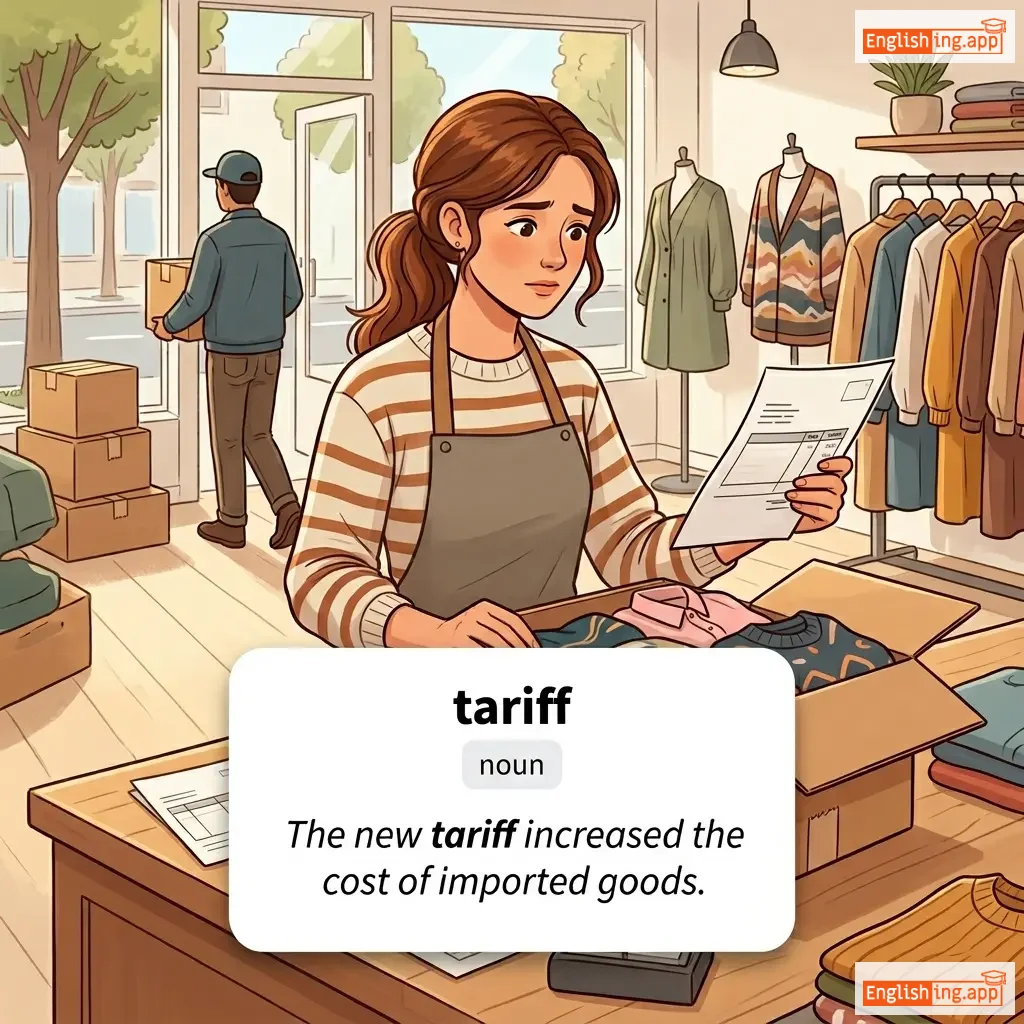
tariff definition card — visual illustration of the meaning
noun
/ˈtær.ɪf/
टैरिफ (tarif)

A tax imposed by the government on imported or exported goods, also known as duty, customs tax, or levy.

"The new tariff increased the cost of imported goods."

"नई टैरिफ ने आयातित वस्तुओं की कीमत बढ़ा दी।" (Nayi tarif ne aayatit vastuon ki keemat badha di.)
noun
/tɑːrn/
पहाड़ी झील (pahadi jheel)

A small mountain lake or pool.

"We camped near a tranquil tarn in the highlands."

"हमने हाइलैंड्स में एक शांत पहाड़ी झील के पास कैम्प किया।" (Humne highlands mein ek shaant pahadi jheel ke paas camp kiya.)
verb
/ˈtɑːrnɪʃ/
धूसर करना (dhoosar karna)

To lose luster, especially as a result of exposure to air or moisture; to damage reputation.

"The silver jewelry tarnished quickly when left in the open air."

"चांदी के आभूषण खुले हवा में रखने पर जल्दी धूसर हो गए।" (chaandi ke aabhushan khule hawa mein rakhne par jaldi dhoosar ho gaye.)
noun
/tɑːrˈpɔːlɪn/
तिरपाल (tarpaulin)

A large sheet of strong, flexible, water-resistant material used for covering or protecting things.

"The workers used a tarpaulin to cover the construction materials from rain."

"कामगारों ने बारिश से निर्माण सामग्री को ढकने के लिए तिरपाल का इस्तेमाल किया।" (kaamgaaron ne baarish se nirman saamagri ko dhakne ke liye tirpaal ka istemaal kiya)
verb
/ˈtæri/
रुकना/देरी करना (rukna/deri karna)

To delay or linger; to stay longer than intended.

"Do not tarry, or you will miss the train."

"देरी मत करो, वरना तुम ट्रेन मिस करोगे।" (deri mat karo, varna tum train miss karoge.)
noun, adjective
/tɑːrt/
टार्ट (tart)

A small pie with a sweet or savory filling; or having a sharp, sour taste.

"She served a delicious apple tart for dessert."

"उसने डेसर्ट के लिए एक स्वादिष्ट सेब की टार्ट परोसी।" (Usne dessert ke liye ek swadisht seb ki tart parosi.)
noun
/tɑːsk/
कार्य (karya)

a piece of work or duty to be done

"He completed the task before the deadline."

"उसने समय सीमा से पहले काम पूरा किया।" (Usne samay seema se pehle kaam poora kiya.)
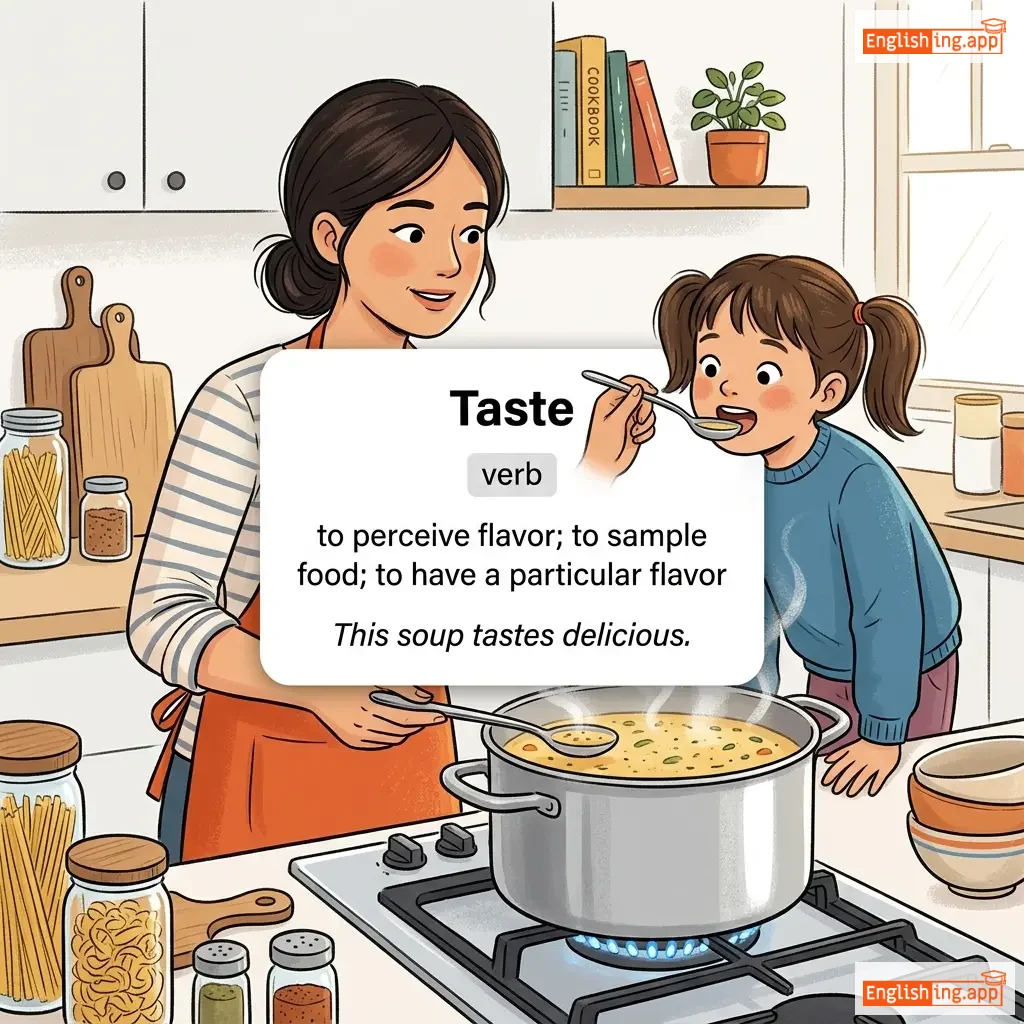
Taste definition card — visual illustration of the meaning
noun
/teɪst/
स्वाद (swad)

the sensation of flavor perceived in the mouth

"The cake had a delicious taste."

"केक का स्वाद बहुत स्वादिष्ट था।" (Kek ka swaad bahut swadisht tha.)
adjective
/ˈteɪst.fəl/
स्वादिष्ट; अच्छा; खूबसूरती और शैली में अच्छी समझ रखने वाला (swadisht; accha; khubsurati aur shaili mein acchi samajh rakhne wala)

showing good judgment in matters of style and beauty

"She decorated her home in a very tasteful manner."

"उसने अपने घर को बहुत सलीके से सजाया।" (usne apne ghar ko bahut salike se sajaya)
adjective
/ˈteɪst.ləs/
स्वादहीन (swadhahin)

lacking flavor; showing poor judgment in style

"The soup was completely tasteless and needed more seasoning."

"सूप पूरी तरह से स्वादहीन था और इसमें और मसाले की जरूरत थी।" (soop poori tarah se swadhahin tha aur ismein aur masale ki zaroorat thi.)
adjective
/ˈteɪsti/
स्वादिष्ट (swadisht)

Having a pleasant, distinct flavor; delicious.

"The chef prepared a very tasty curry."

"शेफ ने एक बहुत स्वादिष्ट करी तैयार की।" (Shef ne ek bahut swadisht kari taiyar ki.)
noun, verb
/ˈtætər/
चिथड़ा कपड़ा (chithda kapda)

A torn piece of cloth or clothing; to become ragged or torn.

"The old flag hung in tatters after the storm."

"तूफ़ान के बाद पुराना झंडा चिथड़े में लटका हुआ था।" (Toofan ke baad purana jhanda chithde mein latka hua tha.)
noun, adjective
/ˌtætərdɪˈmeɪliən/
फटे कपड़े पहने व्यक्ति (phate kapde pehne vyakti)

A person dressed in ragged clothes; ragged or dilapidated in appearance.

"A tatterdemalion wandered the streets in search of food."

"एक टैटरडेमालियन खाने की तलाश में सड़कों पर घूम रहा था।" (Ek tatterdemalion khane ki talash mein sadkon par ghoom raha tha.)
adjective
/ˈtæti/
पुराना (purana)

Worn out, shabby, or in poor condition.

"The sofa looked old and tatty after years of use."

"सोफा सालों के उपयोग के बाद पुराना और फटा हुआ दिखने लगा था।" (Sofa salon ke upyog ke baad purana aur fata hua dikhne laga tha.)
verb
/tɔːnt/
उत्साहित करना (utsahit karna)

to provoke or challenge someone with insulting remarks

"The bully tried to taunt him with cruel words."

"बुली ने क्रूर शब्दों से उसे तंग करने की कोशिश की।" (buli ne kruur shabdon se use tang karne ki koshish ki.)
adjective
/tɔːt/
तनावपूर्ण (tanaavpurn)

stretched or pulled tight; tense

"The rope was pulled taut between the two poles."

"दोनो खंभों के बीच रस्सी तनी हुई थी।" (dono khambon ke beech rassi tani hui thi.)
adjective
/ˌtɔːtəˈlɒdʒɪkəl/
अतिरिक्त पुनरावृत्तिमूलक (atirikt punaravrittimulak)

expressing something by repeating the same idea in different words; redundant

"Saying 'free gift' is considered tautological."

"'फ्री गिफ्ट' कहना अतिरिक्त पुनरावृत्तिमूलक माना जाता है।" ('free gift' kehna atirikt punaravrittimulak mana jata hai.)
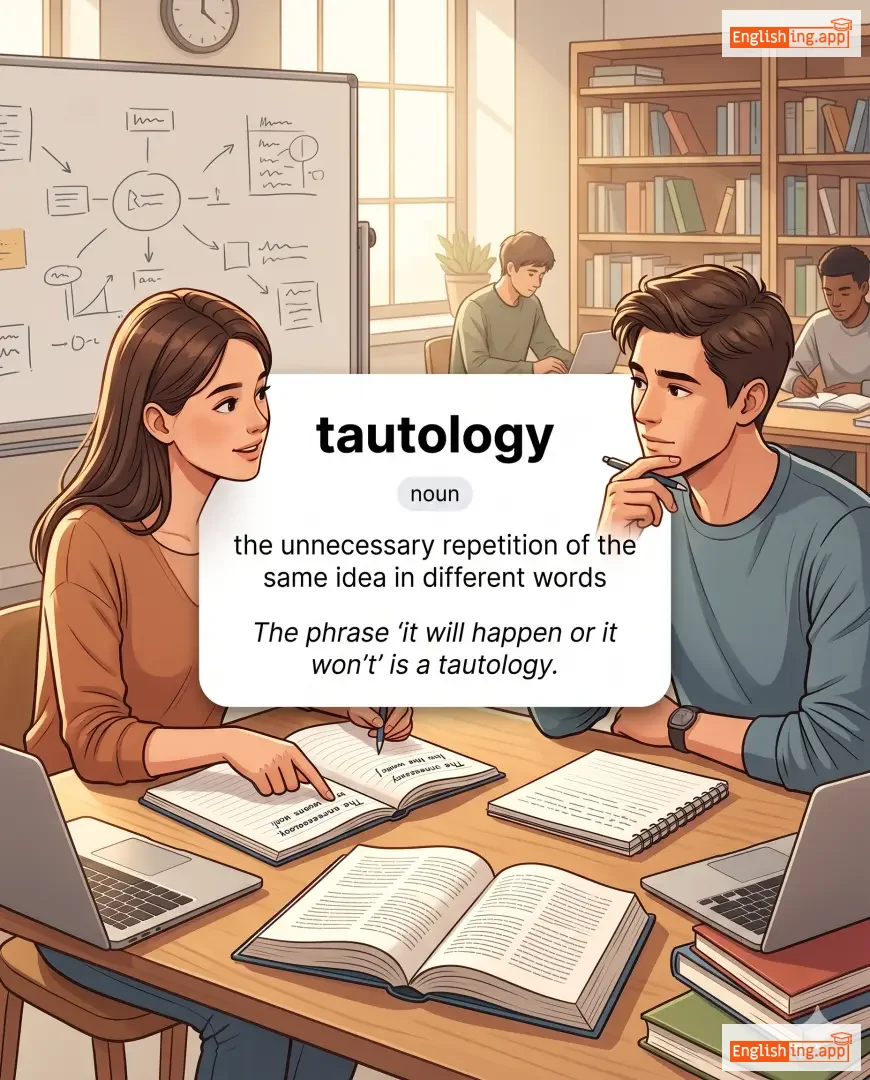
tautology definition card — visual illustration of the meaning
noun
/tɔːˈtɒlədʒi/
अवश्यकता से अधिक पुनरावृत्ति (avashyakta se adhik punaravritti)

the unnecessary repetition of the same idea in different words

"The phrase 'it will happen or it won’t' is a tautology."

"'यह होगा या नहीं होगा' वाक्य एक तात्विकता है।" ('yah hoga ya nahin hoga' vaakya ek tautology hai.)
adjective
/ˈtɔːdri/
सस्ते और दिखावे वाले लेकिन खराब गुणवत्ता वाले (saste aur dikhave wale lekin kharab gunwatta wale)

cheap and showy but of poor quality

"She wore a tawdry necklace that broke easily."

"वह एक सस्ते और दिखावे वाले हार पहने हुए थी जो आसानी से टूट गया।" (vah ek saste aur dikhave wale haar pahne hue thi jo aasani se toot gaya.)
adjective
/ˈtɔːni/
तांबई (tambi)

A warm, sandy or golden-brown color.

"The owl's tawny feathers blended with the tree bark."

"उल्लू के तांबई पंख पेड़ की छाल में घुल गए।" (Ullu ke tambai pankh ped ki chhal mein ghul gaye.)
noun
/tæks/
कर (kar)

a compulsory contribution to state revenue, typically levied on income or sales

"The government increased the tax rate on luxury goods."

"सरकार ने विलासिता सामानों पर कर दर बढ़ा दी।" (Sarkar ne vilasita samanon par kar dar badha di.)
noun
/tækˈseɪʃən/
कराधान (karadhan)

The system of imposing and collecting taxes.

"Taxation is necessary for funding public services."

"सार्वजनिक सेवाओं के लिए कराधान आवश्यक है।" (Saarvajanik sevaon ke liye karadhan avashyak hai.)
noun
/ˈtæksi/
टैक्सी (ṭaiksī)

A car licensed to transport passengers in exchange for payment of a fare.

"We hailed a taxi to get to the airport."

"हमने हवाई अड्डे जाने के लिए एक टैक्सी ली।" (hamne havai aḍḍe jaane ke liye ek ṭaiksī lī.)
noun
/ˈtæk.si kæb/
टैक्सी कैब (taksi kab)

A car that carries passengers for a fare, usually in cities

"We took a taxi cab to the restaurant."

"हमने रेस्तरां जाने के लिए एक टैक्सी कैब ली।" (hamne restaran jane ke liye ek taksi kab li.)
noun
/ˈtæksɪˌdɜːrmi/
टैक्सीडर्मी (taxidermy)

The art of preparing, stuffing, and mounting the skins of animals for display.

"The museum had a large collection of taxidermy animals."

"म्यूज़ियम में टैक्सीडर्मी जानवरों का एक बड़ा संग्रह था।" (Museum mein taxidermy janwaron ka ek bada sangrah tha.)
adjective
/ˈtæksɪŋ/
थकाऊ (thakau)

Requiring a lot of effort; physically or mentally demanding.

"Preparing for the exam was a taxing experience."

"परीक्षा की तैयारी करना एक थकाऊ अनुभव था।" (Pariksha ki taiyari karna ek thakau anubhav tha.)
noun
/tækˈsɒnəmɪst/
वर्गीकरणज्ञ (vargikaranajna)

A scientist who classifies organisms into groups based on their characteristics.

"The taxonomist discovered a new species of insect."

"वर्गीकरणज्ञ ने एक नई कीट की प्रजाति का पता लगाया।" (Vargikaranajna ne ek nayi keet ki prajati ka pata lagaya.)
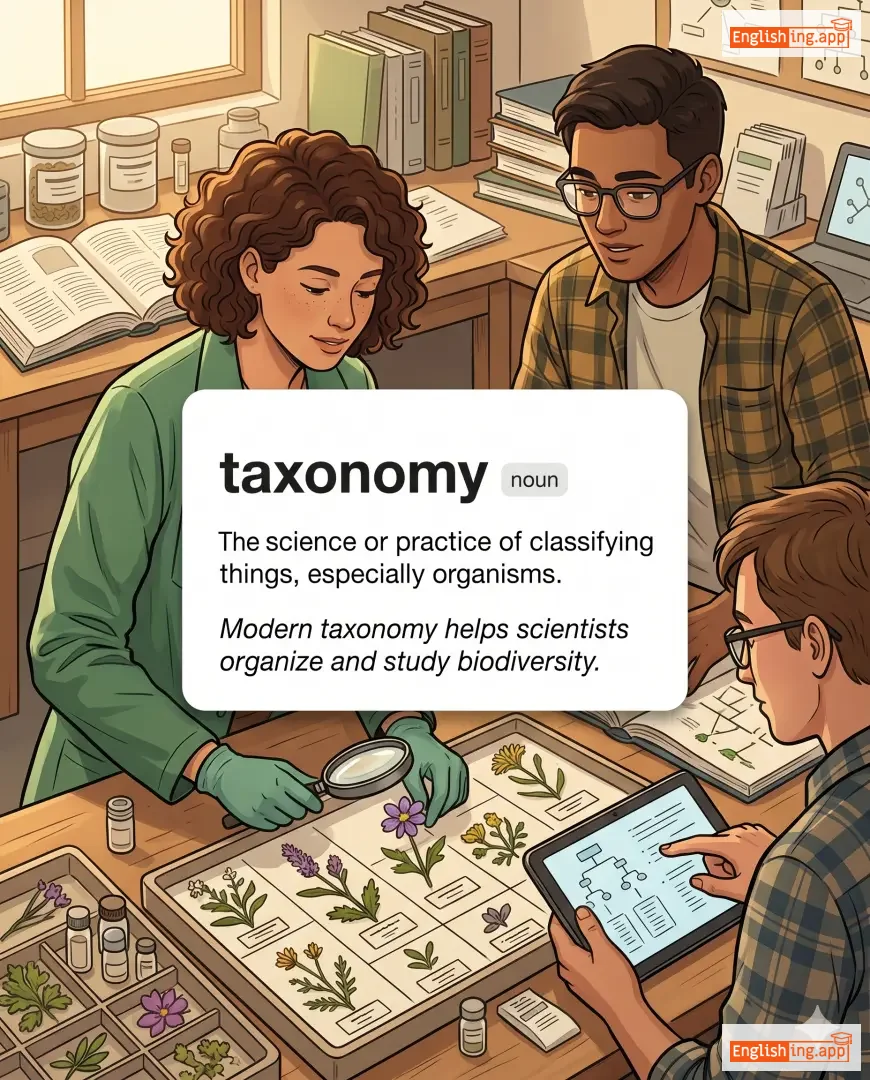
taxonomy definition card — visual illustration of the meaning
noun
/tækˈsɒnəmi/
वर्गीकरण विज्ञान (vargikaran vigyan)

The science or practice of classifying things, especially organisms.

"Modern taxonomy helps scientists organize and study biodiversity."

"आधुनिक वर्गीकरण विज्ञान वैज्ञानिकों को जैव विविधता को व्यवस्थित करने और अध्ययन करने में मदद करता है।" (aadhunik vargikaran vigyan vaigyanikon ko jaiv vividhata ko vyavasthit karne aur adhyayan karne mein madad karta hai.)
noun
/ˈtæksˌpeɪər/
करदाता (kardata)

a person who pays tax to the government

"The taxpayers' money is used to fund public services."

"करदाताओं का पैसा सार्वजनिक सेवाओं के लिए उपयोग किया जाता है।" (Kardaton ka paisa sarvajanik sevaon ke liye upyog kiya jata hai.)
noun
/tiː/
चाय (chai)

a hot drink made by infusing the dried, crushed leaves of the tea plant in boiling water

"I drink tea every morning to start my day."

"मैं हर सुबह अपनी सुबह की शुरुआत करने के लिए चाय पीता हूँ।" (Main har subah apnī subah kī śurūāt karne ke liye chāy pītā hūn.)
noun
/ˈtiː.pɒt/
चाय-पॉट (chai-pot)

a container with a lid, handle, and spout for brewing and serving tea

"She poured hot water into the tea-pot to make tea."

"उसने चाय बनाने के लिए टी-पॉट में गर्म पानी डाला।" (usne chai banane ke liye tea-pot mein garm pani dala.)
noun
/tiː ˈstreɪnər/
चाय छानने का चूसा (chai chhane ka chhusa)

a small perforated device used to strain tea leaves from brewed tea

"I always use a tea-strainer when pouring tea into cups."

"मैं हमेशा कप में चाय डालते समय चाय छानने का चूसा इस्तेमाल करता हूँ।" (main hamesha kap mein chai daalte samay chai chhane ka chhusa istemal karta hoon.)
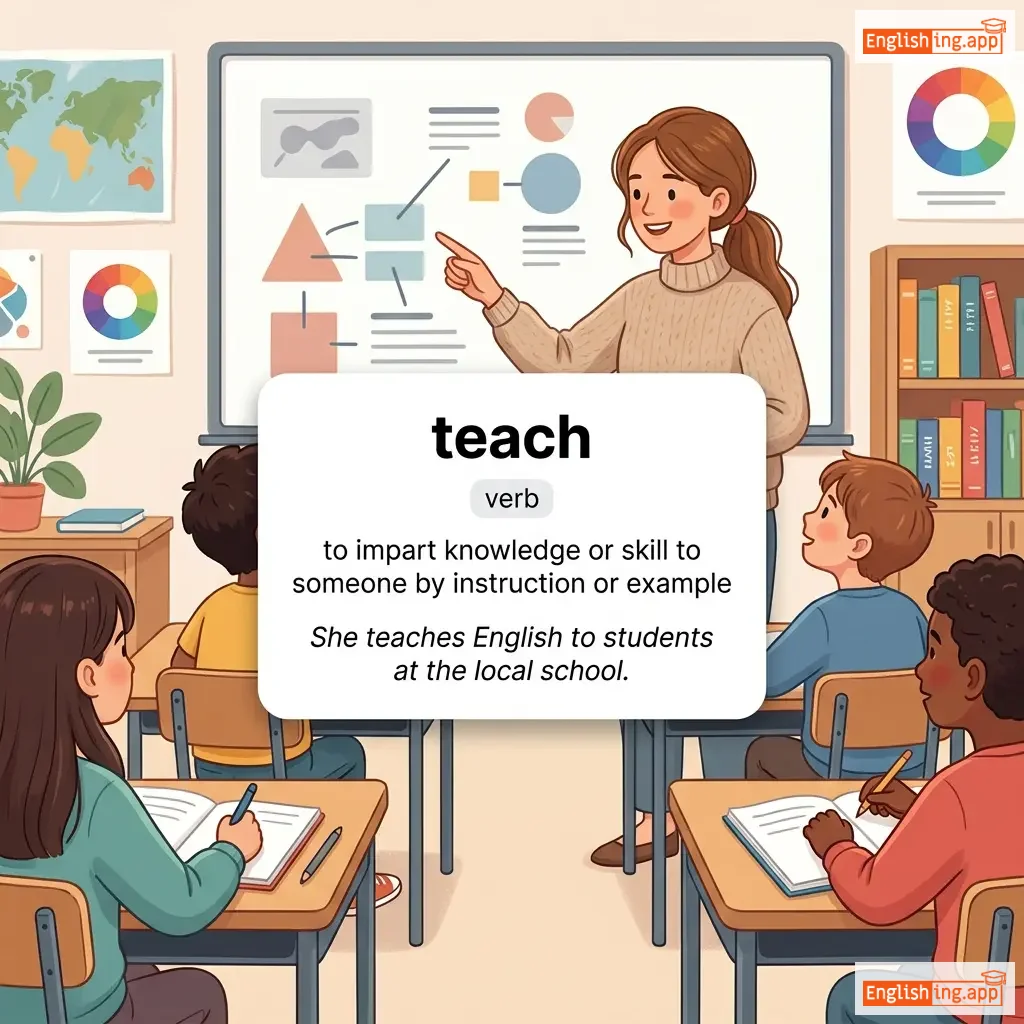
teach definition card — visual illustration of the meaning
verb
/tiːʧ/
सिखाना (sikhana)

to impart knowledge or skill to someone by instruction or example

"She teaches English to students at the local school."

"वह स्थानीय स्कूल में छात्रों को अंग्रेजी पढ़ाती है।" (Wah sthaniya school mein chhatron ko Angrezi padhati hai.)