वोकैबुलरीज

इंग्लिश वोकैबुलरी डिस्कवर, लर्न और मास्टर करें

noun
/ˈsɑːrdʒənt/
सर्जेंट (sarjent)

A rank of non-commissioned officer in the armed forces or police.

"The sergeant gave orders to the soldiers before the mission."

"सर्जेंट ने मिशन से पहले सैनिकों को आदेश दिया।" (Sarjent ne mission se pehle sainikon ko aadesh diya.)
noun
/ˈsɑːrdʒənt ət ɑːrmz/
सर्जेंट-एट-आर्म्स (sargent-at-arms)

An officer responsible for maintaining order during meetings or legislative sessions.

"The sergeant-at-arms escorted the disruptive member out of the hall."

"सर्जेंट-एट-आर्म्स ने विघटनकारी सदस्य को सभा से बाहर किया।" (Sargent-at-arms ne vighatkari sadasya ko sabha se bahar kiya.)
noun
/ˌsɑːrdʒənt ˈmeɪdʒər/
सर्जेंट-मेजर (sarjent-mejor)

A senior non-commissioned officer in the army responsible for discipline and administration within a unit.

"The sergeant-major inspected the troops before the parade."

"परेड से पहले सर्जेंट-मेजर ने सैनिकों की जांच की।" (Pared se pehle sarjent-mejor ne sainiko ki jaanch ki.)
adjective
/ˈsɪəriəl/
श्रृंखला (shrinkhla)

occurring in a series or sequence

"The serial killer was apprehended after a long investigation."

"सीरियल किलर को एक लंबी जांच के बाद पकड़ा गया था।" (Serial killer ko ek lambi jaanch ke baad pakda gaya tha.)
noun
/ˈsɪəriːz/
श्रृंखला (shrnkhalaa)

a number of things or events that are related in some way

"This series of books is really popular among young readers."

"यह पुस्तकों की श्रृंखला युवा पाठकों के बीच बहुत लोकप्रिय है।" (yeh pustakon ki shrnkhalaa yuva pathakon ke beech bahut lokpriya hai.)
adjective
/ˈsɪəriəs/
गंभीर (gambhir)

showing deep thought, sincerity, or importance; not joking

"She gave me a serious look before making her decision."

"उसने मुझे गंभीर नजरों से देखा जब उसने अपना फैसला किया।" (Usne mujhe gambhir nazron se dekha jab usne apna faisla kiya.)
adverb
/ˈsɪə.ri.əs.li/
गंभीरता से (gambhirta se)

in a solemn or thoughtful manner

"She took the matter very seriously."

"उसने इस मुद्दे को बहुत गंभीरता से लिया।" (Usne is mudde ko bahut gambhirta se liya.)
noun
/ˈsɪr.i.əs.nəs/
गंभीरता; महत्व (gambheerta; mahatva)

the quality of being serious; gravity; importance

"The seriousness of the situation became clear when the doctor spoke."

"स्थिति की गंभीरता स्पष्ट हो गई जब डॉक्टर ने बात की।" (sthiti ki gambheerta spasht ho gayi jab doctor ne baat ki.)
noun
/ˈsɜːrmən/
धर्मोपदेश (dharmopadesh)

A religious discourse delivered by a preacher, often offering moral instruction or spiritual guidance.

"The pastor gave a moving sermon about compassion and forgiveness."

"पादरी ने करुणा और क्षमा पर एक प्रेरणादायक धर्मोपदेश दिया।" (Padri ne karuna aur kshama par ek prerandayak dharmopadesh diya.)
adjective
/ˈsɜːrpənˌtiːn/
साँप की तरह मुड़ा हुआ (saap ki tarah mudha hua)

Having the shape, movement, or qualities of a serpent; winding or twisting.

"The road took a serpentine path through the mountains."

"सड़क पहाड़ों के बीच से सर्पेंटाइन मार्ग पर मुड़ गई।" (Sadak pahaadon ke beech se serpentine maarg par mud gayi.)
verb
/ˈsɛreɪt/
दांतदार किनारा बनाना (daantdaar kinara banana)

To make a saw-toothed edge or notched margin.

"The craftsman serrated the knife blade for better cutting."

"कारीगर ने बेहतर काटने के लिए चाकू की धार दांतदार बनायी।" (Karigar ne behtar kaatne ke liye chaaku ki dhaar daantdaar banayi.)
adjective
/ˈsɛreɪtɪd/
दांतदार (daantdaar)

Having a notched or saw-toothed edge.

"The bread knife had a serrated blade."

"ब्रेड चाकू की धार दांतदार थी।" (Bred chaku ki dhaar daantdaar thi.)
adjective
/ˈsɛrid/
घनसन्निबद्ध (ghanasannibaddh)

pressed or crowded together, often in rows or ranks

"The soldiers stood in serried ranks, ready for inspection."

"सैनिक घनसन्निबद्ध पंक्तियों में खड़े थे, निरीक्षण के लिए तैयार।" (Sainik ghanasannibaddh panktiyon mein khade the, nirikshan ke liye tayar.)
noun
/ˈsɜːvənt/
नौकर (naukar)

a person who performs duties for others, especially in a household

"The servant opened the door for the guests."

"नौकर ने मेहमानों के लिए दरवाजा खोला।" (Naukar ne mehmano ke liye darwaza khola.)
verb
/sɜːv/
सेवा देना (seva dena)

to provide service or assistance to others

"He serves the customers with a smile."

"वह मुस्कान के साथ ग्राहकों को सेवा प्रदान करता है।" (Vah muskaan ke saath graahkon ko seva pradan karta hai.)
service definition card — visual illustration of the meaning
noun
/ˈsɜːrvɪs/
सेवा (seva)

the action of helping or doing work for someone; a system providing a public need

"The hotel provides excellent customer service."

"होटल उत्कृष्ट ग्राहक सेवा प्रदान करता है।" (Hotel utkṛṣṭ grāhak sevā pradan kartā hai.)
adjective
/ˈsɜːrvɪsəbl/
उपयोगी (upayogi)

fit for use; usable; in working order

"The old bicycle is still serviceable despite its age."

"पुरानी साइकिल अभी भी उपयोगी है, बावजूद इसके उम्र के।" (Purani cycle abhi bhi upayogi hai, bawajood iske umra ke.)
services definition card — visual illustration of the meaning
noun
ˈsɜːvɪsɪz
सेवा (seva)

The action of helping or doing work for someone.

"Services in the healthcare industry are essential for well-being."

"स्वास्थ्य देखभाल उद्योग में सेवाएँ भलाई के लिए आवश्यक हैं।" (Swasthya dekbhkal udyog mein sevaayein bhalaai ke liye avashyak hain.)
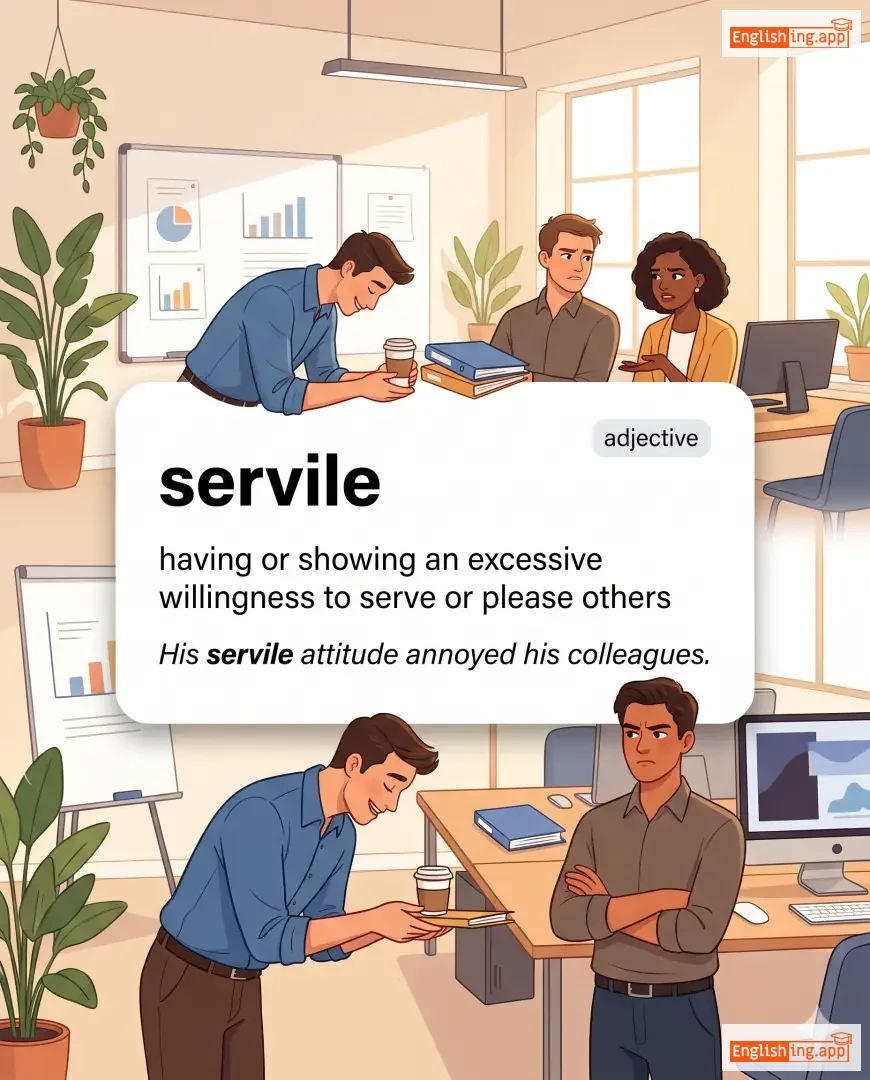
servile definition card — visual illustration of the meaning
adjective
/ˈsɜːrvaɪl/ or /ˈsɜːrvəl/
चाटुकार (chatukar)

having or showing an excessive willingness to serve or please others

"His servile attitude annoyed his colleagues."

"उसका चाटुकार रवैया उसके सहकर्मियों को परेशान कर रहा था।" (Uska chatukar ravaiya uske sahkarmiyon ko pareshan kar raha tha.)
noun
/ˈsɜːvɪŋ/
सेवा (seva)

a portion of food for one person; the act of giving food or drink to someone

"He ate a large serving of rice and curry."

"उसने चावल और करी का एक बड़ा सर्विंग खाया।" (Usne chawal aur kari ka ek bada serving khaya.)
noun
/ˈsɜːrvɪtuːd/
दासता (daasta)

the state of being a slave or completely subject to someone more powerful

"The prisoners were forced into servitude."

"कैदियों को दासता में मजबूर किया गया।" (Kaidiyon ko daasta mein majboor kiya gaya.)
noun
/ˈsɛsəmi sidz/
तिल के बीज (til ke beej)

small edible seeds from the sesame plant used in cooking and baking

"Sprinkle sesame seeds on top of the bread before baking."

"रोटी पर बेकिंग से पहले तिल के बीज छिड़कें।" (roti par baking se pehle til ke beej chhidken)
session definition card — visual illustration of the meaning
noun
/ˈsɛʃ.ən/
सत्र (satra)

a meeting or a period of time devoted to a specific activity

"The session will begin at 10 AM."

"सेशन सुबह 10 बजे शुरू होगा।" (Session subah 10 baje shuru hoga.)
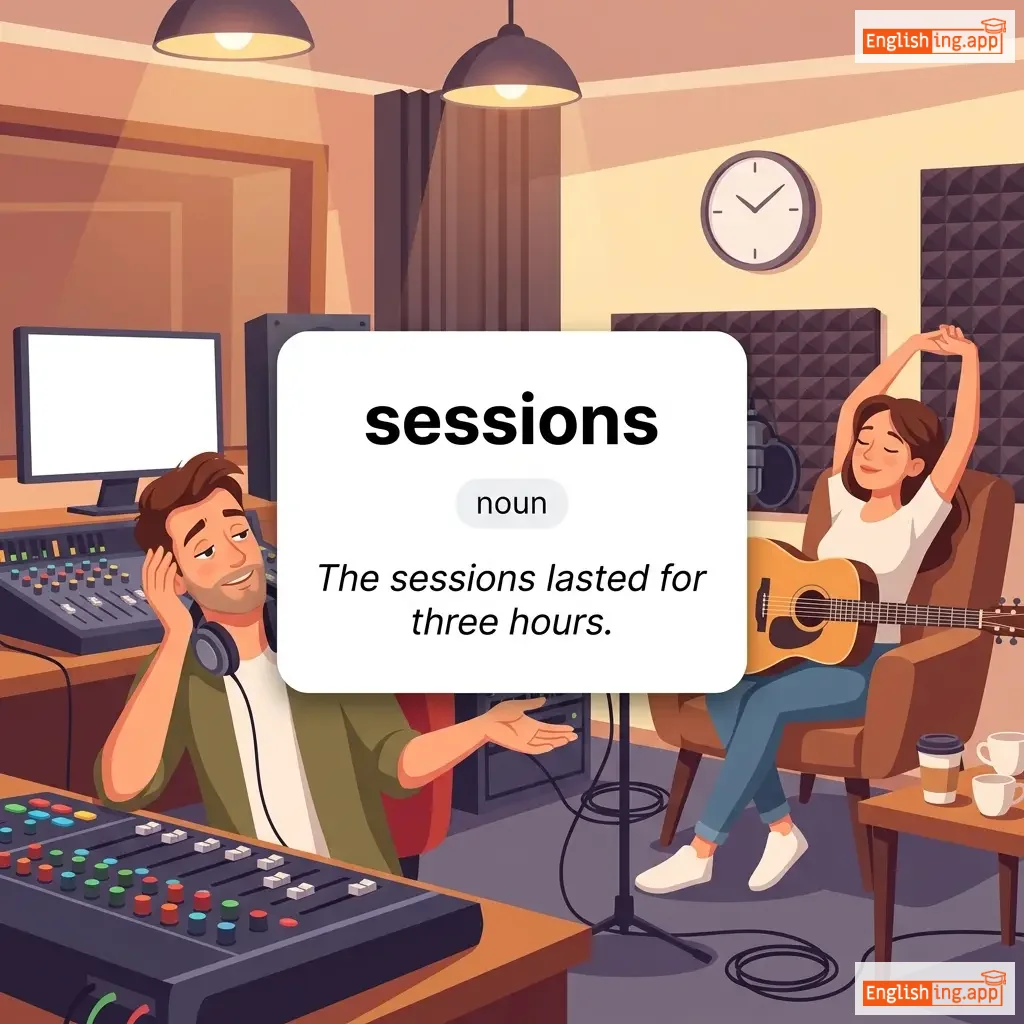
sessions definition card — visual illustration of the meaning
noun
ˈsɛʃənz
सत्र, बैठक, अवधि (satr, baithak, avadhi)

A meeting of an official body, especially a court of law, to conduct its business; a period devoted to a particular activity.

"The sessions lasted for three hours."

"सत्र तीन घंटे तक चले।" (Satr teen ghante tak chale.)
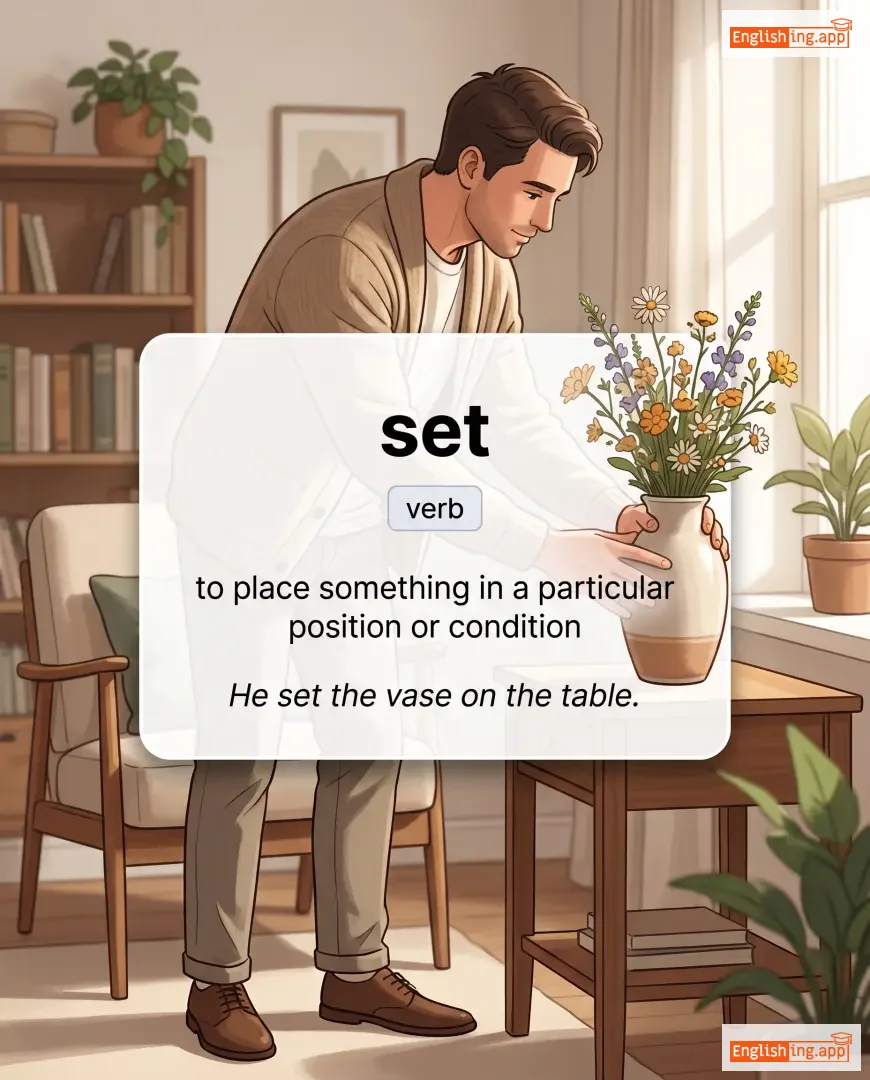
set definition card — visual illustration of the meaning
verb
/sɛt/
सज्जित करना (sajjit karna)

to place something in a particular position or condition

"He set the vase on the table."

"उसने फूलदान को टेबल पर सेट किया।" (Usne phooldan ko table par set kiya.)
noun
/ˈsɛt ʌp/
व्यवस्था (vyavastha)

The arrangement or organization of something; a planned structure or scheme

"The company presented a new set-up for the office layout."

"कंपनी ने कार्यालय लेआउट के लिए एक नया सेट-अप प्रस्तुत किया।" (kampani ne karyalay layout ke liye ek naya set-up prastut kiya.)
noun
/ˈsɛtɪŋ/
सेटिंग (setting)

the environment or place where something happens

"The setting of the movie was a beautiful beach."

"फिल्म का सेटिंग एक सुंदर बीच था।" (Film ka setting ek sundar beach tha.)
settle definition card — visual illustration of the meaning
verb
/ˈsɛtl/
समझौता करना (samjhauta karna)

to resolve or come to an agreement about something; to establish a residence or position

"After a long negotiation, they were able to settle the dispute."

"लंबी बातचीत के बाद, वे विवाद को हल करने में सक्षम थे।" (Lambi baatcheet ke baad, ve vivaad ko hal karne mein saksham the.)
noun
/ˈsɛtlmənt/
समझौता (samjhota)

an agreement reached after a dispute, or a community or area where people establish a home

"The settlement between the companies was finalized after months of talks."

"कंपनियों के बीच समझौता महीनों की वार्ता के बाद अंतिम रूप से तय किया गया था।" (Kampaniyon ke beech samjhota mahino ki vartaa ke baad antim roop se tay kiya gaya tha.)
noun
/ˈsɛtlər/
सेटलर (settler)

a person who settles in a new area or land

"The settlers arrived in the new town and started building homes."

"सेटलर नए शहर में पहुंचे और घर बनाना शुरू किया।" (Settler naye sheher mein pahunche aur ghar banana shuru kiya.)
noun
/ˈsɛtʌp/
विधान (vidhan)

an arrangement of things or the way in which something is organized or prepared

"The setup of the event took hours to complete."

"इवेंट का सेटअप पूरा करने में घंटों लग गए।" (Event ka setup poora karne mein ghanton lag gaye.)
noun
/ˈsɛvən/
सात (saat)

the number following six and preceding eight

"She has seven apples in her basket."

"उसकी टोकरी में सात सेब हैं." (Uski tokri mein saat seb hain)
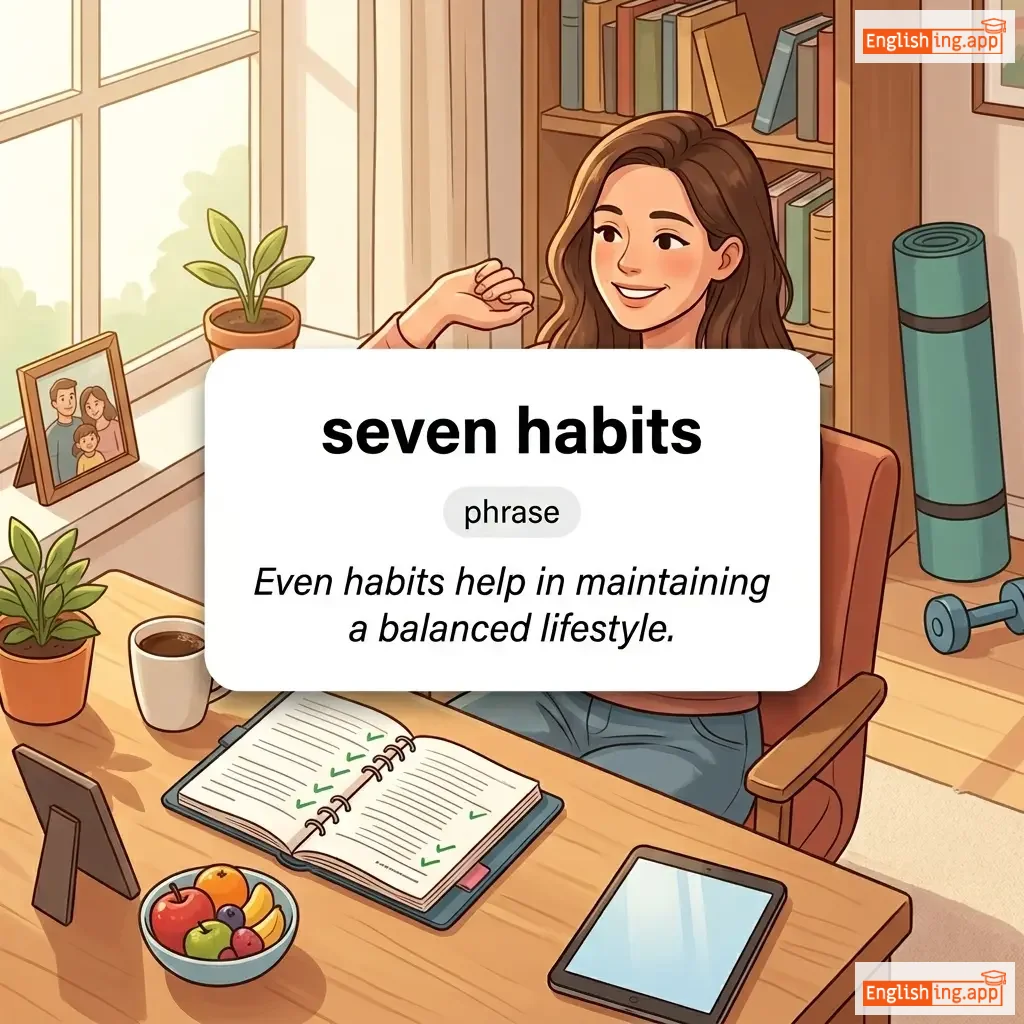
seven habits definition card — visual illustration of the meaning
phrase
ˈsɛvən ˈhæbɪts
सात आदतें (saat aadatein)

Regular behaviors or actions that are done consistently over time, specifically referring to a set of seven key practices.

"Even habits help in maintaining a balanced lifestyle."

"सात आदतें एक संतुलित जीवनशैली बनाए रखने में मदद करती हैं।" (Saat aadatein ek santulit jeevanshailee banaye rakhne mein madad karti hain.)
Seven Wonders definition card — visual illustration of the meaning
noun
ˈsɛv.ən ˈwʌn.dərz
सात आश्चर्य (saat aashcharya)

The seven most remarkable and famous structures in the world, representing architectural feats and cultural significance.

"The Seven Wonders of the world reflect human brilliance."

"दुनिया के सात आश्चर्य मानव बेजोड़ बुद्धिमत्ता का प्रतीक हैं।" (Duniya ke saat aashcharya maanav bejod buddhi-matta ka prateek hain.)
adjective
/ˈsɛvənθ/
सातवां (satvaan)

constituting number seven in a sequence; coming after the sixth

"Her birthday is on the seventh of July."

"उसका जन्मदिन जुलाई की सातवीं तारीख को है।" (Uska janmadin julai ki saatvin tareekh ko hai.)
verb
/ˈsɛvər/
काटना, संबंध तोड़ना (katna, samband todna)

to cut off or separate, especially by cutting; to end a connection or relationship

"He had to sever ties with the company after the dispute."

"उसे विवाद के बाद कंपनी से संबंध तोड़ने पड़े।" (Use vivaad ke baad company se samband todne pade.)
adjective
/ˈsɛvrəl/
कई (kai)

more than one but not many; a few

"Several people attended the meeting yesterday."

"कई लोग कल बैठक में उपस्थित थे।" (Kai log kal baithak mein upasthit the.)
noun
/ˈsɛvərəns/
पदोन्नति (padonnati)

the act of ending something, especially a relationship or employment; compensation paid upon termination

"The company offered him severance pay after his job ended."

"कंपनी ने उसे उसके नौकरी समाप्त होने के बाद पदोन्नति प्रदान की।" (Company ne use uske naukri samaapt hone ke baad padonnati pradan ki.)
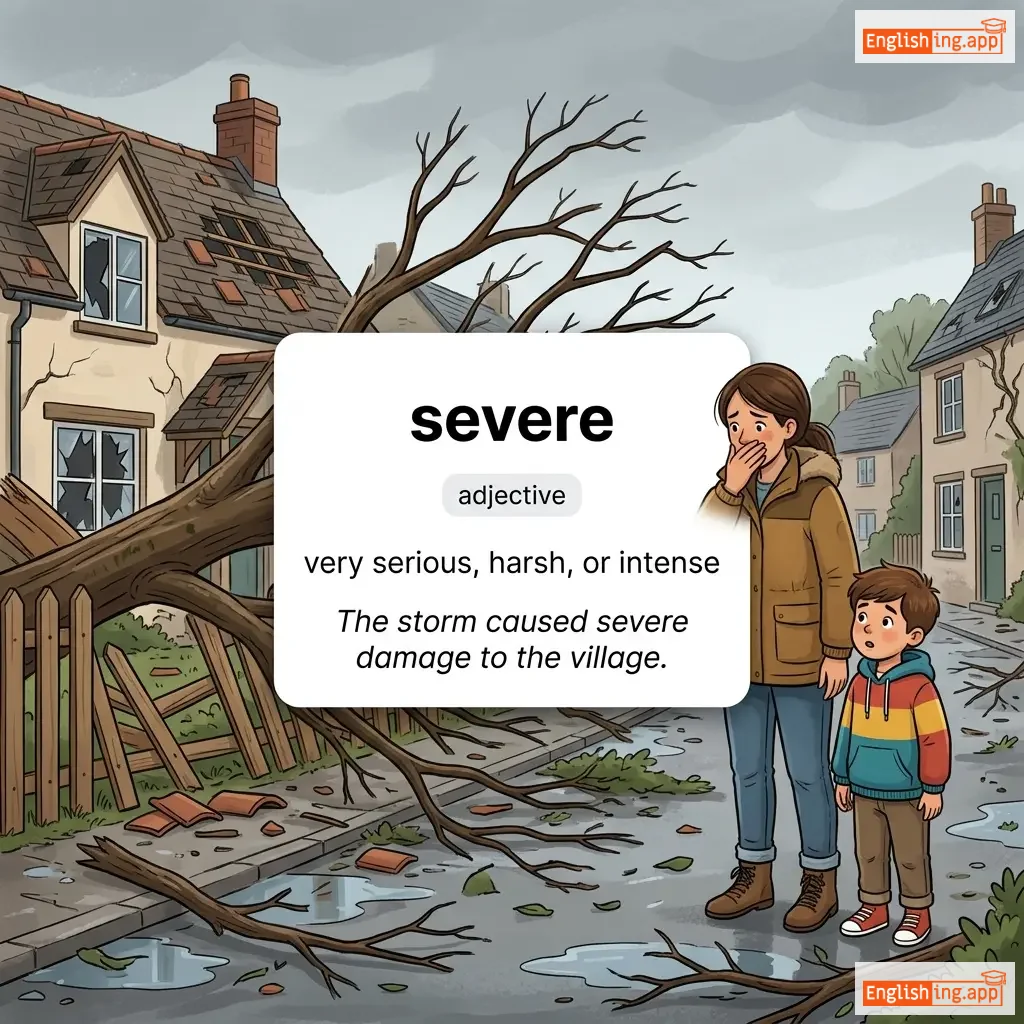
severe definition card — visual illustration of the meaning
adjective
/sɪˈvɪər/
गंभीर (gambhir)

very serious, harsh, or intense

"The storm caused severe damage to the village."

"आंधी ने गाँव में गंभीर नुकसान पहुँचाया।" (Aandhi ne gaon mein gambhir nuksan pahunchaya.)
adverb
/sɪˈvɪərli/
गंभीरता से (gambhirata se)

to a great degree; very seriously or harshly

"The patient was severely injured in the accident."

"मरीज दुर्घटना में गंभीर रूप से घायल हो गया था।" (Mareez durghatna mein gambhir roop se ghaayal ho gaya tha.)
noun
/sɪˈvɛrɪti/
गंभीरता (gambhirata)

the quality of being very serious or harsh

"The doctor explained the severity of the disease."

"डॉक्टर ने रोग की गंभीरता को समझाया।" (Doktar ne rog ki gambhirata ko samjhaya.)
verb
/səʊ/
खुशी (khushi)

to join pieces of fabric or material together using a needle and thread

"She learned to sew her own clothes at an early age."

"वह पुरस्कार मिलने पर अपनी खुशी को छिपा नहीं पाई।" (Wah puraskar milne par apni khushi ko chhupa nahi payi.)
noun/verb
/ˈsoʊ.ɪŋ/
सिलाई (silai)

The activity or skill of joining fabric using a needle and thread

"She enjoys sewing her own clothes on weekends."

"वह सप्ताहांत में अपने कपड़े सिलना पसंद करती है।" (vah saptahant mein apne kapde silna pasand karti hai)
noun
/sɛks/
लिंग (ling)

the biological distinction between male and female; sexual activity

"He was asked about his sex at the doctor's office."

"उसे डॉक्टर के कार्यालय में उसके लिंग के बारे में पूछा गया।" (Use doktor ke karyalay mein uske ling ke baare mein poocha gaya.)
sextant definition card — visual illustration of the meaning
noun
/ˈsɛkstənt/
सेक्सटेंट (sekstant)

a navigational instrument with a graduated arc of 60°, used to measure the angle between a celestial object and the horizon

"Using a sextant, the navigator fixed the ship’s position at noon."

"एक सेक्सटेंट का उपयोग करते हुए, नाविक ने दोपहर में जहाज की स्थिति तय की।" (Ek sekstant ka upyog karte hue, navik ne dopahar mein jahaj ki sthiti tay ki.)
noun
/sɛkˈstɛt/
छह लोगों का संगीत दल (chhah logon ka sangeet dal)

a group of six people playing music or a piece written for six performers

"The jazz sextet filled the small club with a warm, layered sound."

"जैज सेक्सटेट ने छोटे क्लब को गर्म, स्तरित ध्वनि से भर दिया।" (Jaij seksatet ne chhote klub ko garm, starit dhvani se bhar diya.)
verb
/sɛkˈstuːpəl/
छह गुना करना (chhah guna karna)

to make or become six times as great or as many

"Within two quarters, the campaign sextupled their daily sign-ups."

"दो तिमाहियों में, अभियान ने उनके दैनिक साइन-अप्स को छह गुना बढ़ा दिया।" (Do timahiyon mein, abhiyaan ne unke dainik sign-ups ko chhah guna badha diya.)
adjective
/ˈsɛkʃʊəl/
यौन (yaun)

relating to the instincts, physiological processes, and activities connected with physical attraction or intimate physical contact between individuals

"The sexual health of individuals is an important topic in modern medicine."

"व्यक्तियों का यौन स्वास्थ्य आधुनिक चिकित्सा में एक महत्वपूर्ण विषय है।" (Vyaktiyon ka yaun swasthya aadhunik chikitsa mein ek mahatvapurn vishay hai.)
noun
/ˌsɛkʃuˈæləti/
यौनिकता (yaunikta)

a person's capacity for sexual feelings and orientation

"She spoke openly about her sexuality and identity."

"उसने अपनी यौनिकता और पहचान के बारे में खुले तौर पर बात की।" (Usne apni yaunikta aur pehchaan ke baare mein khule taur par baat ki.)
adverb
/ˈsɛkʃuəli/
यौन रूप से (yaun roop se)

in a way that relates to or involves sexual activity or feelings

"The film was considered too sexually explicit for young audiences."

"फिल्म को युवा दर्शकों के लिए यौन रूप से स्पष्ट माना गया था।" (Film ko yuva darshako ke liye yaun roop se spashth maana gaya tha.)