वोकैबुलरीज

इंग्लिश वोकैबुलरी डिस्कवर, लर्न और मास्टर करें

adjective
/spraɪ/
चपल (chapal)

active and lively, especially in old age

"The spry grandmother surprised everyone with her quick dance steps."

"चपल दादी ने अपनी तेज़ नृत्य की चाल से सभी को चौंका दिया।" (Chapal dadi ne apni tez nritya ki chaal se sabhi ko chaunka diya.)
noun
/spjuːm/
फेना (fena)

Froth or foam, especially found on waves or liquids.

"The waves crashed against the rocks, leaving spume in the air."

"लहरों ने चट्टानों से टकराया, और हवा में फेन छोड़ दिया।" (Lahron ne chattanon se takraya, aur hawa mein fena chhod diya.)
verb
/spɜːr/
प्रेरित करना / उत्तेजित करना (prerit karna / uttejit karna)

To encourage or motivate someone to take action.

"The teacher's praise spurred him to study harder."

"शिक्षक की सराहना ने उसे अधिक मेहनत करने के लिए प्रेरित किया।" (Shikshak ki sarahna ne use adhik mehnat karne ke liye prerit kiya.)
adjective
/ˈspjʊəriəs/
झूठा / नकली (jhutha / nakli)

Not genuine, authentic, or true; false or fake.

"The report was based on spurious claims."

"रिपोर्ट झूठे दावों पर आधारित थी।" (Report jhuthe daavon par aadharit thi.)
verb
/spɜːrn/
तिरस्कारपूर्वक नकारना (tirskaarpurvak nakarna)

To reject something or someone with disdain or contempt.

"She spurned his offer of help."

"वह उसकी मदद की पेशकश को तिरस्कार के साथ नकार दी।" (Vah uski madad ki peshkash ko tiraskaar ke saath nakar diya.)
🕵️‍♂️

spy (स्पाई)

verb
/spaɪ/
जासूस बनाना (jasoos banana)

to secretly collect information about a person, group, or country

"He was caught spying on his neighbor through the window."

"वह अपनी खिड़की से पड़ोसी पर जासूसी करते हुए पकड़ा गया।" (vah apni khidki se padosi par jaasoosi karte huye pakda gaya.)
verb
/ˈskwɒbəl/
छोटी या तुच्छ बातों पर शोर मचाना (chhoti ya tuchchh baaton par shor machana)

To argue noisily over something small or unimportant.

"The children squabbled over the last piece of cake."

"बच्चे केक के आखिरी टुकड़े को लेकर झगड़ रहे थे।" (Bacche kek ke aakhri tukde ko lekar jhagad rahe the.)
noun
/skwɒd/
दल (dal)

a small group of people organized for a specific purpose or task, often in the military or sports

"The football squad trained hard before the championship match."

"चैंपियनशिप मैच से पहले फुटबॉल दल ने कठिन प्रशिक्षण लिया था।" (Championship match se pehle football dal ne kathin prashikshan liya tha.)
adjective
/ˈskwɒlɪd/
अत्यधिक गंदा (atyadhik ganda)

extremely dirty and unpleasant, often due to poverty or neglect

"He lived in a squalid room with broken furniture."

"वह एक गंदी कमरे में टूटी हुई फर्नीचर के साथ रहता था।" (Vah ek gandi kamre mein tooti hui furniture ke saath rehta tha.)
noun
/skwɔːl/
आंधी (aandhi)

a sudden violent gust of wind, often accompanied by rain, snow, or sleet

"A sudden squall caught the sailors off guard."

"एक अचानक आंधी ने नाविकों को चौंका दिया।" (Ek achanak aandhi ne naavikon ko chonka diya.)
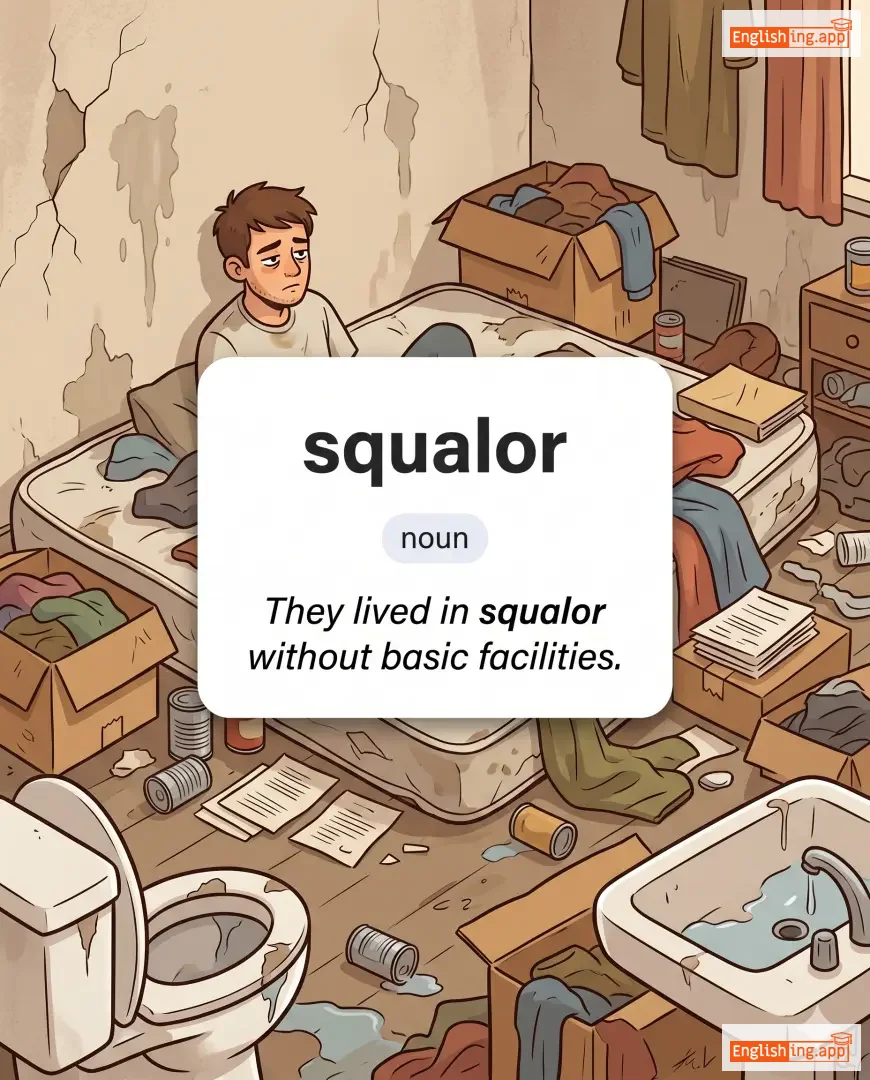
squalor definition card — visual illustration of the meaning
noun
/ˈskwɒlər/
गंदगी (gandagi)

the state of being extremely dirty and unpleasant, especially due to poverty or neglect

"They lived in squalor without basic facilities."

"वे बुनियादी सुविधाओं के बिना गंदगी में रहते थे।" (ve buniyadi suvidhaon ke bina gandagi mein rahte the.)
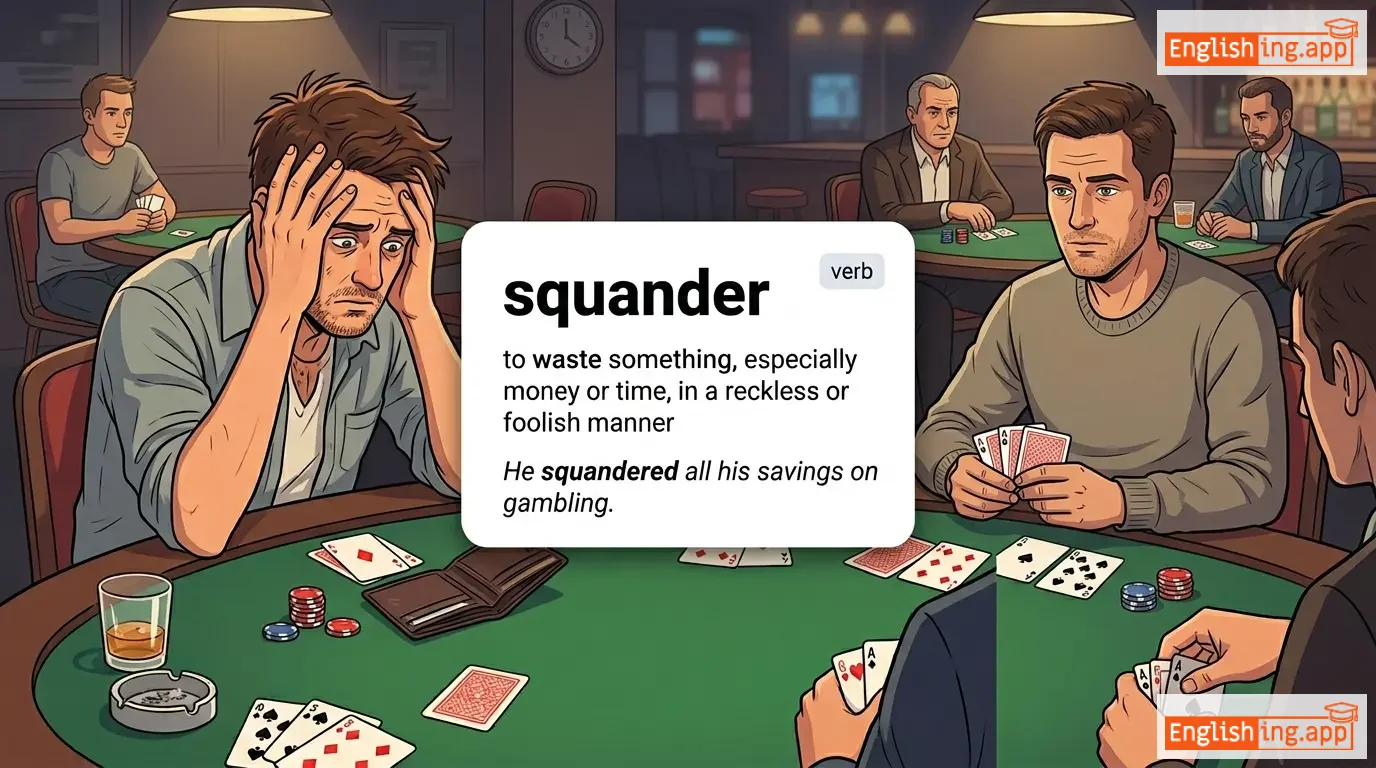
squander definition card — visual illustration of the meaning
verb
/ˈskwɒndər/
बर्बाद करना (barbaad karna)

to waste something, especially money or time, in a reckless or foolish manner

"He squandered all his savings on gambling."

"उसने जुआ खेलने पर अपनी सारी बचत बर्बाद कर दी।" (Usne jua khelne par apni saari bachat barbaad kar di.)
noun
/skwɛə(r)/
वर्ग (varg)

a shape with four equal straight sides and four right angles

"The table has a square shape."

"टेबल का आकार वर्ग है।" (Tebal ka akar varg hai.)
verb
/skwɒʃ/
चपटा करना (chapta karna)

to crush or squeeze something with force so that it becomes flat or broken

"She accidentally squashed the bug with her shoe."

"वह अनजाने में अपने जूते से कीट को कुचल दी।" (Wah anjaane mein apne joote se keet ko kuchal dee.)
/skwɒt/
घुटने मोड़कर बैठना (ghutne modkar baithna)

to crouch or sit with knees bent and body close to the ground

"He squatted down to tie his shoes."

"वह अपने जूते बांधने के लिए घुटने मोड़कर बैठा।" (Vah apne joote bandhane ke liye ghutne modkar baitha.)
noun
/ˈskwɒtər/
अवैध काबिज़ (avaidh kabiz)

a person who unlawfully occupies an uninhabited building or unused land

"The police removed the squatters from the abandoned house."

"पुलिस ने परित्यक्त घर से अवैध काबिज़ों को हटा दिया।" (Police ne parityakt ghar se avaidh kabizo ko hata diya.)
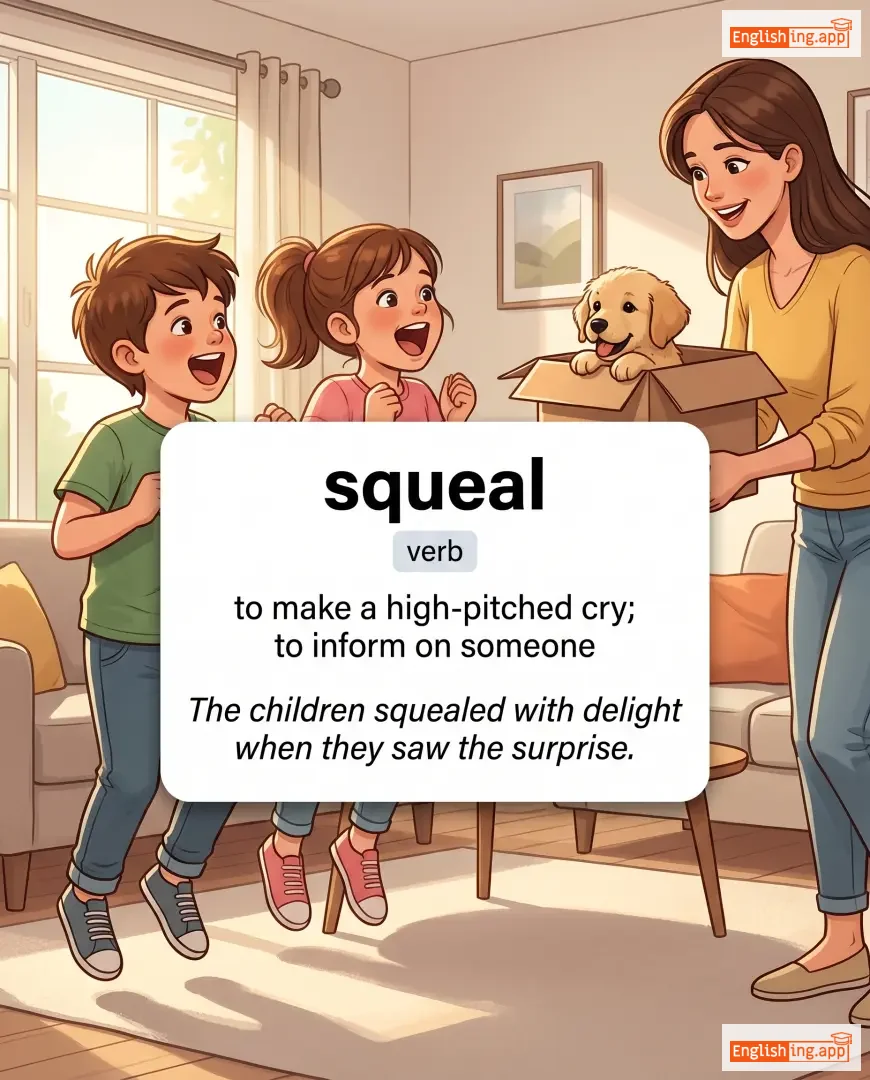
squeal definition card — visual illustration of the meaning
verb
/skwiːl/
चीखना (cheekhna)

to make a high-pitched cry; to inform on someone

"The children squealed with delight when they saw the surprise."

"बच्चे सरप्राइज देखकर खुशी से चीखे।" (Bacche surprise dekhkar khushi se cheekhe.)
adjective
/ˈskwiːmɪʃ/
जो आसानी से बीमार, बेहोश, या घृणा महसूस करता है (jo aasani se beemar, behosh, ya ghrina mehsoos karta hai)

easily made to feel sick, faint, or disgusted

"She felt squeamish at the sight of blood."

"रक्त के दृश्य ने उसे घृणा महसूस कराई।" (rakt ke drishya ne use ghrina mehsoos karaai.)
verb
/skwiːz/
दबाना (dabaana)

to press something firmly, especially from all sides in order to extract or compress it

"She squeezed the toothpaste to get the last bit."

"उसने टूथपेस्ट का आखिरी हिस्सा निकालने के लिए दबाया।" (Usne toothpaste ka aakhiri hissa nikaalne ke liye dabaya.)
verb
/skwɛltʃ/
कीचड़ में चलने की आवाज़, दबाना या चुप कराना (keechar mein chalne ki awaaz, dabana ya chup karana)

to make a soft sucking sound, such as when walking on mud; to suppress or silence

"His boots squelched in the wet ground."

"उसके बूट गीली ज़मीन पर स्क्वेल्च कर रहे थे।" (Uske boot geeli zameen par squelch kar rahe the.)
verb
/skwɪnt/
आंखें सिकोड़ कर देखना (aankhen sikod kar dekhna)

to look with partly closed eyes

"She squinted at the bright sunlight."

"वह तेज़ धूप में आँखें सिकोड़ कर देख रही थी।" (vah tez dhoop mein aankhen sikod kar dekh rahi thi.)
noun
/ˈskwɪr.əl/
गिलहरी (gilhari)

a small agile tree-dwelling rodent with a long bushy tail

"The squirrel gathered nuts for winter."

"गिलहरी ने सर्दी के लिए मेवे इकट्ठे किए।" (gilhari ne sardi ke liye meve ikattha kiye.)
verb, noun
/stæb/
छुरा मारना (chhura marna)

to pierce or wound with a pointed weapon or object

"He was stabbed in the back during the altercation."

"उसे झगड़े के दौरान पीठ में छुरा मारा गया।" (Use jhagde ke dauran peeth mein chhura maara gaya.)
noun
/stəˈbɪləti/
स्थिरता (stability)

the quality of being steady and unchanging over time

"The stability of the economy is crucial for growth."

"अर्थव्यवस्था की स्थिरता विकास के लिए महत्वपूर्ण है।" (Arthavyavastha ki sthirata vikas ke liye mahatvapurn hai.)
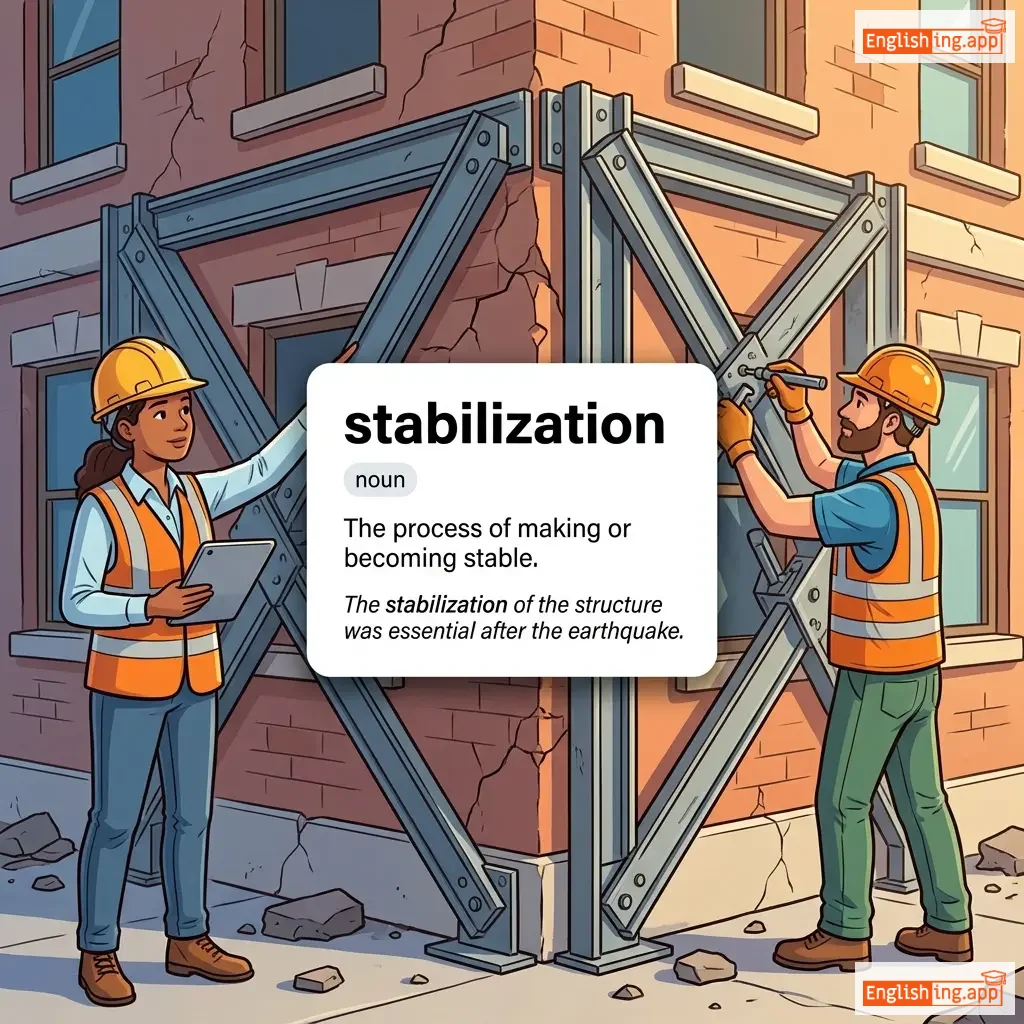
stabilization definition card — visual illustration of the meaning
noun
ˌsteɪbəlaɪˈzeɪʃən
स्थिरीकरण (sthirikaran)

The process of making or becoming stable.

"The stabilization of the structure was essential after the earthquake."

"भूकंप के बाद संरचना का स्थिरीकरण महत्वपूर्ण था।" (Bhookamp ke baad sanrachna ka sthirikan mahatvapurn tha.)
verb
/ˈsteɪ.bə.laɪz/
स्थिर करना (sthir karna)

to make something steady, secure, or unlikely to change suddenly

"The government took measures to stabilize the economy."

"सरकार ने अर्थव्यवस्था को स्थिर करने के लिए कदम उठाए।" (Sarkar ne arthvyavastha ko sthir karne ke liye kadam uthaye.)
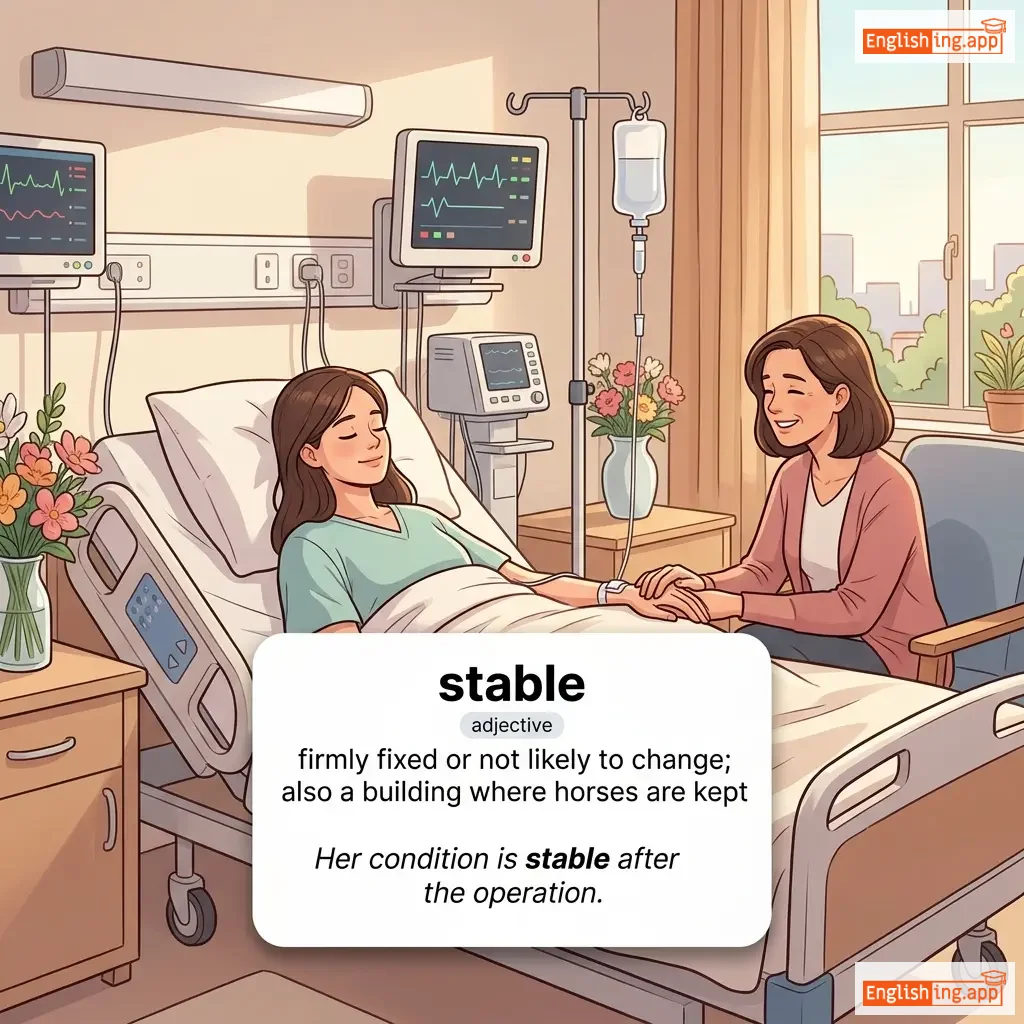
stable definition card — visual illustration of the meaning
adjective
/ˈsteɪ.bəl/
स्थिर / अस्तबल (sthir / astabal)

firmly fixed or not likely to change; also a building where horses are kept

"Her condition is stable after the operation."

"ऑपरेशन के बाद उसकी स्थिति स्थिर है।" (Operation ke baad uski sthiti sthir hai.)
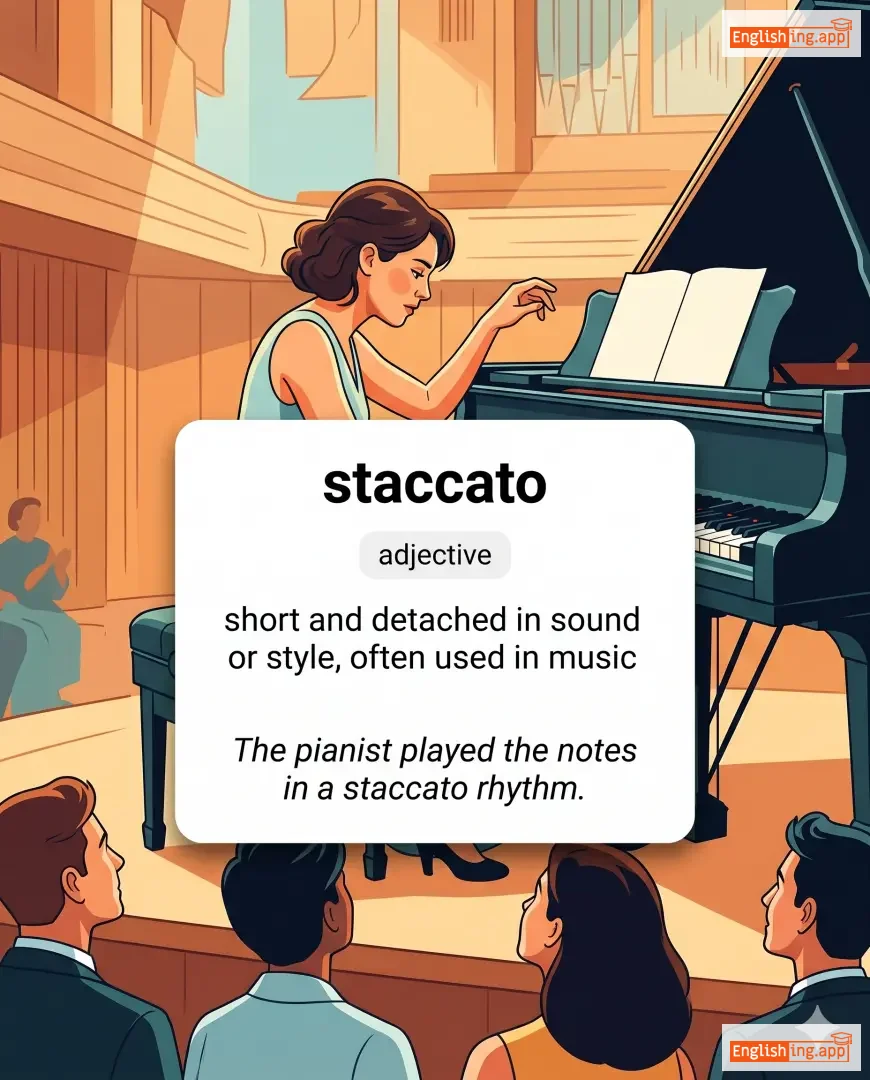
staccato definition card — visual illustration of the meaning
adjective
/stəˈkɑː.təʊ/
टुकड़ों में उच्चारित (tukdon mein uchcharit)

short and detached in sound or style, often used in music

"The pianist played the notes in a staccato rhythm."

"पियानोवादक ने टुकड़ों में संगीत बजाया।" (Pianavadak ne tukdon mein sangeet bajaya.)
verb
/stæk/
संगठित या ढेर करना (sangathit ya dher karna)

to arrange things in a neat pile or one on top of another

"He stacked the books neatly on the shelf."

"उसने किताबों को शेल्फ पर neatly ढेर किया।" (Usne kitabon ko shelf par neatly dher kiya.)
noun
/ˈsteɪdiəm/
स्टेडियम (stadium)

a large structure with seating for sports, concerts, or other events

"Thousands of fans filled the stadium to watch the final match."

"अंतिम मैच देखने के लिए स्टेडियम हजारों प्रशंसकों से भर गया।" (antim match dekhne ke liye stadium hazaaron prashanskon se bhar gaya)
noun
/stæf/
कर्मचारी (karmachari)

a group of employees working together in an organization

"The staff at the hospital are very helpful."

"अस्पताल में कर्मचारी बहुत सहायक होते हैं।" (Aspataal mein karmachaari bahut sahaayak hote hain.)
noun
/steɪdʒ/
मंच (manch)

a raised platform or area for performances or presentations

"The actor stepped onto the stage to deliver his speech."

"अभिनेता अपने भाषण देने के लिए मंच पर चढ़ा।" (Abhinetā apne bhāṣaṇ dene ke liye manch par chaṛhā.)
adjective
/ˈstæɡ.nənt/
जाम (jaam)

not moving, changing, or developing; inactive

"The company’s growth remained stagnant for several years."

"कंपनी की वृद्धि कई सालों तक जाम रही।" (Company ki vruddhi kai salon tak jaam rahi.)
verb
/ˈstæɡ.neɪt/
स्थिर होना (sthir hona)

to stop developing, progressing, or moving

"Without innovation, the business will stagnate."

"बिना नवाचार के, व्यापार ठप हो जाएगा।" (Bina navachar ke, vyapar thap ho jayega.)
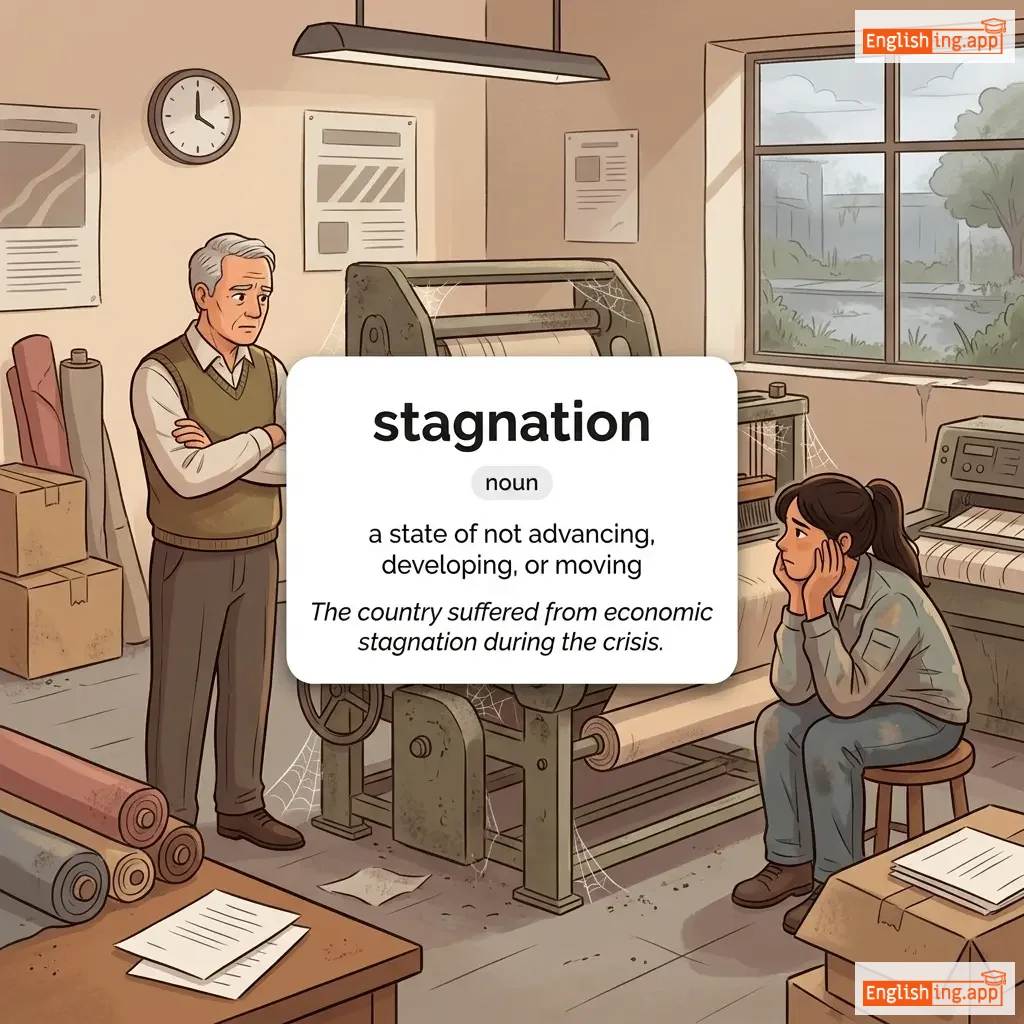
stagnation definition card — visual illustration of the meaning
noun
/stæɡˈneɪ.ʃən/
ठहराव (thahraav)

a state of not advancing, developing, or moving

"The country suffered from economic stagnation during the crisis."

"देश आर्थिक ठहराव से जूझ रहा था जब संकट आया था।" (Desh aarthik thahraav se joojh raha tha jab sankat aaya tha.)
adjective
/ˈsteɪ.dʒi/
अत्यधिक नाटकीय (atyadhik natakiya)

Overly theatrical, artificial, or exaggerated in manner or style.

"Her performance felt stagy and unnatural."

"उसकी प्रदर्शन स्टेजी और अस्वाभाविक महसूस हो रही थी।" (Uski pradarshan steji aur aswabhavik mehsoos ho rahi thi.)
adjective
/steɪd/
गंभीर, शालीन (gambhir, shalin)

Serious, respectable, and unadventurous.

"He came from a staid family background."

"वह एक गंभीर परिवार से आया था।" (Vah ek gambhir parivar se aaya tha.)
verb
/steɪn/
दाग (daag)

to mark or discolor something permanently; a spot or mark left behind

"The coffee spilled and stained the tablecloth."

"कॉफी गिर गई और टेबलक्लॉथ पर दाग लग गया।" (Coffee gir gayi aur tablecloth par daag lag gaya.)
noun
/stɛə/
सीढ़ी (seedhi)

a step or set of steps leading from one level to another

"He tripped on the stair and fell down."

"वह सीढ़ी पर ठोकर खा कर गिर पड़ा।" (Vah seedhi par thokar khaa kar gir pada.)
noun, verb
/steɪk/
हिस्सा, जोखिम (hissa, jokhim)

A share or interest in a business or venture; to risk or support something of value.

"He has a major stake in the new company."

"उसके पास नई कंपनी में एक बड़ा हिस्सा है।" (Uske paas nayi company mein ek bada hissa hai.)
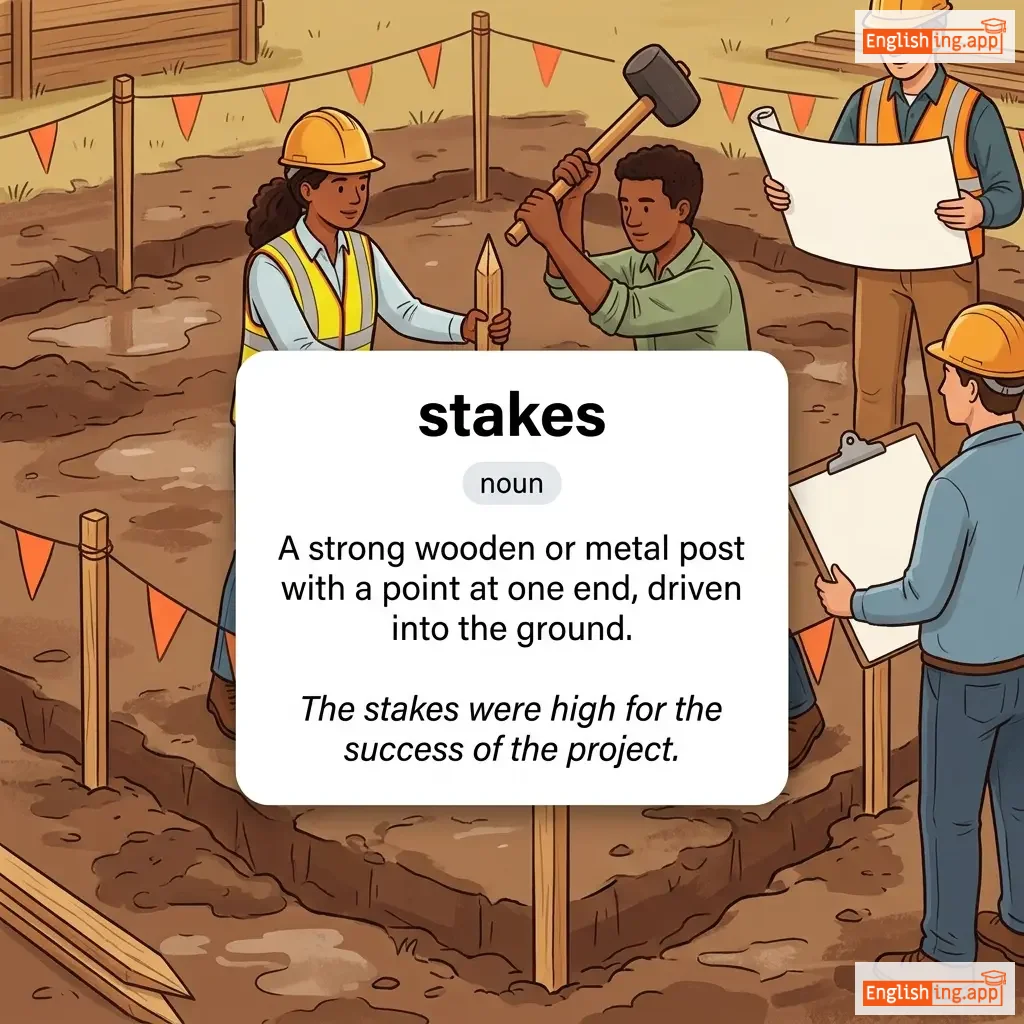
stakes definition card — visual illustration of the meaning
noun
steɪks
दांव (daav)

A strong wooden or metal post with a point at one end, driven into the ground.

"The stakes were high for the success of the project."

"प्रोजेक्ट की सफलता के लिए दांव ऊँचा था।" (Project ki safalta ke liye daav ooncha tha.)
adjective
/steɪl/
बासी; पुराना; ताजगी नहीं होने वाला (stail)

no longer fresh; lacking originality or novelty

"The bread became stale after sitting out for three days."

"तीन दिन बाहर रखने के बाद रोटी बासी हो गई थी।" (teen din baahar rakhne ke baad roti baasi ho gayi thi.)
noun
/ˈsteɪl.meɪt/
सन्नाटा (sannata)

A situation in which no progress can be made or no party can win.

"Negotiations ended in a stalemate."

"संधियों का अंत सन्नाटे में हो गया।" (Sandhiyon ka ant sannate mein ho gaya.)
verb, noun
/stɔːl/
रोकना, छोटा दुकान (rokna, chhota dukaan)

to stop or cause to stop temporarily; a small shop or stand

"The car stalled on the way to the office."

"गाड़ी ऑफिस जाने के रास्ते में रुक गई थी।" (Gaadi office jane ke raste mein ruk gayi thi.)
noun
/ˈstæl.i.ən/
प्रजनन के लिए पुरुष घोड़ा (prajanan ke liye purush ghoda)

An adult male horse that is not castrated, often used for breeding.

"The farm owns a powerful stallion for breeding purposes."

"खेत में प्रजनन के उद्देश्य के लिए एक शक्तिशाली पुरुष घोड़ा है।" (Khet mein prajanan ke uddeshya ke liye ek shaktishali purush ghoda hai.)
adjective
/ˈstɔːlwərt/
स्थिर, वफादार (sthir, wafadar)

Loyal, reliable, and hardworking; strongly built or sturdy.

"She has always been a stalwart supporter of the community."

"वह हमेशा समुदाय का एक स्थिर समर्थक रही है।" (Vah hamesha samudaay ka ek sthir samarthak rahi hai.)
noun
/ˈstæmɪnə/
सहनशक्ति (sahanshakti)

The physical or mental strength to sustain prolonged effort or activity.

"Marathon runners need great stamina to finish the race."

"मैरेथॉन धावकों को दौड़ खत्म करने के लिए महान सहनशक्ति की आवश्यकता होती है।" (Marathon dhavako ko daud khatam karne ke liye mahan sahanshakti ki avashyakta hoti hai.)
verb
/ˈstæmər/
ठीक से बोल न पाना (theek se bol na paana)

To speak with sudden involuntary pauses and a tendency to repeat the initial letters of words.

"The nervous student began to stammer during his speech."

"नर्वस छात्र अपने भाषण के दौरान ठीक से बोल न सका।" (nervous chhatra apne bhashan ke dauran theek se bol na saka.)
verb
/stæmp/
मोहर लगाना / ज़ोर से पैर मारना (mohar lagana / zor se pair maarna)

To bring down (one's foot) heavily on the ground; to imprint a mark or seal.

"She stamped her foot in frustration."

"वह निराशा में अपना पैर ज़मीन पर मरोड़ दिया।" (Wah niraasha mein apna pair zameen par marod diya.)
noun/verb
/stæmˈpiːd/
अचानक, अनियंत्रित भीड़ (achanak, aniyantrit bheed)

A sudden, uncontrolled rush of people or animals; to cause a mass movement.

"The loud noise caused a stampede of the crowd."

"दर्दनाक शोर ने भीड़ के बीच स्टैम्पीड़ शुरू कर दी।" (Dardnak shor ne bheed ke beech stampede shuru kar di.)