वोकैबुलरीज

इंग्लिश वोकैबुलरी डिस्कवर, लर्न और मास्टर करें

noun
/səˈprɑːnoʊ/
महिला या लड़के की सबसे ऊंची गायन आवाज (mahila ya ladke ki sabse oonchi gayen awaaz)

the highest female or boy’s singing voice

"She sang beautifully in the soprano range during the concert."

"वह संगीत कार्यक्रम के दौरान सॉप्रानो रेंज में सुंदर गा रही थी।" (Woh sangeet kaaryakram ke dauran soprano range mein sundar gaa rahi thi.)
noun
/ˈsɔːrsəri/
जादूगरी (jadugari)

the use of magical powers, especially through spells and enchantments

"The villagers believed the illness was caused by sorcery."

"गाँववाले मानते थे कि बीमारी जादूगरी के कारण हुई थी।" (Gaavwale maante the ki bimari jadugari ke kaaran hui thi.)
sordid definition card — visual illustration of the meaning
adjective
/ˈsɔːrdɪd/
घृणास्पद (ghranaspad)

involving immoral or dishonorable actions; dirty or unpleasant

"The newspaper exposed the politician's sordid past."

"समाचार पत्र ने राजनीतिज्ञ के घृणास्पद अतीत को उजागर किया।" (Samachar patra ne rajneetigya ke ghrinaspad ateet ko ujagar kiya.)
adjective
/sɔːr/
दर्दनाक या दुखी (dardnak ya dukhi)

painful or aching, usually in a specific part of the body

"After the long run, my legs were sore."

"लंबी दौड़ के बाद, मेरे पैर दर्द महसूस कर रहे थे।" (lambi daud ke baad, mere pair dard mahsus kar rahe the)
noun
/ˈsɑːroʊ/
शोक (shok)

a feeling of deep sadness or grief

"She was filled with sorrow after the loss of her friend."

"उसकी दोस्त के खोने के बाद वह शोक से भरी हुई थी।" (Uski dost ke khone ke baad vah shok se bhari hui thi.)
adjective
/ˈsɔːri/
माफ़ी (mafi)

feeling regret or sympathy

"She felt sorry for what had happened."

"उसे जो हुआ उसके लिए खेद था।" (Use jo hua uske liye khed tha.)
verb
/sɔːrt/
सजाना (sajana)

to arrange or categorize something

"Please sort the files by date."

"कृपया फ़ाइलों को तिथि के अनुसार सॉर्ट करें।" (Kripya fileon ko tithi ke anusar sort karein.)
noun
/soʊl/
आत्मा (atma)

the spiritual or immaterial part of a person, often thought of as eternal

"She believed her soul would live on after death."

"वह विश्वास करती थी कि उसकी आत्मा मृत्यु के बाद जीवित रहेगी।" (Wah vishwas karti thi ki uski atma mrityu ke baad jeevit rahegi.)
noun, verb, adjective
/saʊnd/
ध्वनि (dhvani)

a sensation perceived by the ear; to make or cause to make a noise; in good condition

"The bell sounded across the valley."

"घंटी की आवाज़ घाटी में गूंज उठी।" (Ghanti ki awaaz ghaati mein goonj uthi.)
adjective
/ˈsaʊnd.pruːf/
ध्वनि-प्रतिरोधक; ध्वनि को प्रवेश या निकासी से रोकने वाला (dhvani-pratirodhak)

impervious to sound; preventing sound from entering or leaving

"The recording studio has sound-proof walls."

"रिकॉर्डिंग स्टूडियो के पास साउंड-प्रूफ दीवारें हैं।" (recording studio ke paas sound-proof deewarein hain)
noun
/suːp/
सूप (soop)

a liquid dish, typically made with meat, vegetables, or legumes, and often served hot

"She made a delicious tomato soup for dinner."

"उसने रात के खाने के लिए स्वादिष्ट टमाटर का सूप बनाया।" (Usne raat ke khane ke liye swadisht tamatar ka soop banaya.)
noun
/ˈsuːpsɒ̃/
थोड़ा सा (thoda sa)

a very small quantity of something; a trace

"She added just a soupcon of spice to the dish."

"उसने व्यंजन में सिर्फ थोड़ी सी मसाले की मात्रा डाली।" (Usne vyanjan mein sirf thodi si masale ki matra daali.)
adjective
/ˈsaʊər/
खट्टा (khatta)

having an acidic taste; unpleasant or bad-tempered

"The milk has gone sour."

"दूध खट्टा हो गया है।" (Doodh khatta ho gaya hai.)
noun
/ˈsaʊər wʊd ˈæp.əl/
हाथी सेब (hathi seb)

a tropical fruit with hard shell and tangy flesh; elephant apple

"The sour wood apple has a unique taste that many people enjoy."

"सॉवर वुड एप्पल का एक अद्वितीय स्वाद है जिसे कई लोग पसंद करते हैं।" (sawar wood apple ka ek advitiya swaad hai jise kai log pasand karte hain)
noun
/sɔːrs/
स्रोत (srot)

a place, person, or thing from which something originates or is obtained

"The internet is a vast source of information."

"इंटरनेट जानकारी का एक विशाल स्रोत है।" (Internet jaankari ka ek vishal srot hai.)
noun/adjective
/saʊθ/
दक्षिण (dakshin)

the direction towards the bottom of a map, opposite to north

"The sun rises in the east and sets in the south."

"सूरज पूर्व में उगता है और दक्षिण में अस्त होता है।" (Suraj purv mein ugta hai aur dakshin mein ast hota hai.)
proper noun
/ˌsaʊθ əˈmɛrɪkə/
दक्षिण अमेरिका (dakshin america)

a continent located in the Western Hemisphere, mostly in the Southern Hemisphere

"Brazil is the largest country in South America."

"ब्राजील दक्षिण अमेरिका का सबसे बड़ा देश है।" (Brazil dakshin amerika ka sabse bada desh hai.)
noun
/ˌsaʊθˈiːst/
दक्षिण-पूर्व (dakshin-purv)

the direction that is between south and east; a region in that direction

"The city is located in the southeast of the country."

"शहर देश के दक्षिण-पूर्व में स्थित है।" (Shahar desh ke dakshin-purv mein sthit hai.)
adjective
/ˈsʌðərn/
दक्षिणी (dakshini)

located in or facing the south; southern regions

"She moved to a southern city for work."

"वह काम के लिए एक दक्षिणी शहर में चली गई।" (Vah kaam ke liye ek dakshini shahar mein chali gayi.)
noun
/ˌsaʊθˈwɛst/
दक्षिण-पश्चिम (dakshin-paschim)

the direction that is between south and west; a region in that direction

"They traveled to the southwest of the country for their vacation."

"वे अपनी छुट्टियों के लिए देश के दक्षिण-पश्चिम गए थे।" (ve apni chhuttiyon ke liye desh ke dakshin-paschim gaye the.)
noun
/ˌsuːvəˈnɪər/
स्मृति चिन्ह (smriti chinh)

an object kept as a reminder of a place, person, or event

"She bought a small souvenir from Paris."

"उसने पेरिस से एक छोटा स्मृति चिन्ह खरीदी।" (Usne Paris se ek chhota smriti chinh kharidi.)
sovereign definition card — visual illustration of the meaning
noun/adjective
/ˈsɒvərɪn/
संप्रभु (samprabhu)

a supreme ruler such as a king; possessing supreme or ultimate power

"The sovereign made a new decree."

"संप्रभु ने एक नया आदेश जारी किया।" (Samprabhu ne ek naya aadesh jaari kiya.)
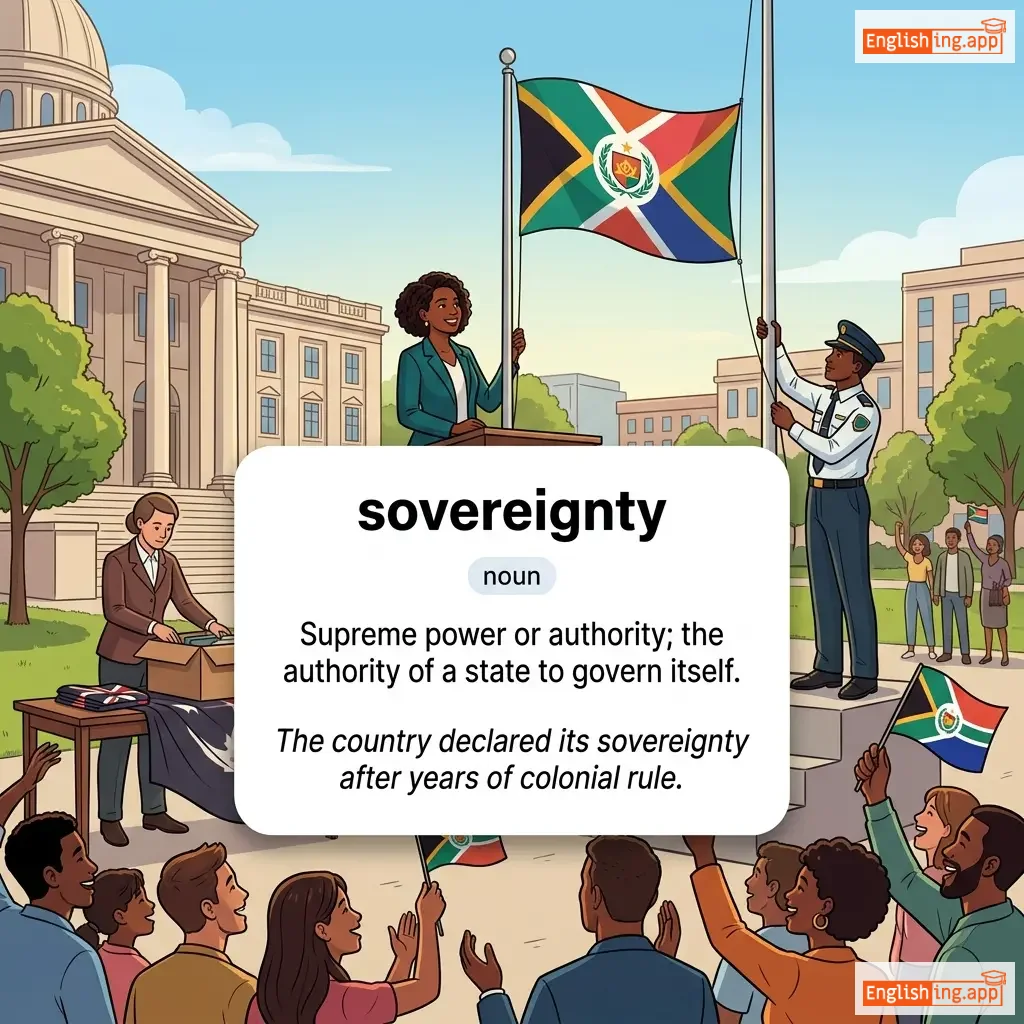
sovereignty definition card — visual illustration of the meaning
noun
/ˈsɒvrənti/
संप्रभुता (samprabhuta)

Supreme power or authority; the authority of a state to govern itself.

"The country declared its sovereignty after years of colonial rule."

"देश ने उपनिवेशी शासन के वर्षों बाद अपनी संप्रभुता घोषित की।" (Desh ne upniveshi shasan ke varsho baad apni samprabhuta ghoshit ki.)
adjective
/ˈsoʊ.vi.ət/
सोवियत (soviyat)

relating to the Soviet Union or its government

"The Soviet era saw significant changes in Eastern Europe."

"सोवियत युग में पूर्वी यूरोप में महत्वपूर्ण बदलाव आए।" (Soviyat yug mein purvi Europe mein mahatvapurn badlav aaye.)
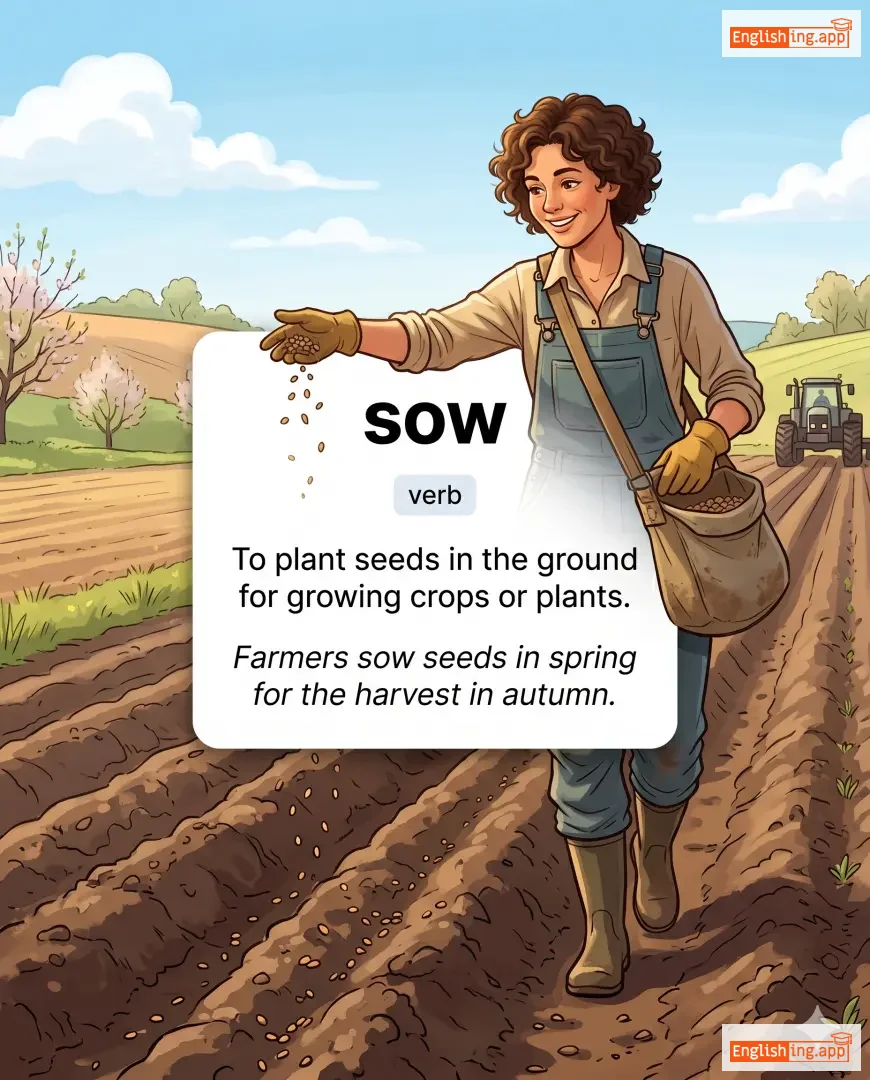
sow definition card — visual illustration of the meaning
verb
/səʊ/
बोना (bona)

To plant seeds in the ground for growing crops or plants.

"Farmers sow seeds in spring for the harvest in autumn."

"कृषक वसंत में बीज बोते हैं और शरद में फसल के लिए।" (Krishak vasant mein beej bote hain aur sharad mein fassal ke liye.)
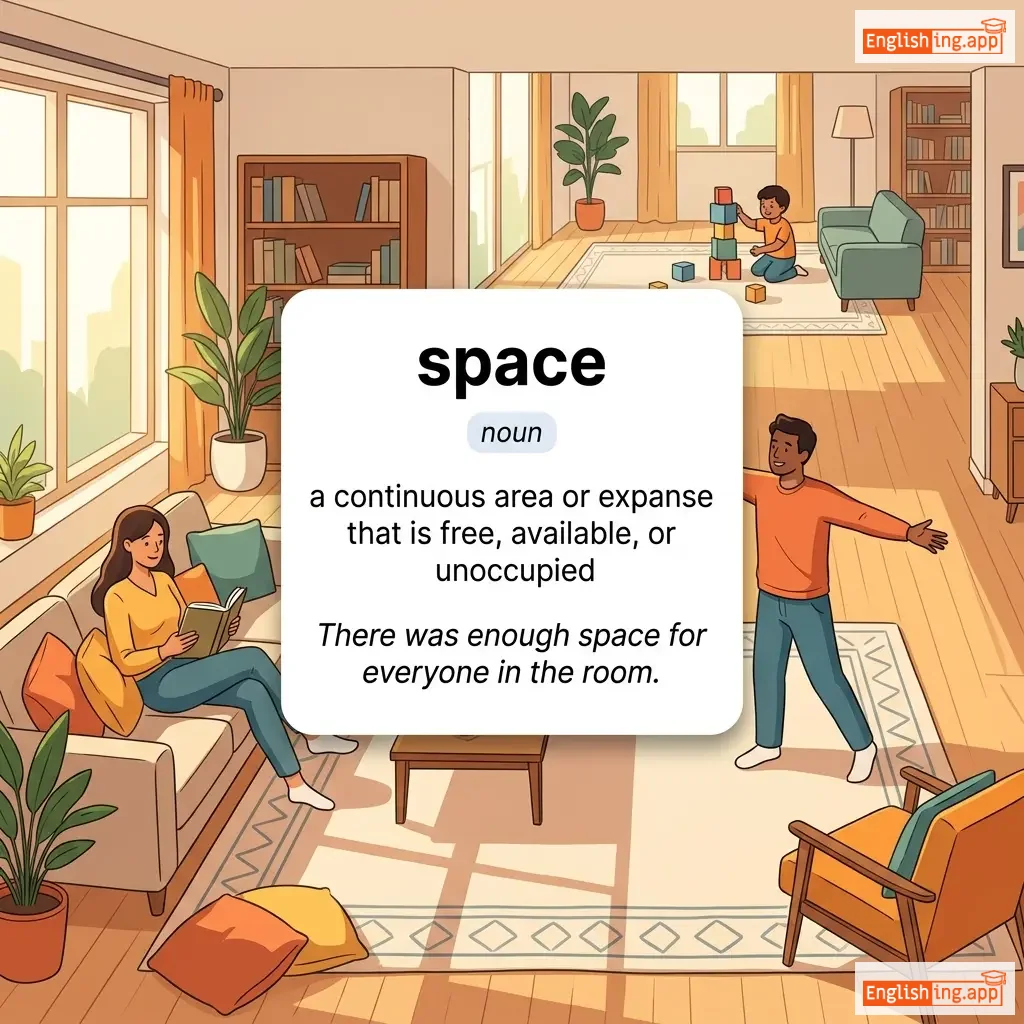
space definition card — visual illustration of the meaning
noun
/speɪs/
स्थान (sthan)

a continuous area or expanse that is free, available, or unoccupied

"There was enough space for everyone in the room."

"कमरे में सभी के लिए पर्याप्त स्थान था।" (Kamre mein sabhi ke liye paryapt sthaan tha.)
space exploration definition card — visual illustration of the meaning
noun
speɪs ɪksplɔːˈreɪʃən
अंतरिक्ष अन्वेषण (antarriksh anveshan)

The investigation of outer space by means of manned and unmanned spacecraft.

"Space exploration has expanded our knowledge of the universe."

"अंतरिक्ष अन्वेषण ने हमारे ब्रह्मांड के बारे में ज्ञान का विस्तार किया है।" (Antarriksh anveshan ne hamare brahmand ke baare mein gyaan ka vistar kiya hai.)
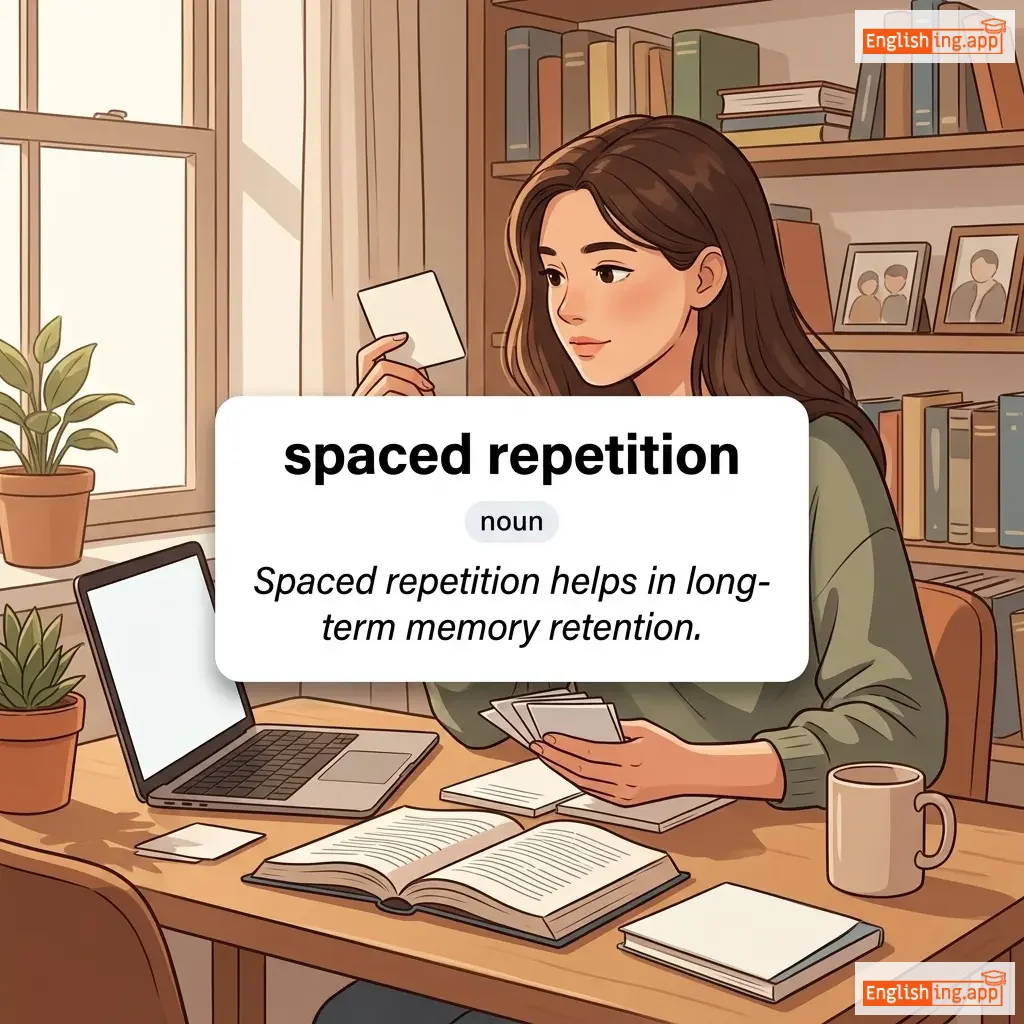
spaced repetition definition card — visual illustration of the meaning
noun
speɪst ˌrep.ɪˈtɪʃ.ən
स्पेस्ड रिपिटिशन (spaced repetition)

A learning technique that involves reviewing information at increasing intervals to improve long-term retention.

"Spaced repetition helps in long-term memory retention."

"स्पेस्ड रिपिटीशन लंबे समय तक मेमोरी बनाए रखने में मदद करता है।" (Spaced repetition lambe samay tak memory banaye rakhne mein madad karta hai.)
adjective
/ˈspeɪ.ʃəs/
विशाल; आरामदायक (vishal; aaramdayak)

having a lot of space; roomy and comfortable

"The house has a spacious living room with high ceilings."

"उस घर में ऊँची छत के साथ एक विशाल लिविंग रूम है।" (Us ghar mein unchi chhat ke saath ek vishal living room hai.)
noun
/speɪd/
कुदाली (kudali)

a tool with a flat blade for digging; a playing card suit

"The gardener used a spade to dig holes for planting flowers."

"बागवानी करने वाले ने फूलों को लगाने के लिए गड्ढे खुदाई करने के लिए एक कुदाली का उपयोग किया।" (bagwani karne wale ne phoolon ko lagane ke liye gaddhe khudai karne ke liye ek kudali ka upyog kiya.)
noun
/spæm/
स्पैम (spam)

unsolicited or unwanted electronic communication, typically in the form of email

"My inbox is full of spam emails that I need to delete."

"मेरे इनबॉक्स में स्पैम ईमेल भरे हैं जिन्हें मुझे डिलीट करना है।" (Mere inbox mein spam email bhare hain jinhain mujhe delete karna hai.)
noun
/spæn/
विस्तार (vistar)

the full extent or length of something from one end to another

"The bridge has a span of over 500 meters."

"ब्रिज की लंबाई 500 मीटर से अधिक है।" (Bridge ki lambai 500 meter se adhik hai.)
noun
/ˈspæŋɡəl/
चमकदार आभूषण (chamakdar aabhushan)

A small shiny piece of metal or plastic used for decoration on clothes.

"Her dress was covered with silver spangles that glittered in the light."

"उसकी ड्रेस में चांदी के चमकदार आभूषण थे जो रोशनी में चमक रहे थे।" (Uski dress mein chaandi ke chamakdar aabhushan the jo roshni mein chamak rahe the.)
adjective
/ˈspænɪʃ/
स्पैनिश (spanish)

relating to Spain or the Spanish language

"She is fluent in Spanish and French."

"वह स्पैनिश और फ्रेंच में प्रवीण है।" (vah spanish aur french mein praveen hai.)
verb
/spɛər/
अतिरिक्त देना / बचाना (atirikt dena / bachana)

To give something that one has extra of; to refrain from harming or killing.

"Could you spare me a few minutes of your time?"

"क्या आप मुझे कुछ मिनट दे सकते हैं?" (Kya aap mujhe kuch minut de sakte hain?)
adjective
/ˈspɛərɪŋ/
संयमी / मितव्ययी (sanyami / mitvyayi)

Using or giving only a little of something; economical.

"She is sparing in her use of words."

"वह शब्दों के उपयोग में संयमित है।" (Wah shabdon ke upyog mein sanyamit hai.)
verb
/spɑːrk/
चिंगारी (chingari)

to cause the start of something, especially an emotion or activity

"The news sparked a heated debate across the country."

"समाचार ने पूरे देश में गर्म बहस छेड़ दी।" (samachar ne poore desh mein garm behas chhed di.)
noun
/ˈspæroʊ/
गोरैया (goraiya)

small brown and grey bird commonly found in cities and towns

"The sparrow chirped cheerfully from the tree branch."

"गोरैया खुशी से पेड़ की शाखा से चहचहा रही थी।" (goraiya khushi se ped ki shaakha se chahchaha rahi thi.)
adjective
/spɑːrs/
विरल (viral)

thinly scattered or distributed; not dense or abundant

"Vegetation was sparse in the desert."

"रेगिस्तान में वनस्पति विरल थी।" (Registan mein vanaspati viral thi.)
adjective
/ˈspɑːrtn/
साधारण (saadhaarann)

showing simplicity and lack of luxury; austere

"He lived in a spartan room with just a bed and a chair."

"वह एक साधारण कमरे में रहता था जिसमें केवल एक बिस्तर और एक कुर्सी थी।" (Vah ek saadhaaran kamre mein rehta tha jismein keval ek bistar aur ek kursi thi.)
adjective
/spæzˈmɒdɪk/
अचानक खिंचाव-सम्बंधी (achanak khinchav-sambandhi)

occurring irregularly or in sudden bursts

"The patient experienced spasmodic coughing during the night."

"रोगी रात के समय अचानक खाँसी का अनुभव कर रहा था।" (Rogi raat ke samay achanak khaansi ka anubhav kar raha tha.)
noun
/spæt/
तुच्छ झगड़ा (tuchchh jhagra)

a short, petty quarrel or argument

"They had a brief spat about who should do the dishes."

"उन्होंने बर्तनों को धोने को लेकर एक छोटा सा झगड़ा किया।" (Unhone bartano ko dhone ko lekar ek chhota sa jhagra kiya.)
noun
/speɪt/
धार (dhaar)

a large number of things occurring in quick succession

"There has been a spate of robberies in the city."

"शहर में चोरियों की एक धार आई है।" (Shahar mein choriyaan ki ek dhaar aayi hai.)
adjective
/ˈspeɪʃəl/
स्थानिक (sthanik)

relating to space or the position, area, and size of things

"The scientist studied the spatial arrangement of stars."

"वैज्ञानिक ने तारों के स्थानिक व्यवस्थित का अध्ययन किया।" (Vaigyanik ne taaron ke sthanik vyavasthit ka adhyayan kiya.)
noun
/ˈspætʃələ/
स्पैचुला (spachula)

a flat, broad tool used for mixing, spreading, or lifting food

"She used a spatula to flip the pancakes."

"वह पैनकेक पलटने के लिए स्पैचुला का इस्तेमाल करती थी।" (Wah pancake palatne ke liye spatula ka istemal karti thi.)
verb
/spɔːn/
उत्पन्न करना (utpann karna)

to produce or generate, often in large numbers

"The video game has spawned many sequels."

"वीडियो गेम ने कई सीक्वल्स को उत्पन्न किया।" (Video game ne kai sequels ko utpann kiya.)
verb
/spiːk/
बोलना (bolna)

to say something in order to convey information or express feelings

"She speaks five languages fluently."

"वह पांच भाषाएँ धाराप्रवाह बोलती है।" (Wah paanch bhashayen dhaaraprawah bolti hai.)
noun
/ˈspiːkər/
वक्ता (vakta)

a person who speaks or talks, especially as an occupation

"The speaker delivered an inspiring speech at the conference."

"वक्ता ने सम्मेलन में एक प्रेरणादायक भाषण दिया।" (Vakta ne sammelan mein ek preranaadayak bhashan diya.)
verb
/ˈspɪərˌhɛd/
अग्रणी भूमिका निभाना (agrani bhumika nibhana)

to lead or initiate an action, project, or movement

"She spearheaded the campaign for environmental awareness."

"उसने पर्यावरण जागरूकता के लिए अभियान की अगुवाई की।" (Usne paryavaran jagrookta ke liye abhiyaan ki aguwai ki.)
adjective
/ˈspɛʃəl/
विशेष (vishesh)

different from what is usual; better or greater than normal

"This gift is very special to me."

"यह उपहार मेरे लिए बहुत विशेष है।" (Yeh uphaar mere liye bahut vishesh hai.)