वोकैबुलरीज

इंग्लिश वोकैबुलरी डिस्कवर, लर्न और मास्टर करें

verb
/rʌʃ/
भागना (bhāgnā)

to move or act with great speed or urgency

"She had to rush to the meeting to make it on time."

"उसे समय पर मीटिंग में पहुंचने के लिए रश करना पड़ा।" (Use samay par mīṭing meṁ pahuṁchnē ke liye rash karnā paṛā.)
noun
/rʌsk/
रस्क; सूखा बिस्किट; (rask)

a hard, dry biscuit or twice-baked bread; a type of crisp, sweet biscuit

"The baby enjoyed eating the soft rusk with milk."

"बच्चे ने दूध के साथ नरम रस्क खाना पसंद किया।" (bachche ne doodh ke saath narm rask khana pasand kiya.)
adjective
/ˈrʌʃən/
रूसी (roosi)

relating to Russia, its people, or its language

"She is studying the Russian language at university."

"वह विश्वविद्यालय में रूसी भाषा पढ़ रही है।" (vah vishvavidyalay mein roosi bhasha padh rahi hai)
noun
/rʌst/
जंग; जंग लगना (jang; jang lagna)

reddish-brown coating formed on iron or steel by oxidation; corrosion

"The old car was covered in rust after years of neglect."

"पुरानी कार वर्षों की उपेक्षा के बाद जंग से ढकी हुई थी।" (purani car varsho ki upeksha ke baad jang se dhaki hui thi.)
adjective
/ˈrʌstɪk/
ग्रामीण (gramin)

Relating to the countryside; simple and unsophisticated.

"The cottage had a rustic charm with its wooden beams and stone fireplace."

"कॉटेज में लकड़ी की बीम और पत्थर की चिमनी के साथ एक ग्रामीण आकर्षण था।" (Kottage mein lakdi ki beam aur patthar ki chimni ke saath ek gramin aakarshan tha.)
verb
/ˈrʌstɪkeɪt/
गाँव जाना / विश्वविद्यालय से अस्थायी निष्कासन (gaon jana / vishwavidyalay se asthayi nishkasan)

To go to the countryside or to suspend someone from university.

"He decided to rusticate in the village to escape the busy city life."

"वह व्यस्त शहर की जिंदगी से बचने के लिए गाँव में रहने का निर्णय लिया।" (Vah vyast shahar ki zindagi se bachne ke liye gaon mein rehne ka nirnay liya.)
verb
/ˈrʌsl/
सरसराहट करना (sarsarahat karna)

To make a soft, light sound like leaves or paper moving.

"The leaves rustled gently in the evening breeze."

"पत्तियाँ शाम की हल्की हवा में धीरे-धीरे सरसराहट कर रही थीं।" (Pattiyan shaam ki halki hawa mein dheere-dheere sarsarahat kar rahi thi.)
adjective
/ˈrʌs.ti/
जंग लगा हुआ; अभ्यास से बाहर; हाल की प्रैक्टिस की कमी से प्रभावित (jang laga hua; abhyas se baahar; haal ki practice ki kami se prabhavit)

affected by rust; out of practice; impaired by lack of recent practice

"My piano skills are rusty after not playing for years."

"मेरे पियानो कौशल सालों तक नहीं खेलने के बाद जंग लग गए हैं।" (mere piano kaushal saalon tak nahi khelne ke baad jang lag gaye hain)
noun
/ruːθ/
दया (daya)

A feeling of pity, compassion, or sorrow.

"He felt no ruth for the people he had betrayed."

"उसने उन लोगों के लिए कोई दया महसूस नहीं की जिनसे उसने विश्वासघात किया था।" (Usne un logon ke liye koi daya mahsus nahi ki jinse usne vishwasghat kiya tha.)
adjective
/ˈruːθləs/
निर्दयी (nirdayi)

Having or showing no pity or compassion for others.

"The ruthless leader crushed all opposition."

"निर्दयी नेता ने सभी विरोधों को कुचल दिया।" (Nirdayi neta ne sabhi virodhon ko kuchal diya.)
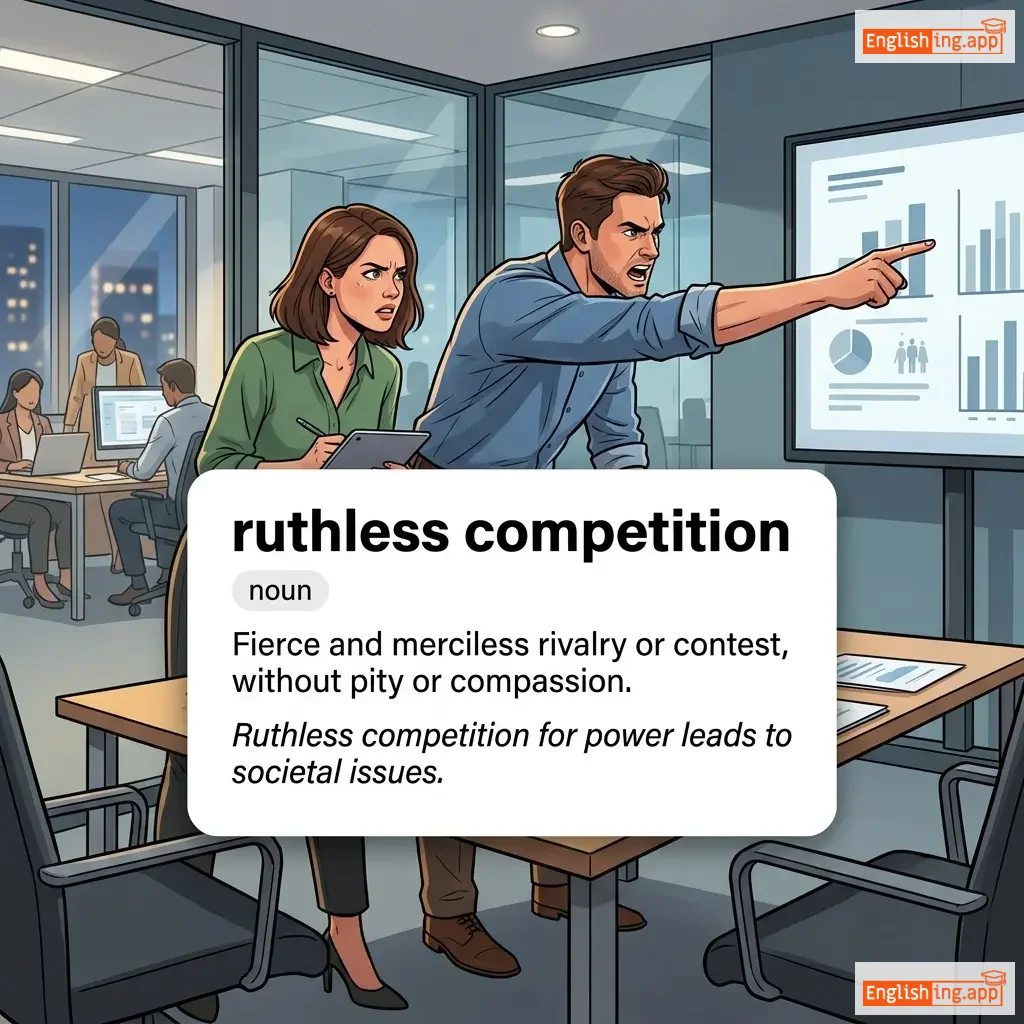
ruthless competition definition card — visual illustration of the meaning
noun
ˈruθləs ˌkɑmpəˈtɪʃən
निर्मम प्रतिस्पर्धा (nirmam pratispardha)

Fierce and merciless rivalry or contest, without pity or compassion.

"Ruthless competition for power leads to societal issues."

"शक्ति के लिए निर्मम प्रतिस्पर्धा सामाजिक समस्याओं को जन्म देती है।" (Shakti ke liye nirmam pratispardha samajik samasyaon ko janm deti hai.)