वोकैबुलरीज

इंग्लिश वोकैबुलरी डिस्कवर, लर्न और मास्टर करें

noun
/per/
नाशपाती (nashpati)

a sweet juicy fruit with a rounded shape that is wider at the bottom than the top

"She enjoyed a fresh pear from the orchard."

"वह बाग़ से एक ताजे नाशपाती का आनंद ले रही थी।" (woh bagh se ek taze nashpati ka anand le rahi thi)
noun
/pɜːrl/
मोती (moti)

a hard, lustrous object produced within the soft tissue of a shelled mollusk; used in jewelry

"She wore a beautiful pearl necklace to the wedding."

"उसने शादी में एक सुंदर मोती की हार पहना था।" (usne shaadi mein ek sundar moti ki haar pehna tha.)
noun
/pɜːrl drɒp/
मोती की बूँद (moti ki boond)

a single pearl used as jewelry, often in earrings or pendants

"The elegant pearl drop earrings complemented her outfit perfectly."

"उसकी सुरुचिपूर्ण मोती की बूँद वाली बालियाँ उसके आउटफिट के साथ पूरी तरह से मेल खाती थीं।" (uski suruchipurn moti ki boond wali baaliyaan uske outfit ke saath puri tarah se mel khati thi)
noun
/ˈpɛzənt/
कृषक (krishak)

a poor farmer or agricultural laborer who owns or rents a small piece of land for cultivation

"The peasant worked hard in the fields from dawn to dusk."

"कृषक सूर्योदय से सूर्यास्त तक खेतों में कठिन परिश्रम करता था।" (krishak suryoday se suryasta tak kheton mein kathin parishram karta tha)
noun
/ˈpɛbl/
कंकड़ (kankar)

a small smooth stone found on beaches or rivers

"He threw a pebble into the pond and watched the ripples."

"उसने एक कंकड़ तालाब में फेंका और तरंगों को देखा।" (Usne ek kankar talab mein phenka aur tarango ko dekha.)
adjective
/ˈpɛkəbl/
पापमय (paapmay)

liable to sin or error; capable of doing wrong

"Humans are peccable, but they strive for goodness."

"मनुष्य पापमय होते हैं, लेकिन वे अच्छाई की ओर प्रयास करते हैं।" (Manushya paapmay hote hain, lekin ve acchai ki or prayaas karte hain.)
noun
/ˌpɛkəˈdɪloʊ/
छोटा दोष (chhota dosh)

a small or minor fault or sin

"Forgetting to call was just a small peccadillo, not a serious mistake."

"फोन न करना सिर्फ एक छोटा दोष था, कोई गंभीर गलती नहीं।" (Phone na karna sirf ek chhota dosh tha, koi gambhir galti nahi.)
adjective
/ˈpɛkənt/
पापी (papi)

Guilty of a moral offense or wrongdoing; sinful.

"The judge declared the peccant official unfit for office."

"न्यायाधीश ने पापी अधिकारी को पद के लिए अयोग्य घोषित किया।" (Nyayadhish ne papi adhikari ko pad ke liye ayogya ghoshit kiya.)
verb
/pɛk/
चोंच मारना (chonch marna)

To strike or bite something with a beak; to eat in small bites.

"The hen began to peck at the grains scattered on the ground."

"मुर्गी ने जमीन पर बिखरे दानों पर चोंच मारनी शुरू की।" (Murgi ne zameen par bikhre danon par chonch marni shuru ki.)
adjective
/ˈpɛktərəl/
पेक्टोरल (pektoral)

Relating to the chest or breast.

"The athlete focused on strengthening his pectoral muscles."

"एथलीट अपने पेक्टोरल मसल्स को मजबूत करने पर ध्यान केंद्रित कर रहा था।" (Athlit apne pectoral muscles ko majboot karne par dhyan kendrit kar raha tha.)
verb
/ˈpɛkjʊˌleɪt/
चोरी करना (chori karna)

To embezzle or steal money, especially public funds.

"The corrupt official was found guilty of peculating government funds."

"भ्रष्ट अधिकारी को सरकारी धन हड़पने का दोषी पाया गया था।" (Bhrasht adhikari ko sarkari dhan hadpane ka doshi paaya gaya tha.)
noun
/ˌpɛkjʊˈleɪʃən/
धन का गबन (dhan ka gaban)

The act of embezzling or stealing money, especially from public funds.

"The minister resigned after being accused of peculation."

"मंत्री को पेक्यूलेशन के आरोप में इस्तीफा देना पड़ा।" (Mantri ko peculation ke aarop mein isteefa dena pada.)
adjective
/pɪˈkjuːliər/
अजीब (ajeeb)

strange or unusual; characteristic of only one person, place, or thing

"She has a peculiar habit of talking to her plants."

"उसकी एक अजीब आदत है, वह अपने पौधों से बात करती है।" (Uski ek ajeeb aadat hai, vah apne paudhon se baat karti hai.)
adverb
/pɪˈkju:.li.ə.li/
अजीब तरीके से; विशेष रूप से असामान्य तरीके से (ajeeb tareeke se; vishesh roop se asamanya tareeke se)

in a strange or unusual way; in a manner that is distinctive or characteristic

"She dressed peculiarly for the formal dinner, wearing bright colors and unusual patterns."

"वह औपचारिक रात्रिभोज के लिए अजीब तरीके से तैयार हुई, उज्जवल रंग और असामान्य पैटर्न पहने।" (vah aupcharik raatri bhoj ke liye ajeeb tareeke se tayar hui, ujjwal rang aur asamanya pattern pehne.)
adjective
/pɪˈkjuːniˌɛri/
आर्थिक (arthik)

relating to money or financial matters

"They faced pecuniary difficulties after the business failed."

"व्यापार विफल होने के बाद उन्हें आर्थिक कठिनाइयों का सामना करना पड़ा।" (Vyapar viphal hone ke baad unhe arthik kathinaaiyon ka samna karna pada.)
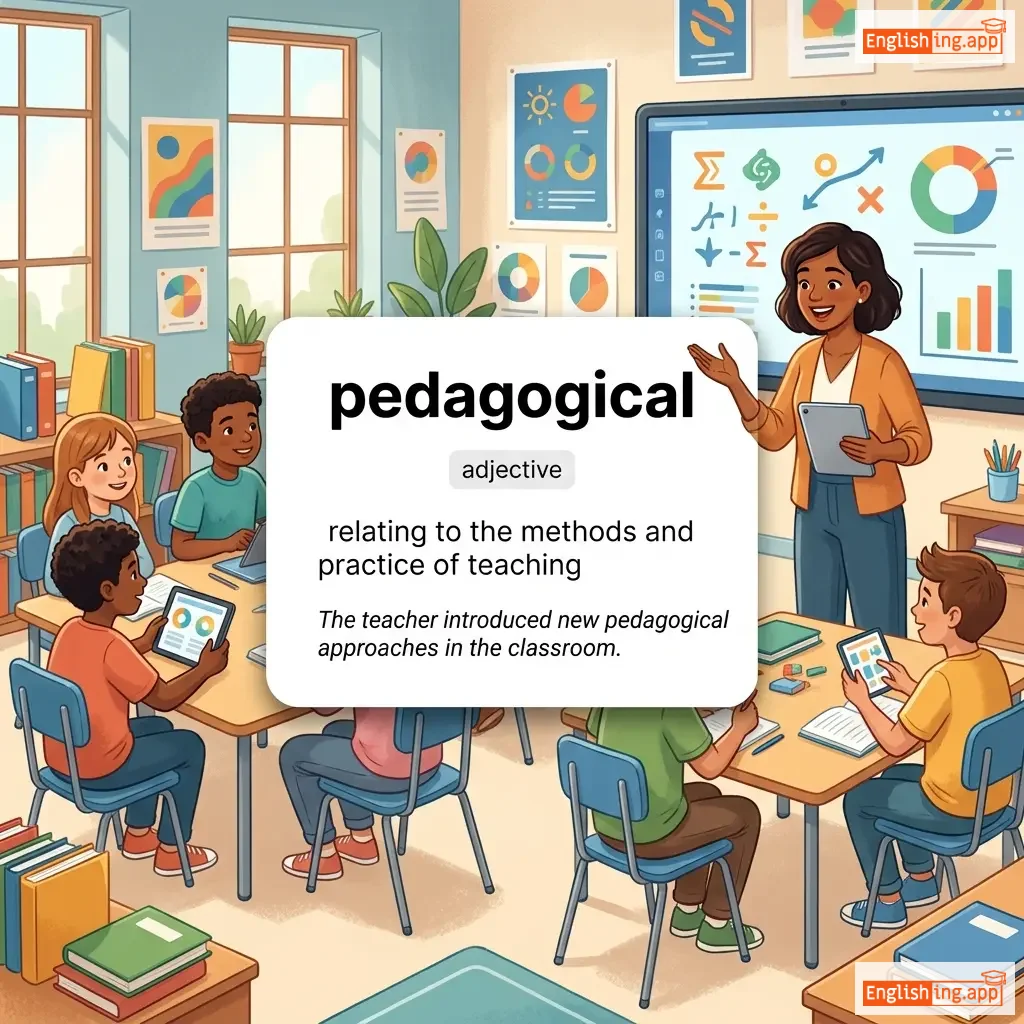
pedagogical definition card — visual illustration of the meaning
adjective
/ˌpɛdəˈɡɒdʒɪkəl/
शिक्षाशास्त्र संबंधी (shikshaashastra sambandhi)

relating to the methods and practice of teaching

"The teacher introduced new pedagogical approaches in the classroom."

"शिक्षक ने कक्षा में नए शिक्षाशास्त्र दृष्टिकोण पेश किए।" (Shikshak ne kaksha mein naye shikshaashastra drishtikon pesh kiye.)
noun
/ˌpɛdəˈɡɒdʒɪks/
शिक्षाशास्त्र (shikshashastra)

the science or art of teaching

"He studied pedagogics to become a better teacher."

"उसने एक बेहतर शिक्षक बनने के लिए शिक्षाशास्त्र का अध्ययन किया।" (Usne ek behtar shikshak banne ke liye shikshashastra ka adhyayan kiya.)
noun
/ˈpɛdəˌɡɒɡ/
शिक्षक (shikshak)

a teacher, especially a strict or formal one

"The old pedagogue insisted on discipline in the classroom."

"पुराने शिक्षक ने कक्षा में अनुशासन पर जोर दिया।" (Puraane shikshak ne kaksha mein anushasan par zor diya.)
pedagogy definition card — visual illustration of the meaning
noun
/ˈpɛdəˌɡoʊdʒi/
शिक्षाशास्त्र (shikshaashastra)

The art, science, or profession of teaching and education methods.

"Modern pedagogy emphasizes student-centered learning."

"आधुनिक शिक्षाशास्त्र छात्र-केंद्रित शिक्षा पर जोर देता है।" (Aadhunik shikshaashastra chhatra-kendrit shiksha par zor deta hai.)
noun, verb
/ˈpɛdəl/
पांव द्वारा चलाने वाला लीवर (paav dwaara chalaane waala lever)

A foot-operated lever for powering or controlling a mechanism, especially on a bicycle.

"He pressed down hard on the bicycle pedal."

"उसने साइकिल के पैडल को जोर से दबाया।" (Usne cycle ke pedal ko zor se dabaya.)
noun
/ˈpɛdənt/
अति चिंतित व्यक्ति (ati chintit vyakti)

A person who is excessively concerned with minor details or rules, often in a showy way.

"The professor was criticized as a pedant who focused too much on trivial details."

"प्रोफेसर को एक अति चिंतित व्यक्ति के रूप में आलोचना की गई, जो तुच्छ विवरणों पर अधिक ध्यान केंद्रित करता था।" (Professor ko ek ati chintit vyakti ke roop mein alochana ki gayi, jo tuchchh vivarno par adhik dhyan kendrit karta tha.)
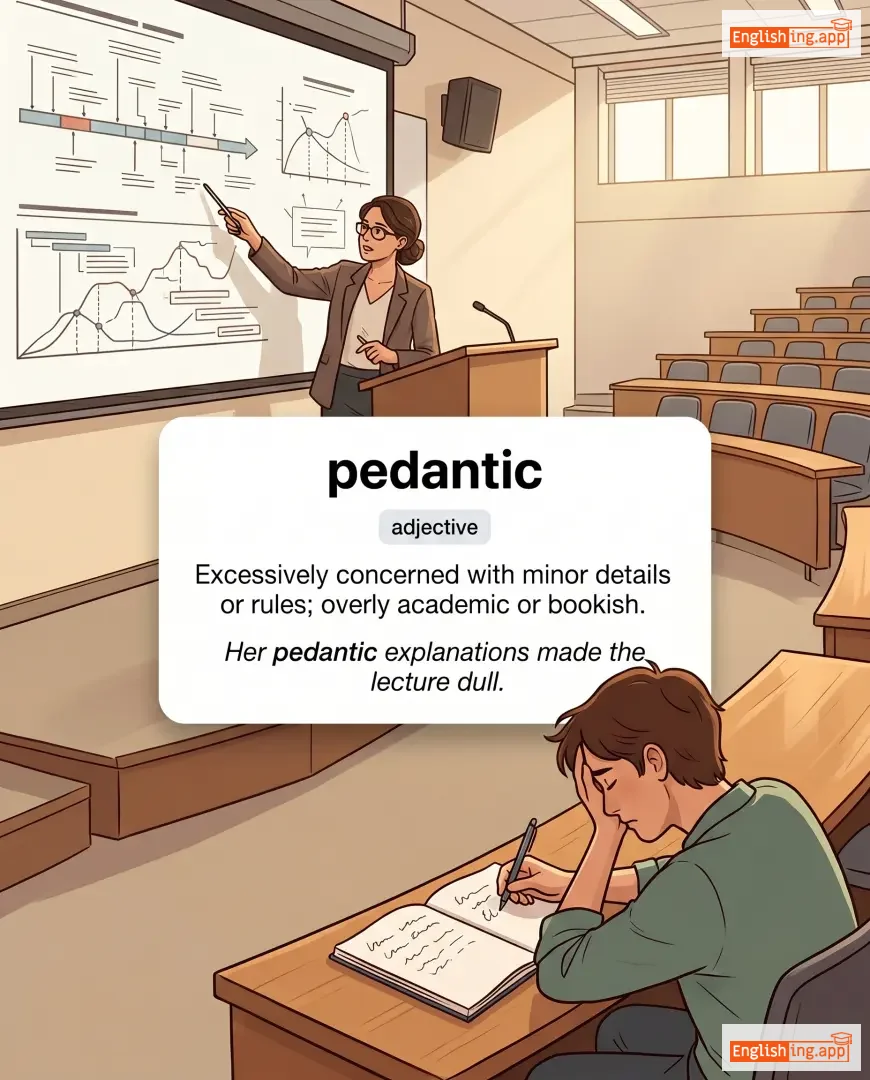
pedantic definition card — visual illustration of the meaning
adjective
/pəˈdæntɪk/
सूक्ष्म विवरणों या नियमों के प्रति अत्यधिक चिंता करने वाला (sookshm vivaron ya niyamon ke prati atyadhik chinta karne wala)

Excessively concerned with minor details or rules; overly academic or bookish.

"Her pedantic explanations made the lecture dull."

"उसकी सूक्ष्म व्याख्याएँ व्याख्यान को उबाऊ बना देती थीं।" (Uski sookshm vyakhyaayein vyakhyaan ko ubaau bana deti thiin.)
noun
/ˈpɛd.ən.tri/
सूक्ष्म विवरणों या नियमों पर अत्यधिक ध्यान (sookshma vivaron ya niyamon par atyadhik dhyan)

Excessive concern with minor details or rules.

"His pedantry made the meeting unnecessarily long."

"उसकी पेडैंट्री ने बैठक को अनावश्यक रूप से लंबा बना दिया।" (Uski pedantry ne baithak ko anavashyak roop se lamba bana diya.)
verb
/ˈpɛdəl/
बेचना (bechna)

To sell goods, often by going from place to place; sometimes used negatively to mean promoting an idea or product in a pushy way.

"Street vendors peddle handmade jewelry to tourists."

"सड़क विक्रेता पर्यटकों को हस्तनिर्मित गहने बेचते हैं।" (Sadak vikreta paryatakoon ko hastnirmit gahne bechte hain.)
noun
/ˈpɛdlər/
ठेले वाला (thele wala)

a person who sells goods, often traveling from place to place

"The peddler walked through the village selling fresh fruits."

"ठेले वाला गांव में ताजे फल बेचते हुए जा रहा था।" (Thele wala gaon mein taze phal bechte hue ja raha tha.)
noun
/ˈpɛdəstəl/
आधार / मंच (aadhaar / manch)

the base or support on which a statue or object stands

"The statue was placed on a marble pedestal."

"मूर्ति को एक संगमरमर के पेडेस्टल पर रखा गया था।" (Murti ko ek sangmarmar ke pedestal par rakha gaya tha.)
noun, adjective
/pəˈdɛstriən/
पैदल यात्री (paidal yatri)

a person walking on the street; also means dull or ordinary

"The pedestrian crossed the road at the crosswalk."

"पैदल यात्री क्रॉसवॉक से सड़क पार कर गया।" (Paidal yatri crosswalk se sadak paar kar gaya.)
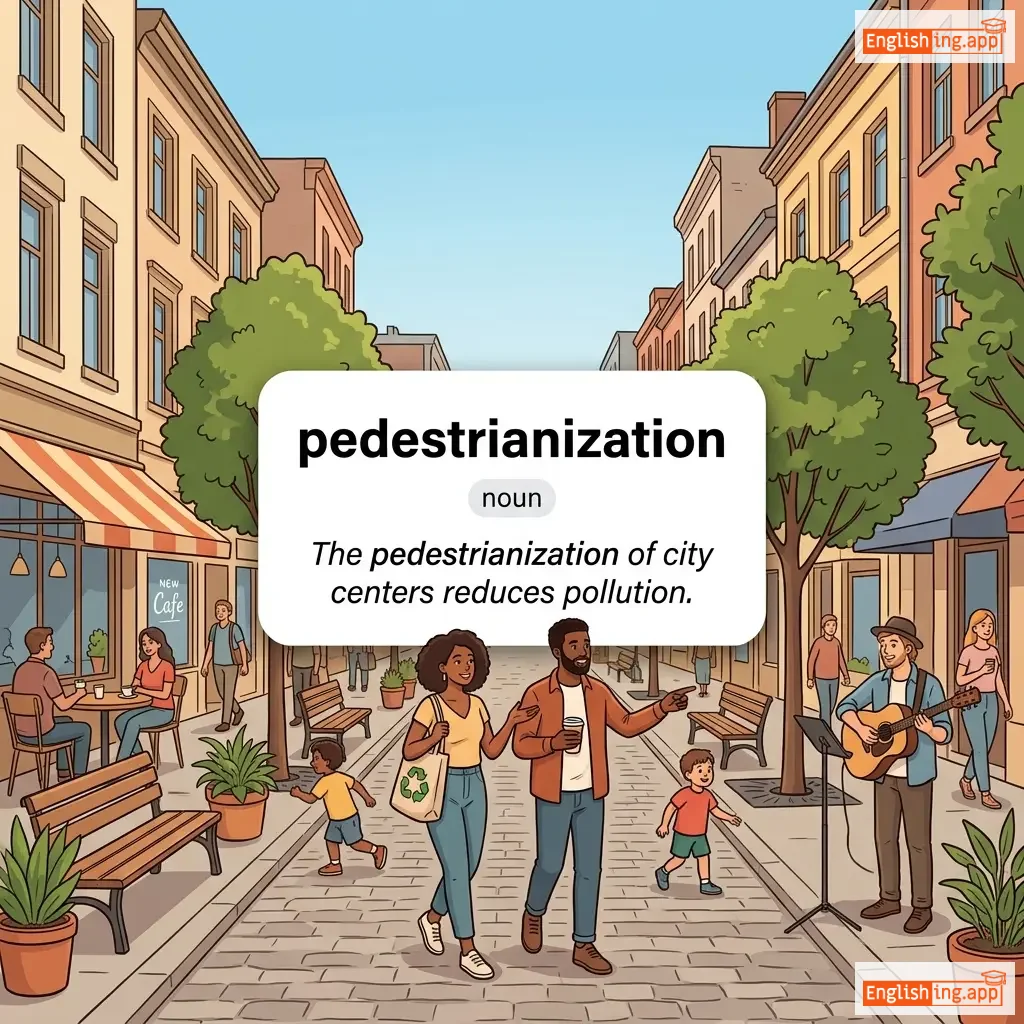
pedestrianization definition card — visual illustration of the meaning
noun
/pɪˌdɛs.tri.ə.naɪˈzeɪ.ʃən/
पैदल चलने योग्य बनाना (paidal chalne yogya banana)

Making areas pedestrian-friendly, closing any area to vehicle traffic and making it open only for pedestrians.

"The pedestrianization of city centers reduces pollution."

"शहर के केंद्रों की पैदल चलने योग्य बनाना प्रदूषण को कम करता है।" (Shahar ke kendron ki paidal chalne yogya banana pradushan ko kam karta hai.)
noun
/ˌpiːdiəˈtrɪʃən/
बाल रोग विशेषज्ञ (baal rog visheshagya)

a doctor who specializes in the medical care of children

"The pediatrician examined the child carefully."

"बाल रोग विशेषज्ञ ने बच्चे की सावधानी से जांच की।" (Baal rog visheshagya ne bachche ki saavdhaani se jaanch ki.)
noun
/ˌpiːdiˈætrɪks/
बाल चिकित्सा (baal chikitsaa)

the branch of medicine dealing with the health and medical care of children

"She decided to specialize in pediatrics after medical school."

"उसने मेडिकल स्कूल के बाद बाल चिकित्सा में विशेषज्ञ बनने का निर्णय लिया।" (Usne medical school ke baad baal chikitsaa mein visheshagya banne ka nirnay liya.)
noun
/ˈpɛdɪɡriː/
वंशावली (vanshavali)

the recorded ancestry or lineage of a person, family, or animal; the history or origin of something

"The dog has a pedigree that traces back several generations."

"कुत्ते की एक वंशावली है जो कई पीढ़ियों तक जाती है।" (Kutte ki ek vanshavali hai jo kai peedhiyon tak jaati hai.)
noun
/ˈpɛdɪmənt/
त्रिकोणीय गेबल (trikoniya gabel)

a triangular gable found above the horizontal structure of a building, often in classical architecture

"The ancient temple had a pediment decorated with sculptures."

"प्राचीन मंदिर में पेडिमेंट मूर्तियों से सजाया गया था।" (Prachin mandir mein pediment moortiyon se sajaya gaya tha.)
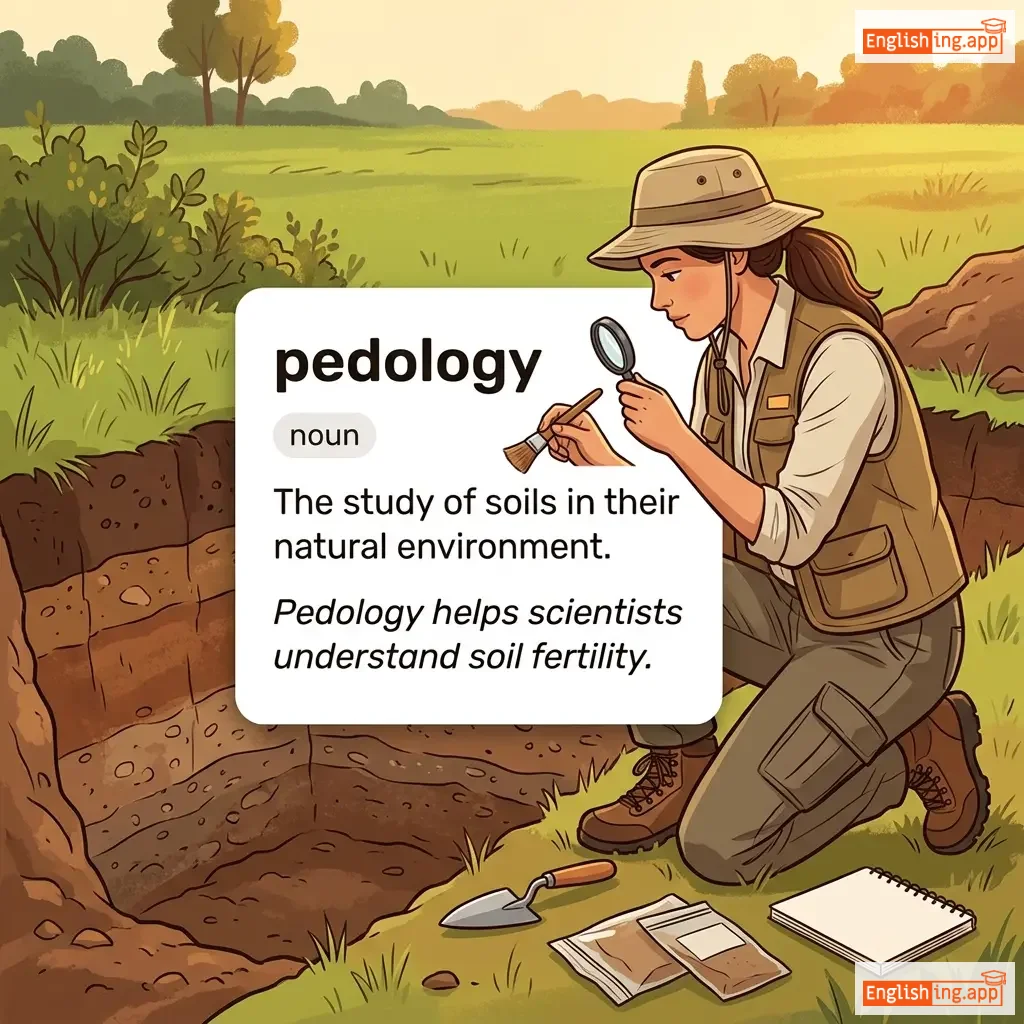
pedology definition card — visual illustration of the meaning
noun
/pɪˈdɒl.ə.dʒi/
मृदा विज्ञान (mrida vigyan)

The study of soils in their natural environment.

"Pedology helps scientists understand soil fertility."

"पेडोलॉजी वैज्ञानिकों को मृदा की उर्वरता को समझने में मदद करती है।" (Pedology vaigyanikon ko mrida ki urvarata ko samajhne mein madad karti hai.)
verb
/piːl/
छिलका उतारना (chhilka utarna)

to remove the outer covering or skin from a fruit or vegetable

"She peeled the mango before eating it."

"उसने खाने से पहले आम का छिलका हटाया।" (Usne khane se pehle aam ka chhilka hataya.)
noun
/ˈpiː.lər/
छिलका उतारने वाला उपकरण (chhilka utarne wala upkaran)

a kitchen tool used to remove the outer skin or peel from fruits and vegetables

"Use a peeler to remove the potato skin."

"आलू के छिलके उतारने के लिए एक पीलर का उपयोग करें।" (alu ke chhilke utarne ke liye ek peeler ka upyog karein)
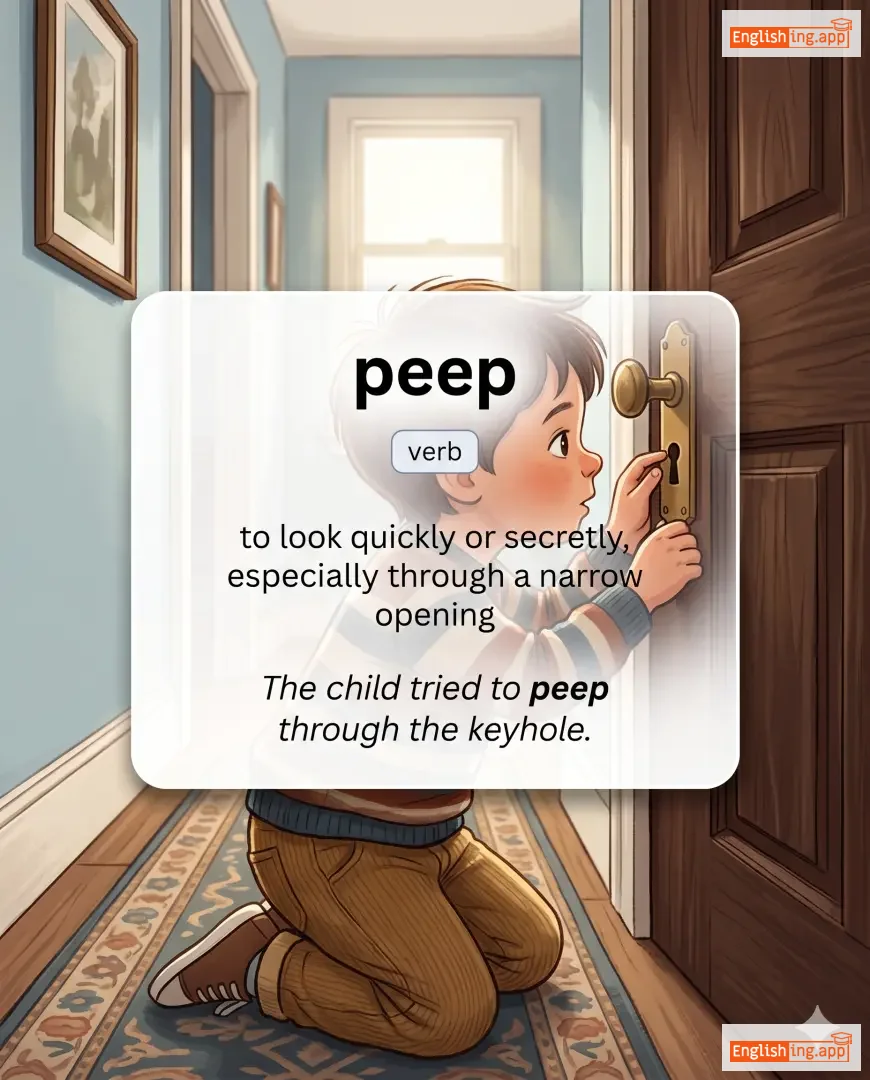
peep definition card — visual illustration of the meaning
verb
/piːp/
चुपके से देखना (chupke se dekhna)

to look quickly or secretly, especially through a narrow opening

"The child tried to peep through the keyhole."

"बच्चे ने चाबी के छेद से चुपके से देखने की कोशिश की।" (Bacche ne chabi ke chhed se chupke se dekhne ki koshish ki.)
🧑‍🤝‍🧑

peer (पीयर)

noun, verb
/pɪə(r)/
समान स्तर का व्यक्ति (samaan star ka vyakti)

noun: a person of the same rank or status; verb: to look closely or with difficulty

"He tried to peer through the fog to see his peers on the other side."

"उसने कुहासे के माध्यम से अपने समकक्षों को देखने की कोशिश की।" (Usne kuhase ke madhyam se apne samakakshon ko dekhne ki koshish ki.)
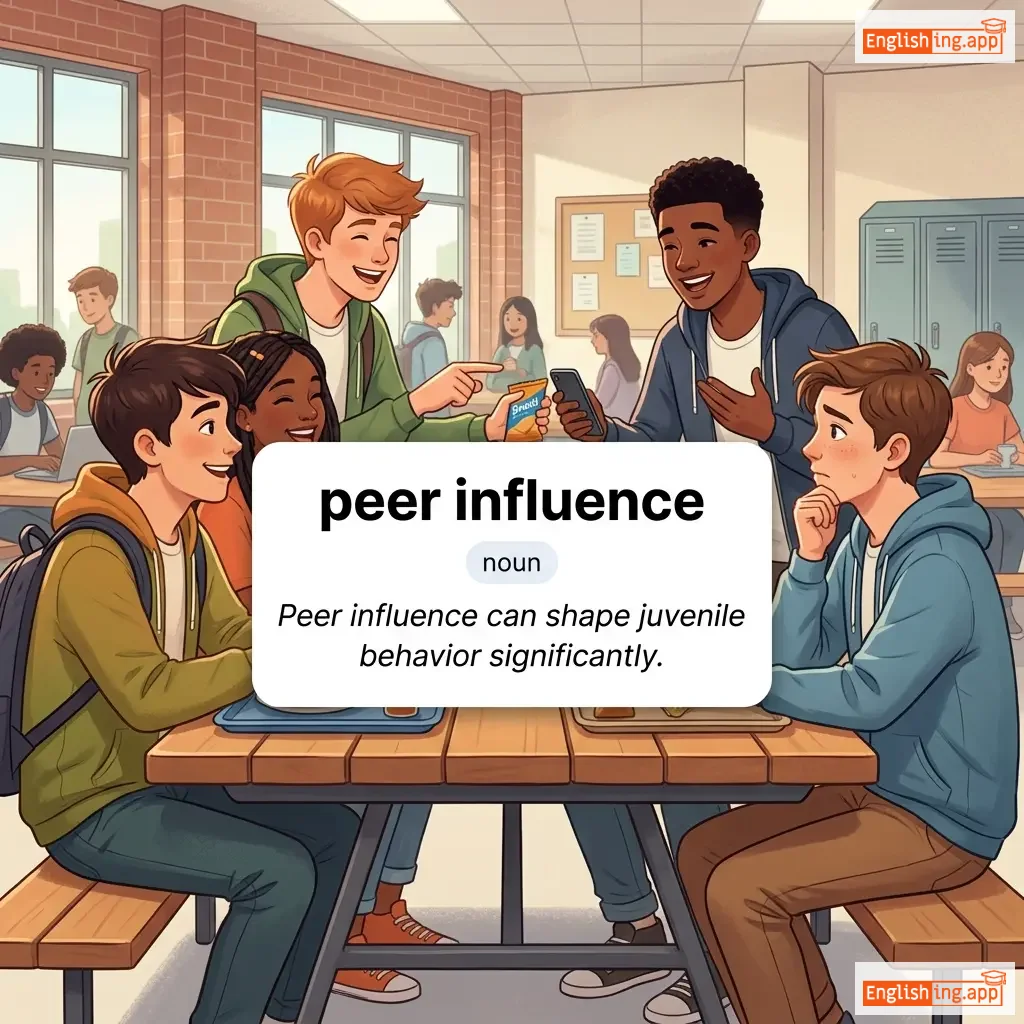
peer influence definition card — visual illustration of the meaning
noun
pɪər ˈɪnfluəns
सहकर्मी प्रभाव (sahakarmi prabhaav)

The effect that members of a peer group have on each other, especially in terms of behavior, attitudes, and decision-making.

"Peer influence can shape juvenile behavior significantly."

"सहकर्मी प्रभाव किशोरों के व्यवहार को महत्वपूर्ण रूप से आकार दे सकता है।" (Sahakarmi prabhaav kishoron ke vyavhaar ko mahatvapurn roop se aakaar de sakta hai.)
noun
/ˈpɪərɪdʒ/
श्रेष्ठता (shreshthata)

the title or rank of a peer; the nobility as a group

"He was elevated to the peerage by the king."

"उसे राजा द्वारा पियरिज में उठाया गया।" (Use raja dvara peerage mein uthaya gaya.)
adjective
/ˈpɪələs/
अतुलनीय (atulniya)

Unequaled; without rival or match.

"Her peerless performance earned her a standing ovation."

"उसकी अतुलनीय प्रदर्शन ने उसे खड़ा होकर सराहना दिलाई।" (Uski atulniya pradarshan ne use khada hokar sarahna dilai.)
verb
/piːv/
परेशान करना (pareshaan karna)

To annoy or irritate someone.

"His constant interruptions really peeve me."

"उसकी लगातार बाधाएँ मुझे सच में परेशान करती हैं।" (Uski lagataar baadhaen mujhe sach mein pareshaan karti hain.)
adjective
/ˈpiːvɪʃ/
चिढ़चिड़ा (chidhchidhha)

Easily irritated, especially by unimportant things.

"The child grew peevish when denied candy."

"जब कैंडी नहीं दी गई तो बच्चा चिढ़चिढ़ा हो गया।" (Jab candy nahi di gayi to bachcha chidhchidhha ho gaya.)
adjective
/pɪˈdʒɒrətɪv/
अपमानजनक (apmanjanak)

Expressing contempt or disapproval.

"He used pejorative terms to insult his opponents."

"उसने अपने प्रतिद्वंद्वियों को अपमानित करने के लिए अपमानजनक शब्दों का उपयोग किया।" (Usne apne pratidvandviyon ko apmanit karne ke liye apmanjanak shabdon ka upyog kiya.)
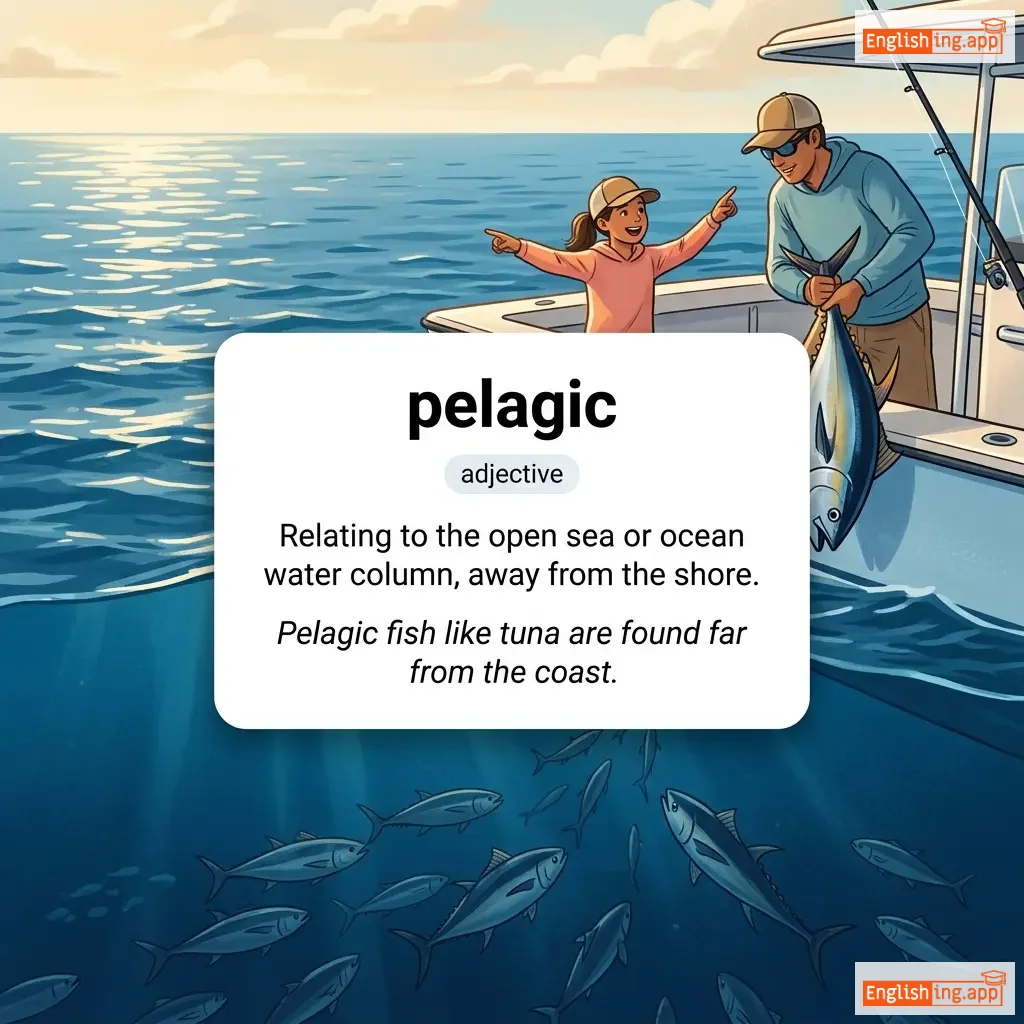
pelagic definition card — visual illustration of the meaning
adjective
/pəˈlædʒ.ɪk/
खुला समुद्र से संबंधित (khula samudra se sambandhit)

Relating to the open sea or ocean water column, away from the shore.

"Pelagic fish like tuna are found far from the coast."

"पेलाजिक मछली जैसे टूना समुद्र तट से बहुत दूर पाई जाती हैं।" (Pelajik machhli jaise tuna samudra tat se bahut door pai jaati hain.)
noun
/pɛlf/
अवैध धन (avaidh dhan)

Money, especially when gained dishonorably.

"The corrupt official was motivated only by pelf."

"भ्रष्ट अधिकारी केवल अवैध धन से प्रेरित था।" (Bhrasht adhikari keval avaidh dhan se prerit tha.)
adverb
/ˌpɛlˈmɛl/
अव्यवस्थित तरीके से (avyavasthit tareeke se)

In a confused, rushed, or disorderly manner.

"The children ran pell-mell through the playground."

"बच्चे खेल के मैदान में अव्यवस्थित तरीके से दौड़े।" (Bacche khel ke maidan mein avyavasthit tareeke se daude.)
adjective
/pəˈluːsɪd/
स्वच्छ (swachchho)

Transparently clear; easy to understand.

"The lake water was so pellucid that you could see the stones at the bottom."

"झील का पानी इतना साफ था कि आप नीचे की चट्टानों को देख सकते थे।" (Jheel ka pani itna saaf tha ki aap neeche ki chattano ko dekh sakte the.)
noun/verb
/pɛn/
खुशी (khushi)

A writing instrument using ink; also, to write something.

"She used a pen to sign the document."

"वह पुरस्कार प्राप्त करने पर अपनी खुशी छिपा नहीं पाई।" (Vah puraskaar prapt karne par apni khushi chhupa nahi paayi.)
noun
/pen stænd/
पेन स्टैंड (pen stand)

a container or holder designed to keep pens, pencils, and other writing instruments organized

"He organized his pens in the pen stand on his desk."

"उसने अपने पेन को अपनी डेस्क पर पेन स्टैंड में व्यवस्थित किया।" (usne apne pen ko apni desk par pen stand mein vyavasthit kiya)
noun
/ˈpen neɪm/
कलम-नाम (kalam-naam)

a fictitious name used by an author instead of their real name; a pseudonym

"Mark Twain was the pen-name of Samuel Clemens."

"मार्क ट्वेन, सैम्यूल क्लेमेन्स का कलम-नाम था।" (mark twain, samyul clemens ka kalam-naam tha.)