वोकैबुलरीज

इंग्लिश वोकैबुलरी डिस्कवर, लर्न और मास्टर करें

noun
/prəˈtuːbərəns/
सूजन (sujan)

A rounded swelling or lump on a surface.

"The doctor examined the small protuberance on his arm."

"डॉक्टर ने उसके हाथ पर छोटे सूजन का परीक्षण किया।" (Doktar ne uske haath par chhote sujan ka parikshan kiya.)
adjective
/prəˈtuːbərənt/
उभड़ा हुआ या फूला हुआ (ubhda hua ya phoola hua)

Sticking out or bulging.

"His protuberant belly showed after the meal."

"खाने के बाद उसकी फूली हुई पेट दिखाई दी।" (Khaane ke baad uski phooli hui pet dikhayi di.)
verb
/ˈproʊtjuːbəreɪt/
फूलना (phoolna)

To swell out or bulge.

"The roots began to protuberate from the ground."

"जड़ें ज़मीन से बाहर उभरने लगीं।" (Jaden zameen se baahar ubharne lagi.)
adjective
/praʊd/
गर्वित (garvit)

Feeling deep pleasure or satisfaction as a result of achievements or qualities.

"She felt proud of her son's accomplishments."

"वह अपने बेटे की उपलब्धियों पर गर्वित महसूस कर रही थी।" (Vah apne bete ki uplabdhiyon par garvit mahsus kar rahi thi.)
adverb
/ˈpraʊdli/
गर्व से (garv se)

in a way that shows pride or satisfaction; with a sense of honor or achievement

"She proudly displayed her achievements to her family."

"उसने गर्व से अपनी उपलब्धियाँ अपने परिवार को दिखाईं।" (usne garv se apni uplabdhiyaan apne parivar ko dikhain)
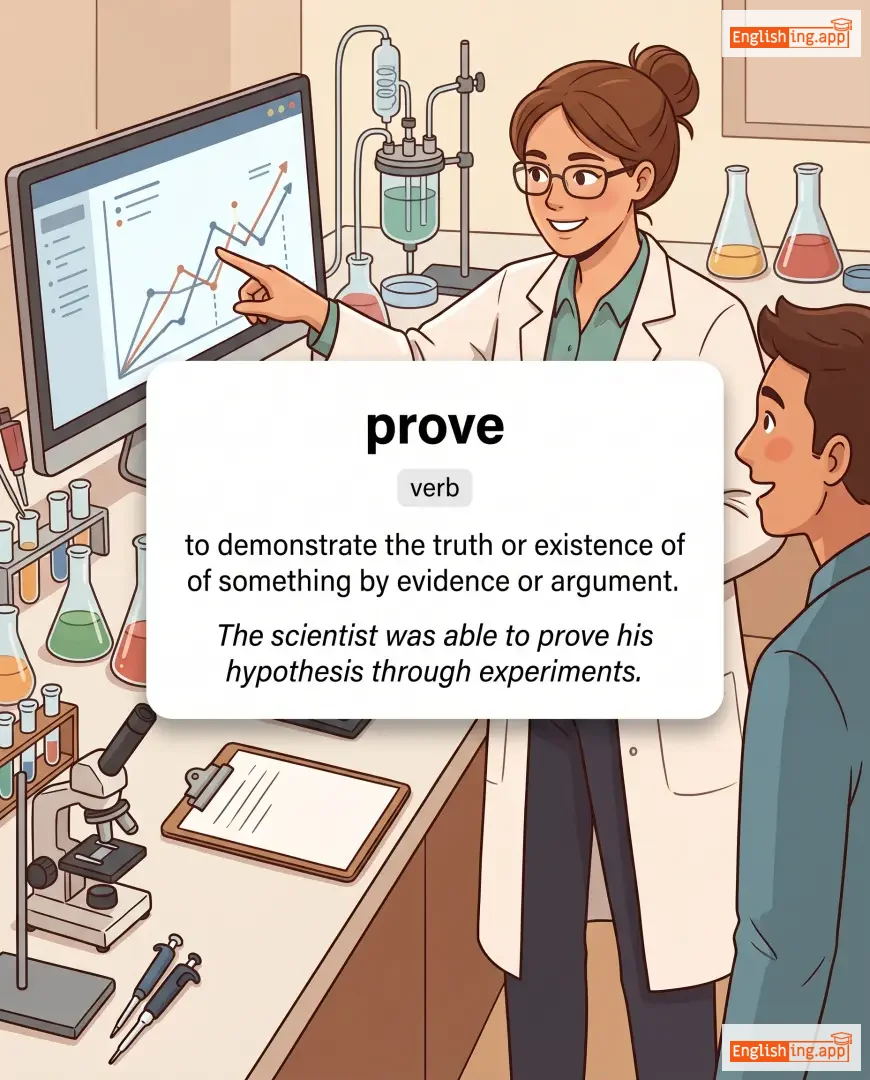
prove definition card — visual illustration of the meaning
verb
/pruːv/
साबित करना (saabit karna)

to demonstrate the truth or existence of something by evidence or argument.

"The scientist was able to prove his hypothesis through experiments."

"वैज्ञानिक अपने प्रयोगों के माध्यम से अपने सिद्धांत को साबित करने में सक्षम था।" (Vaigyanik apne prayogon ke madhyam se apne siddhant ko sabit karne mein saksham tha.)
noun
/ˈprɒvənəns/
उत्पत्ति (utpatti)

The origin or source of something.

"The museum verified the provenance of the ancient manuscript."

"संग्रहालय ने प्राचीन पांडुलिपि की उत्पत्ति की पुष्टि की।" (Sangrahalay ne pracheen pandulipi ki utpatti ki pushti ki.)
noun
/ˈprɒvəndər/
पशुओं के लिए खाद्य (pashuon ke liye khadya)

food or provisions, especially for livestock

"The barn was filled with provender for the cattle."

"गोशाला में मवेशियों के लिए खाद्य से भरी हुई थी।" (Goshala mein maveshiyon ke liye khadya se bhari hui thi.)
noun
/ˈprɒvərb/
कहावत (kahavat)

a short, commonly known saying that expresses a truth or piece of advice

"The proverb 'A stitch in time saves nine' teaches the value of prompt action."

"कहावत 'समय पर किया गया एक टांका नौ बचाता है' त्वरित क्रिया के महत्व को सिखाती है।" (kahavat 'samay par kiya gaya ek tanka nau bachata hai' tvarit kriya ke mahatva ko sikhati hai.)
verb
/prəˈvaɪd/
प्रदान करना (pradan karna)

to give or supply something that is needed or wanted

"The teacher will provide extra materials for the students."

"शिक्षक छात्रों के लिए अतिरिक्त सामग्री प्रदान करेंगे।" (Shikshak chhatron ke liye atirikt samagri pradan karenge.)
verb
/prəˈvaɪdɪd/
प्रदान किया गया (pradan kiya gaya)

gave or supplied something that was needed

"The hotel provided free breakfast for all guests."

"होटल ने सभी मेहमानों के लिए मुफ्त नाश्ता प्रदान किया।" (Hotel ne sabhi mehmanon ke liye muft nashta pradan kiya.)
noun
/ˈprɒvɪdəns/
ईश्वर की कृपा (ishwar ki kripa)

the protective care of God or nature as a spiritual power; foresight or prudence

"They believed their survival was due to divine providence."

"उन्हें विश्वास था कि उनका बचाव ईश्वर की कृपा के कारण हुआ था।" (Unhein vishwas tha ki unka bachav ishwar ki kripa ke kaaran hua tha.)
adjective
/ˈprɒvɪdənt/
सावधान (savdhan)

making or indicative of timely preparation for the future

"She was provident in saving money for her children’s education."

"वह अपनी बच्चों की शिक्षा के लिए पैसे बचाने में सावधान थी।" (Vah apni bachchon ki shiksha ke liye paise bachane mein savdhan thi.)
adjective
/ˌprɒvɪˈdɛnʃəl/
भाग्यशाली (bhagyashali)

occurring at a favorable or opportune time, as if guided by divine intervention

"Their timely rescue was considered providential."

"उनकी समय पर मदद को भाग्यशाली माना गया था।" (Unki samay par madad ko bhagyashali mana gaya tha.)
noun
/prəˈvaɪdər/
प्रदाता (pradata)

a person or thing that provides something.

"The service provider ensures that all customers receive timely support."

"सेवा प्रदाता सुनिश्चित करता है कि सभी ग्राहक समय पर सहायता प्राप्त करें।" (Seva pradata nishchit karta hai ki sabhi grahak samay par sahayata prapt karein.)
noun
/ˈprɒvɪns/
प्रदेश (pradesh)

a principal administrative division of certain countries or empires.

"The province is known for its rich cultural heritage and stunning landscapes."

"यह प्रदेश अपनी समृद्ध सांस्कृतिक धरोहर और शानदार प्राकृतिक दृश्य के लिए प्रसिद्ध है।" (Yah pradesh apni samriddh sanskritik dharohar aur shandaar prakritik drishya ke liye prasiddh hai.)
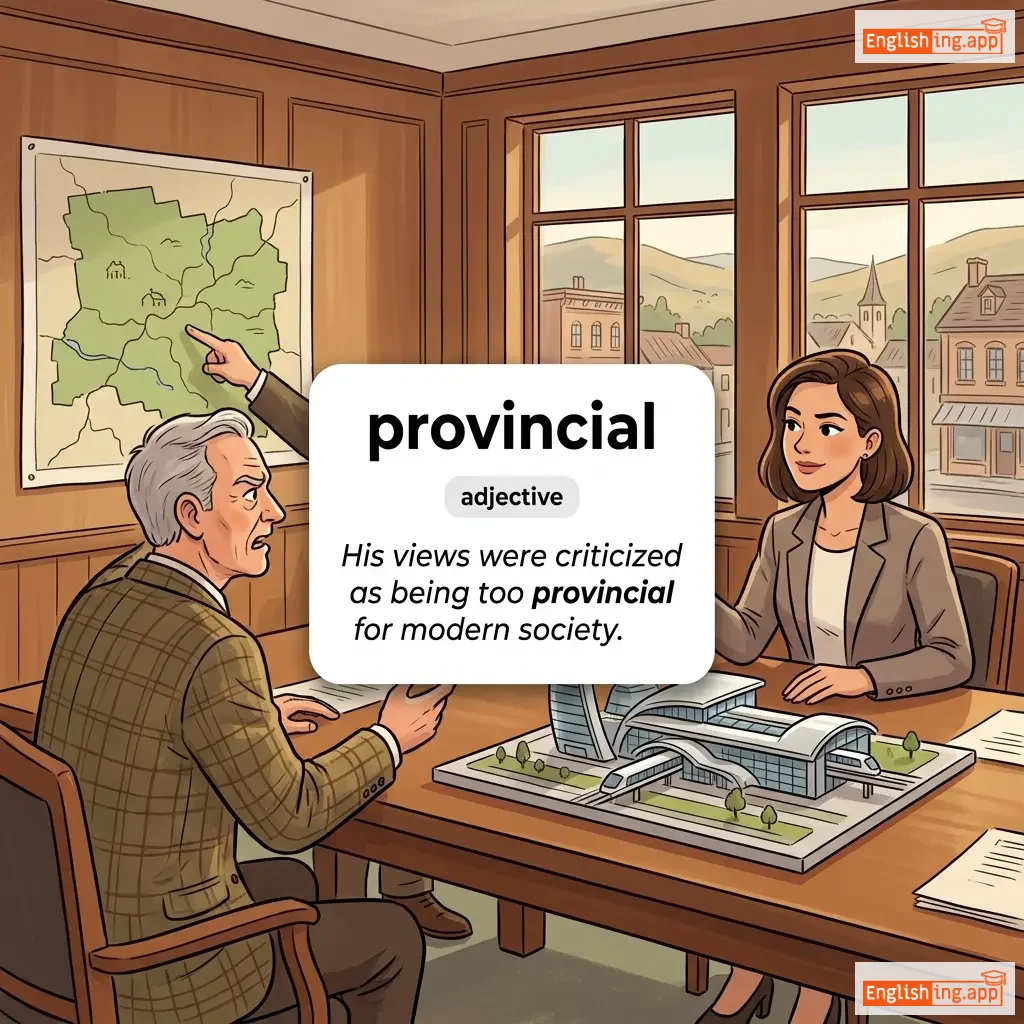
provincial definition card — visual illustration of the meaning
adjective
/prəˈvɪnʃəl/
प्रांतीय (prantiy)

relating to a province or the regions outside the capital city; often suggesting narrow-mindedness

"His views were criticized as being too provincial for modern society."

"उसके विचारों की आलोचना की गई थी क्योंकि वे आधुनिक समाज के लिए बहुत प्रांतीय थे।" (uske vicharon ki alochna ki gayi thi kyonki ve aadhunik samaaj ke liye bahut prantiy the.)
noun
/prəˈvɪʒən/
व्यवस्था / शर्त (vyavastha / shart)

the act of providing or supplying something; a condition in a legal document

"The contract includes a provision for early termination."

"संपर्क में शीघ्र समाप्ति के लिए एक शर्त शामिल है।" (sampark mein sheeghra samaapti ke liye ek shart shamil hai.)
adjective
/prəˈvɪʒənl/
आस्थायी (aasthayi)

arranged or existing for the present, possibly to be changed later

"The committee gave its provisional approval to the project."

"समिति ने परियोजना को आस्थायी स्वीकृति दी।" (Samiti ne pariyojna ko aasthayi sveekriti dee.)
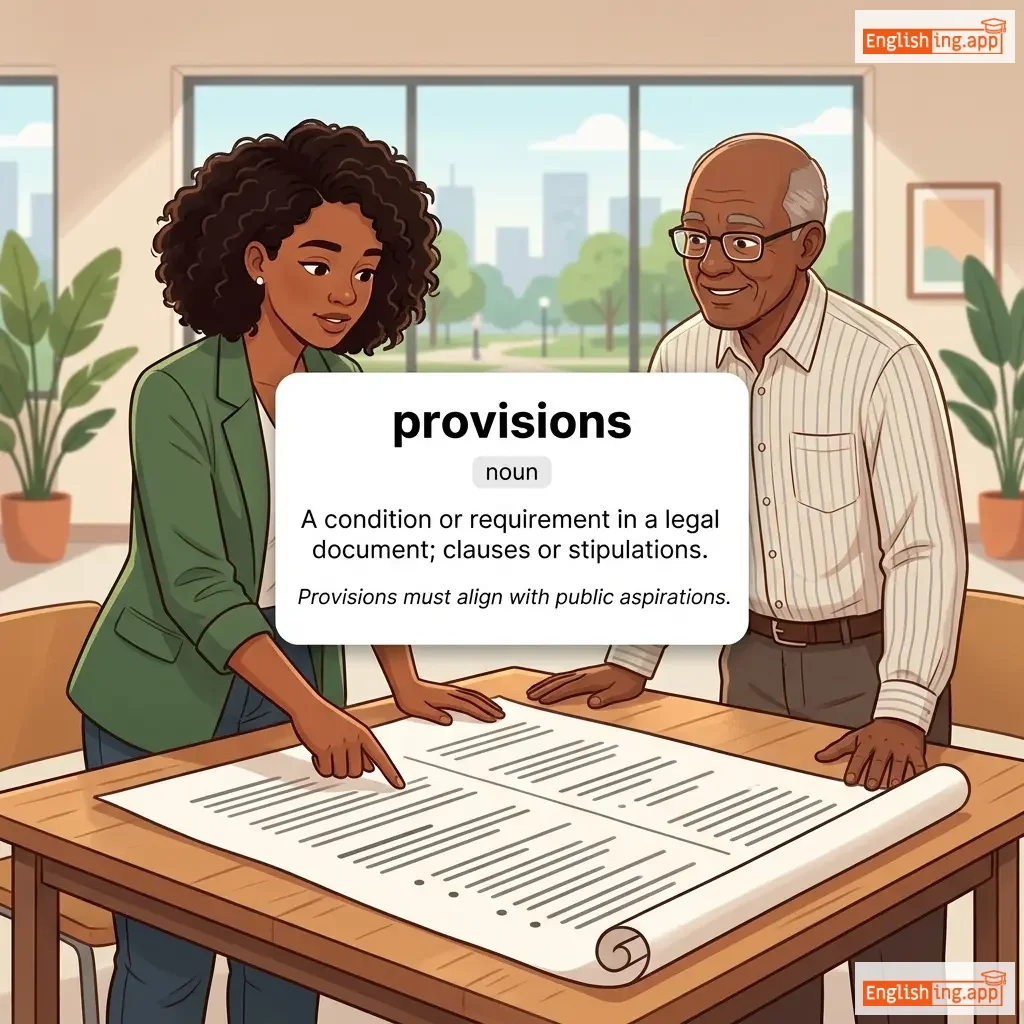
provisions definition card — visual illustration of the meaning
noun
prəˈvɪʒ.ənz
प्रावधान (pravdhan)

A condition or requirement in a legal document; clauses or stipulations.

"Provisions must align with public aspirations."

"प्रावधानों को सार्वजनिक आकांक्षाओं के साथ मेल खाना चाहिए।" (Pravdhano ko sarvajanik aakanshao ke saath mel khana chahiye.)
noun
/prəˈvaɪzoʊ/
शर्त (shart)

a condition or stipulation attached to an agreement

"He accepted the job offer with the proviso that he could work remotely twice a week."

"उसने नौकरी की पेशकश को इस शर्त पर स्वीकार किया कि वह सप्ताह में दो दिन दूर से काम कर सकता है।" (Usne naukari ki peskash ko is shart par svikaar kiya ki vah saptah mein do din door se kaam kar sakta hai.)
adjective
/prəˈvaɪzəri/
अन्योन्याश्रित (anyonyashrit)

conditional; depending on certain terms being met

"The arrangement was only provisory until the final contract was signed."

"यह व्यवस्था केवल अस्थायी थी जब तक अंतिम अनुबंध पर हस्ताक्षर नहीं हो जाते।" (yah vyavastha keval asthai thi jab tak antim anubandh par hastakshar nahin ho jaate.)
noun
/ˌprɒvəˈkeɪʃən/
उत्तेजना (uttejana)

An action or statement that is intended to make someone angry or to cause a reaction.

"His rude comment was a clear provocation."

"उसकी अशिष्ट टिप्पणी एक स्पष्ट उत्तेजना थी।" (uski ashisht tippani ek spasht uttejana thi.)
adjective
/prəˈvɒkətɪv/
उत्तेजक (uttejak)

Intended to make people angry, excited, or interested.

"She wore a provocative dress to the party."

"वह पार्टी में एक उत्तेजक ड्रेस पहने हुए थी।" (vah party mein ek uttejak dress pehne hue thi.)
verb
/prəˈvoʊk/
उत्तेजित करना (uttejit karna)

To cause someone to become angry or to cause a reaction.

"His words provoked a heated argument."

"उसके शब्दों ने एक गर्म बहस को जन्म दिया।" (uske shabdon ne ek garm bahas ko janm diya.)
adjective
/prəˈvoʊkɪŋ/
उत्तेजक (uttejak)

causing anger or strong reaction; irritating; stimulating

"His provoking comments made everyone angry."

"उसके उत्तेजक टिप्पणी ने सभी को गुस्से में डाल दिया।" (uske uttejak tippani ne sabhi ko gusse mein daal diya.)
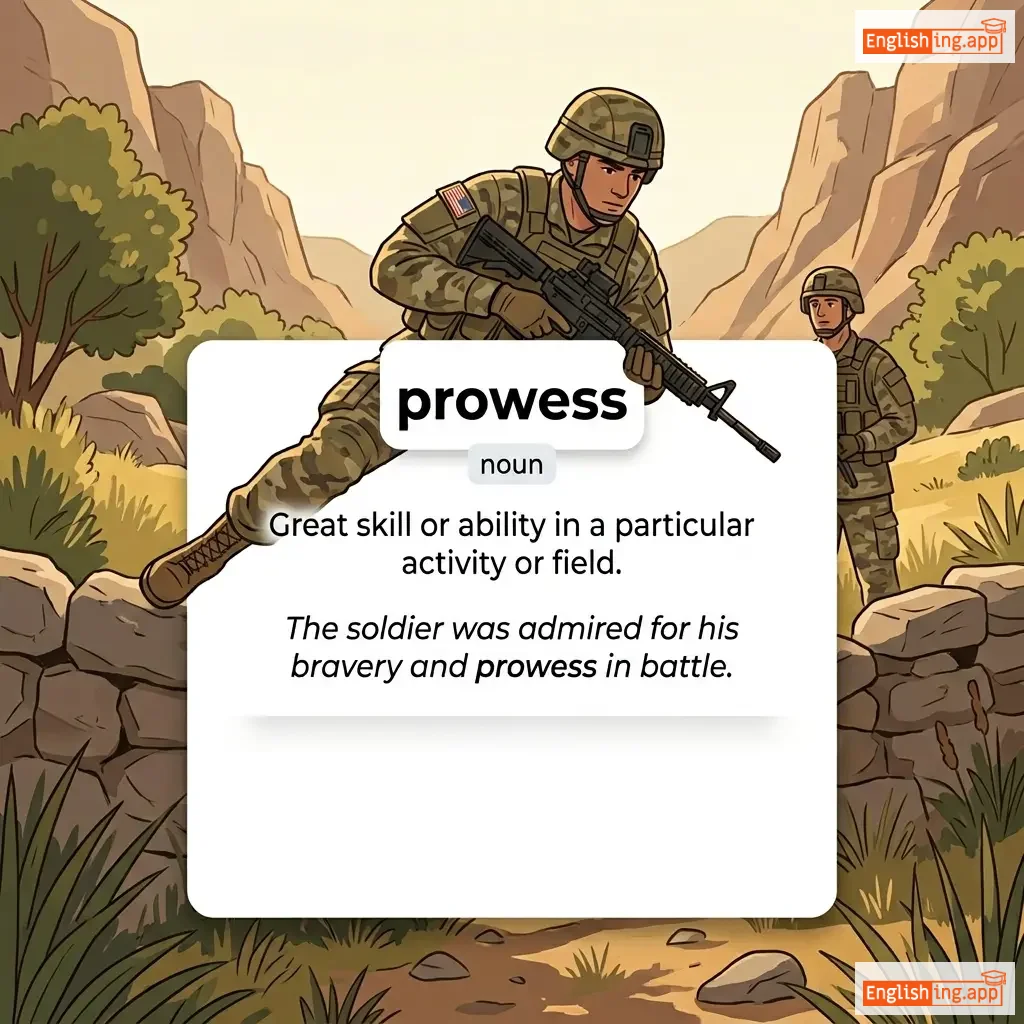
prowess definition card — visual illustration of the meaning
noun
/ˈpraʊəs/
कला (kala)

Great skill or ability in a particular activity or field.

"The soldier was admired for his bravery and prowess in battle."

"सैनिक को उसकी बहादुरी और युद्ध में कला के लिए सराहा गया था।" (Sainik ko uski bahaaduri aur yudh mein kala ke liye saraha gaya tha.)
verb
/praʊl/
चुपके से घूमना (खोजना या शिकार करने के लिए) (chupke se ghoomna (khojna ya shikar karne ke liye))

To move around quietly and secretly, especially while hunting or searching.

"The cat prowled around the garden at night."

"बिल्ली रात में बग़ीचे के चारों ओर चुपके से घूम रही थी।" (billi raat mein bagiche ke charo or chupke se ghoom rahi thi.)
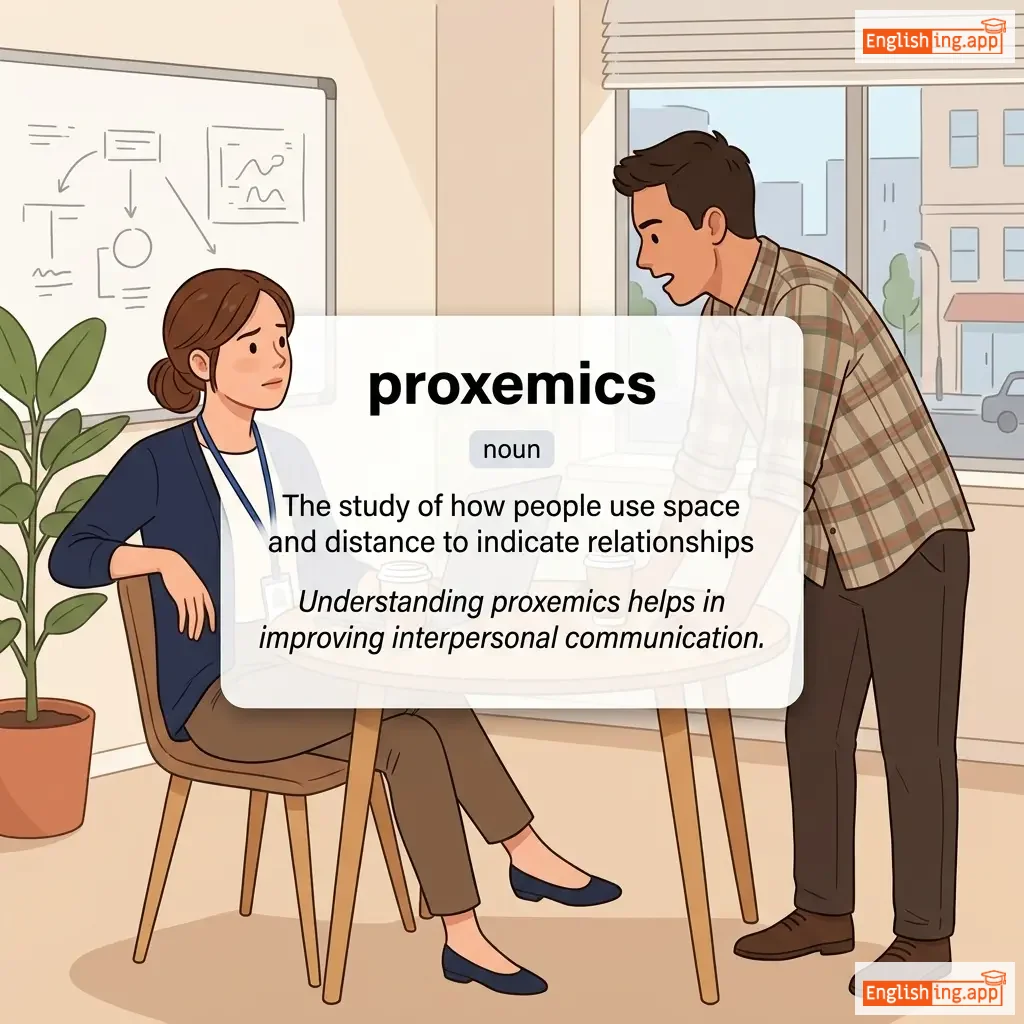
proxemics definition card — visual illustration of the meaning
noun
prɒkˈsiː.mɪks
व्यक्तिगत स्थान के उपयोग का अध्ययन (vyaktigat sthaan ke upyog ka adhyayan)

The study of how people use space and distance to indicate relationships

"Understanding proxemics helps in improving interpersonal communication."

"समझना प्रॉक्सेमिक्स अंतरवैयक्तिक संचार को सुधारने में मदद करता है।" (Samajhna proxemics antarayaktik sanchar ko sudharne mein madad karta hai.)
adverb
/ˈprɒksɪmətli/
नजदीक (najdik)

In a near or close manner; nearly.

"The village lies proximately to the river."

"गांव नदी के नजदीक स्थित है।" (Gaon nadi ke najdik sthit hai.)
noun
/prɒkˈsɪmɪti/
निकटता (nikatata)

Nearness in space, time, or relationship.

"The proximity of the school to her house made it convenient."

"स्कूल का उसके घर के पास होना सुविधाजनक था।" (School ka uske ghar ke paas hona suvidhajanak tha.)
noun
/ˈprɒksi/
प्रतिनिधि (pratinidhi)

A person authorized to act on behalf of another; a substitute.

"She voted by proxy at the meeting."

"उसने बैठक में प्रॉक्सी से वोट दिया।" (Usne baithak mein proxy se vote diya.)
noun
/pruːd/
अत्यधिक शालीन या संकोची व्यक्ति (atyadhik shaaleen ya sankochi vyakti)

A person who is easily shocked by matters relating to sex or nudity; someone overly modest.

"He was called a prude for blushing at the movie scenes."

"उसे मूवी सीन में शर्मिंदा होने पर प्रूड कहा गया था।" (Use movie scene mein sharminda hone par prude kaha gaya tha.)
noun
/ˈpruːdəns/
विवेकशीलता (vivekshilta)

The quality of being cautious, wise, and exercising good judgment.

"She invested her money with great prudence."

"उसने अपनी पैसे बहुत विवेकशीलता के साथ निवेश किए।" (Usne apni paise bahut vivekshilta ke saath nivesh kiye.)
adjective
/ˈpruːdənt/
सावधान (savdhan)

acting with or showing care and thought for the future

"It is always prudent to save some money for emergencies."

"आपात स्थितियों के लिए कुछ पैसे बचाना हमेशा सावधान होता है।" (aapaat sthitiyon ke liye kuch paise bachana hamesha savdhan hota hai.)
adjective
/pruːˈdɛnʃəl/
प्रुडेंशियल (prudenshial)

involving or showing prudence, especially in financial or business matters

"The bank has set prudential rules to protect depositors."

"बैंक ने जमा करने वालों की सुरक्षा के लिए प्रूडेंशियल नियम बनाए हैं।" (bank ne jama karne walon ki suraksha ke liye prudenshial niyam banaye hain.)
noun
/ˈpruːdəri/
यौन-विषयक अति-शालीनता (prudri)

the behavior or attitude of people who are too easily shocked or offended by sexual matters

"His prudery often made others uncomfortable during open discussions."

"खुली चर्चाओं के दौरान उसकी अति-शालीनता अक्सर दूसरों को असहज बना देती थी।" (khuli charchaoN ke dauran uski ati shaaleenta aksar dusron ko asahaj bana deti thi.)
adjective
/ˈpruːdɪʃ/
संकोची (sankochi)

having or revealing a tendency to be easily shocked by matters relating to sex or nudity

"She was too prudish to watch the movie with her friends."

"वह अपने दोस्तों के साथ फिल्म देखने के लिए बहुत संकोची थी।" (vah apne doston ke saath film dekhne ke liye bahut sankochi thi.)
verb
/pruːn/
पेड़ की शाखाएँ काटना (ped ki shakhaye kaatna)

to cut off unwanted parts of a plant or tree to help it grow better

"Gardeners prune the trees in spring to encourage growth."

"माली वसंत में पेड़ों को प्रून करते हैं ताकि वृद्धि को बढ़ावा मिले।" (mali vasant mein pedon ko prun karte hain taki vruddhi ko badhawa mile.)
adjective
/ˈprʊəriənt/
कामुक (kamuk)

having or showing an excessive interest in sexual matters

"The magazine was criticized for its prurient content."

"पत्रिका को इसके कामुक सामग्री के लिए आलोचना की गई थी।" (Patrika ko iske kamuk samagri ke liye alochana ki gayi thi.)
verb
/praɪ/
झाँकना / दखल देना (jhankna / dakkal dena)

to look closely into something; to try to find out private information

"She tried to pry into her neighbor’s private life."

"उसने अपनी पड़ोसी के निजी जीवन में दखल देने की कोशिश की।" (Usne apni padosi ke niji jeevan mein dakkal dene ki koshish ki.)
noun
/ˌsuːdəʊəˈpɒsəl/
झूठा प्रेरित (jhootha prerit)

a false or pretended apostle

"The preacher was condemned as a pseudapostle."

"धर्म उपदेशक को एक झूठे प्रेरित के रूप में निंदा किया गया।" (Dharm updeshak ko ek jhoothe prerit ke roop mein ninda kiya gaya.)
noun
/ˈsuːdənɪm/
छद्म नाम (chadma naam)

a fictitious name used by an author instead of their real name

"Mark Twain was the pseudonym of Samuel Clemens."

"मार्क ट्वेन सैमुअल क्लेमेन्स का छद्म नाम था।" (Mark Twain Samuel Clemens ka chadma naam tha.)
noun
/ˌsuːdəˈnɪmɪti/
उपनाम का उपयोग (upnaam ka upyog)

the practice or state of using a pseudonym

"The author maintained pseudonymity throughout her career."

"लेखिका ने अपने पूरे करियर में उपनाम का उपयोग किया।" (Lekika ne apne poore kariyer mein upnaam ka upyog kiya.)
noun
/ˈsaɪkiː/
आत्मा / मन (atma / man)

the human soul, mind, or spirit

"The novel explores the depths of the human psyche."

"उपन्यास मानव मानसिकता की गहराई का अन्वेषण करता है।" (Upanyas manav mansikta ki gehraai ka anvishan karta hai.)
adjective
/ˌsaɪkiˈætrɪk/
मनोचिकित्सीय (manochikitsiya)

relating to mental illness or its treatment

"The psychiatric hospital provides care for those with severe conditions."

"मनोचिकित्सीय अस्पताल गंभीर स्थितियों वाले लोगों को देखभाल प्रदान करता है।" (manochikitsiy aspataal gambheer sthitiyon wale logon ko dekhbhaal pradaan karta hai.)
noun
/saɪˈkaɪətrɪst/
मनोचिकित्सक (manochikitsak)

a medical doctor specializing in the diagnosis and treatment of mental illness

"The psychiatrist prescribed medication for the patient’s anxiety."

"मनोचिकित्सक ने रोगी के चिंता के लिए दवाई लिखी।" (Manochikitsak ne rogi ke chinta ke liye dawaai likhi.)
noun
/saɪˈkaɪətri/
मनोचिकित्सा (manochikitsa)

the branch of medicine focused on the study and treatment of mental illness

"She decided to study psychiatry to help people with mental health issues."

"उसने मानसिक स्वास्थ्य समस्याओं में मदद करने के लिए साइकीआट्री पढ़ने का निर्णय लिया।" (Usne mansik swasthya samasyaon mein madad karne ke liye saikiatri padhne ka nirnay liya.)
adjective, noun
/ˈsaɪkɪk/
मनोवैज्ञानिक (manovaigyanik)

relating to the mind or supernatural powers; a person claiming to have extrasensory abilities

"The psychic claimed she could predict the future."

"साइकीक ने दावा किया कि वह भविष्यवाणी कर सकती थी।" (Psychic ne daawa kiya ki wah bhavishyavani kar sakti thi.)
Psychographics definition card — visual illustration of the meaning
noun
/ˌsaɪ.kəʊˈɡræf.ɪks/
मनोविज्ञान और व्यवहार के अनुसार लोगों का अध्ययन (manovigyan aur vyavhaar ke anusar logon ka adhyayan)

The study and classification of people according to their attitudes, aspirations, and other psychological criteria.

"Psychographics reveal consumer buying motives."

"मनोविज्ञान उपभोक्ता खरीदारी के कारणों को प्रकट करता है।" (Manovigyan upbhokta khareedari ke kaarano ko prakat karta hai.)