वोकैबुलरीज

इंग्लिश वोकैबुलरी डिस्कवर, लर्न और मास्टर करें

verb
/ˈpɔːltər/
झूठ बोलना, धोखा देना (jhoot bolna, dhokha dena)

to act insincerely or deceitfully; to equivocate or lie

"He paltered when asked about his involvement in the deal."

"जब उससे डील में शामिल होने के बारे में पूछा गया, तो उसने झूठ बोला।" (Jab usse deal mein shamil hone ke baare mein poocha gaya, to usne jhoot bola.)
adjective
/ˈpɔːltri/
तुच्छ, नगण्य (tuchchh, naganya)

small or meager; lacking in value or importance

"They offered him a paltry sum for his work."

"उन्होंने उसके काम के लिए तुच्छ राशि प्रस्तावित की।" (Unhone uske kaam ke liye tuchchh rashi prastavit ki.)
adjective
/ˈpeɪli/
धारीदार (dhaareedaar)

striped with different colors, usually used in heraldry

"The knight’s shield was decorated with paly stripes of red and gold."

"योद्धा की ढाल लाल और सोने के धारीदार पट्टियों से सजी थी।" (Yoddha ki dhaal laal aur sone ke dhaareedaar pattiyon se saji thi.)
verb
/ˈpæmpər/
लाड़ करना / पालना (laad karna / paalna)

to treat with excessive care and attention; to spoil

"Parents often pamper their first child."

"माता-पिता अक्सर अपने पहले बच्चे को बहुत अधिक लाड़ करते हैं।" (Mata-pita aksar apne pehle bachche ko bahut adhik laad karte hain.)
noun
/ˈpæm.flət/
पुस्तिका (pustika)

a small booklet or brochure containing information or arguments about a subject

"The health department distributed a pamphlet about nutrition."

"स्वास्थ्य विभाग ने पोषण के बारे में एक पुस्तिका वितरित की।" (Swasthya vibhag ne poshan ke baare mein ek pustika vitrit ki.)
noun, verb
/ˌpæm.fləˈtɪər/
पुस्तिका लेखक (pustika lekhak)

a person who writes or distributes pamphlets, often to promote a political or social cause

"In the 18th century, many pamphleteers influenced public opinion."

"18वीं सदी में, कई पुस्तिका लेखकों ने सार्वजनिक राय को प्रभावित किया।" (18vi sadi mein, kai pustika lekhako ne sarvajanik rai ko prabhavit kiya.)
noun, verb
/pæn/
कढ़ाई, पैन (kadhai, pan)

a shallow container used for cooking; also means to criticize severely (verb)

"She cooked the eggs in a frying pan."

"उसने अंडे एक फ्राइंग पैन में पकाए।" (Usne ande ek frying pan mein pakaaye.)
adjective
/ˌpæn.əˈmer.ɪ.kən/
पैन-अमेरिकन (pan-amerikan)

relating to all the countries of North, Central, and South America

"The Pan-American Games bring together athletes from across the continent."

"पैन-अमेरिकन खेलों में महाद्वीप भर के एथलीट्स एक साथ आते हैं।" (Pan-American khelon mein mahadweep bhar ke athletes ek sath aate hain.)
noun
/ˌpænəˈsiːə/
सर्व रोगों का इलाज (sarv rogon ka ilaaj)

A solution or remedy for all difficulties or diseases.

"Education is often seen as a panacea for social problems."

"शिक्षा को अक्सर सामाजिक समस्याओं के लिए एक पैनेसिया के रूप में देखा जाता है।" (Shiksha ko aksar samajik samasyaon ke liye ek panacea ke roop mein dekha jaata hai.)
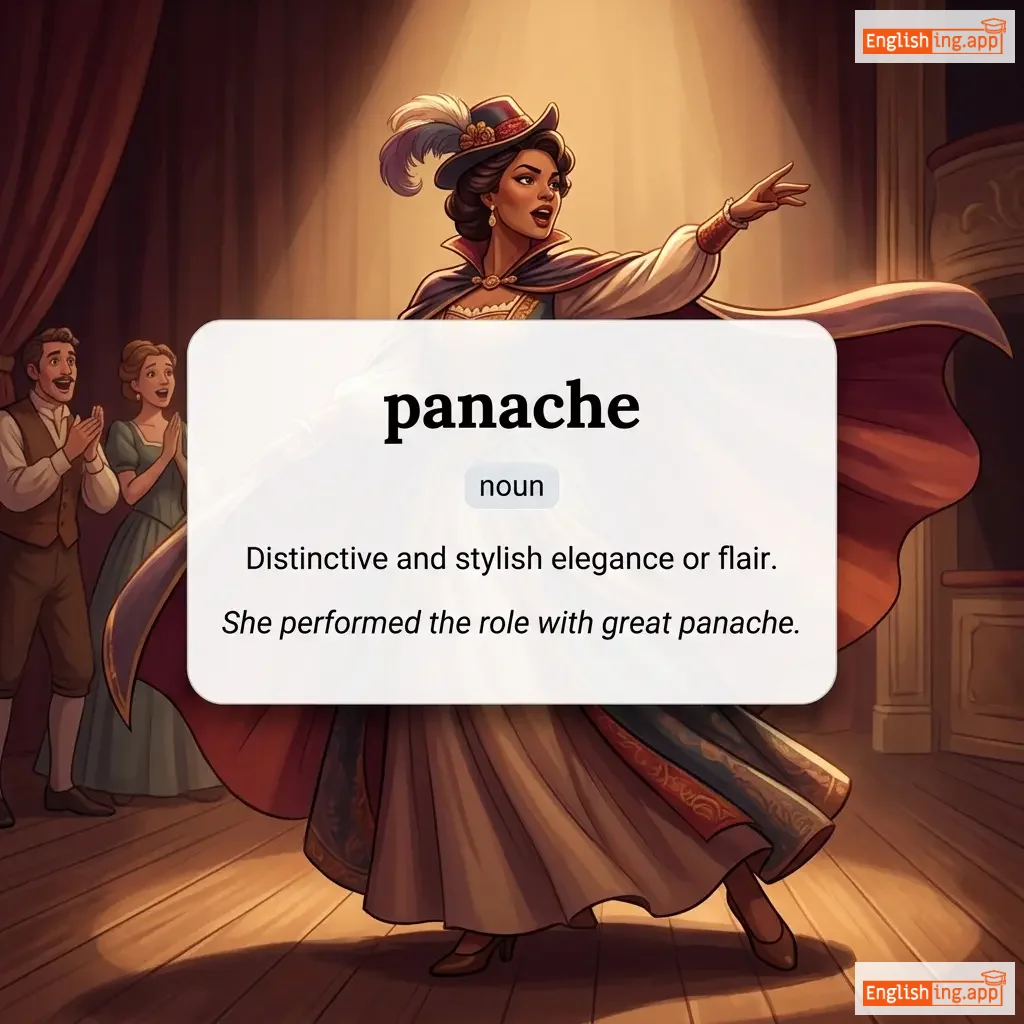
panache definition card — visual illustration of the meaning
noun
/pəˈnæʃ/
शानदार अंदाज (shandar andaaz)

Distinctive and stylish elegance or flair.

"She performed the role with great panache."

"उसने भूमिका को शानदार ढंग से निभाया।" (Usne bhumika ko shandar dang se nibhaaya.)
noun
/pʌntʃ ˈfoʊrən/
पाँच फोरोन (panch phoron)

a Bengali spice blend containing five whole spices: cumin, fennel, fenugreek, nigella, and mustard seeds

"The aroma filled the kitchen when she heated panch phoron in oil."

"जब उसने तेल में पाँच फोरोन को गरम किया तो रसोई में खुशबू फैल गई।" (jab usne tel mein paanch phoron ko garam kiya to rasoi mein khushboo phail gayi.)
noun
/ˈpæŋkriəs/
अग्न्याशय (agnyashay)

A gland in the abdomen that produces insulin and digestive enzymes.

"The pancreas plays a vital role in digestion and blood sugar regulation."

"अग्न्याशय पाचन और रक्त शर्करा नियंत्रण में महत्वपूर्ण भूमिका निभाता है।" (Agnyashay pachan aur rakt sharkara niyantran mein mahatvapurn bhoomika nibhaata hai.)
noun
/pænˈdɛmɪk/
महामारी (mahamari)

An outbreak of a disease that occurs on a global scale.

"The COVID-19 pandemic changed the world dramatically."

"कोविड-19 महामारी ने दुनिया को नाटकीय रूप से बदल दिया।" (Covid-19 mahamaari ne duniya ko natakiya roop se badal diya.)
noun
/ˌpændəˈmoʊniəm/
उथल-पुथल (uthal-puthal)

Wild and noisy disorder or confusion; uproar.

"When the concert was canceled, pandemonium broke out among the crowd."

"जब संगीत कार्यक्रम रद्द कर दिया गया, तो भीड़ में उथल-पुथल मच गई।" (Jab sangeet karyakram radd kar diya gaya, to bheed mein uthal-puthal mach gayi.)
verb
/ˈpændər/
चाटुकारिता करना, तुष्ट करना (chatukarita karna, tusht karna)

to indulge or exploit the weaknesses, desires, or immoral tendencies of others

"The politician was accused of pandering to voters' fears."

"राजनीतिज्ञ पर वोटरों के डर को तुष्ट करने का आरोप था।" (Rajnitik vyakti par votaron ke dar ko tusht karne ka aarop tha.)
noun
/ˌpænəˈdʒɪrɪk/
प्रशंसा पत्र, प्रशंसा (prashansa patra, prashansa)

a formal speech or piece of writing in praise of someone or something

"The author wrote a panegyric on the bravery of the soldiers."

"लेखक ने सैनिकों की वीरता पर एक प्रशंसा पत्र लिखा।" (Lekhak ne sainikon ki veerta par ek prashansa patra likha.)
noun
/ˈpænəl/
पैनल, न्यायधीशों की टोली (panel, nyayadhishon ki toli)

a group of people gathered to discuss, judge, or advise on a particular topic

"The panel of judges announced the winner of the competition."

"न्यायधीशों की पैनल ने प्रतियोगिता के विजेता का नाम घोषित किया।" (Nyayadhishon ki panel ne pratispardha ke vijeta ka naam ghoshit kiya.)
noun
/pæŋ/
दर्द या मानसिक कष्ट का अचानक तेज़ अनुभव (dard ya maansik kasht ka achanak tez anubhav)

a sudden sharp feeling of pain or emotional distress

"She felt a pang of guilt after the argument."

"विवाद के बाद उसे अपराधबोध का दर्द महसूस हुआ।" (Vivad ke baad use aparadhbodh ka dard mehsoos hua.)
noun/verb
/ˈpænɪk/
खुशी (khushi)

a sudden overwhelming fear or anxiety causing irrational behavior

"The crowd panicked when the fire alarm went off."

"जब उसे पुरस्कार मिला, तो वह अपनी खुशी छिपा नहीं सकी।" (Jab use puraskaar mila, to vah apni khushi chhupa nahin sakee.)
adjective
/ˈpæn.ɪ.ki/
घबराया हुआ; चिंतित और डरावना (ghabraya hua; chintit aur darawna)

feeling or showing panic; anxious and fearful

"The crowd became panicky when the fire alarm sounded."

"आग की सायरन सुनकर लोग घबराए हुए हो गए।" (aag ki sayaran sunkar log ghabraaye hue ho gaye)
/ˈpæn.ə.pli/
सम्पूर्ण संग्रह (sampurn sangrah)

A complete or impressive collection of things; a full set of armor.

"The museum displayed a panoply of ancient weapons."

"संग्रहालय ने प्राचीन हथियारों का सम्पूर्ण संग्रह प्रदर्शित किया।" (Sangrahalay ne pracheen hathiyaron ka sampurn sangrah pradarshit kiya.)
noun
/ˌpæn.əˈræm.ə/
सुंदर दृश्य (sundar drishya)

An unbroken view of the whole region surrounding an observer.

"From the hilltop, we enjoyed a breathtaking panorama of the city."

"पहाड़ी की चोटी से, हमने शहर का शानदार दृश्य देखा।" (pahaadi ki chhoti se, humne shaher ka shandar drishya dekha.)
adjective
/ˌpæn.əˈræm.ɪk/
विस्तृत दृश्य (vistrit drishya)

Giving a wide view of an extensive area in all directions.

"The hotel offers panoramic views of the ocean."

"होटल समुंदर के विस्तृत दृश्य प्रदान करता है।" (hotel samundar ke vistrit drishya pradan karta hai.)
noun
/pænt/
पैंट (pant)

a piece of clothing worn from the waist down, covering both legs separately

"He wore a pair of blue pants to the party."

"उसने पार्टी में नीली पैंट पहनी थी।" (Usne party mein neeli pant pehni thi.)
noun
/ˈpæn.θi.ɪ.zəm/
पंथीवाद (panthivad)

The belief that God and the universe are identical, or that everything is a manifestation of God.

"Spinoza’s philosophy is often associated with pantheism."

"स्पिनोज़ा का दर्शन अक्सर पंथीवाद से जुड़ा होता है।" (Spinoza ka darshan aksar panthivad se juda hota hai.)
noun
/ˈpæn.θi.ən/
सभी देवताओं का समुदाय, देवालय (sabhi devtaon ka samudaay, devaalay)

All the gods of a religion collectively; a building dedicated to all gods.

"The Roman Pantheon is one of the best-preserved ancient temples."

"रोमन पंथियन प्राचीनतम संरक्षित मन्दिरों में से एक है।" (Roman Pantheon pracheentam sanrakshit mandiron mein se ek hai.)
noun
/ˈpæntəmaɪm/
मूक अभिनय (mook abhinay)

A type of theatrical performance using gestures and movements without spoken words; in Britain, a musical comedy play for families performed at Christmas.

"The children enjoyed the Christmas pantomime at the local theater."

"बच्चों ने स्थानीय थिएटर में क्रिसमस पैन्टमाइम का आनंद लिया।" (bachchon ne sthaniy theater me Christmas pantomime ka anand liya.)
noun
/ˈpæntəˌskoʊp/
विस्तृत दृश्य प्रदर्शक यंत्र (vistrit drishya pradarshak yantra)

An optical instrument that provides a wide or panoramic view.

"The scientist used a pantoscope to observe the entire horizon."

"वैज्ञानिक ने पूरे क्षितिज का अवलोकन करने के लिए एक पैंटोसकोप का उपयोग किया।" (Vaigyanik ne poore kshitij ka avlokan karne ke liye ek pantoscope ka upyog kiya.)
noun
/ˈpæntri/
भंडारण कक्ष (bhandaran kaksh)

A small room or cupboard where food, dishes, and kitchen supplies are stored.

"She stocked the pantry with fresh groceries for the week."

"उसने सप्ताह के लिए ताजे सामान से पैंट्री को भरा।" (Usne saptah ke liye taje samaan se pantry ko bhara.)
noun
/ˈpɑːpə/
पिता (pita)

an informal or affectionate term for one’s father

"Papa is picking me up from school today."

"पापा आज मुझे स्कूल से लेने आएंगे।" (papa aj mujhe school se lene aayenge)
noun
/ˈpeɪpəsi/
पोप का पद (pop ka pad)

The office or authority of the Pope in the Roman Catholic Church.

"The papacy played a significant role in medieval European politics."

"पापसी ने मध्यकालीन यूरोपीय राजनीति में महत्वपूर्ण भूमिका निभाई।" (Papacy ne madhyakalīn Europīy rājneeti mein mahatvapūrṇ bhūmikā nibhāī.)
noun
/pəˈpaɪə/
पपीता (papita)

a large orange tropical fruit with sweet orange flesh and black seeds

"Papaya is rich in vitamins and very good for health."

"पपीता विटामिन्स में समृद्ध है और स्वास्थ्य के लिए बहुत अच्छा है।" (papita vitamins mein samruddh hai aur swasthya ke liye bahut accha hai.)
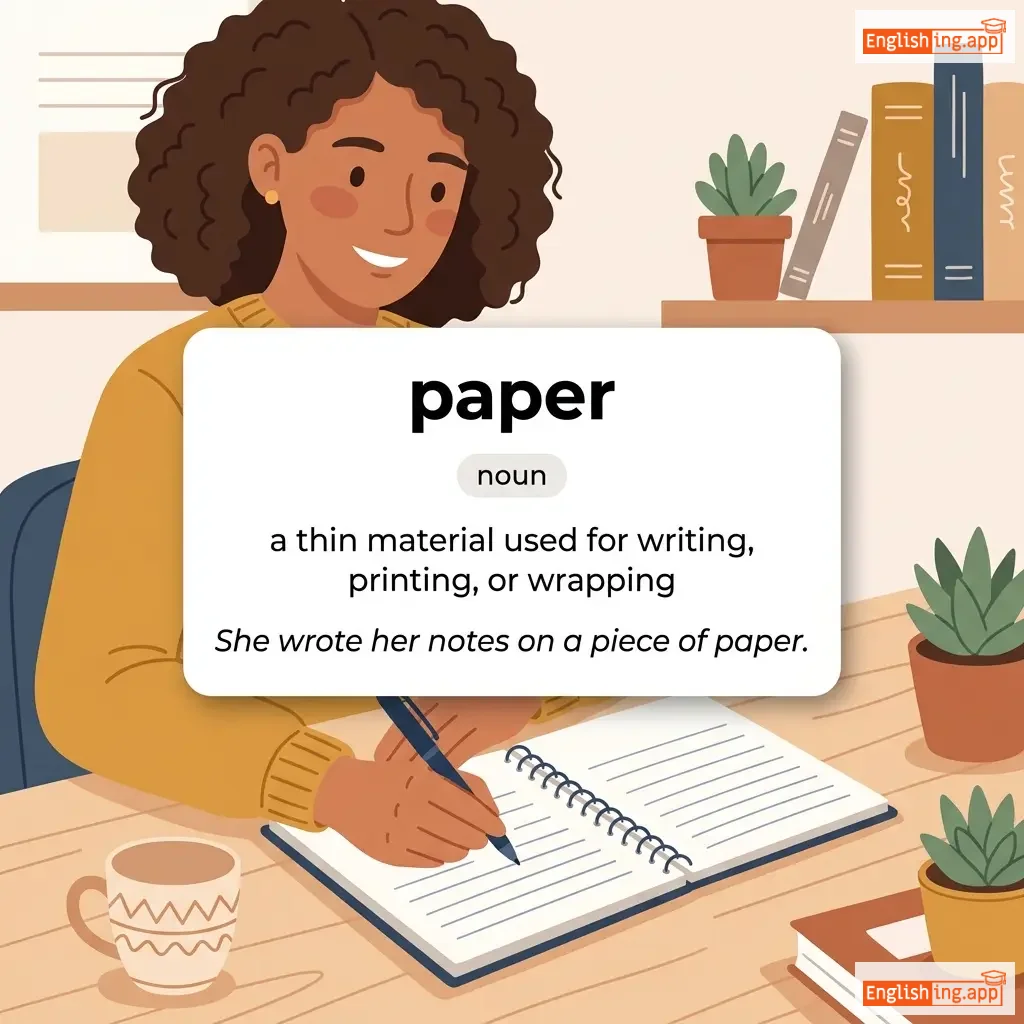
paper definition card — visual illustration of the meaning
noun
/ˈpeɪpər/
कागज (kagaj)

a thin material used for writing, printing, or wrapping

"She wrote her notes on a piece of paper."

"उसने कागज पर अपने नोट्स लिखे।" (Usne kagaj par apne notes likhe.)
noun
/pəˈpaɪrəs/
पपीरस (papyrus)

An ancient writing material made from the pith of the papyrus plant; also refers to the plant itself.

"The ancient scroll was written on papyrus."

"प्राचीन स्क्रॉल पपीरस पर लिखा गया था।" (Prachin scroll papyrus par likha gaya tha.)
noun
/ˈpærəbl/
उपदेशात्मक कथा (updeshatmak katha)

A simple story used to illustrate a moral or spiritual lesson.

"Jesus often taught using a parable to convey deeper truths."

"यीशु अक्सर गहरी सच्चाई को व्यक्त करने के लिए एक उपदेशात्मक कथा का उपयोग करते थे।" (Yeeshu aksar gehri sachai ko vyakt karne ke liye ek updeshatmak katha ka upyog karte the.)
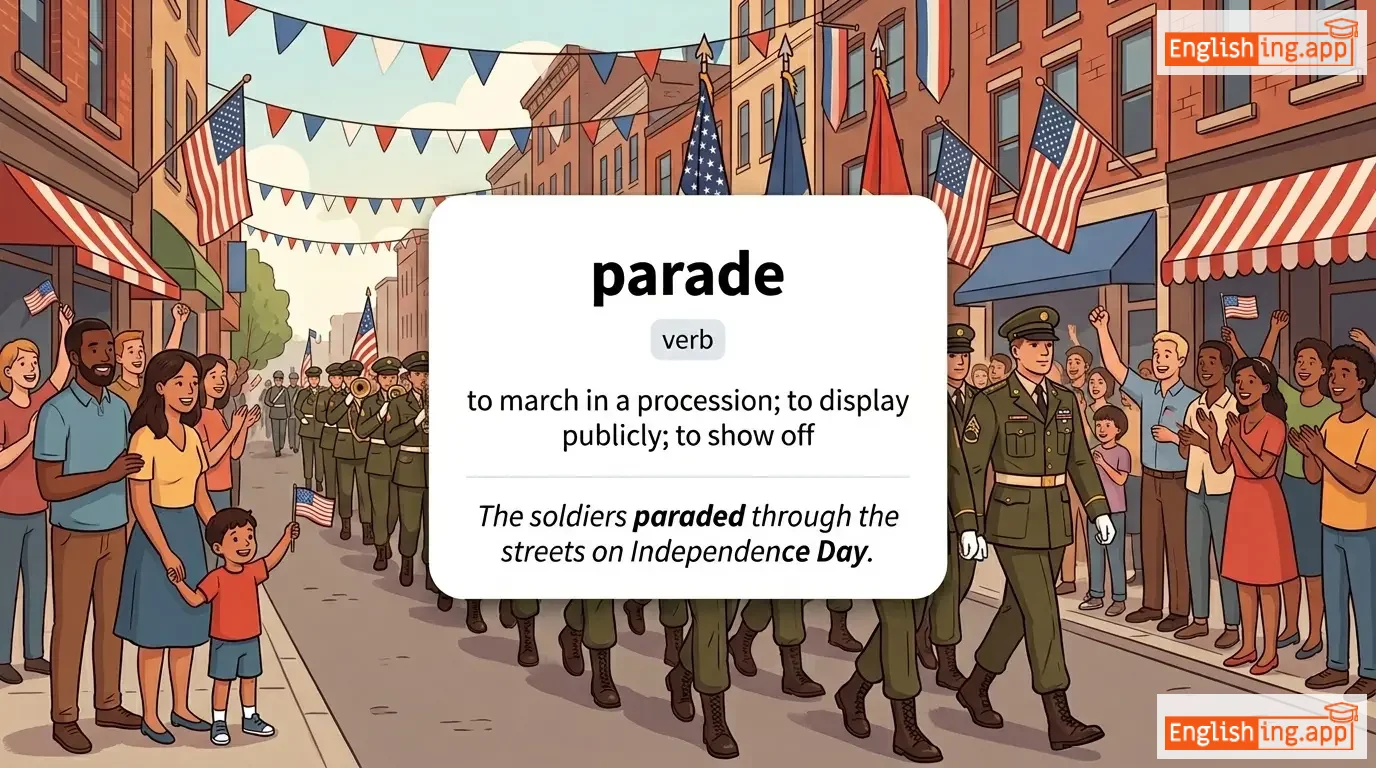
parade definition card — visual illustration of the meaning
noun
/pəˈreɪd/
परेड / जुलूस (pared / julus)

a public procession, especially one celebrating a special day or event

"Thousands of people attended the Independence Day parade."

"हजारों लोग स्वतंत्रता दिवस की परेड में शामिल हुए।" (Hazaron log svatantrata divas ki parade mein shaamil hue.)
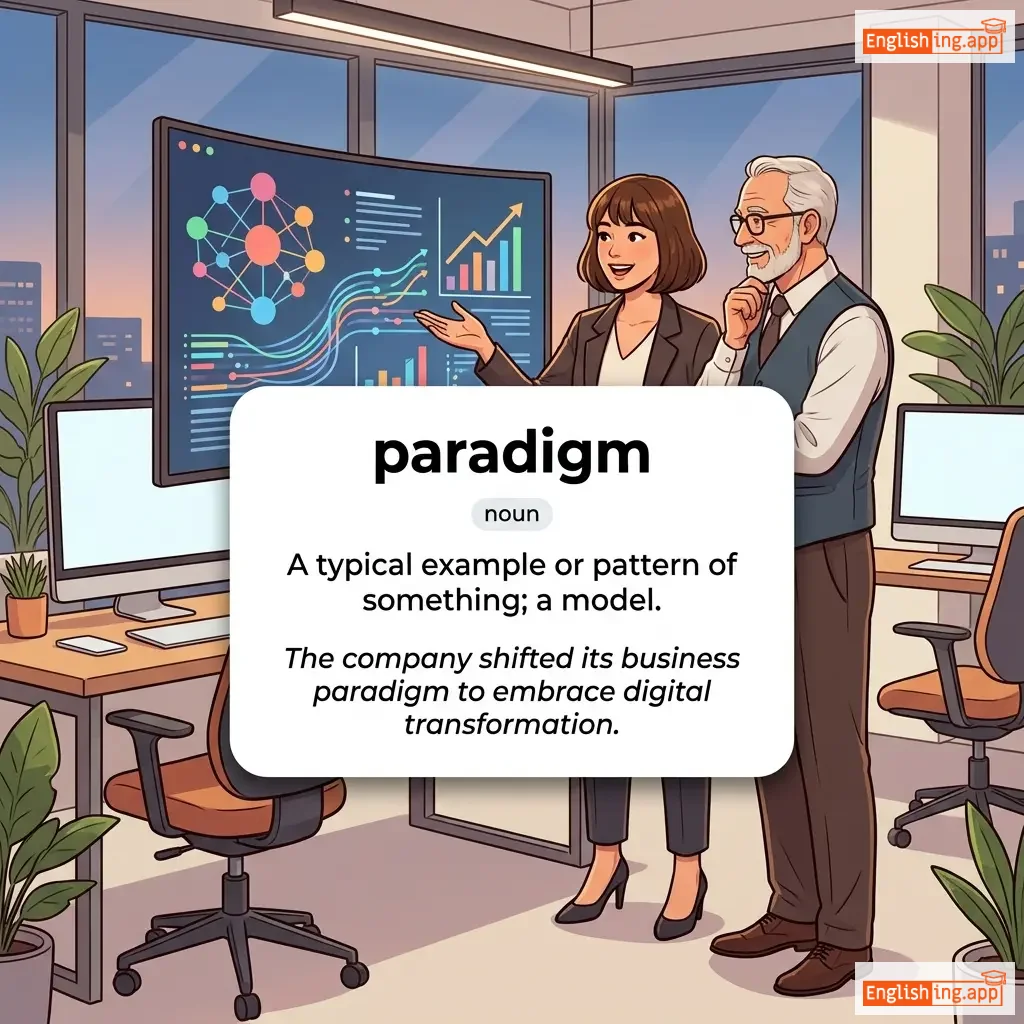
paradigm definition card — visual illustration of the meaning
noun
/ˈpærədaɪm/
मॉडल (model)

A typical example or pattern of something; a model.

"The company shifted its business paradigm to embrace digital transformation."

"कंपनी ने डिजिटल परिवर्तन को अपनाने के लिए अपने व्यापार के मॉडल को बदल दिया।" (Company ne digital parivartan ko apnane ke liye apne vyapar ke model ko badal diya.)
adjective
/ˌpærəˈdɪɡmətɪk/
आदर्शात्मक (adarshatmak)

Serving as a typical example or model of something.

"Her success story is paradigmatic of the opportunities education can provide."

"उसकी सफलता की कहानी वह अवसरों का आदर्श उदाहरण है, जो शिक्षा प्रदान कर सकती है।" (Uski safalta ki kahani vah avsaron ka adarsh udaharan hai, jo shiksha pradan kar sakti hai.)
noun
/ˈpærədaɪs/
स्वर्ग (swarg)

An ideal or perfect place of happiness; often thought of as heaven.

"The tropical island felt like a true paradise."

"उष्णकटिबंधीय द्वीप एक सच्चे स्वर्ग की तरह महसूस हो रहा था।" (ushnkatibandhiy dweep ek sachche swarg ki tarah mahsus ho raha tha.)
paradox definition card — visual illustration of the meaning
noun
/ˈpærədɒks/
विरोधाभास (virodhabhaas)

A statement or situation that seems contradictory but may reveal a deeper truth.

"It is a paradox that computers make our lives easier but also more stressful."

"यह एक विरोधाभास है कि कंप्यूटर हमारे जीवन को सरल बनाते हैं, लेकिन साथ ही अधिक तनावपूर्ण भी करते हैं।" (Yeh ek virodhabhaas hai ki computer hamare jeevan ko saral banate hain, lekin saath hi adhik tanavpoorn bhi karte hain.)
adjective
/ˌpærəˈdɒksɪkəl/
विरोधाभासी (virodhabhasi)

Seemingly contradictory or opposed to common sense, yet possibly true.

"It is paradoxical that standing is often more tiring than walking."

"यह विरोधाभासी है कि खड़ा होना अक्सर चलने से अधिक थकाऊ होता है।" (Yah virodhabhasi hai ki khada hona aksar chalne se adhik thakau hota hai.)
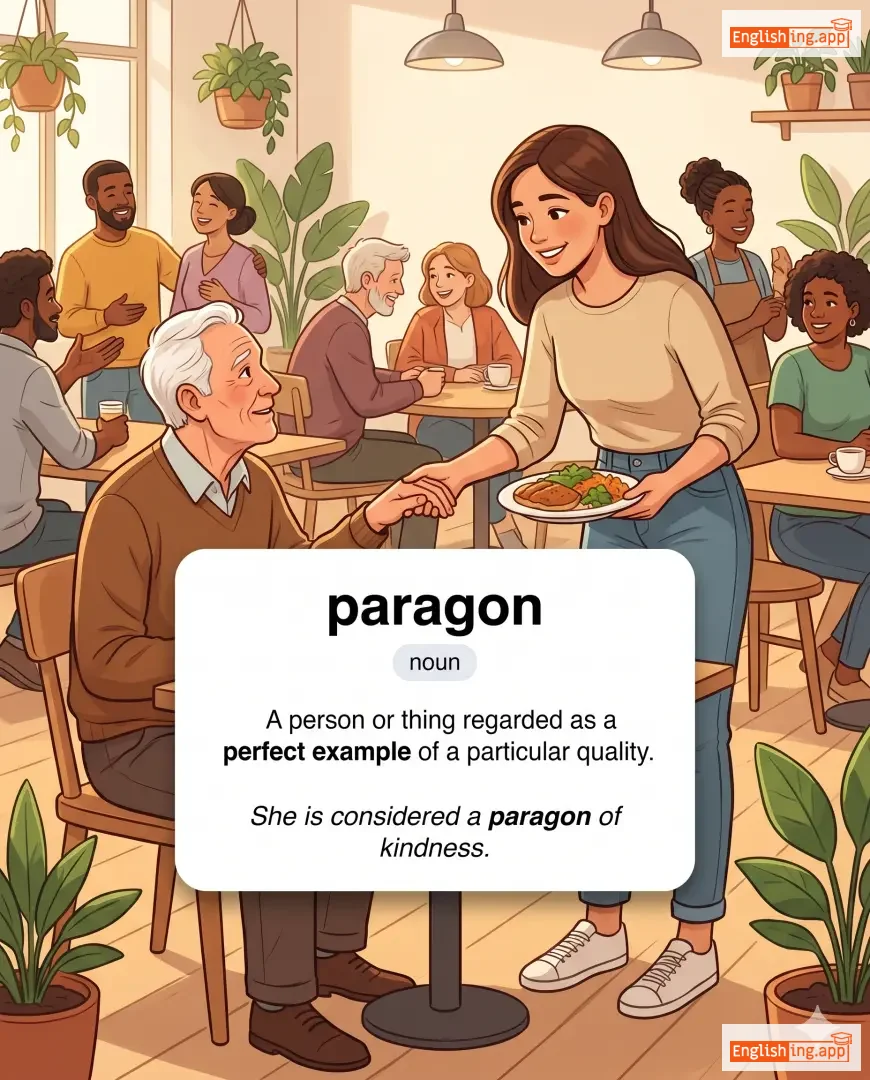
paragon definition card — visual illustration of the meaning
noun
/ˈpærəɡɒn/
आदर्श (adarsh)

A person or thing regarded as a perfect example of a particular quality.

"She is considered a paragon of kindness."

"उसे दया का आदर्श माना जाता है।" (Use daya ka adarsh maana jaata hai.)
noun
/ˈpær.ə.kiːt/
तोता (tota)

a small colorful parrot with a long tail, often kept as a pet

"The green parakeet learned to say hello."

"हरी तोता हेलो कहना सीख गया।" (hari tota hello kehna seekh gaya.)
noun, adjective, verb
/ˈpærəˌlɛl/
समांतर (samantar)

Lines, objects, or events that are side by side and never meet; similarity or comparison.

"The road runs parallel to the railway."

"सड़क रेलवे के समानांतर चलती है।" (Sadak railway ke samanantar chalti hai.)
noun
/ˈpærəˌlɛlɪzəm/
समानांतरवाद (samaantarvaad)

The state of being parallel or similar; in literature, the use of components in a sentence that are grammatically the same or similar in construction.

"The writer used parallelism to give rhythm to his prose."

"लेखक ने अपनी गद्य में लय देने के लिए समानांतरवाद का उपयोग किया।" (Lekhak ne apni gadya mein lay dene ke liye samaantarvaad ka upyog kiya.)
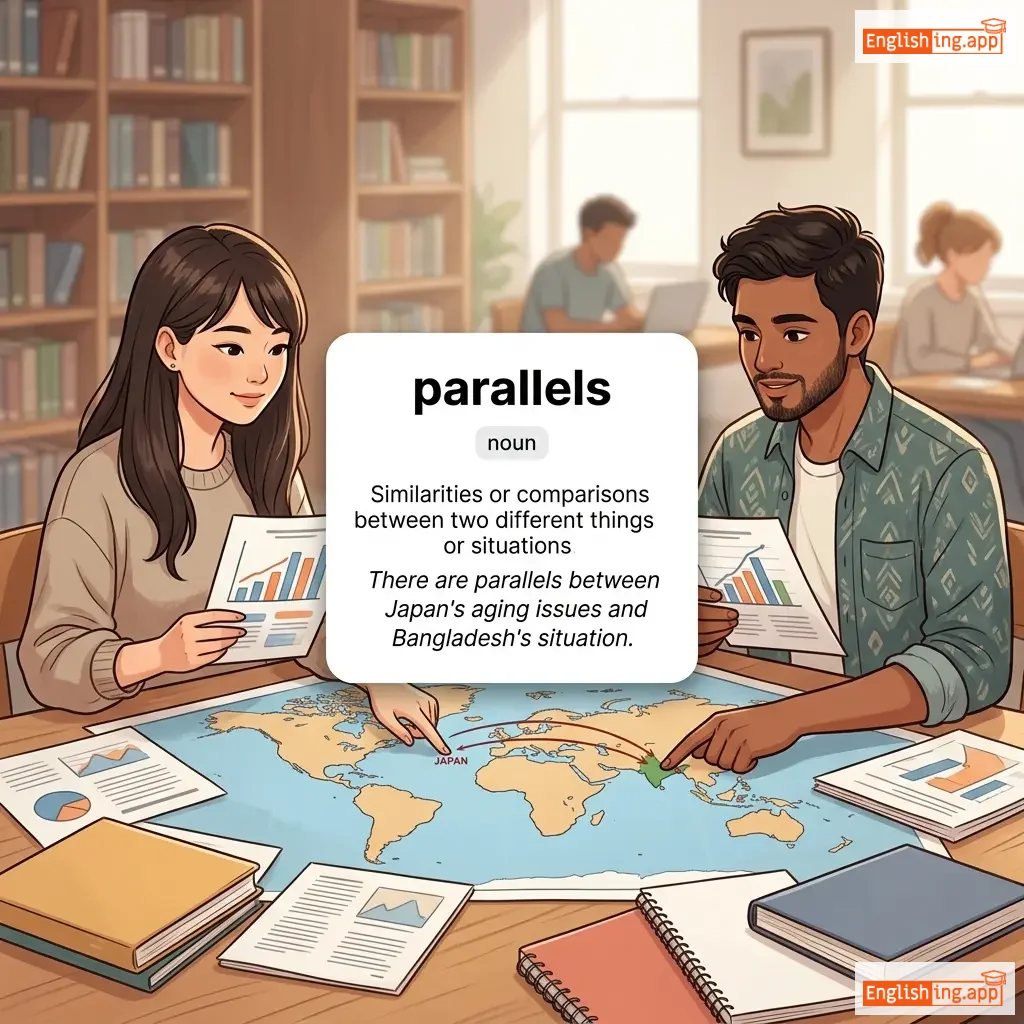
parallels definition card — visual illustration of the meaning
noun
ˈpærəˌlɛlz
समानताएँ (samaantayein)

Similarities or comparisons between two different things or situations

"There are parallels between Japan's aging issues and Bangladesh's situation."

"यहां जापान की उम्र बढ़ने की समस्याओं और बांगलादेश की स्थिति के बीच समानताएँ हैं।" (Yahan Japan ki umra badhne ki samasyaon aur Bangladesh ki sthiti ke beech samaantayein hain.)
noun
/pəˈræləsɪs/
लकवा (lakva)

Loss of the ability to move in part or most of the body, typically as a result of illness or injury.

"The accident left him with partial paralysis."

"दुर्घटना के कारण उसे आंशिक लकवा हो गया था।" (Durghatna ke karan use aanshik lakva ho gaya tha.)
verb
/ˈpærəlaɪz/
अक्षम करना (aksham karna)

to cause someone or something to lose the ability to move or function normally

"The sudden shock seemed to paralyze him."

"अचानक झटका उसे अक्षम कर गया।" (Achanak jhatka use aksham kar gaya.)
noun
/pəˈræmɪtər/
परिमाण (parimaan)

a limit, boundary, or measurable factor that defines or determines something

"We need to set clear parameters for this project."

"हमें इस परियोजना के लिए स्पष्ट सीमाएँ निर्धारित करनी होंगी।" (Humein is pariyojna ke liye spasht seemaayein nirdharit karni hongi.)
adjective
/ˈpærəmaʊnt/
अत्यंत महत्वपूर्ण (atyant mahatvapurn)

more important than anything else; supreme

"Safety is of paramount importance in this factory."

"इस फैक्ट्री में सुरक्षा अत्यंत महत्वपूर्ण है।" (Is factory mein suraksha atyant mahatvapurn hai.)