वोकैबुलरीज

इंग्लिश वोकैबुलरी डिस्कवर, लर्न और मास्टर करें

adjective
/ˌpoʊstˈwɔːr/
युद्धोत्तर (yuddhottar)

relating to the period after a war has ended

"The country experienced rapid economic growth in the post-war years."

"युद्धोत्तर वर्षों में देश ने तेज़ आर्थिक प्रगति की।" (yuddhottar varshon mein desh ne tez arthik pragati ki)
verb
/ˌpoʊstˈdeɪt/
पोस्टडेट करना (postdate karna)

To assign a date later than the actual date to a document or event.

"She postdated the check to next month."

"उसने चेक को अगले महीने की तारीख डाल दी।" (Usne check ko agle mahine ki tareekh daal di.)
noun
/ˈpoʊstər/
पोस्टर (poster)

a large printed picture or notice that is put on a wall for decoration or to advertise something

"They put up a movie poster outside the theater."

"वे थियेटर के बाहर एक मूवी पोस्टर लगा रहे थे।" (Ve theater ke baahar ek movie poster laga rahe the.)
adjective
/pɒˈstɪəriər/
पश्चात (poschat)

Situated at or toward the back; later in time.

"The posterior part of the brain controls vision."

"मस्तिष्क का पिछला हिस्सा दृष्टि नियंत्रित करता है।" (mastisk ka pichla hissa drishti niyantrit karta hai.)
noun
/pɒˈstɛrɪti/
भविष्य पीढ़ी (bhavishya pedhi)

All future generations of people.

"The monument was built for the benefit of posterity."

"स्मारक भविष्य पीढ़ियों के लाभ के लिए निर्मित किया गया था।" (Smarak bhavishya pedhiyon ke laabh ke liye nirmit kiya gaya tha.)
noun, adjective
/ˌpəʊstˈɡrædʒuət/
स्नातकोत्तर छात्र (snatakkottar chhatr)

A student who has completed a first degree and is studying for a further degree.

"She is doing postgraduate research in physics."

"वह भौतिकी में स्नातकोत्तर शोध कर रहा है।" (Wah bhoutiki mein snatakottar shodh kar raha hai.)
adjective
/ˈpɒstjʊməs/
मरणोत्तर (maranottar)

Occurring, awarded, or appearing after the death of the originator.

"He received a posthumous award for his bravery."

"उन्हें उनके साहस के लिए मरणोत्तर पुरस्कार मिला।" (Unhein unke sahas ke liye maranottar puraskar mila.)
noun, adjective
/ˌpəʊstˈmɔːtəm/
पोस्टमॉर्टम (postmortem)

An examination of a dead body to determine the cause of death.

"The doctor carried out a postmortem on the body."

"डॉक्टर ने शव पर पोस्टमॉर्टम किया।" (Doktar ne shav par postmortem kiya.)
verb
/pəʊs(t)ˈpəʊn/
पोस्टपोन करना (postpone karna)

to delay something to a later time

"The meeting was postponed until next week."

"बैठक को अगले सप्ताह तक पोस्टपोन कर दिया गया था।" (Baithak ko agle saptah tak postpone kar diya gaya tha.)
adjective
/ˌpəʊstˈprændɪəl/
भोजन के बाद (bhojan ke baad)

Occurring after a meal.

"He went for a postprandial walk after dinner."

"वह रात के खाने के बाद एक पोस्टप्रांडीअल वॉक पर गए।" (Wah raat ke khane ke baad ek postprandial walk par gaye.)
noun
/ˈpəʊstˌskrɪpt/
पोस्ट्रिप्ट (postscript)

an additional remark at the end of a letter or text, after the signature

"She added a brief postscript to thank him again."

"उसने उसे फिर से धन्यवाद देने के लिए एक संक्षिप्त पोस्टस्क्रिप्ट जोड़ा।" (Usne use phir se dhanyavaad dene ke liye ek sankshipt postscript joda.)
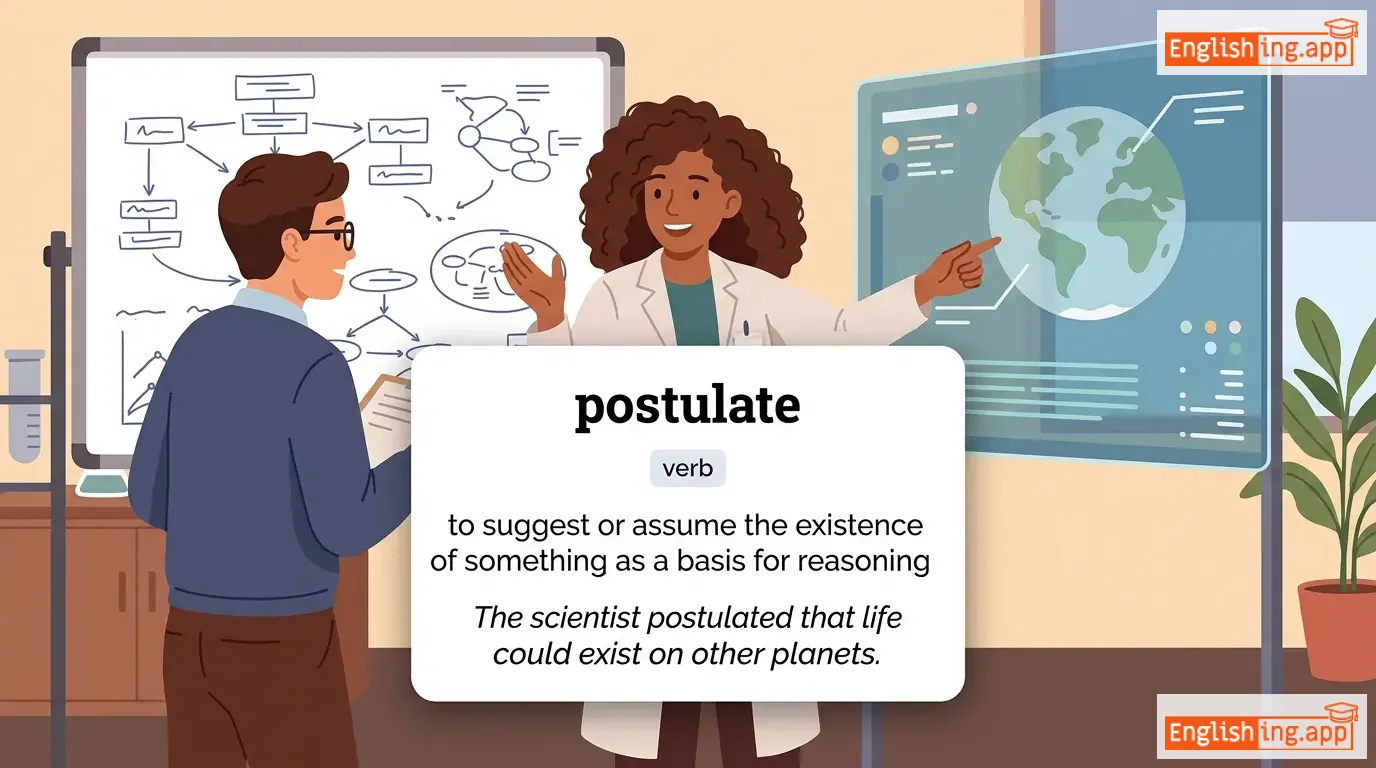
postulate definition card — visual illustration of the meaning
verb
/ˈpɒstjʊˌleɪt/
अनुमान करना (anumaan karna)

to suggest or assume the existence of something as a basis for reasoning

"The scientist postulated that life could exist on other planets."

"वैज्ञानिक ने अनुमान लगाया कि जीवन अन्य ग्रहों पर हो सकता है।" (Vaigyanik ne anuman lagaya ki jeevan anya grahon par ho sakta hai.)
noun
/ˈpɒstʃə/
सुख (sukh)

the position in which someone holds their body; an attitude or approach

"Good posture helps prevent back pain."

"जब उसने पुरस्कार प्राप्त किया तो वह अपनी खुशी छिपा नहीं पाई।" (Jab usne puraskar prapt kiya to vah apni khushi chhupa nahin pai.)
adjective
/ˈpəʊstwɔːr/
युद्धोत्तर (yuddhotar)

occurring or existing after a war

"The postwar period saw significant economic growth."

"पोस्टवार अवधि में महत्वपूर्ण आर्थिक वृद्धि देखी गई।" (Postwar avdhi mein mahatvapurn arthik vruddhi dekhi gayi.)
noun
/pɒt/
पॉट (pot)

a container, typically round and deep, used for cooking or holding plants

"She put the soup in a pot and set it on the stove."

"उसने सूप को एक पॉट में डाला और उसे चूल्हे पर रख दिया।" (Usne soup ko ek pot mein daala aur use chulhe par rakh diya.)
adjective
/ˈpəʊtəbl/
पेयजल (peyjal)

safe to drink; drinkable

"The villagers did not have access to potable water."

"गांववालों के पास पीने योग्य पानी तक पहुँच नहीं थी।" (Gaonwalon ke paas peene yogya paani tak pahuch nahi thi.)
noun
/pəˈteɪtoʊ/
आलू (aaloo)

a starchy plant tuber that is a staple food around the world

"We had mashed potato with our dinner."

"हमने अपने खाने में मसले हुए आलू खाए।" (Humne apne khane mein masle huye aaloo khaye.)
noun
/ˈpɒtˌbɔɪlə/
सस्ता साहित्यकर्म (sasta sahityakarm)

a book, play, or film produced quickly to make money rather than for artistic value

"The novel was dismissed by critics as a mere potboiler."

"उपन्यास को आलोचकों ने एक साधारण सस्ता साहित्यकर्म के रूप में खारिज कर दिया।" (Upanyas ko alochako ne ek sadharan sasta sahityakarm ke roop mein kharij kar diya.)
noun
/ˈpoʊtənsi/
शक्ति (shakti)

The power or ability of something to affect or influence; strength or effectiveness.

"The potency of the new medicine amazed the doctors."

"नई दवाई की शक्ति ने डॉक्टरों को हैरान कर दिया।" (Nayi dawaai ki shakti ne dokton ko hairaan kar diya.)
adjective
/ˈpoʊtənt/
शक्तिशाली (shaktishaalee)

Having great power, influence, or effect.

"This is a very potent drug that should be used carefully."

"यह एक बहुत शक्तिशाली दवा है जिसे सावधानी से उपयोग किया जाना चाहिए।" (Yeh ek bahut shaktishaalee dawa hai jise saavdhaanee se upayog kiya jaana chaahiye.)
noun
/ˈpoʊtənˌteɪt/
शासक (shasak)

A monarch or ruler, especially one with absolute power.

"The ancient land was ruled by a powerful potentate."

"प्राचीन भूमि एक शक्तिशाली शासक द्वारा शासित थी।" (Prachin bhumi ek shaktishali shasak dvara shasit thi.)
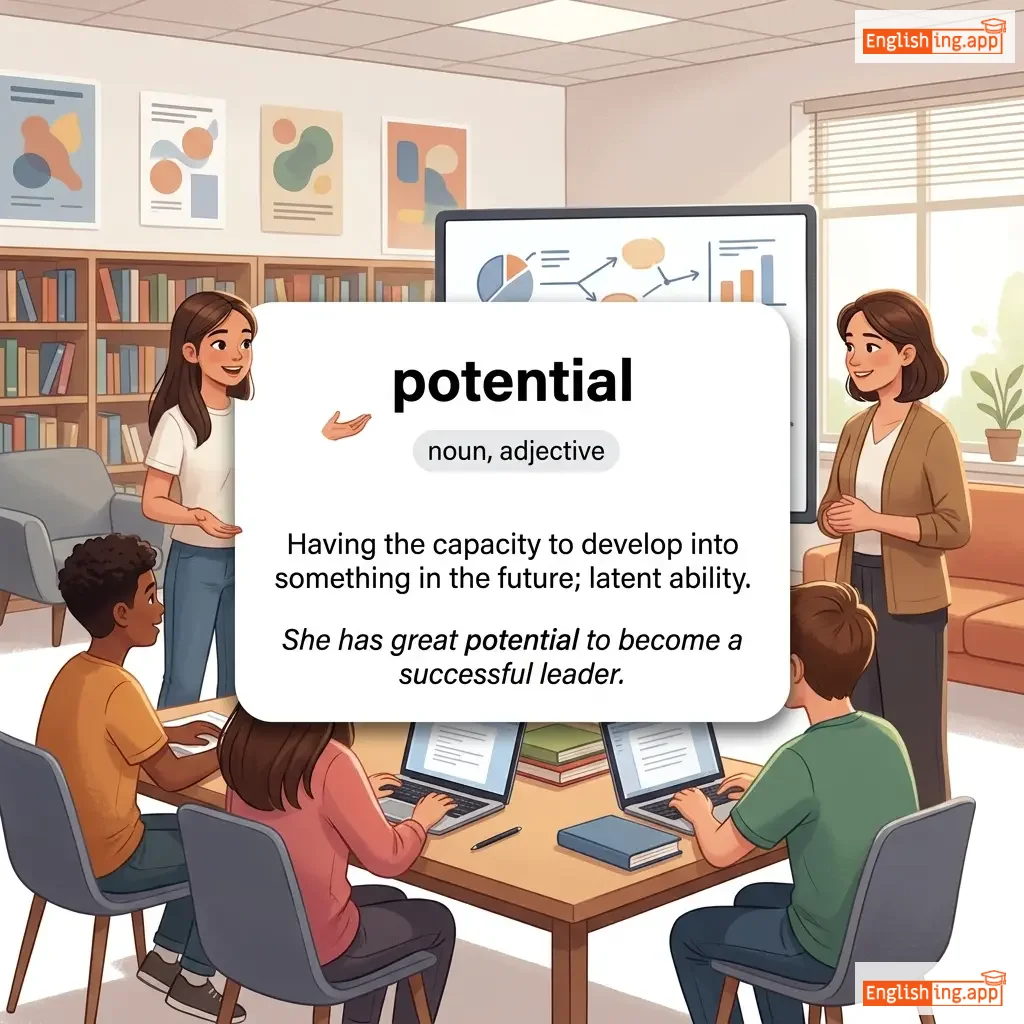
potential definition card — visual illustration of the meaning
noun, adjective
/pəˈtɛnʃəl/
संभावना (sambhavna)

Having the capacity to develop into something in the future; latent ability.

"She has great potential to become a successful leader."

"उसमें एक सफल नेता बनने की महान संभावना है।" (Usmein ek safal neta banne ki mahaan sambhavna hai.)
adverb
/pəˈtɛnʃəli/
संभावित रूप से (sambavit roop se)

with the possibility of becoming something in the future

"This project is potentially a huge success."

"इस परियोजना की सफलता पोटेंशियली बहुत बड़ी हो सकती है।" (Is pariyojna ki safalta potentially bahut badi ho sakti hai.)
verb
/poʊˈtɛnʃiˌeɪt/
शक्ति बढ़ाना (shakti badhana)

To increase the power, effect, or likelihood of something.

"Caffeine can potentiate the effects of some medicines."

"कैफीन कुछ दवाओं के प्रभाव को बढ़ा सकता है।" (Caffeine kuch davaon ke prabhav ko badha sakta hai.)
noun
/ˈpoʊʃən/
औषधि पेय (aushadhi pey)

a liquid with healing, magical, or poisonous properties

"The witch gave the hero a healing potion."

"चुड़ैल ने नायक को एक उपचार पोटिशन दी।" (Chudail ne nayak ko ek upchar potion dee.)
noun
/ˌpoʊpʊˈriː/
सूखे फूलों का मिश्रण (sookhe phoolon ka mishran)

a mixture of dried flowers and spices kept in a bowl to perfume a room; a miscellaneous collection

"The living room was filled with the scent of potpourri."

"लिविंग रूम पॉटपुरी की खुशबू से भर गया था।" (Living room potpuri ki khushboo se bhar gaya tha.)
noun
/ˈpɑː.tər/
मटका बनानेवाला (matka bananewala)

a person who makes pottery

"The potter shaped clay on the spinning wheel."

"मटका बनानेवाले ने घूमते हुए पहिए पर मिट्टी को आकार दिया।" (matka bananewale ne ghoomte hue pahiye par mitti ko akar diya.)
noun
/paʊtʃ/
पाउच (pouch)

a small bag or pocket, often used to carry small items

"She kept her coins in a small leather pouch."

"उसने अपने सिक्के एक छोटे चमड़े के पाउच में रखे थे।" (Usne apne sikke ek chhote chamde ke pouch mein rakhe the.)
noun
/ˈpoʊltɪs/
गर्म हर्बल पट्टी (garm herbal patti)

a soft, moist mass of material applied to the body to relieve soreness and inflammation

"The nurse applied a warm poultice to his injured leg."

"नर्स ने उसके घायल पैर पर एक गर्म पौल्टिस लगाई।" (Nars ne uske ghaayal pair par ek garm poultice lagayi.)
noun, verb
/paʊnd/
पाउंड (pound)

a unit of weight equal to 16 ounces or a unit of currency

"The price of the book is five pounds."

"किताब की कीमत पांच पाउंड है।" (Kitab ki keemat paanch pound hai.)
verb
/pɔːr/
डालना (daalna)

to cause a liquid to flow from a container

"She poured the tea into the cup."

"उसने कप में चाय डाली।" (Usne kap mein chai daali.)
verb
/paʊt/
होठों को फुलाना (hothon ko fulana)

to push one's lips forward as an expression of annoyance or sulkiness

"The child began to pout when he didn’t get the toy."

"बच्चा खिलौना न मिलने पर होठों को फुलाने लगा।" (Baccha khilona na milne par hothon ko fulane laga.)
noun
/ˈpɒvəti/
गरीबी (gareebi)

the state of being extremely poor

"Poverty is a major issue in many countries."

"गरीबी कई देशों में एक महत्वपूर्ण समस्या है।" (Gareebi kai deshon mein ek mahatvapurn samasya hai.)
noun
/ˈpaʊdər/
पाउडर (paudar)

a fine, dry substance made of very tiny particles

"She sprinkled some powder on the cake."

"उसने केक पर थोड़ा पाउडर छिड़का।" (Usne cake par thoda paudar chhidka.)
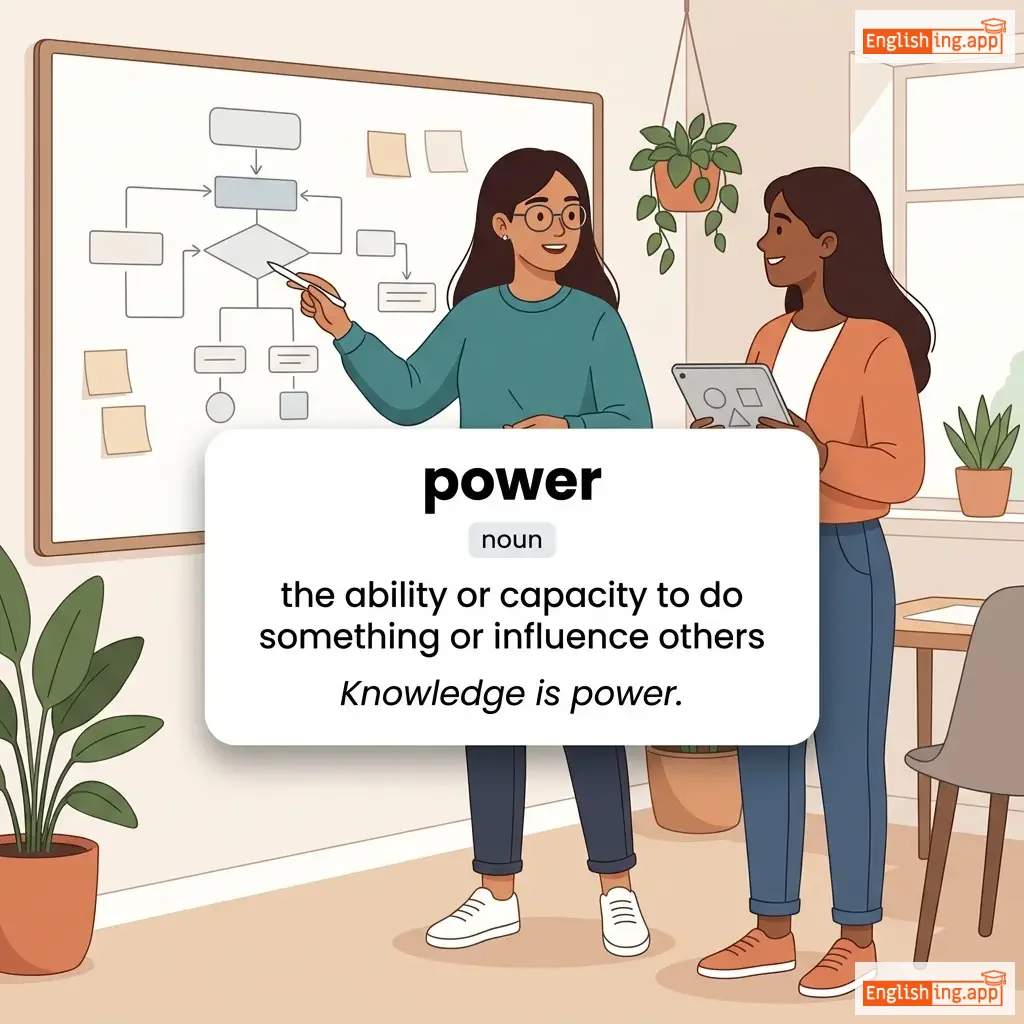
power definition card — visual illustration of the meaning
noun
/ˈpaʊər/
शक्ति (shakti)

the ability or capacity to do something or influence others

"Knowledge is power."

"ज्ञान ही शक्ति है।" (Gyaan hi shakti hai.)
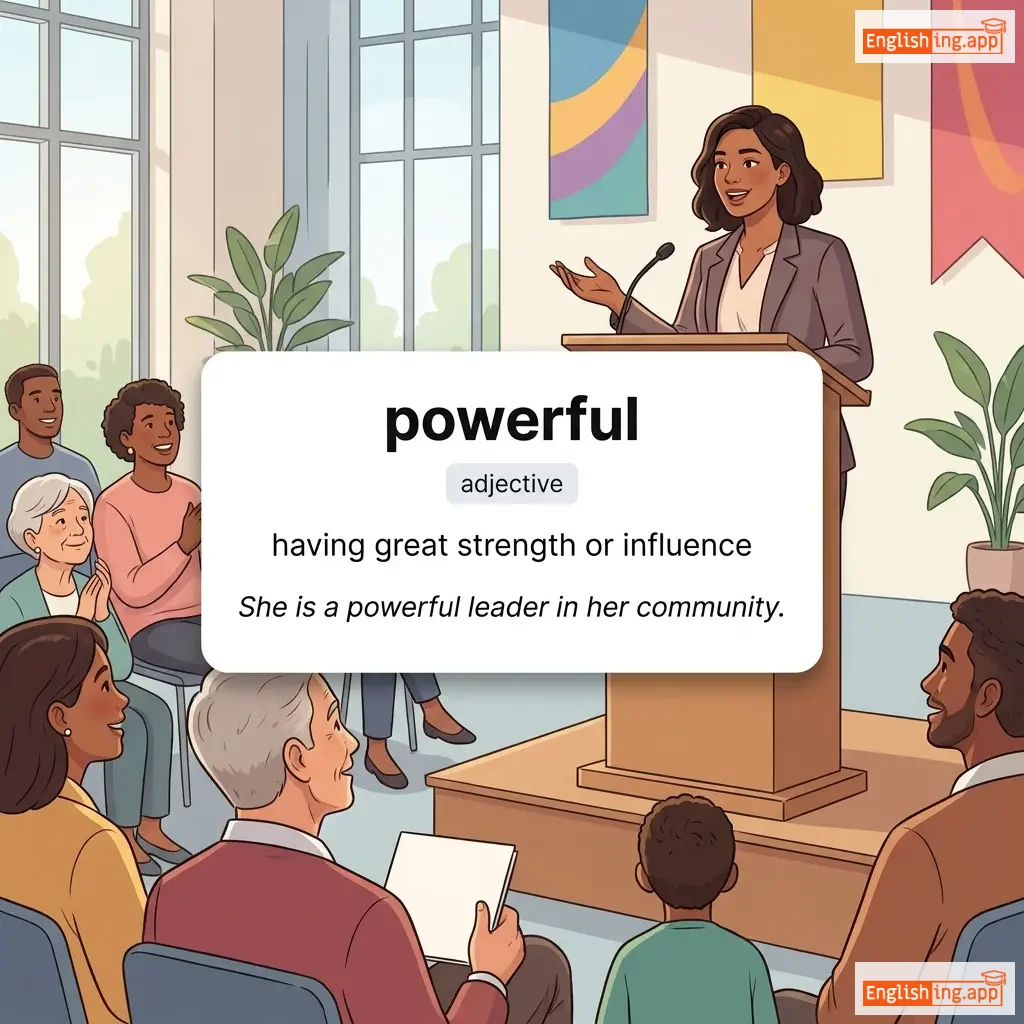
powerful definition card — visual illustration of the meaning
adjective
/ˈpaʊərfəl/
शक्तिशाली (shaktishaalee)

having great strength or influence

"She is a powerful leader in her community."

"वह अपने समुदाय में एक शक्तिशाली नेता है।" (Vah apne samudaay mein ek shaktishaalee neta hai.)
adjective
/ˈpaʊərləs/
निर्बल (nirbal)

without ability, influence, or strength

"She felt powerless against the unfair system."

"वह अन्यायपूर्ण व्यवस्था के खिलाफ powerless महसूस कर रही थी।" (Woh anyaaypoorn vyavastha ke khilaf powerless mahsus kar rahi thi.)
noun
/ˈpaʊ.waʊ/
गैर औपचारिक बैठक (gair aupchaarik baithak)

an informal meeting or conference to discuss something

"The team held a quick powwow before the presentation."

"टीम ने प्रस्तुति से पहले एक त्वरित गैर औपचारिक बैठक की।" (Teem ne prastuti se pehle ek tvarit gair aupchaarik baithak ki.)
adjective
/ˈpræk.tɪ.kə.bəl/
व्यवहारिक (vyavaharik)

able to be done or put into practice successfully

"The plan is not practicable without more resources."

"योजना अधिक संसाधनों के बिना व्यवहारिक नहीं है।" (Yojana adhik sansadhanon ke bina vyavaharik nahi hai.)
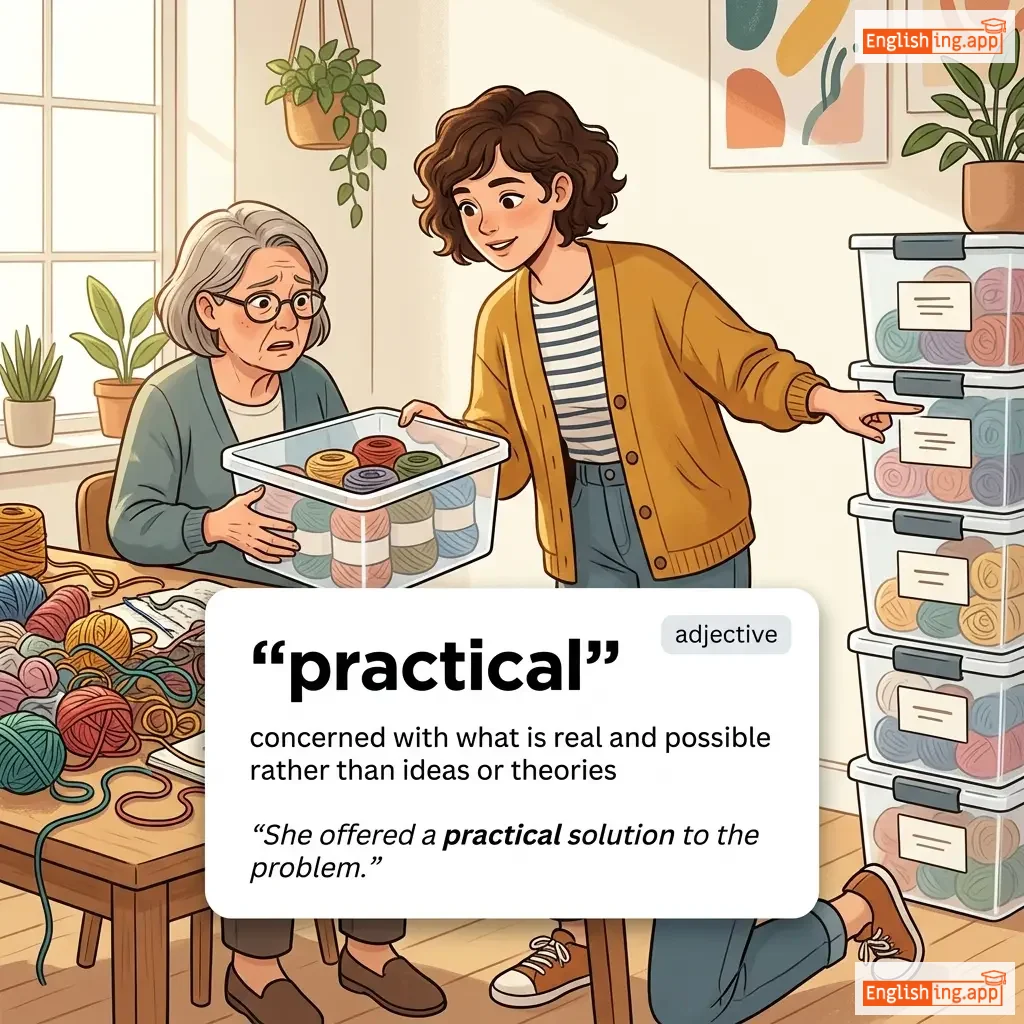
practical definition card — visual illustration of the meaning
adjective
/ˈpræk.tɪ.kəl/
व्यावहारिक (vyavaharik)

concerned with what is real and possible rather than ideas or theories

"She offered a practical solution to the problem."

"उसने समस्या का एक व्यावहारिक समाधान पेश किया।" (Usne samasya ka ek vyavaharik samadhan pesh kiya.)
adverb
/ˈpræktɪkli/
प्रायः (prayah)

in a way that is almost or nearly; in a realistic or functional manner

"The movie theater was practically empty."

"सिनेमा थिएटर लगभग खाली था।" (Cinema theater lagbhag khaali tha.)
practice definition card — visual illustration of the meaning
noun/verb
/ˈpræk.tɪs/
अभ्यास (abhyas)

the act of doing something repeatedly to improve skill, or the actual application of an idea

"He practices the piano every day."

"वह हर दिन पियानो अभ्यास करता है।" (Wah har din piano abhyas karta hai.)
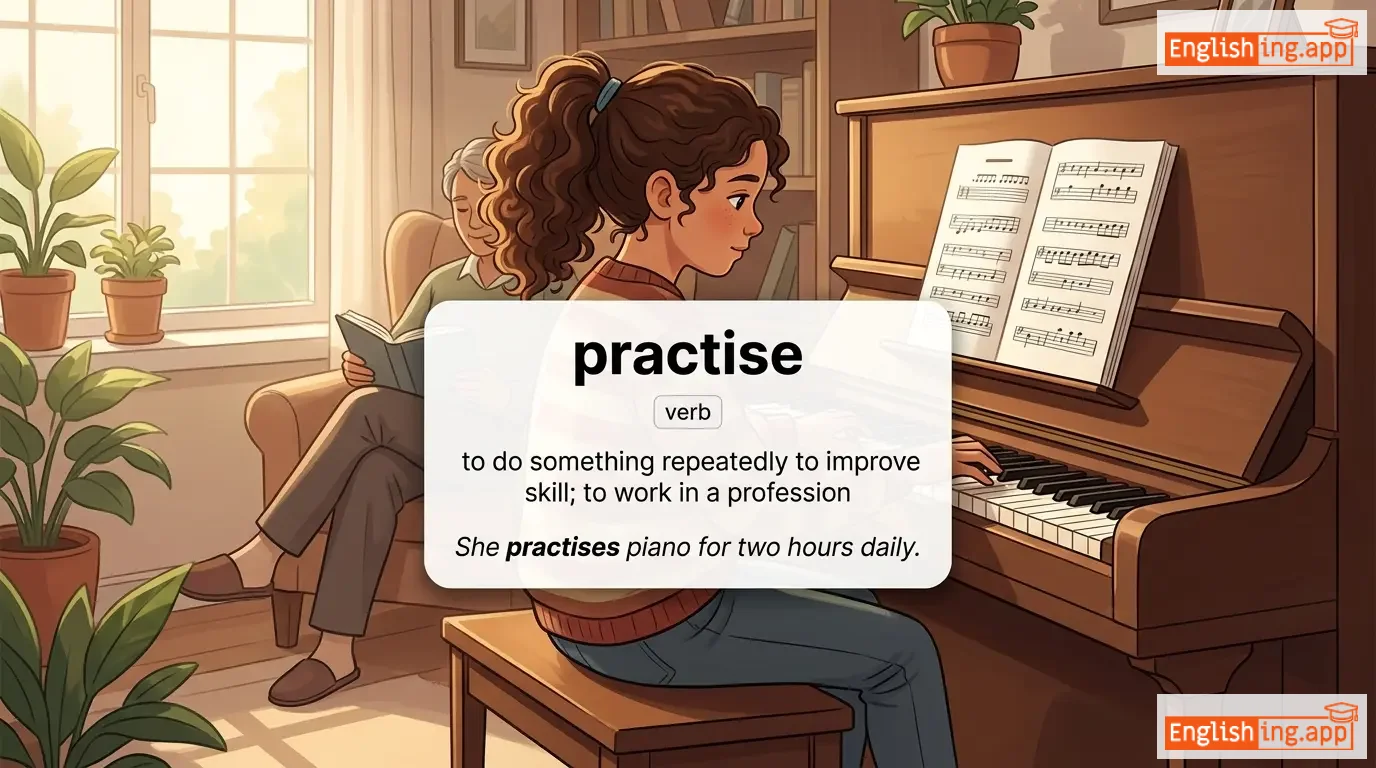
practise definition card — visual illustration of the meaning
verb
/ˈpræktɪs/
अभ्यास करना (abhyaas karna)

to do something repeatedly to improve skill; to work in a profession

"She practises piano for two hours daily."

"वह रोज़ दो घंटे पियानो अभ्यास करती है।" (Woh roz do ghante piano abhyas karti hai.)
noun
/prækˈtɪʃ.ən.ər/
व्यवसायी (vyavsayee)

a person actively engaged in a profession, especially medicine or law

"She is a skilled medical practitioner."

"वह एक कुशल चिकित्सा व्यवसायी है।" (Vah ek kushal chikitsa vyavsayee hai.)
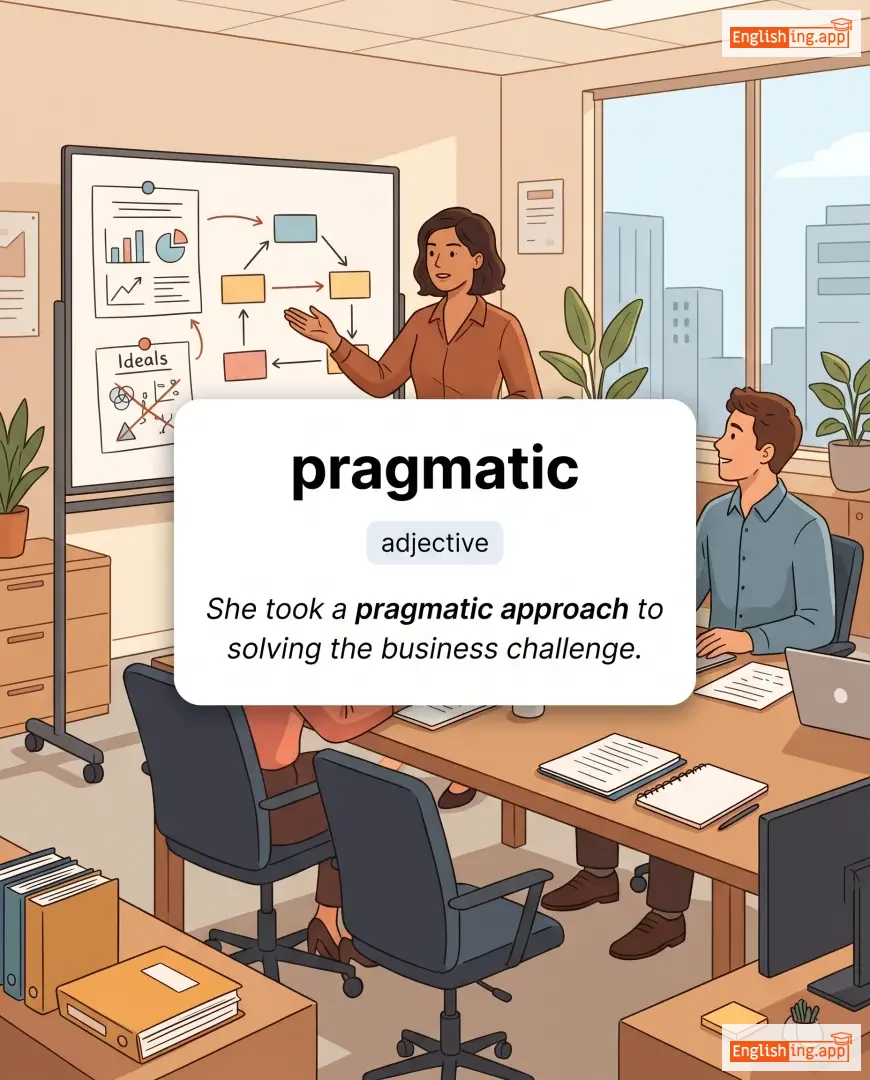
pragmatic definition card — visual illustration of the meaning
adjective
/præɡˈmætɪk/
व्यावहारिक (vyavaharik)

Dealing with problems in a practical and sensible way rather than depending on theories or ideals.

"She took a pragmatic approach to solving the business challenge."

"उसने व्यापार की चुनौती को हल करने के लिए एक व्यावहारिक दृष्टिकोण अपनाया।" (Usne vyavhaar ki chunauti ko hal karne ke liye ek vyavaharik drishtikon apnaya.)
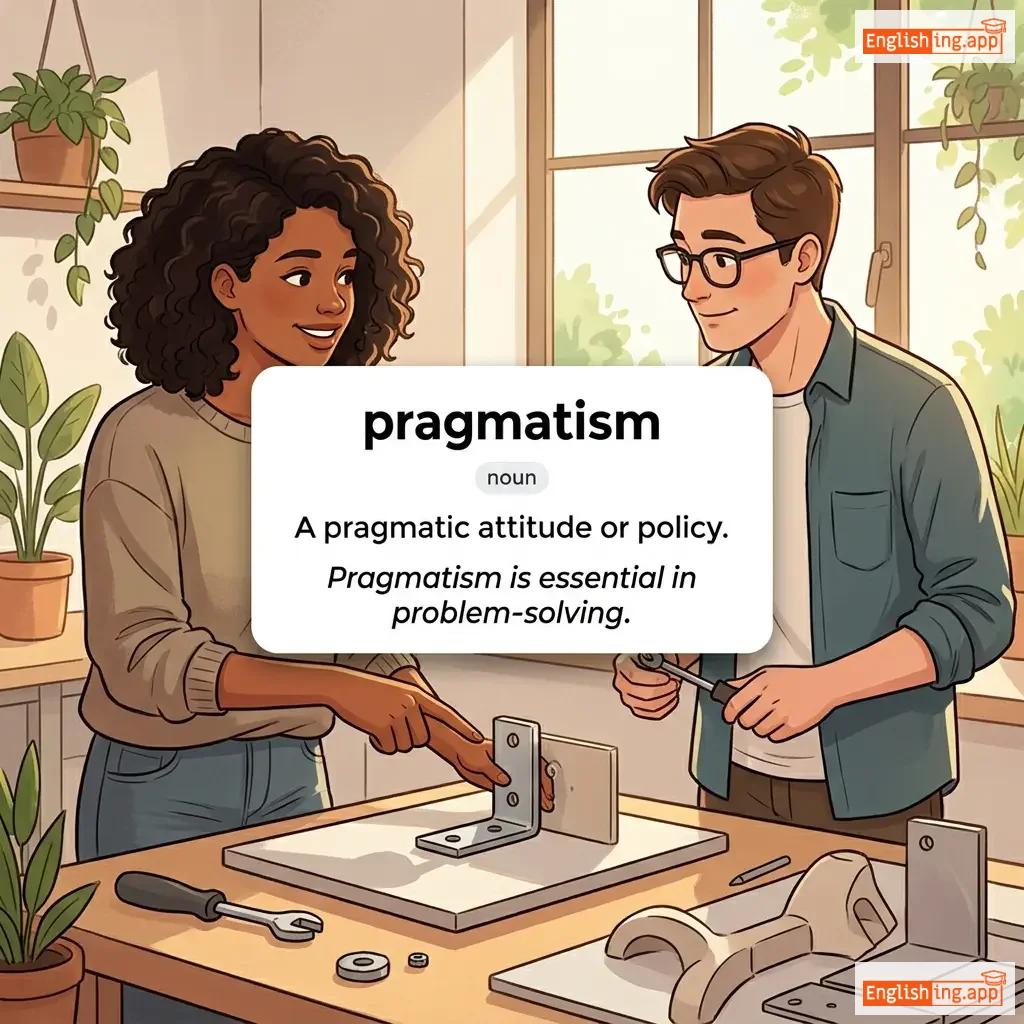
pragmatism definition card — visual illustration of the meaning
noun
/ˈpræɡ.mə.tɪ.zəm/
व्यावहारिक दृष्टिकोण या नीति (vyavaharik drishtikon ya neeti)

A pragmatic attitude or policy.

"Pragmatism is essential in problem-solving."

"समस्याओं को हल करने में व्यावहारिक दृष्टिकोण आवश्यक है।" (Samasyaon ko hal karne mein vyavaharik drishtikon avashyak hai.)
noun
/ˈpræɡmətɪst/
व्यावहारिकतावादी (vyavahariktavadi)

A person who deals with things in a practical and realistic way.

"He is a true pragmatist who values results over ideals."

"वह एक सच्चा व्यावहारिकतावादी है जो आदर्शों की तुलना में परिणामों को महत्व देता है।" (vah ek sachcha vyavahariktavadi hai jo adarshon ki tulna mein parinaamon ko mahatva deta hai.)
noun
/ˈprɛəri/
घास का मैदान (ghaas ka maidan)

A large open area of grassland, especially in North America.

"The bison roamed freely across the prairie."

"बाइसन घास के मैदान में स्वतंत्र रूप से घूमते थे।" (Bison ghas ke maidan mein svatantra roop se ghoomte the.)
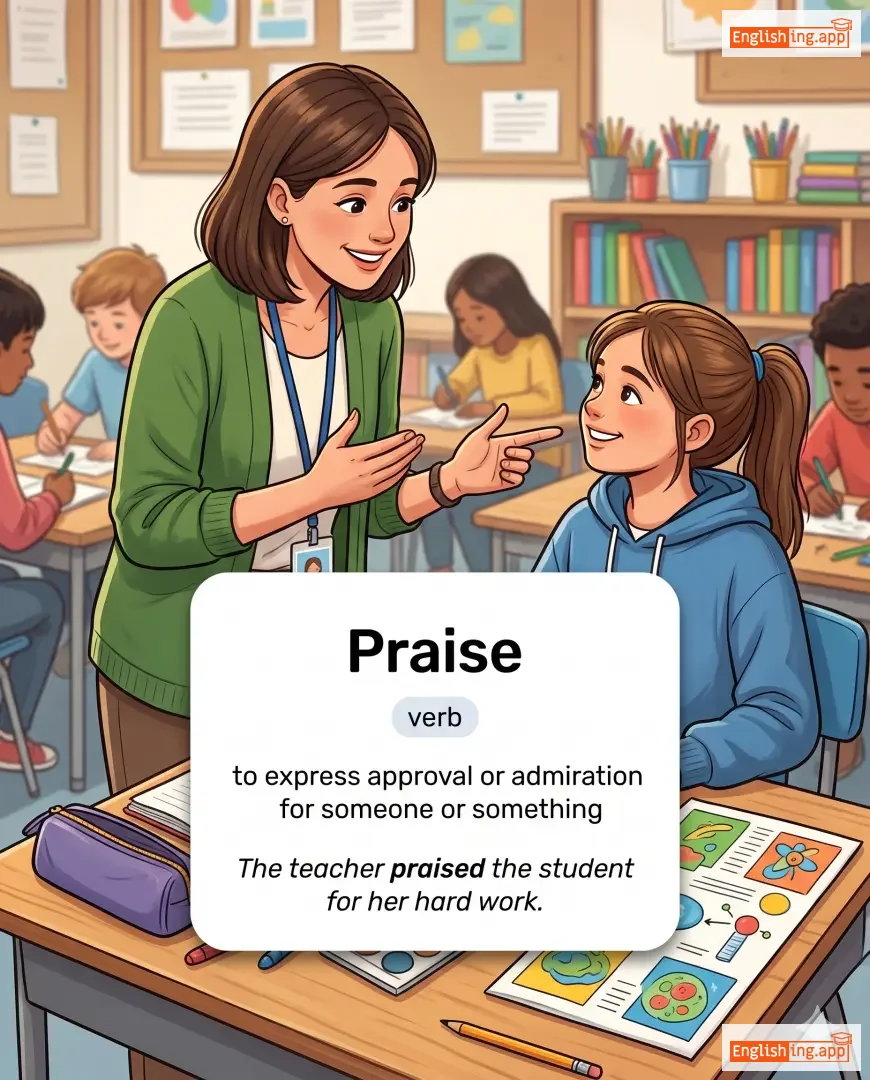
Praise definition card — visual illustration of the meaning
verb
/preɪz/
तारीफ करना (tareef karna)

to express approval or admiration for someone or something

"The teacher praised the student for her hard work."

"टीचर ने स्टूडेंट की कड़ी मेहनत के लिए तारीफ की।" (Teacher ne student ki kadi mehnat ke liye tareef ki.)
adjective
/ˈpreɪz.wɜː.ði/
प्रशंसा योग्य (praiseworthy)

deserving praise; commendable; admirable

"Her charitable work is truly praiseworthy."

"उसका परोपकारी कार्य सच में प्रशंसा योग्य है।" (uska paropkari karya sach mein prashansa yogya hai.)