वोकैबुलरीज

इंग्लिश वोकैबुलरी डिस्कवर, लर्न और मास्टर करें

adjective
/ˈplændʒənt/
दर्दनाक या गूंजता हुआ ध्वनि (dardnaak ya goonjta hua dhvani)

having a loud, mournful sound; resonant

"The plangent toll of the church bell echoed through the village."

"गांव में चर्च की घंटी की दर्दनाक आवाज़ गूंज उठी।" (Gaon mein church ki ghanti ki dardnaak awaaz goonj uthi.)
noun
/ˈplænɪsfɪr/
तारों का आकाशचित्र (taroon ka aakashchitra)

a rotating star chart used to display the visible stars for any time and date

"The astronomer used a planisphere to identify the constellations."

"खगोलशास्त्री ने तारों के समूहों की पहचान करने के लिए आकाशचित्र का उपयोग किया।" (Khagolshastri ne taaron ke samuhon ki pehchaan karne ke liye aakashchitra ka upyog kiya.)
noun
/ˈplænər/
योजना बनाने वाला (yojana banane wala)

a person who makes plans or a book used for organizing schedules and tasks

"She uses a daily planner to organize her meetings."

"वह अपनी बैठकों को व्यवस्थित करने के लिए एक दैनिक योजना बनाने वाले का उपयोग करती है।" (vah apni baithako ko vyavasthit karne ke liye ek dainik yojana banane wale ka upyog karti hai.)
planning definition card — visual illustration of the meaning
noun
/ˈplænɪŋ/
योजना (yojana)

the process of making plans for something

"The planning for the event took months."

"घटना के लिए योजना बनाने में महीनों लग गए।" (Ghatna ke liye yojana banane mein mahino lag gaye.)
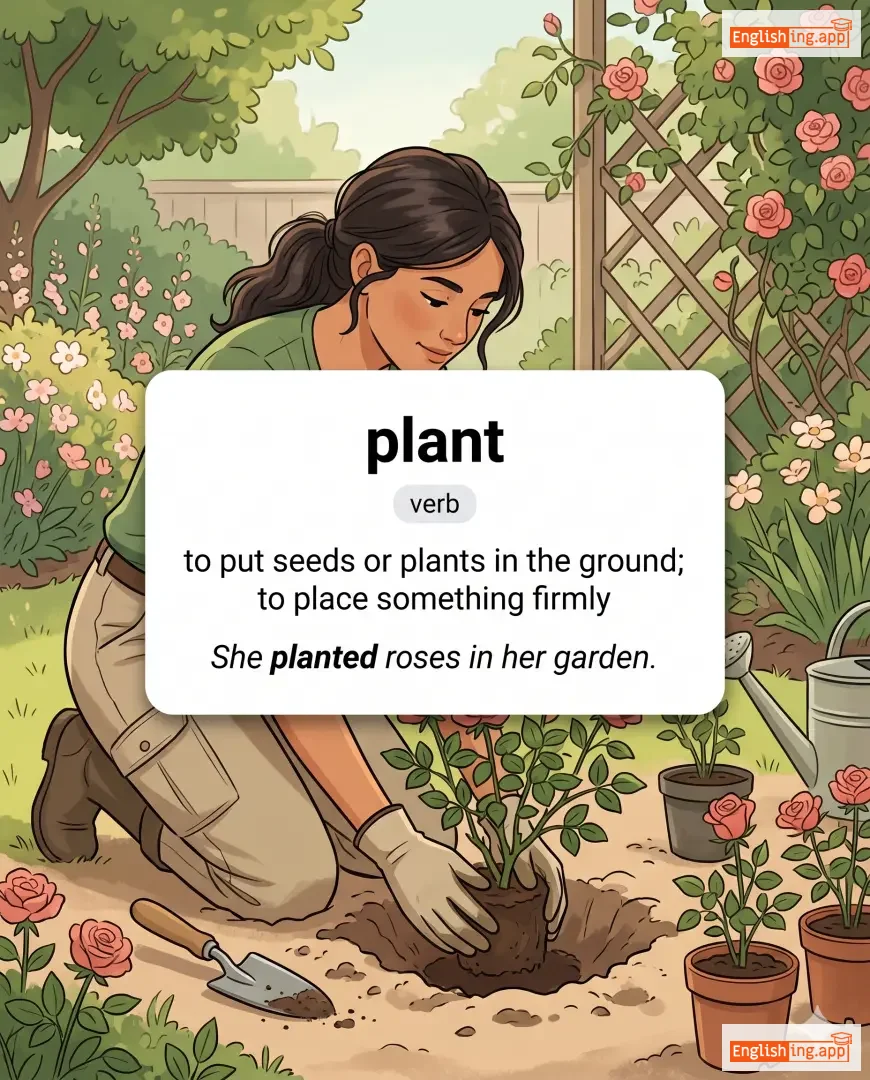
plant definition card — visual illustration of the meaning
noun
/plænt/
पौधा (paudha)

a living organism that typically grows in the ground and absorbs nutrients from the soil

"She planted a tree in her garden."

"उसने अपने बगीचे में एक पेड़ लगाया।" (Usne apne bagiche mein ek ped lagaya.)
noun
/ˈplæn.tɪn/
कच्चा केला (kacha kela)

a large green banana-like fruit that is usually cooked before eating

"Plantain can be fried, boiled, or baked and is a staple food in many tropical countries."

"प्लांटेन को तला, उबाला या बेक किया जा सकता है और यह कई उष्णकटिबंधीय देशों में एक मुख्य भोजन है।" (plantain ko tala, ubala ya bake kiya ja sakta hai aur yah kai ushnakatibandhiya deshon mein ek mukhya bhojan hai)
noun
/ˈplæn.teɪn ˈflaʊ.ər/
कच्चा केला का फूल (kachcha kela ka phool)

The flower bud of a banana plant, used as a vegetable in cooking

"We cooked plantain flower curry for dinner."

"हमने रात के खाने के लिए कच्चा केला का फूल करी बनाया।" (hamne raat ke khane ke liye kachcha kela ka phool kari banaya.)
noun
/plænˈteɪʃən/
वृक्षारोपण (vriksharopan)

a large area of land where crops are grown, often for commercial purposes

"The sugarcane plantation stretched for miles across the valley."

"गन्ने का वृक्षारोपण घाटी के पार मीलों तक फैला हुआ था।" (Ganne ka vriksharopan ghaati ke paar meelon tak phaila hua tha.)
noun
/ˈplæz.mə/
रक्त के द्रव भाग; आयनित गैस; रक्त का सीरम बिना थक्के बनने वाले प्रोटीन के (plazma)

the liquid part of blood; ionized gas; blood serum without clotting proteins

"Blood plasma contains various proteins and nutrients."

"रक्त प्लाज्मा में विभिन्न प्रोटीन और पोषक तत्व होते हैं।" (rakt plazma mein vibhinn protein aur poshak tatva hote hain)
noun, verb
/ˈplɑːstər/
प्लास्टर, मरम्मत करना (plaster, marammat karna)

a soft mixture applied to walls or used to cover wounds; or to cover or coat with plaster

"The workers plastered the walls to make them smooth."

"कर्मचारियों ने दीवारों को स्मूथ बनाने के लिए प्लास्टर किया।" (Karmachariyon ne deewaron ko smooth banane ke liye plaster kiya.)
adjective, noun
/ˈplæstɪk/
प्लास्टिक (plastic)

a synthetic material that can be molded; flexible or easily shaped

"These containers are made of durable plastic."

"ये कंटेनर टिकाऊ प्लास्टिक से बने हैं।" (Ye container tikau plastic se bane hain.)
plasticity definition card — visual illustration of the meaning
noun
/plæsˈtɪsəti/
लचीलापन, आकार बदलने की क्षमता (lacheelapan, aakaar badalne ki kshamata)

the quality of being easily shaped or molded; adaptability

"The brain's plasticity allows it to adapt after injury."

"मस्तिष्क की प्लास्टिसिटी इसे चोट के बाद अनुकूलित करने की अनुमति देती है।" (Mastisk ki plasticity isse chot ke baad anukoolit karne ki anumati deti hai.)
noun
/pleɪt/
प्लेट (pleṭ)

a flat, typically round dish used for serving food

"She put the salad on the plate."

"उसने सलाद को प्लेट पर रखा।" (Usne salad ko pleṭ par rakha.)
noun
/plæˈtoʊ/
समतल भूमि, ऊँची जगह, एक स्थिर स्थिति (samatal bhumi, unchi jagah, ek sthir sthiti)

an elevated flat area of land or a period of little change

"After months of growth, sales reached a plateau."

"वृद्धि के महीनों के बाद, बिक्री एक स्थिर स्थिति पर पहुँच गई।" (Vriddhi ke mahino ke baad, bikri ek sthir sthiti par pahunch gayi.)
platform definition card — visual illustration of the meaning
noun
/ˈplætfɔːrm/
प्लेटफ़ॉर्म (platform)

a raised level surface on which people or things can stand

"The train arrived on platform five."

"ट्रेन प्लेटफ़ॉर्म पांच पर आई।" (Train platform paanch par aayi.)
platforms definition card — visual illustration of the meaning
noun
ˈplæt.fɔːrmz
मंच, सॉफ़्टवेयर या हार्डवेयर पर्यावरण (manch, software ya hardware paryavaran)

Computing environments where software applications can be developed and run.

"Different platforms offer diverse digital solutions."

"विभिन्न मंच विविध डिजिटल समाधान प्रदान करते हैं।" (Vibhinn manch vibhinn digital samadhan pradan karte hain.)
platitude definition card — visual illustration of the meaning
noun
/ˈplætɪtjuːd/
क्लिशे, सामान्य वाक्य (klishe, sadharan vaakya)

a remark or statement that is overused and unoriginal

"He kept repeating the same platitudes during the speech."

"उन्होंने भाषण के दौरान वही पुराने जुमले बार-बार दोहराए।" (Unhone bhashan ke dauran wahi purane jumle baar-baar dohraaye.)
adjective
/pləˈtɒnɪk/
प्लैटोनिक (platonic)

relating to a close relationship that is not romantic or sexual

"They have a platonic friendship that has lasted for years."

"उनका एक प्लेटोनिक दोस्ती है जो सालों से चल रही है।" (Unka ek platonic dosti hai jo salon se chal rahi hai.)
noun
/ˈplɔːdɪt/
प्रशंसा (prashansa)

an expression of praise or approval

"The actor received plaudit for his outstanding performance."

"अभिनेता को उनकी उत्कृष्ट प्रदर्शन के लिए प्रशंसा मिली।" (Abhineta ko unki utkrist pradarshan ke liye prashansa mili.)
noun
/ˈplɔːdɪts/
प्रशंसा (prashansa)

expressions of praise or approval

"The scientist received plaudits from the international community."

"वैज्ञानिक को अंतरराष्ट्रीय समुदाय से प्रशंसा मिली।" (Vaigyanik ko antarraashtreey samudaay se prashansa mili.)
plausibility definition card — visual illustration of the meaning
noun
/ˌplɔː.zəˈbɪl.ə.ti/
विश्वसनीयता (vishwasneeyata)

The quality of being reasonable or probable.

"The plausibility of his explanation convinced the jury."

"उसके व्याख्यान की विश्वसनीयता ने जूरी को प्रभावित किया।" (Uske vyakhyan ki vishwasneeyata ne juri ko prabhavit kiya.)
plausible definition card — visual illustration of the meaning
adjective
/ˈplɔːzəbl/
संभाव्य (sambhavy)

seeming reasonable or probable

"Her explanation of the event sounded plausible."

"उसकी घटना की व्याख्या संभाव्य लग रही थी।" (Uski ghatna ki vyakhya sambhavy lag rahi thi.)
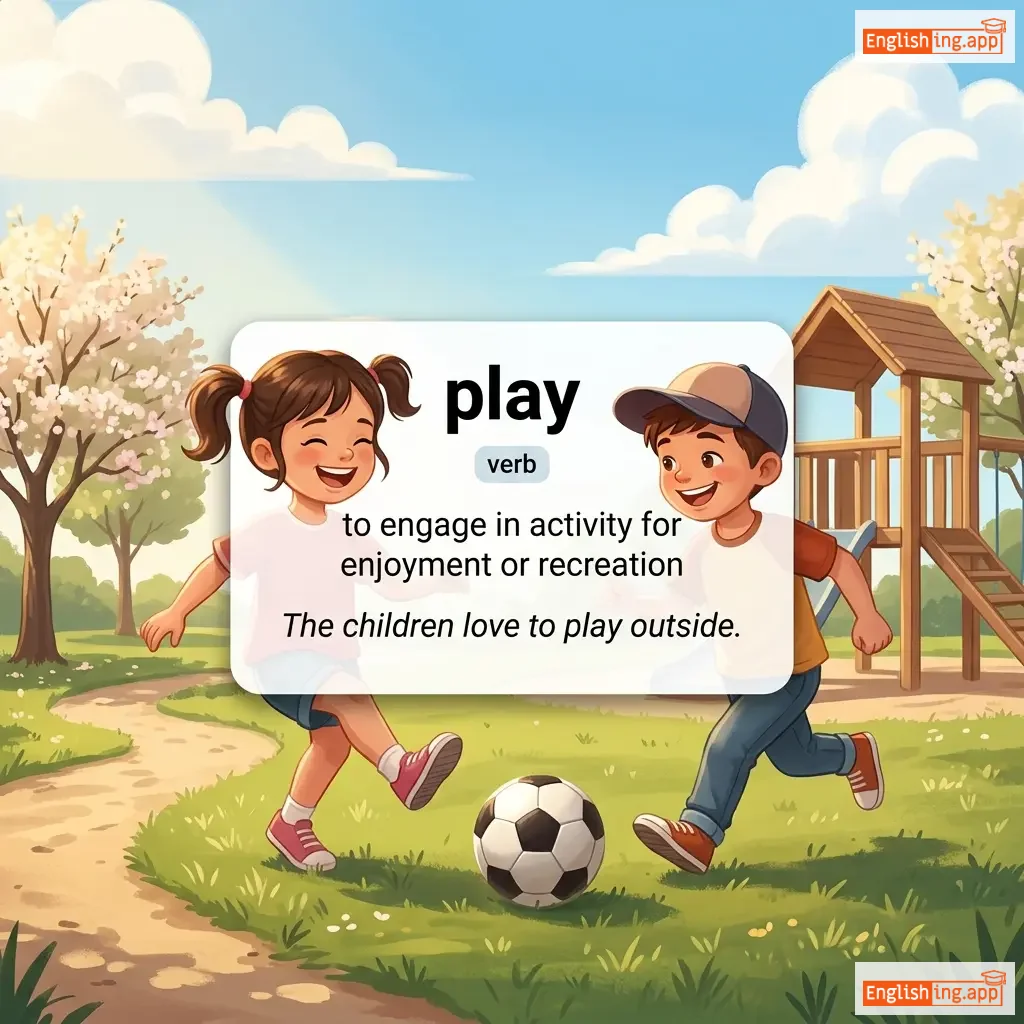
play definition card — visual illustration of the meaning
verb
/pleɪ/
खेलना (khelna)

to engage in activity for enjoyment or recreation

"The children love to play outside."

"बच्चे बाहर खेलना पसंद करते हैं।" (Bachche baahar khelna pasand karte hain.)
noun
/ˈpleɪər/
खिलाड़ी (khiladi)

a person who participates in a game or sport

"The player scored the winning goal."

"खिलाड़ी ने विजेता गोल किया।" (Khiladi ne vijeta gol kiya.)
adjective
/ˈpleɪfəl/
मज़ेदार, चंचल (mazedaar, chanchal)

full of fun and high spirits; lively

"The puppy was very playful, running around the garden."

"पपी बहुत मजेदार था, बग़ीचे में दौड़ रहा था।" (Puppy bahut mazedaar tha, bagiche mein daud raha tha.)
noun
/ˈpleɪˌɔːf/
चैंपियन का निर्धारण करने वाला मैच (champion ka nirdharan karne wala match)

a series of games played to determine a champion among top teams

"The team qualified for the playoffs after a strong season."

"टीम ने एक मजबूत सीजन के बाद प्लेऑफ के लिए क्वालीफाई किया।" (Team ne ek majboot season ke baad playoff ke liye qualify kiya.)
noun
/ˈpleɪˌraɪt/
नाटककार (natakkar)

a person who writes plays

"Shakespeare is considered the greatest playwright of all time."

"शेक्सपियर को सभी समयों के सबसे महान नाटककार के रूप में माना जाता है।" (Shakespeare ko sabhi samayon ke sabse mahaan natakkar ke roop mein maana jaata hai.)
noun
/pliː/
बयान, आवेदन (bayan, avedan)

a request or appeal, especially in a legal context

"The defendant entered a guilty plea in court."

"प्रतिवादी ने अदालत में दोषी होने की प्ली दाखिल की।" (Pratibadi ne adalat mein doshi hone ki plea dakhil ki.)
plead definition card — visual illustration of the meaning
verb
/pliːd/
नम्रता से अनुरोध करना, अदालत में कहना (namrata se anurodh karna, adalat mein kehna)

to make an emotional or earnest request; to state in court

"She pleaded with him to stay."

"उसने उसे रुकने के लिए नम्रता से अनुरोध किया।" (Usne use rukne ke liye namrata se anurodh kiya.)
adjective
/ˈplɛzənt/
सुखद, आनंददायक (sukhd, anandadayak)

giving a sense of happiness, enjoyment, or satisfaction

"We had a pleasant evening at the park."

"हमने पार्क में एक सुखद शाम बिताई।" (Hamne park mein ek sukhad shaam bitayi.)
noun
/ˈplez.ən.tri/
शिष्टाचार (shishtachar)

a remark made in order to be polite or friendly; light conversation or jokes

"They exchanged pleasantries before the meeting began."

"वे बैठक शुरू होने से पहले शिष्टाचार के रूप में बातचीत कर रहे थे।" (ve baithak shuru hone se pehle shishtachar ke roop mein baatcheet kar rahe the.)
verb
/pliːz/
खुश करना (khush karna)

to make someone happy or satisfied

"She will do anything to please her parents."

"वह अपने माता-पिता को खुश करने के लिए कुछ भी करेगी।" (Woh apne mata-pita ko khush karne ke liye kuch bhi karegi.)
adjective
/pliːzd/
संतुष्ट (santusht)

feeling happy or satisfied with something

"She was pleased with her exam results."

"वह अपनी परीक्षा के परिणामों से संतुष्ट थी।" (Wah apni pareeksha ke parinaamon se santusht thi.)
adjective
/ˈplɛʒərəbl/
आनंदजनक, सुखद (anandjanak, sukhad)

giving pleasure or enjoyment

"Reading a good book is a pleasurable activity."

"एक अच्छी किताब पढ़ना एक आनंदजनक गतिविधि है।" (Ek acchi kitaab padhna ek anandjanak gatividhi hai.)
noun
/ˈplɛʒər/
आनंद (anand)

a feeling of happiness or enjoyment

"It was a pleasure to meet you."

"आपसे मिलकर खुशी हुई।" (Aapse milkar khushi hui.)
noun, verb
/pliːt/
प्लीट (pleat)

a fold in fabric made by doubling the material back upon itself

"She added a pleat to the skirt for extra volume."

"उसने स्कर्ट में अतिरिक्त वॉल्यूम के लिए एक प्लीट जोड़ी।" (Usne skirt mein atirikt volume ke liye ek pleat jodi.)
adjective, noun
/pləˈbiːən/
साधारण वर्ग का व्यक्ति (sadharan varg ka vyakti)

common, ordinary, or belonging to the lower social classes

"The festival was enjoyed by both plebeian and noble citizens."

"त्योहार का आनंद साधारण और कुलीन नागरिकों ने समान रूप से लिया।" (Tyohar ka anand sadharan aur kuleen nagrikon ne saman roop se liya.)
adjective, noun
/pləˈbiːən/
साधारण, सामान्य व्यक्ति का (sadharan, samanya vyakti ka)

alternate spelling of 'plebeian'; common or ordinary

"His tastes were rather plebian, favoring simple food and clothes."

"उसकी पसंद काफी साधारण थी, वह साधारण खाना और कपड़े पसंद करता था।" (Uski pasand kafi sadharan thi, wah sadharan khana aur kapde pasand karta tha.)
noun
/ˈplɛbɪsaɪt/
जनता का प्रत्यक्ष मतदान (janata ka pratyaksh matdan)

a direct vote by the electorate on an important public question

"The government held a plebiscite to decide on the new constitution."

"सरकार ने नए संविधान पर निर्णय लेने के लिए एक जनता का प्रत्यक्ष मतदान आयोजित किया।" (Sarkar ne naye samvidhan par nirnay lene ke liye ek janata ka pratyaksh matdan aayojit kiya.)
noun
/plɛdʒ/
प्रतिज्ञा (pratigya)

a solemn promise or agreement to do or refrain from doing something

"He gave a pledge to support the cause."

"उसने कारण का समर्थन करने के लिए एक प्रतिज्ञा दी।" (Usne kaaran ka samarthan karne ke liye ek pratigya di.)
noun
/ˈplɛdʒiː/
जिसे कुछ सुरक्षा के रूप में सौंपा गया हो (jise kuch suraksha ke roop mein sonpa gaya ho)

a person to whom something is pledged or given as security

"The bank is the pledgee of the collateral until the loan is repaid."

"बैंक वह प्लेजी है जिसे संपत्ति की सुरक्षा के रूप में रखा गया है जब तक ऋण का भुगतान नहीं हो जाता।" (Bank vah pledgee hai jise sampatti ki suraksha ke roop mein rakha gaya hai jab tak rin ka bhugtan nahi ho jata.)
noun
/ˈplɛdʒɔːr/
जमानतदाता (jamanatdata)

a person who gives or offers a pledge or security

"The bank accepted the jewelry from the pledgeor as collateral for the loan."

"बैंक ने ऋण के लिए जमानत के रूप में प्लेजोर से गहने स्वीकार किए।" (Bank ne rin ke liye jamanat ke roop mein pledgeor se gahne sveekar kiye.)
adjective
/ˈpliːnəri/
पूर्णता (poornata)

complete in every way; fully attended or absolute

"The committee held a plenary session to discuss all matters of importance."

"समिति ने सभी महत्वपूर्ण मुद्दों पर चर्चा करने के लिए एक प्लेनरी सत्र आयोजित किया।" (Samiti ne sabhi mahatvapurn muddon par charcha karne ke liye ek plenary satr aayojit kiya.)
noun
/ˌpliːnɪpəˈtɛnʃəri/
पूर्णविकसित प्रतिनिधि (purnaviksit pratinidhi)

a person invested with full power to act on behalf of another, especially in diplomacy

"The ambassador was a plenipotentiary sent to negotiate the treaty."

"राजदूत एक प्लेनिपोटेंटियरी था जिसे संधि पर बातचीत करने के लिए भेजा गया था।" (Rajdoot ek plenipotentiary tha jise sandhi par baatcheet karne ke liye bheja gaya tha.)
noun
/ˈplɛnɪtjuːd/
प्रचुरता (prachurta)

the condition of being full or abundant; a great quantity

"The garden was a plenitude of flowers in spring."

"ग jardín में वसंत में फूलों की प्रचुरता थी।" (G jardín mein basant mein phoolon ki prachurta thi.)
adjective
/ˈplɛntɪəs/
प्रचुर (prachar)

existing in great quantity; abundant

"The harvest was plenteous, providing enough food for the entire village."

"फसल प्रचुर थी, पूरे गाँव के लिए पर्याप्त भोजन उपलब्ध करा रही थी।" (Fasal prachur thi, pure gaon ke liye paryapt bhojan uplabdh kara rahi thi.)
adjective
/ˈplɛntɪfəl/
प्रचुर (prachur)

Existing in great quantity; abundant.

"Food and water were plentiful in the village."

"गाँव में खाना और पानी प्रचुर था।" (Gaon mein khana aur pani prachur tha.)
noun
/ˈplɛntɪtjuːd/
प्रचुरता (prachurta)

the condition of being full or abundant

"The garden offered a plentitude of flowers in spring."

"गार्डन ने वसंत में फूलों की प्रचुरता प्रदान की।" (Garden ne basant mein phoolon ki prachurta pradan ki.)
noun
/ˈplɛnti/
काफी (kaafi)

a large or sufficient amount or quantity

"We have plenty of time before the meeting."

"हमारे पास बैठक से पहले काफी समय है।" (Hamare paas baithak se pehle kaafi samay hai.)
plethora definition card — visual illustration of the meaning
noun
/ˈplɛθərə/
अत्यधिक मात्रा (atyadhik matra)

an excessive amount of something

"She has a plethora of books on her shelf."

"उसकी अलमारी में किताबों की अत्यधिक मात्रा है।" (Uski almari mein kitaabon ki atyadhik matra hai.)