वोकैबुलरीज

इंग्लिश वोकैबुलरी डिस्कवर, लर्न और मास्टर करें

persuasiveness definition card — visual illustration of the meaning
noun
/pərˈsweɪ.sɪv.nəs/
प्रभाविता (prabhavita)

The quality of being able to persuade someone to do or believe something.

"His persuasiveness helped secure the deal."

"उसकी प्रभाविता ने सौदे को सुरक्षित करने में मदद की।" (Uski prabhavita ne saudey ko surakshit karne mein madad ki.)
adjective
/pɜːrt/
चंचल लेकिन आकर्षक (chanchal lekin aakarshak)

attractively lively or cheeky in manner or style

"She gave a pert reply that made everyone laugh."

"उसने एक चंचल उत्तर दिया जिसने सभी को हंसी में डाल दिया।" (Usne ek chanchal uttar diya jisne sabhi ko hansi mein daal diya.)
verb
/pərˈteɪn/
संबंधित होना (sambandhit hona)

to relate or have reference to something

"The rules pertain to all students in the school."

"नियम सभी छात्रों से संबंधित हैं।" (Niyam sabhi chhatron se sambandhit hain.)
adjective
/ˌpɜːrtɪˈneɪʃəs/
अडिग (adig)

holding firmly to an opinion, purpose, or course of action; stubbornly persistent

"The pertinacious lawyer refused to give up the case."

"अडिग वकील ने मामले को छोड़ने से इंकार कर दिया।" (Adig vakil ne mamle ko chhodne se inkaar kar diya.)
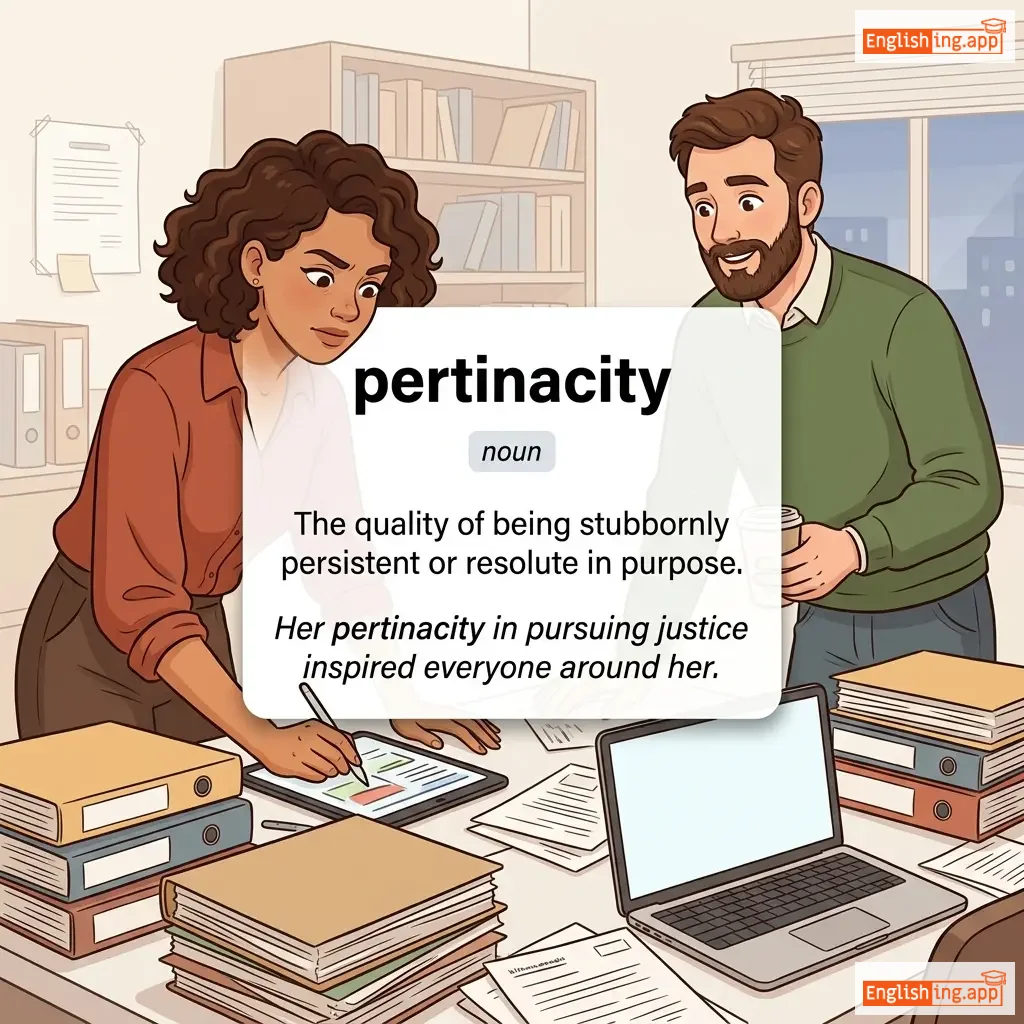
pertinacity definition card — visual illustration of the meaning
noun
/ˌpɜːrtɪˈnæsɪti/
हठी दृढ़ता (hathi dridhata)

The quality of being stubbornly persistent or resolute in purpose.

"Her pertinacity in pursuing justice inspired everyone around her."

"न्याय की खोज में उसकी हठी दृढ़ता ने आसपास सभी को प्रेरित किया।" (nyay ki khoj me uski hathi dridhata ne aas paas sabhi ko prerit kiya)
adjective
/ˈpɜːrtɪnənt/
प्रासंगिक (prasangik)

Relevant or applicable to a particular matter.

"She asked a pertinent question during the meeting."

"उसने बैठक के दौरान एक प्रासंगिक सवाल पूछा।" (Usne baithak ke dauran ek prasangik sawal poocha.)
noun
/ˈpɜːrtnəs/
हिम्मत (himmat)

boldness or forwardness in speech or behavior; sauciness

"Her pertness during the meeting surprised everyone."

"मीटिंग के दौरान उसकी हिम्मत ने सभी को चौंका दिया।" (Meeting ke dauran uski himmat ne sabhi ko chauka diya.)
verb
/pərˈtɜːrb/
चिंतित करना (chintit karna)

To disturb or unsettle greatly in mind.

"The sudden noise perturbed the students during the exam."

"अचानक शोर ने परीक्षा के दौरान छात्रों को चिंतित कर दिया।" (Achanak shor ne pareeksha ke dauran chatron ko chintit kar diya.)
noun
/ˌpɜːrtərˈbeɪʃn/
चिंता (chinta)

A state of anxiety, disturbance, or disorder.

"The announcement caused a perturbation in the financial markets."

"घोषणा ने वित्तीय बाजारों में चिंता पैदा कर दी।" (Ghoshna ne vittiya bazaron mein chinta paida kar di.)
adjective
/pərˈtɜːrbd/
चिंतित (chintit)

feeling anxious, unsettled, or disturbed

"He looked perturbed after hearing the bad news."

"खराब खबर सुनने के बाद वह चिंतित दिखे।" (Kharab khabar sunne ke baad vah chintit dikhe.)
noun
/pəˈruːzl/
सावधानी से पढ़ना (saavdhaani se padhna)

The action of reading or examining something carefully.

"The contract was given to the lawyer for perusal."

"संपत्ति की जांच के लिए अनुबंध वकील को दिया गया था।" (Sampatti ki jaanch ke liye anubandh vakil ko diya gaya tha.)
verb
/pəˈruːz/
खुशी (khushi)

to read something carefully and thoroughly; sometimes used to mean to browse casually

"She sat down to peruse the contract before signing it."

"वह जब पुरस्कार प्राप्त करती है, तो वह अपनी खुशी छिपा नहीं पाती।" (Wah jab puraskar prapt karti hai, to wah apni khushi chhupa nahi paati.)
verb
/pəˈveɪd/
व्यापक रूप से फैलना (vyapak roop se phailna)

to spread through and be present in every part of something

"The smell of fresh flowers pervaded the entire room."

"ताजे फूलों की खुशबू पूरे कमरे में फैल गई थी।" (Taje phoolon ki khushboo poore kamre mein phail gayi thi.)
noun
/pəˈveɪʒən/
प्रसार (prasaar)

the act of spreading through or being present everywhere in something

"There was a pervasion of hope throughout the community."

"वहाँ समुदाय में आशा का प्रसार था।" (Vahan samudaay mein aasha ka prasar tha.)
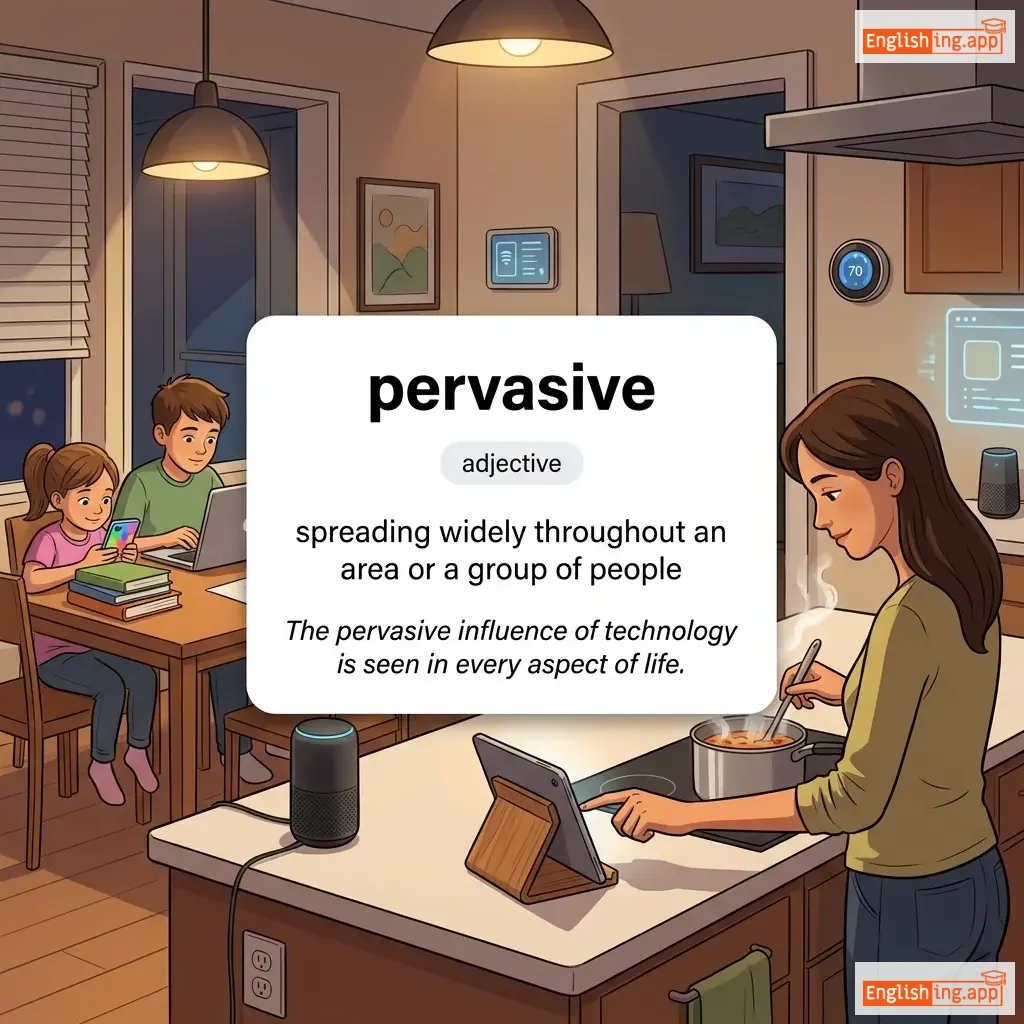
pervasive definition card — visual illustration of the meaning
adjective
/pərˈveɪsɪv/
व्यापक (vyaapak)

spreading widely throughout an area or a group of people

"The pervasive influence of technology is seen in every aspect of life."

"प्रौद्योगिकी का व्यापक प्रभाव जीवन के हर पहलू में देखा जा सकता है।" (Proudyogiki ka vyaapak prabhaav jeevan ke har pehlu mein dekha ja sakta hai.)
adjective
/pərˈvɜːrs/
विकृत (vikrit)

showing a deliberate desire to behave in a way that is unreasonable, contrary, or unacceptable

"He took a perverse pleasure in upsetting his colleagues."

"उसे अपने सहकर्मियों को परेशान करने में विकृत सुख मिलता था।" (Use apne sahkarmiyon ko pareshan karne mein vikrit sukh milta tha.)
noun
/pərˈvɜːrʒən/
विकृति (vikriti)

The act of distorting or corrupting the original meaning, purpose, or state of something.

"The regime’s censorship was seen as a perversion of free speech."

"सत्तारूढ़ व्यवस्था की सेंसरशिप को स्वतंत्र भाषण की विकृति के रूप में देखा गया।" (sattaroodh vyavastha ki censorship ko svatantr bhashan ki vikriti ke roop mein dekha gaya.)
noun
/pərˈvɜːrsəti/
उद्दंडता (uddandata)

A deliberate and obstinate desire to behave in an unreasonable or unacceptable way.

"Out of sheer perversity, he refused to follow the simple instructions."

"शुद्ध उद्दंडता से, उसने सरल निर्देशों का पालन करने से इनकार कर दिया।" (shuddh uddandata se, usne saral nirdeshon ka paalan karne se inkaar kar diya.)
verb/noun
/pərˈvɜːrt/
विकृत करना / विकृत व्यक्ति (vikrit karna / vikrit vyakti)

As a verb: to distort the meaning or purpose of something; as a noun: a person with abnormal or immoral sexual behavior.

"He tried to pervert the truth to escape punishment."

"उसने सजा से बचने के लिए सच को विकृत करने की कोशिश की।" (usne saza se bachne ke liye sach ko vikrit karne ki koshish ki.)
adjective
/ˈpɜːrviəs/
विकिरणशील / प्रवेश योग्य (vikiransheel / pravesh yogya)

Allowing water, air, or other substances to pass through; permeable.

"The soil here is pervious to rainwater."

"यहाँ की मिट्टी वर्षा के पानी के लिए प्रवेश योग्य है।" (yahan ki mitti varsha ke pani ke liye pravesh yogya hai.)
noun
/ˈpesɪˌmɪzəm/
निराशावाद (niraashavaad)

A tendency to see the worst aspect of things or believe the worst will happen.

"Her constant pessimism made it hard to stay optimistic."

"उसका निरंतर निराशावाद आशावादी रहने में मुश्किल पैदा कर रहा था।" (uska nirantar niraashavaad aashaavaadi rahne mein mushkil paida kar raha tha.)
noun
/ˈpes.ə.mɪst/
निराशावादी (nirashavadi)

a person who tends to see the worst aspect of things or believes that the worst will happen; someone who lacks hope or confidence in the future

"Being a pessimist, he always expected the worst outcome."

"एक निराशावादी होने के नाते, उसने हमेशा सबसे बुरे परिणाम की उम्मीद की।" (ek nirashavadi hone ke nate, usne hamesha sabse bure parinaam ki ummid ki)
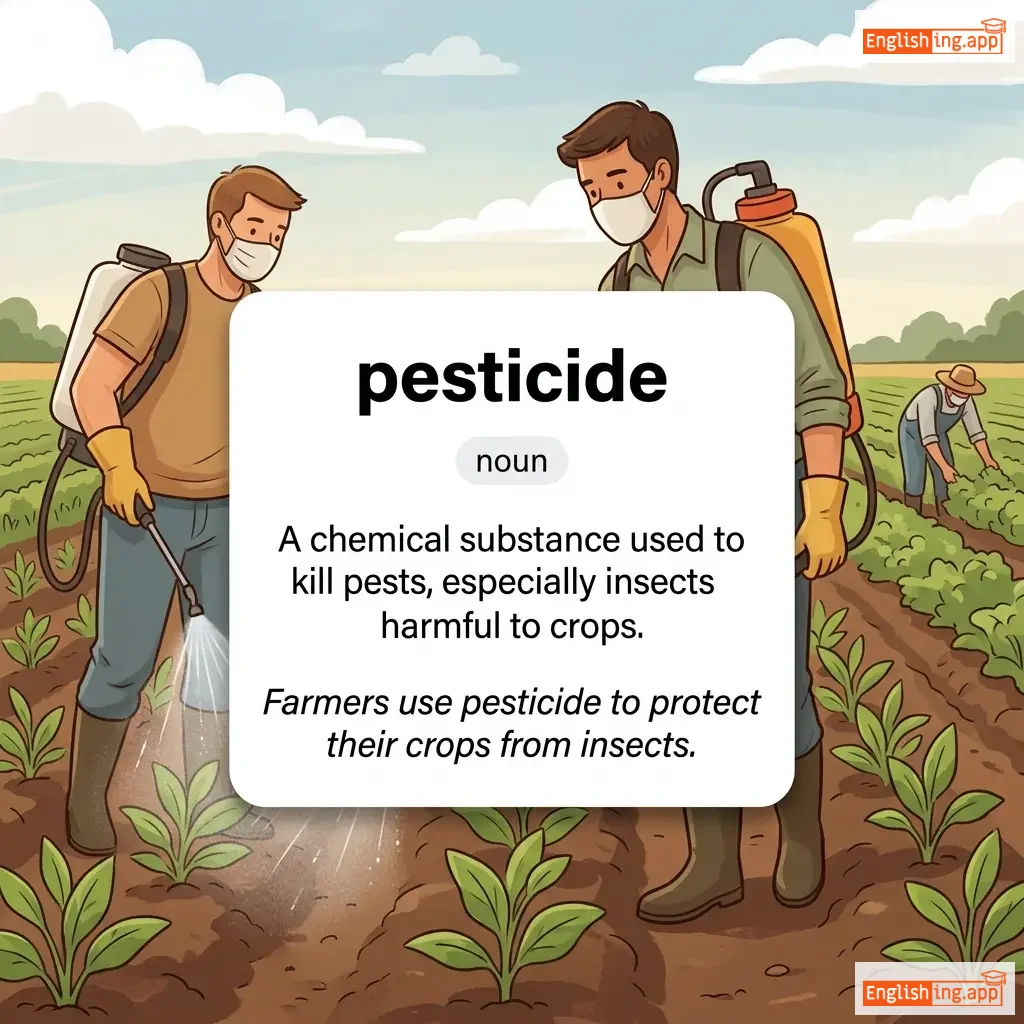
pesticide definition card — visual illustration of the meaning
noun
/ˈpɛstɪsaɪd/
कीटनाशक (keetanashak)

A chemical substance used to kill pests, especially insects harmful to crops.

"Farmers use pesticide to protect their crops from insects."

"किसान अपनी फसलों को कीड़ों से बचाने के लिए कीटनाशक का उपयोग करते हैं।" (Kisaan apni faslon ko keedon se bachane ke liye keetanashak ka upyog karte hain.)
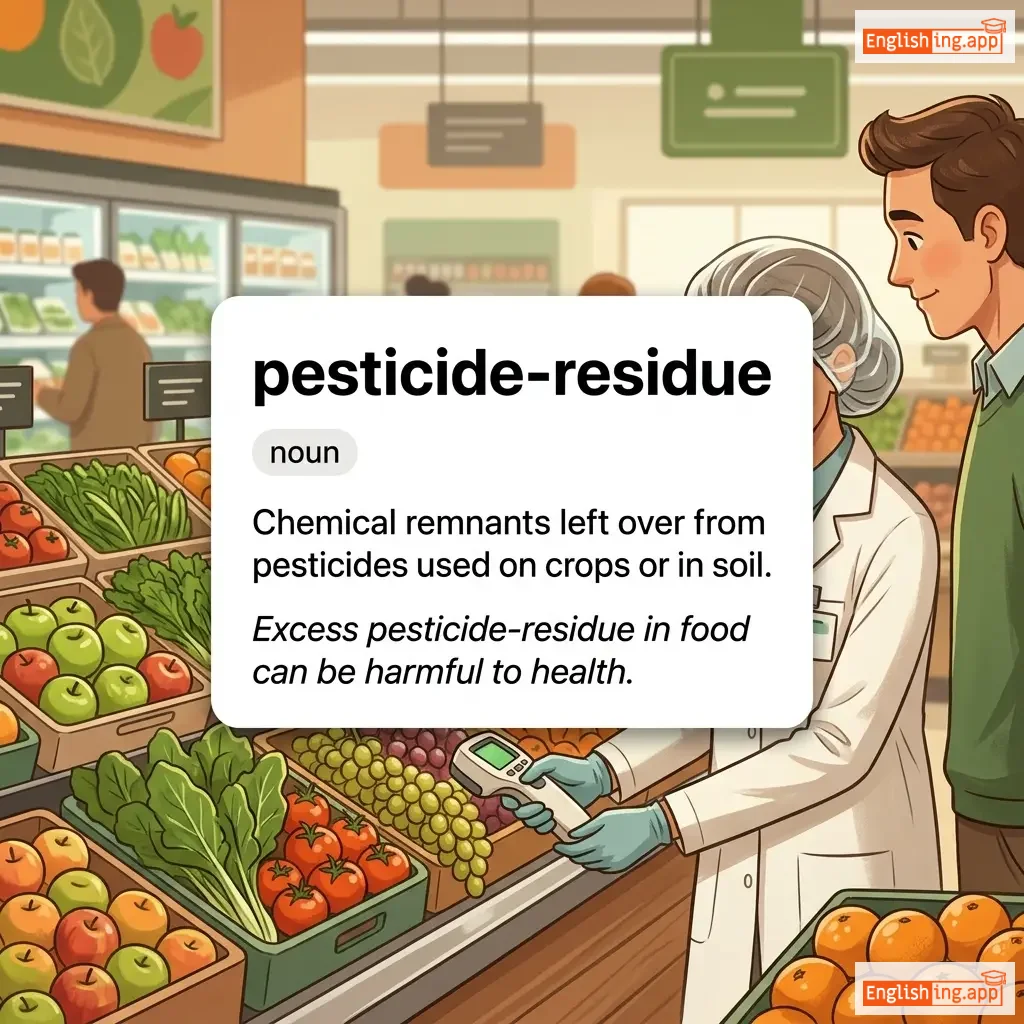
pesticide-residue definition card — visual illustration of the meaning
noun
/ˈpɛs.tɪ.saɪd ˈrɛz.ɪ.djuː/
कीटनाशक अवशेष (keetanashak avashesh)

Chemical remnants left over from pesticides used on crops or in soil.

"Excess pesticide-residue in food can be harmful to health."

"खाद्य में कीटनाशक अवशेष स्वास्थ्य के लिए हानिकारक हो सकते हैं।" (Khadya mein keetanashak avashesh swasthya ke liye hanikarak ho sakte hain.)
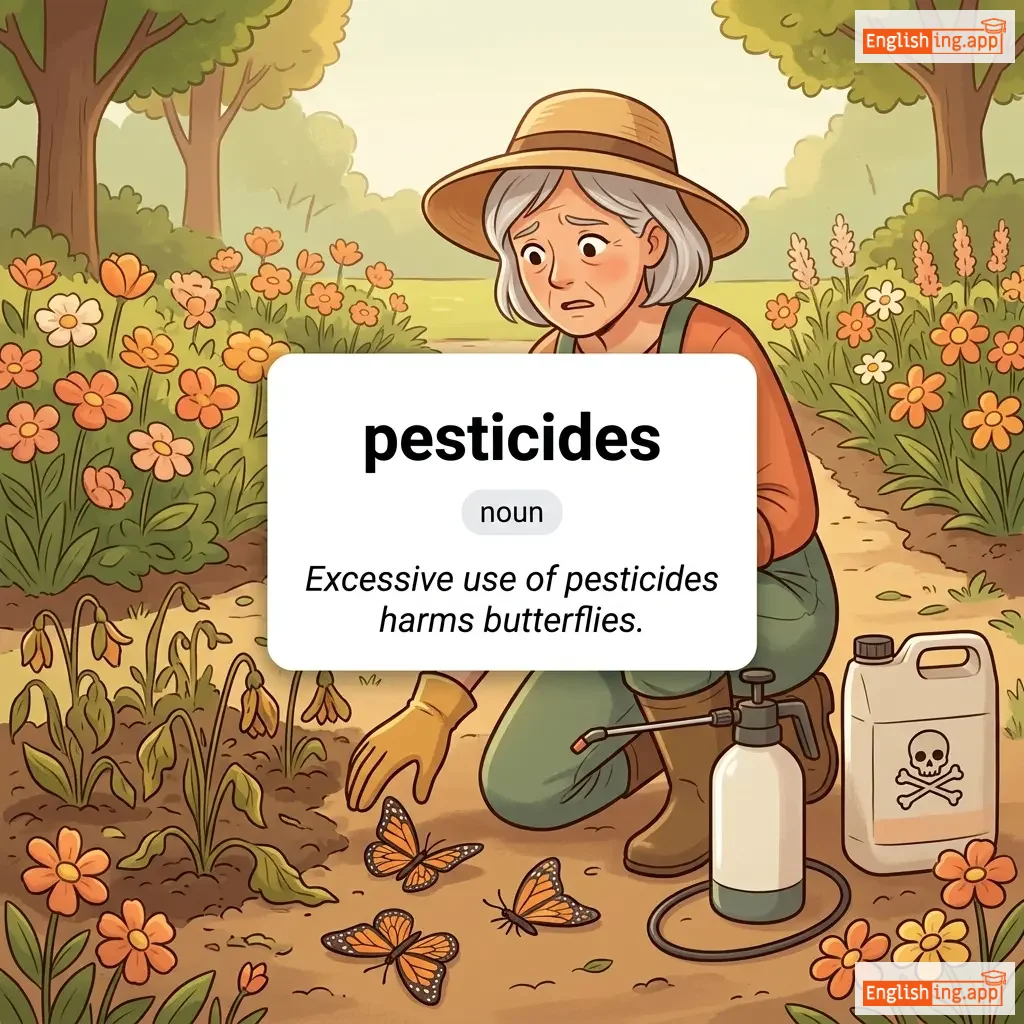
pesticides definition card — visual illustration of the meaning
noun
ˈpɛstɪsaɪdz
कीटनाशक (keetanashak)

Chemical substances used to kill pests, but harmful to beneficial insects like butterflies.

"Excessive use of pesticides harms butterflies."

"कीटनाशकों का अत्यधिक उपयोग तितलियों को नुकसान पहुँचाता है।" (Keetanashakon ka atyadhik upyog titliyon ko nuksan pahuchata hai.)
noun
/ˈpɛstɪləns/
महामारी (mahamari)

A deadly or virulent epidemic disease that spreads rapidly.

"The medieval city was devastated by a pestilence."

"मध्यकालीन शहर एक महामारी से तबाह हो गया था।" (Madhyakalīn shahar ek mahamarī se tabah ho gayā thā.)
adjective
/ˈpɛstɪlənt/
विषाक्त (vishakt)

Causing or tending to cause death or destruction; harmful or pernicious.

"The pestilent atmosphere of the swamp made people sick."

"द्रव दलदल का विषाक्त वातावरण लोगों को बीमार बना रहा था।" (Drav daldal ka vishakt vatavaran logon ko bimaar bana raha tha.)
adjective
/ˌpɛstɪˈlɛnʃəl/
रोगजनित (rogjanit)

Relating to or causing pestilence; very harmful, troublesome, or dangerous.

"The pestilential smell of the garbage filled the street."

"कचरे की पेस्टिलेंशियल गंध ने सड़क को भर दिया।" (Kachare ki pestilenshial gandh ne sadak ko bhar diya.)
noun
/ˈpɛsəl/
मूसल (moosal)

A heavy tool with a rounded end used for crushing or grinding substances in a mortar.

"She used a pestle to grind the spices."

"उसने मसाले पीसने के लिए मूसल का उपयोग किया।" (Usne masale peesne ke liye moosal ka upyog kiya.)
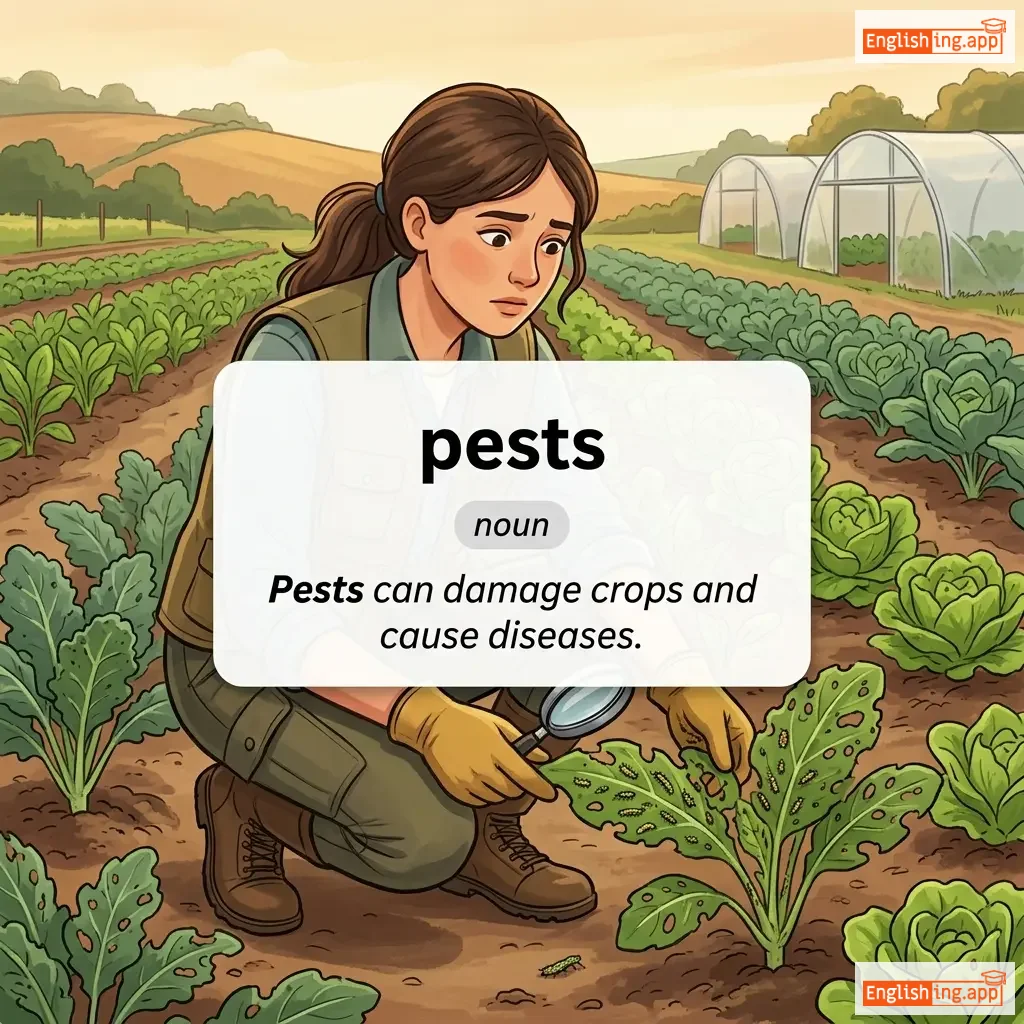
pests definition card — visual illustration of the meaning
noun
pɛsts
कीट, हानिकारक जीव (keet, haanikarak jeev)

Harmful or troublesome creatures, especially insects or small animals that damage crops, food, or living spaces.

"Pests can damage crops and cause diseases."

"कीट फसलों को नुकसान पहुंचा सकते हैं और बीमारियाँ उत्पन्न कर सकते हैं।" (Keet faslon ko nuksan pahuchaa sakte hain aur beemariyaan utpann kar sakte hain.)
noun
/pɛt/
पालतू (paltu)

a domesticated animal kept for companionship or pleasure

"My dog is my favorite pet."

"मेरा कुत्ता मेरा पसंदीदा पालतू है।" (Mera kutta mera pasandeeda paltu hai.)
noun
/ˈpetəl/
पंखुड़ी (pankhudi)

One of the colored segments of a flower that forms the corolla

"Each petal of the daisy was white with a yellow center."

"डेज़ी के हर पंखुड़ी का रंग सफेद था और केंद्र पीला था।" (dezi ke har pankhudi ka rang safed tha aur kendra peela tha)
verb
/ˈpiːtər/
धीरे-धीरे घटित होना (dheere-dheere ghatit hona)

to diminish gradually and come to an end; to fade or dwindle away

"The excitement of the event began to peter out after a few hours."

"इवेंट की उत्तेजना कुछ घंटों बाद धीरे-धीरे कम होने लगी।" (Event ki uttejana kuch ghanton baad dheere-dheere kam hone lagi.)
noun
/pəˈtɪʃən/
याचिका (yaachika)

a formal written request, typically signed by many people, appealing to authority about a cause

"They signed a petition to improve road safety in the area."

"उन्होंने क्षेत्र में सड़क सुरक्षा सुधारने के लिए एक याचिका पर हस्ताक्षर किए।" (Unhone kshetra mein sadak suraksha sudharne ke liye ek yaachika par hastakshar kiye.)
verb
/ˈpɛtrɪfaɪ/
परेशान करना (pareshan karna)

to make someone so frightened that they are unable to move or think; to turn into stone

"The loud noise petrified the little child."

"उच्च आवाज़ ने छोटे बच्चे को डर के मारे पत्थर बना दिया।" (Ucch awaaz ne chhote bachche ko dar ke maare patthar bana diya.)
noun
/ˈpɛtrəˌɡræf/
चट्टानों का वर्णन (chhatano ka varnan)

a description or representation of rocks, especially in detailed scientific writing

"The scientist studied the petrograph to understand the rock composition."

"वैज्ञानिक ने चट्टानों की संरचना को समझने के लिए पेट्रोग्राफ का अध्ययन किया।" (Vaigyanik ne chhatano ki sanrachna ko samajhne ke liye petrograph ka adhyayan kiya.)
noun
/ˈpetɪkoʊt/
पेटीकोट (petikot)

an undergarment worn by women under a dress or skirt

"She wore a white petticoat under her dress."

"वह अपनी ड्रेस के नीचे एक सफेद पेटीकोट पहने हुए थी।" (vah apni dress ke niche ek safed petikot pahne hue thi.)
verb
/ˈpɛtɪˌfɒɡ/
तुच्छ मुद्दों पर तर्क करना (tuchchha muddon par tark karna)

to argue or quibble over trivial matters; to engage in petty, dishonest practices

"The lawyer was accused of trying to pettifog instead of addressing the real issue."

"वकील पर असली मुद्दे को संबोधित करने के बजाय तुच्छ बातों पर झगड़ने का आरोप लगाया गया था।" (Vakil par asli mudde ko sambodhit karne ke bajaye tuchchha baaton par jhagadne ka aarop lagaya gaya tha.)
adjective
/ˈpɛti/
तुच्छ (tuchchha)

Of little importance or trivial; also describes a person overly concerned with small or unimportant matters.

"She often gets upset over the most petty things."

"वह अक्सर सबसे तुच्छ बातों पर गुस्सा हो जाती है।" (Wah aksar sabse tuchchha bato par gussa ho jati hai.)
noun
/ˈpɛtjʊləns/
चिड़चिड़ापन (chidhchidhapan)

The quality of being childishly sulky or bad-tempered.

"His petulance during the meeting annoyed everyone."

"उसकी पेटुलेंस ने मीटिंग के दौरान सभी को परेशान कर दिया।" (Uski petulance ne meeting ke dauran sabhi ko pareshan kar diya.)
adjective
/ˈpɛtjʊlənt/
चिड़चिड़ा (chidhchidhā)

Childishly sulky or bad-tempered.

"The child became petulant when denied more candy."

"बच्चा चॉकलेट और अधिक न मिलने पर चिड़चिड़ा हो गया।" (Baccha chocolate aur adhik na milne par chidhchidhā ho gayā.)
noun
/ˈfeɪlæŋks/
सारिबद्ध दल (saribaddh dal)

A group of people or things arranged in a compact, close formation; also an ancient Greek military formation.

"A phalanx of reporters waited outside the courthouse."

"रिपोर्टर्स का एक समूह अदालत के बाहर इंतजार कर रहा था।" (Reporters ka ek samuh adalat ke baahar intezaar kar raha tha.)
noun
/ˈfænˌtæzəm/
भूत (bhoot)

an illusion, ghost, or figment of the imagination

"The child claimed to see a phantasm in the old house."

"बच्चे ने दावा किया कि उसने पुराने घर में एक भूत देखा था।" (Bacche ne dawa kiya ki usne purane ghar mein ek bhoot dekha tha.)
adjective
/ˌfæntæzməˈɡɒrɪkəl/
कल्पनाशील (kalpanasheel)

Having a fantastic, dreamlike, or surreal appearance, often shifting or illusory.

"The movie created a phantasmagorical vision of another world."

"फिल्म ने एक फैंटास्मागॉरिकल दृष्टि बनाई, जो दूसरे दुनिया का था।" (Film ne ek phantasmagorical drishti banayi, jo doosre duniya ka tha.)
adjective
/ˌfærɪˈseɪɪkəl/
पाखंडी (pakhandi)

Excessively concerned with formal rules or outward show of morality, often in a hypocritical way.

"His pharisaical behavior made people doubt his sincerity."

"उसका पाखंडी व्यवहार लोगों को उसकी ईमानदारी पर शक करता था।" (Uska pakhandi vyavhaar logon ko uski imandari par shak karta tha.)
noun
/ˈfærɪsiː/
धार्मिक hypocritical व्यक्ति (dharmik hypocritical vyakti)

A member of an ancient Jewish sect; by extension, a self-righteous or hypocritical person.

"He acted like a pharisee, judging others while ignoring his own faults."

"वह एक फरीसी की तरह व्यवहार कर रहा था, दूसरों का न्याय करता हुआ जबकि अपनी खुद की गलतियों को अनदेखा कर रहा था।" (Wah ek Pharisee ki tarah vyavhaar kar raha tha, doosron ka nyaay karta hua jabki apni khud ki galtiyon ko andekha kar raha tha.)
noun
/ˌfɑːrməkəˈpiːə/
औषधि सूची (aushadhi soochi)

An official book listing medicinal drugs, their effects, and directions for use.

"The doctor referred to the pharmacopoeia to check the drug's proper dosage."

"डॉक्टर ने दवाओं के सही मात्रा की जांच करने के लिए औषधि सूची का संदर्भ लिया।" (Doktar ne davaon ke sahi matra ki jaanch karne ke liye aushadhi soochi ka sandarbh liya.)
noun
/ˈfɑːrməsi/
दवाख़ाना (dawakhana)

A place where medicinal drugs are prepared and sold.

"I went to the pharmacy to buy antibiotics."

"मैं एंटीबायोटिक खरीदने के लिए फार्मेसी गया था।" (Main antibiotic kharidne ke liye farmesi gaya tha.)
noun
/feɪz/
चरण (charan)

a distinct period or stage in a process of development

"We are in the final phase of the project."

"हम परियोजना के अंतिम चरण में हैं।" (Ham pariyojana ke antim charan mein hain.)
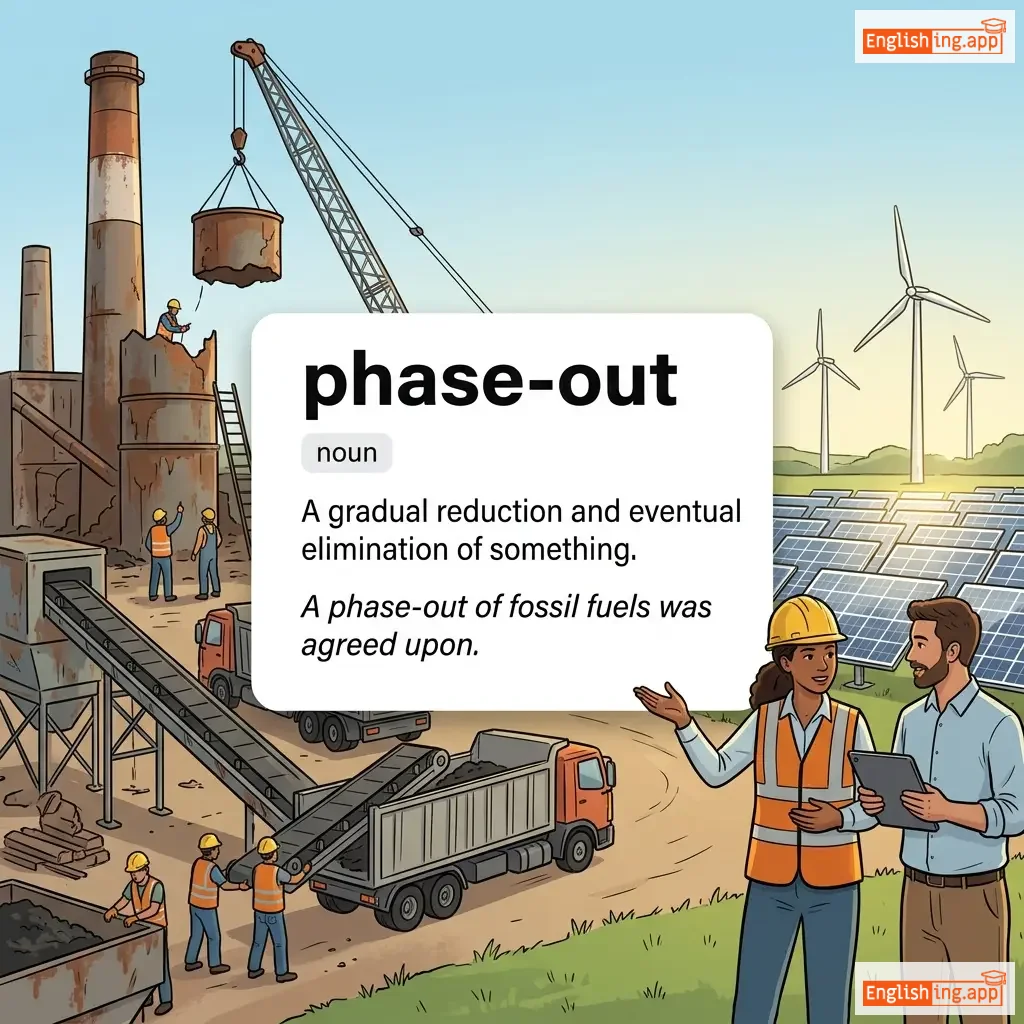
phase-out definition card — visual illustration of the meaning
noun
ˈfeɪz.aʊt
चरणबद्ध समाप्ति (charanbadh samapti)

A gradual reduction and eventual elimination of something.

"A phase-out of fossil fuels was agreed upon."

"जीवाश्म ईंधन की चरणबद्ध समाप्ति पर सहमति बनी।" (Jeevashm indhan ki charanbadh samapti par sahmati bani.)