वोकैबुलरीज

इंग्लिश वोकैबुलरी डिस्कवर, लर्न और मास्टर करें

noun
/ˈɔːrθədɑːksi/
परंपरावाद (paramparawad)

traditional or generally accepted beliefs and practices

"The religious leader defended the orthodoxy of the faith."

"धार्मिक नेता ने विश्वास के परंपरावाद की रक्षा की।" (Dharmik neta ne vishwas ke paramparawad ki raksha ki.)
adjective
/ɔːrˈθɑːɡənl/
ऑर्थोगोनल (orthogonal)

at right angles; independent or unrelated

"In mathematics, two vectors are orthogonal if their dot product is zero."

"गणित में, दो वेक्टर ऑर्थोगोनल होते हैं यदि उनका डॉट उत्पाद शून्य होता है।" (Ganit mein, do vector orthogonal hote hain yadi unka dot utpad shunya hota hai.)
noun
/ɔːrˈθɑːɡrəfi/
वर्तनी (vartani)

The conventional spelling system of a language.

"English orthography can be confusing for learners."

"अंग्रेजी वर्तनी शिक्षार्थियों के लिए उलझन भरी हो सकती है।" (Angreji vartani shiksharthiyon ke liye uljhan bhari ho sakti hai.)
adjective
/ˌɔːrθəˈpiːdɪk/
हड्डी और मांसपेशियों की विकृति से संबंधित (haddi aur maanspeshiyon ki vikriti se sambandhit)

Relating to the correction of deformities of bones or muscles.

"She visited an orthopedic surgeon for her back pain."

"उसने अपनी पीठ दर्द के लिए एक आर्थोपेडिक सर्जन से संपर्क किया।" (Usne apni peeth dard ke liye ek orthopedic surgeon se sampark kiya.)
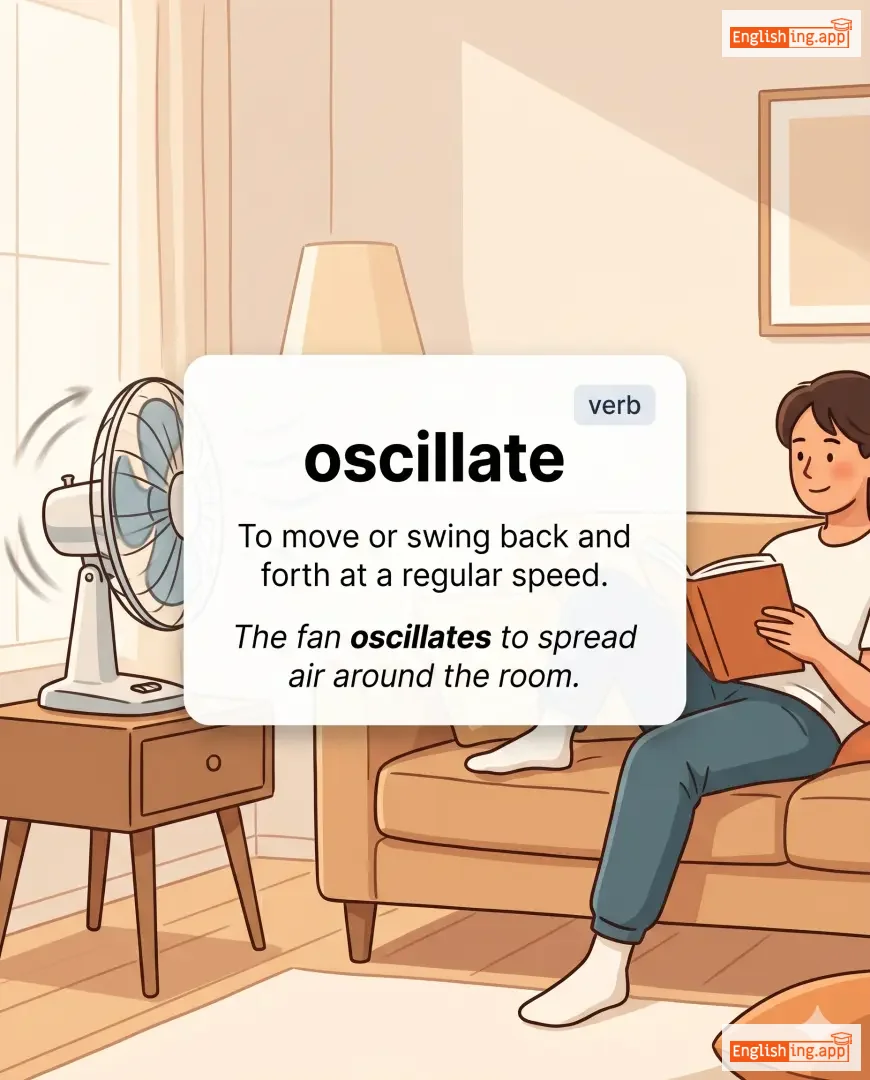
oscillate definition card — visual illustration of the meaning
verb
/ˈɑːsɪleɪt/
खुशी (khushi)

To move or swing back and forth at a regular speed.

"The fan oscillates to spread air around the room."

"वह जब पुरस्कार प्राप्त करती है तो वह अपनी खुशी को छिपा नहीं पाती।" (vah jab puraskaar prapt karti hai to vah apni khushi ko chhupa nahin paati.)
noun
/ˌɑːsɪˈleɪʃən/
दोलन (dolan)

The movement back and forth at a regular speed.

"The oscillation of the pendulum controls the clock."

"पेंडुलम का दोलन घड़ी को नियंत्रित करता है।" (Pendulum ka dolan ghadi ko niyantrit karta hai.)
verb
/ˈɑːskjʊleɪt/
चुम्बन करना (chumban karna)

To kiss.

"They osculated under the mistletoe during the party."

"उन्होंने पार्टी के दौरान मिस्टलेटो के नीचे चुंबन किया।" (Unhone party ke dauran mistletoe ke neeche chumban kiya.)
adjective
/ˈɒsiəs/
हड्डी से संबंधित (haddi se sambandhit)

consisting of or turned into bone; bony

"The fossil showed osseous structures of the ancient creature."

"फॉसिल ने प्राचीन प्राणी की हड्डी जैसी संरचनाएँ दिखाई।" (Fossil ne prachin prani ki haddi jaisi sanrachnaen dikhayi.)
adjective
/ˈɑːsɪˌfaɪd/
हड्डी में बदलना, कठोर (haddi mein badalna, kathor)

Turned into bone or become rigid; unwilling to change.

"The company had an ossified management structure that resisted innovation."

"कंपनी का एक कठोर प्रबंधन ढांचा था जो नवाचार का विरोध करता था।" (Kampani ka ek kathor prabandhan dhancha tha jo navaachar ka virodh karta tha.)
verb
/ˈɒsɪfaɪ/
हड्डी में बदलना (haddi mein badalna)

to turn into bone or become rigid and inflexible

"With age, some tissues tend to ossify."

"वृद्धावस्था में, कुछ ऊतक ऑसिफ़ाई होने लगते हैं।" (Vruddhavastha mein, kuch ootak ossify hone lagte hain.)
adjective
/ɒˈstɛnsəbl/
स्पष्ट (spasht)

stated or appearing to be true, but not necessarily so

"His ostensible reason for leaving was illness, but many doubted it."

"उसका जाने का स्पष्ट कारण बीमारी था, लेकिन कई लोग इसे संदेहपूर्ण मानते थे।" (Uska jane ka spasht karan bimari tha, lekin kai log ise sandehpurn maante the.)
adjective
/ɒˈstɛnsɪv/
स्पष्ट रूप से दिखाने वाला (spasht roop se dikhane wala)

clearly demonstrative or pointing out; explicitly shown

"The teacher gave an ostensive example to clarify the concept."

"शिक्षक ने अवधारणा को स्पष्ट करने के लिए एक स्पष्ट रूप से दिखाने वाला उदाहरण दिया।" (Shikshak ne avdharana ko spasht karne ke liye ek spasht roop se dikhane wala udaharan diya.)
noun
/ˌɒstɛnˈteɪʃən/
अभिमान प्रदर्शन (abhimaan pradarshan)

excessive display of wealth or knowledge intended to attract admiration or envy

"The billionaire’s party was full of ostentation and luxury."

"अरबपति की पार्टी अभिमान प्रदर्शन और विलासिता से भरी हुई थी।" (Arbpati ki party abhimaan pradarshan aur vilasita se bhari hui thi.)
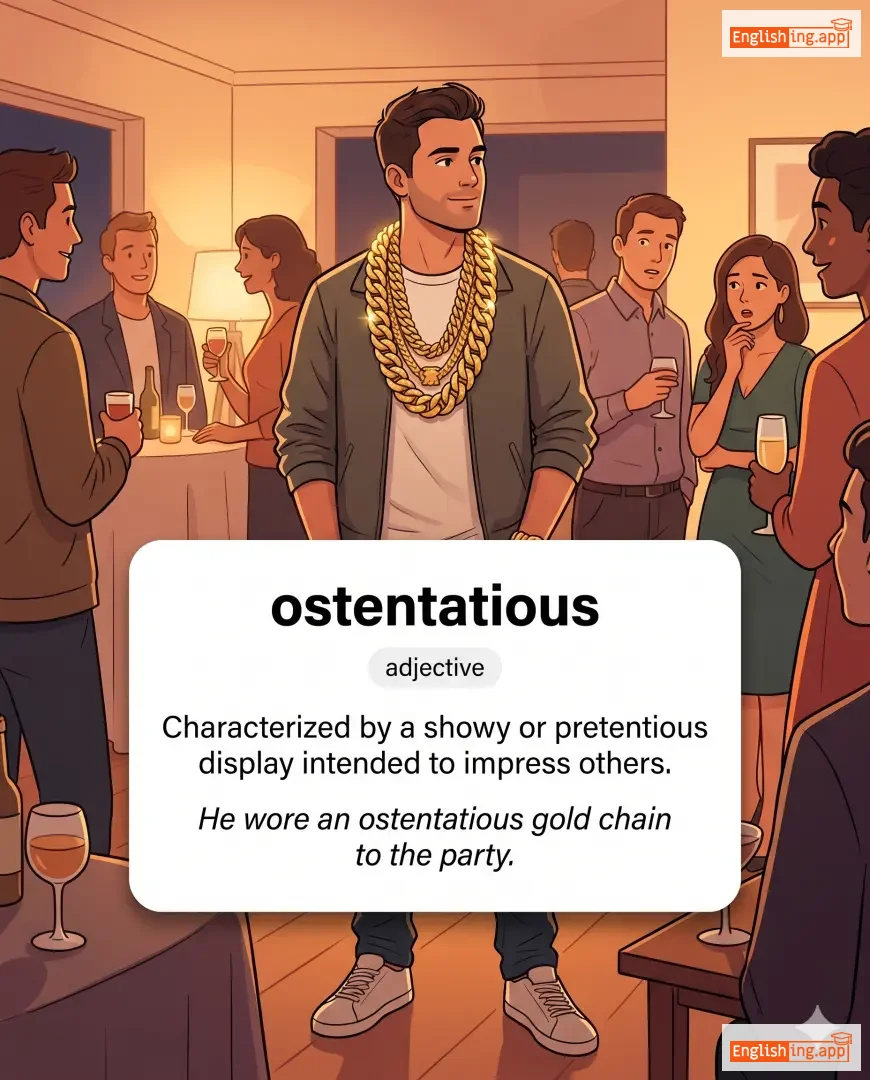
ostentatious definition card — visual illustration of the meaning
adjective
/ˌɒstɛnˈteɪʃəs/
प्रदर्शनकारी (pradarshankari)

Characterized by a showy or pretentious display intended to impress others.

"He wore an ostentatious gold chain to the party."

"उसने पार्टी में एक आडंबरपूर्ण सोने की चेन पहनी थी।" (Usne party mein ek adambarpurn sone ki chain pehni thi.)
noun
/ˈɒstrəsɪzəm/
बहिष्कार (bahishkar)

The act of excluding someone from a group or society.

"The student faced ostracism after breaking the rules."

"नियम तोड़ने के बाद छात्र को बहिष्कार का सामना करना पड़ा।" (Niyam todne ke baad chhatra ko bahishkar ka samna karna pada.)
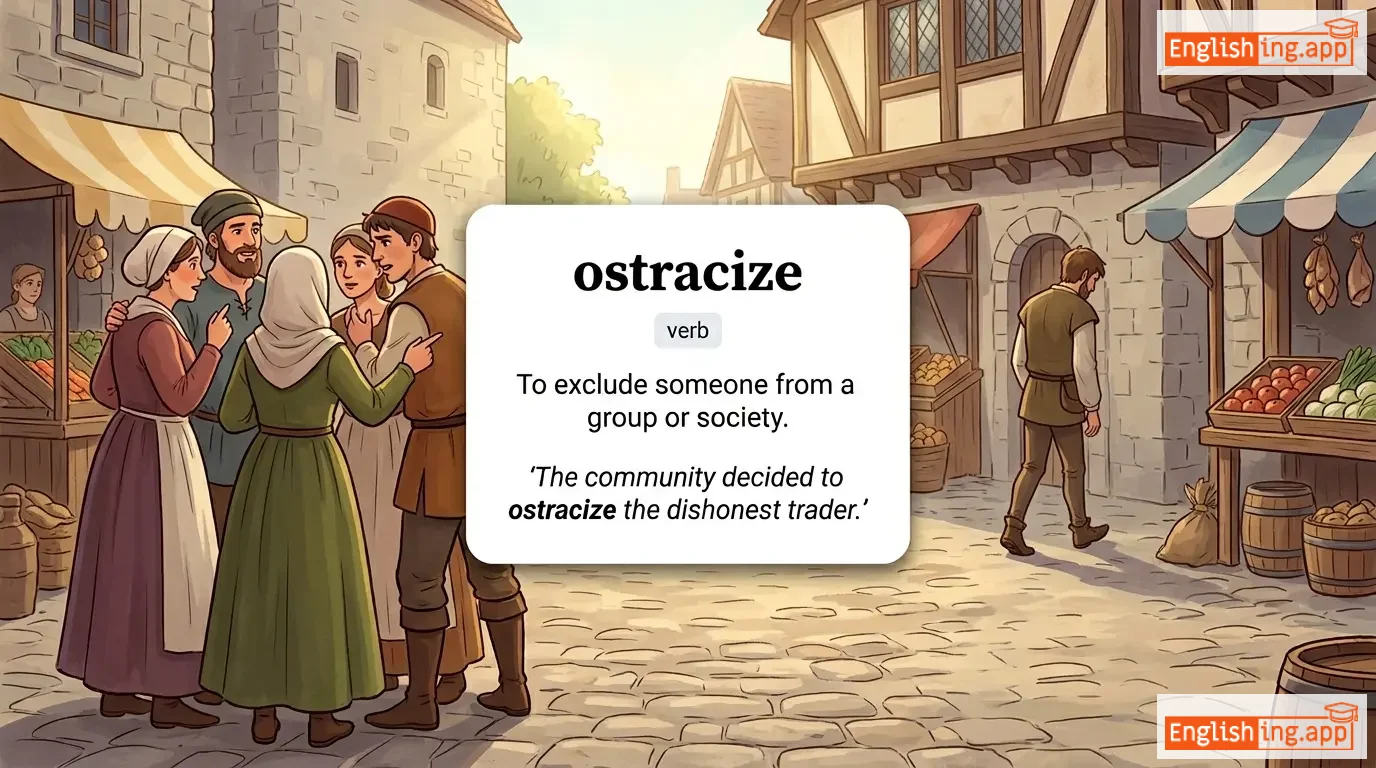
ostracize definition card — visual illustration of the meaning
verb
/ˈɒstrəsaɪz/
बहिष्कृत करना (bahishkrit karna)

To exclude someone from a group or society.

"The community decided to ostracize the dishonest trader."

"समुदाय ने बेईमानी करने वाले व्यापारी को बहिष्कृत करने का निर्णय लिया।" (Samuday ne beemani karne wale vyapari ko bahishkrit karne ka nirnay liya.)
noun
/ˈɒs.trɪtʃ/
स्ट्रिच (strich)

a large flightless bird native to Africa with long legs and neck

"The ostrich is the world's largest bird."

"स्ट्रिच दुनिया का सबसे बड़ा पक्षी है।" (strich duniya ka sabse bada pakshi hai)
adjective
/ˈʌðər/
अन्य (anya)

used to refer to something different from the one already mentioned or known

"I don't want this one, I will take the other one."

"मैं यह नहीं चाहता, मैं वह लूंगा।" (Main yah nahin chahta, main vah loonga.)
pronoun
/ˈʌðərz/
दूसरे (doosre)

people or things distinct from the ones already mentioned or known

"I like to spend time with others."

"मुझे दूसरों के साथ समय बिताना पसंद है।" (Mujhe doosron ke saath samay bitana pasand hai.)
adverb
/ˈʌðərwaɪz/
अन्यथा (anyatha)

in a different or other way

"We need to hurry; otherwise, we'll miss the train."

"हमें जल्दी करना चाहिए; अन्यथा, हम ट्रेन मिस कर देंगे।" (Humein jaldi karna chahiye; anyatha, hum train miss kar denge.)
noun
/ˈɒt.ər/
बिल्लीमछली (billeemachhli)

a mammal with webbed feet that lives near water and feeds on fish

"The playful otter swam gracefully in the river."

"खेलते हुए बिल्लीमछली नदी में सुंदरता से तैर रही थी।" (khelte hue billeemachhli nadi mein sundarta se tair rahi thi)
modal verb
/ɔːt/
चाहिए (chahiye)

Used to indicate duty, correctness, or moral obligation.

"You ought to respect your elders."

"तुम्हें अपने बड़ों का सम्मान करना चाहिए।" (Tumhein apne bado ka samman karna chahiye.)
pronoun
/aʊər/
हमारा (hamara)

belonging to or associated with the speaker and one or more other people

"This is our house."

"यह हमारा घर है।" (Yah hamara ghar hai.)
pronoun
/aʊərz/
हमारा (hamara)

belonging to or associated with us

"This victory is ours."

"यह जीत हमारी है।" (Yeh jeet hamari hai.)
pronoun
/aʊərˈsɛlvz/
हम खुद (ham khud)

used by the speaker to refer to themselves and one or more others as the object of the verb

"We should help ourselves before helping others."

"हमें दूसरों की मदद करने से पहले खुद की मदद करनी चाहिए।" (Humein doosron ki madad karne se pehle khud ki madad karni chahiye.)
verb
/aʊst/
अपदस्थ करना (apadashth karna)

To remove someone from a position or place of power or authority.

"The rebels ousted the dictator from power."

"विद्रोहियों ने तानाशाह को सत्ता से हटा दिया।" (Vidrohiyon ne tanashah ko satta se hata diya.)
adverb
/aʊt/
बाहर (bahar)

moving or appearing away from the inside or center; not at home or present

"He stepped out of the room quietly."

"वह चुपचाप कमरे से बाहर निकल गया।" (Vah chupchaap kamre se bahar nikal gaya.)
adjective
/ˌaʊt ən ˈaʊt/
पूर्ण (poorn)

complete; absolute; used to emphasize something extreme

"The speech was an out-and-out lie."

"वह भाषण पूरी तरह से झूठ था।" (Wah bhashan poori tarah se jhoot tha.)
noun
/ˈaʊt.breɪk/
प्रकोप (prakop)

a sudden occurrence or eruption of something, especially disease or violence

"The outbreak of flu affected many students in the school."

"फ्लू के प्रकोप ने स्कूल में कई छात्रों को प्रभावित किया।" (phlu ke prakop ne skool mein kai chhatron ko prabhavit kiya.)
adjective
/ˌaʊt əv ðə ˈweɪ/
अप्रचलित या दूरस्थ (aprochalit ya durasth)

remote or unusual; not in a convenient or usual location

"They stayed in an out-of-the-way village."

"वे एक दूरस्थ गांव में रहे।" (Ve ek durasth gaon mein rahe.)
noun
/ˈaʊt.saɪ.dər/
बाहरी व्यक्ति (bahari vyakti)

a person who does not belong to a particular group; someone not accepted by a group

"As an outsider, he found it difficult to understand their traditions."

"एक बाहरी व्यक्ति के रूप में, उसे उनके रीति-रिवाजों को समझने में कठिनाई हुई।" (ek bahari vyakti ke roop mein, use unke reeti-rivajon ko samajhne mein kathinai hui.)
noun
/ˈaʊtˌbreɪk/
अचानक प्रकोप (achanak prakop)

a sudden start or occurrence of something unpleasant, like disease or violence

"There was an outbreak of flu in the city."

"शहर में फ्लू का प्रकोप हो गया था।" (Shahar mein flu ka prakop ho gaya tha.)
noun
/ˈaʊtbɜːrst/
अचानक क्रोध या भावना का विस्फोट (achanak krodh ya bhavna ka visphot)

a sudden release of strong emotion or activity

"She had an angry outburst during the meeting."

"उसने बैठक के दौरान गुस्से में एक अचानक प्रतिक्रिया दी।" (Usne baithak ke dauran gusse mein ek achanak pratikriya di.)
noun
/ˈaʊtkæst/
परित्यक्त व्यक्ति (parityakt vyakti)

a person who is rejected or excluded from society or a group

"He felt like an outcast at school."

"उसे स्कूल में एक परित्यक्त व्यक्ति जैसा महसूस हुआ।" (Use school mein ek parityakt vyakti jaisa mehsoos hua.)
noun
/ˈaʊtkʌm/
परिणाम (parinaam)

the result or consequence of an action or situation

"The outcome of the project was beyond expectations."

"प्रोजेक्ट का परिणाम अपेक्षाओं से परे था।" (Project ka parinaam apekshaon se pare tha.)
noun
/ˈaʊtˌkraɪ/
विरोध (virodh)

A strong expression of public anger or disapproval.

"The decision sparked an outcry among the citizens."

"निर्णय ने नागरिकों के बीच विरोध को जन्म दिया।" (Nirnay ne nagrikon ke beech virodh ko janm diya.)
adjective
/ˌfæʃ.ənd/
अप्रचलित (aprachalit)

obsolete; no longer current

"This computer software is completely outdated."

"यह कंप्यूटर सॉफ़्टवेयर पूरी तरह से आउटडेटेड है।" (yah computer software poori tarah se outdated hai.)
verb
/ˌaʊtˈduː/
अधिक करना (adhik karna)

To do better than someone else; to surpass.

"She always tries to outdo her classmates in exams."

"वह हमेशा परीक्षा में अपने सहपाठियों को अधिक करने की कोशिश करती है।" (Wah hamesha pareeksha mein apne sahpathiyon ko adhik karne ki koshish karti hai.)
adjective
/ˈaʊtdɔːr/
बाहरी (baahri)

situated, existing, or done outside a building

"We planned an outdoor picnic for the weekend."

"हमने सप्ताहांत के लिए एक बाहरी पिकनिक की योजना बनाई।" (Hamne saptahant ke liye ek baahri picnic ki yojana banai.)
adverb; noun
/ˌaʊtˈdɔːrz/
बाहर; खुला वातावरण (bahar; khula vatavaran)

outside a building; the natural environment outside

"We spent the whole afternoon outdoors enjoying the fresh air."

"हमने पूरी दोपहर बाहर ताज़ी हवा का आनंद लेते हुए बिताई।" (humne poori dopahar bahar taazi hawa ka anand lete hue bitai)
adjective
/ˈaʊtər/
बाहरी (baahri)

situated on or toward the outside; external

"The outer layer of the jacket is waterproof."

"जैकेट की बाहरी परत जलरोधक है।" (Jacket ki baahri parat jalrodhak hai.)
noun
/ˈaʊtˌfɪt/
पोशाक (poshak)

A set of clothes worn together, often for a particular occasion.

"She wore a beautiful outfit to the party."

"उसने पार्टी में एक सुंदर पोशाक पहनी।" (Usne party mein ek sundar poshak pehni.)
adjective
/ˈaʊtˌɡoʊɪŋ/
मिलनसार (milanasar)

Friendly and sociable; inclined to mix with others.

"He is an outgoing person who loves meeting new people."

"वह एक मिलनसार व्यक्ति है जो नए लोगों से मिलना पसंद करता है।" (Wah ek milansar vyakti hai jo naye logon se milna pasand karta hai.)
noun
/ˈaʊtˌɡroʊθ/
उपोत्पत्ति (upotpatti)

something that grows out of something else; a natural development or result

"The new policy was an outgrowth of years of debate."

"नई नीति वर्षों की बहस का एक उपोत्पत्ति थी।" (Nayi neeti varsho ki bahas ka ek upotpatti thi.)
noun
/ˈaʊtɪŋ/
सैर (sair)

a short trip or excursion, often for leisure or enjoyment

"They had a lovely outing at the beach last weekend."

"उन्होंने पिछले सप्ताहांत समुद्र तट पर एक शानदार सैर की।" (Unhone pichhle saptahant samudra tat par ek shandar sair ki.)
adjective
/ˌaʊtˈlændɪʃ/
अजीब (ajeeb)

Looking or sounding bizarre or unfamiliar; strange.

"He wore an outlandish costume to the festival."

"उसने त्योहार में एक अजीब वस्त्र पहना था।" (Usne tyohar mein ek ajeeb vastra pehna tha.)
verb
/aʊtˈlæst/
अधिक समय तक टिके रहना (adhik samay tak tike rehna)

to continue longer than; to endure beyond someone or something else

"The old castle has outlasted many generations."

"पुराना किला कई पीढ़ियों से अधिक समय तक टिक चुका है।" (Purana kila kai pidiyon se adhik samay tak tik chuka hai.)
noun, verb
/ˈaʊtlɔː/
अवैध व्यक्ति, अवैध करना (avaidh vyakti, avaidh karna)

as a noun: a person who breaks the law and lives outside its protection; as a verb: to make something illegal

"The government decided to outlaw the harmful practice."

"सरकार ने हानिकारक प्रैक्टिस को अवैध बनाने का निर्णय लिया।" (Sarkar ne hanikarak prctis ko avaidh banane ka nirnay liya.)
noun
/ˈaʊtlet/
निकासी मार्ग (nikasi marg)

a means by which something is released, expressed, or distributed

"Art is a great outlet for emotions."

"कला भावनाओं के लिए एक बेहतरीन निकासी मार्ग है।" (Kala bhavnaon ke liye ek behatarin nikasi marg hai.)
noun, verb
/ˈaʊtlaɪn/
आउटलाइन, रूपरेखा (outline, rooprekha)

a general description or plan that gives the main ideas without details; to describe something briefly or highlight main points

"The teacher asked us to outline our research project before writing the report."

"शिक्षक ने हमें रिपोर्ट लिखने से पहले हमारे रिसर्च प्रोजेक्ट का आउटलाइन बनाने को कहा।" (Shikshak ne humein report likhne se pehle hamare research project ka outline banane ko kaha.)