वोकैबुलरीज

इंग्लिश वोकैबुलरी डिस्कवर, लर्न और मास्टर करें

noun
/ˈɔːrətər/
वक्ता (vakta)

A person who delivers formal speeches with skill and eloquence

"The orator captivated the audience with his eloquence."

"वक्ता ने अपनी ओजस्विता से दर्शकों को मोहित कर लिया।" (vakta ne apni ojwasita se darshako ko mohit kar liya.)
noun
/ˌɔːrəˈtɔːri.oʊ/
धार्मिक संगीत रचना (dharmik sangeet rachna)

A large-scale musical composition for orchestra, choir, and soloists, usually on a sacred theme, performed without costumes or scenery.

"Handel's 'Messiah' is one of the most famous oratorios ever written."

"हैंडल के 'मसीहा' को लिखा गया सबसे प्रसिद्ध ओरटोरियो है।" (Handel ke 'Masihah' ko likha gaya sabse prasiddh oratorio hai.)
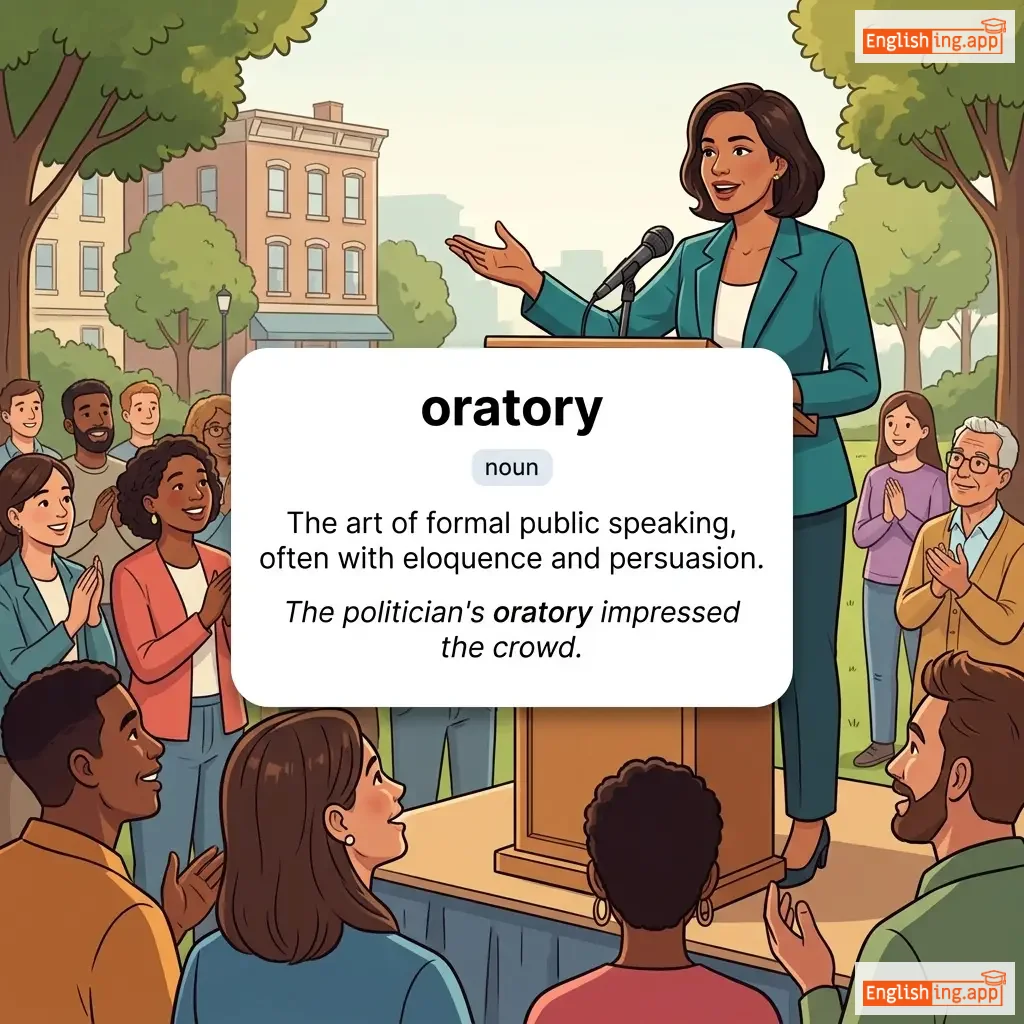
oratory definition card — visual illustration of the meaning
noun
/ˈɔːrəˌtɔːri/
वक्तृत्व कला (vaktrtva kala)

The art of formal public speaking, often with eloquence and persuasion.

"The politician's oratory impressed the crowd."

"राजनेता की वक्तृत्व कला ने भीड़ को प्रभावित किया।" (Raajneeta ki vaktrtva kala ne bheed ko prabhaavit kiya.)
orbit definition card — visual illustration of the meaning
noun
/ˈɔːbɪt/
कक्षपथ (kakshapath)

the curved path that a planet, satellite, or object follows around another body in space

"The Earth moves in an orbit around the Sun."

"पृथ्वी सूर्य के चारों ओर एक कक्षपथ में घूमती है।" (Prithvi Surya ke chaaron aur ek kakshapath mein ghoomti hai.)
noun
/ˈɔːkɪstrə/
ऑर्केस्ट्रा (orkestra)

a large group of musicians playing different instruments together

"The orchestra performed beautifully at the concert."

"ऑर्केस्ट्रा ने संगीत समारोह में सुंदर प्रदर्शन किया।" (Orkestra ne sangeet samaroh mein sundar pradarshan kiya.)
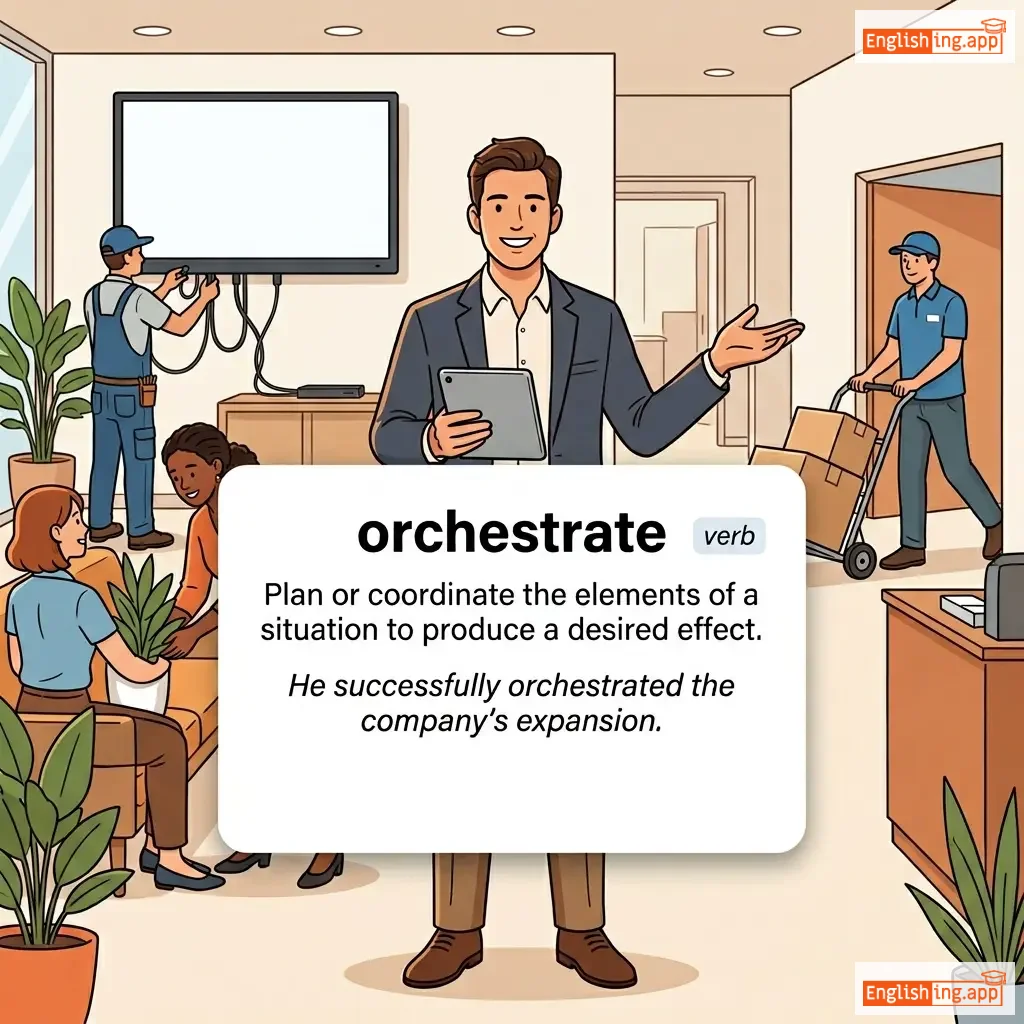
orchestrate definition card — visual illustration of the meaning
verb
/ˈɔːr.kɪ.streɪt/
संगठित करना (sangathit karna)

Plan or coordinate the elements of a situation to produce a desired effect.

"He successfully orchestrated the company's expansion."

"उसने कंपनी के विस्तार को सफलतापूर्वक व्यवस्थित किया।" (Usne company ke vistar ko safaltapoorvak vyavasthit kiya.)
orchestrated definition card — visual illustration of the meaning
verb
ˈɔː.kɪ.streɪ.tɪd
संगठित (sangathit)

Planned or coordinated carefully and deliberately.

"The attacks were orchestrated with precision."

"हमले सटीकता के साथ संगठित किए गए थे।" (Hamle sathikta ke saath sangathit kiye gaye the.)
noun
/ˈɔːrkɪd/
आर्किड (arkid)

a diverse family of flowering plants known for their exotic and often fragrant flowers

"The white orchid on the windowsill bloomed for months."

"खिड़की पर सफेद आर्किड महीनों तक खिला रहा।" (khidki par safed arkid mahino tak khila raha.)
verb
/ɔːrˈdeɪn/
पादरी बनाना (paadri banana)

To officially make someone a priest or minister; to decree or order something officially.

"The bishop will ordain three new priests this Sunday."

"बिशप इस रविवार तीन नए पादरियों को पादरी बनाएंगे।" (Bishop is ravivaar teen naye paadiyon ko paadri banaenge.)
ordeal definition card — visual illustration of the meaning
noun
/ɔːrˈdiːl/
कठिन अनुभव (kathin anubhav)

A very difficult or painful experience, often lasting for a long time.

"The survivors went through a terrible ordeal after the earthquake."

"भूकंप के बाद उत्तरजीवी एक भयानक अनुभव से गुज़रे।" (bhookamp ke baad uttareejee ek bhayankar anubhav se guzre.)
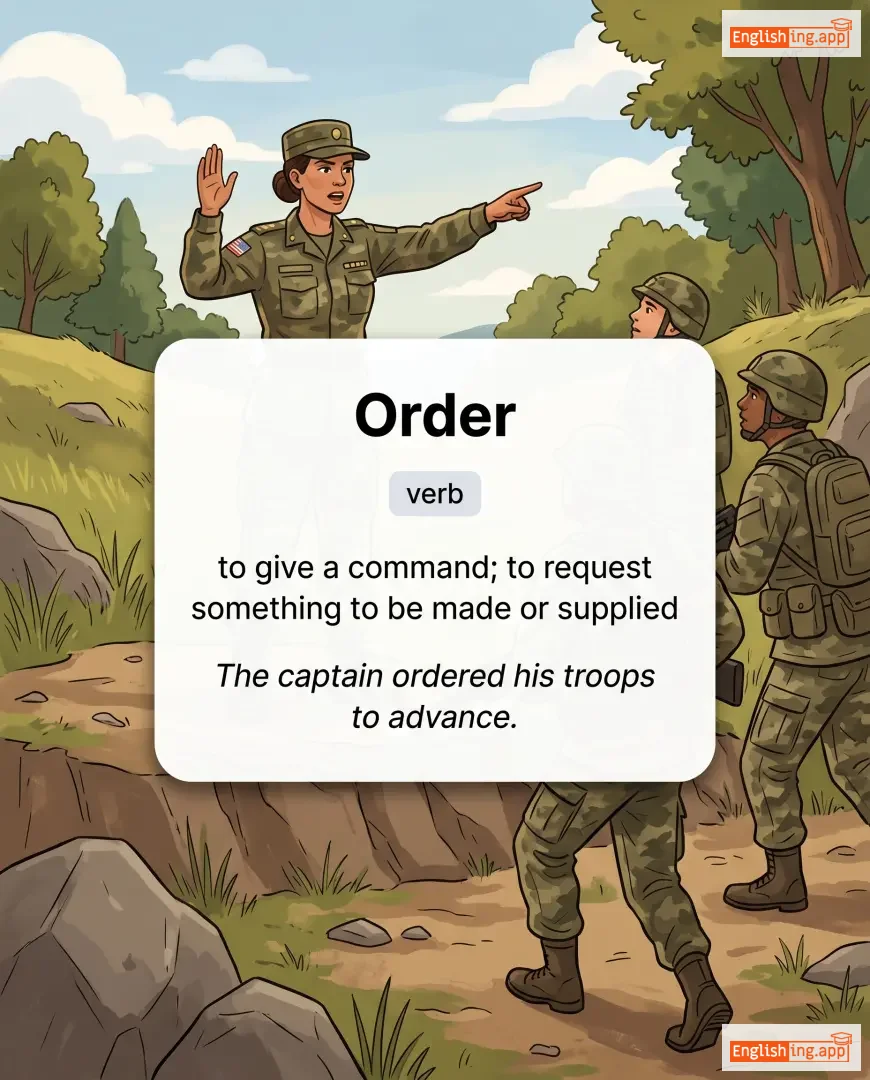
Order definition card — visual illustration of the meaning
noun
/ˈɔːdə(r)/
आदेश (adesh)

an arrangement or command; a request for something to be made, done, or delivered

"He placed an order for a new laptop."

"उसने एक नया लैपटॉप ऑर्डर किया।" (Usne ek naya laptop order kiya.)
adjective
/ˈɔː.də.li/
व्यवस्थित; संगठित; शांतिपूर्ण; (orderli)

well-organized; systematic; peaceful

"Please keep your desk orderly and clean."

"कृपया अपना डेस्क व्यवस्थित और साफ रखें।" (kripya apna desk vyavasthit aur saaf rakhen)
adjective
/ˈɔːrdɪnəl/
क्रमसूचक (kramsuchak)

Relating to the order or position of something in a sequence (first, second, third, etc.).

"The ordinal number 'third' indicates position in a sequence."

"'तीसरा' क्रमसूचक संख्या अनुक्रम में स्थिति दिखाती है।" ('Teesra' kramsuchak sankhya anukram mein sthiti dikhati hai.)
noun
/ˈɔːrdɪnəns/
विधान (vidhan)

An authoritative rule, law, or decree issued by a city, town, or authority.

"The city council passed an ordinance banning smoking in public parks."

"शहर परिषद ने सार्वजनिक पार्कों में धूम्रपान पर प्रतिबंध लगाने के लिए एक विधान पारित किया।" (Shahar parishad ne sarvajanik parkon mein dhoomrapan par pratibandh lagane ke liye ek vidhan parit kiya.)
adjective
/ˈɔːrdəˌnɛri/
साधारण (sadharan)

Common, usual, or not special; something that happens regularly.

"She wore an ordinary dress to the party."

"वह पार्टी में साधारण ड्रेस पहने हुए थी।" (Wah party mein sadharan dress pehne hue thi.)
noun
/ˌɔːrdɪˈneɪʃən/
दीक्षा (diksha)

The ceremony of conferring holy orders or official religious authority.

"The church held a special service for the ordination of new priests."

"गिरजाघर ने नए पुरोहितों के अभिषेक के लिए एक विशेष सेवा आयोजित की।" (Girjahar ne naye purohiton ke abhishhek ke liye ek vishesh seva aayojit ki.)
noun
/ˈɔːrdnəns/
सामरिक आपूर्ति (saamrik aapoorti)

Military supplies including weapons, ammunition, and combat equipment.

"The army stored ordnance in a secure facility outside the city."

"सेना ने शहर के बाहर एक सुरक्षित स्थान पर सैन्य सामग्री संग्रहित की" (Sena ne shahar ke baahar ek surakshit sthan par sainya samaagri sangrahit ki)
noun
/ˈɔːɡən/
अंग (ang)

a part of the body that performs a specific function

"The heart is an important organ in the human body."

"दिल मानव शरीर का एक महत्वपूर्ण अंग है।" (Dil manav sharir ka ek mahatvapurn ang hai.)
organic definition card — visual illustration of the meaning
adjective
/ɔːrˈɡænɪk/
कार्बनिक (karbanik)

Relating to or derived from living matter; produced without artificial chemicals.

"They prefer to eat organic fruits and vegetables."

"वे जैविक फल और सब्जियां खाना पसंद करते हैं।" (Ve jaivik phal aur sabjiyaan khana pasand karte hain.)
organic farming definition card — visual illustration of the meaning
noun
ˈɔːr.ɡə.nɪk ˈfɑːr.mɪŋ
ऑर्गेनिक खेती (organic kheti)

Farming without chemical fertilizers and pesticides using natural methods.

"Organic farming reduces pollution and promotes healthier food."

"ऑर्गेनिक खेती प्रदूषण को कम करती है और स्वास्थ्यपूर्ण भोजन को बढ़ावा देती है।" (Organic kheti pradooshan ko kam karti hai aur swasthyapurn bhojan ko badhava deti hai.)
organic foods definition card — visual illustration of the meaning
noun
ɔːˈɡæn.ɪk fuːdz
जैविक खाद्य (jaivik khadya)

Food produced without the use of chemicals such as artificial pesticides, fertilizers, or other artificial agents.

"Organic foods are healthier than processed foods."

"ऑर्गेनिक फूड्स प्रसंस्कृत खाद्य पदार्थों से ज्यादा स्वास्थ्यवर्धक होते हैं।" (Organic foods prasanskrut khadya padarthon se zyada swasthyavardhak hote hain.)
noun
/ˈɔːɡənɪzəm/
जीव (jeev)

a living thing that has an organized structure and can grow and reproduce

"Every organism needs water to survive."

"हर जीव को जीवित रहने के लिए पानी की आवश्यकता होती है।" (Har jeev ko jeevit rehne ke liye pani ki avashyakta hoti hai.)
organization definition card — visual illustration of the meaning
noun
/ˌɔːɡənaɪˈzeɪʃn/
संगठन (sangathan)

a group of people who work together to achieve a common purpose

"She works for a non-profit organization."

"वह एक गैर-लाभकारी संगठन में काम करती है।" (Wah ek gair-labhkari sangathan mein kaam karti hai.)
adjective
/ˌɔːɡənaɪˈzeɪʃənəl/
संगठनात्मक (sangathanatmak)

relating to the structure or arrangement of a company or group

"He works on improving the organizational structure of the company."

"वह कंपनी की संगठनात्मक संरचना में सुधार करने पर काम करता है।" (Vah company ki sangathanatmak sanrachna mein sudhaar karne par kaam karta hai.)
organizations definition card — visual illustration of the meaning
noun
ˌɔː.ɡən.aɪˈzeɪ.ʃənz
संगठन (sangathan)

Organized groups of people with a particular purpose

"Organizations play a key role in policymaking."

"संगठन नीति निर्धारण में महत्वपूर्ण भूमिका निभाते हैं।" (Sangathan niti nirdharan mein mahatvapurn bhumika nibhate hain.)
organize definition card — visual illustration of the meaning
verb
/ˈɔːɡənaɪz/
आयोजन करना (aayojan karna)

to arrange or systematize something

"They decided to organize a charity event for the community."

"उन्होंने समुदाय के लिए एक चैरिटी इवेंट आयोजित करने का निर्णय लिया।" (Unhone samudaay ke liye ek charity event aayojan karne ka nirnay liya.)
organized definition card — visual illustration of the meaning
adjective
/ˈɔːrɡənaɪzd/
व्यवस्थित (vyavasthit)

arranged or structured in a systematic and efficient way

"She always keeps her workspace neat and organized."

"वह हमेशा अपने कार्यक्षेत्र को साफ-सुथरा और व्यवस्थित रखती है।" (Vah hamesha apne karyakshetra ko saaf-suthra aur vyavasthit rakhti hai.)
noun
/ˈɔːrɡənaɪzər/
आयोजक (ayojak)

a person who arranges or coordinates activities, events, or groups; a tool or item used to keep things in order

"She worked as the main organizer of the international conference."

"वह अंतरराष्ट्रीय सम्मेलन की मुख्य आयोजक थी।" (vah antarashtriya sammelan ki mukhya ayojak thi)
noun (plural)
/ˈɔːrdʒiːz/
अत्यधिक विलासिता (atyadhik vilasita)

Wild gatherings involving excessive indulgence in food, drink, or sexual activity.

"The ancient Romans were infamous for their lavish feasts and orgies."

"प्राचीन रोमनों को उनके शानदार भोज और अत्यधिक विलासिता के लिए कुख्यात था।" (Prachin Romans ko unke shandaar bhoj aur atyadhik vilasita ke liye kukhyat tha.)
noun
/ˈɔːrdʒi/
मदिरा और कामुकता से भरी पार्टी (madhira aur kaamukta se bhari party)

A wild party involving excessive indulgence, especially of a sexual nature.

"The novel described a scandalous orgy in a wealthy mansion."

"उपन्यास ने एक संपन्न हवेली में एक कांडपूर्ण आर्गी का वर्णन किया।" (Upanyas ne ek sampann haveli mein ek kandpurn orgi ka varnan kiya.)
verb
/ˈɔː.ri.ənt/
दिशा निर्धारित करना (disha nirdharit karna)

to align or position something relative to a particular point or direction

"The map helps tourists orient themselves in the city."

"मानचित्र पर्यटकों को शहर में अपने आप को ऑरियंट करने में मदद करता है।" (Manchitra paryatakko ko shaher mein apne aap ko orient karne mein madad karta hai.)
adjective
/ˌɔː.riˈen.təl/
पूर्वी एशिया से संबंधित; पूर्वी (oriental)

relating to the countries of East Asia; eastern

"The museum has a beautiful collection of oriental art."

"संग्रहालय में ओरिएंटल कला का एक सुंदर संग्रह है।" (sangrahalay mein oriental kala ka ek sundar sangrah hai)
noun
/ˌɔː.ri.enˈteɪ.ʃən/
परिचय (parichay)

the process of becoming familiar with a new situation or environment

"The company provides an orientation for all new employees."

"कंपनी सभी नए कर्मचारियों के लिए एक ओरिएंटेशन प्रदान करती है।" (Kampani sabhi naye karyakartao ke liye ek orientation pradan karti hai.)
noun
/ˈɔː.rɪ.fɪs/
छिद्र (chhidra)

an opening or hole, especially in the body or a device

"The medicine was applied through a small orifice in the device."

"दवा उपकरण में एक छोटे छिद्र से लागू की गई थी।" (Dawa upkaran mein ek chhote chhidra se lagu ki gayi thi.)
noun
/ˈɒr.ɪ.dʒɪn/
उत्पत्ति (utpatti)

the point or place where something begins or is created

"The river has its origin in the mountains."

"नदी की उत्पत्ति पहाड़ों में है।" (Nadi ki utpatti pahaadon mein hai.)
adjective
/əˈrɪdʒ.ɪ.nəl/
मूल (mool)

existing from the beginning; not a copy or imitation

"This is the original manuscript of the novel."

"यह उपन्यास की मूल पांडुलिपि है।" (Yeh upanyas ki mool pandulipi hai.)
noun
/əˌrɪʒ.əˈnæl.ə.ti/
मौलिकता (maulikta)

the quality of being novel or unusual; the ability to think independently and creatively

"The artist's work showed great originality and creativity."

"कलाकार के काम ने महान मौलिकता और रचनात्मकता दिखाई।" (kalakar ke kaam ne mahan maulikta aur rachanatmakta dikhai)
adverb
/əˈrɪdʒɪnəli/
मूल रूप से (mool roop se)

in the beginning, at first

"Originally, she wanted to be a doctor."

"मूल रूप से, वह डॉक्टर बनना चाहती थी।" (Mool roop se, vah doctor banna chahti thi.)
verb
/əˈrɪdʒɪneɪt/
उत्पन्न होना (utpann hona)

to come into existence; to begin; to create or produce

"The tradition originated in ancient times."

"परंपरा प्राचीन समय में उत्पन्न हुई।" (Parampara prachin samay mein utpann hui.)
noun
/ˈɒrɪz(ə)n/
प्रार्थना (prarthana)

a prayer, especially a devout or formal one

"He whispered a quiet orison before going to sleep."

"सोने से पहले उसने एक शांत प्रार्थना फुसफुसाई।" (sone se pehle usne ek shant prarthana fufusai.)
noun
/ˈɔːrnəmənt/
सज्जा (sajja)

A decorative object that adds beauty to something.

"The Christmas tree was decorated with colorful ornaments."

"क्रिसमस ट्री को रंगीन सजावट से सजाया गया था।" (Christmas tree ko rangeen sajawat se sajaya gaya tha.)
adjective
/ˌɔːrnəˈmɛntl/
सज्जावटी (sajjavati)

Serving as decoration; decorative rather than functional.

"The garden was filled with ornamental plants."

"बाग़ में सजावटी पौधों से भरा हुआ था।" (Baag mein sajavati podhon se bhara hua tha.)
adjective
/ɔːˈneɪt/
भव्य (bhavya)

elaborately or highly decorated

"The palace hall was filled with ornate furniture and paintings."

"महल के हॉल में भव्य फर्नीचर और चित्र थे।" (Mahal ke hall mein bhavya furniture aur chitra the.)
adjective
/ˈɔːrnəri/
चिड़चिड़ा (chidhchidhā)

bad-tempered and combative; stubborn

"The ornery old man refused to leave his chair."

"चिड़चिड़े बुजुर्ग आदमी ने अपनी कुर्सी छोड़ने से इंकार कर दिया।" (Chidhchidhā bujurg ādmī ne apnī kursī chhodne se inkār kar diyā.)
noun
/ˌɔːrnɪˈθɒlədʒɪst/
पक्षीविज्ञानी (pakshivigyani)

a scientist who studies birds

"The ornithologist spent years studying migratory birds."

"ऑर्निथोलॉजिस्ट ने वर्षों तक प्रवासी पक्षियों का अध्ययन किया।" (Ornithologist ne varsho tak pravasi pakshiyon ka adhyayan kiya.)
noun
/ˌɔːrnɪˈθɑːlədʒi/
पक्षी विज्ञान (pakshi vigyan)

the scientific study of birds

"She pursued ornithology to understand the migration patterns of birds."

"उसने पक्षियों के प्रवासन पैटर्न को समझने के लिए ऑर्निथोलॉजी का अध्ययन किया।" (Usne pakshiyon ke pravasan pattern ko samjhne ke liye ornithology ka adhyayan kiya.)
adjective
/ˈɔːrəˌtʌnd/
गंभीर और स्पष्ट स्वर (gambhir aur spashth swar)

full, rich, and clear in sound; pompous in style

"The actor's orotund voice filled the theater."

"अभिनेता की गंभीर आवाज़ ने थिएटर को भर दिया।" (Abhineta ki gambhir aawaaz ne theater ko bhar diya.)
noun
/ˈɔr.fən/
अनाथ बच्चा (anath bachcha)

a child whose parents are dead; someone without protective support

"The orphan was adopted by a loving family."

"अनाथ बच्चा एक स्नेही परिवार द्वारा अपनाया गया।" (anath bachcha ek snehi parivar dwara apnaya gaya.)
noun
/ˈɔr.fən.ɪʒ/
अनाथ आश्रम (anath ashram)

an institution for the care and education of children who have lost their parents

"The charity built a new orphanage for homeless children."

"चैरिटी ने बेघर बच्चों के लिए एक नया अनाथ आश्रम बनाया।" (chayrity ne begar bachon ke liye ek naya anath ashram banaya.)
adjective
/ˈɔːrθədɑːks/
पारंपरिक (orthodoks)

conforming to traditional beliefs or practices

"He comes from a very orthodox family."

"वह एक बहुत पारंपरिक परिवार से आता है." (hi kams phrom a veri orthodoks family.)