वोकैबुलरीज

इंग्लिश वोकैबुलरी डिस्कवर, लर्न और मास्टर करें

noun
/ˈnoʊzˌɡeɪ/
फूलों का गुच्छा (phoolon ka guchcha)

a small bunch of flowers, typically given as a gift or carried for decoration

"She carried a nosegay of fresh roses to the ceremony."

"उसने समारोह में ताजे गुलाबों का एक गुच्छा लिया था।" (Usne samaaroh mein taaje gulaabon ka ek guchcha liya tha.)
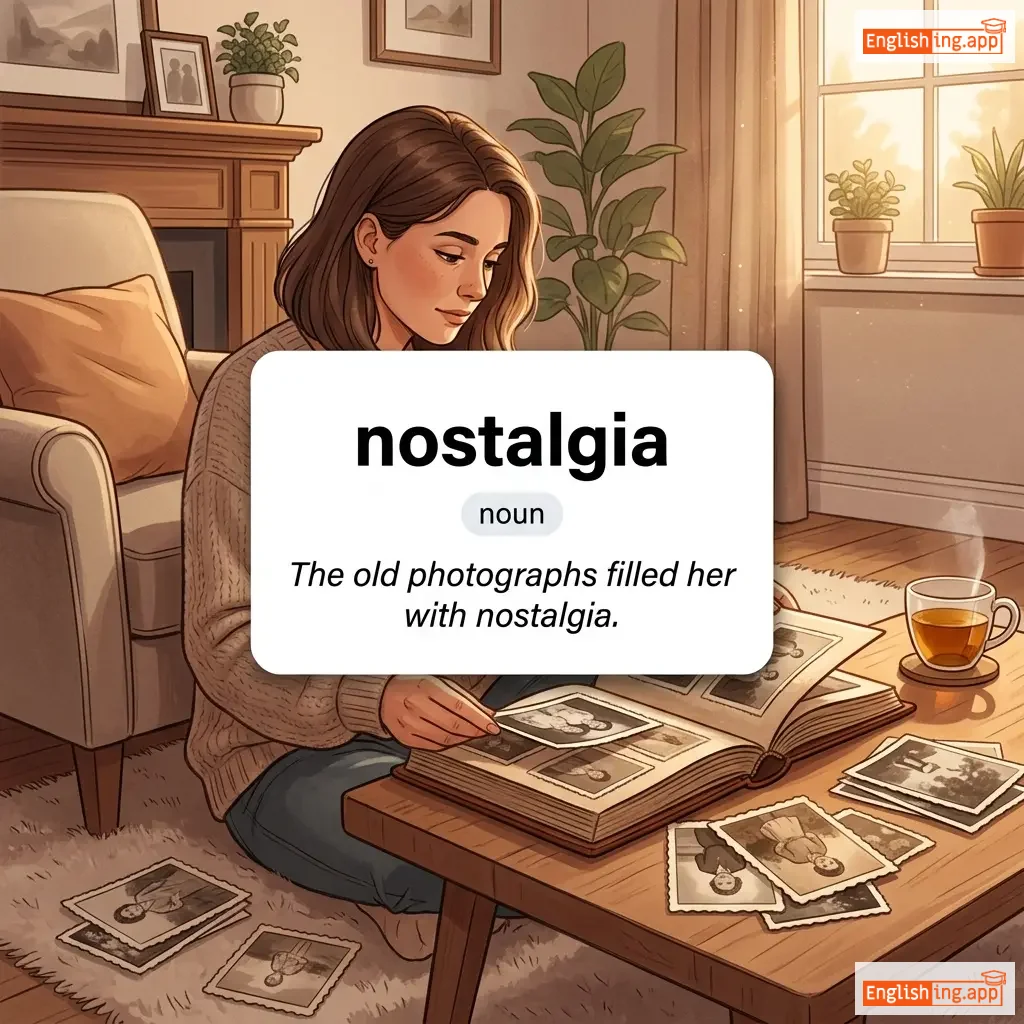
nostalgia definition card — visual illustration of the meaning
noun
/nəˈstældʒə/
अतीत की यादें (ateet ki yaadein)

a sentimental longing for the past, often for a period or place with happy memories

"The old photographs filled her with nostalgia."

"पुरानी तस्वीरों ने उसे नॉस्टेल्जिया से भर दिया।" (Purani tasveeron ne use nostalgia se bhar diya.)
noun
/ˈnɒs.trɪl/
नथुना (nathuna)

either of the two openings in the nose through which air passes

"The doctor checked each nostril for any blockage."

"डॉक्टर ने किसी भी अवरोध के लिए प्रत्येक नथुने की जांच की।" (doktar ne kisi bhi avrodh ke liye pratyek nathune ki jaanch ki.)
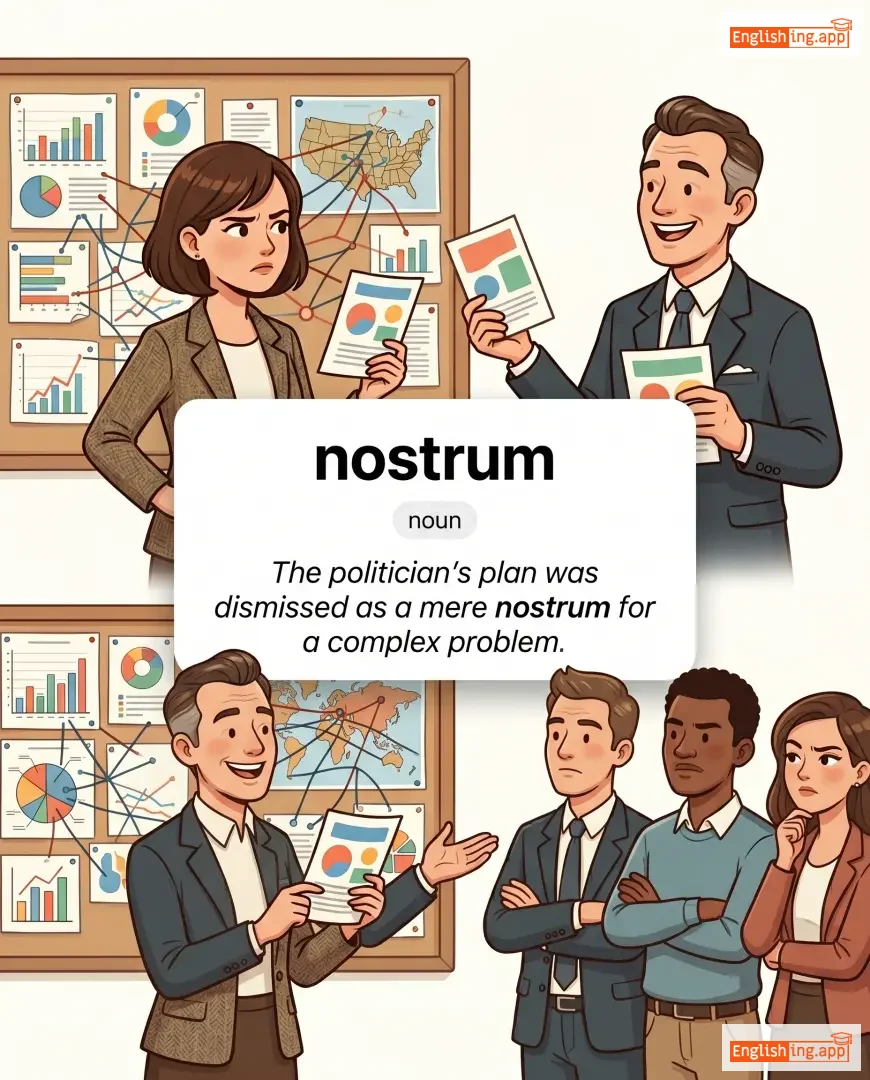
nostrum definition card — visual illustration of the meaning
noun
/ˈnɑːstrəm/
अप्रभावी दवा (aprabhaavi dawa)

a medicine or remedy, especially one that is not considered effective; a questionable solution

"The politician’s plan was dismissed as a mere nostrum for a complex problem."

"राजनीतिक नेता की योजना को एक जटिल समस्या के लिए केवल एक अप्रभावी दवा के रूप में खारिज कर दिया गया।" (Raajneetik neta ki yojna ko ek jatil samasya ke liye keval ek aprabhaavi dawa ke roop mein kharij kar diya gaya.)
adverb
/nɒt/
नहीं (nahi)

used to make a word or phrase negative

"I do not like spicy food."

"मैं तीखा खाना पसंद नहीं करता।" (Main teekha khana pasand nahi karta.)
adjective
/ˈnoʊtəbl/
महत्वपूर्ण (mahatvapoorn)

worthy of attention or notice; remarkable

"She made a notable contribution to the project."

"उसने परियोजना में एक महत्वपूर्ण योगदान दिया।" (Usne pariyojana mein ek mahatvapoorn yogdan diya.)
adverb
/ˈnoʊtəbli/
विशेष रूप से (vishes roop se)

used to indicate something worthy of attention or significant

"She is notably talented in painting."

"वह पेंटिंग में नोटेबली प्रतिभाशाली है।" (Vah painting mein notebly pratibhashali hai.)
noun
/noʊˈteɪʃən/
संकेतन (sanketan)

A system of symbols or signs used to represent information, especially in mathematics or music.

"The teacher explained the notation used in the algebra equations."

"शिक्षक ने गणितीय समीकरणों में प्रयुक्त संकेतन को समझाया।" (Shikshak ne ganitiya sameekaron mein prayukt sanketan ko samjhaya.)
noun
/nɑːtʃ/
नक़्श (naksh)

A small cut or groove on the edge or surface of something; a level or degree of achievement.

"He carved a notch on the stick to mark the days."

"उसने लकड़ी पर दिनों को चिह्नित करने के लिए एक नक़्श बना लिया।" (Usne lakdi par dinon ko chihnit karne ke liye ek naksh bana liya.)
note definition card — visual illustration of the meaning
noun, verb
/noʊt/
नोट (not)

a brief record of facts, topics, or thoughts written down; to observe or remark upon something

"She wrote a quick note to remind herself of the meeting."

"उसने बैठक की याद दिलाने के लिए एक त्वरित नोट लिखा।" (Usne baithak ki yaad dilane ke liye ek tvarit not likha.)
noun
/ˈnoʊtbʊk/
नोटबुक (notebook)

a small book with blank or ruled pages for writing notes; also a portable computer

"She opened her notebook to jot down some ideas."

"उसने कुछ विचार लिखने के लिए अपनी नोटबुक खोली।" (usne kuch vichaar likhne ke liye apni notebook kholi)
adjective, verb
/ˈnoʊtɪd/
प्रसिद्ध (prasiddh)

well known or famous; written down or observed

"He is a noted author in the field of history."

"वह इतिहास के क्षेत्र में एक प्रसिद्ध लेखक हैं।" (Vah itihas ke kshetra mein ek prasiddh lekhak hain.)
pronoun
/ˈnʌθɪŋ/
कुछ भी नहीं (kuch bhi nahin)

not anything; no thing

"She has nothing to worry about."

"उसके पास सोचने के लिए कुछ भी नहीं था।" (Uske paas sochne ke liye kuch bhi nahin tha.)
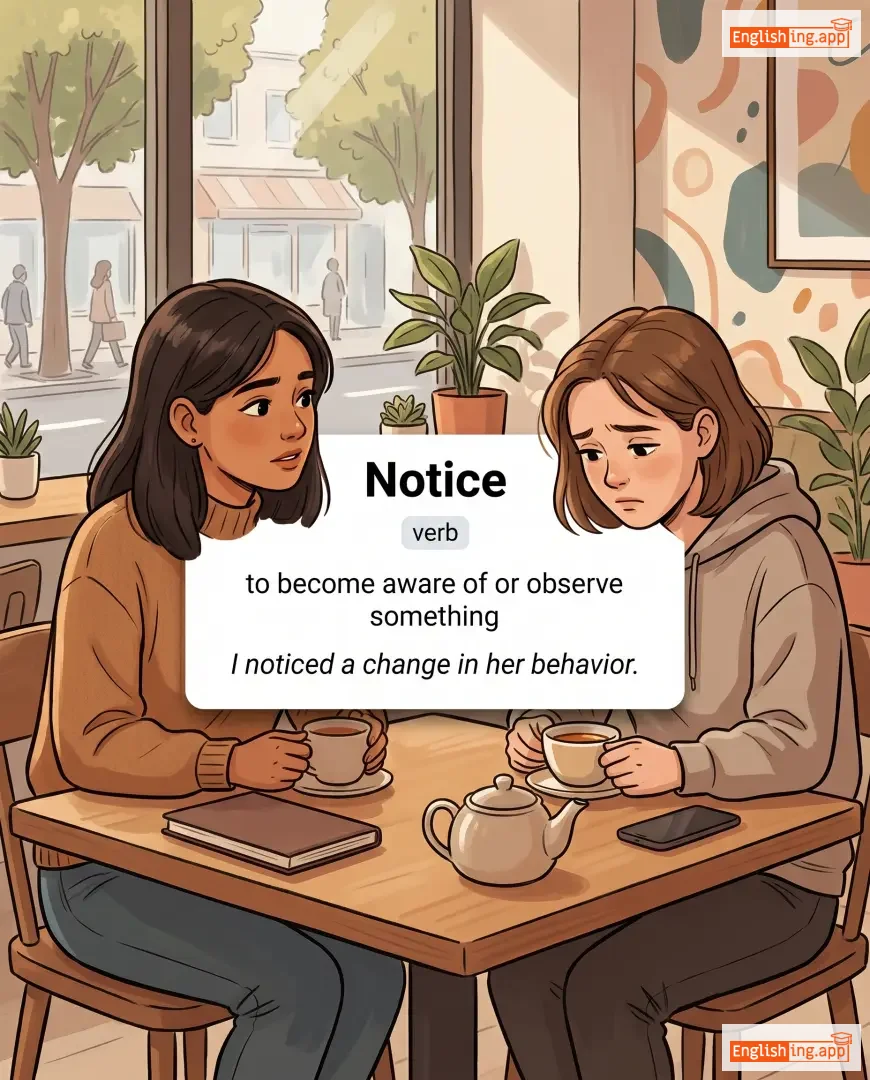
Notice definition card — visual illustration of the meaning
noun
/ˈnoʊtɪs/
नोटिस (notis)

a written or printed announcement or notification

"He gave me a notice about the meeting."

"उसने मुझे बैठक के बारे में एक नोटिस दिया।" (Usne mujhe baithak ke baare mein ek notis diya.)
adjective
/ˈnoʊtɪsəbl/
दिखाई देने योग्य (dikhai dene yogya)

Easily seen, observed, or recognized.

"There was a noticeable improvement in her performance."

"उसके प्रदर्शन में एक दिखाई देने योग्य सुधार था।" (Uske pradarshan mein ek dikhai dene yogya sudhaar tha.)
noun
/ˌnəʊtɪfɪˈkeɪʃən/
अधिसूचना (adhisuchana)

an official or formal notice or message informing someone of something; an alert delivered by a system or device

"You will receive a notification when your application is approved."

"आपका आवेदन स्वीकृत होने पर आपको एक अधिसूचना मिलेगी।" (aapka avedan swikrit hone par aapko ek adhisuchana milegi)
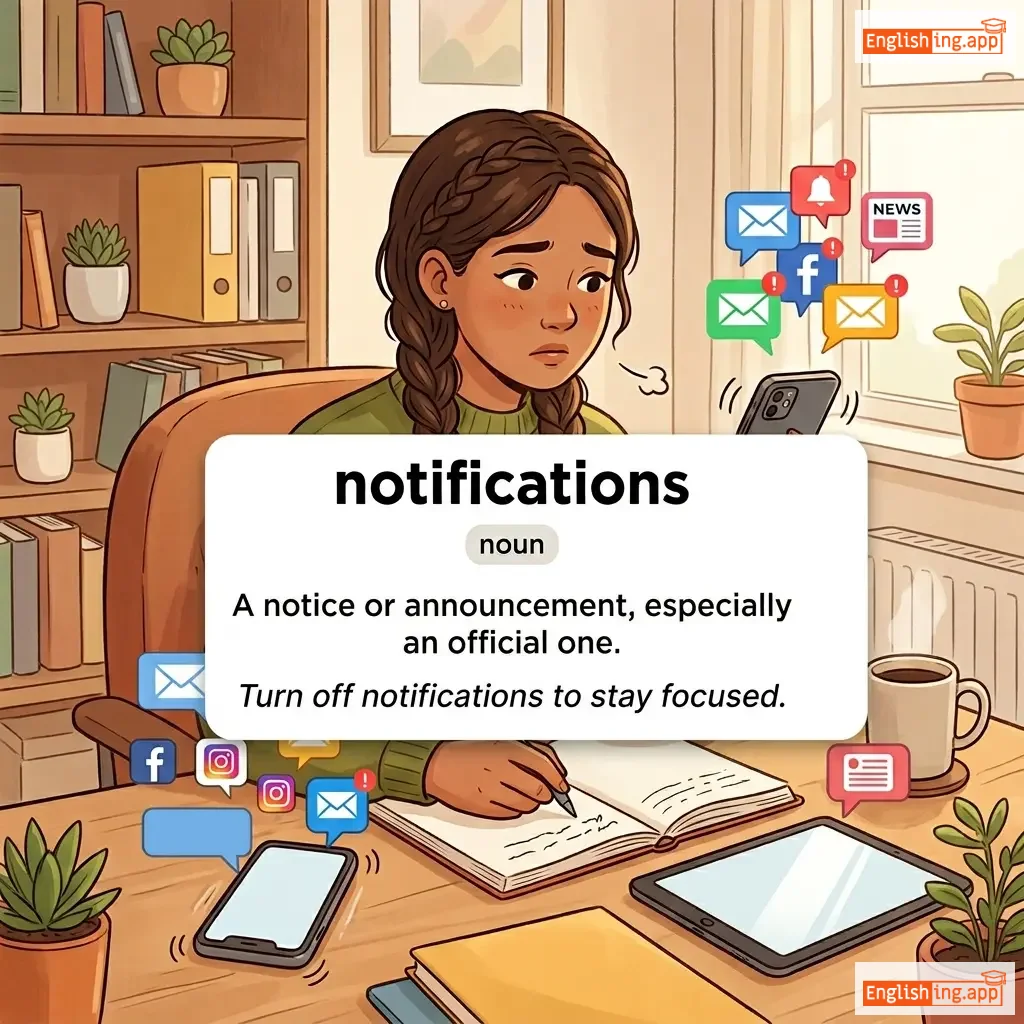
notifications definition card — visual illustration of the meaning
noun
/ˌnoʊtɪfɪˈkeɪʃənz/
सूचनाएं (soochnaayein)

A notice or announcement, especially an official one.

"Turn off notifications to stay focused."

"केंद्रित रहने के लिए सूचनाएं बंद कर दें।" (Kendrit rehne ke liye soochnaayein band kar dein.)
verb
/ˈnoʊtɪfaɪ/
सूचित करना (soochit karna)

to inform someone officially about something

"The manager will notify the staff about the schedule change."

"मैनेजर स्टाफ को शेड्यूल परिवर्तन के बारे में सूचित करेंगे।" (Manager staff ko schedule parivartan ke baare mein soochit karenge.)
noun
/ˈnoʊʃən/
धारणा (dharana)

An idea, belief, or concept about something.

"He had a vague notion of what she wanted."

"उसके पास यह जानने का अस्पष्ट विचार था कि वह क्या चाहती थी।" (Uske paas yah jaanne ka aspasht vichar tha ki vah kya chahti thi.)
noun
/ˌnoʊtəˈraɪəti/
प्रतिष्ठा (pratistha)

The state of being famous or well-known for something bad.

"The criminal gained notoriety for his daring escapes."

"अपराधी ने अपनी साहसी पलायन के लिए प्रतिष्ठा प्राप्त की।" (Aparadhi ne apni sahasi palayan ke liye pratistha prapt ki.)
adjective
/nəˈtɔːriəs/
कुख्यात (kukhyat)

Famous or well-known for something bad or undesirable

"The area is notorious for its high crime rate."

"यह इलाका अपनी उच्च अपराध दर के लिए कुख्यात है।" (Yeh ilaka apni uchch aparadh dar ke liye kukhyat hai.)
preposition/adverb/conjunction
/ˌnɒtwɪθˈstændɪŋ/
इसके बावजूद (iske baavjood)

In spite of; despite

"Notwithstanding the challenges, the team completed the project."

"चुनौतियों के बावजूद, टीम ने परियोजना पूरी की।" (Chunautiyon ke baavjood, team ne pariyojana poori ki.)
verb
/ˈnʌrɪʃ/
पोषण देना (poshan dena)

To provide with food or other substances necessary for growth, health, and good condition

"Good books nourish the mind."

"अच्छी किताबें मन को पोषण देती हैं।" (Achhi kitaabein man ko poshan deti hain.)
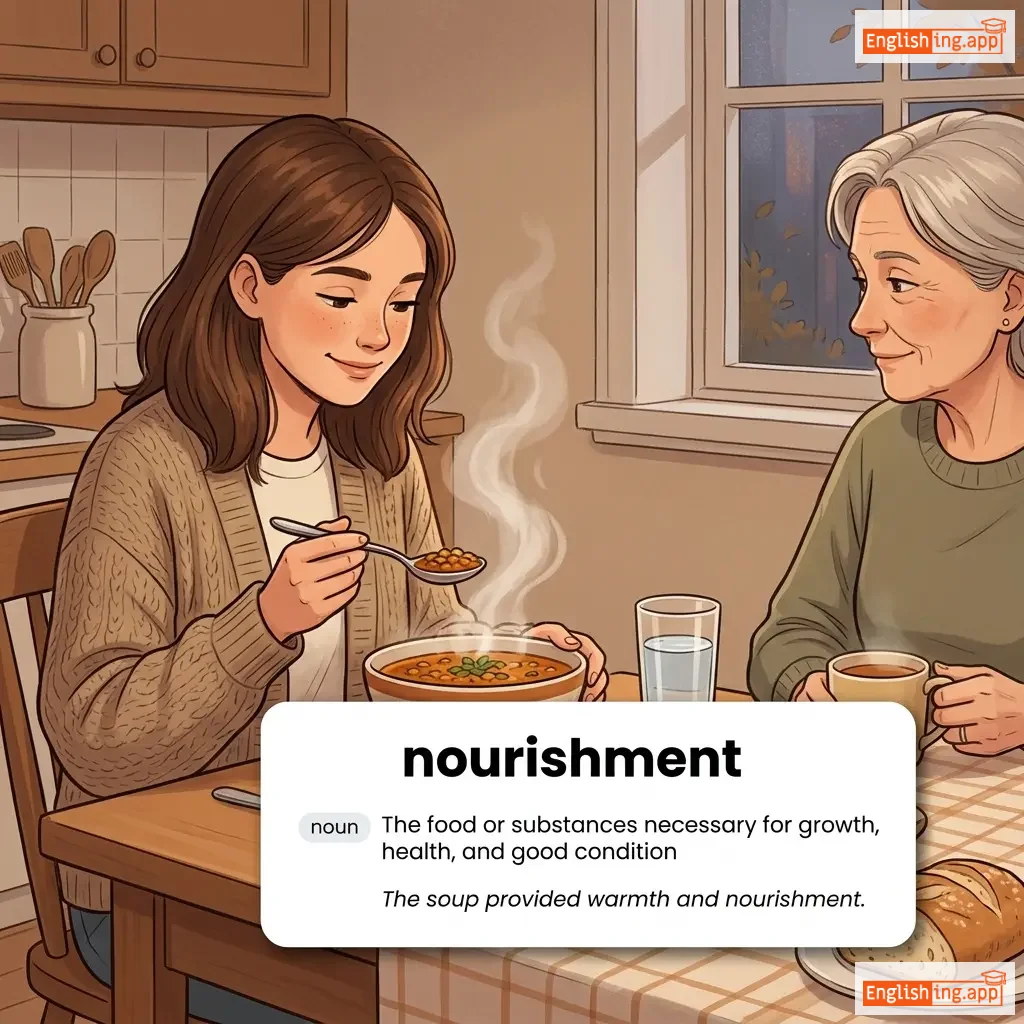
nourishment definition card — visual illustration of the meaning
noun
/ˈnʌrɪʃmənt/
पोषण (poshan)

The food or substances necessary for growth, health, and good condition

"The soup provided warmth and nourishment."

"सूप ने गर्मी और पोषण प्रदान किया।" (Soup ne garmi aur poshan pradan kiya.)
noun
/ˈnoʊvə/
नोवा (एक तारा जो अचानक अपनी चमक में भारी वृद्धि दिखाता है और फिर धीरे-धीरे अपनी मूल स्थिति में लौटता है) (nova)

A star showing a sudden large increase in brightness and then slowly returning to its original state

"Astronomers observed a bright nova in the sky."

"खगोलशास्त्रियों ने आकाश में एक चमकदार नोवा देखा।" (Khagolashastriyon ne aakash mein ek chamakdar nova dekha.)
noun/adjective
/ˈnɒvəl/
उपन्यास / नया (upanyas / naya)

A long fictional narrative; also something new or unusual.

"She spent the weekend reading a historical novel."

"वह सप्ताहांत में एक ऐतिहासिक उपन्यास पढ़ रही थी।" (Vah saptahant mein ek aitihasik upanyas padh rahi thi.)
noun
/ˈnɒvəlɪst/
उपन्यासकार (upanyaskaar)

a person who writes novels

"The novelist spent years writing his new book."

"उपन्यासकार ने अपनी नई किताब लिखने में सालों बिताए।" (Upanyaskaar ne apni nai kitaab likhne mein saalon bitaye.)
noun
/ˌnɒvəˈlɛt/
नवलेटा (navleta)

A short novel or long short story.

"The author published a novellette as a preview of her upcoming series."

"लेखक ने अपनी आगामी श्रृंखला के पूर्वावलोकन के रूप में एक नवलेटा प्रकाशित किया।" (Lekhak ne apni aagami shrunkhala ke purvavlokan ke roop mein ek navleta prakaashit kiya.)
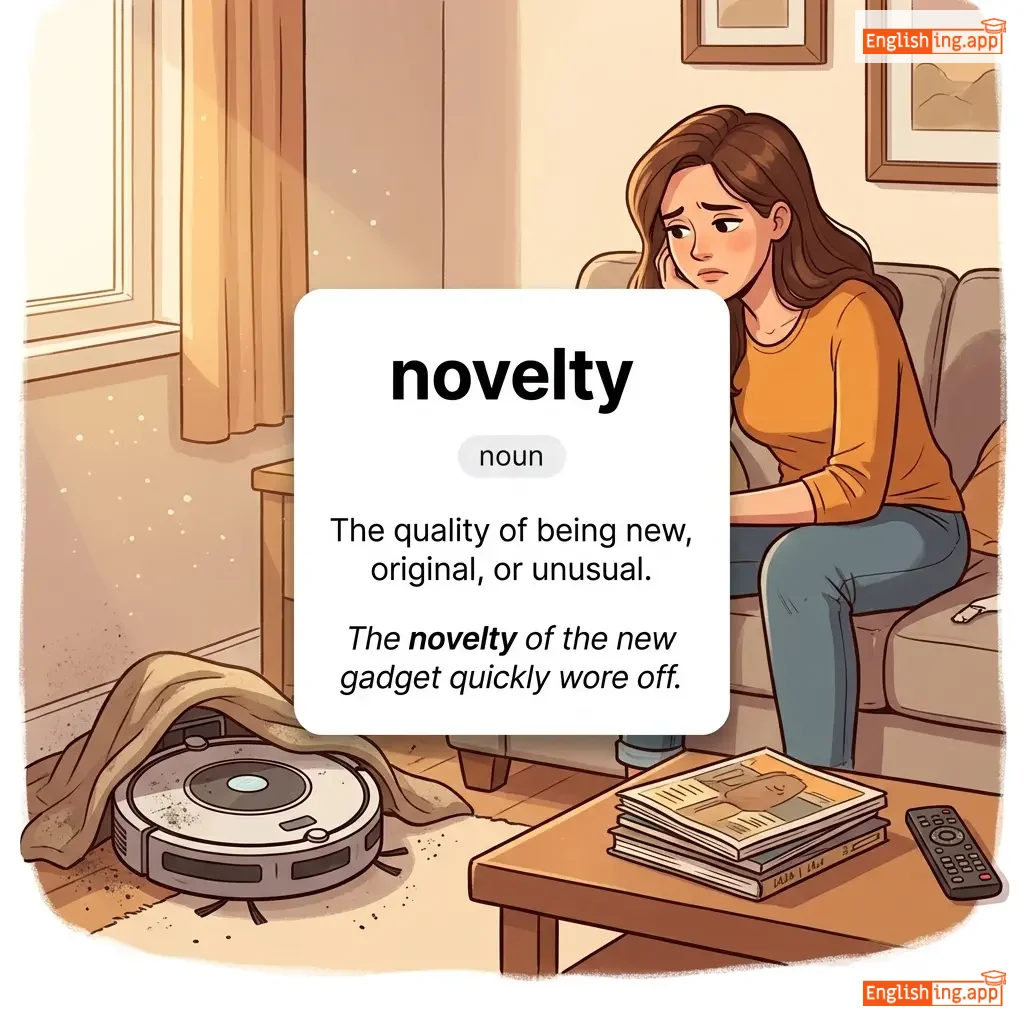
novelty definition card — visual illustration of the meaning
noun
/ˈnɒvəlti/
नवीनता (navinta)

The quality of being new, original, or unusual.

"The novelty of the new gadget quickly wore off."

"नए गैजेट की नवीनता जल्दी ही खत्म हो गई।" (Naye gadget ki navinta jaldi hi khatam ho gayi.)
noun
/noʊˈvɛmbər/
नवंबर (navambar)

the eleventh month of the year in the Gregorian calendar

"November is often cool and quiet before winter begins."

"नवंबर आमतौर पर सर्दी शुरू होने से पहले ठंडा और शांत होता है।" (navambar aamtaur par sardi shuru hone se pahle thanda aur shant hota hai)
noun
/ˈnɒvɪs/
शिक्षार्थी (shiksharthi)

A person new to or inexperienced in a field or activity.

"He is still a novice at playing the guitar."

"वह अब भी गिटार बजाने में एक नोविस है।" (Vah ab bhi guitar bajane mein ek novice hai.)
adverb
/naʊ/
अब (ab)

at the present moment or time

"I am studying now."

"मैं अभी पढ़ाई कर रहा हूँ।" (Main abhi padhai kar raha hoon.)
adverb
/ˈnaʊədeɪz/
आजकल; वर्तमान समय में; (ajkal; vartaman samay mein)

at the present time; in these times

"Now-a-days, people prefer online shopping."

"आजकल लोग ऑनलाइन शॉपिंग करना पसंद करते हैं।" (ajkal log online shopping karna pasand karte hain)
adverb
/ˈnaʊədeɪz/
आजकल (ajkal)

At the present time; in contrast with the past.

"Nowadays, many people prefer shopping online."

"आजकल, कई लोग ऑनलाइन खरीदारी करना पसंद करते हैं।" (Ajkal, kai log online kharidari karna pasand karte hain.)
adverb
/ˈnoʊˌwɛr/
कहीं नहीं (kahin nahin)

in or to no place; not anywhere

"The missing keys were nowhere to be found."

"गुम हुई चाबियाँ कहीं नहीं मिल रही थीं।" (Gum hui chaabiyan kahin nahin mil rahi thi.)
adjective
/ˈnɑːkʃəs/
हानिकारक (hanikarak)

harmful, poisonous, or very unpleasant

"The factory released noxious fumes into the air."

"फैक्ट्री ने हवा में हानिकारक धुएं को छोड़ दिया।" (Factory ne hawa mein hanikarak dhuein ko chhod diya.)
nuance definition card — visual illustration of the meaning
noun
/ˈnuːˌɑːns/
सूक्ष्म अंतर (sookshm antar)

a subtle difference in meaning, expression, or sound

"The artist captured every nuance of light in the painting."

"कलाकार ने पेंटिंग में हर सूक्ष्म अंतर को पकड़ा।" (Kalaakar ne painting mein har sookshm antar ko pakda.)
adjective
ˈnuː.ɑːnst
सूक्ष्म भिन्नताओं से युक्त (sookshm bhinnataon se yukt)

Characterized by subtle shades of meaning or expression; having or characterized by subtle and often appealingly complex qualities.

"His argument was nuanced and well-structured."

"उसका तर्क सूक्ष्म और सुव्यवस्थित था।" (Uska tark sookshm aur suvyavasthit tha.)
adjective
/ˈnjuːbaɪl/
किशोरी (kishori)

of a young woman, sexually mature and suitable for marriage

"The village was celebrating the festival with its nubile maidens dancing."

"गाँव ने अपने किशोरी कन्याओं के साथ त्योहार मनाया।" (Gaon ne apne kishori kanyaon ke saath tyohaar manaya.)
adjective
/ˈnuːkliər/
न्यूक्लियर (nuclear)

relating to the nucleus of an atom or to nuclear energy

"The country is developing nuclear energy."

"देश परमाणु ऊर्जा विकसित कर रहा है।" (Desh parmanu urja viksit kar raha hai.)
verb
/ˈnuːkliˌeɪt/
केंद्रीकरण करना (kendrikaran karna)

to form into a nucleus or bring together into a central part

"The droplets began to nucleate around tiny particles in the air."

"ड्रॉपलेट्स ने छोटे कणों के चारों ओर न्यूक्लिएट करना शुरू किया।" (Droplets ne chhote kanon ke charon aur nucleate karna shuru kiya.)
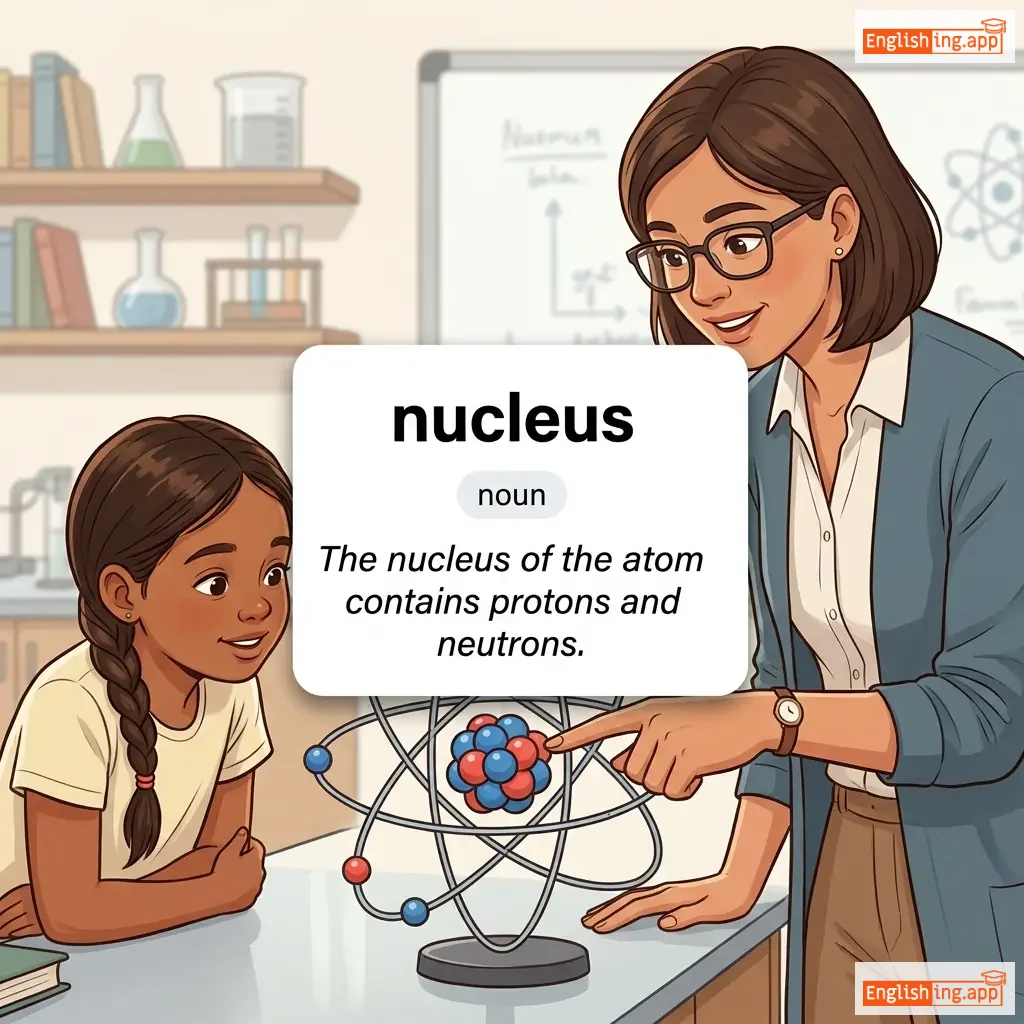
nucleus definition card — visual illustration of the meaning
noun
/ˈnjuː.kli.əs/
केंद्रक (kendrak)

The central and most important part of something, forming the basis for its activity and growth; in biology, the central part of a cell.

"The nucleus of the atom contains protons and neutrons."

"एटम का केंद्रक प्रोटॉन्स और न्यूट्रॉन्स से भरा होता है।" (Atom ka kendrak proton aur neutron se bhara hota hai.)
adjective
/nuːd/
नग्न (nagn)

Wearing no clothes; naked.

"The artist painted a nude model."

"कलाकार ने एक नग्न मॉडल का चित्रण किया।" (Kalakar ne ek nagn model ka chitraan kiya.)
verb
/nʌdʒ/
कोहनी से हल्का धक्का (kohani se halka dhakka)

To push someone gently, usually with your elbow, in order to attract attention.

"She nudged him to be quiet during the meeting."

"मीटिंग के दौरान उसने उसे चुप रहने के लिए हल्के से कोहनी से धक्का दिया।" (Meeting ke dauran usne use chup rehne ke liye halkese kohani se dhakka diya.)
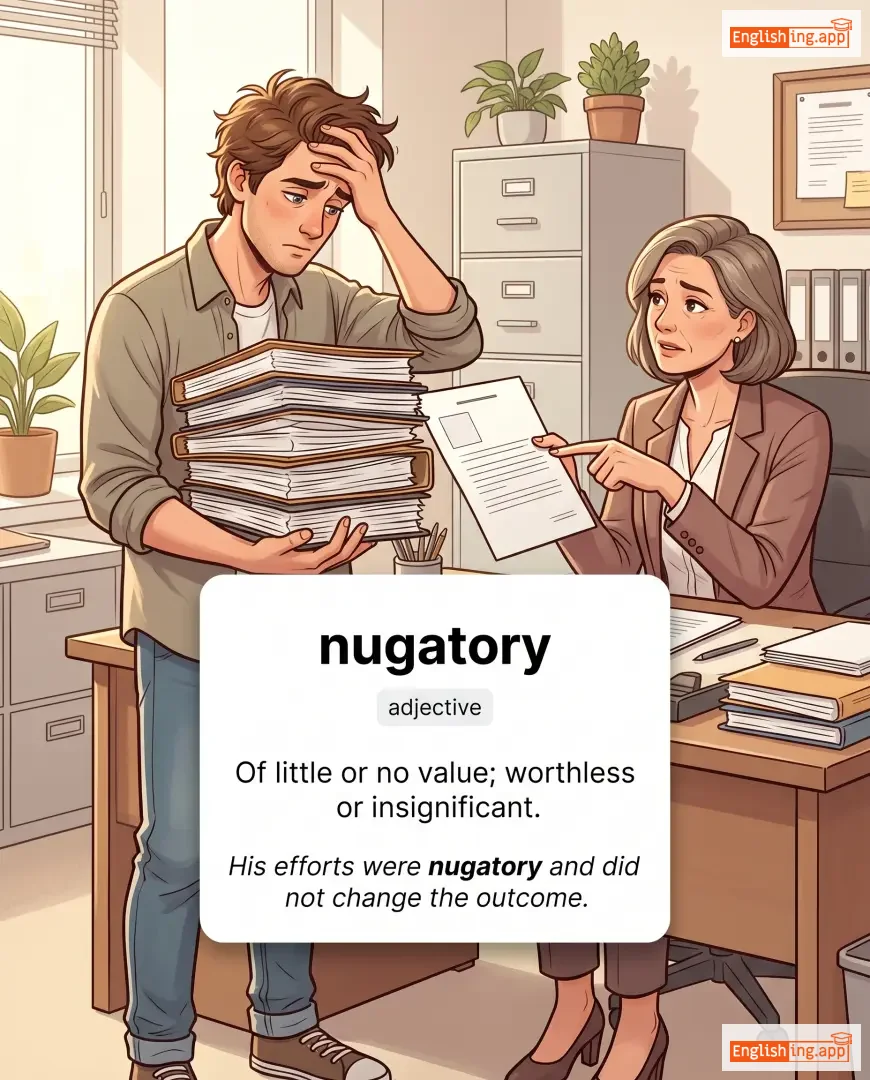
nugatory definition card — visual illustration of the meaning
adjective
/ˈnjuː.ɡə.tɔːr.i/
निरर्थक (nirarthak)

Of little or no value; worthless or insignificant.

"His efforts were nugatory and did not change the outcome."

"उसके प्रयास निरर्थक थे और परिणाम नहीं बदला।" (Uske prayaas nirarthak the aur parinaam nahi badla.)
noun
/ˈnjuː.səns/
परेशानी (pareshani)

A person, thing, or situation that causes inconvenience or annoyance.

"The loud construction noise was a nuisance to the neighbors."

"ऊँची निर्माण शोर पड़ोसियों के लिए एक परेशानी थी।" (Unchi nirman shor padosiyon ke liye ek pareshani thi.)
nullify definition card — visual illustration of the meaning
verb
/ˈnʌlɪfaɪ/
अप्रभावी करना (aprabhaavi karna)

to make legally null and void; to cancel or invalidate

"The contract was nullified due to fraud."

"ठगी के कारण अनुबंध रद्द कर दिया गया था।" (Thagi ke karan anubandh radd kar diya gaya tha.)
noun
/ˈnʌmbər/
संख्या (sankhya)

a mathematical value used to count, measure, or label

"She gave me her phone number."

"उसने मुझे अपना फोन नंबर दिया।" (Usne mujhe apna phone number diya.)
adjective
/ˈnjuː.mər.ə.bəl/
गणनीय; गिना जा सकने योग्य (gananiya; gina ja sakne yogya)

capable of being counted; countable

"The stars in the sky are not numerable."

"आसमान में तारे न्यूमरेबल नहीं हैं।" (aasman mein taare numerable nahin hain)
noun
/ˌnjuːməˈreɪʃən/
संख्यांकन (sankhyankan)

the action or process of counting or assigning numbers

"The teacher explained the basics of numeration to the students."

"शिक्षक ने छात्रों को संख्यांकन के मूल सिद्धांत समझाए।" (Shikshak ne chhatron ko sankhyankan ke mool siddhant samjhaye.)