वोकैबुलरीज

इंग्लिश वोकैबुलरी डिस्कवर, लर्न और मास्टर करें

noun
/ˈnoʊmæd/
घुमंतू (ghumantu)

A person who has no permanent home and moves from place to place.

"The desert was once home to nomads who lived by herding animals."

"रेगिस्तान कभी घुमंतुओं का घर था जो पशुपालन करके रहते थे।" (registan kabhi ghumanton ka ghar tha jo pashupalan karke rehte the.)
nomadic definition card — visual illustration of the meaning
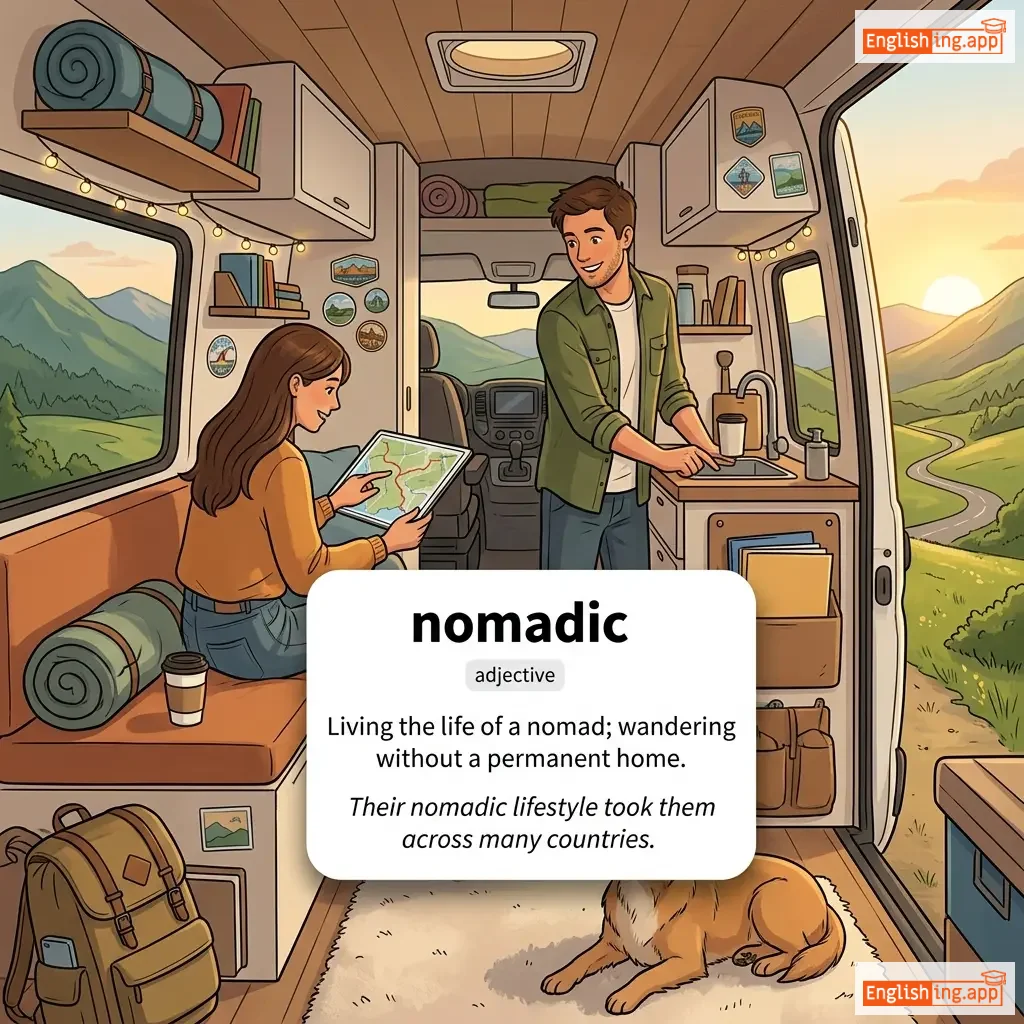
adjective
/noʊˈmædɪk/
घुमंतू (ghumantu)

Living the life of a nomad; wandering without a permanent home.

"Their nomadic lifestyle took them across many countries."

"उनकी घुमंतू जीवनशैली ने उन्हें कई देशों तक ले गई।" (unki ghumantu jeevan shailee ne unhen kai deshon tak le gayi.)
noun
/ˈnoʊmənˌkleɪtʃər/
नामकरण प्रणाली (naamkaran pranali)

A system of names or terms used in a particular science, art, or field.

"The chemical nomenclature can be difficult for beginners to understand."

"रासायनिक नामकरण प्रणाली शुरुआती लोगों के लिए समझना मुश्किल हो सकती है।" (Rasaayanik naamkaran pranali shuruaati logon ke liye samajhna mushkil ho sakti hai.)
adjective
/ˈnɒmɪk/
कानून-संबंधी (kanun-sambandhi)

Relating to laws, rules, or systems.

"The philosopher discussed the nomic necessity of natural laws."

"दार्शनिक ने प्राकृतिक कानूनों की नोमिक आवश्यकता पर चर्चा की।" (Darshanik ne prakritik kanoonon ki nomik avashyakta par charcha ki.)
adjective
/ˈnɒmɪnəl/
नाममात्र (naammatra)

Existing in name only; very small in amount.

"He was the nominal leader of the group but had no real power."

"वह समूह का नाममात्र नेता था लेकिन उसके पास कोई असली शक्ति नहीं थी।" (vah samooh ka naammatra neta tha lekin uske paas koi asli shakti nahi thi.)
nominate definition card — visual illustration of the meaning
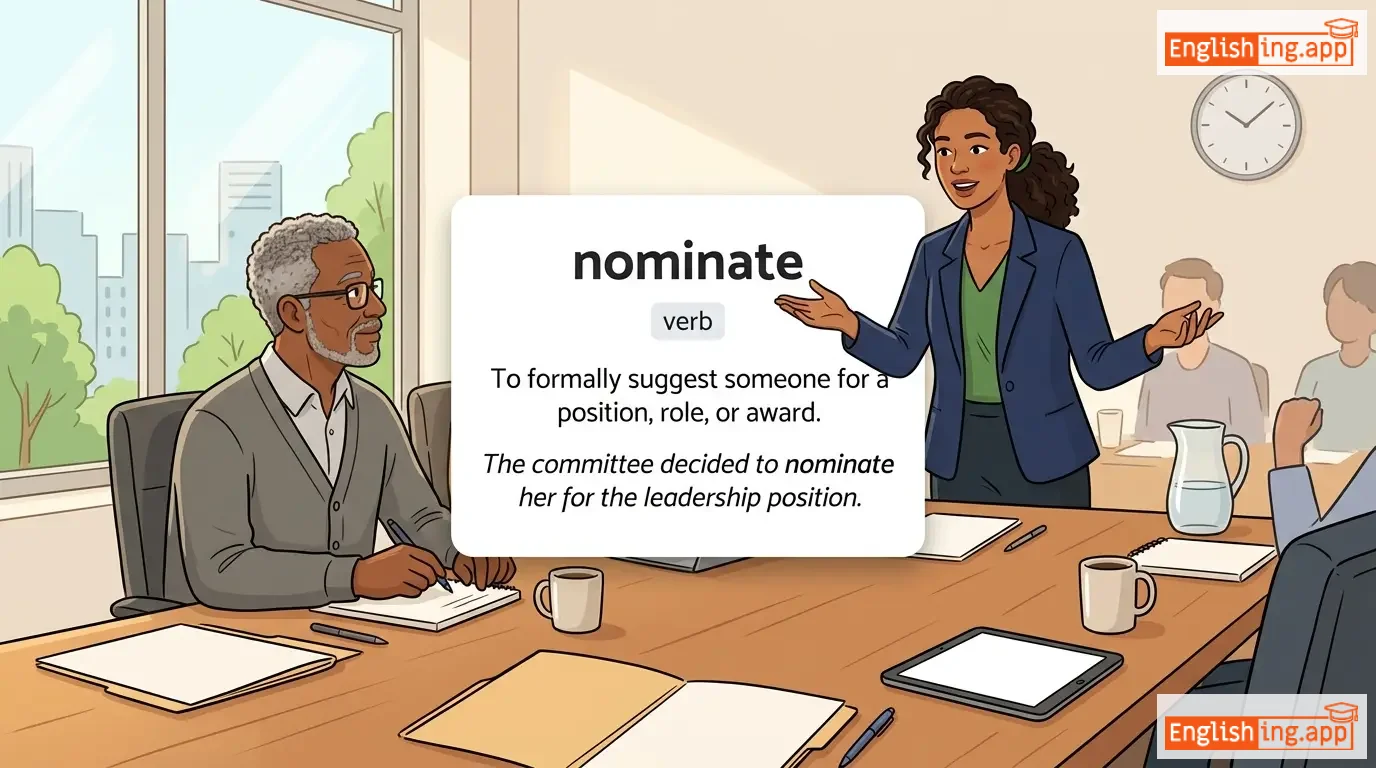
verb
/ˈnɒməˌneɪt/
नामांकित करना (namankit karna)

To formally suggest someone for a position, role, or award.

"The committee decided to nominate her for the leadership position."

"कमेटी ने उसे नेतृत्व पद के लिए नामांकित करने का निर्णय लिया।" (Kameti ne use netritva pad ke liye namankit karne ka nirnay liya.)
noun
/ˌnɒməˈneɪʃən/
नामांकित करना (naamankit karna)

The act of formally proposing someone for a role, position, or award.

"Her nomination for the award surprised everyone."

"पुरस्कार के लिए उसकी नामांकन ने सभी को हैरान कर दिया।" (Puraskaar ke liye uski naamankan ne sabhi ko hairan kar diya.)
noun
/ˌnɒmɪˈniː/
नामांकित व्यक्ति (naamankit vyakti)

a person who is formally suggested or chosen for a position, award, or role

"She was the nominee for the Best Actress award."

"वह बेस्ट एक्ट्रेस अवार्ड के लिए नामांकित थी।" (vah best actress award ke liye naamankit thi.)
noun
/ˌnɒn ˈsɛkwɪtər/
असंगत टिप्पणी (asangath tippani)

a statement or conclusion that does not logically follow from the previous statement

"His comment about the weather was a complete non sequitur during the budget discussion."

"बजट चर्चा के दौरान मौसम के बारे में उनकी टिप्पणी पूरी तरह से असंगत थी।" (Bajat charcha ke dauran mausam ke baare mein unki tippani poori tarah se asangath thi.)
noun, adjective
/nɒn ˈkɒmbətənt/
गैर-युद्धकर्मी (gair-yuddhakarmi)

a person not engaged in fighting during a war, such as civilians or medical staff

"The Red Cross workers were treated as non-combatants in the conflict."

"रेड क्रॉस कार्यकर्ताओं को संघर्ष में नॉन-कॉम्बैटेंट के रूप में माना गया।" (Red Cross karyakartaon ko sangharsh mein non-combatant ke roop mein maana gaya.)
non-cooperation definition card — visual illustration of the meaning
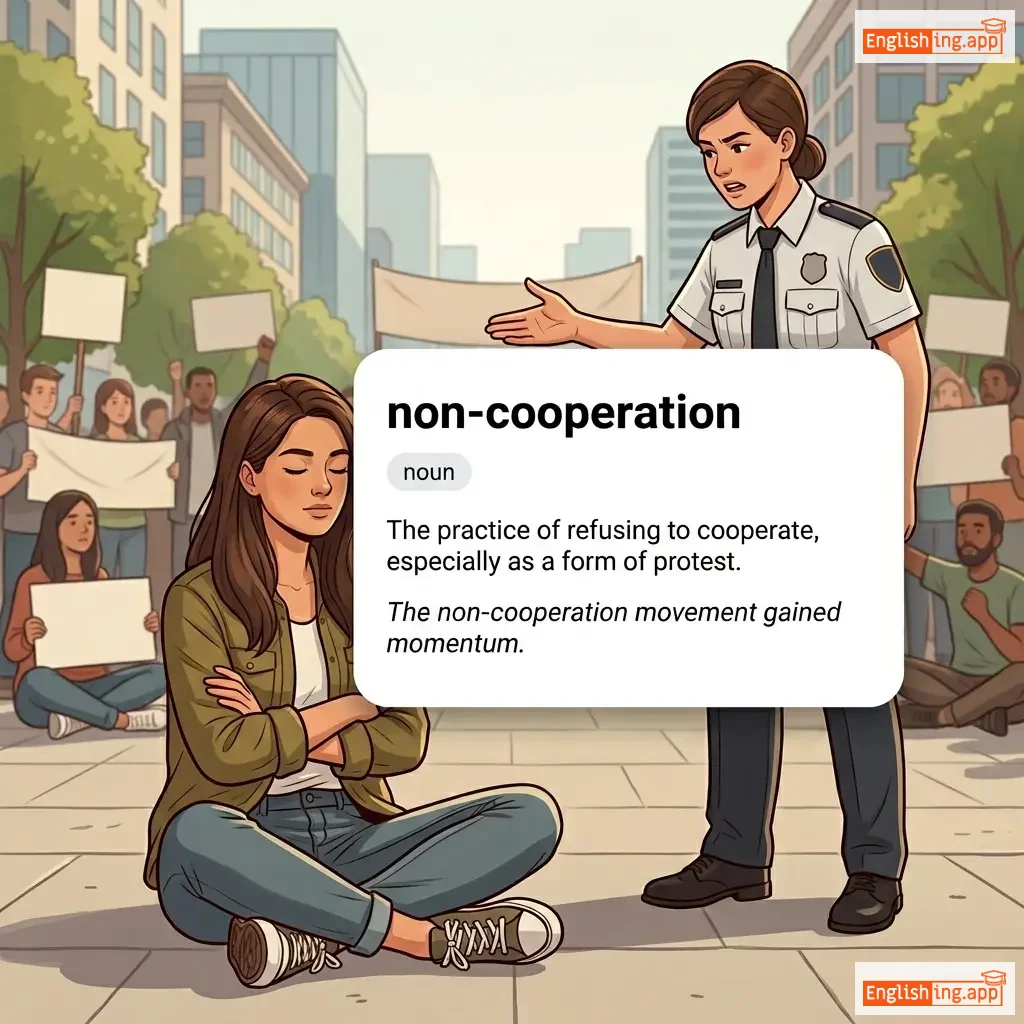
noun
ˌnɒn.kəʊˌɒp.ərˈeɪ.ʃən
गैर-सहयोग (gair-sahyog)

The practice of refusing to cooperate, especially as a form of protest.

"The non-cooperation movement gained momentum."

"गैर-सहयोग आंदोलन ने गति पकड़ी।" (Gair-sahyog aandolan ne gati pakdi.)
adjective
/ˌnɒn ɪɡˈzɪstənt/
अस्तित्वहीन (astitvahin)

not real or not present; lacking existence

"The supposed evidence turned out to be non-existent."

"सुपोज़्ड सबूत असली में अस्तित्वहीन था।" (Supozd saboot asli mein astitvahin tha.)
noun; adjective
/ˌnɒnˈprɒfɪt/
गैर-लाभकारी (gair-labhkari)

an organization that does not operate for profit and reinvests surplus to achieve social goals; not intended to make financial profit

"She works for a non-profit that provides free education to underprivileged children."

"वह एक गैर-लाभकारी संस्था में काम करती है जो मुफ्त शिक्षा प्रदान करती है।" (vah ek gair-labhkari sanstha mein kaam karti hai jo muft shiksha pradan karti hai)
noun, adjective
/ˌnɒn ˈrɛzɪdənt/
गैर-निवासी (gair-nivasi)

a person who does not live in a particular country or place permanently

"Non-resident students often pay higher tuition fees."

"गैर-निवासी छात्र अक्सर अधिक ट्यूशन शुल्क भुगतान करते हैं।" (Gair-nivasi chhatra aksar adhik tuition shulk bhugtan karte hain.)
adverb
/ˌnɒnˈstɒp/
बिना रुके; बिना किसी रुकावट के (bina ruke; bina kisi rukawat ke)

continuing without stopping; without interruption

"The train traveled non-stop from London to Paris."

"ट्रेन लंदन से पेरिस तक नॉन-स्टॉप चली।" (train london se paris tak non-stop chali.)
non-verbal definition card — visual illustration of the meaning
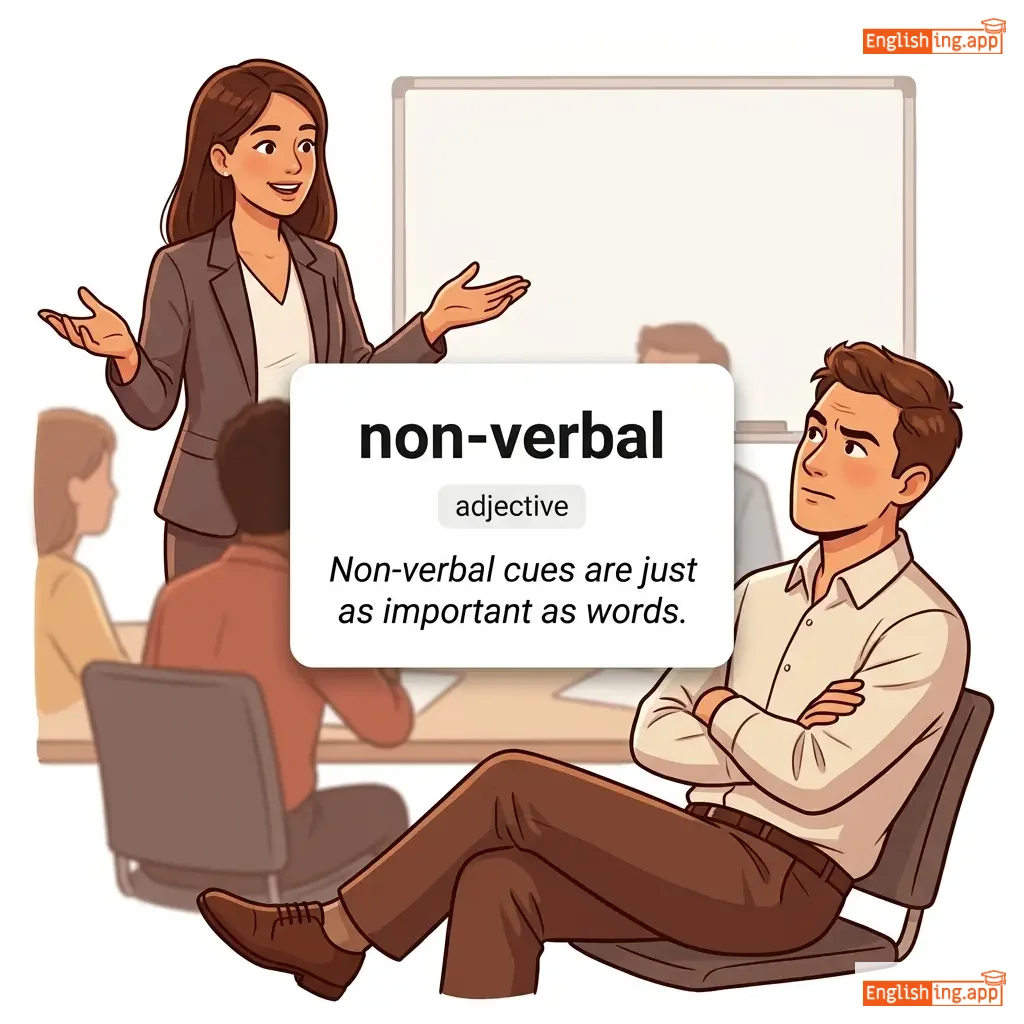
adjective
/ˌnɒnˈvɜː.bəl/
शब्दों या भाषण का उपयोग किए बिना; इशारों, शरीर की भाषा, या चेहरे के भावों के माध्यम से संवादित। (shabdon ya bhashan ka upyog kiye bina; ishaaron, sharir ki bhasha, ya chehre ke bhavon ke madhyam se sanwaadit.)

Not involving or using words or speech; communicated through gestures, body language, or facial expressions.

"Non-verbal cues are just as important as words."

"नॉन-वर्बल क्यूजेस जैसे शब्दों के समान महत्वपूर्ण हैं।" (Non-verbal cues jaise shabdon ke samaan mahatvapurn hain.)
noun
/ˈnɒn.ɪʤ/
अल्पायु (nonage)

the period of being under the legal age of majority; youth or immaturity

"During his nonage, all legal decisions were made by his guardian."

"अपने अल्पायु अवस्था के दौरान, सभी कानूनी निर्णय उसके संरक्षक द्वारा लिए गए थे." (apne alpayu avastha ke dauran, sabhi kanooni nirnay uske sanrakshak dwara liye gaye the)
noun
/ˈnɒnʃələns/
निराशा (niraasha)

A relaxed and calm state, showing lack of concern or interest.

"She answered the tough questions with surprising nonchalance."

"उसने कठिन सवालों का जवाब हैरान करने वाली निराशा के साथ दिया।" (Usne kathin sawaalon ka jawab hairaan karne waali niraasha ke saath diya.)
adjective
/ˈnɒnʃələnt/
बेफिक्र (nonchaillant)

Appearing calm, casual, and unconcerned.

"He gave a nonchalant shrug and walked away."

"उसने बेपरवाह-सा एक कंधा उचकाकर चला गया।" (usne beparvahsa ek kandha uchakakar chala gaya)
adjective
/ˌnɒnkəˈmɪtl̩/
अनिर्णायक (noncommittal)

Not expressing or showing a clear opinion, decision, or commitment.

"She gave a noncommittal reply when asked about her future plans."

"उसने अपने भविष्य की योजनाओं के बारे में पूछे जाने पर एक गैरप्रतिबद्ध जवाब दिया।" (Usne apne bhavishya ki yojanaon ke baare mein pooche jaane par ek gair pratibaddh jawab diya)
adjective
/ˌnɒndɪˈskrɪpt/
सामान्य (samaanya)

Lacking distinctive or interesting features; dull and unremarkable.

"He lives in a nondescript apartment building on the edge of town."

"वह शहर के किनारे एक सामान्य अपार्टमेंट बिल्डिंग में रहता है।" (Vah shahar ke kinare ek samaanya apartment building mein rehta hai.)
pronoun
/nʌn/
कोई भी नहीं (koi bhi nahi)

not any; no one; not one

"None of the students passed the exam."

"कोई भी छात्र परीक्षा में उत्तीर्ण नहीं हुआ।" (Koi bhi chhatr pariksha mein uttirn nahi hua.)
noun
/nɒnˈentəti/
अप्रासंगिक व्यक्ति (aprasangik vyakti)

A person or thing of no importance or significance.

"Once a powerful leader, he is now treated as a political nonentity."

"एक समय में एक शक्तिशाली नेता, अब उसे एक राजनीतिक नॉनएंटिटी के रूप में ट्रीट किया जाता है।" (Ek samay mein ek shaktishali neta, ab use ek rajnaitik nonentity ke roop mein treat kiya jata hai.)
adverb
/ˌnʌnðəˈlɛs/
फिर भी (phir bhi)

in spite of that; nevertheless

"It was raining, but nonetheless, they went hiking."

"बारिश हो रही थी, लेकिन फिर भी वे ट्रैकिंग पर गए।" (Barish ho rahi thi, lekin phir bhi ve trekking par gaye.)
adjective
/ˌnɒnpəˈreɪl/
अतुलनीय (atulniya)

Having no equal; unrivaled or matchless.

"Her beauty was considered nonpareil in the region."

"उसकी सुंदरता को क्षेत्र में अतुलनीय माना जाता था।" (uski sundarta ko kshetra mein atulniya mana jata tha.)
verb
/ˌnɒnˈplʌs/
हतप्रभ करना (hatprabh karna)

To surprise and confuse someone so much that they are unsure how to react.

"The unexpected question seemed to nonplus the speaker."

"अप्रत्याशित सवाल ने वक्ता को हैरान कर दिया।" (apratyashit sawaal ne vakta ko hairaan kar diya.)
verb
/ˌnɒnˈplʌst/
हैरान और उलझा हुआ (hairan aur uljha hua)

Past tense of nonplus; surprised and confused.

"She was completely nonplused by his sudden decision."

"वह उसके अचानक फैसले से पूरी तरह से ननप्लस्ड थी।" (vah uske achanak faisle se poori tarah se nonplused thi.)
verb
/ˌnɒnˈplʌst/
हैरान (hairaan)

Past tense of nonplus; surprised and unsure how to react.

"He stood nonplussed at the strange remark."

"वह अजीब टिप्पणी पर हैरान खड़ा था।" (vah ajeeb tippani par hairaan khada tha.)
adjective
/ˌnɒnˈprɒfɪt/
गैरलाभकारी (gairlaabhkaari)

an organization that does not aim to make a profit, often serving a social or charitable purpose.

"She works for a nonprofit organization that helps children."

"वह एक गैरलाभकारी संगठन के लिए काम करती है जो बच्चों की मदद करता है।" (Vah ek gairlaabhkaari sangathan ke liye kaam karti hai jo bachon ki madad karta hai.)
noun
/ˈnɒnsəns/
बकवास (bakwaas)

Words or ideas that have no meaning or make no sense.

"His explanation was pure nonsense."

"उसकी व्याख्या पूरी तरह से बकवास थी।" (uski vyakhya poori tarah se bakwaas thi.)
adjective
/ˌnɒnˈtrɪviəl/
जटिल (jatil)

Not simple or easy; requiring effort or significant thought.

"Solving the equation turned out to be a nontrivial task."

"समीकरण हल करना एक जटिल कार्य साबित हुआ।" (Samikaran hal karna ek jatil kaary sabit hua.)
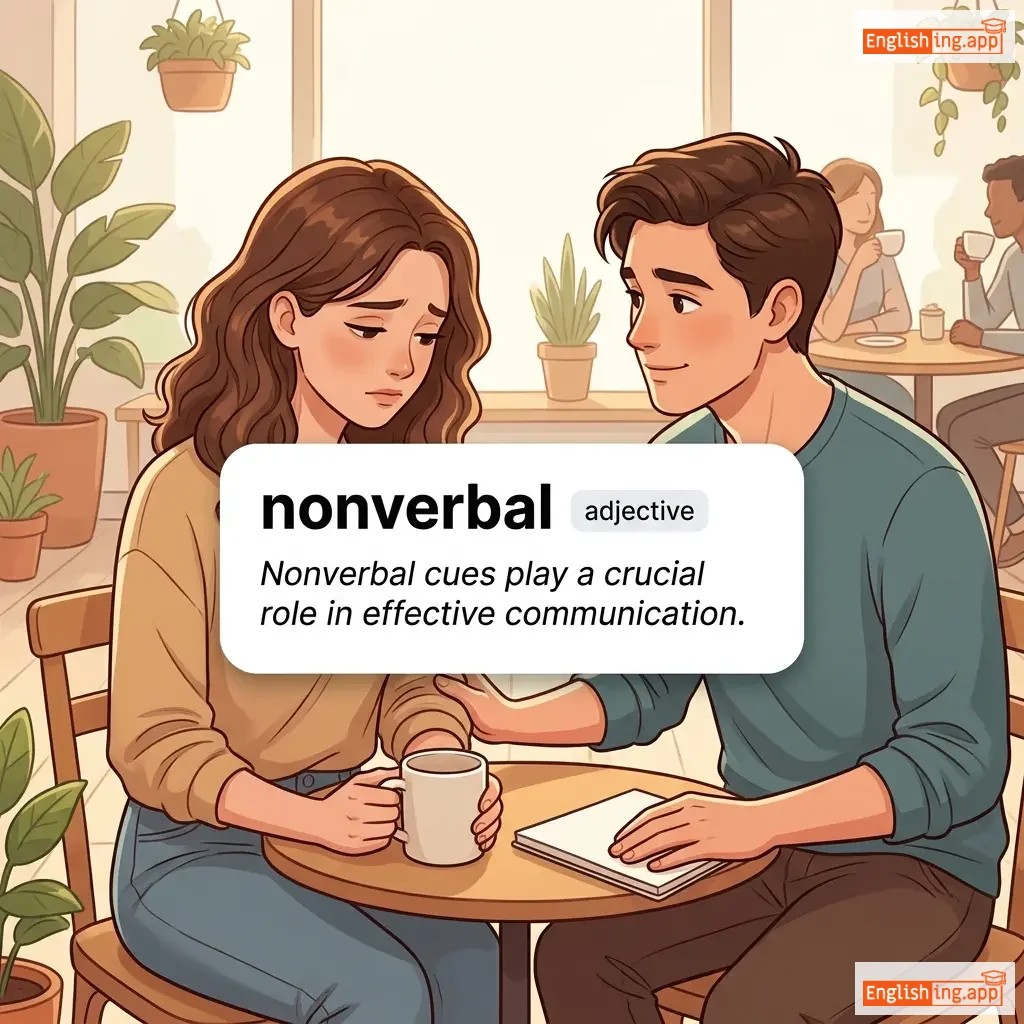
nonverbal definition card — visual illustration of the meaning
adjective
ˌnɒnˈvɜːr.bəl
गैर-मौखिक (gair-maukik)

Communication using body language, facial expressions, or gestures instead of words

"Nonverbal cues play a crucial role in effective communication."

"गैर-मौखिक संकेत प्रभावी संचार में महत्वपूर्ण भूमिका निभाते हैं।" (Gair-maukik sanket prabhavi sanchar mein mahatvapurn bhumika nibhate hain.)
noun (plural)
/ˈnuːdəlz/
नूडल्स (noodals)

long, thin strips of dough made from flour, water, or eggs, cooked and eaten as food

"She cooked noodles with vegetables for dinner."

"उसने रात के खाने में सब्ज़ियों के साथ नूडल्स बनाए।" (usne raat ke khane mein sabziyon ke saath noodals banae)
noun
/nuːn/
दोपहर (dopahar)

12 o'clock in the daytime; midday

"The meeting will start at noon."

"बैठक दोपहर बारह बजे शुरू होगी।" (baithak dopahar barah baje shuru hogi.)
noun
/nuːs/
फाँसी का फंदा (fansi ka funda)

A loop with a running knot, used especially for trapping or hanging.

"The cowboy tied a noose to catch the wild horse."

"काउबॉय ने जंगली घोड़े को पकड़ने के लिए एक नूस बांध दी।" (Cowboy ne jangli ghode ko pakadne ke liye ek noose bandh di.)
🚫➡️🚫

nor (नॉर)

conjunction
/nɔːr/
या नहीं (ya nahin)

used to introduce a negative clause after a negative statement

"He didn't call, nor did he send a message."

"उसने कॉल नहीं किया, और न ही उसने कोई संदेश भेजा।" (Usne kol nahin kiya, aur na hi usne koi sandesh bheja.)
noun
/nɔːrm/
मानक (maanak)

An accepted standard or a usual practice.

"Wearing uniforms is the norm in many schools."

"कई स्कूलों में यूनिफार्म पहनना मानक है।" (Kai schoolon mein uniform pehnna maanak hai.)
adjective
/ˈnɔː.məl/
सामान्य (samaanya)

conforming to a standard; usual, typical, or expected

"It is normal to feel nervous before an interview."

"इंटरव्यू से पहले नर्वस महसूस करना सामान्य है।" (interview se pehle nervous mahsus karna samaanya hai.)
noun
/ˈnɔːrməlsi/
सामान्य स्थिति (saamanya sthiti)

The condition of being normal; a return to usual or expected conditions.

"After the flood, the town struggled to regain a sense of normalcy."

"बाढ़ के बाद, शहर ने सामान्य स्थिति हासिल करने के लिए संघर्ष किया।" (Badh ke baad, shahar ne saamanya sthiti haasil karne ke liye sangharsh kiya.)
verb
/ˈnɔːrməlaɪz/
सामान्य बनाना (samanya banana)

to bring something back to a normal or standard condition; to make something conform to a standard

"The government took steps to normalize relations with neighboring countries."

"सरकार ने पड़ोसी देशों के साथ संबंध सामान्य करने के कदम उठाए।" (sarkar ne padosi deshon ke sath sambandh samanya karne ke kadam uthaye)
adverb
/ˈnɔːməli/
सामान्य रूप से (saamanya roop se)

in a usual or expected way

"I normally wake up at 7 AM."

"मैं सामान्य रूप से सुबह 7 बजे उठता हूँ।" (Main saamanya roop se subah 7 baje uthta hoon.)
noun
/ˈnɔːrmən/
नॉर्मन (norman)

A member of a people of mixed Scandinavian and Frankish origin who settled in Normandy, or relating to their culture.

"The Normans conquered England in 1066."

"1066 में नॉर्मन लोगों ने इंग्लैंड पर कब्जा कर लिया।" (one thousand sixty six me Norman logon ne England par kabza kar liya)
adjective
/ˈnɔːrmətɪv/
मानकात्मक (manakatmak)

relating to rules, standards, or norms that govern behavior or beliefs

"The study focused on the normative aspects of cultural behavior."

"अध्यान ने सांस्कृतिक व्यवहार के मानकात्मक पहलुओं पर ध्यान केंद्रित किया।" (Adhyayan ne sanskritik vyavhaar ke manakatmak pehluon par dhyan kendrit kiya.)
noun
/nɔːrθ/
उत्तर (uttar)

the direction toward the top of a map or the opposite of south

"We traveled north to reach the mountains."

"हम पर्वतों तक पहुँचने के लिए उत्तर की ओर यात्रा कर रहे थे।" (Ham parvaton tak pahuchne ke liye uttar ki or yatra kar rahe the.)
noun
/ˌnɔːrθˈiːst/
उत्तर-पूर्व (uttar-purv)

the direction between north and east; a region or area located in that direction.

"The storm is moving toward the northeast."

"तूफान उत्तर-पूर्व की ओर बढ़ रहा है।" (Toofan uttar-purv ki or badh raha hai.)
adjective
/ˈnɔːðərn/
उत्तर का (uttar ka)

relating to the north or situated in the north

"The northern part of the country is known for its cold climate."

"देश का उत्तरी हिस्सा अपने ठंडे मौसम के लिए जाना जाता है।" (Desh ka uttari hissa apne thande mausam ke liye jana jata hai.)
adverb
/ˈnɔːθwədz/
उत्तर की ओर; उत्तर दिशा में (uttar ki or)

towards the north; in a northerly direction

"The birds migrate northwards in spring."

"पक्षी वसंत में उत्तर की ओर प्रवास करते हैं।" (pakshi vasant mein uttar ki or pravas karte hain)
noun, adjective, adverb
/ˌnɔːrθˈwest/
उत्तर-पश्चिम (uttar-pashchim)

the direction that is between north and west; situated in or moving toward this direction

"Seattle is located in the northwest of the United States."

"सिएटल संयुक्त राज्य अमेरिका के उत्तर-पश्चिम में स्थित है।" (Seattle sanyukt rajya amerika ke uttar-pashchim mein sthit hai.)
noun
/noʊz/
नाक (nak)

the part of the face that contains the nostrils and is used for breathing and smelling

"He has a sharp nose and can smell things from far away."

"उसकी नाक तेज है और वह दूर से चीजों की गंध ले सकता है।" (Uski nak tez hai aur vah door se cheezon ki gandh le sakta hai.)
noun
/noʊz rɪŋ/
नाक की अंगूठी (nak ki angoothi)

a piece of jewelry worn through a piercing in the nose

"She got a small gold nose ring for her birthday."

"उसने अपनी जन्मदिन के लिए एक छोटी सोने की नथ ली।" (Usne apni janmadin ke liye ek chhoti sone ki nath li.)