वोकैबुलरीज

इंग्लिश वोकैबुलरी डिस्कवर, लर्न और मास्टर करें

noun
/ˈnuː.kʌm.ər/
नवागंतुक (navaagantuk)

a person who has recently arrived in a place or joined a group

"The newcomer was warmly welcomed by the team."

"नवागंतुक को टीम ने गर्मजोशी से स्वागत किया।" (navaagantuk ko team ne garmjoshi se swagath kiya.)
adverb
/ˈnjuːli/
नवीनतम तरीके से (naveenatam tareeke se)

in a new or recent manner

"She has newly renovated her house."

"उसने हाल ही में अपने घर का नवीनीकरण किया है।" (Usne haal hi mein apne ghar ka naveenikaran kiya hai.)
noun
/nuːz/
समाचार (samachar)

newly received or noteworthy information, especially about recent events

"The news about the storm spread quickly."

"आंधी के बारे में समाचार जल्दी फैल गए।" (Aandhi ke baare mein samachar jaldi phail gaye.)
noun
/ˈnjuːzˌlɛtər/
न्यूज़लेटर (newsletter)

a printed or electronic report containing news or information about a company or organization

"The company sends a weekly newsletter to its employees."

"कंपनी अपने कर्मचारियों को हर हफ्ते एक न्यूज़लेटर भेजती है।" (company apne karyakartao ko har hafte ek newsletter bhejti hai.)
noun
/ˈnjuːzˌpeɪpər/
अखबार (akhbaar)

a printed publication (usually daily or weekly) containing news, articles, advertisements, and correspondence

"I read the newspaper every morning."

"मैं हर सुबह अखबार पढ़ता हूँ।" (Main har subah akhbaar padhta hoon.)
noun
/nuːt/
न्यूट (nyoot)

a small amphibian with a long tail that lives both in water and on land

"The newt swam gracefully in the pond."

"न्यूट ने तालाब में सुंदरता से तैरते हुए." (nyoot ne taalab mein sundarta se tairte hue)
adjective
/njuːˈtoʊniən/
न्यूटन के नियमों से संबंधित (Newton ke niyamon se sambandhit)

relating to the laws of motion and gravitation formulated by Sir Isaac Newton

"The scientist explained the Newtonian laws of motion."

"वैज्ञानिक ने न्यूटन के गति के नियमों की व्याख्या की।" (Vaigyanik ne Newton ke gati ke niyamon ki vyakhya ki.)
adjective
/nɛkst/
अगला (agla)

immediately following in time, order, or place

"The next train leaves at 9:00 AM."

"अगला ट्रेन सुबह 9:00 बजे चलेगी।" (Agla train subah 9:00 baje chalegi.)
noun
/ˈnɛksəs/
संयोजन (sanyojan)

a connection or series of connections linking two or more things

"The town was a nexus for trade routes in the region."

"यह शहर क्षेत्र में व्यापार मार्गों के लिए एक संपर्क बिंदु था।" (Yeh shahar kshetra mein vyapar margon ke liye ek sampark bindu tha.)
noun
/nɪb/
कलम का नोक (kalam ka nok)

the pointed end of a pen used for writing or drawing

"He dipped the nib into the ink before writing."

"उसने लिखने से पहले निब को स्याही में डुबो दिया।" (Usne likhne se pehle nib ko siyahi mein dubo diya.)
verb
/ˈnɪbəl/
धीरे-धीरे काटना (dheere-dheere kaatna)

to take small bites of food

"The rabbit nibbled on a carrot."

"खरगोश ने गाजर पर धीरे-धीरे काटा।" (Khargosh ne gajar par dheere-dheere kaata.)
adjective
/naɪs/
अच्छा (accha)

pleasant, kind, or enjoyable

"She is a very nice person to work with."

"वह काम करने के लिए बहुत अच्छा व्यक्ति है।" (vah kaam karne ke liye bahut accha vyakti hai.)
adverb
/ˈnaɪsli/
अच्छी तरह (achchi tarah)

in a pleasant, kind, or satisfactory manner; carefully and appropriately

"She explained the problem nicely so everyone could understand."

"उसने समस्या को अच्छी तरह समझाया ताकि सब समझ सकें।" (usne samasya ko achchi tarah samjhaya taaki sab samajh saken)
noun
/ˈnaɪsəti/
सूक्ष्मता (sukshmata)

a fine or subtle detail, or a refined, delicate aspect of something

"The lawyer explained the legal niceties of the case."

"वकील ने मामले के कानूनी सूक्ष्मताओं को समझाया।" (Vakeel ne maamle ke kaanooni sukhsmataon ko samjhaya.)
Niche definition card — visual illustration of the meaning
noun
/niːʃ/
विशेष स्थान (vishesh sthan)

a comfortable or suitable position in life or employment

"He has found his niche in the marketing industry."

"उसने मार्केटिंग उद्योग में अपनी विशेष स्थान पा लिया है।" (usne marketing udyog mein apni vishesh sthan pa liya hai.)
noun
/ˈnɪkəl/
निकेल (nikel)

a small coin, typically worth five cents in the United States

"He found a nickel on the ground."

"उसे जमीन पर एक निकेल मिला।" (Use zameen par ek nikel mila.)
noun
/ˈnɪk.neɪm/
उपनाम (upnaam)

a familiar or humorous name given to a person instead of their real name

"His nickname is 'Tiger' because he's so brave."

"उसका उपनाम 'टाइगर' है क्योंकि वह बहुत बहादुर है।" (uska upnaam 'Tiger' hai kyonki wah bahut bahadur hai)
noun
/niːs/
भतीजी (bhatiji)

the daughter of one's brother or sister

"My niece is studying at the university this year."

"मेरी भतीजी इस साल विश्वविद्यालय में पढ़ रही है।" (meri bhatiji is saal vishwavidyalaya mein padh rahi hai)
noun
/naɪˈdʒel.ə/
कलौंजी (kalonji)

small black seeds with a nutty, slightly bitter flavor, also known as black cumin or black seed

"Sprinkle nigella seeds on top of the bread before baking."

"ब्रेड पर बेकिंग से पहले कलौंजी के बीज छिड़कें।" (bred par baking se pehle kalonji ke beej chhidkhen.)
adjective
/ˈnɪɡərdli/
कंजूस (kanjoos)

unwilling to spend or give; stingy or miserly

"He was too niggardly to leave a decent tip."

"वह अच्छा टिप छोड़ने के लिए बहुत कंजूस था।" (Wah accha tip chhodne ke liye bahut kanjoos tha.)
verb
/ˈnɪɡəl/
छोटे लेकिन लगातार असुविधा या परेशानी उत्पन्न करना (chhote lekin lagataar asuvidha ya pareshani utpann karna)

to cause slight but persistent annoyance, discomfort, or worry

"A small doubt niggled at her mind."

"एक छोटा संदेह उसके मन को परेशान कर रहा था।" (Ek chhota sandeh uske man ko pareshan kar raha tha.)
noun
/naɪt/
रात्रि (ratri)

the time of darkness between one day and the next, when most people sleep

"She loves going for walks at night."

"वह रात को चलने जाना पसंद करती है।" (Wah raat ko chalne jana pasand karti hai.)
noun
/naɪt kwiːn/
रजनीगंधा (rajnigandha)

a fragrant white flower that blooms at night and releases strong sweet scent

"The night queen flowers filled the garden with their sweet fragrance."

"रजनीगंधा के फूलों ने अपनी मीठी सुगंध से बगीचे को भर दिया।" (rajnigandha ke phoolon ne apni meethi sugandh se bagiche ko bhar diya)
noun
/naɪt ˈdʒæz.mɪn/
रात की रानी (raat ki rani)

a fragrant flowering tree that blooms at night with small white flowers

"The night-jasmine tree blooms only after sunset with its tiny white flowers."

"रात की रानी का पेड़ केवल सूर्यास्त के बाद अपने छोटे सफेद फूलों के साथ खिलता है।" (raat ki rani ka ped keval suryast ke baad apne chhote safed phoolon ke sath khilta hai.)
noun
/ˈnaɪt.fɔːl/
रात्रि का समय (raatri ka samay)

the time when night begins; dusk

"They decided to return home before nightfall."

"उन्होंने रात होने से पहले घर लौटने का निर्णय लिया।" (unhone raat hone se pehle ghar lautne ka nirnay liya.)
noun
/ˈnaɪ.tɪŋ.ɡeɪl/
नाइटिंगेल (naightingel)

small songbird known for its beautiful singing, especially at night

"The nightingale sang sweetly in the moonlight."

"नाइटिंगेल चाँदनी में मीठा गा रहा था।" (naightingel chandani mein meetha ga raha tha)
noun
/ˈnaɪtˌmɛər/
बुरा सपना (bura sapna)

a frightening or unpleasant dream; a very distressing experience.

"Last night, she had a terrifying nightmare."

"कल रात, उसने एक डरावना बुरा सपना देखा।" (Kal raat, usne ek darawna bura sapna dekha.)
noun
/ˈnaɪɪˌlɪzəm/
निराशावाद (nirashavad)

The rejection of all religious and moral principles, often in the belief that life is meaningless.

"The philosopher was criticized for promoting nihilism."

"दार्शनिक को निहिलिज़्म को बढ़ावा देने के लिए आलोचना की गई।" (Darshanik ko nihilism ko badhawa dene ke liye alochana ki gayi.)
noun
/ˈnaɪəlɪst/
निराशावादी (nirashavadi)

A person who rejects all religious and moral principles, often believing that life is meaningless.

"He was called a nihilist for rejecting all social norms."

"उसे सभी सामाजिक मानदंडों को नकारने के कारण निराशावादी कहा गया था।" (Use sabhi samajik maan-dandon ko nakarne ke karan nirashavadi kaha gaya tha.)
noun
/nɪl/
शून्य (shunya)

Nothing; zero.

"The score remained nil after the first half."

"पहले हाफ के बाद स्कोर शून्य रहा।" (Pehle half ke baad score shunya raha.)
adjective
/ˈnɪmbəl/
चंचल (chanchal)

Quick and light in movement or thought.

"The dancer’s nimble steps impressed the audience."

"नर्तकी के चंचल कदमों ने दर्शकों को प्रभावित किया।" (Nartaki ke chanchal kadmo ne darshako ko prabhavit kiya.)
noun
/naɪn/
नौ (nau)

the number that is one more than eight

"She has nine books in her collection."

"उसके पास अपनी संग्रह में नौ किताबें हैं।" (Uske paas apni sangrah mein nau kitabein hain.)
noun
/ˈnɪn.i/
मूर्ख (moorkh)

a silly or foolish person; someone who lacks common sense

"Don't be such a ninny, use your brain!"

"ऐसी मूर्खता मत दिखाओ, अपना दिमाग इस्तेमाल करो!" (aisi moorkhta mat dikhao, apna dimaag istemaal karo!)
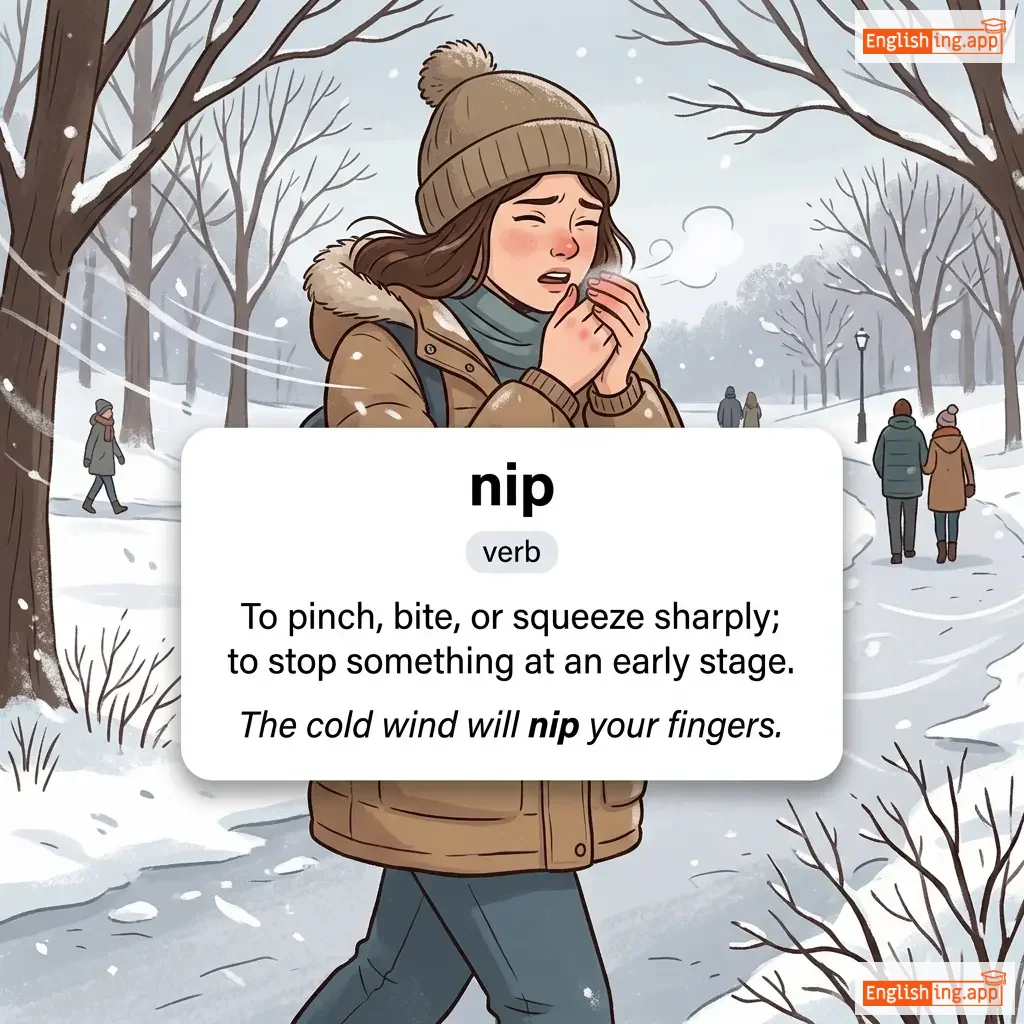
nip definition card — visual illustration of the meaning
verb
/nɪp/
चिमटी काटना (chimti katna)

To pinch, bite, or squeeze sharply; to stop something at an early stage.

"The cold wind will nip your fingers."

"ठंडी हवा तुम्हारी अंगुलियों को चिमटी काटेगी।" (Thandi hawa tumhari anguliyon ko chimti kategi.)
adjective
/ˈnɪp.i/
ठंडा; ठिठुरता; तेज और चपल गति में (thanda; thithurta; tez aur chapal gati mein)

cold; chilly; quick and agile in movement

"It's quite nippy outside today, you should wear a jacket."

"आज बाहर ठंडा है, आपको जैकेट पहननी चाहिए।" (aaj baahar thanda hai, aapko jacket pehanni chahiye.)
noun
/nɪərˈvɑːnə/
निर्वाण (nirvaan)

A state of perfect happiness, peace, and freedom from suffering; in Buddhism, the ultimate goal of liberation.

"Meditation helps some people seek nirvana in their lives."

"ध्यान कुछ लोगों को उनके जीवन में निर्वाण की खोज करने में मदद करता है।" (dhyaan kuch logon ko unke jeevan mein nirvaan ki khoj karne mein madad karta hai)
noun
/nɪt/
जूँ का अंडा (joo ka anda)

The egg or young form of a louse or other parasitic insect.

"The teacher noticed nits in the child’s hair."

"शिक्षक ने बच्चे के बालों में जूँ का अंडा देखा।" (Shikshak ne bachche ke balon mein joo ka anda dekha.)
verb
/ˈnɪtˌpɪk/
छोटी गलती निकालना (chhoti galti nikalna)

To find and criticize small or unimportant faults in someone or something.

"She tends to nitpick about every little detail."

"वह हर छोटी बात पर निटपिक करने की आदत रखती है।" (Woh har chhoti baat par nitpick karne ki aadat rakhti hai.)
adverb
/noʊ/
ना (na)

used to give a negative response or to show disagreement

"She said no to the invitation."

"उसने निमंत्रण को ना कहा।" (Usne nimantran ko na kaha.)
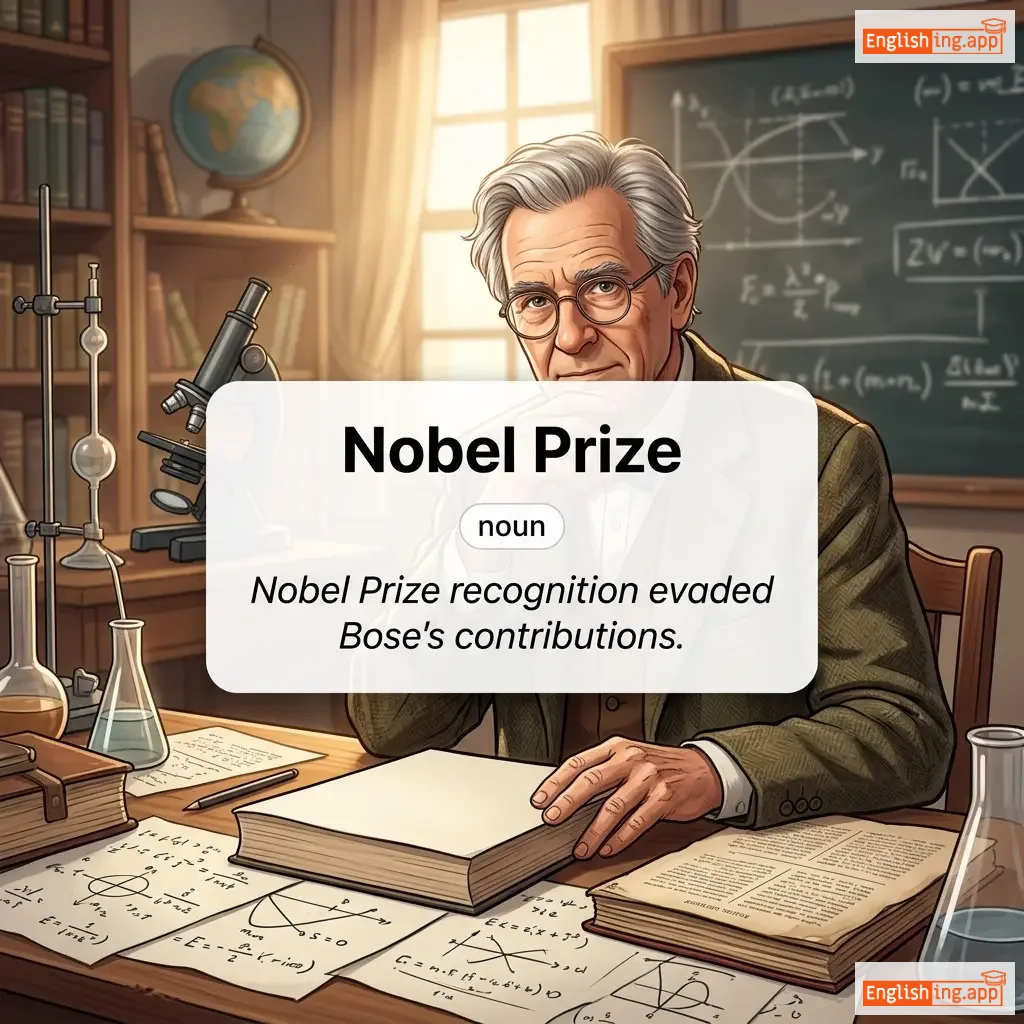
Nobel Prize definition card — visual illustration of the meaning
noun
noʊˈbel praɪz
नोबेल पुरस्कार (Nobel puraskar)

Any of six international prizes awarded annually for outstanding work in physics, chemistry, physiology or medicine, literature, economics, and the promotion of peace.

"Nobel Prize recognition evaded Bose's contributions."

"नोबेल पुरस्कार बोस के योगदान को नहीं मिली।" (Nobel puraskar Bos ke yogdan ko nahi mili.)
noun
/nəʊˈbɪləti/
उच्चता (uchchata)

the quality of being noble in character or the group of people belonging to the aristocracy

"The king praised her for her nobility and courage."

"राजा ने उसकी उच्चता और साहस के लिए उसकी सराहना की।" (raja ne uski uchchata aur sahas ke liye uski sarahna ki.)
adjective
/ˈnoʊbəl/
उच्च या श्रेष्ठ व्यक्तित्व, उच्च नैतिक सिद्धांतों को दिखाने वाला, या उच्च सामाजिक स्थिति वाला (ucch ya shreshth vyaktitva, ucch naitik siddhanton ko dikhane wala, ya ucch samajik sthiti wala)

Having or showing fine personal qualities, high moral principles, or being of high social rank.

"He is admired for his noble character and generosity."

"उसे उसके उच्च चरित्र और उदारता के लिए सराहा जाता है।" (Use uske uchch charitra aur udarta ke liye saraha jata hai.)
pronoun
/ˈnoʊˌbɑːdi/
कोई नहीं (koi nahin)

no person; not anyone

"Nobody came to the party."

"कोई पार्टी में नहीं आया।" (Koi party mein nahin aaya.)
adjective
/nɒkˈtɜːrnəl/
रात्रिचर (ratrichar)

Active at night and sleeping during the day.

"Owls are nocturnal animals that hunt at night."

"उल्लू रात्रिचर जानवर हैं जो रात में शिकार करते हैं।" (Ullu raatichar janwar hain jo raat mein shikar karte hain.)
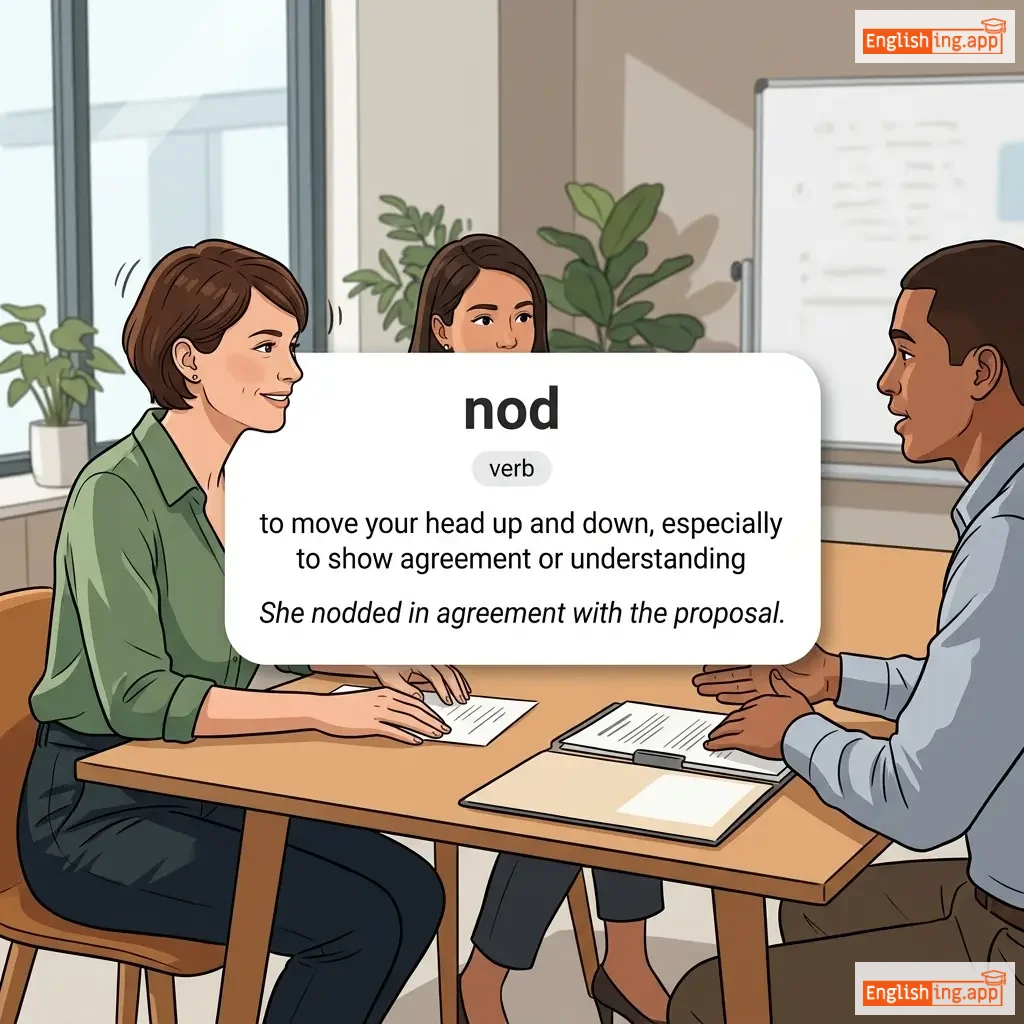
nod definition card — visual illustration of the meaning
verb
/nɒd/
सिर हिलाना (sir hilana)

to move your head up and down, especially to show agreement or understanding

"She nodded in agreement with the proposal."

"वह प्रस्ताव के साथ सहमति में नॉड की।" (Wah prastav ke saath sahmati mein nod ki.)
noun
/nɔɪz/
शोर (shor)

a sound, especially when it is unwanted, unpleasant, or loud

"The noise from the construction site was unbearable."

"निर्माण स्थल से शोर असहनीय था।" (Nirman sthal se shor asahniya tha.)
adjective
/ˈnɔɪzləs/
निरव (nirav)

Completely silent; without any noise.

"The cat made a noiseless leap onto the table."

"बिल्ली ने मेज पर बिना आवाज के कूदने में सफलता पाई।" (Billi ne mej par bina awaaz ke koodne mein safalta paayi.)
adverb
/ˈnɔɪzɪli/
शोर-शराबे से; जोर से (shor-sharabe se; zor se)

in a way that makes a lot of noise; loudly

"The children were playing noisily in the playground."

"बच्चे खेल के मैदान में शोर-शराबे से खेल रहे थे।" (bachche khel ke maidan mein shor-sharabe se khel rahe the)
adjective
/ˈnɔɪsəm/
दुरगंधयुक्त (durgandhyukt)

Having an extremely unpleasant smell; offensive or harmful.

"The dump emitted a noisome odor that spread through the town."

"डंप ने एक नॉइसम गंध छोड़ी जो शहर में फैल गई।" (Dump ne ek noisome gandh chhodi jo shahar mein phail gayi.)
adjective
/ˈnɔɪzi/
शोरशराबे वाला (shorsharaabe waala)

Making a lot of loud sounds; full of noise.

"The children were noisy during the party."

"बच्चे पार्टी के दौरान शोरशराबे वाले थे।" (bachche party ke dauran shorsharaabe waale the.)