वोकैबुलरीज

इंग्लिश वोकैबुलरी डिस्कवर, लर्न और मास्टर करें

adjective
/nɪˈɡoʊ.ʃi.ə.bəl/
बातचीत योग्य (baatcheet yogya)

Open to discussion or modification; capable of being bargained for.

"The salary offered is negotiable."

"ऑफ़र की गई सैलरी बातचीत योग्य है।" (Offer ki gayi salary baatcheet yogya hai.)
verb
/nɪˈɡoʊ.ʃi.eɪt/
बातचीत करना (baatcheet karna)

To discuss something formally in order to reach an agreement.

"They negotiated a fair deal with the supplier."

"उन्होंने आपूर्तिकर्ता के साथ एक उचित सौदा किया।" (Unhone aapurtikarta ke saath ek uchit sauda kiya.)
noun
/nɪɡoʊˈʃiːeɪʃən/
बातचीत (baatcheet)

a discussion aimed at reaching an agreement

"The negotiation between the two companies was successful."

"दो कंपनियों के बीच बातचीत सफल रही।" (Do kompaniyon ke beech baatcheet safal rahi.)
noun
/ˈneɪbər/
पड़ोसी (padosi)

a person living next door or nearby

"My neighbor lent me some sugar when I ran out."

"मेरे पड़ोसी ने मुझे कुछ चीनी दी जब मैं खत्म हो गया था।" (Mere padosi ne mujhe kuch cheeni dee jab main khatam ho gaya tha.)
noun
/ˈneɪbərˌhʊd/
पड़ोस (pados)

a district or area around or near a particular place

"I grew up in a quiet neighborhood."

"मैं एक शांत पड़ोस में बड़ा हुआ।" (Main ek shant pados mein bada hua.)
adjective
/ˈneɪbərɪŋ/
पास का (paas ka)

situated near or next to another place; adjacent or nearby.

"They visited a neighboring village for the festival."

"उन्होंने त्योहार के लिए पास के गाँव का दौरा किया।" (Unhone tyohar ke liye paas ke gaon ka daura kiya.)
noun
/ˈneɪ.bər/
पड़ोसी; बगलवाला (padosi; bagalwala)

a person who lives near or next to another person

"My neighbour is very friendly and helpful."

"मेरा पड़ोसी बहुत दोस्ताना और मददगार है।" (mera padosi bahut dostana aur madadgar hai)
adjective
/ˈneɪ.bər.ɪŋ/
समीपवर्ती; पड़ोसी; सन्निहित (simepavarti; padosi; sannihit)

situated next to or very near; adjacent; bordering

"We often visit our neighbouring countries for trade."

"हम अक्सर व्यापार के लिए हमारे पड़ोसी देशों का दौरा करते हैं।" (ham aksar vyapar ke liye hamare padosi deshon ka daura karte hain.)
conjunction
/ˈniːðər/
न तो यह न वह (na to yeh na vah)

used to connect two negative alternatives

"Neither the manager nor the assistant could attend the meeting."

"न तो मैनेजर और न ही सहायक मीटिंग में शामिल हो सके।" (na to manager aur na hi sahayak meeting mein shamil ho sake)
noun
/ˈnɛm.ə.sɪs/
दुश्मन / प्रतिद्वंदी (dushman / pratidvandi)

A long-standing rival or an inescapable agent of downfall.

"For years, he considered his colleague to be his nemesis."

"वर्षों तक, उसने अपने सहकर्मी को अपना दुश्मन माना।" (Varsho tak, usne apne sahkarmi ko apna dushman mana.)
noun
/ˌniːoʊˈdɑːrwɪnɪzəm/
नवीन डार्विनवाद (naveen darwinvaad)

A modern interpretation of Darwin's theory of evolution, integrating genetics and natural selection.

"Neo-Darwinism combines Darwin’s theory of natural selection with modern genetics."

"नियो-डार्विनिज़्म डार्विन के प्राकृतिक चयन सिद्धांत को आधुनिक आनुवंशिकी के साथ मिलाता है।" (Neo-Darwinism Darwin ke prakritik nirvachan siddhant ko aadhunik aanuvanshiki ke saath milata hai.)
noun
/ˌniːoʊˈlætɪn/
नव-लैटिन (nav-latin)

The use of Latin language for scholarly, scientific, and literary purposes after the medieval period.

"Many scientific names are derived from Neo-Latin."

"कई वैज्ञानिक नाम नव-लैटिन से व्युत्पन्न होते हैं।" (Kai vigyānik nām nav-latin se vyutpann hote hain.)
noun
/niːˈɒkrəsi/
अनुभवहीन अधिकारियों द्वारा चलाया गया शासन (anubhavheen adhikariyon dwara chalaaya gaya shaasan)

A government or leadership run by inexperienced or new officials.

"The sudden revolution led to a neocracy with inexperienced leaders."

"अचानक क्रांति ने एक निओक्रेसी का निर्माण किया जिसमें नेता अनुभवहीन थे।" (Achaanak kranti ne ek neocracy ka nirmaan kiya jismein neta anubhavheen the.)
adjective
/ˌniːoʊˈlɪθɪk/
नवपाषाण काल (navapaśāṇa kāl)

Relating to the later part of the Stone Age, when ground or polished stone weapons and tools prevailed.

"Neolithic communities began practicing agriculture and domesticating animals."

"नवपाषाण काल की सभ्यताओं ने कृषि और जानवरों को पालतू बनाना शुरू किया था।" (Navapāṣāṇa kāl kī sabhyatāoṁ ne krishi aur jānvaroṁ ko pāltū banānā śurū kiyā thā.)
noun
/niːˈɒlədʒɪzəm/
नवजात शब्द (navjat shabd)

A newly coined word or expression.

"The internet has given rise to many neologisms like 'selfie' and 'hashtag'."

"इंटरनेट ने 'सेल्फी' और 'हैशटैग' जैसे कई नियोलोज़िज़्म का उदय किया है।" (Internet ne 'selfie' aur 'hashtag' jaise kai neologism ka uday kiya hai.)
noun
/niˈɒlədʒi/
नए शब्दों का उपयोग या उनके मूल का अध्ययन (nae shabdon ka upyog ya unke mool ka adhyayan)

The use of new words or the study of their origin.

"The professor specialized in neology, studying the creation of modern slang."

"प्रोफेसर ने निओलॉजी में विशेषज्ञता हासिल की, आधुनिक स्लैंग के निर्माण का अध्ययन करते हुए।" (Professor ne neology mein visheshagyaata haasil ki, aadhunik slang ke nirmaan ka adhyayan karte hue.)
noun
/ˌniːoʊˈpeɪɡənɪzəm/
नवपौगम धर्म (navpaugam dharm)

Modern religious movements influenced by or claiming to be derived from the various historical pagan beliefs of pre-modern Europe.

"Neopaganism has gained popularity as people seek spiritual alternatives to mainstream religions."

"नवपौगम धर्म ने लोकप्रियता हासिल की है क्योंकि लोग मुख्यधारा के धर्मों के मुकाबले आध्यात्मिक विकल्पों की तलाश कर रहे हैं।" (Navpaugam dharm ne lokpriyata haasil ki hai kyunki log mukhyadhara ke dharmon ke muqable aadhyatmik vikalpon ki talash kar rahe hain.)
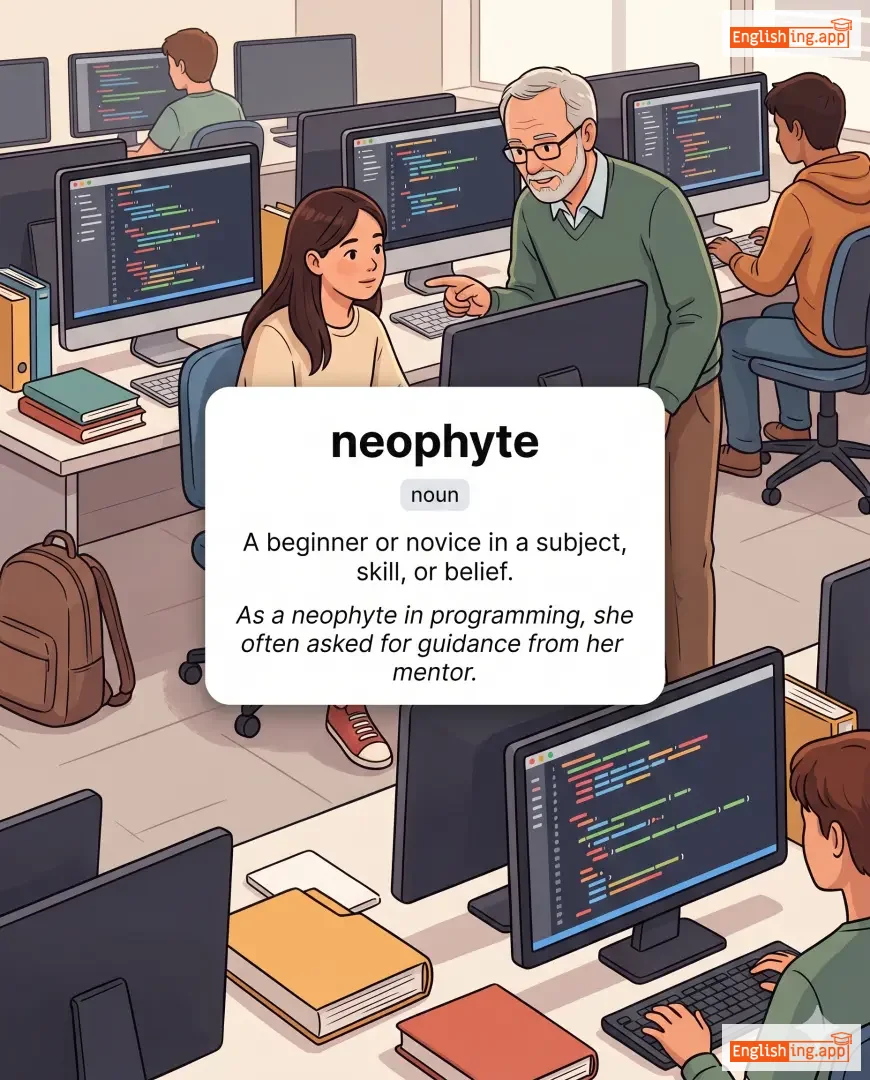
neophyte definition card — visual illustration of the meaning
noun
/ˈniːəˌfaɪt/
नवोदित (navodit)

A beginner or novice in a subject, skill, or belief.

"As a neophyte in programming, she often asked for guidance from her mentor."

"प्रोग्रामिंग में एक नवोदित के रूप में, उसने अक्सर अपने मेंटर से मार्गदर्शन प्राप्त किया।" (Programming mein ek navodit ke roop mein, usne aksar apne mentor se margdarshan prapt kiya.)
noun
/ˈnefjuː/
भतीजा (bhatija)

the son of one’s brother or sister

"My nephew is studying at the university."

"मेरा भतीजा विश्वविद्यालय में पढ़ रहा है।" (mera bhatija vishwavidyalaya mein padh raha hai)
noun
/ˈnɛpətɪzəm/
परिवारवाद (parivaarvaad)

The practice of giving unfair advantages to relatives, especially in jobs or positions of power.

"The company was accused of nepotism after the manager hired his brother."

"कंपनी पर नेपोटिज़म का आरोप था क्योंकि प्रबंधक ने अपने भाई को नौकरी दी थी।" (Company par nepotism ka aarop tha kyunki prabandhak ne apne bhai ko naukri di thi.)
noun, verb
/nɜːrv/
तंत्रिका; साहस (tantrika; sahas)

A bundle of fibers in the body that transmits signals between the brain and other parts; also courage or audacity.

"She gathered the nerve to speak in front of the large audience."

"वह बड़े दर्शकों के सामने बोलने का साहस जुटा पाई।" (Vah bade darshako ke samne bolne ka sahas jhuta paayi.)
adjective
/ˈnɜːrvəs/
उत्सुक (utsuk)

anxious, worried, or fearful about something

"She felt nervous before giving her presentation."

"प्रस्तुति देने से पहले वह उत्सुक महसूस कर रही थी।" (Prastuti dene se pehle wah utsuk mehsoos kar rahi thi.)
noun
/nɛst/
घोंसला (ghonsla)

a structure built by birds or other animals to hold their eggs or young.

"The bird built a nest in the tall tree."

"पक्षी ने ऊँचे पेड़ पर एक घोंसला बनाया।" (Pakshi ne unche ped par ek ghonsla banaya.)
verb
/ˈnɛsəl/
आश्रय लेना (aashray lena)

to settle or lie comfortably within or against something

"The child nestled into her mother's arms."

"बच्चे ने अपनी मां की बाहों में आराम से सिमट कर लेट लिया।" (Bacche ne apni maan ki baahon mein aaram se simat kar let liya.)
noun
/ˈnɛslɪŋ/
नन्हा पक्षी (nanha pakshi)

a young bird that has not yet left the nest

"The nestling waited for its parent to bring food."

"नन्हे पक्षी ने अपने माता-पिता का इंतजार किया कि वे भोजन लाकर दें।" (Nanhe pakshi ne apne mata-pita ka intezaar kiya ki ve bhojan laakar den.)
noun
/nɛt/
जाल (jaal)

a piece of material made of threads or ropes woven together, used to catch or hold things

"The fisherman cast his net into the sea."

"मछुआरे ने अपना जाल समुद्र में डाला।" (Machhuaare ne apna jaal samundar mein daala.)
adjective
/ˈnɛðər/
निचला (nichla)

situated down or below; lower

"They explored the nether regions of the cave."

"उन्होंने गुफा के निचले क्षेत्रों का अन्वेषण किया।" (Unhone gufa ke nichle kshetron ka anvikshan kiya.)
noun
/ˈnɛtl̩/
संपर्क करने पर जलन उत्पन्न करने वाली एक प्रकार की पौधा (sampurk karne par jalan utpann karne wali ek prakar ki podha)

a plant with stinging hairs that cause irritation when touched

"He accidentally brushed against the nettle and felt a sharp sting."

"वह दुर्घटनावश नेटल से टकराया और एक तीव्र जलन महसूस की।" (vah durghatanavash netal se takraya aur ek teevra jalan mahsus ki.)
adjective
/ˈnɛtlˌsʌm/
झंझटपूर्ण (jhanjhatpurn)

Causing irritation, annoyance, or difficulty.

"The nettlesome rules frustrated the workers."

"झंझटपूर्ण नियमों ने श्रमिकों को निराश कर दिया।" (Jhanjhatpurn niyamon ne shramikon ko niraash kar diya.)
noun
/ˈnɛtˌwɜrk/
नेटवर्क (network)

A system of interconnected people, things, or computers.

"She built a strong professional network."

"उसने एक मजबूत पेशेवर नेटवर्क बनाया।" (Usne ek majboot peshewar network banaya.)
networking definition card — visual illustration of the meaning
noun
/ˈnɛtˌwɜːkɪŋ/
नेटवर्किंग (networking)

The action of establishing connections and relationships, especially for career or business purposes.

"Networking is important for career development."

"नेटवर्किंग करियर विकास के लिए महत्वपूर्ण है।" (Networking career vikas ke liye mahatvapurn hai.)
adjective
/ˈnjʊrəl/
तंत्रिकीय (tantrikiya)

Relating to nerves or the nervous system.

"Scientists study neural connections in the brain."

"वैज्ञानिक मस्तिष्क में न्यूरल कनेक्शन का अध्ययन करते हैं." (vaigyanik mastishk mein nyural konekshan ka adhyayan karte hain)
noun
/njʊˈrældʒə/
तंत्रिका दर्द (tantrika dard)

intense, often intermittent pain along a nerve pathway

"The patient suffers from neuralgia in her face."

"रोगी को चेहरे में न्यूरल्जिया हो रहा है।" (Rogi ko chehre mein neuralgia ho raha hai.)
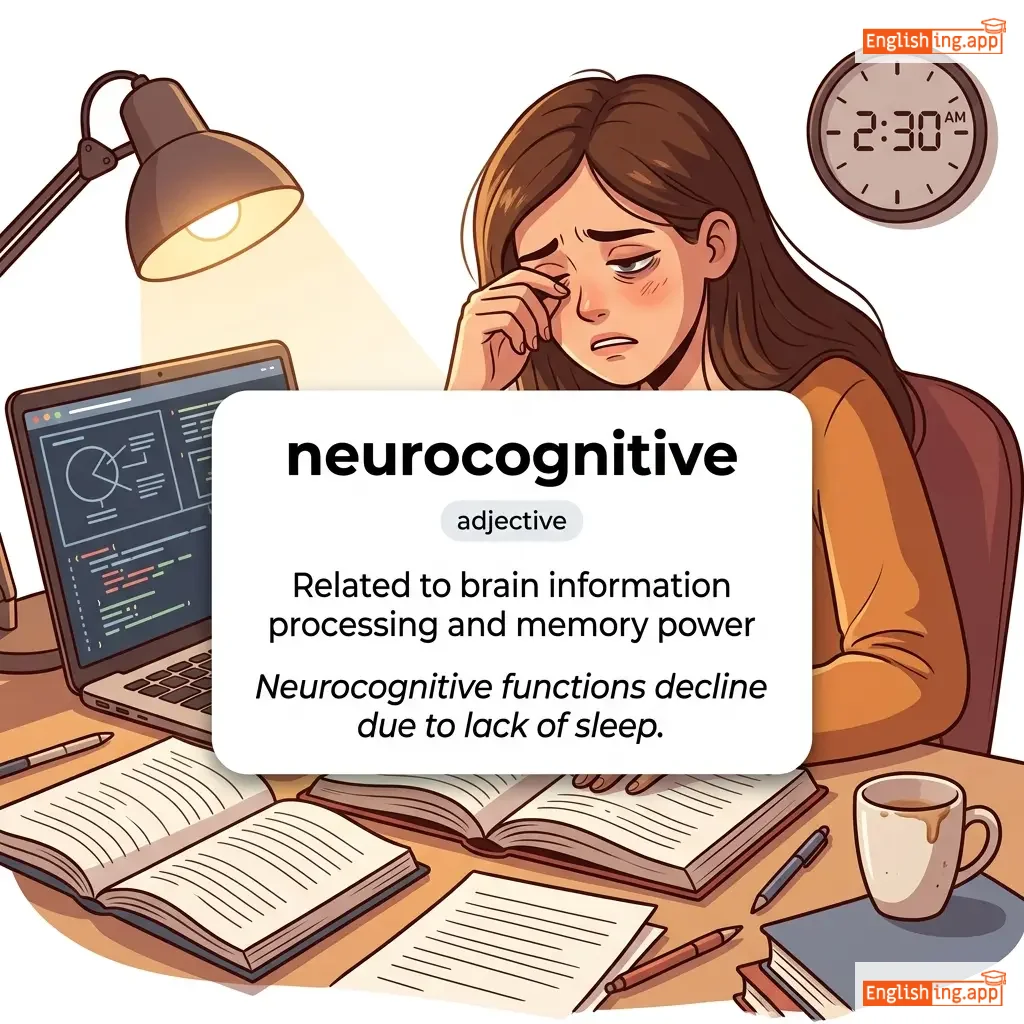
neurocognitive definition card — visual illustration of the meaning
adjective
ˌnjʊəroʊˈkɒɡnɪtɪv
तंत्रिका-संज्ञानात्मक (tantrika-sangyanatmak)

Related to brain information processing and memory power

"Neurocognitive functions decline due to lack of sleep."

"नींद की कमी के कारण तंत्रिका-संज्ञानात्मक कार्य घट जाते हैं।" (Neend ki kami ke karan tantrika-sangyanatmak kary ghat jaate hain.)
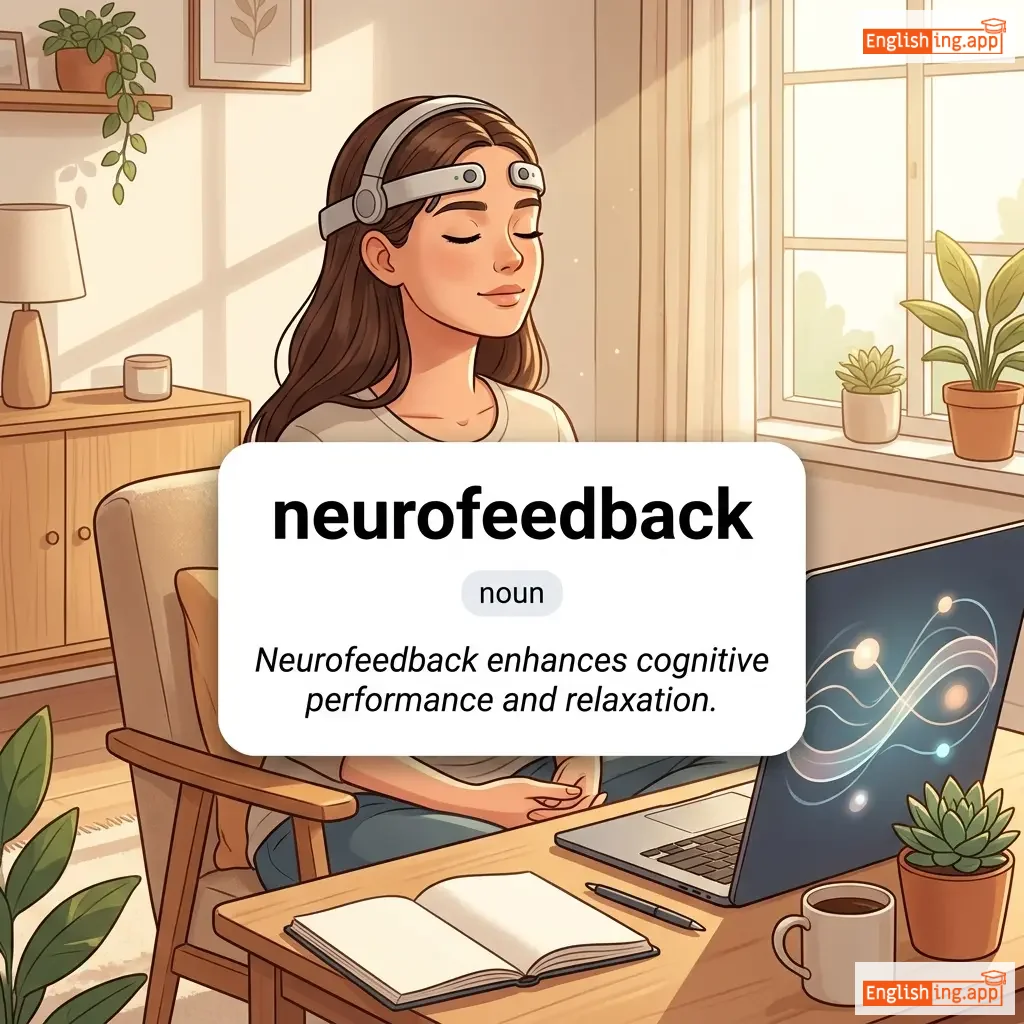
neurofeedback definition card — visual illustration of the meaning
noun
ˈnjʊə.rəʊ ˌfiːd.bæk
मस्तिष्क गतिविधि पर आधारित आत्म-नियमन तकनीक (neurofeedback)

A technique that uses real-time displays of brain activity to teach self-regulation of brain function.

"Neurofeedback enhances cognitive performance and relaxation."

"न्यूरोफीडबैक संज्ञानात्मक प्रदर्शन और विश्राम को बढ़ाता है।" (Neurofeedback gyaanatmak pradarshan aur vishraam ko badhaata hai.)
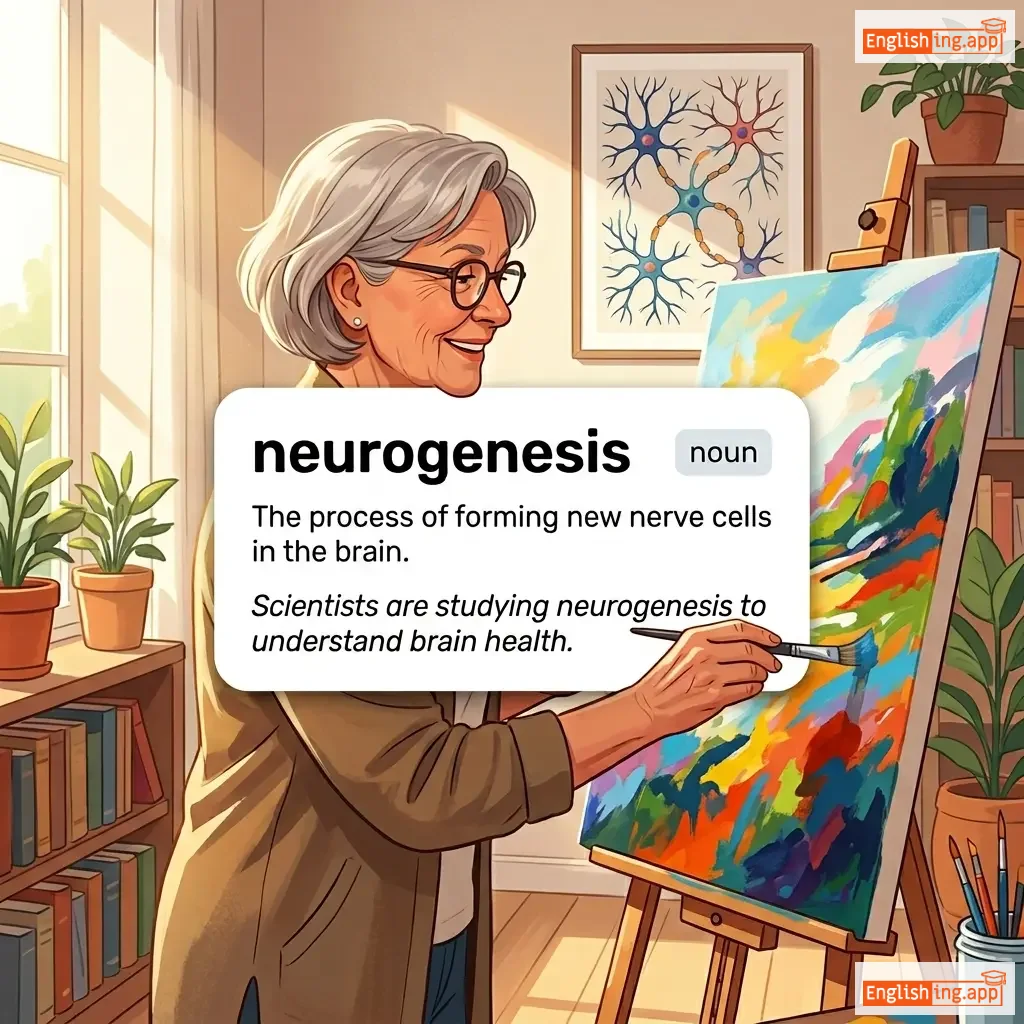
neurogenesis definition card — visual illustration of the meaning
noun
/ˌnjʊə.rəʊˈdʒɛn.ɪ.sɪs/
नई तंत्रिका कोशिकाओं का निर्माण (nayi tantrika koshikaon ka nirman)

The process of forming new nerve cells in the brain.

"Scientists are studying neurogenesis to understand brain health."

"वैज्ञानिक मस्तिष्क स्वास्थ्य को समझने के लिए न्यूरोजेनेसिस का अध्ययन कर रहे हैं।" (Vaigyanik mastishk swasthya ko samajhne ke liye neurogenesis ka adhyayan kar rahe hain.)
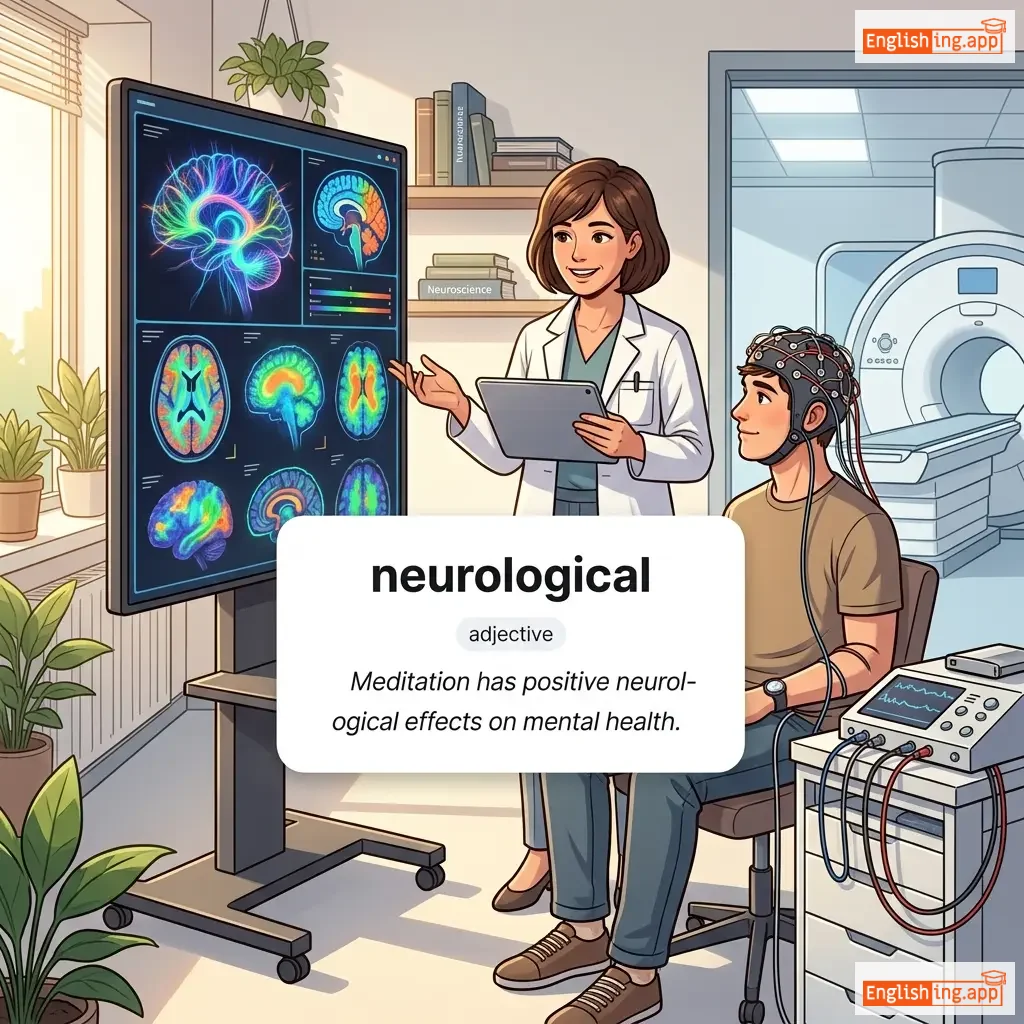
neurological definition card — visual illustration of the meaning
adjective
/ˌnjʊə.rəˈlɒdʒ.ɪ.kəl/
तंत्रिका संबंधी (tantrika sambandhi)

Relating to the anatomy, functions, and organic disorders of nerves and the nervous system.

"Meditation has positive neurological effects on mental health."

"ध्यान मानसिक स्वास्थ्य पर सकारात्मक तंत्रिका संबंधी प्रभाव डालता है।" (Dhyan mansik swasthya par sakaratmak tantrika sambandhi prabhav dalta hai.)
noun
/njʊˈrɑːlədʒi/
तंत्रिका विज्ञान (nyurology)

The branch of medicine that deals with disorders of the nervous system.

"She specializes in neurology and treats patients with brain diseases."

"वह न्यूरोलॉजी में विशेषज्ञ हैं और मस्तिष्क रोगों से ग्रस्त रोगियों का इलाज करती हैं." (vah nyurology mein visheshagya hain aur mastishk rogoN se grast rogiyon ka ilaaj karti hain)
neuroplasticity definition card — visual illustration of the meaning
noun
ˌnjʊə.rəʊ.plæsˈtɪ.sɪ.ti
न्यूरोप्लास्टिसिटी (neuroplasticity)

The ability of the brain to reorganize itself by forming new neural connections throughout life.

"Meditation enhances neuroplasticity, improving memory and focus."

"ध्यान न्यूरोप्लास्टिसिटी बढ़ाता है, जिससे स्मृति और ध्यान में सुधार होता है।" (Dhyan neuroplasticity briddhi karta hai, jisse smriti aur dhyan mein sudhaar hota hai.)
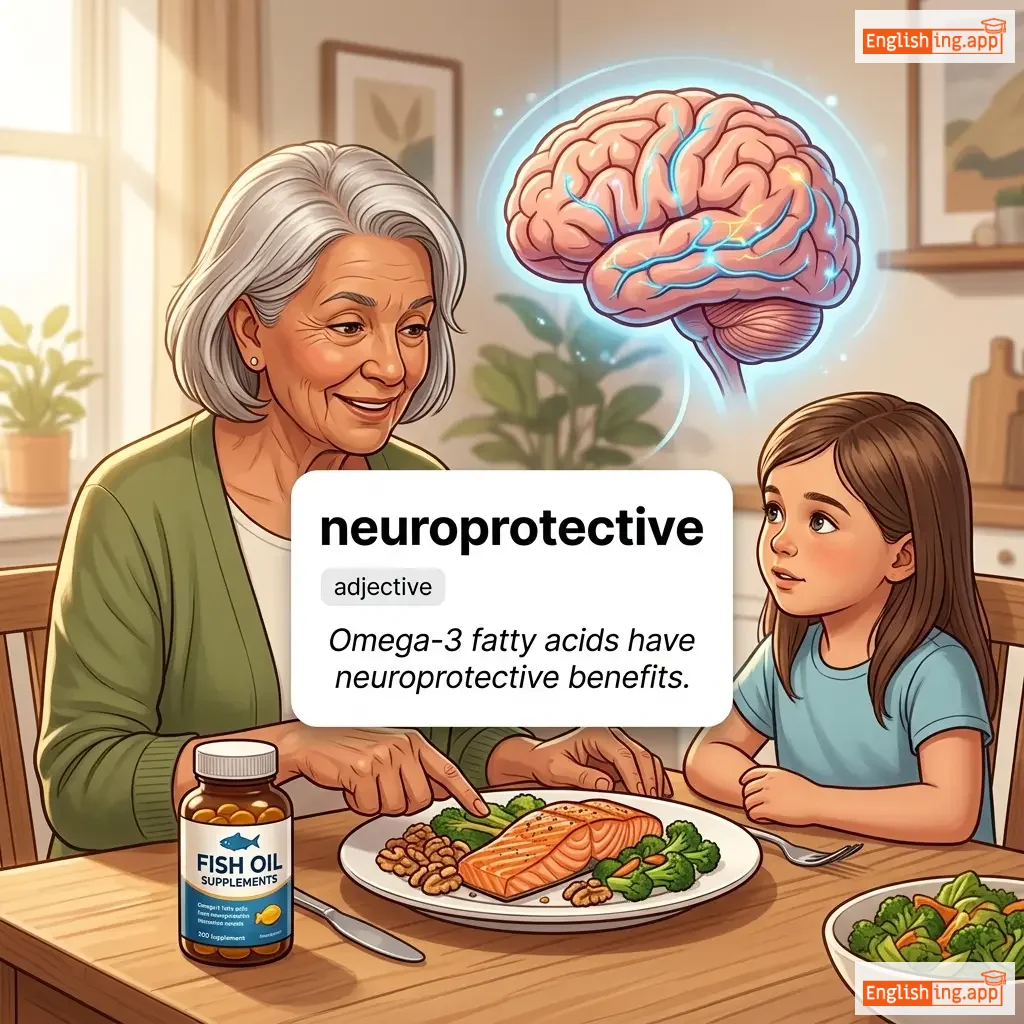
neuroprotective definition card — visual illustration of the meaning
adjective
ˌnjʊə.rəʊ.prəˈtek.tɪv
तंत्रिका सुरक्षा (tantrika suraksha)

Having the ability to protect nerve cells from damage, degeneration, or impaired function.

"Omega-3 fatty acids have neuroprotective benefits."

"ओमेगा-3 फैटी एसिड्स के न्यूरोप्रोटेक्टिव लाभ हैं।" (Omega-3 fatty acids ke neuroprotective labh hain.)
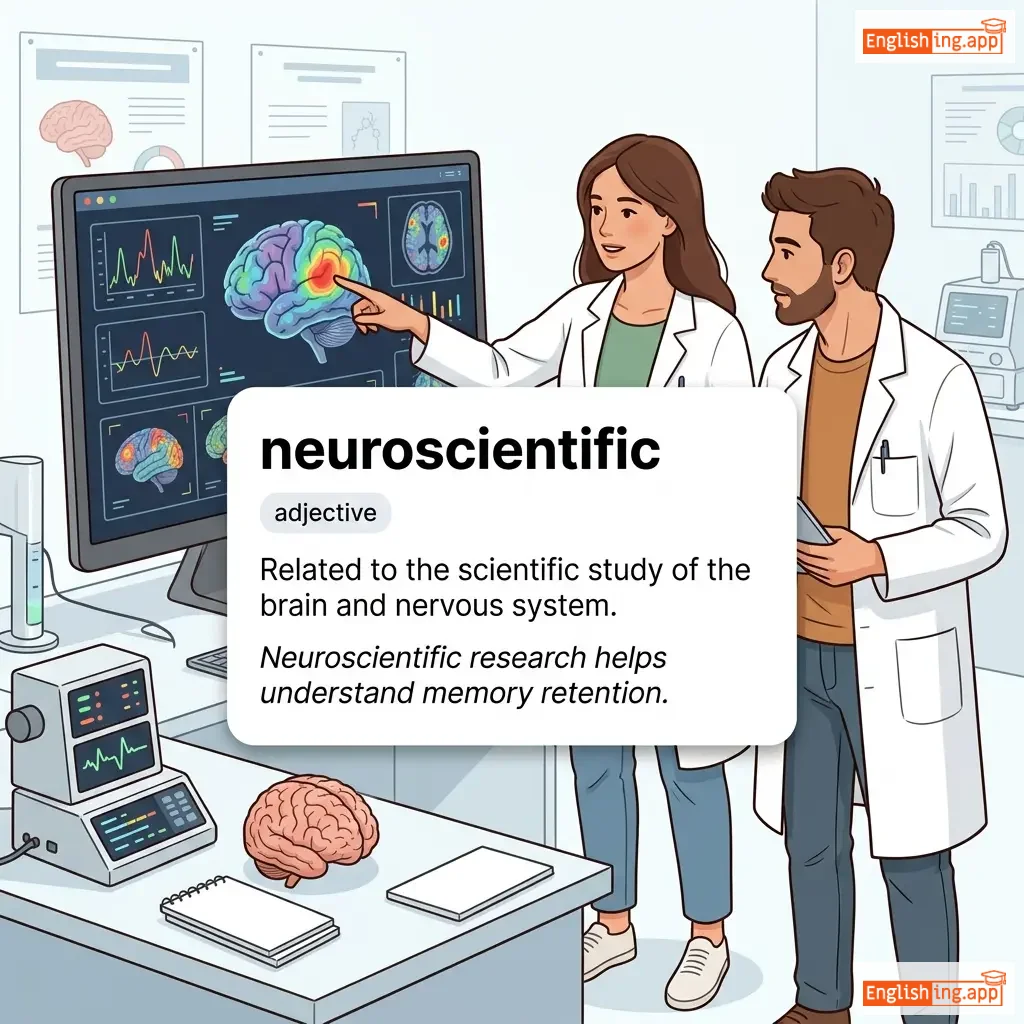
neuroscientific definition card — visual illustration of the meaning
adjective
ˌnjʊə.rəʊ.saɪənˈtɪ.fɪk
तंत्रिका विज्ञान संबंधी (tantrika vigyan sambandhi)

Related to the scientific study of the brain and nervous system.

"Neuroscientific research helps understand memory retention."

"तंत्रिका विज्ञान संबंधी अनुसंधान याददाश्त बनाए रखने को समझने में मदद करता है।" (Tantrika vigyan sambandhi anusandhan yaadashth banaye rakhne ko samajhne mein madad karta hai.)
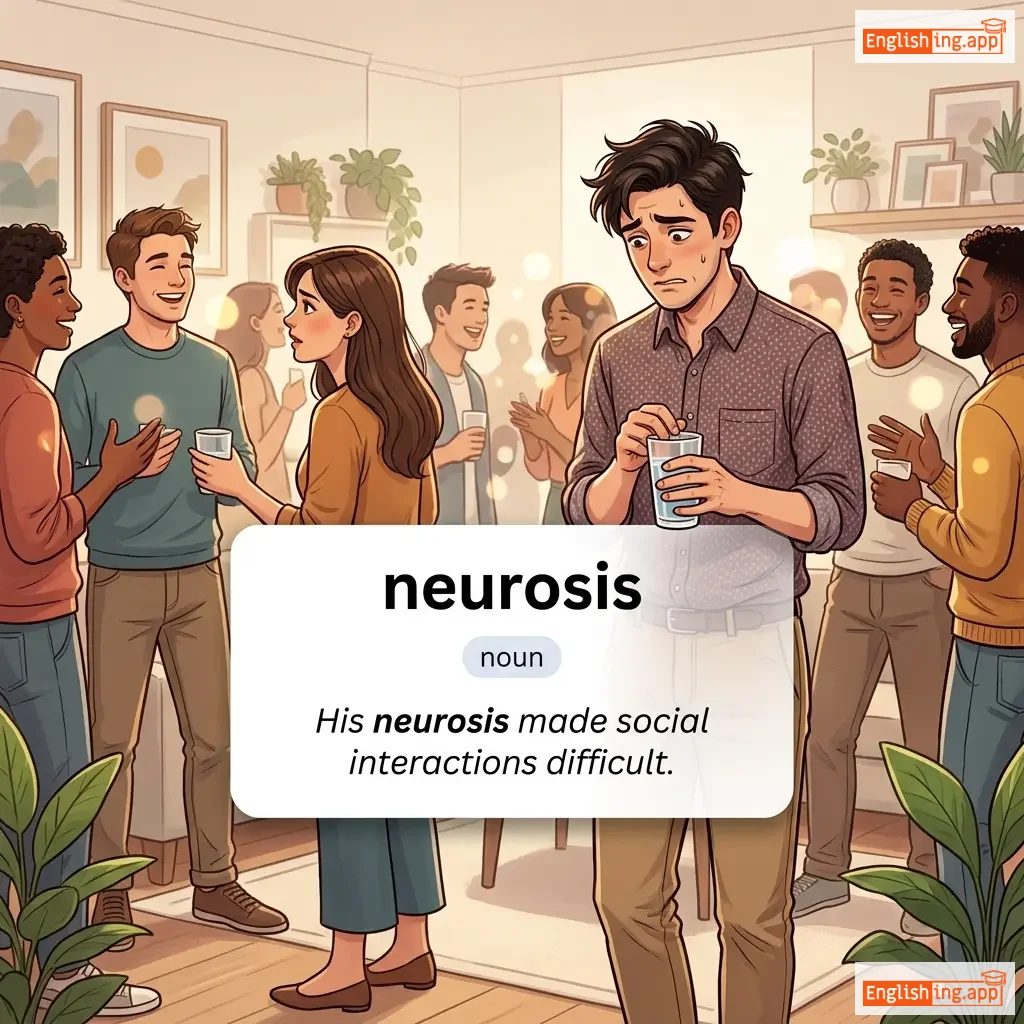
neurosis definition card — visual illustration of the meaning
noun
/njʊəˈrəʊ.sɪs/
मानसिक विकार (maansik vikaar)

A relatively mild mental illness that is not caused by organic disease, involving symptoms of stress.

"His neurosis made social interactions difficult."

"उसकी न्यूरोसिस ने सामाजिक इंटरएक्शन्स को कठिन बना दिया।" (Uski nyurosis ne samajik interaction ko kathin bana diya.)
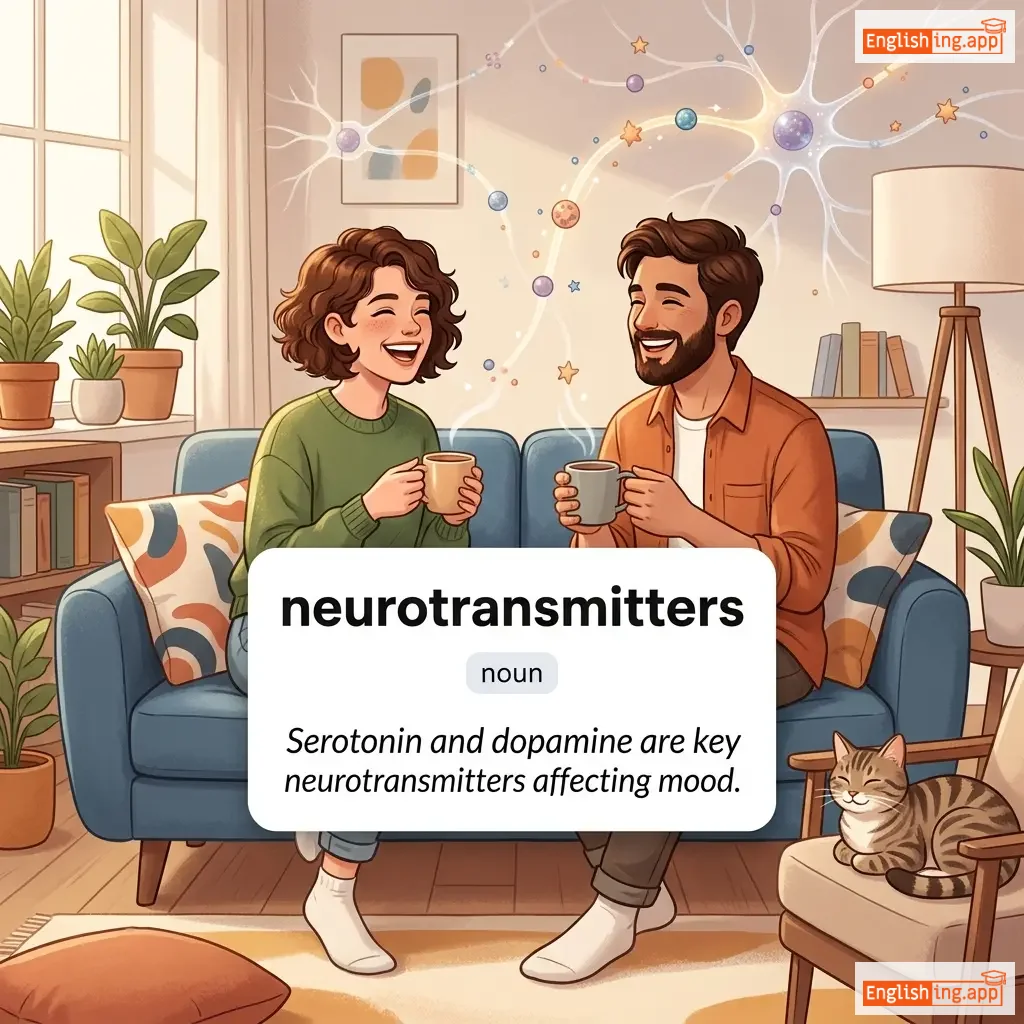
neurotransmitters definition card — visual illustration of the meaning
noun
/ˈnjʊə.rəʊ.trænsˌmɪt.ərs/
तंत्रिका संदेशवाहक (tantrika sandeshvahak)

Chemical messengers that transmit signals across nerve synapses, affecting mood, behavior, and cognitive functions.

"Serotonin and dopamine are key neurotransmitters affecting mood."

"सेरोटोनिन और डोपामिन मूड को प्रभावित करने वाले प्रमुख न्यूरोट्रांसमिटर्स हैं।" (Serotonin aur Dopamine mood ko prabhavit karne wale pramukh neurotransmitters hain.)
verb
/ˈnuːtər/
न्यूटर करना (nyutar karna)

To remove the reproductive organs of an animal; or having no gender.

"They decided to neuter their cat to prevent more kittens."

"उन्होंने अधिक बिल्ली के बच्चे होने से रोकने के लिए अपनी बिल्ली को न्यूटर करने का निर्णय लिया।" (Unhone adhik billi ke bachche hone se rokne ke liye apni billi ko nyutar karne ka nirnay liya.)
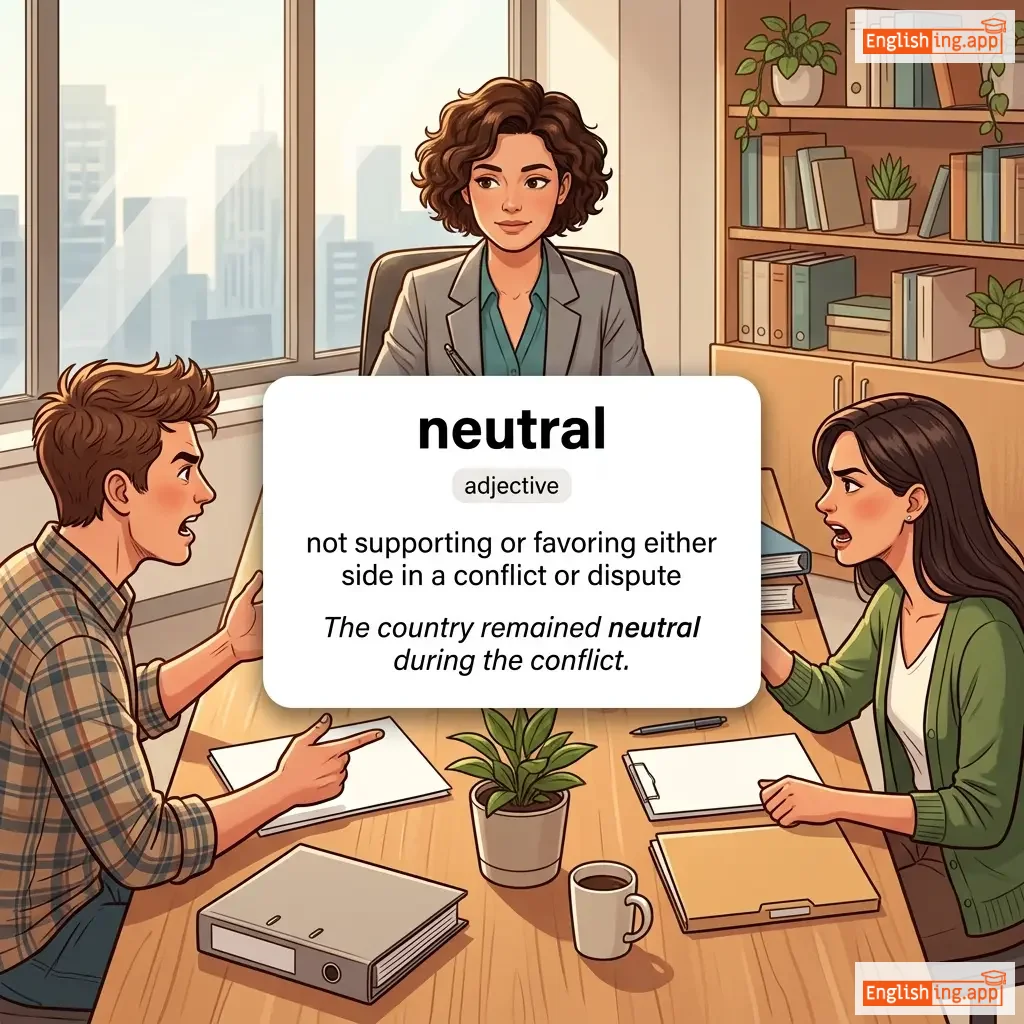
neutral definition card — visual illustration of the meaning
adjective
/ˈnjuːtrəl/
तटस्थ (tatsth)

not supporting or favoring either side in a conflict or dispute

"The country remained neutral during the conflict."

"देश संघर्ष के दौरान तटस्थ रहा।" (Desh sangharsh ke dauran tatsth raha.)
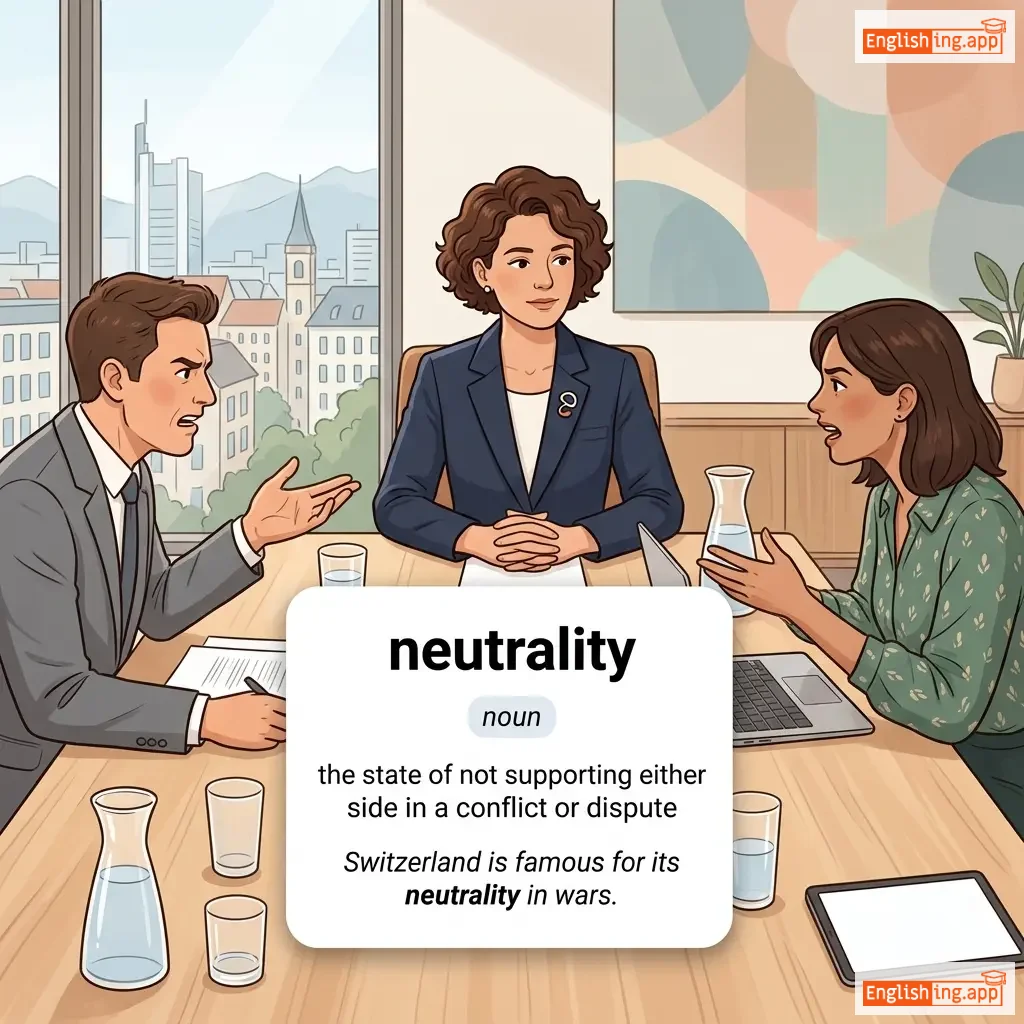
neutrality definition card — visual illustration of the meaning
noun
/nuːˈtræl.ə.ti/
निरपेक्षता (nirpekshata)

the state of not supporting either side in a conflict or dispute

"Switzerland is famous for its neutrality in wars."

"स्विट्ज़रलैंड अपनी युद्ध में निरपेक्षता के लिए प्रसिद्ध है।" (switzerland apni yuddh mein nirpekshata ke liye prasiddh hai.)
verb
/ˈnjuːtrəlaɪz/
निरपेक्ष करना (nirpeksh karna)

to make something ineffective or harmless

"The medicine helped neutralize the poison in his system."

"दवाई ने उसके सिस्टम में जहर को न्यूट्रलाइज़ करने में मदद की।" (Dawai ne uske system mein zeher ko neutralize karne mein madad ki.)
adverb
/ˈnɛvər/
कभी नहीं (kabhi nahin)

at no time in the past or future; not ever

"I have never seen such a beautiful sunset."

"मैंने कभी ऐसी सुंदर सूर्यास्त नहीं देखा।" (Maine kabhi aisi sundar suryast nahi dekha.)
adverb
/ˌnɛvəðəˈlɛs/
फिर भी (nevarthles)

in spite of that; however

"He was tired; nevertheless, he kept working."

"वह थका हुआ था; फिर भी उसने काम करना जारी रखा।" (vah thaka hua tha; phir bhi usne kaam karna jaari rakha.)
adjective
/njuː/
नया (naya)

recently made, discovered, or introduced; not existing before

"He bought a new car yesterday."

"उसने कल एक नई कार खरीदी।" (Usne kal ek nai car khareedi.)