वोकैबुलरीज

इंग्लिश वोकैबुलरी डिस्कवर, लर्न और मास्टर करें

adverb
/ˈmeɪbi/
शायद (shayad)

used to express possibility or uncertainty

"Maybe we will go to the park tomorrow."

"शायद हम कल पार्क जाएंगे।" (shayad hum kal park jayenge.)
noun
/ˈmeɪhɛm/
उथल-पुथल (uthal-puthal)

Violent or extreme disorder; chaos and destruction.

"The protest turned into mayhem when the crowd clashed with the police."

"जब भीड़ पुलिस से भिड़ी, तो विरोध उथल-पुथल में बदल गया।" (Jab bheed police se bhidi, to virodh uthal-puthal mein badal gaya.)
noun
/ˈmeɪər/
मेयर (mayar)

The elected head of a city, town, or municipality.

"The mayor announced a new policy to improve public transport."

"मेयर ने सार्वजनिक परिवहन सुधारने के लिए एक नई नीति की घोषणा की।" (Meyar ne sarvajanik parivahan sudharne ke liye ek nai niti ki ghoshna ki.)
noun
/meɪz/
भूल-भुलैया (bhool-bhoolaiya)

A complex network of paths or passages that are difficult to navigate.

"Tourists often get lost in the maze of narrow streets in the old city."

"टूरिस्ट अक्सर पुराने शहर की तंग गलियों के भूल-भुलैया में खो जाते हैं।" (Tourists aksar purane shaher ki tang galiyon ke bhool-bhulaiya mein kho jaate hain.)
pronoun
/miː/
मुझे (mujhe)

Used by a speaker to refer to themselves as the object of a verb or preposition.

"She gave me a beautiful gift."

"उसने मुझे एक सुंदर उपहार दिया।" (Usne mujhe ek sundar upahār diyā.)
noun
/miːd/
शहद से बनी शराब (shahad se bani sharab)

An alcoholic drink made from fermented honey and water.

"The Vikings were known to drink large amounts of mead during feasts."

"वाइकिंग्स को भोजों के दौरान बड़ी मात्रा में शहद से बनी शराब पीने के लिए जाना जाता था।" (Viking ko bhojon ke dauran badi matra mein shahad se bani sharab pine ke liye jana jata tha.)
noun
/ˈmedoʊ/
घास का मैदान (medo)

A piece of grassland, especially one used for hay

"The cows grazed peacefully in the green meadow."

"गायें हरे-भरे मैदान में शांति से चर रही थीं।" (gaayein hare-bhare maidan mein shaanti se char rahi thiin)
adjective
/ˈmiːɡər/
अल्प (alp)

Lacking in quantity or quality; inadequate.

"He could barely survive on his meager salary."

"वह अपनी अल्प वेतन पर मुश्किल से जीवित रह सकता था।" (Wah apni alp vetan par mushkil se jeevit rah sakta tha.)
noun
/miːl/
सुख (sukh)

An occasion when food is eaten, or the food that is eaten on such an occasion.

"We had a delicious meal at the restaurant."

"जब उसने पुरस्कार प्राप्त किया, तो वह अपनी खुशी छुपा नहीं पाई।" (Jab usne puraskaar praapt kiya, to woh apni khushi chhupa nahi paayi.)
adjective
/ˈmiːli ˌmaʊðd/
कुटिल (kutil)

Unwilling to speak directly and honestly; insincere or evasive in speech.

"The manager gave a mealy-mouthed excuse instead of admitting the mistake."

"मैनेजर ने गलती स्वीकार करने के बजाय कुटिल बहाना दिया।" (Manager ne galti svikaar karne ke bajaye kutil bahana diya.)
adjective
/ˈmiːliˌmaʊðd/
घुमा कर बोलना (ghuma kar bolna)

not willing to speak directly and honestly; evasive in speech

"The politician gave a mealymouthed response to the tough question."

"राजनेता ने कठिन सवाल का घुमा कर जवाब दिया।" (Rajneeta ne kathin sawal ka ghuma kar jawab diya.)
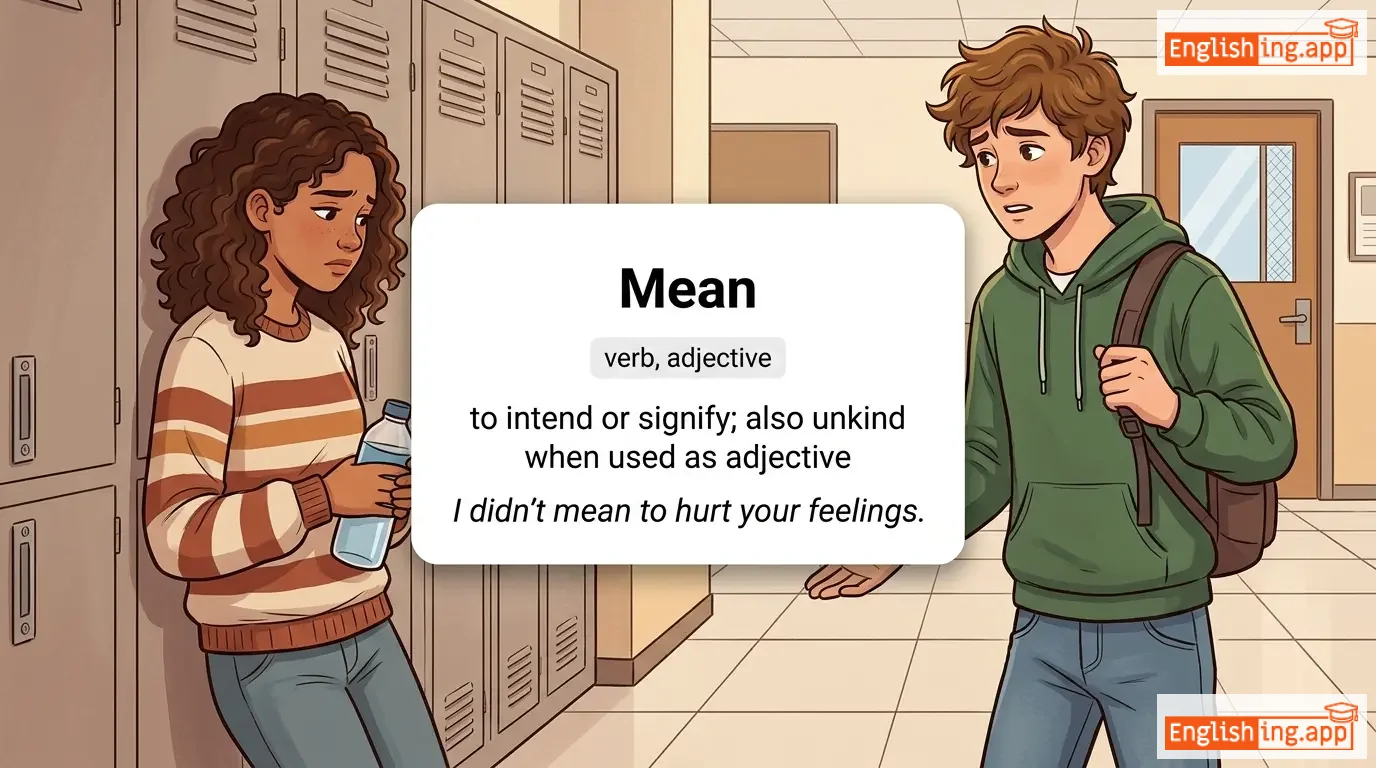
Mean definition card — visual illustration of the meaning
verb, adjective
/miːn/
अर्थ बताना / अभिप्राय (arth batana / abhipray)

to intend or signify; also unkind when used as adjective

"I didn’t mean to hurt your feelings."

"मैंने तुम्हारी भावनाओं को आहत करने का इरादा नहीं किया।" (Mainne tumhari bhavnaon ko aahat karne ka iraada nahi kiya.)
verb, noun
/miˈændər/
उलझना (uljhna)

to wander aimlessly or follow a winding course

"We meandered through the old streets of the city."

"हम शहर की पुरानी गलियों में इधर-उधर घूमते हुए जा रहे थे।" (Ham shahar ki purani galiyon mein idhar-udhar ghoomte hue ja rahe the.)
noun
/ˈmiːnɪŋ/
अर्थ (arth)

The definition, purpose, or significance of something.

"The meaning of the word is explained in the dictionary."

"शब्द का अर्थ शब्दकोश में समझाया गया है।" (Shabd ka arth shabdkosh mein samjhaya gaya hai.)
adjective
/ˈmiːnɪŋfəl/
अर्थपूर्ण (arthpoorn)

having purpose, value, or significance

"He gave a meaningful smile before leaving the room."

"उसने कमरे से बाहर जाते समय एक अर्थपूर्ण मुस्कान दी।" (Usne kamre se baahar jaate samay ek arthpoorn muskaan di.)
adjective
/ˈmiː.nɪŋ.ləs/
निर्थक; बिना उद्देश्य; महत्वहीन (nirthak; bina uddeshya; mahatvahin)

without purpose; having no significance; pointless

"The data became meaningless without proper context."

"डेटा बिना उचित संदर्भ के निरर्थक हो गया।" (deta bina uchit sandarbh ke nirthak ho gaya.)
noun
/ˈmiːnnəs/
कठोरता; दरिद्रता (meenes)

The quality of being unkind, spiteful, or unfair; stinginess

"His meanness towards the poor children shocked everyone in the neighborhood."

"ग़रीब बच्चों के प्रति उसकी कठोरता ने पड़ोसियों को चौंका दिया।" (gareeb bachon ke prati uski kathorta ne padosiyon ko chonka diya.)
noun
/miːnz/
साधन; संसाधन; तरीका; (means)

An action or system by which a result is achieved; financial resources

"They don't have the means to afford such an expensive vacation."

"उनके पास इतनी महंगी छुट्टी का खर्च वहन करने के साधन नहीं हैं।" (unke paas itni mehengi chhutti ka kharch vahan karne ke saadhan nahin hain.)
noun/adverb
/ˈmiːnˌtaɪm/
इस बीच (is beech)

the period of time between two events; meanwhile

"The train will be late, so in the meantime let's have some tea."

"ट्रेन देर से आएगी, तो इस बीच चलिए चाय पीते हैं।" (tren der se aayegi, to is beech chaliye chai peete hain.)
adverb
/ˈmiːnˌwaɪl/
इस दौरान (is dauran)

At the same time; in the intervening period.

"She was cooking dinner; meanwhile, I set the table."

"वह रात का खाना बना रही थी; इस दौरान, मैंने मेज सजा दी।" (Woh raat ka khana bana rahi thi; is dauran, maine mej saja di.)
adjective
/ˈmiːzli/
तुच्छ (tuchchh)

contemptibly small or insignificant

"He was paid a measly sum for the hard work."

"उसे कठिन परिश्रम के लिए तुच्छ राशि दी गई।" (Use kathin parishram ke liye tuchchh rashi di gayi.)
adjective
/ˈmeʒ.ər.ə.bəl/
मापने योग्य; मापा जा सकने वाला (maapne yogya; maapa ja sakne wala)

able to be measured; quantifiable

"The project's success was measurable by increased sales."

"परियोजना की सफलता बढ़ी हुई बिक्री से मापी जा सकती थी।" (pariyojana ki safalta badhi hui bikri se maapi ja sakti thi)
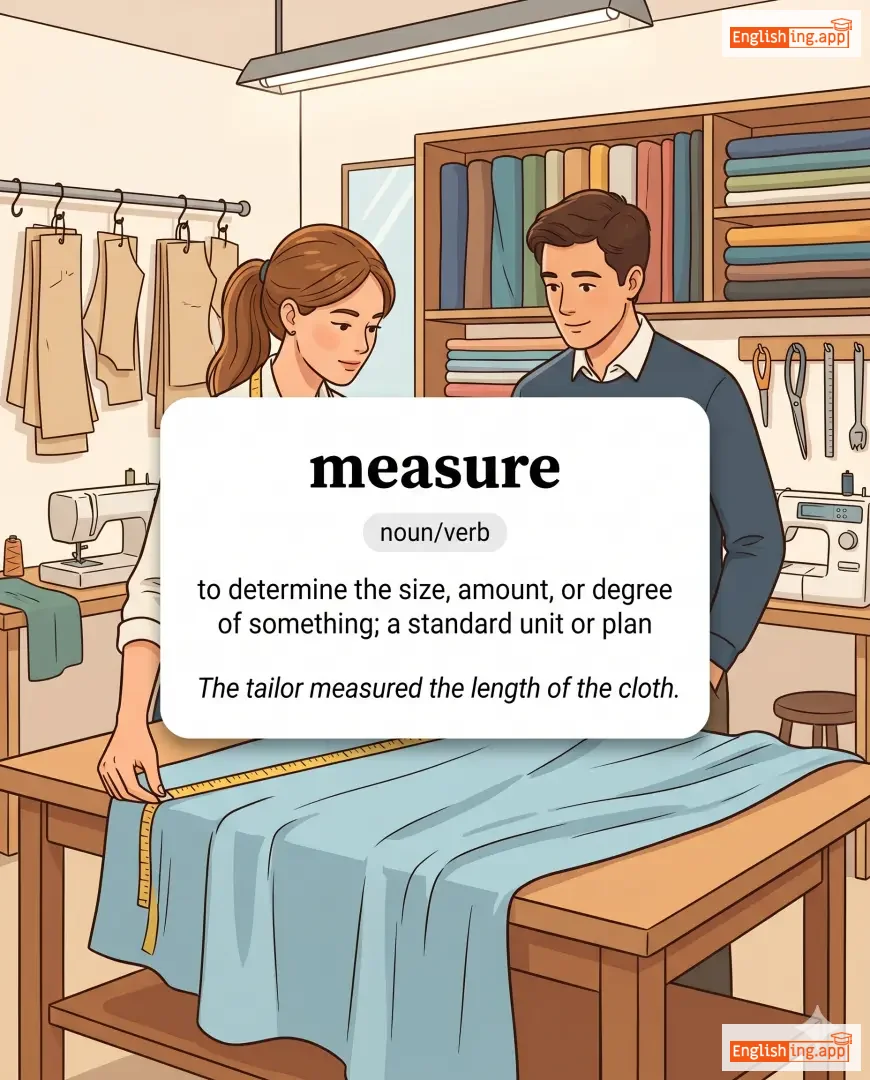
measure definition card — visual illustration of the meaning
noun/verb
/ˈmɛʒər/
मापना / उपाय (mapna / upay)

to determine the size, amount, or degree of something; a standard unit or plan

"The tailor measured the length of the cloth."

"दर्जी ने कपड़े की लंबाई मापी।" (darji ne kapde ki lambai maapi.)
adjective
/ˈmɛʒərd/
मापी गई (maapi gayi)

carefully considered and deliberate

"She spoke in a calm, measured tone."

"उसने शांत और मापी गई आवाज़ में बात की।" (Usne shaant aur maapi gayi awaaz mein baat ki.)
noun
/ˈmeʒərmənt/
माप (maap)

the size, length, or amount of something, as determined by measuring

"The tailor took my waist measurement before stitching the suit."

"दरजी ने सूट बनाने से पहले मेरी कमर का माप लिया।" (Darji ne suit banane se pehle meri kamar ka maap liya.)
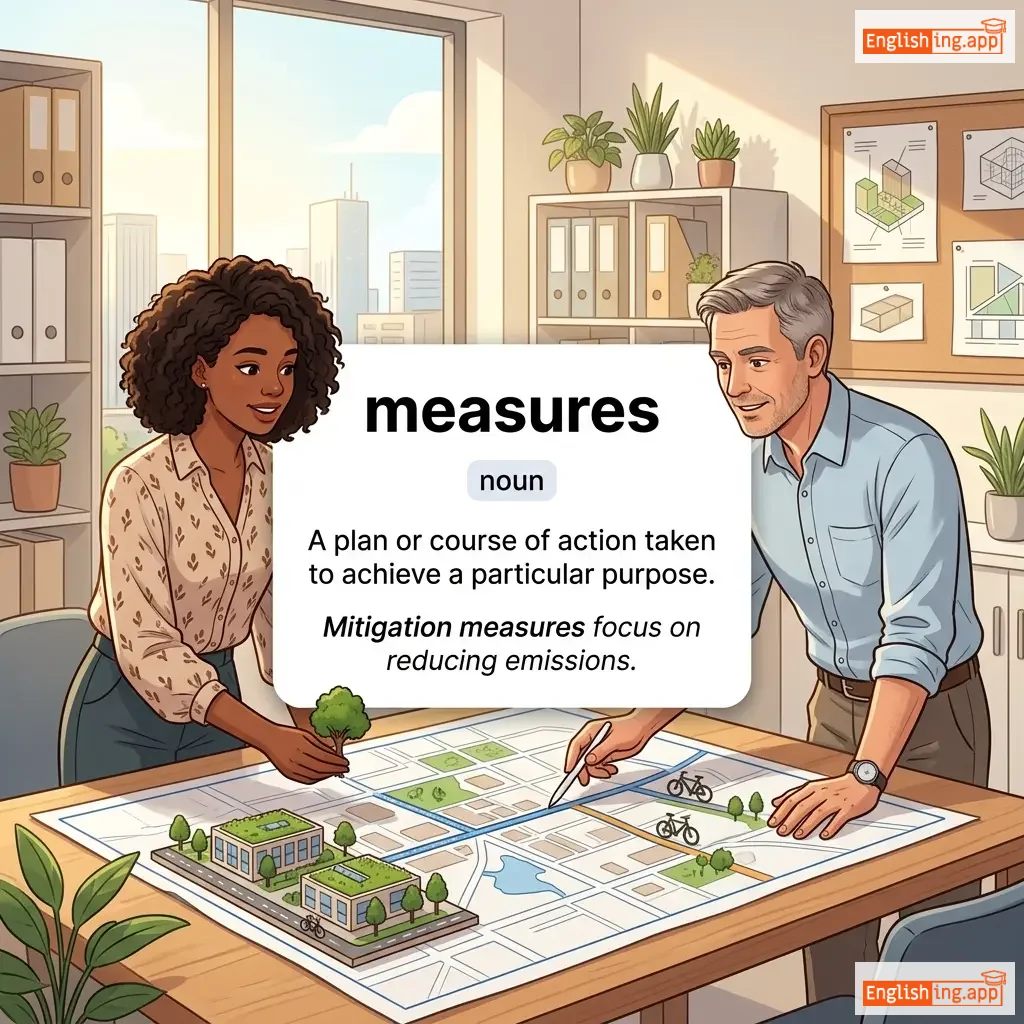
measures definition card — visual illustration of the meaning
noun
ˈmeʒ.ərz
उपाय (upay)

A plan or course of action taken to achieve a particular purpose.

"Mitigation measures focus on reducing emissions."

"मिटिगेशन उपायों का उद्देश्य उत्सर्जन को कम करना है।" (Mitigation upayon ka uddeshya utsarjan ko kam karna hai.)
noun
/miːt/
मांस (maans)

the flesh of animals used as food

"She bought fresh meat from the market."

"उसने बाजार से ताजे मांस खरीदे।" (Usne bazaar se taze maans khareede.)
noun
/məˈkænɪk/
मैकेनिक / यांत्रिक मरम्मत करने वाला (mechanic / yantrik marammat karne wala)

a person who repairs and maintains machines or vehicles

"The mechanic fixed the engine in less than an hour."

"मैकेनिक ने एक घंटे से भी कम समय में इंजन को ठीक किया।" (Mechanic ne ek ghante se bhi kam samay mein engine ko thik kiya.)
adjective
/məˈkænɪkəl/
खुशी (khushi)

relating to machines or the way they work

"She has a good understanding of mechanical systems."

"जब उसने पुरस्कार प्राप्त किया तो वह अपनी खुशी छिपा नहीं पाई।" (Jab usne puraskar prapt kiya to vah apni khushi chhupa nahin payi.)
noun
/məˈkænɪks/
यांत्रिकी (yantriki)

the branch of physics concerned with the motion of objects and the forces acting on them; also refers to the practical details of how something works

"He studied the mechanics of the machine before fixing it."

"उसने मशीन ठीक करने से पहले उसके यांत्रिकी का अध्ययन किया।" (Usne machine theek karne se pehle uske yantriki ka adhyayan kiya.)
noun
/ˈmɛkəˌnɪzəm/
तंत्र (tantra)

A system of parts working together in a machine; a process or technique for achieving something.

"The mechanism of the clock stopped working after years of use."

"घड़ी का तंत्र वर्षों के उपयोग के बाद काम करना बंद कर दिया था।" (ghadi ka tantra varshon ke upyog ke baad kaam karna band kar diya tha.)
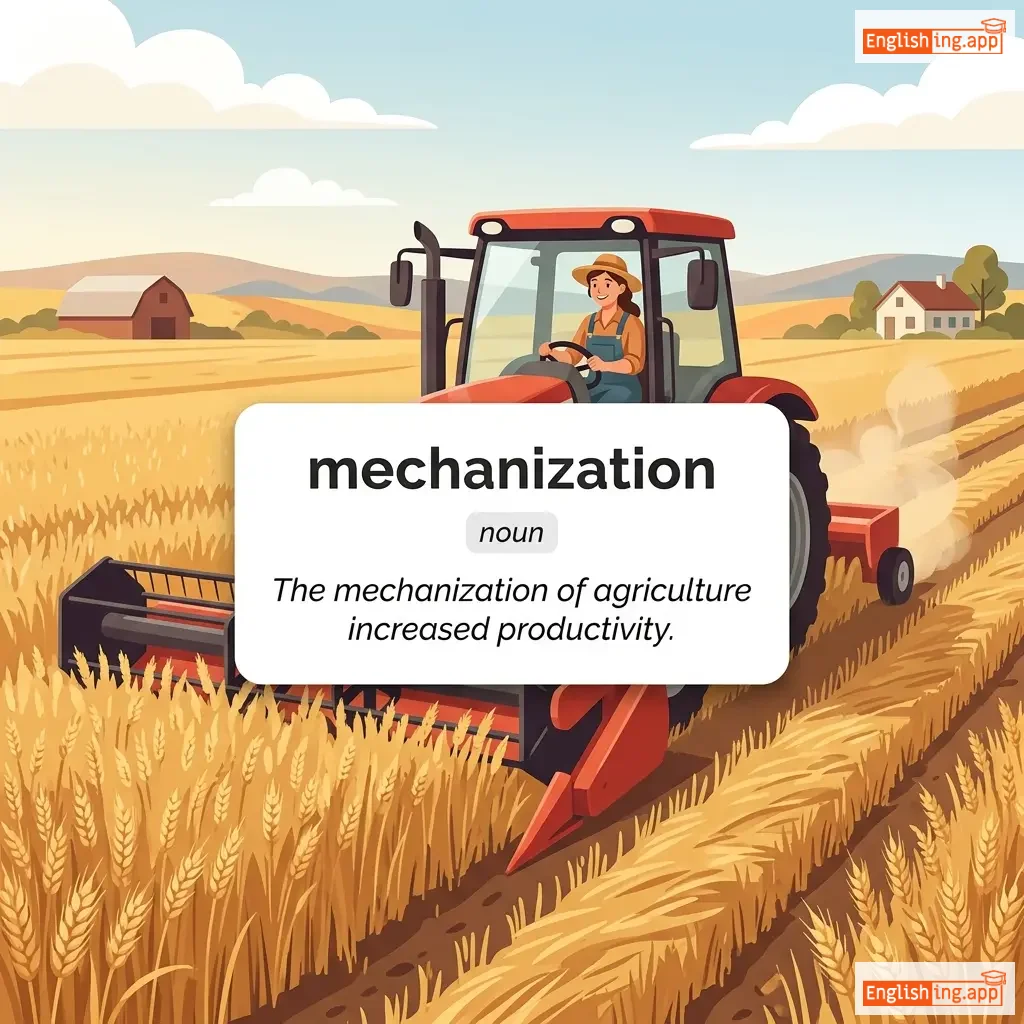
mechanization definition card — visual illustration of the meaning
noun
ˌmɛk.ə.nɪˈzeɪ.ʃən
यांत्रिकीकरण (yantrikikaran)

The use of machines in agriculture or industry to increase production efficiency.

"The mechanization of agriculture increased productivity."

"कृषि का यांत्रिकीकरण उत्पादकता को बढ़ा दिया।" (Krishi ka yantrikikaran utpadakta ko badha diya.)
noun
/ˈmɛdəl/
पदक (padak)

a piece of metal given as an award for achievement

"She won a gold medal in the 100-meter race."

"उसने 100 मीटर की दौड़ में स्वर्ण पदक जीता।" (Usne 100 meter ki daud mein swarn padak jeeta.)
noun
/məˈdæliən/
मैडलियन (medalion)

a large medal or decorative piece, often worn as jewelry or used in architecture

"She wore a gold medallion around her neck."

"वह अपनी गर्दन में एक सोने का मेडेलियन पहने हुए थी।" (Wah apni gardan mein ek sone ka medallion pehne hue thi.)
verb
/ˈmɛdəl/
बेजा दखलअंदाजी करना (beja dakhalandaji karna)

to interfere in something that is not one's concern

"He always tries to meddle in other people’s business."

"वह हमेशा दूसरों के कामों में बेजा दखलअंदाजी करने की कोशिश करता है।" (Vah hamesha doosron ke kaamon mein beja dakhalandaji karne ki koshish karta hai.)
adjective
/ˈmɛdəlsəm/
दूसरों के मामलों में दखल देने वाला (doosron ke mamlo mein dakhal dene wala)

fond of interfering in other people’s affairs

"She found her neighbor to be meddlesome and annoying."

"उसे अपनी पड़ोसी को दखल देने वाला और चिढ़ाने वाला पाया।" (Use apni padosi ko dakhal dene wala aur chidhane wala paya.)
noun
/ˈmiːdiə/
मीडिया (media)

the main means of mass communication such as newspapers, television, radio, and the internet

"The story quickly spread across the media."

"कहानी जल्दी ही मीडिया में फैल गई।" (Kahani jaldi hi media mein phail gayi.)
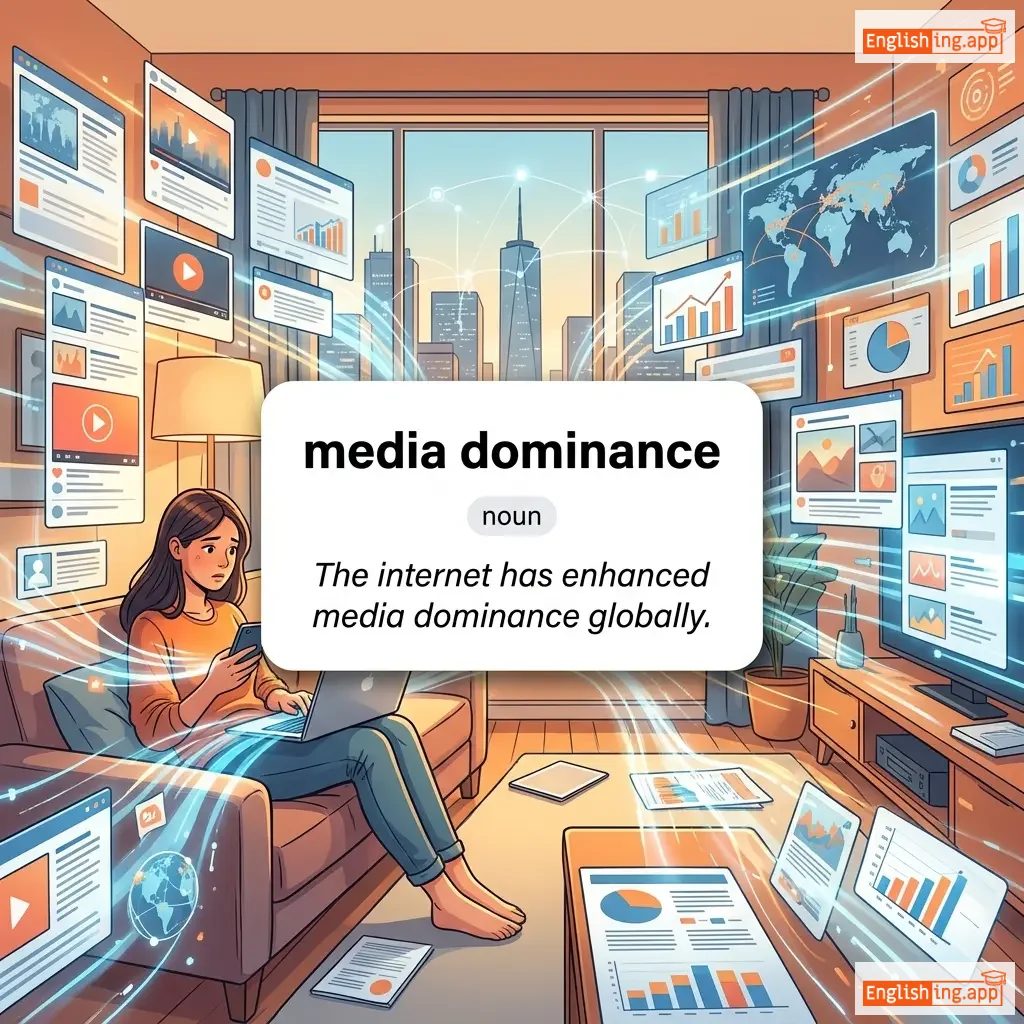
media dominance definition card — visual illustration of the meaning
noun
ˈmiːdiə ˈdɒmɪnəns
मीडिया प्रभुत्व (media prabhutva)

The control and powerful influence that media has over communication and information distribution in society.

"The internet has enhanced media dominance globally."

"इंटरनेट ने वैश्विक स्तर पर मीडिया प्रभुत्व को बढ़ाया है।" (Internet ne vaishvik star par media prabhutva ko badhaya hai.)
adjective
/ˌmed.iˈiː.vəl/
मध्यकालीन (madhyakalīn)

relating to the Middle Ages; medieval

"The castle displayed mediaeval architecture and design."

"किले में मध्यकालीन वास्तुकला और डिजाइन प्रदर्शित था।" (kile mein madhyakalīn vāstukalā aur design pradarshit thā.)
adjective
/ˈmiː.di.əl/
मध्य (madhya)

Situated in or pertaining to the middle; located toward the midline of the body or structure.

"The medial side of the knee is more prone to injury."

"घुटने का मध्य हिस्सा चोट लगने के लिए अधिक प्रवण है।" (ghutne ka madhya hissa chot lagne ke liye adhik pravana hai.)
verb
/ˈmiː.di.eɪt/
मध्यस्थता करना (madhyasthata karna)

To act as an intermediary in bringing about agreement or reconciliation between parties.

"She was asked to mediate between the two companies."

"उसे दो कंपनियों के बीच मध्यस्थता करने के लिए कहा गया था।" (Use do kampaniyon ke beech madhyasthata karne ke liye kaha gaya tha.)
mediation definition card — visual illustration of the meaning
noun
/ˌmiːdɪˈeɪʃən/
मध्यस्थता (madhyasthata)

Intervention between parties to promote reconciliation, settlement, or compromise.

"The mediation helped resolve the conflict between the two teams."

"मध्यस्थता ने दो टीमों के बीच संघर्ष को हल करने में मदद की।" (Madhyasthata ne do teamon ke beech sangharsh ko hal karne mein madad ki.)
mediative definition card — visual illustration of the meaning
adjective
/ˈmiː.di.eɪ.tɪv/
मध्यस्थता संबंधित (madhyasthata sambandhit)

Related to mediation, helping to resolve conflicts through diplomatic means.

"His mediative skills helped resolve the conflict."

"उसकी मध्यस्थता कौशल ने संघर्ष को हल करने में मदद की।" (Uski madhyasthata kaushal ne sangharsh ko hal karne mein madad ki.)
noun
/ˈmiːdieɪtər/
मध्यस्थ (mediator)

A person who attempts to make people involved in a conflict agree

"The United Nations often acts as a mediator in international disputes."

"संयुक्त राष्ट्र अक्सर अंतरराष्ट्रीय विवादों में मध्यस्थ के रूप में कार्य करता है।" (sanyukt rashtr aksar antarraashtreey vivaadon mein madhyasth ke roop mein kaary karta hai.)
medical definition card — visual illustration of the meaning
adjective
/ˈmedɪkəl/
चिकित्सकीय (chikitskiya)

relating to the science or practice of medicine

"He went for a medical check-up last week."

"वह पिछले सप्ताह एक चिकित्सा जांच के लिए गया था।" (Wah pichhle saptah ek chikitsa jaanch ke liye gaya tha.)
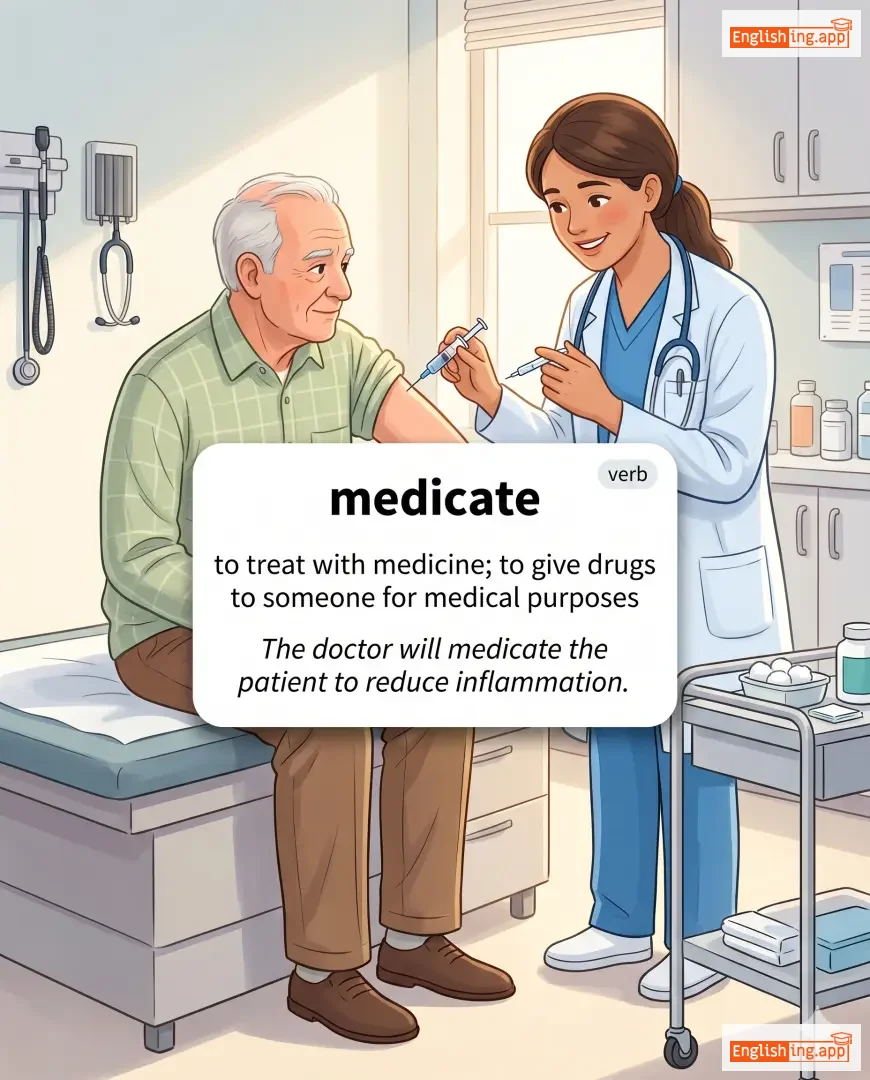
medicate definition card — visual illustration of the meaning
verb
/ˈmedɪkeɪt/
औषधि देना (aushadhi dena)

to treat with medicine; to give drugs to someone for medical purposes

"The doctor will medicate the patient to reduce inflammation."

"डॉक्टर रोगी को सूजन कम करने के लिए औषधि देंगे।" (Doktar rogi ko soojan kam karne ke liye aushadhi denge.)
noun
/ˌmedɪˈkeɪʃən/
दवाई (dawai)

a drug or other form of medicine used to treat or prevent disease

"The doctor prescribed medication for his headache."

"डॉक्टर ने उसके सिरदर्द के लिए दवाई लिखी।" (Doktor ne uske sirdard ke liye dawai likhi.)
medicine definition card — visual illustration of the meaning
noun
/ˈmed.ɪ.sən/
दवा (dawa)

A substance used to treat illness, injury, or disease.

"He took some medicine for his headache."

"उसने सिरदर्द के लिए कुछ दवा ली।" (Usne sirdard ke liye kuch dawa li.)
adjective
/ˌmiː.diˈiː.vəl/
मध्यकालीन (madhyakalin)

Relating to the Middle Ages, the period in European history from about the 5th to the 15th century.

"The castle is a famous medieval monument."

"किला एक प्रसिद्ध मध्यकालीन स्मारक है।" (Kila ek prasiddh madhyakalin smarak hai.)
adjective
/ˌmiː.diˈoʊ.kər/
मध्यम (madhyam)

Of only average quality; not very good.

"The movie was entertaining but overall mediocre."

"फिल्म मनोरंजक थी लेकिन कुल मिलाकर मध्यम थी।" (Film manoranjak thi lekin kul milakar madhyam thi.)