वोकैबुलरीज

इंग्लिश वोकैबुलरी डिस्कवर, लर्न और मास्टर करें

pronoun
/maɪ/
मेरा (mera)

used to indicate possession or ownership

"This is my book."

"यह मेरी किताब है।" (Yeh meri kitaab hai.)
noun
/ˈmaɪ.nə/
मयना (mayna)

a tropical bird with dark feathers that can mimic human speech

"The mynah bird repeated every word I said."

"मयना पक्षी ने जो भी मैंने कहा, उसे दोहराया।" (mayna pakshi ne jo bhi maine kaha, use dohraya)
adjective
/maɪˈɑːpɪk/
दृष्टिहीन, संकीर्ण दृष्टि (drishtihin, sankirn drishti)

lacking foresight or long-term perspective; also refers to nearsightedness

"The company’s myopic strategy led to long-term losses."

"कंपनी की दृष्टिहीन रणनीति से दीर्घकालिक नुकसान हुआ।" (Company ki drishtihin rananeeti se dirghkalik nuksan hua.)
noun/adjective
/ˈmɪriəd/
अनगिनत (anganginat)

a countless or extremely great number

"There are myriad stars in the night sky."

"रात के आकाश में अनगिनत तारे हैं।" (Raat ke aakaash mein anginat taare hain.)
pronoun
/maɪˈsɛlf/
खुद (khud)

used for emphasis or to refer to oneself

"I will do it myself."

"मैं इसे खुद करूंगा।" (Main ise khud karunga.)
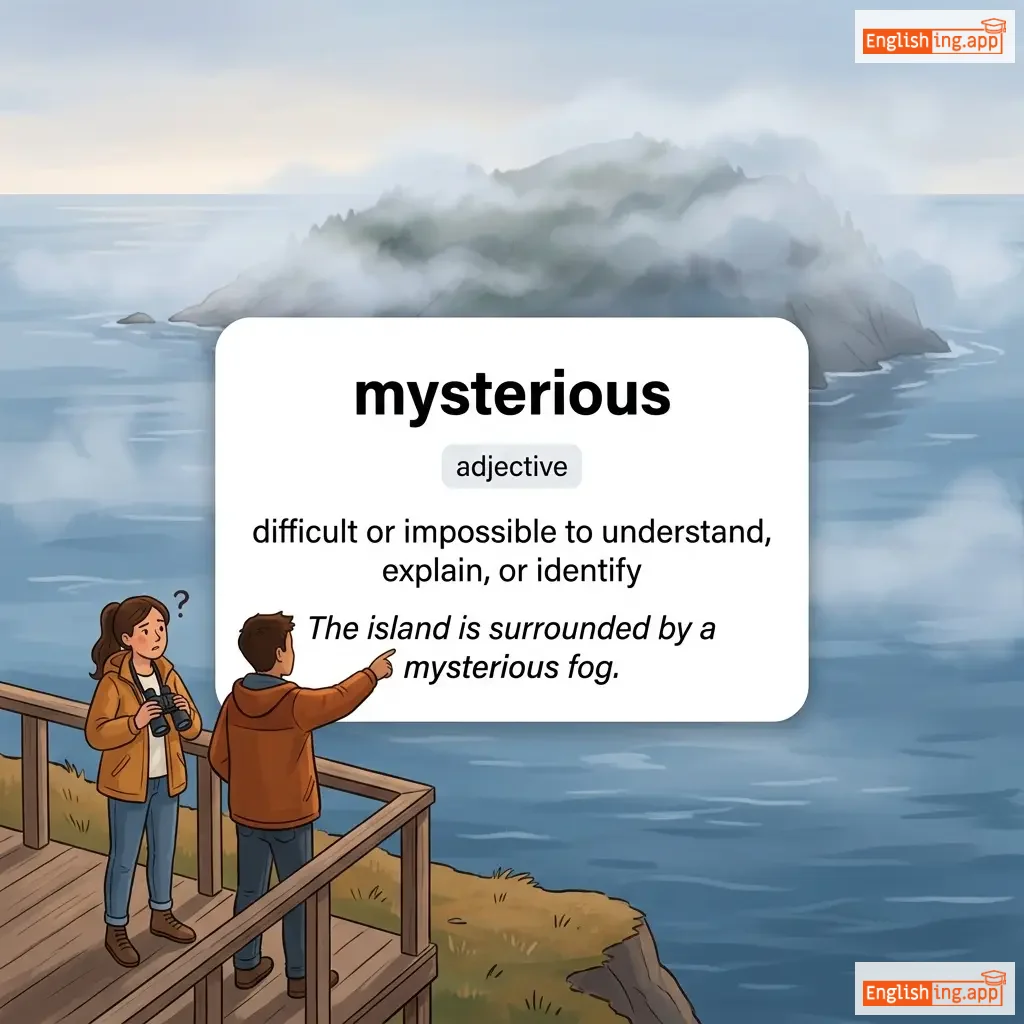
mysterious definition card — visual illustration of the meaning
adjective
/mɪˈstɪəriəs/
रहस्यमय (rahasyamay)

difficult or impossible to understand, explain, or identify

"The island is surrounded by a mysterious fog."

"द्वीप को रहस्यमय धुंध से घेरा हुआ है।" (Dweep ko rahasymay dhund se ghera hua hai.)
noun
/ˈmɪstəri/
रहस्य (rahasya)

something that is difficult or impossible to understand or explain

"The mystery of the missing book remained unsolved."

"गुम हुई किताब का रहस्य अनसुलझा रह गया।" (Gum hui kitaab ka rahasya ansuljha rah gaya.)
noun/adjective
/ˈmɪstɪk/
रहस्यमय, आध्यात्मिक साधक (rahasyamay, adhyatmik sadhak)

relating to mysteries, spirituality, or hidden truths; a person who seeks spiritual insight

"The mystic devoted his life to meditation and spiritual discovery."

"उस आध्यात्मिक साधक ने ध्यान और आध्यात्मिक खोज में अपना जीवन समर्पित किया।" (Us adhyatmik sadhak ne dhyan aur adhyatmik khoj mein apna jeevan samarpit kiya.)
noun
/ˌmɪstɪfɪˈkeɪʃən/
आश्चर्य, भ्रम (aashcharya, bhram)

the act of making something unclear or confusing; a state of being puzzled or bewildered

"The audience watched in mystification as the magician performed his tricks."

"दर्शकों ने जादूगर के करतबों को हैरान होकर देखा।" (Darshako ne jadugar ke kartabon ko hairan hokar dekha.)
noun
/mɪθ/
किंवदंती (kindanti)

A traditional story explaining natural or social phenomena, often involving supernatural beings; a widely held but false belief.

"The myth of the phoenix tells of a bird reborn from its ashes."

"फीनिक्स की किंवदंती एक ऐसे पक्षी की कहानी बताती है जो अपनी राख से फिर से जन्म लेता है।" (Phoenix ki kindanti ek aise pakshi ki kahani batati hai jo apni rakh se phir se janm leta hai.)
adjective
/ˈmɪθɪkəl/
पौराणिक (pauraanik)

existing only in myths or legends; imaginary or fictitious

"Dragons are mythical creatures that appear in many cultures."

"ड्रैगन पौराणिक प्राणी होते हैं जो कई संस्कृतियों में दिखाई देते हैं।" (dragon pauraanik prani hote hain jo kai sanskritiyon mein dikhai dete hain.)
noun
/mɪˈθɒlədʒi/
पौराणिक कथाएं (pauranik kathayein)

A collection of myths, especially belonging to a particular culture or religion.

"Greek mythology is filled with stories of gods and heroes."

"ग्रीक पौराणिक कथाओं में देवताओं और नायकों की कहानियाँ भरी होती हैं." (greek pauranik kathayein devtaon aur nayakon ki kahaniyan bhari hoti hain.)