वोकैबुलरीज

इंग्लिश वोकैबुलरी डिस्कवर, लर्न और मास्टर करें

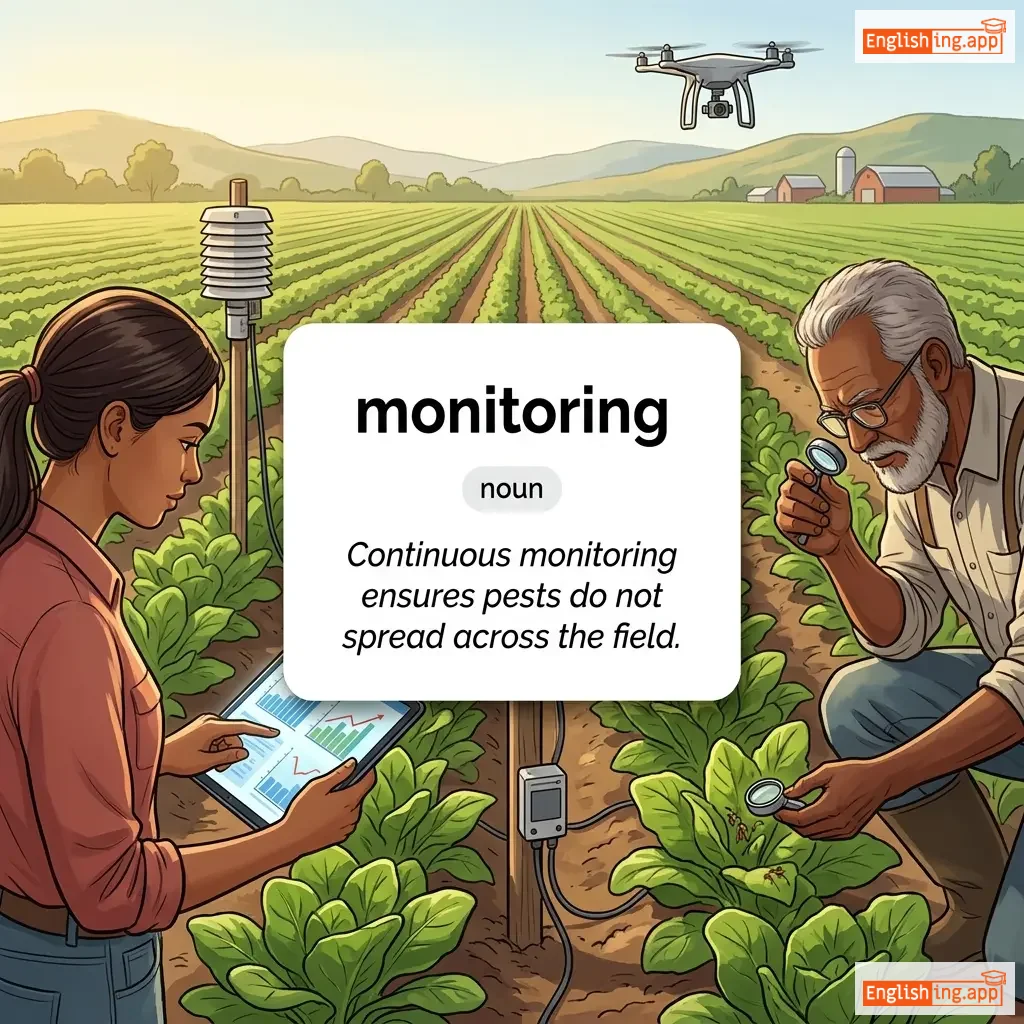
monitoring definition card — visual illustration of the meaning
noun
ˈmɒnɪtərɪŋ
निरीक्षण, निरंतर निगरानी (nirikshan, nirantar nigarani)

The action of observing and checking the progress or quality of something over a period of time.

"Continuous monitoring ensures pests do not spread across the field."

"निरंतर निगरानी यह सुनिश्चित करती है कि कीट खेत में न फैलें।" (Nirantar nigarani yah sunishchit karti hai ki keet khet mein na phailen.)
adjective
/ˈmɒnɪtəri/
चेतावनी देने वाला (cheetavni dene wala)

Giving a warning or cautionary advice; serving to warn.

"His monitory tone made everyone cautious about their next move."

"उसका मोनिटरी स्वर सभी को अगले कदम के बारे में सतर्क कर गया।" (Uska monitory swar sabhi ko agle kadam ke baare mein satark kar gaya.)
noun
/mɒŋk/
साधु (sadhu)

a member of a religious community living under vows of poverty, chastity, and obedience

"The monk lived a simple and peaceful life in the monastery."

"साधु मठ में एक सरल और शांतिपूर्ण जीवन जीते थे।" (Sadhu math mein ek saral aur shantipurn jeevan jeete the.)
noun
/ˈmʌŋki/
बंदर (bandar)

a small to medium-sized primate with a long tail, known for its playfulness

"A monkey was jumping from tree to tree in the forest."

"एक बंदर जंगल में एक पेड़ से दूसरे पेड़ पर कूद रहा था।" (ek bandar janglė mein ek ped se doosre ped par kood raha tha)
adjective
/ˌmɒnəkrəˈmætɪk/
एकरंगी (ekrangi)

Consisting of or displaying only one color.

"The artist created a striking monochromatic painting in shades of blue."

"कलाकार ने नीले रंगों के शेड्स में एक चौंकाने वाली एकरंगी पेंटिंग बनाई।" (Kalakar ne neele rangon ke shedz mein ek chaunkane waali ekrangi painting banai.)
noun/adjective
/ˈmɒnəkrəʊm/
काले-सफेद (kaale-safed)

A photograph, painting, or screen image in black and white or varying tones of one color.

"The old film was shot entirely in monochrome."

"पुरानी फिल्म पूरी तरह से काले-सफेद में शूट की गई थी।" (Puraani film poori tarah se kaale-safed mein shoot ki gayi thi.)
noun
/ˈmɒnəkl/
मोनोंकल (monokal)

A single round lens for one eye, used to correct or enhance vision.

"The old gentleman wore a monocle at formal events."

"बुजुर्ग सज्जन औपचारिक अवसरों पर मोनोंकल पहने थे." (bujurg sajjan aupcharik avsaroon par monokal pehne the)
noun
/məˈnɒkrəsi/
एकलशासन (ekalshasan)

A system of government by a single person; autocracy.

"The nation suffered under decades of monocracy."

"राष्ट्र मोनोक्रीसी के दशकों के दौरान पीड़ित था।" (Rashtra monokrisī ke dashako ke dauran pīṛit thā.)
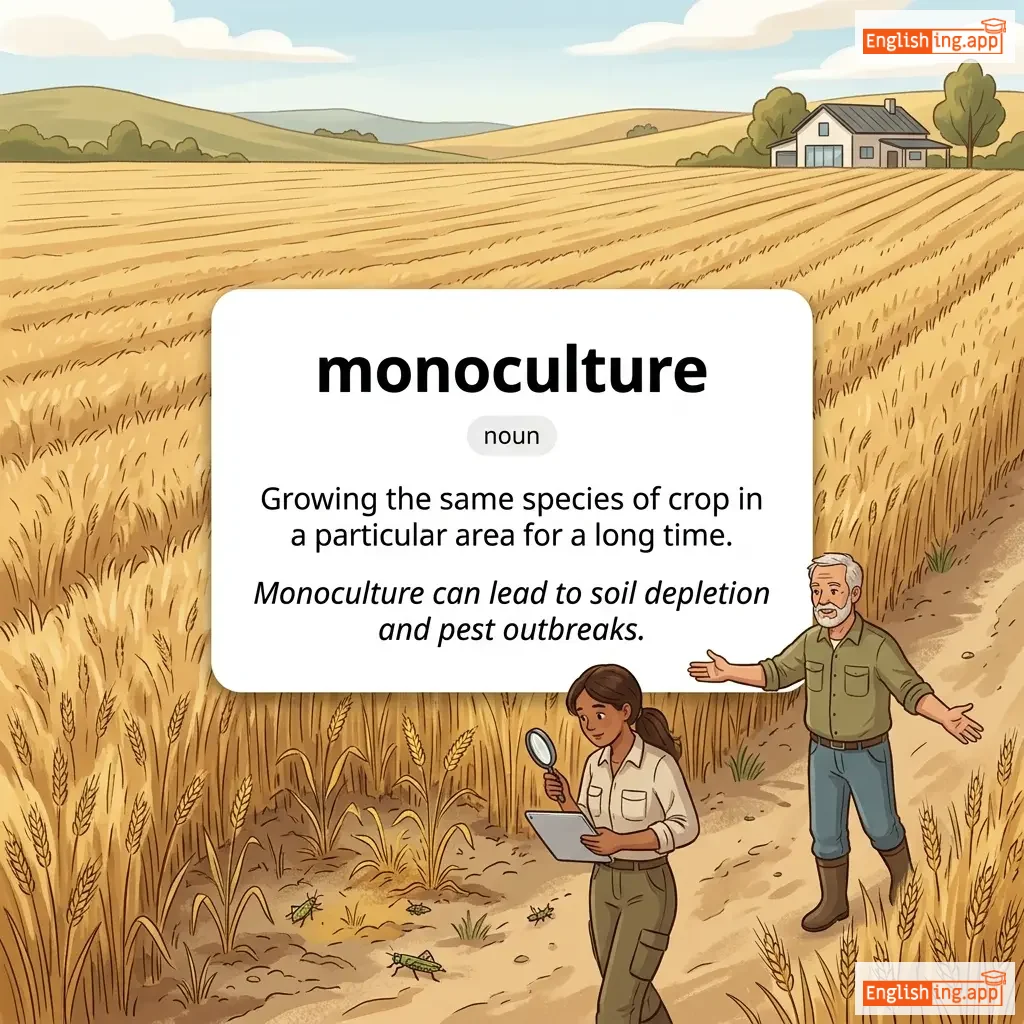
monoculture definition card — visual illustration of the meaning
noun
ˈmɒn.əˌkʌl.tʃər
मोनोकल्चर (monokalchar)

Growing the same species of crop in a particular area for a long time.

"Monoculture can lead to soil depletion and pest outbreaks."

"मोनोकल्चर से मृदा की उर्वरता में कमी और कीटों के प्रकोप हो सकते हैं।" (Monokalchar se mrida ki urvarata mein kami aur keeton ke prakoop ho sakte hain.)
noun
/məˈnɒɡəmi/
एकविवाहिता (ekvivahita)

The practice of being married to or in a relationship with only one person at a time.

"Many cultures encourage monogamy as the ideal form of marriage."

"कई संस्कृतियाँ मोनोगामी को विवाह का आदर्श रूप मानती हैं।" (kai sanskritiyan monogamy ko vivah ka adarsh roop manti hain.)
noun
/ˈmɒnəɡræm/
मोनोग्राम (monogram)

A design consisting of two or more letters, typically a person's initials, combined or interwoven.

"The towel was embroidered with her monogram."

"तौलिया उसके मोनोग्राम से कढ़ा हुआ था।" (tauliya uske monogram se kadha hua tha.)
noun
/ˈmɒnəɡrɑːf/
विशिष्ट विषय पर विस्तृत अध्ययन (monograaf)

A detailed written study of a single specialized subject or aspect of it.

"The professor published a monograph on ancient pottery."

"प्रोफेसर ने प्राचीन मिट्टी के बर्तनों पर एक मोनोग्राफ प्रकाशित किया।" (professor ne praachin mitti ke bartano par ek monograaf prakaashit kiya.)
noun
/ˈmɒnəlɪθ/
एकल पत्थर का स्तंभ (ekl pathar ka stambh)

A large single upright block of stone, or a large, powerful, indivisible organization or system.

"The ancient monolith stood in the desert for centuries."

"प्राचीन मोनोलिथ दशकों तक रेगिस्तान में खड़ा था।" (prachin monolith dashkon tak registan mein khada tha.)
adjective
/ˌmɒnəˈlɪθɪk/
मोनोलिथिक (monolithic)

Massive, uniform, and indivisible; resembling a large single stone or structure.

"The company maintained a monolithic structure resistant to change."

"कंपनी ने परिवर्तन के खिलाफ प्रतिरोधक एक मोनोलिथिक संरचना बनाए रखी।" (kampani ne parivartan ke khilaf pratirodhak ek monolithic sanrachna banaye rakhi.)
noun
/ˈmɒnəˌlɒɡ/
एकल संवाद (ekal samvad)

A long speech by one person, often in a play or performance.

"The actor delivered a powerful monologue on stage."

"अभिनेता ने मंच पर एक शक्तिशाली मोनोलॉग प्रस्तुत किया।" (Abhineta ne manch par ek shaktishaali monologue prastut kiya.)
noun
/ˌmɒnəˈmeɪniə/
केवल एक विषय के लिए अति-उन्मत्तता (monomania)

Excessive concentration or obsession with a single subject or idea.

"His monomania for collecting stamps worried his family."

"डाक टिकट इकट्ठा करने के लिए उसकी एक-विषयक अति-उन्मत्तता ने उसके परिवार को चिंतित कर दिया।" (daak tiket ikattha karne ke liye uski ek-vishayak ati-unmattata ne uske parivaar ko chintit kar diya)
monopolization definition card — visual illustration of the meaning
noun
məˌnɒp.ə.laɪˈzeɪ.ʃən
एकाधिकार (ekadhikar)

The process of gaining exclusive possession or control of a trade, commodity, or service.

"The monopolization of industries can limit consumer choices."

"उद्योगों का एकाधिकार उपभोक्ता के विकल्पों को सीमित कर सकता है।" (udyogon ka ekadhikar upbhokta ke vikalpon ko seemit kar sakta hai.)
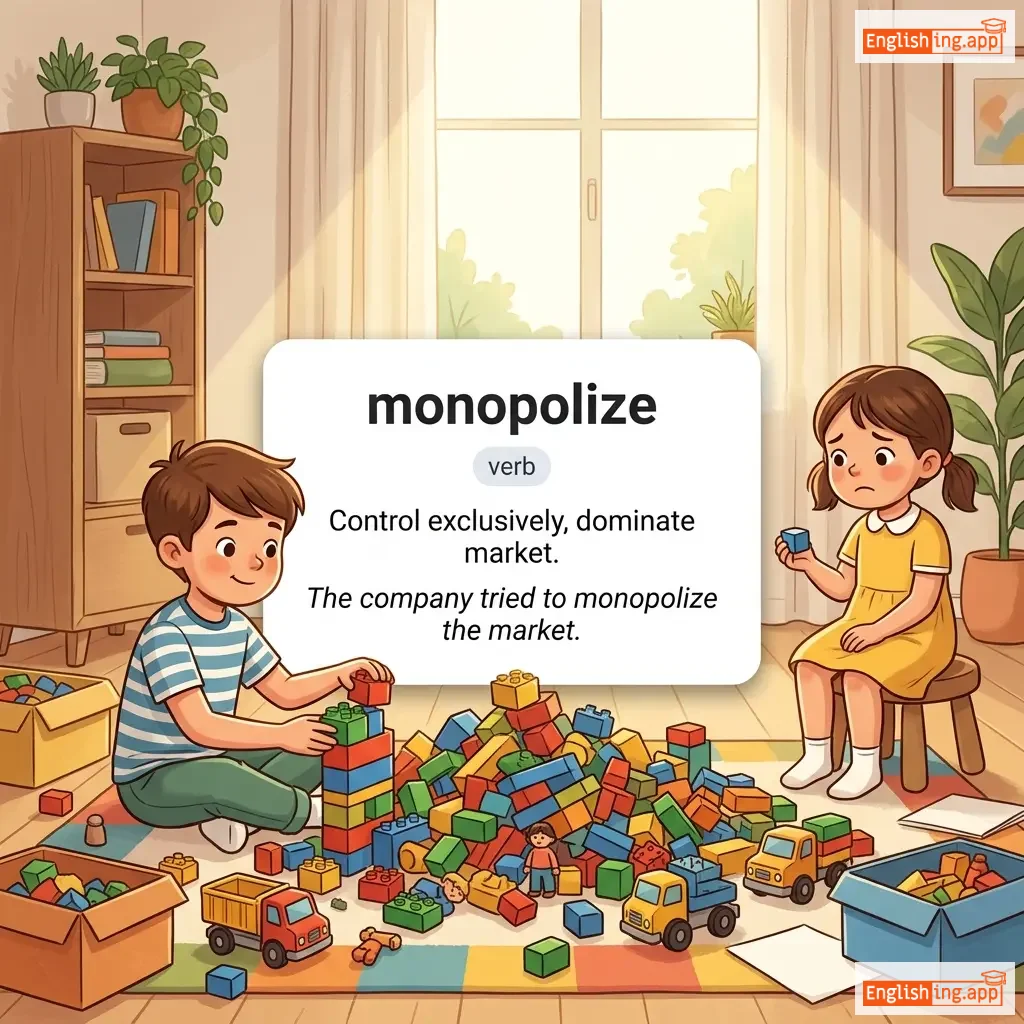
monopolize definition card — visual illustration of the meaning
verb
məˈnɒp.ə.laɪz
एक्सक्लूसिव रूप से नियंत्रण करना (exclusive roop se niyantran karna)

Control exclusively, dominate market.

"The company tried to monopolize the market."

"कंपनी ने बाज़ार को मोनोपोलाइज करने की कोशिश की।" (Kampani ne bazaar ko monopolize karne ki koshish ki.)
monopoly definition card — visual illustration of the meaning
noun
/məˈnɒpəli/
एकाधिकार (ekadhikar)

Exclusive control over a market, product, or service.

"The company gained a monopoly over the mobile phone industry."

"कंपनी ने मोबाइल फ़ोन उद्योग पर एकाधिकार प्राप्त कर लिया।" (Kampani ne mobail phone udyog par ekadhikar praapt kar liya.)
noun
/ˈmɒnəˌsɪləbəl/
एक अक्षर वाला शब्द (ek akshar wala shabd)

A word consisting of only one syllable.

"Words like 'yes' and 'no' are monosyllables."

"'हां' और 'न' जैसे शब्द मोनोसिलेबल होते हैं।" ('Haan' aur 'na' jaise shabd monosyllable hote hain.)
noun
mɒnəˈtɑːskɪŋ
एक समय में एक कार्य करना (ek samay mein ek karya karna)

The practice of dedicating oneself to a given task and minimizing potential interruptions until the task is completed or a significant period of time has elapsed.

"Monotasking can often lead to higher quality work."

"मोनोटास्किंग अक्सर उच्च गुणवत्ता वाले काम की ओर ले जाती है।" (Monotasking aksar uchch gunwatta wale kaam ki or le jati hai.)
noun
/ˈmɒnəˌθiːɪzəm/
एकेश्वरवाद (ekeshwarvad)

The belief in the existence of only one God.

"Islam and Christianity are religions based on monotheism."

"इस्लाम और ईसाई धर्म एकेश्वरवाद पर आधारित हैं।" (Islam aur Isai dharm ekeshwarvad par aadharit hain.)
noun
/ˈmɒn.ə.təʊn/
समान स्वर (samaan swar)

A continuous sound, especially of a person's voice, that does not rise and fall in pitch.

"The teacher's monotone made the lecture hard to follow."

"शिक्षक की समान स्वर ने व्याख्यान को समझना कठिन बना दिया।" (Shikshak ki samaan swar ne vyakhyan ko samajhna kathin bana diya.)
adjective
/məˈnɒt.ən.əs/
निराशाजनक (niraashajanak)

Dull, tedious, and repetitious; lacking in variety and interest.

"The monotonous routine of office work tired him out."

"ऑफिस के उबाऊ रूटीन ने उसे थका दिया।" (Aphis ke ubaau routine ne use thaka diya.)
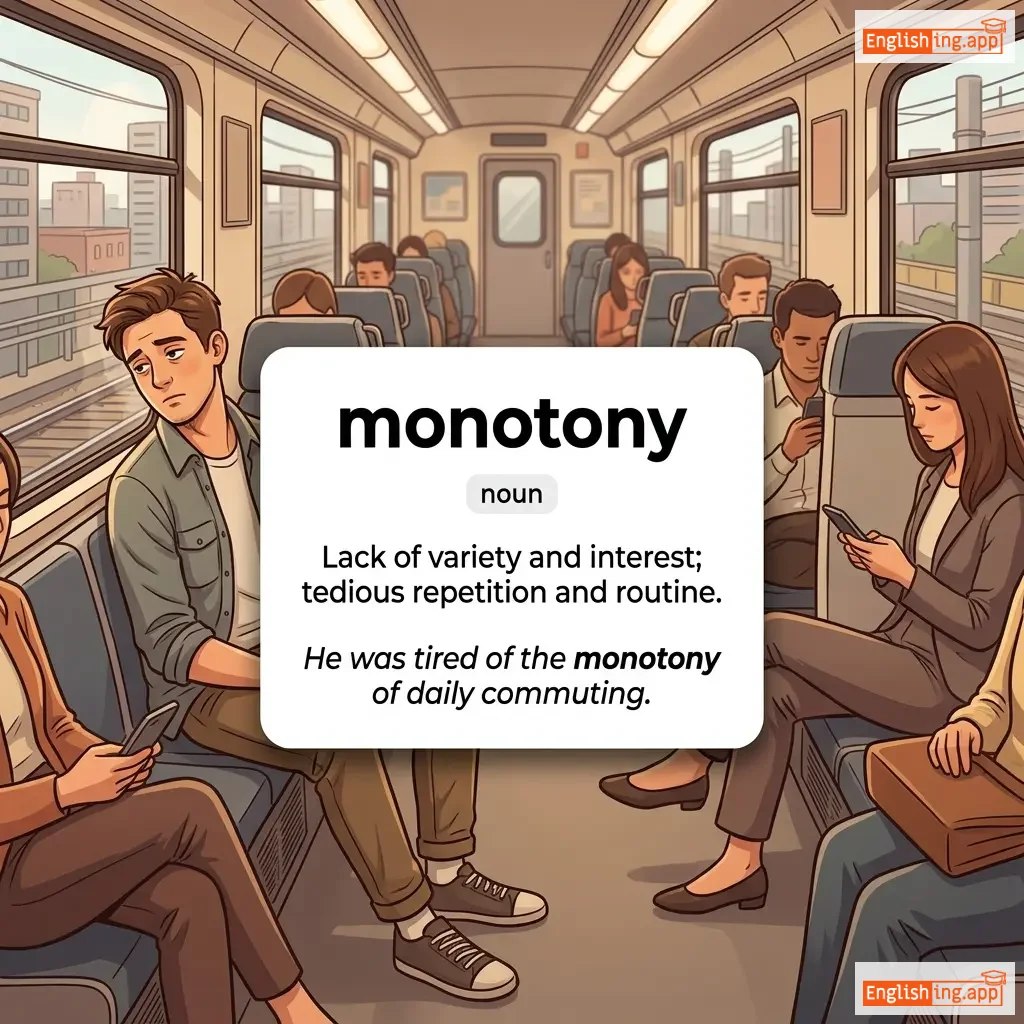
monotony definition card — visual illustration of the meaning
noun
/məˈnɒt.ə.ni/
एकरसता (ekrasata)

Lack of variety and interest; tedious repetition and routine.

"He was tired of the monotony of daily commuting."

"वह रोज़ की यात्रा की एकरसता से थक चुका था।" (Vah roz ki yatra ki ekrasata se thak chuka tha.)
noun
/ˈmɒnstər/
खुशी (khushi)

an imaginary or large frightening creature

"The child was afraid that a monster was hiding under the bed."

"वह पुरस्कार प्राप्त करते समय अपनी खुशी को छुपा नहीं पाई।" (vah puraskaar praapt karte samay apni khushi ko chhupa nahin paayi.)
adjective
/ˈmɒnstrəs/
भयानक; अत्यधिक बड़ा; अति-क्रूर या गलत; असामान्य (monstras)

extremely large; shockingly evil or wrong; abnormal or unnatural

"The monstrous crime shocked the entire community."

"भयानक अपराध ने पूरी समुदाय को चौंका दिया।" (bhayānak aparādh ne pūrī samudāy ko chaunkā diyā.)
noun
/mɒnˈtɑːʒ/
संग्रह (sangrah)

A sequence of film editing or a composite image made by combining several separate pictures.

"The film opened with a montage of city life."

"फिल्म शहर के जीवन के एक संग्रह के साथ शुरू हुई।" (Film shahar ke jeevan ke ek sangrah ke saath shuru hui.)
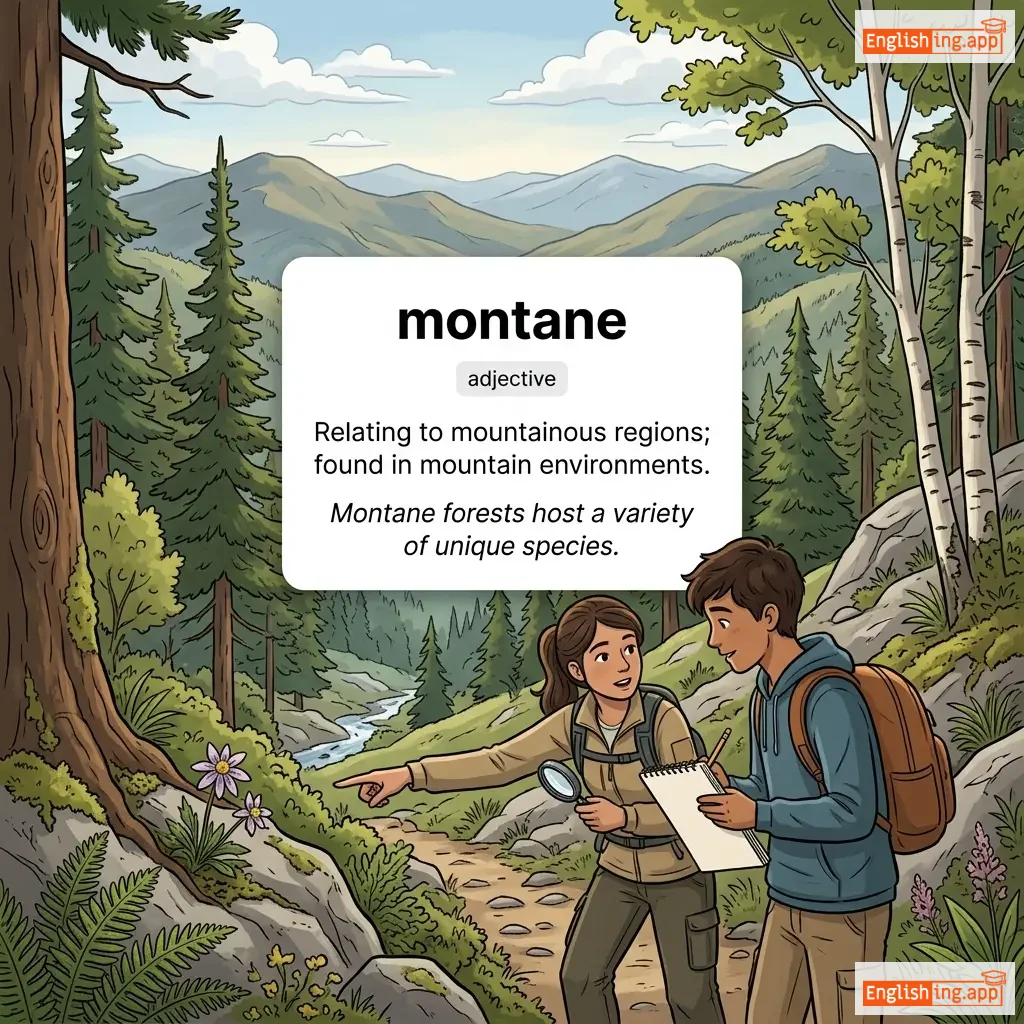
montane definition card — visual illustration of the meaning
adjective
/ˈmɒn.teɪn/
पहाड़ी क्षेत्रों से संबंधित; पर्वतों में पाए जाने वाले (pahaadi kshetron se sambandhit; parvaton mein paaye jaane waale)

Relating to mountainous regions; found in mountain environments.

"Montane forests host a variety of unique species."

"पहाड़ी जंगलों में अद्वितीय प्रजातियों की एक विविधता पाई जाती है।" (pahaadi jangalo mein advitiya prajatiyon ki ek vividhta paayi jaati hai.)
noun
/mʌnθ/
माह (maah)

a period of about four weeks or one-twelfth of a year

"She visits her grandparents once a month."

"वह महीने में एक बार अपने दादी-दादी से मिलने जाती है।" (Wah mahine mein ek baar apne daadi-daadi se milne jaati hai.)
adjective
/ˈmʌnθli/
मासिक (masik)

happening, done, or published once a month

"Employees receive their salary on a monthly basis."

"कर्मचारी मासिक आधार पर अपनी सैलरी प्राप्त करते हैं।" (Karmachari masik aadhar par apni salary prapt karte hain.)
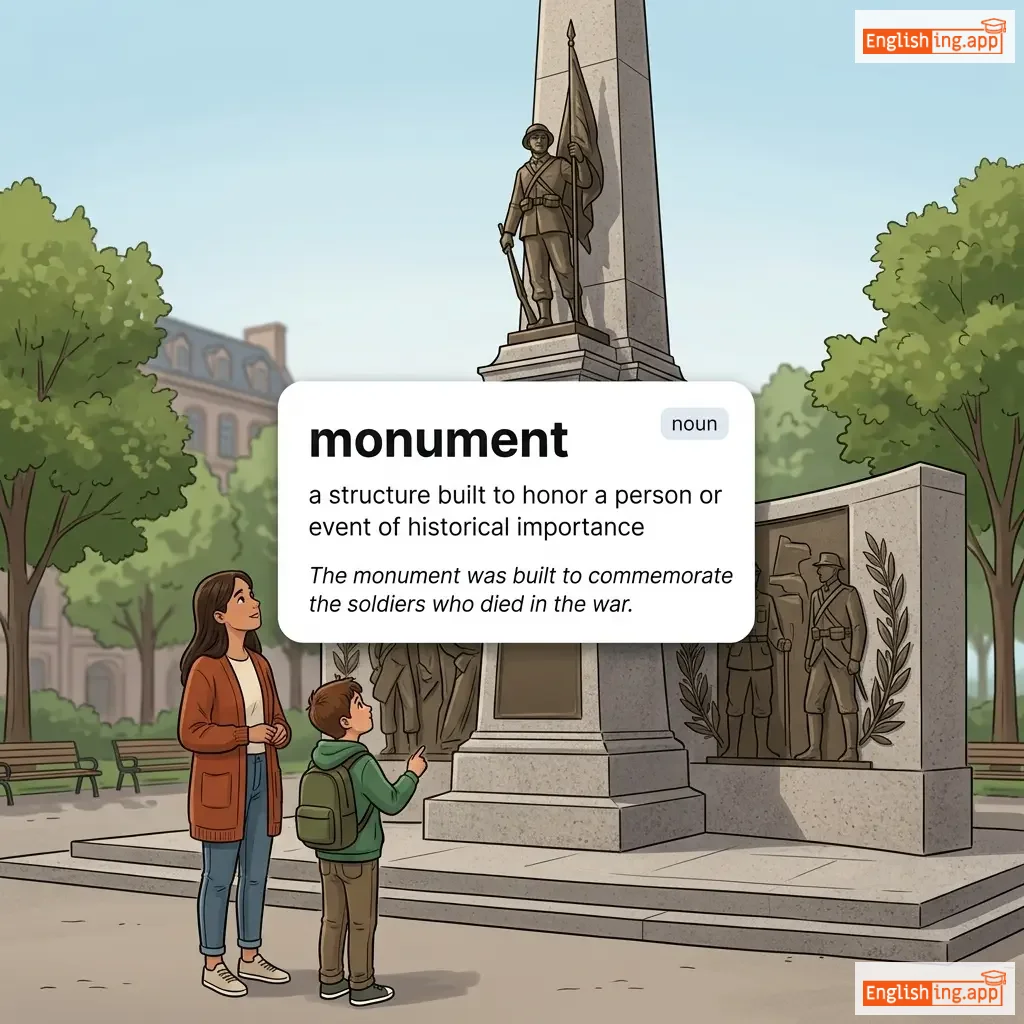
monument definition card — visual illustration of the meaning
noun
/ˈmɒnjumənt/
स्मारक (smaarak)

a structure built to honor a person or event of historical importance

"The monument was built to commemorate the soldiers who died in the war."

"युद्ध में मारे गए सैनिकों की याद में स्मारक बनाया गया था।" (Yudh mein maare gaye sainikon ki yaad mein smaarak banaya gaya tha.)
monumental definition card — visual illustration of the meaning
adjective
/ˌmɒn.jʊˈmen.təl/
महत्वपूर्ण (mahatvapoorn)

Great in importance, extent, or size; resembling or serving as a monument.

"The project was a monumental achievement for the team."

"यह परियोजना टीम के लिए एक महत्वपूर्ण उपलब्धि थी।" (Yeh pariyojna team ke liye ek mahatvapoorn uplabdhi thi.)
noun
/muːd/
मूड (mood)

a temporary state of mind or feeling

"He was in a good mood after getting the job."

"वह नौकरी मिलने के बाद अच्छे मूड में था।" (Vah naukari milne ke baad achhe mood mein tha.)
noun
/ˈmuːdi.nəs/
मूडिनेस (moodiness)

The state of being frequently subject to changes in mood, especially irritability or sadness.

"Her moodiness made it difficult to predict how she would react."

"उसकी मूडिनेस ने यह अनुमान लगाना मुश्किल बना दिया कि वह कैसे प्रतिक्रिया करेगी।" (uski moodiness ne yah anuman lagana mushkil bana diya ki vah kaise pratikriya karegi.)
noun
/muːn/
चाँद (chaand)

the natural satellite of the earth, visible mainly at night by reflected light from the sun

"The moon shines brightly in the night sky."

"चाँद रात के आकाश में चमकता है।" (chaand raat ke aakash mein chamakta hai.)
noun
/ˈmuːn.biːm/
चाँद की किरण (chaand ki kiran)

A ray of light from the moon.

"A moonbeam lit up the quiet forest clearing."

"एक चाँद की किरण ने शांत जंगल की खाली जगह को रोशन कर दिया।" (ek chaand ki kiran ne shaant jangla ki khaali jagah ko roshan kar diya.)
verb, noun
/mʊər/
नाव बांधना / खुली ज़मीन (naav baandhna / khuli zameen)

As a verb: to tie a ship so that it stays in place. As a noun: open, uncultivated land.

"The sailors moored the ship at the dock."

"नाविकों ने जहाज को डॉक पर बांध दिया।" (navikon ne jahaj ko dock par baandh diya.)
adjective, verb
/muːt/
विवादास्पद / अप्रासंगिक (vivadaspad / aprasangik)

Adjective: subject to debate or irrelevant. Verb: to suggest an idea for discussion.

"The issue of funding became a moot point after the project was canceled."

"परियोजना रद्द होने के बाद, धन के मुद्दे को अप्रासंगिक मान लिया गया।" (pariyojana radd hone ke baad, dhan ke mudde ko aprasangik maan liya gaya.)
adjective, noun
/ˈmɔːrəl/
नैतिक (naitik)

Adjective: concerned with principles of right and wrong. Noun: a lesson about right and wrong from a story or experience.

"The moral of the story is that honesty is the best policy."

"कहानी का नैतिक यह है कि ईमानदारी सबसे अच्छा नीति है।" (kahani ka naitik yah hai ki imandari sabse accha niti hai.)
noun
/məˈræl/
मनोबल (manobal)

The confidence, enthusiasm, and discipline of a person or group at a particular time.

"The team's morale improved after their recent victory."

"टीम का मनोबल उनके हालिया विजय के बाद बेहतर हो गया।" (Teem ka manobal unke haaliya vijay ke baad behtar ho gaya.)
noun
/ˈmɒrəlɪst/
नैतिक शिक्षक (naitik shikshak)

A person who teaches or promotes moral principles and values.

"The author was known as a strict moralist in his writings."

"लेखक अपनी रचनाओं में एक सख्त नैतिक शिक्षक के रूप में प्रसिद्ध थे।" (Lekhak apni rachnaon mein ek sakht naitik shikshak ke roop mein prasiddh the.)
noun
/məˈrælɪti/
नैतिकता (naitikta)

Principles concerning the distinction between right and wrong or good and bad behavior.

"Society's sense of morality changes over time."

"समाज की नैतिकता समय के साथ बदलती है।" (Samaj ki naitikta samay ke saath badalti hai.)
verb
/ˈmɒrəlaɪz/
नैतिक शिक्षा देना (naitik shiksha dena)

To comment on issues of right and wrong, often with an air of superiority.

"He tends to moralize about other people's choices."

"वह अक्सर दूसरों के विकल्पों पर नैतिक शिक्षा देता है।" (Vah aksar doosron ke vikalpon par naitik shiksha deta hai.)
adverb
/ˈmɔːrəli/
नैतिक रूप से (naitik roop se)

in accordance with principles of right and wrong behavior; ethically

"She felt morally obligated to help the refugees."

"वह शरणार्थियों की मदद करने के लिए नैतिक रूप से बाध्य महसूस करती थी।" (vah sharanarthiyon ki madad karne ke liye naitik roop se baadhy mahsus karti thi)
noun
/məˈræs/
जटिल स्थिति (jatil sthiti)

A complicated or confused situation; a swampy or boggy ground.

"The project got stuck in a bureaucratic morass."

"प्रोजेक्ट एक नौकरशाही की जटिल स्थिति में फंस गया।" (Project ek naukarshahi ki jatil sthiti mein phans gaya.)
noun
/ˌmɔːrəˈtɔːriəm/
मोराटोरियम (moratorium)

A temporary suspension or delay of an activity, law, or obligation.

"The government announced a moratorium on new mining licenses."

"सरकार ने नई खनन लाइसेंस पर मोराटोरियम की घोषणा की।" (Sarkar ne nai khanan license par moratorium ki ghoshna ki.)
adjective
/ˈmɔːrbɪd/
अस्वस्थकर या डरावने विषयों में असामान्य रुचि (aswasthakar ya daravane vishayon mein asamany ruchi)

Having an abnormal interest in disturbing or unpleasant subjects such as death or disease.

"She had a morbid fascination with crime stories."

"वह अपराध की कहानियों के प्रति एक मोर्बिड आकर्षण रखती थी।" (Wah apradh ki kahaniyon ke prati ek morbid aakarshan rakhti thi.)
adjective
/mɔːrˈdeɪʃəs/
तीखा या विडंबनात्मक (teekha ya vidambanatmak)

Sharp or biting in style, tone, or remark; sarcastic.

"The critic’s mordacious review offended the author."

"समीक्षक की तीखी और विडंबनात्मक समीक्षा ने लेखक को आहत कर दिया।" (Sameekshak ki teekhi aur vidambanatmak sameeksha ne lekhak ko aahat kar diya.)
adjective
/ˈmɔːrdənt/
तीखा, आलोचनात्मक या विद्रूप (teekha, aalochanatmak ya vidroop)

Having a sharp, critical, or biting quality; especially in humor.

"Her mordant wit often left her friends speechless."

"उसकी तीखी वाकपटुता अक्सर उसके दोस्तों को मौन कर देती थी।" (Uski teekhi vakpatuta aksar uske doston ko maun kar deti thi.)