वोकैबुलरीज

इंग्लिश वोकैबुलरी डिस्कवर, लर्न और मास्टर करें

noun
/ˈlɒkətɪv/
स्थानसूचक (sthansuchak)

a grammatical case indicating location or place

"In Latin, the locative case is used to indicate location."

"लैटिन में, लोकटिव केस का उपयोग स्थान सूचक के रूप में किया जाता है।" (Latin mein, locative case ka upyog sthaan suchak ke roop mein kiya jata hai.)
noun
/lɒx/
झील (jheel)

a lake or sea inlet, especially in Scotland

"Tourists visit Loch Ness to search for the legendary monster."

"पर्यटक लोह नेस पर जाते हैं ताकि वे उस पौराणिक राक्षस की खोज कर सकें।" (Paryatak Loch Ness par jate hain taki ve us pauranik raakshas ki khoj kar saken.)
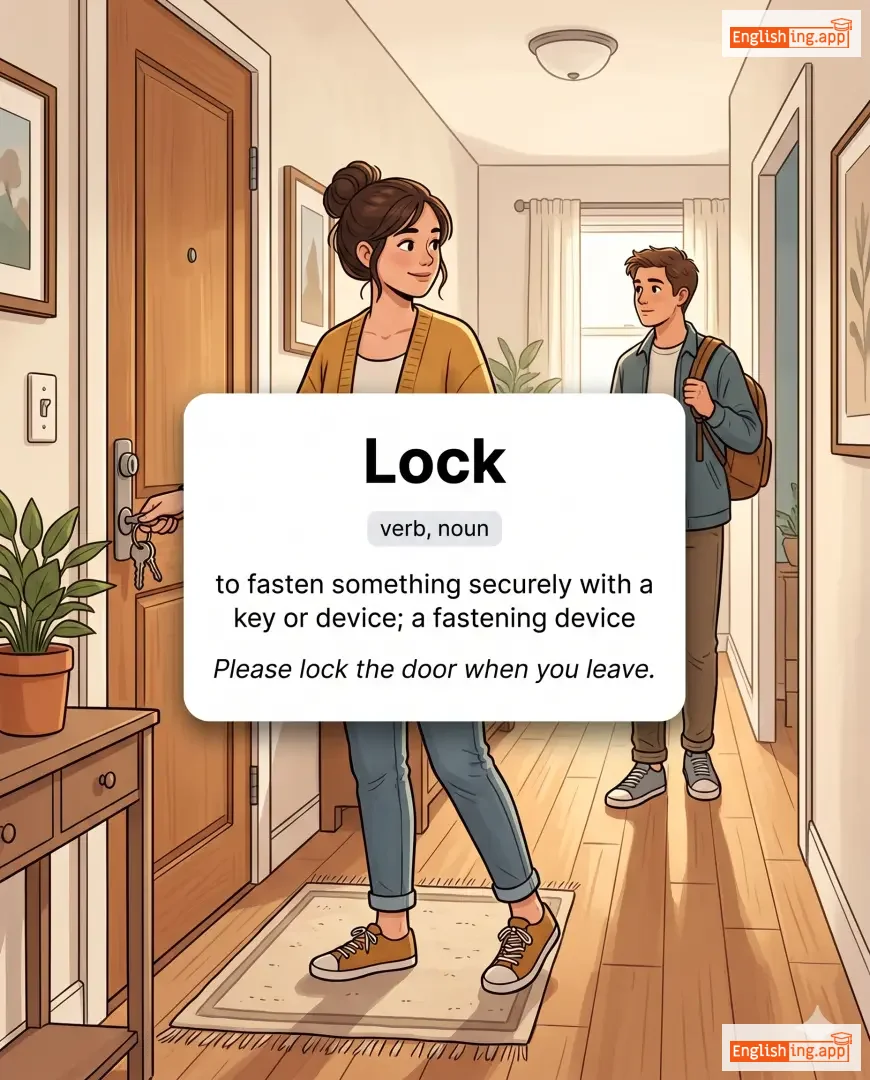
Lock definition card — visual illustration of the meaning
verb, noun
/lɒk/
ताला, ताला लगाना (tala, tala lagana)

to fasten something securely with a key or device; a fastening device

"Please lock the door when you leave."

"कृपया दरवाज़ा बंद करें जब आप जाएं।" (kripya darwaza band karein jab aap jaayein.)
noun
/ˈlɒk.ɪt/
लॉकेट (loket)

a small ornamental case, typically made of gold or silver, worn on a chain around the neck

"She kept her grandmother's photo in the locket."

"उसने अपनी दादी की तस्वीर लॉकेट में रखी।" (usne apni dadi ki tasveer loket mein rakhi)
noun
/ˌloʊkəˈmoʊʃən/
गमन (gaman)

movement or the ability to move from one place to another

"Walking is the most common form of human locomotion."

"चलना मानव गमन का सबसे सामान्य रूप है।" (chalna maanav gaman ka sabse samaanya roop hai.)
noun
/ˌloʊ.kəˈmoʊ.tɪv/
लोकोमोटिव (lokomotiv)

A powered rail vehicle used for pulling trains.

"The old steam locomotive was restored for the museum."

"पुराना भाप लोकोमोटिव संग्रहालय के लिए बहाल किया गया था।" (Purana bhaap lokomotiv sangrahalay ke liye bahaal kiya gaya tha.)
noun
/ˈloʊ.kəst/
टिड्डी (tiddi)

a large insect that flies in groups and eats crops

"The locusts destroyed the entire wheat field."

"टिड्डियों ने पूरे गेहूं के खेत को नष्ट कर दिया।" (tiddiyon ne pure gehun ke khet ko nasht kar diya)
noun
/loʊd/
खनिज शिरा (khonij shira)

A rich source of something, often a vein of valuable metal in the earth.

"The miners discovered a rich lode of silver."

"माइनर्स ने चांदी की एक समृद्ध शिरा खोजी।" (miners ne chandi ki ek samriddh shira khoji.)
noun
/ˈlɒdʒ.mənt/
अस्थायी निवास (asthaayi nivaas)

The act of lodging or a place of temporary stay; also a deposit of something.

"The soldiers found lodgment in the abandoned house."

"सैन्य ने परित्यक्त घर में अस्थायी निवास पाया।" (Sainya ne parityakt ghar mein asthaayi nivaas paaya.)
noun
/lɒft/
लॉफ़्ट (loft)

An upper room or space, often under the roof of a building.

"She converted the old loft into a modern studio."

"उसने पुराने लॉफ़्ट को एक आधुनिक स्टूडियो में बदल दिया।" (Usne purane loft ko ek aadhunik studio mein badal diya.)
adjective
/ˈlɒf.ti/
ऊँचा (uchcha)

Of great height; elevated in character or style; noble.

"He set himself the lofty goal of ending poverty."

"उसने गरीबी समाप्त करने का ऊँचा लक्ष्य निर्धारित किया।" (Usne gareebi samaapt karne ka uchcha lakshya nirdharit kiya.)
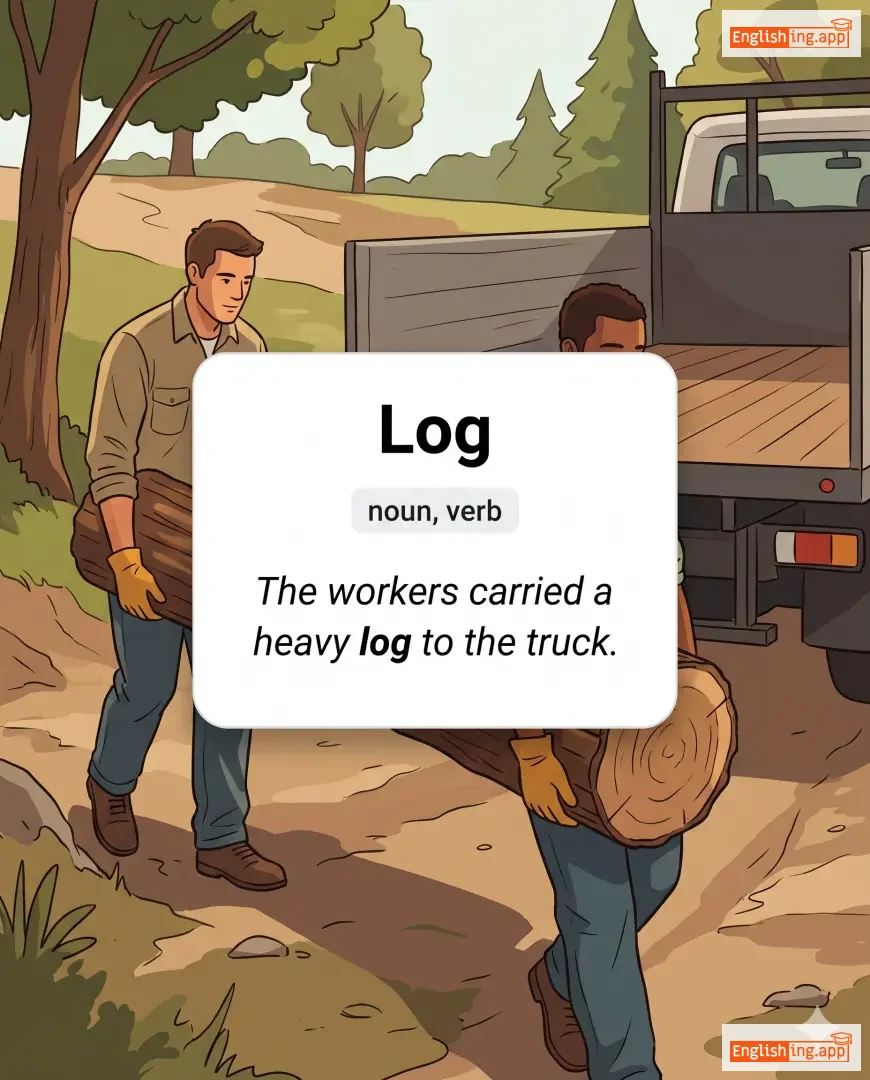
Log definition card — visual illustration of the meaning
noun, verb
/lɒɡ/
लकड़ी, रिकॉर्ड (lakdi, record)

A part of the trunk or a large branch of a tree that has fallen or been cut off; also to record information systematically.

"The workers carried a heavy log to the truck."

"कामकाजी एक भारी लकड़ी को ट्रक में ले गए।" (Kamakaji ek bhari lakdi ko truck mein le gaye.)
noun
/ˈlɒdʒɪk/
तर्क (tark)

Reasoning conducted or assessed according to strict principles of validity.

"Her argument was based on sound logic."

"उसका तर्क ठोस लॉजिक पर आधारित था।" (Uska tark thos logic par aadharit tha.)
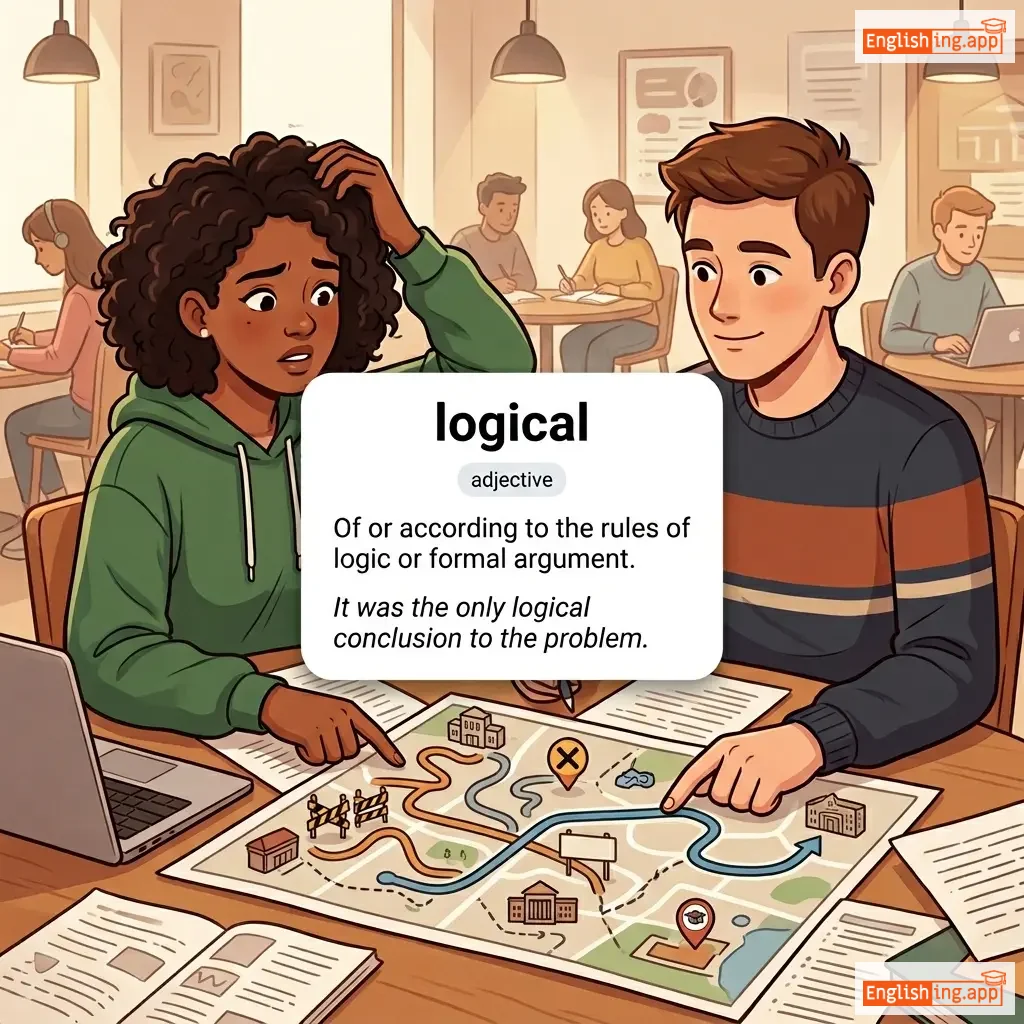
logical definition card — visual illustration of the meaning
adjective
/ˈlɒdʒɪkəl/
तर्कसंगत (tarksangat)

Of or according to the rules of logic or formal argument.

"It was the only logical conclusion to the problem."

"यह समस्या का केवल तर्कसंगत निष्कर्ष था।" (Yah samasya ka keval tarksangat nishkarsh tha.)
noun
/ləˈdʒɪʃən/
तर्कज्ञ (tarkgy)

A person skilled in logic and reasoning.

"Aristotle is considered one of the greatest logicians in history."

"अरिस्टोटल को इतिहास के सबसे महान तर्कज्ञों में माना जाता है।" (Aristotle ko itihas ke sabse mahaan tarkgyon mein maana jaata hai.)
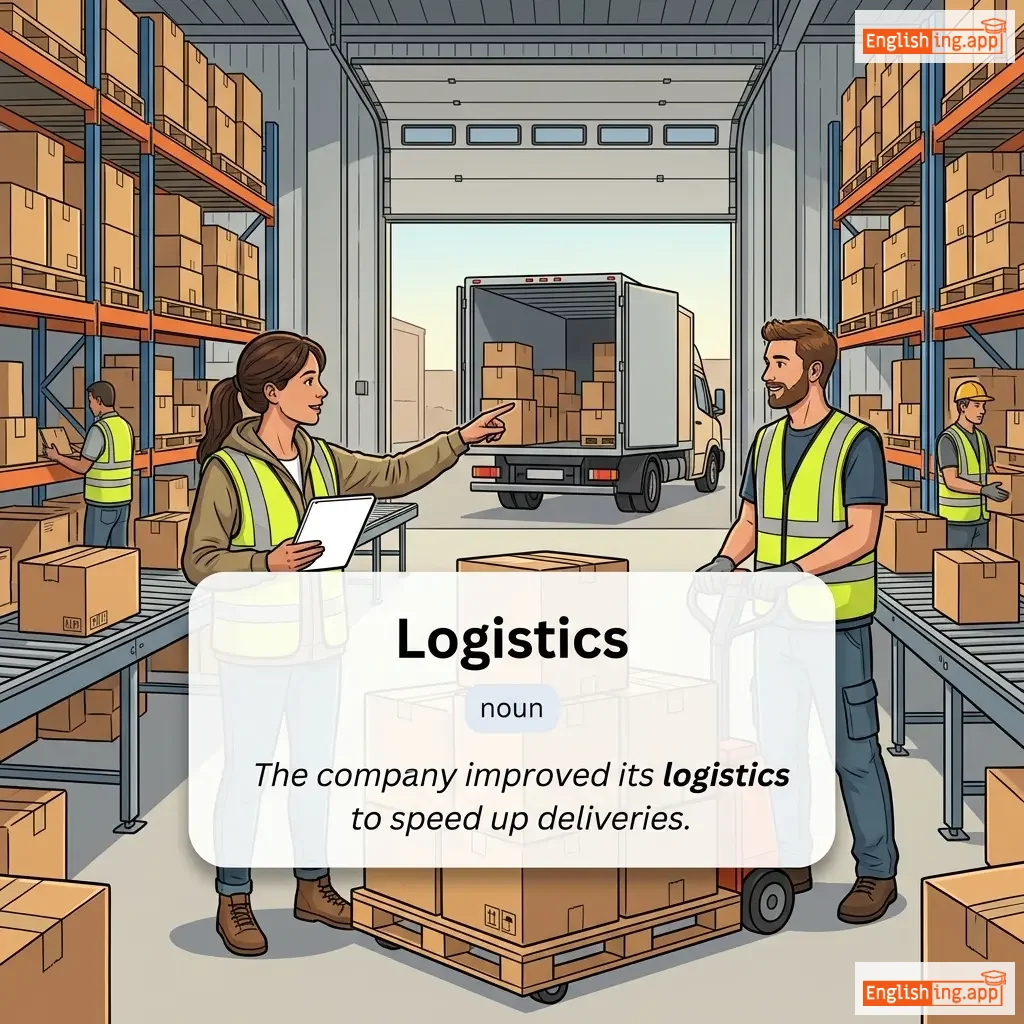
Logistics definition card — visual illustration of the meaning
noun
/ləˈdʒɪs.tɪks/
लॉजिस्टिक्स (lojistics)

Supply chain management or operation, managing the flow of goods, services or information efficiently.

"The company improved its logistics to speed up deliveries."

"कंपनी ने अपनी लॉजिस्टिक्स में सुधार किया ताकि डिलीवरी को तेज किया जा सके।" (Company ne apni lojistics mein sudhaar kiya taaki delivery ko tezz kiya ja sake.)
noun
/ˈləʊɡəʊ/
लोगो (logo)

a symbol or other small design adopted by an organization to identify its products, uniform, vehicles, etc.

"The company's logo was redesigned to reflect its new image."

"कंपनी के लोगो को उनके नए रूप को दर्शाने के लिए फिर से डिज़ाइन किया गया था." (kampani ke logo ko unke naye roop ko darshane ke liye phir se dizain kiya gaya tha.)
verb
/ˈlɔɪtər/
उद्देश्यहीन खड़ा रहना, समय बर्बाद करना (uddeshyheen khada rehna, samay barbaad karna)

To stand or wait around idly without apparent purpose.

"The teenagers were told not to loiter outside the shop."

"किशोरों को दुकान के बाहर उद्देश्यहीन खड़ा होने से मना किया गया था।" (Kishoron ko dukaan ke baahar uddeshyheen khada hone se mana kiya gaya tha.)
noun
/ˈlɔɪtərər/
वह व्यक्ति जो बिना उद्देश्य के एक स्थान पर समय बिताता है (vah vyakti jo bina uddeshya ke ek sthan par samay bitata hai)

A person who lingers aimlessly in a place without purpose.

"The police questioned the loiterer outside the store."

"पुलिस ने दुकान के बाहर लॉइटरर से पूछताछ की।" (Police ne dukaan ke baahar loiterer se puchtaach ki.)
verb
/lɑːl/
आलसी तरीके से बैठना (aalsi tareeke se baithna)

To sit, lie, or stand in a lazy, relaxed way.

"He lolled on the sofa after a long day at work."

"किसी लंबे दिन के बाद वह सोफे पर आलसी तरीके से बैठ गया।" (Kisi lambe din ke baad woh sofe par aalsi tareeke se baith gaya.)
noun
/ˈloʊnlinəs/
अकेलापन (akelapan)

The state of being alone and feeling sad about it.

"She felt a deep sense of loneliness after moving to the new city."

"नए शहर में जाने के बाद उसे गहरे अकेलेपन का अनुभव हुआ।" (Naye shahar mein jane ke baad use gahare akelapan ka anubhav hua.)
adjective
/ˈloʊnli/
अकेला (akela)

feeling sad because one has no friends or company.

"He felt lonely after moving to a new city."

"नए शहर में जाने के बाद वह अकेला महसूस करता था।" (Naye sheher mein jaane ke baad wah akela mehsoos karta tha.)
adjective
/lɔːŋ/
लंबा (lamba)

Measuring a great distance from end to end; lasting for a large amount of time.

"They waited a long time for the train."

"वे ट्रेन का इंतजार लंबे समय तक करते रहे।" (ve train ka intezaar lambe samay tak karte rahe.)
noun
/lɔːŋ ɡɔːrd/
लंबा लौकी (lamba lauki)

an elongated green vegetable belonging to the cucumber family, used in cooking

"She sliced the long gourd thinly for the stir-fry dish."

"उसने स्टिर-फ्राई डिश के लिए लंबी लौकी को पतला काट लिया।" (usne stir-fry dish ke liye lambi lauki ko patla kaat liya.)
noun
/lɔːŋ ˈpepər/
लंबी मिर्च (lambi mirch)

a flowering vine in the family Piperaceae, cultivated for its fruit which is used as a spice

"Long pepper was more valuable than black pepper in ancient times."

"प्राचीन काल में लंबी मिर्च काली मिर्च से ज्यादा मूल्यवान थी।" (prachin kaal mein lambi mirch kaali mirch se zyada mulyavaan thi.)
noun
/lɒŋ ˈwɪskəd ˈkætfɪʃ/
लंबी मूंछों वाली कैटफ़िश (lambi moonchon wali catfish)

A type of freshwater fish with long whisker-like barbels around its mouth

"The fisherman caught a long whiskered catfish in the river."

"मछुआरे ने नदी में एक लंबी मूंछों वाली कैटफ़िश पकड़ी।" (machhuaare ne nadi mein ek lambi moonchon wali catfish pakdi)
adjective
/ˈlɒŋ ˈstændɪŋ/
दीर्घकालिक (deerghkaalik)

having existed or continued for a long period of time

"They have a long-standing relationship with their suppliers."

"उनका अपने आपूर्तिकर्ताओं के साथ एक दीर्घकालिक संबंध है।" (Unka apne aapoortikartao ke saath ek deerghkaalik sambandh hai.)
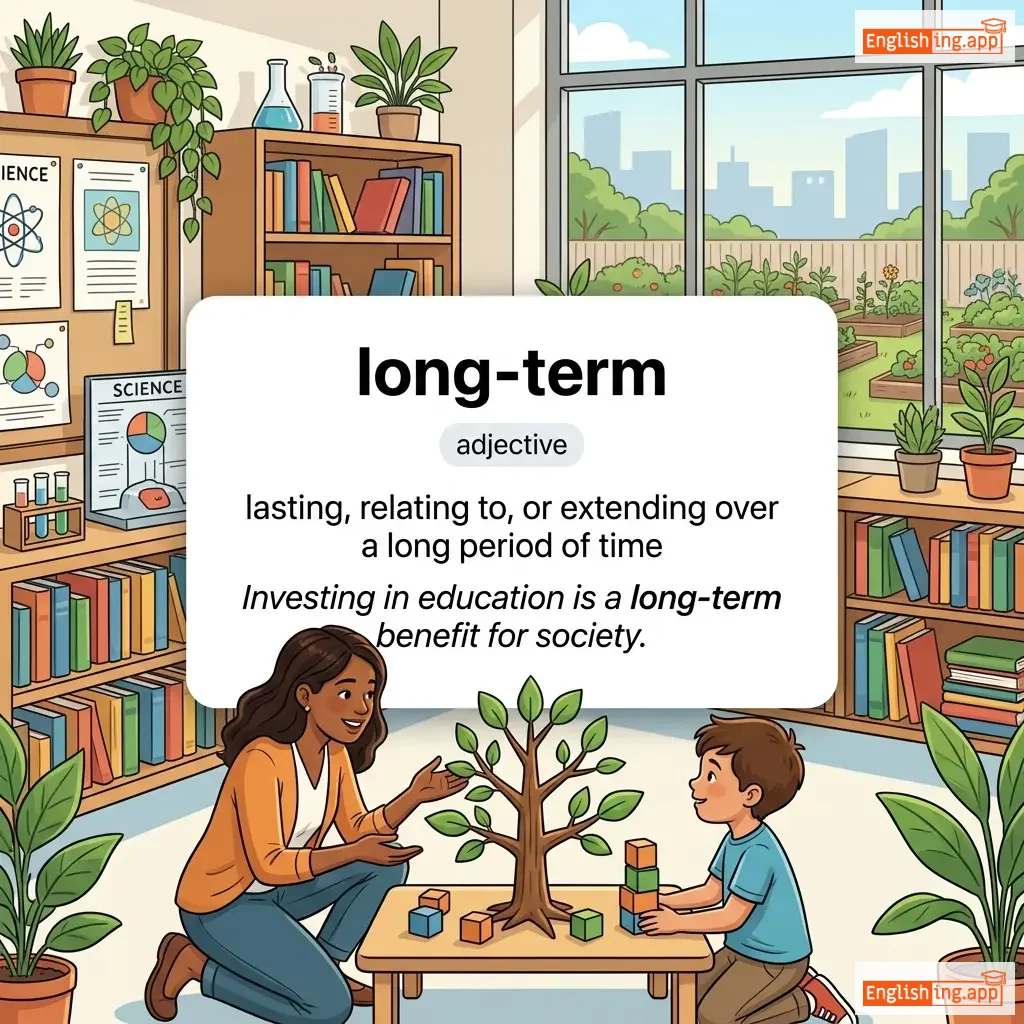
long-term definition card — visual illustration of the meaning
adjective
/ˌlɔːŋ ˈtɜːrm/
दीर्घकालिक (dirghkalik)

lasting, relating to, or extending over a long period of time

"Investing in education is a long-term benefit for society."

"शिक्षा में निवेश समाज के लिए एक दीर्घकालिक लाभ है।" (Shiksha mein nivesh samaj ke liye ek dirghkalik labh hai.)
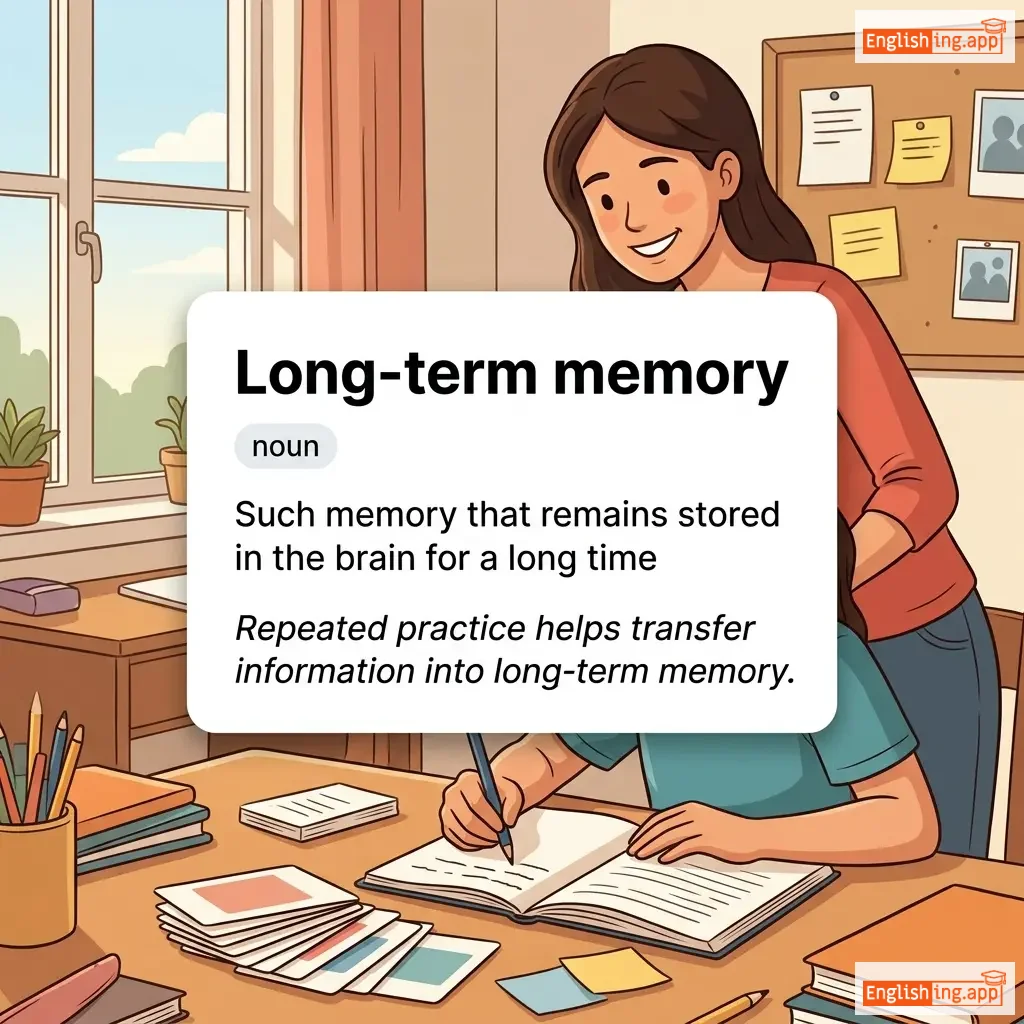
Long-term memory definition card — visual illustration of the meaning
noun
ˈlɒŋ tɜːm ˈmɛm.ər.i
दीर्घकालिक स्मृति (deerghakaalik smriti)

Such memory that remains stored in the brain for a long time

"Repeated practice helps transfer information into long-term memory."

"नियमित अभ्यास जानकारी को दीर्घकालिक स्मृति में स्थानांतरित करने में मदद करता है।" (niyamit abhyas jankari ko deerghakaalik smriti mein sthaanantarit karne mein madad karta hai)
adjective, adverb
/ˈlɒŋ taɪm/
लंबे समय का (lambe samay ka)

lasting or existing for a long period of time; having continued for many years

"She is a long-time friend of my family."

"वह मेरे परिवार की लंबे समय से दोस्त है।" (vah mere parivar ki lambe samay se dost hai)
noun
/ˈlɔːŋ.ɡən/
लोंगन (longan)

a small round tropical fruit with translucent white flesh and sweet taste, related to lychee

"Longan fruits are often eaten fresh or dried and are popular in Asian desserts."

"लोंगन के फल अक्सर ताजा खाये जाते हैं या सूखे होते हैं और एशियाई डेसर्ट में लोकप्रिय होते हैं." (longan ke phal aksar taaza khaye jaate hain ya sookhe hote hain aur eshiyaai deserts mein lokpriya hote hain.)
noun
/lɔnˈdʒɛvəti/
दीर्घायु (dirghayu)

Long life or long existence of something.

"Good habits contribute to health and longevity."

"अच्छी आदतें स्वास्थ्य और दीर्घायु में योगदान करती हैं।" (Achhi aadatein swasthya aur dirghayu mein yogdan karti hain.)
noun
लंबी इच्छाएं; तड़प (lambi ichchhaen; tadap)
adjective
/ˈlɔːŋtaɪm/
लंबे समय का (lambe samay ka)

having existed or continued for a long time

"They are longtime friends who met in college."

"वे कॉलेज में मिले लंबे समय के दोस्त हैं।" (Ve college mein mile lambe samay ke dost hain.)
/lʊk/
देखना (dekhna)

to direct one's gaze in a particular direction

"She looked out the window at the rain."

"वह बारिश को देखने के लिए खिड़की से बाहर देख रही थी।" (vah barish ko dekhne ke liye khidki se baahar dekh rahi thi.)
phrasal verb
/lʊk ˈɑːftər/
देखभाल करना (dekhbhaal karna)

to take care of someone or something; to be responsible for someone’s well-being

"She looks after her younger brother while their parents are at work."

"जब उसके माता-पिता काम पर होते हैं, वह अपने छोटे भाई की देखभाल करती है।" (jab uske mata-pita kaam par hote hain, vah apne chhote bhai ki dekhbhaal karti hai)
noun
/ˈlʊkɪŋ ɡlæs/
आयना (ayna)

a mirror; a piece of glass that reflects images

"She looked at herself in the looking glass."

"उसने आयने में खुद को देखा।" (usne aynay mein khud ko dekha)
noun
/ˈlʊkaʊt/
सतर्कता, पहरेदारी (satarkata, pahredari)

A place for watching; a person keeping watch.

"The guard kept a lookout for suspicious activity."

"गार्ड संदिग्ध गतिविधि के लिए लुकआउट रख रहा था।" (Guard sandigdh gatividhi ke liye lookout rakh raha tha.)
verb
/luːm/
दिखाई देना, सामने आना (dikhai dena, samne aana)

to appear as a large, often frightening or unclear shape, usually something threatening or about to happen

"Dark clouds loomed over the city, signaling an approaching storm."

"अंधेरे बादल शहर के ऊपर दिखाई दे रहे थे, जो एक आसन्न तूफान का संकेत दे रहे थे।" (Andhere baadal shahar ke upar dikhai de rahe the, jo ek aasann toofan ka sanket de rahe the.)
adjective
/ˈluː.ni/
पागल; मूर्ख; मानसिक अस्थिर (paagal; moorkh; maansik asthir)

crazy; silly; mentally unstable

"His loony behavior made everyone laugh."

"उसका पागल व्यवहार सभी को हंसा दिया।" (uska paagal vyavhaar sabhi ko hansa diya)
noun
/luːp/
लूप, घेरा (loop, ghera)

a shape produced by a curve that bends around and crosses itself

"The string formed a neat loop around the package."

"द स्ट्रिंग ने पैकेज के चारों ओर एक सुंदर लूप बनाया।" (Da string ne package ke chaaron aur ek sundar loop banaya.)
adjective
/ˈluːpi/
पागल (paagal)

crazy, silly, or eccentric

"After working all night, he felt a little loopy."

"सारी रात काम करने के बाद, वह थोड़ा पागल सा महसूस कर रहा था।" (Saari raat kaam karne ke baad, vah thoda paagal sa mahsus kar raha tha.)
adjective
/luːs/
ढीला (dhila)

not firmly or tightly fixed in place

"The screw is loose and needs tightening."

"स्क्रू ढीला है और उसे कसने की जरूरत है।" (Screw dhila hai aur use kasne ki zaroorat hai.)
verb
/luːt/
लूट करना (loot karna)

to steal goods, typically during war, riot, or chaos

"The rioters looted several shops during the protest."

"उपद्रवियों ने विरोध के दौरान कई दुकानों को लूटा।" (Upadraviyon ne virodh ke dauraan kai dukaanon ko lootaa.)
verb
/loʊp/
लंबे, उछलते कदमों से दौड़ना (lambe, uchhalte kadmon se daurna)

to run or move with a long, bounding stride

"The horse loped gracefully across the field."

"घोड़ा खेत में gracefully दौड़ रहा था।" (ghoda khet mein gracefully daud raha tha.)
adjective
/ˈlɑːpˌsaɪdɪd/
असमान, एकपक्षीय (asamaan, ekpakshiya)

with one side lower, larger, or different from the other; uneven or imbalanced

"The cake looked lopsided after being decorated in a hurry."

"तुरंत सजाने के बाद केक असमांन लग रहा था।" (Turant sajane ke baad kek asamaan lag raha tha.)
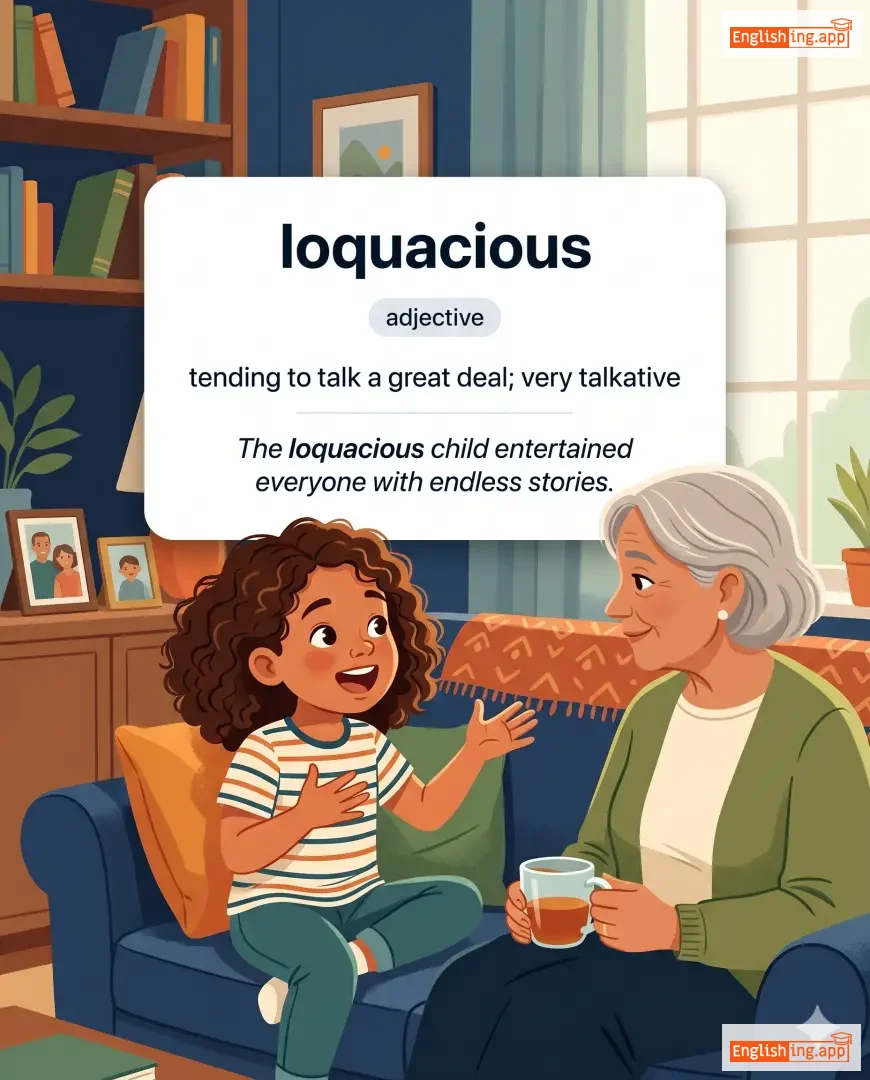
loquacious definition card — visual illustration of the meaning
adjective
/loʊˈkweɪʃəs/
बोलचालू, बकवादी (bolchalu, bakvadi)

tending to talk a great deal; very talkative

"The loquacious child entertained everyone with endless stories."

"बोलचालू बच्चा सभी को अंतहीन कहानियों से मनोरंजन कर रहा था।" (Bolchalu bachcha sabhi ko anthihin kahaniyon se manoranjan kar raha tha.)
noun
/ˈlɔːrdlɪŋ/
छोटा राजा (chhota raja)

A young or petty lord; someone of minor nobility.

"The arrogant lordling demanded respect despite his lack of experience."

"अहंकारी लॉर्डलिंग ने अनुभव की कमी के बावजूद सम्मान की मांग की।" (Ahankari lordling ne anubhav ki kami ke baavjood samman ki maang ki.)
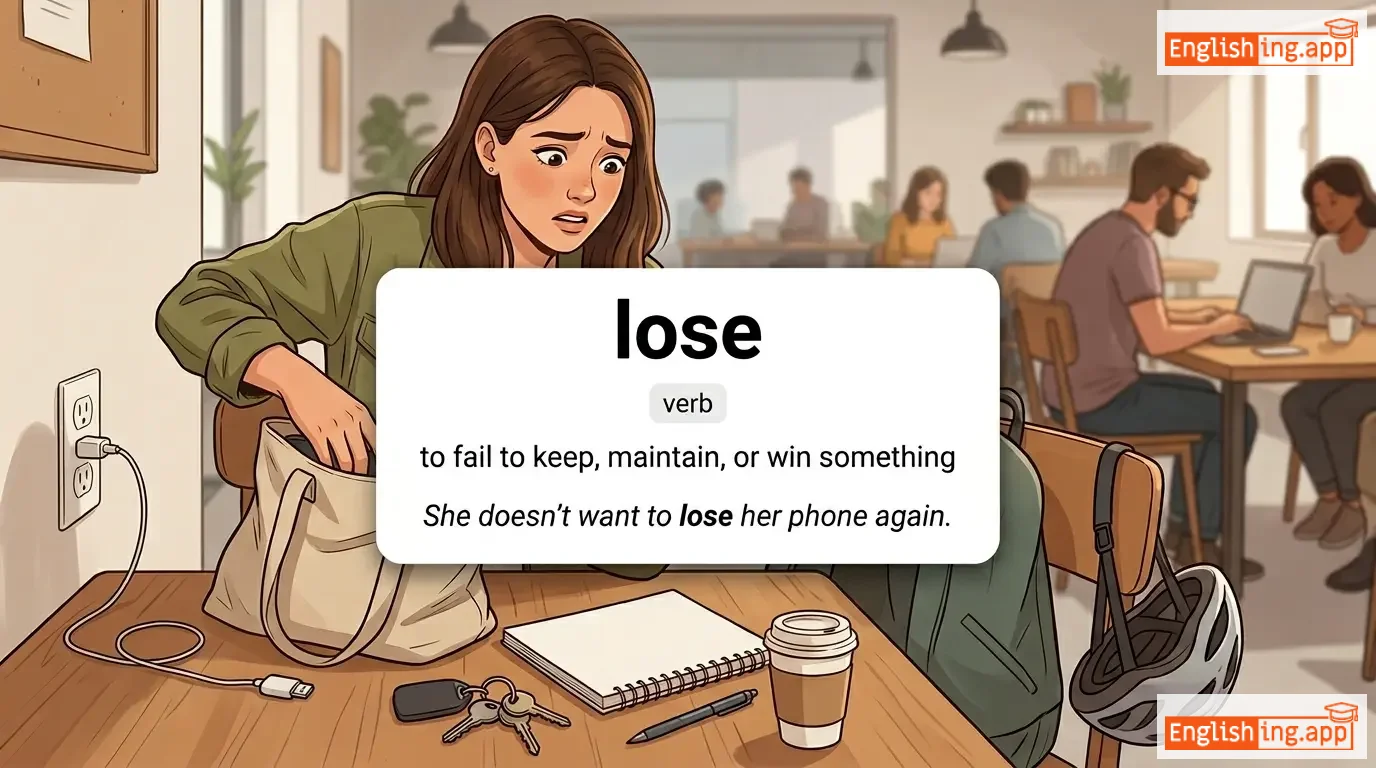
lose definition card — visual illustration of the meaning
verb
/luːz/
खुशी (khushi)

to fail to keep, maintain, or win something

"She doesn’t want to lose her phone again."

"वह पुरस्कार मिलने पर अपनी खुशी नहीं छुपा पाई।" (Vah puraskar milne par apni khushi nahi chhupa pai.)